“God damn this piece of shit car!” exclaimed Sadie Harper at the top of her lungs.
It was official. The past four hours had been the worst of her adult life, including the time she threw up at her best friend’s wedding. In a fit of anger, she hit the hood of the butt-ugly coupe that left her stranded on the curb of the highway just hours after sunset and with storm clouds rolling in. It felt like every conceivable force in the universe had conspired against her.
“Why now of all times? Why are you doing this to me?” she groaned, kicking the tire of her car in a fit of rage. “It’s not enough I splurged five hundred bucks on new tires. Now…at a time when I just wanted to fucking get away…this happens. What the fuck did I do to deserve this?”
Sadie would’ve started crying if she weren’t so pissed. She ended up leaning over the hood of her car, catching her breath and clinging to whatever sanity she had left. It didn’t help that she heard more thunder in the distance. It was going to start pouring rain at any minute. She could feel it. That would act as a frustratingly fitting cap to the terrible day she was having.
That day was largely the byproduct of an equally terrible week. It started six days ago when she found out that the promotion she thought she’d been promised at the marking company she worked for was given to someone else – someone who happened to be a friend of the Vice President’s sister, no less. She’d made it very clear to her boss that she needed that job because she was still drowning in college debt. She couldn’t remember the excuse he’d given her, but she vividly recalled punching paper towel dispenser in the ladies room.
If that weren’t bad enough, she found out the very next day that her boyfriend of the past two years – the same boyfriend she’d been living with and relying on as she managed her debt, no less – had been cheating on her. It led to a fight that lasted several days, complete with her throwing his laptop out a window, and ended with her moving out.
That scene she made went crawling back to her parents – who she hadn’t gotten along with lately, thanks largely to her moving in with her boyfriend – had been one of the pathetic moments of her life. Even though they let her stay in the basement, they made clear that they weren’t going to solve her problems for her. She had to pull herself out from her rut.
Things finally started looking up when her oldest friend, Jessica, who lived about 300 miles away near the beach, offered to let her stay with her for an extra-long weekend. The goal, according to her, was to decompress. The only obstacle was making that 300 mile drive, but even that proved too much.
“I should stop asking myself these dumb questions,” Sadie said, looking at her reflection in the hood of her car. “I know why I ended up this screwed. I got so lucky early in life. I actually convinced myself that luck and normal were the same thing.”
Holding her head low, Sadie shook her head and groaned. She remembered vividly how her mother used to say that she’d gotten more advantages than most and not just because she inherited her good looks. She’d been in a number of situations – relationships, jobs, and various predicaments – that could’ve easily gone against her. Her mother, who had a gambling problem in her youth, told her that luck always runs out eventually.
Being the arrogant little brat she was, Sadie chose to shrug it off. She still chose to take on huge debts in college. She chose to hook up with a guy who’d cheated on his last two girlfriends. She chose to buy a used car from someone who’d claimed to have given her a huge discount. She’d worked under the assumptions that all of those choices would work out like so many others. Now, it felt like her luck had completely flipped.
“Good looks, good family, a great school…everything just came so effortlessly,” she said. “Any time I wanted a break, I got it. I know luck always runs out at some point. I just wish it didn’t have to happen now.”
The timing really couldn’t have been worse and not just because of the weather. Approximately 150 miles into her trip – the least convenient time to have car troubles, no less – the check engine light in her car came on. At first, she ignored it, hoping it was something minor. Then, she heard a dreadful pop in her engine, causing the car to stall and forcing her to pull over on a patch of unfamiliar highway.
As Sadie lamented her situation, she felt some raindrops on her face. She then looked up at the sky to see flashes of lightning. This was not going to be a simple drizzle and she was not dressed for bad weather. She wore a tank top and jean shorts, having expected to be relaxing at the beach by sundown. Given the state of her car, she’d be lucky to end up anywhere relaxing.
“Rain…figures,” she said. “I swear if I get just one little break now, I won’t take it for granted!”
Sadie kept looking up at the sky, begging whatever higher power might have been listening to grant her some mercy. The rain just fell harder, followed by more lightning. She was ready to accept the fact that there would be no luck coming her way for once.
Then, she heard a loud truck horn honk in the distance. Turning away from the sky, she saw a large tow-truck approaching. It slowed down as it drew near, allowing other cars to pass behind it. When it pulled up to her, Sadie let out her first sigh of relief.
“It’s not much, but I’ll take it,” she said.
The truck pulled over, stopping just in front of her car. As the rain fell a bit steadier, Sadie watched as the driver’s door of the truck opened and a man stepped out. Upon seeing his appearance in the stormy weather, another kind of relief took over.
“Okay, I’ll take that too,” Sadie said, managing a partial grin.
She wasn’t sure whether he was a typical tow-truck driver, but the man was pretty damn attractive. He looked only slightly older than her, wearing a baseball cap that covered long unkempt hair that perfectly matched an unshaven face. He was tall, well-muscled with broad shoulders, and had the kind of rugged disposition most would expect of someone who got his hands dirty for a living.
As he approached her, she could smell a potent combination of sweat, motor oil, and dirt. He was a stark contrast from her ex-boyfriend, who spent as much time grooming himself as any self-conscious woman she’d ever known. Between that and him arriving just before the storm, Sadie found him very attractive.
“Hi! I’m Dave Johns,” he greeted her. “You Sadie Harper?”
“Yeah, that’s me…unfortunately,” she replied with a half-grin. “Thanks for getting her so soon.”
“No problem,” Dave replied with a smile. “In this weather, you got to be quick. You don’t want to be stuck out on these roads during a storm, especially a pretty girl like you.”
She gave him a full grin that time, her first in over a week. Dave sounded like one of those overly polite mid-western, complete with a slight accent and shirt bearing NASCAR logo. He was the kind of guy who probably didn’t go to the same overpriced college she had, which meant he probably didn’t have her crippling debt either. That only made him more attractive.
“Hold tight,” he told her. “I’ll get your car hooked up fast and we’ll be on our way to the nearest repair garage. Whatever’s wrong, they’ll fix it up.”
“I hope you’re right,” she said, still smiling. “I’ve had such a god-awful day…and a god-awful week, for that matter. My car breaking down is just the icing on the cake.”
“A breakdown never helps anything,” he said. “I just hope your week wasn’t too bad.”
“Well, I lost out on a big promotion, fell even further behind on my college debt, found out my boyfriend was cheating on me, had to move back in with my parents, and broke down 150 miles from my nearest friend. On top of that, I’m pretty sure the repair bill for this car will ruin my credit forever so. Depending on your standard for bad, I’d say I’m pretty damn close.”
Dave looked over at her from the car and gave her an astonished look. He might not have believed her at first, but Sadie had always been a lousy liar. Between her tone and her demeanor, she made it abundantly clear that she was not exaggerating. Her week had really been that bad.
“Well, by my standards, I say you definitely exceed them,” Dave said.
“And given my current streak of luck, it’ll probably get worse before it gets better,” Sadie sighed, “which is why I apologize ahead of time if I act like a total bitch from here on out.”
“That’s all right. Nobody is in a good mood after their car breaks down. I understand.”
“I appreciate that, Dave, but I’m not sure I deserve understanding at this point.”
“That’s just your mood talking. Things can turn around fast in these parts. You never know.”
He almost sounded too hopeful. Then again, in an area so remote and far from home, at least someone had to be hopeful. It sure as hell wasn’t going to be her.
Despite the rain picking up, Dave worked fast. He seemed to move with greater urgency as he hooked her car up to the tow truck. In less than five minutes, they were ready to go and just in time too. The rain really started pouring. She was already shivering in her tank top and shorts. She couldn’t get into the truck fast enough.
Once inside, though, her spirits didn’t improve by much. However long it took to get to the nearest repair shop, Sadie expected the day to get worse. For all she knew, the engine was completely shot and she would be stranded, either having to rent a car or stay at a motel. Having barely had enough money for gas and food, she dreaded having to call her parents for a loan.
“Shouldn’t be more than a half-hour to the shop,” Dave told her upon starting the engine. “It’s right next to a strip mall and a motel too, just in case you need to stay the night.”
“Thanks, but that’s probably too fancy for me,” Sadie said, now staring out the window. “Between my credit card balance and that popping noise I heard in the engine, I’ll be begging on the streets for a cardboard box by sundown.”
An awkward silence fell over the truck. Dave was sweet and handsome, but he hadn’t endured the kind of day she’d just experienced. She had already taken so much frustration out on her car. The last thing she wanted to do was take it out on a nice, attractive man who didn’t deserve it.
With howling winds and loud thunder echoing overhead, they started driving. For the first five minutes or so, neither of them said a word. Sadie just rested her head on the window, dreading how much worse things would get before they got better. At the rate she was going, she’d crash face-first into rock bottom before she got another break.
Eventually, Dave broke the silence.
“Just out of curiosity, what kind of popping noise in the engine did you hear?” he asked her.
“I’m not sure,” she replied. “I know as much about cars as I do about rocket ships. I doubt I could make sense of it.”
“So try anyways,” he said. “Was it steady? Like popcorn going off one at a time? Or was it abrupt like a tire blowing out?”
Sadie thought about it for a moment. She wasn’t sure why Dave even asked. She doubted she could even answer correctly at that point. Never-the-less, she made an effort.
“More like the first one, I guess,” she told him. “It was steady. I could feel the engine struggling each time. I thought it might blow up any second.”
“That’s not how engines work,” Dave said.
“On a day like this, I just can’t take chances. When all the good luck you’ve ever had just starts kicking your ass, you just got to assume the worst and brace yourself.”
“That’s…a tough way to live.”
“Which is why I’m already bracing myself,” she said.
Sadie kept staring out the window, not wanting Dave to see the pathetic look on her face. The last thing she needed was to break down in front of a stranger, let alone an attractive man. She was content to remain silent for the rest of the trip if she could avoid then.
Then, after a particularly loud burst of thunder, Dave slowed down somewhat.
“Sadie,” he said. “About four miles up ahead, there’s an old visitors center with an empty parking garage. It’s been closed for a month because of renovation. I doubt anyone is there in this weather.”
“And you’re telling me this…why?” Sadie asked.
“Because that’s the nearest place where I can pull in and check your car,” Dave told her. “From you told me, it sounds like you just got a damaged spark plug. If that’s all it is, then I might be able to fix it right then and there…no expensive repair, no hanging out at the shop, and no bracing for the worst.”
Sadie looked over at the man next to her as though he’d just offered to perform free brain surgery. There was no way she’d just heard right. A man – a total stranger who’d she just hired to tow her car – offered to fix it for her. It sounded like the lucky break she needed, but after the day she had, she remained cautious.
“Really?” she said, trying to contain her fragile spirits. “You…you’d do that for me?”
“Well, the way I see it, you’re having such a bad day and it’ll only get worse until someone or something changes,” Dave told her. “In these parts, we don’t have much control over the something. We do have control over the someone, though. If you can be that someone, then why shouldn’t you try?”
“That sounds way too logical,” Sadie said, “especially to a girl who hasn’t had to try that hard before.”
“Is that a yes or a no? It’s still up to you.”
It sounded like a chance and at a time when pushing her luck seemed like the worst possible recourse, for that matter. Looking at Dave, though – that greasy hair, big muscles, and demeanor – Sadie felt inclined to take that risk, however bad it might turn out.
“It’s a yes!” she said. “I swear, if you can fix my car, Dave…I don’t know how I’ll begin to thank you.”
“Only one way to find out, I guess,” he said with a confident tone that made her heart skip a beat.
The next four miles went by in a blur. Just as he said, there was a visitor’s center along the highway and it was empty, aside from a bunch of construction equipment. Near as she could tell, there was nobody there. On a nicer day, it probably would’ve been swarming with contractors and road workers.
Dave pulled in, accessing a service exit that had been partially coned off. Whether or not that was legal seemed like a relevant question, but Sadie wasn’t about to ask. He then drove the tow truck into the small, two-level parking garage behind the center. It was empty, but out of the rain.
Once inside, Dave went to work once more, showing the same urgency as earlier. He turned off his truck, lowered the crane in the back, and popped the hood of her car. All Sadie could do was stand back, watch, and hug her shoulders in anticipation.
“Just give me a sec,” Dave said. “My buddy back home had a car just like this. He kept that thing running way longer than most. This thing doesn’t even have 100,000 miles on it yet. If it’s in as good a condition as it looks…”
“Please, Dave,” she said, cutting him off, “I’d rather not jinx it.”
“Ah, good idea.”
Sadie began pacing, watching the heavy rain falling in the distance. The winds settled somewhat, but the storm didn’t look ready to let up anytime soon. If Dave couldn’t fix her car, then that would only compound her problems. A great deal of her current situation, misfortune and all, depended on a total stranger – a tall, handsome stranger no less – being able to change her luck.
She didn’t even pretend to know what he was doing whenever he retrieved some tools from his truck. She didn’t keep track of time either, worried that every passing second negatively impacted her chances. She could only wait with baited breath, hoping for the best while still bracing herself for the worst.
Finally, after what felt like an eternity, Dave emerged from under the hood.
“I knew it!” he said. “It was a damaged spark plug.”
“Seriously?” said Sadie with sudden intrigue. “A spark plug? As in only one?”
“Yep!” he said proudly. “And as it just so happens, I got a spare from a set my brother gave me. It ain’t the fancy kind, but it’ll get you running again. You’ll be able to finish your trip and make it back.”
Sadie was speechless. She stood frozen in space, her mouth agape as Dave finished the job. With a demeanor worthy of a triumphant warrior, he retrieved a spare spark plug from his truck. Then, using a couple of tools, he replaced it in just a few minutes. Looking certain of his work, he closed the trunk and used the keys she’d given him to start her car. Much to her relief and amazement, the popping sound was gone. It ran just as well as before, if not better.
“There you have it,” Dave said with an accomplished grin as he tossed her the keys. “The check engine light is gone. Looks like you’re good to go, Sadie.”
“Dave, I…” the young woman stammered, already at a loss for words.
“You don’t have to say anything,” he told her. “It was a little thing…something I just happened to be there to fix.”
“But…I don’t even know if I can pay you,” she said, still frozen in place. “I know I got charged for the tow, but this is just too much! It’s…”
Dave then put his hand up to silence her, still smiling as though he were the lucky one. Something about that just made him even more attractive.
“Before you go calling that luck, just remember that luck only applies when you don’t have a choice,” David said. “I was here, I made that choice, and we’re both in a better place because of it.”
“Both?” she questioned.
“Of course,” he said. “The way I see it, I made my job easier by saving myself a trip to the nearest town. Plus, I fixed a car and helped a pretty lady. In my line of work, that counts as a damn good day.”
He spoke like someone who’d just one the state championship. In Sadie’s world, little things like that didn’t make a good day. There always had to be something more elaborate…something that made a bigger impact overall. By that measure, Dave didn’t achieve much. He just fixed her car. In Sadie’s eyes, though, he’d just saved her soul, her sanity, and everything in between.
Having not forgotten her earlier lamentations, which included a promise to not take lucky breaks for granted, an idea popped into the young woman’s mind as she stood before Dave. It soon led to a choice of her own.
“Dave…thank you.”
Then, in an act that caught him by surprise, for once, she threw her arms around his him, pulled him into a strong embrace, and kissed him hard on the lips. She didn’t care that he smelled like motor oil, grease, and sweat. If anything, that turned her on even more.
Dave was a bit surprised at first, but it didn’t take long for him to start kissing back. It didn’t stop there, though. As she savored his lips with hers, she eagerly pressed her body up against his, communicating a potent mix of gratitude and desire.
“Uh…you’re welcome?” Dave said with an awkward grin as their lips parted.
“Wasn’t done,” she told him. “In fact, I’m just getting started!”
To further her point, she kissed him again, but supplemented it by grabbing his hand and guided it to her breast. She also snuck her hand down over his pants, feeling just over his crotch to help get the blood flowing in the right direction.
A man who’d done that much for her on such a terrible day deserved more than just a kiss and a hug. Sadie was going to make Dave feel as lucky as her. He embraced that luck as much as her, offering no resistance as she led him towards the hood of her car. Along the way, she removed her tank top and bra, which had become too wet for comfort anyway. Once off, she guided both hands to her fleshy mounds.
“Here…feel my tits,” she said, urging him to rub them.
“Dang…those are nice,” Dave said, already sounding drunk on lust.
“Enjoy them while I get you out of those dirty pants!”
That came off as more aggressive and seductive than she’d expected, especially after the day she’d had. It was only fitting, though. Dave made the extra effort for her. It was only fair that she do the same for him.
As he enjoyed fondling her breasts, Sadie made quick work of his belt buckle and jeans. They were loose, dirty, and had multiple oil stains. That didn’t bother her, though. As soon as they were down at his ankles, along with his underwear, she dropped to her knees to focus on his cock. In another striking turn of luck, Dave was very well-endowed.
“Have a seat,” she told him. “Let me thank you properly.”
“Properly…sure,” Dave said with a goofy grin.
Now sitting on the hood of her car, Sadie wasted no time in giving the rugged, mechanically-inclined man the best oral sex she’d ever given. Grasping the base of his shaft with both hands, she hungrily took in his entire length and began sucking, trailing her lips and tongue along his manly flesh.
It was somewhat striking since Sadie didn’t usually put that much effort into giving blowjobs. With her ex-boyfriend, it had just been a necessary part of the process. She didn’t necessarily despise it, but she’d never felt overly eager to suck a dick. That all changed with Dave. She treated sucking his cock with the same urgency as he’d shown with her car.
“Ohhh Sadie!” he moaned. “That feels so good!”
Leaning back on her car, moaning blissfully, encouraged Sadie. His pleasure was a tangible sign that her gratitude was being conveyed, but she still wasn’t done.
As she stepped up the pace of her oral teasing, she undid her jean short and reached into her panties to find that she was already getting wet. In the spirit of the urgency, she fingered her moist folds to accelerate her arousal. She could already feel Dave’s cock throbbing in her mouth. Looking up at him, she sensed he wanted more. Moreover, she wanted to give him more.
Once certain that they were both aroused, she gave his dick one last lick and shot up to her feet. She then pulled her shorts down, panties and all, rendering her naked and exposed in the dank parking garage with the storm still raging outside. Having never had sex outside a bedroom or a living room, something about that feeling just excited her to no end.
“Fuck me, Dave,” she told him. “Fuck me over the hood of my car.”
“That’s…a hell of a way to thank a guy,” he said with a lustful grin.
“It’s not just gratitude. It’s me not taking for granted the lucky turn I’ve enjoyed.”
Whether or not he agreed with her logic seemed irrelevant now. Like a man who’d just won the jackpot, Dave got up from the car and took her in those strong, burly arms of hers. Sadie instinctively jumped him, allowing him to catch her naked body in mid-air. As she smothered his rugged complexion with more kisses, he set her down on the hood of her car, her butt making contact with the wet surface that she’d been angrily pounding with her fist earlier.
Moving with the same intent that she’d shown while giving him oral sex, Dave positioned himself between her legs, holding them wide open as he guided his cock to her wet entrance. As soon as she felt the tip brush against her wet folds, he thrust his hips forward, driving his manly flesh up into her depths.
“Sadie…so hot and tight,” Dave grunted.
“That’s it, Dave!” she told him. “Give it to me! Do it to me!”
Those same powerful hands that fixed her car clung harder to her thighs as he began fucking her, working his hips back and forth, pumping his rigid manhood within her tight depths. Sadie’s body and her world rocked in accord with each movement. There was so much power and strength in his thrusts, each act exuding a kind of unfiltered manliness the likes of which she never experienced at her overpriced college.
It was so hot, his strength projecting into her through their sex. It didn’t matter that the winds from the storm blew through the garage or that the hood of her car was so wet from the rain. It unleashed in Sadie a wild lust that felt so cathartic, especially after the week she’d had.
“Yes! Oh yes! Ohhh Dave!” Sadie cried out through successive moans. “So strong…so tough…I love it!”
Dave replied only with focused, manly grunts. That just sent her instincts into overdrive. At one point, she even reached up, grabbed his dirty shirt, and pulled it off over her head, revealing an ungroomed chest covered in masculine sinews. It was enough to overwhelm her senses to the point of ecstasy, that raw strength and manpower sending her to orgasm.
“I’m coming, Dave! I’m coming!” she cried out. “Please…keep…fucking me!”
When the feeling struck, it coincided with a flash of lighting and a loud round of thunder. That didn’t matter, though. Even the loudest sounds of nature couldn’t mute her cries of ecstasy.
Sadie still arched her back, squeezed her bouncing breasts, and led out the kind of orgasmic moan that she wanted the heavens to hear. The heat that had been building in her core turned to a white hot flame of ecstasy that spread throughout her body, turning the muggy air into an aura of contentment. The way Dave responded, gazing upon her with a mix of awe and affection, made it all the more satisfying.
He slowed down to let her enjoy her orgasm, but did not cease their heated sex. He kept pumping his rigid flesh into her, conveying his strength and his lust with every movement. Sadie gladly adjusted and shifted her body to accommodate his lustful whims, hitching her legs up higher so he could fuck her at a faster pace. She even got on her side at one point so he could fuck her at an angle.
Sadie remained committed to helping her generous, mechanically-inclined companion achieve the same orgasm she’d felt. That eventually led her to being bent over the hood of her car, her breasts pressing right up against the wet surface while he fucked her from behind, holding her left leg up slightly to get in at just the right angle. That seemed to give Dave the room he needed to achieve that same sweet bliss.
“Almost…there,” he grunted in between thrust. “Sadie…gonna come…soon!”
“Good!” Sadie said. “Want to…come on my…tits?”
“Yes, please!” Dave said without hesitation.
Sadie grinned to herself. With the way he’d been fondling her breasts earlier, she surmised he’d enjoy that. She’d learned with her ex-boyfriend how men liked to communicate their sexy quirks. For a man who’d made the worst day of her life memorable for all the right reasons, he deserved nothing less.
After a bit more hard thrusting, Dave promptly withdrew his cock from her pussy and pulled her in closer so that his dick was aligned with her tits. Sadie, now gazing up at him with her most seductive glance, mashed her breasts together as he aimed his cock at her fleshy mounds.
In the midst of another round of thunder, the rugged man let out a deep moan that echoed throughout the garage as he released a thick load of cum onto her tits. It was messy, chaotic, and everything she used to avoid with her ex-boyfriend. Somehow, that made it all the more satisfying.
“A good man deserves more than luck,” Sadie found herself saying. “It’s the choices of others that make him feel lucky!”
She wasn’t sure whether he heard that, his face awash in pleasure from his orgasm. It still felt like something that needed to be said. She helped further her point by giving his throbbing cock a few more sensual licks, making sure his manly juices didn’t go to waste.
Now breathing heavily and awash in contentment, the Dave’s legs gave out and he sat down on the hood of the car. Her breasts still covered in his cum, she sat next. Now leaning on each other for support, they lingered there, naked and alone in a dirty garage with a storm raging all around them.
After so many things going wrong over the past week, it felt like more than another lucky break. It felt like a moment of clarity, one that came courtesy of an incredible, not-to-mention handsome man who’d made her day with a simple choice. The fact they had great sex was just a nice bonus.
“Now…can I say you’re welcome?” Dave said with a playful grin.
“Sure, Dave,” she said with a beaming grin. “I think I’ve thanked you enough for fixing my car.”
“Lucky me, eh?” he joked.
“Ha! Lucky indeed.”










 However, there are times when summer isn’t quite as relaxing. I learned that the hard way a couple years ago when my air conditioner broke just in time for the first heat wave of the year. It wasn’t a simple mechanical problem either. The whole system flat out died on me and had to be replaced. It wasn’t just insanely costly. It ensured I was stuck in a hot, muggy house for nearly an entire week.






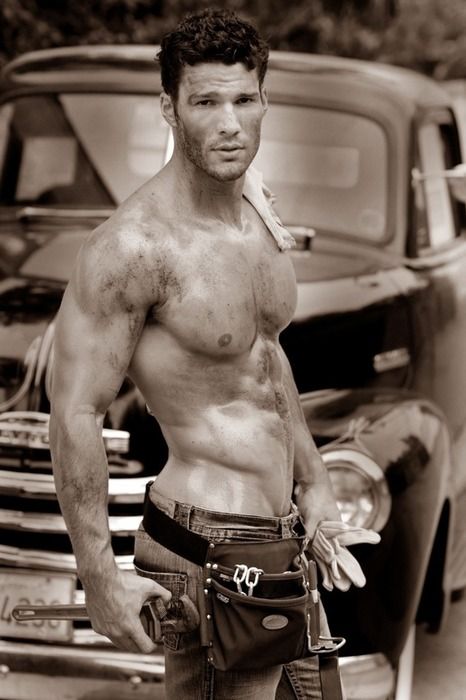 The following is a sexy short story I wrote that involves car troubles, sexy mechanics, and a bad day that becomes a great day. I got the idea while dealing with some car troubles of my own. I hope the inspiration shows. Enjoy!
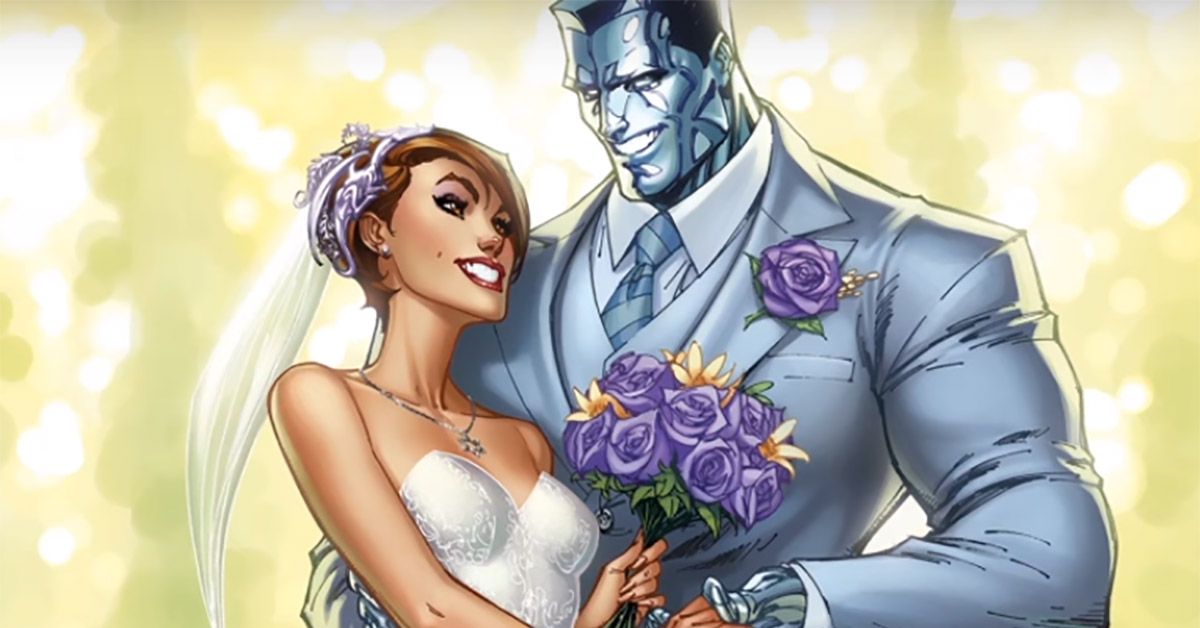
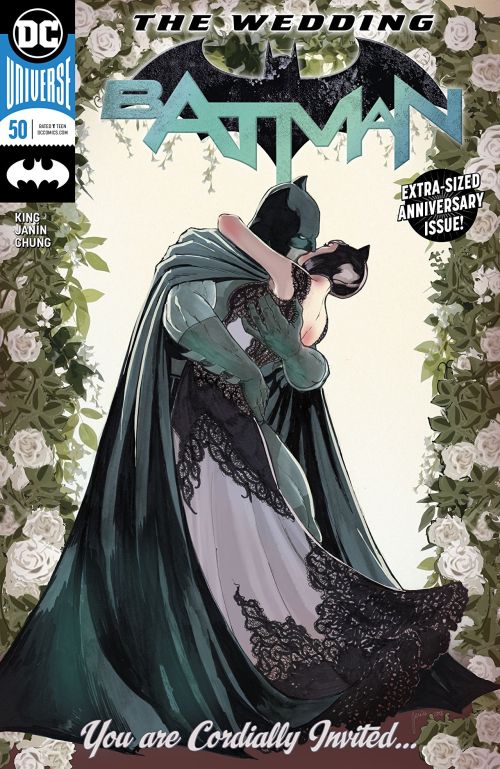 It’s been a rough summer for fans of romance, superheroes, and superhero weddings. In fact, in all the years I’ve been reading comics and following romantic sub-plots, I can’t remember a time when there was this much melodrama and heartbreak. I understand that any epic romance is going to involve a healthy bit of emotional strain, especially when it involves superheroes. There comes a point when it just becomes too much.After the deconstruction and denigration of superhero romance
 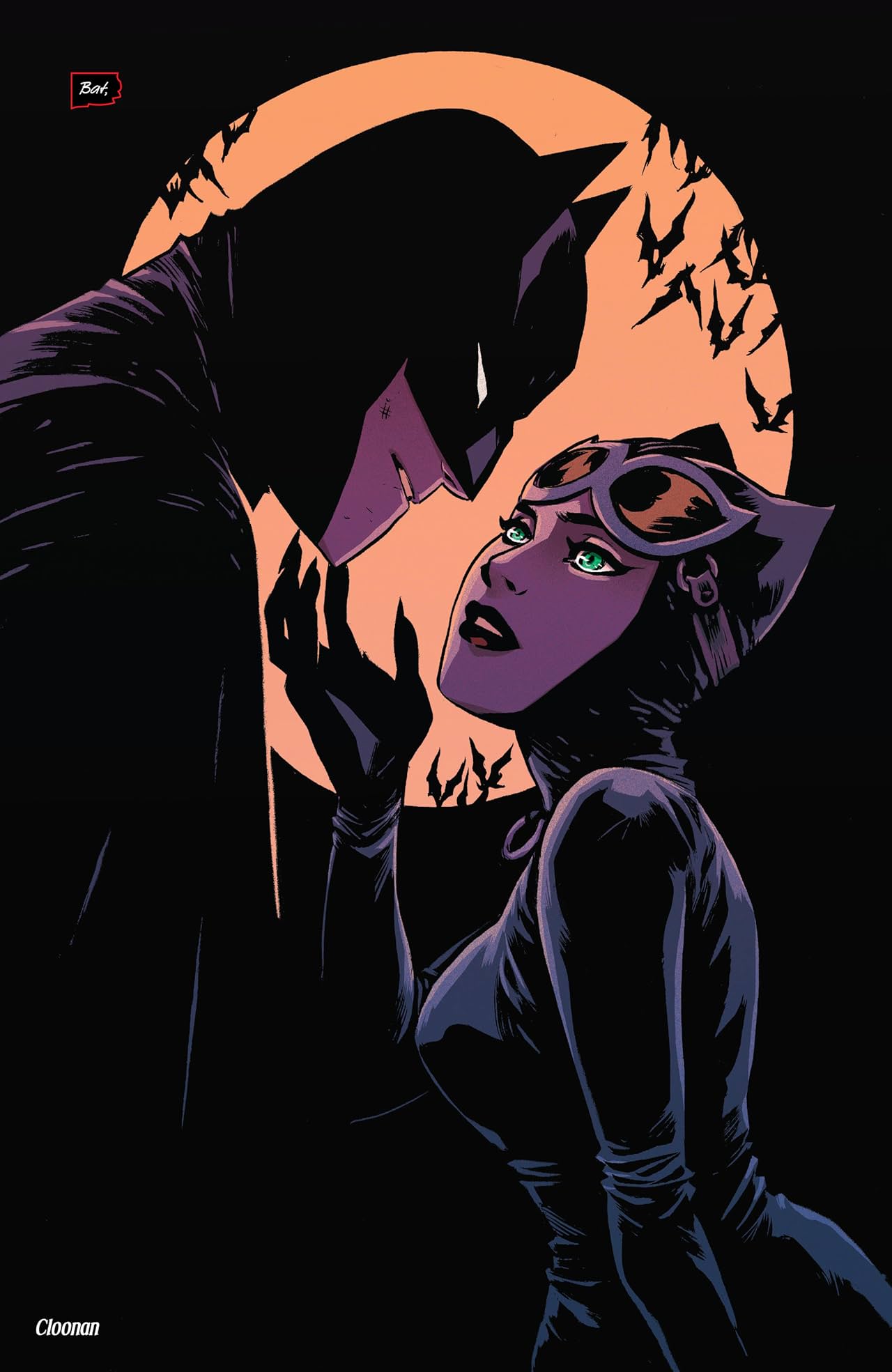 I certainly counted myself among those
  Before I explain, I want to establish that many of the details beyond this point are heavy spoilers. Seeing as how this comic was already spoiled a couple days prior to its release,
  In contrast, the ceremony in
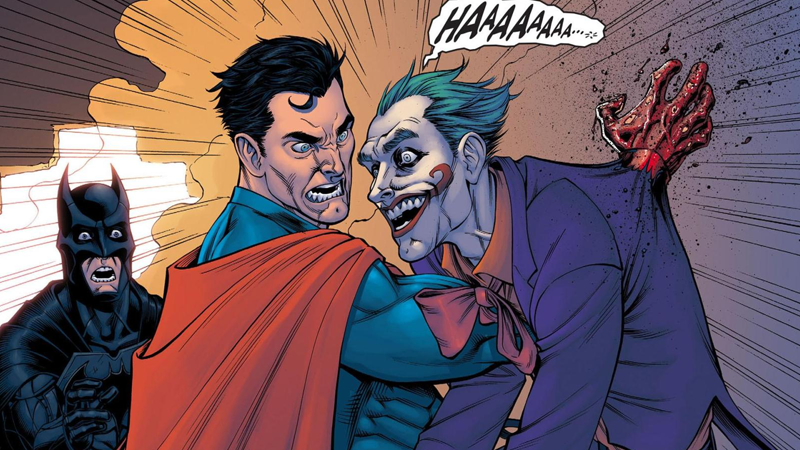
 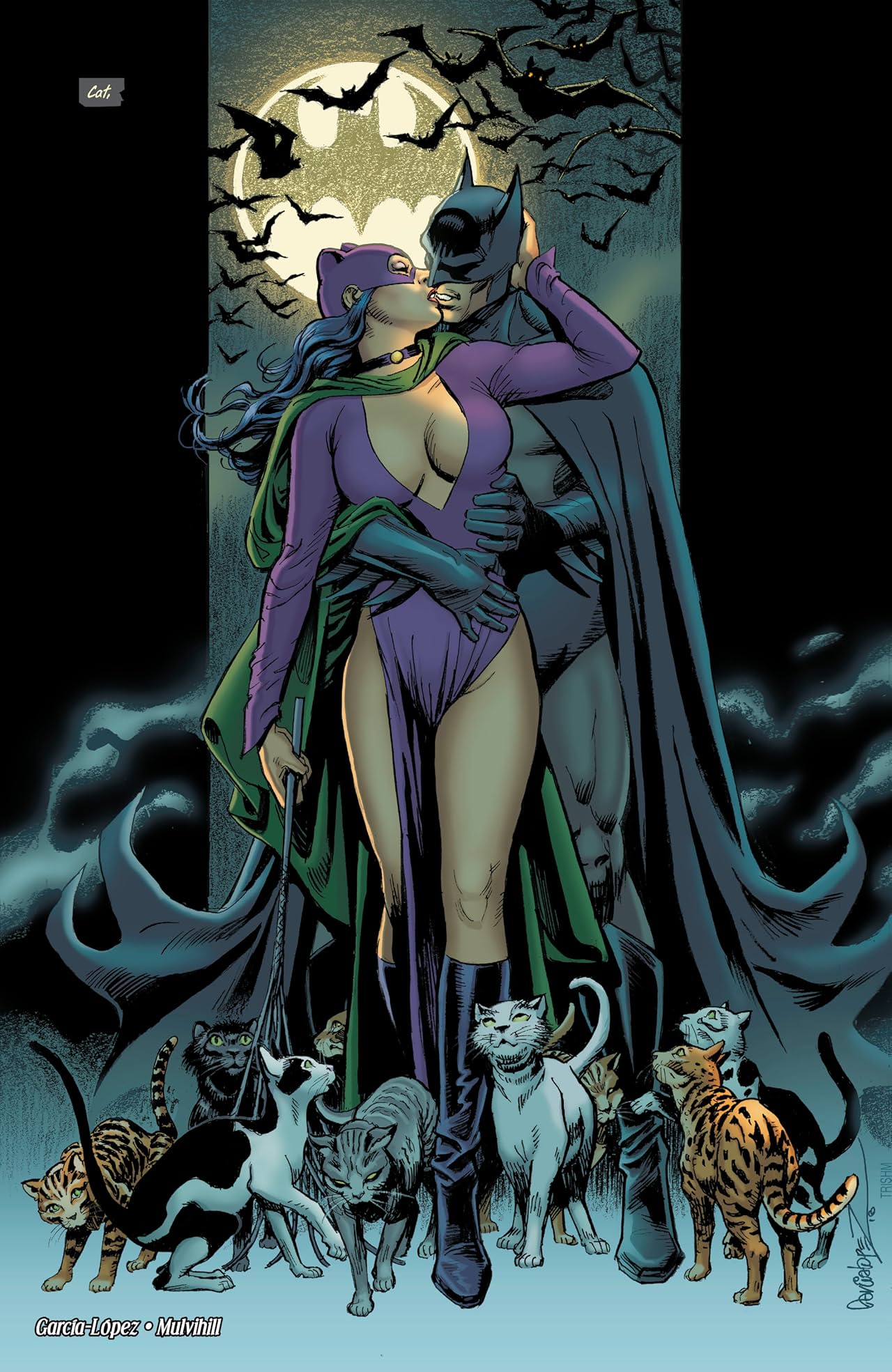 At one point in the story, Batman makes clear that he still wants to marry Catwoman. He’s not having second thoughts. It’s Catwoman who makes the fateful decision to break it off and she doesn’t wait until half-way through the ceremony, either. To put that another way, an admitted jewel thief who
  What makes Batman both effective and iconic is how he takes the pain of a tragedy, namely the death of his parents, and turns it into strength. The same pain that would break a lesser man drives him to do so much more. He’s the Dark Knight who defends Gotham. He’s a hero who deserves to fight alongside demigods and aliens on the Justice League. For him to be Batman, he needs that pain to fuel him.From Catwoman’s perspective, Batman finding happiness means denying him the fuel he needs to be Batman. That’s not a realization that just randomly pops into her mind at the last second, though. This is something the Joker
  That doesn’t make Catwoman’s decision any less disappointing, but it’s still nowhere near as callous or selfish as Kitty Pryde’s decision in X-men Gold #30. I know it’s somewhat unfair to keep comparing the two, given the different circumstances of their relationship, but those distinctions highlight an important element that the failed Batman/Catwoman wedding has that the Colossus/Kitty Pryde wedding didn’t.What happens in
 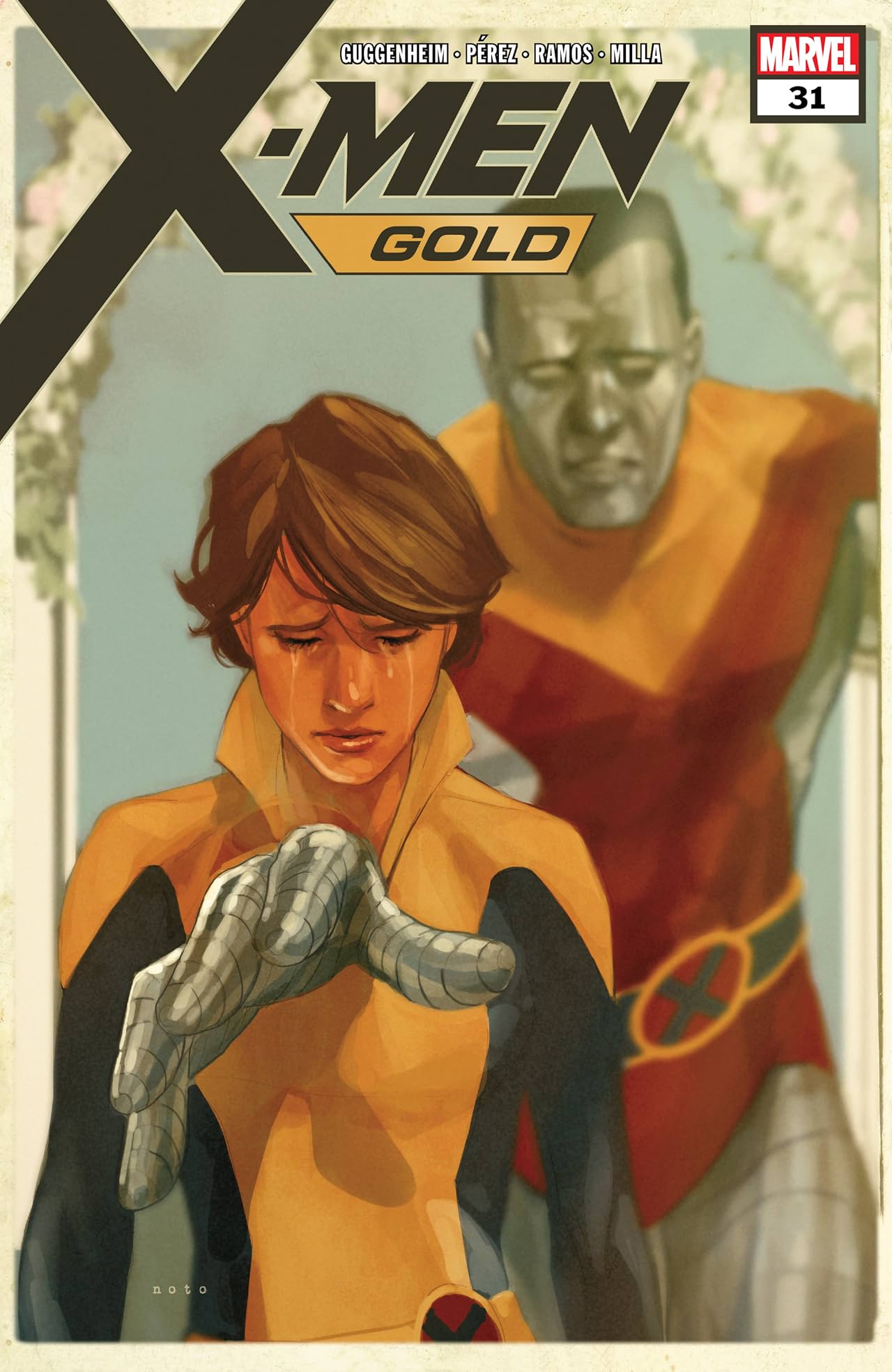 In the grand scheme of things,
  If I had to score






 Greetings, and Happy 4th of July! I hope everyone has a chance to sit back, cook up some food on the grill, and enjoy a fireworks show wherever you are. In the spirit of celebrating this day of freedom and Independence, I’ve crafted a sexy short story to celebrate all things sexy and free. Enjoy!



/cdn.vox-cdn.com/uploads/chorus_image/image/55964801/rick_and_morty.0.png)