Heroes, Villains, And The Forgotten (But Relevant) Message Of “Megamind”

megamindfilm

Every now and then, a movie comes along that was unremarkable in its time, but gained greater meaning years later. It’s one of those unspoken challenges of movie making that doesn’t involve dealing with difficult actors. Sometimes, a movie is either ahead of its time or too late to make much of an impact. Like cooking the perfect steak or good fart joke, timing is everything.

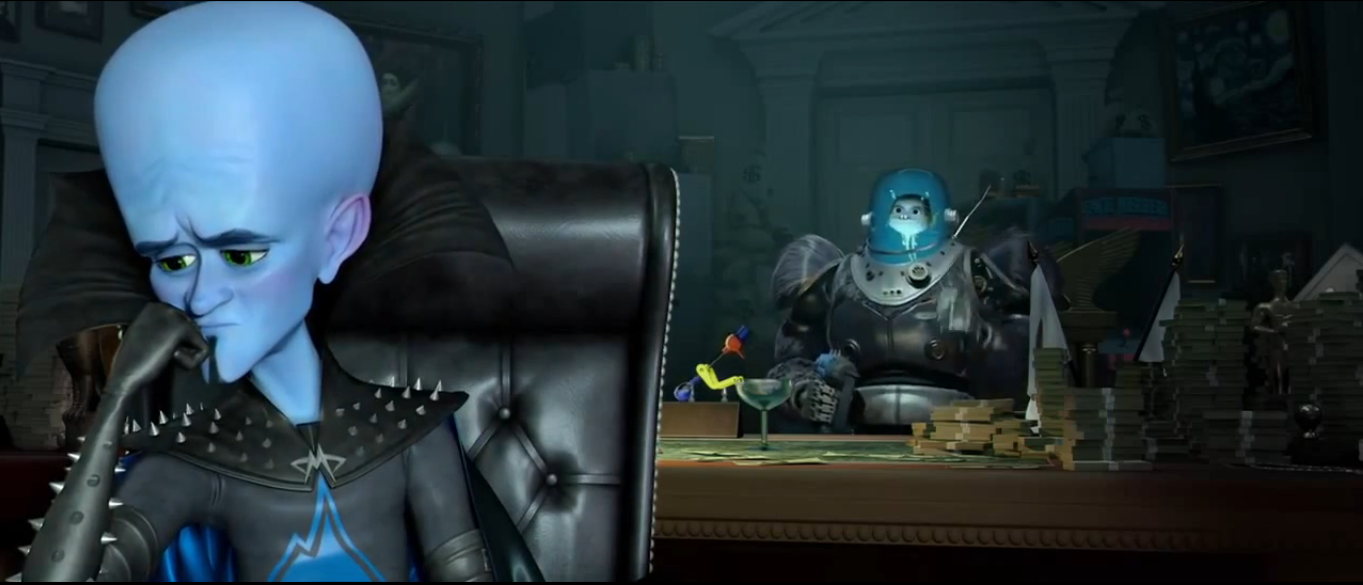
That brings me to “Megamind,” a very well-done, but often overlooked animated movie from Dreamworks. Since it’s not Pixar and doesn’t involve “Shrek,” it had a lot working against it before it came out. However, it also had plenty more going for it and not just in terms of quality 3D animation at a time when “Avatar” finally made that gimmick viable.

The movie boasted an amazing voice cast that included Brad Pitt, Will Ferrell, Jonah Hill, Tina Fey, and David Cross. It also did plenty to leverage that star power. Will Ferrell even famously dressed up as the titular character at the San Diego Comic Con to promote the movie. I’m not saying that, alone, would’ve made that movie a success, but Will Ferrell is one of those rare talents who can make anything more appealing.

You can’t argue with THAT kind of appeal.

In addition, the movie told a compelling story in a way that was concise, enjoyable, and appealing for adults and children alike. It showed in the favorable reviews it received from critics and the high scores it earned from audiences. Unfortunately, it didn’t quite show in the box office totals. The movie did well, but it fell short of the high bar that both Pixar and “Shrek” have set for animated features.

The reason for the movie’s shortcomings are numerous and varied. It came out in 2010, just in time for titles like “Toy Story 3,” “How To Train Your Dragon,” and “Tangled” to steal the show. It also came out at a time when superhero movies were just starting to ascend. “Iron Man” had just come out and the scars from “X-men Origins: Wolverine” were finally starting to heal.

However, “Megamind” really jumped the gun in terms of timing. We were still a few years before “The Avengers” cemented superhero movies as ultimate box office gold encased in vibranium. As a result, the remarkable concept that “Megamind” introduced went forgotten, but I believe it’s worth remembering.

The plot of “Megamind” is simple on paper, but complex in its implications. It tells the story of a self-proclaimed super-villain named Megamind, who was voiced by Will Ferrell. His persona is essentially a comedic parody of every super-villain trope that ever existed. He’s a mad genius bent on conquest and domination, but is constantly thwarted by an overly-powerful, overly-handsome hero.

That hero, appropriately voiced by Brad Pitt, is Metro Man. Like Megamind, he’s also a parody of every superhero trope. He’s part Superman and part Captain America, grossly overpowered and so morally pure that it’s laughable. As such, the movie never attempts to frame Metro Man’s heroism or Megamind’s villainy in a serious sort of way.

That approach is key because the way the story plays out essentially flips the script on the standard narrative surrounding superheroes, super-villains, and what motivates both of them. It conveys a message that didn’t really have much impact in 2010, but if it came out just five years later, its themes would’ve been much more relevant.

At its core, “Megamind” asks what would happen if an over-the-top villain like Megamind actually defeated an over-the-top hero like Metro Man. How would he react? How would the society around them react? These are questions that often have simple answers in other superhero movies. “Megamind” dares to add an extra layer of complexity.

Early on in the movie, Megamind achieves what Lex Luthor, Dr. Doom, and every other mustache-twirling villain failed to achieve. He defeats his heroic nemesis. He takes over the city he seeks to rule. There is no longer anyone or anything to stand in his way. He is, for all intents and purposes, the most powerful being in Metro City.

That’s not the end of the story, though. That’s just the beginning. Shortly after this achievement, which caught Megamind himself by surprise, he has an existential crisis of sorts. Suddenly, there are no more plots left to hatch. There are no more battles left to fight. He has everything he ever wanted, but it still leaves him feeling empty inside.

It leads him on a path that reveals some unexpected insights into the whole hero/villain dynamic. At first, Megamind doesn’t know how to handle his new situation. It’s so unfamiliar and so jarring that it causes serious distress. Even for a super-genius, sudden change and unfamiliarity can be very difficult to handle.

Megamind’s first instinct, which is usually the same instinct most ordinary people act on in such distressed states, is to return to something familiar. He attempts to recreate the status quo as he knew it, which led him to create a new hero in Titan, who is voiced by Jonah Hill. He says outright that without a hero to fight, he has no purpose. Since he happens to be a super-genius, he just decides to create one.

In doing so, he learns as well as everyone else in Metro City that creating a hero is not as easy as just giving someone heroic abilities. On top of that, he also learns that it’s not always possible to go back to that comfortable status quo. In fact, attempting to do so could only make things worse.

Without giving away the entire movie, which I encourage everyone to see, “Megamind” presents some pretty insights into what it means to be a hero and a villain. At a time when more complex villains like Walter White and Erik Killmonger are gaining greater appeal, I believe these insights are more critical now than they were in 2010.

A great deal of what drove Megamind early on was his assumption that he’s the villain and Metro Man is the hero. As such, they’re destined to fight each other with the hero always triumphing. He never stops to question that assumption, nor does he contemplate his goals for after he succeeds. It’s not until he actually succeeds that he realizes how flawed those assumptions were.

Metro Man realizes that even sooner. In one of the main twists of the story, “Megamind” shows that even idealized heroes aren’t immune to this inescapable dynamic. Like Megamind, Metro Man does what he does because he assumes that’s his role. He doesn’t question it until it becomes untenable.

By breaking that classic hero/villain dynamic, both Metro Man and Megamind reveal that the nature of the struggle between a superhero and a super-villain is often incomplete. They may think they know what they want. Heroes want to save the day. Villains want to conquer and rule. Beyond that, though, there’s no other vision. It’s just an endlessly repeating cycle that eventually goes nowhere in the long run.

In a sense, the entire story of “Megamind” is a reflection of the paradox of superheroes. Heroes may save the day and defeat the villains at every turn, but they never go beyond that struggle. They never attempt to change the conditions that allow the villains to instigate conflict, nor do they do anything to prevent new villains from emerging. They save the world, but don’t do anything to change it.

This shortcoming is a big part of “Megamind” from the beginning. No matter how many times Metro Man defeated Megamind, he always ended up back in jail. From there, he always escaped. He never changed or reconsidered his actions until he actually succeeded. To some extent, Metro Man does exactly what keeps Spider-Man and Batman from effectively achieving their heroic goals.

Ultimately, the resolution that “Megamind” offers in the end is something that undercuts the hero/villain dynamic completely. In the end, both Megamind and Metro Man stop making assumptions about their roles and actually make choices of their own, for once. In Megamind’s case, his choice conveys something that no other superhero movie has dared to attempt.

He takes the same traits and abilities that make him a villain and uses them to become a hero. More importantly, though, he doesn’t do so because of a role based on an assumption. He does it because that’s what he chooses. When finally given a choice to do something with his abilities, he chooses to do good. That’s not just uplifting, even for an animated movie. It speaks heavily to the forces that shape our identity.

In the context of modern superhero movies, “Megamind” both parodies and subverts the foundation of the genre. It doesn’t just ask the question as to what would happen if a villain actually beat the hero. It asks whether those who identify as villains are capable of doing heroic things, if given a choice.

Even with more complex villains like Walter White, most superhero movies and superhero media, in general, still follow the same dynamic that trapped Megamind. They have a villain, put them in a particular role, and keep them in that role by locking them into a cycle.

For some inherently villainous individuals, like Lex Luthor, that cycle isn’t necessary. For others, though, it poses interesting questions that rarely get answered. The villains have their roles. The heroes have theirs. The story plays out and the heroes triumph, but does that have to be the end of the story?

“Megamind” dared to expand on that story and while it may have been ahead of its time, those themes are still relevant. As superhero movies continue to set new box office records, they will likely become even more relevant and “Megamind” will get the appreciation it was just too premature to achieve.

3 Comments

Filed under Comic Books, Jack Fisher, Superheroes, movies, philosophy, psychology, superhero movies

How Captain Marvel Can Be The Future Of The MCU (And How It Can Go Horribly Wrong)

558759l

When a team is on an epic winning streak, it creates the perception that they have some supernatural ability to defy the law of averages and bend reality to their will. It happened to the 2007 New England Patriots. It happened to the 2016 Golden State Warriors. They had this aura of invincibility that made it seem as though they could never lose.

That made their eventual loss, both in championship games no less, that much more painful. However, I would argue that the winning aura of those teams pales in comparison to that of the Marvel Cinematic Universe. If the MCU were a sports team, it would include the likes of Michael Jordan, Tom Brady, LeBron James, Wayne Gretzky, Tiger Woods, and Muhammad Ali in their primes and on crack.

To say that Marvel’s movie franchises are on a winning streak would be like saying a hungry lion has a slight edge over a wounded squirrel. The Marvel Cinematic Universe hasn’t just made superhero movies the gold standard of the box office by raking in $16.8 billion worldwide to date. It has set the bar so high that even close rivals have essentially given up.

Disney, Marvel Studios, and Kevin Feige are riding higher than anyone thought possible, especially for those who still have nightmares about “Batman and Robin.” With both “Black Panther” and “Avengers: Infinity War” breaking a fresh round of records this year, it seems as though that winning streak is only accelerating.

I say all this not just to belabor how much the MCU has accomplished over the past ten years. I say it as a fan who loves Marvel comics and wants to see it keep winning. However, even with “Avengers 4” set to come out next year and make another couple billion, I believe this streak of superhero movie excellence is vulnerable.

It’s no secret that “Avengers 4” will likely mark the end of an era. Kevin Feige has gone on record as saying that this movie will act as an endgame, of sorts. While makes clear that the MCU will continue, with movies planned out until 2025, he also indicates that there will be major upheavals.

That’s somewhat necessary because with the conclusion of “Avengers 4,” many of the contracts for MCU stalwarts like Robert Downy Jr., Chris Evans, and Chris Hemsworth are set to expire. While it’s possible that some may find a way to keep going, others like Chris Evans have made clear that their time in the MCU is almost over.

That means for the MCU to continue its winning streak, it needs to move forward with new characters, new actors, and new ideas. It has to find a way to keep this world moving forward, potentially without the likes of Captain America, Iron Man, and Thor. That’s a huge challenge, even for a franchise on an unprecedented winning streak, and the comics have already failed to fill those voids.

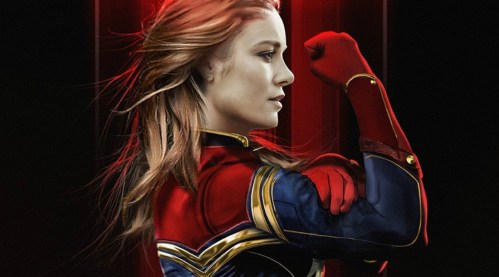
That’s where Carol “Captain Marvel” Danvers comes in. If you saw the post-credits scene for “Avengers: Infinity War,” you know why she’s about to become very relevant to the MCU. I’ve talked about her before and established how things could easily go wrong with her upcoming movie. I imagine I’ll have a lot more to talk about in the coming months.

I don’t think it’s unreasonable to say that Carol Danvers and her upcoming movie, which is slated for release in March 2018, is the most important movie in the history of the genre. I believe this movie may very well determine whether the winning streak of the Marvel Cinematic Universe continues or finally falters.

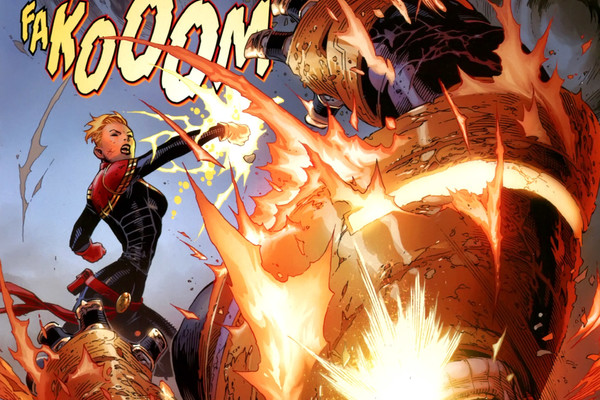
I say that as someone who loves Carol Danvers as Captain Marvel. Back in 2012, Kelly Sue DeConnick effectively reinvented the character in a way that convinced me that she deserves a prominent role in any Marvel universe. In my opinion, she’s essentially Marvel’s version Wonder Woman.

Her movie has so much going for it. “Wonder Woman” established that female superhero movies could be a hit at the box office and garner critical acclaim, despite the scars left by “Catwoman.” On some levels, “Captain Marvel” is facing a lot less pressure and it has the momentum of “Avengers: Infinity War” behind it.

However, the stakes are actually higher for this movie compared to everything “Wonder Woman” faced. Recently, Kevin Feige stated that Carol Danvers will be the new face of the MCU. From a purely logistical standpoint, that makes sense. The MCU needs a new unifying force if Chris Evans’ Captain America is to make his final stand in “Avengers 4.”

I believe Carol can pull it off, as well. She has taken on more leadership roles in the comics and has become a central member of the Avengers’ main team. Combine that with Brie Larson’s charisma and Carol Danvers has all the tools she needs to keep the MCU’s winning streak going.

I believe she can do this simply by being the kind of character that Kelly Sue DeConnick molded six years ago. That version of Carol Danvers emerged from years of being a secondary character in Ms. Marvel who rarely got a chance to achieve the same recognition as her peers. She’s a classic case of a character who elevated themselves by embracing a new identity, a new purpose, and greater ambition.

DeConnick established Carol as someone who achieves so much in one field, but dares to seek greater challenges beyond. She contributed to the Avengers for years, but never pursued a greater vision until she became Captain Marvel. That idea of someone looking to the stars, seeking to achieve more, and pursuing it with unmatched drive is what will help her succeed in ways on par with Wonder Woman.

At the same time, though, there are potential risks and Captain Marvel may be more vulnerable to them than Wonder Woman. While Kelly Sue DeConnick did a lot to reinvent Carol Danvers for a new era, she has faltered somewhat. Recent events in the comics have put her heroic merits into question for all the wrong reasons. Some of Brie Larson’s politically-charged rhetoric hasn’t helped either.

To some extent, Carol’s reputation has faltered because in elevating her status in the comics, she has been hit with the dreaded Galbrush Paradox. The quirks that DeConnick introduced, such as Carol being a Star Wars fan and having a love interest in James Rhodes, have eroded in recent years. In addition, even her artistic depictions have devolved by reducing her feminine features for no apparent reason.

In wake of the vitriol that Star Wars received for its portrayal of female characters, I worry that “Captain Marvel” runs the risk of inviting a similar backlash. If Carol Danvers is not sufficiently compelling, she runs the risk of getting hit with the Mary Sue label that has plagued Rey since “Star Wars: The Force Awakens.”

The worse case scenario, in my opinion, involves turning Carol Danvers into a Captain America or Iron Man stand-in. In the absence of these iconic characters, and their top name actors, Feige and those at Marvel Studios may be tempted to make her too much like them. That would be a huge mistake, especially for an organization on such a huge winning streak.

Carol Danvers is not Steve Rogers, nor is she Tony Stark. She’s not just a woman who takes on a man’s role either. She’s still a woman and, especially under DeConnick, her womanly traits were on display alongside her more badass features. It’s not groundbreaking because Wonder Woman struck just the right balance, having her fight alongside men while still acting like a woman.

In the best case scenario, Carol Danvers follows Wonder Woman’s example and establishes herself as someone worthy of carrying the MCU forward. Unlike Rey, she’s a character with plenty of compelling lore to work with. The key is finding the right blend that’ll help her fit into the Marvel Cinematic Universe.

At this point, without a trailer and only a few teases to go on, it could go either way for “Captain Marvel.” It could be the next in a long line of successes or it could be the MCU’s first failure. To date, Kevin Feige and those at Marvel Studios have shown time and again that they know what they’re doing.

Hell, they took an obscure series involving a talking raccoon and made it a global brand. Until they show they’re capable of screwing up, I’ll continue to give them the benefit of the doubt. At the same time, though, I think it’s worth bracing for that inevitable setback. All winning streaks come to an end. I just hope “Captain Marvel” isn’t the one that ends it.

1 Comment

Filed under Comic Books, Jack Fisher, Superheroes, media issues, movies, superhero movies

Five Things I Want From The “Daria” Reboot

96d03d53-c9a4-43ef-a0a2-f99b14256637

Last year, I wrote an article about how the classic 90s MTV show, “Daria,” is more relevant today than it was back when it debuted in 1997. That special brand of misanthropic monotone conveyed a harsh, uncompromising honesty of the world in a way that felt both genuine and endearing.

Well, it appears I’m not the only one who felt that way because according to The Hollywood Reporter, the newly-minted MTV Studios is looking to reboot the show as part of a push to reinvigorate the MTV brand that seemed to fade along with the appeal of boy bands. While I’m skeptical that MTV can ever become relevant again, I couldn’t be more thrilled at the prospect of Daria returning to TV.

I think I speak for many who watched that show back in the late 90s when I say that this world needs her. Specifically, it needs her critical insights into a world awash in fake news, alternative facts, and political correctness. There’s an entire generation emerging whose reality is shaped by their news feed on social media. It feels as though no one is even capable of seeking the truth anymore.

Daria doesn’t just tell the truth like she sees it. She says it in a way that is apolitical, unbiased, and relatable. She doesn’t criticize. She doesn’t have an agenda, either. She sees something she thinks is a farce and she points it out. At a time when every character needs to be an icon for something or someone, that’s nothing short of refreshing. For a character from the late 90s, that says a lot about our current state of affairs.

There’s a lot more I could say about “Daria,” both as a character and as a TV show. For now, I want to create a wish list, of sorts, for what I’d like to see in a “Daria” reboot. I know that’s a bit premature since MTV Studios is in the very early stages of making this happen, but I think the prospect of more “Daria” at this particular point in our history is exciting.

I know excitement is the last trait anyone would associate with Daria Morgendorffer, but I’m willing channel my inner Quinn to entertain the possibilities. What follows are five things I want from a new “Daria” show. I know any rebooted show is subject to reinvention, sometimes for the worse, but I believe if the new “Daria” delivers on these critical elements, it’ll be a success. It might even get Daria herself to crack a smile.


Wish #1: Build Daria’s Agenda Around Exposing Other Agendas

Let’s face it. Today, everyone seems to have an agenda and social media has given people a platform to pursue that agenda, even when they’re dangerous, damaging, and downright hurtful. In the late 90s, media outlets like MTV got a lot of flak for pushing bloated consumerism around bubblegum pop music and reality shows. Today, social media has created countless outlets for countless agendas of varying absurdity.

Daria Morgendorffer can set herself apart in this chaotic landscape by building her agenda around exposing other agendas. She could see right-wing talking points as just excuses to pay fewer taxes and be a dick to poor people. She could see left-wing talking points as utopian fantasies mixed with a pathological need to be outraged over something. With Daria, no agenda is safe.

In any show that would have her take part in the current climate, it needs to give her opportunities to see all this social masquerading for what it really is. As I’ve noted before, people have a frustrating tendency to believe they’re the hero of their own story. In Daria’s world, there are no heroes. There are no villains. There are just people.

That’s a harsh reality, but one Daria refuses to ignore. Her reminding people of that reality in any show would be both refreshing and cathartic, especially to anyone who is sick of people building their agendas around professional trolling.


Wish #2: Continue Daria’s (Unique) Growth From The Show

Throughout five memorable seasons and two made-for-TV movies, Daria’s character remained remarkably consistent. However, she did undergo her share of growth during that time. It was subtle, much more so than that of characters like Jane, Quinn, Helen, and Tom. However, that’s exactly what made it meaningful.

At the beginning of the show, Daria is already her anti-social, misanthropic self. She’s a teenager and a high school student, though. Teenagers go through changes. Even Daria isn’t immune to that. She developed her first crush, had her first serious boyfriend, and even improved her relationship with Quinn, a character who might have been the least likable person on the show.

The show ended with Daria graduating high school and going to college, culminating in one of the most memorable graduation speeches ever made. However, college is rarely the endpoint for anyone who survived high school, even someone as jaded as Daria. Any new show that expands her story should also follow that evolution.

Whether it takes place in college or shortly after, Daria always expressed a desire to get out of Lawndale and do something with her life that she wouldn’t hate. That’s a process a lot of people go through, but few could endure it with the same attitude or crass as Daria. That’s exactly why that story is worth telling.


Wish #3: Keep Her Apolitical And Unbiased

No matter how much she grew over the course of the show or what she encountered, Daria Morgendorffer may very well be the only character in the show, or in real life, who can call themselves truly unbiased. She doesn’t have a political affiliation. She doesn’t identify with one group or the other. She’s just Daria. Her opinions and leanings are her own.

That’s an important facet to preserve in any new “Daria” show. That may prove challenging, though. If you go by current stereotypes, Daria’s age and education levels put her in line with the kind of left-leaning archetypes that Fox News whines about every half-second. However, in terms of her overall worldview, Daria would be just as cynical about the MSNBC crowd.

The core of Daria’s politics is that all politics are stupid. Politics is just one big exercise in people gathering around others who think like they do so that they can rely on someone else to do the thinking for them. That is not Daria’s style. She believes in thinking for herself. Anything beyond that is a waste of time.

Moreover, her worldview is as simple as it is plain. The real world doesn’t care about your beliefs, your principles, or how hard you fight for them. The real world is harsh and whining about it doesn’t change anything. That would put her at odds with liberals, conservatives, and everyone in between. The idea of her getting into debates with some of the politically-minded trolls in the world would certainly be worth watching.


Wish #4: Give Her Supporting Cast A Chance To Support Her

Like any great character, animated or otherwise, a big part of what made “Daria” such a great show was its diverse cast of colorful characters. From her annoying younger sister to her uptight mother to her charismatic classmates, Daria was surrounded by a lot of memorable individuals who helped highlight just what a unique persona she was.

Daria’s closest relationships were with her friend, Jane Lane, and her family that could never understand her. To maximize the strength of her persona, those relationships should definitely be part of a new show. There can also be room for new relationships that put her in entirely new situations.

That may already be in the works. Within the announcement surrounding the possible reboot of the show, there’s a mention of giving Jodie Landon a significant role in the show. That has a lot of potential because Jodie was a great character who didn’t get a chance to develop until the last two seasons of the show. A new show could give both her and Daria new opportunities in a world full of new controversies.

Within the existing cast, there’s also potential for Daria to forge connections with characters other than Jane. There’s also potential to form new romantic entanglements. She does have the capacity for affection, despite what her demeanor may imply. In an age where romantic entanglements are fraught with complications, that could bring out the best in her and the worst in everyone else.


Wish #5: Put Her In The Middle Of Controversial Issues (And Let Her Work Her Magic)

The original “Daria” was a great show in that it didn’t take sides in a controversy or preach to the audience. In fact, those kinds of public service announcements would’ve been antithetical to Daria’s persona. She doesn’t think that it’s the job of other people, be they animated or otherwise, to tell you how to feel about an issue. That’s something you’re supposed to figure out for yourself.

At the same time, however, I felt as though “Daria” avoided too many major issues that could’ve helped make the show even more relevant. While it lightly touched on issues of teen sex and out-of-control consumerism, it didn’t get too deep into the kinds of topics that inspire hashtags and hate mail.

I think that worked well for “Daria” in the late 90s. I don’t think it’ll work as well in today’s hyper-political climate where a new outrage is just a click away. A new “Daria” show won’t succeed if it avoids hot-button issues like the anti-harassment movement, gender inequality, and an emerging generation that may end up being the most nihilistic of all time.

I’m not saying the show has to be built around those kinds of serious topics every other episode. Shows like “South Park” already do that. The biggest appeal to this show would be Daria offering her misanthropic take on those issues to help expose them for what they are.

I believe that there’s definitely a market for that kind of nuance in our current political climate. I also think there’s a growing need for a voice who can sift through the endless shit storms that get kicked up every day for one reason or another. Whether it’s something the President tweets or some dumb comment a celebrity makes, we all need a harsh, but sincere voice to speak the honest truth.


Daria can be that voice. I would still argue we need that voice now more than we did in the late 90s and early 2000s. I hope that this show, assuming it gets made, provides that voice. “Daria” was ahead of its time, as a how and as a character. It’s time we finally catch up with one another.

“Daria” was a great show in that it didn’t take sides in a controversy or preach to the audience. In fact, those kinds of public service announcements would’ve been antithetical to Daria’s persona. She doesn’t think that it’s the job of other people, be they animated or otherwise, to tell you how to feel about an issue. That’s something you’re supposed to figure out for yourself.

At the same time, however, I felt as though

1 Comment

Filed under Current Events, gender issues, media issues, political correctness

Sexy Sunday Thoughts: Margarita Edition

puerto-mexico-ristorante-roma-9

I was never too big a fan of margaritas. With all due respect to Jimmy Buffet and those who live by his music, I just never saw much appeal. If I’m in the need for something tasty and alcoholic, I just grab a cold beer or a glass of whiskey with some ice. That said, whenever a heat wave hits my area, I appreciate margaritas a lot more.

It’s mid-June now. This is the time of year when heat waves hit every other week, it seems. It’s going to get hot. It’s going to get muggy. Even if you don’t enjoy spending time outdoors and have top notch air conditioning, that heat will find you. You’re going to seek out a nice, refreshing drink at some point. You’re also going to feel the urge to get hammered as well.

A good margarita does both. That’s why it’s the perfect drink for a tropical vacation. It works just as well when you’re at home trying to stay cool and not overwork your air conditioning. Every now and then, I’ll adjust my thermostat so I can lounge around naked and still enjoy a good beverage that will help relax me. It’s part of why I love summer.

In the spirit of the summer heat and the drinks that help us cool off, I’m dedicating this week’s edition of my Sexy Sunday Thoughts to all things cold, frosty, and alcoholic. There are a lot of great ways to endure the heat in the summer, but only a handful will get you drunk. Enjoy!


“Women love the strong, silent types because it means more silence after great sex and more strength for carrying bags.”


“For men and gay women, alike, breasts are the original stress balls.”


“Even the most well-endowed man in the world will never measure up against someone with penis-shaped fingers.”


“Masturbating before a date is like taking a bath before going to the pool.”


“A blind date is like strip poker with people who dress in layers.”


“The fact that women’s perfume costs more than men’s deodorant says a lot about how we prioritize our scents.”


“A man dating multiple women takes a lot energy, but a woman dating multiple men simply requires endurance.”


I hope that helps make everybody’s cold, refreshing, alcohol-laden drinks taste that much better. This is the time of year when we don’t need as many excuses to enjoy something frosty and intoxicating. When the sun is blazing, the air is humid, and the days are long, enjoying a beverage that both cools you down and gets you drunk is just an efficient way to enjoy summer.

Leave a comment

Filed under Sexy Sunday Thoughts

The Unofficial Platform Of The Nihilist Party

What follows is a little exercise I found myself doing after hearing too many political debates on TV and reading too many rants on social media. Debating/whining about politics seems to be our new favorite pastime in the age of social media and cable news. Personally, I find it frustrating and unproductive.

It’s for that reason that I’m going to attempt to flip the script on the endless barrage of outrage-inducing diatribes. Instead of attempting to inject a new political context into a discussion, I’m going to just hit the whole concept upside the head with a baseball bat of pure nihilism. I’ve enjoyed talking about it in the past, thanks largely to my love of “Rick and Morty,” and I’d like to channel it into something new.

In the spirit of those equally annoyed by political mud-slinging, who just happen to have an extra-healthy appreciation of nihilism, I hereby present the unofficial platform of the Nihilist Party. I know it’s not  real political party. In fact, nihilism being a political party would be paradoxical, given its philosophical underpinnings.

Now, I understand the inherent absurdity of such a concept. I also don’t deny that my expertise in nihilism and other such philosophies are limited, at best. There’s only so much you can learn by binge-watching “Rick and Morty” and “Bojack Horseman.” I still feel like that’s enough with which to craft a new political party. It’s not like other parties set the bar that high to begin with.

With those disclaimers out of the way, I hereby present what I believe is the unofficial platform for the Nihilism Party. If you want to imagine it being recited in the voice of Rick Sanchez, then by all means. I’m not expecting it to win your vote in the next election. It really doesn’t matter, which is kind of the point.


Preamble

We, the random clumps of matter drifting aimlessly throughout a meaningless universe, hereby decree in the name of a wholly arbitrary set of empty standards, set forth the following principles that we feel adequately create the illusion that how we govern our purposeless society matters. We believe all political ideologies are equally vapid and all forms of government inherently flawed, albeit to varying degrees. As such, we neither seek to pretend ours is superior, nor do we claim we can fix the flaws others ignore.


Statement of Principles

We acknowledge that any functional society, be it free or tyrannical, is finite in nature and subject to inescapable entropy over time. In the long run, no society or its various achievements can hope to outlive the inevitable destruction of our planet and the heat death of the universe. To pretend otherwise is an exercise in futility and ultimately counterproductive.

With these harsh truths in mind, the Nihilist Party seeks only to forge a temporary medium of comfort for those who insist on living in functioning society within a infinitesimal speck in the universe for an inherently finite period of time. Whether or not the individuals in that society accept those harsh truths is irrelevant. The Nihilism Party’s primary goal is to maintain whatever functional order is necessary to keep others content as they wait for their eventual annihilation into nothingness.

In accord with that goal, as meaningless as it may be, the following articles reflect the wholly arbitrary articles of the Nihilist Party. Please note that these principles are necessarily vague in order to embody the empty nature of all political underpinnings. Any effort to inject specifics for a pointless society within a pointless world would be contrary to the principles of the Nihilism Party.


Article 1: Nihilist Rights

  • Since all rights are just legal constructs disguised as inalienable assets, we neither support nor discourage efforts by a significant group of people to randomly denote what constitutes a legal right, provided that group does not impose it others in a manner that would make their meaningless lives uncomfortable.
  • The tendency for individuals to form complex social bonds, as determined by the biological programming of their flesh, is neither the concern of the Nihilism Party, nor is it their responsibility to manage beyond ensuring the nature of these arbitrary bonds aren’t impeding the desire of others to pursue their own false meaning.
  • Since government is nothing more than a temporary construct attempting to manage an inherently chaotic world in an ongoing act of never-ending futility, the scope and reach of such government will be limited to simply ensuring that citizens residing within whatever invisible borders are in place can willfully and peaceful pursue a life of empty meaning on their own terms.

Article 2: Nihilist Economic Policies

  • To the extent that everything of value is based on people just believing it has value, the Nihilist Party remains ambivalent to whatever kind of currency people want to use, be it slabs of metal, pieces of paper with famous dead people on them, or bits of digital code.
  • While the the Nihilist Party does not ascribe or inflate the value of one economic transaction over the other, those built on fraud, lies, and deception hinder peoples’ ability to seek whatever false meaning they pursue and therefore, in the name of preserving meaninglessness for all, favors efforts to limit such behavior to the greatest extent possible.
  • Truth and ethics are ultimately pointless in the long term, but in the short term, it creates favorable conditions for contentment among people and since that’s the most any sentient life from can hope for, the Nihilist Party supports policies that preserve both in economic activity.
  • Since all economic trends are finite, fleeting, and prone to both inflated and deflated value, the Nihilist Party favors playing no favorites in any industry and strongly opposes any efforts to support one form of economic activity over the other.
  • In the interest of ensuring all economic activity is on an equally meaningless playing field, each transaction and industry will be subject to the same arbitrary fees and rules as any others, but the Nihilist Party favors limiting the fees and rules to an extent that ensures equally worthless pursuits of worth.

Article 3: Nihilist Justice

  • The Nihilist Party’s default position on justice is that no one individual, group, majority, or minority is worthy of greater or lesser justice than anyone else and efforts to the contrary are ultimately a waste.
  • Seeing as how justice is a product of flawed, situational perspectives within a given time and place that is ultimately pointless, traditional notions of what is just in one situation cannot and should not apply to another, seeing as how every moment is fleeting.
  • While a meaningless life incurs little meaning in the long run, the needless infliction of suffering and loss is seen as incompatible with the Nihilist Party’s belief that all deserve some modicum of contentment while they await their eventual death and seeks to limit any disruptions to that contentment to the greatest extent possible.
  • The Nihilism Party does not endorse special treatment for anyone who prioritizes their contentment over another and only favors treating measurable, tangible harms as actual wrongdoings, as those are the only harms that carry any weight in a meaningless universe.

Article 4: Nihilist Government Structure

  • The Nihilism Party believes that governments, like the failed economies and fallen empires before it, are simply finite manifestations of spontaneous order among sentient beings and can neither be trusted nor empowered to do more than simply preserve meaningless contentment among its citizens.
  • To the extent that meaningless contentment requires the absence of petty wars and violent conflict, the Nihilism Party favors the maintenance of whatever defense forces are necessary to protect the population within its arbitrary borders from such conflicts, but opposes instigating conflicts for vapid notions of empire and legacy that are ultimately pointless at the heat death of the universe.
  • For those seeking to attain positions of authority within a government, the Nihilist Party supports those who seek to persuade a large enough group of citizens of their worth, but also favors measures that permit the easy removal of such individuals in the name of preserving the arbitrary nature of authority, in general.
  • Since people inevitably die, laws inevitably change, and legal traditions are rendered null over significant spans of time, the Nihilist Party remains ambivalent to the structure and makeup of a government, provided it preserves the party’s policy of maintaining equal contentment for those who seek to forge meaning in a meaningless universe.

Article 5: Nihilist Omission Provision

  • The absence, oversight, or omission of any policy or position in this platform is not to be construed as tacit or indirect statement of support or opposition, seeing as the Nihilism Party holds a position of strict ambivalence in the interest of maintaining the equal meaninglessness of all endeavors, past and present.

There you have it. That is my version of the a platform for the Nihilist Party. Please note that I do not pretend to speak for all nihilists, nor do I claim to be an expert in the subject. This is just a fun little exercise in mixing politics, nihilism, and the absurdity of both.

If you feel like there’s something worth adding to this platform, then please let me know in the comments. For those who are just as frustrated with politics and debates as I am, I hope this offers a nice reprieve, a good laugh, or a potent mixture of both.

Leave a comment

Filed under Current Events, nihilism, philosophy, political correctness, psychology

How To Denigrate Multiple Iconic Romances In A Single Comic

664803-_sx1280_ql80_ttd_

I love romance. I also love comics. I’ve made my fondness clear for both on numerous occasions. When they’re combined, I’m twice as thrilled. It has proven to be a very potent combination before. Like real life, comic book romance isn’t always done right, but when it works, it’s a beautiful thing.

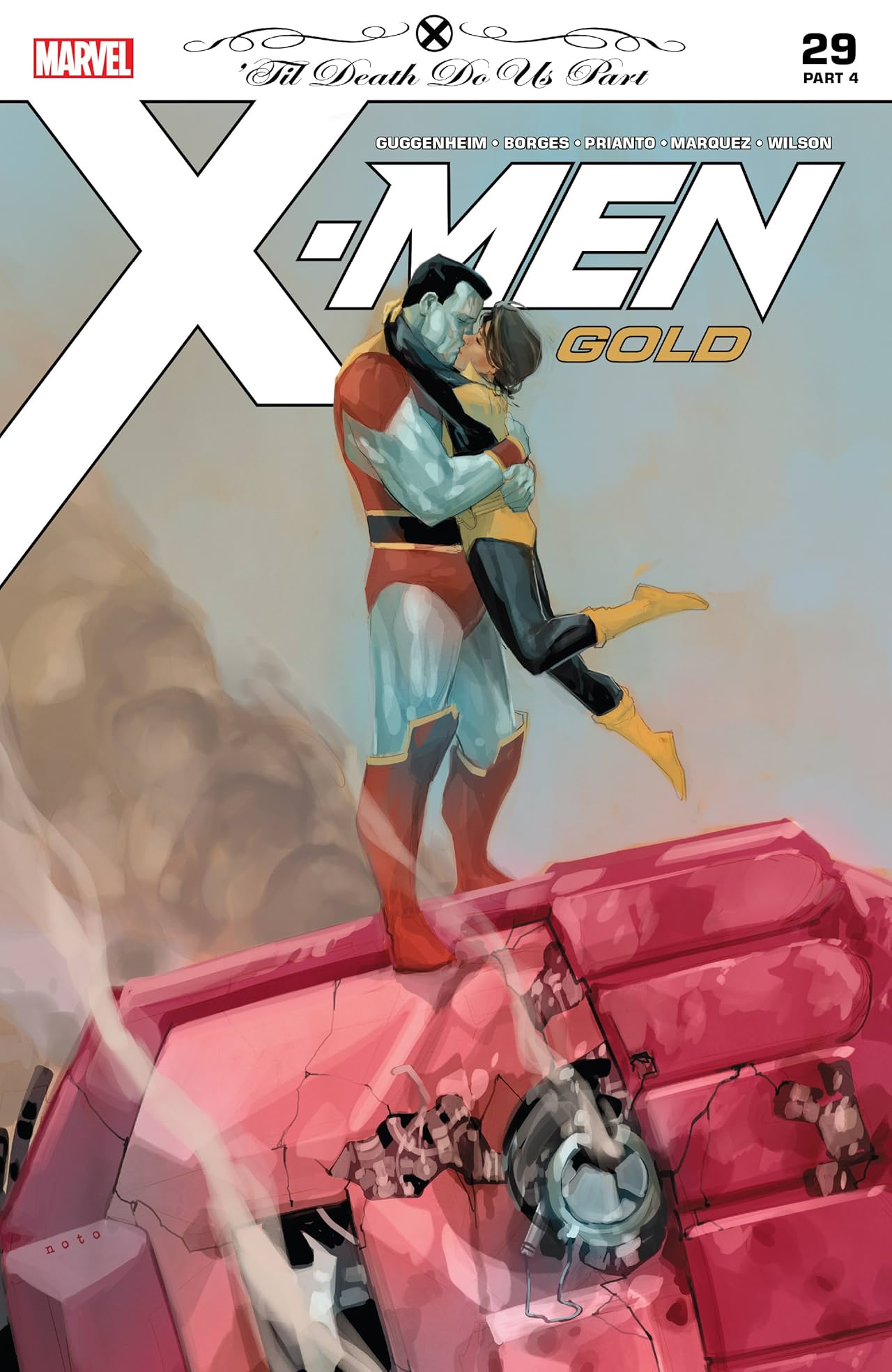
That’s what I had hoped to see with the release of X-men Gold #30, which was billed as the overdue wedding between Kitty Pryde and Colossus. They’re one of the X-men’s most prominent romances, having a history that spans decades and includes death, resurrection, and being trapped in a giant bullet. I swear I’m not making that last part up.

Earlier this year, I detailed why the Kitty/Colossus romance was so special in annuls of X-men lore. It’s one of those romances that isn’t assumed like Superman and Lois Lane. They have to actually work to make their relationship strong, which makes it feel more real than most superhero couples.

It’s why I had such high hopes for X-men Gold #30. It promised to reward these characters for their love and the work they put into it. Being the romance fans I am, I’m a strong believer in having that kind of effort pay off for a couple.

Sadly, and this was spoiled before the comic even came out, that’s not how things played out for Kitty and Colossus. I don’t mind spoiling it, either. Kitty and Colossus don’t get married. Kitty, for reasons that are more asinine than I can put into words, gets cold feet at the last possible second and calls it off.

She doesn’t even wait until she and Colossus are alone so she doesn’t create this mass spectacle that is sure to humiliate and hurt someone she loves in a very public way. She actually gets to the point where Colossus is about to put the ring on her finger and that’s where she stops it. Short of punching his jaw after being told he can kiss the bride, it’s one of the worst things she could’ve done to this man.

On top of that, Kitty was the one who proposed to him. This isn’t a case where a man pressures a woman into marrying someone or a woman feels pressure from her family and peers. The idea, request, and desire to get married came from Kitty and her being the one to call it off like that, after her friends and family did so much to help her, just makes her look more callous than an entire army of Lex Luthors.

I wish I could provide some context to her decision. I really do. I just can’t find a believable way to make her decision anything other than an act of heartlessness, cruelty, and cowardice. There were no hints, whatsoever, in the events that led up to the wedding that would imply Kitty was having second thoughts. In fact, the events of X-men Gold #29 doubled down on her love for this man.

Then, in just one scene that played out early in X-men Gold #30, it all comes apart thanks to a short, unspectacular conversation with Colossus’ sister, Illyana “Magik” Rasputin. It’s not dramatic. It’s not that revealing, either. Again, I don’t mind spoiling it.

Magik just reminds Kitty that she and Colossus had to overcome a lot in order to get to this point. She also throws in that, if they were meant to be, it would’ve happened already. Bear in mind, Magik is considered one of Kitty Pryde’s closest friends on top of being Colossus’ sister. Even if that remark could be attributed to her alcohol intake, it’s still a terrible thing to say to someone who is about to get married.

It’s one of those comments that shouldn’t have derailed a couple that has worked so hard to be together, but it did. Seriously, that’s all it took to convince Kitty that she had to stop the wedding, in the middle of the ceremony, and in front of all her friends and family. Considering she’s supposed to be a leader of the X-men and one of the toughest female X-men of all time, it’s pretty pathetic.

Her decision and terrible timing, alone, could’ve made X-men Gold #30 one of the least romantic stories in the history of the comics. I still wouldn’t have put it on par with some very disturbing romantic sub-plots that played out in some Spider-Man comics. If breaking off a wedding was all this comic did, I would still appreciate it for how it imparted so much heartbreak into a story.

However, it gets even worse than that. It wasn’t enough for X-men Gold #30 to undermine one of the X-men’s most likable romances. It actually succeeded in denigrating the entire concept of romance in superhero comics. I know that sounds like an exaggeration on my part, but I’m dead serious.

Yes, Kitty and Colossus don’t get married in this issue. However, a marriage does occur and it is between another iconic X-men couple that I’m actually really fond of. The lucky couple here is Rogue and Gambit. If you watched the old X-men 90s animated series, you understand why that’s a big deal.

Now, I could write several articles on the quirks of the Rogue/Gambit relationship. It’s another one of those romances that has become iconic in its own right. I would even go so far as to put it slightly above the Kitty/Colossus relationship, if only because both characters have had to deal with some pretty unique obstacles, the least of which involves Mystique being Rogue’s adopted mother.

In the context of X-men Gold #30, though, those various quirks don’t really play into the moment. They haven’t even played into any of the events throughout X-men Gold that led up to this wedding. In fact, they only recently rekindled their relationship in a mini-series called “Rogue and Gambit” by Kelly Thompson, which I highly recommend.

Even with that development, though, them getting married at this point would’ve been rushed, forced, and downright inappropriate, given what just happened to Kitty and Colossus. It would’ve given the impression that someone had to get married in this comic. It didn’t matter who, why, or for what reason. It just had to happen to salvage the issue.

To hell with crafting a story that documents the emotional journey two characters make to get to that point. Never mind the fact that other iconic couples have gone on that journey and made for some of the most memorable moments in the history of comics. Just having Rogue and Gambit randomly decide, on the spot, to get married should carry the same weight. If I could write that with more sarcasm, I could.

Again, I want to make clear that I like the Rogue/Gambit relationship. I’m glad their romance is evolving, once more, especially after some of the other characters they’ve been stuck with. The way it was handled, though, and at Kitty and Colossus’ expense, no less, was just downright demeaning to the very concept of meaningful romance.

It sends the message that romance is as interchangeable as a box of frozen burritos. If one doesn’t heat up right, then another one works just as well. It’s not like they’re unique, having unique emotional dynamics and personal journeys specific to multiple characters. One is no more special or meaningful than the other. Again, if I could write that with more sarcasm, I would.

What happened to Kitty and Colossus in X-men Gold #30 was tragic, but it didn’t undercut romance in superhero comics, as a whole. As soon as Rogue and Gambit were randomly thrust into the moment, doing on a whim what took other couples so much time and effort, the whole issue undercut any deeper meaning that both romances had going for them.

Great romance, especially those that go onto become iconic, can’t be the kind of exchangeable gimmicks that can be sold as easily as plastic cups at Costco. Great romance is like the cookies you bake with your grandmother from scratch. There’s work, patience, and a deeper personal touch to the effort.

I get the appeal of throwing in a major twist. Comics, movies, and everything associated with M. Knight Shyamalan have been doing that for years. That appeal isn’t there in X-men Gold #30 because it comes at the cost of treating romance with the same recklessness as super-villains treat their henchmen.

On it’s own, I thought X-men Gold #30 was just really disappointing for how it handled Kitty and Colossus. However, it’s the precedent and the implications that leave me concerned for the future of romance in comics, particularly Marvel. If this is how love is treated, as something easily cut and pasted into a plot, then I worry for other comic book couples that may face similar denigration.

Here’s to hoping that the upcoming wedding between Batman and Catwoman sets a better precedent.

10 Comments

Filed under Comic Books, Jack Fisher, Superheroes, Love Or Obsession, Marriage and Relationships, romance, X-men

664803-_sx1280_ql80_ttd_

The following is a review I wrote for PopMatters for X-men Gold #30. Enjoy!

Misguided Matrimonial Bait-and-Switch: X-men Gold #30

Leave a comment

June 21, 2018 · 5:43 pm

Masculinity, Mourning, And My Recent Loss

1

How is a man supposed to mourn when he’s lost someone he really cares about? That’s not a rhetorical question. I’m asking because it’s a question I wish I could answer. It’s also a question that I’ve been struggling with over the past week or so.

Recently, I got the sad news from my father that my grandmother had passed away. I’ve been debating on whether or not I should talk about it on this site. I know people don’t come here to hear about my personal crap. They would much rather talk about upcoming superhero movies, sex robots, and double standards.

However, I’ve since concluded that this is something I need to share, if only to help me cope. Without getting too much into the personal details, this loss really hurt. I was very close to my grandmother. She was a big part of my life for as long as I can remember and just referring to her in the past tense is a strange and distressing feeling, but one I knew I would have to face eventually.

I even knew it was coming sooner rather than later. My grandmother’s death did not catch anyone by surprise. She was in her late 90s and had been dealing with a lot of health problems over the past four years. The past several months have been especially bad, but I still visited her regularly, hoping to boost her spirits.

Now, the idea that I can’t visit her ever again is really hard to process. My grandmother was one of those special individuals whose presence just made everything inherently better. Even with her declining health, she never lost that amazing spirit. She lit up the room and she enriched my life in ways I can never put into words.

Mourning her has proven to be one of the biggest challenges of my adult life. I understand that this is the natural order of things. I know that loved ones eventually die, especially those who lived long, fruitful lives like my grandmother. That doesn’t make it any less painful.

In dealing with it, though, I find myself contemplating things about mourning that I didn’t expect. Some of it involves my own personal issues. Others involve a bigger issue that I feel is worth exploring, even as my current emotional state is so raw.

There are a lot of things I didn’t learn from school, parents, siblings, or peers that I wish I had while growing up. Chief among those things is coping with loss. It’s not that nobody tried to teach me those skills. It’s not like there was a course in it, either. I just never made much effort to learn them. In fact, I feel as though I avoided them outright.

Some of that might just be a result of me being more reserved. Most people who know me can attest that I tend to swallow certain feelings more than others, especially when those feelings come from real emotional anguish. I’ll sob, I’ll shed tears, and I’ll let my voice crack under the strain. I’ll try not to let it go beyond that, though.

It’s not something my family and friends pressure me to do. However, there are times I feel as though that’s what a man is supposed to do. While I don’t like attributing things to gender stereotypes, especially when double standards are involved, this is one instance where I fall right into a specific masculine archetype.

I freely admit that I don’t always express my emotions very well. I’m more inclined to hide them and hold them in. I even try to avoid them, hoping they just go away with time. That may work for some minor emotional upheavals. It doesn’t work quite as well when you’re dealing with a heavy personal loss.

That limited ability to express emotions very well has been really glaring since I got the news. I remember not reacting too strongly, but wishing I could. I remember being at a total loss, but wishing I weren’t. There were so many things I wanted to express and articulate, but couldn’t. I can honestly say that I’ve never been at such a loss before.

At that moment, being a man felt like being shackled to something. It was like trying to cross a river with heavy weights on my ankles. Even when sitting alone in my room with no one to judge me for how much emotion I showed, I still found myself at a loss. I knew I was feeling something hard, but I just didn’t know how to express it.

I’m not saying that inability is entirely attributed to me being a man. I can’t speak for all men, but I can attest on a personal level that I do feel pressure to put on a tough face when confronted with painful emotions. To do otherwise just seems contrary to what it means to be a man and maintain a masculine demeanor.

I know that sounds like I’m blaming my gender for my shortcomings, and maybe I am to some degree, but I find myself wishing that the processing of painful emotions didn’t carry these gender-based standards. Yes, there are some men who are every bit as emotionally expressive as most women, but those kinds of tendencies aren’t encouraged or celebrated. In some cases, they’re scorned.

I don’t blame women or women for that stigma. I get the sense we’re all responsible for propagating those standards, albeit indirectly. The idea that showing certain emotions isn’t manly while not showing enough isn’t womanly feels like an unnecessary burden that we place on ourselves, one I just learned is heavier than most.

While I don’t feel like men are mocked as much for showing their emotions as they were in the past, I still find myself struggling. It’s as though I had the opportunity learn how to deal with these painful feelings when I was growing up, but was pressured to not take advantage of them because doing so would reveal a personal weakness.

As misguided as that sentiment might have been, I’m still responsible for making those choices. I don’t deny that when it comes to knowing how to deal with losses on this level, I’m behind the curve. I’m very lucky that I have so many wonderful family, friends, and relatives who have been there for me every step of the way during this process. I don’t think I could’ve handled this as well as I have without them.

I just wish being a man didn’t make it inherently more difficult. Again, this is just my own experience and I can’t speak for all men. Maybe mine is an anomaly and my limited coping skills have more to do with my own personal issues than my gender. Whatever the case, this loss has revealed a lot about being a man and dealing with emotions.

I’m really going to miss my grandmother. I loved her a great deal and the idea of living life without her in it is still hard to wrap my head around. I intend to push forward, though. I know that’s what she would want. That’s what all our loved ones ultimately want once they’re gone.

Even if they can’t be in our lives anymore, we can still move forward with the strength their love gave us. To all those out there who have suffered a loss, I encourage you to take comfort in that strength. To my grandmother, who I’ll miss dearly, I thank you for showing me just how much strength there is in love.

12 Comments

Filed under gender issues, human nature, Jack Fisher's Insights, psychology

The When, How, And Why Of People Who “Snap”

an-alarming-signs-that-your-boyfriend-is-mentally-unstable-5-min-1024x712

Have you ever been so upset and so distressed that you felt like you were going to just lose it? Your ability to process emotions, as well as your grip on reality, is hanging by a thread and that thread just gives way. You don’t know what’s going to happen, but something inside you just shatters and there’s no going back.

There’s no scientific term for that sort of state, but it’s something many in the scientific and non-scientific fields love to analyze. Chances are many of us feel like we approach that precarious state at some point in our lives. Only a handful of people ever cross that line from just feeling like they’re going to lose it to actually losing it.

We often say those people just “snap.” It’s not a very scientific description, but I’ve yet to find one more fitting. I won’t try to invent some fancy term for it, as I’ve attempted before. It’s just something I want to talk about because it reflects a dangerous extreme of the human condition.

It’s a scary, but fascinating phenomenon, understanding what happens to people who snap and how they got to that point. When I was in college, one of my favorite classes was a course called “Abnormal Psychology.” Only a small part of it dealt with those who snapped, but that part often generated the most discussions in and out of class.

I say it’s worth discussing outside a classroom. I would go so far to say that it’s more pressing now than it has been in recent years, if only because it’s easier for people who snap to make the news. Thanks to the rise of smartphones and social media, it’s possible for someone who snaps to make the news before they’re even done snapping.

The Columbine shooting was a terrible story involving two very disturbed teenagers, but it happened in 1999. Unless you were near a TV, chances are you didn’t hear about it until it was over. Compare that to the shootings of Sandy Hook and Parkland. Within an hour of the shooting, it began trending on social media. We can basically live-tweet the act of someone snapping violently.

While I’m sure that will generate some frustrating discussions about the role social media plays in our lives, I want to focus on the people who experience these mental breakdowns. The act of someone snapping has been going on long before social media. Even when it doesn’t happen all at once, mental illness is well-documented in various historical figures.

Seeing as how there are over 7.6 billion people on this planet and growing, the confluence of numbers and time ensure that someone will snap again at some point. Whether or not it trends on social media depends on a whole host of factors that aren’t relevant to the discussion.

Given that inevitability, it’s worth assessing and even speculating a bit on what leads someone to that point. That’s more difficult than most insights into the human mind. There is some science into what happens to someone when they have a “nervous breakdown.” I consider that similar to snapping, but I think those kinds of breakdowns are the next to last step in a much more damaging process.

You can recover from a nervous breakdown. There are even recovery programs for it. Once someone snaps, something fundamentally shatters within their psyche from which there is no full recovery. For someone to carry out a mass shooting or a horrific crime, someone’s mind crosses a proverbial point of no return. What that point is varies from person to person, but the effects are just as devastating.

With respect to what pushes someone to that point also varies and is almost impossible to study in a scientific context. Until we can actually map and interpret the trillions of signals operating in someone’s brain, which we are working on, we can’t know for sure. Since we are all human, though, we all have some insight.

Now, I’m not a scientist, but I am an avid user of Reddit. In the interest of compiling insight, I asked for input on what other people thought made someone snap. As usual, Reddit provided a wealth of responses thanks to subs like this one, this one, and this one.

Many offered plenty of ideas, theories, and anecdotes. I won’t say there was an underlying consensus, but there were plenty of common themes. They included factors such as mental illness, alienation, isolation, depression, despair, and overwhelming anger. Some posters made especially insightful posts. Here are just a few.

You snap when the weight you carry is heavier than you can bear, and you see no better alternative.

Duty is heavier than a mountain. Death is lighter than a feather.

It is calculated response. Some people look ahead in their lives and see 60+ years of quiet desperation, insignificance, loneliness, banality, and suffering ahead of them. They are willing to give up all of those years for 15 minutes of being the MOST IMPORTANT PERSON in the room. The gun means they can’t be ignored, the attention they have been starved of is showered on them. And they will get talked about for months, maybe years to come. Something they don’t see as possible by any other action.

Disconnection, alienation, circumstance, depression, hatred. We’ve all felt like outsiders at some time, or put upon, deprived, taken from or taken advantage of, hopeless, in emotional pain so bad it hurts physically. We’ve all had those thoughts of, “I wish that person were dead,” or “fuck everyone,” or “I’ll get them back,” or “life isn’t fair.” But 99.9999% of us don’t ever act on that and as we mature through adolescence we learn to deal with these emotions and problems. We learn to work on ourselves, we learn perspective and that these things pass, we learn not to let others affect us to such a degree – or hopefully we do. Now imagine someone is dealing with this as a vulnerable teen, but 10x as bad as what any of us has dealt with, with maybe some greater tendencies towards mental illness, or narcissism, or anger management.

I think there’s a kernel of truth within these responses, as well as a few oversights. Someone who snaps is someone on a very specific path. Sometimes it’s one they choose, not knowing where it will lead. Some choose that path on purpose because they have sadistic tendencies that they seek to push. Eventually, they cross or are pushed beyond a threshold that just breaks them.

To some extent, we can think of the human psyche as one of our bones. Bones can and do break, but nature has made them pretty strong out of necessity. Some peoples’ bones are stronger than others and some get weaker over time. Put them under sufficient stress, though, and they fracture. Put too much stress on them all at once and they snap.

The human brain is more complex than a bone, but the principle is the same. It has a system for regulating stress, emotions, and pain. The system is more robust in certain people than it is for others. Those with mental illness are like those with osteoporosis in that their systems are weaker than others.

Just straining that system can be damaging. While the human brain is uniquely adaptable, too much strain too quickly can overwhelm that system. Once in that broken state, everything that usually keeps someone in check goes out the window. That’s how you get someone who has eruptions of violence, descends into self-destruction, and endures irreparable mental scars.

To complicate matters even more, which is saying a lot for such a sensitive subject, there were a few other factors that my Reddit posts brought up that may compound this process. A few posters brought up the effects of kids being over-prescribed drugs like Ritalin to fix behavioral problems.

Now, I was never on these drugs, but I did know a few kids who took them and I can attest that they have some pretty potent effects. While studies on this issue are inconclusive, it’s not unreasonable to suspect that tweaking a kid’s brain chemistry may incur some pretty lasting impacts.

Another complication that may end up being more powerful than drugs is the way our hyper-connected world just amplifies the stress that leads people to snap. While I won’t go so far as to say social media is causing people to snap, I think it can accelerate the process for those already on that path.

People already in a precarious state go online every day and see a world in which they feel left out or lost. They see others succeeding and feel it’s too late for them. They see others suffering and feel powerless to help them. They find themselves in hate-filled digital environments that only reinforce their sentiments. It makes the notion of snapping seem cathartic.

It’s impossible to know for sure just how big a factor drugs or media may be for those who end up snapping, but I suspect there are more than a few instances where it plays at least some part. Given the breadth and complexity of every individual person, I believe everyone who snaps does so only after a confluence of many factors.

When it does happen, it’s tragic for the person and their loved ones. It can subsequently manifest in some pretty horrific acts. Our current media landscape is sure to document such acts, sometimes to the point of being counterproductive. As bad as those acts can be, I do think there are reasons for hope.

That may seem outrageous after talking about such a sensitive issue, but I genuinely believe the potential for good outweighs the bad. Say what you will about the media, but by documenting those who snap, it brings attention to issues involving mental health care and how we confront hate.

I’m not saying more awareness will stop people from snapping, but it may help improve efforts to get to people before that moment comes. It is something we, as a functioning society, would be wise to work towards. Not everyone who eventually snaps can be saved, but if we can help those who can, I think it’s in their interest and that of their loved ones to help them.

Again, thank you Reddit for helping me write this article. I really appreciate it.

3 Comments

Filed under Current Events, human nature, philosophy, psychology

How Ellie From “The Last Of Us” Does LGBT Characters Right

1482574113135812936

In the current state of popular culture, one of the most emotionally-charged words is “diversity.” It gets thrown around like a nuclear hot potato. Anyone who holds it too long gets burned and anyone who doesn’t hold it long enough gets attacked. Whether it’s the handling of female characters or representation of minorities, diversity is one of those buzzwords that creates the wrong kind of buzz.

That’s not to say that it’s always mishandled. From a pure business standpoint, it makes sense for media companies to pursue diversity because the world is becoming an increasingly diverse place. New markets and consumer bases are emerging as people gain greater access to media, thanks largely to global connectivity. Any competent business would want to appeal to the most customers possible.

Economics aside, injecting diversity into a movie, TV, comic book, or video game is fraught with challenges and potential backlash. Movies have felt it. Comic books have felt it. Video games have especially felt it, thanks to scandals that seem to get more frustrating with each passing year.

The number of failed attempts to promote diversity is vast and tends to bring out the worst in many people. The successes, though, often fly under the radar and generate way too little attention. Other than the success of “Black Panther” and the occasional Supergirl comic, the cases of diversity done right are few and far between.

That’s why I think it’s fitting that one of the best cases of diversity comes from the world of video games, an industry that finds itself in a new controversy every other week. It’s even more fitting that it comes courtesy of “The Last of Us,” a franchise I’ve praised before in how it portrays masculinity in a refreshingly positive way.

Beyond just being an excellent game with amazing characters, it also provides a case study in how diversity can be done effectively. It doesn’t have to be forced. It doesn’t have to be preachy. It doesn’t even have to have a larger agenda. It can just be a bonus on top of a well-made product.

The character in question this time is Ellie, the co-protagonist to Joel in the first game and the main protagonist in the upcoming sequel. Her story is every bit as rich and compelling as Joel’s. Her history, her personality, and even the way she complements the gameplay helps make her distinct. She’s a major reason why this game is so enjoyable and why it sold so well.

She achieved all this as both a female and an LGBT character. It sounds like one of those combinations that has to be forced, but that’s not the case with Ellie. In fact, anyone who plays the entire story of the first game wouldn’t even know about Ellie’s sexuality because it was only revealed through a DLC , or downloadable content.

Even within that content, though, Ellie’s sexual orientation was not a big part of the story it told. It effectively filled in a time gap within the main game while also exploring more of Ellie’s backstory, but at no point did it make her sexuality a bigger issue than it needed to be. You could’ve removed that detail entirely and the story would still work, but it wouldn’t be quite as memorable.

More recently, during a preview of “The Last of Us Part II” at E3 2018, Ellie’s status as a homosexual woman was reaffirmed. Again, it wasn’t critical to making the moment work. The fact she’s attracted to other women doesn’t take anything away from the emotional weight of the scene. It does help enhance it, though.

Therein lies the key. What makes Ellie a great character has nothing to do with her sexuality. It’s not a defining aspect of her persona, nor should it be. It defines her no more than Joel’s heterosexuality defines him. It doesn’t have to be thrown in someone’s face as this huge, all-encompassing feature. It’s just a small part of a much greater whole that is Ellie.

There’s no effort to make her this LGBT icon, which has a tendency obscure a character when forced. Her status as LGBT isn’t belabored, either. She’s not important to the overall narrative in “The Last of Us” because she’s female and gay. She’s important because of factors independent of those traits.

That importance grows throughout the story, but not because of her gender or her sexuality. It’s what she does that helps establish her as an important character and a compelling one, at that. Her story complements Joel’s and the various other characters she encounters.

In the process, she also demonstrates a unique personality. She’s tough and stubborn, but she’s also impulsive and temperamental. Many of those qualities are entirely gender-neutral. Some stand out more because she’s a woman and that’s okay because a girl acting girly isn’t a big deal, which tends to get lost with other female characters.

It may seem so obvious, but the fact that diversity in media is such an issue shows just how difficult it is to pursue. Ellie succeeds because the diversity she represents is never primary to her character. It’s not even secondary, either. That’s not to say her gender and her sexuality are ignored, but it’s never elevated beyond a certain point.

Before any of those diversity-related issues come up, “The Last of Us” works to establish who Ellie is and why she’s important. That process of establishing a good, compelling character without her gender or sexuality being the focal point does a lot to get you to care about her story. It’s a process that can’t be rushed and the game does a masterful job in that respect.

The person Ellie is when you first encounter her early in the game is not the same person by the end. She’s someone who undergoes a lot of growth, encountering more than a few setbacks along the way. There are times she’s easy to root for. There are times when she comes off as an arrogant brat. Before you ever find out about her sexuality, you learn about her as a person.

By the time her sexuality finally comes up, Ellie is already so much more than the gender she’s attracted to. She’s a survivor, a fighter, and someone who has seen everyone she’s ever cared about die or leave her until Joel comes along. She also has a vital part to play in the ongoing apocalypse the world around her faces. All of this, once again, is not dependent on her gender or her sexuality.

I know I keep belaboring that, but it’s worth belaboring because that aspect of character development keeps getting glossed over. Other efforts at diverse characters often rush to the diversity without establishing why anyone should care about them. It’s why all-female remakes rarely resonate. It also leads to characters whose diversity is so blatant that it’s hard to take them seriously.

That’s not to say Ellie is a perfect example of diversity done right. She has her flaws, as does Joel. There are times when she’s too tough for her own good. She has a tendency to push peoples’ buttons for the wrong reasons. She also has questionable tastes in jokes. Even proponents of diversity can find flaws in her.

Despite those flaws, there are many lessons that characters like Ellie and games like “The Last of Us” can teach when it comes to doing diversity and LGBT representation right. The most important can be boiled down to four basic components:

  • Don’t try and force diversity just to fill a quota
  • Develop the character before developing the diversity
  • Don’t make their status as a woman or LGBT their most defining trait
  • Have the character complement their supporting cast, regardless of their diversity status

There are probably many more lessons that I’m not qualified to teach, but I think characters like Ellie do plenty by just being memorable and endearing. She’s a great character within a great story. That wouldn’t change if she were straight, but her being a lesbian does help her stand out, albeit for all the right reasons.

It’s also worth noting that Ellie’s story is still ongoing. “The Last of Us Part II” is set to come out in 2019 and the next part of her story promises to get pretty dark. Whether she maintains the complexity and appeal of her current character remains to be seen, but she has a strong foundation to build on, which is key for any character, regardless of their sexual preferences.

Whether we like it or not, there’s a lot of animosity between both sides, there more diversity in future media because the world is a diverse place. It’s just a matter of going about it in a meaningful, compelling way. Ellie is an example of how an LGBT character can work and when done right, it works pretty damn well.

3 Comments

Filed under gender issues, political correctness, sex in media, sex in society, sexuality, video games