The following is a review I wrote for PopMatters on “X-men Gold Annual #2.”

The following is a review I wrote for PopMatters on “X-men Gold Annual #2.”

This has been a rough summer for fans of superhero comics, romance, and weddings. For a fan like me, this summer couldn’t have been rougher without adding a broken air conditioner to the mix. Between the depressing outcome in X-men Gold #30 and the disappointment in Batman #50, this summer has been a one-two punch to the heart.
While it’s pretty disheartening, I’m not totally discouraged. Being the admitted romantic I am, I believe love will eventually win out. I know that sounds corny and ripped right out of a Disney movie, but wouldn’t put so much energy into so many sexy love stories if that belief weren’t sincere.
Even so, I feel as though the current mood surrounding romance and superhero comics has a lot of room for improvement. Mr. and Mrs. X #1 was a good start, but only to a point. There’s only so much that I can do as a fan, aside from buying comics that depict quality romances with great sex appeal. Beyond that, my influence is limited.
As such, I’m going to take a moment from complaining about the current state of love in superhero comics and try a little exercise in romantic imagination. By that, I mean I’m going to contemplate the romantic potential of superheroes that will probably never cross paths, due to rights issues and belonging to different publishers.
It’s a sad fact of life and copyright laws that Marvel characters cannot interact with DC characters. However, that doesn’t mean certain characters don’t have romantic potential. In fact, I believe some have more potential than they do with anyone in their current continuity.
What follows is my personal list of the top six non-canon superhero couples. Not every couple on this list is a Marvel and DC character paired together, but given how many iconic characters those two companies control, it’s somewhat unavoidable. Also, please keep in mind that this is just my list. It is by no means definitive. This is just something meant to inject a little romance into a summer that badly needs it.
Number 6: Black Panther and Vixen

When it comes to healthy romance, it helps when two people share the same quirks. Whether that’s wine tasting or underwater basket weaving, having similar distinctions go a long way towards helping a couple thrive. It’s for that reason that I believe Black Panther and Vixen have the quirks/kinks to make a romance that’s both functional and sexy.
Black Panther’s star has risen quickly thanks to a billion-dollar movie, but his romantic history has been somewhat stagnant. His brief, but bland marriage to Storm of the X-men came off as a gimmick rather than a relationship. While he has chemistry with Nakia, it’s only the very general kind.
That’s where Mari “Vixen” MaCabe sets herself apart. Her powers, abilities, and personality is largely driven by her connection to animal spirits. It’s very similar to the connection that Black Panther has with Wakanda’s native deity, Bast. Being connected to animal spirits and having a fondness for jungle-themed costumes gives these two a unique connection that they haven’t had with their in-universe love interests.
I believe these two would complement each other in unique ways. Vixen is cunning and charismatic. Black Panther is strong and diplomatic. Alone, they’re both pretty strong. Together, they’re even stronger and much sexier.
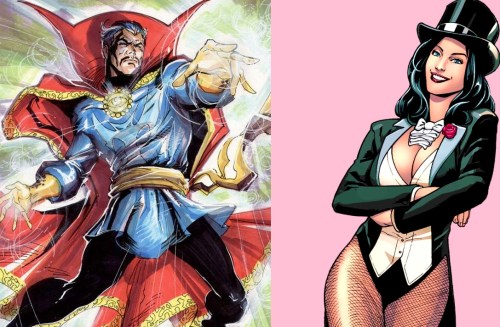
Number 5: Dr. Strange and Zatanna

This is another instance of two people having shared interests, but with Dr. Strange and Zatanna, it goes deeper than that. These two are some of the most recognizable mystical characters in their respective worlds. Dr. Strange is the Sorcerer Supreme in Marvel and Zatanna is one of the most skilled magicians in the DC Universe. Together, their magic can be pretty potent, literally and figuratively.
However, it’s not just because of their mystical skills that I believe they would be good together. In their respective universes, both characters struggle to maintain even a semi-functional relationship. Zatanna often finds herself on the outside looking in with love interests like Batman and John Constantine. Dr. Strange has never had much of a love life outside Clea, who is almost always relegated to a supporting role.
Zatanna is not the kind of woman who is content with a supporting role. She’s someone who fights alongside Batman and the Justice League. She can handle the crazy mystical threats that Dr. Strange deals with on a regular basis.
For Dr. Strange, he finally has someone who can deal with his attitude and arrogance, which is a tough barrier for any potential love interest. Again, Zatanna dealt with Batman. Any woman who can deal with Batman has an edge. The fact she isn’t afraid to show her legs off and be a bit more playful with her magic also helps.
More than anything else, Zatanna is someone who could make a man like Dr. Strange smile while he works. That, in and of itself, is a kind of magic that helps any relationship.
Number 4: Batman and Sara Pezzini (Witchblade)

This one kind of breaks the mold because it doesn’t pair a Marvel character with a DC character. Sara Pezzini, also known as the bearer of the Witchblade, is not a Marvel character. She’s a product of Top Cow Productions. She comes from a very different world compared to Batman, but that world makes her uniquely equipped to handle being Batman’s lover.
Batman requires that a romance be complicated and prone to tragedy. Few women can handle that. While Catwoman came very close to making it official, it’s a testament to just how tortured Batman is in his love life, among other things.
For Sara Pezzini, that’s exactly the kind of man who brings out the best in her. Unlike Catwoman, Sara was never a thief. She’s a cop and a very dedicated cop. Throughout her long-running series, she defines herself as the kind of hard-nosed, tough-as-nails person who doesn’t hesitate to run into the crossfire of a gang war or a demon army.
Beyond just being a cop, Sara deals with far larger problems that come with being the bearer of the Witchblade, an ancient weapon that tends to attract insane threats, even by NYPD standards. Batman already deals with homicidal clowns and thugs who are half-crocodile. They can handle the craziness in each other’s lives.
More importantly, though, Sara can do something that so few women have ever done for Batman. She can complement him as both Bruce Wayne and Batman. As a cop, she can actually help Batman’s efforts to fight crime in Gotham. He can, in turn, help her deal with the supernatural horror shows that tend to follow her, as only Batman can.
On nearly every level, Batman and Sara Pezzini make each other better. They’re the kind of couple that can work together and be together. That kind of romantic combination is potent. Plus, Sara Pezzini’s hardened attitude might actually help Batman crack a smile every once in a while.
Number 3: Superman and Captain Marvel (Carol Danvers)

This is probably the most controversial pairing on this list because Superman has one of the most iconic romances of all time with Lois Lane. Carol “Captain Marvel” Danvers, on the other hand, has no relationships that even come close, even if you take into account her affair with alcohol.
The reason I believe these two would forge a powerful romance is because Carol Danvers embodies the best traits of both Lois Lane and Wonder Woman. She’s a skilled fighter like Wonder Woman, having trained in the military and fought in interstellar wars. She’s also uncompromising in her pursuit of truth, much like Lois Lane.
Beyond just having the best traits of two iconic women, Carol brings something else to the table. Unlike Superman, she wasn’t born with her powers. She got them in an accident that merged her DNA with that of an alien. At the heart of her story, she’s a human who becomes an alien. Superman, by contrast, is an alien who becomes human.
That unique dynamic, the struggle between being alien and human, is something that Superman has never been able to share with either Lois or Wonder Woman. Someone like Carol could both help him through that journey and fight by his side. She’s tough enough to go up against anything, be it a mad Titan or an evil super-genius billionaire.
Superman is, at heart, an ideal. He’s an icon because he sets an impossible standard for others to aspire. Carol Danvers defines herself by doing the impossible and fighting for it every step of the way. That shared struggle can create the kind of love that empowers two already powerful characters.
Number 2: Captain America and Wonder Woman

This one is probably the most logical pairing on this list. In fact, Captain America and Wonder Woman are probably the one instance where their potential is greater than that of any in-canon romance and it’s not just because their movies were so similar.
Captain America and Wonder Woman are ideal love interests because they both represent the best of their respective worlds. Captain America is the embodiment of the American spirit of freedom and justice, reality-warping retcons aside. Wonder Woman is the personification of womanhood, compassion, and a warrior’s spirit. They both set high standards and pride themselves on achieving them at every turn.
It’s a standard that Steve Trevor never achieves, despite being Wonder Woman’s primary love interest. With all due respect to him and Chris Pine, he’s not on Captain America’s level. In fact, Captain America is the kind of guy Steve Trevor aspires to be, but never achieves. That elevates him in terms of how he relates with Wonder Woman.
Beyond just showing Wonder Woman the best a man can be, Captain America can hold his own better in a drawn out battle. He may not have Wonder Woman’s level of powers, but he’s also a man who regularly fights alongside the likes of Thor and Hulk. He’s not just capable of working with demigods. He actually leads them. It’s easy to see why Wonder Woman would fall in love with a man like that.
On Wonder Woman’s side, she can do more than just punch the Red Skull harder than most women. She’s the kind of woman whose compassion and love of justice is second to none. Even though she’s not American, she embodies many of the American principles that Captain America champions. She may very well be the only woman he can love as much as his country.
Number 1: Deadpool and Harley Quinn

This one was a no-brainer. In terms of sheer sex appeal and romantic compatibility, Deadpool and Harley Quinn are in another league on top of being from different comic book worlds.
I don’t think I need to say much about Deadpool’s eccentric tastes in romance. Between his overtly raunchy movie and the fact he married a succubus in the comics, the man isn’t just attracted to crazy. It’s practically an omega-level fetish for him. In terms of crazy, sexy, and all the weird fetishes that go with it, Harley Quinn checks every box.
Beyond her fondness for clown makeup and obscenely short pants, Harley has always been defined by her love with madness. Love is what drove her into a world of villainy when she crosses paths with the Joker. While that relationship has many quirks, plenty of which are quite unhealthy, it shows that Harley loves men who aren’t bound by sanity.
Deadpool wouldn’t just fill her crazy quota and then some. He would offer her the healthy kind of crazy. He’s the kind of guy who reserves gratuitous violence to those who deserve it and that has been a major struggle for Harley for much of her history. He wouldn’t just be able to carry her through that struggle. He’d make her laugh just as much as the Joker and with only half the property damage.
Unlike the Joker or a succubus, Harley and Deadpool are also the kind of relationship that would have a level of sex appeal that is literally crazy. Beyond Harley’s love of skin-tight clothes and Deadpool’s “super penis,” these two would know how to have fun and blow things up, in and out of the bedroom. With these two, you never have to worry about things getting boring.
There you have it. That’s my list for the best non-canon comic book couples. I imagine this list will cause some disagreements. That’s okay and I welcome further debate on the issue. If you think there are other couples I should add to the list, please let me know. This is a rich and sexy topic that’s ripe for discussion.

What is love? Can we ask that question without referencing to a one-hit wonder R&B song from 1993? I think it’s a question worth asking and one people have been asking since the dawn of our species. Many men who are way smarter than I’ll ever be have tried to answer this question. Some have offered revealing insights. Others just use it as an excuse to whine about a cheating spouse.
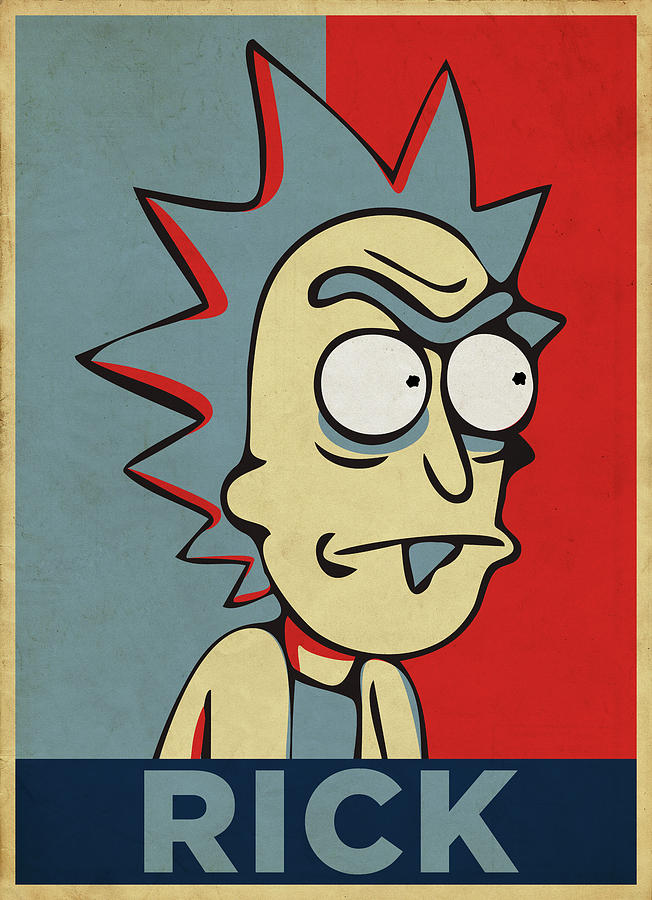
Then, there’s Rick Sanchez. I know that by saying that name, I’ve completely altered the tone of this topic. I could’ve easily spent the next several paragraphs breaking down how the smartest men in history view love and how that understanding reveals itself in our modern concept of romance. For now, I’d rather scrutinize love from the perspective of a hard-drinking, brutally honest, nihilistic cartoon character from Adult Swim.

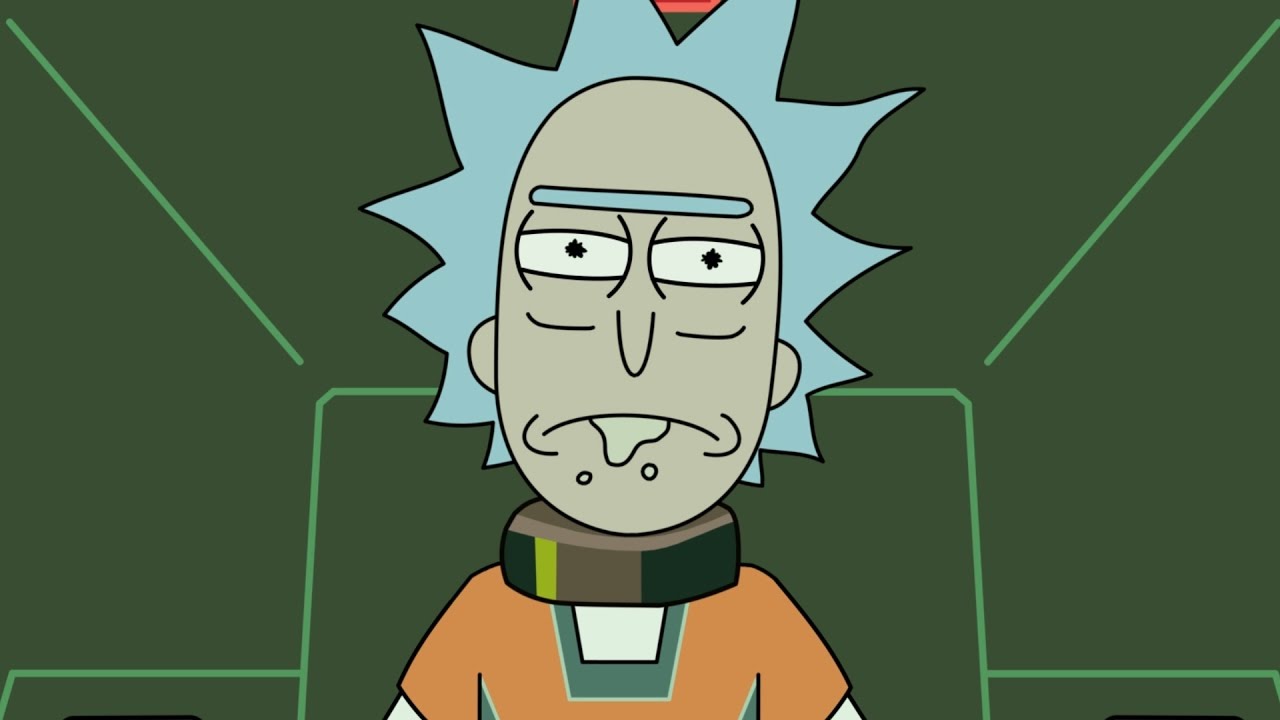
Yep, I’m referring to this guy again.
Make no mistake. I’m not just using this as another excuse to talk about “Rick and Morty,” although I wouldn’t blame anyone for thinking that. I really do think characters like Rick Sanchez have something to teach us on the topic of love. Being an admitted romantic and aspiring erotica/romance writer, I believe those lessons are worth heeding.
On paper, Rick Sanchez is the last person most would go to for insights into love. From the first scene in the first episode, he establishes himself as an overly-cynical, high-functioning alcoholic who may or may not be okay with blowing up the world for the sake of a fresh start. To say he’s not the romantic type would be like saying Jerry needs help with his golf game.
However, Rick does demonstrate throughout the show that he has a capacity for love. He has even had a few moments where he has shown genuine heart. There’s an odd mix of eccentricity and complexity to Rick’s behavior. That’s part of what makes him such an endearing character and why he resonates so much with an emerging generation.

From all that chaos, though, there are insights worth noting. “Rick and Morty” may go heavy with nihilism and moments of existential crisis, but it doesn’t avoid the impact of love. Whether it’s Morty constantly trying to get with Jessica or the constant upheavals in Beth and Jerry’s marriage, love is an underlying factor throughout the show.
This is despite the fact that Rick is pretty overt about his feelings on love. In “Rick Potion #9,” the sixth episode of the first season, he gives his clearest, most quote-worthy opinion on love.
“Listen, Morty, I hate to break it to you but what people call ‘love’ is just a chemical reaction that compels animals to breed. It hits hard, Morty, then it slowly fades, leaving you stranded in a failing marriage. I did it. Your parents are gonna do it. Break the cycle, Morty. Rise above. Focus on science.”
That sounds pretty jaded, to say the least. It’s perfectly fitting with Rick’s misanthropic mentality. However, there is a context here and one that’s fairly subtle, as things tend to be in the world of “Rick and Morty.”
Part of that context is Rick’s family situation. Beyond being a drunk and an eccentric mad scientist, he also has a family. It’s not just his daughter and two grandkids, either. He mentions in his cynical musings that he’d fallen in love and gotten married at one point.

That, alone, has some pretty profound implications. It shows that even the smartest, most capable man in the multiverse cannot avoid the impact of love. Keep in mind, this is a man who travels the multiverse on a whim, defeats Thanos-level super-villains while drunk, and understands how meaningless everything is in the grand scheme of things.
Despite all that, Rick Sanchez still fell in love. He still got married. That, in and of itself, shows the power of love better than any Huey Lewis song. While the show hasn’t revealed much about his former wife, Diane, it does establish an important fact. Rick is capable of love, even when he sees it as just a confluence of brain chemicals.
The show goes onto to reveal that Rick is still influenced by love, despite this reductionist understanding of it. The most comprehensive example comes in Season 2, Episode 3, “Auto Erotic Assimilation.” In many ways, this episode helps convey the most meaningful lesson in love that any animated series has ever attempted.

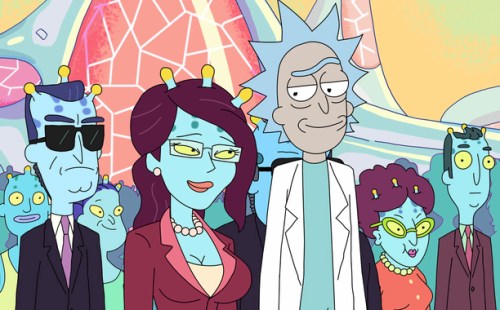
In the episode, Rick catches up with an old girlfriend, who happens to be an alien hive mind named Unity. If that sounds weird, even by “Rick and Morty” standards, trust me when I say it doesn’t crack the top ten. The fact that Unity is a hive mind is part of why the insights are so unique and impactful.
Throughout the episode, we learn about the particulars of Rick and Unity’s relationship. Unity establishes herself as one of the few beings in the multiverse who can keep up with Rick’s eccentricities. If anything, she has to be a hive mind in order to do so, as evidenced by Rick’s elaborately kinky requests.

In this context, Unity is the ultimate manifestation of supportive lover. She can literally do anything and be anywhere because she has the collective resources of an entire planet at her disposal. She’s more capable than a shape-shifter like Mystique or even an advanced sex robot.
If she wants to make love as a beautiful, buxom blond right out of a Playboy centerfold, she can do that. If she wants to do it as a greasy-haired, middle-aged man with a hairy back and bad breath, she can do that too. She can be two people, ten people, or as many people as she wants to be to love Rick and express that love however they want.
This breaks down, however, when Unity’s efforts to pursue that romance with Rick ends up straining her ability to maintain her hive mind. It gets so strenuous, at one point, that it leads to a nipple-driven race war on the planet. Again, this is pretty standard in terms of weirdness for “Rick and Morty.”

The implications of this breakdown are serious and I’m not referring to the nipple-driven race war. Logistically speaking, Rick and Unity had everything they needed to make their relationship work. They had unlimited resources and unlimited opportunities for intimacy, decadence, and everything in between. In exercising that, though, their relationship devolved into an ongoing spiral of self-destruction.
There was clear, unambiguous love between Rick and Unity. However, the act of being together proved toxic to both of them. Unity couldn’t be with Rick without losing herself, literally and figuratively. Rick couldn’t be with Unity without descending into a spiral of debauchery. Even if the love is there, embracing it leads to both of them getting hurt.
This made for one of the most dramatic and emotional moments of the show, one that reveals just how much Rick loved Unity. After she leaves him, it really hits him on an emotional level, so much so that he nearly kills himself. Remember, this is a man who said love is nothing more than a chemical reaction in the brain.

The pain in that moment, though, belabors a much larger point about love and being with someone. Just loving someone is easy. As Rick says, it’s just a chemical reaction in your brain. It’s something that can happen to anyone, even the smartest man in the multiverse.
However, being with someone and expressing the full spectrum of love involves much more than convergent brain chemistry. For some people, love can be downright destructive. If pursuing love means undermining your sense of being, as happened with Unity, then that’s a sign that the relationship isn’t tenable.
It’s tragic, but unavoidable. You can love someone with all your heart, but not be capable of having a functional relationship. It’s a harsh reality, one that’s perfectly in line with the nihilistic subtext in “Rick and Morty.” At the same time, though, there’s a less dire lesson to be learned.

Even if love is just a brain function that helps propogate the species, it has the power to affect us in the best and worst of ways. It can lead us to the greatest of joys, as Rick and Unity experienced for a brief time. It can also lead us to the worst of sorrows. Few other brain functions can make that claim.
That wide range of experiences are a powerful mechanism for finding meaning in a meaningless universe. Rick Sanchez doesn’t avoid the pain in those experiences and he doesn’t hesitate to pursue the joys, often to a reckless degree. Finding meaning in this universe is hard enough, but love can do plenty to carry us forward. You don’t have to be a Rick-level genius to appreciate that, although that’s probably a good thing.
Filed under gender issues, Marriage and Relationships, philosophy, Rick and Morty, romance

I like to talk about the future. I don’t claim to have any special insight, but I suspect I give it more thought than most. I also believe I tend to think farther into the future than most. Whether it’s contemplating the future of how we’ll organize our society or how our sex lives will evolve, I try to contemplate possibilities beyond the next iPhone upgrade.
One aspect of the distant future that concerns me has to do with boredom, namely how it may become a much larger problem and how we’ll go about alleviating it. I’ve done plenty to argue that boredom can be a dangerous force, from creating immortal super-villains to subverting the very concept of Hell. If our future is to be stable, prosperous, and fun, we’ll need some form of entertainment.

With that critical goal in mind, I’d like to speculate on a potential brand of future entertainment that ties directly with the industry that we know today. Specifically, I’d like to imagine how big entertainment companies like Disney will continue to function in world where advanced artificial intelligence, brain implants, and near-universal access to the internet is a thing.
I feel the time is right to think about such things because just last week, Disney radically altered the entertainment industry by purchasing Fox. Beyond just getting the X-men and Fantastic Four rights back for Marvel, Disney bought a massive library of intellectual property that is potentially worth billions. Being a successful business with shareholders, and all, they’re going to want to make billions more.

How exactly are they going to go about that, though? That’s a question worth asking because the answer for the near future is probably not going to work for the distant future. Sure, Disney will probably rake in plenty of profits at the box office, just as they’ve done with Pixar, Marvel, and Star Wars. However, the movie and toy industry can only go so far.
While box office revenue is up, actual ticket sales are way down. More people are opting to stream their content directly, bypassing pay TV and theaters entirely. The same is true for print media, including comic books. Even toy sales are in decline. This is not good for a company like Disney, which has built its empire on media and merchandise.
That’s not to say things are dire. Disney has been around for almost 100 years. In that time, it has adapted through plenty of upheavals. If it’s going to survive another 100 years, though, it’ll have to adapt to a radically different landscape. Buying Fox is likely part of that process. Disney has already made clear that it plans to start a streaming service to compete with Netflix and Amazon.

That’s a good start, but a streaming service is probably not going to be enough, especially in a future where people live longer, work less, and can share more than just text messages with one another. If Disney wants to continue being at the forefront of entertainment, it’ll have to innovate in ways that leverage future technology in new ways.
After the purchase of Fox, though, Disney may actually be in the best possible position compared to every other entertainment company that exists today. That’s because, unlike its competitors, it has a wealth of intellectual property that it owns outright. From Micky Mouse to Marvel heroes, the library of Disney-owned characters is truly staggering.
In the past, this gave Disney the ability to make or license movies, toys, and games for billions. In the future, those mediums won’t be nearly as profitable, but not because those things will fall out of style. I believe that for Disney to make more billions, it’ll utilize its intellectual property in a very different way, one that will likely require an entirely new approach to entertainment.

Think, for a moment, about the current experience you get from a movie theater, a TV show, or even a life show. You sit in a seat and you just watch. You take in the sights and sounds. If done right, it creates a spectacle that you enjoy. However, the fact that the spectacle only utilizes major senses is somewhat limiting.
What if, instead, you weren’t just an audience member sitting in a seat? What if it actually felt like you were there? What if you felt like you were standing next to Captain America as he battled the Red Skull? What if you felt like you were there when Micky Mouse, Donald Duck, and Goofy all broke out into a joyous musical number?
I’m not just talking about better animation or virtual reality. I’m talking about a form of entertainment that makes your brain actually feel as though you’re experiencing something. It’s not quite like the holodeck on “Star Trek.” It’s more like plugging into “The Matrix,” but for reasons other than learning Kung Fu or having existential breakdowns.

Unlike “The Matrix,” though, you wouldn’t be the catalyst for the story. That’s something Disney would take care of, providing only the world and the vast array of sensations that come with it. Instead of paying for a movie ticket, you pay for an experience that lets you interact or feel part of a story involving Iron Man, Micky, or Buzz Lightyear.
That will likely be the most valuable resource of future entertainment, powerful experiences that give customers the rush and fulfillment of being there. Instead of going to a theater or theme park, they would just plug something into their brains, possibly through an implant like the ones Elon Musk is developing with Neuralink. From there, the experience will be directly streamed right into their brain.
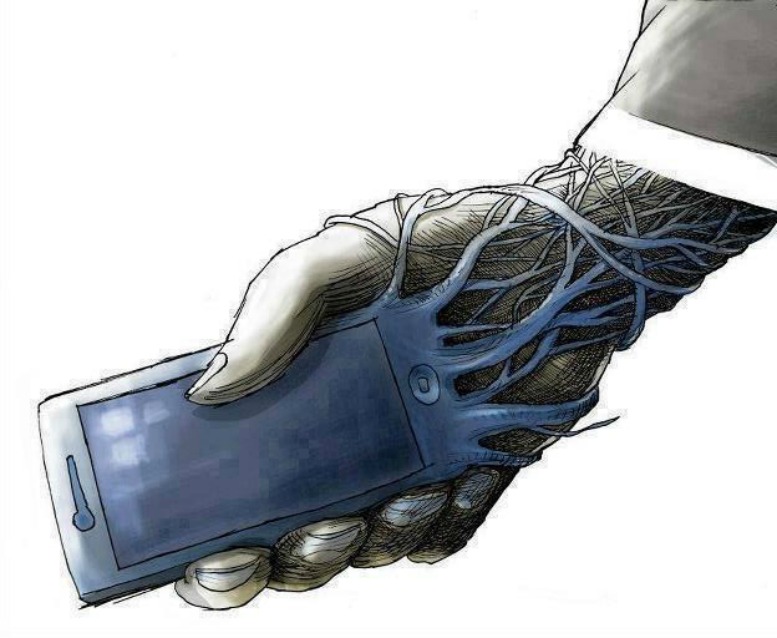
It may sound invasive, but we already share so much of ourselves online, from what we had for lunch to the most intimate aspects of our personal lives. We’re already in the early stages of merging our technology. We already see our smartphones as integral parts of our lives. Why wouldn’t we do the same for brain implants?

Unlike a smartphone, a machine/brain interface can’t be dropped into the toilet or left behind by accident. That same interface won’t just augment the ability of our brains to access the entire wealth of human knowledge. They’ll allow us to directly stimulate the areas that forge our entire perception of the world around us.
This has huge implications, some more profound than others. For companies like Disney, though, that link will be critical with respect to maintaining its place as a dominant entertainment company. People already pay for powerful experience, be they movies, video games, or a full-body massage at a spa. Disney could simply cut out the middle-men while leveraging its vast library of intellectual property.
Sure, in the future, you could probably pay for fancy experiences like those offered in “Total Recall.” However, if you want an experience that allows you to be a Jedi, an Avenger, or a singing animal, you’ll have to go through Disney and they’ll be happy to sell you that experience for a price.

Every week, you’ll be able to select from a range of intense experiences the same way you navigate your Netflix queue. For some, you don’t need to leave your bed. You just plug a device into your brain and let it go from there. For others, maybe you travel to special venues that function like the holodecks in “Star Trek.” There, you could share the experience with others, making it a communal experience.
Disney would still likely need content-creators to craft those experiences. That means people like George Lucas and Kevin Feige will still have a job in this future. The particulars of those jobs would be very different, but the goal would be the same. They would create experiences and stories that people are willing to pay for.
As unpredictable as the future is, it’s still safe to assume that people are going to want entertainment. Wherever there’s a want, there will be a business willing to provide it. There will be competition. There will be billions, if not trillions, to be made in profits. Not every company around today will survive that competition. Disney, however, is already in the best possible position to thrive.

Filed under Artificial Intelligence, futurism, media issues, movies, Sexy Future, War on Boredom

Who doesn’t enjoy a good pool party in the middle of summer? Seriously, you’d have to be an inherently miserable person or a vampire to not find some joy in it. As a kid, they were often the best part of my summer. Even as an adult, they still rank right up there, albeit behind bikinis and topless sunbathers.
A pool party is like anti-school. It’s a manifestation of the best parts of a particular time of year. School make take up a good chunk of that year, but that makes events like pool parties even more special. They’re a celebration of a wonderful time of year when you can sleep in on weekdays, not have to worry about homework, and take mid-day naps by the pool.
I grew up in a neighborhood where there was at least one pool party a month in the summer. I currently live in a community where we had one just yesterday. You’re never too old to enjoy it. That’s why I dedicate this week’s edition of Sexy Sunday Thoughts to pool parties and all the summer joy they bring.
“Situation and circumstance determine whether being naked makes for a terrible nightmare or a sexy fantasy.”

“Fake tits won’t make up for a fake personality, but they will offer a welcome distraction.”

“Strippers are the first (and still best) manifestation of interactive porn.”

“Softcore porn is like pizza without toppings in that it’s still good, but not as much as it could be.”
![]()
“Seeing is believing, but when it comes to fake tits, feeling is certainty.”

“Telling your lover about your fantasies is akin to giving them a how-to guide to your orgasm.”

“Your doctor and your lover both know your body intimately, but your lover will always offer an affordable co-pay.”

For the record, a good chunk of these thoughts came to me while I was lounging by the pool. I like to think that these are the musings inspired by the best parts of summer. Whether they take place by the pool or in an air conditioned room, they reflect a great time of year. Between sexy swimsuits and having another excuse to sleep naked, what’s not to love?
Filed under Sexy Sunday Thoughts

Every now and then, I take a moment to get personal on this site by recounting a particular moment in my life. I enjoy sharing those parts of myself. I even find them therapeutic at times. Most of the time, I do that to help make a larger point about a more serious issue or to celebrate a holiday, such as Mother’s Day.
However, this is not one of those times.
Today, I’d like to share a story of a far sexier variety. Don’t drive your heads too deep into the gutter. It’s not one of those stories that will get as graphic as my novels or my sexy short stories. This is just a little tidbit of my life that should help explain why I have such a lurid mind and such eclectic passions.
This particular story involves an ex-girlfriend of mine. Don’t worry, it doesn’t involve bitterness, broken hearts, or revenge. There are enough stories like that on the internet. Instead, I want to share a story that is both uplifting and influential. To date, I think it has heavily influenced my desire to write and share sexy stories.

To understand why this moment is so influential, I need to provide some context. This particular moment occurred during my freshman year of college. I had met my girlfriend online through a comic book message board. We’d been chatting back and forth for over a year before we actually met. When we finally did meet in person, it was the opposite of one of those catfishing stories.
What we had was a beautiful thing. We were very comfortable talking to each other about things that were nerdy or embarrassing to discuss with others. That didn’t just pertain to comics, though. We also talked about sexy stuff. In our defense, were a couple of horny college students. That’s not an excuse. That’s a valid reason. There’s a difference, as I’ve noted before.
It’s that comfort that helped us forge what might have been one of the sexiest parts of our relationship. During the Thanksgiving holiday that year, my girlfriend came over the visit for a few days. As part of the festivities, we both went shopping on Black Friday. That may not sound romantic, but seeing as how we both love shopping on the holidays, it might as well have been a day in Paris.
I took her to one of the big malls in my area. We spent most of the afternoon there, eating lunch and navigating chaotic crowds. The fact she insisted on wearing heels just showed how dedicated she was to sharing the holiday spirit with me. That dedication showed in the last store we visited that day, which happened to be Victoria’s Secret.

Now, if you’re a healthy heterosexual man like me, you tend to have mixed feelings about that store. You love sexy lingerie and the sexy models who wear them, but when you’re single, spending too much time around a Victoria’s Secret can send all the wrong messages. When you’re with your girlfriend, though, it can be the sexiest kinds of fun.
My ex-girlfriend understood this so she didn’t hesitate to lead me inside, putting me in close proximity with all the sexy attire I love describing in my stories. From there, she demonstrated the energy of a kid in a candy factory, browsing some extra intimate apparel that included a nighty and a thong.
It’s worth noting at this point that my ex was abnormally comfortable with this sort of thing. She wasn’t just the kind of girl who didn’t mind talking about sex. She had a pretty dirty mind and an even dirtier mouth. In public and around people, she was very sweet and polite. In private, though, she said things that would make a hardened sailor gasp. That should help make clear why I was so attracted to her.

She knew this too because we spent more time in that Victoria’s Secret store than we did any other store at the mall. We didn’t mind, though. Personally, I wish we could’ve stayed longer. When we did leave, it wasn’t empty-handed. My ex bought a little something that day, as well. It made for a damn productive day, especially for two indebted college students.
The story doesn’t end there, though. In fact, it gets even sexier because early that next morning, my ex decided to put that new lingerie to good use. Just before the sun came up, she snuck over to my bed and slipped out of the pajamas she’d worn, revealing that she was wearing that same sexy nighty and revealing thong we saw in the store. Needless to say, that woke me up in the best possible way.
What happened after that is something I prefer to keep private. I promise it didn’t get too lurid. Remember, I was at my parents’ house and they weren’t going to let us get too reckless. That said, there were some intimate moments that were pretty intense, probably the most intense we shared during our relationship.

That’s as much detail I’m willing to share about that moment, for now. I hope it offers some insight into where some of my kinky musings come from. Out of respect and appreciation for that moment, I won’t share anything else about my ex-girlfriend. I doubt she’ll ever read this, but I still sincerely thank her for the time we had together.
A while back, I found out my ex-girlfriend actually got married. By all accounts, she’s as happy as she’s ever been and I’m happy for her. I think the man she married is lucky to have her. I sincerely hope that I can build something like it with a future lover. Until that day comes, sexy memories like this one will keep inspiring me.
Filed under Jack Fisher's Insights, romance

If you were to go back 40 years and ask someone to tell a story about epic space battles, death stars, and wookies, chances are you’d get a lot off odd looks and insipid excuses. Some might even laugh in your face, saying such a story could never be told, let alone make over $7.7 billion at the box office. George Lucas is probably laughing at them on top of a bed made of money.
Great stories like “Star Wars” didn’t just prove there were millions to be made from elaborate space operas and quality sci-fi. It helped establish a template for others to follow in telling similar stories. Some have followed it better than others, but the most important thing “Star Wars” was demonstrate that it can be done.
The current state of married superheroes is in a similar situation to what the sci-fi genre was before “Star Wars” came along. Both Marvel and DC Comics have done a lot over the past couple decades to undermine married superheroes, some of which have left major scars for fans and characters alike. Just look up a story called One More Day for proof.

The excuses Marvel and DC have made aren’t very convincing, but they’re not entirely wrong either. Telling stories about married superheroes is challenging. There are only a handful of married superheroes that have stood the test of time. However, even the most iconic superhero couples have been prone to the complications of marriage.
That’s why a series like “Mr. and Mrs. X” is coming along at the best possible time. This series, which spins directly out of the denigrating heartbreak that unfolded in “X-men Gold #30,” may very well provide both the hope and the template for married superheroes moving forward.
The first thing I need to say about “Mr. and Mrs. X #1” is that it’s part of a larger story that began unfolding before the events of “X-men Gold #30.” Kelly Thompson, who wrote “Mr. and Mrs. X,” also wrote a mini-series called “Rogue and Gambit,” which I highly recommend. That story did something important for both fans of superhero romance and of superhero cartoons from 1990s.

In the world of iconic superhero couples, Rogue and Gambit occupy a gray area of sorts. They’re one of those couples that rarely tops any list of notable superhero romances, but they’ve always been closely linked to one another. This is due largely to the chemistry they showed in the “X-men Animated Series” cartoon that defined so many childhoods back in 1990s. I know because I was one of them.
While Rogue and Gambit have always had romantic potential, it was never fully utilized. Neither the cartoon nor the comics ever took it beyond a certain point and not just because Rogue’s life-draining powers hindered their capacity for intimacy. There was just no real effort to evolve their romance beyond flirting and card puns.
Ms. Thompson changed that with “Rogue and Gambit.” This under-developed romance grew more in the span of five issues than it had in over 15 years of comics, cartoons, and failed efforts to get a Gambit movie off the ground. With “Mr. and Mrs. X #1,” Ms. Thompson dares to skip several steps and let this couple take the plunge into superhero marriage.

Considering how even a much more iconic couple in Batman and Catwoman failed to get that far, that’s quite an achievement. However, the way in which “Mr. and Mrs. X #1” portrays the sexy, romantic details of married superheroes is a far greater accomplishment. I would go so far as to say that it sets a new standard for just how appealing married superheroes can be.
One of the most important things “Mr. and Mrs. X #1” does is expand on the events of “X-men Gold #30.” This isn’t just critical for the sake of Rogue and Gambit’s relationship. It helps fix the greatest flaw in that issue. When the marriage of Kitty Pryde and Colossus fell through in a heartbreaking moment, Rogue and Gambit basically stepped in to keep the ending from being a complete tragedy.

The way their impromptu marriage presented in “X-men Gold #30” is both shallow and crude. It’s basically just forced in there, a marriage for the sake of saving a botched wedding. It never even gave the impression that Rogue and Gambit were serious about marrying one another. They just did it on a whim, their wedding having the depth of a drive-through chapel in Las Vegas.
“Mr. and Mrs. X #1” fundamentally changes that. It dedicates over half the issue to providing more details of that ceremony, making clear that Rogue and Gambit gave this more thought than the brand of cereal they ate that morning. There was preparation, planning, and even a surprise visit from Mystique, Rogue’s adopted mother.
This goes a long way towards showing that Rogue and Gambit are serious about getting married. Even if you didn’t read Ms. Thompson’s “Rogue and Gambit” series, the first eight pages do enough to show that there’s genuine love between these two. Moreover, they want take that love to the next level.

Even for a romance not built on Disney-style fairy tales, that’s a pretty important detail. There’s a major difference between characters actually wanting their relationship to evolve and just doing it because it makes for a nice event. It’s the same difference between wanting to eat to McDonald’s and having to eat at McDonald’s. It affects the experience.
That shared desire between Rogue and Gambit shows in both the ceremony and the honeymoon. That’s another key component that “Mr. and Mrs. X #1” adds to the template. It doesn’t just stop at the heartfelt wedding ceremony they share with friends and family. It acknowledges and even shows off the sexy tidbits of married life.
Rogue and Gambit don’t just love each other enough to want to get married. They also want to express that love like any other horny couple. It doesn’t have to be a dirty secret or some trivial side-note. It can be part of the story and thanks to the wonderful artwork of Oscar Bazaldua, it’s a spectacle to behold.

We get to see these two in expensive wedding attire and their birthday suit. There are moments of genuine affection. There are moments of playfulness. There are also moments where they address more serious issues, such as Rogue not being able to touch without the aid of a device that inhibits her powers. All of that is fit into a single issue.
On top of all that, “Mr. and Mrs. X #1” still finds time to squeeze in some heroics at the end. It’s not all heart-warming ceremonies and sexy honeymoons. Rogue and Gambit are still X-men. That means they still answer the call to adventure when it comes. That’s just what heroes do. Being married doesn’t have to change that.
That shouldn’t be such a novel concept, but that is a common criticism of married superheroes. Once they get married, their ability to be superheroes is somehow diminished. That’s like saying being a rock star diminishes someone’s ability to enjoy random songs on the radio. It’s a false flaw that Ms. Thompson and Mr. Bazaldua go out of their way to subvert.

The nature of the conflict that interrupts Rogue and Gambit’s sexy time is somewhat underdeveloped. It involves aliens and space battles, which is basically a typical Tuesday for the X-men. There’s not much in terms of refinement, but that’s less a flaw and more a logistical limitation.
“Mr. and Mrs. X #1” is the first issue of a series, which means there will be other opportunities to expand that story. Rogue and Gambit’s life as married superheroes isn’t ending. It’s just beginning. They’re still going to be heroes. They’re still going to fight aliens in between hot romps between the sheets. Married life doesn’t have to be boring. What a concept, right?

I’m not being coy. That’s the ultimate takeaway from this comic. Two well-known, well-developed characters can get married, share some loving moments, get sexy, and still be superheroes. Being married doesn’t have to supercede their heroics. It can complement it as well.
It’s a lesson that other superhero couples, be they iconic or based on a random hook-up, would be wise to learn. Even powerful heroes like Superman are only as compelling as the relationships and interpersonal dynamics that highlight who they are. In the same way teamwork makes the Avengers and the Justice League strong, marriage can make a superhero couple strong.
That really shouldn’t be such a radical notion, but Ms. Thompson and Mr. Bazaldua do plenty to remind us why it shouldn’t be. “Mr. and Mrs. X #1” sets a bold tone for Rogue and Gambit. It doesn’t stop at a beautiful wedding or a sexy honeymoon. The heroics continue. It just takes a different tone.

The ending of the issue, which I won’t spoil, even sets up some new drama between the happy newlyweds. It’s not the kind that’ll instigate another frustrating love triangle, but it does hint at a conflict that wouldn’t be much of a conflict if Rogue and Gambit weren’t married. Rather than limit their story, it expands it.
“Mr. and Mrs. X #1” does so much in the span of a single issue that it would take me all day to list them all. It’s not a perfect issue. If I had to score it, I would give it a 9 out of 10, just because it had piggy-back on the heartbreak in “X-men Gold #30.” The most important achievement, though, is the precedent it sets. Married superheroes can be sweet, sexy, and fun and this is how you do it.
Like a marriage in a real world, relationships evolve. Getting married is not an endpoint. It’s another step in the dramatic, yet sexy narrative that is romance. Superheroes are fully capable of taking that step without turning into a bad sitcom. “Mr. and Mrs. X #1” shows that this step is worth taking. Hopefully, other couples follow and build on this sexy new template.

There are many disagreements about gender these days, but when it comes to orgasms, most reasonable people are on the same page. In general, regardless of politics or genital configuration, we’re in favor of them. We support efforts to experience more for ourselves and for our partners. In matters of sex, it’s one of the few unifying issues.
Even if most people agree that orgasms are awesome, there are still some sources of tension. I’ve already touched on the current status of the orgasm gap, as it pertains to women. That is still an unresolved issue and the current status of gender relations can only improve if that gap is reduced or eliminated.

However, there is another orgasm gap that is rarely touched on, but inescapably linked to the current pleasure parity. This one pertains to men and, unlike the female orgasm gap, is shackled by hard biological limits. Any man, myself included, knows those limits all too well.
It’s no secret, but it might as well be one because it’s rarely talked about. Without getting too graphic, I’ll just say that the female orgasm is a symphony whereas the male orgasm is like a kazoo. It’s a one-note instrument that is simple, basic, and blunt. You can still make music with it, but the range is limited.
That’s because men have something called a refractory period. It’s basically the cool-down period that men experience after orgasm. From a biological standpoint, it’s the part of sex where the brain and genitals tell one another that the job is done and it’s time to rest. That process involves releasing all sorts of hormones and chemicals that are responsible for men getting sleepy after sex.

It’s the reason why men have a difficult time getting aroused again after sex, both physically and mentally. Once a man reaches that peak, it takes a while to get to that level again. It can take as little as 15 minutes to almost an entire day. During that time, though, a man’s ability and desire are significantly hindered.
This inescapable process is also the source of many jokes about premature ejaculation and men who can’t last long in bed. I don’t doubt it’s a factor in the orgasm gap. Whereas it takes a man only two to three minutes to achieve orgasm, it takes a woman an average of 12 minutes to do the same. That is not a trivial gap.
Conversely, women aren’t hindered by a refractory period. Even though it takes women longer to climax, they’re capable of having more orgasms in rapid succession. To give you an idea of just how many more women are capable of, the record for most female orgasms in an hour is 134 whereas the most a man has ever had is 16. Again, that is not a trivial gap.

While men don’t have to look far for tips and tricks that allow men to have multiple orgasms, many of these so-called techniques are just gimmicks. They’re methods for improving stamina and control, which is a great thing to have with any partner. However, it doesn’t change the fundamental biology of refractory periods.
That’s not to say this particular gap is impossible to close. That’s also not to say that there aren’t documented cases of men achieving multiple orgasms. They do exist, but there’s not a lot of research on the topic, especially compared to the amount of research on the female orgasm.
If we’re to close the orgasm gap for everybody, though, this is something that’s worth studying. I would even argue that we can’t solve the orgasm gap with women without confronting this lesser-known gap with men. In essence, that refractory period is the greatest hindrance to true orgasm parity.

Just talking about it only goes so far, though. Unlike the female orgasm gap, the refractory period is rooted in biology rather than psychology. From an evolution standpoint, it makes sense. By achieving orgasm quickly, a man can spend less time impregnating a woman and more time surviving. It was a necessary trait for managing the survival/reproduction dynamic of the human species.
Like many other traits from our pre-modern ancestors, though, these traits are less necessary in the modern era. In fact, they can be a liability. In a world of low infant and maternal mortality, we have more incentive to seek quality over quantity in our lovers. The refractory period, much like our body’s tendency to get fat, is a real hindrance to that effort.
Addressing it is probably not going to be as simple as telling men to do kegel exercises. Men being able to achieve multiple orgasms may require an effort similar to that of developing the female birth control pill. In the same way modern medicine has given women control over their fertility, it may end up doing the same for male orgasms.

How modern medicine would go about that is well-beyond my expertise. However, we already do have some clues as to what goes into reducing the refractory period. Studies has shown that a chemical called prolactin may play a major role.
Specifically, when a man climaxes and goes through a refractory period, levels of prolactin in the body spike. In rare cases of multi-orgasmic men, though, it doesn’t rise in conjunction with an orgasm. Now, that could be only be part of a much more complex process, as is often the case in medicine, but it’s a start.
In the same way some people are already hacking their biology for reasons relating to health and beauty, it may be possible to tweak certain bodily processes to enable men to have the same orgasmic potential as women. It doesn’t even have to extend to modifying genetics. It can just involve tweaking chemical and hormonal processes, something we’ve been doing in medicine for years.

Unfortunately, research on this phenomenon is scant at best. However, given how much money pharmaceutical companies have made treating sexual dysfunction, I believe the incentives are there. It may take a long time, but given the progress medicine has made on male contraception lately, I think the infrastructure is in place and so is the market.
It’s hard to predict what form modern medicine will take in treating any condition, be it the limits of the male orgasm or the current orgasm gap with women. However, I am confident in saying that any advance that puts everyone on the same level of orgasmic potential will be a game-changer of the sexiest kind.

The internet is a vast, wonderful place full of mesmerizing gifs, amazing stories, and the collective knowledge of our entire species. I would argue that the internet is one of humanity’s most important tools since the invention of fire. I strongly believe that is has done more good any other tool we’ve created.
I have a feeling that this rosy view of the internet is a minority opinion. These days, all the good the internet does tends to get lost in the stories that highlight its many dangers. I don’t deny that there are dangers there. The internet does have some dark places where hate, harassment, and outright depravity are on full display.
More and more, it seems, the internet is becoming an enabler of a new manifestation of popular culture. It’s called “toxic fandom” and it relies on the greatest strengths of the internet to bring out the absolute worst in people. It didn’t start with the heated fan reaction of “Star Wars: The Last Jedi,” but it certainly made it relevant.

Before I go any further, I want to make one thing clear. There are assholes on the internet. There are also assholes in real life. The internet doesn’t make them that way. It just gives them a platform to be an asshole on a larger scale. That’s an unfortunate side-effect of the internet, but one that tends to obscure a larger narrative.
That’s because, much like inane terms such as “toxic masculinity,” the idea of toxic fandom relies on a series of assumptions that only ever have a sliver of truth behind them. It builds around this idea of there’s this grand, over-arching effort by immature, angry young men who secretly wish they could sexually harass women with impunity. It’s not quite on the level of an Alex Jones type conspiracy, but it’s close.
There have always been overly-passionate fans. It existed long before the internet and would still exist if the internet disappeared tomorrow. “Toxic fandom,” and there’s a reason I’m putting it in quotes, is something very different.

This doesn’t involve obsession with a particular celebrity. It involves a particular type of media like a movie, a TV show, or a video game. In some respects, this sort of fandom is a byproduct of overwhelming success. When something like “Star Wars” or “Star Trek” comes along, it resonates with an audience on a profound level. That sort of impact can last a lifetime.
I can attest to the power of that impact through my love of comic books. I’ve even cited a few that I find deeply moving, both in good ways and in not-so-good ways. Most everybody has had an experience like that at some point in their life, whether it’s their reaction to seeing “Titanic” for the first time or the feeling they get after they binge-watch “Breaking Bad.”
The toxic part usually comes when the media they’ve come to love manifests in a way that’s not just disappointing. It undermines those powerful feelings they’ve come to associate with that media. The results can be very distressing and until recently, the only way to express that distress was to sulk quietly in a darkened room.

Then, the internet comes along and suddenly, fans have a way to voice their feelings, for better and for worse. They can even connect with fans who feel like they do so that they don’t feel alone. The human tendency to form groups is one of the most fundamental acts anyone can do as a member of a highly social species.
Now, there’s nothing inherently “toxic” about that behavior. It has only made the news because the passions/vitriol of fans is more visible, thanks to the internet. Just browse any comments section of any movie or show on IMDB. Chances are you’ll find a few people who claim that this thing they once loved has been ruined and will use every possible medium to voice their displeasure.
This is where the “toxic” aspects of fandom start to have real-world consequences. Most recently, Kelly Marie Tran became the face of those victimized by toxic fandoms. After her portrayal of Rose Tico in “Star Wars: The Last Jedi,” she became the most polarizing figure in the history of Star Wars since Jar Jar Binks.

The story surrounding Ms. Tran’s harassment, which was objectively horrible, became vindication for those who believed that the Star Wars fanbase had become a mess of angry, hate-filled fanboys. They didn’t like that something they loved was changing and becoming more diverse. As such, their criticisms don’t matter. They may as well be wounded storm troopers in a room full of angry wookies.
The problem with this assumption is the same problem we get when someone writes off facts as fake news or diversity efforts as a neo-Marxist conspiracy. It’s a simple, convenient excuse to ignore possible flaws and justify personal assumptions. It also conflates the inescapable truth that assholes exist in the world and there’s nothing we can do about it.

None of this is to imply that harassment is justified or that fans can be exceedingly unreasonable. By the same token, this doesn’t imply that studios don’t deserve criticism when they attempt to revamp a beloved franchise in a way that does not keep with the spirit of the original. It’s only when criticism gets lost in the outrage that the “toxic” behaviors become more prominent.
It’s within that outrage, though, where the true flaws in the “toxic fanbase” narrative really break down. To a large extent, the “toxicity” that many complain about aren’t a product of unhealthy attitudes. They’re a manifestation of an inherent flaw in the relationship between fans and those who produce the iconic media they love.
To illustrate that flaw, think back to a recent controversy involving a “toxic fanbase.” Before the reaction “Star Wars: The Last Jedi” became the poster child for this issue, the all-female “Ghostbusters” remake was the most prominent example. It earned a lot of hatred for reasons that I’d rather not scrutinize.
![]()
With that hatred in mind, imagine a long-time Ghostbusters fan seeking to express their dismay. They decide to write a kind, detailed, and thoughtful letter to the studio, the director, and anyone else involved detailing their dismay and their criticisms. They may even cite specific examples on what they felt was wrong with the movie.
Chances are this sort of thoughtful, well-worded message would get deleted, ignored, or just plain lost in the digital landscape. Even if the head of Sony studios read it and agreed with every point made, they wouldn’t respond. They wouldn’t do anything ot change it. That would just be too inconvenient and it would look bad publicly.
From the perspective of the fan writing the letter, though, it sends the message that their sentiment doesn’t matter. Their passion for the media doesn’t matter. They might as well not even exist in the eyes of the producers. The only way for them to even acknowledge their existance is to be louder, angrier, and even a little meaner. Even if the reponse is negative, it at least acknowledges their existence.

It’s not the same as trolling. Trolls just want upset people for the fun of it. Fans voicing their displeasure are more sincere in the sense that they believe they’re protecting something they love. Whether or not that’s misguided is debatable. Some, namely those who harass and make threats, are more misguided than others. However, they only ever make up a very small percentage of fans.
In the end, that’s the most important perspective to have when it comes to fandom. Those who are the loudest tend to be the most obnoxious, but they’re loud because they feel like they have to be. The internet just gives them a way to be heard, which is something most fans haven’t had before.
That’s still not an excuse for being an asshole, but it’s also not an excuse for using those same assholes to call an entire fanbase toxic. It overlooks and undermines the genuine and sincere love people have of these cultural icons. As as a result, when someone feels like their love is being ignored, that’s when toxic hate often finds a way to fill that void.