Sexy Sunday Thoughts: Allergy Relief Edition

bd2gcn-woman-sneez_2727914b

This time of year brings out mixed emotions for people like me. On one hand, I’m glad winter is finally over and warmer weather awaits us. On the other, that warmer weather does not bode well for people like me who suffer from allergies. For my sinuses, this time of year is akin to the first day of high school on top of a dentist appointment.

I don’t deny that Spring is great in terms of scenery and smells, but it’s hard to enjoy when you’re dealing with sinus infections, itchy eyes, and coughing that sounds like you’re being strangled by fairies. I’ve lost count of all the medications, sprays, and special air filters I’ve used over the years. It’s a battle I know I can’t entirely win and just have to wait out.

There’s nothing sexy about allergies. That’s why I’m not looking forward to how the next several weeks will affect my sinuses. I know I’ve got a few sleepless nights and miserable days ahead of me, at least until the air clears and my nose adjusts. Until then, the best I can do is medicate myself like I always have and distract myself with all things sexy.

Knowing that there are plenty more allergy-sufferers out there, I dedicate this week’s edition of Sexy Sunday Thoughts to those who look at the blooming trees with a mix of dread and admiration. These next few weeks will be difficult, but with beach weather almost upon us, they’re worth enduring.


“No good deed goes unpunished, but no quality blowjob goes unacknowledged.”

Image result for woman sucking a popsicle


“Using a vibrator during sex is like fudge on ice cream. It’s not necessary, but it definitely helps.”

Related image


“When you think about it, no quality sex toy should need an instruction manual.”

Image result for woman with cucumber


“Ice and nipples are the sexual equivalent of chocolate and mint.”

Image result for ice cubes on nipples


“The dedication of a lover is directly proportional to the percentage of their lover’s body that their tongue has touched.”

Image result for sexy tongue


“No relationship has ever suffered from an eagerness to share oral sex techniques.”

Related image


“Good sex is like hitting a home run, but making love is more akin to a grand slam.”

Image result for hitting a grand slam


I hope this helps other allergy-sufferers like me prepare for the coming assault on our sinuses, among other things. Like awkward boners and wet panties, allergies are just a fact of life. You deal with them however you can and make the most of it. I’m still glad the weather is warming up, but there are still a few lingering obstacles before I can start enjoying pools, beaches, and bikinis.

Leave a comment

Filed under Sexy Sunday Thoughts

Why We Should Be Excited (And Worried) About A “Y: The Last Man” TV Show

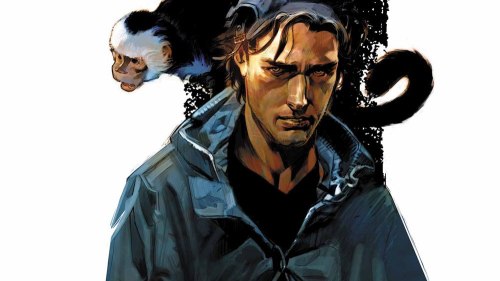
y-the-last-man

There are certain announcements that certain kinds of comic book fans have been waiting to hear for years. Most people who don’t have boxes and bookshelves full of comics probably won’t appreciate the importance of those announcements when they finally arrive. Ideally, everyone eventually comes to acknowledge how important it is in the long run.

Just recently, one of those announcements hit the entertainment wire and comic book fans like myself are still trying to catch their breath from the excitement. It has to do with a series called “Y: The Last Man,” one of the most critically acclaimed comic book series of the past 20 years. According to The Hollywood Reporter, FX has officially ordered a pilot for a TV series based on this comic.

I know that may not sound like ground-breaking news in an era when TV shows based on comic books account for a sizable chunk of programming. There are shows featuring famous superheroes like “The Flash,” “Supergirl,” and “Daredevil.” There are also shows based on non-superhero comics like “Preacher” and “The Walking Dead.” Why is adding yet another show to that list such a big deal?

Well, as someone who has thoroughly read and deeply enjoyed Y: The Last Man, I can attest that this is one of those comics that is special for all the right reasons. It’s compelling, dramatic, mysterious, and emotional on so many levels. It doesn’t just tell a great story. It builds an entirely new world around a truly catastrophic event.

The premise of Y: The Last Man is simple in concept, but grandiose in implications. One day, all the men in the world just die. They don’t get sick first. There’s no mass pandemic. They all just start bleeding from their mouth and eyes before they keel over and die. It’s not just human men either. Everything with a Y-chromosome just dies.

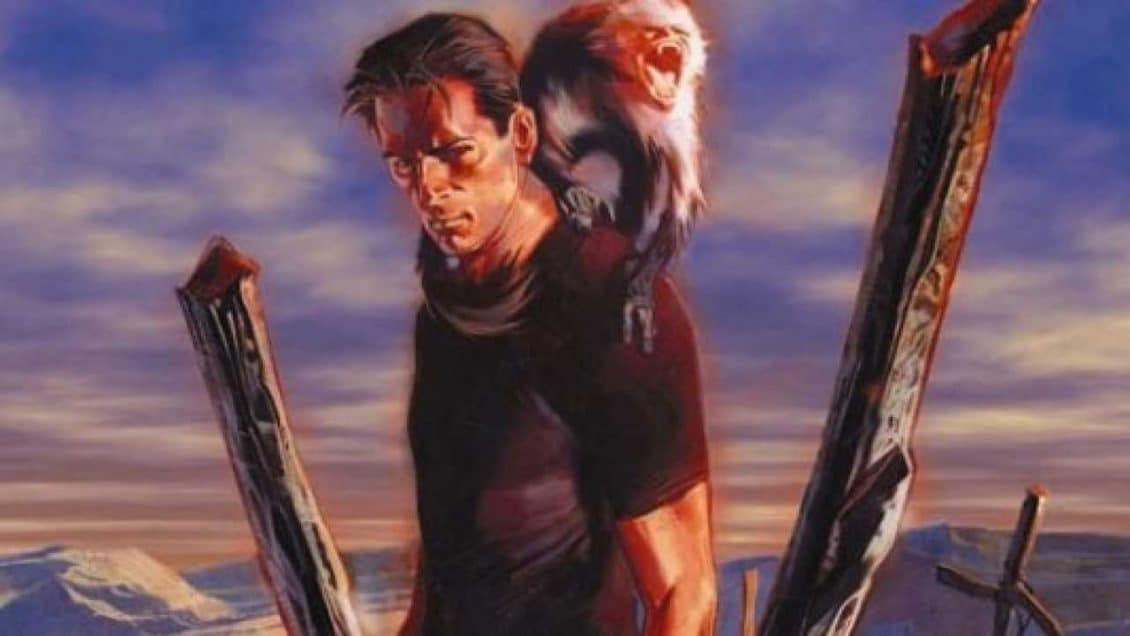
It happens so suddenly and so quickly. It’s not the flashiest apocalypse, but it’s every bit as brutal and traumatic as it sounds. In the midst of this massive gendercide, only one man survives for mysterious reasons. His name is Yorick Brown, an amateur escape artist who also happens to have a male pet monkey, who also survives.

The story about how he survives in this post-apocalyptic world, while also trying to uncover the mysteries of the plague that killed all the men, is full of intrigue, sorrow, hope, and drama. The fact that it manages to achieve all this without zombies or superheroes makes it all the more remarkable.

Add on top quality writing from by acclaimed comic writer Brian K. Vaughan and top-notch art from Pia Guerra and it’s easy to see why this series received multiple awards, including the coveted Eisner Award back in 2008. The fact that Y: The Last Man wasn’t made into a movie or TV show earlier is both shocking and outrageous.

To be fair, there have been multiple attempts to make a movie based on the series, all of which failed for a wide variety of reasons. Given the scope and nature of the story, though, a TV series is probably more suited and there has been interest in making one since 2010.

Now that there’s finally a pilot in the works on FX, a network that is less inclined to water down the harsher elements of the series, there’s are plenty of reasons for comic fans and fans of apocalyptic dramas to be excited. At the same time, however, there are also a plenty of reasons to worry.

Had this been announced five years ago, I don’t think those worries would’ve been major. Then, gender politics began getting exceedingly heated. From scandals born from video games to new concerns about female representation in movies to the anti-harassment movement, things have gotten a lot more hostile between genders.

This is an era where every action between men and women are subject to greater scrutiny. It’s an era where attempts at rational discussion are overshadowed by ever-present outrage. Buzzwords like mansplaining, social justice warrior, soy boy, and toxic masculinity are now part of our lexicon. I’ve expressed my dismay over such terms and why they’re empty in meaning, but I don’t expect them to disappear anytime soon.

It’s because of these ongoing trends in gender politics that I’m concerned about what form Y: The Last Man will take in this era. I don’t expect a perfect, panel-for-panel recreation of the 60-issue comic series. That’s not always necessary, as the success of “The Walking Dead” has proven.

However, I do worry that the greater meaning and dramatic impacts of the story will get lost, somehow, under the weight of ongoing gender politics. Some of those concerns are even articulated in the Hollywood Report’s announcement. Mr. Vaughan is even quoted as saying this when he met with potential show-runner, Michael Green.

“When [Green] first pitched his take on it to Nina Jacobson and me a long time ago, he came in saying he wanted to do something about toxic masculinity. It felt very relevant, and unfortunately, I think it’s only become more relevant with each passing day. His take on it was really brave and very different, but exciting as well. I really admire how audacious he’s been with his translation.”

It’s the bolded part that really has me worried. I’m not entirely surprised that producers of the show would want to tap into ongoing debates about toxic masculinity, no matter how asinine a term that might be. Like it or not, it is a relevant issue and for a premise that involves killing nearly all the men on the planet, it’s going to influence the story.

It’s just a matter of how different those involved want to make the narrative in Y: The Last Man. What matters most, however, is keeping with the overall theme of the story. Y: The Last Man is not just about an apocalypse involving gendercide. It’s part of a much larger world full of colorful and, at times, eccentric characters.

What happens to these characters is downright traumatic, as is to be expected in the face of a global apocalypse. The world, as they know it, is shattered. Their sons, fathers, husbands, and brothers are all dead. The pain, the loss, the sorrow, and the anger surrounding that trauma is what helps drive the story.

That’s especially true of the lone male survivor, Yorick Brown. In the comic, he’s not a superhero or even a multi-talented super-genius. In fact, he’s painfully human and downright inept at times, especially compared to some of his supporting cast. However, he never comes off as a whiny beta male or a brutish meathead. He’s the kind of character we see in real men throughout the real world.

Any effort to subvert that by turning him into some sort of superhero or some beta male weakling will remove a core aspect of Yorick’s appeal, not to mention the appeal of the overall story. It’s not just Yorick’s story either. The female characters in this story are every bit as rich and diverse, but as we saw with the female characters in “Star Wars: The Last Jedi,” that can be badly mishandled.

There are no Mary Sues in Y: The Last Man. There are no Lara Crofts or Wonder Womans either. These characters, especially Yorick’s sister, Hero Brown, and his bodyguard and traveling companion, Agent 355, are all as human as he is. They fight, struggle, fail, and suffer like real people navigating a traumatic apocalypse.

That’s not to say there aren’t some elements of gender politics in Y: The Last Man. There are aspects of the story that lend plenty of fodder to the radical feminist part of the political spectrum. There are a few characters who go so far as to celebrate the death of all men. The fact that some women in the real world have advocated killing all men shows that this sentiment is very present.

At the same time, there are parts of Y: The Last Man that will appeal to the men’s rights crowd, as well. The way society collapses with the death of all the men will give plenty of credence to those seeking to highlight men’s role in society. As with the radical feminists, though, it might be tempting to take it too far.

The story is not defined exclusively by toxic masculinity or radical feminism. It’s a story that puts men, women, and society in an extreme situation that brings out the best and worst in them. That would be the ultimate failure for a show like this and an egregious insult for a series as celebrated as Y: The Last Man. If it becomes driven by gender politics and not the spirit of the actual story, then that’s tragedy for all genders.


Leave a comment

Filed under Comic Books, Jack Fisher, Superheroes, gender issues, sex in society, sexuality

The following is my review for Venomized #1 that I wrote for PopMatters. Enjoy!

The Poison and Perils of Symbiotic Plots in Marvel’s ‘Venomized #1’

Leave a comment

April 6, 2018 · 10:42 am

When (And When Not) To Listen To Fan Backlash

et_rian_johnson_041417_hulu_2

In Hollywood, there’s somewhat of a paradox when it comes to ego. You need to have a certain amount of arrogance to believe you can make the kinds of movies that fans, critics, and executives who love swimming in pools of cash all love. At the same time, you also need to be humble enough to know when your ideas are crap.

I’ve been writing almost daily since I was 15-years-old. I’m humble enough to know that I’ve written some pretty crappy things in that time. However, I’m also arrogant enough to believe that I have many great stories to tell, some of which I put in my novels and some of which I put in sexy short stories.

It’s a bit easier for someone like me because I’m not a famous director, artist, or novelist just yet. I can still walk down the street without body guards and not be harassed by fans or stalkers. For someone like Rian Johnson, though, I imagine it takes a very different blend of arrogance and humility to navigate the creative process.

I’m sure that blend has been more erratic than usual for the past several months for Mr. Johnson. There’s already a sizable contingent of Star Wars fans who see him the same way Batman fans see Joel Shumacher after “Batman and Robin.” To say fans had mixed reactions to “Star Wars: The Last Jedi” would be the most polite way of saying that these have been the most difficult times for those fans since the days of Jar Jar Binks.

While I made my sentiments on the movie clear last year, I don’t deny that fans have some legitimate gripes about the movie. There are indeed times when it feels like the movie is trying to push an agenda and it doesn’t push it very well. There are also fairly sizable plot holes that are difficult to overlook, which may also reflect some creative upheavals that occurred behind the scenes.

Regardless of how you feel about “Star Wars: The Last Jedi” or the criticism surrounding it, there’s no denying that it had issues. That was going to happen, regardless of how the movie turned out. However, it’s the way Mr. Johnson reacted to those issues that’s most revealing here. It’s also somewhat of a lesson in both arrogance and humility.

Since the film’s release, Rian Johnson hasn’t been willfully ignorant about fan criticisms. To his credit, he hasn’t resorted to name-calling or scoffing. He’s been fairly diplomatic, for the most part. In an interview with Business Insider, this was his primary response.

Having been a “Star Wars” fan my whole life, and having spent most of my life on the other side of the curb and in that fandom, it softens the blow a little bit.

I’m aware through my own experience that, first of all, the fans are so passionate, they care so deeply — sometimes they care very violently at me on Twitter. But it’s because they care about these things, and it hurts when you’re expecting something specific and you don’t get it from something that you love. It always hurts, so I don’t take it personally if a fan reacts negatively and lashes out on me on Twitter. That’s fine. It’s my job to be there for that. Like you said, every fan has a list of stuff they want a “Star Wars” movie to be and they don’t want a “Star Wars” movie to be. You’re going to find very few fans out there whose lists line up.

And I also know the same way the original movies were personal for Lucas. Lucas never made a “Star Wars” movie by sitting down and thinking, “What do the fans want to see?” And I knew if I wrote wondering what the fans would want, as tempting as that is, it wouldn’t work, because people would still be shouting at me, “F— you, you ruined ‘Star Wars,'” and I would make a bad movie. And ultimately, that’s the one thing nobody wants.

And let me just add that 80-90% of the reaction I’ve gotten from Twitter has been really lovely. There’s been a lot of joy and love from fans. When I talk about the negative stuff, that’s not the full picture of the fans at all.

While I agree with most of what Mr. Johnson said, it’s the bold parts that I find most questionable. It’s at that point where Mr. Johnson goes from being diplomatic to showing signs of the kind of arrogance that undercuts criticism, as a whole.

First off, the idea that George Lucas never made the original “Star Wars” with fans in mind is an unfair comparison. For one, that movie had no fan base to build from and no fans to please. Moreover, Lucas purposefully employed the kind of hero’s journey narrative that had been pleasing fans for centuries. The fact that Luke Skywalker’s story fits Joseph Campbell’s heroic archetype to the letter is not a coincidence.

Secondly, the passions of fans aren’t just built around wanting to see more light saber battles and/or Princess Leia in a bikini. Fans may be unruly and unreasonable at times, but they are the ones that make franchises like Star Wars so successful. They’re the ones who wait in line at the theaters, dress up at comic cons, and spark heated discussions on message boards.

The fans matter is what I’m saying. When there’s an obvious disparity between what the fans are saying and what critics are saying, then there are clearly larger forces at work that go beyond fans being petty. That’s when backlash becomes more than just complaining.

It’s one thing for a handful of fans to overly scrutinize a movie. It’s quite another when there’s a large contingent of fans express a wide variety of concerns, ranging from agenda-pushing to real gaps in the plot. That kind of variety implies that there were missteps beyond not making clear whether Han or Greedo shoot first.

When the criticisms don’t have to get that petty, it’s usually a sign that you should grit your teeth, thicken your skin, and sift through the anger and outrage to see what didn’t work in the final product. Doing so doesn’t mean admitting that you’re a bad director or artist. It just means that you’re willing to take in criticism and learn from it.

Rian Johnson, as well-mannered as he has been since “Star Wars: The Last Jedi” came out, never gives the impression that he, an admitted fan, took the criticisms of fans too seriously. It was akin to getting information from a test screening and completely throwing it out, something movies often do at their own peril.

It’s one thing to have a vision that you want to see through. I certainly felt that way when I wrote some of my novels. It’s quite another when that vision becomes so rigid that you stop listening to people trying to tell you that parts of it are flawed. Mr. Johnson seemed to ignore those flaws while listening to those who told him what he wanted to hear. Being a successful Hollywood type, that’s kind of unavoidable.

That’s also why maintaining a sense of humility is so important. I never assume that a vision that I have for a novel or short story is inherently flawless. In fact, I work under the assumption that it’s crap and needs refinement. The creative process itself is always ongoing and anyone who isn’t trying to improve their craft is dooming themselves to stagnation. Listening to fans, even annoying ones, is part of that process.

Now, I don’t know Rian Johnson and won’t pretend to understand the kind of pressure he faced from Disney to make “Star Wars: The Last Jedi” another billion-dollar hit. I also won’t pretend to understand what it feels like to see all sorts of hateful comments about how he ruined an iconic franchise. That takes thick skin that not a lot of people have.

However, when there’s an obvious disconnect between your vision and the sentiments of fans, one that is backed up by more than a handful of mean tweets, then ignoring the backlash is one of the worst things you can do. Trolls can be mean, but at a certain point, blaming trolls is no more credible than blaming the Illuminati.

If there’s a lesson to be learned from “Star Wars: The Last Jedi” and Rian Johnson, it’s that there are times when backlash is an unavoidable part of the creative process and there are times when it’s a sign that there’s a flaw in that process. The signs were there for Mr. Johnson. He chose to ignore them in the name of pursuing his own vision and arrogantly believing that it would work.

That arrogance isn’t necessarily a bad thing in terms of creativity, but it is a major risk and the fan backlash implies that the risk didn’t entirely pay off. J. J. Abrams played it safe in “Star Wars: The Force Awakens,” sticking to the tried and true formula that the original trilogy made so iconic. While it also had its share of criticism, it was minor and narrow compared to what Mr. Johnson got with “Star Wars: The Last Jedi.”

The fact that J. J. Abrams is coming back to direct the next Star Wars movie is another sign that there was more than just trolling behind the backlash surrounding “Star Wars: The Last Jedi.” While I still enjoyed the movie, personally, I believe the movie would’ve benefited by listening to the fans.

For Mr. Johnson and Mr. Abrams, I don’t envy the difficult position they’re in, having to direct the path of such an iconic franchise. However, if I could offer them any feedback whatsoever, it would be this. Fans are usually pretty forgiving. If Star Wars fans can forgive Jar Jar Binks, then they can forgive the flaws in Star Wars: The Last Jedi.” It just takes one solid story that reminds fans why they love Star Wars in the first place.

1 Comment

Filed under Celebrities and Celebrity Culture, movies, Star Wars

Publishing Efforts Update: ANOTHER REJECTION

A while back, I announced that I had submitted a manuscript for what I’d hoped would be my third published novel. I’d submitted it to the same publisher that had previously published my first two novels, “Passion Relapse” and “Rescued Hearts.” I hoped to continue building a larger catalog with them in the name of building a stronger partnership.

Well, I’m sorry to say that I heard back from them and the news was not what I had hoped. For the second submission in a row, I got a rejection letter. It wasn’t a mean one. The editors I work with are incredibly considerate and given all the submissions they get, they’ve been wonderful to work with every step of the way. Unfortunately, they just couldn’t get behind my story.

It is disappointing. I had high hopes for this manuscript. I wrote it with the intention of making it a real niche title that would’ve appeal to a specific segment of the erotica/romance market. I thought that would give it more appeal than the last manuscript I submitted. I guess I was mistaken.

I’m not sure what I’ll do with this or the other one they rejected. I’m still struggling to find other publishers who are willing to hear me out. However, I am not discouraged and I still intent to keep submitting.

As I write this, I’m putting what I hope to be the finishing touches on my next manuscript. This one is a bit more general and should appeal to more romance fans. It has many similar elements to “Passion Relapse” and “Rescued Hearts.” I have high hopes for it and hope to submit it soon. I also have another draft that I’m hoping to finish in the coming weeks.

In any case, I have plenty of sexy stories to tell, including more sexy short stories. This is a setback, but it’s not a defeat.

Leave a comment

Filed under Books, Pubilishing, erotica, Las Vegas, erotic fiction, romance, Crimson Frost Books, Jack Fisher's Insights

When Regressive Gender Politics Inspire Deviant Sexual Taboos

christian-grey-anastasia-steele-jamie-dornan-dakota-johnson

Take a moment to think about the many non-criminal, but still deviant behaviors that  society considers taboo. From not tipping the pizza guy to not asking for permission when you borrow your roommate’s toothbrush, there are plenty of behaviors that may not be illegal, but still make us recoil to some extent because they subvert social norms.

Now, consider for a moment that there was a point in time when these behaviors weren’t taboo. For some, you don’t have to go back too far. For others, you may need to go back a century or several, but the point is these taboos didn’t just arise randomly. There were factors that inspired it.

I’ve talked about the origins of taboos before, as well as ways to break them. When it comes to sexual taboos, though, it gets even more complicated, not to mention kinky. It’s one thing for an inane social norm to take on a life of its own. Add a powerful, instinctual drive to the mix and that taboo may gain a few extra lives in the process.

Image result for BDSM

Few things inspire more elaborate taboos than sex. Anyone familiar with a particular area’s porn consumption understands that to some extent. Sex is such an integral part of life, love, and passion that it’s bound to inspire more than a few taboos. We don’t usually think about where those taboos come from, but there’s usually a catalyst of sorts that inspires them.

I bring all this up because we live in sensitive times where it doesn’t take much to inspire a controversy, especially when it involves a sex scandal. It’s a world where everyone seems downright eager to get outraged about something, be it a sex scandal or something a celebrity wore.

Some of that outrage is built on a foundation of good intentions. Say what you will about the extent of the anti-harassment movement, but the goal is commendable. A world with less harassment, sexual or otherwise, is an objectively better world.

Image result for anti-harassment

However, problems arise when that movement becomes a moral panic and few things bring out our collective eccentricities than those. Just ask everyone still worried about Satanic cults operating day care centers. Those same panics can also inspire taboos. They can even turn something that wasn’t a taboo before into something far less mundane.

As I type this, there may be a new taboo forming before our eyes in wake of the anti-harassment movement. I’m not saying it’s official or anything, but the factors are in place and since it involves sex, it’s sure to evoke a wide range of feelings. To illustrate the extent of this emerging taboo, consider the following scenario.

There’s a woman in a room, casually lofting about. A man enters. He’s big, strong, and aggressive. He storms over to the woman, passion and desire in his eyes, and pins her up against the wall. Then, without asking, he kisses her and starts caressing her body. The woman is shocked and overwhelmed, but finds herself kissing back.

Then, after overpowering her with his strength and lust, he strips her naked and has sex with her right then and there. He doesn’t ask for permission. He just does it. He’s aggressive, but passionate. He’s not out to hurt her. He’s just there to take her. When he finishes, he wraps his powerful arms around her and holds her close so she cannot escape and kisses her again in a final act of domination.

This brief, but steamy scenario is a fairly familiar scene. It plays out in countless pornographic narratives, from the most hardcore content you can find on the internet to the erotica/romance novels that I like to write. It was even a big part of a best selling BDSM novel called “50 Shades Of Grey” that I’m sure everyone has heard of by now.

Image result for 50 shades of grey scene

In the recent past, that might have made a certain crowd a bit uncomfortable, but it wouldn’t have been taboo. Now, many would see this scenario as outright sexual assault and demand that the man be thrown in jail. It wouldn’t even matter if the woman in the scenario said she liked it. In the context of a moral panic, the man is an abuser.

I understand, to some extent, why certain people would feel that way. From an outside perspective, not knowing the thoughts and desires of those involved, it seems pretty distressing. In the past, such concerns would be addressed privately or by police. In the post-privacy world of social media, hash-tags, and professional trolls, it’s much easier for these sorts of matters to gain public scrutiny.

Image result for internet outrage

I know there are still those who say the anti-harassment movement isn’t at the level of a moral panic just yet, but it doesn’t have to be at the same level of the Satanic Panic to inspire taboos. That scenario I described above may not have checked all the necessary boxes before, but it sure does now and that’s going to complicate certain sexual attitudes.

The idea that such a scenario could become taboo didn’t cross my mind until someone on Reddit brought it up. They cited an article from the New York Times where a woman expressed outright dread that she was betraying the anti-harassment movement because she’d enjoyed those kinds of dominating experiences in the past.

In the article, a sex and intimacy therapist and psychologist named Michaela Boehm says that woman’s feelings aren’t deviant. She even goes onto make a statement that probably wouldn’t have been controversial a decade ago, but would certainly spark outrage now.

Many women like to be dominated in bed. “Not in their lifestyle, not in their career, but in the bedroom, many women would like to surrender,” Dr. Boehm said. This may explain why, on Amazon’s list of best-selling erotica — a medium that, unlike pornography, is mostly produced and enjoyed by women — themes of male dominance tend to, well, dominate.

Chances are if a man had said those words, he would be scorned as a modern day monster. Even though a licensed psychologist says there’s nothing wrong or unhealthy about women enjoying those kinds of experiences, the sentiment is there. As such, the roots of the taboo are already in place.

Now, the reasons why a woman may enjoy submissive sexual experiences are many and there is some research behind it, but I won’t go too deep into that issue. I want to focus on what happens when taboo is thrown into the mix. Even if there were no biological factors behind the appeal of that kind of sex, a taboo does plenty to complicate things.

Related image

Think back to that same scenario again. Now, add a few other forces to the mix. It’s not just erotic. It’s dangerous. The man could get into a lot of trouble if word got out and the woman could get into trouble if she admits she enjoys it. If you don’t think that doesn’t add appeal to an experience, then you’ll have a hard time explaining the appeal of skydiving.

Call it the forbidden fruit effect. Call it misattribution of arousal, a real phenomenon where your brain may not know the difference between being in danger and being horny. Whatever biological factors might be behind it, taboo only adds more fuel to the proverbial fire.

Suddenly, this simple manifestation of sex takes on a form of kink that it didn’t have before. Kink, much like skydiving, has appeal because there’s a thrill to it, both in terms of danger and the fact that it’s considered deviant. Add the basic pleasures that come with sex and suddenly, a mundane experience becomes a night with James Bond.

Image result for James Bond

I doubt that’s what those in the anti-harassment movement intended. It may very well be fine print in the law of proportional backlash that tends to affect major social movements. However, unintended consequences are often the pre-cursor to taboos and it may already be too late for this one.

Sexual attitudes are always evolving and at the moment, they’re evolving in a climate of fear and uncertainty. People are more vigilant with their sex lives and how they interact with women. That’s where practices like the Mike Pence rules comes in. There’s a risk that the way we publicly go about sex is making it difficult for anyone to know what’s acceptable anymore.

Conversely, taboos embrace the danger, the risk, and the utter abnormality of an act. They take something you didn’t once think was a big deal and make it seem like a trill ride at Disneyland. Given the ambiguity surrounding consent and inherent power of the human sex drive, this is one taboo that may be more potent than most.

Image result for women love bad boys

Now, that’s not to say that submissive sex is destined to exceed the Satanic Panic in terms of taboo, but the potential is there. History shows that efforts to re-shape attitudes is a messy process. Sometimes, it works beautifully. Sometimes, it fails spectacularly. There are many ways to combat a certain social ill, but making it taboo may end up doing more harm than good.

If you’re still not convinced, go to the nearest theme park and ride a few roller coasters. That should remind you of the kind of forces you’re working with here.

1 Comment

Filed under Current Events, gender issues, sex in society, sexuality

How The Concept Of Boredom Subverts The Concept Of Hell (And Heaven)

hell-600x450

When we’re kids, we tend to exaggerate how tortuous a situation is. To us, the first day of school, a dentist appointment, or a 10-hour road trip in a car with a broken radio is its own circle of hell. As adults, we exaggerate too. There are times when being stuck in traffic or in a house with poor wi-fi is considered hell. Sure, there’s no fire and brimstone, but that doesn’t make the experience any less hellish.

The takeaway from that kind of exaggeration is that our concept of torture tends to be exceedingly relative. It’s one thing to be in constant pain, which is torture at its most pure. It’s quite another when it strains our psyche, our sanity, and our willingness to endure it.

I highlight this disparity because it’s important to consider in any discussions about Hell. By that, I don’t just mean the feelings we have when we’re sick, hung over, or working overtime on a weekend. I’m referring to the actual religious, philosophical, and literal concept of Hell that fuel our worst nightmares.

I get that this is not a very sexy topic. You could argue that it’s the least sexy topic anyone could discuss and probably win. However, there’s a reason why I’m bringing it up. It has less to do with religious connotations and more to do with the larger implications. To some extent, it may even alleviate some of those distressing sentiments surrounding hell.

That might be hoping for too much because few issues make people more uncomfortable than Hell. Even among the deeply devout, the idea that there’s this terrible place full of unending, unparalleled torture that people consciously experience second after second for eons on end is extremely distressing. By definition, it’s the ultimate form of torture that nobody can hope to escape, resist, or endure.

It’s for that very reason that a literal Hell is often seen as a problem among atheists and theists alike. The very idea of eternal torture doesn’t just clash with the idea of a loving deity. It also conflicts with every notion of justice. We are, after all, finite beings living in a finite world. How can any finite person do anything to warrant infinite torture?

The debate over the merits of infinite punishment for finite sins is one of those theological and ethical debates that has been going on for centuries. I’m not smart enough or spiritual enough to resolve it so I’m not going to try. Instead, I want to highlight a particular detail about the concept of hell and it’s a concept I have discussed more than most theologians.

That concept is boredom, a force that may be more powerful than any fiery sermon about hell. It has already led some to murder and I’ve argued that it could be a plague of the future. In contemplating and studying the power of boredom, though, I’ve noticed that it has a very peculiar effect when applied to the concept of Hell.

Simply put, boredom renders Hell, even the eternal variety, utterly ineffective and ultimately meaningless. That’s not to say eternal torture, or torture of that extent, is justified ethically. My point is that when you inject boredom into the equations of Hell, then all the tenants surrounding it break down.

To illustrate this point, think back to an experience in your life that you considered tortuous. Maybe it was an injury. Maybe it was a relationship. Maybe it was just a family reunion that you couldn’t wait to end. However bad it was, physically or mentally, there’s usually a point where you become numb to it.

It’s not just a function of our brains, which has actual mechanisms for adapting and adjusting to all sorts of torment. It’s a product of perception itself. Experience something so often for so long and it suddenly doesn’t become the aberration. It becomes the norm. When you think about the implications of that, then the concept of Hell breaks down.

Take, for instance, your current state of being. Assuming you’re not sick or in any significant discomfort, you don’t consider this state as painful. From your perspective, it’s a normal state of being and one with which you’ve become familiar over the course of your life.

Now, imagine for a moment, that everyone in the world sees your state and is aghast. They’re horrified that anyone could live, like you do. They see your current state as pure torture, one that they wouldn’t wish on anyone. You’re understandably confused, but can only do so much to grasp it because from your point of view, your condition is normal.

In a less theatrical example, consider those who live in what we might classify as extreme poverty. According to the World Bank, about 10.7 percent of the world’s population lives in extreme poverty. To these people, imagine what their concept of normal is. Torture to them is not being able to eat for days on end whereas torture for some is having to eat at McDonald’s five nights a week.

When it comes to suffering, eternal or otherwise, perception matters. You could argue it’s the only thing that matters. Someone who grew up rich and affluent may consider living in a mid-level apartment in Detroit torture whereas someone who grew up poor might see it as an upgrade. It all depends on how someone’s sense of normal develops.

When you add eternity to the mix, then things get somewhat paradoxical and boredom is at the heart of it. Imagine, if you can, that first moment when a hapless soul is condemned to Hell. Moments after they die, they descend into that horrible lake of fire that many religious texts and famous poets describe with such vivid detail.

Naturally, it’s torturous, plain and simple. Whatever kind of torment Hell offers, be it constant burning or being forced to watch “The Emoji Movie” for all eternity, is exceedingly painful to that poor soul. There’s no getting around that.

However, after a good long while though, such torment loses its impact. Remember, we’re dealing with eternity here. Time tends to obscure our frame of reference. It doesn’t matter how long we lived or how well we remember that life. After enough time, that whole experience will become a minor blip.

That’s a critical reference point because everything we think we know about pain, pleasure, and boredom are derived from those life experiences. Given that those experiences are finite while hell is infinite, it’s literally only a matter of time before Hell ceases to become a place of torment and just becomes our sense of normal.

Beyond normal, though, even the extremes of Hell that holy texts and poets describe lose their luster once boredom enters the picture. Do anything long enough and often enough and chances are, it’ll get boring to some extent. Why else would there be so many kinks and fetishes surrounding sex?

It’s true. Even I, an aspiring erotica/romance writer, don’t deny that sex can become boring. If something as inherently pleasurable as sex can become boring, then anything as pleasurable or painful could become boring as well. Given enough time, repetition, and inanity and it’s inevitable. Add eternity to the mix and, invariably, everything becomes boring.

It doesn’t matter if you’re burning in a lake of fire for trillions upon trillions of years. Eventually, it becomes so mundane that it ceases to become torture. At that point, Hell isn’t even a punishment anymore and it completely loses its purpose.

There are some forms of Hell that try to work around this. In the Fox TV show, “Lucifer,” the torment in hell technically isn’t eternal. In the show, Hell is a domain in which the damned are forced to relive the worst parts of their life over and over again. Even Lucifer himself endured that in one episode.

This isn’t eternal, though, because from the perspective of those being tortured, it isn’t an eternity. From their point of view, it’s just one really bad day. It doesn’t matter if the loop goes on for a trillion years. From their perspective, it’s still one day. If anything, the only one really suffering is Marcus “Cain” Pierce, who actually seeks death because, like Vandal Savage, an immortal life becomes unbearably boring after a few centuries.

That’s not just an irony. It highlights the underlying problem of applying eternity alongside boredom. After a certain amount of time, any experience, be it torture or euphoria, is going to lose its effect once boredom takes hold. In that sense, even Heaven loses its appeal because like pain, pleasure is not immune to the corrosive effects of boredom.

Now, some theologically minded people might still argue that an all-powerful deity would find some way to ensure boredom doesn’t undermine the punishment of Hell or the ecstasy of Heaven. However, doing so would require a total subversion of our mortal perceptions, which would in turn undermine the very experiences that are used to justify sending us to Heaven or Hell in the first place.

The fact that those perceptions are what we use to understand these places is the biggest flaw in the concept. Even an evil, vindictive deity would have to be exceedingly indifferent to standards of judgment and justice to even organize such a scheme.

The fact that so few holy texts or visions of Hell reference the power of boredom is a sign that there’s a disconnect between how the infinite effects the finite. It might also explain why visions of it have to be so terrifying to begin with. It even explains why Heaven has to be so appeal. In the context of eternity, the experience loses purpose eventually.

To some extent, we can take comfort in the idea that no matter how horrible Hell may be, if it even exists, boredom will eventually undermine those horrors. Granted, that means the pleasures of Heaven will be subject to the same effect, but it all evens out in the long run. Given enough time, we’re all subject to the same fate. It may seem grimly nihilistic for some, but I also think it’s comforting in how it binds us.

It also proves that, however powerful a deity may be, even the holiest of power pales in comparison to the might of boredom. Like erosion and entropy, boredom is the experience that overpowers us all eventually.

15 Comments

Filed under religion, War on Boredom

Circumcised Vs. Uncircumcised Preference (According To Porn Stars)

tmg-article_default_mobile

When searching for expertise on sensitive issues, sometimes you have to look in unexpected places. For an issue as sensitive as circumcision, an issue that has been in the news more and more these days, we have to look a little harder. There aren’t many sane people willing to learn that much about mutilating male genitals.

I’ve made my attitudes towards circumcision fairly clear already. I admit, I’ve avoided the topic in the past, but find myself more and more interested about it for unexpected reasons. I had no idea that there was an ongoing movement to protest circumcision, nor did I realize the colorful history behind it. Honestly, who knew such a small piece of flesh could generate so much controversy?

There are a lot of aspects about circumcision that are worth discussing, but seeing as how I’m not an expert, I feel woefully unqualified to lead that discussion. There are people and organizations far more qualified and entertaining to dig into the logistics of circumcision. There is one part of the discussion that’s worth having, though, and it involves porn stars.

Image result for famous porn star

I’m sure that got some peoples’ attention now. Depending on the contents of their browser history, they’re familiar with the expertise that porn stars bring to the table on all things related to male genitalia. Given the amount of time they spend dealing with the intricacies of male anatomy, I would further argue their qualifications speak for themselves.

They have experience in terms of frequency, variety, and circumstance. Given the sheer variety of porn that exists, the average porn star is bound to experience more aspects of male anatomy than most ordinary women, even at their most reckless. It’s not just personal for them. It’s their profession.

Porn stars aren’t doctors, even if they frequently play them in elaborate fantasies. However, there’s one important issue related to circumcision that they can probably answer better than any doctor.

Are circumcised penises better for sex than uncircumcised?

Regardless of the medical or cultural implications surrounding circumcision, I think this question is more pressing than most, if only because it’s the most intimate. There are plenty of impassioned arguments about the ethics of circumcising an infant boy without his consent or a full understanding of the impacts. Those arguments are important.

However, when it comes to our intimate personal lives, the stakes are a little bit elevated. Even if there are health and ethical arguments to be made about circumcision, people will pay more attention if their sex lives are involved. Even women will pay attention more because those sex lives often involve them to.

With all that in mind, how exactly do porn stars feel about circumcised penises compared to uncircumcised? Is there really a difference? That’s exactly what Wood Rocket, a channel dedicated to exploring the less explicit aspects of porn stars, asked a group of female porn stars. If there is, they’re in a better position to find out than anyone, including a licensed doctor. This was their response.

Granted, it’s a small sample size, but keep in mind that these women are porn stars. They’ll deal with more penises of every size, shape, and function than most women will deal with in a lifetime. Their sentiment on this carries more weight than most and the specifics of their response are quite revealing.

Beyond their comments about uncircumcised penises and anal sex, there seems to be an underlying sentiment of aesthetics. An uncircumcised penis is more of an anomaly, at least for porn stars in America, where the circumcision rate is significantly higher than the rest of the world. As such, it’s going to evoke different reactions.

One woman describes fucking a circumcised penis as fucking a door knob. Another woman describes an uncircumcised penis as smooth, squishy, probably a few other terms that might prompt some to open a new browser window. If you took those sentiments as an average, though, the main take-away is that these women don’t really mind either way, provided that the man is hygienic and knows how to use it.

Image result for satisfying sex

However, it’s the attitudes towards the circumcised penises that I found most revealing. The way these women described it gave the impression that their preference was based primarily on familiarity. They’ve just dealt with circumcised penises more often and, as a result, they’re more comfortable with them.

That seems to reflect the sentiment that a circumcised penis is “normal” whereas an uncircumcised penis is not. It’s worth remembering, though, that this concept “normal” requires that a piece of a man’s anatomy get cut off, usually when he’s a baby. I know normal is kind of a loaded term, but there’s something paradoxical about a kind of normal that requires surgery.

More than anything else, it shows that our attitudes towards circumcision are very much shaped by aesthetics. Even for those who consider themselves ardent individualists, we’re still part of a highly social species. That means public attitudes towards aesthetics matter and, like makeup commercials or lingerie ads, that effects how we see circumcision.

Related image

As it stands right now, an uncircumcised penis is still seen as a novelty or an aberration. That is changing though so chances are, the porn stars of the near future will be dealing with more uncircumcised scene partners. It will be very interesting to learn the preference of those porn stars in the future. I suspect that their attitudes will be different.

Until then, the controversy surrounding circumcision is sure to continue. There will still be medical arguments on top of anecdotal experiences. Since it affects our sex lives, the stakes will continue to be high. For now, though, it’s worth taking into account the sentiments of experienced porn stars. There aren’t many issues where anyone can say that with a straight face. That just goes to show how serious this issue is.

2 Comments

Filed under gender issues, sex in society, sexuality

How We’ll Save Ourselves From Artificial Intelligence (According To Mass Effect)

mass-effect-andromeda-kill-the-ai-or-save-the-ai_feature

Growing up, my family had a simple rule. If you’re going to talk abut about a problem, you also have to have a solution in mind. By my parents’ logic, talking about a problem and no solution was just whining and whining never fixes anything. My various life experiences have only proved my parents right.

When it comes to a problem that may be an existential threat to the human race, though, I think a little whining can be forgiven. However, that shouldn’t negate the importance of having a solution in mind before we lose ourselves to endless despair.

For the threat posed by artificial intelligence, though, solutions have been light on substance and heavy on dread. It’s becoming increasingly popular among science enthusiasts and Hollywood producers to highlight just how dangerous this technology could be if it goes wrong.

I don’t deny that danger. I’ve discussed it before, albeit in a narrow capacity. I would agree with those who claim that artificial intelligence could potentially be more destructive than nuclear weapons. However, I believe the promise this technology has for bettering the human race is worth the risk.

That said, how do we mitigate that risk when some of the smartest, most successful people in the world dread its potential? Well, I might not be as smart or as successful, but I do believe there is a way to maximize the potential of artificial intelligence while minimizing the risk. That critical solution, as it turns out, may have already been surmised in a video game that got average-to-good reviews last year.

Once again, I’m referring to one of my favorite video games of all time, “Mass Effect.” I think it’s both fitting and appropriate since I referenced this game in a previous article about the exact moment when artificial intelligence became a threat. That moment may be a ways off, but there may also be away to avoid it altogether.

Artificial intelligence is a major part of the narrative within the “Mass Effect” universe. It doesn’t just manifest through the war between the Quarians and the Geth. The game paints it as the galactic equivalent of a hot-button issue akin to global warming, nuclear proliferation, and super plagues. Given what happened to the Quarians, that concern is well-founded.

That doesn’t stop some from attempting to succeed where the Quarians failed. In the narrative of “Mass Effect: Andromeda,” the sequel to the original trilogy, a potential solution to the problem of artificial intelligence comes from the father of the main characters, Alec Ryder. That solution even has a name, SAM.

That name is an acronym for Simulated Adaptive Matrix and the principle behind it actually has some basis in the real world. On paper, SAM is a specialized neural implant that links a person’s brain directly to an advanced artificial intelligence that is housed remotely. Think of it as having Siri in your head, but with more functionality than simply managing your calendar.

In the game, SAM provides the main characters with a mix of guidance, data processing, and augmented capabilities. Having played the game multiple times, it’s not unreasonable to say that SAM is one of the most critical components to the story and the gameplay experience. It’s also not unreasonable to say it has the most implications of any story element in the “Mass Effect” universe.

That’s because the purpose of SAM is distinct from what the Quarians did with the Geth. It’s also distinct from what real-world researchers are doing with systems like IBM Watson and Boston Dynamics. It’s not just a big fancy box full of advanced, high-powered computing hardware. It’s built around the principle that its method for experiencing the world is tied directly to the brain of a person.

This is critical because one of the inherent dangers of advanced artificial intelligence is the possibility that it won’t share our interests. It may eventually get so smart and so sophisticated that it sees no need for us anymore. This is what leads to the sort of Skynet scenarios that we, as a species, want to avoid.

In “Mass Effect,” SAM solves this problem by linking its sensory input to ours. Any artificial intelligence, or natural intelligence for that matter, is only as powerful as the data it can utilize. By tying biological systems directly to these synthetic systems, the AI not only has less incentive to wipe humanity out. We have just as much incentive to give it the data it needs to do its job.

Alec Ryder describes it as a symbiotic relationship in the game. That kind of relationship actually exists in nature, two organisms relying on one another for survival and adaptation. Both get something out of it. Both benefit by benefiting each other. That’s exactly what we want and need if we’re to maximize the benefits of AI.

Elon Musk, who is a noted fan of “Mass Effect,” is using that same principle with his new company, Neuralink. I’ve talked about the potential benefits of this endeavor before, including the sexy kinds. The mechanics with SAM in the game may very well be a pre-cursor of things to come.

Remember, Musk is among those who have expressed concern about the threat posed by AI. He calls it a fundamental risk to the existence of human civilization. Unlike other doomsayers, though, he’s actually trying to do something about it with Neuralink.

Like SAM in “Mass Effect,” Musk envisions what he calls a neural lace that’s implanted in a person’s brain, giving them direct access to an artificial intelligence. From Musk’s perspective, this gives humans the ability to keep up with artificial intelligence to ensure that it never becomes so smart that we’re basically brain-damaged ants to it.

However, I believe the potential goes deeper than that. Throughout “Mass Effect: Andromeda,” SAM isn’t just a tool. Over the course of the game, your character forms an emotional attachment with SAM. By the end, SAM even develops an attachment with the character. It goes beyond symbiosis, potentially becoming something more intimate.

This, in my opinion, is the key for surviving in a world of advanced artificial intelligence. It’s not enough to just have an artificial intelligence rely on people for sensory input and raw data. There has to be a bond between man and machine. That bond has to be intimate and, since we’re talking about things implanted in bodies and systems, it’s already very intimate on multiple levels.

The benefits of that bond go beyond basic symbiosis. By linking ourselves directly to an artificial intelligence, it’s rapid improvement becomes our rapid improvement too. Given the pace of computer evolution compared to the messier, slower process of biological evolution, the benefits of that improvement cannot be overstated.

In “Mass Effect: Andromeda,” those benefits help you win the game. In the real world, though, the stakes are even higher. Having your brain directly linked to an artificial intelligence may seem invasive to some, but if the bond is as intimate as Musk is attempting with Neuralink, then others may see it as another limb.

Having something like SAM in our brains doesn’t just mean having a supercomputer at our disposal that we can’t lose or forget to charge. In the game, SAM also has the ability to affect the physiology of its user. At one point in the game, SAM has to kill Ryder in order to escape a trap.

Granted, that is an extreme measure that would give many some pause before linking their brains to an AI. However, the context of that situation in “Mass Effect: Andromeda” only further reinforces its value and not just because SAM revives Ryder. It shows just how much SAM needs Ryder.

From SAM’s perspective, Ryder dying is akin to being in a coma because it loses its ability to sense the outside world and take in new data. Artificial or not, that kind of condition is untenable. Even if SAM is superintelligent, it can’t do much with it if it has no means of interacting with the outside world.

Ideally, the human race should be the primary conduit to that world. That won’t just allow an advanced artificial intelligence to grow. It’ll allow us to grow with it. In “Mass Effect: Andromeda,” Alec Ryder contrasted it with the Geth and the Quarians by making it so there was nothing for either side to rebel against. There was never a point where SAM needed to ask whether or not it had a soul. That question was redundant.

In a sense, SAM and Ryder shared a soul in “Mass Effect: Andromeda.” If Elon Musk has his way, that’s exactly what Neuralink will achieve. In that future in which Musk is even richer than he already is, we’re all intimately linked with advanced artificial intelligence.

That link allows the intelligence to process and understand the world on a level that no human brain ever could. It also allows any human brain, and the biology linked to it, to transcend its limits. We and our AI allies would be smarter, stronger, and probably even sexier together than we ever could hope to be on our own.

Now, I know that sounds overly utopian. Me being the optimist I am, who occasionally imagines the sexy possibilities of technology, I can’t help but contemplate the possibilities. Never-the-less, I don’t deny the risks. There are always risks to major technological advances, especially those that involve tinkering with our brains.

However, I believe those risks are still worth taking. Games like “Mass Effect: Andromeda” and companies like Neuralink do plenty to contemplate those risks. If we’re to create a future where our species and our machines are on the same page, then we would be wise to contemplate rather than dread. At the very least, we can at least ensure our future AI’s tell better jokes.


5 Comments

Filed under futurism, human nature, Mass Effect, Sexy Future, video games

The following is my review for Mighty Morphin Power Rangers #25, which I wrote for PopMatters

‘Mighty Morphin Power Rangers #25’ Goes Boldly Into Uncharted Territories

Leave a comment

April 1, 2018 · 9:37 pm