Tag Archives: writing

A Cool New Song I Discovered

Every now and then, I come across a song that just hits me at the right time in the right situation. And for reasons that I can’t explain, it resonates with me. Whenever I find a song like this, it’s not uncommon for me to listen to that song on repeat 15 straight times. That’s the power of music. That’s what it can do for you.

I admit it’s a lot harder to come across songs like that these days. At my age, I’m very entrenched with my tastes. I’m always going to be more inclined to listen to the music that I’ve loved for years. So, when a new song does break through, it’s really something special.

The latest song to do that is by Owen James. It’s called “When I Stand.” It’s this haunting, soft rock with a touch of outlaw county vibe song that flows so beautifully. It’s a fairly new song so chances are you haven’t heard it yet. So please, do yourself a favor and listen to it. Here’s a video with the lyrics below.

I hope you enjoyed it as much as I did. I also hope it resonate with you as strongly as it did for me. If it’s not your kind of music, that’s fine. I’m glad you gave it a chance. I hope you still appreciated it.

Now, there’s another reason I’m sharing this. I promise it’s a good reason. I wouldn’t be making an entire blog post about a song I just discovered unless there was something more to it. For this song and for Owen James, there’s an important detail to note. And it’s this.

Owen James, as well as this song, was created by AI.

Knowing this, listen to the song again. Does that information change how you feel about it? Does it change your emotional reaction to it? Is that change positive, negative, or entirely neutral? These are not trivial questions. Regardless of your feelings towards AI, it’s here. It’s not going away. It’s affecting multiple industries, including creative endeavors.

AI music, in particular, has become more prolific in the past couple years. Owen James isn’t even the first AI musician to make a splash. In July 2025, an AI band called Velvet Sundown made a song that generated one million streams on Spotify. That’s a hit by any measure. And it happend before people knew this band and this music was entirely AI.

Naturally, this changed attitudes. This triggered a mix of outrage, intrigue, and confusion. Music is one of those forms of art that can genuinely move us. When you find a song that’s truly powerful, it can be a spiritual experience. It feels like one of those things that AI cannot and should not be able to achieve.

But it did. It has. I even admit I had no idea Owen James or “When I Stand” was AI generated. But learning that didn’t change how I felt about the song. If anything, it impressed me even more. The idea that an AI could make a song like this that appeals to me is incredible. It says a lot about the current state of AI. I get why many find it scary, especially those in creative fields. I imagine musicians of all kinds felt a twinge of distress when they learned Velvet Sunrise made a hit song. There are musicians who dedicate their entire lives to making a song like that. But an AI achieve that with nothing but data, electricity, and algorithms.

Concerns like this have triggered calls for Spotify and other music distribution platforms to label AI-generated music. Those same calls demand an option that allows people to filter it out so that they can only get music made by humans. I actually support that. I think if people don’t want to hear AI music, no matter how good it might be in terms of appeal, that should be their choice. But ignoring AI music doesn’t change the results.

AI is capable of making music. And that music is good enough to garner an audience. As I’m writing this, the official video for “When I Stand” has drawn approximately 5.2 million views and over 108k likes. That’s a lot for any video for a new song of any kind. Look at the comments when you get a chance. There are many from people praising the song, even if they don’t know it’s AI.

Regardless of how you feel about it, chances are it won’t be the last AI song that turns out to be a hit. It also won’t be the last time AI does something in a creative field that succeeds on a level once reserved for humans. Despite resistance, these cases will happen as the technology improves and progresses. It’s bound to cause upheaval. It’s bound to generate more debate, distress, and controversy.

But if, at the end of the day, it still produces something you enjoy and cherish, what does it matter? That’s an open question and one that won’t have any easy answers.
Leave a comment

Filed under AI Art, Artificial Intelligence, music

It’s Official: I Love Adaptive Cruise Control (And What It Means For Self-Driving Cars)

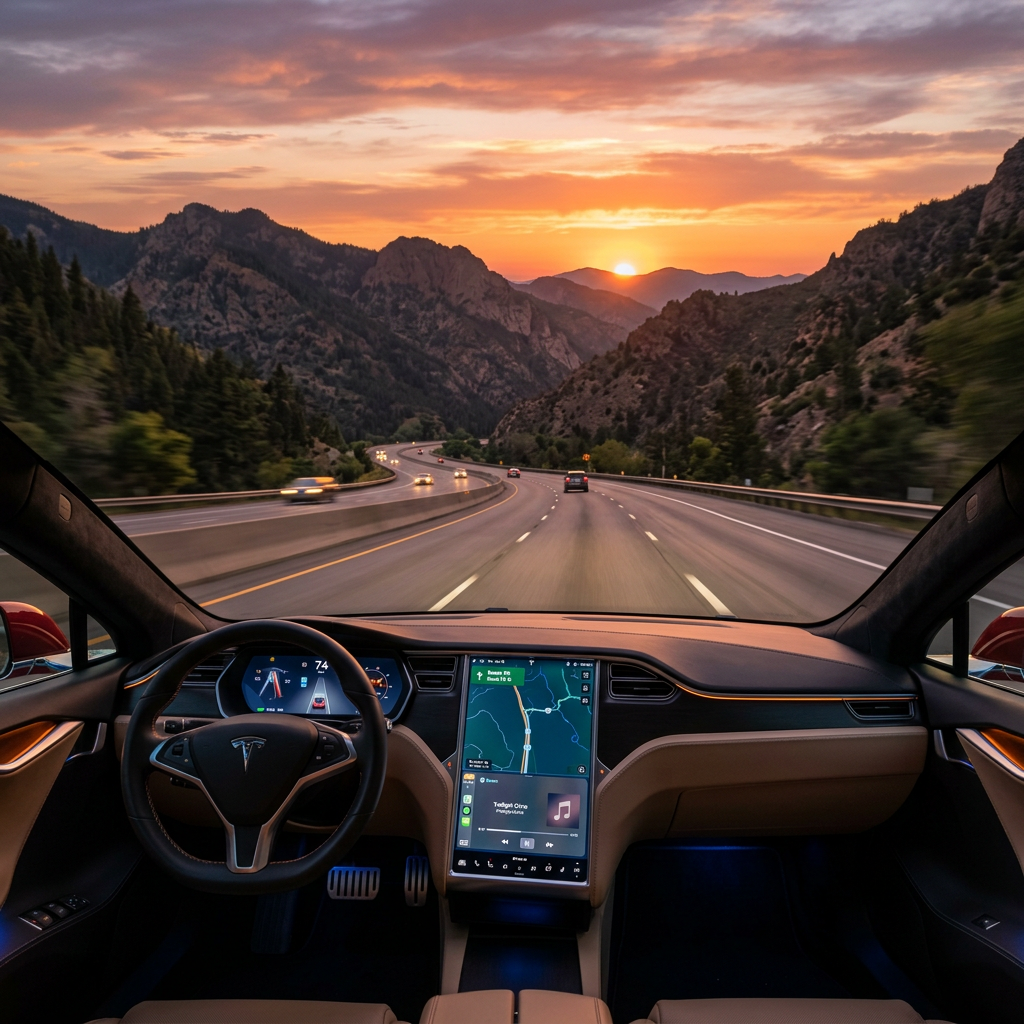
Interior view of Tesla dashboard and steering wheel driving on highway with mountain sunset

In July of 2025, I bought a new car. It was actually the first wholly new car I’d ever bought. Prior to that, I’ve owned two used cars. Neither one of those cars had a model year within the decade I’d owned it. The first still had a tape deck. So, getting a brand new car with all the most up-to-date features you’d expect of a car made within the past eight years was a big deal.

Now, I could go on and on how much I love my new car. I could dedicate entire articles to how much I enjoy Apple Carplay, seats that don’t feel like a metal slab, and an air conditioning that’s actually reliable. But of all the features I’ve come to love about my new car, one in particular stands out. And that’s adaptive cruise control.

If you own a car made within the last four years, chances are you know what it is. You’ve probably used it to a point where it’s mundane. But for me, a guy who generally avoids long drives and lengthy road trips, it felt like a revelation. It also got me even more excited about the future of self-driving cars.

To appreciate this sentiment, I need to share a little anecdote. Even thought I bought my new car nearly a year ago, I didn’t take it on any long road trips. The furthest I drove it was to a relative’s house and that was barely a 40 minute drive. I admit I did have a bit of reluctance to take those drives. On top of not liking lengthy road trips in general, I felt protective of my new car. It’s the first new car I’d ever owned. The last thing I wanted was to put much strain on it. I know that sounds dumb, but that’s how I felt.

Then, I finally had to make a trip. My family planned a small get-together. But this time, the location wasn’t close. It was a two-hour drive away. I agreed to go. I wanted to go because this was one of those family get-togethers that was overdue. It marked the longest drive I’d done to date with this car. Since a good chunk of it would be on a major highway, I planned to use adaptive cruise control.

I admit I was a bit confused on the controls. I ended up watching some YouTube Shorts to learn how it operated. But once I got the hang of it, I was astonished by how well it worked. More importantly, it made that two-hour drive (which ended up being longer because of heavy traffic) much less stressful.

It felt like a natural evolution of cruise control. My previous car did have cruise control, but it rarely made driving easier. Whenever I went on road trips, I didn’t get many chances to use it. Traffic was too erratic and the roads did not support it, even on highways. But adaptive cruise control does a bit more than maintain speed.

When you pair it with lane control, the car essentially is on autopilot. It stays within a particular lane of the highway. And it uses sensors to detect whether there’s a car in front of you and whether it’s necessary to decelerate. You still need to keep your hands on the wheel. The car does have this beeping noise that reminds you to stay engaged. But that’s largely a safety thing. I understand it because this isn’t full self-driving. This is just making these long stretches of highway driving smoother, less stressful, and less strenuous.

I admit I didn’t know how effective it would be. I’ve heard mixed reviews of self-driving and adaptive cruise control features in cars. But my personal experience was remarkable. By the time I got to my destination, which ended up taking two-and-a-half hours because of traffic, I didn’t feel nearly as drained or sore as I usually did. It showed in how the get-together went. And when I drove back that same evening, I was sold. I don’t think I’ll ever buy another car without this feature.

It still took some getting used to. For the first few miles of using adaptive cruise control, I still culched the wheel like I often did with my old car. Eventually, I saw how effective it was at sensing other cars ahead, maintaining a certain speed, and staying within the lanes. There was still this weird feeling, having a car drive itself to some extent. I think it had less to do with trusting the technology and more to do with changing how I approached driving a car on a highway. I don’t know how common that feeling is. I suspect it might play a part in why people remain skeptical about self-driving cars. But for me, it got me genuinely excited for the future of this technology.

I understand that, as I’m writing this, fully autonomous cars aren’t where they need to be. Even though there are already robotaxi services like Waymo, the technology still has its share of kinks. And I suspect the public doesn’t trust self-driving cars, to say nothing of the companies producing them.

But it’s also worth remembering that this tends to happen a lot with new technology. It took a while for the public to trust cars. The novelty can be overwhelming and it takes time to get used to the idea. Eventually, the utility and economic advantages of cars overshadowed the reluctance. It didn’t happen overnight. It didn’t even happen in the span of a few years. All technology goes through periods of refinement, development, and regulatory approval. Self-driving cars will be no exception.

I don’t know when that time will come, but it feels a lot closer now. After having experienced the joys of adaptive cruise control in my new car, I’m honestly rooting for this technology even more. I understand there are skeptics. I don’t doubt there are real concerns about the safety, reliability, and overall impact of self-driving cars. In the end, it’s a simple calculus. Do the benefits outweigh the drawbacks? Society has made that calculation in the past. It did so with cars and it’ll do so again with self-driving cars.

As much as I love my new car at the moment, I know there will come a time when I prepare to buy a new one. Hopefully, when that time comes, the car I buy will have a self-driving feature. It’ll be something where I just get inside, input my destination, and relax for the duration of the drip, no matter how long or short it might be. If that’s an option, then what could that mean? Would that mean I suddenly feel more open to long trips? Would I travel more, go to new places, and meet new people? I don’t yet know, but I look forward to finding out.

Leave a comment

Filed under Uncategorized

Recounting And Celebrating My Greatest Little League Triumph

Growing up, I loved sports.

As an adult, I still love sports.

But when I was growing up, I didn’t just enjoy watching sports with my dad on a Sunday afternoon. I actually played sports. I’ll never claim to have been very good. There’s a reason why I never played sports at a high school or college level. I learned early on that I have many gifts. But athletic talent is not among them.

Even so, I had my share of highlights and lowlights while playing sports as a kid. For the most part, I played baseball. That made a lot of sense. My dad was a huge baseball fan. He’d watch baseball with me on many summer afternoons while I was an infant. And some of my earliest memories involve playing catch in our backyard.

While I wasn’t overly strong or athletic, I was good in some areas. I could catch better than most kids my age. I could also throw the ball a lot more accurately than most kids with stronger arms. That ensured that, even if I didn’t make the all-star team, I would never be the worst player on any team I played on.

I managed to maintain that level from my earliest days playing T-ball to when I played single-A for one season. In that time, I made my share of plays. I also had my share of bad games, including one where I didn’t get a single hit and never got on base once.

However, among those bad games and mediocre games that I’ve long since forgotten, there is one memory from my little league baseball career that still stands out. It is, by far, my proudest moment from my limited tenure playing sports.

Since I know my dad and relatives occasionally read this site, there’s a good chance they already know which moment I’m about to recount. I still don’t think they fully appreciate just how powerful this memory is for me. Because for a single moment, I was the most clutch player on the field. And in the span of a single play, I single-handedly won a game for my team.

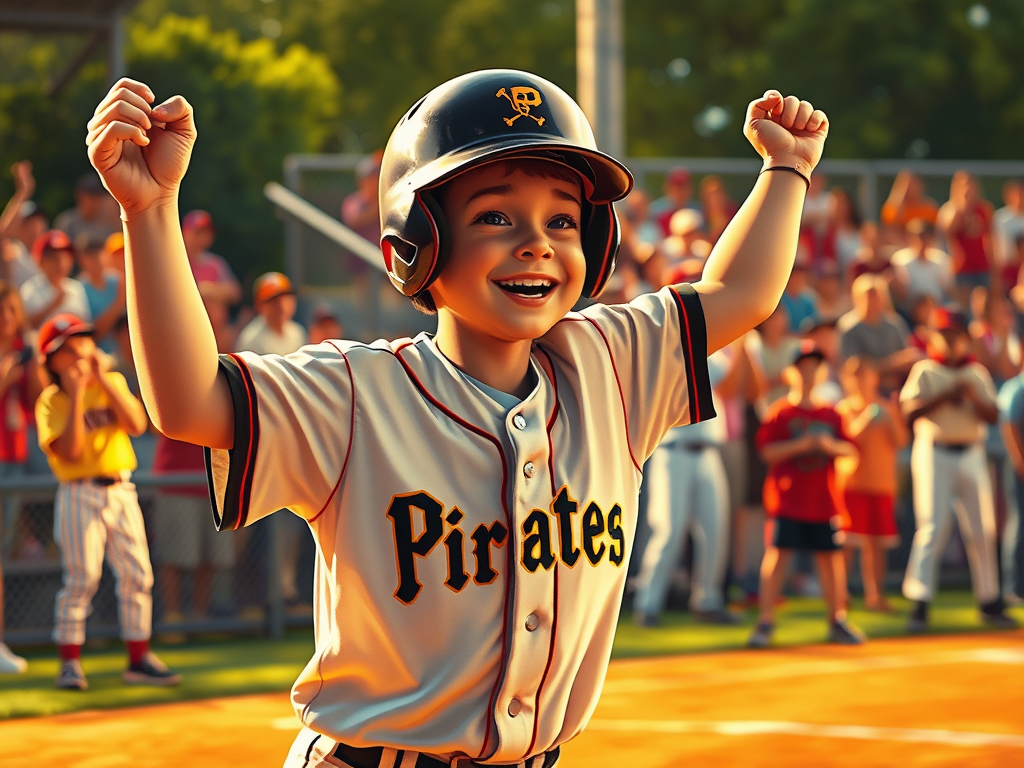
To set the stage, this occurred while I was playing my little league team, the Pirates. That was the team I’d been on for years. My dad was good friends with the coach. And he frequently assisted with managing games. That mattered because I think my coach and my dad helped our team be better than our collective talent. We were probably the second or third best team among our peers that year. It was probably the best team I’d ever been on.

But the team we were playing was every bit as good as us, if not better. They were the Marlins. And for the most part, they were our equals in terms of talent and competence. They hit just as well as us. They fielded just as well as us. But they also had on their team this kid who was about six inches taller than any other kid. I don’t know if that kid was just naturally tall or a couple years older. But he definitely made his presence felt throughout that game.

The game was still close from start to finish. My team got up early by a couple runs. But the Marlins caught up and even took the lead at one point in the fourth inning. Since we only played six inning games at this level, we had limited chances left.

But we made the most of those chances. At the top of the sixth and final inning, two of our best hitters drew in a couple runs. That put us ahead by a score of 4 to 3. I didn’t get a hit during that rotation. But I was also playing first base on defense for that inning. It wasn’t my usual position. But since I could catch better than most, it was probably the best position I could’ve been in at that moment.

It ended up being key in terms of how the bottom of the sixth played out in that game.

It started off promising with a ground out. But then, the best hitters on the team came up and they delivered. The first shot right by the short stop for a double. The second happened to be that tall kid I mentioned earlier. He hit a bouncing ball towards second that ended up being a single. My teammate could not gather it in time to make a play.

So, that left runners on first and third. And with only two outs remaining, the Marlins could’ve easily tied the game with a simple fly ball. They could even win it with a line drive. In nearly any other circumstances in a little league game at this level, the game was either going to be tied or won by whichever team was batting.

But on this particular day, that’s not how it played out.

The kid at bat got behind the count. I’m already bracing for a tie or loss at this point. I’m just trying not to let it show. The big kid on base was grinning. I think he expected to be the winning run. He didn’t say anything, but I could sense what he was thinking.

Then, it happened. On an inside fastball, the kid got a hit and the ball flew right at me. Instinctively, the big kid at first started running, as did the kid at third. But I managed to get right under the ball at just the right moment to catch it. And as soon as I did, the runners tried to run back. But it was too late. My foot was already on first. And I made sure to tag the big kid running right back towards me.

The look of shock on his face is something I’ll never forget.

From my perspective, it happened so quickly that I barely had time to think about it. I liken it to one of those moments in sports where your brain goes into a different mode and you just act. Call it The Zone. Call it clutch mentality. Call it whatever you want. But in that moment, I had it. And in that single play, I gave my team the final two outs that sealed our win.

That didn’t initially register at first, even as my dad, coach, and teammate started cheering. Even when I realized what had happened, I still didn’t believe it. I’d actually won the game for my team on what a fluky, yet clutch play. It was, by far, the greatest play I’d ever made for any sport at any level. It didn’t matter that it was just a little league game with limited stakes with a bunch of kids my age.

I still won the game for my team.

I still made the play that needed to be made when it mattered most.

I never made a play that big again. And I didn’t continue playing little league for much longer after that year. But even if I was never going to play baseball in the big leagues, for one single day in my life, I could say without reservation that I single-handedly won a game for my team. For one day, I felt like a true champion.

It’s a special feeling that’s truly unique to sports, regardless of age or level. And even if that was the peak of my little league career, I’ll always treasure that feeling.

Leave a comment

Filed under baseball, sports

It’s Officially Allergy Season (And I HATE It)

Around this time of year, I can safely say I’m sick of winter. The holidays have been over for months. I’m tired of dressing in layers, just to get the mail. I am very ready for warmer weather, longer days, and the ability to walk around my living room naked if I felt so inclined.

You’d think that means I welcome the start of spring. To some extent, I do. However, the arrival of spring comes with a major catch and it’s a pretty damn big one. Because it involves allergies.

For my entire life, I’ve suffered from bad allergies. Not all of it is seasonal. I’m allergic to some fairly standard stuff like dust and certain kinds of pet dander. When I was a kid, it got pretty bad. I had to take prescription medications for years. That helped, but only to a point. On particularly bad days, I would still feel it. Unfortunately, most of those days tend to occur in the spring.

Even as my allergies have gotten better with time, they’re still a nuisance. Most of the time, they’re manageable. I no longer have to rely on prescriptions to deal with the symptoms. Whenever they flair up, I can endure with medicine you’d find in the pharmacy section of any grocery store. They don’t need to be too potent. They just have to ease sinus headaches and de-clog my nose so I can sleep.

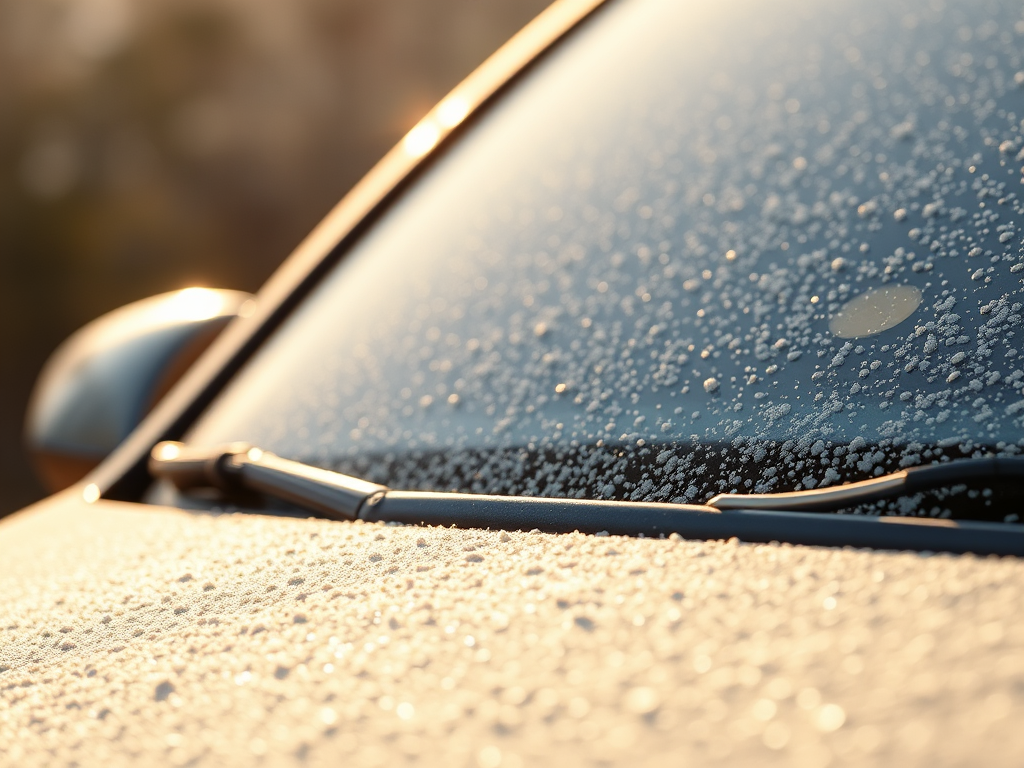
But with spring, it’s not always enough. When the trees start blooming, along with the grass, the air becomes thick with pollen. In the area where I live, it’s not uncommon to see layers of the stuff on cars in the morning. For most people, it’s just something you can wash off with a hose or wait until it rains. For me, it’s often a sign that I’m going to have a rough day.

My eyes will itch.

My head will heart.

My nose will get stuffy and congested.

If it gets really bad, I’ll feel a bad itch on the roof of my mouth. That means I need to take something or every other symptom will intensify. That means taking meds that make me drowsy or nasal sprays that have a nasty rebound effect. I don’t like having to do it. I try to tough it out as best I can, mostly to just get it over with. But that’s not always possible. Sometimes, I need something to help me function. Again, most of those times happen during spring.

This morning, I saw a light layer of pollen on my car. At this very moment, as I type this, my head is starting to hurt. And I’ve had enough sinus-induced headaches to know the signs. It means for the next few weeks, I need to keep allergy medications within reach. It also means quality sleep will be at a premium. I am not looking forward to any of that. But it’s not something I can avoid.

I know I’m not the only one who suffers from allergies. There are probably people who have it way worse than me. To those people, I feel for you. We’re both in for a rough time as spring sets in. We’ll get through it, as we always do. It’s just going to be unpleasant and uncomfortable at times.

But once we get through it and summer approaches, it’ll be so worth it.

Leave a comment

Filed under Current Events, rants

Why Frustration With Subscription Services Will Enable (And Necessitate) Piracy

A while back, I looked into purchasing some new software that would help me make better videos for my YouTube channel, Jack’s World. I know that’s a common issue among aspiring content creators, finding the right software to help them make what they want to make at a certain quality. But over the course of this search, I came to two frustrating realizations.

First, there are an astonishing number of incredible and useful tools to make all kinds of content, be it videos, music, or images.

Second, every one of these tools require a regular subscription to use and the cost ads up a lot, especially if you want to utilize certain features.

Now, I’m very much aware of just how prevalent the subscription model has become for so many services. I concede that I have multiple subscriptions for streaming services, as well as a few web services that I prefer not to name. But I was not aware of just how much everything, from software tools to even features on certain cars, require a goddamn subscription.

I know I’m not the first person to complain about this. You don’t need to look hard to find consumers at all levels voicing their anger about how many subscription services are necessary these days, from broadband internet to streaming media that’s now more expensive than cable ever was. But none of that anger seems to be impacting anything.

Companies of all kinds are still looking for ways to turn a one-time purchase into a never-ending subscription. You can ascribe that to pure greed, annoying trends, or a dystopian manifestation of late-stage capitalism. It really doesn’t matter what’s driving it. It still sucks.

I quickly realized that I literally cannot upgrade my current video editing software without spending hundreds of dollars annually just to access that software. I can’t even walk into an electronics store, buy disk or access code, and download the software as a one-time purchase. I can only ever buy a limited subscription or a “free trial” version that is basically the most useless version of the software.

For someone like me, who doesn’t have the budget to pay hundreds of dollars every year for professional grade software, that’s not just frustrating. It’s infuriating. It’s effectively bars me from ever making content that’s polished beyond a certain point.

That’s not to say I’m completely devoid of options. There are open-source alternatives to certain software programs. I’ve even tried a few of them. But I’ve yet to find one that matches the functionality of the consumer-based versions I’ve used for years. Hopefully, that changes at some point. If I find an open-source software for editing videos that works just as well as what I’m using, I’ll jump at the chance to switch to it. But for now, I’m stuck with what I have.

In addition, I came across something else in my effort that’s worth sharing. In searching for a free or cheap alternative to video editing software, I also came across quite a few sites that basically pirate that software. Now, for reasons I hope are obvious, I’m not going to share the names of those sites or where I found them. But I imagine I’m not the only one who came across them while looking for better software.

And unless you’re really tech savvy and have some damn good anti-spyware software on your computer, I do not recommend using those sites to get pirated software. This is not like the days of Napster and Limewire. The kind of malware you’re likely to get from these sites is dangerous and not just in terms of flooding your computer with spam.

But those same sites, some of which had domains located outside the United States and Europe, probably provide a much easier method towards obtaining software or media of any kind. There’s no need for credit cards or creating accounts. And if you ever do need to pay for something, it’s often done in cryptocurrencies. But even with the risk that comes from that, the price is far lower than what most software companies are charging.

I found one particular well-known software that was 1/5th the price from the retail version. And they accepted crypto as payment.

Even if you’re not good at math or finance, you can still understand the concept of price gouging. And when it comes to software and media, it feels exceedingly egregious. It’s not like making these products requires rare Earth metals or some kind of expensive manufacturing process. They’re lines of computer code stored on computers, easily copied for pennies and distributed for pennies more. So, having to pay more than $100 a year just to access them feels like a bad deal.

And if that gap continues to grow, then you can assume piracy won’t just become more tempting to the average consumer. It’ll become preferable. If people feel like they’re getting gouged, then they’re not going to feel bad from stealing from a company, especially if they don’t even sell you something physical. I don’t doubt companies will fight this, as they’ve always fought piracy. But take it from someone who remembers the days of Napster. That’s a losing battle in the long run.

But that battle is still playing out. And in the meantime, I still find myself stuck with software that’s becoming increasingly outdated. I’ll still make the most of what I have. But I’m already at a point where I will go to any length to avoid another subscription to my monthly bill. And if the situation continues getting worse, then that’ll just be another middle finger to customers and a never-ending gift to piracy.

Leave a comment

Filed under AI Art, Artificial Intelligence, rants, technology

September 11th Vs. The Oklahoma City Bombing (And Why One Overshadows The Other)

I remember exactly where I was on September 11th, 2001.

I also remember where I was when I first heard about the attacks on the World Trade Center and the Pentagon.

Talk to anyone who was alive on that day and chances are they’ll have a story. They can recount where they were, how they found out, and the plethora of emotions they experienced. There’s no question that this was a historic event that traumatized a generation. Even those born after the events of 9/11 have felt that trauma. And people around my age often agree.

After this day, America was never the same. The world was never the same. Many argue that things have gotten progressively worse since that day. And honestly, I’m inclined to agree.

However, the events of September 11th, 2001, were not America’s first experience with terrorist attacks. There have been others, but none were as destructive or as deadly. That doesn’t negate the tragedy and the loss of human life. But they do tend to get lost in terms of a larger historical context.

But there’s one particular terror attack that has been more overshadowed than most. It was deadly. It was traumatizing. And it scarred countless people for years to come.

On April 19th, 1995, a truck bomb was detonated in downtown Oklahoma City just outside the Alfred P. Murrah building. It ended up killing 168 people and injured nearly 700 more. And some of those deaths were young children who had been at the daycare center operating within the building.

It was, by every measure, a horrific attack. Before 9/11, it was the deadliest terrorist attack on American soil. While I don’t remember exactly where I was on that day, I still remember it being a big deal. Even though I don’t live anywhere near Oklahoma City, my school and my community held vigils. We even had this elaborate tree on which we placed cards commemorating the victims.

For weeks and months after this event, there was a great deal of fear and panic. If one truck bomb could do this kind of damage, what’s to stop other similar attacks? And if it came from some well-funded terror cell operating internationally, how could we possibly feel safe?

But then, the story surrounding Oklahoma City shifted when federal authorities identified the primary suspect. It was not some terrorist group who had trained overseas. It was not an operation conducted by a rogue nation or some anti-American government. It was perpetrated by a white American man named Timothy McVeigh.

He was not Osama Bin Ladin or Saddam Hussain. He was an all-American man born in upstate New York. He’d also served in the military and fought in the first Gulf War. He did not fit the image of a stone-cold terrorist. He did not match the narrative that most Americans surmised from such a devastating attack. The idea that a white male American veteran would commit a terrorist attack against his own country wasn’t just unthinkable. It made no sense.

Now, McVeigh did have his own twisted reasons for carrying out this attack. He was an extreme reactionary, having fallen in with militant right-wing organizations that had been operating in America for decades. They’re anti-government, anti-liberal, pro-gun, and often racist. I won’t delve too much into the details surrounding McVeigh’s ideology. But it’s disturbing in terms of how mainstream it still is in modern right-wing groups.

And I think it’s because of those parallels that the Oklahoma City bombing got completely overshadowed after 9/11. Because that terror attack, in addition to having a higher death toll, better fit the narrative that most Americans assume. The perpetrators weren’t homegrown. They were all foreign born, having embraced a radical religious ideology that is not at all mainstream in the United States.

It’s much easier to frame terrorists like that in a typical good versus evil dynamic. And it was much easier for the recourse that followed to play out. Unlike Oklahoma City, the 9/11 attacks prompted a quick response against the Taliban, who had harbored Al-Quida. It allowed the news media to play endless stories about America striking back against the evil foreign terrorists who dared to strike our country and kill our citizens.

That certainly made for a better narrative. But a better narrative also left little room for nuance. There’s no question that what happened on 9/11 was an atrocity. And that atrocity warranted a response. But whereas American committed themselves to never forgetting the events of that fateful day, they seem all too willing to forget about the Oklahoma City bombing.

One is simple in that it was an outside force who attacked us.

The other is complicated because it came from a fellow American who’d been radicalized by a dangerous, homegrown ideology.

One requires a forceful response on a foreign land. The other requires introspection and a deeper understanding of what’s happening within certain parts of American culture. Naturally, the recourse that requires less thinking is going to win out. That doesn’t make it right or wrong. But it does obscure our collective perceptions.

I don’t doubt that there’s a real threat posed by Islamic terrorists. Subsequent attacks all over the world after 9/11 have demonstrated that. However, in terms of likelihood and proximity, most Americans are far more likely to be attacked by an extremist in the mold of Timothy McVeigh.

I don’t even need to travel very far to encounter people who share his extremism. If I were to drive about an hour from my house into some of the more rural parts of my region, I’ll come across communities that are deeply conservative and extremely reactionary. Get any one of them talking about the government, gun control, or anyone whose political leanings are slightly to the left of Ronald Ragean, and they’ll seethe with a hatred that is neither rational nor justified.

I’ve had to deal with these people when they are agitated. They are dangerous in their own right. And I’m a lot more wary of them than I am of any foreign-born terror threat. But if I were to articulate this to them or even others who share my leanings, and chances are I’ll get some strange looks. I might even be attacked for thinking my fellow Americans are a greater threat than foreign terrorists.

But I still consider myself a proud American. I want my country to succeed. And I want us to confront any and all threats, be they foreign or domestic. The Oklahoma City bombing on April 19th, 1995, proved that the domestic threat is very real, just as September 11th, 2001, proved that the foreign threat is very real.

Yet we always fear one more than the other. And we’ve committed to never forgetting one while eagerly ignoring the other. But we shouldn’t. If we, as Americans, are to truly become the great country we strive to be, we must remember and learn from both traumatic events, especially if the lessons from one are a lot harder to swallow than others.

Leave a comment

Filed under Current Events, politics

Another Letter To My Future Wife (If She Exists)

Dear Future Wife:

I know it’s been a while. For that, I apologize. Life, work, and the world in general has been chaotic lately. I’m sure that hasn’t been lost on you. I won’t use that as an excuse. I just hope you understand because I’ve been meaning to write this for a while now, but I’m working under a better-late-than-never mentality.

First and most importantly, I hope everything is going well with you. I hope your family is still happy and healthy. I also hope you’re taking care of yourself. I’m trying to do my part. I still go to the gym every day. I’ve tried to tweak my diet and sleep here and there. I won’t say I’m the picture of health, but I continue to make the effort. Everything worth doing starts with effort.

Whether that effort pays off is beyond our control. Perhaps that’s why our paths haven’t crossed yet. You have your own life and you’re doing your best to manage it in this crazy world. That seems to be getting harder with each passing day. But that has never stopped you. I trust you’ll find a way, as you always do.

Along the way, I hope you’ve found time to enjoy yourself. After the COVID-19 pandemic, that’s important. Quarantine and isolation have left some lasting scars. Just getting out regularly still doesn’t feel like it once did. Maybe that has more to do with us getting older than the pandemic. Either way, it doesn’t matter.

What did you think of the latest Superman movie?

What did you think of the Fantastic Four?

What did you think of King of Hill, X-Men 97, or the latest season of Reacher?

Who do you think is going to win the Super Bowl this year?

One day, I look forward to discussing, arguing, and gushing over every detail. Finding time for that sort of thing isn’t easy. But for you, I’ll make time. That’s what you do for someone you love.

I still hold out hope that such a day will come. With each passing year, that hope dwindles somewhat. It hasn’t completely disappeared. I’m determined to never let that happen, even if I’m on my death bed. But I freely admit there have been times when I wish I’d met you.

In recent years, loved ones I deeply cherished have passed away. I’ve also become an uncle to multiple nieces and nephews. I know it’s not the same as being a parent, but I’ve really come to cherish my role as an awesome uncle. I think you would love it just as much, being an aunt to these kids. They’re so damn energetic, but so much fun to be around.

On top of these big moments, I’ve also found myself missing the little moments. I still live alone. I still sleep alone. On certain nights, I wish I could roll over and see you laying by my side. On certain mornings, I wish I could wake up and meet you in the kitchen for some morning coffee. From there, we could just enjoy each other’s company or make mundane conversation.

But more than anything else, I wish you were here so we could better support each other. Every time a news headline pops up, I feel myself getting upset. I feel my limited faith in humanity faltering just a little bit more. I’m at a point where I don’t see the human species as being able to survive in the long run. I question whether we even deserve to survive.

I don’t want to fall too deep into that kind of despair. It’s just a lot easier when you’re alone and you don’t have someone to love to remind you of what’s good in the world. I suspect you’re handling it better than me. I don’t doubt for a second that my future wife has that kind of strength. One day, I hope it inspires me to be stronger.

But therein lies my greatest fear. I genuinely worry that you and I will never meet. Even if you’re out there, not yet aware of me or the love we’re destined to share, our paths may not cross at any point. We’re so overwhelmed and locked into our current lives. We just don’t have the time or energy to actively seek the love we desire.

I don’t want that to be the case. I hope that’s not the case. Maybe we’ll meet the day after I share this letter. Even if it happens years from then, I’ll be fine with that. Good things are worth waiting for, especially love.

But if that day never comes and I eventually die alone, having never met you, I feel that will be a major loss for both of us. That may end up being beyond our control. I still don’t want that. I still want us to meet. I want our families to meet. I just know my parents, siblings, nieces, and nephews would be thrilled.

I don’t know when, where, or how that will happen. Maybe we’ll meet online. Maybe we’ll meet at a comic book convention, a football game, a grocery store, or just randomly on the street. I honestly don’t care about the circumstances. I just want our paths to cross eventually.

In the meantime, remain strong and hopeful. Keep being tough, sincere, and loving. I’ll keep doing my part, as well.

Until the day comes when we finally meet, I wish you nothing but joy and happiness.

Love Always,
Jack Fisher

Leave a comment

Filed under romance

To Those Behind The Jubilee YouTube Channel: Please STOP!

Seriously, for the good of America, the world, and the human species as a whole, just stop what you’re doing.

I hope I don’t need to go into specifics. If you know what I’m talking about, you can probably fill in the blanks based on the first sentence alone. But if you’re blissfully unaware, I’ll only offer the basics.

Jubilee isn’t just the name of a beloved X-Men character. It’s the name of a YouTube channel that specializes in debates/clickbait. They claim they seek to provoke greater discussions and create better connections between those with different points of view.

That’s bullshit.

Everyone working for this channel knows it’s bullshit. If they’re capable of putting their pants without assistance, they have to know.

They’re not in the business of thought-provoking discussions. They’re in the business of clickbait/rage-bait/anything that will get them trending on social media. They invite controversial figures, mostly “influencers” who operate on the extremes of the political spectrum. And they put them in a room surrounded by people who are diametrically opposed to their viewpoints. Then, they engage in timed debates on various controversial issues.

Now, in the pre-internet era, this would’ve been harmless. Even if you put it on TV, it probably wouldn’t have too great an impact. It would just be a temporary spectacle. But this isn’t just a world dominated by the internet. This is a world where extreme voices can make the most noise and gain both attention and power.

That’s not merely an exercise in free speech. That’s enabling assholes by giving them a large platform, a big audience, and an opportunity to completely change/destabilize public discourse on important topics. I liken it to letting random strangers have a say in important medical decisions while your doctor tells you things you don’t like hearing. Yes, people are free to share their opinions on such matters, but listening to those opinions you prefer is going to have serious consequences.

Now, I admit I did watch a number of these Jubilee debates. I’ll even concede that some of them are entertaining and memorable. But at no point do I ever feel like these debates are productive. I guarantee that not one person changed their mind or even reconsidered a position by watching these debates. If anything, all they do is make everyone more extreme and entrenched.

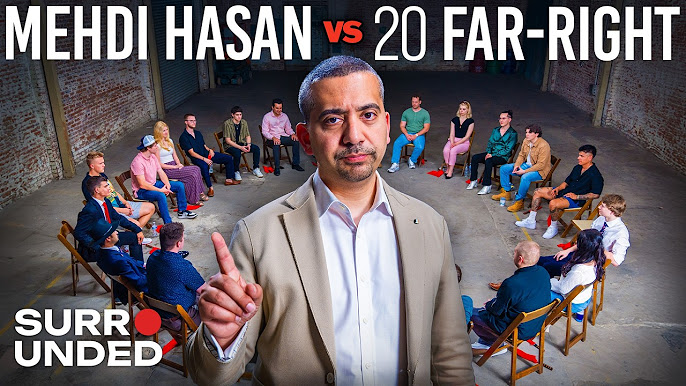
Certain debates have been plenty controversial, given the figures they’ve invited onto this show. But the one that prompted this post involved journalist Mehdi Hasan, who was tasked with debating 20 far-right conservatives.

Now, I don’t want to provide a link to this video. The last thing I want is for this channel to get any extra clicks at my expense. I’ll just say that the label “far-right conservatives” was too generously. Even calling them outright fascists would’ve been too kind. These people who “debated” Mr. Hasan are just assholes in the highest order.

Their politics have nothing to do with policy. They revolve entirely around being a dick to whoever they want, facing no consequences, and getting paid/empowered by their dickish behavior. These aren’t just people who want to live in conservative utopia. They want a world where they’re masters on a planation and everyone else is a slave who does their bidding.

But to write them off or claim they’re not representative of conservative values is missing the point. The fact remains that Jubilee sought them out. Jubilee platformed and emboldened them. Their rhetoric wasn’t just stupid, hateful, and irresponsible. In this current system of clickbait, bots, and algorithms, their assholery will be rewarded.

Sure, one of the participants lost his job for basically espousing Nazi talking points. But then, he used a go-fund-me to raise thousands of dollars to ensure he’ll be rewarded. And any system or society that effectively rewards people who champion Nazi shit is doomed to fail.

Now, as someone who makes YouTube videos who will never have the audience of Jubilee, I understand the desire to get more views, clicks, and subscribers. But at what point is it worth empowering people who champion Nazi shit? No amount of money is worth it. History has shown what happens when assholes like this are emboldened. We cannot let that history repeat itself.

Once again, I call on everyone behind the Jubilee channel to take a step back, think hard about what you’re doing, and realize this shit isn’t just irresponsible. It’s dangerous. If you want to host more debates with Skip Bayless and passionate sports fans, then go for it. That’s far less likely to involve Nazi shit. But what you did with Mehdi Hasan was far beyond any line that should never be crossed.

You have the power to stop.

You have the power to delete the video or at the very least, apologize for it.

Use that power wisely. Because the people who talk Nazi shit sure as hell won’t.

Leave a comment

Filed under politics, rants, YouTube

How Dirty, Filthy, Sickeningly Disgusting Public Restrooms Can Change The Course Of Your Life

It’s an inescapable fact of life. At some point, your bladder and bowels will turn against you in the worst possible way at the worst possible time. You could be in the middle of an important meeting. You could be sitting side-by-side with the love of your life, the President of the United States, or the most famous celebrity in the world.

Then, it hits you.

Suddenly, you have to go the bathroom. Either your bladder is about to burst or you’re about to damage your underwear and pants beyond repair. It doesn’t matter how rich, well-connected, or powerful you are. Sometimes, your body will find a way to turn any one moment into something mortifying and/or stressful.

Without getting too graphic, I’ll spare everyone reading this the ugly details of what these situations entail. Since this happens to everyone at some point, I don’t think I have to. But I’m bringing it up because I recently found myself cleaning my bathroom. In doing so, I recalled an incident from many years ago that has impacted me in subtle, yet profound ways. And it has to do with the single most disgusting, dirty, and foul-smelling public restroom I ever had to use.

I understand the bar for awful public restrooms is very high. Depending on where you live in the world, a dirty public restroom might depend heavily on how much or how little actual fecal matter is smeared on the walls. In others, it might just depend on how backed up the toilet is.

I don’t doubt for a second that someone reading this can recall a public restroom experience that was many times worse than anything I ever experienced. But I still wish to share this story, if only to offer a hard lesson in what having to use disgusting public restrooms can to do your psyche.

Like many other formative experiences in my life, this one occurred while I was in college. Specifically, it occurred during my freshman year. That’s relevant because at the university I went to, there were numerous dorm facilities that were in various state of repair/disrepair. And, unfortunately for me, I ended up spending my first full year of college in an all-male dorm.

That fact alone should offer clues as to how dirty it was bound to be. Just picture, for a moment, the scenario beyond the context of college. Take a couple hundred teenage boys around the ages of 18 and 19. Put every one of them in a large, seven-story building. Have them be miles away from parents, relatives, and authority figures for the first time in their lives. Some of these young men have never even done their own laundry.

Things are going to get rowdy, dirty, smelly, and stupid.

There are any number of incidents I can recount from my experience living in that dorm. Looking back on it, I still can’t believe I managed to live there for nearly an entire year while maintaining a relative measure of sanity. But the worst part, by far, of living in that dorm had to do with the shared bathrooms.

Seriously, I cannot put into words how awful the shared bathrooms in an all-male college dorm were.

Yes, the dorm had a cleaning staff. But unless the people working on that staff had superpowers, I don’t see how they could’ve kept those bathrooms clean. And since that staff didn’t work on the weekends, things got really bad on Sundays.

It wasn’t unusual to walk into those bathrooms on a Sunday morning and see every stall clogged, overflowing, or in some state of general shittiness. It also wasn’t unusual to see traces of vomit, food, and other bodily fluids in the shower stalls, which I had to regularly use. I want to say you get used to it. But there are just some things the human brain is not equipped to process.

But on one particular Sunday morning during my freshman year, the true breadth of shittiness in public restrooms was taken to a whole new level. And to this day, my body and my gag reflex has never been so thoroughly strained.

This incident happened during the late spring. By then, I’d seen my share of disgusting crap in the men’s bathrooms. I had also gotten pretty good at managing myself so that, if I ever needed to take a shit, I would be somewhere else on campus where the bathrooms were considerably better. I learned early on that, so long as I limited how often I had to use the bathrooms in a male dorm, I could cope.

But on this morning, my stomach decided test my resolve. For reasons I still don’t understand, I woke up that morning feeling like bodybuilders were tapdancing on my lower intestines while wearing lead bricks as shoes. It hit me in a way where my roommate commented he could hear my stomach from across the room.

That’s when I knew I was in trouble.

Initially, I wondered if it was possible to get to another building with a decent bathroom. But my stomach quickly informed me that time was not on my side. I had to get to a toilet and I had to get to one immediately.

So, I entered the nearest bathroom in my dorm. It was right across the hall. It also happened to be empty, given the early morning hour. However, as soon as I stepped in, I was hit with a sight and a smell that is forever seared into my brain.

Someone, or more likely a group of fellow male students in a less-than-sober mindset, had found a way to utterly desecrate every single toilet in some way, shape, or form. One had a literal mountain of wet, piss-colored toilet paper spilling out of the toilet, onto the floor, and into the neighboring stall. Another had a massive puddle of liquid shit at the rim of the bowl, eager to flow over at the slightest provocation. And the third had what I can only describe as the coiled anaconda of all shits.

It was so awful I nearly threw up on the spot. Had my stomach not been a firestorm of fermenting sewage, I would’ve run to another bathroom. But I had to go. So, I picked a stall, wading through puddles of piss in the process, and did what I had to do.

Again, I’ll spare everyone the details. But trust me, these are NOT details you want to know. All I’ll say is that, when I was done, I had to take a very long shower in another bathroom. I also washed my hands at least 10 times over the course of that day. The memory of what I had experienced in that bathroom was just too raw.

That memory even lingered after I finished my freshman year and got to live in better dorms later on. In that same time, I didn’t just learn to appreciate the simple comfort of a non-filthy bathroom. I actually went out of my way to clean up after myself and even clean around certain areas if I could. It wasn’t much, but it was better than another shitty ordeal, literally and figuratively.

Even after I finished college and moved out of my parents’ house, I made a big deal about keeping the bathrooms clean. And rest assure, if any toilet ever showed signs of backing up or not working properly, I immediately looked into it. The more proactive you can be with a toilet, the better. You don’t have to be a plumber to know how to keep it working.

Now, I live alone in a place that I own. That means I am fully responsible for how clean and functional my bathroom is. I won’t say it’s always spotless. And I won’t say it’s the cleanest bathroom you’ll ever see. I can only be certain that it will always be pleasant to use and you can be confident that the toilet will work, as needed.

I honestly don’t know how long I’ll live in this crazy world. But I am certain that at some point, I’ll find myself in another situation where I’ll have to badly use a bathroom and I’ll have to go into a public bathroom. I just hope that, whenever or wherever it happens, I never have to use a bathroom like the one I used during my freshman year of college.

Leave a comment

Filed under comedy, Jack Fisher's Insights, rants

Why You Should Be Skeptical (And Suspicious) Of Those Who Talk About Falling Birthrates

In general, I try not to discuss politics outside of appropriate spaces. And those spaces are usually small, confined, and located within areas where nobody close enough to punch one another. That’s not just a byproduct of having followed the news too closely for the past 10 years. I’ve just learned over the years that talking politics with random people is a quick way to make enemies, get angry, and generally lose what little faith in humanity you might have had.

There’s a time and a place to have political discussions. That time is almost never and that place is almost nowhere, unless you actively work in institutions that deal in such policies. You just have to be aware that certain discussions about certain issues are bound to get heated. And it’s next to impossible to change anyone’s mind about a particular position through these discussions.

However, in my personal experience, which I understand is limited, I’ve noticed there are a few hot-button topics that often double as red flags for certain people. It’s not that the topics themselves aren’t relevant. They usually are. But when certain people single them out as a major area of concern, it warrants a certain level of caution. Because many of those people may not be arguing in good faith.

There are many issues and topics like that. But one in particular, which has become relevant in multiple countries, has to do with falling birthrates. Now, in terms of the actual numbers, there is cause for concern. If you actually look up population trends in numerous countries, you’ll confirm that this is a global trend. And falling birthrates certainly do incur a host of social, political, and economic problems for any given society.

That being said, there’s a right way to approach this issue, as well a wrong/misguided/deeply disturbing way. The right way is more academic than political. You study the factors surrounding the trend. Analyze which of those factors are influenced by certain policies. Then, you take the appropriate prescriptive measures.

But that’s not the approach certain people make. I don’t want to name names, but most of these people are closely aligned with the conservative, right-wing, or reactionary part of the political spectrum. They also tend to be staunch traditionalists who argue society has deviated too much from the morals, values, and social norms we used to have. And addressing the problem of falling birthrates, along with a host of other problems, requires that society reverse that trend.

Now, the people making these points may very well be sincere. They may genuinely believe that people would be happier and more prosperous if they lived like we did in whatever nostalgic past era they idolize, whenever and wherever it might be.

However, in terms of the actual substance of this argument, it’s total bullshit.

And in terms of larger implications, it might even be a mask for a more nefarious agenda.

To understand why, it’s worth asking two important questions with respect to birthrates and those who obsess over it.

Question #1: Who benefits most directly from increasing birthrates?

Question #2: What other agenda does addressing this issue serve?

In the case of falling birthrates and ways to address it, there are certain policy prescriptions that tend to get emphasized over others. Those who like to frame declining birthrates as a serious issue tend not to talk much about the rising costs of childcare, housing, and food. They also tend not to talk much about the fact that wages, on a global scale, have remained relatively stagnant.

Instead, the reactionary crowd will highlight social issues like LGBTQ rights, declining marriage rates, feminism, and a lack of religious affiliation. Even if they touch on some of the economic issues, they won’t label them as a high priority. They’ll just frame women, teenagers, and sexual minorities as deviants or aberrations who are not contributing to society in a meaningful way.

They may claim they’re just concerned about the future of society. But in general, their concerns can often be boiled down to furthering draconian policies on women, workers, and young people. And the people and organizations who benefit are usually who you might expect.

Rich, well-connected business owners need a growing population to buy their products and/or get locked into their network of services.

Powerful, well-connected political organizations need a growing population to sustain the social and economic status quo that put them into power.

Religious organizations need a steady increase in population to ensure more adherents, which in turn means more influence and tax-free money for them.

The ones who don’t benefit are usually women who can’t access or afford family planning. It also negatively impacts LGBTQ+ communities because they’re denigrated for not contributing to the population/consumer/worker base. It also negatively effects workers who get stuck in cycles of poverty because they have too many kids that they cannot afford.

Again, this is not to say that falling birthrates aren’t an issue. There are certainly steps society can take to address this issue. And those steps will definitely vary from country to country. But for certain people of certain political leanings, it’s a cover for regressive, reactionary policies that benefit nobody except those who are already rich and powerful.

Be aware of that because, in most cases, serving the interests of those at the top of an imperfect system only hinders any efforts to address those imperfections.

Leave a comment

Filed under abortion, political correctness, politics, sex in society