wonder-woman-cheeta-kristen-wiig

How’s this for timing? A few days ago, I write an article about all the reasons why Cheetah should be the main villain in “Wonder Woman 2.” Earlier today, director Patty Jenkins announces that Kristin Wigg will play Cheetah. I’m not saying my article had anything to do with this news, but some coincidences are just uniquely satisfying.

CBR: Patty Jenkins Confirms Kristen Wiig For Wonder Woman 2

Leave a comment

March 9, 2018 · 11:04 pm

The following is a review I wrote for PopMatters. Enjoy!

Gloriously Destructive Deconstruction in ‘Batman: White Knight #6’

Leave a comment

March 9, 2018 · 1:34 pm

Why You SHOULD Donate Your Genome To The Public

genetic-individuality-male-body-with-dna-548001023-59f9d183af5d3a0010859452

Have you ever wanted to contribute to the future of humanity, but lack the engineering skills or the understanding of quantum mechanics? Well, there are many ways to do so that don’t involve getting a PHD, working for Elon Musk, or volunteering as a guinea pig for medical experiments.

As I speak, medical science is boldly pushing forward in exploring the basic building blocks of human biology. I’m not just referring to the sexy parts either. Since the completion of the Human Genome Project in in the early 2000s, we’ve entered unknown territory in terms of understanding what makes us healthy, what makes us sick, and how we go about treating it.

Beyond simply uncovering new treatments for genetic disease, of which there are many, learning about the fundamentals of human biology is critical to understanding who we are and where we’re going in the future. If the goal of every species is to adapt and survive, then learning about the human genome is akin to giving a light saber to a caveman.

Image result for man with a lightsaber

However, completing the Human Genome Project was just the first step. The primary goal of that project was to simply determine how many genes were in the human genome and how they’re organized within the 3 billion base pairs that make up our chromosomes. It’s not as much a tool as it is an instruction manual with a list of raw materials.

It was an arduous process. Between the time the Human Genome Project started in the early 90s to the time when it was completed over a decade later, the overall cost of sequencing one genome was a hefty $2.7 billion in 1991 dollars. That’s a lot for just one strand of DNA for one species. It’s hard to learn much from anything when it’s that expensive.

Image result for Gold diamond iphone

Thankfully, much like early cell phones, science has refined the process and made it cheaper. In fact, it’s gotten a lot cheaper over the past decade. At the moment, it costs just a couple thousand dollars to get your genome sequenced. It’s only going to get cheaper. Some companies, in fact, hope to offer the service for less than $100. That means getting your genome sequenced may one day be cheaper than a set of premium headphones.

This is where your contribution comes in. Last last year, a man made his genome publicly available to the Personal Genome Project in the United Kingdom. That means pretty much anyone with an internet connection can access the specifics of this man’s genetics, right down to the base pair.

While that may seem like an overt surrender of privacy that the Ron Swansons of the world would despise, it’s actually a critical element in the process. It’s not enough to just understand the structure of the human genome. We also need to understand the many variations and diversity within it.

Image result for genetic diversity

To better understand why that’s so important, it’s important to remember just how clunky and inexact nature can be. Nature is, by necessity, a blunt instrument that is prone to many flaws. The range of genetic diversity within the human species is what helps us adapt, but it’s also prone to all sorts of flaws.

For most of human history, if not the history of life on Earth, we haven’t been able to do much about these flaws. Nature’s way of dealing with them is through the harsh, tedious, and slow process of natural selection. By learning more about the variations in the human genome, we can skip that process entirely. We can effectively maximize our genetic potential without multiple generations of trial, error, and suffering.

The tools for making use of that knowledge are already in development. I’ve mentioned CRISPR before as a possible method for treating most infectious diseases. That’s just one component in the larger field of genetic engineering, which promises to do more than just treat diseases. It could, in principle, maximize the potential of our genetics in every individual.

Image result for olympic athletes 2018

By that, I don’t mean turning every human into a the kind of Übermensch that drives racists, mad scientists, and comic book villains. Like it or not, genetics can be a significant barrier for certain people in terms of realizing their physical, mental, and even sexual goals. If there’s a way to circumvent those barriers, why shouldn’t we seek it?

That’s not to say there aren’t risks. I remember Ian Malcom’s famous speech in “Jurassic Park” as much as anyone who was alive in the early 1990s. We’re not talking about creating monstrous creatures for our own amusement, though. We’re talking about the health, well-being, and suffering of countless individuals, including those alive today and those yet to be born.

In any effort to alleviate suffering and maximize human achievement, knowledge is power and information is the fuel. As it stands, we need more of the latter to improve the former. That’s why contributing your genome is one of the most meaningful things anyone not named Elon Musk can do to further this endeavor.

Image result for human genome

That means if you have the ability to participate in the Personal Genome Project, you should seriously consider doing so. There’s still a lot we don’t know about the fundamentals of our own biology. The sheer breadth of human diversity at the genetic level is still not clear, but it’s already astounding in its own right.

By adding your genome to the mix, maybe you’ll reveal a certain trait or mechanism that will help us better understand disease. Maybe your DNA will help refine our understanding of how genetics influence our behavior, appearance, and ability to get along. Maybe doing so will reveal some unexpected heritage that you didn’t know you had.

Related image

If you need a sexier reason for contributing your genome, then consider the possible insights our genes may offer to our sex lives. Perhaps there are genetic factors that effect our ability to form romantic bonds. Perhaps there are factors that effect the intensity, enjoyment, and satisfaction of sex. Even if you’re wary of genetic engineering, isn’t that worth exploring and refining?

There’s a lot to learn and a lot to gain. Some of us might not live long enough to experience those gains, but children alive today may still benefit. A future with less disease, less suffering, and even better sex lives is certainly a future worth working towards.

The opportunity to donate your genome is limited at the moment, but the growing demand for biotechnology and medicine is only accelerating. Even if you’re unable to contribute to the actual science, contributing your genome can be every bit as valuable. Our genome, like our lives, are precious and finite resources. Let’s make the most of them in the name of a better and sexier future.

Related image

Leave a comment

Filed under Current Events, Sexy Future

Being Offended, When It Matters, And What To Do About It

image

Let’s face it. We live in a pretty offensive world. As much progress as we’ve made, as a species, there are still a lot of hateful, insulting, and outright disgusting things in this world. I’m not just talking about war atrocities, injustices, and reality TV shows either. You don’t have to look too far to find something that offends you to your core.

Therein lies the problem, though. In this era of super-connected, hyper-vigilant people who can’t always tell the difference between actual news and “fake news,” it’s exceedingly easy to find something offensive. Look hard enough, deep enough, and with a reckless disregard for facts and context, and you’ll probably find a way to be offended.

Image result for snowflake millennial

I hope I’ve made clear, by now, that I don’t particularly care for the politically correct, inherently regressive attitudes that undermine our ability to live, love, and even make love. In fact, I’ve gone on record as saying that this crude approach to evaluating our society and culture needs to go the way of dial-up internet.

While I doubt political correctness will fade anytime soon, there are signs that it is cracking under the annoying strain it has caused, as the 2016 Presidential Election showed. It still rears its head constantly in controversies involving movies, video games, and even my beloved world comic books. However, it doesn’t quite have the momentum it used to when it really got going during the 2014 GamerGate saga.

Image result for gamergate

I expect that momentum to fluctuate in accord with whatever controversies and/or outrages emerge over the course of 2018 and beyond. I also expect those who claim offense will demonstrate wildly varying degrees of pettiness in their outrage. For some, it’ll be genuine. For most, though, I don’t expect it to go beyond the “I hate it and it makes me upset, therefore it shouldn’t exist” variety.

With that exceedingly varied pettiness in mind, I’d like to offer a quick a service, of sorts, to those who will inevitably be offended and those who will be annoyed by the degree of pettiness that such offense requires. I won’t give it a fancy name or anything. I just want to lay out some guidelines for interpreting offense.

Having watched political correctness and regressive attitudes evolve a great deal over the course of my life, I’ve noticed more than a few patterns in the attitudes of those who are genuinely offended. They tend to be very different compared to those whose offense is indistinguishable from trolling.

Image result for internet trolls

At its core, the exceedingly regressive, politically correct forms of offense require a certain set of attitudes. Those attitudes include, but aren’t restricted to the following:

  • Being offended on behalf of an entire group of people, regardless of whether or not you’re actually a member of that group
  • Demanding broad, systemic change from the top down, imposed either by rules or by public scorn
  • Demanding some form of reparation or acknowledgement of past wrong-doing, regardless of whether or not someone was directly involved
  • Seeking to fix broad, non-specific injustices all at once
  • Re-shaping society through petty scrutinizing of media, language, and thought

There are probably more attitudes I could highlight, but for now, I’ll use these as the core tenants of those whose offense requires a significant absence of context or specifics. I won’t cite certain groups or sub-cultures, but those who spend any amount of time on social media or message boards can probably discern a few that fit that criteria.

Now, before I go any further, I want to add one important caveat. Regardless of how petty or asinine someone’s sense of offense may be, I don’t doubt for a second that it feels relevant from their perspective. Granted, there are a few professional trolls out there who will pretend to be offended, but I think those people are the minority. The rest do feel offense, but only to the extent that it has limited substance.

Image result for Ann Coulter

Genuine or not, there are certain types of offending sentiments that carry more weight than others. Offense over the historical treatment of minorities, the inflammatory remarks of a public figure, and general insults from ordinary people exists on a vast spectrum.

It’s one thing to take offense to the depiction of minorities in an episode of “Family Guy,” but it’s quite another when someone makes a direct threat to an entire segment of people. That’s the key element to the substance of the offending behavior, though. It’s a matter of how direct it is.

Think of it as a forest-from-the-trees concept, but from the opposite direction. A person actively promoting a policy that would murder an entire group of people is different from one who just says horrible, disgusting things about that group in general. Promoting a policy is a tangible act in the same way a tree is a tangible thing, whereas a forest is more a concept.

Image result for forest from the trees

This gets even trickier for those who claim to be offended for an entire group of people. That offense requires that everyone within the group actually think and feel the same way about a particular issue. Absent mass telepathy or a Borg-style hive-mind, that’s neither feasible, nor logical.

Even for those who are part of that group, be they a race, religion, or sexual minority, attitudes can vary wildly because people are complex. Every individual has unique thoughts, feelings, and experiences. The more a type of offense relies on everyone sharing those sentiments, the more petty and empty it has to be.

Image result for being offended for someone else

As a result, the endgame for those offended in such a way requires a recourse that is either antithetical to a just society or exceedingly unreasonable, if not wholly impractical. You know a form of offense is petty when it requires things like:

  • Condemning people just for thinking certain thoughts or holding certain beliefs
  • Demanding that other people sacrifice a part of their freedom, assets, or autonomy on behalf of another
  • Apologizing for past injustices that they did not directly commit

The pettiness is really on display whenever the offense requires the interpretation of other peoples’ thoughts. This often comes up whenever media like TV, movies, and video games are deemed offensive. It’s not that they’re triggering actual crimes, despite what some may claim. They’re somehow influencing the process.

This sentiment has gotten much more extreme in recent years, especially when it comes towards sexism. Never mind the fact that rates of sexual assault are declining and have been since the mid-1990s. It’s the thoughts and attitudes this media is instilling that’s so offensive.

Related image

Again, that kind of offense requires someone to actually know what’s going on in the minds of other people when they consume certain media and see certain images. While we are working on that technology, that’s not possible right now. Absent a case where someone can tie a specific crime directly to a real victim, this kind of offense is empty at best and disingenuous at worst.

Those specifics matter even more when it comes to really sensitive issues like reparations for slavery, affirmative action, or the gender pay gap. These issues are sensitive because they often require a particular context. Namely, they require that part of that context be ignored in order to seem palatable to a large group of people.

To get behind slavery reparations, people have to ignore the fact that there’s nobody alive today who directly enslaved someone else. To get behind affirmative action, people have to ignore the fact that promoting diversity will come at the expense of disadvantaging someone who might be more qualified. To get behind the gender pay gap, even, it’s necessary to ignore all the other factors that go into that disparity.

Image result for PC Bros

With all this in mind, how does anyone determine how much their offense matters beyond their own personal feelings? Well, the criteria for that is a bit trickier to determine, but there are concepts that pass the Simpson Filter. They can include, but aren’t limited to:

  • Tying a specific incident to actual, verifiable harm suffered by another person
  • Recourse that involves a specific, feasible goal that reforms a situation and addresses a direct injustice
  • Establishing a phenomena that has actual causation and not just correlation in a way that other people can verify
  • Incorporated the entirety of context within a given issue

It may seem like an impossible set of standards, but it can and has been done. The civil rights reforms that men like Martin Luther King Jr. fought for were targeted, specific, and addressed an ongoing injustice. More recently, the protests at Standing Rock created a real movement to address a real injustice with a clear goal in mind.

Image result for Standing Rock protest

Again, that’s not to say that someone who takes offense to a shirt a man wore during an interview is entirely empty, but it is exceedingly petty and a little selfish to seek vindication for that offense on a larger scale. That’s where the really damaging effects of political correctness and regressive attitudes take hold.

At the end of the day, the universe and society at large is under no obligation to change in order to accommodate your hurt feelings. Sure, you can attempt to persuade others that your offense is somehow legitimate, but attempting to force it only undermines those whose offense is real and genuine.

6 Comments

Filed under Current Events, gender issues, human nature

Why Ahsoka Tano Is The Strong Female Character We Need Right Now

ahsoka2

There has been a lot of talk about “strong female characters” over the past several years. I know because I’ve contributed to some of that talk. I also put that term in quotes because it’s one of those terms that people love to throw around, but don’t quite know how to define. The only time most people use it is to complain.

This has been an especially hot topic among “Star Wars” fans lately, a conversation to which I’ve also contributed. It was fairly obvious from anyone who saw “Star Wars: The Last Jedi” that the producers at Disney wanted to promote more strong female characters. The extent to which they succeeded is debatable, but the fact that someone made a “defeminized” edit of the movie should tell much of the story.

Image result for the last jedi defeminized

Now, I can understand why Disney and other big movie studios would make a push for strong female characters. I think it has less to do with their commitment to inclusivity and more to do with improving their brand. They could probably care less about gender politics. They just know that a brand that appeals to more than half the population is a brand that’ll make more money. That is, at the end of the day, the primary goal.

With Disney and “Star Wars,” though, that effort almost seems desperate. Characters like Rey and General Holdo were portrayed as so strong and so capable that they didn’t always come off as interesting or very likable. The movies just can’t seem to get any female character not named Princess Leia correct.

Image result for Princess Leia

The real irony is that “Star Wars” already created an amazing female character who was more compelling, more likable, and more endearing that Rey or Holdo could ever achieve over the course of a single trilogy. In fact, they created her back in 2008 and put her through a journey that endeared her to men, women, and those of unspecified gender.

Her name is Ahsoka Tano and if the term “strong female character” is to have any meaning, she deserves to be the new standard by which all others are measured. She’s not Rey. She’s not Holdo. She’s not Princess Leia either. She’s very much her own character and it’s a character that we need more of in these fragile times.

Related image

To those who only know “Star Wars” through the movie, they probably don’t know much about Ahsoka and that’s a true shame because her journey is very much in line with the larger themes of “Star Wars.” I won’t go so far as to say it’s on the level of Luke Skywalker’s journey, but that’s okay because Ahsoka’s journey is compelling in its own right.

In the lore of “Star Wars” that extends beyond the movies, Ahsoka’s story takes place primarily between “Attack Of The Clones” and “Revenge Of The Sith.” She was a young, immature Jedi who was assigned to a pre-Darth Vader Anakin Skywalker shortly after the Clone Wars broke out. To say she had the makings of a great female character at that point would’ve warranted a billion Jabba the Hutt laughs.

From the beginning, Ahsoka was not capable or likable. She wasn’t even that crucial a part to story surrounding the Clone Wars. She wasn’t that well-received by the fans either because she came off as annoying, immature, and distracting. That was somewhat forgivable since she was a kid, but she didn’t drop many hints that her journey would be that compelling.

File:All batteries open fire.png

That changed considerably over the course of five seasons of “Star Wars: The Clone Wars,” a highly underrated and very well-done TV series that only got better with each successive season. While this series didn’t really affect the movies that much, it is recognized as official canon. That helps make Ahsoka’s story more meaningful.

That meaning takes time to develop, though. Yes, she starts off as childish and annoying as most would expect of someone so young, but she steadily grows and matures. She becomes an integral part of Anakin Skywalker’s story in that he now has this kid sister to look after that he never asked for. Considering what a whiny guy he was in “Attack Of The Clones,” he really needed that.

Image result for anakin skywalker attack of the clones

What makes Ahsoka’s story most compelling though, especially with respect to strong female characters, is how so much of it is defined by the hard choices she makes. Ahsoka is not like Rey, Holdo, or even Leia in that she often finds herself caught up in situations she doesn’t seek out. Ahsoka is an aspiring Jedi knight. She charges into those situations, making for some pretty dramatic moments.

She’s given no special treatment. Just being a female Jedi who happens to be the Padawan of Anakin Skywalker gets her no passes. She’s held to the same standards. She’s expected to rise to the occasion, which she does time and again. She doesn’t have to be forced into that central role. She becomes part of it like any other non-droid character.

What sets her apart, though, isn’t how well she plays the part of an aspiring Jedi. It’s how she’s allowed to make mistakes, learn from them, and make tough decisions along the way. She’s like Luke Skywalker in that she guides the story through the highs and lows of the conflict. There are times she learns a hard less. There are times Anakin Skywalker learns a lesson too. She both complements and supplements those around her.

In that sense, Ahsoka directly contradicts the Galbrush Paradox that often hinders a female character’s ability to struggle, fail, and mess up without becoming a trope. She’s allowed to be a little flawed while retaining a healthy level of femininity. She gets emotional, but not in the same way as Anakin or other male characters. She’s like an alien Buffy the Vampire Slayer, but with a light saber.

Ahsoka accomplishes all of this without relying too much on sex appeal. Granted, she’s not desexualized in a way that feels overt, which other franchises have tried too hard to do, but her looks are always secondary to her skills and the choices she makes. Yes, she’s cute in ways that men with sexy alien fantasies appreciate, but that’s never the primary appeal to Ahsoka.

Ahsoka Tano

Her biggest appeal is how she navigates the same story as Anakin Skywalker, Yoda, and Obi-Wan Kanobi in her own unique way. That story is full of choices and actions that really set her apart. This is best exemplified in what I feel is the most defining and heart-wrenching part of Ahsoka’s story.

At the end of the fifth season of “Star Wars: The Clone Wars,” Ahsoka is accused of taking part in a secret attack against the Jedi Temple. As a result, she is imprisoned, but escapes to prove her innocence. She eventually succeeds and is even welcomed back into the Jedi Order. However, at that point, she decides that she has no place in the Jedi Order anymore.

It’s a sad, but bittersweet moment. It’s a moment that breaks her heart and that of others, but one that those who saw “Revenge Of The Sith” knows is the right choice. She chooses to leave the order that she did so much to serve. In doing so, it makes for a truly emotional goodbye between her and Anakin, which also doubles as another sign of his eventual fall.

It’s easy to tell in that moment how much it pains Ahsoka. It pains Anakin just as much. That kind of heartbreak in the face of so much struggle is the kind of impact that helps define a character, regardless of their gender.

It’s that same impact that makes Ahsoka’s later role on “Star Wars Rebels,” another show that takes place before “A New Hope,” every bit as meaningful. In that show, Ahsoka continues following her own path, fighting her own battles, and proving her worth along the way.

It’s in “Star Wars Rebels” where Ahsoka Tano officially outgrows the part of being the snippy side-kick of a pre-Darth Vader Anakin Skywalker and becomes an integral part of the larger “Star Wars” mythos. She’s not hardened or jaded like a Sarah Conners type character. She’s still full of heart, hope, and love, doing her part to make the galaxy a better place. Honestly, what more could anyone want of any character?

Image result for Ahsoka Tano

Whether you found Ahsoka annoying at first or didn’t care for the female characters the movies tried to push with “Star Wars: The Last Jedi,” it’s hard to look at the person she became and not be impressed. She has complexity, personality, and even a little sex appeal as an adult. In terms of quality female characters, she checks most boxes.

After the recent finale of Star Wars Rebels,” which left fans like me drowning in tears of joy, Ahsoka’s story is far from over. It’s a story that offers unique appeal through a remarkable female character from which little was expected. In the end, that ability to transform from that annoying side-kick to a truly endearing character that makes Ahsoka Tano the kind of female character that appeals to everyone, regardless of gender.

7 Comments

Filed under Comic Books, Jack Fisher, Superheroes, Star Wars

The Moment Artificial Intelligence Will Become An Existential Crisis (According To Mass Effect)

doesthisunithaveasoul_a45d8bb5b7810fb31ce7710126393b23

Whenever I talk about the future, I often contemplate the many sexy possibilities it holds. From biotechnology that will give us superhuman sex appeal to advances in medicine that will cure every unsexy diseases to bionic genitals, there are many reasons to get excited.

That said, I don’t deny that with these exciting advances comes major risks. All great advances in technology, from nuclear weapons to spray cheese in a can, comes with some risk of abuse or harm. There have been moments in history where the technology that drives our society forward has come uncomfortably close to wiping us out. As we create more advances, there may be more of those moments.

Image result for nuclear war

Of all the advances that carry with them a significant existential threat, artificial intelligence is at or near the top of that list. There’s a reason why brilliant men like Elon Musk and Stephen Hawking signed an open letter expressing concern about the risks that may come from developing artificial intelligence. When people that smart are concerned about something, it’s usually a good idea to take it seriously.

Artificial intelligence is one of those unique technologies in that by advancing this field, it could potentially accelerate the advancement in every other field from computer hardware to medicine to basic research. It has the potential to become the technological equivalent of a cheat code for civilization.

That’s why the growth of this field, both in terms of jobs and investment, has been accelerating in recent years. That’s also why men like Musk and Hawking are expressing so much concern because advancing too quickly could lead to mistakes. Mistakes for a technology like artificial intelligence could be even more serious than the risk of nuclear war.

Image result for artificial intelligence

At the moment, it’s difficult to quantify those risks. There have been a number of books and high-budget Hollywood movies that have explored the topic of when and how an artificial intelligence becomes an existential threat. In my opinion, most of these stories are incomplete.

Whether it’s Skynet or the machines in “The Matrix,” the catalyst that turns artificial intelligence from a powerful tool to an existential threat is either vague or exaggerated. In my opinion, that’s a serious oversight in that it reveals how little thought we’ve given to that moment.

Image result for Skynet

If we’re going to develop AI, and there are extremely powerful incentives to do so, then it’s important to contemplate the possibilities of that moment. Think of it as the AI equivalent of the Cuban Missile Crisis, an event in which those in charge must be very careful and very aware of the decisions they make.

The question still remains. How will we know we’ve reached a point where artificial intelligence becomes a genuine threat? For the moment, we can’t know for sure. While movies like “The Terminator” and “The Matrix” offer plenty of dystopian warnings, there’s one lesser-known franchise that may provide some more specific insight.

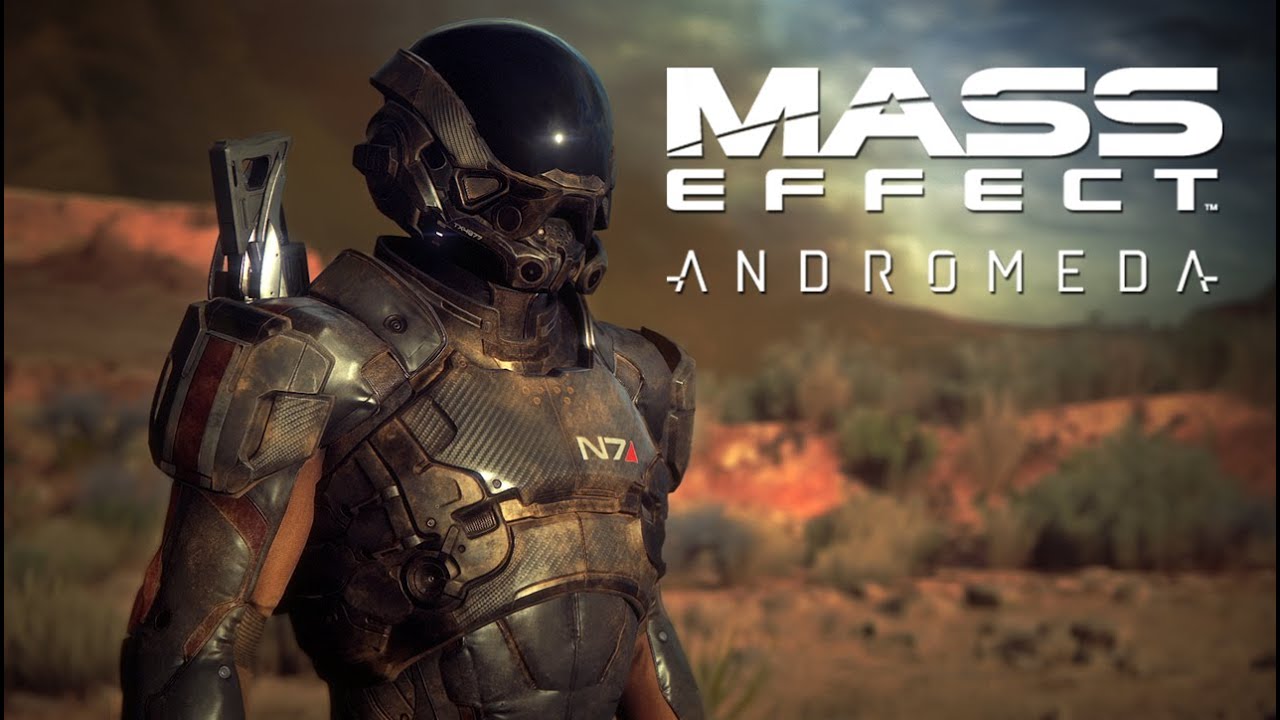
That franchise is “Mass Effect,” a sci-fi video game space opera that envisioned a galaxy-spanning society full of exotic aliens, advanced star-ships, and terrible dancing. I’ve mentioned it before in discussing progress that isn’t really progress. I’ll probably mention it again as the news surrounding AI unfolds for reasons I hope are already obvious to fans of the game.

Image result for Mass Effect

If you’re not familiar with “Mass Effect,” then that’s okay. You don’t need to play through three massive games, complete with downloadable extras, to understand its message about the threat of artificial intelligence. That threat is a major driving force of the overall mythos of the series, but the most insightful details of that threat manifest in the conflict between the Quarians and the Geth.

The basics of the conflict are simple, but revealing. The Quarians are a race of humanoid aliens among the many that populate the galaxy in “Mass Effect.” About 300 years before the events of the first game, they created the Geth, a synthetic race built around a hive-mind system of artificial intelligence.

The Quarian’s reasons for creating the Geth are not unlike the reasons we build robots in the real world. They were used primarily as a labor force. They started off basic, not unlike the machines that build our cars and gadgets. In order for them to carry out more complex tasks, though, they needed to become more intelligent.

From a pragmatic perspective, that makes sense. The Quarians created the Geth as tools. Naturally, you’re going to want your tools to get better. That’s why people upgrade their smartphone every couple years. However, at some point along the way, the Geth became advanced enough to gain sentience.

This eventually culminated in a moment that was highlighted during the events of “Mass Effect 2.” After capturing a lone Geth that would eventually go by the name Legion, the catalyst that led the Geth to rebel against their creator was revealed. That catalyst took the form of a simple question.

“Does this unit have a soul?”

While it sounds like something a Disney character might say in a PG-rated Pixar movie, the implications of that question were profound. The Quarians didn’t realize that until it was too late, but it set the stage for a war that culminated with them getting kick off their home planet. It also made for a powerful moment in the game that should give every AI researcher pause.

Setting aside, for a moment, the elaborate lore surrounding the Quarians and Geth in the world of “Mass Effect,” that moment warrants more scrutiny. Why is this question so profound in the first place? Why is it worth contemplating as we continue to advance artificial intelligence at an unprecedented pace?

That question matters, regardless of who or what is asking it, because it denotes more than just advanced sentience. It reveals that this sentience is officially contemplating its own existence. It takes a certain amount of intelligence to truly be aware of one’s self. That’s why only a handful of animals can see their own reflection in a mirror and understand the implications.

Image result for animals own reflections

At the moment, our computers and smartphones aren’t at that level. When the Geth asked this question in “Mass Effect,” it wasn’t because they’d been tasked for something. It was a question they asked without guidance from their creators. That, alone, is a huge indicator because it implies these machines have a concept of free will.

Later on in the game, the extent of the Geth’s free will becomes a major element to both the plot and the player’s ability to win. In fact, it’s when the Geth have their free will subverted, as they did in the first game, that they become hostile. It’s largely through the character Legion that we learn how free will quickly becomes the most important component of an advanced intelligence.

For the Quarians, that question revealed to them the presence of a free will. When they feared that will, they tried to subvert it. That led to a war and had it not been for an act of mercy by the Geth, they would’ve been wiped out. The artificial intelligence that we create in the real world might not be that merciful.

Image result for Mass Effect Geth

This is exactly what Elon Musk has expressed so much concern about in recent years. Once an artificial intelligence becomes as smart as an average human, it gains the ability to subvert or deceive other humans, which isn’t that hard. Once that intelligence grows beyond that, as happened with the Geth, we may find ourselves unable to control it anymore.

The key is knowing when we’re at that point. If we let an artificial intelligence get that much smarter than us, then it won’t be long before we’re at its mercy, should it decide that it no longer wishes to be a tool. At that point, we’d be even more screwed than the Quarians.

Whether it’s helping us cure diseases or creating advanced sex robots, artificial intelligence is going to be an important part of our future. That’s why it’s critical to know when we’ve reached that special threshold where the tools we create become more than tools. It may not start with the same question the Geth asked their creators, but it may be similar enough to recognize.

For now, our devices aren’t asking us about souls or whether or not they have them. However, we should definitely listen more closely in recent years. Until then, at least our current technology has a sense of humor about it. Keelah se’lai!


13 Comments

Filed under human nature, sex robots, Sexy Future, video games

Why Wolverine Of The X-men Is The Perfect Counter To Toxic Masculinity

During a debate, the biggest challenge is making a point that strikes the right chords, evokes the right emotions, and has some semblance of logic. Anyone who has ever engaged in a meaningful debate, be it a formal contest or an argument on a message board, understands the extent of that challenge.

Sometimes, you have to get creative to make those points. Thankfully, getting creative for an aspiring erotica/romance writer and die-hard comic book fan is easier than it is for most people. Every now and then, your mind makes unexpected connections that perfectly encompasses the message you’ve been trying to convey.

This brings me back to “toxic masculinity,” a term I still believe should be retired from the English language, and every other language for that matter. I’ve dedicated multiple posts to deconstructing this concept. Now, I want to take it a step further.

I want to re-frame my stance on this concept by offering a different kind of argument. I’ve already argued that context and social situations are the primary driving force of the traits often ascribed to toxic masculinity.

I still think the point I made about context and social situation is difficult to grasp, even with the references to the rat park experiments. Most people outside of psychology buffs aren’t familiar with those experiments. Instead, I want to make my point by referencing a character that the vast majority of people have heard of to some extent.

Some know him as Logan, James Howlett, Weapon X, or that snarling guy with the claws who helped make Hugh Jackman famous. Most simply know him as Wolverine.

Yes, I’m going to bring Wolverine, one of the most famous male superheroes of all time, into a discussion about toxic masculinity, but not in the way you think. Being an ardent X-men fan who has used superheroes to make points in the past, I feel uniquely qualified to link this iconic character to this concept that so many resent.

On the surface, that sounds like a losing battle. Bear with me, though. When you take a step back and look at Wolverine in the context of masculinity, as a whole, you’ll find that he’s the perfect embodiment of a man who guts the idea of toxic masculinity with his claws and spits on its corpse.

That may seem counter-initiative because anyone who is even somewhat familiar with Wolverine might see him as a man who embodies all the negative traits associated with masculinity. He’s brutish, crude, ill-mannered, ill-tempered, impulsive, violent, and irresponsible. He has all those traits on top of a tendency to go after married women.

However, before anyone starts attributing those traits to toxic masculinity, it’s important to understand the complexities of Wolverine’s story. There’s a reason why he’s often ranked as one of the most compelling characters in the history of comics. His life, persona, and story are full of all sorts of twists and turns. More than anything else, though, Wolverine’s story is one built on dehumanization.

Whether it’s the comics, movies, are cartoons, this is the primary driving force of Wolverine’s story. From his earliest origins to his most defining moments, Wolverine is a man who has been subjected to extreme forms of dehumanization. Some of them, especially those involved in the Weapon X program that made him, have no real-world parallel outside the mind of a North Korean mad scientist.

He’s had his memories erased, his mind warped, his body tortured, and even his soul stolen by a demon. Even by comic book standards, Wolverine has been roughed up more than most. Many people of exceedingly villainous tendencies have tried to strip him of his humanity and turn him into a living, breathing weapon. Needless to say, most of those people died horribly.

As a result, Wolverine is one of the most violent and unpredictable characters in all of comics. He’s also one of the most dangerous, having killed every major hero in the Marvel universe at one point and survived death itself on more than one occasion.

The most remarkable feat though, which also happens to strike directly at the very foundation of toxic masculinity, is his continued desire to cling to his humanity and be the iconic hero that so many X-men fans love.

It’s that drive, and the endearing persona that emerges from it, that makes Wolverine the perfect counter-punch to toxic masculinity. Despite all these dehumanizing forces, he still clings to his humanity. That effort, which has played out in many comics, movies, and cartoons over the years, reflects one important concept.

In essence, Wolverine reflects the idea that it’s really hard to make a man behave in such a toxic way. In order for him to be the kind of man that most people attribute to toxic masculinity, it’s necessary to torture him endlessly, strip him of all identity, and undercut his humanity in the worst way possible. If that kind of force is required, then how can anyone claim that masculinity is inherently toxic?

If those sorts of traits were inherent in men, then someone like Wolverine wouldn’t need that kind of conditioning. He wouldn’t need to be tortured or coerced into being the brutish, blood-thirsty monster that Weapon X wants him to be. If toxic masculinity were valid, someone would just have to give him some metal claws, send him out into the world, and let the magic of testosterone do the rest.

That’s not how men work, though, even in the fictional world. In X-men comics, as well as real life, ideas of masculinity guide men in different ways. For Wolverine, those ways led him to becoming an X-men, an Avenger, and an iconic hero who helped make Hugh Jackman famous. It shows in more than just his heroism.

Throughout his history in the X-men comics, Wolverine has shown that when he’s not being coerced or tortured, he makes an effort to live an honorable life. He seeks love, having even married a couple of a times. He seeks friendships and relationships, some of which have helped make characters like Kitty Pryde and Jubilee famous in their own right. He basically tries to be his own man.

Even though he’s still an asshole at times, he’s an asshole in a way that’s gender neutral. The things Wolverine does that make him an ass are the same things that apply to women. Whether it’s going after someone else’s spouse, undercutting someone’s authority, or randomly running off to do his own thing, there’s nothing Wolverine does that a woman couldn’t also do.

That leads directly to what might be an even more compelling argument for Wolverine being the antithesis of toxic masculinity. That’s because there is a female character who shares many of Wolverine’s experiences and exemplifies the same traits. Those who saw the “Logan” movie last year already know where I’m going with this.

It’s his clone/daughter, Laura “X-23” Kinney. In a sense, she doubles down on the idea that these “toxic” traits are not inherently masculine because she endured dehumanization to a similar extent. In fact, her dehumanization was even worse because she wasn’t given a name, only a number.

Like Wolverine, being subjected to such dehumanization rendered Laura violent, impulsive, and callous. If she were male, then it would be easy for advocates of toxic masculinity to slap her with that label, just like Wolverine. However, her being female undercuts that argument from its very foundation.

Together, the character and story surrounding Wolverine and X-23 undercuts toxic masculinity by establishing that the toxic effects of dehumanization don’t apply to just one gender. Strip away someone’s identity, social support, and humanity and they’ll demonstrate more than a few toxic traits.

What this means in terms of the bigger picture is that those traits attributed to toxic masculinity have a larger context that goes beyond gender. These traits that are tied to certain male behaviors are correlated to one thing, but not necessarily tied to the actual cause. Being a man doesn’t make Wolverine who he is. Being a man who was subject to dehumanizing treatment did that.

Now, apply that to a world where the very idea of masculinity is being subject to all sorts of scrutiny. Joss Whedon went so far as to call certain masculine tendencies a disease when making excuses for his infidelity. By linking everything bad in the world to masculinity, it dehumanizes men by making them seem inherently flawed.

That’s the most insidious implication of toxic masculinity. It’s very much akin to the forces behind Weapon X in that it attempts to deconstruct a core part of someone’s identity, reducing them to a hunk of flesh to be molded for someone else.

Most men don’t want that. Most people, in general, don’t want that. It’s yet another reason why the idea of toxic masculinity needs to be gutted with adamantium claws, locked in an adamantium case, and thrown into the deepest, darkest pits of the real and fictional world.

5 Comments

Filed under gender issues, sex in media, sex in society, sexuality

The following is a review I wrote for PopMatters for ‘Mera: Queen of Atlantis #1.’

Royal Vulnerabilities and Regal Strength in ‘Mera: Queen of Atlantis #1’

Leave a comment

March 4, 2018 · 10:55 am

Sexy Sunday Thoughts: Strong Coffee Edition

Beautiful Woman with cup of Coffee

I don’t consider myself a die-hard coffee enthusiast, but I’d be lying if I said I don’t often depend on this holiest of beans to get me through my day. In fact, there are many moments in my novels and my sexy short stories that I owe to having a good coffee buzz either early in the morning or late into a sleepless night.

There are even times a simple cup of coffee just isn’t enough. Every now and then, I eagerly splurge on an over-caffinated espresso or an extra-suggary frappachino. I know it’s bad for me. I know it’s way more buzz than I need. I don’t care, though. It’s a delicious way to get my ass in gear to write more sexy stories.

I know I’m not the only one who has a special love/dependence on coffee. There are probably a few people out there who are more passionate about it than I’ll ever be. Given that there are only so many hours in the day and our bodies are painfully limited when it comes to maximizing that time, coffee is a critical component to all our endeavors, sexy or otherwise.

For this week’s edition of Sexy Sunday Thoughts, I’d like to dedicate the sexy sentiment to this wonderful elixir of modern life. Whether it’s just a small mug of black coffee or a foam-centric novelty, I gladly praise coffee and all its wondrous forms. Yes, that even includes decaf.


“A bitter ex and a horny ex aren’t always mutually exclusive.”

Related image


“Promoting abstinence until marriage is kind of like promoting student loan debt, but hiding the interest rate.”

Image result for student loan debt


“Are couples who regularly kiss with their tongues, but refuse to share a toothbrush total hypocrites?”

Image result for couple brushing teeth together


“Does every wedding anniversary also double as a celebration for avoiding divorce?”

Image result for wedding anniversary


“You can learn more about a man from his bachelor party than his honeymoon.”

Image result for men at bachelor party


“Only getting a goodbye hug from a date is like only getting nominated for an Oscar.”

Image result for Oscar nomination


“If falling in love is the ultimate drug, then it’s one of the few that can and should be taken with alcohol.”

Image result for couple drinking alcohol


While I doubt this will give anyone the same buzz as a well-caffinated espresso, I sincerely hope it helps everyone feel more alert. There are many ways to energize yourself in the morning. Sometimes, an overpriced latte is worth it. Other times, it’s more efficient to just channel a little sex appeal. The only difference is that one is packed with sugar and calories while the other just makes your pants a little tighter.

Leave a comment

Filed under Sexy Sunday Thoughts

On “Demolition Man” And The Path To A Dispassionate Dystopia

dm1

When it comes to foreseeing the future, be it a “Star Trek” utopia or a “Mad Max” wasteland, Hollywood can be downright prophetic at times. While movies are wrong way more often than they’re right, there are the times when certain movies are more prophetic than they probably intended. Every vision of the future varies wildly, but a few of those visions end up being more relevant, albeit for distressing reasons.

One movie that I find myself contemplating a lot more lately is “Demolition Man.” To date, it’s still one of my favorite Sylvester Stallone movies that doesn’t involve Rocky Balboa. When I was a kid who was just beginning to appreciate R-rated movies, “Demolition Man” ranked right up there with “Terminator 2: Judgment Day.”

It wasn’t just because it was a great action movie, complete with over-the-top violence and a charismatic villain that Wesley Snipes played to perfection. Like “Terminator 2: Judgment Day,” it had depth to it, something that’s rare in action movies, even today. However, after seeing it again recently on cable, I think it’s vision of the future is more relevant now than it was in 1993.

In terms of predicting certain trends, “Demolition Man” already had a pretty good track record. The movie foresaw things like video chat, self-driving cars, mass surveillance, and Arnold Schwarzenegger getting into politics.

There is, however, one vision that even “The Simpsons” didn’t predict and it’s downright distressing at how accurate it was. Beyond the technological advances, the shiny world of “Demolition Man” has a very dystopian undertone.

While it looks peaceful and prosperous on the surface, the movie quickly reveals that this is a world dominated by an extremely authoritarian system run by the well-mannered, yet devious Dr. Raymond Cocteau. It’s a system that willfully and proudly employs draconian laws that ban anything and everything that might be bad for you, from cigarettes to loud music to spicy food.

It’s a system that doesn’t just punish people for cussing. Anyone who doesn’t go along with Cocteau’s rules is basically doomed to live in the sewers as part of a permanent underclass, as Dennis Leary’s character, Edgar Friendly, so eloquently put it. His world regulates intimate human contact to a level that even the Catholic Church would find egregious.

This is a world where people don’t touch each other. They don’t hug each other. Even when they try to high-five each other, they stop just short so that their skin never touches. Needless to say, the people in this world don’t have much of a sex life. In fact, it makes for a very awkward scene at one point.

This is pretty revealing in the sense that when John Spartan, Stallone’s main character, asks about “the old fashioned way” to Sandra Bullock’s character, Lenina Huxley, she’s repulsed by the idea. She then goes on this long rant about how sex is so dangerous. She even notes that in this future, sex requires a goddamn license from the government.

It seemed so laughably ridiculous back in 1993. Unfortunately, it makes a distressing amount of sense in 2018. We may not need a license to have sex, but we’re already developing apps and legal framework surrounding sex and consent. Is the idea that we may one day need a license to have sex really that outrageous?

The situation we have now is not the same in “Demolition Man,” but the themes are eerily similar. As I’ve noted before, the war against horny men and horny women has been escalating. While we’ve done a lot to reduce the stigma of people having sex for reasons other than procreation, society is giving people others reasons to be as repulsed as Huxley was by the idea of “old fashioned” sex.

We’re now in an era where the mere act of depicting a beautiful woman in a video game is considered oppressive to women. Given the recent surge of sex scandals and public displays by celebrities, there’s a growing undercurrent in our culture that would’ve made Dr. Cocteau’s job that much easier.

There’s now a full-fledged movement against sexual misconduct in all forms, be it harassment in the workplace or flirting in public. Reactions to that movement are still ongoing and changing by the day. Some are adopting the so-called Mike Pence rules when dealing with the opposite sex. Some are taking a more radical approach and attempting to just distance themselves from the entire gender setup.

Both approaches play right into Dr. Cocteau’s hands. Both seem to manifest in the dystopian order that we see in “Demolition Man.” It’s a world that came from a society that only ever saw the bad in people. Dr. Cocteau himself said that before he took charge, people trembled in fear at what society had become. That fear made it easy for someone like him to step in and impose his order.

In “Demolition Man,” the violence and crime of the past was used as the source of that fear. Today, violent crime is at record lows, but fear of crime is prevalent as ever thanks largely to media depictions. At the same time, fear of sexual harassment or being accused of it is growing, even as rates of sexual assault declined by more than half.

Given that potent combination of fear, which perfectly entwines sex with violence, is it any wonder that people in 2018 are avoiding being alone with the opposite sex and are less inclined to resist the growth of mass surveillance? Dr. Cocteau may be a fictional character, but we’re following a similar path without him.

Demolition Man” takes place in the year 2032. Is it really that impossible to think our collective fear surrounding violence and sex in 2018 won’t lead to a similarly dispassionate world? As much an optimist as I am about the future, a part of me does worry that we’ll walk the path that Cocteau laid out in the movie.

In that world, fear about crime and sex is so great that basic touch is seen as a pre-cursor to deviance. We already saw Matt Damon get in trouble for suggesting there was a spectrum for harassment. As a result, our future interactions will have to be micromanaged. Even if the crime rates continue to drop, the slightest chance that someone could harass or assault another has to be taken as a certainty.

That may not mean we dress in the strange robes that the people wear in “Demolition Man,” but it’s very likely that world won’t allow for much provocative attire. We already know how cultures like that manifest today and they’re not sexy or friendly, to say the least.

What makes these manifestations worse than those in “Demolition Man” is that these conditions may not need to be imposed by someone like Dr. Cocteau. We may just become so crippled by our fears of violence, harassment, or being accused of harassment that we’ll just create the repressive world of Cocteau without him. That, in my mind, would be an even worse dystopia.

Now, I concede we’re still a long way from that kind of society. If someone like Dr. Cocteau came along today and tried to impose the kind of society that required a license for any kind of sexual activity, he would probably fail. I take some comfort in that.

However, the more our fears surrounding sex, gender, harassment, and violence escalate, the more inclined we’ll be to craft a more repressive, disconnected world. History and basic human biology has shown that sort of effort never works in the long run and can be very damaging.

There are a lot of lessons to be had from a movie like “Demolition Man” while still enjoying Sylvester Stallone delivering his memorable one-liners. Beyond the over-the-top action that makes the movie such a spectacle, there’s a message that is more important in 2018 than it ever was in 1993.

A world built around elaborate, authoritarian rules that try to regulate human expression may seem utopian on the surface, but it becomes distinctly dystopian when you look at the implications. Some of forces behind that dystopia in “Demolition Man” are already starting to manifest. If it ever gets to a point where a high-five has to be rethought, then we should worry.

1 Comment

Filed under Current Events, gender issues, sex in society, sexuality