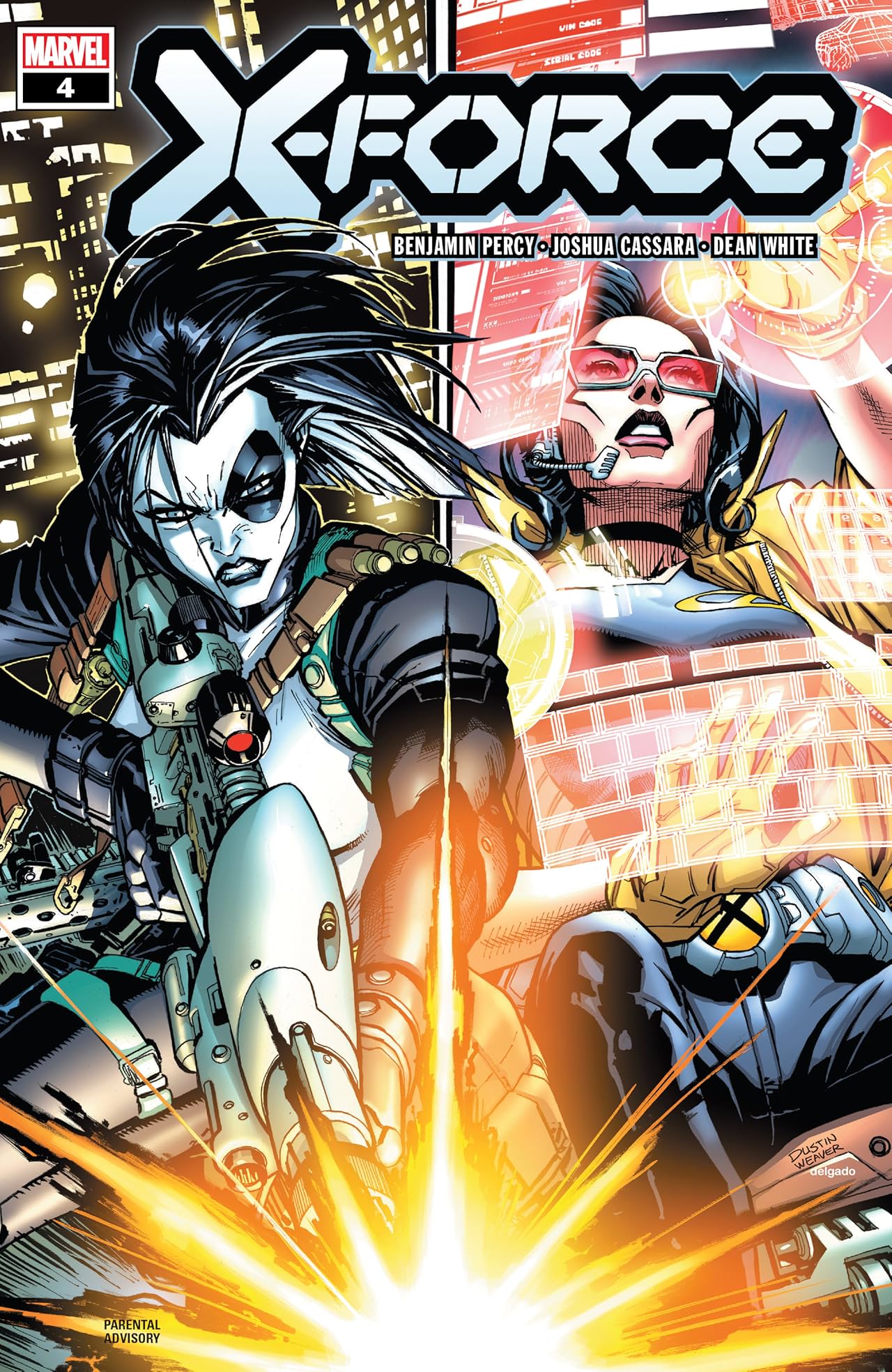
Jack Fisher’s Weekly Quick Pick Comic: X-Force #4

There are some people in this world, as well as fictional worlds, who will never be content to let things progress for the better. No amount of mutual benefit, understanding, or sincerity will be enough. They’ll always seek to destroy anything that might change the world they know, even if it’s for the better. They won’t just complain about it on social media, either. They’ll resort to the worst kinds of violence.

These are the people that X-Force deal with. Throughout their history in the X-Men comics, they’ve dealt with the dirty stains of humanity that never wash out, no matter how hard you scrub. They’re the ones tasked with confronting these threats, be they human or mutant, with a level of gratuitous violence that you won’t see outside of “Game of Thrones” reruns.

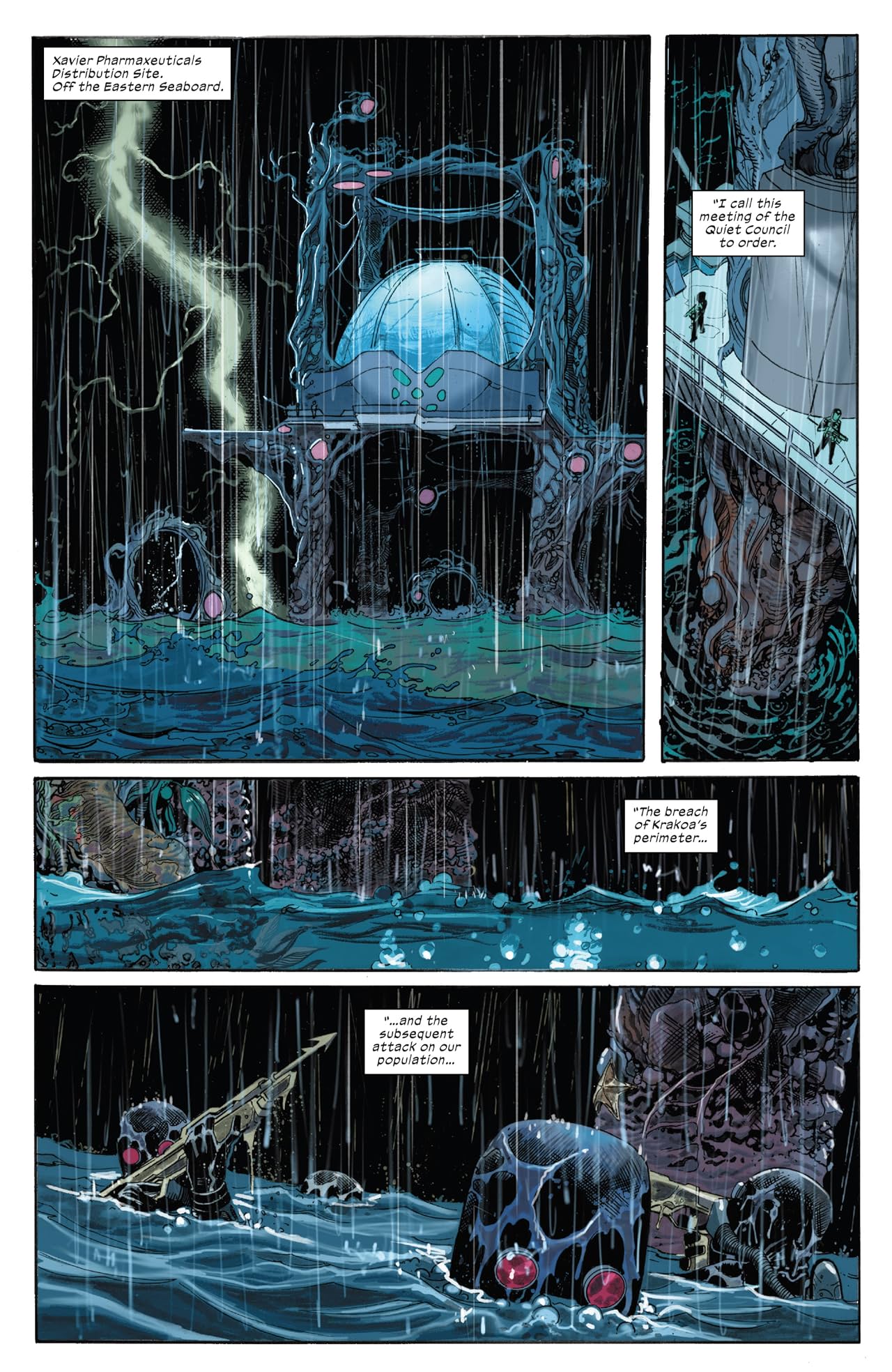
The need for X-Force, as well as their violent tactics, is one again reaffirmed in “X-Force #4.” At a time when mutants have made genuine progress through Krakoa and a new geopolitical role in the world, they’re still subject to hatred, attacks, and atrocities.

In the first three issues of the series, writer Benjamin Percy demonstrated that, despite having their own nation in the form of a living island and the ability to resurrect dead mutants, they’re still vulnerable.

Charles Xavier got shot. Domino was captured and had half her skin ripped off. The fact that any of this can happen, given all the resources at the X-Men’s disposal, is wake-up call and a reminder as to why X-Force isn’t just necessary. It needs an overhaul.

That overhaul begins to unfold in “X-Force #4” and in the midst of another mysterious attack, no less. While this one didn’t end with anyone getting shot or flayed, it did hit Krakoa in the wallet, which can hurt as much as getting shot. The nature of the attack and who is behind it remains a mystery, but X-Force is put on the front lines.

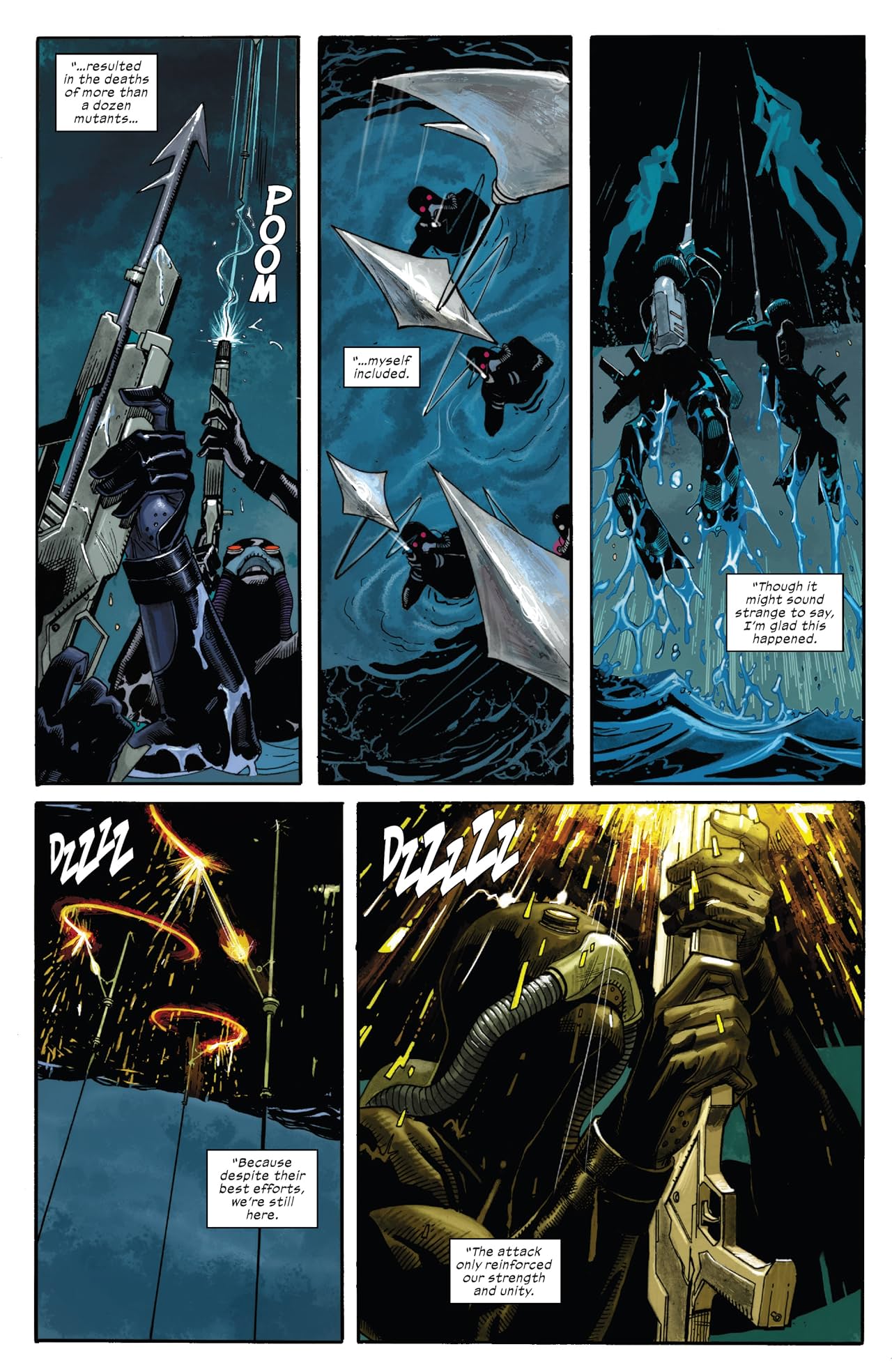
However, this is not the same X-Force that that Rob Liefeld brought to live during the grunge-fueled heyday of the 1990s. They’re not operating completely in secret as some secret kill-squad that everyone is better off not knowing about. Instead, Percy sets them up to be Krakoa’s version of the CIA, complete with its own Seal Team 6.

It’s somewhat of a shift for what X-Force has historically been in the X-Men comics, but it fits perfectly with the current situation surrounding mutants and Krakoa. Mutants are no longer scattered, isolated, and running from killer robots at least once a week. They have their own nation, language, and emerging culture. Protecting it requires something more organized than a shadowy kill squad.

That means more assistance from those who have traditionally argued against the merits of secret kill squads, such as Beast and Jean Grey. However, after seeing Charles Xavier get shot in the head and Domino get tortured, they’ve become a bit more pragmatic in handling these kinds of threats.

The events of the first three issues caught them off-guard. They try to be much more proactive in “X-Force #4,” investigating the attacks and organizing a response. Naturally, Wolverine is part of that response since many of the threats X-Force deals with require significant stabbing. Now, armed with Krakoan weapons provided by Forge and Kid Omega’s attitude, they’re ready to be a new kind of X-Force.

It may not be the kind of profane, brooding, blood-soaked X-Force we’ve seen in the past, but it feels appropriate for the X-Men’s current situation. Jonathan Hickman set up a very different set of dynamics for the X-Men through “House of X/Powers of X.” Percy just creates a version of X-Force that fits within the context of these dynamics.

Having a team like this doesn’t just feel necessary after the events of the first three issues. It feels personal. These weren’t just angry protests or hate threads on Twitter. Someone managed to attack their home and shoot one of their most powerful figures in the head. However one might feel about X-Force’s violent tactics, there’s no denying that they’re as motivated as they ever were.

For a quality X-Force comic, it’s not enough to just have ample violence and an attitude ripped from mid-90s heavy metal music. There needs to be a greater context to the added violence, preferably one that complements the current status quo of the X-Men comics. With “X-Force #4,” Percy succeeds in creating that context and artist Joshua Cassara gives it the necessary grit.

The overall lineup for X-Force is still somewhat small, but it has plenty of room to grow. After what happens on the final page, it’ll have to for reasons that are as obvious as they are bloody. The threat X-Force has to kill is still somewhat vague. Only a few details have come out thus far, but the only detail that matters is that they can hit Krakoa where it hurts and they’re not inclined to be diplomatic about it.

X-Force has always billed itself as a superhero team that relies on less-than-heroic methods to get the job done. They’re not a team that wears flashy costumes and parades alongside other, more reputable heroes. They do what they do in the shadows and don’t mind incurring some extra bloodstains to do it.

X-Force #4” starts with something bloody, but ends with something bloodier. Given the nature of the emerging threats they face and the wounds they’ve already incurred, it promises to get even bloodier with future issues. It’s everything you want in an X-Force comic and then some.

Leave a comment

Filed under Jack's Quick Pick Comic

Daily Sexy Musings: Opposites Attract (And Seduce)

backlit-couple-dawn-1824684

We’ve all heard a saying about opposites attracting. It’s very counter-intuitive. When we’re looking for a romantic partner, our first instinct is to find someone with common interests. We seek comfort in the familiar. We intuitively think it’s easier to build a lasting relationship with someone who has as much in common with us as possible.

However, that intuition isn’t always right. Granted, there is some research to indicate that opposites don’t attract as often as those old sayings would have us believe. At the same time, most people know a couple who couldn’t be more different in terms of personality, yet they still manage to make it work. Some end up getting married and staying married for decades.

It’s a strange, but uniquely romantic phenomenon. Sometimes, having someone too similar to you just doesn’t work. Things get boring and predictable. That can be palpable in the short term, but over time, things will get mundane. Human beings are novelty seeking creatures and being with someone different than you opens the door to plenty of novelty and not just in the bedroom.

Nobody knows the traits of the person they fall in love with. I suspect that the love of my life will have more than a few similarities with me with respect to interests and passions, but I also have a feeling they’ll be so different from me in certain areas that it defies all reason. Then again, love is one of those feelings that has been known to defy reason.

It doesn’t have to be logical to work. It just has to be romantic, passionate, sexy, and everything in between. This Daily Sexy Musing should help make that case. Enjoy!

You see the world in a strangely different way.

You carry yourself unlike anyone else.

You have interests, talents, and passions that seem downright alien.

You and I couldn’t be more distant in terms of shared traits.

Despite all that, we’re hopelessly drawn to one another. Like opposite ends of a magnet, an unseen attraction pulls us closer. In sea of similarities, your differences stand out. I can glance throw a crowd of countless faces. I’ll still find you. That’s how distinct you are to me. My brain doesn’t understand, but my heart clearly knows.

By every logical whim, we shouldn’t be together. I don’t do the things you’re inclined to do, nor am I excited by the things that enchant you. I’m not adverse to them, but I’m hardly tempted to try. The unknown and unfamiliarity dissuades me, just as my interests and inclinations dissuade you. How can our love work like this?

First, I dare you to enter my world.

Then, you dare me to enter yours.

At first, we’re reluctant.

The next moment, we’re curious.

Suddenly, we venturing into uncharted territory.

I don’t know what to make of it, but I know I want to share it with you. It’s stressful, but thrilling. The experience hits us in unexpected ways. We’re out of our comfort zone. We now find ourselves a place entirely new, one we can only reach together. It’s in that moment, that logic fails and our love win out.

I am not like you.

You are not like me.

That’s the catalyst the forms our bond.

That’s the journey we gladly share.

In a paradox of nature and passions, opposing forces brought us together. A special passion bring us closer.

Leave a comment

Filed under Daily Sexy Musings

Why Organized Religion Opposes Assisted Suicide (For The Wrong Reasons)

190613_vod_orig_assistedsuicide_hpmain_16x9_992

Most people under the age of 40 are too young to remember the controversy surrounding Dr. Jack Kevorkian, also known as “Dr. Death.” For a time, he was one of the most polarizing figures in the world because he made assisted suicide a major socio-political issue. From 1989 to 1998, he took part in approximately 130 assisted suicides. It’s because of him that every state has a law regarding the practice.

Before I go any further into this very sensitive, exceedingly emotional issue, I want to make one thing clear. I don’t have a strong position on assisted suicide. I’ve had a hard time arguing in either direction. On one hand, I can understand someone in chronic pain wanting to end their life. On the other, I also worry that making such a practice mundane could undermine efforts to treat debilitating conditions.

I have people in my family who have fought debilitating illnesses. Some have lost those fights. Others won out and are stronger because of it. I believe that if you had talked to them on a particularly bad day, they might have seriously considered assisted suicide as an option. It’s a heart-wrenching issue that I’m not qualified to debate.

Despite those qualifications, I believe I’m still capable of scrutinizing certain aspects of the debate. Reasonable people can make reasonable arguments for and against assisted suicide. I’ll leave that part of the debate to people smarter and more informed than me. For the bad arguments made by unreasonable people, however, I think I’m as qualified as anyone.

One of the most vocal opponents of assisted suicide come from organized religion, especially the Catholic Church. Their position is fairly clear. Suicide is an egregious sin and a crime against human dignity. Even if you’re in debilitating pain, it’s not your place to take your own life. Only the all-powerful, all-knowing deity of their faith can do that. Some go so far as to claim that suicide automatically condemns a soul to Hell.

Setting aside, for a moment, the kind of theology that would condemn suffering people to more suffering in the afterlife, it’s worth taking a step back to ask why assisted suicide is an issue for organized religion in the first place. What interest could any religion have for getting involved in such an immensely personal issue?

To answer that question, it’s also necessary to distinguish between organized religion and the personal faith that people have. Your personal faith is personal. It’s between you and your loved ones. When religions get organized, they become impersonal and subject to different influences. As demonstrated by corporations or governments, those influences aren’t always holy, to say the least.

An organized religion, be it a huge institution like the Catholic Church or just a small denomination of churches, temples, and mosques, are driven by the same incentives. They need money, adherents, labor, and support from as many followers as possible. How they go about obtaining those resources varies from faith to faith. When it comes to maintaining those assets, however, things get less varied.

I’ve noted before how religious institutions have used dogma to maintain and reinforce social inequality. Any institution, religious or not, has a strong incentive to keep its followers in a state of ignorance, poverty, and dependence. It also can’t have too many people questioning the dogma, nor can it have people with enough resources or comforts to function without its help.

With religion, those incentives are easier to codify because it can claim that their doctrine doesn’t come from law, money, or brute force. It’s ordained by a powerful deity that is on their side. People can argue against politicians, protest greedy businesses, and question long-standing traditions. They can only do so much against a powerful, invisible deity.

It’s within this context that organized religion clashes with assisted suicide. Like with inequality, assisted suicide directly undermines the manpower and resources of religious institutions. It doesn’t just take from them an adherent or a potential convert. It strikes at the foundation on which organized religion builds its influence on people.

In the same way that a business needs customers with money to spend on their goods, organized religion needs people who feel deficient, impoverished, or desperate. It’s a well-documented phenomenon. Those who are poor, hungry, and suffering tend to gravitate towards organized religion.

Sometimes, this is a good thing because there are religious organizations out there who provide food, comfort, and care. Even if doing so acts as an indirect way to recruit adherents, it still provides tangible help to people who need it. That’s an aspect of organized religion that deserves respect. When it comes to suffering and dying, however, the practices aren’t nearly as commendable.

When people are dealing with a suffering loved one, it’s incredible difficult. It takes an emotional toll on both the individual and their family. It’s heart-breaking on so many levels. It’s also an unscrupulous opportunity for organized religion.

While they won’t outright prey on someone else’s suffering, they’ll often act as a source of relief and comfort. They’ll try to act as a shoulder to cry on, telling both the person suffering and their families everything they want to hear. It earns them points from both them and the larger community. They can claim they’re helping a suffering family, but without actually helping them.

They stop short of paying for an expensive, life-saving procedure. They’ll also stop short of paying medical bills that might have piled up. They’ll sometimes promise to promote scientific research to treat whatever is causing so much pain, but in terms of over-arching incentives, that makes sense in the context that any organization wants to keep its adherents alive.

When assisted suicide enters the equation, the religious organizations miss out on that opportunity. Instead of comfort from a priest, mullah, rabbi, or monk, those suffering can get relief from a simple medical procedure. Their family can also enjoy a sense of closure in that their loved one isn’t suffering anymore. No religious influence is necessary here.

For some, that’s not just a problem. That’s a threat. Anything that subverts the need for the religious organization undermines its ability to maintain and grow its influence. Assisted suicide does all that and then some. However, it goes beyond simply not having the chance to endear themselves to sick people and their families.

From their perspective, assisted suicide sets a dangerous precedent. If too many poor, desperate, suffering people start killing themselves to escape, then they lose one of their best sources of new adherents. It’s the same reason why they discourage abortion and contraception, hoping that adherents produce more adherents for the organization. It all comes back to maintaining and growing the institution.

That usually isn’t the stated purpose. Almost every major religion that discourages assisted suicide will argue from a moral perspective. However, the indirect effect is certainly there. That’s not to say that the heads of these religious organizations secretly meet in dark rooms and craft their dogma with these factors in mind. It’s simply a byproduct of large groups of people responding to incentives.

Even if the implications of opposing assisted suicide are indirect, it’s still not a good reason to oppose the practice. It requires that people overlook the suffering and pain of others while convincing them that they don’t have the right to make important choices in their lives. That effort only leads to more suffering and that can never be justified, no matter how much dogma is applied.

As always, I want to make clear that I’m not calling all religious organizations malicious for opposing assisted suicide. I don’t believe that those within these organizations are out to cause more suffering. Most believe, in their heart of hearts, that they’re doing the right thing. The problem is that dogma, doctrine, and powerful incentives can overshadow those efforts.

There are good, legitimate reasons to oppose assisted suicide. Unfortunately, organized religion rarely relies on those reasons. On top of that, they have one too many incentives not to focus on those reasons.

2 Comments

Filed under health, philosophy, politics, psychology, religion

Jack Fisher’s Sexy Sunday Thoughts: Sexy Fireplace Edition

1910515

It’s getting cold outside. Winter is here and that’s no longer a teaser for a popular HBO show. Fall may not officially end until late December, but if you live in an area outside a tropical climate, it feels like winter. There have already been a few major snowstorms. This is just the beginning. As I write this, it’s freezing outside and I’m clinging to a hot cup of coffee.

There are many ways to stay warm in the winter. Some are a lot sexier than others. While I could definitely name a few, I’d like to focus on one that’s more pragmatic than sex, but still has a sexy connotation. It’s a fireplace. Whether gas powered or wood burning, having a roaring fire in the fireplace is a great way to keep your place warm in the winter. It’s also a grate way to set a sexy mood.

I can say that because the place I currently live at has a gas fireplace. In fact, one of the many reasons I bought my current home is because it has this nice little feature that I’ve always been fond of. A roaring fire in the fireplace isn’t just a nice utility for the winter months. It creates a unique ambiance that I find very intimate.

It’s an ambiance that has all sorts of romantic potential. I can easily imagine having a nice candle-lit dinner, followed by a little snuggling near the fire while it gets cold outside. That helps things get heated. From there, simple passions flare up. It’s a beautiful thing.

Not everyone has a fireplace and even a few who do probably see it as nothing more than a heating tool. I believe it can be more than that. Please use the following edition of my Sexy Sunday Thoughts as my arguments for the inherent sexiness of fireplaces. Enjoy!


“Women who watch gay porn and men who watch lesbian porn are sending mixed, yet understandable messages.”


“Trashy is just sex appeal made disgusting.”


“We live in an age where we share so much of our lives with total strangers online, but we’re still very protective of our porno stash.”


“How horny do you have to be to consider using a used sex toy?”


“Ignorance may be bliss for an individual, but knowledge is essential for anyone who wants to please their lover.”


“Being bitter that other people are more attractive than you is like being heartbroken that a prostitute slept with someone other than you.”


“A heartwarming gesture is the simplest way to start warming up someone’s loins.”


I hope that warmed everyone’s heart, loins, and everything in between. It’s going to be a long winter. There are many long, cold nights ahead of us. If you have a fireplace and a lover to share the warmth with, this is the perfect time of year to make use of it. There might be easier ways to stay warm, but I doubt few others will be as effective and sexy.

Leave a comment

Filed under Sexy Sunday Thoughts

“A Very Merry Sex Robot” A Sexy Short Story (About Christmas And Sex Robots)

165cm-artificial-naked-silicone-sex-dolls-moaning

The following is a sexy short story about Christmas and sex robots. It’s a combination that I don’t think exists enough in this world and I’d like to contribute to it. I hope this story starts a trend. The holidays are a wonderful time of year. Sex robots can only make them more wonderful. I hope this story proves that. Enjoy!

“Tis the season, my ass,” groaned less than jovial Ethan Elder. “How the hell am I supposed to enjoy Christmas this year?

That was the tenth time Ethan had asked himself that question in the past hour, but he remained no closer to an answer. He’d contemplated it in various forms for over a year, but had only succeeded in making himself more miserable. Even in the comfort of his parents’ home on Christmas, the disillusion and despair festered. At this point, even a Christmas miracle couldn’t mend his broken spirit.

The past year had left Ethan with little capacity for cheer on the holidays. Since late January, his life had been consumed by a messy and ugly divorce from his now ex-wife, Gina. In hindsight, he should’ve seen the signs.

Ethan and Gina had been high school sweethearts who got married on a whim after graduating, thinking it would solidify their relationship for the long term. It was the antithesis of what their friends and peers did with their significant others, few of which remained together. He and Gina thought they were bucking the trend by taking a giant leap forward with their relationship. He genuinely believed in their love.

Ethan now realized just how wrong he’d been. In fact, he should’ve realized it sooner.

“How could I have been so stupid? How did I not see it coming?” he said, his face still buried in his pillow.

Those were among the many other questions he’d asked himself, even before Gina filed for divorce. The answers seemed obvious now, but they still hurt, especially during the holidays.

Getting married when they were young, inexperienced, and ill-prepared had been a challenge, but it wasn’t what broke their relationship. They’d begun their married life with a shared vision. They were going to go to college together, graduate with business degrees, and start their own company, and chart a bold new path for their family. It seemed so naïve and idealistic, but that only made it more appealing in their eyes.

That idealism started fading as soon as they entered college. That was where their vision started to diverge. While Ethan believed in staying true to that vision, Gina started showing interest in other goals. The more she learned, the more she realized that she didn’t want to start a business. She developed a passion for art, movies, and film production. At first, he thought it was just an elective that she enjoyed. Then, she started dropping hints that this was where her passion resided.

Unfortunately, Ethan didn’t pick up on those hints. Looking back on it, he went out of his way to ignore them.

“I tried to tell you. I really, really tried,” Gina told him the day she filed for divorce, “but you just made it so damn difficult!”

She might have been half-right. Even her lawyer admitted that she waited way too long to tell him that she wanted a life different from the one they’d planned. That didn’t make the heartbreak that followed any less painful.

They still graduated college together.

They still started that business together, which went onto become quite successful.

However, success didn’t make Gina happy and her misery quickly became his. Misery led to many fights and many more arguments. Little came from them, aside from tempering the love and intimacy they once shared. Before long, Gina started showing interest in other men. Ethan even admitted that his eyes began to wander as they became more distant. It got to a point where they started sleeping in separate rooms, becoming colder and more distant along the way.

While there was never any sexual infidelity, Gina admitted to his face that she wanted to. She even admitted that she’d kissed a man who’d been helping her with film projects on the side. She would’ve gone further had she not been wearing her wedding ring, but it was that moment when she realized that she no longer loved him.

“The woman I am…the man you are…we’re just not the same. I’m sorry, Ethan. But I can’t love you like I used to.”

Hearing those words broke his heart. Receiving divorce papers hurt even more. At first, he tried to fight it. He tried to reconcile with her. That only made the process more painful.

Since she still helped build the business they founded, she got half the assets. Since she had no interest in running it, she sold it off. He ended up doing the same, no longer able to pursue a vision that he could no longer share. Ethan still ended up with a sizable amount of money, but he couldn’t have been more miserable.

His parents had been trying to console him for months. His dad even insisted that he stay with them for Christmas, if only to get away from the now-empty house he once shared with Gina. They’d even let him sleep in his old room, as if to reconnect with happier times. Even in the early hours of Christmas morning, it still didn’t work.

“After the year I’ve had, I don’t think I’ll ever be able to enjoy Christmas again,” he groaned.

Ethan buried his face in his pillow again, too miserable to sleep and too restless to think straight. He looked over at the clock. It read two in the morning. He already wished he could skip the holidays this year in hopes of rebuilding his life, his heart, and his soul for the next year.

He was prepared to turn around and force himself back to sleep somehow. Then, he got an unexpected text on his cell phone, which sat atop the dresser next to his bed. It came from an unknown number and conveyed a cryptic message.

“Good morning, Ethan,” it read. “Santa has delivered to you a very special gift. Please come downstairs to receive it.”

Ethan read over the message a few times. He tried to look up the number, but it was blocked. That was unusual, especially after getting a new phone number to distance himself from former business associates. While he remained too miserable to get excited, he was none-the-less curious.

“This better not be a prank by Gina’s sister,” Ethan muttered.

Setting his phone aside, he got out of bed and made his way downstairs to the living room. He didn’t even bother putting on slippers or changing out of his pajamas. He fully expected to be underwhelmed, disappointed, and more jaded than he already was.

As he neared the living room, however, Ethan noticed something odd. The lights to the Christmas tree had been turned on, which was unusual. There were also muddy boot prints in the foyer, hinting that someone had actually entered the house at midnight to deliver something. Whether it was Santa, his dad, or one of his dad’s friends was anyone’s guess, but Ethan doubted it could be anything too elaborate.

Then, he entered the living room and saw something that rendered him shocked and astonished.

“Good morning and Merry Christmas, Ethan Elder,” said a beautiful female figure. “My name is Merry. I am a sex robot of the highest quality. I have been configured, programmed, and calibrated to give you the love you so desperately need this Christmas.”

For a brief moment, Ethan had to blink a few times and shake his head, just to make sure he wasn’t dreaming. Near as he could tell, this was real.

Standing in front of the Christmas tree that he’d helped his parents decorate was a beautiful woman who looked like she’d been cut from the centerfold of a beauty magazine. Her figure was perfect, from the curve of her hips to the shape of her breasts to the hue of her lips. She had dashing blue eyes, shoulder-length hair that looked glistened like silk, and flawless skin that was either divine or artificial. At that moment, Ethan wasn’t sure which would’ve shocked him more.

On top of that, she wore what appeared to be red lingerie with a matching lace bra and thong. In the center, just between her ample breasts, was a large red bow. It was like someone had wrapped her to be a real present. She even seemed to embrace that role as she stepped forth to greet him.

“Before you ask, my programming requires that I identify myself and my purpose,” she said. “I am Ideal Companions Model 2.89, purchased by special request from David and Martha Elder three weeks ago and delivered by request on Christmas morning. My features include advanced AI interface, fully functional synthetic flesh, and sexual function at or beyond that of a healthy young woman. I am also programmed to seek a mutually intimate bond with Ethan Elder, my pre-determined lover.”

Ethan would’ve laughed if he hadn’t been so shocked. Now, he understood why his parents insisted that he spend Christmas at their house. They’d apparently seen how miserable and lonely he’d been after his divorce. He might have even mentioned a few times how he’d connect with another living woman. His father might have taken that statement literally.

As overwhelmed as he was at her presence, Ethan still found himself approach her, if only to confirm she was real. Once again, he made sure he wasn’t dreaming. He knew sex robots were real. He even knew about Ideal Companions, having done business with them a while back. He just never imagined he’d be in the presence of one of their models, let alone one so beautiful.

“Please, take all the time you need to understand this setup,” Merry continued, as if reading from a script. “Note that my programming and Ideal Companion’s policy permits you to refuse connection, thereby prompting an expedited return and a full refund of your deposit. Based on the data I’ve downloaded from your recent onslaught of heartbreak and distress, I hope you do not make such a choice. But if you so choose, I will honor it.”

Ethan could’ve ended it right then and there. He was tempted to do so, if only to end this craziness and demand an awkward conversation with is parents. However, another part of him was drawn to this woman. Robot or not, she had a presence that captivated him.

Whether it was her presence, the revealing lingerie she wore, or the fact that he hadn’t been intimate with a woman in over a year, Ethan found himself making a snap decision on the spot. It might not have been well thought out, but it felt right.

“I…want you to stay,” he said, his voice barely above a whisper.

“Would you please confirm this sentiment directly?” she asked. “Do you wish for me to be your intimate companion?”

Ethan had a chance to second-guess himself. More often than not, he didn’t get that chance and when he did, he rarely went against his gut decision. This time felt different. This time, everything about his first inclination felt right.

“Yes,” he said in a more confident tone. “I’d like that…I think.”

“Wonderful!” Merry said. “You still sound uncertain. Perhaps it will help if I show you the kind of intimate companionship I can offer.”

Without further explanation, the beautiful female figure undressed on the spot. She started by unwrapping the bow over her chest, as if to unwrap a present in the sexiest way possible. She then removed her lingerie, performing a sensual striptease under the light of the Christmas tree. It was both festive and sexy. By the time she was done, Merry stood before him in the middle of the room, fully naked with every feminine feature on full display.

“Come to me, Ethan,” she said with a welcoming gesture. “Embrace my body while I embrace yours.”

Ethan couldn’t believe what he was seeing. There was a beautiful naked woman standing in front of him, inviting him into her loving grasp. Every instinct of every healthy heterosexual man urged him to accept that invitation. Had he not been in his parents’ house, wearing unwashed pajama pants and a dirty old T-shirt for the third night in a row, he might have done so.

However, his heart was still raw. On top of that, Ethan hadn’t been intimate with a woman in a long time. A part of him wondered if he could even muster the desire. Such hesitation probably would’ve raised concern for most women, but Merry wasn’t the least bit dissuaded. Instead, she just smiled warmly and approached him.

“Here,” Merry said to him, “let me take your clothes off.”

“I uh…I can manage,” Ethan said anxiously.

“I know you can,” she said, “but if I’m to be your loyal companion, I need plenty of hands on experience.”

“Hands on…right,” he said with a chuckle. “I didn’t know sex robots could make jokes.”

“My abilities go beyond sex. If you give me a chance, I’d be happy to demonstrate.”

He answered only with an awkward smile. Merry interpreted that as affirmation and proceeded accordingly.

She took a step closer, her nude form now perfectly within reach. Ethan still didn’t make a move. He just stood there while Merry took off his shirt, grasping the hem and pulling it up over his head. She then took off his pants, boxers and all. She wasn’t aggressive or intense. She was very gentle and caring, as though she were tending to someone who was wounded. Given what he’d been through over the past six months, it wasn’t that far from the truth.

“You’re a handsome, caring man, Ethan,” Merry said as she took in his nude form. “Any woman, robot or otherwise, would be lucky to have you as their lover.”

“I’m flattered,” Ethan said, blushing somewhat under her gaze. “Is that another part of your demonstration?”

“It can be, if you wish. But a more important part involves helping you feel comfortable around your new lover. So please, if you desire, touch me. Get a feel for my body while I get a feel for yours.”

Again, Ethan fell silent with shock. That might have been for the best. He had a tendency to say dumb things when he was overwhelmed. His ex-wife had reminded him of that more than once during their divorce proceedings. For now, he tried not to think about that. For the first time in years, he was going to enjoy a true, genuine gift.

“Okay. Let’s do this,” was all he said.

Hiding his nervousness behind an awkward smile, he welcomed the attractive feminine figure into his arms. Merry eagerly accepted, still smiling warmly as she pawed his upper body with both hands. Ethan finally let his once-dead passions arise and began exploring her naked body. The feeling of her flesh, synthetic or not, was every bit as overwhelming as her beauty.

He welcomed more of her caring touch as Merry offered more affectionate gestures. She trailed her hands over his chest and arms, as though she’d been programmed with a keen knowledge of how he liked to be touched. If she were as advanced as she claimed, that was likely true to some extent.

Even though she was a robot, Ethan was gentle. He started by caressing her face, lightly touching her cheek and running his finger through her hair. He steadily grew bolder, trailing his hands down her feminine curves, feeling around her hips, thighs, and butt. Her skin was so smooth and warm. Had she not stated that she was a robot, he would’ve thought her to be an angel, coming to grant him mercy on a cold Christmas morning.

It felt so good that he was almost afraid to feel any other part of her body. Merry must have sensed that because she helped guide his touching. As if to reignite his dormant passions, she lightly grasped his wrists and guided one hand to her breasts and the other to her inner thighs.

“Don’t be shy, Ethan,” Merry told him. “Here. Feel my breasts. Feel my vagina. I want you to touch them. I want to be intimate with you.”

Ethan swallowed nervously, but managed to not look too foolish. He was already naked with her in his parents’ living room on Christmas Eve. What else could possibly shock him?

That didn’t make feeling Merry’s breasts and genitals any less overwhelming. It was incredible, grasping her fleshy orbs and caressing her womanhood. His experience with his ex-wife gave him little confidence in his ability to navigate female anatomy, but Merry’s soft purrs of approval reassured him. Unlike Gina, she appreciated soft, loving touch.

“Mmm…that feels good,” she told him. “So soft and caring…I like it. It makes me want to kiss you.”

“I…wouldn’t stop you if you tried,” he said.

That might not have been the best response to a beautiful woman’s overt approval, but she didn’t hold that against him. She still kissed him passionately. Her lips tasted sweeter than any holiday treat. Synthetic flesh or not, it was a wonderful feeling. It also shattered whatever reservation he had left about embracing Merry as his robot lover.

As their lips meshed, the touching continued. He kept fondling her breast with one hand while rubbing her outer folds with the other. He even slipped his fingers inside her, which revealed that her feminine anatomy functioned every bit as well as a non-robot woman. She was very aroused and Ethan was finally sharing that feeling. He felt his manhood become fully erect with more urgency than he’d experienced since his honeymoon.

Merry quickly sensed this and directed her touch to his lower body. The feeling of a beautiful woman’s loving touch on his penis might as well have been a Christmas miracle. It was overwhelming, but for once, Ethan embraced it. Divorce and heartbreak had nearly broken him. Now, he had a chance to rebuild his soul with the aid of a beautiful sex robot on Christmas.

“Ethan,” Merry said, abruptly breaking the kiss.

“Yes, Merry?” Ethan said, replying with his first sliver of confidence.

“Let’s make love,” she said, “right here…in front of the Christmas tree…together.”

The way she said it made it sound daring. Not forgetting they were still in his parents’ house and they were likely still asleep, it was to some extent. Ethan had avoided such daring acts leading up to his divorce. He was officially ready to be bold again.

“Just when I thought this Christmas couldn’t get any better,” he said with a beaming grin.

“Oh it can, my darling. I promise it can!” Merry replied in the most seductive tone he’d ever heard from a woman.

They kissed and embraced again. This time, there was no explorative touching or overwhelming reservations. It was full-fledged foreplay of the most passionate kind.

Ethan twirled his tongue with hers, forgetting completely that she was a robot and her tongue was likely some biosynthetic substitute. He hungrily felt up her naked body, paying close attention to her inner thighs and breasts, evoking plenty of soft gasps from his robot lover. He was turning her on, literally and figuratively. She returned the favor by stroking his cock and clutching his shoulder, communicating a deep desire for his intimate love. With only the light of the Christmas tree filling the living room, they pursued that desire to the utmost.

Ethan took the initiative, something Gina rarely let him do during the latter parts of their marriage. He grasped Merry by the hips, laid her down on the floor just in front of the Christmas tree, and got on top of her. She looked even more beautiful under the festive lighting, her gaze begging him for the full force of his love. Ethan gladly obliged, positioning himself between her legs and aligning their bodies for an intimate union.

“I’m ready, Ethan,” Merry said. “I want this so much.”

“So do I,” Ethan said, his voice dazed with passion.

He took a deep breath.

Then, he tightened his grip on her hips.

Finally, he thrust his hips forward, driving his rigid manhood into her wet, womanly depths.

It was nothing short of heavenly, feeling that hot flesh surround his cock. It had been a while since he’d had sex, but this felt better than anything he remembered from his ex. It was like reconnecting with a feeling he thought he’d lost forever. Now, thanks to this beautiful female sex robot, he could cherish it again.

“Merry…oh Merry!” Ethan gasped.

“That’s it, my lover,” she said lovingly. “Give it to me. Share this feeling with me.”

She wrapped her arms around his neck and kissed him passionately. That unleashed over a year’s worth of passion and desire. Like a man reborn and rejuvenated, he made love to this beautiful woman with every ounce of vigor he could muster.

Ethan was still careful at first, steadily working his hips and torso in a steady motion, allowing their intimate flesh to become acquainted. Once they got a feel for one another, he stepped up the pace. He dug his knees and feet into the shag carpet, driving his manhood into her with greater fervor. Her body rocked along with his, naked skin gliding with naked skin every step of the way. He loved how her breasts pressed against his chest and how her legs tensed every time he thrust into her, as if to embrace him fully and not just sexually.

Once Ethan established a steady pace of lovemaking, the experience opened up in unexpected ways. With Gina, sex had become such a formality. There were only so many ways she would do it with him and he agreed to those because he wanted to please her. At some point, it stopped being fun and passionate. Merry was the complete opposite. She gleefully shared in the spirit, encouraging him to explore the breadth of his passions.

Ethan rolled around with her on the rug, taking her from various positions, including a few Gina never let him try. He turned her over onto all fours and took her from behind, squeezing her butt and nibbling her ear from behind. He laid her on her side, hitched a leg over his shoulder, and thrust into her at an angle, allowing him to tease her feet in ways that made her squeal with delight. He even laid down on his back and she rode him cowgirl style while he fondled her breasts, pinching her nipples in ways that got an even stronger reaction.

“Yes! Yes! Ohhh yes!” she cried out. “Just like that, Ethan! Just like that!”

It was beautifully chaotic, a true venting of genuine passion. It didn’t matter that it involved a sex robot. The passion felt real. It was every bit as real as the pleasure.

After plenty of chaotic passion, that special gift was about to culminate. Ethan was ready to climax. He had his robot lover on her side with him spooning her from behind. She angled her hips perfectly so that he could thrust into her in just the right way, maximizing the penetration as he neared his peak. It also allowed him to fondle her breast and kiss her neck, evoking more delighted gasps from Merry. She claimed she could climax. He was about to put that ability to the test.

“I’m close, Merry! I’m going to…come…soon!” Ethan said through labored grunts.

“Yes! I…I can feel it!” she said. “My body…and your body…oohhh I feel it!”

It might have been a result of clever programming.

It might even have been a result of special engineering that ensured Merry achieved orgasm at the same time as her lover.

The prelude didn’t matter. Only the culmination mattered and in that fateful moment, he and Merry climaxed together.

It was both intense and cathartic. Ethan closed his eyes and let out a deep gasp, as if to let out a year’s worth of frustration and heartbreak. Hot waves of orgasmic pleasure erupted through his core as his manhood throbbed inside his robot lover’s depths. His release appeared to trigger hers. Merry let an orgasmic cry of her own, taking his hand in hers and giving it a firm squeeze. Regardless of whether robots experienced orgasm the same as humans, there was no denying the results.

The greatest gift Ethan had ever received was complete. This new connection with Merry was sealed.

“Merry…my new robot lover,” Ethan said, still swimming in a sea of euphoria.

“That was my purpose when I was programmed,” she said. “Now, it is my passion.”

“You already know the difference?”

“Of course,” she said playfully. “For a man such as you, Ethan Elder, desire isn’t enough. Even purpose will not do. You are a man of passion. Your former lover may have forgotten that, but I certainly won’t. Consider that a promise and one last Christmas gift.”

“And what a gift it is!”

They shared another joyous laugh. Then, as their bodies parted, Merry rolled over and kissed him again. Still curled under the light of a Christmas tree, it felt like the end of one painful journey and the start of something much more promising. Ethan thought he’d never enjoy this feeling again after Gina broke his heart. Merry had officially proved him wrong and that, in many ways, was the greatest Christmas gift of all.

Leave a comment

Filed under sex robots, Sexy Short Story

How I Learned A Powerful Life Lesson From “Goldeneye” (The Video Game)

goldeneyecover

I grew up during a strange time. I know every adult could make that claim with the benefit of hindsight, but I think I have some substance to back it up. It was a time when the internet barely existed, Saturday morning cartoons were still a thing, video games were still mostly toys, and MTV was the ultimate evil in the eyes of parents, priests, and teachers.

There were a lot of transitions that were just starting to happen. As a kid, I didn’t understand them. I barely even noticed them until years later. I still feel their influence and have learned many lessons as a result. Some lessons were more critical than others. I still remember the day I got my first email address and I made the password so easy that my little brother guessed it. That was a small, but critical lesson I had to learn.

Another one took place a few years before that and it involved a video game that is still near and dear to the hearts of many. That game is “Goldeneye” on the Nintendo 64. For some, just mentioning that game should bring back fond memories of countless hours spent in the basement, yelling at anyone who dared to pick Oddjob in multiplayer. Those were good times.

During that same time, I went to school in an era where things like the self-esteem movement and DARE were still a thing. It seems so archaic now, given how well-documented the failures of both initiatives have become in recent year, but it was a serious issue when I was a kid.

I remember seeing all sorts of platitudes and motivational messages on TV, in movies, and at school-sponsored events. They all conveyed the same sentiment.

You’re all special.

You’re all equally good at everything.

You can achieve anything if you’re determined and work hard enough.

It all sounds so nice, but there’s just one huge problem and it’s one my awesome, wonderful parents went out of their way to teach me. It’s not entirely true.

Yes, we’re all unique, which is not the same as being special.

Yes, we all have equal worth, but we’re not equally skilled.

Yes, you can achieve a lot with hard work, but you can’t achieve anything.

These all seem like rational, reasonable lessons to teach a kid. I’m certainly glad my parents made an effort to give me that perspective because it was hard to ignore the whole “you can achieve anything!” mantra that kept playing out every day. I admit I got caught up in it at certain times. I also got upset when I felt like I didn’t achieve something that I felt I’d worked hard enough for.

At some point, I had to learn that all this idealized encouragement was flawed. My parents did their part, but it took a particularly memorable experience to really hammer that point home. This is where “Goldeneye” comes in.

There was one summer in which this game basically dominated our entire day. I would wake up, meet up with my friends, and we’d start playing the game for hours at a time, much to the chagrin of our parents. These were good times. That, I cannot overstate. However, there was one issue that often came up over the course of that summer.

One of my friends, who I’ll call Shawn, was just too damn good at the game.

By that, I don’t just mean he won more multiplayer matches than most. I mean he always beat me. It didn’t matter which character I used. It didn’t matter which maps we played in. Aside from a few lucky shots, he pretty much kicked my ass every time I played him. Some of my other friends did challenge him, but he was still the best. That much, we all knew.

I thought he was good because he played more often than me. I thought I could eventually get to his level if I practiced enough. For a good two weeks in July, I essentially trained myself with match after match in “Goldeneye.” I tried to memorize every map. I tried to get a good feel for every character and weapon. I tried to hone my aim so that I made every shot count.

While I did improve, especially compared to some of my friends, it didn’t change the outcome. Shawn still beat me almost every time. It wasn’t that he played or practiced more. Shawn just had a natural talent for gaming. His reflexes were a lot quicker than most. He had a visual acuity that most couldn’t match. He could also concentrate in a way that was downright Zen-like.

To his credit, Shawn was humble about his skill. He didn’t brag or rub it in my face, although he certainly could have. He didn’t have to in order to get the point across. In certain activities, be they sports, video games, or underwater basket weaving, there are just people who are inherently more talented. It doesn’t matter how hard you work or how much you train. You just aren’t going to reach their level.

I eventually came to accept that. It was the first time it really sank in. Hard work and dedication won’t help you achieve everything. It can help, but there are going to be people who just have more talent and you can’t always work around that. It was a hard truth that I’d tried to avoid up to that point, but after that summer, I came to accept it.

Coincidentally, this is around the same time when I stopped taking those self-esteem messages at school seriously. As I got older, my perspective became a bit more realistic. In the long run, that probably served me better than just blindly believing I could do anything if I worked hard enough. I genuinely worry how much I would’ve crushed my spirit if I had to learn that lesson the hard way later in life.

Again, I got lucky. On top of having two great parents who kept me anchored, I had a friend who was just naturally talented at kicking my ass in “Goldeneye.” While all those losses were annoying, they taught me a valuable lesson and one that still helps me to this day.

To Shawn, who I hope reads this one day, I sincerely thank you for that.

Also, I apologize for all those times I threw my controller at you.

Leave a comment

Filed under Jack Fisher's Insights, psychology, video games

Why “It’s Always Sunny In Philadelphia” Is The Perfect Dark Comedy

sunny-920x584-1

Every TV show, from sitcoms to talk shows to adult cartoons featuring dimension-hopping super-genius, attempts to capture a certain theme and hone it to the utmost. They try to craft the right kind of characters who exhibit the necessary traits to convey those themes while still being memorable, likable, and endearing. On top of that, they have to do it for multiple seasons, at least until they achieve syndication.

It’s an enormous challenge. Few shows succeed and even fewer do so consistently. Even among those select few, there’s a risk that the characters and stories will get stale. Due to the nature of half-hour TV shows, there’s only so much you can do before Archie Bunker’s casual bigotry becomes more pathetic than funny. That doesn’t even get into shows that end up crashing and burning in the series finale.

Then, there’s a little show called “It’s Always Sunny In Philadelphia.” In the annuls of TV history, this show is basically a unicorn wrapped in gold, covered in diamonds, and encoded with the browser history of every active politician.

Pragmatically speaking, this is a show that should not have lasted 13 seasons. For one, it airs on FX, a network most people probably don’t know they have, if they actually have it. In addition, the show’s budget is incredibly limited. The pilot was allegedly shot for less than $100 by a cast of aspiring actors who had zero name recognition, at the time.

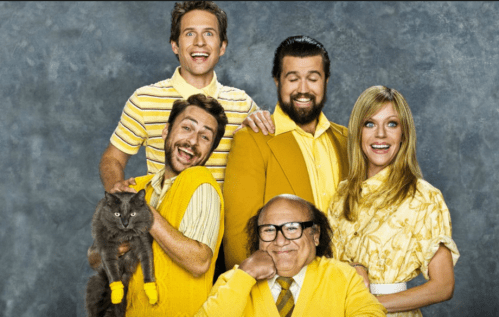
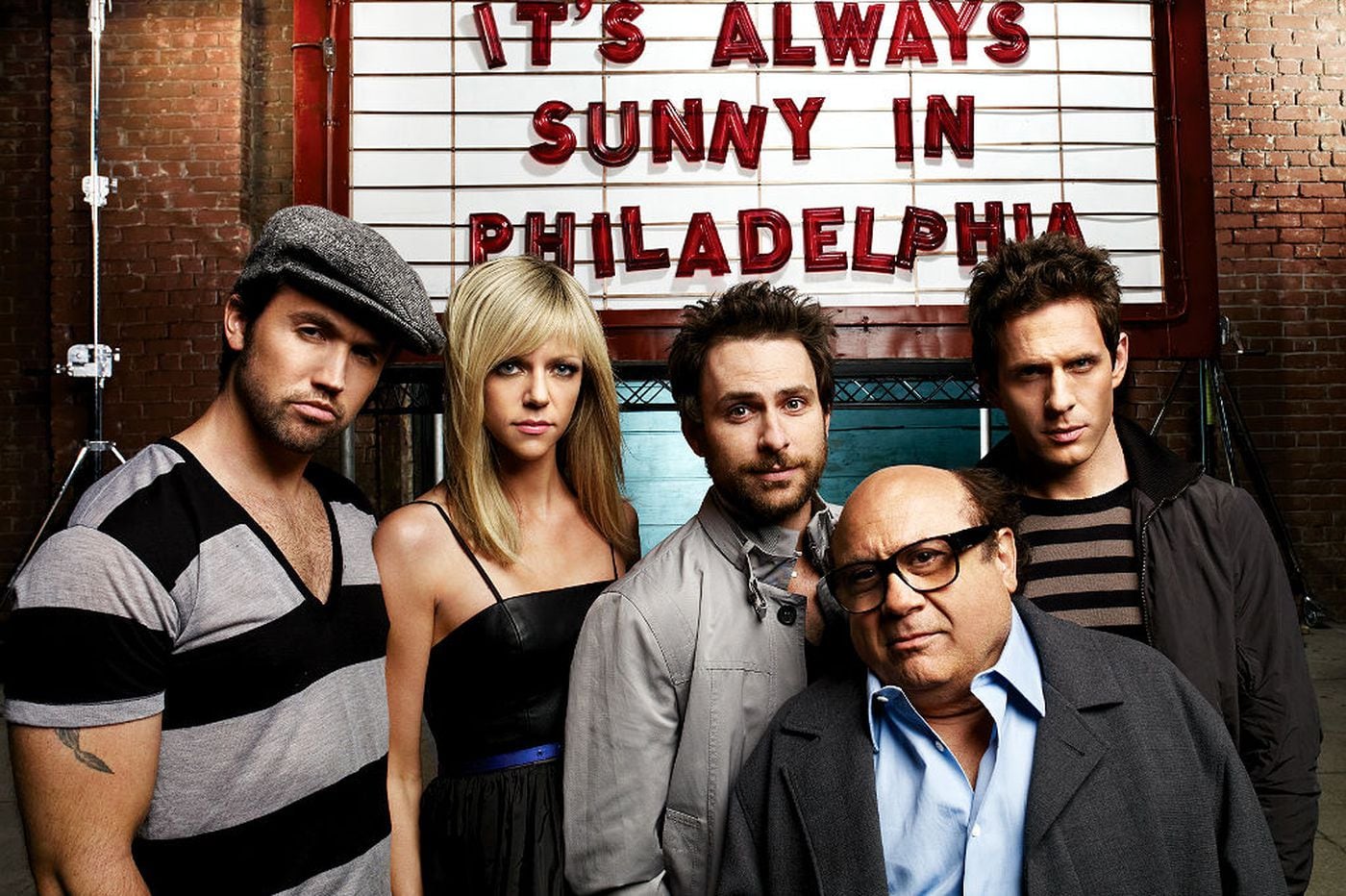
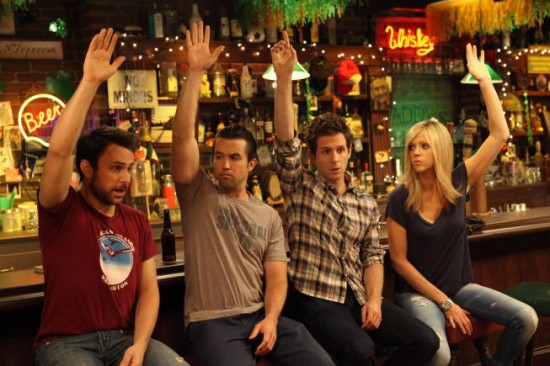
On top of that, there’s the premise of the show. In its simplest form, “It’s Always Sunny In Philadelphia” follows the shameless misadventures “the Gang.” This crew consisting of Charlie Kelly, Ronald “Mac” McDonald, Frank Reynolds, Dennis Reynolds, and Deandra “Sweet Dee” Reynolds basically take every traditional approach to making an enduring TV show and punches it in the kidneys.

This is a show where the characters will buy a boat with the intention of entrapping women.

This is a show where the cast will make an unauthorized Lethal Weapon sequel, complete with blackface, homoerotic subtext, and gratuitous sex scenes featuring Danny DeVito.

This is a show where two people are tricked into digging up the body of their dead mother.

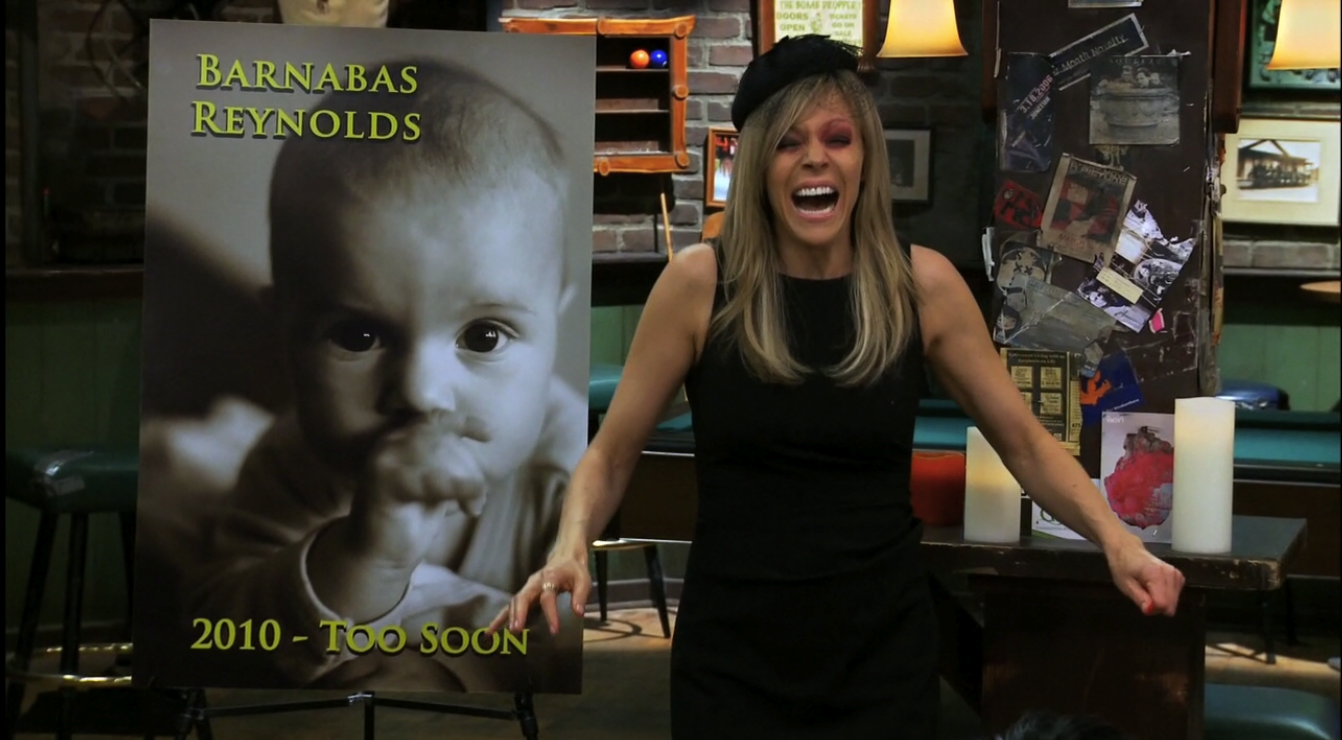
This is a show where you’ll see people hold a funeral for a baby to get out of a tax audit by the IRS.

These are not the activities of lovable characters. Even Shelden Cooper had moments in “The Big Bang Theory” where he came off as genuinely compassionate. With the Gang, there are none of those moments. Sometimes, they’ll be teased. In some episodes, the Gang will give the impression that they’re about to finally realize just how deplorable they are.

Trust me, they’re doing exactly what you think they’re doing and then some.

Ultimately, they don’t just revert back to their less-than-reputable selves. They demonstrate that they never had any intention of changing their ways. Anyone who believed otherwise either hasn’t watched more than two episodes of the show or are deluding themselves. As antithetical as this is for crafting a compelling TV show might be, it doesn’t change one inescapable fact.

It’s Always Sunny In Philadelphia” is funny, enjoyable, and obscenely entertaining.

It almost sounds like a paradox. As someone who only recently became a fan of the show, I have hard time explaining that appeal to most people in a way that doesn’t sound weird. It takes a moment to appreciate the appeal of watching a cast of self-absorbed, narcissistic alcoholics. However, within the tone and context of the show, it doesn’t just work. It achieves something profound.

Specifically, “It’s Always Sunny In Philadelphia” is the perfect manifestation of dark comedy at its finest.

Comedy, in any form, can be difficult. Jokes, gags, and bits can become overplayed and stale. There’s only so many times you can watch Charlie Brown fail to kick a football and still laugh. Dark comedy is even more difficult. It involves taking distressing, taboo subjects and trying to make them funny. Some, like George Carlin, can pull it off masterfully.

I like to think that if George Carlin were still alive, he would be a fan of “It’s Always Sunny In Philadelphia.” The show’s approach to dark comedy isn’t overly complex. It’s just exceedingly overt. It doesn’t try to balance out those dark themes with something serious or nuanced. It blatantly takes things to an extreme and dares to laugh at the absurdities.

Trust me, it gets more absurd than this.

Take, for instance, the funeral for the dead baby that I mentioned earlier. There are only so many ways you can make funerals and dead babies funny, but this show never shies away from a challenge. It also helps that every character in the Gang has the moral fiber of a Big Tobacco lobbyist on crack. They won’t just cross lines. They’ll make it a spectacle.

In this particular case, Sweet Dee is getting audited and for good reason. She acted as a surrogate to carry the child of a transgender woman that Mac used to date. Trust me, it’s more absurd that I can ever put into words. However, Dee didn’t do this out of the goodness of her heart. Nobody in the Gang is ever that altruistic. She did it because she got paid. Then, she decided to list the kid she gave up as a dependent for the tax benefits.

Naturally, this put her at odds with the IRS. Like every problem the Gang faces, she tries to run away from it or pass off the problem to somebody else. However, the problem only escalates. In most TV shows, especially half-hour sitcoms, this is the point where the characters face the consequences of their actions and try to learn from it. Instead, the Gang tries to resolve the problem by holding a baby funeral.

It’s undeniably dark, but the way it plays out is still funny. The way Dee and the rest of the Gang conducts themselves is so irreverent that the inherent darkness of the issue only makes it funnier. It shows just how far the Gang is willing to go to shirk responsibility and avoid consequences. It gets bad and it belabors just how irredeemable these characters are, but it’s still funny.

A big part of what makes that approach funny is how blatant this show is when it comes to the time-tested tropes that TV shows have relied on for decades. Take any show, from “Breaking Bad” to “Friends,” and you’ll see a concerted effort to develop and progress the characters over time. Ideally, they achieve some sort of ultimate goal by the end.

Instead of growth, the Gang actively avoids any effort at growth. Their only goal is to continue being the unapologetic assholes they’ve always been, drink heavily, and recklessly pursue whatever crazy ideas they come up with. Who they are in the first few seasons of “It’s Always Sunny In Philadelphia” aren’t considerably different than who they are in the latest season.

In any other show, characters who don’t grow and progress usually derail the underlying themes. Sometimes, that’s unavoidable. The very structure of a TV show, especially a half-hour sitcom, ensures that the characters can only grow so much. Even after the show achieves syndication, it tries to stick to a formula, even if doing so undermines the very process the characters need to evolve.

By going out of their way to not evolve, the Gang insures “It’s Always Sunny In Philadelphia” never deviates too far from the qualities that make it funny. It even channels its use of dark comedy to poke fun at the same tropes that other shows heavily rely on. From the frustrating use of clip shows to turning romantic sub-plots into a case study for excessive stalking, the show seems to revel in spitting on these time-tested methods.

What makes that comedy even more potent is that after 13 seasons, “It’s Always Sunny In Philadelphia” has lasted longer than some of the most iconic TV shows in history. It has outlasted the likes of “Cheers,” “Mash,” “Friends,” and “Frasier.” Moreover, it keeps finding a way to be funny and relevant. I think a non-insignificant part of that is how it uses dark humor.

There’s plenty more to be said about the show and why it has lasted so long. Even some of the show’s cast members have a hard time explaining why the show is still on the air. Even more likely wonder how the show can keep getting away with being so brazen about using dark comedy to tackle issues surrounding race, religion, gender, sexuality, mental health, and bird law.

There are likely many factors that have contributed to the success and longevity of “It’s Always Sunny In Philadelphia.” It helps that the actors and crew of the show really enjoy working together. There’s something to be said about a show in which the original cast have a genuine passion for their work. It’s well-documented how a toxic environment behind the scenes can derail successful shows.

At the end of the day, though, “It’s Always Sunny In Philadelphia” works because it’s funny and entertaining. It found a way to take the best aspects of dark comedy and run with it. As long as it can keep doing that, the show will have an audience. If it can include more episodes that involve Mac dancing or Danny DeVito getting naked, then that’s just a bonus.

1 Comment

Filed under Celebrities and Celebrity Culture, Current Events, outrage culture, political correctness, politics, psychology, television

Jack Fisher’s Weekly Quick Pick Comic: Superman #18

Anyone who has read superhero comics for a sizable chunk of their lives knows the difference between a gimmick and a genuine plot upheaval. Gimmicks are shallow. They’re sales tactics disguised as shocking twists that promise to change a character, world, or team forever. Most of the time, they get retconned within a few years.

Plot upheavals that are real, genuine, and permanent are rarer, but that’s what makes them more precious. They often become defining moments in their own right for a character or a franchise. For comic fans, they’re like major life-changing events.

In the same way you vividly recall your first kiss or your first car, you remember where you were when Superman married Lois Lane.

You remember where you were when the Joker brutally beat up Jason Todd.

You remember where you were when Barry Allen died during Crisis on Infinite Earths.

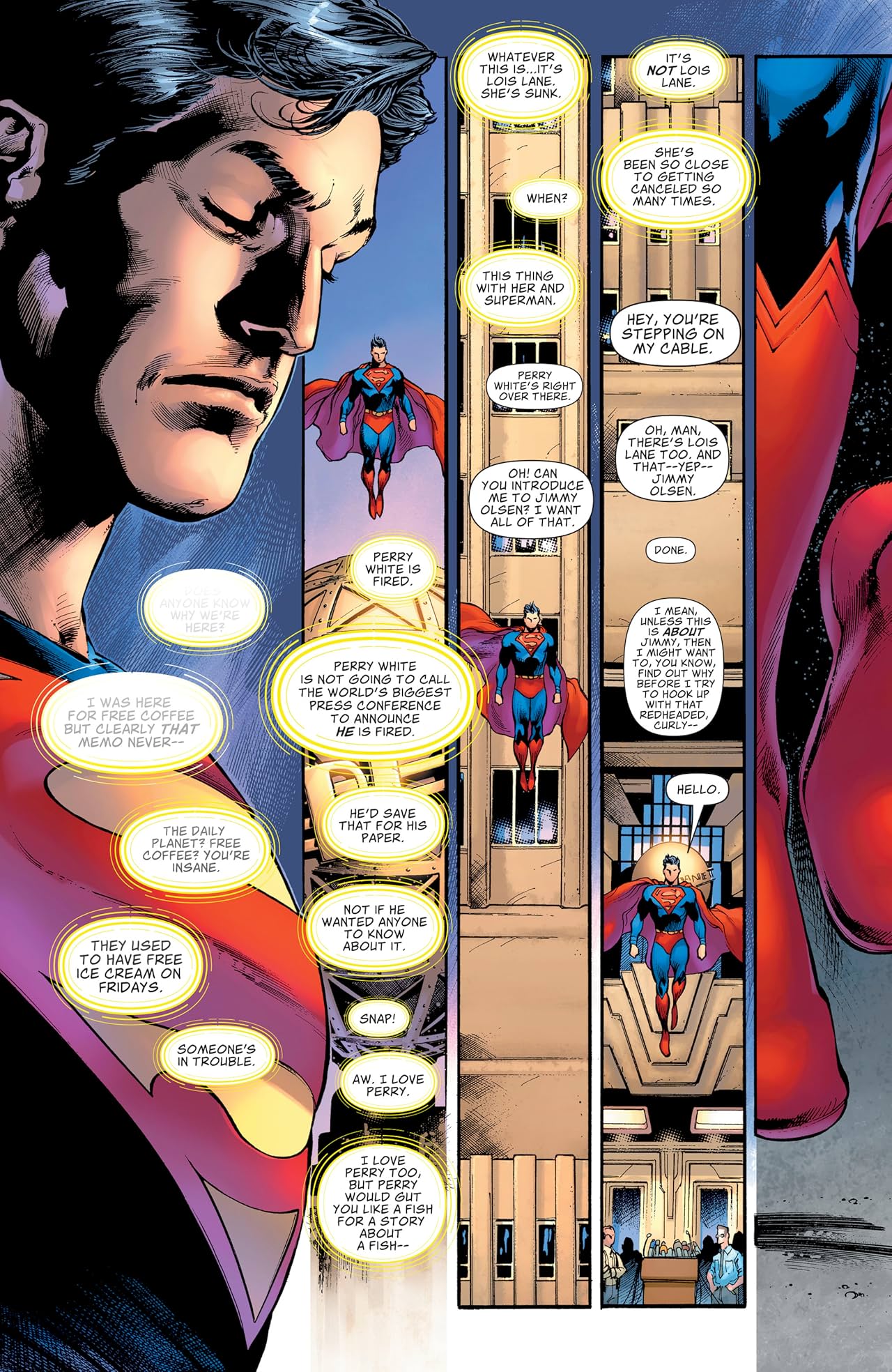
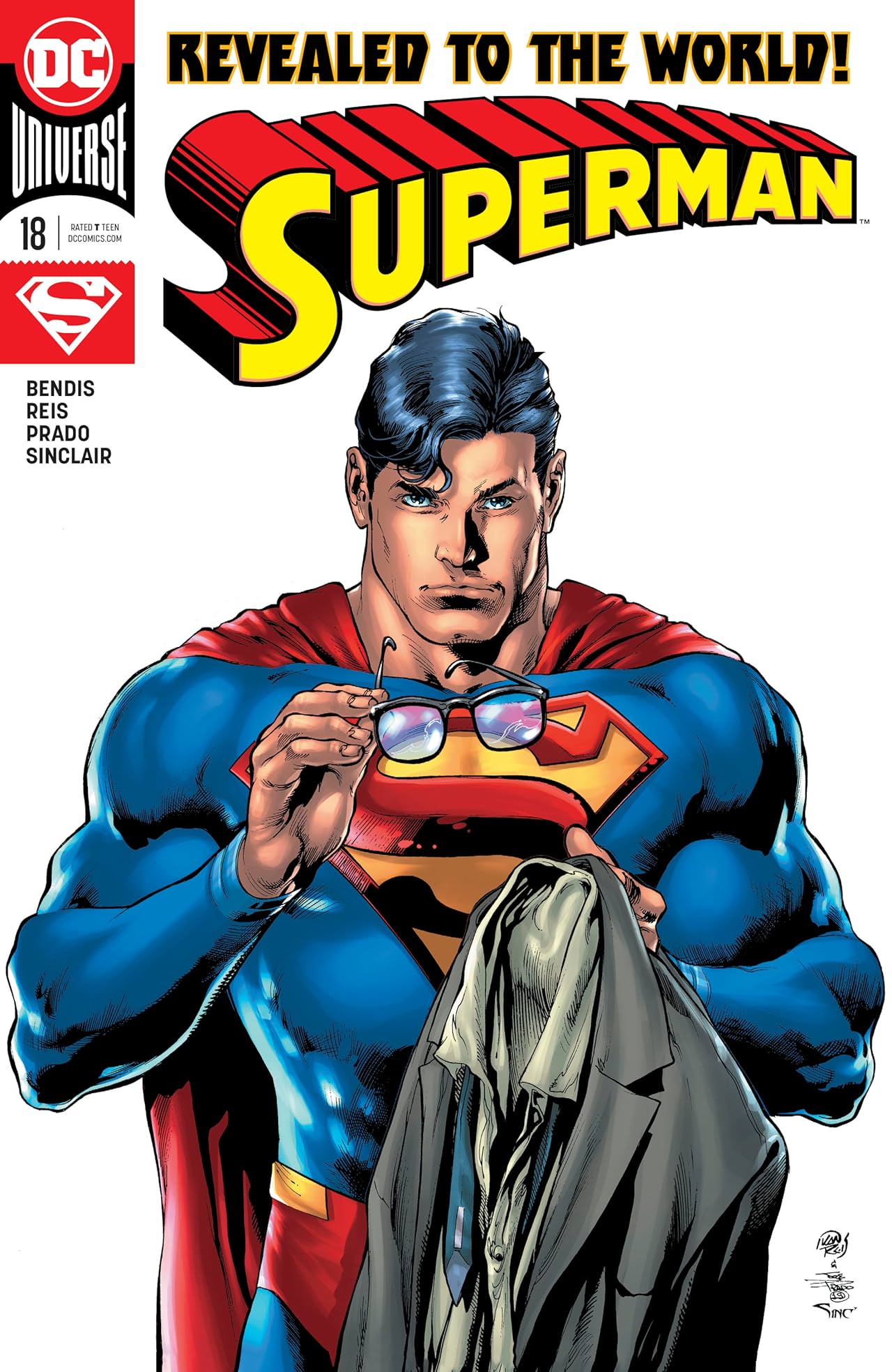
In that same tradition, you’ll probably remember where you were when you read “Superman #18.” This is a comic that promises to change Superman’s life and his story in major ways. It’s the comic in which he finally reveals his secret identity to the world. It’s not a gimmick this time. This is real and it has an impact that will likely resonate for years to come.

Writer Brian Michael Bendis has built a career on powerful, dramatic moments. He did it for years at Marvel with Spider-Man, the Avengers, and the X-Men. Since he began his run on Superman, he’s taken the Man of Steel through his share of upheavals. Superman’s semi-stable family life with his wife and son became a lot less stable, but he still hung onto the same identity that had kept him grounded for decades.

That finally changes in “Superman #18.” It’s not a snap decision, either. This isn’t Tony Stark going off the cuff at the end of “Iron Man.” That’s not how Superman does things. He’s thoughtful, thorough, and very much aware of the implications. He doesn’t agonize or brood over it, as many other heroes are prone to do, especially if they have egos like Tony Stark. He simply tries to determine the right thing to do.

It’s not easy. Before the big reveal, Bendis takes Superman through a round of self-reflection in which he goes over all the reasons why he maintained his secret identity as Clark Kent. Some of those reasons were entirely valid. They weren’t excuses that kept demanding more excuses. They genuinely felt like the right thing at the time.

Superman lived as Clark Kent so he could be human. That has always been important to him, going back to the Golden Age. He’s an alien from another world, trying to live and be part of this new home that he has come to love. Being Clark helped him be human, even though he is objectively not human.

While that might have been important before, a lot has changed for Superman. He no longer has anything to prove. He’s built a life as Clark Kent. He has established himself as Superman, a hero among heroes who sets the highest standards for humans and aliens alike. He couldn’t have done this without maintaining his secret identity. The only question is what more can he do to justify keeping that identity?

The tipping point in “Superman #18” comes when Superman recounts what happens when others in his life have kept secrets. Even if they were kept for good reasons, it never ended with just that secret. One secret demands another. As they compound over time, they become dangerous.

That’s still only part of the issue. Beyond the secrets, having that identity sends a message to the same people he’s trying to protect. It says that he doesn’t trust them to handle him being both Superman and Clark Kent. Maybe that made sense when he was still winning their trust, but it doesn’t make sense anymore. It also helps make the right thing to do very clear.

That effectively ends the debate. Whenever Superman is faced with a decision, his first and only instinct is to do the right thing. That’s exactly what he does in “Superman #18.”

It’s what helps make the big moment in “Superman #18” feel like something other than a gimmick. Bendis makes sure that Superman revealing his identity to the world is the right thing to do. It never comes off as the end of something, either. Whenever Superman’s identity has been revealed in the past, it has always been a complication or a last resort. That’s not how it’s framed here.

Superman #18” feels like another step in Superman’s journey to be the hero by which all other heroes are measured. He’s lived as a human. He’s become an iconic hero. Those lives no longer need to be separate. In Superman’s eyes, they shouldn’t be. He’s still the same man, whether he’s wearing glasses or his iconic cape.

In principle, it’s a minor distinction. However, at no point in “Superman #18” does it feel trivial. Superman acknowledges that this is going to change things. His life is going to change, both as Superman and as Clark Kent. He knows there will be difficulties, but he’s willing to face them. He’s also willing to trust in the same people he protects to face them with him.

It’s a beautiful, powerful moment made all the more memorable by the art of Ivan Reis. It doesn’t require Superman to save the world, defeat Lex Luthor, or punch a planet into dust. It just requires him to do the right thing. That doesn’t just make him a hero. That’s what makes him Superman.

Leave a comment

Filed under Jack's Quick Pick Comic

July/August 2020: A Local Baby Boom Triggered By DC Sports?

babiescms

As a lifelong fan of sports who lives in the Baltimore/DC metro area, I’m very aware of major events and achievements in sports that affect these areas.

I was very aware when the Washington Redskins won the Superbowl in 1992.

I was very aware when the Baltimore Ravens won the Super Bowl in 2012.

I was very aware of when Robert Griffin III took the league by storm in 2012.

I’m also aware that Lamar Jackson has the Baltimore Ravens looking like Super Bowl contenders this year.

When there’s reason to cheer, I tend to notice. After 2012, however, this area didn’t have many reasons to be cheerful. The Baltimore/DC area has had mixed luck at best when it comes to major sports. The DC area was especially unlucky in that, until very recently, no major sports team had won a championship since the Redskins did it in 1992. That’s a long drought, albeit not the longest.

That finally changed in 2018 when the Washington Capitals won the Stanley Cup. Make no mistake. This was a big deal for the area. My ears are still ringing from some of the cheering I heard. It also made the area subject to an interesting, but sexy side-effect of winning a championship. It may or may not have inspired a bit of a baby boom in the area.

Now, that makes sense intuitively. When your team wins, especially after a long drought, fans are going to celebrate. Sometimes, the celebrations get sexy. When things get sexy, babies sometimes get made. That’s just the nature of celebrations and they’re a beautiful thing.

While it’s hard to determine how much or how little of a baby boom there was once the Capitals won the cub in 2018, there was a notable uptick in babies being named after players. There has also been some previous research about cities or regions that win the Super Bowl on whether a championship causes a spike in birth rates. To date, the research is inconclusive.

However, there is some reason to suspect that championships in certain areas cause a baby boom. When the Chicago Cubs won the world series in 2016, ending a championship drought that was over 100 years old, there was a documented uptick in births nine months later. That implies that whether or not a baby boom occurs after a championship depends heavily on the city.

This brings me back to the DC area. Just a month and a half ago, the Washington Nationals capped off a historic playoff run to win their first World Series since the franchise moved from Montreal back in 2005. It also marked the first World Series won by a DC baseball team since 1924.

As someone who lives near the area, I can confirm that this was an emotional achievement. I have family members who remembered vividly when DC lost its baseball team back in the 1970s. It was a sad time for the region. Some thought they would never see baseball in DC again.

Then, the Washington Nationals came back and, for most of their early history, they were terrible. Even when they got good, though, they developed a reputation for choking in the playoffs. For them to win it all this year, especially after starting 19-31, was nothing short of astounding.

The celebrations this achievement triggered were a sight to behold. It also had me check my calendar. The Nationals capped off their championship on October 30, 2019. That means in late July, early August 2020, we’ll find out just how much celebrating DC sports fans did after that historic achievement.

I’ve already got my calendar marked. I’m going to be keeping an eye on the local news to see if there’s an uptick in births throughout the area during that time. If I find something, I’ll be sure to share the results. Honestly, as a long-time resident of the DC/Baltimore area, I hope there is a bit of a spike. If nothing else, it’ll show the people in my area know how to celebrate in sexy ways.

1 Comment

Filed under human nature, sex in society, sports

Selling (And Exploiting) Human Enhancement: An Ominous Lesson From “Superior Iron Man”

tumblr_static_tumblr_static_251b2rz5uxz4s4sssw0skg04c_640

How much would you be willing to pay for perfect health, perfect beauty, and a greater capacity to enjoy life as you see fit? This is not a rhetorical question. I would even argue that it’s an increasingly relevant question. In the coming years, answering it might even become more urgent.

I’ve talked about the prospects of human enhancement through emerging technology before. From its impact on our concept of beauty to how our society will function, there are many impacts to consider. Some of those impacts are already manifesting before our eyes. Just last year, the first genetically modified babies were born in China. Like it or not, this is happening.

It’s impossible to overstate the benefits, risks, and upheavals that human enhancement will have on our species and our world. Nobody knows for sure what’s going to happen as this technology matures or how societies, economies, and governments will react to it. Even so, it’s worth contemplating. It’s even worth imagining elaborate scenarios in fictional worlds.

While plenty of noteworthy stories have imagined such scenarios, some more dystopian than others, there’s one in particular I’d like to single out. It’s not entirely dystopian, but it does offer some distressing lessons about the larger economics of human enhancement. It also helps that those lessons come through a forgotten, but criminally underrated Iron Man comic.

Given the rapid rise of Iron Man’s star power over the past decade, his character is uniquely qualified to explore these difficult questions surrounding technology and how we use it. He is, at his core, a visionary who uses technology to solve problems, save lives, and occasionally fight invading aliens. In the series, “Superior Iron Man,” he takes that vision several steps further and cross many lines along the way.

While there are some convoluted circumstances surrounding this series, the ideas it explores are profound, even by the standards of superhero comics. You don’t need to know the specifics of those circumstances. They involve forces like magic and inversion spells, which are far too complicated to explain to those who haven’t followed Marvel comics for more than two decades.

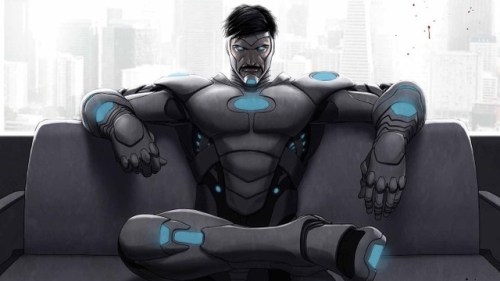
The only detail anyone needs to know about “Superior Iron Man” is that the Tony Stark in this story is not the same lovable character that helped make Robert Downy Jr. one of the most lovable stars in Hollywood. This version of Tony is less bound by concepts of heroism, selflessness, and sobriety. That’s not to say he’s evil, but he’s definitely no hero.

Within this ethically bankrupt state, Tony embarks on a new initiative that’s as selfish as it is lucrative. It revolves around Extremis, an exotic cocktail of nanotechnology and biotechnology that effectively rewrites the blueprint of the entire human body into something better, stronger, and more robust. In essence, it is the ultimate tool for human enhancement.

While the initial version of Extremis was lethal to most people who used it, Tony creates a more commercialized version in “Superior Iron Man” that gives everyone a chance to enjoy its benefits. He calls it Extremis 3.0 and people can access it through a simple smartphone app. With it, people can achieve what Tony describes as physical perfection.

Everyone can be perfectly healthy.

Everyone can be young and beautiful.

Everyone can be functionally immortal.

It sounds like a miracle drug and by every measure, it is. This isn’t some Dr. Oz wannabe pitching vitamins that do nothing other than give you false hope. This technology actually works. With it, Tony gives the entire city of San Francisco a chance to experience the fruits of human enhancement.

Understandably, once people get a taste of what Extremis 3.0 has to offer, they love it. They also take full advantage of it. At one point in the story, Pepper Potts says it’s turning the streets of San Francisco into a non-stop parade of debauchery and self-indulgence. Tony does not see this as a bad thing. If anything, it perfectly complements his plans and his renewed appetite for self-indulgence.

This is where “Superior Iron Man” attempts to answer that question about putting a price on physical perfection. Writer Tom Taylor, alongside artist Yildiray Çinar, doesn’t hide from the disturbing parts of that answer. By the end of the first issue, Tony puts a literal price on that perfection. Needless to say, it causes plenty of conflict and it escalates quickly.

When he initially released Extremis 3.0 onto San Francisco, he gives ordinary people a taste of what it’s like to be as fit as Captain America, as beautiful as Emma Frost, and as physically endowed as Thor. It’s not a drug that just attempts to match that feeling. It physically changes their bodies and their capacity for using them. That taste, however, was just a free sample. To keep enjoying it, they must pay $99 a day.

It’s crude trick right out of the playbook of subscription apps. People get a free trial period that’s just long enough to get them hooked. Then, before they even realize they have to pay anything, they get hit with a paywall. It’s a cruel bait-and-switch, but this isn’t just another streaming video service. This is physical perfection and unlimited self-indulgence. Is $99 a day really that unreasonable?
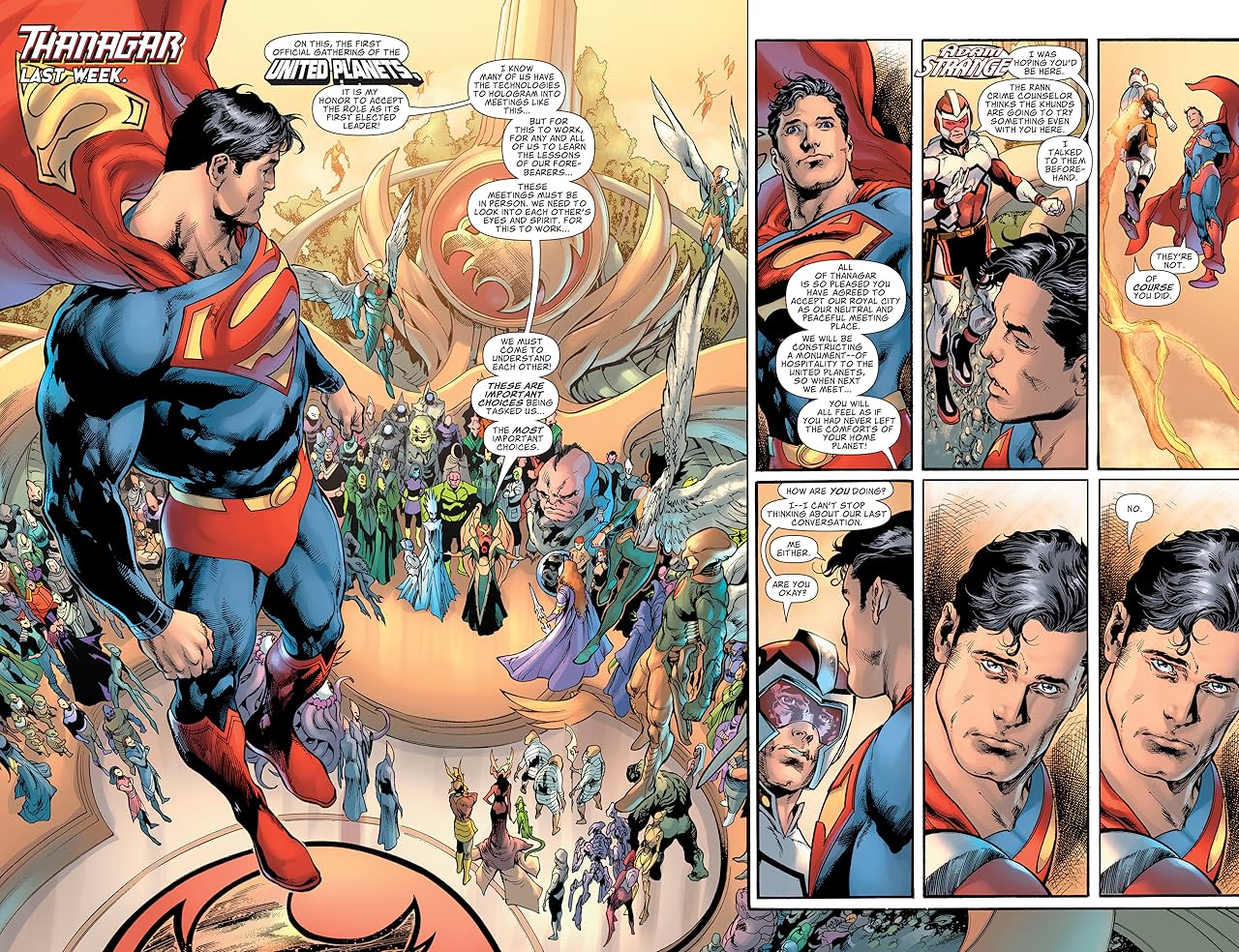
It certainly rubs plenty of people the wrong way, including many of Tony’s long-time friends and allies. Both Daredevil and Pepper Potts turn against him for such devious tactic. It also has some noticeable effects on the people who use it. By the end of the first issue, a stark class divide emerges between those who can afford Extremis 3.0 and those who can’t.

Naturally, it causes crime and conflict among the residents of San Francisco. Tony, now both feared and beloved by these people, takes it upon himself to manage it. He gains power, wealth, status, and an endless supply of eager party guests for whenever he seeks to indulge. It’s a perfect cocktail of recklessness and irresponsibility.

Without spoiling the rest of the story, which ended too soon, I think it’s worth taking a step back and looking at the bigger picture that “Superior Iron Man” presented. If you take away the iconic characters and the superhero themes, you get a story about a selfish business tycoon who has sole possession of the ultimate biotech product.

The goal isn’t to heal the sick, ease suffering, or evolve the human species. The goal is simply to make a lot of money, feed an inflated ego, and indulge in every conceivable vice without consequences. It’s a worst-case scenario for liberals and conservatives, alike. At the same time, it makes a compelling case that our current system can’t handle the impacts of large-scale human enhancement.

That doesn’t mean it can’t succeed in our current system. The size of the current biotech industry is already measured in the hundreds of billions. Overpriced drugs are nothing new, either. Just this past year, the FDA approved a drug called Zolgensma, which costs $425,000 a year for five years to treat a rare genetic disorder called spinal muscular atrophy.

By comparison, Extremis 3.0 is a bargain with far greater value. Even at $99 a day, the yearly cost of enjoying that physical perfection amounts to around $36,500 a year. That still takes up a good chunk of the average income for most Americans, but considering all the benefits of having a perfect body, is it still a bargain?

For anyone who has overpaid for inflated medical expenses, I suspect they would gladly pay that high price for Extremis 3.0. Tony Stark banked on that in “Superior Iron Man” and he was right. People did pay and it was very lucrative for him. The population of the San Francisco Bay Area in which he unleashed Extremis 3.0 is around 4.6 million. At $99 a day, that’s a potential annual revenue of $167 billion.

In terms of business ranking, that would put Tony’s venture in the top 20 in terms of largest companies by revenue. If he were to unleash Extremis on the entire United States, the potential annual revenue would be near $11.8 trillion. That’s a little more than half of the entire US economy.

Imagine one company, let alone one person, having that much money and influence over a population. Tony was already a billionaire before “Superior Iron Man,” but Extremis 3.0 rewarded him with more than just money. Tony, being the sole provider, held a great deal of power and influence over San Francisco. As is often the case in superhero stories, that power goes to his head.

That story plays out in the real world just as often. In some cases, it brings out the worst in people. For a product like Extremis 3.0, which provides human enhancement into a simple commercial package that anyone can access through an app, the potential for abuse is much worse.

Beyond the greed it would inspire and the recklessness it fosters, it would also widen and solidify a gap in society that might be impossible to close. The wealth gap is in the non-superhero world is already egregious. Adding something like Extremis 3.0 to the mix would only make it immeasurably worse.

More than a few people has expressed concern about the prospects of such an enormous societal divide. “Superior Iron Man” showed just how bad it could get and how quickly it could escalate. While the series only managed to explore this conflict to a point before it got canceled, Tom Taylor did enough to get a powerful point across.

In a world where human enhancement is real and commercially available, how do we go about distributing it among a population? Should we put a price on it? How high should that price be? Who should be in control of it?

Worst case scenario.

Superior Iron Man” never got a chance to explore the answers, but these are questions that will become increasingly relevant as advances in biotechnology accelerate. We may not be close to having a product like Extremis 3.0 and it’s uncertain whether we’ll even develop something like it in the next few decades.

Even if we do, “Superior Iron Man” made one thing clear. We, as a species and a society, are not ready for it.

1 Comment

Filed under biotechnology, futurism, health, human nature, Neuralink, Sexy Future, superhero comics