Why Men And Women Cheat (And Lessons To Learn From It)

44BAA17400000578-4920910-image-a-1_1506423209524

As an unapologetic romance fan, I concede that I often talk about love the same way dog lovers talk about puppies. I go on and on about how wonderful it is, but often gloss over the nasty parts. In the same way those dog lovers don’t dwell on all the times their beloved companion shits on the rug, I don’t dwell on the more painful aspect of romance.

Well, in the same way ignoring the pile of dog poop doesn’t make the stench go away, ignoring those painful elements of romance doesn’t make them any less relevant. Even those who aren’t romance fans understand that romance often involves tragedy. It’s no coincidence that some of the most famous love stories, from “Romeo and Juliet” to “Titanic,” involve a hefty bit of heartache.

I would argue that’s exactly what makes love and stories about romance so powerful. There’s a significant risk of heartache, rejection, and loss. There’s real pain that comes with pursuing romance, but the we gladly risk that pain because the rewards can be as fulfilling as they are sexy. I’ve done more to highlight the breadth of those rewards in my novels, especially with stories like “Passion Relapse.”

However, the pain that comes from the other side of that coin can be just as dramatic, if not more so. Anyone who has ever seen old episodes of “Jerry Springer” understands this to some extent. It’s not usually the kind of drama that ends with two lovers dying in each other’s arms or Rose not making room for Jack on that floating plank. More often than not, it’s a more frustrating kind of drama.

In many respects, the unsexiest version of this drama has to do with cheating. To some, that’s the much more dreaded C-word. Cheating is to romance what food poisoning is to Thanksgiving dinner. It is the worst-case scenario for those seeking the joys and appeals associated with romance. It is also one of those unfortunate elements that plays out in real life more often than it does in sexy romance novels.

It’s unromantic, but inescapable. Cheating happens and it happens a lot. While it doesn’t happen as often as “Jerry Springer” might have us believe, it happens often enough that it’s a legitimate concern among lovers. That’s why modern marriage laws, however skewed they might be, often account for infidelity.

In the same way there has never been a drug-free society, there has never been a society where cheating and infidelity has not occurred to some extent. From our caveman ancestors to the increasingly-uptight Millennials, the risk of cheating is there and the rise of social media and online dating sites like Ashley Madison are only making it easier.

I’ve talked a bit about cheating when I’ve discussed jealousy and our approach to marriage in modern society. Within the context of those discussions, cheating is a significant portion of those issues, but it’s still only part of a larger whole. It’s still a significant stain on the pursuit of romance, but it doesn’t completely overshadow it.

To make sense of it, as difficult as that may be, it’s necessary to focus on the reasons why people cheat. To anyone who has ever been the victim of a cheating lover, that may mean poking at old wounds and for that, I apologize. I admit it’s somewhat underhanded to suggest there are reasons why people cheat instead of just excuses, but to make sense of cheating overall, we need to accept that there are reasons behind it.

Listen to any story about cheating, be it a magazine article or a poorly-directed reality show, and you’ll notice a few themes about cheating. For one, there is a gender disparity in the numbers. Statistically speaking, men do cheat more often than women. However, the difference in those numbers isn’t quite as vast as the “Mad Men” stereotypes would have us believe.

As to why the gender disparity exists, there are just as many theories about that as well. I’ve talked somewhat about those disparities in discussions about sexual promiscuity and gender double standards. However, those theories don’t always explain the reasons behind cheating. In fact, the process for gathering data on cheating is exceedingly tricky.

Absent an underlying theory, we’re left with a diverse list of reasons that men and women give for their infidelity. According to WebMD, men and women cheat in different ways. For men, it’s often physical, a method of meeting unmet needs. For whatever reason, they’re no longer satisfied with their spouse and cheating is either a way to meet those needs or escape from that spouse.

For women, the act of cheating often has more emotional connotations. While meeting a physical need is part of it, women are more inclined to seek an emotional connection when they cheat. That’s not to say that some women just want some sexual variety or some men don’t fall in love with those they’re cheating with, but these are the popular narratives and some of it does bear out in the data.

Like I said earlier, though, the disparity in that data is not exceedingly vast and there are a lot of issues associated with gathering that data in the first place. If you accept the rule of the great Dr. House, “The most successful marriages are based on lies,” then it’s almost impossible to ascertain just how much cheating is going on and why it’s happening.

Even if it’s impossible to know, there are lessons we can learn from the reasons and excuses that people give. Chief among the reasons men give for cheating involve seeking new intimate experiences, either out of dissatisfaction or boredom. Given how I’ve explored the impact of boredom before, I think that is likely a bigger factor than most care to admit.

With women, the reasons often involve a lack of satisfaction that goes beyond physical. It’s not just that they feel unsatisfied. The underlying theme often involves their sentiment that their partner is no longer putting in the kind of effort they did when they fell in love. That lack of effort gives the impression that they don’t care anymore, leading women to seek out someone who does care.

In scrutinizing these reasons that vary widely between gender, cultures, and personality types, there does appear to be one common theme that binds both genders when it comes to cheating. Whether it’s physical or emotional, it often comes down to the perception that someone in the relationship isn’t putting in the effort anymore. Either they don’t have the energy or just don’t care enough.

In either case, the context of the cheating seems less about meeting a need and more about finding someone who will match your passionate efforts. Regardless of whatever gender disparity may or may not be at work with cheating, there’s no denying that men and women are passionate creatures. We each seek outlets for our passion and if we’re not getting it from that outlet, we’re going to seek another.

That’s not to say that some who cheat are just looking for an exciting and novel experience. That’s another inclination that is hard-wired into both genders in ways that go beyond sex, romance, or fidelity. When it comes specifically to cheating, though, the primary catalyst often comes back to passion and how it’s being channeled.

Cheating and being cheated on often comes with many hard lessons, some of which leave deeper scars than others. Whether you’re a romantic like me, a jaded heart with cynical views on love, or believe that human beings aren’t meant to just love one person for the rest of their lives, the betrayal and dishonesty associated with cheating still hurts us. If nothing else, it’s a harsh reminder of how deep our passions run.

If there’s a lesson that both genders can and should learn from the pain of cheating, it’s the importance of understanding and channeling those passions. When two people share the kind of passion that keeps their love, sex, and relationship strong, then there’s no reason for either of them to cheat. It’s not easy sharing that kind of passion, but the fact we risk the pain of being cheated on shows it’s a risk worth taking.

Leave a comment

Filed under gender issues, sex in media, sex in society, sexuality

The Mixed (And Misguided) Messages Of All-Female Movie Remakes

1436573990_ghostbusters-zoom

There are some topics that I really want to comment on, but the rhetoric surrounding it are so hostile and so controversial that I feel like any comment I make will put way too big a target on my back. Keep in mind, this is coming from someone who has talked about issues like abortionreligious extremism, and Wonder Woman’s BDSM origins.

In general, if I want to contribute to the conversation, I try to wait until the heat dies down and the Twitter bans subside. Sometimes, that takes a long time, so much so that I’m tempted to just drop the issue altogether. For this one, though, I think there’s no use waiting because it’s a trend now and the controversies associated with it are here to stay.

It seems so long ago now, but when I first heard that there would be a new “Ghostbusters” movie with an all-female cast, I was genuinely intrigued. I was not among those who thought this was the worst idea ever and that this was somehow ruining my childhood, as some upset fans had claimed.

Maybe it’s because I’m not as big a Ghostbusters fan as I am an X-men fan, but I didn’t mind the novel/gimmicky approach that director Paul Feig attempted. The long-rumored Ghostbusters 3 wasn’t happening. The original cast couldn’t get it off the ground and Bill “Peter Venkman” Murray had made clear that he had no interest in reprising his role. Why not try something different to reinvigorate the franchise?

It could’ve been a bold new approach to Ghostbusters. A fresh take, a new cast, and an infusion of female-centered star power could’ve really kick-started a whole new trend, one that both elevated long-dormant franchises and expanded the role of female characters, a trend that had already begun.

Then, the trailer came out and those possibilities became much more remote. While I, personally, didn’t despise it, I was considerably less intrigued. The fact that the trailer went onto become the most disliked trailer in the history of YouTube speaks volumes for how poorly this otherwise-novel concept came off.

I had originally intended to see the movie when it came out. Then, as new clips came out and I got a sense of how the story would unfold, I decided not to. When it finally came out on cable, I tried watching it. I ended up changing the channel. It’s not that I hated the movie. It just had none of the appeal I’d hoped.

I know that’s somewhat petty considering the many controversies the movie generated, complete with sexism, racism, and everything else that sets the internet ablaze these days. As soon as professional trolls like Milo Yiannopoulos got involved, I saw that as a sign that this was one of those controversies that would transcend movies for all the wrong reasons.

I don’t know if enough time has passed for the animosity to settle, but in reflecting on the controversies of “Ghostbusters,” I feel the time is right to confront it. Regardless of whether it succeeded or failed, it effectively kick-started the idea of all-female remakes. That’s an idea that I think still has merit, but the approach and overall message of “Ghostbusters” make clear that the Hollywood still hasn’t figured it out.

In a sense, the problem with “Ghostbusters” is similar to the ongoing problems with strong female characters in general. From the parts I saw, the approach to that movie was shallow and crass in that it painted nearly every male supporting character a bumbling idiot in need of female guidance. This was especially true of Kevin, the dim-witted secretary played by Chris Hemsworth.

I get that some of that approach was an effort to inject the kind of humor that made the original Ghostbusters so funny and memorable, but it really fell flat, almost to an insulting degree. It reinforced the notion men somehow need to be denigrated or taken down a peg for female characters to be strong.

While it didn’t offend me, personally, it certainly undermined the story. A world full of idiot men isn’t that bad. That’s a huge part of the appeal for shows like “The Simpsons” and “Family Guy.” However, that kind of appeal doesn’t fit with that of Ghostbusters.

Beyond just making all the men seem like idiots, the way in which the all-female cast brought little nuance to their roles. They were just four women pasted into four roles previously played by men. That’s it. They brought nothing new to the table. I say that as someone who really likes Melissa McCarthy and Leslie Jones, but I know they’re capable of far more than they gave in this movie.

If the intent was to show that women could work these roles just as well as men, then that’s the wrong goal, especially for a franchise as beloved as Ghostbusters. That effort denigrates both men and women because it doesn’t send the message that they’re equals. It sends the message that they’re interchangeable, disposable, and not the least bit unique.

The original cast of Ghostbusters had unique, quirky personalities that were memorable and iconic. The all-female cast had some of that, especially Leslie Jones’ character, but not nearly enough. Too much of it was built around the persona these actresses had already established in other roles. They really didn’t do anything to set themselves apart other than fill a role once held by a man.

That can’t be the only thing an all-female cast brings to the table. Just being women cannot and should not be enough to carry a story or revitalize a franchise. It’s true that men and women have various character archetypes, some of which are more distinct than others, but there has to be room for innovation.

Great female characters like Buffy the Vampire Slayer, Rey from “Star Wars,” or Sarah Conner from “The Terminator,” do a lot more than just do things men usually do while being women. They’re allowed to exercise their feminine traits every now and then. The all-female cast of Ghostbusters never got that chance. They tried too hard to be like the originals and it just didn’t work.

I won’t say that “Ghostbusters” utterly ruined the concept of remaking movies with an all-female casts. The movie wasn’t that bad. It just didn’t do nearly enough to make it really good. It didn’t kill a genre like “Batman and Robin” almost did with superhero movies. It does count as a setback, though.

It’s one I hope Hollywood learns from because, at the moment, there are similar movies in development. The latest, which I admit I’m also intrigued by, is “Ocean’s 8.” Unlike “Ghostbusters,” it’s not a complete remake and it doesn’t try to replace the entire cast of “Ocean’s Eleven.” It’s following a similar narrative, but using an all-female cast to tell the story.

While this franchise isn’t as iconic as “Ghostbusters,” it’s still bound to cause plenty of controversy and heated debates on sexism. However, based on the trailer, I’m intrigued once more. I know that burned me last time, but I’m still willing to give it a chance.

I still believe that all-female casts, even for non-remakes of major movie franchises, have great potential. Women do make up half the population, last I checked. They have plenty of stories to tell. If “Ocean’s 8” can succeed where “Ghostbusters” failed, then that can revitalize the concept. As Hollywood has shown before, it only needs to work once to start a trend.

I believe the concept will succeed once these movies stop trying to troll certain audiences and focus on building new perspectives within a story. The perspective of women is supposed to complement that of men, not subvert it. If a movie can succeed in that, then it can truly appeal to everyone.

5 Comments

Filed under gender issues, Movie Reviews, sex in media, sexuality

“Love Like Champions” A Sexy Short Story (About Super Bowl LII)

The following is a short, sexy story that was directly inspired by the outcome of Super Bowl LII and some of the passionate Eagles fans that I know personally. Enjoy!

“This game, Darla…this fucking game,” said Adam Mayfield, sounding more stressed than any man in his mid-30s should.

“That’s the fifth time you’ve said that, Adam,” Darla groaned, who’d stopped trying to calm him down.

“You’ve been keeping track?”

“What else is there to do when we’re out of buffalo wings and cheese dip?”

“I’m sorry, damn it!” he said. “It’s just…I had this same feeling 13 years ago the last time the Eagles played the Pats in the Super Bowl. That did not turn out well.”

“No need to remind me,” said Darla. “I remember…more than you know.”

He probably didn’t hear that last part. He was too caught up in the spectacle that was Super Bowl LII. Darla had anticipated a stressful night since the Eagles topped the Vikings two weeks ago. She and her long-time boyfriend, Adam, were as big an Eagles fan as they came. Them being in the Super Bowl was a test of heart, in more ways than one.

Unlike Adam, Darla hadn’t been born in Philadelphia. She’d moved there from Scranton about 15 years ago, following her father and uncle, who helped her get a job at a mortgage company. Being from a family with three brothers, each being big football fans themselves, she thought she knew what it meant to be a fan when she embraced the Eagles as her home team. Adam proved her wrong.

“How can I love a team so much, but be so frustrated by them?” Darla groaned.

She made it a point to say that out loud, hoping her lover would get the message. Either he was ignoring her or he’d tuned everything out. She was inclined to believe the latter, but Darla could never be sure. Adam was such a passionate man. That was a big reason why she fell in love with him. The frustrating part was how he channeled it during football season.

Adam came from a long line of Eagles fans. He’d been born in Philadelphia. His parents, grandparents, and siblings were all passionate about their team. During every game in every season, they wore their heart on their sleeve, cheering and lamenting their team through every win and every loss.

Darla thought she could handle cheering with them. She learned early on that Adam and his family were on a whole other level. It showed in how elated they were when the Eagles won and how miserable they were when the Eagles lost. However, even though she’d been with Adam for over a decade, she’d never seen him react to a Super Bowl loss. She wasn’t sure she wanted to know.

“I may have to take a trip to Baltimore tomorrow,” she muttered.

As much as Darla wanted to convey her sentiment to Adam, she too had an investment in the game. She didn’t want to see her team lose either. She was sick of getting crap from the Cowboys, Steelers, and 49er fans in her family, whose teams had multiple rings while hers had none. That had to change at some point, but she preferred it changed tonight.

“It’s not enough of a lead,” Adam said, his hands clasped together as though he were praying to the football gods. “38 to 33 with more than two minutes left and Tom fucking Brady at quarterback? If the Falcons couldn’t hold on with a 25-point lead last year, for crying out loud!”

“These aren’t the Falcons, babe. These are the Eagles,” Darla reminded him. “This is our team.”

“I know. That’s what scares me even more.”

His pessimism was annoying, but usually right. There was a reason why the Eagles had never won a Super Bowl. They had a tendency to choke in these exact situations whereas the Patriots seemed to thrive.

Darla stayed on her side of the couch, almost not wanting to watch Brady pull off another late-game miracle at the expense of her favorite team. She couldn’t turn away, though. She kept watching.

It felt like her stomach was up in her throat. She noticed Adam anxiously tapping his feet, something he only did when he was extremely nervous. The last time she saw that kind of nervousness, he asked her to move in with him. She could only imagine the kind of tension he felt now.

It was second and two from the 33. The Patriots offense had over two minutes left, a timeout, and the greatest quarterback of all time being coached by one of the greatest coaches of all time. It seemed like the story had already been written. Brady would drive the Patriots down the field, score the game-winning touchdown, and go home as a six-time Super Bowl champion while the Eagles remained winless in the big game.

“Please, just get it over with,” Adam groaned. “My heart can only take so much of this shit.”

“They’ll find a way,” said Darla, trying to will the fates in her team’s favor. “They have to!”

They watched on. The ball was snapped. Then, it happened.

“FUMBLE!” Adam shouted, shooting up from the couch as though he’d been struck by lightning.

“THEY GOT IT! EAGLES BALL!” Darla said, shouting as well.

In an instant, the mood shifted from dread to elation. She shot up and embraced her boyfriend and cheered at the sudden turn of events. She could even hear the cheers outside. All of downtown Philadelphia must have seen what they just saw. The Eagles had just forced a fumble and recovered the ball. The sight of Tom Brady, the so-called greatest of all time, sitting there on the turf in defeat was just too satisfying.

“It’s really happening. They might really do it!” Darla cheered, still clinging to her boyfriend.

“I know! It’s not over yet, but they’re close!” Adam exclaimed. “They’re so goddamn close this time!”

“Then, you better hold onto me, babe. I’m still not sure this is real.”

“Are you kidding? I’m not letting go until the last tic on the clock!”

It might have been superstition. It might have been the sheer weight of the moment. Whatever the reason, she and Adam clung to one another, still trembling with excitement at the prospect of their team finally winning the Super Bowl. If that moment finally came, it had to happen when they were in each other’s arms. It just had to be that way.

Her heart still racing and her passions still in overdrive, she and Adam sat back down on the couch. He grasped her hand firmly while she clung to his favorite Eagles jersey, which he wore for every game. They watched as the Eagles did the most they could with the ball.

They ran it three times, taking as much time off the clock as possible. They couldn’t get a first down, but they still managed a field goal, putting them up 41 to 33. There was still a minute left. Even with no timeouts, it was still the New England Patriots. It was still Tom Brady at quarterback.

“41 to 33,” Darla said, holding her lover a bit closer. “That’s going to be the final score.”

“I hope you’re right, Darla. I really do,” Adam said, still affected by the Eagles’ history of disappointment.

“It’ll happen. I know it will. You’ll see!”

She made it sound as though she’d already seen the final score. Darla learned early on in her time as an Eagles fan that victory was never secure. However, she refused to give into the dread this time. She was certain her team would win.

The next minute might have been the longest in the history of sports. The Patriots got the kickoff. They messed up on a few plays, but managed to move the ball to midfield. With each yard they gained, she felt Adam tremble a bit more, doubt and dread creeping into him with every play. She held him a little closer, as if to protect him from it. She wanted him to believe as strongly as she did.

Finally, it all came down to one play. With 9 seconds left and no timeouts, it was down to a final Hail Mary to the end zone.

“This is it,” Darla told him. “This is the last play of the game.”

“Please, be right,” Adam said. “I want you to be right…so much.”

“I know.”

“No…I don’t think you do.”

Darla cast her lover a strange glance, but didn’t have time to scrutinize it. The play was about to go off. As soon as the Patriots snapped the ball, time seemed to move in slow-motion.

For a moment, it looked like Brady would get sacked. She sensed Adam wanting to shoot up and cheer. That didn’t happen, though. He managed to escape, as he always did, and got the throw off. At that moment, Darla almost felt her heart crack again.

“Not this time,” she said in defiance.

She and Adam watched, like a couple of deer looking at an oncoming train. The ball hung up in the air for an eternity. The game clock now read zero. It all came down to this.

Finally, in an instant, it actually happened. The ball hit the ground. The pass was incomplete. The game was over and the Philadelphia Eagles were Super Bowl champions.

“YES! THEY DID IT! THEY REALLY FUCKING DID IT!” Adam exclaimed.

“THEY WON! OH MY GOD! THE EAGLES WON!” Darla exclaimed.

In a moment of pure, unadulterated elation, Darla and Adam cheered with the rest of Philadelphia. They jumped up from the couch and hugged, as though they’d just won the lottery. Earlier that year, winning the lottery seemed more likely than seeing the Eagles win their first ever Super Bowl. After only knowing disappointment for so long, Eagles fans like her and Adam could finally say that they won.

They kept wildly hugging each other and cheering, watching as the confetti fell on their favorite team. They didn’t care that they knocked over some empty beer bottles and crumbled up bags of chips. Their team had won. For once, she and Adam knew what it felt like for their favorite team to be a Super Bowl champion.

At one point after all the cheering, they settled down enough to face each other. Adam hadn’t let go of her since before the fumble. She hadn’t let go of him either, still clinging to his favorite jersey. Now, in this moment of pure elation, they looked at each other with a sense of both shock and triumph.

“You were right, babe. You were right,” Adam said.

“Yeah, I guess I was,” Darla said with a smug grin.

“You really have no idea how much I wanted the Eagles to win this…to finally see them win a championship.”

“You don’t need to tell me. I know you’re a bigger Eagles fan than I’ll ever be, Adam. You deserve to run down Broad Street and cheer with other fans like you.”

“See, that’s just it,” he said in a more serious tone. “I wasn’t planning on doing that. My buddies at the office all had elaborate plans for how they would celebrate if they won, but I wanted no part of it. I knew if this actually happened…if the Eagles actually won…this is where I’d want to be.”

Darla’s heart skipped a beat. Adam had that look in his eye, the kind she saw when he wanted to get extra romantic with her. She hadn’t expected to see that tonight, even if the Eagles won. During football season, she’d always been content to let him cheer victor or mourn defeat in his own way. It was an unspoken rule, of sorts, that they stayed out of each other’s way when that happened.

However, there was something different about this and not just because the Eagles had won the Super Bowl. That same passion that Adam usually channeled into every Eagles game was now solely focused on her.

“Darla, I know I’m not the easiest guy to love. Hell, I’m not even the top 50,” he told her.

“Adam, I know you get worked up after Eagles games,” Darla said. “Are you really sure you want talk to me like this after the biggest game in Eagles history?”

“Yes, I’m sure,” Adam said without hesitation. “We’ve been together for 13 years now. In that time, we’ve built a great life together…one that often revolves around rooting for the Eagles. I know I don’t say it enough and I doubt I’ll ever have the mind to say it again, but I’ve treasured every moment of that life…from the worst loses to this amazing win.”

Now, Darla’s hard raced even more than it had before the fumble. This couldn’t possibly be what it sounded like. She and Adam had already discussed it on more than one occasion. They were boyfriend and girlfriend. They had made that relationship work for over a decade. She thought that was how it had to be. Darla had made peace with that long ago.

However, when she saw Adam get down on one knee, hold her hand in his, and look up at her as though she were the Lombardi Trophy, it began to sank in. A Super Bowl parade wouldn’t be the only celebration tonight.

“Darla Mason,” Adam said, “when we met 13 years ago, I was at the lowest possible point. The Eagles had just lost the Super Bowl. I had no job, too much student debt, and a bad history of dating women who couldn’t put up with me. You changed that. You came along when I was at my lowest, stuck with me when you could’ve walked away, and loved me more than I ever deserved.”

“Adam…you’re making me feel like the Super Bowl MVP, here,” Darla said, her heart ready to burst.

“Now, here we are…13 years later, watching the same Philadelphia Eagles beat the New England Patriots. We’ve gone from one devastating lost to the most exhilarating victory possible. I say, let’s make it our own personal dynasty! Merry me, Darla. Merry me and let’s fly together like a couple of Eagles!”

Darla didn’t think it was possible for something to sound so corny, yet so heartfelt. Adam had to have rehearsed it ways for weeks on end, possibly since the Eagles clinched a playoff spot. The Eagles win the Super Bowl. He proposes to her. Given how they came together after they lost 13 years ago, it seemed so fitting. That made her response just as obvious.

“Yes!” Darla said eagerly. “Yes, Adam…I will marry you.”

“God, I love you, Darla.”

“I love you too, my future husband. Now, shut up and kiss me like a champion!”

Adam didn’t need a trophy or a call from the President to heed her desire. He shot up from the floor, threw his arms around her, and embraced her passionately as they came together in a deep kiss.

It still took a moment to sink in, both the Eagles being Super Bowl champions and her being engaged now. It was a hell of a feeling, a bigger rush than anything she’d felt before in her life. The sound of rowdy Eagles fans cheering outside could be heard. She imagined there would be a hell of a party down Broad Street for the rest of the night. They could enjoy that party. She intended to have one of her own with Adam.

As they kissed and hugged, the sound and images of the Eagles’ victory playing out on the TV, Darla felt those same passions that she and Adam channeled so strongly take a new form. They were champions. They were engaged. They were in love. With so much excitement and elation surrounding them, there was only one other way this night could be more perfect.

“Adam,” Darla said breathlessly as their lips briefly parted.

“Yes, my future wife?” he said playfully.

“Do me,” she told him. “Right here…in the living room…with the Eagles accepting the Lombardi trophy!”

Adam’s reaction to those intense, seductive words were priceless. Still awash in the thrill of victory, he had the look of a man who could slay a dragon for his woman. It was more than enough to set the tone for how they would celebrate their team’s victory.

“Darla, if you could be any sexier without wearing an Eagles cheerleader costume,” he told her.

“You want me to go find a costume? Or do you want to get naked right now and make love like a champion?”

“Well, I was going to call my folks and share the news first, but…”

His words trailed off as his desires took over. He kissed her again, this time with the passion of a champion. Darla kissed back, eager to match that same championship-caliber energy. For such a powerful moment that had been 13 years in the making, nothing less was acceptable.

Like a couple of pros, they went to work undressing each other. Adam pulled her favorite Eagles sweatshirt up over her head while she undid his jeans. Then, in a show of strength that would’ve impressed any starting offensive lineman, he lifted her up in his arms and laid her down on the couch.

Shortly after she fell atop the soft cushions, he took off his pants and underwear, followed quickly by his shirt. Whether by the thrill of victory or the passion of having proposed to his lover, he already bore a rock-hard erection. He looked so strong and powerful under the glow of an Eagles’ victory. It was enough to make Darla wetter than she’d been since her prom night.

“Off! Get my panties…off,” she urged him.

Her lover gladly obliged her, grabbing them by the side and sliding them off her shapely legs. She even undid her bra in the process, allowing her breasts to pop free. The sight of her naked body with the image of Eagles players kissing the Lombardi Trophy in the background sent Adam into a passionate frenzy that Darla eagerly embraced.

“Darla…my MVP,” Adam said to her.

Joining her on the couch, her new fiancé got on top of her. She eagerly spread her legs, allowing him to position herself over her while still having a nice view of the Eagles celebrating their championship. Holding onto her thighs and focusing that special passion of his solely on her, Adam thrust his hips forward and entered her.

“Ooh Adam!” Darla cried out.

Already, she felt like an MVP. His manly flesh filled her womanly depth, sending a surge of sensation up through her core. Almost immediately, Adam began working his body against hers, making love to her with a fervor unlike anything she’d experience in the 13 years they’d been together.

With each movement, he rocked her world, letting out deep grunts that doubled as sounds of victory. He held onto her thighs, holding them apart, which allowed him to penetrate deep with every thrust. Darla moaned with delight at every sensation, reaching up and caressing her lover’s face. She kept beckoning him with her gaze, urging him to make love to. Like star quarterback in the clutch, he delivered.

“Oh yes! Oohhh yes!” Darla gasped. “Adam…my champion.”

“Darla…my love,” he said.

Her world kept rocking as their naked bodies moved and gyrated together in the ultimate victory dance, evoking a potent combination of pleasure and triumph. At one point, Darla pulled him down closer so they could kiss as they made love. It added extra intimacy along with the euphoria of victory.

It proved to be a perfect combination, victory and love. She and Adam, energized by their team’s first championship, tested the stability of their eight-year-old couch. They made love with the kind of vigor and passion that only champions could muster.

One moment, he had her bent over the edge, thrusting into her from behind so she could see the Commissioner present the Lombardi Trophy to Eagles owner, Jeffrey Lurie. The next, she had him pinned on his back, riding his cock as the players sang the Eagles fight song play while accepting their congratulations. Somewhere along the way, she had an orgasm. In fact, she ended up having several.

That rush of pleasure, alongside the thrill of being engaged and being an Eagles fan on this night, made it extra special. It was a feeling she made sure she shared with her lover, making sure he got more than his share of the pleasure when he achieved his own climax.

“Darla…I’m close,” he told her.

“Then, go on, my love. Fly with me with me…like an Eagle,” Darla said, mirroring his own passionate words.

When it finally happened, she made it a point to embrace him passionately, tying her love with the heat of ecstasy. Those same cheers he let out when the game ended turned to cries of ecstasy. It helped cap off a truly remarkable celebration for a very memorable Super Bowl Sunday, one that Darla wouldn’t soon forget.

Their championship lovemaking complete, Darla settled into her lover’s arms. They remained naked, still indulging in the blissful afterglow of both passion and victory. Other fans might cheer. Others might loudly proclaim that this was the best night in the history of Philadelphia. However, only Darla and her lover could claim to know the true bliss of soaring like eagles.

1 Comment

Filed under Sexy Short Story, sexy stories

Ode To Tomboys And How One Made Me A Better Person

I try not to get personal on this site too often. When I do, though, I try to make an important point that others can learn from. That’s not easy, since everyone’s personal experiences are different. When one of those stories resonates, though, it’s a beautiful thing.

With that beauty in mind, I’d like to take a moment to appreciate a certain female persona that tends to evoke mixed emotions in people. For me, though, that persona has a special place in my heart because certain women have influenced me in a major way. That persona, in this case, is that of the female tomboy.

I know the stereotypical tomboy isn’t known for her sex appeal. She doesn’t come off like the kind of person who would inspire an aspiring erotica/romance writer. However, I think the appeal of a tomboy goes far beyond how little she has in common with the cast of “Mean Girls.”

I’m guessing that most people knew someone growing up who fit the mold of a tomboy. She was a girl, but she didn’t have “girly” interest. She liked sports. She liked cars. She liked to hang out with boys, didn’t care for makeup, and didn’t mind getting her nails dirty. Whether she was a friend, relative, or classmate, she probably stood out more than most.

There’s all sorts of social and psychological insights into what makes a girl a tomboy. I don’t want to get too much into that. For this, I want to keep things personal. I want to tell a short story about how a very special tomboy influenced me in a positive way, one that I still feel to this day.

Out of respect for her privacy, as well as the fact that I haven’t kept in touch with her, I won’t use her real name. From here on out, I’m just going to call her Carly. If, by some remote chance she ever reads this, she’ll probably recognize the importance of that name. She may even recognize me. I hope that happens because I don’t think she knows what a profound impact she had on me.

I knew Carly from grade school. We met when we were in the third grade and we shared the same classes until grade six. That’s a pretty critical time because we were both still kids, but were on the edge of puberty. While I don’t think it played too great a role at the time, I think it influenced the context of our friendship and our connection.

What made Carly stand out, even for a kid like me, was the fact that she didn’t look like the kind of hardcore tomboy you’d imagine after seeing “Little Giants.” If you randomly met her in public, you wouldn’t know she was a tomboy, but you would probably expect it. While she did look feminine, she never wore dresses, skirts, or makeup.

If you spent any amount of time with her, you learned quickly that Carly wasn’t a typical girl. She didn’t conduct herself like the other girls I knew. Whenever we did group projects, she worked with boys. Whenever we had lunch at the cafeteria, she sat with the boys. It wasn’t that she hated other girls. She just preferred being around boys, myself included.

I didn’t think too much of that until I saw her doing more than just being around boys. What made Carly special was how she went out of her way to match other boys in terms of skill, grit, and strength. While the other girls hung out on the playground, Carly was playing basketball and football. While those same girls talked about boy bands, she talked about who won on Monday Night Football.

I remember multiple instances where the boys got together to play touch football and she would be the only girl who wanted to play. We let her too. None of the other boys joked about it. There was this unspoken rule that Carly was one of the guys. She proved that she belonged. Anyone who gave her crap about it was not welcome.

Keep in mind, these are pre-teen boys who still think cooties are a thing. These are boys whose maturity level is limited by the amount of cartoons they watched that same morning. The fact that none of them gave Carly a second look, nor did they question her ability, says as much about them as it does about her.

More than any other girl, at that time, Carly fascinated me. I watched as she ran alongside other boys during gym class, playing sports like football and baseball better than some of the other boys I knew. Being so young, I wasn’t sure what to make of it. I just knew I had to go out of my way to hang out with her and be friends with her.

While I won’t say we were close friends, we did know each other. We recognized each other outside of class. That eventually culminated in a moment that would both solidify Carly’s place in my memory and inspire me in ways I didn’t appreciate until later in life. That moment occurred when I was in little league one year.

From the time I was in first grade until the time I went to middle school, I played little league baseball. I loved baseball as a kid and it was the only sport I ever felt passionate enough about to play seriously. In all those years of playing little league, I played with a lot of other boys, some more memorable than others. However, through those same years, only one girl ever dared to play little league with boys and that was Carly.

I still remember the day when I saw her run out onto the field, a dirty old hat and a new baseball glove in hand. I had no idea she would be on my team, but when I saw her, I remember smiling. I even watched as she fielded pop flies and practiced batting with the coach. While I wouldn’t say she was our best player, she held her own. She could throw, run, hit, and catch. She wasn’t just a tomboy. She was an athlete.

In later years, that memory has taken on far greater meaning. Remember, I was a kid at the time. I was still at an age where girls might as well have been another species. Since pre-school, boys hung out with boys. Girls hung out with girls. We didn’t question it. We just separated ourselves, as though it had been ordained.

Carly showed that those unwritten rules weren’t really rules. She showed that girls didn’t have to be that different. Girls could still like boyish things. They could also be tough, play sports, and relate to boys just as well as they did with girls. Carly embodied that spirit better than anyone I’d known before or since. She was like a kid version of Rhonda Rousey.

That may not sound like much on the surface, but I can’t overstate the importance of that influence. The fact that I knew a girl who could so comfortably embrace boyish things made me question whether the divide between genders really mattered that much. The older I got, the more I realized how arbitrary that divide truly was. Carly was living proof of that.

It was because of Carly that I began interacting more with girls. This did make me a bit weird in the eyes of other boys. I started seeking out female company before it was considered cool for a kid. I like to think that gave me a head start on puberty in that it prepared me to appreciate female company better than most.

It’s also through my interactions with Carly that I stopped trying to talk to girls as though they were so radically different. In doing so, I realized that girls can talk about things like sports, cartoons, and even comics. While these girls might not have been tomboys like Carly, we were capable of sharing the same interests.

Conversely, it showed me that boys can share girls’ interests as well. To me, that was a big deal because it’s through dealing with girls that I developed a fondness for romance. Whereas boys may look at movie, comic, or TV show and appreciate the action, I often found myself appreciating the romantic sub-plots. I don’t think I would’ve had the mind to appreciate those things without Carly.

For that, I’ll always be grateful to her. At the same time, I regret not being a closer friend with her or keeping in touch with her. In my defense, we ended up going to different middle schools so we never got a chance. I would still love to know what came of her. She struck me as the kind of girl who would go far in life.

I don’t know if she outgrew her tomboy persona, as many girls do. Even if she did, Carly’s influence on me was a turning point. I may have been a kid when I knew her, but she inspired in me the kinds of ideas that shaped me into the man I am today. I like to think I’m a better overall person because of it.

Dealing with Carly helped me interact better with girls and people who were different from me, in general. Carly also proved to me that girls and boys weren’t so different after all. We could relate to one another, work together, and grow together. As a kid, that’s a radical concept. As an adult, that’s an important life lesson that helps men and women alike appreciate each other.

2 Comments

Filed under gender issues, Jack Fisher's Insights, sexuality

Super Bowl LII Is Complete And The Eagles Are World Champions!

I’m just going to leave this here and let it speak for itself. What a game! Even if you’re not a football fan, this game is one for the ages.

https://twitter.com/TitanicTD/status/960354615186345984


1 Comment

Filed under sports

Sexy Sunday Thoughts: Super Bowl LII Edition

The wait is finally over. Today is the day. Super Bowl LII, also known as beer and buffalo wing appreciation day, has finally arrived. It’s the New England Patriots and the Philadelphia Eagles. If you’re a football fan, you don’t need much to get excited about today.

I’m not going to lie. Neither team playing is my favorite team. In fact, I actively rooted against these teams at multiple points during the regular season and the playoffs. It’s not just because I didn’t pick either team to make it this far. I have my own team loyalties that I take almost as seriously as my sexy stories. This Super Bowl doesn’t change that.

Never-the-less, I’m still a big football fan. I love watching football and I love watching big games with high stakes. You can’t get much bigger than the Super Bowl. Between the stakes, the commercials, and the halftime show, it’s a wonderful spectacle that I enjoy every year. Plus, I can never have too many excuses to drink beer and eat buffalo wings.

Whether you’re a Patriots fan, an Eagles fan, or despise both teams, the Super Bowl is the alpha and omega of all things football. I intend to enjoy it. I also have some Sexy Sunday Thoughts that I hope will make the wait easier between now and the opening kickoff.


“Exercises that mimic humping send mixed signals, but health benefits go beyond muscle tone.”


“The fact that celibacy is treated as a virtue while anorexia is treated as a disease highlights the breadth of our sexual hang-ups.”


“Does the pain of childbirth and the pleasure of orgasms require that all women be masochistic on some levels?”


“It’s physically impossible to tell a tragic story that ends in two people giving each other oral sex.”


“Too many sitcoms give the impression that our neighbors are hot, single, and eager to bone.”


“Afterglow is the sexual equivalent of a post-credits scene for a movie in that it can preview a sequel or add something extra to the experience.”


“If sex is like chocolate, then foreplay is like the hot melted fudge.”


I hope this gets everyone excited for the big game, among other things. Regardless of who wins, the Super Bowl is a major cultural event. Even if you just watch it for the commercials , it’s an event worth appreciating. It’s the culmination of America’s favorite sport. Let’s enjoy it for what it is and spend every other day of the year angrily envying Tom Brady.

1 Comment

Filed under Sexy Sunday Thoughts

Why Treating Sexuality As A Disease (Always) Fails

mentalhealth.jpg.size-custom-crop.1086x0

It wasn’t too long ago that discussions about reparative therapy, also known as gay conversion therapy, became more a joke than a serious concept. Going back to Michele Bachman’s failed presidential bid in 2012, and all the assorted jokes about her husband, who ran a religion-based therapy center, I think it’s safe to say that this issue has run its course and for good reason.

There was once a time when attempting to change someone’s sexuality into whatever society deemed acceptable was a serious pursuit. Even Sigmund Freud contributed to that effort, going so far as to claim that homosexuality could be cured through hypnosis. Seeing as how hypnotists are more likely to work in Las Vegas stage shows instead of clinics, it should be obvious how wrong he was.

As it stands, reparative therapy is rejected and discouraged by nearly every legitimate psychological and therapeutic organization on the planet. There are still those who claim that’s just part of the larger gay agenda, but those claims don’t deserve to be taken seriously. Whenever that many organizations to agree that something is so ineffective and harmful, it’s usually a pretty clear sign that there’s something wrong with it.

For the rest of the population that doesn’t buy into homophobic conspiracy theories, the issue is resolved. While there’s still a lot we don’t understand about human sexuality, our current understanding offers a fairly concise conclusion. It’s not possible to completely change or radically reorient someone’s sexuality.

So in light this widely-accepted conclusion, any subsequent efforts to radically alter someone’s sexuality through archaic tactics that involve shame, guilt, and pseudo-spiritual bunk should be just as asinine. The keyword there is it should be. Even though reparative therapy is roundly condemned, the spirit of that therapy continues, albeit with a different target.

This time, the targets aren’t homosexuals or some other sexual minority. Instead, the scope is bigger and more extensive than even defunct anti-gay ministries could ever hope to achieve. It’s taking aim at sexuality, as a whole, particularly that of men. While it doesn’t have an official title, the tactics are distressingly similar.

I’m reluctant to put a label on it because I’d rather not throw around blanket terms for an issue this vast. Much of it stems from those opposing everything associated with “toxic masculinity,” a term I’ve already condemned.

From sex scandals to advertising to representations in major movies, the obstacle is the same. A particular brand of male sexuality that caters to straight men seeking the company of beautiful women for basic, shallow reasons isn’t just falling out of favor. It’s seen as corrupt, part of some grand patriarchal conspiracy.

It’s so corrupt that some, such as Joss Whedon, describe it like a disease. Men who simply have these desires are somehow flawed and need to either be educated or scorned. It’s not quite at the level that homosexuals endured in the past, but the common themes are still there.

It’s hard to pinpoint where it began. Some might point to the Harvey Weinstein scandal as the catalyst that turned the public against the whims of horny men, but I think it goes back further than that, even past the 2016 Presidential Election. The concept of criticizing men’s preference to admire beautiful women isn’t new. The extent of that criticism, however, is unprecedented and still growing.

Regardless of how it began, either through vocal critics of breast depictions in video games or protesting sexy advertising, it’s a major movement now. It has popular hashtags and the backing of powerful media outlets. If you’re a straight man who enjoys admiring beautiful women, then congratulations. You’re the source of all the problems in our current sexual landscape.

Given the intensity of the rhetoric in the movement, it’s not just about protesting the injustices perpetrated by men in positions of power who freely exploited that power. It’s attacking certain manifestations of sexuality as a whole, deeming them “problematic” to the point where it’s practically pathologized. That’s how we end up with asinine terms like “toxic masculinity.”

It’s for that reason that the parallels between the long-debunked ideas of reparative therapy and ongoing condemnations of male sexuality are all the more disturbing. Stories about LGBT youth who survived reparative therapy, and not all of them do, tend to tell similar stories. The so-called therapy they get usually involves the following:

  • Excessive condemnation and shaming of certain desires
  • Attributing certain sexual desires with negative connotations
  • Demanding frequent confessions of guilt for past misdeeds, real or imagined
  • Demanding complete dissociation from a previous lifestyle
  • Attributing desires and feelings to disease or an unhealthy state of being
  • Attacking or subverting someone’s identity in an effort to re-shape it
  • Conditioning someone to associate natural feelings with negative sentiments

To anyone who has been keeping track of how men have been criticized for their attitudes towards some of the recent sexual misconduct scandals, these methods should sound painfully familiar. It’s also worth noting that these are methods that the American Psychological Association deems harmful and even dangerous.

Now, I want to be careful with my rhetoric here because I don’t want to imply that straight men who enjoy looking at beautiful women in bikinis are suffering to the same extent LGBT people suffered in these faux-therapeutic settings. That’s not the point I’m trying to make here. I’m just trying to highlight the extent to which the approaches are similar, even if they’re not the same.

It’s one thing to punish actual misconduct. It’s quite another to attack the underlying desires of an entire group. Men looking at beautiful women is now a symptom of objectification, patriarchy, and misogyny. Conversely, women looking at beautiful men is a major Hollywood movie starting Channing Tatum. See the difference?

That difference matters because treating those attitudes as diseases is every bit as misguided as treating homosexuality or transgenderism as a disease. It would be akin to referring to all homosexuality as “toxic sexuality” instead of a simple variation among the vast spectrum that is human sexuality.

That’s not to say there aren’t issues with certain attitudes men have towards sexuality. There are plenty of issues about women’s attitudes as well. However, the fact that the current culture, empowered by social media and selective biases, treats those attitudes the same way reparative therapy treats homosexuality is both revealing and distressing.

The negative impacts of those methods are well-documented, both in terms of harm and ineffectiveness. Relentlessly shaming people for their sexuality, be they straight men or gay women, is pretty damaging. It doesn’t take a licensed therapist to know that conditioning someone to hate their own desires will seriously affect their mental health.

There are many lessons to learn from the failures of reparative therapy. For one, it revealed just how powerful sexual and romantic desire can be in a person. It can also reflect how lonely it can be when those feelings are deemed defective, toxic, or deviant by a society, at large. Countless LGBT individuals have suffered because of these misguided efforts. More will suffer if those lessons aren’t heeded.

5 Comments

Filed under Current Events, gender issues, sex in media, sex in society, sexuality

Romance And Tragedy Done Right (In An X-men Comic)

598135-_sx1280_ql80_ttd_

When it comes to two genres that are often associated with one another, romance and tragedy are the literary equivalent of peanut butter and jelly. When you think of one, it’s not long before you associate it with another. Romance without tragedy is like fries without ketchup. Both are still good on their own, but it’s only when they’re together that they maximize their potential.

In that same spirit that the likes of Shakespeare and “Titanic,” superheroes often follow that narrative, but with more spectacle than old playwrights and even James Cameron could ever imagine. Being such a huge fan of superhero movies and comic books, I’m more familiar with their take on romance and tragedy than most aspiring erotica/romance writers.

As such, when an amazing, uncanny, astonishing, or whatever other adjective that a comic book puts before their title tells a story that truly embodies those ideas, I take notice. Seeing as how I’m also an unapologetic romance fan on top of being a comic book fan, those kinds of stories resonate especially well for me. They don’t come around too often, but when they do, they’re worth appreciating.

This particular story involves the X-men, which should surprise nobody who has followed this blog over the past couple years. It also involves the romance/tragedy of Cyclops and Jean Grey, which should also not surprise anyone. I’ve mentioned them before when talking about balanced romances and insufferable love triangles. This might end up being the most heart-wrenching, albeit for all the right reasons.

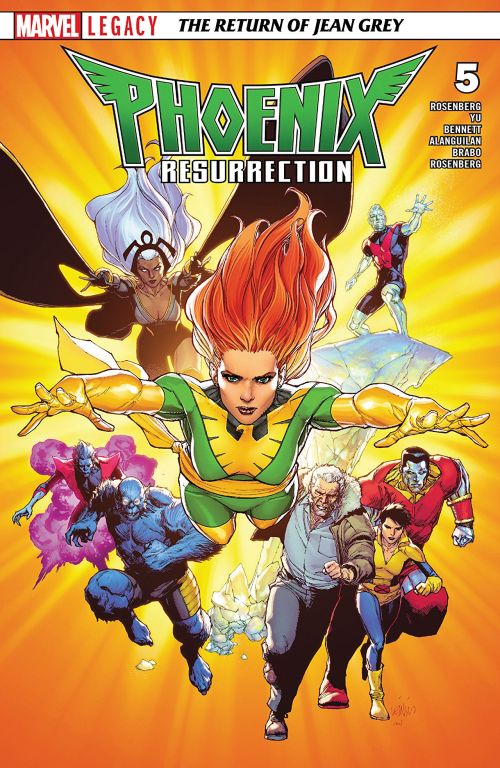
The name of the story is called Phoenix Resurrection: The Return of Jean Grey by Matthew Rosenberg. Now, if you don’t want to be spoiled, I strongly encourage everyone to read it. Either buy it at a comic shop or buy the digital version. Even if you’re not a comic book fan, it’s a great story that will still evoke all the right emotions.

That’s because this story does something that’s very rare and very difficult to do. It’s something that everyone form Shakespeare to Tolken to Stan “The Man” Lee struggled with at some point in their creative endeavors. It gets the balance between romance and tragedy right. It gets it so right, in fact, that I intend to judge all future romance/tragedies by this comic. That includes any I write.

To understand how I came to this conclusion, it’s important to understand the context of the story and why it had such a powerful impact. To do that, it’s necessary to point out the circumstances of this story. When it was announced last year, it’s stated goal was to bring Jean Grey back from the dead. Anyone who has even a passing familiarity with comics knows that’s not all that groundbreaking.

Superheroes have been dying and coming back to life for decades. While “The Death of Superman” might have been the most high-profile, the initial death of Jean Grey in the original Phoenix Saga is probably the most iconic. That story established Jean Grey as a character who would be defined by death, rebirth, and everything in between. That’s part of the reason it’s the foundation of the “X-men: Dark Phoenix” movie.

That original story had a lot of romantic elements in it, but it was largely defined by its tragic ending. In that original story, Jean Grey willingly sacrificed herself in front of Cyclops and her friends to stop herself from becoming corrupted by the cosmic power of the Phoenix Force.

It was a truly gut-wrenching moment. It’s because of that moment, though, that it’s often singled out as one of the best X-men stories of all time. It was the culmination of Jean Grey’s struggle to deal with the immense power with which she’d been imbued. Moreover, she reached out to that power in order to do the impossible to protect those she loved, even if it corrupted her.

That’s an important detail to note because that’s a theme that would go onto play out on many occasions for Jean, eventually culminating in her second death in 2004. Her constant struggle to manage the immense power granted by the Phoenix Force and the corruption that often came with it is one of the primary driving forces behind Jean’s character. It’s also a big part of her appeal.

Rosenberg uses those same themes, as well as the immense power afforded by the Phoenix Force, to build the tragedy and romance that plays out in Phoenix Resurrection: The Return of Jean Grey. It’s a story that has more drama going for it than most because, despite the presence of time travelers, Jean Grey has been dead since 2004. Her coming back after such a long absence is a big deal for X-men fans and for her character.

The challenge Rosenberg faced was making that resurrection feel more compelling than overdue in an era where dead characters come back all the time. On top of that, Jean’s association with a cosmic force known for death and resurrection means her character basically has a built-in cheat code for bringing her back. How can that be so compelling, let alone raise the bar for romance and tragedy?

This is where the spoilers come in so again, please take the time to read the comic if you can. That’s because the way Jean comes back in this story has less to do with tragedy and more to do with agency. Way back in the original Phoenix Saga, Jean reached out to Phoenix Force in an act to save her friends. It was a choice of desperation.

Well, since that fateful choice, the Phoenix Force has been like a clingy ex, wanting desperately to stay bonded to her, even thought it often corrupts her. I’ve argued before how the context of that corruption might be more complicated than it seems, but on the basis of history alone, Jean Grey has many reasons to regret that choice.

The Phoenix only gives her another in this series. After having bonded with plenty of other hosts since her death, it goes to great lengths to bond with Jean again. It goes so far as to resurrect both her and everyone she ever cared about, creating this own little world in which Jean never experiences the many tragedies that befell her. It’s like the Matrix, but with a volatile cosmic bird running the show.


As part of that fantasy world, Jean Grey’s long-time love, Cyclops, is alive and well. That’s critical because, at least for the time being, he’s also dead. The Phoenix Force basically gives her everything to be happy, content, and loved. Keep in mind, though, it’s not doing this out of pure altruism. It wants to bond with Jean again. That’s the goal and the fantasy world is just a means to an end.

That makes the tragedy inevitable. As is often the case with fantasy worlds, even those created by a cosmic power, they tend to crumble under the harsh weight of reality. The way in which this happens is best revealed through the story. However, the part of the story that really balances out that tragedy occurs in the final issue.

In that issue, the fantasy world crumbles, thanks largely to the efforts of Jean’s fellow X-men. Naturally, the Phoenix Force fights this and tries to tempt Jean into bonding with it again, saying its power can give her everything she desires. It can even bring back those she loves.

As part of a last-ditch effort, it demonstrates this by bringing Cyclops back to life. He’s not a clone. He’s not a time traveler. He’s not some illusion either. He’s the real, flesh-and-blood Cyclops, complete with the thoughts, feelings, and passions of the man she married.

It’s a dick move on the part of the Phoenix Force, to say the least. It’s also the moment where the romance balances the tragedy in an important way. That’s because in that moment, Jean makes another fateful choice, one every bit as dire as the one she made in the original Phoenix Saga. This time, though, she lays her heart on the line, knowing damn well it’ll be broken.

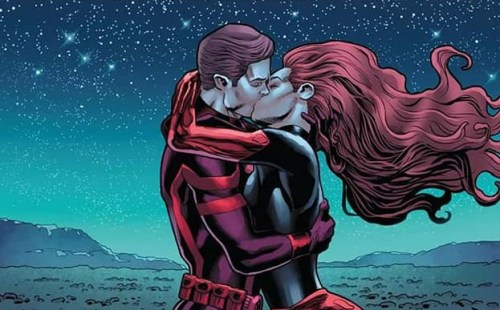
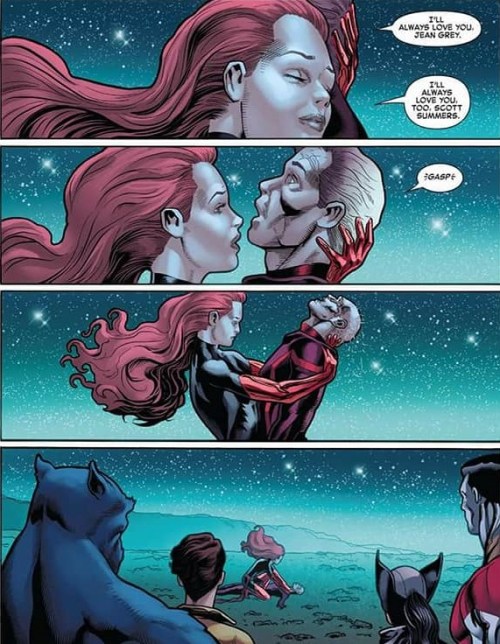
Rather than just reject this tactic as another attempt by the Phoenix to lure her in, she embraces it for a brief moment. In that moment, she gets to say goodbye to her husband. She and Cyclops even go out of their way to make clear how much they love each other, both in life and in death. Even if you’re not a big romance fan, this is a moment of pure, unadulterated heart.

27336727_267041877163590_5082078064572181652_n

We still know the tragedy is coming. We know it’s a moment that’s going to end with tears and sorrow. Anyone that ever had to read “Romeo and Juliet” in high school English class knows it’s coming and is might think they’re numb to it, especially if they flunked the test.

That’s why it was so important for the story to reaffirm that sentiment. Rosenberg did something critical when he had Cyclops and Jean Grey remind each other just how deep their love went. He gave even greater weight to the loss.

At least with “Romeo and Juliet,” the characters involved had just met. They barely knew each other. Cyclops and Jean Grey’s love story spans 50 years of X-men comics, complete with weddings, clones,  and raising a child together in the future. To know the extent of their love is to know just how much that tragedy hurts.

27540538_267041950496916_4695939471462432658_n

That, more than anything, is what puts Phoenix Resurrection: The Return of Jean Grey in a league of its own in terms of romance and tragedy. Instead of the tragedy defining the romance, it’s the other way around. It’s the romance that gives that tragedy such immense weight.

In too many stories, both in comics and in other mediums, tragedy relies too heavily on its own weight to make an impact. Making a love story dependent on that tragedy gives the impression that the love needed it in order to have depth. That’s why, when the tragedy eventually occurs, it doesn’t always hit all the emotional chords.

Rosenberg left no emotional chords unstruck with this story. It’s because Jean shared that special moment with the man she loved that her decision to reject the Phoenix Force carries so much weight. That decision comes with so much pain, anguish, and sorrow. It’s one thing to just depict it. It’s quite another to truly convey it.

That’s what truly makes Phoenix Resurrection: The Return of Jean Grey so special. It conveys both the breadth of the romance and the extent of the tragedy. Moreover, it does that in a way where one complements the other. For a romance built heavily around two characters operating as equals, I can’t think of anything more fitting.

Again, if you’re fan of romance, tragedy, or both, check out Phoenix Resurrection: The Return of Jean Grey. Even if you hate comics and the X-men, this one will evoke all the right emotions. You’ll shed tears of sorrow and joy at the same time. It’ll feel so weird, but so right.

8 Comments

Filed under Comic Books, Jack Fisher, Superheroes, Marriage and Relationships, X-men

More Women Are Watching Porn (And Why That’s A Good Thing)

I don’t often talk about the porn industry on this blog. I know that sounds like an oversight, but it’s a deliberate oversight. In my experience, porn is just one of those things that either bothers certain people to no end or is just shrugged off by everyone else.

We know it exists. We know it’s a big business that has always existed, to some extent. Sure, it’s controversial. Some still try to fight it, but to date, nobody has ever won that fight and the sheer amount of porn that exists is proof of that.

As an aspiring erotica/romance writer, who also happens to be a straight man with an internet connection, I’m very much aware of porn, the industry that makes it, and the consumer base that fuels it. While erotica novels aren’t quite as taboo as porn, it does have many similarities. “50 Shades of Grey” proved those similarities aren’t that subtle.

In addition, those same trends can also reflect evolving attitudes towards sex, sexuality, and how people treat intimacy. One might be forgiven for thinking that everything involving sex, intimacy, and how we consume erotic content is devolving into chaos. However, in the midst of all these unsexy trends, I’d like to offer some news that should further complicate the evolving sexual landscape.

According to recent data released by PornHub, also known as the most popular porn site on the internet, 2017 saw the biggest surge in porn consumption came from women. More specifically, the search term “porn for women” increased in popularity by 359 percent. Even if you’re terrible at math, you understand that’s a significant increase.

It’s an increase that the porn industry is noticing, among others. They kind of have to notice it because women still make up half the population last I checked. Even though catering to mostly men has helped make porn a multi-billion dollar industry, it still has room to grow and women are the key, just not in the way the industry is used to.

Whether it’s due to the impact of “50 Shades of Grey” or the impact that feminism has had over the past few decades, more women are consuming porn than ever. Granted, that could just be because more women are willing to admit it, but the data is there. This is happening, regardless of what men or other women say about it.

The type of porn they’re consuming is also noteworthy, if only because their patterns of consumption are different from those of men. According to Vice.com, the type of porn women search for varies in terms of theme and genre. They’re not wildly different from men, but it does highlight some differences in terms of the erotic content both genders pursue.

While I’d love to talk more about the types of adult content women are seeking, if only to highlight how I can work that content into my novels, there’s a particular detail to this story that I want to highlight. I have a feeling it’ll be controversial for some. I’m willing to take that risk because I think this is worth saying.

More women consuming porn is a GOOD thing for both genders.

Take a moment to finish rolling your eyes. I understand that sounds exactly like something a man who regularly writes about sex robots and sex-positive superheroes would say. That doesn’t make the statement any less valid.

While I won’t claim that trends in women consuming porn are all good, as the breadth of human nature is far too broad for a claim that bold, I strongly believe that this is one of those trends where the positives outweigh the negatives. It’s not just because it shows women are more comfortable exploring sexy things. I actually think the positives run much deeper than that.

That’s because in recent years, the porn industry has only ever made headlines for all the wrong reasons. Between the recent spike in porn stars committing suicide and uptight politicians declaring it a public health crisis, it’s safe to say that porn has a public image problem, to put it mildly. However, I think the foundation of that problem goes beyond the explicit content behind it.

To illustrate that, it’s necessary to point out an unusual quirk in the effects of porn on men compared to women. There have been plenty of studies on how porn affects men. Some of it documents negative effects while others reveal positive or no effects. For women, though, the effects are considerably different.

It often occurs whenever there’s a correlation between a negative consequence, like broken relationships and porn consumption. Whenever that correlation exists for men, it rarely occurs to the same extent, if at all, for women. That means that even if there are harmful effects of porn consumption, it does not affect women as much as men.

most-sexually-charged-excerpts-from-erotica-books

To further complicate those insights, as often tends to happen in sexually-charged issues, research has shown that couples who watch porn together are either not negatively affected or enjoy greater levels of satisfaction. That means when it comes to the effects of porn, context and attitudes matters. I’ve mentioned the importance of context when it comes to assessing masculinity. It seems to apply even more to porn.

That’s why I believe women consuming more of it is a good thing, in terms of evolving that context. Unlike other hobbies, porn is unique in that it involves sex and sex often other people. When only one part of that equation is consuming the content, then that content is going to skew in the direction of those consumers. That’s just basic economics.

In this case, those skewed economics can have unpleasant consequences. To those who claim porn creates unrealistic expectations about sex, this is why that occurs. When the consumer base is so narrow, it’s going to become unbalanced. We saw that in the disparity of contraceptive development. Porn did the same.

Over time, that has the effect of narrowing the appeal of the content. To those not consuming that, it takes on a strange, if not taboo context. In the past, this has been reflected by women seeing men’s consumption of porn as creepy or perverse. It’s not unlike how comic books used to be seen as something for kids. Then, they evolved to capture a wider audience.

With women entering the consumer base, the porn industry has a chance to change that narrative. If women are watching more porn, then it becomes less taboo. On top of that, it expands the industry. I’ve talked before about how taboos fade or die off. One of the most potent ways taboos falter is when there are economic forces working against it.

In a sense, the best way for women to make the porn that men consume more equitable is to consume it themselves. By giving the industry a powerful incentive to balance out the content, they create the necessary incentives for producers to make the kind of erotic content that both gets them off and spices things up with their lover. It’s ironic that this is how to make the porn industry friendlier to women, but it’s also somewhat fitting.

As it stands, women’s taste in porn are still evolving and the industry is still figuring it out. However, there are a number of sites out there looking to tap this once overlooked market. In wake of the recent sexual misconduct scandals, there’s even a new sub-genre of porn called ethically produced porn. Think of it as fair-trade coffee for sex.

Regardless of how some feel about the porn industry, in general, or women entering a consumer base once dominated by men, their presence will have an impact. That impact may make some uncomfortable or upset at first, but I believe in the long term, it’ll be a net positive.

We’re entering a world where it’s not taboo for a woman to say she enjoys watching porn. It’s also a world where men don’t have to be as ashamed or secretive about their own porn consumption. I think when those respective taboos fade, it’ll be easier for men and women to have honest conversations about what they like, what turns them on, and everything in between.

Sure, it’ll be awkward. Men and women talking about their respective porn consumption is bound to cause more than a few stressful conversations. However, if the end result is a more open and honest understanding of our sex lives, then I honestly say that extra awkwardness is worth it.

2 Comments

Filed under gender issues, Marriage and Relationships, sex in media, sex in society, sexuality

Why The Anti-Harassment Movement May Make Open Relationships More Practical (And Necessary)

If history has shown us anything about the power of the human libido, it’s that people will find a way adapt their passions, even within strict, regressive situations. They did it during the pre-modern, pre-literate ancient eras from the Middle East to China. They did it during the he exceedingly prudish eras of the Puritans and Victorian England. They even find a way to do it today under brutally repressive regimes.

Love, sex, and everything in between finds a way. Even those who claim we’re in the midst of a full-fledged sex panic where the mere act of touching someone on the shoulder constitutes full-blown assault can’t deny that the human race has navigated such periods before. We literally wouldn’t be here if we hadn’t.

Even so, it’s still distressing to see a world that feels increasingly sensitive to certain desires, expressions, and attitudes. Between recent sex scandals and the noble, yet sometimes misguided efforts to combat sexual misconduct, it seems as though we’re entering a sexually regressive period where men and women can’t interact with one another out of fear that they’ll get labeled a sexist, a bigot, or something of the sort.

It may get worse before it gets better, but I believe we’ll find a way to navigate it. That’s not just me being an optimist. That’s me, the aspiring erotica/romance writer, acknowledging that our capacity for passion is difficult to contain. You can shame, scorn, and condemn it all you want. You’re never going to stop it.

No matter what extremes the ongoing crusade against sexual misconduct may manifest, people are still going to get horny. They’re still going to seek love. They’re still doing to pursue the passions that are so critical to the human experience. That’s just part of who we are. We’ll just have to find a way to adapt our approach to pursuing those passions.

As it stands, the current methods leave a lot to be desired, both literally and figuratively. I’ve already mentioned how the disconnect surrounding consent and the paradox of traditional romance aren’t that conducive to fostering intimate and romantic bonds. It still works for some, but I doubt it’ll work enough for coming generations, especially when those generations have so many emerging quirks.

As such, I’m going to take a step back and present a potential, but unorthodox recourse. It’s not a prediction. It’s not even all that radical because it’s happens already. I’ve already mentioned it before, but now I’m offering it as a more serious solution to an ongoing issue.

Open Relationships/Polyamory/Swinging/Non-Monogamy

Yes, I know it sounds exactly like something that someone who writes sexy novels might suggest. I also realize it’s one of those joke solutions you might hear from comedians, libertarians, or softcore porn. However, I’m dead serious with this suggestion.

I’m not implying that this is the future or the only solution for a society that may or may not be getting more sexually uptight. I’m simply suggesting the evolving social, cultural, and sexual landscape may very well make open relationships more viable, if not entirely pragmatic.

To understand how, it’s important to also understand how functional open relationships work. Like traditional relationships, there’s a right way and a wrong way to do it. It’s not nearly as lurid or kinky as sexy novels, bad porno, or reality TV would have you believe. There are ways to go about it and last year, Cracked.com offered a uniquely balanced insight into how such relationships work.

My Wife And I Are Swingers: Here’s What It’s Actually Like

The particulars aren’t quite as lurid as you think. It’s not necessarily something you’d find in one of my novels. However, there are a few themes that make a functional open relationship a better fit for the current year than what we’ve had in the past. Here are just a few of the traits.

  • Open, continuous, and outright excessive communication between partners
  • Clear, unambiguous understanding of desires and how to go about pursuing them
  • Rules, guidelines, and parameters for both partners to follow
  • A clear understanding of the difference between sexual and romantic intimacy
  • Emphasizing a significant degree of trust and faith in partners
  • Sufficient and overt empowerment of both parties, regardless of gender

Take a moment to go over these traits and then assess them within the context of the ongoing movement to combat sexual misconduct. In terms of creating a more equitable, robust relationship between partners, this sort of dynamic checks most boxes by default.

Good open relationships need a lot of communication. A major aspect of the current anti-harassment movement involves confusion regarding standards of consent. That’s a challenge when that very concept is still debated among some circles. There are instances where nobody is even sure what constitutes consent and it has ruined lives, as a result.

Open relationships don’t just belabor consent. They belabor all aspects of negotiating sex, romance, and intimacy. Those involved in functional open relationships understand the dynamics. It leaves less room for ambiguity and misunderstanding. That, in and of itself, is vital for those concerned with consent.

Beyond consent, open relationships require degrees of trust that are antithetical to notions that everyone of a particular gender or group is a monster. You really can’t have that kind of assumption with someone you trust in an open relationship. You have to actually believe in the love and lust they demonstrate for you. Otherwise, the relationship doesn’t work, regardless of whether it’s open.

For both opponents and proponents of the anti-harassment movement, these are critical elements to a successful relationship. They’re just a lot more emphasized in an open relationship. By emphasizing them, it’s easier to mitigate the ambiguities of evolving sexual norms. At a time when everyone is worried about being harassed or being accused, an open relationship already uses the necessary tools.

Beyond the practical and social aspects of open relationships, there are other unrelated forces at work that may make them more viable. In years past, open relationships were still prone to the same risks as general promiscuity. There was the risk of diseases, unplanned pregnancies, and all sorts of unsexy health issues.

Emerging technologies in the treatment of diseases, such as CRISPR and smart blood, combined with advances in contraception, like Vasalgel, and those risks are either minimized or eliminated. The concerns that might have kept some people from ever trying such a relationship won’t be an issue at some point, meaning open relationships could become a viable option to more people.

The circumstances are either already present or beginning to emerge. Add the growing use of social media to existing open relationships and the particulars become even more feasible. Emerging generations are already demonstrating an uncanny ability to forge connections in new ways. This could be one of them, albeit one made necessary by larger cultural forces.

Now, I’m not under the illusion that the practice of open relationships will benefit everybody. I don’t deny that there are some people who either just cannot handle open relationships or simply favor monogamy. There’s nothing wrong with that. In fact, those relationships need not be taboo or counterproductive to the never-ending effort to forge meaningful bonds. They should just be part of a more diverse tool kit.

There are still a great deal of unknowns, both in terms of how society handles open relationships and how society adapts to changing cultural trends. I imagine that certain divorce laws and marriage laws would need to be modified to accommodate these sorts of relationships, but that’s largely a bureaucratic matter that can be addressed with the proper application of well-paid lawyers.

However anyone might feel about the merits of open relationships or their feasibility in our current society, I think one thing is clear. Our current approach to forging romantic and sexual connections is not sufficient. The movement against sexual misconduct wouldn’t be necessary if it were.

That same movement isn’t going away anytime soon. It’s also going to result in plenty of changes to our culture and society, for better and for worse. It’s just a matter of how we adapt to them and, in the never-ending quest to fulfill our romantic and intimate desires, we’re going to find a way at some point. Of that, I’m certain.

7 Comments

Filed under Current Events, gender issues, Marriage and Relationships, polyamory, sex in society, sexuality