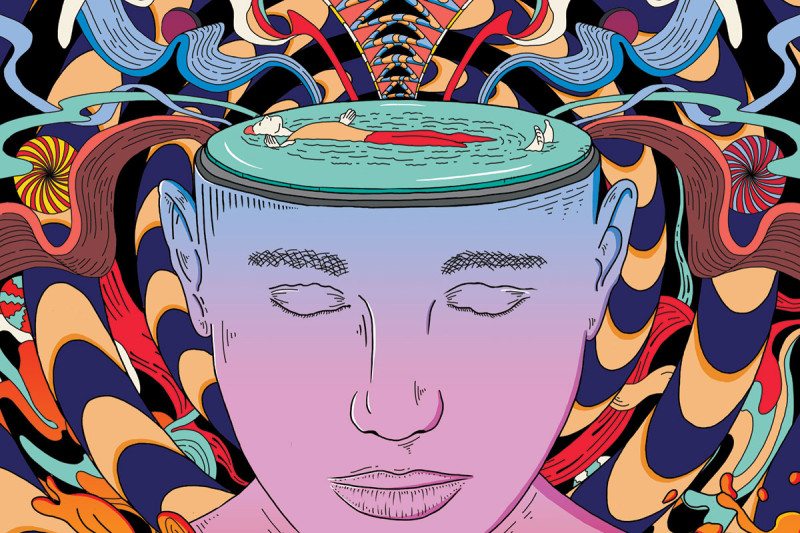
How The Concept Of Boredom Subverts The Concept Of Hell (And Heaven)

hell-600x450

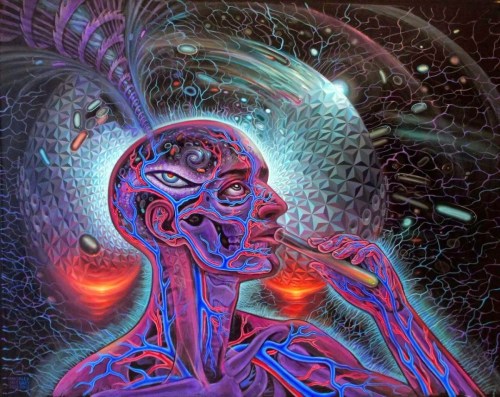
When we’re kids, we tend to exaggerate how tortuous a situation is. To us, the first day of school, a dentist appointment, or a 10-hour road trip in a car with a broken radio is its own circle of hell. As adults, we exaggerate too. There are times when being stuck in traffic or in a house with poor wi-fi is considered hell. Sure, there’s no fire and brimstone, but that doesn’t make the experience any less hellish.

The takeaway from that kind of exaggeration is that our concept of torture tends to be exceedingly relative. It’s one thing to be in constant pain, which is torture at its most pure. It’s quite another when it strains our psyche, our sanity, and our willingness to endure it.

I highlight this disparity because it’s important to consider in any discussions about Hell. By that, I don’t just mean the feelings we have when we’re sick, hung over, or working overtime on a weekend. I’m referring to the actual religious, philosophical, and literal concept of Hell that fuel our worst nightmares.

I get that this is not a very sexy topic. You could argue that it’s the least sexy topic anyone could discuss and probably win. However, there’s a reason why I’m bringing it up. It has less to do with religious connotations and more to do with the larger implications. To some extent, it may even alleviate some of those distressing sentiments surrounding hell.

That might be hoping for too much because few issues make people more uncomfortable than Hell. Even among the deeply devout, the idea that there’s this terrible place full of unending, unparalleled torture that people consciously experience second after second for eons on end is extremely distressing. By definition, it’s the ultimate form of torture that nobody can hope to escape, resist, or endure.

It’s for that very reason that a literal Hell is often seen as a problem among atheists and theists alike. The very idea of eternal torture doesn’t just clash with the idea of a loving deity. It also conflicts with every notion of justice. We are, after all, finite beings living in a finite world. How can any finite person do anything to warrant infinite torture?

The debate over the merits of infinite punishment for finite sins is one of those theological and ethical debates that has been going on for centuries. I’m not smart enough or spiritual enough to resolve it so I’m not going to try. Instead, I want to highlight a particular detail about the concept of hell and it’s a concept I have discussed more than most theologians.

That concept is boredom, a force that may be more powerful than any fiery sermon about hell. It has already led some to murder and I’ve argued that it could be a plague of the future. In contemplating and studying the power of boredom, though, I’ve noticed that it has a very peculiar effect when applied to the concept of Hell.

Simply put, boredom renders Hell, even the eternal variety, utterly ineffective and ultimately meaningless. That’s not to say eternal torture, or torture of that extent, is justified ethically. My point is that when you inject boredom into the equations of Hell, then all the tenants surrounding it break down.

To illustrate this point, think back to an experience in your life that you considered tortuous. Maybe it was an injury. Maybe it was a relationship. Maybe it was just a family reunion that you couldn’t wait to end. However bad it was, physically or mentally, there’s usually a point where you become numb to it.

It’s not just a function of our brains, which has actual mechanisms for adapting and adjusting to all sorts of torment. It’s a product of perception itself. Experience something so often for so long and it suddenly doesn’t become the aberration. It becomes the norm. When you think about the implications of that, then the concept of Hell breaks down.

Take, for instance, your current state of being. Assuming you’re not sick or in any significant discomfort, you don’t consider this state as painful. From your perspective, it’s a normal state of being and one with which you’ve become familiar over the course of your life.

Now, imagine for a moment, that everyone in the world sees your state and is aghast. They’re horrified that anyone could live, like you do. They see your current state as pure torture, one that they wouldn’t wish on anyone. You’re understandably confused, but can only do so much to grasp it because from your point of view, your condition is normal.

In a less theatrical example, consider those who live in what we might classify as extreme poverty. According to the World Bank, about 10.7 percent of the world’s population lives in extreme poverty. To these people, imagine what their concept of normal is. Torture to them is not being able to eat for days on end whereas torture for some is having to eat at McDonald’s five nights a week.

When it comes to suffering, eternal or otherwise, perception matters. You could argue it’s the only thing that matters. Someone who grew up rich and affluent may consider living in a mid-level apartment in Detroit torture whereas someone who grew up poor might see it as an upgrade. It all depends on how someone’s sense of normal develops.

When you add eternity to the mix, then things get somewhat paradoxical and boredom is at the heart of it. Imagine, if you can, that first moment when a hapless soul is condemned to Hell. Moments after they die, they descend into that horrible lake of fire that many religious texts and famous poets describe with such vivid detail.

Naturally, it’s torturous, plain and simple. Whatever kind of torment Hell offers, be it constant burning or being forced to watch “The Emoji Movie” for all eternity, is exceedingly painful to that poor soul. There’s no getting around that.

However, after a good long while though, such torment loses its impact. Remember, we’re dealing with eternity here. Time tends to obscure our frame of reference. It doesn’t matter how long we lived or how well we remember that life. After enough time, that whole experience will become a minor blip.

That’s a critical reference point because everything we think we know about pain, pleasure, and boredom are derived from those life experiences. Given that those experiences are finite while hell is infinite, it’s literally only a matter of time before Hell ceases to become a place of torment and just becomes our sense of normal.

Beyond normal, though, even the extremes of Hell that holy texts and poets describe lose their luster once boredom enters the picture. Do anything long enough and often enough and chances are, it’ll get boring to some extent. Why else would there be so many kinks and fetishes surrounding sex?

It’s true. Even I, an aspiring erotica/romance writer, don’t deny that sex can become boring. If something as inherently pleasurable as sex can become boring, then anything as pleasurable or painful could become boring as well. Given enough time, repetition, and inanity and it’s inevitable. Add eternity to the mix and, invariably, everything becomes boring.

It doesn’t matter if you’re burning in a lake of fire for trillions upon trillions of years. Eventually, it becomes so mundane that it ceases to become torture. At that point, Hell isn’t even a punishment anymore and it completely loses its purpose.

There are some forms of Hell that try to work around this. In the Fox TV show, “Lucifer,” the torment in hell technically isn’t eternal. In the show, Hell is a domain in which the damned are forced to relive the worst parts of their life over and over again. Even Lucifer himself endured that in one episode.

This isn’t eternal, though, because from the perspective of those being tortured, it isn’t an eternity. From their point of view, it’s just one really bad day. It doesn’t matter if the loop goes on for a trillion years. From their perspective, it’s still one day. If anything, the only one really suffering is Marcus “Cain” Pierce, who actually seeks death because, like Vandal Savage, an immortal life becomes unbearably boring after a few centuries.

That’s not just an irony. It highlights the underlying problem of applying eternity alongside boredom. After a certain amount of time, any experience, be it torture or euphoria, is going to lose its effect once boredom takes hold. In that sense, even Heaven loses its appeal because like pain, pleasure is not immune to the corrosive effects of boredom.

Now, some theologically minded people might still argue that an all-powerful deity would find some way to ensure boredom doesn’t undermine the punishment of Hell or the ecstasy of Heaven. However, doing so would require a total subversion of our mortal perceptions, which would in turn undermine the very experiences that are used to justify sending us to Heaven or Hell in the first place.

The fact that those perceptions are what we use to understand these places is the biggest flaw in the concept. Even an evil, vindictive deity would have to be exceedingly indifferent to standards of judgment and justice to even organize such a scheme.

The fact that so few holy texts or visions of Hell reference the power of boredom is a sign that there’s a disconnect between how the infinite effects the finite. It might also explain why visions of it have to be so terrifying to begin with. It even explains why Heaven has to be so appeal. In the context of eternity, the experience loses purpose eventually.

To some extent, we can take comfort in the idea that no matter how horrible Hell may be, if it even exists, boredom will eventually undermine those horrors. Granted, that means the pleasures of Heaven will be subject to the same effect, but it all evens out in the long run. Given enough time, we’re all subject to the same fate. It may seem grimly nihilistic for some, but I also think it’s comforting in how it binds us.

It also proves that, however powerful a deity may be, even the holiest of power pales in comparison to the might of boredom. Like erosion and entropy, boredom is the experience that overpowers us all eventually.

15 Comments

Filed under religion, War on Boredom

Circumcised Vs. Uncircumcised Preference (According To Porn Stars)

tmg-article_default_mobile

When searching for expertise on sensitive issues, sometimes you have to look in unexpected places. For an issue as sensitive as circumcision, an issue that has been in the news more and more these days, we have to look a little harder. There aren’t many sane people willing to learn that much about mutilating male genitals.

I’ve made my attitudes towards circumcision fairly clear already. I admit, I’ve avoided the topic in the past, but find myself more and more interested about it for unexpected reasons. I had no idea that there was an ongoing movement to protest circumcision, nor did I realize the colorful history behind it. Honestly, who knew such a small piece of flesh could generate so much controversy?

There are a lot of aspects about circumcision that are worth discussing, but seeing as how I’m not an expert, I feel woefully unqualified to lead that discussion. There are people and organizations far more qualified and entertaining to dig into the logistics of circumcision. There is one part of the discussion that’s worth having, though, and it involves porn stars.

Image result for famous porn star

I’m sure that got some peoples’ attention now. Depending on the contents of their browser history, they’re familiar with the expertise that porn stars bring to the table on all things related to male genitalia. Given the amount of time they spend dealing with the intricacies of male anatomy, I would further argue their qualifications speak for themselves.

They have experience in terms of frequency, variety, and circumstance. Given the sheer variety of porn that exists, the average porn star is bound to experience more aspects of male anatomy than most ordinary women, even at their most reckless. It’s not just personal for them. It’s their profession.

Porn stars aren’t doctors, even if they frequently play them in elaborate fantasies. However, there’s one important issue related to circumcision that they can probably answer better than any doctor.

Are circumcised penises better for sex than uncircumcised?

Regardless of the medical or cultural implications surrounding circumcision, I think this question is more pressing than most, if only because it’s the most intimate. There are plenty of impassioned arguments about the ethics of circumcising an infant boy without his consent or a full understanding of the impacts. Those arguments are important.

However, when it comes to our intimate personal lives, the stakes are a little bit elevated. Even if there are health and ethical arguments to be made about circumcision, people will pay more attention if their sex lives are involved. Even women will pay attention more because those sex lives often involve them to.

With all that in mind, how exactly do porn stars feel about circumcised penises compared to uncircumcised? Is there really a difference? That’s exactly what Wood Rocket, a channel dedicated to exploring the less explicit aspects of porn stars, asked a group of female porn stars. If there is, they’re in a better position to find out than anyone, including a licensed doctor. This was their response.

Granted, it’s a small sample size, but keep in mind that these women are porn stars. They’ll deal with more penises of every size, shape, and function than most women will deal with in a lifetime. Their sentiment on this carries more weight than most and the specifics of their response are quite revealing.

Beyond their comments about uncircumcised penises and anal sex, there seems to be an underlying sentiment of aesthetics. An uncircumcised penis is more of an anomaly, at least for porn stars in America, where the circumcision rate is significantly higher than the rest of the world. As such, it’s going to evoke different reactions.

One woman describes fucking a circumcised penis as fucking a door knob. Another woman describes an uncircumcised penis as smooth, squishy, probably a few other terms that might prompt some to open a new browser window. If you took those sentiments as an average, though, the main take-away is that these women don’t really mind either way, provided that the man is hygienic and knows how to use it.

Image result for satisfying sex

However, it’s the attitudes towards the circumcised penises that I found most revealing. The way these women described it gave the impression that their preference was based primarily on familiarity. They’ve just dealt with circumcised penises more often and, as a result, they’re more comfortable with them.

That seems to reflect the sentiment that a circumcised penis is “normal” whereas an uncircumcised penis is not. It’s worth remembering, though, that this concept “normal” requires that a piece of a man’s anatomy get cut off, usually when he’s a baby. I know normal is kind of a loaded term, but there’s something paradoxical about a kind of normal that requires surgery.

More than anything else, it shows that our attitudes towards circumcision are very much shaped by aesthetics. Even for those who consider themselves ardent individualists, we’re still part of a highly social species. That means public attitudes towards aesthetics matter and, like makeup commercials or lingerie ads, that effects how we see circumcision.

Related image

As it stands right now, an uncircumcised penis is still seen as a novelty or an aberration. That is changing though so chances are, the porn stars of the near future will be dealing with more uncircumcised scene partners. It will be very interesting to learn the preference of those porn stars in the future. I suspect that their attitudes will be different.

Until then, the controversy surrounding circumcision is sure to continue. There will still be medical arguments on top of anecdotal experiences. Since it affects our sex lives, the stakes will continue to be high. For now, though, it’s worth taking into account the sentiments of experienced porn stars. There aren’t many issues where anyone can say that with a straight face. That just goes to show how serious this issue is.

2 Comments

Filed under gender issues, sex in society, sexuality

How We’ll Save Ourselves From Artificial Intelligence (According To Mass Effect)

mass-effect-andromeda-kill-the-ai-or-save-the-ai_feature

Growing up, my family had a simple rule. If you’re going to talk abut about a problem, you also have to have a solution in mind. By my parents’ logic, talking about a problem and no solution was just whining and whining never fixes anything. My various life experiences have only proved my parents right.

When it comes to a problem that may be an existential threat to the human race, though, I think a little whining can be forgiven. However, that shouldn’t negate the importance of having a solution in mind before we lose ourselves to endless despair.

For the threat posed by artificial intelligence, though, solutions have been light on substance and heavy on dread. It’s becoming increasingly popular among science enthusiasts and Hollywood producers to highlight just how dangerous this technology could be if it goes wrong.

I don’t deny that danger. I’ve discussed it before, albeit in a narrow capacity. I would agree with those who claim that artificial intelligence could potentially be more destructive than nuclear weapons. However, I believe the promise this technology has for bettering the human race is worth the risk.

That said, how do we mitigate that risk when some of the smartest, most successful people in the world dread its potential? Well, I might not be as smart or as successful, but I do believe there is a way to maximize the potential of artificial intelligence while minimizing the risk. That critical solution, as it turns out, may have already been surmised in a video game that got average-to-good reviews last year.

Once again, I’m referring to one of my favorite video games of all time, “Mass Effect.” I think it’s both fitting and appropriate since I referenced this game in a previous article about the exact moment when artificial intelligence became a threat. That moment may be a ways off, but there may also be away to avoid it altogether.

Artificial intelligence is a major part of the narrative within the “Mass Effect” universe. It doesn’t just manifest through the war between the Quarians and the Geth. The game paints it as the galactic equivalent of a hot-button issue akin to global warming, nuclear proliferation, and super plagues. Given what happened to the Quarians, that concern is well-founded.

That doesn’t stop some from attempting to succeed where the Quarians failed. In the narrative of “Mass Effect: Andromeda,” the sequel to the original trilogy, a potential solution to the problem of artificial intelligence comes from the father of the main characters, Alec Ryder. That solution even has a name, SAM.

That name is an acronym for Simulated Adaptive Matrix and the principle behind it actually has some basis in the real world. On paper, SAM is a specialized neural implant that links a person’s brain directly to an advanced artificial intelligence that is housed remotely. Think of it as having Siri in your head, but with more functionality than simply managing your calendar.

In the game, SAM provides the main characters with a mix of guidance, data processing, and augmented capabilities. Having played the game multiple times, it’s not unreasonable to say that SAM is one of the most critical components to the story and the gameplay experience. It’s also not unreasonable to say it has the most implications of any story element in the “Mass Effect” universe.

That’s because the purpose of SAM is distinct from what the Quarians did with the Geth. It’s also distinct from what real-world researchers are doing with systems like IBM Watson and Boston Dynamics. It’s not just a big fancy box full of advanced, high-powered computing hardware. It’s built around the principle that its method for experiencing the world is tied directly to the brain of a person.

This is critical because one of the inherent dangers of advanced artificial intelligence is the possibility that it won’t share our interests. It may eventually get so smart and so sophisticated that it sees no need for us anymore. This is what leads to the sort of Skynet scenarios that we, as a species, want to avoid.

In “Mass Effect,” SAM solves this problem by linking its sensory input to ours. Any artificial intelligence, or natural intelligence for that matter, is only as powerful as the data it can utilize. By tying biological systems directly to these synthetic systems, the AI not only has less incentive to wipe humanity out. We have just as much incentive to give it the data it needs to do its job.

Alec Ryder describes it as a symbiotic relationship in the game. That kind of relationship actually exists in nature, two organisms relying on one another for survival and adaptation. Both get something out of it. Both benefit by benefiting each other. That’s exactly what we want and need if we’re to maximize the benefits of AI.

Elon Musk, who is a noted fan of “Mass Effect,” is using that same principle with his new company, Neuralink. I’ve talked about the potential benefits of this endeavor before, including the sexy kinds. The mechanics with SAM in the game may very well be a pre-cursor of things to come.

Remember, Musk is among those who have expressed concern about the threat posed by AI. He calls it a fundamental risk to the existence of human civilization. Unlike other doomsayers, though, he’s actually trying to do something about it with Neuralink.

Like SAM in “Mass Effect,” Musk envisions what he calls a neural lace that’s implanted in a person’s brain, giving them direct access to an artificial intelligence. From Musk’s perspective, this gives humans the ability to keep up with artificial intelligence to ensure that it never becomes so smart that we’re basically brain-damaged ants to it.

However, I believe the potential goes deeper than that. Throughout “Mass Effect: Andromeda,” SAM isn’t just a tool. Over the course of the game, your character forms an emotional attachment with SAM. By the end, SAM even develops an attachment with the character. It goes beyond symbiosis, potentially becoming something more intimate.

This, in my opinion, is the key for surviving in a world of advanced artificial intelligence. It’s not enough to just have an artificial intelligence rely on people for sensory input and raw data. There has to be a bond between man and machine. That bond has to be intimate and, since we’re talking about things implanted in bodies and systems, it’s already very intimate on multiple levels.

The benefits of that bond go beyond basic symbiosis. By linking ourselves directly to an artificial intelligence, it’s rapid improvement becomes our rapid improvement too. Given the pace of computer evolution compared to the messier, slower process of biological evolution, the benefits of that improvement cannot be overstated.

In “Mass Effect: Andromeda,” those benefits help you win the game. In the real world, though, the stakes are even higher. Having your brain directly linked to an artificial intelligence may seem invasive to some, but if the bond is as intimate as Musk is attempting with Neuralink, then others may see it as another limb.

Having something like SAM in our brains doesn’t just mean having a supercomputer at our disposal that we can’t lose or forget to charge. In the game, SAM also has the ability to affect the physiology of its user. At one point in the game, SAM has to kill Ryder in order to escape a trap.

Granted, that is an extreme measure that would give many some pause before linking their brains to an AI. However, the context of that situation in “Mass Effect: Andromeda” only further reinforces its value and not just because SAM revives Ryder. It shows just how much SAM needs Ryder.

From SAM’s perspective, Ryder dying is akin to being in a coma because it loses its ability to sense the outside world and take in new data. Artificial or not, that kind of condition is untenable. Even if SAM is superintelligent, it can’t do much with it if it has no means of interacting with the outside world.

Ideally, the human race should be the primary conduit to that world. That won’t just allow an advanced artificial intelligence to grow. It’ll allow us to grow with it. In “Mass Effect: Andromeda,” Alec Ryder contrasted it with the Geth and the Quarians by making it so there was nothing for either side to rebel against. There was never a point where SAM needed to ask whether or not it had a soul. That question was redundant.

In a sense, SAM and Ryder shared a soul in “Mass Effect: Andromeda.” If Elon Musk has his way, that’s exactly what Neuralink will achieve. In that future in which Musk is even richer than he already is, we’re all intimately linked with advanced artificial intelligence.

That link allows the intelligence to process and understand the world on a level that no human brain ever could. It also allows any human brain, and the biology linked to it, to transcend its limits. We and our AI allies would be smarter, stronger, and probably even sexier together than we ever could hope to be on our own.

Now, I know that sounds overly utopian. Me being the optimist I am, who occasionally imagines the sexy possibilities of technology, I can’t help but contemplate the possibilities. Never-the-less, I don’t deny the risks. There are always risks to major technological advances, especially those that involve tinkering with our brains.

However, I believe those risks are still worth taking. Games like “Mass Effect: Andromeda” and companies like Neuralink do plenty to contemplate those risks. If we’re to create a future where our species and our machines are on the same page, then we would be wise to contemplate rather than dread. At the very least, we can at least ensure our future AI’s tell better jokes.


5 Comments

Filed under futurism, human nature, Mass Effect, Sexy Future, video games

The following is my review for Mighty Morphin Power Rangers #25, which I wrote for PopMatters

‘Mighty Morphin Power Rangers #25’ Goes Boldly Into Uncharted Territories

Leave a comment

April 1, 2018 · 9:37 pm

Sexy Sunday Thoughts: Easter 2018 Edition

sexy-easter-review-weekly-blog-bed-room-trail

Easter is a strange, but intriguing holiday. Growing up, I honestly didn’t know what it was about. To me, it was just another reason to gather at my grandmother’s house and enjoy some of her legendary cooking. That was pretty much the only reason I looked forward to it. All the religious connotations and chocolate eggs were secondary.

I don’t deny that Easter is still a major holiday for some. Most still don’t understand why a holiday associated with the resurrection of Jesus is also associated with rabbits, but I don’t think they mind, even if it has some sexy connotations. I’m not going to bemoan it. I have too many fond memories of family gatherings and amazing deserts to care.

Whatever the case, Easter is still a holiday and one that’s worth appreciating. Whether you celebrate by going to church or gorging on marshmallow peeps, you have a reason to do a little something special. Take advantage of it in whatever way works for you. Let this week’s special Easter edition of my “Sexy Sunday Thoughts” get you into the spirit. Enjoy!


“A sex ed class is the only place where an awkward boner can actually be a teachable moment.”

Related image


“A man’s comfort with his masculinity is directly proportional to his willingness to wear a speedo.”

Related image


“People can only be so honest when they’re in the presence of someone they want to fuck.”

Image result for man and woman on a date


“A single blowjob is more welcoming than a million handshakes.”

Related image


“When you think about it, one of the most risky kinks is being a prostitute with a cop fetish.”

Image result for sexy male cop


“Even the greatest romances require that two people be really horny at some point.”

Image result for man and woman in love


“Your closest friends are the ones who know how many sex toys you own.”

Image result for woman's sex toy collection


Whether you take Easter seriously or just use it as an excuse to cook ham for dinner, I hope you enjoy this most quirky of holidays. It may not involve elaborate decorations or a week off from school, but it’s a good excuse to get together with family, enjoy warmer weather, and eat candy. In the crazy world we live in, we can never have too many of those.

Leave a comment

Filed under Sexy Sunday Thoughts

The Time I Tried On A Banana Hammock (And Loved It)

conrx-veddern-banana-hammock-signed

Brace yourself because I’m about to get personal. That’s right. I’m taking a break from talking about disturbing trends in sexual attitudes, major upheavals from technological advances, and sex robots to share a little something about myself that should offer some revealing insight into my sexy way of thinking.

Ideally, I’d like this personal anecdote to convey a larger meaning, of sorts. I’d like it to help reinforce some of the points I often make about double standards, sexual norms, and our overall sexual mentality. If it just ends up as me sharing another quirky story from my life, I’ll be okay with that too. Be forewarned, though. This is one of those stories that might be both funny and unflattering.

It’s not a very elaborate story, nor would I consider it a major turning point in my life. It’s not even the most personal story I’ve shared on this blog, especially compared to ones that involve awkward boners. In fact, the entirety of the story can be summed up in one simple sentence.

I tried on a banana hammock and loved it.

In case you don’t know what a banana hammock is, it’s basically the male version of a thong. I’m not talking about a speedo swimsuit that you might see at a beach in Rio. I’m talking about the kind of underwear that is basically a fancy napkin held in place by dental floss. If you need a more visual reference, this is what one looks like.

Related image

Granted, most men don’t look that fit, but that’s not the point of the story or why I’m sharing it. I know banana hammocks are basically a novelty, one usually reserved for male strippers, underwear models, and body builders. They don’t have the same reverence that female thongs have and there’s a reason for that. However, it’s the extent of that reason that makes me want to share this story.

For context, here’s how it all played out. It takes place during my last few years in college, a time when I was finally recovering from the social anxieties I’d developed in high school and began emerging from my shell. During those years, I was lucky enough to have a couple of really great roommates with whom I didn’t mind sharing personal stuff.

One of those roommates, as it just so happens, loved banana hammocks. To him, they were just something he wore to fool around, but he still loved them. Me being the kind of guy who had worn boxers since middle school, I didn’t see the appeal. Then, one day, for reasons I can only attribute to boredom and curiosity, my roommate dared me to try one on.

Image result for triple dog dare

I’m not usually one to take people up on foolish dares that don’t involve pizza toppings, but I found myself seriously considering it. My roommate even sweetened the deal by letting me wear one that he hadn’t opened yet. It was still sealed in a plastic package, having never touched another man’s package, so to speak. It was one of those opportunities for which I couldn’t make many excuses.

Me being just as bored and/or curious, I decided to take my roommate up on his dare. I wouldn’t just keep my shirt on either. I would go into the bathroom, take everything off, and come out wearing only that banana hammock. Short of walking around naked, it was the most exposed I could’ve been. This being before I started sleeping naked regularly, it would be a unique experience.

With all that in mind, I went into the bathroom, got undressed, and put the banana hammock on. I admit, it was somewhat uncomfortable at first, but not in the way you might think. I just wasn’t used to my underwear cradling my man parts the way this thing did. After a moment, though, something amazing happened.

I found myself really liking how it looked on me. I found myself posing a bit in front of the mirror. Keep in mind, though, that this is a time in my life before I started exercising regularly. I wasn’t necessarily unhealthy since I walked everywhere in college, but I wasn’t as fit as I am now. Even so, wearing that banana hammock made me feel downright sexy.

Related image

I can honestly say I had never felt that sexy before in my life and that includes the moments I’d spent with women. I felt like I could walk up to a woman with confidence and proudly declare that I am a sexy man who enjoys the company of sexy women. Sure, that might have gotten me some odd looks, but I wouldn’t have cared. I felt that good.

Needless to say, I walked out of that bathroom feeling a lot less self-conscious than I’d anticipated. Even my roommate seemed a little surprised. His reaction, however, was kind of predictable. He wasn’t shocked or anything. He just laughed, clapped, and said it looked good on me. I remember laughing too and cracking some dirty jokes. I still don’t think it conveyed the impact of the moment.

At the time, it felt like one of those things immature college guys do when they’re in between classes. Over time, though, that experience has stuck with me and for the right reasons. That was one of the first times I really knew what it was like to feel confident as a man. It wouldn’t be the last, though.

Image result for confident guy

As I got older, I had more of those moments that helped strengthen me into the man I am now. However, that one fateful day when I tried on a banana hammock for the first time and loved it stands out more than most. Unfortunately, I didn’t get to keep it. My roommate still took it back. I think he even wore it the next day, although I’m not sure.

Whatever the case, the impact was indelible and I’ve found myself contemplating it more lately. As I said before, a beautiful woman wearing a thong isn’t that much of a spectacle anymore. If anything, it’s celebrated. It’s a symbol of sexiness. It creates spectacles at the beach and inspires sexy songs.

For men, though, the reaction is different. I won’t go so far as to say it’s a double standard. Granted, there are some men that can’t look that sexy in a banana hammock, just as there are some women who can’t pull it off either. Even for the men who do, though, it’s not seen with the same sexual aura.

Image result for banana hammock

A man walking around in a banana hammock is sure to generate plenty of looks, but they don’t evoke the same intrigue and interest as a female thong. Some women may find it attractive, as the success of the “Magic Mike” movies has shown. Others may find it funny. However, there’s still a notable gap between the sex appeal of a banana hammock and that of a thong.

Perhaps the success of movies like “Magic Mike” can narrow that gap. Personally, I hope it does. I think I look better in a banana hammock now than I did back in college. If I find myself in a relationship with someone, I’d like to think my lover would find it just as sexy as I would with them if they wore a thong.

In a sense, albeit a limited one, the disparity between banana hammocks and thongs reflect the different attitudes we have towards sex appeal. It’s far from the widest disparity between genders and, unlike others, isn’t that detrimental. That said, I do hope it narrows so men can enjoy that extra sexy feeling along with women. That, I believe, is a feeling that should be gender neutral.

Image result for couple wearing thongs

3 Comments

Filed under Jack Fisher's Insights, sexuality

The Funniest April Fools Day Prank I Ever Witnessed

april_fools_day_fb

I admit that I am not a fan of April Fools Day. That’s not to say I don’t enjoy a good laugh. My weekly Sexy Sunday Thoughts should be proof enough of that. I just don’t really care for a holiday that makes me a lot more cautious whenever I open a fresh beer.

I’m also not big on pranks. I leave that sort of thing to the YouTube stars of the world. For me, pranks are just too elaborate a way to get a laugh. I think the world is funny enough without jumping through too many hoops. Just reading the headlines from Florida is sufficient sometimes.

As a result, I never developed a fondness for April Fools Day. I had friends who took it seriously, pulling pranks that had varying degrees of humor. Most failed, in my opinion. They often involved things like replacing water with vodka or slipping a used condom into their laundry. Some laughed. Some rolled their eyes. I usually shrugged it off.

Image result for pie in the face

However, in the spirit of April Fools Day, I’d like to share a story about the greatest prank I ever saw anyone pull off. To date, it’s the only prank that ever had me on the floor, laughing hysterically. It’s also one of the few pranks where both the prankster and the victim can laugh equally. I doubt such a prank will ever be topped, at least for me.

Before I tell the story, though, I should probably make a quick disclaimer. The context and time of this prank is what helped it work. Trying to replicate it today might still get plenty of laughs, but I don’t think it would be as effective so I strongly discourage anyone from trying. That said, here’s how it played out.


It happened at one of the first jobs I had out of college. It was at a software company, which I’ve mentioned before. This company was full of young, fresh-out-of-college people like me who primarily provided technical and administrative support. It was a great environment, one where it wasn’t uncommon to see someone bring toys into the office.

The victim of the prank, in this case, was a co-worker who sat next to me in a small office. We both worked technical support, answering emails and phone calls. He had a great sense of humor and always seemed full of energy. In short, he was the perfect target for another co-worker who worked the sales department.

That co-worker, who most would agree was one of the smartest minds at the company, had a reputation for being inventive. The man once programmed his email to make a loud fart noise every time it got a message from a particularly troublesome client. We all thought that was funny, but he really outdid himself this time.

Image result for lightbulb idea

On the morning of April 1st of that year, he placed an ad on Craiglist pretending to be an animation studio in search of a voice actor. Specifically, the ad said that it needed a really good pirate voice for a cartoon character in a short animated clip. It then requested that aspiring voice actors call a number and leave a voicemail of them doing their best pirate impression. Guess who’s number he listed?

I’ll give everyone a moment to appreciate the creativity employed in this prank. It wasn’t overly elaborate. It wasn’t overly destructive either. Nobody had to clean up a huge mess. Nobody had to pay someone’s laundry bill. The most it did was clog my co-worker’s voicemail with dozens of messages from aspiring voice actors.

Over the course of the next eight hours, my co-worker received a flood of calls, most of which went to voicemail. Those calls contained a wide array of aspiring voice actors talking like pirates in ways that ranged from impressive to deranged. I don’t remember just how many calls he got. I just remember the steady stream of laughter that followed over the course of the day.

Image result for people laughing in office

By late afternoon, word had spread about the prank. Everyone from the interns to the supervisors crowded into this tiny, confined office that was only supposed to hold four people at the most. Despite those constraints, they all crowded around the desk and listened to voicemail after voicemail of pirate voice auditions. I was in the front row. It was too hilarious for words.

I distinctly remember one message where a guy really got into it, telling this elaborate two-minute tale of his life as a pirate in a voice that Johnny Depp himself would’ve appreciated. Within 30 seconds, I was on the floor clutching my sides, laughing so hard I couldn’t breathe.

It was, by far, the most memorable April Fools Day I had ever experienced. I think the entire office gave my co-worker and his friend a round of applause for this prank. They both laughed too. In fact, even when they called some of the people to let them know it was a prank, they laughed as well. It was just that hilarious.

Related image

Regardless of how you feel about April Fools Day or pranks, it’s hard to deny that what my co-worker’s friend did was objectively funny. Moreover, it was funny in a way that everyone could appreciate. That, in many respects, is the true measure of a great prank. I’m not saying it’ll ever be topped. I’m just saying that it set the bar pretty damn high.

So that, my friends, is the story of the greatest April Fools Day prank I ever witnessed. I wanted to share it a few days before April Fools Day this year, if only to reassure some that there’s still a place for that kind of humor in the era of political correctness, fake news, alternative facts, and viral videos featuring dancing gorillas.

We all need to laugh every now and then. April Fools Day gives us an excuse to make the extra effort. Some, like my old co-workers, took full advantage of it and the lives of those effected are better because of it. With that in mind, I hope everyone finds a way to laugh as hard as I did that fateful day on April Fools Day this year.

1 Comment

Filed under Jack Fisher's Insights

Generation Z, The March For Our Lives, And The Nihilism Turning Point

03242018_moremarch_154620-1020x680

Last year, I wrote a couple of posts about the mentality of Millennials and the possible quirks they may inspire in Generation Z, which are just starting to emerge. While I’m neither the spokesperson for Millennials, nor am I an expert on the generation they’re creating. Being a Millennial myself, though, I like to think I have more insight than most. I’ve watched their story play out and I’ve even lived part of it.

However, this particular topic isn’t about Millennials. This is about the emerging generation after them, Generation Z. While Millennials are still subject to any number of trends and criticisms, Generation Z hasn’t had much time to establish themselves or have a defining moment. That may be changing in wake of the Parkland shooting.

To understand why, it’s important to provide a bit of context about Generation Z. First and foremost, we need to identify just who they are, relative to Millennials, Generation X, and the Baby Boomers. While there’s no official cut-off point, most reputable sources identify anyone born after the year 2000 as members of Generation Z.

Those who lived through the Parkland shooting are mostly in their mid-to-late teens so they fit into this category. That matters a great deal because it’s happening at a point where Generation Z is on the cusp of adulthood. To understand why that matters, it’s important to note the context of this generation.

These kids, and they are still kids for the most part, were born into a world where they didn’t witness the horrors of Columbine or the experience the collective trauma of the September 11th attacks. Generation Z has always lived in a world where school shootings are a thing and the War on Terror has always been ongoing.

Beyond that, they’re also a generation that has been even more well-connected than their Millennial predecessors. Most never had to endure the hardships of dial-up internet or cell phones that did not have a camera. Their entire lives have been connected, so to speak. That’s part of what has fueled their reaction to the Parkland shooting.

The kids in Generation Z have been watching all their lives as horrible mass shootings from Virginia Tech, Sandy Hook, and Las Vegas happen with distressing regularity. At the same time, they’ve watched as efforts by Millennials, Generation X, and the Baby Boomers amount to very little change. The fact that the internet and social media documents all these failures leaves quite an impression.

Being young, idealistic, and not totally jaded, the members of Generation Z are finally at an age where they have a chance to make an effort of their own. They’re still not old enough to drink or vote in many instances, but they’re now in a position to make their voices heard. That was the idea behind the March For Our Lives that occurred last week.

It marks a potentially defining moment for Generation Z, one that may have far-reaching consequences for years to come. They’ve seen how many have tried and failed to use the horrors of mass shootings to promote gun control reforms. They’re also informed and educated enough to know how egregious the gun violence disparity is in the United States compared to other developed countries.

While I applaud the passion of these remarkable young people, I also worry that this event may become a turning point, of sorts. By that, I mean these noble and sincere efforts of these kids could be the catalyst that instills a sense of nihilism that may very well define their generation.

This is something I speculated on when I made my predictions on the collective mindset of Generation Z last year, going so far as to identify Rick Sanchez from “Rick And Morty” as their first icon. I stated that Generation Z would likely be the most nihilistic generation of all time. Now, the success or failure of the March For Our Lives could be the turning point that cements that nihilism within Generation Z.

As I said before, it won’t be the same kind of nihilism we associate with the Friedrich Nietzsches of the world. It’s the kind of nihilism that is the byproduct of being surrounded by so much information and seeing how little it truly matters in the long run.

Like Millennials, Generation Z is very educated. They’ve grown up in a world where they have access to nearly all the world’s relevant information through their smartphones. They’re smart enough and tech-savvy enough to see world events unfolding before their eyes. They’re also informed enough to know how hard it is for any event to make for meaningful change.

Now, here they are, having experienced one of their first traumas as an up-and-coming generation. They’ve seen all those terrible mass shootings inspire nothing but empty thoughts and prayers. They feel inspired enough and bold enough to make an effort, hoping they’ll succeed where so many others have failed.

While many are rooting for them, the odds are stacked against them. Even major news outlets are starting to spoil the outcome, applauding the kids while brushing off their ideals as youthful day-dreaming. I don’t think they realize just what kind of impression they’ll have on their generation as a whole.

Let’s say, for a moment, that the most likely scenario happens and the March For Our Lives leads to no meaningful change in gun control laws or in efforts to curb mass shootings. What kind of message does that send to the survivors of Parkland and the entire generation emerging behind it?

Firstly, it establishes that their lives, their pain, and their ideals don’t matter. It doesn’t matter how passionate they are. It doesn’t matter how traumatized they are. What they went through and how they reacted in response doesn’t matter. In such a crowded, diverse, and complicated world, their lives are trivial.

That’s almost a textbook definition of existential nihilism. Their hopes, their dreams, and their very place in the universe is insignificant. It wouldn’t have mattered if ten times more kids died at Parkland. It still wouldn’t have changed anything. There would still be no gun control. There would still be more mass shootings. All that time, effort, energy, and pain amounted to nothing.

In previous generations, it was almost beneficial to live in a world that wasn’t so connected. They could see horrible events on the news, but find a way to compartmentalize it in their minds so they could go on with their lives. With Generation Z, being so connected and informed, that’s just not feasible anymore.

They don’t just see that their efforts at Parkland were meaningless. They also see how many other mass shootings have occurred throughout history and how utterly inane such violence is in the grand scheme of things. In a sense, their ability to connect and inform themselves could render them numb to any greater sense of purpose.

That’s not to say that the kids behind March For Our Lives or the whole of Generation Z will be a bunch of dispassionate, misanthropic naysayers who are so emotionally flat that they don’t respond to stories of human suffering anymore. It just means that they’ll be a lot more calculated with their perspective.

Keep in mind, a world of regular school shootings and a never-ending war on terrorism is not some major upheaval to Generation Z. That’s their concept of normal. They’ve always lived in a world where terror attacks can happen at any time, when mass shootings can happen just as frequently, and no meaningful change ever comes of it.

For them, all the yelling, protesting, and outrage that generations of the past have voiced will just seem like background noise. If all the suffering and trauma led to nothing, then why should they bother? That may very well be a question that the Parkland survivors start asking themselves after the March For Our Lives accomplishes nothing.

Now, that’s not to say Generation Z won’t react differently. That’s not even to say that the March For Our Lives won’t accomplish something meaningful in the end. It’s impossible to predict major trends that go onto define an entire generation, but it’s still possible to note the vulnerabilities.

For Generation Z, nihilism might end up being less a reaction and more a necessity. They’re coming into a world where all the news is fake, facts battle alternative facts, and dead kids only evoke empty thoughts and prayers. Once this fact settles in, it’ll be interesting to see how they seek to define themselves moving forward.

Being the optimist I am, I believe that the kind of nihilism that Generation Z embraces could help inoculate them from some of the detrimental effects of identity politics, fake news, and outrage culture. I think that’s critical, given how these forces have corrupted debates and empowered professional trolls.

In any case, Generation Z faces an uphill battle in an effort to set themselves apart from their Millennial peers. A greater sense of nihilism may make them difficult to deal, but that’s exactly what will help define them as they seek purpose within a seemingly purposeless world.

8 Comments

Filed under Current Events, human nature

How Excessive Guilt Inspires Regressive Attitudes (And Ugly Politics)

sjw-cannibal

Have you ever done something that made you feel so guilty that it messed with your head? Have you ever felt so much guilt heaped upon you that it made you feel sick in ways that combine the nausea of a hangover with the delirium of a bad flu? If you haven’t been in that situation, then consider yourself lucky because guilt really is that powerful.

Like anger and hatred, guilt is one of those powerful feelings that can circumvent reason, reality, and everything in between. It can be like a rat gnawing at your brain stem, a stabbing pain in the most vulnerable part of your psyche. It doesn’t matter what the facts of the situation might be. Like any other pain, you’ll do anything to alleviate it.

As bad as it is, guilt is a critical component of the human condition. Guilt is a major aspect of being a social species. When we do something wrong within a functioning society, we should feel guilty. In the absence of laws and governments, guilt is part of what binds us together as a people and helps guide us in doing right by one another.

It’s because guilt is so powerful, though, that it can easily be weaponized to pursue an agenda. I would even argue it’s too easy because in recent years, efforts to channel and pile on guilt have become more overt. It’s becoming so overt that it’s not even subtle anymore. The effects aren’t just damaging. They’re counterproductive.

Last year, I wrote a lengthy post about how certain people use virtue signaling to make them feel like the heroes in their own story. In some respects, that effort is partially fueled by feelings of guilt that just happen to supplement the inherent desire to feel like John McClane in a “Die Hard” movie. That inherent desire to feel virtuous can sometimes coincide with feelings of guilt, real or imagined.

However, it’s the imagined, contrived guilt that’s becoming a problem. It’s guilt belabored by those seeking vindication that’s subverting the actual guilt that’s healthy and necessary for a functioning society. In an era where it’s easy to shame and condemn others through social media, it has never been easier to channel the power of guilt.

In some cases, that might be a good thing, being able to use our inter-connected world to lump guilt upon those who might otherwise get away with serious misdeeds. One could even argue it’s because of mass media that we, as a global society, have become more tolerant over the past century. Unlike most of human history, we can see the suffering of our fellow humans and rightly feel guilt about it.

The problem, however, comes when that same media is used to evoke excessive guilt in people who may not have any real stake in an issue. It usually has nothing to do with any direct action or decision that these people made. It’s often more vague, involving anything from the crimes of our ancestors to social status to physical appearance.

Whatever the method, the end results are fairly predictable. It usually goes something like this.

“You’re a [Insert Race/Religion/Gender/Ethnic Group/Social Class Here]! Just look at how great your life is compared to all the poor [Insert Oppressed Class/Group/Opposing Political Affiliation Here]! You should feel ashamed of yourself! You should sacrifice your comforts, your time, and your money to pay for all that suffering! If you don’t, then you’re a horrible person and deserve no respect!”

Whether it’s race, religion, gender, or some other label, it really doesn’t take much. It just needs to single out a certain contingent of people who identify a certain way. It doesn’t even have to be a physical trait. Sub-cultures like gaming, sports, and general hobbies are prone to it. Gaming, especially, has been subjected to a lot of scrutiny in recent years.

If it’s possible to judge a group for not being inclusive, understanding, or generous enough, then guilt can be leveraged against it. On paper, it almost seems fair, using guilt to level the playing field. In practice, however, it has one exceedingly nasty side-effect that derails any effort at justice.

To illustrate how, it’s necessary to scrutinize the basics of guilt in terms of how it actually works compared to how some people think it works. To highlight that difference, here are two scenarios that focus on basic reactions to guilt. See if you can find where those nasty side-effects I mentioned manifest.

Scenario One: That person just made me feel really guilty about something. I had better sit down, listen, and calmly discuss this matter with them in a reasonable, rational way so I can address this feeling.

Scenario Two: That person just made me feel guilty. This feels awful! I hate this person for making me feel this way. Now, I need to find a way to alleviate this feeling. What’s the quickest, easiest way to do that?

I hope it’s obvious which one is more consistent with the real world. While I like to think I have more faith in humanity than most these days, I don’t deny there are some bugs in our collective operating system. When it comes to guilt, though, some will use those bugs against others in hopes of shaping their opinions. However, when guilt is the primary ingredient, those opinions are far more likely to be regressive.

Whether it’s extreme political correctness, extreme religious dogma, or extreme identity politics, guilt is effectively targeted to put people in a state of anxiety. You’re guilty for committing egregious sins against a deity. You’re guilty for being too offensive to a particular group. You’re guilty of not being inclusive enough to a particular minority.

That guilt doesn’t even have to involve a direct action or choice. It can be entirely wrong, built on myths, lies, or debunked science. It just has to evoke a reaction. Our brains, being the crude products of nature that they are, cannot tell the difference between the guilt we feel for stealing our mother’s purse or just being the same race as one that owned slaves 200 years ago.

As a result, our first instinct isn’t calm, reasoned debate. It’s to alleviate the guilt in the quickest way possible. That often means becoming defensive, angry, and aggressive. That kind of reaction is not going to make someone more understanding or tolerant. It’s going to make them hostile or upset towards the source of the guilt.

Guilt is pain on some levels, which is why many see heaping guilt on others as an outright attack. It’s why those attempting to evoke the guilt are vilified or despised. It doesn’t even matter if they make valid arguments. Their use of guilt renders their every word inherently toxic, a word I don’t use lightly.

When messages become toxic, attitudes become combative. When people become combative, their politics become regressive. Think about the guilt-obsessed Puritans or the loudest voices in the social justice crowd. They not just intolerant of the source of the guilt. They go out of their way to overreact, like attacking a fly with a shotgun.

In the name of alleviating the pains of guilt, that almost seems justified. It’s a big reason why the politics of those consumed by guilt tend to be extreme. It’s not enough to address a simple injustice in the present. Everything in the past related to that guilt needs to be a factor. That’s how you get people who condemn their own race, hate on their own gender, and favor politics that are antithetical to basic concepts of liberty.

It’s why radical feminists who say men are guilty of all the world’s ills actually make anti-feminism seem appealing to some.

It’s why race-baiting tactics by those attempting to promote racial equality tend to incur a major backlash.

It’s why attacking popular culture and sub-cultures who aren’t “inclusive” enough to become even less inclusive.

In that context, using excessive guilt only inspires a greater backlash than the one that usually comes from major social movements. If used carefully, it can subdue people into a state of desperation, longing for a way to alleviate the feeling. Some religion have managed this to great effect.

It doesn’t take much, though, in our interconnected world for guilt to become excessive. In a sense, it helps to see using guilt as using torture. Sure, the torture will usually get someone to say what you want to hear, but unless they’re a sociopath or exceedingly masochistic, they’re not going to share the attitudes or sentiments of their torturer.

1 Comment

Filed under Current Events, gender issues, human nature, Reasons and Excuses

“X-Men: Dark Phoenix” DELAYED Until 2019 (Along With Several Other Movies)

SophieJean2

I normally try not to report the news too much on this blog, unless it’s extremely urgent or extremely sexy. Sadly, this is more in line with the former rather than the latter.

Just this morning, Entertainment Weekly reported that “X-Men: Dark Phoenix” is being delayed until 2019. It had been originally scheduled for release this coming November, just in time for the holidays, no less. I even went out of my way to explain why I’m more excited for this movie than I am “Avengers: Infinity War.” It now seems I’ll have to temper that excitement.

Thankfully, unlike a few other movies that keep getting delayed, this change doesn’t seem to have much to do with the movie itself and has more to do with Fox’s scheduling. “X-Men: Dark Phoenix” is just one of several Fox movies getting delayed or pushed up, some of which aren’t related to superhero movies, including the upcoming biopic on Freddy Mercury, “Bohemian Rhapsody.”

While it’s still only minor comfort for me, as a comic book fan and an X-men fan desperate to erase memories of “X3,” I’m willing to be patient for this movie. To see Sophie Turner do justice to one of the greatest X-men stories of all time is definitely worth waiting for.

Leave a comment

Filed under Comic Books, Jack Fisher, Superheroes, X-men