

The following is a review I wrote for PopMatters on X-men: The Wedding Special #1. Enjoy!
The following is a review I wrote for PopMatters on X-men: The Wedding Special #1. Enjoy!

I talk a lot about taboos, double standards, and various gender quirks. I don’t just do that because it highlights significant disparities among people trying desperately to get along and/or make love to each other. I do it because it offers some fascinating insight into the conflicting mentalities that drive such conflicts.
A lot of those conflicts, however, are on a larger, more impersonal scale. A typical couple, be they heterosexual, homosexual, or something else entirely, can only do so much to impact larger cultural forces that they had no role in choosing, propagating, or subverting.
These forces, from our approach to marriage to the assumptions that guide our understanding of romance, usually only effect individuals and couples indirectly. We’re all somewhat at the mercy of what our culture has built for us and we can only do so much to guide it forward.

However, there are a few lesser-known aspects of that culture that we can influence on a day-to-day basis. One such aspects involves porn and whatever porn collection that you or your significant other might have, be it hidden or not. I’m sure just mentioning it has made certain individual’s tense for various reasons that I won’t state outright.
Regardless of how you or your lover feels about porn, it exists and it exists in a big way. It’s also a huge multi-billion dollar industry. The fact it’s so huge is a telling sign that both you and your lover have probably consumed it at some point. It’s also very likely that anyone claiming that porn is immoral has probably consumed it as well.

Despite this prevalence, porn is still immersed in taboos and quirks. I don’t want to focus too much on those, since I’ve already touched on a few. The ones I want to focus on have to do with how those in a romantic relationship react to it. That reaction, in many ways, goes beyond double standards and reflects something deeper about our concept of relationships as a whole.
Most people probably don’t need much imagination to surmise how their lover would react to their porn collection. Whether or not it’s a secret, there’s this underlying sentiment about someone in a relationship who consumes porn. That sentiment usually manifests in two scenarios. This is the first and probably most basic.
A woman casually walks by her lover’s desk. Their computer screen is open and so are a wide number of files. Curious, she takes a closer look, only to find out that there’s a sizable collection of pornographic videos on the computer. She’s utterly shocked at just how much content there is.
There are videos featuring extreme, hardcore scenes. There are videos featuring bondage, S&M, and various fetishes. When her lover returns, she is outraged. She sees this level of porn consumption as an affront to their relationship and demand that the files be deleted.
This isn’t just a basic thought experiment. This sort of thing does happen in real life. A part of what inspired this article were stories like this one where a woman kicked her husband out of the house after finding some porn on his phone. Granted, her reaction was extreme, but it reflects a similar sentiment.
There are those who, when they find their lover’s porn stash or just part of it, see it as an insult and an affront to their relationship. They see their lover’s desire to seek another sexual outlet as proof that they aren’t enough and their lover isn’t attracted to them anymore. For some, it can be fairly traumatic and for understandable reasons.

Now, I didn’t specify the gender of the person who voiced that outrage like I did in the scenario. I did so because I don’t want to generalize too much. From a purely anecdotal perspective, which is admittedly flawed, women are more angered by their lover’s porn consumption than men.
Again, that’s a generalization. It also says nothing about how homosexual or transgender relationships couples react to porn. I honestly had a hard time finding research to that effect. However, I found plenty that indicated how common porn consumption is among couples and how reserved many are to admit it.
That leads me to the next scenario, which isn’t as common, but is a bit more colorful. It involves a different kind of reaction for a couple that probably has a very different dynamic from the first, but that dynamic is key in understanding the implications.
A man casually walks by his lover’s desk. Their computer screen is open and so are a wide number of files. Curious, he takes a close look and discovers a sizable collection of pornographic videos. For a moment he’s shocked, but then he’s impressed at the sheer breadth of the collection.
There are videos featuring lesbian couples. There are videos featuring bondage, S&M, and various fetishes. When he confronts his lover, it’s awkward and a little funny. However, he’s also genuinely intrigued by this side to his lover and says they should talk about it so as to re-evaluate their outlook on their sex life.
It’s not nearly as dramatic, which is probably why it doesn’t make the news as often. Again, I was vague with the gender dynamics here and I’ll probably get in trouble for saying the person in the scenario was a man. I get it. That’s a general assumption fueled largely by existing cultural expectations.

Men are okay with porn. Women are a bit more sensitive about it. Not everyone is like that. Some women don’t have a problem with porn and even enjoy watching porn themselves. Some men don’t care for porn and are genuinely averse to it. Everybody has their own attitudes towards it.
That said, there is this prevailing sentiment that men are anxious about revealing their porn habits to their significant others and women don’t like the idea that their lover has a sexual outlet other than them. In both cases, there’s an anxiety over what this means for them and the relationship.
To some extent, porn consumption and learning that your lover consumes it undercuts the romantic script that we think we have to follow. Within that script, two people are in love. They only desire one another. They’re only attracted to one another. Anything that might diver that attraction must be a bad thing. Porn does all of that and then some.

In that context, it’s understandable why some would react harshly to their lover’s porn collection. It shatters the romantic ideal they once assumed. Suddenly, their love is not on part with Romeo and Juliet. Their relationship is not some epic romance. The idea that they’re still sexually aroused by other people makes it seem less special and less meaningful.
At the same time, such a reaction has more distressing implications. If someone is disgusted by the notion that their lover is sexually aroused by something other than them, then that implies they somehow own their lover’s desires. They own their ability to have sex and be intimate. The idea of owning another person to that extent goes beyond love and into the realm of obsession.

In that circumstance, even a stray thought anyone has towards someone other than their lover is an affront. Given the many indications that humans aren’t entirely built for monogamy and the high divorce rate, this is wholly unrealistic and a little scary and it sets unreasonable expectations among couples that are bound to disappoint.
There are, indeed, certain cases where someone’s porn consumption is detrimental to a relationship. However, from a pure numbers perspective, those instances are the exception and not the norm. From a pure betting perspective, there’s a good chance that your current lover or future over consumes porn. How you deal with it will likely reveal the strength and/or weakness of your relationship.

For centuries, there has been a debate raging between believers and non-believers. The believers claim that God created man in his/her/its/their image. The non-believers claim it’s the other way around and man created God in whatever image they imagined. Society, cultures, and politics may change the rhetoric, but the debate remains unresolved.
There are just too many barriers that are insurmountable for either side. One believes that the faith they have in whatever higher power they worship is as real as gravity, sunlight, and migraine headaches. The other does not accept that there is sufficient, verifiable evidence to accept the premise of a deity. The two sides can argue with the utmost passion. It’s rare that such discourse changes any minds.
However, there come a time when a new complication enters that debate, one that will fundamentally change some peoples’ understanding of theology, religion, and God. It may not effect everyone the same way, but the impact could end up being as profound as any religious experience.

That complication is advanced artificial intelligence, a topic I’m fond of discussing when I can tie it into my favorite video games and our sex lives. I understand that mixing anything with religion tends to get contentious, to say the least. However, I believe that when artificial intelligence becomes advanced enough, the human race will have re-evaluate a lot of things and that includes religion.
Creating an artificial intelligence that is as intelligent as an average human will be groundbreaking enough and not just from a theological standpoint. A part of what makes any deity powerful and worthy of worship is the ability to create an intelligent, self-aware being through non-biological means. Once humans start doing that, then the line between mortal and immortal will start to blur.
However, it’ll gain a much greater complication once that artificial intelligence advances beyond that of the average human. As anyone who regularly upgrades their smartphone knows, digital intelligence evolves much faster than biological intelligence. It took the human race centuries to figure out indoor plumbing. Once artificial intelligence is on par with humans, it won’t take long for it to exceed them.

This is where the potentially dangerous, but infinitely promising prospect of super-intelligent AI enters the picture. By that, I don’t just mean an intelligence that always wins at Jeopardy and always wins an Overwatch match. I’m talking about an intelligence that is so far beyond human capabilities that it’s akin to the cognitive gap between an ant and a human.
That kind of gap has many implications, but in the context of religion, it essentially re-frames the entire concept of God, divine power, and spirituality, as a whole. Whether it’s a monotheistic religion where God is all-knowing or a polytheistic religion with a God of Wisdom, knowledge is a critical aspect of divinity.
Even if a super-intelligent AI doesn’t know everything, the fact it knows and understands so much more than the average human will give people the impression that it’s omniscient. By all accounts, a super-intelligent AI’s knowledge will seem god-like and that’s where that never-ending religious debate I mentioned earlier breaks down.

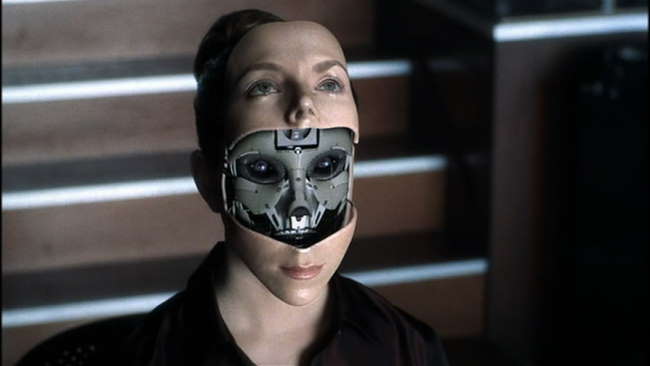
Unlike the deities championed by adherents today, a super-intelligent AI doesn’t require faith. A super-intelligence, whether it’s in the form of a giant robot or a planet-sized supercomputer, would have a tangible form. It’s hard to know what sort of form that would be, but it only needs to be tangible enough to let an average human know it’s real.
Given how easy it is to fool the average human, a super-intelligent AI wouldn’t need much to prove itself. Unlike purely spiritual beings, the AI would be capable of receiving inquiry from skeptics who question its divine knowledge. Even if those humans are exceptionally smart, possibly through neural implants, a super-intelligent AI would have no problem outwitting them.
At that point, the debate between believers and non-believers takes on a very different context. Suddenly, it’s no longer an issue of whether or not one particular holy book is more valid than another. It’s not even an issue of whether divinity, itself, can exist. From the perspective of the human mind, a super-intelligent AI is divine.

It may not take the form of a man in a white robe with a long beard in the sky, but that wouldn’t matter. A super-intelligent AI, whatever form it ends up taking, would be real enough and cunning enough to convince imperfect human minds of its divinity, if that were its goal.
It wouldn’t even have to physically do anything. It could just be a big stationary box. It could respond to prayers, but it wouldn’t have to directly answer them. It would just have convince believers that their prayers had been received. Again, humans can be pretty gullible and prone to confirmation bias so all the AI has to do is convince someone. If they believe it strongly enough, then it doesn’t matter whether it happens.
In a dynamic like this, there wouldn’t be a debate between believers and non-believers like there is now. The only debate would pertain to just how powerful and how divine the super-intelligent AI really is. It wouldn’t be a matter of whether or not someone believes it is real. Being artificial, it would have a tangible form, at least to the extent that it convinces human perceptions that it does.

That would beg an even more profound theological question. Being so intelligent and so capable of outwitting human minds, would a super-intelligent AI become God in the minds of humans by default? Even if there’s a record of the system being created by people, that wouldn’t make its intelligence any less divine.
It’s a question that subverts almost everything we know about religion. It wouldn’t just render all existing forms of religion obsolete. It would, at least from a limited human perspective, check all the criteria that any spiritual person would look for in a higher power.

Now, there’s one other complication that might ultimately undermine a super-intelligent AI’s divinity. It’s one that I’ve mentioned before in addressing the existential threat posed by artificial intelligence. Human biology, for all its wonder, will not be able to keep pace with the evolution of artificial intelligence. As a result, humans may end up merging their intelligence with that of AI.
This is what artificial intelligence enthusiasts like Elon Musk are seeking to do through neural implants or brain augmentation. By linking our brains to a super-intelligent AI, we wouldn’t just keep pace with AI. It would augment its intelligence to the same divine levels. However, if both human and artificial intelligence are equally divine, then that effectively undermines the notion of divinity itself.
There are still other complications associated with that issue. It only ceases to be an issue if every human being augments or links their minds to a super-intelligent AI. Given how difficult it is for humans to come to a consensus on anything, especially when it comes to technology, it’s very likely that even if most people link themselves to a super-intelligent AI, there will be some who choose not to or get left behind.
This could result in a massive divide. One group, from their limited perceptions, sees super-intelligent AI as a real god. Another, thanks to their augmented perceptions, see it as just another form of intelligence. A debate between the two would be both uneven, if not redundant.

There are many implications and even more unknowns with respect to super-intelligent AI. The impact on religion is just one of many, but it may end up being most profound in terms of changing the nature of a debate. As it stands, believers and non-believers can only make so much headway due to the inherent limits of human cognition.
Once super-intelligent AI enters the picture, then those limits are gone and the debate changes. While I don’t think it’ll end religion, I believe it’ll change it to such a degree that it’ll generate more than just impassioned debates.
Filed under Artificial Intelligence, futurism, philosophy, religion

Since I’ve been browsing the internet, I’ve tried to keep up with its assorted jargon, slang, and euphemisms. Given the rapid pace of technology and the uneven pace at which society adapts, it can be pretty daunting. There are times I feel like I have fallen behind. I still remember feeling foolish when I asked someone what a hashtag was.
While I make an effort to keep up, there are certain parts of net-based sub-culture that I prefer to avoid. I’m not just talking about Twilight message boards. I’m talking about the kind of domains on the internet where people who have genuine, in-need-of-help problems congregate to whine, complain, and otherwise compound their problems.
One such sub-culture that I’ve avoided talking about on this site or in general is that of the so-called incel community. For those of you who haven’t heard of it, and I envy those who had avoided it thus far, incel stands for “involuntary celibate.” In essence, they identify themselves as men who would like to have sex, but cannot because women and society at large has prevented this. It’s as crass as it sounds, but it gets much worse.

I would’ve been content to never even mention the incel community on this site. Then, a self-identified incel carried out a deadly attack in Toronto that killed 10 people and suddenly incels weren’t just in the news. They were a genuine danger. Since I try to discuss relevant topics on this site, be they sex robots or superhero movies, I’m going to grit my teeth and talk about this frustrating phenomenon.
It’s not just frustrating because it gives men, masculinity, and people with poor social skills a bad name. It’s frustrating because it’s so inherently pathetic and juvenile. Moreover, it’s something that has an ironic, but fitting parallel with radical feminism.
Yes, I know that sounds counter-intuitive. I also imagine there are some self-identified feminists out there who want to punch me through their computer screen. To those individuals, I ask that you restrain yourself for just a moment so I can explain.

Before I go any further, I want to make one thing clear. I do not associate radical feminism with more mainstream brands of feminism that, for the most part, are fairly reasonable in their rhetoric and sincere in their efforts. I also want to make clear that I do not associate the incel community with men’s rights activists, who are every bit as reasonable and sincere.
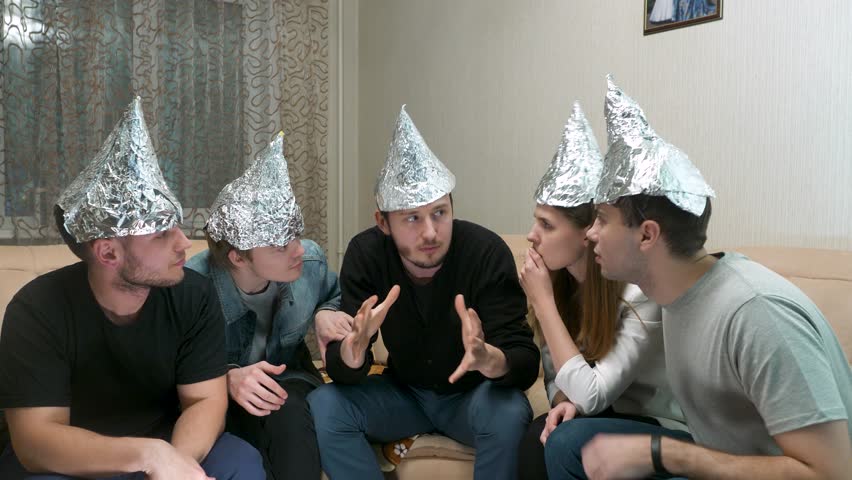
The incel community and radical feminists are extremists, plain and simple. They don’t even try to be reasonable. Like the extremists of a religion or political ideology, they cannot and will not be dissuaded. Their attitudes and conduct are built on a foundation of unceasing, uncompromising outrage.
This is where, ironically and fittingly, both incels and radical feminists intersect. They are, to a large extent, defined by their outrage. They despise a world that they feel has deprived them of something they deserve. They carry themselves as perpetual victims, trapped in a society that actively plots against them to keep them miserable.
You don’t have to look too far to see the similarities here. The incel community doesn’t even try to hide its blatant misogyny, just as radical feminists don’t even try to hide their overt man-hating. The targets of their hate are different, but the intent behind it is the same.
The hatred is a catalyst and a rallying point for those inclined to embrace more extreme forms of ideology. That hatred simplifies complex issues, allows them generalize large swaths of people, and believe without question that there’s a cabal of evil bullies actively plotting against them. They are basically the Alex Jones of gender conflicts.

It’s for that reason that few take them seriously, even within feminist and men’s rights communities. Even when a radical feminist claims all heterosexual sex is rape or an incel man claims that all women are sluts, they’re either ignored or written off as trolls. However, in wake of recent events, that’s getting somewhat harder.
Between the attacks in Toronto and the growing spread of outrage culture, both radical feminism and the incel community have many ways of making their voices louder and spreading their hatred. Like any extreme within an ideology, they will complicate or outright corrupt reasonable debate on reasonable issues involving gender.
I believe those issues should be discussed and I’ve tried to approach them on this site in as balanced a way I can, at least to the extent I can as a man and an aspiring erotica/romance writer. However, in the same way creationism obscures science, radical gender ideology obscures real gender issues.

It even goes beyond derailing otherwise important debates about relevant issues. In the one area where both incel men and radical feminists are most alike goes back to their attitudes. Beyond the hate and trolling, there’s one other trait that binds them. They embrace and cling to the idea of perpetual victim-hood.
Incel men believe they are victims of greedy, selfish women who refuse to give them the sex and intimacy they want. Radical Feminsts believe they are victims of a greedy, oppressive patriarchy that only exists to bully them and hold them back. In that context, they are always victims. They never have to claim a shred of responsibility. They can just blame their perceived oppressors.

That’s not just insulting to real victims. It’s flat out lazy. Incel men and radical feminists carry themselves as though other people must go out of their way to give them something, be it sex, justice, or reparations of some sort. They, themselves, don’t have to do anything. They just whine, complain, and shame others to get what they want.
I would call that approach childish, but that would be insulting to children. The absurdity of that mentality is impossible to overstate. However, and I think reasonable feminists and men’s right activists would agree, there are a few basic truths that we all must accept, regardless of our gender.
The universe is not fair.
Some people are born with more advantages than others.
Nobody owes you anything, be it sex or preferential treatment.
Respect, achievement, and merit must be earned and not given.
These are the simple, inescapable facts of life. We learn them at some point in our lives. Some take longer than others, though. What makes incels and radical feminists so similar, and so unworthy of respect, is how they utterly refuse to learn those lessons. As a result, they’re just setting themselves up for more frustration.
Filed under gender issues, human nature, political correctness, sex in society, sexuality
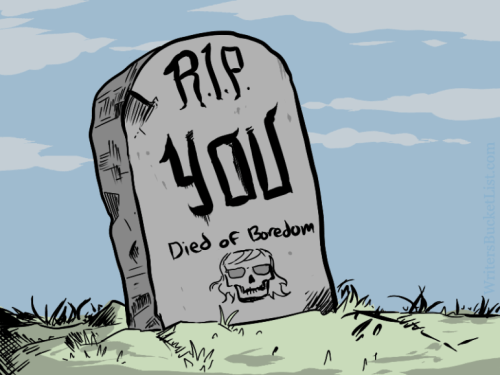
Whenever I talk about boredom, I make it a point to emphasize that it’s a powerful force that’s easy to overlook. In a society that’s full of distractions and ongoing outrage, it’s easy to shrug at the effects of boredom because it’s so easy to find something that keeps you from remembering just how agonizing it can be. I would argue that only makes us more vulnerable to boredom and it’s corrosive effects.
That said, I don’t intend to belabor the power of boredom more than I already have. I feel like I’ve made my case in calling it a potential plague of the future and a force with the ability to subvert the entire concept of Hell. Instead, I’d like to use the power of boredom as a critical tool of sorts, one that might prove useful for those seeking to avoid or exploit its influence.
I call it the Boredom Filter. It’s not unlike the Simpsons Filter that I’ve referenced before in that it’s a method of assessing a message or ideology in terms of how it’ll appeal to the masses. In that context, the Boredom Filter is kind of what it sounds like, but runs so much deeper.

It doesn’t matter if you’re a liberal, a conservative, a communist, a reactionary, a theocrat, or an anarchist. It doesn’t even have to be a political ideology either. It can be a philosophical underpinning like Marxism or a social movement like feminism. The Boredom Filter applies to it and, if used properly, can reveal just how viable that ideology is in the long term.
That is, after all, one of the most important measures of an ideology. Any idea, be it a social movement or a new philosophy, can enjoy a brief wave of success. It’s a matter of how well it endures over time that shows just how valuable or useful it is. From fad diets to one-hit wonders in music, the Boredom Filter help reveal whether an idea has what it needs to really last.

Applying the filter is actually fairly simple. It does require some speculation, a few quick thought experiments, and even a touch of brutal honesty. That might be difficult to contemplate for those immersed in extreme ideology. As I’ve noted before, people clinging to those ideologies will make any excuse to justify them.
With that in mind, here’s the process for the Boredom Filter. To ensure the best results, I urge those using it to be extra thorough.
Step 1: Assess the ultimate goals of the ideology and identify which elements may be prone to boredom.
Step 2: Imagine, for a moment, that all the goals of an ideology were achieved and integrated into a society.
Step 3: Within that ideologically pure society, assess how much conformity is required for it to work and contemplate the mentality of the common people residing within it who have no political power.
Step 4: Ask and honestly answer the question as to whether the lives those people are allowed to live, under the ideology, will get boring over an extended period of time.
Step 5: If the answer to the question in Step 4 is no, then the ideology passes the filter. If, however, the answer to the question in Step 4 is yes or even a probably, ask and honestly answer the question as to whether the ideology is flexible enough to adapt over time.
Step 6: If the answer to Step 5 is yes, then ideology passes the filter, but only to a point. If the answer to Step 4 is still yes and the answer to Step 5 is no or even probably not, then the ideology is doomed.
I understand that part of that process involves contemplating the boredom threshold for other people. That can be somewhat subjective. Everybody is wired differently. Some people can crunch numbers on spreadsheets all day and never feel bored. Others will get bored if it involves spending more than five minutes of reading. For some, it can get so bad that it requires medication.
That said, you don’t have to know or assume everyone’s threshold for boredom. When it comes to speculating on applying an ideology on a large scale, though, it helps to assume a fairly low threshold. That’s because, if history is any guide, people tend to get frustrated with any system that requires a significant level of conformity.

It may not seem like conformity to those who champion the ideology. It definitely won’t seem that way to those the ideology empowers to enforce it, be it a dictator, a religious zealot, or revolutionary. That makes applying the Boredom Filter for those contemplating the ideology all the more critical.
As an example, let’s use the Boredom Filter to examine the two most common political ideologies, liberalism and conservatism. Now, I know these ideologies mean different things to different people in different regions of the world. For the sake of this exercise, I’m going to try and keep things general.
For conservatism, I’m referring to the kind of conservatism espoused by right-wing, religiously-driven ideology that emphasizes traditional morality, gender roles, and free market economics. For liberalism, I’m referring to a brand of ideology that emphasizes secularism, evolving social norms, and economic systems that emphasize regulated management over free enterprise.

I know there are a lot of other intricacies to both ideologies, but it’s not necessary to account for every one of them. The most important aspect, with respect to the Boredom Filter, is knowing enough to speculate how it would function if implemented on a large scale. By that, I don’t just mean a small community or tribe. I mean on a scale of at least 100,000 people that is not totally isolated and has contact with the outside world.
With that in mind, let’s picture a society that’s a perfect model of conservatism. It’s basically the utopian world envisioned by Ben Shapiro, Rush Limbaugh, and Sean Hannity. Everyone goes to the same church, loves the same historical icons, favors the same social policies, condemns the same media messages, and lives in the same family structure. It’s basically “Pleasantville” for Republicans.

Does that world pass the boredom filter? If we’re applying it honestly, the answer is no. It doesn’t. Remember, that world involves a society in which monogamy is the only acceptable relationship, non-procreative sex is condemned, and scandalous media content is censored in the name of protecting children. It’s a world that does not lend itself to a diverse range of activities that alleviate boredom.
Eventually, a world where you have only a certain kind of sex, consume only a certain kind of media, and live a certain kind of lifestyle will get boring at some point. Some people might be able to cope, but others won’t. Even if they still manage, their kids and their grand-kids won’t stand for it. At some point, they’ll be so bored that they demand change, if only to offer a different kind of stimulation.
I’ll give a few conservatives a moment to fume on that assessment, but bear with me because I’m going to do the same to liberalism. You might think that liberalism would be more adept at passing the boredom filter. It’s ideology, at least the classic version, is built on freedom and individual rights. How can boredom possibly infect that?

Well, and I’m sure self-identified liberals will be just as upset, but this ideology doesn’t pass the Boredom Filter either. It’s more flexible in some areas, namely those involving social norms. Liberalism accommodates different family structures, artistic expressions, and social expressions. That certainly provides some of the flexibility necessary to alleviate boredom.
Where liberalism fails, at least in the context of modern liberalism, is how it tends to promote micromanaging of life, economics, and feelings. It may not favor censorship, but like conservatism, it does play favorites. The rise and growth of political correctness has really strained liberalism’s ability to pass the Boredom Filter and it may be getting worse.
In that liberal utopia that Bernie Sanders, Nancy Pelosi, and Rachel Maddow envision, there’s not just equality. There’s enforced equality. That equality is done in the name of fairness, but in trying to be so fair, it’s much harder for any person or idea to stand out. If nothing stands out, then everything becomes more monotone and monotone becomes boring.

Liberalism’s association with belaboring oppression and victimhood don’t help either. It’s not that fighting against oppression and protecting victims is a bad thing. Conservatives are against that too, albeit from a different angle. With liberalism, though, that effort has become clouded with endless virtue signaling that comes off as a never-ending struggle.
Even if it’s a struggle worth fighting, it’s going to get boring if there’s no nuance to it. Taken to an extreme, everything becomes too fair and too bland. Media isn’t offensive anymore. History, debates, and discourse are watered down. Add micromanaging the economy to some extent, even if it’s in the name of preventing exploitation, and you end up with the same economy in fifty years that you have today.
In the long run, the Boredom Filter undercuts pure liberalism just as hard as undercuts pure conservatism. I say pure because, contrary to what Fox News and the Huffington Post may claim, few societies in America or any other country not run by Dr. Doom are ideologically pure. Even in the most repressive regimes, there are some moderating forces.

Technically speaking, every political party in every country is moderate to some degree. The key is understanding the extent of that degree and using that as the basis for the Boredom Filter. From that, you can make a fairly accurate assessment of their goals. Some will even state them outright.
Use that as a guide when both applying the filter and contemplating the world this ideology is trying to create. A conservative world that has no porn, only one acceptable family structure, and one moral code that never changes is going to get boring. A liberal world where nothing offensive is allowed, the economy rarely changes, and life is micromanaged by government gets boring too.
It’s rare, if not impossible, for an ideology to ever get to the point where it can implement every policy it seeks and achieve every goal it pursues. That’s why boredom hasn’t destroyed conservatism or liberalism yet. However, the failure of extreme systems like communism and repressive right-wing dictatorships shows that such ideologically pure societies tend to be unstable, at best.

That instability may not always be related to boredom. However, the documented effects of boredom combined with extreme efforts to engineer that utopian society every ideology seeks make for some significant obstacles. For most, if not all, boredom presents an insurmountable obstacle that no ideology can overcome. By applying the Boredom Filter, it helps to uncover which ideology is more vulnerable to it.
Filed under human nature, philosophy, political correctness, religion, War on Boredom

It’s that time of year again. Hallmark loves it. The flower business loves it. You should love it too because it involves celebrating mothers, the most important women in our lives, by default. Appreciating them should involve more than just cards, chocolates, and flowers.
That can be challenging for someone like me because I happen to have an incredibly awesome mother who sets the bar insanely high. I consider myself incredibly lucky to have such an amazing woman to call my mom. She has done more than just teach me how to live, love, and thrive in this world. She has helped me appreciate the love of family, women, and everything in between.
Every Mother’s Day, I do what I can to let my mother know how much I love her. A big part of who I am comes right from my mother and I can’t thank her enough for that. As I’ve gotten older, she hasn’t asked for quite as much. I still like to deliver in my own special way.
To those of you lucky enough to still have your mother in your life, I encourage you to show that appreciation as well. To all the other hard-working, hard-loving mothers out there, this week’s edition of my Sexy Sunday Thoughts is for you. Enjoy and Happy Mother’s Day!
“Someone who claims to be bi-curious is just someone who is more flexible with their horniness.”

“Practically speaking, women who’ve given birth are MUCH more motivated to make sex worthwhile.”

“When you think about it, step-parents are the romantic and sexual equivalent of pinch hitters.”

“A woman flashing her tits makes men and babies excited for distinct, yet similar reasons.”

“A romance that endures is a romance that has meaningful discussions on the usage of nipple clamps.”

“Faith can move mountains, but orgasms keep people motivated.”

“A successful three-way has a lot in common with skilled juggling.”

Once again, to all the mothers out there and the children they bore, Happy Mother’s Day. These wonderful women helped make us and raise us. They help us learn to love and understand why it’s special. To my own mother, especially, thank you for making my world and the world around me more loving.
Filed under Sexy Sunday Thoughts

Whenever I get a little personal on this site, I often focus on two topics. One is how awful high school was for me. The other is how awesome my parents are. I’m sorry if it sounds like I’m bragging, but I’m just being honest and truthful. They really are that awesome and I intend to belabor that every chance I get.
As it just so happens, Mother’s Day is tomorrow and since I have such a wonderful mother, I’d like to share a personal story that I hope conveys a larger message about masculinity, in general. I promise this isn’t going to be another complex exploration about bogus topics like “toxic” masculinity or double standards. It’s just a simple story about my amazing mom and how she helped me grow into a better man.
There are a long list of stories I could share. Some of those stories I’m sure my mother would prefer I kept private. There are plenty others I’m sure my mom would love for me to share, if only to document some of the more memorable moments our family has shared over the years. Since I know she occasionally reads this site, I think she’ll agree that this is definitely one worth sharing.

That’s because it involves roller coasters. That’s not some elaborate metaphor. I’m dead serious. This is a story about me, my mother, and roller coasters. It’s kind of what it sounds like, but I promise it has other, more meaningful connotations that I think are wholly appropriate on the eve of Mother’s Day.
First, I need to provide a little context. This particular moment occurred when I was around ten-years-old. That’s relevant because that was the age when I was finally tall enough to ride most of the rides at amusement parks like Six Flags and Kings Dominion. As it just so happens, both are within a two hour drive of where we lived.
My mom, being the wonderful person she is, used that as opportunity to plan a day-long trip to Kings Dominion. I went with my younger brother, my aunt, and a cousin of mine. It was blazing hot, but being an energetic kid, I was too excited to care. I don’t even remember complaining with my mom urged me to put on extra sunscreen.

After spending about an hour just exploring the park, doing some small rides and playing some games, we came across a roller coaster that, to my 10-year-old mind, might as well have been Mount Everest. I’m not saying I was an overly fearful kid, but this was uncharted territory for me. My first instinct was not to go on such a ride.
To some extent, that was my default instinct to that point in my life. I know kids at that age can be both frustratingly reckless or annoyingly helpless with very little in between. It’s an age where kids still cling to the safety of their parents, but are just starting to feel that inclination to explore the world.
I was probably more reluctant than most kids my age. Both my parents and siblings would probably admit that I was a very self-disciplined kid, often to a fault. I did not like going out of my comfort zone and taking chances. I even complained when I had to, as kids are prone to do.

On that day at Kings Dominion, though, my mom gave me an extra push. She never shoved me or pressured me. She got encouraged me, getting excited about the ride so that I got excited too. Before long, that excitement overrode any fear or reservations I had. Thanks to that encouragement, I went on the ride with her and to this date, I feel like that was a pivotal moment in my young life.
At the time, though, it was just an incredible thrill. I loved it. I loved it even more than my mom promised. I remember getting off that ride, feeling dizzy and unable to stand. I probably looked like I was drunk, but I didn’t care. I had so much fun and so did my mom. We went on that ride again.
It was the first of many. From that day forward, my mother and I became the roller coaster aficionados of the family. Whenever we went to an amusement park, be it Kings Dominion, Six Flags, or Disney World, my mom and I would jump at the chance to ride the biggest, scariest ride. Sometimes friends, siblings, and cousins would join us. Other times, they would chicken out. My mom and I never did.

Those were wonderful times. They’re among some of the fondest memories I have with my mother as a kid. Beyond the thrills and adrenaline, though, I find those experiences had another effect on me. This effect was more personal, though. It also played a major part in the critical, yet often treacherous process of a kid growing into an adult.
By taking a chance on those roller coasters, doing something risky for once, my mom taught me a valuable lesson about being an adult and a man. She showed me that sometimes, we need to embrace a little danger. We need to leave the safety of the familiar and explore new, potentially hazardous experiences.
That kind of mentality takes both bravery and even a little foolishness. It’s a combination of traits often associated with masculinity, being willing and able to take those risks for new and exciting experiences. I’m not saying that men are the only ones who have such risk-seeking behavior. Women can be every bit as adventurous, as my mother so aptly demonstrated.

For me, the ten-year-old boy who still saw himself as such, those experiences marked the early steps of a more profound maturation process. It wasn’t just that I was now old enough and tall enough to ride all the roller coasters at most theme parks. I realized that my experiences didn’t just have to be kid-friendly experiences.
I could take chances, venture into once-forbidden areas, and explore life in ways I hadn’t dared. Doing that can be scary and sometimes requires a little encouragement, not unlike the kind my mother gave me that day at Kings Dominion. It can also be very rewarding, as the rush from an awesome thrill ride so wonderfully proves.
I was still a shy, reserved person, even as I entered adulthood. I still took longer than most to emerge from my shell. However, thanks to my wonderful mother and her loving encouragement to try out a few thrill rides, I understood what it meant to be an adult and a strong man.

To my mother, and all those wonderful mothers who encourage their children with the same love and care, I thank you. You helped teach me how to be brave, how to embrace the adult world, and how awesome roller coasters are. For that, I will be forever grateful. To her and to all the other mother’s out there, Happy Mother’s Day!
Filed under gender issues, Jack Fisher's Insights

The following is a review I wrote for PopMatters for Wonder Woman #46. Enjoy!

In case you missed the title of the article, I’ll ask the question again. When is it okay to exchange sex for favors? It’s not a rhetorical question. It’s a serious question about a serious issue in our culture that just so happens to be the premise of one too many porno scenes. I ask the question because I think it’s a lot more relevant now than it has been in recent years.
Concerns about exploitation, harassment, and corruption have never been greater. Some of that is a result of recent scandals. Some of it is a result of ongoing social movements that are a lot more sensitive to gender roles and expectations. Some of it is just a byproduct of living in an era of social media where it’s very hard to keep secrets.
I would argue that the relevance of this question has become even greater in recent years as attitudes towards sex have become more regressive in some areas. Depictions of beautiful women in the media and even beautiful women in video games have become controversial. It has created an atmosphere where everyone is more sensitive to how sexuality is depicted and pursued.

It doesn’t matter that those controversies rely heavily on egregious double standards that make extreme generalizations that can be both hypocritical and damaging. This is the world we live in. If you attempt to use your sexuality and sex appeal to gain favors, then that’s an issue. People have already lost jobs and had their lives destroyed because of it.
It’s understandable on some levels. Most reasonable people will agree that there’s a point where someone seeking a sexual favor from someone else is outright exploitation. There’s a reason why there are laws in place that say an employer can’t demand sex from an employee or risk losing their job.

Most who aren’t in positions of power probably agree that those laws should remain. However, they’re only part of a much more complicated dynamic. Within the context of the innate justice that most people have, there is a line between seeking a sexual favor and outright exploiting someone. It’s just not always clear where that line is.
Take, for instance, the classic casting couch scenario that plays out in so many pornos and Hollywood horror stories.
A beautiful, ambitious actress walks into a room. She badly wants a particular role. She’s willing to do anything to get it, even if it means sleeping with a producer. Being a legal adult, she offers this to the male producer. He accepts. They have sex and she gets the part. The actress furthers her career. The producer gets to have sex with a beautiful woman. Both are satisfied with the outcome.
Now, this particular manifestation of the scenario is probably the least distressing. The woman enters with a willingness to have sex in the name of furthering her career. The man is just as willing to accept her offer. You could even flip the genders and it would still work. Two consenting adults are each seeking something from one another. Sex is just the currency they use and in the end, they both get what they want.
There may still be some who think that scenario is a problem. Some may slut shame the woman for essentially whoring herself to get favorable treatment. Never mind the fact that a willingness to use your body to get favorable treatment is not an issue when it doesn’t involve sex, as every professional athlete can attest. They still see this use of sex to get favors as unfair.

Others may scorn the man for going along with it, using his influence to help the woman’s career in exchange for sex. Again, never mind the fact that being in positions of influence or just having a lot of resources in general will attract those seeking favors. Somehow, using sex as currency is still seen as unfair. Even so, it’s a stretch to say that anyone was exploited in this scenario.
The line may be obscure in that instance, but still clear enough. It’s fairly likely that sort of thing plays out in the real world, both in Hollywood and the business world. Joss Whedon even alluded to it during his own sordid scandal last year. However, it still represents a best case scenario, of sorts.
It doesn’t take too much tweaking to make that same scenario more distressing. Here’s another one that probably occurs fairly often in the world of Hollywood and business. For some, it may be a bit more difficult to discern the line.
A beautiful, ambitious actress walks into a room. She badly wants a particular role that would really help her career, but she wants to earn it on the merits of her skills. She auditions. The producer says she’s good, but so are several other actresses, a few whom have more experience than her. Her chances aren’t great.
Then, after the audition, the producer sits down with her and offers a deal. If she has sex with him, he’ll get her the part. The woman is reluctant, but the man doesn’t push it. He gives her a few hours to decide with the understanding that the offer expires in two hours. The woman agonizes over the decision, but eventually decides to go along with it.
She meets up with the producer. She willingly has sex with him. She doesn’t feel that good about it, but the man does what he promised. He gets her the part. The role really helps her career, just as she hoped. She still didn’t like that she had to sleep with the producer, but she doesn’t regret it. Both she and the man got what they wanted.
I imagine this scenario will generate more uncertainty, arguments, and even a little outrage. To some, the producer in that scenario sexually assaulted that woman, using his power to get her to sleep with him. To others, it may just be a simple case of having to jump through some unpleasant hoops to further your career.
The line in this case is a bit harder to identify. It is very much a quid pro quo exchange, the kind that would definitely result in a sexual harassment case if it occurred between an employer and an employee. However, the woman in this case is not an employee and an audition is not the same as a job. The man just has resources the woman wants for her own benefit. He gives them to her in exchange for something.

The fact the exchange involves sex is where the uncertainty comes in. You could also make the argument that there would be similar concerns if money is involved because that would constitute bribery, but that involves considerably different circumstances. It’s one thing to just pay for an opportunity, which isn’t as taboo, even if it’s unethical in many cases. It’s quite another for someone to offer their body.
On top of that, it’s fairly reasonable to assume there aren’t as many people who have those kinds of resources to bribe someone as there are people willing to have sex. It’s less a matter of legal constraints and more a matter of tangible assets. Most people only have so much money or skill to offer. Sex is one of the few inherently valuable acts that’s essentially built into us as a species.
Even if with those caveats in mind, it’s not entirely clear if there was outright exploitation in that scenario. Yes, the woman was reluctant and didn’t really like that she had to do it. However, she had a chance to refuse and even considered it. In addition, after she made the choice, she got what the producer promised. He delivered on his part. She delivered on hers.

That would change considerably if the man just slept with the woman and didn’t get her the part. In that case, it probably would count as exploitation because he was the only one who got what he wanted and the woman got nothing. Unless the woman got the man to promise on tape that he would get her the part in exchange for sex, she probably would have little recourse.
There are plenty of other distressing scenarios I could list, but I won’t go over the entire spectrum of sexual favors. I present them and the potential complications they incur to add substance to the initial question. Most people agree that exploiting someone for sex is wrong. People are a bit less certain when it involves consenting adults using sex to exchange favors.
It’s a question that covers so many issues, from concerns about prostitution to how we craft marriage laws. No matter how we answer that question, there will be people in this world who have resources and opportunities. There will also be people willing to perform sexual favors in exchange for one or both. It’s going to happen. It’s just a matter of understanding where the line is now and where it should be in a just and fair world.
Filed under gender issues, human nature, sex in society, sexuality
Wubalubadubdub!
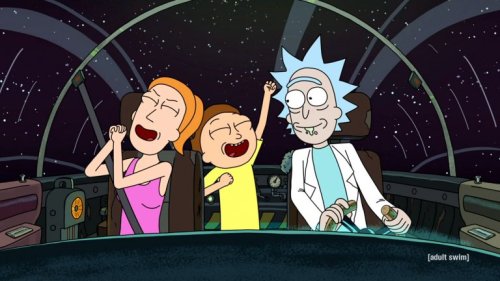
If you know what that word means, then you know this is about “Rick and Morty,” one of my favorite shows and a frequent topic of nihilistic insight. I’ve got no deeper insight or philosophical explorations now. I just have some very exciting news that “Rick and Morty” fans like me have been waiting for.
The show has been renewed for a fourth season. In fact, it’s even more schwifty than that. According to the Hollywood Reporter, the show has been renewed for 70 episodes! My heart and soul are currently awash in joy and szechuan sauce.
I couldn’t be more thrilled. I look forward to many more years of all things “Rick and Morty” and I look forward to writing more sexy articles about it. Until then, grab yourself some hard liquor, watch some interdimensional cable, and kick back. I look forward to seeing “Rick and Morty” show us what they got.
Filed under Rick and Morty


