Tag Archives: psychology

How Negative Expectations May Ruin “X-men: Dark Phoenix” (For The Wrong Reasons)

SophieJean1

There’s an important, but understated difference between negative expectations and a self-fulfilling prophecy. Expectations are like reflexes. They’re somewhat involuntary, reflecting our assumptions and understanding of a situation. A self-fulfilling prophecy involves actual effort. Whether intentional or not, it guides our perceptions in a particular direction, one often associated with a particular bias.

To some extent, a self-fulfilling prophecy is akin to self-hypnosis. We convince ourselves so thoroughly of a particular outcome that to consider otherwise would be downright shocking, if not distressing. That’s why it’s so difficult, at times, to escape a particular expectation, especially if it’s negative.

I bring up expectations and self-fulfilling prophecies because they do plenty to shape our reactions and attitudes, especially in the media we consume. For better or for worse, often varying from person to person, we tend to determine how much we enjoy something before we even experience it.

Sometimes, it works to the benefit of a particular movie, video game, or TV show. The powerful brand of the Marvel Cinematic Universe is built heavily on the expectations that a long list of quality, well-received movies have established. Conversely, the DCEU struggles with negative expectations, thanks largely to a catalog of movies that have failed to consistently deliver.

Then, there’s “X-men: Dark Phoenix.” It’s a movie for which I’ve made my passion and my excitement very clear over the past year. It’s also a movie that is in the midst of an emerging crisis. It’s not the kind that involves negative press, actors melting down on set, or sordid sex scandals, for once. Instead, it’s an issue that involves negative expectations that may very well become a self-fulfilling prophecy.

As big an X-men fan as I am, I don’t deny that the X-men franchise is not on the same level it was in the early 2000s when it dominated the box office alongside Spider-Man. Even though I loved “X-men: Apocalypse,” I can’t deny it under-performed and underwhelmed.

Despite that, “X-men: Dark Phoenix” has more going for it. It’s attempting to tell the Dark Phoenix Saga, the most iconic X-men story ever told. Moreover, it’s attempting to tell that story after it botched it horribly in “X-men: The Last Stand.” Even the director, Simon Kinberg, has gone on record as saying that he wants to “X-men: Dark Phoenix” to succeed where the last one failed.

Given how rare that kind of humility is in Hollywood these days, X-men fans and fans of superhero movies in general have every reason to expect better things from this movie. Given how low the bar is after “X-men: The Last Stand,” I’m more optimistic than I dare to be when it comes to comic book movies.

Unfortunately, that sense of optimism seems to beg getting less and less prevalent. Whether due to the underwhelming performance of “X-men: Apocalypse” or a growing impatience to see the X-men join the MCU after the Disney/Fox merger is complete, there’s a general sentiment that this movie is going to be bad.

I see it on popular YouTube channels. I see in the many comic book message boards I frequent. The overall consensus is that this is a Marvel movie that isn’t part of the MCU. Therefore, it’s going to be terrible. That is, by every measure, a terrible excuse to dismiss a movie, especially when we haven’t even seen a trailer.

To make matters worse, a recent string of leaks from an alleged test screening revealed details that have only fueled those negative expectations. For reasons that I’ll make clear in a moment, I won’t list the details of those links. I will, however, offer a direct quote that aptly sums up the prevailing attitude for this movie.

“I do believe some things won’t change. What can’t change is the movie being really underwhelming. Really lower your expectations because this one is not good.”

This news, if accurate, is not encouraging to anyone hoping to see a well-done Dark Phoenix Saga on the big screen. To make matters worse, those who already had negative expectations about this movie have even more excuses to resent it.

As I’ve noted before, people tend to cling to excuses that justify their preconceived notions. It doesn’t even matter if the excuse is true. Once they have it, they cling to it. It’s usually not done out of malice. It’s just a lot easier to keep thinking what you’ve already thought rather than adjust your expectations.

In this case those, the story surrounding the leaks has already confirmed to be untrue. That leak came from a Reddit post, of all things, which is akin to getting your news from 4chan. On top of that, and this is a testament to Reddit’s users, the mods have stated outright that the user was not credible. This is an exact quote.

Apparently test screen guy is Atlanta Filming, created an account and sent fake spoilers/leaks. Trying to discredit other bloggers because he wants to be “the only legit source”.

If that weren’t telling enough, it was already announced back in March that the movie was going to undergo reshoots in August. Now thanks to “Justice League,” reshoots have gotten a bad name, but they’re a fairly common practice. Even the heavily-hyped, positively-perceived “Avengers 4” is scheduled for reshoots.

Even if those leaks were accurate, chances are the cut of the movie shown at test screenings isn’t the final cut. Kinberg himself has said that the reshoots are intended to shore up the final product, as one would expect of any piece of art. It sounds so reasonable and logical.

That still doesn’t matter, though. It doesn’t change the expectations. This movie still isn’t meeting the impossible set of criteria that fans spoiled by the MCU have so unreasonably set. It’s not in the MCU, nor is it being guided by Kevin Feige. Therefore, it must be terrible.

It’s unfair, unreasonable, and just plain asinine to judge “X-men: Dark Phoenix” by those standards, especially with reshoots to come and no official trailer. At this point, the negative expectations are so heavy that they’re starting to sound more and more like a self-fulfilling prophecy.

With that being the case, I feel like I can predict the reactions from people once the trailer drops. Sure, there will be some like me who are eager to give this movie a chance after what happened with “X-men: The Last Stand,” but I think there will be more comments like this.

“It’s not the MCU. I’ll pass.”

“X-men Apocalypse sucked! I’m not even giving this one a chance.”

“To hell with this movie! Just let Marvel have the rights back already! Fox can’t do anything right!”

Now, far be it from me to defend Fox, the same company that gave us “Wolverine: Origins,” but these are all intensely petty reasons to judge a movie. I say that as someone who is guilty of setting low expectations for movies, cartoons, comics, and TV shows. Hindsight has done plenty to reveal which of those were the result of self-fulfilling prophecies. That still doesn’t make the expectations any less absurd.

Even for those who aren’t just ardently opposed to any superhero movie that isn’t a product of the MCU, I think I can predict the criticisms they’ll probably levy against this movie even after it comes out. Chances are, they’ll be every bit as petty and include comments like this.

“It’s too dark and not cosmic enough!”

“It’s too cosmic and not grounded enough!’

“It’s too much like the comics!”

“It’s not enough like the comics!”

“It doesn’t have enough [Insert Favorite Character Here]!”

“It has too much [Insert Intensely Hated Character Here]!”

There will probably be plenty more excuses for hating this movie, far more than I can list. It doesn’t even matter how subjective they are or how empty they may be. People who are determined to hate something will find an excuse that satisfies their psyche and vindicates their feelings. Anything else would require that someone actually re-evaluate their expectations and that’s just untenable.

It’s frustrating and tragic that a movie or any piece of media would be subject to this kind of debasement before it’s even completed. It’s one thing for a movie to face skepticism because of production troubles, “Solo: A Star Wars Story” being the most recent example. For a movie whose primary crime is not being in the MCU, that’s just plain absurd.

In terms of the bigger picture, it’s good for superhero movies, as a whole, if “X-men: Dark Phoenix” succeeds. It’s unhealthy for the genre if the MCU is the only acceptable avenue for quality superhero movies. We’ve seen with “Wonder Woman” that it is possible for a superhero movie to succeed in a world that doesn’t have Robert Downy Jr. or Chris Pratt.

X-men: Dark Phoenix” deserves the same chance. That’s why I intend to keep my expectations high, but cautious for this movie. Even if it turns out to be good, though, I worry that it’ll be undercut by too many people who are too eager to hate it. It would be both a tragedy for the movie and all those involved, as well as a bad omen for the genre as a whole.

5 Comments

Filed under Comic Books, Jack Fisher, Superheroes, media issues, movies, X-men

Profiles In Noble Masculinity: Hank Hill

nol3t

When it comes to paragons of masculinity, the standards tend to skew towards characters who crank the testosterone levels up to the maximum and even go a little bit beyond. From mythical figures like Hercules to modern icons like James Bond, it often seems as though that a truly masculine man has to exceed some lofty standards.

While there’s certainly a place for that kind of masculinity, I don’t think that has to be the only criteria. I believe there’s room for a more subtle, yet equally strong manifestation of manliness. They don’t have to be the kind of men who sweat raw testosterone and shave with shards of broken glass. They can be their own man and still embody respectable masculinity.

I chose Joel from “The Last Of Us” for my first profile in noble masculinity primarily because his example was not very subtle. He embodied the masculine values of strength, survival, fatherhood, and compassion in ways that are easy to highlight within a larger narrative. It didn’t take much work to make my case for Joel’s noble traits.

For my next profile, though, I’ve chosen a character who presents a tougher challenge. He comes from a narrative that’s very different from Joel’s. Instead of a post-apocalyptic world where everything comes back to survival, his is a more contemporary story from the far less dire setting of suburban Texas.

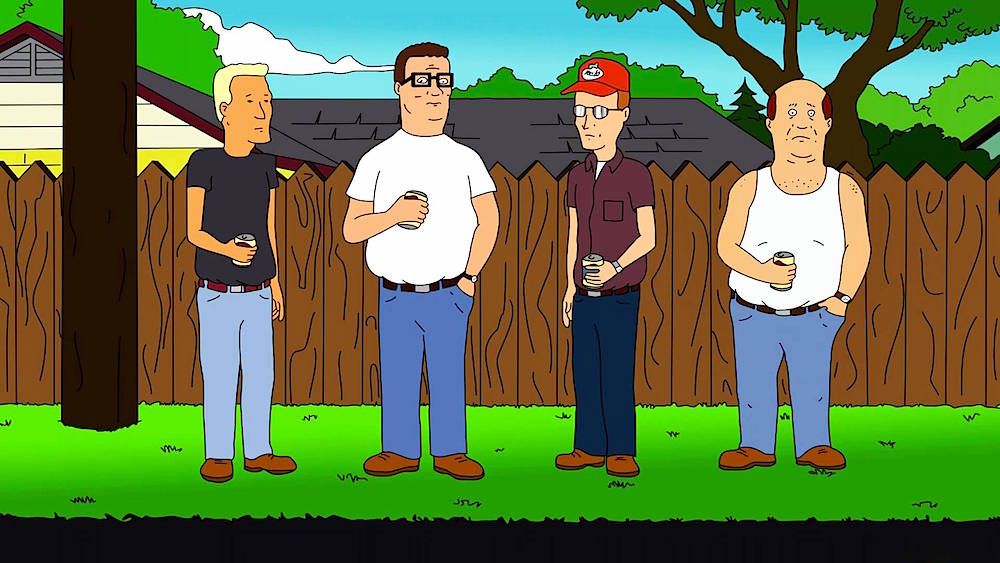
His name is Hank Hill. He sells propane and propane accessories. He’s a proud American, a hard worker, a die-hard football fan, and the star of “King of the Hill.” In the pantheon of modern-era animation, it’s a show that doesn’t usually rank near the top for most people, but the fact it lasted 13 years proves it did something right and Hank his is one of those things.

I consider him another example of noble masculinity. He’s one that differs considerably from Joel in “The Last Of Us,” but I consider him an example none-the-less. Over the course of 258 episodes and 13 seasons, Hank establishes himself as one of those rare characters who manages to be compelling and respectable without being too flawed.

He’s not a bumbling dad, nor is he self-absorbed narcissist always looking to get ahead. Hank Hill, at is core, is blue collar family man who loves his job, loves his wife, and tries to make the most of his situation. He’s not a whiner. When he sees a problem, he tries to fix it. When he makes a mistake, he owns up to it, even if he stumbles along the way.

He tries to do all of this while surrounded by characters who have a wide range of issues, flaws, and eccentricities. One of his neighbors is a self-loathing loser obsessed with his wife. Another is a chain-smoking paranoid idiot who doesn’t know his wife cheats on him. The other is Boomhaur. Actually, Boomhaur is awesome.

Beyond his idiot friends, Hank also deals with a know-it-all wife with an inflated ego, a lazy son who goes out of his way to under-achieve, a bimbo niece who attracts all the wrong people, and an eccentric, misogynistic father who hates his guts. The fact that Hank manages to maintain such a calm, collected demeanor most of the time is a testament to his strength.

That strength, however, isn’t exactly obvious if you just look at his persona on paper. In fact, if you just skim the basics, Hank doesn’t come off as a very interesting character, let alone one who fits the criteria for noble masculinity. He’s conservative, he’s frugal, he doesn’t exude charisma, and he’s a staunch defender of law, order, and the status quo.

Hank isn’t the kind of man who willingly goes on adventures, acts on an impulse, or seeks to radically change the world around him. He actually likes his world, for the most part, and actively defends it from those who try to upset it. This has led to more than a few conflicts throughout the show, but Hank’s ability to resolve those conflicts reveals that there’s much more to his character.

It’s in those efforts where Hank’s nobility, as both a man and a character, really shows. While he is a staunch traditionalist who goes to church, votes Republican, and is extremely uncomfortable with sex, he’s also remarkably tolerant of those who don’t share his views.

Throughout the show, he encounters people who are overtly promiscuous, exceedingly liberal, and don’t care much for football. At no point, though, does he try to change those people or convince them that they’re flawed. Sure, he’ll threaten to kick an ass every now and then, but he usually reserves that recourse for those who most deserve it.

When he’s not kicking asses that deserve to be kicked, Hank is also demonstrates an ability to reserve judgment and not make anything too personal. Throughout the show, he’s encountered crazy right-wing religious types, flamboyant homosexuals, and unapologetic womanizers. By nearly every measure, he deals with them in a way that’s respectable and fair for the most part.

For the most part, indeed.

Hank doesn’t condone or condemn their behavior. He’s more concerned with the consequences they have on others. In his view as a freedom-loving American, what people choose to do is their business, provided they understand and accept responsibility for the consequences.

Throughout the course of the show, he’ll point out or remind others of those consequences. He’ll even help some confront it. However, he doesn’t make it personal. He doesn’t whine about it. He doesn’t try to get everyone to embrace his way of doing things. Hank basically lets other people be free and live their lives.

It’s not the same as slaying giant monsters or rescuing princesses from towers, but it’s noble in its own right. In the context of masculinity, Hank Hill’s ability to remain strong, stern, and confident in the face of so much chaos from so many characters, each with plenty of quirks and eccentricities, is a testament to the kind of man he is.

He’s a man who takes pride in his work, leads by example, and tries to be the voice of reason in a world full of unreasonable people. He’s willing to be brave and bold when he has to be. He’s also willing to take responsibility when others won’t or refuse to. As a man, he’s someone who earns the respect of others and does plenty to maintain it.

That’s not to say that Hank is without his flaws. Sometimes, he is traditional to the point of being petty. In one episode, the entire plot was driven by his dismay at another family sitting in his non-assigned seat at church. He can also be controlling, especially with how he raises his son, Bobby.

On more than one occasion, he’s been an obstacle for Bobby’s endeavors. His famous refrain, “That boy ain’t right,” is often said in the context of him wanting to guide Bobby down a certain path. Most of the time, though, he does so in a way that’s appropriate for a caring father. Other times, though, he gives the impression that he wants Bobby to be just like him.

Even with these flaws, Hank Hill still commands and earns respect. As a man, a father, and an American, he checks most of the boxes in terms of noble masculinity. He’s strong, responsible, hard-working, and accepting of other peoples’ strengths and flaws. He’s a man worthy of admiration and the fact he knows propane is a nice bonus.

4 Comments

Filed under gender issues, media issues, noble masculinity, political correctness

Boredom: How It Can Shape (And Subvert) Religion

Praying hands

Whenever I talk about boredom, whether in the context of the present or a future where it’s a full-blown plague, I often belabor how it’s effects and impacts are understated. That’s somewhat unavoidable. Boredom, by definition, requires an environment of limited, monotonous drudgery. Most people see their lives as inherently hectic so the boredom seems like a distant concern.

Hectic or not, everyone is still vulnerable to boredom’s corrosive effects. Those effects are well-documented and it’s part of why solitary confinement is considered torture. Those same effects can shape heroes, villains, and eccentric mad scientists, alike. It can also be a factor in determining the long-term viability of an ideology.

That last detail is something I attempted to explore in an earlier article where I introduced the concept of the Boredom Filter. Simply put, by contemplating an ideology taken to its ultimate end, the Boredom Filter can reveal whether that ideology can survive in a world where humans despise boredom and will do anything, including horrific crimes, to alleviate it.

While researching that article, I originally intended to apply the filter to religion as well. I knew that was sure to enter some extremely sensitive areas. Talking about identity politics and sexual taboos is tricky enough. Adding religion to the mix is like adding a bit of nitroglycerine to a burning pile of napalm.

On top of that, I think religion in its general form is somewhat distinct from ideologies like liberalism, conservatism, feminism, and even libertarianism. Those ideologies are philosophical or logistical tools that present themselves as guides or interpretations of social phenomenon. Religion also does that to some extent, but has a broader scope.

Religion doesn’t just cover methods for making sense of society and the universe, as a whole. Unlike an ideology that can be taught, learned, or studied, religion is a lot more subjective and dependent on personal and shared experiences. Even though religious affiliation is in decline, it’s still an influencing force on society.

Whether or not that influence grows or wanes is not the point. My focus, in this case, is to show how religion is shaped by boredom. I also intend to use it show how boredom can subvert the core tenants of a religion, if it’s followed strictly.

Before I go any further, I want to make clear that I’m not out to condemn or demean any particular religion or its adherents. I’m making a concerted effort not to play favorites here. If it sounds like I’m being unfair or too harsh to a particular religion or faith, I apologize. We all have our biases. I’m not particularly religious so I’ll try to remain objective as possible.

With that out of the way, I feel it’s important to establish one particular aspect of religion that sets it apart from political or philosophical ideologies, in terms of how boredom effects it. Religion, and religious experiences, are extremely subjective. You could argue that they’re entirely subjective.

One individual can go to a church on Sunday, listen to a sermon, and be incredibly moved on a personal level. To them, it could be one of the most intense experiences they could have. Another person who is as healthy and sane as the other can sit through that same sermon and be bored out of their mind.

It’s that subjective disparity that makes it difficult to apply the Boredom Filter. However, even with that disparity, boredom is still an influencing factor. A religion that evokes more of those intense experiences in a large number of people will likely be successful and pass the Boredom Filter. One that only evokes those experiences in a small group will only have limited appeal.

That’s why repressive cults usually only appeal to a handful of people. If you’re in a tight-knit group that’s full of solidarity and intense tribalism, it’s possible to get around boredom, if only because members are too scared or too brainwashed to escape. For larger religious organizations, boredom is a bigger issue because appealing to a lot of people means ensuring they don’t get bored.

When assessing an ideology with the Boredom Filter, it’s relatively easy to speculate on what their idealized society is because most ideologies clearly state those goals. Communists want a communist utopia. Liberals want a liberal utopia. Libertarians want a libertarian utopia. With religion, there’s not a clear endgame for the most part.

Sure, some religions like Christianity and Islam preach spreading the faith, if not converting the entire world’s population. Others either don’t emphasize it in their theology or only use it to the extent that it has to market itself in a modern economy. When applying the Boredom Filter, though, it’s important to be targeted.

By that, I mean it can’t just apply to what a holy book says or what sort of ethics certain religious icons preach. It has to apply to how it’s actually practiced. There are so many varying sects and denominations within a particular religion. Not all of them practice the same way or take their holy texts quite as literally.

That, more than anything, is the key to determining whether the Boredom Filter will impact a particular form of religious expression. Even if it passes, though, it can also reveal how that form of expression is shaped. It’s rarely overt, but the fact major religions have endured longer than most ideologies shows that a religion is more willing to adapt than it claims.

For a simple example, let’s apply the filter to the most common form of evangelical Christianity, as practiced by the religious right in America and espoused by religious leaders like James Dobson from the Family Research Council. They favor a brand of Christianity that favors a very strict form of religious morality.

It doesn’t take much speculation to see that this form of Christianity doesn’t pass the Boredom Filter. This brand of Christianity seeks one particular manifestation of family, one manifestation of gender, and one manifestation of personal conduct. That includes no promiscuity, no cursing, no porn, and no unholy behavior.

Even if that one manifestation of society is a particularly good one, it’s not hard to imagine people getting bored with that. At some point, they’re not going to be as moved when they go to church. They’re not going to be as excited about consuming the same Christian-friendly media or having sex with the same person for the same reasons again and again. Boredom will set in for many people. It’s unavoidable.

The same issue occurs when you apply the filter to fundamentalist Islam, especially the kind espoused by modern extremist groups. They may use a different holy book and employ different religious practices, but the manifestations are the same. It promotes a society of strict, rigid conformity for large numbers of people, regardless of their diverse personalities, passions, and proclivities.

Even when these standards are brutally enforced by state-sanctioned religious police, there’s no escaping the boredom. People may still conform out of fear for their lives, which is usually a stronger motivator. However, it only goes so far in terms of creating loyal, passionate adherents. In general, people who conform out of fear can only be so sincere.

In a sense, the fact that some of these religious ethics have to be enforced with fear and violence, be it from the police or threats of eternal damnation, is a tacit acknowledgement that those ideals are not tenable to a large group of people. Without that fear, the boredom alone will make them seek other experiences and no religion can survive like that.

That still begs the question as to why some religions manage to survive, even the repressive ones. On paper, the Catholic Church has pretty strict moral tenants. The Vatican opposes premarital sex, masturbation, divorce, homosexuality, abortion, contraception, and free expression that denigrates or defames the church.

However, the difference between the Catholic Church and the extreme forms of Islam and Christianity is that they can’t do much to enforce that morality. They could in previous centuries, but these days the Vatican’s moral proclamations are largely symbolic. They preach against immoral behavior, but don’t directly combat it.

To some extent, that might have helped the Catholic Church endure. By losing it’s authoritarian muscle, it had no choice but to adapt its theology to accommodate less-than-pure adherents. It’s not quite as flexible as some would prefer, but it has shown a willingness to revisit old traditions in the name of evolving with the times.

Other religions have done a much better job of that. Denominations like Reformed Judaism and Unitarian Christianity have been much more receptive to adapting their theology to the changing times. While this may upset some traditionalists, so much so that they won’t even consider those denominations as true adherents, they do win in one aspect. Adapting their theology keeps it from getting boring.

Sure, church on Sundays may still feel like a chore, but at least you won’t have to listen to the same fire and brimstone rhetoric every week. That counts for something when applying the Boredom Filter. Any sect or denomination that doesn’t do that, though, will only ever have limited appeal, at most.

In that sense, Islam is more vulnerable to the Boredom Filter. Traditional Islam is basically in the same domain where Catholicism was several hundred years ago. It still enforces strict adherence of its traditional method in many Islamic countries. Like the Vatican, however, the enforcement isn’t always on par with the Spanish Inquisition.

Within these countries, those traditions and the state-sanctioned enforcement of them are often challenged or overlooked. To some extent, the Boredom Filter is already having an impact because shifting demographics and generational clashes are leading some within Islam to become disillusioned with those rigid traditions. I’m not saying boredom is the sole cause of it, but like Christianity, it is a likely factor.

Islam’s ability to adapt to these trends will determine whether or not it will continue to endure like Catholicism. There are some making a genuine effort, much to the detriment of their safety. Whether or not these adaptations are sufficient will have depend heavily on its ability to pass the Boredom Filter.

I don’t want to speculate too much on the future of Islam, Christianity, or other faiths. I also don’t want to give the impression that the Boredom Filter is definitive, especially for something like religion. I present it as simply another tool to help make sense of, and possibly speculate on, the impact of religion.

That impact will continue to incur other impacts on society, even as religion continues to decline. It will always have a certain appeal to certain people. If it’s going to have appeal to more people in a future where people are more informed and possibly enhanced, it would be both wise and necessary for it to pass the Boredom Filter.

1 Comment

Filed under human nature, philosophy, religion, sex in society, War on Boredom

On Nihilism And Love (And How Nihilism Enhances Love)

reverse-light-happy-couple-in-love-at-sunset-men-and-women_nj0u1rvxx__f0000

Whenever I talk about nihilism, it’s usually in the context of how it could effect an emerging generation or as an excuse to talk about one of my favorite cartoons. I try not to incorporate it into too many discussions, mostly because nihilism has some pretty sullen connotations. Whether you believe it or not as a philosophical principle, discussions about it can get pretty depressing.

Considering the underlying premise of nihilism, which is that life and existence has no inherent meaning, that’s somewhat unavoidable. At the same time, though, nihilism can provide a revealing context. Due to its inherently harsh nature, it can cut through the empty rhetoric and needless complications that overly complicate a subject. That can be exceptionally useful for a concept as broad and powerful as love.

Yes, I am going to talk about love and nihilism. I promise it’s not going to get as depressing as you expect. If anything, I believe that love and nihilism are a potent mixture that, when framed properly, can actually enhance both concepts.

Being an aspiring erotica/romance writer, I’m an unapologetic about my fondness of romance. I like to think I’ve made that abundantly clear. However, the more I write about love, the more I notice how often love gets twisted and contorted into something that undercuts its fundamental value.

That’s not to say I don’t enjoy the occasional fairy tale romance that makes love seem like this unstoppable force that is ordained by angles and guided by unicorn magic. That sort of thing has its place alongside stories of giant robots and superhero movies. In the real world, though, pursing that kind of love is like pursuing actual fairy dust. It’s woefully unrealistic and potentially damaging to someone’s psyche.

That’s where nihilism can provide an important filter, of sorts. At its core, nihilism strips away the magical thinking people ascribe to certain phenomena, be it love, honor, friendship, or happiness. From a purely nihilistic point of view, love is just another manifestation of brain chemistry within a larger manifestation of social dynamics.

On paper, that’s pretty cold. If it were incorporated into a fairy tale or an erotica/romance novel, it wouldn’t come off as very romantic. If you take a step back and go beyond what’s on paper, though, that nihilistic insight actually reveals the larger complexities of love.

To illustrate, think back to some of the most iconic love stories of all time, both classical and contemporary. Look at the epic love of Romeo and Juliet, Jack and Rose from “Titanic,” or Superman and Lois Lane. These are all held up as romantic ideals, the kind that make real world love seem inane by comparison.

However, applying a little nihilism to these narratives and something happens to these ideals. The strength of all these epic love stories is how passionate the characters feel for one another and all the obstacles they overcome to be together, sometimes at the cost of their own lives. That makes for an epic tale, but nihilism exposes a major oversight.

If we’re going to look at love as just a series of chemical reactions in the brain between two people, then we cannot overlook the other reactions surrounding it. To do so would mean ignoring real, tangible manifestations of reality. Since that’s the only manifestation that nihilism acknowledges, it has to accommodate those other feelings alongside love.

This is important, in terms of expanding love, because it establishes that it’s just one of many potential feelings that may manifest within the brains of two individuals. The mechanisms are the same. It’s just brain matter interacting with other brain matter. Sure, that reduces the biology of love to brain chemicals, like any other emotion, but at the same time it incorporates into all the other emotions in play.

In the cold, unfeeling world of nihilism, the mechanisms of love don’t carry any greater weight than the mechanisms of hate, happiness, sadness, and annoyance. While that’s bad news for fairy tales, it’s good news for love in a real world where love spells don’t exist and true romance rarely forms from a single kiss at the gate of an airport.

In that world, the basic brain chemistry of love can’t be enough. It’s necessary for two people to also get along in the sense that they can relate to one another, interact with one another, and deal with one another on a day-to-day basis. Those mundane, unromantic factors are rarely part of an epic love story, but an important part of a healthy romance.

When we conflate the meaning of love to the level of an old Beatles song, we undercut those less fanciful aspects of love. We focus only on those moments of intense passion that find their way into romance movies. Some, like my favorite romance movie, do a better job exploring other moments. Most though, along with music that blurs the line between love and obsession, don’t send that message.

That kind of love gives the impression that it’s the most meaningful experience anyone could have. It becomes the primary goal of every individual, seeking that special love that somehow makes them feel complete and content. To not have it is to be denied your very reason for being. It’s something you should dedicate every ounce of energy to, even at the expense of every other pursuit.

That romantic ideal shatters under the weight of nihilism because in that worldview, nothing matters to that degree. The very notion that anything would matter that much requires self-delusion to an egregious extent. Again, it’s a cold way of looking at the world, but it reveals the true tenants of a healthy, fulfilling love.

By mixing love and nihilism, love can no longer be that one feeling that gives someone a sense of purpose. That’s because, in the world of nihilism, nothing gives anything or anyone inherent purpose. Everything is just there by the random chaos and exists only temporarily, only to eventually perish at the eventual heat death of the universe.

Sure, that means that love can no longer be eternal or everlasting like a typical Disney movie, but that’s actually a good thing if love is to have any value. By rendering love a finite, temporary feeling, it becomes more precious on the basis of its rarity. The fact that it is so temporary is what makes it a powerful feeling to those who experience it.

It also leaves room for all the other feelings that go into a strong, healthy romance. Things like growing together, learning from one another, and complementing each other become part of an ongoing process that two people experience. For some, it can last a lifetime. For some, it can barely last a day.

In the long run, they don’t have inherent meaning in a nihilistic world. Whatever meaning love ultimately has is dependent on those who experience it. That means people can’t just rely on the fact that they’re in love and expect it to solve their problems. It means they actually have to work on preserving that meaning they’ve created in a cold, unfeeling world.

To some extent, that gives love true value and not just the inflated value portrayed in movies. By looking at love through the lens of nihilism, it’s possible to understand it for what it truly is, in relation to other experiences that sentient beings share. It’s no fairy tale, but it’s real in that we feel it and because we feel it, we give it meaning.

As a lover of romance and telling sexy stories, I find that uniquely inspiring. We can’t rely on an unfeeling, uncaring universe to give meaning to our love lives. We, as finite and fragile beings, have to do that ourselves. Those willing to take love as it is and not what we wish it were are better able to craft that meaning. If we can make it sexy along the way, then that’s just a nice bonus.

4 Comments

Filed under human nature, Marriage and Relationships, philosophy, romance

The Boredom Filter: How To Know If Your Agenda/Politics/Ideology Is Doomed

image1

Whenever I talk about boredom, I make it a point to emphasize that it’s a powerful force that’s easy to overlook. In a society that’s full of distractions and ongoing outrage, it’s easy to shrug at the effects of boredom because it’s so easy to find something that keeps you from remembering just how agonizing it can be. I would argue that only makes us more vulnerable to boredom and it’s corrosive effects.

That said, I don’t intend to belabor the power of boredom more than I already have. I feel like I’ve made my case in calling it a potential plague of the future and a force with the ability to subvert the entire concept of Hell. Instead, I’d like to use the power of boredom as a critical tool of sorts, one that might prove useful for those seeking to avoid or exploit its influence.

I call it the Boredom Filter. It’s not unlike the Simpsons Filter that I’ve referenced before in that it’s a method of assessing a message or ideology in terms of how it’ll appeal to the masses. In that context, the Boredom Filter is kind of what it sounds like, but runs so much deeper.

It doesn’t matter if you’re a liberal, a conservative, a communist, a reactionary, a theocrat, or an anarchist. It doesn’t even have to be a political ideology either. It can be a philosophical underpinning like Marxism or a social movement like feminism. The Boredom Filter applies to it and, if used properly, can reveal just how viable that ideology is in the long term.

That is, after all, one of the most important measures of an ideology. Any idea, be it a social movement or a new philosophy, can enjoy a brief wave of success. It’s a matter of how well it endures over time that shows just how valuable or useful it is. From fad diets to one-hit wonders in music, the Boredom Filter help reveal whether an idea has what it needs to really last.

Applying the filter is actually fairly simple. It does require some speculation, a few quick thought experiments, and even a touch of brutal honesty. That might be difficult to contemplate for those immersed in extreme ideology. As I’ve noted before, people clinging to those ideologies will make any excuse to justify them.

With that in mind, here’s the process for the Boredom Filter. To ensure the best results, I urge those using it to be extra thorough.

Step 1: Assess the ultimate goals of the ideology and identify which elements may be prone to boredom.

Step 2: Imagine, for a moment, that all the goals of an ideology were achieved and integrated into a society.

Step 3: Within that ideologically pure society, assess how much conformity is required for it to work and contemplate the mentality of the common people residing within it who have no political power.

Step 4: Ask and honestly answer the question as to whether the lives those people are allowed to live, under the ideology, will get boring over an extended period of time.

Step 5: If the answer to the question in Step 4 is no, then the ideology passes the filter. If, however, the answer to the question in Step 4 is yes or even a probably, ask and honestly answer the question as to whether the ideology is flexible enough to adapt over time.

Step 6: If the answer to Step 5 is yes, then ideology passes the filter, but only to a point. If the answer to Step 4 is still yes and the answer to Step 5 is no or even probably not, then the ideology is doomed.

I understand that part of that process involves contemplating the boredom threshold for other people. That can be somewhat subjective. Everybody is wired differently. Some people can crunch numbers on spreadsheets all day and never feel bored. Others will get bored if it involves spending more than five minutes of reading. For some, it can get so bad that it requires medication.

That said, you don’t have to know or assume everyone’s threshold for boredom. When it comes to speculating on applying an ideology on a large scale, though, it helps to assume a fairly low threshold. That’s because, if history is any guide, people tend to get frustrated with any system that requires a significant level of conformity.

It may not seem like conformity to those who champion the ideology. It definitely won’t seem that way to those the ideology empowers to enforce it, be it a dictator, a religious zealot, or revolutionary. That makes applying the Boredom Filter for those contemplating the ideology all the more critical.

As an example, let’s use the Boredom Filter to examine the two most common political ideologies, liberalism and conservatism. Now, I know these ideologies mean different things to different people in different regions of the world. For the sake of this exercise, I’m going to try and keep things general.

For conservatism, I’m referring to the kind of conservatism espoused by right-wing, religiously-driven ideology that emphasizes traditional morality, gender roles, and free market economics. For liberalism, I’m referring to a brand of ideology that emphasizes secularism, evolving social norms, and economic systems that emphasize regulated management over free enterprise.

I know there are a lot of other intricacies to both ideologies, but it’s not necessary to account for every one of them. The most important aspect, with respect to the Boredom Filter, is knowing enough to speculate how it would function if implemented on a large scale. By that, I don’t just mean a small community or tribe. I mean on a scale of at least 100,000 people that is not totally isolated and has contact with the outside world.

With that in mind, let’s picture a society that’s a perfect model of conservatism. It’s basically the utopian world envisioned by Ben Shapiro, Rush Limbaugh, and Sean Hannity. Everyone goes to the same church, loves the same historical icons, favors the same social policies, condemns the same media messages, and lives in the same family structure. It’s basically “Pleasantville” for Republicans.

Does that world pass the boredom filter? If we’re applying it honestly, the answer is no. It doesn’t. Remember, that world involves a society in which monogamy is the only acceptable relationship, non-procreative sex is condemned, and scandalous media content is censored in the name of protecting children. It’s a world that does not lend itself to a diverse range of activities that alleviate boredom.

Eventually, a world where you have only a certain kind of sex, consume only a certain kind of media, and live a certain kind of lifestyle will get boring at some point. Some people might be able to cope, but others won’t. Even if they still manage, their kids and their grand-kids won’t stand for it. At some point, they’ll be so bored that they demand change, if only to offer a different kind of stimulation.

I’ll give a few conservatives a moment to fume on that assessment, but bear with me because I’m going to do the same to liberalism. You might think that liberalism would be more adept at passing the boredom filter. It’s ideology, at least the classic version, is built on freedom and individual rights. How can boredom possibly infect that?

Well, and I’m sure self-identified liberals will be just as upset, but this ideology doesn’t pass the Boredom Filter either. It’s more flexible in some areas, namely those involving social norms. Liberalism accommodates different family structures, artistic expressions, and social expressions. That certainly provides some of the flexibility necessary to alleviate boredom.

Where liberalism fails, at least in the context of modern liberalism, is how it tends to promote micromanaging of life, economics, and feelings. It may not favor censorship, but like conservatism, it does play favorites. The rise and growth of political correctness has really strained liberalism’s ability to pass the Boredom Filter and it may be getting worse.

In that liberal utopia that Bernie Sanders, Nancy Pelosi, and Rachel Maddow envision, there’s not just equality. There’s enforced equality. That equality is done in the name of fairness, but in trying to be so fair, it’s much harder for any person or idea to stand out. If nothing stands out, then everything becomes more monotone and monotone becomes boring.

Liberalism’s association with belaboring oppression and victimhood don’t help either. It’s not that fighting against oppression and protecting victims is a bad thing. Conservatives are against that too, albeit from a different angle. With liberalism, though, that effort has become clouded with endless virtue signaling that comes off as a never-ending struggle.

Even if it’s a struggle worth fighting, it’s going to get boring if there’s no nuance to it. Taken to an extreme, everything becomes too fair and too bland. Media isn’t offensive anymore. History, debates, and discourse are watered down. Add micromanaging the economy to some extent, even if it’s in the name of preventing exploitation, and you end up with the same economy in fifty years that you have today.

In the long run, the Boredom Filter undercuts pure liberalism just as hard as undercuts pure conservatism. I say pure because, contrary to what Fox News and the Huffington Post may claim, few societies in America or any other country not run by Dr. Doom are ideologically pure. Even in the most repressive regimes, there are some moderating forces.

Technically speaking, every political party in every country is moderate to some degree. The key is understanding the extent of that degree and using that as the basis for the Boredom Filter. From that, you can make a fairly accurate assessment of their goals. Some will even state them outright.

Use that as a guide when both applying the filter and contemplating the world this ideology is trying to create. A conservative world that has no porn, only one acceptable family structure, and one moral code that never changes is going to get boring. A liberal world where nothing offensive is allowed, the economy rarely changes, and life is micromanaged by government gets boring too.

It’s rare, if not impossible, for an ideology to ever get to the point where it can implement every policy it seeks and achieve every goal it pursues. That’s why boredom hasn’t destroyed conservatism or liberalism yet. However, the failure of extreme systems like communism and repressive right-wing dictatorships shows that such ideologically pure societies tend to be unstable, at best.

That instability may not always be related to boredom. However, the documented effects of boredom combined with extreme efforts to engineer that utopian society every ideology seeks make for some significant obstacles. For most, if not all, boredom presents an insurmountable obstacle that no ideology can overcome. By applying the Boredom Filter, it helps to uncover which ideology is more vulnerable to it.

5 Comments

Filed under human nature, philosophy, political correctness, religion, War on Boredom

How And Why It Became Trendy To Hate “The Big Bang Theory”

1488462637_058409_1488464865_noticia_normal

There was once a time in the mid-90s when Hootie and the Blowfish was the hottest band in the world. They’re music was everywhere. You couldn’t listen to the radio for more than five minutes without hearing one of their songs. I didn’t consider myself a huge fan, but I found plenty of their songs catchy and fun. I still have “Hold My Hand” on my phone.

Then, for reasons I still don’t quite understand, it became cool to hate them. Suddenly, admitting that you enjoyed your music was akin to admitting that you did shots of paint thinner to win a five-dollar bet. It got to the point when even “The Simpsonsmade a joke about them in an episode.

The same thing happened to Nickelback in the 2000s. They went through an early period of intense success. Their fourth album, “The Long Road,” sold over five million copies. That’s success that most artists only ever dream of. I even admit I have that album and I love it. Their song, “Feelin’ Way Too Damn Good,” is on my workout playlist.

Then, for reasons that I’d rather not speculate on, it became cool to hate them too. While that hasn’t stopped them from selling over 50 million albums and becoming one of the most successful acts of a decade, it’s still trendy to despise them as everything wrong with music. It doesn’t seem to matter how successful they are. For some strange, esoteric reason, they embody everything wrong with the world.

If I would write that with more sarcasm, I would. However, this piece isn’t about Hootie and the Blowfish or Nickelback. I reference them because they’ve already gone through what’s happening to “The Big Bang Theory” seems to be enduring right now. They’ve risen to the top, defying the odds to achieve a level of success that most can only dream of. Then, it becomes cool to hate them for any number of reasons.

Now, I know I’ve criticized “The Big Bang Theory” before. I’ve cited it as the show that contains one of the worst romances in all of fiction. I don’t deny that it’s brand of humor and reliance on nerdy, socially inept men can be dry at times. That said, I do consider myself a fan of the show.

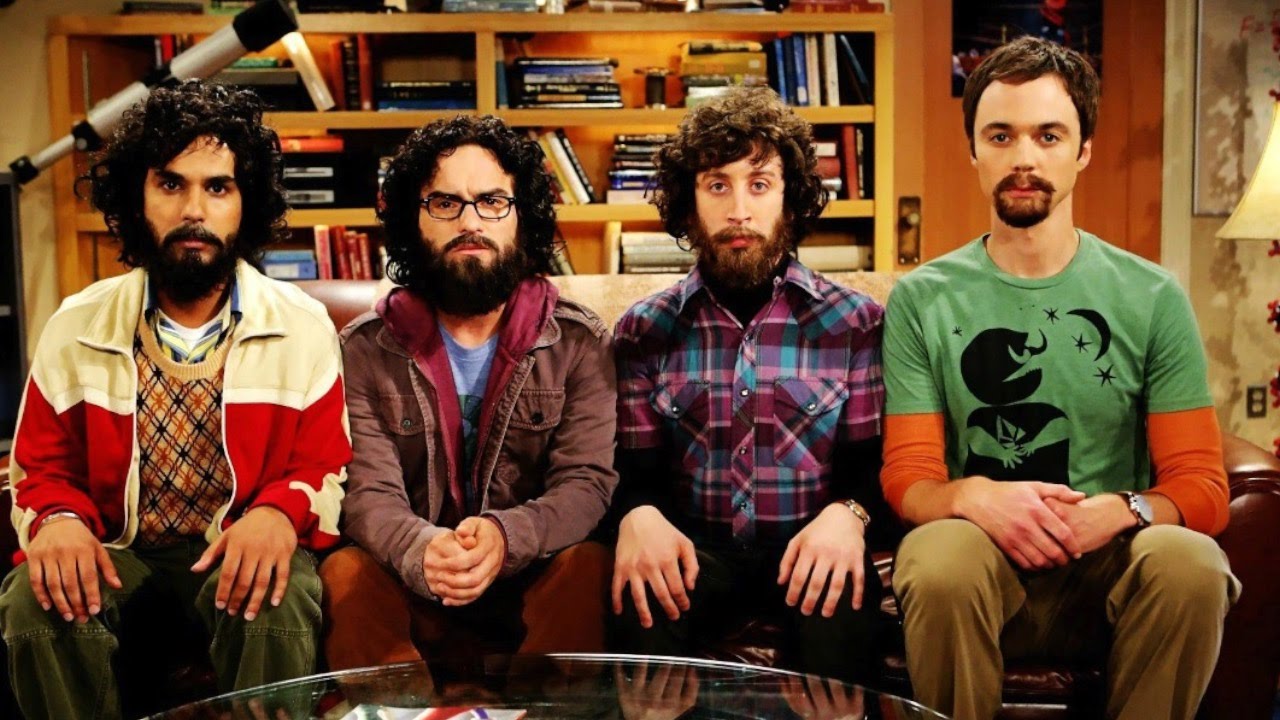
I watch it regularly. I even laugh at it. It has flaws, but I think the things it does well do plenty to overshadow those flaws. Sheldon is eccentric, but funny. Amy is quirky, but endearing. Howard, while creepy in the early seasons, has really grown up in all the right ways over the years. I would even go so far as to say that the show is worth watching just for Raj Koothrappali.

It’s not the best show on television, but like Nickelback and Hootie and the Blowfish, there’s no denying its success. It’s been syndicated and regularly ranks as one of the highest rated prime-time shows. Then, somewhere along the way, it became cool to hate the show as much as Nickelback.

You don’t have to look far to find articles of people whining about the show. Even Cracked, a site I often reference, once wrote a scathing article that flat out insulted anyone who dared enjoy the show. This is a direct quote.

Who are you people? The people watching The Big Bang Theory, I mean. Show yourselves. The world demands explanation. I mean that, too. In every way, shape, and form, this is the Justin Bieber of television shows.

I know the internet is full of this kind of trolling, but we’re not talking about snuff films and public crucifixion here. It’s a goddamn TV sitcom. It tries to be funny and entertaining. It doesn’t always work for everyone, but it still works for some. Are those people, which I guess includes me, somehow damaged just for liking this show?

I could probably ask the same of those who enjoy music from Nickelback and Hootie and the Blowfish. I could even offer a partial answer if I only use the basis of personal taste. That is, after all, what the consumption of all media is, be it music, movies, or TV. You tend to consume what you like. It’s that simple.

However, for an issue like this, there are added complications when something becomes cool to hate. Suddenly, it’s no longer a matter of just liking something different. It’s a matter of having some inherent personal flaw for liking something that has a vocal contingent of critics.

Call those critics whatever you want. Call them hipsters, trolls, or any number of other names that would warrant fines from the FCC. They’re still driven by the same focused outrage that dominates politics, religious disputes, and Overwatch tournaments. The only real question is why a show like “The Big Bang Theory” gets singled out.

It’s a hard question to answer and I’m not qualified to answer it completely. However, I do think something strange happens to movie, TV show, or band when they get so successful and so acclaimed that those who don’t like the show just can’t stop at not watching it.

It’s rare for any show to achieve the kind of success “The Big Bang Theory” has garnered. Success makes a show a bigger target. If shows like “South Park” or “The Simpsons” weren’t so successful, nobody would care how bad some of their jokes were or how controversial a certain character might be.

Some of that might be out of envy. There’s only so much success to go around. The fact “The Big Bang Theory” is so successful means, in the eyes of those who hate it, that it’s robbing success from shows that might be funnier or more worthy of it. Never mind the fact that the humor and worthiness of a show is completely subjective. Fans of that show will see “The Big Bang Theory” as a thief and a fraud.

Like it or not, envy can be a pretty powerful source of emotion. It’s underrated compared to outrage and hate, but still potent in its own right. However, I don’t think that’s the sole reason why “The Big Bang Theory” gets more hate than most prime-time shows that don’t involve CSI spin-offs.

I suspect there’s a deeper reason driving the hatred towards “The Big Bang Theory” that even Nickelback doesn’t have to deal with. I think part of that reason has to do with the archetypes the show uses. I don’t think it’s a coincidence that the combination of nerdy, socially awkward young men and a cute ditzy blonde conjures some heated emotional reactions, to say the least.

There’s no doubt that combination is contrived and relies heavily on old stereotypes. Then again, you could say that about a lot of other shows. The fact this one uses nerds and cute blondes, though, just makes it seem more overt. It makes every joke, every plot, and every gag seem cheap or forced.

It makes some of the resentment to the show understandable, but I think that resentment is even more compounded by trends in political correctness. Chief among those trends is a growing aversion to stereotypes. Characters and archetypes once considered inoffensive are now controversial. Jokes that were once just in poor taste are now the source of intense outrage.

Since its inception, “The Big Bang Theory” has relied a lot on stereotypes for its characters and its humor. Like all shows, it exaggerates certain personas. Sheldon Cooper, alone, is a testament to a character whose quirks are taken to a ridiculous extreme.

By relying on these stereotypes, though, it makes itself an even bigger target. Laughing at the show, in the eyes of some, means accepting some of these stereotypes and having the audacity to find them funny. That appears to be the undertone of the Cracked article I cited earlier. It seems to be the undertone of a lot of the hatred the show gets.

Now, I don’t deny that “The Big Bang Theory” can go overboard with cliches and stereotypes. There are a number of episodes in “The Big Bang Theory” that even I find bland. However, for the most part, I still laugh. I still find myself enjoying the story. Even when I can apply some of those stereotypes to myself, I still laugh.

At the end of the day, “The Big Bang Theory” is still just a TV show in the same way Nickelback is just a band. Nobody forces anyone to watch it. It’s easy to just change the channel and watch something else. However, when a show becomes so successful while relying on a premise that is getting more politically incorrect with each passing year, it’s bound to attract criticism and not just from the hipster crowd.

I still enjoy the show and I intend to keep watching it. I also intend to keep all the songs by Nickelback and Hootie and the Blowfish on my phone for the foreseeable future. If that makes me uncool in the eyes of some, then so be it. To me, it doesn’t matter if something is cool to hate. Petty hate is still petty hate.

I also expect to see plenty more hatred directed at the show for how it treats nerds, women, minorities, and humor. It’s just too successful and too big a target to avoid that kind of scrutiny. In that situation though, as with Nickelback and Hootie and the Blowfish, sometimes the best you can do is just laugh and enjoy it on your own terms. Bazinga!

2 Comments

Filed under human nature, media issues

The War On Boredom: Generation Z Already Bored With The Internet?

act-030117-boredom-medium

There’s a recurring theme in the history of conflict, crises, and panics of all kinds. Most of the time, there are obvious signs. From the Great Depression to the Great Recession of 2008 to telling signs that something was up with Harvey Weinstein, there were ominous hints that something much bigger was going on. By not heeding those hints, we made things worse in the long run.

Granted, those hints are obvious through the lens of hindsight. I don’t mean to make it sound like predicting a crisis is easy. If it were, then nobody would ever lose money in the stock market and terrorists would be out of a job. It’s an unfortunate, but unavoidable theme in human history. The various signs of looming issue are subtle and the implications require more foresight than our brains permit.

Image result for signs of crisis

That doesn’t mean we shouldn’t make an effort to sniff out a crisis before it happens. The cost of being wrong is usually far less than the anguish of being right, albeit with a few notable exceptions. I’ve been talking about a particular crisis that may very well be in the early stages as I write this. It doesn’t involve harassment, wars, or economic collapse, though. It involves boredom.

I’ve speculated that boredom may be the plague of the future. I’ve even hypothesized that Generation Z, the current cohort that is barely out of their teen years, may be prone to the kind of nihilistic mentality that further compounds the effects of boredom. I sincerely hope I’m wrong, but I’ve yet to see anything to discount my points.

Call it the boredom wave. Call it the coming War on Boredom. Call it whatever you want. It’s an issue that we’ll have to address on some levels. As more and more of society becomes automated by machines and streamlined by artificial intelligence, more and more people will have more and more free time on their hands.

Image result for too much free time

Even if we get to the point where society has a universal basic income so that nobody has to work or toil, we still have a problem. What are people going to do with all that free time? What happens when there’s so much of it that the boredom becomes infuriating? It’s hard to say, although there have been some disturbing signs.

Recently, though, another sign emerged, courtesy of The Daily Beast. In a recent article, Taylor Lorenz explores some revealing anecdotes about how the emerging youth in Generation Z is getting bored with the internet activities that have kept Millennials so entertained for the past couple decades. If the War on Boredom is to be a real conflict, then this could end up being the catalyst.

Say what you will about the veracity of these anecdotes. There’s a reason anecdotal evidence is considered weak evidence by the legal and scientific community. These stories still offer distressing insights with equally distressing implications. This is just one that the article highlighted.

“When I’m bored while I’m on my phone and I’m switching between different apps… I’m just searching for something to do,” said Addie, a 15-year-old in Long Island. “It’s like walking around your house in circles.” Often, they’ll find nothing on their phone entertaining and simply zone out and daydream.

Now, I’m sure every previous generations, from Millennials to the Baby Boomers, will roll their eyes at that complaint. I can already hear the condemnations of this emerging generation. A part of me, a Millennial, even feels that way.

They say things like, “You kids have no idea how great you have it! You’ve got a gadget in your pocket that gives you unlimited access to the entire library of human knowledge and an endless stream of entertainment, from books to videos to pictures of cats. How the hell can you be bored by that?”

Image result for cat piano

However, that’s easy to say for those who are old enough to remember a world without the internet, smartphones, or streaming media. I didn’t have internet access in my house until I was about 13-years-old and even then it was a dial-up connection that was painfully slow and prone to cutting out suddenly. In terms of combating boredom, my generation had different tools and different methods when we were kids.

To us, as well as the generations before us, the usage of smartphones and the entertainment content of the internet is still amazing to us. I still remember what it was like being at the complete mercy of what was on TV and having to play video games with no online multiplayer or DLC. Those time seem so distant now, but the teenagers of Generation Z have no such perspective.

From their point of view, smartphones have always existed. The internet has always been this ubiquitous thing that they’re a part of. It’s not a modern wonder to them. It’s a trivial, mundane part of their lives. People like me can’t see it like that because we still remember a world without it.

Image result for dial up internet

As a result, Generation Z isn’t going to see all the entertainment and media as a wonder. They’re going to see it as part of their normal and no matter what form normal takes, it’s still going to be boring to some extent. That’s part of what makes normal what it is. The article itself even acknowledges this.

It’s tempting to think that these devices, with their endless ability to stimulate, offer salvation from the type of mind-numbing boredom that is so core to the teen experience. But humans adapt to the conditions that surround them, and technical advances are no different. What seemed novel to one generation feels passé to the next. To many teens, smartphones and the internet have already lost their appeal.

It goes even further, distinguishing how Generation Z sees their smartphones and contrasting it with their Millennial predecessors. When someone my age or older sees a teenager on a phone, we don’t usually assume they’re just bored. We think they’re just another self-obsessed teenager who can’t resist checking their social media feeds every half-second.

While it’s much easier and more self-serving to assume that teenagers are just that self-obsessed, it’s probably more likely that boredom is a larger factor here. I would take it further than that. I would go so far as to claim that this is one of those signs that we foolishly overlooked in the future.

Image result for bored teenagers

These teenagers have access to the same technology and media that has kept other generations so engaged and enthralled. However, they’re seeing it and they’re bored by it. Anyone who knows anything about boredom understands that when boredom reaches a certain level, you’ll go to extremes to feel any kind of stimulation.

With that in mind, what kind of extremes will Generation Z resort to in their efforts to combat boredom? If they can’t get it from their phones or their computers, how will they combat this issue? To them, it’ll be a war. To every other generation, it’ll seem asinine. However, it may very well consume the social and political landscape of the future.

3 Comments

Filed under Current Events, War on Boredom

How Excessive Guilt Inspires Regressive Attitudes (And Ugly Politics)

sjw-cannibal

Have you ever done something that made you feel so guilty that it messed with your head? Have you ever felt so much guilt heaped upon you that it made you feel sick in ways that combine the nausea of a hangover with the delirium of a bad flu? If you haven’t been in that situation, then consider yourself lucky because guilt really is that powerful.

Like anger and hatred, guilt is one of those powerful feelings that can circumvent reason, reality, and everything in between. It can be like a rat gnawing at your brain stem, a stabbing pain in the most vulnerable part of your psyche. It doesn’t matter what the facts of the situation might be. Like any other pain, you’ll do anything to alleviate it.

As bad as it is, guilt is a critical component of the human condition. Guilt is a major aspect of being a social species. When we do something wrong within a functioning society, we should feel guilty. In the absence of laws and governments, guilt is part of what binds us together as a people and helps guide us in doing right by one another.

It’s because guilt is so powerful, though, that it can easily be weaponized to pursue an agenda. I would even argue it’s too easy because in recent years, efforts to channel and pile on guilt have become more overt. It’s becoming so overt that it’s not even subtle anymore. The effects aren’t just damaging. They’re counterproductive.

Last year, I wrote a lengthy post about how certain people use virtue signaling to make them feel like the heroes in their own story. In some respects, that effort is partially fueled by feelings of guilt that just happen to supplement the inherent desire to feel like John McClane in a “Die Hard” movie. That inherent desire to feel virtuous can sometimes coincide with feelings of guilt, real or imagined.

However, it’s the imagined, contrived guilt that’s becoming a problem. It’s guilt belabored by those seeking vindication that’s subverting the actual guilt that’s healthy and necessary for a functioning society. In an era where it’s easy to shame and condemn others through social media, it has never been easier to channel the power of guilt.

In some cases, that might be a good thing, being able to use our inter-connected world to lump guilt upon those who might otherwise get away with serious misdeeds. One could even argue it’s because of mass media that we, as a global society, have become more tolerant over the past century. Unlike most of human history, we can see the suffering of our fellow humans and rightly feel guilt about it.

The problem, however, comes when that same media is used to evoke excessive guilt in people who may not have any real stake in an issue. It usually has nothing to do with any direct action or decision that these people made. It’s often more vague, involving anything from the crimes of our ancestors to social status to physical appearance.

Whatever the method, the end results are fairly predictable. It usually goes something like this.

“You’re a [Insert Race/Religion/Gender/Ethnic Group/Social Class Here]! Just look at how great your life is compared to all the poor [Insert Oppressed Class/Group/Opposing Political Affiliation Here]! You should feel ashamed of yourself! You should sacrifice your comforts, your time, and your money to pay for all that suffering! If you don’t, then you’re a horrible person and deserve no respect!”

Whether it’s race, religion, gender, or some other label, it really doesn’t take much. It just needs to single out a certain contingent of people who identify a certain way. It doesn’t even have to be a physical trait. Sub-cultures like gaming, sports, and general hobbies are prone to it. Gaming, especially, has been subjected to a lot of scrutiny in recent years.

If it’s possible to judge a group for not being inclusive, understanding, or generous enough, then guilt can be leveraged against it. On paper, it almost seems fair, using guilt to level the playing field. In practice, however, it has one exceedingly nasty side-effect that derails any effort at justice.

To illustrate how, it’s necessary to scrutinize the basics of guilt in terms of how it actually works compared to how some people think it works. To highlight that difference, here are two scenarios that focus on basic reactions to guilt. See if you can find where those nasty side-effects I mentioned manifest.

Scenario One: That person just made me feel really guilty about something. I had better sit down, listen, and calmly discuss this matter with them in a reasonable, rational way so I can address this feeling.

Scenario Two: That person just made me feel guilty. This feels awful! I hate this person for making me feel this way. Now, I need to find a way to alleviate this feeling. What’s the quickest, easiest way to do that?

I hope it’s obvious which one is more consistent with the real world. While I like to think I have more faith in humanity than most these days, I don’t deny there are some bugs in our collective operating system. When it comes to guilt, though, some will use those bugs against others in hopes of shaping their opinions. However, when guilt is the primary ingredient, those opinions are far more likely to be regressive.

Whether it’s extreme political correctness, extreme religious dogma, or extreme identity politics, guilt is effectively targeted to put people in a state of anxiety. You’re guilty for committing egregious sins against a deity. You’re guilty for being too offensive to a particular group. You’re guilty of not being inclusive enough to a particular minority.

That guilt doesn’t even have to involve a direct action or choice. It can be entirely wrong, built on myths, lies, or debunked science. It just has to evoke a reaction. Our brains, being the crude products of nature that they are, cannot tell the difference between the guilt we feel for stealing our mother’s purse or just being the same race as one that owned slaves 200 years ago.

As a result, our first instinct isn’t calm, reasoned debate. It’s to alleviate the guilt in the quickest way possible. That often means becoming defensive, angry, and aggressive. That kind of reaction is not going to make someone more understanding or tolerant. It’s going to make them hostile or upset towards the source of the guilt.

Guilt is pain on some levels, which is why many see heaping guilt on others as an outright attack. It’s why those attempting to evoke the guilt are vilified or despised. It doesn’t even matter if they make valid arguments. Their use of guilt renders their every word inherently toxic, a word I don’t use lightly.

When messages become toxic, attitudes become combative. When people become combative, their politics become regressive. Think about the guilt-obsessed Puritans or the loudest voices in the social justice crowd. They not just intolerant of the source of the guilt. They go out of their way to overreact, like attacking a fly with a shotgun.

In the name of alleviating the pains of guilt, that almost seems justified. It’s a big reason why the politics of those consumed by guilt tend to be extreme. It’s not enough to address a simple injustice in the present. Everything in the past related to that guilt needs to be a factor. That’s how you get people who condemn their own race, hate on their own gender, and favor politics that are antithetical to basic concepts of liberty.

It’s why radical feminists who say men are guilty of all the world’s ills actually make anti-feminism seem appealing to some.

It’s why race-baiting tactics by those attempting to promote racial equality tend to incur a major backlash.

It’s why attacking popular culture and sub-cultures who aren’t “inclusive” enough to become even less inclusive.

In that context, using excessive guilt only inspires a greater backlash than the one that usually comes from major social movements. If used carefully, it can subdue people into a state of desperation, longing for a way to alleviate the feeling. Some religion have managed this to great effect.

It doesn’t take much, though, in our interconnected world for guilt to become excessive. In a sense, it helps to see using guilt as using torture. Sure, the torture will usually get someone to say what you want to hear, but unless they’re a sociopath or exceedingly masochistic, they’re not going to share the attitudes or sentiments of their torturer.

1 Comment

Filed under Current Events, gender issues, human nature, Reasons and Excuses

Why Sex Addiction (Probably) Doesn’t Exist

shutterstock_133047971

When it comes to human psychology, addiction is like quantum physics in that few understand it and Hollywood constantly gets it wrong. I know I say it a lot on this blog, but it’s worth belaboring. People are complicated. One person may watch “Star Wars” and think it’s the greatest piece of cinema of all time. Another may watch it and say it has no redeeming values.

That’s an important context to consider when discussing topics of addiction, which affects a significant portion of the human population. According to Addiction Center, there are approximately 20.6 million people over the age of 12 struggling with an addiction. According to the Centers for Disease Control, over 200,000 people have died since 1999 from prescription drug abuse alone.

Addiction is a serious issue. I know people who have struggled with addiction. I think everybody knows someone in their lives, be they a friend or relative, who has struggled with an addiction of some sorts. Addiction is real and there’s actual biology behind it. As such, it stands to reason that the rising instance of sexual addiction is real.

Image result for struggling with addiction

Before I scrutinize this sexy, yet unsexy phenomenon, I need to preface this by acknowledging that our collective understanding of these issues is still developing. What we consider a psychological dysfunction today may end up just being a healthy variation within the diversity of human thought. That’s why homosexuality is no longer considered a disease.

That context is important to establish because the term “sex addict” has been thrown around a lot lately. It’s not quite on the level of “fake news” or “soy boy,” but it has been cropping up, especially in wake of the recent scandals in Hollywood. Both Harvey Weinstein and Kevin Spacey claimed to be sex addicts after their scandals.

Image result for sex rehab

Needless to say, not everybody buys that excuse. Given my propensity to bemoan excuses, I count myself among them. These men claiming that sex addiction caused their deplorable behavior comes off as a pitiful attempt to gain sympathy, trying to paint themselves as sick. It also assumes a lot about the complex nature of addiction.

It’s true that we can become addicted to damn near anything, but it’s not just a matter of one particular activity flooding the pleasure centers of our brain more than others. Alcoholics don’t get the same orgasmic release from a cold beer that a sex addict gets from a quickie in the shower. There are other psychological forces behind it.

Since we can’t yet read the minds of an individual person, we have only a cursory understanding of those forces. However, there is an established criteria for addiction within a medical context. The American Psychiatric Association, describes addiction as follows:

Addiction is a complex condition, a brain disease that is manifested by compulsive substance use despite harmful consequence. People with addiction (severe substance use disorder) have an intense focus on using a certain substance(s), such as alcohol or drugs, to the point that it takes over their life. They keep using alcohol or a drug even when they know it will causes problems.

At the same time, it establishes a clear difference between just being addicted to a certain activity, like sex, eating, or playing World of Warcraft for 29 hours straight, and the addiction caused by drugs. They don’t even call it addiction. They have a more official label called Substance Use Disorder. Their description of this condition is a lot scarier than just someone who has more orgasms than most.

People with a substance use disorder have distorted thinking, behavior and body functions. Changes in the brain’s wiring are what cause people to have intense cravings for the drug and make it hard to stop using the drug. Brain imaging studies show changes in the areas of the brain that relate to judgment, decision making, learning, memory and behavior control.

These substances can cause harmful changes in how the brain functions. These changes can last long after the immediate effects of the drug — the intoxication. Intoxication is the intense pleasure, calm, increased senses or a high caused by the drug. Intoxication symptoms are different for each substance.

I bring up this distinction because more than one person has described sex like a drug. In doing so, it’s easier to accept that those claiming to suffer from sex addiction have a real ailment. Sex is a powerful drive that evokes pleasure that some brain scans have compared to heroin. Does it not stand to reason that sex addicts are in the same boat as heroin addicts?

Image result for heroin addict

The short answer is no. Sex addicts and heroin addicts are as different from one another as an arm-wrestling contest and an underground fight club. Addiction to heroin has a strict criteria for diagnosis. Sex addiction doesn’t meet that criteria in that alleged addicts don’t respond the same way that those suffering from Substance Use Disorder respond.

According to research done by UCLA, the reactions of those claiming porn addiction did not mirror those addicted to other activities like drinking, smoking, etc. Within that same research, it was also uncovered that sex addiction lacks one of the most important features of an addiction, namely that of diminished response from the pleasure centers of the brain.

That’s key because one of the most damaging factors of an addiction is that over time, the addictive behavior doesn’t light up the pleasure centers of the brain like it used to. That’s why alcoholics need more alcohol and crack addicts need more crack to get the same high. Brain scans show that in drug abuse. They don’t show it in sex addiction.

Image result for sex on the brain

In fact, the conclusions of the researchers on sex addiction were somewhat mundane. According to the data gathered from the brains and experiences of real people, the idea of sex addiction is nothing more than having a high sex drive and poor impulse control. That’s not an addiction. That’s a personality quirk. If anything, the very term “sex addiction” undermines the suffering of real addicts.

I know those conclusions is not going to convince those who genuinely believe that they’re struggling with sex addiction. I don’t doubt that these people are struggling and it’s negatively impacting their lives, their families, and their relationships. However, I believe putting it in the same category as drug abuse only skews our understanding of addiction and sexuality.

Image result for thinking about sex

Some people are really just a lot hornier than others. In the same way some people have a bigger appetite for food, some have a bigger appetite for sex. Unlike food, though, those suffering from eating disorders don’t blame the entire concept of food. There are often other psychological factors behind it.

Sex also has another complication that food and eating don’t. Our culture has an established set of sexual norms that idealize some forms of sexuality and shame others. Even though we’ve accepted more diversity in recent decades, we still idealize monogamous romances where those involved only have sex to make babies or explore the kind of passion reserved for a scene in “Titanic.”

As a result, anything that deviates from that narrative, be they an open relationship or just wanting to hump for the sake of humping, is subject to scorn or shaming. I’ve noted the flaws in this sort of narrative before, but on a much larger scale, it creates a situation where certain manifestations of sex become less a variation and more a disease.

Image result for thinking about sex

Like homosexuality, though, treating those variations as flawed or damaged doesn’t make them go away. It’s possible for a drug addict to get treatment to repair the damage those drugs have done to their bodies and minds. It’s not possible to complete reshape and remold someone’s baseline sexual desires without causing serious damage.

To really get an idea of how this can motivate self-professed sex addicts to engage in such erratic behaviors, imagine for a moment that you’re a heterosexual person in a world where only homosexuality is accepted. As such, you’re expected to enter a homosexual relationship with someone and remain in that relationship indefinitely.

That means you have to ignore or temper your basic sexual desires in order to operate in that society without shame or scrutiny. You have to pretend that the relationship you’re in is sufficient when you know it’s not. Since you can’t turn off your brain or your basic desires, it’s going to mess with your mind and inspire erratic behavior.

It’s for that reason that sex addiction, as it’s currently understood, probably doesn’t exist. I say probably because, as I pointed out earlier, our understanding of sexuality, psychology, and the human experience is still limited. For now, though, our conclusions are fairly simple. You’re not an addict. You’re just really horny and you live in a society that doesn’t afford you the opportunities to explore those feelings.

1 Comment

Filed under gender issues, human nature, sex in media, sex in society, sexuality

The Law Of Proportional Backlash And The Anti-Harassment Movement

tolentino-rising-pressure-of-the-metoo-backlash

There comes a point in every social movement where the momentum seems unstoppable. Whether it’s same-sex marriage, racial equality, or finally having a female Dr. Who, there’s a sentiment that certain trends are just going to play out and there’s nothing anyone can do about it.

That’s a false impression, by the way. Human beings are complex, erratic, and fickle creatures. I’ve touched on this before and will likely bring it up again because human beings are just that interesting. That said, they can also be quite frustrating.

Image result for human nature

When it comes to highlighting those qualities in the midst of an ongoing controversy, though, I have to be careful because I don’t want my points to get lost in the anger. I know as well as anyone else with an internet connection that digital outrage has a nasty habit of undermining meaningful dialog. I want to avoid that as much as possible cause this is one point I feel is worth making.

As I write this, the latest major social movement to combat sexism and sexual misconduct is close to that point I mentioned earlier. It’s still a very hot-button issue and I’ve tried to be fair in discussing it on this blog. However, the current momentum of this movement, which has the wholly noble goal of preventing harassment, is coming up against a force that reflects the eccentricities of human nature.

That force doesn’t have an official or scientific name, but it has many familiar components. For the sake of this discussion, I’ll label it as follows:

The Law Of Proportional Backlash

I’m not claiming this law is definitive or on the same level as the laws of relativity. To make sense of what’s going on, and what often happens with these social movements, it’s just helpful to have a unifying idea to tie it all together.

The essence of this law that I just randomly coined is pretty simple. It’s the human equivalent of Newton’s Third Law, which says for every action, there is an equal and opposite reaction. When it comes to social movements, though, the reaction is more than that. It’s can also be an outright backlash.

Image result for social backlash

To illustrate, you need only look at the frequency with which political parties gain and lose power. Throughout the latter part of the 20th century, as society has become more connected, open, and diverse, these tendencies have played out with stunning regularity. It often plays out like this:

“Hey! The current social order isn’t the perfect, utopian society I want. Let’s kick the people in power out of office and put in these people making impossible promises to achieve impossible things.”

A few years later.

“Hey! These people we put in power haven’t created the perfect, utopian society I waned either. Let’s kick them out and put in other people in power who are also making impossible promises to achieve impossible things. Moreover, let’s hate, shame, and spit on the other side for failing to do all those impossible things!”

I fully concede that’s a very basic illustration of how political power fluctuates in the modern world. I also concede there are many variations, but in terms of the big picture, this is how the Law of Proportional Backlash works.

A movement begins, be it political or social. It gains momentum. Usually, there’s some sort of event that acts as a catalyst. With racial segregation, events like the ruling in Brown v. Board of Education helped get things going. With same-sex marriage, Massachusetts being the first state to legalize it did the same.

Image result for same-sex marriage legalized

For the current movement against sexism and sexual misconduct, I think most would point to either the 2016 presidential election or the Harvey Weinstein scandal as the catalyst. I would argue it’s a combination of both, but I don’t think there’s any doubt that the movement gained a lot of momentum. If it could take down someone as powerful as Harvey Weinstein, then it’s safe to say that movement is pretty strong.

As often happens, though, the momentum provokes backlash. That happens whenever a movement fails to achieve every goal and, spoiler alert, no movement ever achieves every goal. The world is too complex and impossible problems tend to frustrate human limitations. As a result, a movement has to overreach and that will spurn a backlash.

With the movement against sexual misconduct, there are plenty of signs of overreach. There are people scorning others for making reasonable arguments about there being a spectrum of harassment. Careers are being ruined on the basis of anonymous accusations and mixed messages that are impossible to discern.

Image result for Matt Damon comments

There was even a distressing article on BigThink that argued that crimes involving sexual violence should not be subject to the traditional standards of proof. The underlying reason for that is too many guilty people get away with their crimes so it’s worth the risk of punishing the innocent to remedy that issue.

It’s that kind of sentiment, one in which the proportion becomes increasingly extreme, that tends to hasten the backlash. Whenever a movement gets to a point it’s deemed appropriate to sacrifice innocent people for the sake of a cause, then that’s usually a sign that it’s reaching beyond its ideals and emboldening opponents.

There are already major news outlets reporting on that phenomenon. Publications like the New Yorker, the Washington Post, and even the liberal Huffington Post have discussed it in various forms. The reactions to those speaking out against sexual misconduct is no longer one of unity and support. Now, there’s criticism and animosity, the first signs of a real backlash.

Image result for angry feminist protest

Those behind the movement need only look at the LGBT movement to see what that backlash can entail. Even though same-sex marriage is legal, the resulting backlash triggered a surge in “religious freedom” bills that promoted a new kind of discrimination. That backlash is still ongoing. The one surrounding sexual misconduct may just be getting started.

I still don’t doubt the sincerity and ideals behind the movement against sexual misconduct. People want justice for those who have been victimized. Justice is an inherent aspect of the human condition. We’re literally wired to seek it when we feel there’s an injustice in the world.

Unfortunately, in the pursuit of that justice, anger and resentment end up clouding those ideals. We’ve seen that anger directed towards the political process that played out in 2016. We’ve seen it used to demonize and denigrate entire groups of people, including an entire gender in some cases.

Image result for man hating women

When people are attacked, their first instinct isn’t to admit defeat. It’s to fight back. That’s just basic survival instinct and there’s no way any movement, be it political or social, can circumvent that. By fighting back, the backlash itself gains momentum. Sometimes that backlash gains enough momentum to become a movement in it’s own right. Then, it too may be subject to a backlash.

It seems like an never-ending cycle, one in which little is gained in the long run. While I don’t deny it can be disheartening, I believe there are gains that make many movements worthwhile in the long run. Just ask any same-sex couple who can get married now if they’re willing to risk such a backlash. They would probably do so in a heartbeat.

I don’t know how the movement against sexual misconduct is going to play out, even if the backlash it inspires ends up being minor. I hope, in the long run, it has a net-positive effect on society. It still won’t be a perfect society, but whether it’s from the movement or the backlash, even a little gain in justice and human progress can still mean a lot in the long run.

12 Comments

Filed under Current Events, gender issues, sex in media, sex in society, sexuality