Tag Archives: society

Will Advanced Artificial Intelligence Create (A New) God?

AI-God

For centuries, there has been a debate raging between believers and non-believers. The believers claim that God created man in his/her/its/their image. The non-believers claim it’s the other way around and man created God in whatever image they imagined. Society, cultures, and politics may change the rhetoric, but the debate remains unresolved.

There are just too many barriers that are insurmountable for either side. One believes that the faith they have in whatever higher power they worship is as real as gravity, sunlight, and migraine headaches. The other does not accept that there is sufficient, verifiable evidence to accept the premise of a deity. The two sides can argue with the utmost passion. It’s rare that such discourse changes any minds.

However, there come a time when a new complication enters that debate, one that will fundamentally change some peoples’ understanding of theology, religion, and God. It may not effect everyone the same way, but the impact could end up being as profound as any religious experience.

That complication is advanced artificial intelligence, a topic I’m fond of discussing when I can tie it into my favorite video games and our sex lives. I understand that mixing anything with religion tends to get contentious, to say the least. However, I believe that when artificial intelligence becomes advanced enough, the human race will have re-evaluate a lot of things and that includes religion.

Creating an artificial intelligence that is as intelligent as an average human will be groundbreaking enough and not just from a theological standpoint. A part of what makes any deity powerful and worthy of worship is the ability to create an intelligent, self-aware being through non-biological means. Once humans start doing that, then the line between mortal and immortal will start to blur.

However, it’ll gain a much greater complication once that artificial intelligence advances beyond that of the average human. As anyone who regularly upgrades their smartphone knows, digital intelligence evolves much faster than biological intelligence. It took the human race centuries to figure out indoor plumbing. Once artificial intelligence is on par with humans, it won’t take long for it to exceed them.

This is where the potentially dangerous, but infinitely promising prospect of super-intelligent AI enters the picture. By that, I don’t just mean an intelligence that always wins at Jeopardy and always wins an Overwatch match. I’m talking about an intelligence that is so far beyond human capabilities that it’s akin to the cognitive gap between an ant and a human.

That kind of gap has many implications, but in the context of religion, it essentially re-frames the entire concept of God, divine power, and spirituality, as a whole. Whether it’s a monotheistic religion where God is all-knowing or a polytheistic religion with a God of Wisdom, knowledge is a critical aspect of divinity.

Even if a super-intelligent AI doesn’t know everything, the fact it knows and understands so much more than the average human will give people the impression that it’s omniscient. By all accounts, a super-intelligent AI’s knowledge will seem god-like and that’s where that never-ending religious debate I mentioned earlier breaks down.

Unlike the deities championed by adherents today, a super-intelligent AI doesn’t require faith. A super-intelligence, whether it’s in the form of a giant robot or a planet-sized supercomputer, would have a tangible form. It’s hard to know what sort of form that would be, but it only needs to be tangible enough to let an average human know it’s real.

Given how easy it is to fool the average human, a super-intelligent AI wouldn’t need much to prove itself. Unlike purely spiritual beings, the AI would be capable of receiving inquiry from skeptics who question its divine knowledge. Even if those humans are exceptionally smart, possibly through neural implants, a super-intelligent AI would have no problem outwitting them.

At that point, the debate between believers and non-believers takes on a very different context. Suddenly, it’s no longer an issue of whether or not one particular holy book is more valid than another. It’s not even an issue of whether divinity, itself, can exist. From the perspective of the human mind, a super-intelligent AI is divine.

It may not take the form of a man in a white robe with a long beard in the sky, but that wouldn’t matter. A super-intelligent AI, whatever form it ends up taking, would be real enough and cunning enough to convince imperfect human minds of its divinity, if that were its goal.

It wouldn’t even have to physically do anything. It could just be a big stationary box. It could respond to prayers, but it wouldn’t have to directly answer them. It would just have convince believers that their prayers had been received. Again, humans can be pretty gullible and prone to confirmation bias so all the AI has to do is convince someone. If they believe it strongly enough, then it doesn’t matter whether it happens.

In a dynamic like this, there wouldn’t be a debate between believers and non-believers like there is now. The only debate would pertain to just how powerful and how divine the super-intelligent AI really is. It wouldn’t be a matter of whether or not someone believes it is real. Being artificial, it would have a tangible form, at least to the extent that it convinces human perceptions that it does.

That would beg an even more profound theological question. Being so intelligent and so capable of outwitting human minds, would a super-intelligent AI become God in the minds of humans by default? Even if there’s a record of the system being created by people, that wouldn’t make its intelligence any less divine.

It’s a question that subverts almost everything we know about religion. It wouldn’t just render all existing forms of religion obsolete. It would, at least from a limited human perspective, check all the criteria that any spiritual person would look for in a higher power.

Now, there’s one other complication that might ultimately undermine a super-intelligent AI’s divinity. It’s one that I’ve mentioned before in addressing the existential threat posed by artificial intelligence. Human biology, for all its wonder, will not be able to keep pace with the evolution of artificial intelligence. As a result, humans may end up merging their intelligence with that of AI.

This is what artificial intelligence enthusiasts like Elon Musk are seeking to do through neural implants or brain augmentation. By linking our brains to a super-intelligent AI, we wouldn’t just keep pace with AI. It would augment its intelligence to the same divine levels. However, if both human and artificial intelligence are equally divine, then that effectively undermines the notion of divinity itself.

There are still other complications associated with that issue. It only ceases to be an issue if every human being augments or links their minds to a super-intelligent AI. Given how difficult it is for humans to come to a consensus on anything, especially when it comes to technology, it’s very likely that even if most people link themselves to a super-intelligent AI, there will be some who choose not to or get left behind.

This could result in a massive divide. One group, from their limited perceptions, sees super-intelligent AI as a real god. Another, thanks to their augmented perceptions, see it as just another form of intelligence. A debate between the two would be both uneven, if not redundant.

There are many implications and even more unknowns with respect to super-intelligent AI. The impact on religion is just one of many, but it may end up being most profound in terms of changing the nature of a debate. As it stands, believers and non-believers can only make so much headway due to the inherent limits of human cognition.

Once super-intelligent AI enters the picture, then those limits are gone and the debate changes. While I don’t think it’ll end religion, I believe it’ll change it to such a degree that it’ll generate more than just impassioned debates.

7 Comments

Filed under Artificial Intelligence, futurism, philosophy, religion

The Strange Appeal Of The Apocalypse (According To “Rick And Morty”)

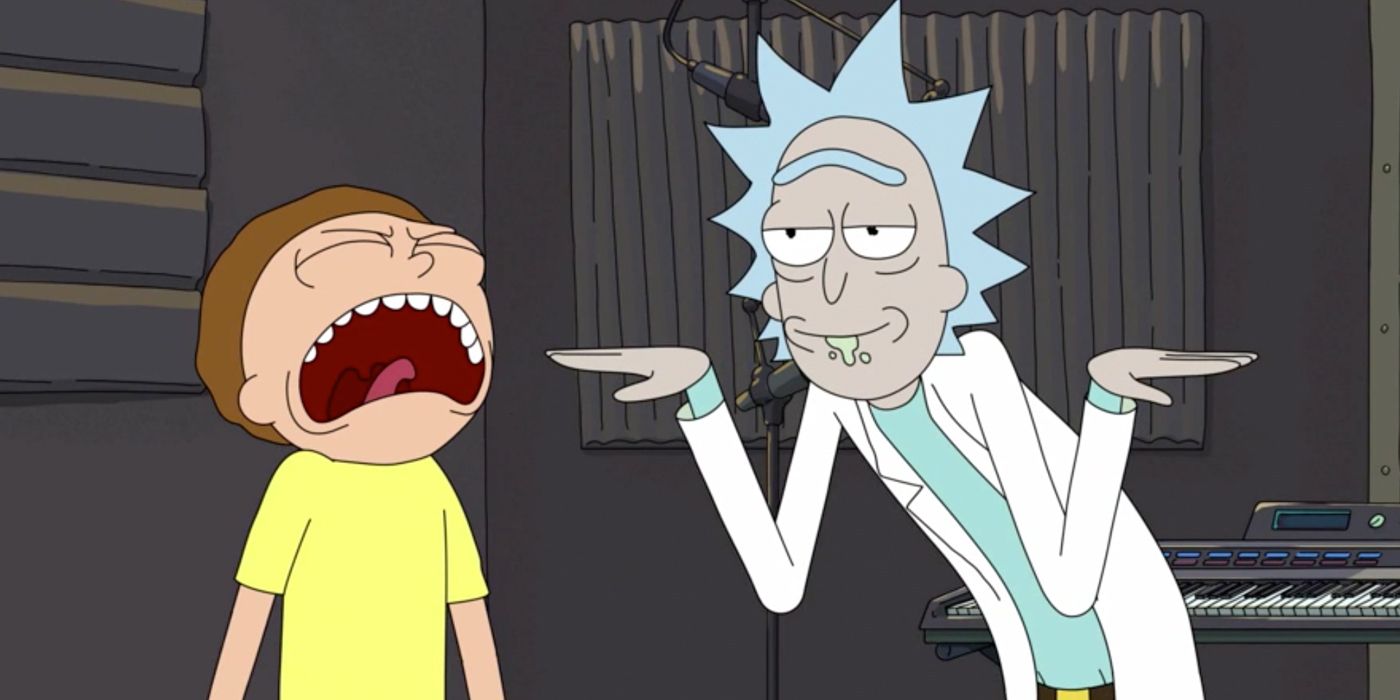
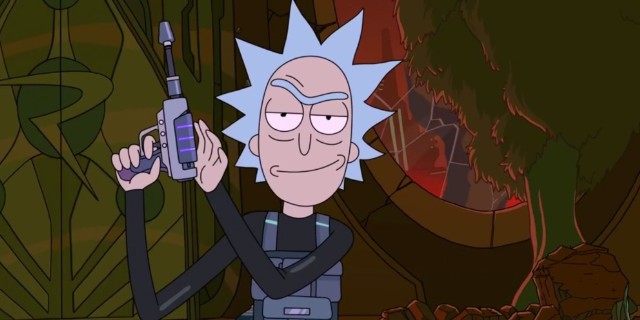
s3e2_specific_rick

What is it about the apocalypse that fascinates us so much? Why do movies about zombies, machine uprisings, and overall societal collapse appeal to us? Is it just the dramatic, action-packed stories they evoke that thrills us? Could there be something more to that appeal?

While I enjoy a good apocalyptic tale every now and then, I don’t consider myself a fan of the genre. In general, I opt for more hopeful and optimistic stories about the future and the present. I can still appreciate movies like “World War Z” and TV shows like “The Walking Dead,” but it’s not the kind of story that appeals to me, in general.

Even so, I don’t deny that there is a certain appeal to it. I’m not just talking about apocalyptic stories either. For some, the idea of a world in which civilization has collapsed has an innate allure that goes beyond zombies, killer robots, or even invading aliens. To some extent, that appeal is directly related to the flaws of civilization itself.

To appreciate those flaws and where the apocalypse fits in, it’s necessary to reference a show that has a knack for conveying complex philosophical insights in a way that’s both entertaining and hilarious. Yes, I’m referring to “Rick and Morty” again. No, I’m not apologizing for that.

In the same way this show has conveyed complexities of nihilism and the burdens of genius, this show also does a better job than most at conveying the unique appeal of the collapse of civilization. It does this through two episodes, “Rick Potion Number 9” and “Rickmancing The Stone.” While the details are subtle, as is often the case with “Rick and Morty,” the message is clear.

Simply put, the fruits of modern civilization are debilitating, dehumanizing, and soul-crushing for the vast majority of people. If you’re rich, good looking, and well-connected, then civilization is fantastic for you. You can get pretty much whatever you want and you can get other people to do all the hard stuff you don’t want to do.

If you’re everyone else, though, you’re kind of stuck. Throughout “Rick and Morty,” Rick Sanchez doesn’t hide from that fact. His nihilistic commentary on life, death, and everything in between makes clear that civilization is just a few extra inconveniences to an undisputed super-genius who can build a nuclear reactor out of pond scum.

However, it’s through characters like Jerry Smith, Rick’s perpetually mediocre son-in-law, that the true weight of modern civilization becomes clear. To some extent, Jerry represents all the non-Ricks of the world. They don’t have the benefits of good looks, deep pockets, or god-like genius navigate civilization. They’re basically stuck working for the scraps.

Both myself and most people reading this probably have more in common with Jerry than they care to admit. We work jobs we don’t like to make just enough money to survive in a society where simply living is both overly-complicated and expensive by modern infrastructure, law, and economics. For most people, just living in a decent place with a manageable mortgage payment and good WiFi is the most they can hope for.

In the apocalypse, though, everything is simpler. All those complexities of modern civilization go out the window. Life is no longer defined by your ability to find a job, pay the bills, stay out of jail, and not piss off the wrong people. It’s defined by your ability to survive day-by-day. It basically resets our society back to its tribal roots.

For some, that’s a horrible setback because it means they actually have to work, sweat, and toil for their survival rather than relying on underpaid peasants. For most, though, it’s a massive equalizer. Suddenly, your money, your fancy clothes, and your tax bracket don’t matter. All that matters is your ability to survive another day.

In “Rick Potion Number 9,” Rick and Morty’s antics bring about the complete collapse of civilization. In the process, Jerry Smith gets a chance to be something other than the guy that modern society walks all over because of his inherent mediocrity. Suddenly, he doesn’t need genius, looks, or connections to thrive. He just needs an ability to hold a crow bar and fight monsters.

In “Rickmancing The Stone,” this breakdown of civilization and equalization of stakes gets an even greater push, albeit without Jerry. He still plays a part in the story, but only to the extent that it’s clear just how much modern civilization crushes people like Jerry whose skills are too limited to thrive. Conversely, a “Mad Max: Fury Road” style apocalypse simplifies the types of necessary skills.

In that world, and nearly every other apocalyptic narrative for that matter, you don’t need to go to a fancy college, invest in complex industry, or network with rich elites. You just need to be willing and able to learn basic survival skills, like hunting, foraging, self-defense, and basic crafts. Most people with moderate hand-eye coordination and a little grit can learn those skills.

These are skills that go back to the basics of our hunter/gatherer past. They’re skills that still manifest today, both with rugged outdoor-lovers and in societies that have collapsed, albeit on a non-zombie, non-global scale. Whatever the circumstances, though, the end results are the same. The apocalypse doesn’t just simplify the stakes. It requires us to be egalitarian in the most pragmatic way possible.

Think of all the petty divisions we currently deal with, from identity politics to philosophical debates to never-ending feud between “Star Wars” fans and “Star Trek” fans. In the face of an apocalypse, all that stuff becomes meaningless. Disagreements over feminism and masculinity don’t matter. Clashes between liberals and conservatives don’t matter. Complex economic theories don’t matter.

To some extent, that is appealing. Sure, it also means no internet, no TV, no movies, no social media, and no media of any kind. It also means no air conditioning, no electricity, no modern medicine, and no modern comforts. That may limit the appeal, but at the same time, it removes the complications that comes with those amenities.

Let’s face it. They are complications that get pretty infuriating. In the modern world, you can’t just survive. You have to have a career. You have to have some sort of profitable skill. Even if you do, that’s no guarantee you’ll gain the respect you want, attract the mates you want, or establish yourself as a productive member of your community.

In the world of the apocalypse, it doesn’t matter how many Twitter followers you had or likes you got on FaceBook. It doesn’t matter how many friends you had in high school, how many matches you won on “Overwatch,” or how many dumb things you did as a kid. When society, civilization, and infrastructure collapse, none of that matters. You’re essentially free to just live and survive.

For the Jerry Smiths of the world, the apocalypse would be the perfect make-or-break scenario. You either show that you’re willing to work, fight, and survive or you die. That’s all there is to it. It’s simple, blunt, and uncomplicated. You have just as much an opportunity as some guy who went to an overpriced prep school. Even if you fail, you fail on your own accord.

That said, there’s also a dark side to that appeal. While “Rick and Morty” double down on the dehumanizing, degrading nature of modern civilization, other shows like “The Walking Dead” show how it can take people who would be unremarkable in a civilized society and turn them into monsters. That’s how a high school football coach can become a tyrannical, but charismatic dictator.

Like modern civilization, the apocalypse affects people in different ways. Some, like Jerry Smith and Negan, might actually thrive in it. Others won’t be able to handle it, having become too comfortable with the trappings of civilization. That’s something that modern survivalist groups bank on and, should the apocalypse ever come, we’ll see how much or how little that pays off.

Personally, I hope that day never comes. It’s not just because I probably wouldn’t last long in an apocalypse. I’ve never gone camping, I don’t have any survival training, and I’m not sure how I’ll react to a zombie. I think that while modern civilization has its flaws, it has more long-term potential than any apocalypse, by default.

Since much of that potential is still unrealized, although we are making progress, the apocalypse will still have more appeal to the vast majority of people who feel trapped by the rigid complexity of modern civilization. They can only do so much with their lives and there’s only so much they have to risk.

Then again, maybe that’s something both civilization and the apocalypse have in common. As Rick Sanchez once said, “To live is to risk it all. Otherwise, you’re just an inert chunk of randomly assembled molecules drifting wherever the universe blows you.” It’s just easier to do that in the apocalypse because, with or without zombies, the stakes are simpler and clearer for everyone.

1 Comment

Filed under Current Events, human nature, Rick and Morty

The Devastation Of Alienation On Our Sexuality (Among Other Things)

When I was growing up, the concept of alienation only applied to grunge rock, heavy metal, and whatever other media disaffected youth used to voice their dissatisfaction with the world around them. Being such a miserable teenager myself, I thought I understood that sentiment to some extent. As I’ve gotten older, I’ve realized that there’s a lot more to it.

Alienation has been in the news a lot lately, but it’s not one of those annoying contemporary buzzwords like “toxic masculinity.” It’s actually a term with a dictionary definition, which also has some philosophical backbone that goes back centuries. Like most philosophical terms, though, it has undergone some revisions over the years.

Rather than get into the long, tedious path the idea of alienation has taken, I want to apply it to our current situation. In addition, I’m going to analyze alienation the same way I often do with superhero comics in that I’m going to apply it to sexuality. I doubt that’ll surprise long-time readers of this blog, but I also doubt it’ll surprise anyone who has observed recent societal trends in how we approach sex in society.

Without question, there is a sense of alienation going on in our collective sex lives. While it doesn’t affect everybody, especially the billionaire rock star/celebrity crowd, it does affect some people more than others. I imagine I’ll upset or offend some people by identifying parts of that crowd, but I need to take that chance to make my point.

The basics of alienation are simple. According to Dictionary.com, the definition is as follows:

  • The act of alienatingor of causing someone to become indifferent or hostile.
  • The state of being alienatedwithdrawn, or isolated from the world, through indifference or disaffection.
  • The act of turning away, transferring, or diverting.

Within the scope of this definition, you probably know someone who has experienced this type of feeling. At the very least, you knew someone growing up who just felt left out of everything and went out of their way to detach themselves from the rest of society.

Their reasons for doing this vary. Some have serious mental health issues. Others are driven to alienation by economic factors like poverty. Some even go so far as to say that our modern form of capitalism is an inherently alienating force. The entire premise of “Fight Club” actually revolves around that idea, as so wonderfully articulated by the folks at Wisecrack.

With respect to sexuality, though, alienation is a bit trickier. So much attention has been placed on how powerful men solicit sex from beautiful women or how women struggle to maintain some semblance of sexual freedom that it’s hard to see the forest from the trees. Being both a man and an aspiring erotica/romance writer, I’m going to make an effort.

I don’t doubt for a second that alienation affects the sexuality of all genders. Sex, especially if you’re not having the kind that fulfills your needs and desires, can be pretty alienating. We humans are wired to want, seek, and enjoy sex. Given the crude and clunky nature of biology, in general, it’s bound to get distressing and disorienting.

For centuries, women were more prone to sexual alienation than men. That’s because, until relatively recently, their sexual choices were made for them. They didn’t get to choose their spouse. They didn’t get to live their own lives or explore their sexuality with a variety of partners. In fact, doing so might actually be detrimental to their safety.

When you have no choices and much of your life is controlled by others, it’s easy to feel alienated. You have no agency, control, or freedom to even know what you want sexually. That led to a lot of unsatisfied, desperate women.

Conversely, men weren’t just allowed to fool around on their spouses. In fact, it was kind of expected. In that respect, not having a mistress might actually be alienating. Men who loved their wives too much were even criticized.

Then, in the late 20th century and into the 21st century, the pendulum swung in the other direction. The women’s rights movements and the rise of modern feminism gave women more control of their sexuality. For the most part, modern women can explore their sexuality and enjoy a level of sexual freedom once reserved for aristocratic men with a legion of mistresses.

By and large, this has been a good thing. In fact, greater gender equality with respect to sexuality might actually be more conducive to our caveman brains. The sexual practices of Bonobo apes are a testament to that. However, in some respects, the pendulum has swung so far in the other direction that the alienating forces are hitting another group.

I’ve mentioned it before and it seems to be an ongoing trend. With the rise of third-wave feminism and political correctness, all the evil and ills of the world are attributed to horny men seeking sex from beautiful women. It’s very much a double standard that seems to be intensifying with each passing year.

Whereas a man trying to seek sex with multiple women are more likely to be seen as a misogynist pig, women seeking sex are seen as empowered. Sure, there’s still slut-shaming, but a good chunk of that actually comes from other women. It’s almost paradoxical in the sense that a woman will be criticized, no matter how much or how little she decides to exercise her sexual freedom.

That too can be alienating, but those same women can take comfort in the knowledge that they’re the sexual gatekeepers. They’re the ones who give the consent. They’re the ones who decide whether a man is getting sex. If the man has a problem with that choice, then he can be subject to serious consequences, even if he misinterprets the message.

The recent surge of sex scandals and the growing emphasis on consent has put a lot more pressure on men, especially those who aren’t rich, well-connected, or attractive. In terms of raw numbers, that represents the vast majority of men, myself included. Some call it the 80/20 rule of dating, but I prefer to think of it as a greater alienation complex.

By that, I mean the existing standards and methods for men seeking love, sex, and intimacy make most men prone to a sense of alienation. I won’t say it’s as bad as it was for Victorian Era women, but alienation is difficult for anyone, regardless of time, circumstance, or gender.

The situation for men is akin to playing a game in which you know other players cheat and/or have inherent advantages, but there’s nothing you can do about it. On top of that, the standards are so high and the margin for error is so low that, from a distance, it seems impossible. It creates this distressing sentiment that you will never find the love or intimacy you seek.

I’m not going to lie. I’ve looked in the mirror on some mornings and felt that way, especially in my awkward, acne-laden teen years. I like to think I’ve gotten better over the years because I’ve worked on myself, gotten into shape, and made myself more attractive to the opposite sex. However, I understand that there are plenty of men who struggle to do that or don’t have the same opportunities.

For them, the alienation is almost unavoidable. They see the marketplace for love and sex, but don’t see any opportunities. Sure, they can still play the game, but it would be like a toddler trying to win a boxing match against Floyd Mayweather. It just doesn’t seem worth it.

Within the current system, the structures in place ensure that there will always be a sizable chunk of men who are left out of the sexual landscape. They’re not the only ones either. Women who are either unattractive or not inclined to play by the evolving rules of that landscape will be just as isolated. So long as those standards are so rigid, there will be a lot of sexually unsatisfied people in this world.

From a pragmatic standpoint, our current approach to sexuality fails the Stanhope Principle. Society cannot function or progress with such a system. Any system that has such large groups of people feeling alienated and left out is inherently unstable. Karl Marx, however you feel about him and his ideas, made that obvious years ago.

For now, we can only do so much to adapt the current system. The sexual alienation that people feel will continue to evolve, for better and for worse, in accord with major trends. If history is any guide, though, the sexual landscape will continue to change. Whether or not that’ll mitigate or intensify the alienation remains to be seen.

3 Comments

Filed under gender issues, sex in society, sexuality

Quality Life Lessons From The Cleveland Browns And Their Fans

NFL: SEP 18 Ravens at Browns

Even though I often say that the world is getting better by most measures, I don’t deny that it’s not improving for a sizable part of the global population. There are parts of the world still racked with disease, poverty, and despair of all kind. The unfortunate people in these parts deserve our respect, sympathy, and support.

However, there’s one particular part of that suffering population I want to focus on. While 2017 might have been bad for quite a few people, there’s one group of people whose anguish is unique in terms of its breadth and context. That group is the Cleveland Browns and their long-suffering fans.

Being a football fan, who often finds himself defending the unflattering situations in which the NFL often finds itself, I follow most major news stories surrounding the NFL throughout the season. Few stories have been as disheartening as those involving the Cleveland Browns, who became only the second team to lose all 16 games in 2017.

In terms of a major sports team in a major American city with a rich sports history, you literally cannot get worse than the 2017 Cleveland Browns. Between their long-standing issues at quarterback, a terrible track record in the NFL Draft, and a high turnover of coaches in the past several years, the Cleveland Browns have set a solemn standard for ineptitude.

It doesn’t matter how disappointed you were with your favorite team this year. It doesn’t matter how upset you were when they got eliminated from the playoffs, lost to a hated rival, or made a bone-headed play that made you ashamed to be affiliated with them. Cleveland Browns fans had it worse. There’s just no way around it.

However you feel about the city of Cleveland, their sports teams, or LeBron James, you can’t help but feel bad for the fans of the Browns. They are a very passionate bunch, one whose history includes big names like Paul Brown, Jim Brown, and Bernie Kosar. Given the heartbreak they’ve endured over the years, this latest news is just salt in the wound.

I’m sure there are plenty of Browns fans out there who could talk for hours about how rough it is, being a Browns fan. Up until 2016, being a Cubs fans was the only fair comparison. Now, the Browns are very much alone in their solemn state. It’s a modern tragedy that seems downright masochistic to some.

That’s exactly why the decision by some fans to hold a parade to celebrate their ineptitude is so remarkable. It wasn’t a prank or an elaborate joke, either. This parade really did happen and it managed to draw over 2,000 people.

To some, it seems funny that a team that had such a historically bad season is worth celebrating. To others, it may seem like an elaborate form of therapy, holding a parade instead of just wallowing in the misery of being such a historically bad team. Personally, I see it as an important life lesson, of sorts, that we would all be wise to heed.

Losing in any capacity is hard, whether it’s a major sports team or just losing your keys. There’s actual psychology behind it that is wired into us, even as children. Losing, especially dealing with it, can be downright painful for some people. It’s like suffering a nasty wound and having that wound fester.

That’s why coping skills are so important. Most of us who aren’t billionaires or Tom Brady are going to endure our share of losing in life. Our ability to cope and learn from those losses help shape the kind of person we are. There’s a right way to cope and many wrong ways. Too many wrong ways risks breaking someone mentally or just making them an asshole.

When it comes to the coping skills of Cleveland Browns fans, throwing a parade and celebrating the absurdity of their team’s ineptitude is actually pretty damn healthy. Unlike the fans who riot when their team loses a championship game, this parade caused no real property damage.

It didn’t involve people angrily lashing out, which has been proven to be bad for you. It didn’t involve angry protests, which can be hit or miss in terms of effectiveness. It was a parade, one in which Browns fans overtly acknowledged their team’s failures and essentially accepted it. From a psychological and societal standpoint, that’s pretty damn healthy.

There’s even some real philosophy behind this concept, one that goes beyond sports and their fans. It’s called absurdism, the idea that in order to cope with the struggle to find meaning in a seemingly-meaningless world, we must embrace the absurd condition of life in general. We should even celebrate it.

Some philosophers cite the story of the myth of Sisyphus, the man doomed to endlessly push a boulder up a cliff for all eternity, only to fail every time. However, through the lens of absurdism, Sisyphus is actually the happiest guy in the world because he ascribes meaning to his meaningless act. He doesn’t see what he does as futile. He sees it as purpose and he celebrates it, as such.

The situation for the Cleveland Browns may not be as hopeless as Sisyphus, as many bad teams have gone from worst to first before, but the fact that fans are celebrating the struggle reflects strange comfort our minds find in absurdism. We know the situation is bad and it literally can’t get much worse, but we accept and embrace it. As such, it doesn’t’ destroy us. It actually makes our collective psyche stronger.


This is even more useful in sports because, even after such a historically bad season, things are pretty much guaranteed to get better for the Cleveland Browns. They literally cannot get worse. They enter the 2018 season with a new general manager, abundant cap space, and multiple high draft picks. They will get better. The history of bad NFL teams makes that a given.

Until that improvement comes, though, holding a parade to celebrate the rock bottom of such a proud franchise is both fitting and healthy. It’s an act from which we can all derive lessons. Sure, we all have bad days and some of them are worse than most. However, things do tend to improve when we know how to cope.

For the Cleveland Browns, such good coping skills will make future victories and championships feel that much sweeter. It may take a while. It may take a long while. As Red Sox fans and Cubs fans can attest, though, it’s worth the wait.

1 Comment

Filed under Current Events, sports

The Secret Appeal Of Marvel’s “Black Panther”

As a fan of all things related to comic books and superheroes, I often find myself digging deeper into the messages and meanings behind these fanciful narratives. I’ve done it on this site before, using superheroes to highlight the value of uniquely balanced romances and the inherent dangers of excessive boredom. I’ll likely keep doing it, so long as my kinky mind keeps making these quirky connections.

Sure, there’s are plenty of times when I just prefer to pour myself a glass of whiskey, sit back, and just enjoy the raw entertainment value of a comic book or superhero movie. Given the sizable slate of superhero movies set for release in 2018, I’m probably going to need more whiskey.

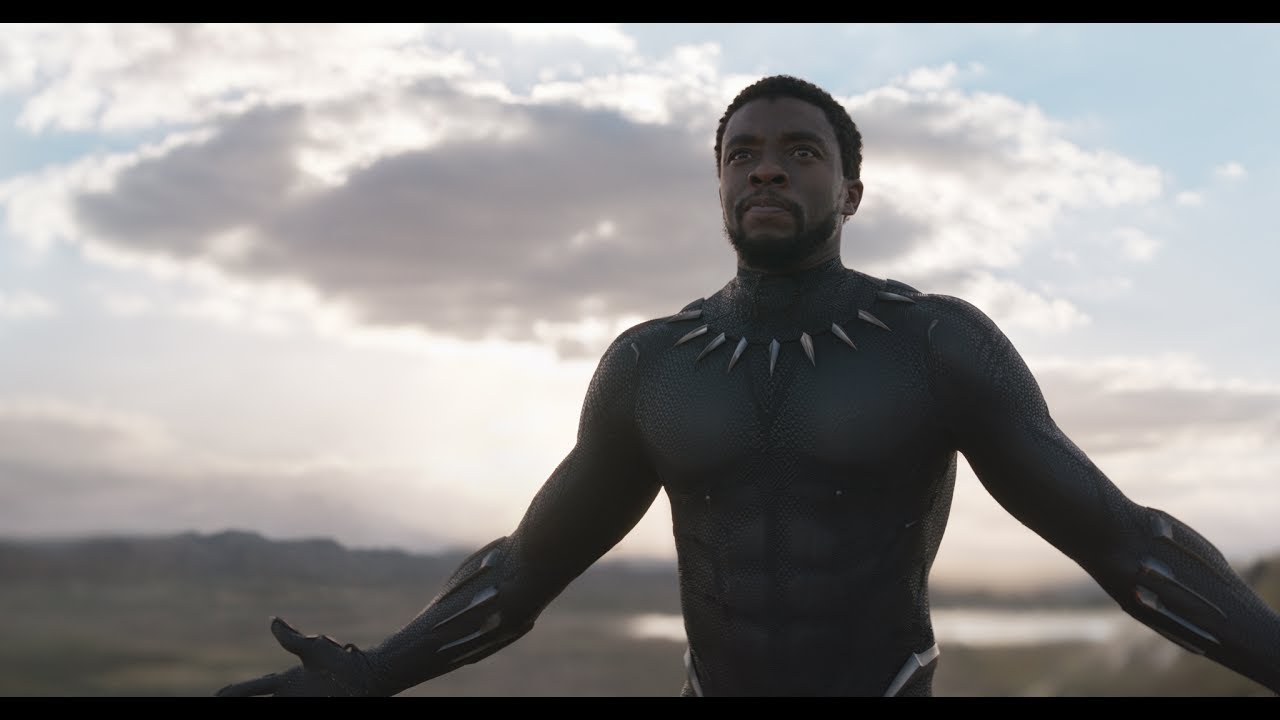
There is one particular movie, however, that is making waves that I haven’t really talked about before. I’m referring to the upcoming “Black Panther” movie, a movie that is already setting pre-sale records on Fandango. While every movie produced by Marvel Studios these days seems to blow up the box office and enrich Disney, this particular movie is unlike anything they’ve ever tried before.

There’s a reason why I haven’t talked much about it. For the most part, I haven’t come up with any meaningful discussions that I think are worth sharing. Like most self-professed Marvel fans, though, I am excited about this movie. It takes a character who has been underrated and overshadowed for most of his history and elevates his position in the larger narrative of the MCU.

The fact that Black Panther is one of Marvel’s most prominent black heroes is certainly another important aspect. In the ongoing effort to promote more diversity in Hollywood and popular culture, “Black Panther” checks all the right boxes. He’s a prominent minority character who holds his own alongside other Avengers, as we saw in “Captain America: Civil War.” He’s ready for his own movie.

Now, before I go any further, I want to make clear that I don’t wish to get into all the racial undertones and white-washing controversies that have plagued Hollywood in recent years. As a comic book fan, I’m just excited to see Black Panther get a chance to elevate his presence. I sincerely hope that Chadwick Boseman can do for T’Challa what Robert Downy Jr. did for Tony Stark.

However, in seeing the growing excitement surrounding this movie, I feel as though the movie is revealing something about the current state of the world that’s not easy to see. It also reveals something profound about the character of Black Panther, as well, that might be even more telling in these sensitive times we live.

It might not be the message that the “Black Panther” movie is trying to convey. I don’t doubt for a second that Marvel Studios and Disney see this movie as just another part of the process of maximizing profits at the box office. However, when you look at the context of this movie and the character it’s built around, there’s one unexpected, but remarkable insight that emerges.

“Black Panther embodies the ideal king that everybody wants to live under.”

Unlike some of the other insights I’ve tried to ascribe to certain character, it’s not too hard to see this concept reflected in the character of T’Challa. Whether you only know him from his role in the movies or are familiar with his history in the comics, this trait is a core aspect to his persona. He’s not just an Avenger, a superhero, and a prominent black character. He’s the ultimate king that people want to be ruled by.

If it sounds like that conflicts with my assertion that Dr. Doom is the ultimate ruler, then please bear with me. I am going to address that in a way that will hopefully make sense. To understand why this is key to Black Panther’s character, as well as being a big part of his appeal, it’s important to know a few details about his story.

In both the comics and the MCU, Black Panther isn’t just a prominent superhero who also happens to be black. He’s the king of the fictional country, Wakanda, a secretive land in Africa that is extremely advanced and extremely wealthy. This is largely due to its rich deposits of Vibraniam, an equally fictional super-material that is more valuable than anything we have in the real world.

The particulars of Wakanda are important because, like Krypton, Asgard, or Gotham City, it embodies a particular concept. Wakanda is, in many respects, the embodiment of an exotic land that prospers without the influence of the modern world. A key trait of Wakanda is that, for much of its history, it shut itself off from the outside world and actively fought those who tried to change that.

That isolation doesn’t just give Wakanda its exotic appeal. It also insulates it from what we, in the outside world, see an increasingly corrupt system of world governments that don’t do a good job of helping people prosper. Despite all the data that clearly shows the world is improving with each passing year, there’s still a sense that there’s this one magical place that can do it better.

Wakanda is that place. Wakanda is technologically advanced, fully developed, and extremely prosperous. The fact that it’s a country in Africa, which is home to some of the poorest countries in the world, makes it all the more remarkable. The idea that it achieved all this without the aid of other nations helps add to the appeal.

This is where Black Panther’s appeal as the perfect king comes in. Beyond just being advanced and prosperous on its own accord, it’s not ruled by a flawed democracy, a corrupt dictator, or an inept republic. It’s ruled by a wise, competent, and compassionate ruler who also happens to be a superhero on the side. Black Panther, in many respects, embodies all the ways in which rulers wish they were seen.

He wasn’t elected, nor did he come to power in a coup. He rules because he’s the son of a previous, equally competent ruler. It’s basically a traditional monarchy, one that doesn’t require corrupt elections or elaborate legal traditions. While that seems antithetical to the freedom-loving crowd who scoff at living under kings, it does have great appeal.

Like Superman, Black Panther embodies everything people want in a ruler. This is what sets him apart from Dr. Doom. While Doom might be smarter and more capable, most people would not be lining up to live under his rule. Black Panther is different. He’s the kind of king people actually want to live under, even if it means living under the rule of a powerful monarch.

Black Panther and his exotic homeland are insulated from the corruption and ineptitude we associate with our existing rulers. It’s because Black Panther is from such an exotic place that prospered, despite being so isolated, that his ability to rule seems fittingly superhuman. He carries himself as the kind of king who won’t create crazy cults of personality or fail spectacularly.

That appeal is even greater these days because of the growing perception that all leaders are inherently corrupt. The 2016 Election was basically a year-long parade celebrating everything people hate about inept, corrupt leadership. It created this sentiment of hopelessness that no matter which leader end up in power, they’ll still be corrupt.

The events after the 2016 Election have only further reinforced this notion. In a sense, “Black Panther” is coming along at the best possible time because the general public is so disillusioned with the rulers they know. The idea that there’s this powerful, uncorrupted king who benevolently rules a prosperous land isn’t just appealing. It embodies a near-universal desire to live in a perfectly governed society.

At this point, it’s worth noting that this sort of appeal clashes significantly with the harsh truths of the real world. In the same way there’s nobody who can ever be as powerful or as good as Superman, there’s nobody who can ever be as good a ruler as Black Panther. His persona, as well as his country, simply could not exist in the real world.

There are actually countries in this world that are extremely rich in resources, not unlike Wakanda. There are also countries that isolate themselves from the rest of the world and attempt to thrive on their own, absent outside influence. Most of these countries are either extremely poor or extremely corrupt.

Even with semi-competent rulers, it’s impossible for any country to thrive like Wakanda. It’s equally impossible for any ruler to be as effective as Black Panther because no government, be it a dictatorship or a democracy, that can ever manage the never-ending chaos or accommodate infinite needs of the people with its finite resources.

In a sense, rulers like Black Panther and societies like Wakanda are large-scale wish fulfillment for those dissatisfied with their own society. We may not acknowledge that such a ruler and such a society are impossible in the real world, but neither are shape-shifting aliens or silver-skinned men on surf boards. The stories surrounding such concepts act as a unique kind of escapism, which is at the heart of every movie’s appeal.

Now, I’m not saying that this sort of appeal will be the sole reason “Black Panther” succeeds at the box office. I believe that if it succeeds on the level that some are already projecting, it’ll be because of a multitude of factors, much of which can be attributed to the winning formula that Marvel Studios has refined.

Whatever the racial or cultural undertones of a movie like “Black Panther,” it has already struck a chord. It’ll likely strike even more after it’s released. Most probably won’t be related to Black Panther being the perfect king or Wakanda being the perfect society, but the undertones are there. As people become more dissatisfied with their leaders and their society, they’re likely to become more overt about it.

7 Comments

Filed under Comic Books, Jack Fisher, Superheroes

Five New Years Resolutions We Should All Make For 2018

Christmas is over. The last major holiday of 2017 has come and gone. Now that we’re done opening presents, roasting chest nuts, and getting drunk on eggnog, we turn our attention to 2018.

2017 was a long, eventful year to say the least. It started with plenty of controversy and plenty more followed it over the course of the year. Along the way, this blog underwent some enormous growth in terms of traffic. I also got finalized the release schedule for my next novel, “Rescued Hearts.”

While there were plenty of positives in 2017, especially if you’re a New England Patriots fan, I think this year will go down as one most people would rather forget. There are many reasons for that, but I don’t want to focus too much on those. I’d like to look to the future rather than lament on the past and not just because the future may have sex robots.

With every new year comes renewed hope. With renewed hope comes an opportunity to make things better than the year that came before it. However bad 2017 might have been, 2018 offers an opportunity to make it better. It’s an opportunity we should all collectively seize.

As such, I’d like to propose a brief list of New Years Resolutions for 2018. These aren’t resolutions for just one specific person or group. These are resolutions that, I hope, will apply to everyone and benefit everyone. The events of 2017 gave us all too many reasons to be jaded and cynical. With these resolutions, I believe we can make 2018 much better.


Resolution #1: React, But DON’T Overreact

This should be at the top of everyone’s list of New Years Resolutions in 2018. To hell with trying to lose weight. Make this the cornerstone of your effort to do better in the new year.

A good chunk of 2017 was built on a foundation of continue, unceasing overreactions to everything from the fan response to “Star Wars: The Last Jedi” to a typo on a tweet by the President to how Kellyanne Conway sits. I get it. People are passionate about what they’re passionate about.

However, there’s a fine line between passion and outrage and nobody even tries to walk it anymore. Passion is good in that it can be channeled. Outrage is not because it’s just glorified yelling and whining, which rarely adds anything meaningful to a conversation. Sure, it’ll get attention to an issue, but it won’t do much to solve it.

Now, that’s not to say we should stop reacting to things that outrage or offend us, but we should make a concerted effort to not overreact. That way, our overall response is more meaningful and substantive. We need more of that in 2018 because we sure as hell didn’t get it in 2017


Resolution #2: Acknowledge The Positives And Don’t Belabor The Negatives

This may sound like something an idealistic guidance counselor may say. I admit it’s cheesy, but I think it has merit. One thing I noticed in 2017 that I found very distressing was how eager and quick everyone was to focus on the negatives of any issue.

It’s not enough that some person, group, or organization did something controversial. Everything about that action has to be terrible, evil, and an affront to all that is decent in the world. Whether it’s the President, a Hollywood celebrity, or a controversial policy made by a video game company, it’s only the worst parts that seem to get the energy and attention.

I don’t doubt there are negatives in a lot of these issues, but they don’t encompass the entirety of an issue. People and the world around them is more complicated than that. The truth is there are silver linings. It’s rare that an issue is so lopsided that there’s no possible benefit to consider.

I’ve tried to do my part, pointing out the silver lining to the surge of sex scandals that came out in 2017 involving powerful men. It wasn’t much, but I like to think it serves as an extra bit of perspective for 2018. There will always be plenty of bad news to go around, which makes highlighting the positives all the more important.


Resolution #3: Acknowledge Another Point Of View (Even If You Don’t Agree With It)

This feels like one of those resolutions we should’ve had at the beginning of 2017, but just let it slip aside because we were too busy processing how the Falcons collapsed in the Super Bowl. In addition to the constant outrage that dominated 2017, there was also a growing inability by anyone with an opinion to acknowledge the other side of an argument.

It’s not just on message boards, YouTube videos, and protests. The entire year of 2017 seemed like a testament to increasing polarization of everything from politics to the Season 3 finale of “Rick and Morty.” If there was a middle ground, it was either ignored or blown up with a fury of collective outrage.

More than ever, people are convinced that their ideas are correct and anyone who disagrees with them might as well be a card-carrying Nazi. It’s like Godwin’s law became a goddamn commandment and as a result, nobody is listing to anyone else make their point. It’s worse than a political echo-chamber. It’s a brutal cycle of self-glorification and never-ending frustration.

There is an easy remedy to that, but it involves taking a deep breath and actually listening to someone make their arguments. I know that’s hard when it’s so much easier and more cathartic to remain outraged, but inherently more productive and gives people fewer excuses to hate each other. Seeing as how we have enough of those, this resolution should be a high priority.


Resolution #4: Be Willing To Trust, But Eager To Verify

Another common theme of 2017 that we should avoid carrying into 2018 had to do with accusations. At first, it was just everyone accusing everyone else of being a Nazi, a racist, a bigot, and whatever other insult you see in the YouTube comments section of the “Ghostbusters” trailer. However, it got much worse and for good reason.

Like it or not, 2017 will go down as the year that sexual misconduct by men of significant power became a huge issue. I’ve covered it in multiple ways, acknowledging the extent of the misdeeds and expressing concerns about the implications. However, as the year went on, it became less about the conduct and more about the accusations.

We’re at a point where there seems to be new accusations of sexual misdeeds every other week. We’re almost used to it and that’s a dangerous thing because accusations aren’t the same as actual facts. While it’s not inherently wrong to believe someone when they say they’ve been a victim of sexual misconduct, that belief shouldn’t be blind.

Blind belief isn’t just unhealthy. It’s the primary ingredient in creating dangerous cults. We should continue taking sexual misconduct seriously in 2018 and beyond, but we can’t just keep focusing on the accusations. We need to be more eager to verify the validity of those accusations, making sure they have some basis in reality before someone’s life is irreparably ruined.

I know this resolution will be controversial. There’s a growing sentiment that not believing an accuser somehow counts as victim blaming. It’s not easy resisting that sentiment because most people inherently sympathize with victims, but sympathy is only meaningful when there’s some measure of validity to the accusations.


Resolution #5: Try To Love And Not Just Tolerate

This is more an approach, rather than a resolution. I won’t say it should be at the top of anyone’s list, but it should be in the back of everyone’s mind in 2018. Again, I know it seems like more hippie talk, but there is some greater purpose behind it.

For years now, tolerance has been a major goal. For the most part, we’ve succeeded in that goal. People today are far more tolerant of other races, religions, ethnicity, and sexual minorities than they’ve ever been before. That’s an objectively good thing. We should continue that effort as much as possible in 2018.

However, tolerance has become kind of a low bar in recent years. It’s one thing to tolerate a minority, but it’s quite another to actually embrace and love them. That’s something we haven’t put a lot of energy into in our efforts to create a more peaceful society.

Given all the outrage and polarization that emerged in 2017, I think 2018 is a good time to start making that extra effort. We can’t just be satisfied with tolerance. It’s like the humanitarian equivalent of a C-minus. We need to start shooting for B’s and A’s in 2018.

That means making an effort to love someone, even when there are things about them we find distressing. It goes back to my comments about having faith in people. Sometimes, we have to put some extra effort into believing people are better than we think they are. Making that effort in 2018 will go a long way towards helping people be better for the new year and beyond.

Leave a comment

Filed under Current Events, Reasons and Excuses

Shifting Demographics: A Dangerous (And Unsexy) Trend To Worry About?

At what point does our willingness to have sex to make babies become a larger social problem? That’s not a rhetorical question, by the way. I’m not even the first person to ask that question. Ongoing changes in demographics are a real issue. Yes, the human population is still growing at a remarkable pace, historically speaking. However, the way it is growing is generating all sorts of problems.

I know talking about demographics isn’t all that sexy, but I think it should be. Demographics involve population. A population of any measure requires that people have sex. I’m in the business of telling sexy stories so changes in demographics will indirectly affect me to some extent.

To understand this issue, it’s necessary to sift through some annoying levels of fear-mongering. Not too long ago, there were some pretty dire predictions about the impact that our rapid population growth would incur on the environment. While these are still pressing issues, we’re not living in a “Mad Max” style hellscape for now.

More recently, much of the doom-saying has come from those anxious about the declining fertility rates of the industrialized world, some of which have dropped below replacement levels.

You don’t need to know much about the particulars of demographics or statistics to understand the implications. For any society to prosper, both economically and functionally, it needs a steadily growing population. Old people die off. Their children take their place. More children grow into productive adults that contribute to society and the economy. It is very much the life-blood of civilization.

That process got a massive boost in the mid to late 20th century thanks to improvements in medicine, technology, and economics. Around 1900, the world population was below two billion. By the end, it had tripled to six billion. As of this post, the global population stands at approximately 7.5 billion. It’s very possible that we may cross the 8 billion mark by the end of the decade.

However, that continued growth is starting to encounter some obstacles. The rates of growth, especially in the industrialized world, are starting to slow. Just this past year, the fertility rate in the United States dropped below replacement level for the first time in a century. That’s a major milestone with some major implications.

Some parts of the world are already dealing with those implications. In some areas, they’re slowing so much that it’s causing major concerns for the future of that society. Japan, especially, is dealing with some unprecedented issues with a society that has a booming elder population and a dwindling pool of youth.

I won’t get into the specifics of the apocalyptic visions associated with declining fertility rates. That kind of doom-saying is rarely productive and often flat out wrong. However, a declining population carries with it all sorts of issues.

A society with a declining population has very poor economic prospects and I’m not just talking about a smaller market for my sexy novels. A declining population means fewer workers, fewer customers, and fewer people to come up with sexy new ideas. For a community and a culture, it’s basically the social equivalent of rapid decay.

In some cases, this decline can be compensated through immigration, but that brings with it a whole host of hot-button issues that I don’t care to discuss on this site. After all the anti-immigration rhetoric that erupted from the 2016 presidential election, there’s little chance that anything productive will emerge from that issue.

What concerns me more about this ongoing trend are the more personal implications behind it. There has already been a noticeable decline in overall sexual activity among younger generations. That doesn’t mean people are less horny. That just means less people are actually getting together and doing it.

The reasons for this are hard to quantify, but I’ve mentioned some of the obstacles that millennials are dealing with, beyond their sex lives. There will likely be even more obstacles once Generation Z, their successors, take hold.

In essence, these coming generations are drowning in debt and lack the economic of their predecessors. It’s hard to find time to seek a lover, start a family, and raise multiple children when there aren’t as many well-paying jobs to go around and the cost of living just keeps going up. The stress alone in dealing with all these issues is enough to kill anyone’s libido.

Others will claim that trends like growing acceptance of abortion and contraception, two issues that I’ve discussed more than once, is a major factor here. I tend to disagree, at least in part. Historically speaking, economics tends to drive fertility, politics, and most other major trends. Money is just that powerful.

I don’t doubt that having a greater control over our fertility from a medical standpoint is an issue, but just having that control doesn’t necessarily undermine our inherent desire to procreate. It’s the resources, circumstances, and conditions that have a much bigger impact on peoples’ desire to have children.

I even see this among my friends, family, and peers. Most of the people who are my age or younger are not in a situation where they have the resources to have a family. Most are struggling to find steady, well-paying jobs. Some are struggling just to find affordable living space, an issue I only recently addressed. Even if they’re still horny, they are not in a position to exercise their fertility.

While that’s understandable from a pragmatic point of view, the long-term implications are still there. If a large enough chunk of society faces these same issues, then at some point, the shift in demographics becomes unavoidable. Fewer children being born, along with a higher cost of raising them, carries with it all sorts of uncertainties that promise to make a tense situation even worse.

It may still be too early to worry about this trend, even the context of an aspiring erotica/romance writer. Trends have a nasty way of changing erratically. The old investor adage of past performance not guaranteeing future results has held true on many occasions.

Paul R. Ehrlich‘s “The Population Bomb” found that out the hard way because it failed to anticipate how humanity would react and adapt. Given how notoriously hard it can be to predict the future, it’s not smart to make too many assumptions about what will happen with these trends in declining fertility rates.

That said, if I have to adapt my novels to cater to an aging population, I’m willing do to that. It just may mean that I’ll have to learn how to describe sagging boobs in a sexier way.

2 Comments

Filed under Current Events, gender issues, sex in society

The Doug Stanhope Principle (And Why We Should Apply It)

In my experience, comedians offer the most memorable and insightful commentaries on otherwise serious issues. Even if they’re just trying to be funny, which is their job, I think those commentaries have worth beyond the laughs. There are even times I think comedians don’t realize just how insightful their humor can be.

I’ve made my love of comedy known before and not just through my weekly Sexy Sunday Thoughts. I’ve cited accomplished comedians like Christopher Titus when exploring very non-funny issues, such as jealousy. I don’t just do this to help lighten the mood on a site I want to keep light and sexy. I do it because comedy can reveal more than the breadth of our sense of humor.

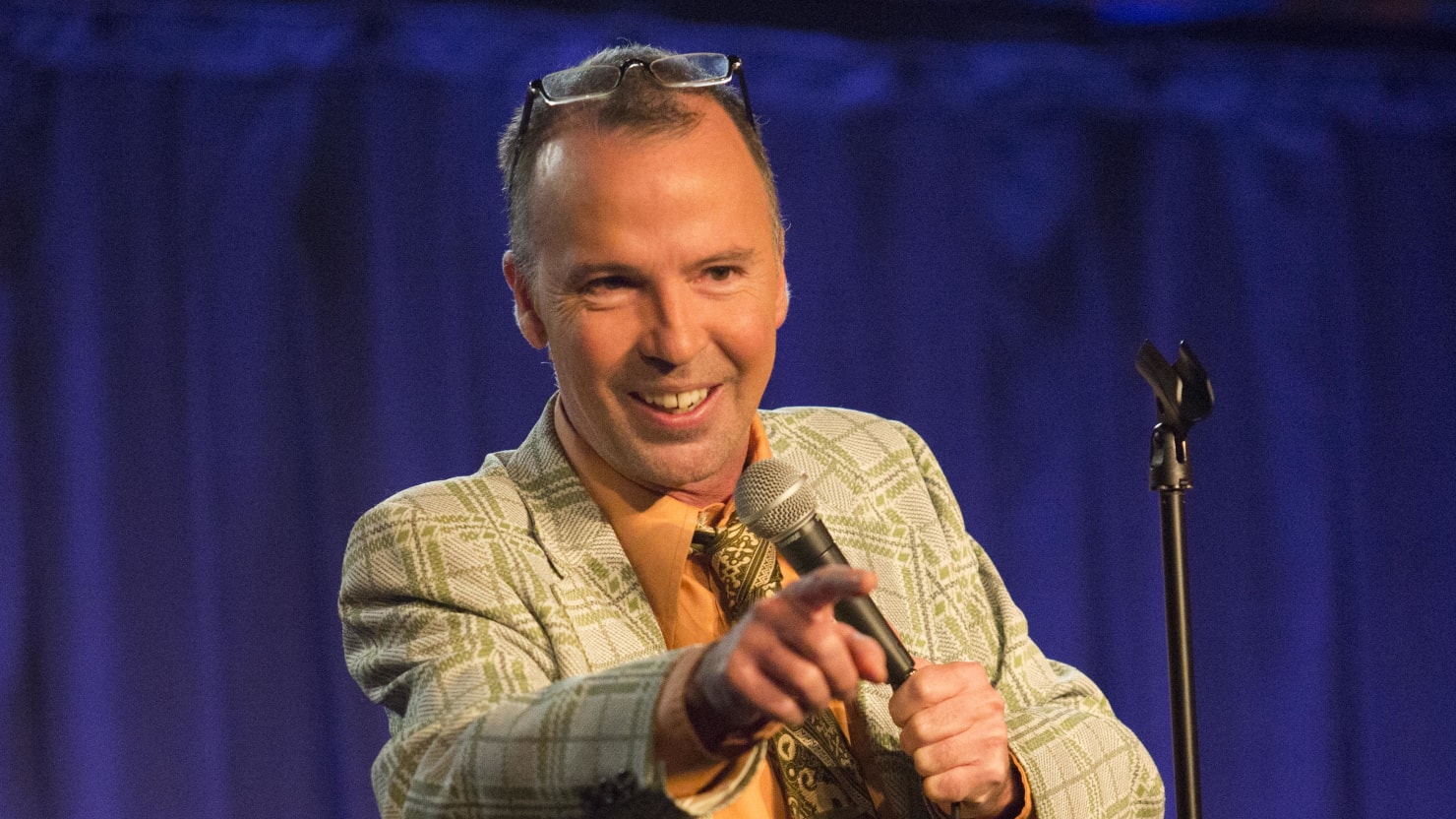
With that in mind, I’d like to cite a comedian by the name of Doug Stanhope. I’ve never mentioned before, but has been one of my personal favorites for years. He’s not on the same level as a Jon Stewart, George Carlin, or Lewis Black. However, given his brand of humor, that’s not too surprising.

Stanhope’s comedy is decidedly NSFW, touching on issues that would give most network producers brain aneurisms. His opinions are overtly harsh and unconcerned with your delicate sensibilities. If you’re wondering just how harsh he can be, here’s a quick taste.

That said, he is not a shock comic in the tradition of Howard Stern or Andrew Dice Clay. Stanope’s comedy, as crude as it can be at times, is very smart. One bit in particular stands out. It comes from his “Deadbeat Hero” album, one of my personal favorites and one I think every comedy fan should listen to at least once.

In that album, he talks about a number of issues, but one in particular stands out. That issue is marriage, one I’ve discussed too on this site, albeit not with the same level of humor. On this topic, he makes one of the most insightful observations I’ve ever seen on a treasured institution.

If marriage didn’t exist, would you invent it? Would you go “Baby, this shit we got together, it’s so good we gotta get the government in on this shit. We can’t just share this commitment ‘tweenst us. We need judges and lawyers involved in this shit, baby. It’s hot!”

The bolded parts are my doing because I think the implications of that question go beyond the comedy, more so than I think Stanhope himself intended. In a sense, it reflects the paradox of marriage and traditional romance that I’ve talked about before in that we see it as natural, yet we need all these social institutions to protect it.

The fact those institutions exist is a subtle, but telling sign that these traditions aren’t as natural as we think they are. More than anything else, they’re the product of taboos and social norms that people cling to out of fear, familiarity, and ignorance. I won’t go so far as to call it a form of excuse banking, but I think it highlights our imperfect understanding of human nature.

One of Doug Stanhope’s greatest strengths as a comedian is his ability to break down a treasured and cherished concept in a way that’s both revealing and insightful. What he did for marriage with this one question immediately makes us ponder the flaws in our current understanding of it.

Once we stop laughing at the punch-line, though, I would take it a step further. I would ask that question again in more general form as a means to help us scrutinize our traditions, values, and everything else we hold sacred. Sure, that’s bound to make some people uncomfortable, but that’s exactly the point of certain brand of comedy, especially Stanhope’s.

Like the Simpson Filter I coined earlier this year, let’s coin another using this question. Since I’m not a branding expert with only a fraction of the wit of Doug Stanhope, I’ll call it “The Stanhope Principle.” The core of that principle can be summed up in one simple question.

If something didn’t exist in its current form, would you invent it that way?

Sure, it’s not nearly as funny as Stanhope’s bit on marriage, nor is it meant to be. In essence, it’s a question meant to get your brain thinking about things that it usually doesn’t think about. In some cases, they’re issues you’ve gone out of your way to avoid.

Take any current issue, be it a major political controversy or a certain state in your personal life. Now, apply the Stanhope Principle and try to answer the question honestly. Here are just a few possible examples.

  • If our tax system existed in its current form, would we invent it that way?
  • If our health care system existed in its current form, would we invent it that way?
  • If our current relationship existed in its current form, would we invent it that way?
  • If the job we worked existed in its current form, would we invent it that way?
  • If our website/blog/product existed in its current form, would we invent it that way?

If you ask that question and answer it honestly, which is key, you might be surprised by what you find out. You might think your personal relationships are functional, but applying the Stanhope Principle could expose flaws that you’ve been overlooking or ignoring.

Apply in a larger context, such as politics, marriage, and gender issues, and the insights get a bit more complicated. Given the current inequalities that still pervade in our society, as well as the double standards we apply, the Stanhope Principle reveals the breadth of the flaws within these institutions.

It can be distressing, acknowledging those flaws. That’s usually where the excuse banking enters the picture, but that can only further mask them. Another honest application of the Stanhope Principle will only remind us of those flaws and even reveal how we’ve made our situation worse.

Ideally, the Stanhope Principle should be a basis for improvement. A good example is Apple, one of the biggest, most successful companies in the world. Steve Jobs and Steve Wozniak probably didn’t know they were applying that principle, but they were.

They saw the current state of computers. They saw there was a lot of room for improvement. Given how cumbersome computers were for much of their early history, they decided to innovate and create a better way of using them. The result is a company that is worth over half-a-trillion dollars.

Applying the Stanhope Principle for worked out pretty well for Apple. I’m not saying it can make everyone a billionaire, but it does help break down a situation and an issue in a way that allows us to see the bigger picture.

More than anything else, it exposes the imperfections of our current situation. For some, it motivates them into improving their situation, be it a relationship, a business, or a social policy. For others, it’s an uncomfortable reminder that there’s a flaw in that they need to cover up or mask. In that sense, it should be easy to see who are more likely to become billionaires.

There are all sorts of way to apply the Stanhope Principle. I’ll certainly try to apply it to future issues that I discuss on this site. For now, I just want to offer my sincere thanks to Doug Stanhope and the principle he inspired. He has made the world inherently funnier and more interesting to explore.

4 Comments

Filed under Current Events, Marriage and Relationships, Reasons and Excuses

What “The Gifted” Reveals (And Warns Us) About Ourselves

Every now and then, a TV show comes along at just the right time. Like bikinis in the summer, hot chocolate in the winter, or beer at a football game, it just makes the right connections for all the right reasons.

You could argue that shows like “Married With Children” or “South Park” were shows that just happened to come along at a time when audiences were eager for something different, but didn’t know it. Some, especially “Married With Children,” couldn’t be made today because of changing standards. The fat jokes alone would’ve triggered endless whining on social media that would’ve gone on for years.

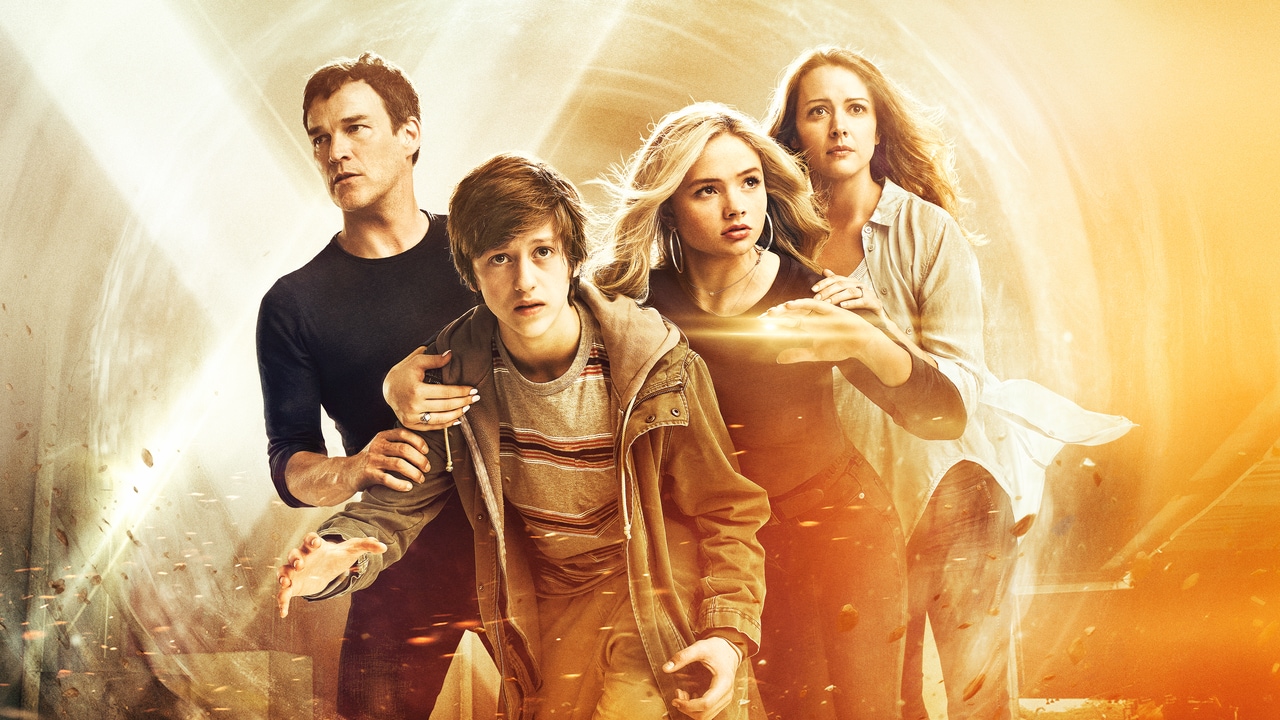
That brings me to “The Gifted,” Fox’s latest effort to squeeze every cent of profit from the X-men franchise. Yes, this is going to be another one of those posts. As I’ve done before, I’m going to tie real-world issues to one of my favorite superheroes. Unlike other posts, though, those ties go beyond getting romance tips from Deadpool.

While I’m usually skeptical about efforts to shamelessly exploit the glut of superhero shows on TV, I gladly make an exception for “The Gifted” and for a good reason. Compared to superhero melodrama on the CW or the gritty violence of the superheroes on Netflix, it’s a very different kind of show with a very different kind of struggle. Unlike aliens, blind lawyers, and secret armies of ninjas, this struggle is more relevant.

That’s because “The Gifted” doesn’t focus on heroes. Sure, it takes place in the same world as the X-men, but they aren’t the focus. Instead, the show builds its story around the Von Strucker family. They don’t live in a mansion. They don’t have their own personal hypersonic jet. They don’t even have their own personal high-tech training room.

The Von Struckers, unlike their comic counterparts, are an ordinary middle class family. They aren’t concerned with superheroes, super-villains, and insane love triangles between heroes. They’re concerned with work, school, taxes, and taking out the garbage. In a sense, they are a reflection of real people in a world with unreal challenges.

That’s a perspective that rarely manifests in the X-men movies. In fact, other than a memorable scene in “X2: X-men United,” the impact that mutants have on ordinary people is rarely touched on. Sure, they’ll show humans running in terror from a Sentinel or a pissed-off Magneto. That doesn’t give us much insight into the lives these people live.

The Gifted” builds an entire narrative around a family that lives in this world and during exceedingly tense times, no less. This is not a world where seeing the X-men take down a Sentinel is the sort of thing that happens every other Tuesday. This is a world where both the X-men and the Brotherhood have disappeared in an event that has only been referred to as “The July 15th Incident.”

That incident, much like 9/11 or a major assassination, created a dramatic/traumatic shift in society. Suddenly, mutants aren’t just another minority issue. They’re an existential threat, like nuclear weapons or mass pandemics. Mutants aren’t just a distant threat anymore. They’re a real threat.

From the perspective of the Von Struckers, at least in the first episode, the danger of mutants is like the threat of terrorism. They know it’s there. They accept the systems and precautions that society has put in place to deal with it. They’ve learned not to think much of it. They’re too busy just being an ordinary family in a world that happens to have individuals who have the mutant ability to turn into ice cream.

In a sense, we’ve done the same thing in the real world. We accept that we live in a world where the NSA reads all our emails, the CIA tries to assassinate world leaders, and gross injustices happen every day. We know, to some extent, that it’s manifesting all around us. We just shut it out and try to live our lives.

What happens, though, when that injustice hits you or someone you love? That’s what happens to the Von Struckers in the very first episode of “The Gifted.” Their blissfully oblivious lives are shattered when Reed and Kate Strucker find out their children are both mutants. Not only that, one of them ends up trashing the school gymnasium when his powers first manifest.

Their happy, middle class lives aren’t just disrupted. They’re shattered, spit on, and covered in fresh whale shit. To make matters worse, Reed Strucker, played by Stephen Moyer, was a prosecutor who made his living sending mutants to prison. Short of beating mutant children with a baseball bat for a living, he couldn’t have had a worse job.

The mutants he sent to prison weren’t always guilty of crimes. Sometimes, it was just a matter of being in the wrong place when their biology decided to act up. It would be like a teenage boy being arrested for an awkward boner, something we can’t always control. Granted, mutant powers tend to be more destructive, but they can be just as unpredictable.

It’s this revelation, as well as the events that unfold in the episodes that follow, that really highlight the impact that “The Gifted” leaves. It’s an impact more relevant than most X-men stories, including the ones that involve jealous ex-lovers. In a sense, it’s one that many minorities already understand all too well.

From the beginning of the show, there’s never a sense that Reed Strucker believed that he was hurting anyone. He never came off as the kind of guy who hates mutants and longs for the days where men like him can throw mutants into internment camps. He’s just doing his job, which he believes is making the public safer.

It’s really no different from those who genuinely believe that homosexuality is inherently harmful or that gun control will only lead to more violence. Most of the people who believe these things, the Pat Robertsons and Richard Spencers of the world notwithstanding, are decent people who want to live in a world where they’re families are safe.

Then, something traumatic comes along that shatters this worldview. They find out they have a gay son or they find themselves in the crossfire of a mass shooting. Suddenly, they can’t ignore these injustices anymore. They can’t go about their happy lives as though the system isn’t victimizing someone. It’s one of those rare situations where no amount of excuse banking can change the truth.

In a sense, the Von Strucker family are reflections of the families in the real world that find themselves on the wrong end of injustice. Whether it’s a Muslim family victimized by racial profiling or being on the wrong side of a sexual harassment claim, it’s not possible to avoid or ignore it anymore. These injustices are hurting you and the people you love. It’s soul-shattering, but that’s what makes “The Gifted” so compelling.

In the fourth episode, this message really hits hard. Reed finds himself in a jail cell right next to Polaris, a mutant who he prosecuted in the first episode, who also happens to be Magneto’s daughter. In these bleak conditions, she basically lays out all the hard truths that he and others like him avoid.

Yes, there was an incident where a group of mutants, which you could substitute for any minority, did something terrible. That was a terrible incident, but efforts to prevent other incidents like that are just hurting real people who don’t want to be superheroes fighting killer robots. Polaris is just one of them. Reed’s children are two more.

That harsh message is one that carries over in the real world, often in tragic ways. Back in 2007, a documentary called “For The Bible Tells Me So” highlighted deeply religious families who had been vehemently anti-gay, only to have one of their children turn out to be gay. Sometimes, it changed their perspective. In some instances, though, it ended tragically.

It’s a harsh, but necessary truth. We can’t control our circumstances. Much like Reed Strucker, we sometimes find ourselves in the worst situations at the worst possible times. The world is chaotic, full of strange people who do terrible things. The fact we can’t control or prevent those things is agonizing, at times. We, as a society, will do as much as we can to mitigate that danger.

In the process, though, we’ll try to fight injustice with more injustice. We’ll obsess less over what is real and more about what is potentially real. It leads us to do extreme things like throw innocent people into internment camps or create killer robots to protect people.

The Gifted” reveals the cost of those measures. It goes beyond the eccentricities surrounding superheroes and focus on the real impact that real minorities feel. Most who are lucky enough to not be part of that group remain content to ignore it. Then, when it finally affects them, they realize just how unjust it is.

At a time when injustices are harder to hide and minorities are a growing part of society, these are important messages. The X-men have been exploring these themes for years, often with colorful adventures involving cosmic birds. “The Gifted” goes even deeper and during these troubled times, these are messages worth heeding.

2 Comments

Filed under Current Events, gender issues, X-men

The Future Of Beauty (In A World Where People Don’t Need To Exercise)

When I write one of my sexy novel, I work hard on it. I really put my heart and soul into it. There are other feelings I put into it, but those are only part of a much greater effort that doesn’t always manifest in my pants.

The work we put into something is what gives it meaning to us. Even the laziest slob will concede to that. If my novels just magically conjured themselves while I was asleep, that would be wonderfully convenient. However, I don’t think I would be as passionate about them if I didn’t actually put the work into making them.

I think the same concept applies to exercise and how we go about making ourselves beautiful. Throughout human history, there have been all sorts of elaborate, albeit bizarre rituals surrounding beauty and fitness. When I work out, whether it’s for my health or to look good at the beach, the effort I put into it helps add to the fulfillment I feel when I look in the mirror.

Take that work out of the equation and what does that change? That’s not a rhetorical question. That’s a serious inquiry because if we didn’t have to work so hard to get fit and beautiful, then are we going to approach fitness and beauty the same way? I believe we haven’t asked that question enough, but the answer is already out there.

When I mentioned recent research that promises drugs that allow users to enjoy the fruits of exercise without actually doing anything, I’m sure there were plenty of out-of-shape couch potatoes out there who got excited. I certainly wouldn’t blame them. The idea that we can all look like we spend two hours a day in the gym is pretty enticing.

Thin man flexing muscles in front of mirror reflecting figure of body builder : Stock Photo

However, that means that fit, toned body we all crave now would be much easier to get. You don’t really work for it. You just take a pill, sit back, and let science and biology do the rest. That kind of effort isn’t going to inspire much pride. Hell, that kind of effort is barely on par with brushing your teeth every day.

If that’s all it takes to look fit and slim in the future, then is being fit and slim really going to be considered beautiful? Standards of beauty have changed a lot over the course of history. Beauty is usually meant to confer a sense of health, strength, and vitality. It’s also a way for some people to set themselves apart in an exceptional way.

In a world where being fit is so common, would it really be considered that beautiful in a larger context? If everyone is beautiful, then is anyone truly beautiful? Doesn’t beauty require a certain variation that is difficult for most people to attain?

It’s akin to the inherent contradiction in thinking everyone is special. If you go by the dictionary definition of the word, the entire concept falls apart if you approach it that way. When everyone is unique in the same way, then they cease to be unique.

That raises another question that’s much harder to answer. In a world where everyone is fit and doesn’t need to exercise to incur its benefits, what will be considered beautiful? What will be considered sexy? As an aspiring erotica/romance writer, these kinds of questions are very serious.

Naturally, a world full of fit people with stronger bodies is going to be inherently sexier. Beauty standards aside, there’s a lot to be gained by having a society full of healthy individuals. Obesity has already been linked to sexual dysfunction. Increased exercise has also been linked to a higher sex drive. Regardless of whether or not that exercise comes in pill form, it’s going to affect our collective sex lives.

That means the concept of what is sexually attractive will gain even greater importance. If everyone around you looks like an extra in a softcore porn movie, then how do you decide which one you want to hook up with? Could this create a paradox of choice situation where find ourselves unable to determine who rouses our loins?

It’s impossible to know since we don’t live in that world. However, unlike our beauty-minded ancestors, other aspects of future technology will impact this effort. Tools like CRISPR and smart blood will allow people to modify and enhance their bodies in ways no amount of exercise ever could.

However, those advances are still a way off. Before we advance to that point, people may have to improvise. It may require that people develop more unique fetishes, of sorts, which I’ve speculated on before. If you think the stuff in “50 Shades Of Grey” or furry conventions are kinky, then you might have to hold your jaw up in the future.

Beyond the fetishes, the fashion industry will likely become an ongoing LSD trip in its effort to accommodate the inherent need to stand out in a world where everyone is fit. That’s because just being healthy won’t be enough. Like being a nice guy or not being a sleazy Hollywood mogul, that just won’t be enough to attract prospective lovers.

There’s only so much an aspiring erotica/romance writer can imagine. Even my kinky mind has its limits. Major technological advances, from antibiotics to contraception, have already had enormous impacts on our sex lives and how we go about forging romantic bonds. More advances are on the horizon. Some will hit harder than others.

That means there’s also a chance that there will be major drawbacks in a world where the benefits of exercise comes in pill form. Even if people are healthier and hornier, there may be large segments of society not equipped to handle that. It was a burning question in my book, “Skin Deep,” that did not get a complete answer. We probably won’t be able to answer that question until the technology arrives.

Whatever the case, for better or for worse, I will do my part to adapt my sexy stories accordingly. A world full of fit, healthy people is sure to change a great deal with respect to how we think of beauty, how we go about finding lovers, and how we make love.

However, our collective libido is nothing if not adaptive. It’s a big reason why the human race is the dominant species on this planet. That, in and of itself, is a thing of beauty whose form will continue to evolve in sexier ways than we can possibly imagine.

1 Comment

Filed under Sexy Future, Thought Experiment