Tag Archives: relationships

The (Potential) Sex Lives Of Generation Z

Talk to any parent with kids younger than 13 and chances are they do not want to think about their children’s’ future sex lives. In fact, I’m pretty sure that they would rather think about anything else.

Some parents would rather stick their heads up the ass of an elephant than think about their precious little gems getting naked, sweaty, and making the kinds of noises usually reserved for the honeymoon suite in Las Vegas. The fact remains, though, that those kids are going to grow up. They’re going to grow breasts, get awkward boners, and feel the urge to hump each other.

I’m not a parent yet so I can’t say much about what goes into those thoughts. I get that parents are very uncomfortable talking to their children about sex. Kids are just as uncomfortable learning about it from parents. Most kids would rather pour boiling water into their eyes than catch their parents in a compromising moment.

On both sides of the equation, there’s an inherent aversion to imagining the sex lives of young people. There’s just as much of an aversion by young people to talk about their sex lives with their parents. On this blog, there is no such aversion. I already talk about sex robots and bionic penises. Those kinds of aversions have no place here.

I say all this as a preface, of sorts, because I’m about to talk about the future sex lives of Generation Z. In case you’ve forgotten, most of the individuals who fall in the range of Generation Z aren’t even old enough to drive, let alone legally hump. A lot of them don’t even know what sex is. They just know to start giggling uncontrollably when someone starts talking about it.

In talking so much about millennials and Generation Z lately, it was only a matter of time before I started talking about their sex lives. Given how much I enjoy speculating on the future of sex, how could I resist?

Like it or not, it’s going to become an issue at some point. That’s because it always becomes an issue when a generation comes of age. Baby Boomers caught a lot of crap from their parents because they started the whole “free love” movement. Generation X caught crap from their parents for ditching the love part, in favor of “friends with benefits.”

At the moment, the millennials are getting their share of crap for things like sexting, which I’ve talked about, or arguing about how attractive people should think Kaitlin Jenner is. The dynamics may change and so do the excuses. The underlying themes are the same, though. Older people will always be appalled by how young people approach their sex lives.

So what exactly will Generation Z do that will horrify the multiple generations that came before them? Given the prevalence of internet porn and the mainstream success of “50 Shades of Grey,” how can they possibly do anything to shock anyone at this point?

Well, as an aspiring erotica/romance writer who thinks more about this issue than most would dare, I have a few ideas. I’ve already contemplated the potential secrets and mentality of Generation Z. Now, I’d like to take those secrets to kinkier depths.

Before I get to those juicy parts, though, I need to remind everyone that I can’t see the future. I’m about as qualified to predict popular trends as I am to wrestle a grizzly bear. It’s very likely that some of these sexy speculations turn out to be dead wrong. A decade from now, I might look like a total idiot for making these predictions. I wouldn’t be the first either.

With that unsexy disclaimer out of the way, here’s what I think we can expect for the sex lives of Generation Z. If you’re a parent, you might want to look away or temper your gag reflex. Some of these speculations might churn your stomach.


Sexy Trend #1: Fetishes (Especially The Kinky Kind) Will Dominate

When it comes to the average sex life in the day of Generation Z, kink is the new normal. Weird is the new ordinary. If it’s freaky, over-the-top, and involves clowns with dildos, then that’s going to get this burgenoning generation horny in ways that will disturb every other generation before it.

With Generation Z, sex will be likely be defined by a multitude of fetishes. At the moment, the fetish world is a niche market, but one that’s already growing. However, it’s a market that Generation Z will take to the next level and beyond, much to the horror of their parents.

Ironically, it’s those same parents from Generation X and the millennials that will have laid the groundwork for this trend. This is the generation that built the internet and internet porn, by default. Generation Z is coming into a world where anyone with a phone can look up countless images and videos of people having sex. It’s so prevalent that it barely qualifies as taboo anymore.

It’s for that exact reason that Generation Z will seek something kinkier. Young people always feel inclined to rebel against their parents. Their parents made a big deal whenever someone found a dirty magazine or unlocked the parental controls on the internet. Generation Z won’t make a big deal of anything unless someone is pierced, tattooed, or wearing a horse mask.

In a future with unlimited internet access to unlimited volumes of porn, those in Generation Z will likely define their sexuality by their own personal kinks. They’ll be more inclined to customize their sexuality, so to speak. It’s hard to know what kinds of fetishes they’ll develop. Whatever the case, I’ll have to adapt my sexy novels accordingly.


Sexy Trend #2: Talking About Sex Will Be (Uncomfortably) Blunt

For most people, talking about sex can either make your pants feel tighter or your stomach churn, depending on the situation. While I generally favor the former, there are still plenty of situations where the latter occurs. I’m pretty sure that’s the case with every kid who endured health class in high school.

With Generation Z, it’s likely that the nature of that conversation will change. It’ll still be awkward. Talking about sex always will be, to some extent. However, a new crop of youth, educated by their already-educated parents, will probably be a lot less filtered. To illustrate what I mean, here’s a quick scenario that may play out in the future.

Man: So, you like sex?

Woman: Yeah, I love sex.

Man: Cool. How do you like to do it?

Woman: I like being on top, having my nipples pinched, and licking chocolate off a man’s balls.

Man: You’re in luck. I happen to love licking chocolate off a woman’s vulva. Want to have sex later tonight? I’ve got plenty of chocolate.

Woman: Sure! Here’s my number. I’ll see you then.

I can already imagine Baby Boomers, millennials, and the Generation X crowd cringing and/or laughing. It sounds so crude, like only something a guy who writes sexy novels would contemplate.

Well, I’m not saying my novels are prophetic, but that overly blunt approach may be the natural reaction to everything previous generations have set up. It was Generation X that began the movement of political correctness that made everyone so anxious about the words they used. It was the millennials who took it a step further with their obsession over gender pronouns and cultural appropriation.

Generation Z is in a perfect position for a backlash, of sorts. They’ll see their parents and grandparents’ anxiety over using the wrong words and do the exact opposite. That means they will likely be a lot more blunt, graphic, and up front about sex, how they like it, and how they go about getting it. I’ll give every parent a moment to writhe in terror.


Sexy Trend #3: Emphasizing Quality (Orgasms) Over Quantity (Partners)

Not every generation sees the sexual practices of their parents and does the exact opposite. Sure, Baby Boomers did a lot of that with the sexual revolution, but Generation X and the millennials basically rode the wave of certain sexual trends. Generation Z will likely do the same.

One of those trends involves an overall reduction of sexual partners. I’ve talked before about the overall decline in sexual activity among young people today. Not all of that has to do with people becoming more uptight, though. Some of that has more to do with economic factors, as well as men and women wanting to build careers before they forge relationships.

While it’s much harder to predict what kind of economy Generation Z will experience, it does seem likely that they’ll continue the trends established by their parents and grandparents. That’s not to say that they’ll become Puritans. It’s more an issue of how they’ll channel their sexual energy.

Along with being more inclined to follow a fetish, those in Generation Z will likely focus less on the amount of sex they have and more on the quality. While that may be bad news for the orgy industry, it could be good news for those seeking love, like myself.

The world, as we know it, is becoming increasingly customizable. We can customize our clothes, our phones, our social media identities, and even our avatars in games. The ability to customize our sex lives in accord with our various kinks seems like a natural extension. In a world full of billions of people, all connected through the web, it’ll be that much easier to find someone who can make you come in just the way you want.

I’ll give every other generation a moment to withhold their raging jealousy.


Sexy Trend #4: Sexier Tech (Beyond Sexting)

Connected to every sexual trend, both with Generation Z and all previous generations, is the impact of technology. The birth control pill was a huge influence on Baby Boomers. The internet was a huge influence on Generation X and Millennials. There are other technologies that we don’t even know about that will likely influence Generation Z.

Some of that technology is already emerging. We’re seeing it with the rise of smart devices, including smart sex toys. We’re also seeing smartphones evolve beyond just taking pictures of pets and sending nude photos. Millennials may have made practices like sexting more common, but Generation Z will have far more tools at their disposal.

Already, tech companies are investing heavily in virtual reality and augmented reality. The devices that Generation Z ends up using will do far more than send naked pictures. As the internet showed previous generations, if it can be used for porn, then it will be used for porn eventually. Don’t think for a second someone isn’t working on that right now.

Beyond better tools to express their sexuality in new ways, there’s also the potential impact of disease-fighting tools like CRISPR and new forms of contraception like Vasalgel. Given how the pill affected the Baby Boomers and how AIDS affected Generation X, it’s hard to overstate the implications for Generation Z if they enter a world of no disease and advanced contraception.

It may very well be the wild card, of sorts. Whenever limits on sexual expression are removed, people tend to react. Some of those advancements might not come until Generation Z has started having kids of their own, but they will have an impact at some point.

Even with those implications, it doesn’t even begin to scratch the surface of the impact that sex robots will have. However, that’s one advance that will affect all generations and not just Generation Z, probably in ways that are too kinky for one blog.


Sexy Trend #5: More (Sexy And Unsexy) Experimentation

As part of all the other trends I’ve listed, there’s one that sort of connects them all. Generation Z will enter a very different sexual world than that of their parents or grandparents. Beyond the gadgets they use or the accessibility of information about sex, they’ll have an unprecedented ability to connect, learn, and grow sexually.

As a result, it’s very likely that Generation Z will be one of the most sexually adventurous cohort in history. By that, I don’t mean they’ll be having more sex in utility closets and airplane bathrooms. I’m talking about the kind of experimentation that hasn’t even crossed the minds of those who don’t regularly write about sex. Given my knack for writing sexy novels, I like to think I have an advantage.

If Generation Z has a greater ability to exercise their various fetishes, connect with others who share those fetishes, and use advances in technology to mitigate the risks, then there’s nothing stopping them from attempting novel forms of sexual expression.

Maybe their concept of role playing will expand. Maybe the way they set the mood or initiate sex will change. Maybe they’ll put together the kinds of sexy scenarios that only a porn producer on crack would come up with. It’s impossible to know, but they’ll be in a perfect position to try. In matters of sex, you only really need to give people an opportunity and a way to mitigate the risks.

To millennials, and every other generation, it’ll come off as decadent. Even if the Generation Z crowd ends up having less sex with fewer people, those kinds of attitudes will still shock and horrify the older crowd. Some of that might be out of jealousy. I’m sure there are those who simply wish they had access to better contraception and disease-fighting tools when they were younger and hornier.

At the end of the day, though, this may be Generation Z’s idea of normal. To have all these tools and opportunities, but not explore their limits would seem weird to them. It may be the only sexual trend that all generations share. From their perspective, every generation’s sexual proclivities seem weird.

3 Comments

Filed under Current Events, Jack Fisher's Insights, Marriage and Relationships, Second Sexual Revolution

Lessons In Misguided (And Sincere) Love From An X-men Comic

Emma Frost

In general, I don’t always write these posts with a sense of timing in mind. My brain just doesn’t work that way. Usually, I get an idea, either through inspiration or just something that comes to me in the shower, and I just go with it. I find that to be the most effective means of exploring sexy and non-sexy issues alike on this blog.

Every now and then, I get lucky and fall ass-backwards into a perfectly timed topic. Sometimes, I even get obscenely lucky because that topic can relate to comics, which I love tying into sexy topics on this blog every chance I get. Well, whether by luck or outright fluke, I have a chance to link an issue I’ve been discussing lately directly to a comic book.

Trust me, I didn’t plan it. I didn’t expect it. I’m just going to run with it because it’s so relevant to the recent issues I’ve been exploring. It also involves X-men, which I go out of my way to talk about every chance I get, and a very particular character that I’ve mentioned before named Emma Frost. In case you need a reminder, this is Emma Frost.

I’m assuming I have your attention now, especially if you’re a heterosexual man or a homosexual woman with functioning genitals. I swear that pic isn’t some juvenile fan art, like the ones that drew big tits on Flintstones characters. That’s how Emma Frost actually dresses in the X-men comics. Can you now see why I’m so fond of them?

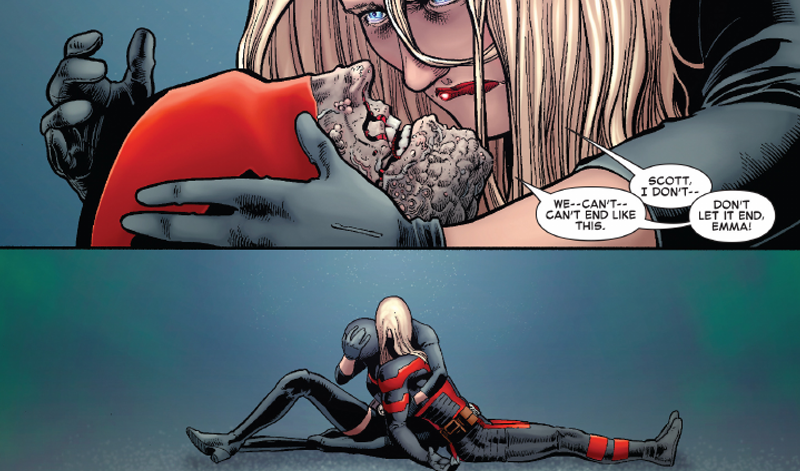
Sadly, I’m not writing this to talk about Emma Frost’s overtly sexy costumes. I’m writing this because recent events in the X-men comics tie directly into what I’ve been discussing with respect to conditioning our brains for love. While it’s an issue we’ll probably have to address once we start hacking our brain’s wiring, it’s something that comic book characters deal with regularly.

I’ve already mentioned how Carol “Captain Marvel” Danvers dealt with it during her early history. I’ve also cited past stories involving mind control, including one infamous story in Action Comics where Superman was brainwashed into making a porno tape with Big Barda. It’s one of those odd, but disturbing kinks that’s unique to worlds filled with psychics, aliens, and talking raccoons with machine guns.

However, this is one instance where a story about the mental manipulation of emotions and/or horniness isn’t quite as disturbing. If anything, it’s tragic in that reveals a lot about what some people are willing to do in the name of love.

To understand that tragedy, it’s necessary to understand the comic in question and the context behind it. The story unfolds in the pages of “X-men Blue #9” by Cullen Bunn, which is one of several ongoing X-men titles. This one focuses on the exploits of the time-displaced original five X-men, who are currently stuck in the future due to some time travel shenanigans that began back in 2012.

I’ll skip the part where I make a bunch of “Back To The Future” jokes and make clear that X-men Blue has much higher stakes compared to other X-men comics. That’s because what happens to these five time-displaced X-men, who also happen to be teenagers, could potentially affect the entire history of the X-men, which has already been subject to the kinds of time travel upheavals that would make Doc Brown’s head explode.

That’s where Emma Frost comes in. She knows, as well as any X-men regular who has encountered time travelers, that influencing these time-displaced teenagers could alter how things play out in their future. That’s important to her because she has a good, albeit tragic, reason to want to change that outcome.

Shortly before the events of this issue, Emma Frost endured a terrible loss. In an ominously-named event called “Death of X,” her former lover, Cyclops, died in her arms. To make matters even worse, it was one of those rare situations where there was nothing she could’ve done to stop it.

This isn’t akin to Spider-Man not stopping the Green Goblin in time or Superman not being able to save Lois Lane. This is basically someone being in the wrong place at the wrong time for the right reasons. In a sense, it’s a lot more realistic than the deaths most superheroes endure. It comes out of nowhere and there’s nothing anyone can do to stop it.

However, Emma Frost isn’t the kind of person to just accept that kind of tragedy and move on. This is a woman who once watched an entire classroom of her students die in an outright mutant genocide. When tragedy hits her, she hits back and looks damn sexy while doing it.

Granted, she does tend hit harder than she needs to or ought to. It has made her a lot of enemies, even alienating some of her former allies. However, Emma Frost isn’t one of those characters who does what she does out of malice. She’s not the Red Skull, Thanos, or even Dr. Doom.

She does see herself as a hero. She carries herself as a hero and has been on the front lines of some major Marvel conflicts. She’s also not a sociopath. She is capable of great love, both for her students and for lovers like Cyclops. So when Cyclops died, it hit her very hard.

When hit with a loss that hard, who wouldn’t jump at the chance to undo it? Even if it means crossing certain lines and hurting others, isn’t that worth getting back the person you love?

That’s a question that a lot of heroes and non-hero’s alike might debate in a philosophy class or a message board. However, there’s no debate for Emma Frost. She sees an opportunity to get her lover back and she takes it. Specifically, she sets her sights on the time-displaced, teenage Cyclops who has yet to grow into the man she fell in love with.

Finally, in X-men Blue #9, she’s in a position to get what she wants. As part of an ongoing event called “Secret Empire,” an event that’s hitting every major Marvel series, she abducts the time-displaced X-men and singles Cyclops out for some special treatment. Trust me, it’s nowhere near as sexy as it sounds.

XMBLUE-3

Emma basically does exactly what I described in my post about managing the future of brain hacking. She tires to twist and contort young Cyclops’ mind into being the man she once loved. She knows it may ruin the timeline. I’m sure Doc Brown would scream at the top of his lungs to get her to stop. It would still do no good.

That’s because Emma wants her lover back. She wants the man who has helped save the mutant race on more than one occasion. She’s willing to risk a time paradox and undermining the free will of someone who made clear in the issue that he doesn’t care for her. She’s just that desperate to get the man she loves back.

I won’t spoil how the book ends. I’d much rather people go out and read X-men Blue #9 because it’s a great comic that’s worth supporting. I’ll just say that the tragedy surrounding Emma Frost and her misguided efforts to subvert that tragedy really strike a chord.

It’s a tragic, but potentially prophetic story that may become more relevant over time. There’s no doubt that Emma Frost’s love for Cyclops in X-men Blue #9 is sincere. It’s not part of an agenda or some elaborate trick. It’s real, honest love that got destroyed through forces nobody could’ve foreseen.

Who’s to say that someone wouldn’t do something similar if they were in her position? I’ve said before in other posts that love is a powerful drug. It’s medically proven that love affects our brains like a drug. Compared to love, crack is watered-down diet soda.

Emma Frost is a powerful telepath, one of the most powerful in the Marvel universe, in fact. That means she can manipulate minds, twist thoughts, and conjure emotions in others. It does have limits, but it’s not that different from the kind of brain hacking that is in development as we speak.

What happens in the future when someone loses a loved one and refuses to accept it? What happens when someone just can’t stand the idea that someone they once loved no longer loves them? If there exists technology that could conjure or recapture that feeling, who wouldn’t be tempted to exploit it?

Our desire to love and be loved is a core, emotional need that every non-sociopath human feels. We don’t have the technology of Neuralink or the telepathy of Emma Frost to force it when we can’t have it. However, once it becomes possible, how long will it be before someone tries it?

Emma Frost didn’t need much temptation in X-men Blue #9. She just needed an opportunity and a plan. Again, it’s wrong to call it an evil plan. She was just trying to get back the man she loved and was willing to cross lines to do it. Love makes us do a lot of crazy, stupid things. What Emma Frost does in this comic is as much a lesson as it is a warning, albeit the sexy kind.

5 Comments

Filed under Comic Books, Jack Fisher, Superheroes, Marriage and Relationships

What Makes A Man An Asshole?

I often talk about things on this blog that are complicated, convoluted, and downright esoteric at times and that’s just with respect to sex robots and superhero comics. Hell, I could probably run several separate blogs on those topics alone, but there just aren’t enough hours in the day.

Some topics, though, need not be too complicated. Some basically explain themselves. It’s like the movie “Snakes On A Plane.” There’s nothing deep or vague about that concept. It’s exactly what it sounds like. It’s a movie about snakes on a plane. Sure, it’s basic and a little dumb, but sometimes we need to turn our brains off and just enjoy the spectacle.

So, in the interest of giving everyone’s brain a rest from thought experiments and sociopolitical undertones surrounding major protests, I’m going to talk about something simple that requires little thought or mental exertion. At most, it only requires us to think about a certain type of person or character, real or fictional, that we’ve all probably dealt with at some point in our lives.

This brings me to people who are assholes, specifically of the male variety. I hope that’s a topic that needs no explanation, exposition, or build-up. We know them. We deal with them. We may even be related to a few. Chances are, you find yourself dealing with asshole men at least once a week.

It’s just as common in fiction, including the erotica/romance variety. I’m not just talking about the Biff Tannen variety either. In many major conflicts, including the ones I write about in books like “Skin Deep,” there are plenty of assholes who seem to only exist to make others miserable. They are both the driving force of a story and an infinite source of frustration in real life.

At the risk of sounding sexist, I’ll just be blunt and say that the male gender breeds a special kind of asshole. That’s not to say that women aren’t as capable of such assholery, but I’ll save that for another post. Being a man, I like to think I have a greater insight into what makes a man an asshole.


Now, the psychoanalyst and wannabe philosopher in me is tempted to break down every major component that goes into turning an innocent young boy into a walking affront to all things fueled by testosterone. I’m sure there are all sorts of reasons, excuses, and faulty brain wiring that go into it. I’m going to skip those complexities for now and just focus on the basics.

With that in mind, here are my list of factors that go into making a man the kind of asshole that doesn’t deserve functioning genitals. Again, these are fairly basic. I’m sure other people have other, more elaborate ideas of what makes men assholes. I would love to hear some of those ideas so I can expand this list down the line. For now, though, let’s just start with laying the foundation for all things male asshole.


Asshole Factor #1: Always Having Something (Stupid) To Prove

Chief among any male asshole’s defining traits includes excessively flexing his male bravado. We all get that there’s a time and a place for bravado. If someone is attacking a loved one or there’s a hungry lion coming at you, that’s an appropriate moment for a man to flex his nuts and show what he can do.

For assholes, though, that time is all day and that place is anywhere. They’re the kinds of guys who will do anything on a dare, make everything a competition, and not give enough of a damn about the rules. If they’re not trying to impress pretty girls, they’re trying to impress friends. If they have no friends, they’re trying to show up enemies. It never ends until they do something so stupid that they hurt themselves.

I’m not going to lie, though. When an asshole like this take it too far and pays the price, it’s kind of nice. Like seeing King Joffrey die, it can help remind us that there is some semblance of justice in the universe.


Asshole Factor #2: Entitlement To Certain Things (Like Sex)

This largely shows in the rich, arrogant, I’m-a-big-deal-so-I-can-do-anything type of male asshole, of which there are too many. From reality stars to the asshats on Instagram, these assholes exploit the hell out of the lucky hand they’ve been dealt in life and expect the world to massage his balls upon demand.

It goes beyond wealth, though. There are even non-rich male assholes who think the mere act of having a penis entitles them to certain things, like the love of a beautiful woman or the freedom to be a dick to other people.

They carry themselves with this mindset that just being a man makes them inherently manly, entitling them to all the stuff that comes with it. They fail to realize that you still have to work for certain things. You still have to earn the right to see that pretty girl naked. Real men do that work. Assholes don’t even try.


Asshole Factor #3: Always Needing To Show Off And Seek Vindication

We’ve all known our share of class clowns. I knew more than a few back in grade school. Sure, they were funny at times and could get a cheap laugh. Some do it in a likable way. Others are just assholes about it.

As with the first factor, there’s a time and a place to show off. If you’ve won the Super Bowl, achieved something of note, and done something that few can do, then go ahead and show off. You’ve earned it. Just showing off for the sake of showing off is what distinguishes the lovable class clown from the asshole.

Beyond just showing off, the asshole does it in a way that seeks some sort of unearned vindication. They’re basically saying, “I’m here! I exist! Now, I demand that I be valued!” Always needing that kind of vindication hints at a lot of insecurity and, deep down, assholes tend to be a lot more insecure than most.


Asshole Factor #4: Needing To Be The Loudest Voice In A Conversation

If there’s one good thing about most male assholes you deal with, it’s that they make themselves known. You don’t have to look very hard to find them. Usually, they’ll either come to you or be so obnoxiously loud that you can’t miss them. Like a bear taking a shit on your driveway, it’s hard to miss.

It goes beyond just being loud, though. An asshole man talks as though his voice is the only one that matters. He acts as though he’s the leader by default and everyone else’s voices might as well be the echoes of a dying cat.

They don’t listen. They barely even hear what others say. They just keep talking because the sound of their voice is just that much more valuable. These are the kinds of guys that make noise-canceling headphones a godsend.


Asshole Factor #5: Always Making Excuses (And Never Learning From Failure)

I dedicated multiple posts regarding the difference between reasons and excuses. I won’t rehash all the main details behind those concepts because, in this instance, you really don’t need to know those details. Like the loudmouth factor, it’s fairly clear that male assholes live in a world of excuses and reasons might as well be an alien concept.

You know this because whenever they screw up or fail at anything, it’s never their fault. It’s never even the fault of luck. It’s everyone else that’s the problem. They’re the reason the male asshole believes he didn’t get what he wanted.

That’s a big part of why male assholes tend to be bullies. Everyone’s an obstacle. Everyone’s a means to an end. They’ll have any number of excuses to shove them out of their way or bend them to their will. Other people are just tools to get that vindication I mentioned earlier.

In many respects, it’s this factor that helps distinguish the casual assholes from the professionals.


Asshole Factor #6: (Overly) Emphasizing Style And Avoiding Substance

Even if you don’t hear a male asshole’s loudmouth rantings, which isn’t easy, or avoid his constant excuses, which is next to impossible, there’s still one way they stand out from their non-asshole peers. They will purposefully style themselves as the kind of person that is so superficial and so shallow that they inspire awful Jack Black movies.

The spoiled rich assholes do it with pride. Even the non-rich assholes find a way to do it with sheer arrogance and bravado. They spend way too much time on their hair, buy way too many overpriced clothes, and generally conduct themselves in ways meant to gain unearned vindication.

It’s one thing to wear a championship ring that you earned. These guys just wear all sorts of fancy crap that gives the illusion that they’ve done something meaningful with their lives. More often than not, they haven’t done squat. They can’t be bothered to put in the work. That, my friends, is the literal mark of a true asshole.


I hope this gives everyone a better concept of male assholes. You can never be too prepared or informed. Make no mistake. Assholes can really make your life difficult. Even if you can’t avoid them, you can use this information to better endure their crap. We’re an imperfect species full of imperfect people. Some people just take those imperfections to an annoying extreme.

Again, if you want to help add to this list, please let me know in the comments. Maybe down the line, I’ll update it in another post. For now, make good use of this information and may the influence of assholes in your life be minimal.

3 Comments

Filed under Jack Fisher's Insights, Marriage and Relationships, Reasons and Excuses

Why Do We Choose The Wrong Lovers?

We’ve all either seen it from afar, experienced it ourselves, or know someone who has. It’s one of the few narratives that plays out as often in real life as it does in fiction, including the sexy novels I write.

We seek out love and connection, putting a sizable chunk of our time and energy into finding that perfect lover. It’s the basis of almost every iconic love story ever made, from Shakespeare to “Titanic” to almost every Disney movie ever made. It’s also the basis of family, elaborate social connections, and the entire wedding industry. By every measure, finding that special someone is a big freakin’ deal for us.

If it’s such a big deal, though, then why do we do such a lousy job of actually choosing our lovers? I don’t ask that question out of cynicism. I ask it with a straight face, a sober mind, and a never-ending need to understand romance so I can write sexier, more romantic novels.

I know that’s somewhat self-serving, but every question involving love and sex has major implications far beyond those of aspiring erotica/romance writers. In that context, the actual process of choosing a lover is one of the most important choices we can ever make in our personal lives. It’s right up there with choosing your smartphone or your internet speeds. So why is it that we do such a lousy job in making such a critical choice?

I’m not just referring to the frustrating divorce rate among married couples, although that is a sign. I’m also not referring to the documented fact that the average number of sexual partners a person has in their lifetime is not one or less, although that also is a sign.

We humans seem to understand the importance and value of love, sex, and intimacy. However, we do a piss poor job when it comes to actually making decisions about it. Good girls will fall in love with bad boys. Good men will fall in love with bitchy girls. Good, decent people will try to love one another, but for all the wrong reasons and not realize it for years.

It’s both tragic and unsexy. People want to love each other, but can’t seem to pick up on the right signs. Even if they’re not looking for love and just want sex, they still find a way to screw that up too, as evidenced by the orgasm gap.

I even have some personal experience with this myself. Without getting into too great a detail, I was once involved with a cute, sweet, yet naturally sexy young woman in college. She and I met through our mutual love of comics and she was, in many ways, my first serious relationship. I won’t deny that I actually did feel love for her.

However, the longer we were together, the more I noticed on some fairly telling signs that were hard to ignore. She and I may have had a lot in common, but we had very different personality types. She was one way. I was another. We were rarely on the same page and it did cause plenty of stress.

Being drunk on love, I sure as hell didn’t notice it. My parents did, though, and they weren’t afraid to tell me. They know me too damn well and love me enough to discourage me from making foolish decisions. Were it not for them, I probably would’ve cut my face off the first time I tried to shave.

I credit them more than anyone for keeping me anchored, with respect to my emotions. I admit I kind of resisted their insight and made my share of excuses. In the end, they turned out to be right. My girlfriend and I broke up. It hurt, but I can’t say it was entirely surprising.

The fact that I, a guy who writes and reads a lot about sex and romance, can be so blinded by the feeling should be as clear a sign. It shows that we, as a species, aren’t very good at making wise choices when it comes to our love lives. Why is that, though?

That’s a hard question to answer and I’m certainly not going to claim to be a definitive authority on that. It’s so hard to answer that you can kind of understand why marrying for love is such a novel concept and why it was actually discouraged throughout history. Even so, it’s still a question worth contemplating, if only to refine our understanding.

I feel as though being an erotica/romance writer gives me a certain insight into this issue. I won’t say I’m the best equipped to confront it, but I do think I can bring something to the conversation. So in the interest of furthering that conversation, here are my explanations/speculations on why we choose the wrong lovers.


Reason #1: We Commit And Promise For Misguided Reasons

When most people talk about being with someone for the wrong reasons, they almost immediately conjure images of the kind of big-titted, gold-digging skank whose sole purpose in life is to inherit money from a horny old guy. Thanks to Anna Nicole Smith, that sentiment is not wholly inaccurate.

However, I’m not just talking about the gold digging angle here. That’s actually a tiny part of this reason. When I talk about being with someone for wrong or misguided reasons, I’m referring to the mental and emotional gymnastics that people do to justify the status of an inherently flawed relationship.

We’ve all heard a variation of those excuses. It usually takes a pretty bloated excuse bank to begin with, but it often manifests in fairly familiar, sometimes distressing sort of ways. It often ends with statements like this.

  • “Things will settle down after we get married.”

  • “Things will settle down after we have children.”

  • “I don’t think I can handle being alone right now.”

  • “I need someone like him/her in my life.”

  • “We’ve been together for a long time so we might as well get married.”

Each one of these statements probably makes sense to the person saying them. However, a lot of weird things make sense when you’re in love or you think you’re in love. That’s why falling in love is often described as being intoxicated. You don’t always make good decisions when you’re drunk. The same applies to when you’re in love.


Reason #2: We Have False Or Misguided Ideas Of Who We Should Be With

This reason is a big less convoluted than the first. We’ve either known someone who has made horrible choices in their love lives or we’ve been that someone. A lot of those choices stem from having a skewed or erratic criteria for who should be our lover. Some people don’t even stop to examine that criteria and it only becomes painfully clear after the relationship fails.

This is actually something that plays out in one of my books, specifically “Skin Deep.” Early in the story, Mary Williams is the hot girl that every guy wants to be with. Not surprisingly, she ends up with a star basketball player named Zach Crenshaw. It’s the classic hot girl and male athlete hook-up that we’ve seen play out every movie inspired by “Varsity Blues.”

Initially, she doesn’t really give much thought to why she’s with him. As the story plays out, though, Mary realizes that she was with Zach because she thought she was supposed to be with him. There was this indirect assumption that because she’s the hot girl, she should be with someone like Zach.

That misguided idea becomes part of the many conflicts that play out in “Skin Deep.” It also plays out in real life with people seeking certain types because they think they’re supposed to. Sometimes it’s peer pressure. Sometimes the pressure comes from culture or religion. It’s hard to actually acknowledge these pressures until after a relationship ends, but they all work to skew our emotions in certain directions.

It’s also part of why good girls fall for bad boys and good boys fall for bad girls. We have a false impression of why we’re with these people. We may call it love, but sometimes it’s something as simple as the adrenaline rush we feel when we’re with someone who might crash a motorcycle into septic tank on a bar bet.

Granted, that can be a good time that results in some pretty hot sex, but that’s not love, nor is it the foundation for a meaningful relationships.


Reason #3: We Underestimate AND Overestimate Our Ability To Love Someone

This one is a bit more subtle and self-reflective, compared to the other reasons on this list. Some of it has to do with our eagerness to love someone outstripping our ability. That does happen a lot with people who try their best to make a failing relationship work. Sometimes they succeed. Most of the time, though, it just delays the inevitable.

A better manifestation of this concept plays out in nearly every wedding ceremony, but not in the way you might think. A man or woman at their wedding is so overwhelmed by emotion and passion that it’s easy to love someone and imagine loving them until your dying days. That moment, and everything surrounding it, makes it seem so easy.

However, it’s all the days after that wedding ceremony that someone really has to worry about. A person is usually at their best on their wedding day. It’s only when we deal with someone when they’re having a really bad day that we understand the breadth of our love for them.

It’s when things go wrong that the strength of a relationship, or lack thereof, really shows. It’s in those moments when we realize that we don’t love this person nearly enough to deal directly with these issues. It’s also in these moments when we realize that we may love this person too much because their issues become hugely detrimental to our own.

Our capacity for love varies from person to person. It even varies from situation to situation. The key is finding a person whose capacity for love is similar to our own and who knows how to deal with those situations. That’s how some people can stay in love for half-a-century while others leave a trail of failed relationships wherever they go.

It’s like an extension of the laws of entropy. When you’re not on the same page as your lover, things just tend to fall apart in the long run. It’s only when you and your lover truly complement each other that it grows stronger over time. We see it in in real life and in the occasional X-men comic. It’s a perspective worth heeding.


Reason #4: We Fail To Know Ourselves Or Our Lovers Well Enough

This is basically the ultimate manifestation of not seeing the forest from the trees with respect to your love life or yourself. It also happens to be the reason that is almost impossible to realize until after it’s too late. You’re not going to see it on the first night you have sex or on your wedding day. It’s only going to become clear after the damage has been done.

This often happens with couples who marry young and divorce quickly. I actually know a few people who have endured this. One of them described it as akin to getting blackout drunk for seven years, waking up in a strange new city, and almost dying on the spot from sheer shock. In this person’s defense, he married someone who just wanted kids and that’s it. The lack of love or meaningful connection was an afterthought.

It’s somewhat tragic, but understandable to a certain extent. Some people really don’t know themselves as well as they think. Some are just really good at lying to themselves about the kind of person they are. We see it frequently in alcoholics and people with poor impulse control. They never think too much about a situation or themselves, never realizing their mistake until it’s too late.

The best illustration of this comes from another friend of mine who went through a nasty divorce early in life, but met the love of his life and has been happily married for decades. He told me outright that he and his first wife really didn’t know each other that well. They knew enough to want to hook up and that was it. It wasn’t until after they divorced that it became painfully obvious why they were wrong for each other.

Then, he met his future wife and he knows pretty much everything about her. He can tell me how she takes her coffee, what her favorite movie is, and what she throws at the TV whenever a referee calls a bad penalty during a football game. He and his wife know each other so well and not just with respect to their anatomy. It’s that knowledge and understanding that helps make their relationship so strong.

Sometimes, we get ahead of ourselves in wanting to be with someone. We love them before we truly know them and marry them before we’re ready. It creates a lot of complications for ourselves and our lovers, some of which become ticking time bombs in a relationship that can sometimes go off in the worst of ways.


Reason #5: We Fail To Understand That Love (And Sex) Is An Ongoing Process

I look at this reason the same way I look at foreplay. For one, I am totally in favor foreplay. It is one of the best parts of sex. It helps turn what is already an inherently intimate experience into something more awesome.

Sex without foreplay is still sex. It still can have the same end result, preferably a mutual orgasm. However, the process behind it, namely the foreplay, is what makes it meaningful. It’s that process that tends to get overlooked in both sex and love.

It happens with marriages that grow stale. It happens with relationships that burn out quickly. Those involved eventually stop putting work into the process of love and sex. Some think that the work is done when they get married or after they start having sex. They see that as an endpoint. It’s not. That’s just the beginning of a new process.

I’ve learned this in my own personal life. I’ve seen it play out with friend and family as their relationships evolve. Seeing love and sex as an endpoint is usually setting yourself up for disappointment, heartbreak, and a lack of quality orgasms. Emotions don’t end until we’re dead. Treating them otherwise will just turn us into the Bundy family.

Now, that’s not to say that the process always gets harder and more tedious over time. That only applies to relationships that are flawed or doomed from the start. Ideally, the process gets smoother over time if you’re with someone that you love for all the right reasons.

You shouldn’t have to do quantum physics to keep being with someone. Just being yourself, always trying to improve along the way, should be sufficient and complementary to the efforts of your lover. It’s a process that never ends, but is always rewarding if done right.


Once again, I want to emphasize that I am not an authority on love. I just write a lot about it and try to tell sexy stories. This is just my way of exploring this question that doesn’t get enough scrutiny, in my opinion.

If anyone has any insight that they would like to add, please let me know in the comments. I’d love to turn this into a larger conversation about the poor and not-so-poor decisions we make about our live lives. Until the day comes when super-intelligent machines can make those decisions for us, which may eventually happen, this is an issue that we’ll continue to struggle with.

1 Comment

Filed under Marriage and Relationships, Reasons and Excuses

On Conditioning The Brain (For Love)

In nearly every love story, the actual process of falling in love is the easy part. A man sees a beautiful woman. A woman see’s a handsome man. A man see’s another beautiful man or a woman see’s another beautiful woman. Sexy romantic activities follow. People don’t need much incentive or reason to fall in love is what I’m saying.

The real challenge, and the main struggle in those same love stories, is convincing someone else to love them back. It can be an all-encompassing, all-consuming struggle that inspires epic quests, blood feuds, and kinky fantasies of every kind, from the genuinely heart-warming to the downright disturbing.

In most stories, those elaborate efforts either pay off or make for the kind of Shakespearean tragedy that crushes the spirits of every high school English student for generations. Love stories have a special knack for hitting a broad spectrum of emotions, from the kind that makes us cry to the kind that makes us horny. That’s a big part of their appeal and that’s the kind of appeal I try to capture in my novels.

As epic as these love stories can be, on top of the sex appeal they inherently bring, there’s one key element to love that’s easy to overlook, but impossible to avoid. No matter who you or a character in a story falls in love with, you can’t do much with that feeling if the person you love isn’t receptive to it on some level. Even if they don’t eventually love you back, you work under the assumption that they’re open to love.

That’s usually a pretty safe assumption. Between the novels I write, as well as the many other epic love stories that have been written, it’s clear that humans are a very passionate species. We fall in love almost as often as we go to war for stupid reasons. It’s literally hardwired into our brain.

However, it’s that same wiring that makes love such an erratic, fleeting emotion. It’s the primary reason why that, until recently, a marriage built around love was seen as unstable. That makes an unsexy bit of sense when you think about it. Given how easily we fall in love with others, or how horny we get after being with one person for a while, relying on love to hold a marriage together seems like a bold bet with long odds.

Granted, it’s a beautiful thing when it pays off. However, as with any bet that has such high stakes, it’s safe to assume that someone will try to cheat in order to change the odds. Why else would so many stories involve love potions, spells, and elaborate lies that blow up in someone’s face?

While those kinds of manipulations can be dishonest, and more than a little creepy, it’s also understandable. It’s an unfair world full of unfeeling people who seem eager to crush your emotions, burn them to a crisp, and spit on the ashes. If there was a way to just nudge someone’s emotions to be in line with your own, wouldn’t you take it?

That leads to a distressing, but relevant question. It’s part philosophical, part practical, and part ethically suspect. I know those are a lot of conflicting parts, but bear with me because it affects our love lives and our sex lives so it’s pretty damn important. Here it is and feel free to take as much time as you need to contemplate it.

“Is a love that is conditioned, coerced, or magically conjured in someone any less sincere?”

I know what the knee-jerk reaction to that sort of question is. The idea that any kind of love that’s forced is somehow sincere seems like something you shouldn’t imply unless you’re wearing a suit of adamantium armor. Most love stories built around forced love tends to either fall apart or turn into some twisted form of BDSM erotica. It can even show up in classic Disney movies, albeit indirectly.

In a perfect world full of singing animals and naked supermodels, love would never have to be conditioned or coerced. Those in love would just need to follow the steps laid out in every John Hughes movie ever made and that’s it. You’ll win the love of whoever you desire.

Sadly, we know this isn’t a perfect world. Animals don’t sing. You have to pay to see naked supermodels. Love and heartache aren’t always mutually exclusive either. Every other love song ever made is proof of that. So why shouldn’t we entertain the thought that a magic love potion every now and then might be warranted?

The substance of this question was inspired, in part, by the post I did about the less pleasant details of Marvel’s defacto Wonder Woman, Carol “Captain Marvel” Danvers. Early in her history, one of Carol Danvers’ most defining stories came when she was manipulated by a powerful being named Marcus Immortus into falling in love with her.

Sure, he did it so he could impregnate her and be reborn before he died of accelerated aging, but his tactic worked. He did get Carol to fall in love with her and bear his child. It might be one of the most infamous Marvel stories that doesn’t involve clones, time travel, or deals with the devil. Some go so far as to call it rape and that wouldn’t be entirely wrong in certain jurisdictions.

That still doesn’t change the actual results of Immortus’ efforts. As much as asshole as he is, does that make Carol’s emotions in the story any less real? From her perspective, does it really matter if the love she feels is forced, conditioned, or magically conjured? It’s easy for anyone not in Carol’s position to be disgusted by that kind of treachery. When you’re in love, though, you tend not to care much for those kinds of details.

It has been well-documented in both science and any number of one night stands. Being in love is like a drug, one that induces a sense of euphoria on par with a cocaine binge with Led Zeppelin. Your brain, being the crude hunk of biomatter that it is, doesn’t care about the circumstances. It loves to love. It wants to love. It doesn’t give a wet fart where it comes from. When it happens, it lets us know how awesome it is.

It doesn’t help that the brain is incredibly easy to fool. Con artists, street magicians, and used car salesmen all know this better than anyone. The brain, as wonderfully complex as it is, can be tricked and manipulated. If someone can evoke the right chemical cocktail in your cerebral cortex, it won’t ask twice. It might not even ask once. If it checks all the right boxes, we’ll get that same passionate rush.

It’s a disturbing thought, but it’s distressingly easy to imagine. Say, for instance, that someone conditioned another to love them the same way Marcus Immortus did with Carol Danvers. That person now loves them with all their heart. They don’t know, nor do they care, how that love happened. They just feel it and that’s all there is to it.

Now, imagine that same person living the rest of their life with that conditioned love. They never find out that it was forced or conjured within them. To them, it’s as real as any genuine, non-coerced love that we’ve ever felt. They love someone and feel loved in return. They go to their graves having felt that love, experienced it, and cherished it with all their hearts.

While the idea of creating that kind of love seems distressing, requiring that someone has no respect whatsoever for someone else’s individual autonomy, it does seem oddly pragmatic. It even seems like a win-win on some levels. One person gets the lover they want. The other gets to live a life immersed in the high that is love. Other than the guilt one person might feel for resorting to such tactics, it’s not like anyone really suffers.

I don’t bring this issue up to undermine the profound nature of love. As an aspiring erotica/romance writer, contemplating these things and asking these sometimes unsexy questions are just part of the job. Capturing the appeal of love in a novel is something I try to do with every story I write. I did my best with “Passion Relapse.” I hope I succeed even more with “Rescued Hearts.”

However, there’s no denying the complexities of love and the passions behind it. They’re not always pure. They’re not always sexy either. Stories like that of Carol Danvers and Marcus Immortus highlight a fundamental tension, of sorts, within the nature of love. Our brains can’t always tell the difference when a feeling is real or induced.

At the end of the day, though, does that really matter? Isn’t a feeling as powerful as love worth it? It’s something to contemplate when scrutinizing love or telling sexy stories. As long as we remain such a passionate species, we’ll keep seeking that feeling with our hearts, our genitals, and everything in between.

3 Comments

Filed under Marriage and Relationships

Do Prenups Help (Or Hurt) Marriages?

Whenever we hedge our bets on something, be it a major life decision or a poker game, it’s often a tacit admission that we may fail and more often than not, that’s the first step towards failure. Being careful or proactive doesn’t give the impression that you’re all that confident. A lack of confidence is also not very sexy either so some people may not be inclined to be that careful.

Granted, there are some bets we don’t mind hedging on. Why else would we buy insurance or demand that our heart surgeons be licensed? It doesn’t matter how confident you might be. There’s nothing sexy about getting heart surgery from the medical equivalent of a drunk plumber.

We, as a society, are somewhat erratic about the things we should and shouldn’t hedge our bets on. There’s a constant push and pull between being proactive and being bold. We want to sound confident, but we also don’t want to risk crashing a drag racer into a hill just to get laid.

With that in mind, here’s a simple questions that we’ve all probably asked ourselves, albeit indirectly. Just how proactive should we be when it comes to our love lives? I’m not talking about avoiding parents or wearing condoms either. Specifically, I’m talking about marriage and how we approach it. Even more specifically, I’m talking about prenuptial agreements.

It’s somewhat telling that most people don’t know much about these fairly mundane, legally-binding contracts that have been around for decades. They’re not complex financial laws or esoteric provisions of the tax code. A prenup is a simple, legal way to ensure that if a marriage fails, the hard, heartbreaking work is already done.

According to FindLaw.com, the simplest purpose of a prenuptial agreement is to “establish the property and financial rights of each spouse in the event of a divorce.” If children are involved, it can resolve that too. Again, it’s like doing the hardest work ahead of time, just in case it becomes necessary. In terms of being proactive with your love life, it’s both prudent and practical.

It also has an unspoken, but distinct stigma to it and for entirely understandable reasons. The mere act of considering a prenup for your marriage implies that you think it’s possible it may fail. When you’re young, in love, and still having great sex, who wants to think that? Hell, if your lover even joked about it, what would that reveal about your relationship?

It’s a distressing thought. That’s why prenups are usually associated with rich people and famous celebrities. In fact, the provisions of some of these prenups seem downright insane to non-famous, non-eccentric people. That may be why prenups have a somewhat mixed reputations.

However, celebrities and the super rich have a lot more to lose than their hearts in a marriage. It’s understandable that they’d be more proactive than most. Unfortunately, it also means that celebrities are more than twice as likely to divorce. That may be another part of why prenups have a bad reputation. They’re loosely correlated with more divorce.

That brings me back to the title of this article and the obvious question that too few people ask. Do prenuptial agreements help a marriage or are they detrimental in the long run? Based on what I’ve just explained about the mentality behind prenups, the answer would seem obvious. That’s just it, though. We really don’t know.

At the moment, we’re still clinging to the mentality that if you want a prenup, then you’re setting your marriage up for failure. That’s a dangerous, not to mention short-sighted understanding of marriage and relationships. While there is some research to hint that having a prenup doesn’t increase your chances of divorce, there’s very little information on what this means for the health of a relationship, as a whole.

At the same time, we constantly hear the whining from the family values crowd about the declining rates of marriage. It’s not at all unfounded, either. Fewer and fewer people are getting married, especially among younger people. There are many potential reasons for this, but there’s one in particular that I want to focus on, as it relates to prenups.

I’ve talked about it before, albeit in part. This time, I want to be a bit more blunt. To all those worried about declining marriage rates, increasing divorce rates, and young people humping without consequence, I have an important message that needs to be belabored.

If you’re a man, marriage for is a TERRIBLE deal.

I know it sounds like I’m just echoing timeless words of Al Bundy, but bear with me. In order to show just how bad a deal marriage is for men, allow me to paint a scenario. It’s not a thought experiment because this is, for all intents in purposes, how it plays out in the real world.

You and your lawyer are sitting across the table from a potential partner and their lawyer. Their lawyer presents you a partnership contract. In that contract, it says that you are to only ever conduct personal business with them until the day you die. If, however, the other party decides to dissolve the contract at any time and for any reason, then they get half of your assets, by default. If you happen have any children, the partner very likely take sole custody of them, as well. Would you sign that contract?

Most people, if they looked at the fine print in that scenario, wouldn’t sign that contract, even on a dare or while drunk. It’s a horribly unequal contract. It effectively asks the man to go against his own interests. It also gives the woman a distressing amount of incentive to end the marriage. When there’s a financial incentive to do anything, it usually skews the odds. Marriage is no different.

This scenario also reflects the impact that “no-fault divorce” has had on marriage in recent decades. That’s a fairly recent development, as well. Instead of needing a reason to dissolve a marriage, it can be done on a whim and the man, who may not have even done anything wrong, gets screwed over. In that context, the decline in marriage is entirely understandable.

It should also explain why men are so reluctant to get married in the first place these days. The incentives aren’t just awful. It creates a legally-binding inequality within a relationship. In both marriage and divorce, the woman has the benefit when it comes to custody of children and alimony payments. Even so, a man who is reluctant to marry is seen as someone who doesn’t love his significant other as much as he should.

This brings me back to prenuptial agreements. As it stands, only five percent of divorces occur in couples who had a prenup and only three percent of couples planning to get married have a prenup. While the number of marriages that have prenups are increasing, it’s still not that common and there’s still a stigma to it.

So what would happen if every marriage from here on out required a prenuptial agreement? Moreover, what would happen if the structure of the marriage made the responsibilities between the man and the woman equal? It’s an honest, sincere question because, as an aspiring erotica/romance writer, I’m all for love. I’m all for marriage. I too would like to get married one day.

However, marriage in its current state doesn’t just scare me. It seems downright unsexy. It almost seems to take advantage of men who are so hopelessly in love that they don’t think about what will happen if something goes wrong . Granted, no man wants to think about that, especially when they’re in love, but it can cause a lot of pain and heartache down the line.

I’m not saying prenuptial agreements will fix the current state of marriage or gender dynamics between men and women. However, I do think that we’re straining our ability to love each other when our relationships are so inherently unequal. I’ve championed love between equals in the past. I think that’s the kind of love that will improve our love lives, our sexy lives, and our marriages in the future.

6 Comments

Filed under Marriage and Relationships

Breaking Down The Breakup Between Anna Faris And Chris Pratt

The life of a celebrity compared to the life of a non-celebrity couldn’t be more different without involving aliens, unicorns, and pet monkeys. That’s also a major reason why we’re so fascinated by celebrity culture. Say what you will about the crazy headlines of the glorified toilet paper known as tabloids. They still get our attention and, as I’ve pointed out before, that’s the most valuable currency in our economy.

As such, a high-profile celebrity couple breaking up is a big deal. From a celebrity culture and deranged tabloid perspective, it’s like crack mixed with meth mixed with heroin. It’s as addictive as it is debilitating. It crushes whatever fairy tale narrative we had playing out in our collective psyches and making us question whether love is truly real.

Now, I don’t doubt the allure of celebrity romances. These are people with a lot money and power at their fingertips. These are people who could ask a random stranger to smear pudding on their chest and have a hungry loin lick it up and they’ll do it with a smile.

They have every conceivable resource to make their relationships the sort of thing that Disney movies are built on. How is it that they keep failing? That’s not just a perception thing either. In terms of raw numbers, celebrity marriages fail at nearly twice the rate of non-celebrity marriages. With all that money and power, how is that even possible?

Well, last week we were reminded that no matter how many fairy tales fever dreams a celebrity romance may inspire, it can still fail. The latest involves Chris Pratt and Anna Faris, one of Hollywood’s highest profile celebrity couples. After an eight-year marriage, they’ve announced that they’re legally separating.

Even I admit, this one caught me by surprise. I’ve been a fan of Chris Pratt since his day as the chubby dork, Andy Dwyer, on “Parks and Recreation.” I’ve also had a soft spot for Anna Faris since her colorful performance in the horror spoof, “Scary Movie.” The fact that those two got together and stayed married for nearly a decade was just a nice bonus.

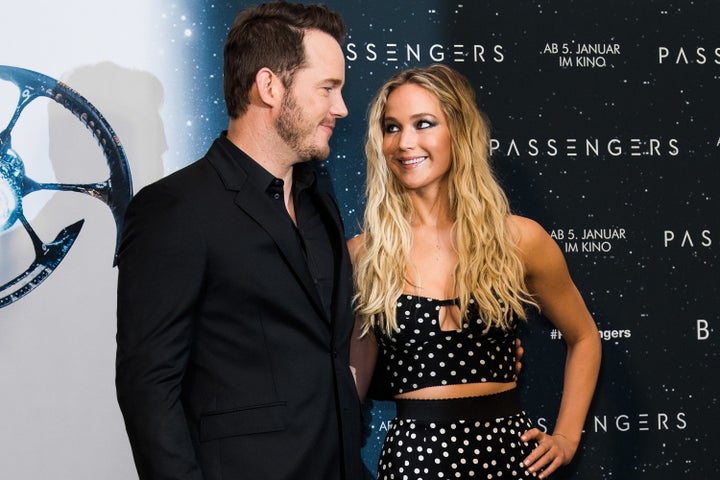
However, much like the end of Brad Pitt and Angelina Jolie, the high-profile nature of the marriage always made it subject to scrutiny. Most recently, there had been rumors that Pratt had cheated on Faris with Jennifer Lawrence, his co-star in their movie, “Passengers.”

I tend not to give much weight to such rumors, even when Jennifer Lawrence is involved. That hasn’t stopped some people from blaming Ms. Lawrence for the breakup, but that’s to be expected. Brad Pitt had been subject to similar rumors before his breakup with Angelina Jolie.

In general, it’s fairly safe to assume that, unless there’s high-definition sex tape, those rumors are only partially true at most. Since nobody other than Pratt and Faris know the full story behind their breakup, I’m not going to assume that cheating or infidelity was involved. According to Pratt’s own statement, the breakup was mutual.

“Anna and I are sad to announce we are legally separating. We tried hard for a long time, and we’re really disappointed. Our son has two parents who love him very much and for his sake we want to keep this situation as private as possible moving forward.”

For now, I’m going to take Mr. Pratt at is word, but assume there were other dynamics at work that neither he nor Faris care to share with an unforgiving public. I’m not even going to speculate on what those dynamics can be. Instead, I’m going to step back and look at the bigger picture here. If nothing else, I’d like to give think fans of both Pratt and Faris, as well as fans of any celebrity couple, a sense of perspective.

Much of that perspective boils down to one inescapable truth. Celebrities live crazy lives, work crazy jobs, and deal with crazy stresses that no ordinary person can hope to understand, let alone deal with. The fact that any celebrity romance succeeds in the long run is nothing short of a miracle.

These are not people with normal or even semi-normal experiences. These are people doing things few people can do, achieving success that most people never achieve, and struggling to manage it all without going insane. So whenever a celebrity does have a very public breakdown, of sorts, it really shouldn’t surprise anyone.

On top of that, celebrities often work jobs that keep them busy for insane hours and requires them to spend a good chunk of their time traveling. Even if they have their own private jet and a support staff who effectively manages every minor detail of their lives, right down to the brand of toilet paper they buy, they’re still always busy. In a sense, being a celebrity is as close to a full-time job as anyone can have.

How can you make a relationship work in those circumstances? That’s not a rhetorical question. That’s an ongoing issue that many celebrities struggle to solve. Pratt and Faris thought they had the answer. I’m sure Pitt and Jolie felt the same way. In the end, they were wrong. It’s tragic, but it shows just how hard it is to answer that question.

That’s not to say it’s impossible. Some celebrity couples find a way to make it work. They are, however, the exceptions and not the norms. Realistically speaking, the circumstances of a celebrity romance are a checklist of how not to structure a relationship. For the sake of context, here are just some of them.

  • Working extended periods in a high-stress, fast-paced environment
  • Managing large numbers of people and resources
  • Traveling frequently and having little time to spend at home or with loved ones
  • Doing physically demanding, often exhausting work
  • Being surrounded by extremely attractive people with a strong incentive to seduce others
  • Being subject to constant scrutiny and micromanaging
  • Constantly entering unfamiliar situations and dealing with unfamiliar people
  • Occasionally having to get naked and/or intimate with strangers

Just dealing with a few of these issues is stressful enough on any relationship. That’s why occupations like bartender, massage therapist, or police officer have a markedly high divorce rate. With celebrities, though, the challenges are even greater because it’s not just one or two issues. It all of them.

At the end of the day, no matter what Tom Cruise may think, we’re all human. We all have human brains that are stuck with caveman settings. Those brains aren’t equipped to deal with the rigors of a celebrity life. Hell, it’s barely equipped to handle our current ideals of romance.

Chris Pratt and Anna Faris had the odds stacked against them from the beginning. They clearly loved each other. They made that abundantly clear in their announcement. However, their brains have the same limits as ours. Those brains compel us to form the kinds of intimate, close connections that are easily strained by stressful jobs, constant travel, and an excess of beautiful people willing to sleep with you.

Most relationships, in general, struggle to function in those conditions, as evidenced by the non-celebrity divorce rate. Pratt and Faris tried to beat those odds, on top of all the forces working against them, and did a lot better than most. Just ask anyone Taylor Swift ever dated.

At the end of the day, though, the mechanics of a celebrity romance are just too daunting, even for those who genuinely love each other. It’s part of why people root for celebrity romances . The idea that two people can overcome those daunting obstacles nourishes our ideals about love and marriage. When that fails, it hits those ideals pretty hard, as evidenced by the Twitter reaction to the Pratt/Faris breakup.

https://twitter.com/RyanJohnNelson/status/894444088287780864

While it is disappointing, especially for a relationship that seemed more healthy than most, it still shouldn’t be surprising. We, the non-celebrities of the world, can’t forget that people like Chris Pratt and Anna Faris live such crazy lives that are wholly unconducive to our romantic ideals.

Some of that is our fault. Some of that is the fault of biology with the way our brains are wired. Even so, it shouldn’t destroy our concept of love. If nothing else, it should remind us that making a relationship work is hard, but the fact that celebrities try as hard as they do is proof that the work is worth it.

5 Comments

Filed under Celebrities and Celebrity Culture, Jack Fisher's Insights

Lessons In Fate, Power, And Passion (From An X-men Comic)

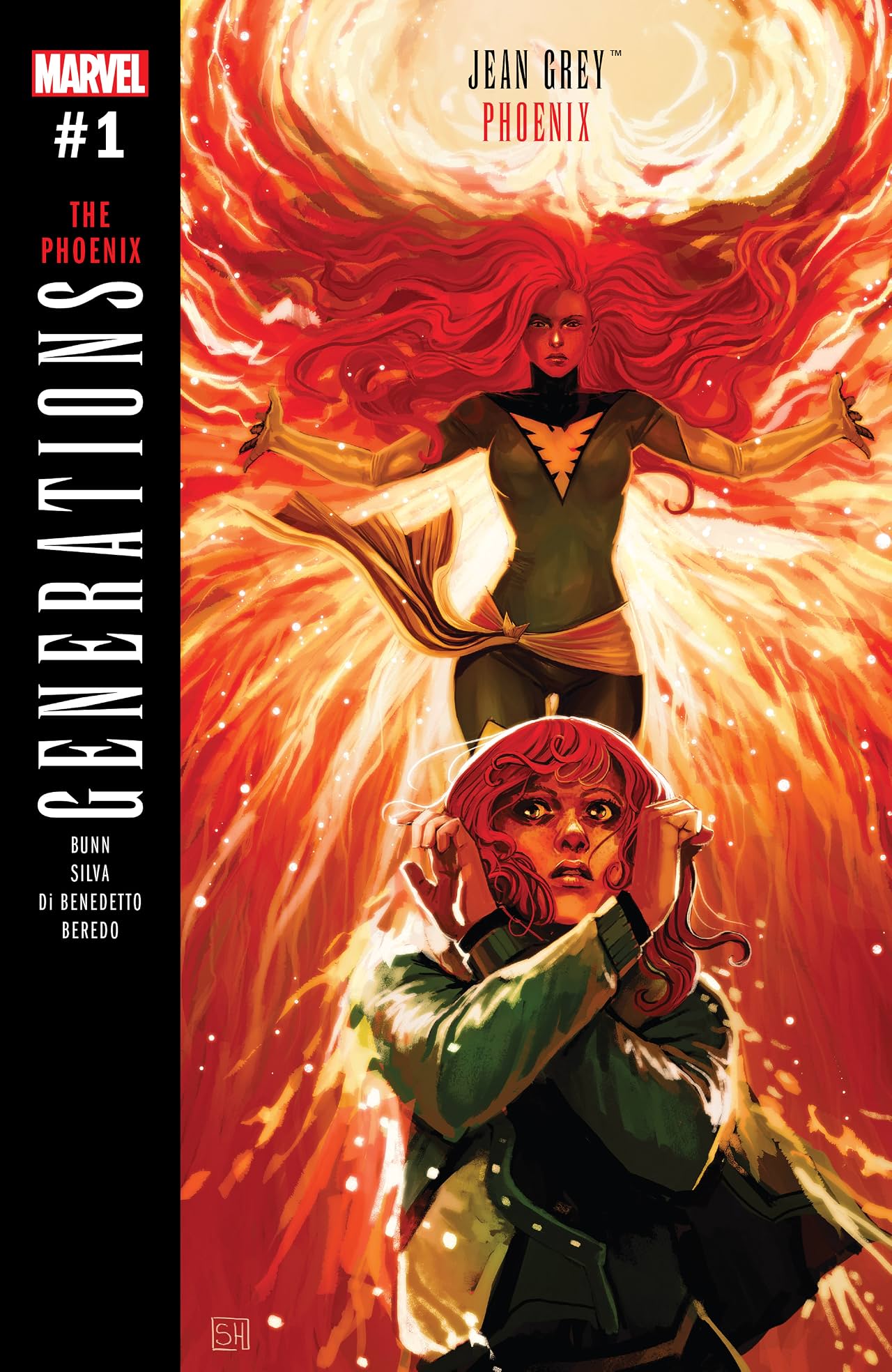
Generations: Phoenix & Jean Grey (2017) #1

As kids, it seems as though everyone is trying to teach us morality lessons that’ll help us grow into functioning adults. Those lessons aren’t always effective, though. Just ask the potheads who sat through the DARE program in school.

As adults, we tend to pay less attention to those kinds of lessons because we arrogantly believe we’ve figured it out. We think we know enough about the human experience to determine what is right and what is wrong. People who think that way tend to be the arrogant assholes who refuse to admit that Dr. Oz is a quack and a fraud.

Truly functional people, be they kids, adults, or adults who still act like kids, never stop learning important life lessons. Life is a constantly changing, obstacle-filled struggle where you never see the finish line and are guaranteed to fall flat on your face at least once a week. That’s why lessons that really deliver a powerful message in a compelling way is a special, precious thing in this chaotic world we live in.

That brings me to comic books, superheroes, and the X-men. Yes, this is going to be another one of those posts. Yes, that means I’m about to extrapolate a major philosophical insight into the human condition from an X-men comic, most likely in a way that applies to love, sex, and everything in between. You’re welcome.

It’s not the first time I’ve gleaned such lessons from an X-men comic. A year ago, I singled out X-men 92 #5 as a testament to just how powerful a romance between equals can be. Chances are, I’ll single out more comics in the future and there’s a high possibility that they’ll involve the X-men, Deadpool, or Wonder Woman.

The comic in question today is Marvel Generations: Phoenix & Jean Grey #1. It’s actually not part of any ongoing X-men series. It’s a single, self-contained story that’s part of an major promotional effort by Marvel called Marvel Generations.

The goal is as simple. Marvel seeks to bridge the gap between its older incarnations of iconic characters with the newer versions. While some of those newer versions have already caused controversy, the goal is always the same. Marvel hopes to appeal to their long-time fans while appealing to newer fans who are just getting into the world of Marvel.

Comic companies do this fairly often, trying to please old fans while creating new ones. Having followed comics for a good chunk of my life, I’ve seen more than my share of efforts. DC Comics, Marvel’s chief rival, did it last year with their DC Rebirth initiative. By most accounts, it was a success. Now, Marvel is attempting to achieve similar success.

There are many challenges to that effort, but for Jean Grey of the X-men, those challenges are more daunting than most. I’m not talking about the kind of daunting that involves dragons, killer robots, and Brett Ratner movies. I’m talking about convoluted complications involving time travel, evil clones, and cosmic forces. Trust me, it’s way more complicated than it sounds.

For this particular issue, though, you don’t need to know the fine print of those complications. You only need to know that Jean Grey’s story, after 50 years of X-men comics, got so crazy that one of her teammates, Beast, traveled back and time and brought her and the rest of the original five X-men to the future.

Now, since 2012, Jean Grey has basically been Marty McFly from “Back To The Future,” minus the incest sub-plot. She knows that her future sucks in that she ends up dead, and multiple times, no less. On top of that, she finds out she’s destined to become corrupted by a cosmic power known as the Phoenix Force, which will go onto cause all sorts of headaches, heartbreaks, and overall frustration.

That destiny is a huge part of the X-men mythos. That’s the part that “X-men: Dark Phoenix,” a movie I’ve talked about extensively, is going to try and capture. In this comic, Jean Grey has already read the spoilers to that story. She knows it doesn’t turn out well.

In fact, she has an ongoing solo series where the primary theme involves her preparing herself to face the Phoenix Force so that she doesn’t become that cute redheaded mutant who constantly dies and ends up on the wrong side of a bad love triangle. That’s entirely understandable and Marvel Generations: Phoenix & Jean Grey #1 gives her the best opportunity she’s had to date to change her fate.

This is where the lesson that Marty McFly learned the hard way comes in. Through elaborate space-time machinations that would give Doc Brown a migraine, Jean Grey is transported to a critical moment in the history of her character. It’s a moment that puts her in a position to change a lot more than just her fate.

That’s because she’s plopped in the middle of the iconic Phoenix Saga, also known by fans as the greatest X-men story ever told. It’s after her older self gains the cosmic power of the Phoenix force, but before it corrupts her in a way that destroys an entire star system and dooms her to a life of death and resurrection. There’s no part of that last sentence that’s exaggerated.

It’s an understandably confusing situation, but it’s one that puts Jean Grey in a position that even Marty McFly never dealt with. She doesn’t just have a chance to change her fate or learn more about her older self, who she’s only really known through the memories of other X-men. She has a chance to learn more about the cosmic power that she knows will doom her.

It makes for a series of colorful interactions between her and her older self that will bring tears of joy to the eyes of X-men fans of any generation. It’s hopeful, sincere, dramatic, and impactful. It fits perfectly within the narrative of Jean’s ongoing story in other X-men comics, as well as the story of her past self.

There’s so much to love about this comic, but I’m not going to spoil the entire thing here. I’d much rather have people go out and buy the issue. It’s money well-spent. Even if you don’t know much about comics or only know the X-men through the movies, this comic will appeal to you.

Beyond that appeal, though, I want to highlight an important theme within this comic. It’s a theme that applies to stories beyond comics and is relevant to life, in general. It especially applies to matters of love, passion, and intimate connections, which are major topic of this blog and the novels I write.

Generations: Phoenix & Jean Grey (2017) #1

At the heart of Jean Grey’s struggle in Marvel Generations: Phoenix & Jean Grey #1 is a difficult decision that everybody who isn’t a psychotic dictator faces at some point in their lives. It has to do with having the power to effect a situation and choosing whether or not to exercise it.

In the comic, Jean Grey has a chance to tell her older self everything she knows about her fate. She could, in principle, warn her about how the events of the Phoenix Saga play out for her. As a result, she could ensure it turns out differently, preferably in a way that doesn’t leave her dead and subsequently cloned.

On the surface, it seems easy. We saw what Marty McFly chose. We saw what the entire cast of “Hot Tub Time Machine” chose. They chose the easiest, most obvious path. They understandably wanted to improve their situation. In doing so, they created a lot more problems that they had to solve. The stakes for Jean’s problems, though, are much higher.

The problems she could create by changing her fate might be far worse than simply ending up dead. She’s not dealing with incestuous infatuations here. She’s dealing with a cosmic force that eats entire stars just for the fun of it.

She already knows the consequences of not changing anything. That has been hard enough to deal with. However, she has no idea whether she’ll fix anything by choosing otherwise. Given the Phoenix Force’s mixed track record, the odds are not in her favor.

I won’t spoil the choice she makes or what goes into. Again, I’d rather people read this comic to appreciate the full weight of its message. I’ll just say that the decision Jean makes is one that we all indirectly make when we have any kind of power over someone and can affect the course of their life.

Whether you’re a parent, a spouse, or an authority figure of any kind, you have an ability to make choices that affect other peoples’ fate. This is especially true when you’re in a relationship with someone. Your love for them and their love for you effectively links your fate. That makes your ability to make the right choices for the right reasons so critical.

It happens all too often, people using their position of power over others to abuse them. We see it when police harass minorities. We see it in crimes of passion. We see it in cases of spousal abuse and child abuse. When someone else trusts us with authority, we impact their lives in so many ways, often in ways we can’t see.

It can bring out the best and the worst in people, as the Phoenix Saga famously demonstrated. Real life demonstrates it too. Power does corrupt people. Sometimes the hardest choice to make is to not exercise that power to avert the potential consequences it might incur. It’s a choice that a lot of crazy dictators fail to make.

It’s a choice ordinary people fail to make as well. Parents find this out the hard way when they try to make decisions for their children. Sure, it seems like the right thing to do at the time. They may see it as them just protecting their child, as every parent should. However, they don’t realize until it’s too late how much damage that can do.

When you’re in an intimate relationship with someone, it can be just as powerful. If someone loves you implicitly and is willing to trust you so completely, you have the power to guide their lives in profound ways. That guidance, though, can be detrimental to the both of you.

When you have the power to influence a person or a situation, it’s easy and tempting to bend it to what you think will be more beneficial. The problem is that, without the benefit of hindsight, it’s impossible to know whether you’ll actually make things better or much worse.

The hardest decision in that situation is to acknowledge the problems as you understand them, bear the burden of solving them, and focus on the future rather than agonizing over the past. It’s rarely a preferable decision because it means accepting a situation and your role in it. It may feel like a missed opportunity, but it can just as easily be an averted crisis. Hindsight may be painfully clear, but possibilities are painfully vague.

Jean Grey, who is a teenager, mind you, in the story that plays out in Marvel Generations: Phoenix & Jean Grey #1, has to make this decision in the face of impossibly high stakes. What she does is a testament to the kind of character she is and the values we cherish in our heroes.

It’s a short, but powerful story that teaches an important lesson to children, adults, comic fans, and non-comic fans alike. Whether you’re a comic book character, a celebrity, an authority figure, or just someone with the slightest bit of leverage over someone, it’s a lesson worth learning.

4 Comments

Filed under Comic Books, Jack Fisher, Superheroes, Jack Fisher's Insights

On Nice Guys, Women, And Whining

We’ve all heard it before. We’ve either experienced it, know someone who has, or seen at least fifteen movies built around the concept. There’s a guy sitting myself, his head held low as his lips quiver with sorrow. He’s sad. He’s lonely. Nobody likes him and women would rather endure amputation rather than touch his cock. When anyone asks about it, he tells the same boring story.

“I’m a nice guy! Why don’t women want to be with me? I’m not some jerk or asshole. What’s wrong with them?”

On some levels, we have sympathy for guys like that. Yes, I know there are women who feel this way too, but a generation of teen movies, romantic comedies, and high school drama has conditioned us to hear a male voice every time we hear this overplayed diatribe of angst.

Since I’m not in a position to undo that conditioning, I won’t try. Just bear with me because this is an important message to anyone who has either said those words or heard them from someone else. I don’t want to underscore the depths of that loneliness and angst. I’ve been there too. However, there is a context worth pointing out here.

Call it what you want. We really don’t have a label for it. I call it it “The Nice Guy Whine.” Unlike the wine you can drink, this one doesn’t get better with age. It’s one of those overplayed tropes that play out way too much in both the real world and in fiction. Movies like “10 Things I Hate About You” and “She’s Out Of My League” try to make it interesting and sexy. It doesn’t make the whining any less annoying, though.

They’re frustrated, isolated, and in utter despair. They’re nice guys. They do the right things. They’re generally well-behaved, law-abiding, and friendly. They don’t hurt anyone or go out of their way to make trouble. They’re just genuinely nice guys. So why won’t the beautiful women they want to get with hook up with them?

I don’t deny it’s hard and I’m not just talking about genitals here. As I’ve said before, we humans are a social, passionate species. We seek connection and intimacy. I’m not just talking about the kind we do between the sheets either, although that is part of it.

We want to find love. We want to be with someone. In terms of core needs, that’s right up there with food, water, and sufficient WiFi. When we don’t get that connection and intimacy, we get lonely and upset. That’s to be expected. Our brains and bodies know we need that intimate connection. When we don’t get it, it tries to do everything possible to get you to seek it, even if it means the occasional awkward boner.

So what’s going on here? Why is it that nice guys just can’t get any? Well, as someone who once asked those same questions and did plenty of Nice Guy Whining himself, I’d like to offer a clear and concise answer. For all the fictional characters and real people in this world who’ve whined like I have, listen up. This might be the most important thing you hear that doesn’t involve the IRS.

“Being a nice guy isn’t enough. The vast majority of the planet is full of nice people. By whining about it, you’re indirectly insulting every man or women who doesn’t want to be with you because you make it about them and not you.”

Reading that out loud, I’m sure it sounds harsh. Trust me, it’s not meant to be that harsh. It’s supposed to reveal a simple truth and it’s actually uplifting on some levels when you think about it.

It’s true. Most of the people in this world, including the guys, are nice. We only think it’s full of mean assholes because they’re the ones who make the news, get reality TV shows, and star in movies, albeit for all the wrong reasons.

The fact that these assholes get our attention is actually proof that most people are nice. Things don’t get our attention unless they’re rare, dangerous, or shaped like female breasts. Even science bears it out. People today are generally nicer and more decent to one another than they’ve ever been.

Why does this matter? Well, it matters because by whining about being a nice guy, you might as well be whining about the sky being blue or water being wet or tits being awesome. You act as though the mere fact you’re alive and not dissecting animals in your basement is reason enough for your dream girl to be with you.

Step back for a moment and think about that. You’re a nice guy. I don’t doubt that. Even so, why should that be your primary appeal to a woman? What else do you have to offer? What sort of skills, passions, and personality traits do you bring to the table? I’m not saying you’re devoid of those things. I’m just saying these are questions you haven’t bothered answering.

I ask them with the full understanding that I’ve done plenty of whining like that too. There were plenty of times, especially in my teenage years, when I whined about the girls I liked not wanting to be with me. For a time, it left me very depressed and extremely isolated. It was not a good feeling.

However, I’m not good at lying to myself so I was able to answer that question on my own. In addition to having a debilitating acne problem, I had piss-poor social skills and did not take care of myself. I like to think I was pretty nice in general, but how does that make up for the utter lack of benefits I would bring to a woman?

I know I have much more to offer now because I’ve actually worked on myself. I’ve taken the time to develop new skills and abilities. In addition to being nice, I’m very physically fit. I run at least 15 miles a week. I lift weights. I try to watch my diet. By most measures, I’m a physically attractive man.

In addition to my looks, I’ve got other benefits to offer. I have a car. I have no credit card debt. I have a steady job. I’m very skilled in terms of writing passionate, sexy stories meant to moisten panties. Believe it or not, these are skills that women find attractive. Just being nice is only a base requirement. Everything else on top of that are premium features.

It may sound cynical, the idea that being nice isn’t enough and you actually have to sell yourself somewhat. It gives the impression that people only want to be with you because you can do something for them. Well, how is that any different than what you want from them? It’s a bit crass, I know, but it’s entirely pragmatic when you think about it.

Part of being a social creature is bringing something unique to the table. Maybe it’s a skill. Maybe it’s a personality. Maybe it’s a certain type of energy that stands out from the others. Whatever it is, it’s part of the overall package that is you and you actually control what’s in that package. You have the ability to make yourself appealing. There’s nothing, other than sheer laziness, to stop you.

By just whining about being a nice guy, it’s like you’re trying to shame others for not having lower standards. You give the impression that someone is evil just because they prefer a smartphone with more features than an old flip phone.

In a sense, that undercuts your whole “nice guy” persona because wanting to do the absolute minimum to achieve the maximum desired results isn’t very nice. If anything, it’s as big a dick move as any Biff Tannen wannabe ever pulled off.

With that, all those whining nice guys out there have their answer. You know why being a nice guy isn’t getting you anywhere with your current crush. I even told you how to fix the situation. It may be harder for some than others, but the opportunity is there. You just have to take advantage of it. I’ll even add that most women, in my experience, will be attracted to men who takes advantage of those opportunities.

Leave a comment

Filed under Jack Fisher's Insights

Sexy Sunday Thoughts: The Heat Wave Edition

I usually avoid talking about the weather because, more often than not, it’s the topic of last resort. However, sometimes it’s worth talking about. It wasn’t that long ago when I was snowed in for a couple days. Now, it’s hotter than a camel’s nut sack and there are only so many clothes I can legally take off.

As I type these words, everywhere within a 100-mile radius of my home is in the middle of a heat wave. I’m pretty sure I could fry an egg and cook bacon on the hood of a car. At this point in the summer, most people should be used to this kind of heat. There’s just no adjusting to the feeling of walking into an oven, just to get the damn mail.

That said, I still prefer sweating my ass off, as opposed to freezing my balls off. I like not having to dress in layers every time I go outside so I won’t complain about the heat too much. If nothing else, the heat allows me to be naked more often and that can only help the progress on my sexy novels.

Wherever you may be this summer, I hope you have a way to stay cool while still staying sexy. It is possible to strike a balance. I hope this week’s edition of “Sexy Sunday Thoughts” can help in that effort.


“I shudder when I imagine what was going through the mind of the person who invented the butt plug.”


“We’re rapidly approaching a place in our culture where liking a sexy picture of someone counts as foreplay.”


“Women don’t know the power of oral sex until they ask a favor of a man who just received it.”


“The desire to have sex in the backseat of a car often involves overestimating one’s flexibility.”


“Seeking advice from a celibate priest on your sex life is like asking a cow for advice on cooking steaks.”

“If our genitals had lawyers, then divorce proceedings would be a lot more complicated, but way sexier.”


“If a woman offers a man oral sex before a kiss, then people think she’s a prostitute. If a man offers a woman oral sex before a kiss, then people think he’s just being extra considerate.”


As we endure more heat waves, I encourage everyone to stay cool in any way, except in their pants. Some parts of your body are worth keeping warm, no matter the season. Heat waves may come in go. Certain kinds of heat will find a way to keep burning. Trust me. You’ll take comfort in that once the winter rolls in.

Leave a comment

Filed under Sexy Sunday Thoughts