Category Archives: philosophy

Why I Don’t Use The Term “Social Justice Warrior” And Ideas For A Better Label

sjw-o-face

Every now and then, I get comments and criticisms about my writing style. Some are constructive. Some are just angry rants that I’m perfectly content to ignore. There is one criticism, though, that I feel is worth addressing.

Specifically, it involves some specific terms I avoid using. Most people with an internet connection or access to cable news have probably heard the term “social justice warrior” at least once. It’s rarely in a positive light. It’s often used as an insult or a signal that you’re about to say something that’s going to evoke a lot of angry comments on social media.

I’ve been tempted to use it in the past. I’ve discussed many topics involving feminism, men’s issues, and social inequality that often get people throwing that term around as though it were a demonic chant. There’s a reason I’ve avoided it, though, and I hope to demonstrate that it’s a good reason.

First off, I want to make clear that I despise the term “social justice warrior” almost as much as I despise “toxic masculinity,” a phrase I believe cannot fade from our language fast enough. I see this label as one of the worst manifestations of the English language since the hippie era and at least they could blame psychedelic drugs.

I also believe that its continued usage will do more to breed hatred, outrage, and division at a time when we’re already more divided than ever. It derails a conversation and detracts from discussions about serious issue involving society, justice, and gender. This term is literally holding back progress, which is ironic given the nature of its definition.

The actual definition of a social justice warrior, or SJW as it’s colloquially used, is somewhat vague. It’s a modern-day catch-all term for a particular brand of politics and social attitudes. According to Wikipedia, the definition is as follows:

A pejorative term for an individual who promotes socially progressive views, including feminism, civil rights, and multiculturalism, as well as identity politics. The accusation that somebody is an SJW carries implications that they are pursuing personal validation rather than any deep-seated conviction, and engaging in disingenuous arguments.

I think that definition covers most of the most common ways the term is used, but I think it underscores how much vitriol it inspires. Spend any amount of time on social media and you’ll find some of the most hateful, demeaning, and divisive rhetoric you can imagine.

However, it’s not just the extreme rhetoric this term inspires that discourages me from using it. It’s not even the tendency for a conversation to devolve rapidly as soon as the words “social justice warrior” show up in a sentence. What I find most objectionable about this term is how fundamentally dishonest it is.

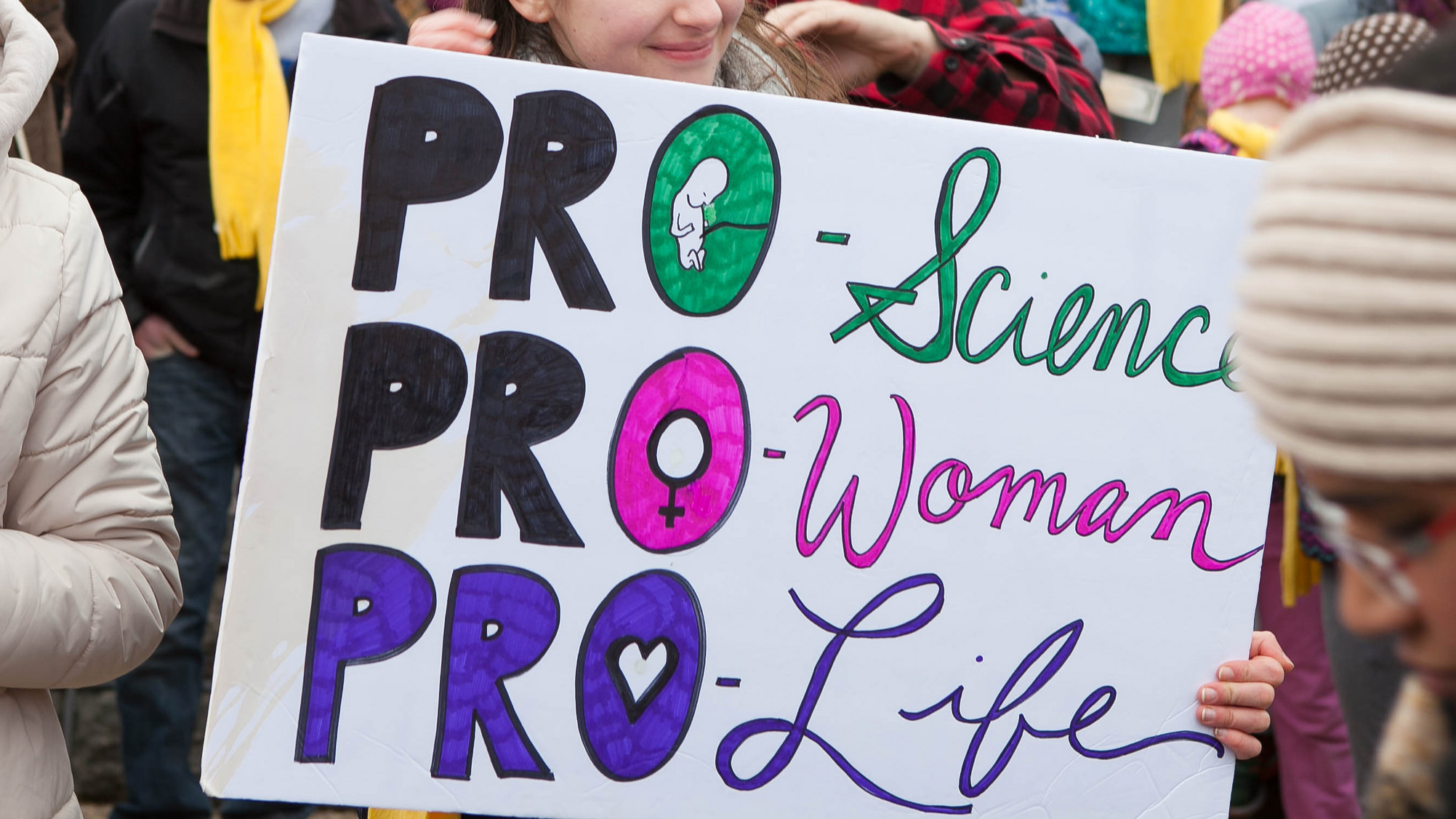
To illustrate how, look at the anti-abortion movement, another extremely divisive issue that tends to evoke all the wrong emotions. There are some pretty passionate opponents to abortion, but they don’t call themselves anti-abortion. They call themselves “pro-life.” It’s a disingenuous term, but from a marketing standpoint, it’s brilliant.

That’s because, if you go by the literal meaning of the words, it means you’re for life in general. It doesn’t directly imply anything about abortion. By calling themselves “pro-life,” they skew the meaning so that they can claim they’re on the side of all things alive and good.

Again, it’s a smart ploy, but it’s also dishonest and George Carlin did a brilliant job of explaining why. Those who use the “social justice” label use a similar tactic. They use words that denote inherently positive concepts like society and justice. However, I would argue that this ploy is even more dishonest than those hiding behind the “pro-life” table.
Most reasonable people are for justice. They’re also for a functional society in which people of any race, gender, religion, or ethnic background can live in peace and enjoy the same protections under the law. On paper, we have that. In practice, there’s room for improvement.

However, whenever I listen to someone who adheres to the Wikipedia definition of “social justice warrior,” I never get the impression that their ideas of justice are genuine. They tend to reflect a personal, selfish brand of justice that is more concerned with how the world makes them feel and less with how it really works.

A “social justice warrior” will look at issues like female depictions in video games, cultural appropriation in media, and proper pronoun usage and not see the full picture. In fact, they’ll go out of their way to ignore that picture and focus only on the parts that sends their emotions into overdrive.

It’s not enough to just criticize these injustices. A “social justice warrior” has to treat them like some grand conspiracy by wannabe fascists who bathe in the tears of orphans and wish they could still own slaves. It becomes a potent blend of holier-than-thou grandstanding and virtue signaling. To say that brings out the worst in some people would be an understatement.

Talk to most people outside a 4chan board and chances are, they’ll be in favor of a just society whether they’re liberal, conservative, progressive, feminist, or whatever other political affiliation they may have. The fact that “social justice” now has more to do with misguided outrage and little to do with actual justice is downright tragic.

The term gets thrown around so often that I’ve made a conscious decision to just avoid using it in my writing. After this article, I intend to use different words that I feel are more reflective of the outrageous attitudes that “social justice warrior” evokes.

I’m not doing that because using words gives them power and I don’t want to give “social justice warrior” more power than it already has. While I doubt that’ll reduce the vitriol it currently carries, I still prefer terminology that’s more reflective of these damaging attitudes.

In the name of offering some potential solutions to this issue, I want to put forth a new approach to dealing with the “social justice warrior” phenomenon. I believe that it reflects an ideology that’s worth confronting. It espouses attitudes that promote censorship, infantilize groups of people, and elevates one person’s feelings over another for all the wrong reasons.

These are people and attitudes that will continue to make noise and push bad ideas on a society that already has too many circling around. For that reason, I believe that warrants creating some new labels for them, one that I think is more descriptive of what they truly area. Here are just a few.

Professional Whiner

Regressive Whiner

Weakly Whiner

Sad Whiner

I think the theme here is pretty obvious. Most of the time, “social justice warriors” don’t really protest. They whine. They whine in a way that’s worse than any child. They don’t try to solve a problem. They don’t try to learn the facts and figure out a better process for doing something. They just whine.

That’s not just pathetic. That makes whole “warrior” part of their label hypocritical. Warriors are supposed to fight and not whine. When reality doesn’t cater to your feelings, whining never changes that. A “social justice warrior” may even understand that, but they also understand that without validation of some sort, their outrage is empty.

That, I believe, is the key to confronting the misguided attitudes of the “social justice warrior” phenomenon. Attitudes that have little to do with actual justice or a healthy society need to be called out for what they are. I say that as someone who does have attitudes that some may consider progressive, but I understand that whining about them won’t do much to further those ideals.

At the end of the day, if all “social justice warriors” have to go on is whining, then the harsh reality of the world will do plenty to undercut their attitudes in the long run. Calling them what they truly are will just help remind them a little sooner.

4 Comments

Filed under Current Events, gender issues, philosophy, political correctness, sex in society

How Atheism May Improve Your Sex Life

Relationship with passionate affection

When it comes to improving your sex life, there’s no one way to go about it that works for everyone. Human sexuality is complex, diverse, and exceedingly kinky. What works for one person won’t work for another and may even be detrimental in some cases.

Conversely, there are also variety of ways to undermine or ruin your sex life. That same sexual diversity that helps the human race find novel ways to get intimate with one another can also backfire horribly. Some are minor, in terms of effect, but other forces can have a much greater impact.

That brings me to religion, a topic that tends to inspire the best and worst in people. Like sex, it’s a complex phenomenon that impacts everybody differently. It can inspire great charity and compassion in some. It can just as easily incur greed, exploitation, and outright atrocity.

For those reasons, and plenty more that are too numerous to list, any effort that involves mixing sex with religion is akin to mixing napalm with TNT. I’ve made an effort to discuss both topics in a fair, balanced manner in the past. I feel as though I can only go so far before I totally inflame certain audiences.

I’m still going to try to push the conversation a bit farther. That means taking a few risks and since religion is still such a prominent force in the world, it’s effect on our collective sex lives is unavoidable.

For this particular discussion, want to focus on what happens when religion is removed from the equation. If religion is really that powerful an influence on our lives, and both history and current politics indicate that influence is not entirely trivial, then it stands to reason that the impact of its absence can reveal something about the extent of that influence.

That’s not to say that this is going to be a glowing endorsement of atheism. I prefer to let the data, the logic, and the implications speak for themselves. Since religion is on decline in many parts of the western world, I think exploring the potential impact is critical and even a little urgent.

Information on the sex lives of atheists compared to those who consider themselves religious is somewhat difficult to come by. The act of assessing and measuring someone’s sex lives, as well as the extent of their religiosity, is extremely difficult without the aid of lie detectors or mind-readers. The information we do have, though, does offer some intriguing insights.

Back in 2011, a survey entitled “Sex and Secularism” surveyed approximately 14,500 people revealed that those who identified as religious had less satisfying sex lives than their non-religious counterparts. On top of that, those same religious participants reported a high level of guilt that came along with their sex lives. Given how some religions build their theology around guilt, that shouldn’t be too surprising.

Conversely, those identifying as non-religious didn’t just report better sex lives. They had better sexual education and were more open to discussing sex in general. Everything from personal fantasies to simple tastes was fair game and less affected by guilt. That openness, along with considerably less stigma, was conducive to a more fulfilling sex life.

That effect was more pronounced by those who had once been religious, but had since become atheist. Between the absence of religiously-motivated guilt and the sexual taboos that are often theologically driven, the cumulative effect is pretty striking. This notable quote from the researchers summed it up nicely.

“People who had lost their belief and became atheists reported a significant improvement in sexual satisfaction,” the paper went on to say. Apparently the guilty feelings that religion creates around sex dissipate after a while.

Now, I can already hear the outrage sincerely devout religious crowd on the conclusions of this study. More than a few people who consider themselves religious will claim that their sex lives are superior and they may even have a case to make. Many religions offer a simple, one-size-fits-all approach to sex that is uncomplicated, straightforward, and safer. The fact that it’s also ordained by a divine power is also a factor.

I don’t deny that there are plenty of religious couples out there who have satisfying sex lives. There are probably plenty of atheists out there who have terrible sex lives, as well. However, in order to draw larger conclusions about the impact of religion on sex, we can’t just go by a few anecdotal experiences. We have to step back and see the forest from the trees.

From a psychological and physiological perspective, it makes sense that guilt, religiously-motivated or not, would undermine anyone’s sex life. Guilt has measurable effects on people. It makes it harder to focus. It keeps us from enjoying things. It’s a powerful distraction that makes us feel stress and anxiety. All of these forces can do plenty to undermine your sex life.

In my musings on taboos, I often cite religion as a driving force behind them. Organized religion has made no secret of its intent to regulate, control, or outright exploit human sexuality. There’s plenty of theology, especially among the Abrahamic religions, that imparts divinely-mandated guilt on sex.

In these religious cultures, sex isn’t just some basic biological act that people do for intimacy, procreation, and recreation. It’s subject to all sorts of holy and unholy connotations. The deities involved in these religions aren’t just interested in the kind of sex you’re having. They’ll actually punish you if you do it the wrong way.

That does more than just impart extra guilt for doing anything that strays from what priests, mullahs, monks, and rabbis deem appropriate. It also instills a very rigid family structure, one centered around a specific manifestation of sex that has very little room for fun, kink, and exploration.

That manifestation involves strict gender roles where men do the hard labor and women do the child rearing. The only sex that is sanctioned is the one that involves producing babies who subsequently grow up to be adherents/soldiers/patrons of a particular religion. The fact that type of sexual expression indirectly benefits religious institutions is probably just a coincidence.

The act of enjoying sex for non-procreative purposes would constitute a distraction. A distraction is dangerous in any religion because if people become too distracted, then they pay less attention to the religious institutions and the duties they espouse. As such, it’s in the interest of any successful religion to maintain a strict control over someone’s sex life.

That kind of control is naturally prone to stress. Given how the biological wiring of human sexuality is not conducive to that kind of narrow expression, there’s bound to be temptation. The best way to combat temptation is through stigma and taboo. By hijacking powerful feelings like guilt, it’s possible heavily influence peoples’ sex lives, even if it’s impossible to control them.

It’s akin to putting lead weights on somebody’s limbs and convincing them that the weight is normal. Even if they come to accept that, the weight still skews perceptions and that can only do so much in terms of circumventing basic biology. It also means that when those weights come off, the effect is pretty striking.

Suddenly, the stigma that once kept someone from seeking the sex they desired are gone. The burdens associated with thoughts and feelings that religious institutions deem unholy are lifted. Like any form of stress relief, it can be pretty liberating.

That doesn’t necessarily mean the 2011 survey is conclusive. It has been criticized for being unscientific in some aspects. Some of those criticisms are valid and the researchers concede that, but to the extent the data is consistent with what we understand about how religion can affect our sexuality, it passes some critical filters.

Our sex lives are complicated. Religion, in its many forms, is complicated as well. Regardless of how you feel about one or the other, mixing them is almost certain to compound both. Atheism, like not playing a sport or not having a hobby, simply removes one of those complications.

It’s not a universal fix. It doesn’t subvert other potential issues that may undermine someone’s sex life. There’s plenty more research to be done and religion is still evolving with each passing year, but when it comes to removing divinely-imposed, theologically-driven guilt, atheism stimulates the necessary aspects that make for a satisfying sex life.

1 Comment

Filed under gender issues, human nature, Marriage and Relationships, philosophy, psychology, religion, romance, sex in society, sexuality

Reflecting On The Greatest Advice Rick Sanchez Ever Gave Us

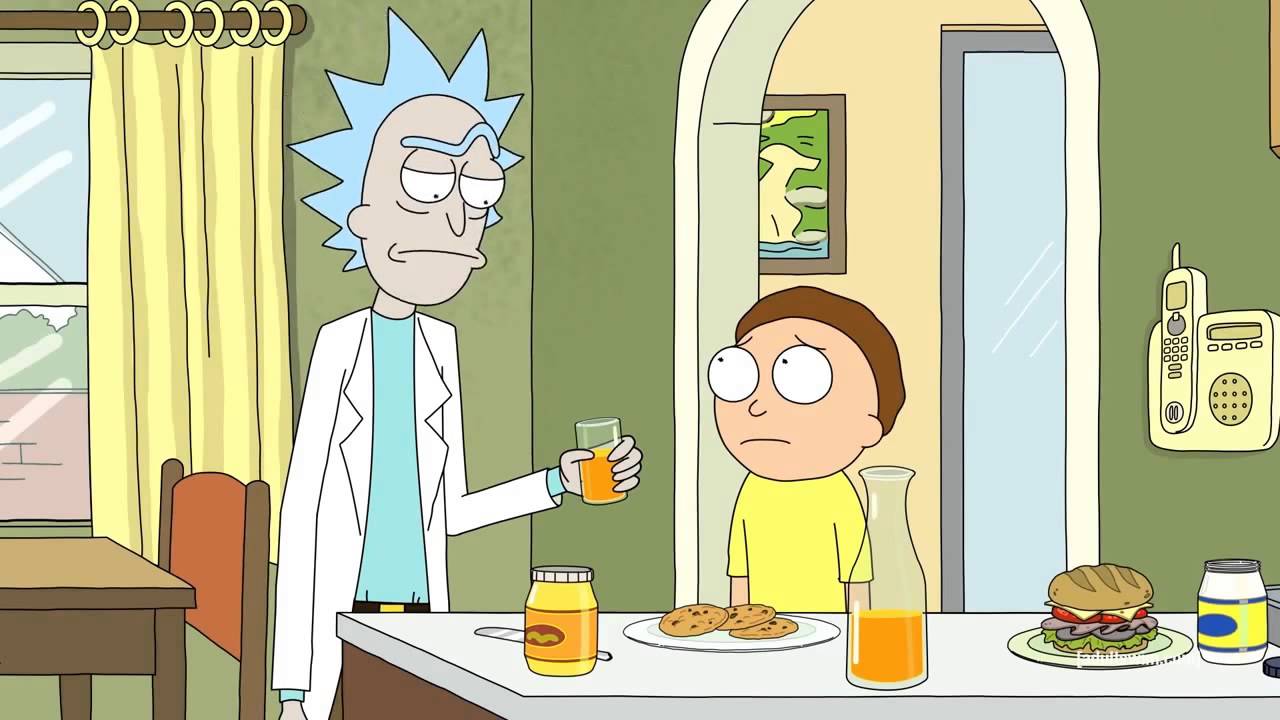
rick-and-morty-season-3-creators-tease-a-return-to-previous-cliffhangers-and-characters-663486

Greetings, and wubba lubba dub dub! By now, you should know that means this will be another article about “Rick and Morty,” one of the greatest animated shows of this century or any other century, for that matter. I know that sometimes means the topics involved are depressing or downright fatalistic. I can’t promise this one will balance that out to any meaningful, but I still hope that this piece is more useful than most.

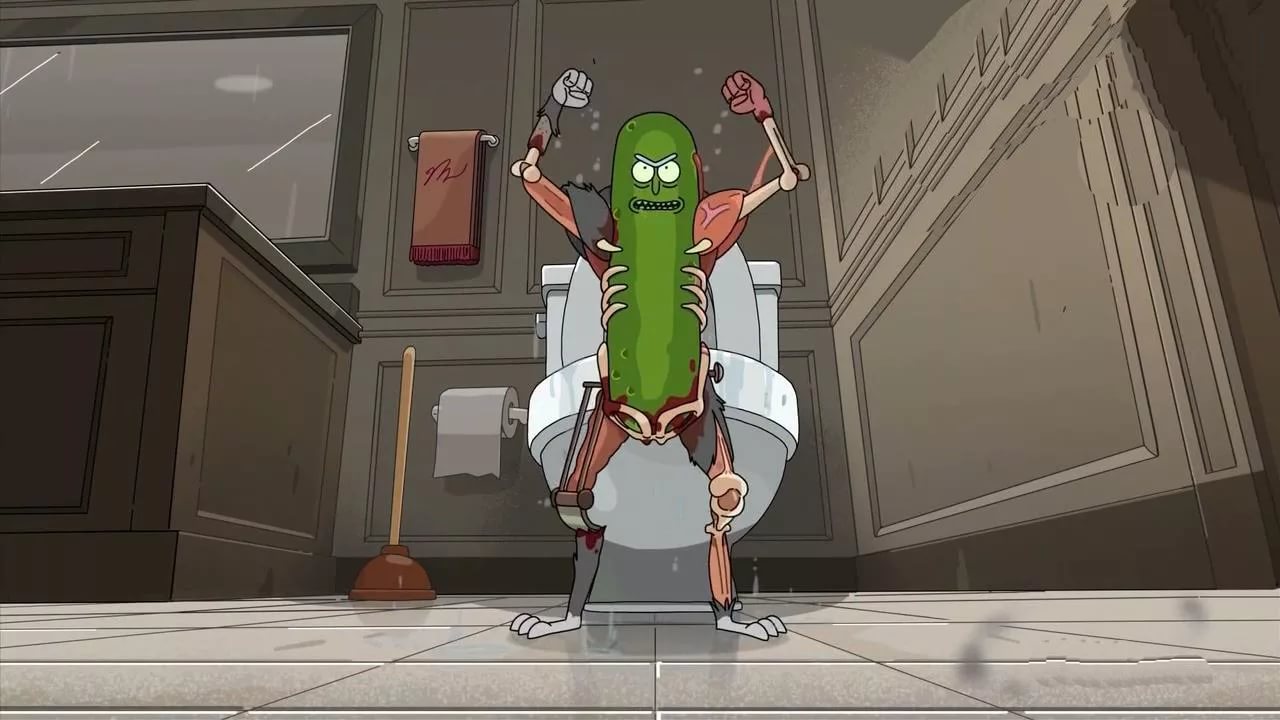
Love it or hate it, either due to its nihilistic undertones or exceedingly passionate fanbase, there are a lot of interesting insights to explore within “Rick and Morty.” From specific episodes that deal with the not-so-hidden appeal of the apocalypse to those built around Rick turning himself into a pickle, there’s a wide variety of lessons and themes to take in.

In this case, I want to focus on what I feel is the best advice “Rick and Morty” has given anyone, both within his animated world and in our own world. It’s a lesson that anyone can use in a multitude of situations, be it dealing with never-ending flood of depressing news to finding out a beloved actor was a total asshole.

Rick has given this advice to Morty on more than one occasion throughout the show, including the pilot episode and, most notably, in “Rick Potion #9.” It applies to battles against alien security guards, burying the body of your alternate self, and that time you farted in class a bit too loudly. It can be summed up in four simple words.

Don’t think about it!

On the surface, it doesn’t sound too useful. Not thinking about something seems like an elaborate excuse to avoid a particular problem or issue. It sounds like something adults tell children just to shut them up so they’ll stop bothering them. Whether they’re asking about where babies come from or why we can’t stop fighting wars, it feels like the overly easy way to avoid an unpleasant conversation.

However, I don’t think that’s what Rick means when he says that. He’s already proven in multiple episodes that he doesn’t give a Grunglokian fart about unpleasant conversations, as evidenced by his many unfiltered rants around his family. When he says “don’t think about it,” he’s saying it in a particular context that makes it more than just a method for avoiding awkward moments.

Watch any one episode of “Rick and Morty” and you’ll notice more than a few themes, not all of which are based on Rick’s ego or Morty’s obsession with a particular redhead. One of the major over-arching concepts that binds the show, and gives much of its appeal, is the idea that none of the things that people hold dear actually matter in the grand scheme of things.

Whether it’s religion, the economy, love, family, or the formula for concentrated dark matter, it just doesn’t matter in the long run. Religion doesn’t matter because it’s just some arbitrary set of beliefs built on unrelated correlations. The economy doesn’t matter if the value of money is entirely arbitrary. Love and family don’t matter when there’s an infinite number of them in the multiverse.

While that fits with the shows more nihilistic themes, it also speaks to the helplessness and frustration that a lot of people feel when dealing with a chaotic world/multiverse. There’s so much they can do, but so much of it doesn’t matter. The causes they fight for, the wealth they accrue, and the people they encounter simply lose their meaning when you consider the sheer size of the universe and how old it is.

In that context, not thinking about it might actually be helpful. If you work a job you don’t like, pay taxes you don’t like paying, and deal with people you can’t stand every day, the idea that it’s all for nothing in the long run isn’t just untenable. It maddening. How can anyone possibly cope with that kind of existence?

Not thinking about it, though, solves a lot of issues because it allows you to maintain the necessary perspective to function within that existence. Even if the things we do are meaningless, not thinking about it at least gives us the illusion that they’re meaningful. More often than not, perception beats reality and not just in terms of bias news.

It’s a byproduct of human’s being so limited in their thinking. Human brains did not evolve to prioritize reason, understanding, or making sense of an obscenely large universe. They evolved with the primary function to help us survive and reproduce, as individuals and as a species. Anything else is secondary or an afterthought.

Rick Sanchez seems to understand that and constantly exploits those limits for his own ends, whether it involves outwitting the President or outsmarting the devil. Unlike everyone else in a meaningless world within an infinite multiverse, he’s a super-genius. He has a portal gun that allows him to travel to infinite timelines at will, even if it’s just for a pizza.

Nobody else in this world has those capabilities, although I wouldn’t at all be surprised if Elon Musk weren’t working on it. Nobody in this world is as smart or as resourceful as Rick Sanchez. There’s very little he can’t do. This is a man who defeated a Thanos/Darkseid rip-off while blackout drunk. By every measure, what he does should carry more meaning than most.

Despite Rick’s abilities, he’s the one who often belabors how meaningless everything is. Never-the-less, he still operates as though there’s a reason to continue existing. That may send mixed messages when he says not to think about it, but that’s only if you overthink it, which would entirely defeat the purpose.

Rick knows that nothing he does matters in the long run, but he doesn’t think about that.

Rick knows that everyone he cares about are just random clumps of matter in a meaningless universe within an infinite multiverse, but he doesn’t think about that.

Rick knows that love, connection, and emotions are just manifestations of brain chemistry that help our species survive, but he doesn’t think about it.

Instead, he focuses his genius intellect on the things that matter to him. Whether that’s his family or that sweet, delicious Szechuan Sauce, he concerns himself primarily with what he feels gives his cosmic adventures meaning. It doesn’t matter if that meaning is empty in the grand scheme of things because, again, he doesn’t think about it.

It may sound egotistical or selfish, but it’s remarkably pragmatic in a meaningless universe. It keeps us from stepping back, realizing how insignificant we are, and succumbing to despair. It directs our energy and efforts into issues that are localized. For Rick Sanchez, a man with access to a portal gun and a space ship, localized is a relative term. For everyone else, though, it’s just that much more pragmatic.

There’s only so much we can do to exact meaningful change in the world. Unless you’re willing to go through the long, tedious process that involves reshaping government institutions, influencing cultural trends, or educating people on a mass scale, you can’t expect to achieve much change, especially by yourself.

Rick Sanchez could probably achieve all the change he wants, but chooses not to because he knows it’ll bore him or it’s just easier to go to a universe where that change has already occurred. For the rest of us, though, we’re frustratingly limited. We may never see or inspire the change we want. Even if we do, we can’t do it alone.

That kind of helplessness can be depressing. The idea that so little of what we do matters, even when we believe in a cause, is pretty distressing. That’s why Rick’s advice is so relevant. It’s not deep or inspiring, but it gets the job done.

Upset with past injustices upon a particular group? Don’t think about it.

Upset that you can’t change the minds of your friends and family on politics, religion, or ideology? Don’t think about it.

Upset that we’re not doing enough to address climate change? Don’t think about it.

Upset that the economy isn’t doing well and all the best opportunities are gone? Don’t think about it.

These are all things that you can’t change without a portal gun or galactic-level genius. Since Rick Sanchez has that and we don’t, our best recourse is to not obsess over it because there’s not much we can do. Eventually, the heat death of the universe will render everything we do or have ever done totally meaningless.

That can either be depressing or empowering, depending on how you look at it. Yes, not thinking about it won’t undo a traffic ticket, undo a crime you committed, or turn off your biological urges to eat, sleep, love, and mate. Efforts to do so can be damaging. For everything else though, not thinking about it is probably better for your mind, your body, and your overall sense of being.

In that sense, we should all thank Rick Sanchez for this amazingly useful device. While he’d probably say that gratitude is just a polite way of idiots admitting how incapable they are, it’s probably best not to think about his reaction. So long as the advice he gave works, what does it matter? Wubba lubba dub dub!

5 Comments

Filed under Current Events, human nature, philosophy, Rick and Morty

Is The Human Race Ready For Contact With Alien Life?

contactparty

In general, I tend to have a high opinion of the human race. I believe that, in general, people are inherently good and will do the right thing in the long run, even if it requires mistakes and missteps along the way. Some of my personal experiences have fed this belief, as well as stories of incredible acts of compassion.

I say that as a preface because my faith in humanity does have limits. There are certain issues where those limits become a critical factor in answering major questions about where we are, as a species, and where we’re heading. I’ve tried answering some of those questions before, such as humanity’s readiness for advanced artificial intelligence. Now, I want to try to answer another where I feel humanity’s limits are a real issue.

It has to do with whether or not humans are alone in the universe. It’s probably one of the most fundamental questions our species has ever asked, inspiring heated debates, famous equations, and Hollywood blockbusters. I’ve certainly asked that question a time or two when looking up at the stars. I imagine there are few people who haven’t.

At the moment, the sheer size of the universe and the ever-growing number of planets we keep finding, the raw numbers make it almost certain that there’s other life outside our planet. It may even be within our own solar system. Just finding some microbes on one of Jupiter’s moons would be pretty profound, but I doubt it would bring that much change to the human race. Some might just brush it off or call it fake news.

It’s the act of discovering intelligent extraterrestrial life that has far greater implications for humanity. I would even argue that those implications could determine whether the human race will survive beyond the destruction of Earth, which is inevitable. Even advanced artificial intelligence wouldn’t compare because at least humans would create that. An intelligent alien civilization would be much less predictable.

In confronting this existential issue, I don’t believe movies or TV shows have come close to getting it right. “Contact” made a commendable effort, but never gave more than a half-answer. Movies like “Independence Day” and “Close Encounters of the Third Kind” were overly simplistic in their approach. That’s to be expected because, logistically speaking, there’s no way to fit all the implications into a single two-hour movie.

I believe that to answer the question of humanity’s readiness to confront an extraterrestrial species is multi-faceted. There are plenty of factors to consider, but before I get too bogged down by the particulars, I want to offer my personal opinion on the issue. Then, I hope to demonstrate why I have this opinion.

No, the human race is NOT ready for contact with intelligent extraterrestrial aliens, but we’re getting there.

I know that isn’t a straightforward answer. It may sound like I’m trying to stand on both sides of the fence, but like I said, the question is inherently complex. As such, it’s hard to offer a simple answer.

Part of the complexity comes from circumstances. In an instance where scientists on Earth identify an advanced alien species, possibly by detecting an alien mega structure like a Dyson Sphere around a distant star, I think the human race could handle that, for the most part.

Such a discovery would be, by far, the greatest ever made in the history of humanity. It would be the story of the millennium and confirm, once and for all, the answer to one of the most fundamental questions our species has ever asked. Getting an answer to that question would change how we see ourselves in the universe, but the extent of the impact would be limited.

Sure, it might cause some disruptions with respect to major religions, although some denominations already preparing for that. It might also cause some ripples in the social fabric of society. If we know there are alien civilizations in the universe that are more advanced than us, then suddenly we have fewer excuses to impose petty divisions within our own species.

There would be upheaval. There would be tension, as well. I still believe that society would adapt in that scenario. Once the shock wears off, we may very well go back to how we were before. Future generations would just shrug off the notion that advanced aliens exist and focus primarily on the issues directly affecting them on Earth.

There’s another instance, however, that has far more profound implications, as well as greater danger. In that scenario, the advanced alien civilization contacts us directly. Moreover, it effectively announces that it’s coming to meet us and there’s nothing we can do to stop it.

In that scenario, I don’t think the current order will remain intact. If we found out tomorrow that intelligent aliens exist and they’re on their way to greet us, I believe that society, as we know it, will fall apart under the weight of fear, uncertainty, and outright dread.

My reasons for believing this have less to do with my faith in humanity and more to do with my understanding of basic human psychology. It’s proven science that the human psyche is adverse to uncertainty. From a purely survival standpoint, that makes sense. Not knowing whether there’s a hungry lion hiding in the bushes is detrimental to our survival. We have a legitimate evolutionary reason for avoiding such situations.

An advanced alien civilization isn’t just a possible threat. It’s the ultimate uncertainty. Even if those aliens are peace-loving hippies who want nothing more than to create a utopian world for every species they encounter, we won’t know for certain. Even if they try to articulate their peaceful intentions, we may not believe them because assuming wrong would be more dire than any hungry lion.

If an alien civilization is advanced enough to both contact us and traverse interstellar space, then it’s highly likely that we wouldn’t stand a chance at stopping them. Despite what “Independence Day” might have you believe, there’s just no way we would be able to counter technology that could carry another species across the stars.

On top of that, we wouldn’t even know if these aliens were biological creatures, like us. More than a few scientists have speculated that it’s the natural path of all advanced life that it transcend its biology to become machines in part or entirely, which makes sense for any species that wants to survive in the vacuum of space. I would agree that any initial encounter humans have with advanced aliens will come in the form of a probe.

Even if that probe is no bigger than a basketball, its arrival on Earth would trigger so much panic that our society, economy, and political institutions wouldn’t survive in their current form. That’s not to say civilization would completely collapse. Some areas might descend into anarchy, but most wealthy countries would remain intact.

However, I believe they’ll remain intact through strict martial law. I also believe that, in the face of incoming aliens, there would be a huge scramble among nations to put together some sort of defense plan. Anyone remotely experienced with science or engineering would suddenly become incredibly valuable for their skills and likely be required to work on this issue.

No matter what recourse humanity takes, though, I don’t think it’ll matter once intelligent aliens arrive. The worst case scenario is that people are so afraid that a few become too trigger happy and attempt to attack. In that case, if the advanced aliens are the vindictive type, they would probably wipe humanity out with the same ease that we would use to step on an ant.

While I don’t think that scenario is that likely, I can certainly see fear dominating the discourse. It would probably extend beyond the initial contact. Even if  the aliens present themselves as friendly visitors, I imagine there will still be plenty of paranoia that it could all be a trick. Given how eager some people are to embrace conspiracy theories, I think this will cause plenty of problem, even in the best case scenario.

There’s still a chance that the human race could adapt to this encounter and be stronger because of it. However, if I had to bet money on the ultimate outcome, I wouldn’t wager much on that outcome. I think, at the moment, it’s more likely that fear and uncertainty will lead to the kind of irrational behavior that would prevent humanity from benefiting from an encounter with intelligent aliens.

As it stands, humans can’t even prevent conflict when encountering one another, especially if they look and act differently. I can’t imagine it would be much better if we encountered a species that was so different that we just had no way of relating to them. At least with minorities here on Earth, we share the same basic human template. For all we know, aliens will look, think, and feel things that are beyond our abilities.

Now, I know that scenario sounds bleak, especially for someone who claims to have more faith in humanity than most. However, there’s one last caveat that further complicates the issue and it has to do with the last part of my answer.

When I stated that the human race is not ready to encounter an advanced alien species, I mean that within a specific context. In the same way I don’t believe humanity is ready for advanced AI at the moment, I don’t think the collective psyche of the human race is to a point where we can accept the idea of confronting an intelligent alien civilization.

That, I do think we’re more ready today than we were 30 years ago. Humanity has made remarkable progress with respect to technology, society, and general welfare. Being more connected through media, the internet, and globalization has helped us better see ourselves as one species, at least to the extent our inherent tribalism will allow.

I believe that in the coming decades, especially as we augment our brains and our bodies, we’ll be more prepared to encounter an extraterrestrial intelligence. I’m not sure we’ll ever be completely ready, but I do think we’ll get to a point where we, as a society, will be able to handle it.

Whether or not that point comes within my lifetime or that of the kids being born today is hard to say, but given enough time and continued progress, I believe we’ll get there. For now, though, the prospect of encountering an intelligent alien civilization would incur some pretty detrimental effects on our species and our world. Even if aliens come in peace, we just not be ready to accept it.

3 Comments

Filed under Aliens, human nature, media issues, philosophy, psychology

Heroes, Villains, And The Forgotten (But Relevant) Message Of “Megamind”

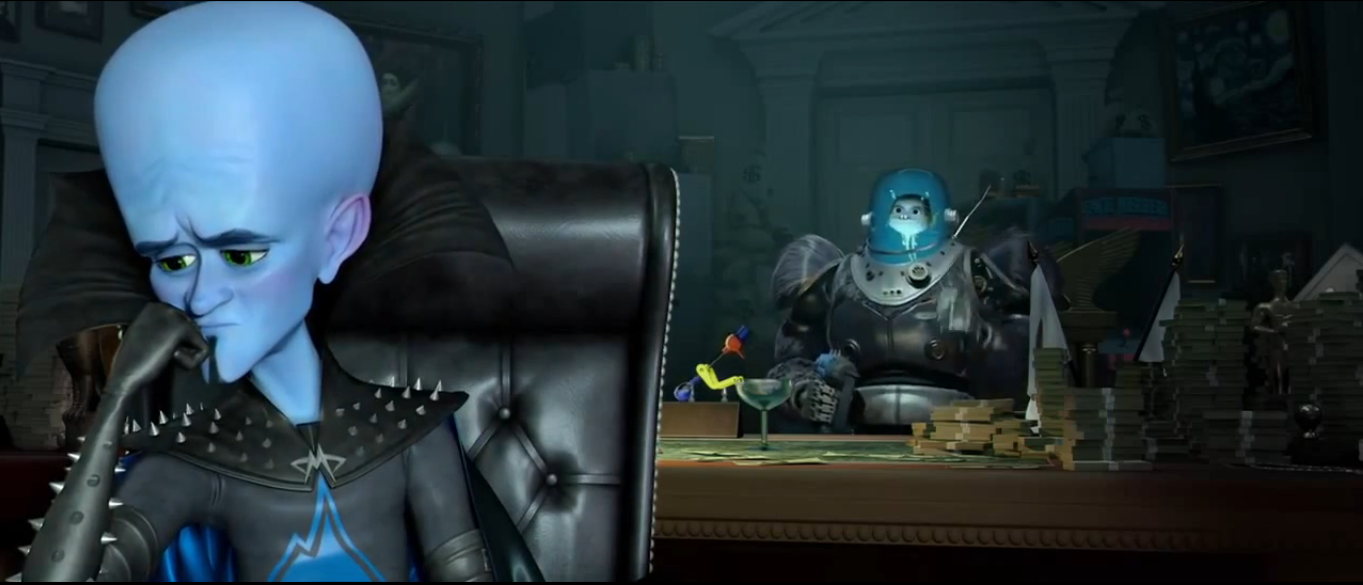
megamindfilm

Every now and then, a movie comes along that was unremarkable in its time, but gained greater meaning years later. It’s one of those unspoken challenges of movie making that doesn’t involve dealing with difficult actors. Sometimes, a movie is either ahead of its time or too late to make much of an impact. Like cooking the perfect steak or good fart joke, timing is everything.

That brings me to “Megamind,” a very well-done, but often overlooked animated movie from Dreamworks. Since it’s not Pixar and doesn’t involve “Shrek,” it had a lot working against it before it came out. However, it also had plenty more going for it and not just in terms of quality 3D animation at a time when “Avatar” finally made that gimmick viable.

The movie boasted an amazing voice cast that included Brad Pitt, Will Ferrell, Jonah Hill, Tina Fey, and David Cross. It also did plenty to leverage that star power. Will Ferrell even famously dressed up as the titular character at the San Diego Comic Con to promote the movie. I’m not saying that, alone, would’ve made that movie a success, but Will Ferrell is one of those rare talents who can make anything more appealing.

You can’t argue with THAT kind of appeal.

In addition, the movie told a compelling story in a way that was concise, enjoyable, and appealing for adults and children alike. It showed in the favorable reviews it received from critics and the high scores it earned from audiences. Unfortunately, it didn’t quite show in the box office totals. The movie did well, but it fell short of the high bar that both Pixar and “Shrek” have set for animated features.

The reason for the movie’s shortcomings are numerous and varied. It came out in 2010, just in time for titles like “Toy Story 3,” “How To Train Your Dragon,” and “Tangled” to steal the show. It also came out at a time when superhero movies were just starting to ascend. “Iron Man” had just come out and the scars from “X-men Origins: Wolverine” were finally starting to heal.

However, “Megamind” really jumped the gun in terms of timing. We were still a few years before “The Avengers” cemented superhero movies as ultimate box office gold encased in vibranium. As a result, the remarkable concept that “Megamind” introduced went forgotten, but I believe it’s worth remembering.

The plot of “Megamind” is simple on paper, but complex in its implications. It tells the story of a self-proclaimed super-villain named Megamind, who was voiced by Will Ferrell. His persona is essentially a comedic parody of every super-villain trope that ever existed. He’s a mad genius bent on conquest and domination, but is constantly thwarted by an overly-powerful, overly-handsome hero.

That hero, appropriately voiced by Brad Pitt, is Metro Man. Like Megamind, he’s also a parody of every superhero trope. He’s part Superman and part Captain America, grossly overpowered and so morally pure that it’s laughable. As such, the movie never attempts to frame Metro Man’s heroism or Megamind’s villainy in a serious sort of way.

That approach is key because the way the story plays out essentially flips the script on the standard narrative surrounding superheroes, super-villains, and what motivates both of them. It conveys a message that didn’t really have much impact in 2010, but if it came out just five years later, its themes would’ve been much more relevant.

At its core, “Megamind” asks what would happen if an over-the-top villain like Megamind actually defeated an over-the-top hero like Metro Man. How would he react? How would the society around them react? These are questions that often have simple answers in other superhero movies. “Megamind” dares to add an extra layer of complexity.

Early on in the movie, Megamind achieves what Lex Luthor, Dr. Doom, and every other mustache-twirling villain failed to achieve. He defeats his heroic nemesis. He takes over the city he seeks to rule. There is no longer anyone or anything to stand in his way. He is, for all intents and purposes, the most powerful being in Metro City.

That’s not the end of the story, though. That’s just the beginning. Shortly after this achievement, which caught Megamind himself by surprise, he has an existential crisis of sorts. Suddenly, there are no more plots left to hatch. There are no more battles left to fight. He has everything he ever wanted, but it still leaves him feeling empty inside.

It leads him on a path that reveals some unexpected insights into the whole hero/villain dynamic. At first, Megamind doesn’t know how to handle his new situation. It’s so unfamiliar and so jarring that it causes serious distress. Even for a super-genius, sudden change and unfamiliarity can be very difficult to handle.

Megamind’s first instinct, which is usually the same instinct most ordinary people act on in such distressed states, is to return to something familiar. He attempts to recreate the status quo as he knew it, which led him to create a new hero in Titan, who is voiced by Jonah Hill. He says outright that without a hero to fight, he has no purpose. Since he happens to be a super-genius, he just decides to create one.

In doing so, he learns as well as everyone else in Metro City that creating a hero is not as easy as just giving someone heroic abilities. On top of that, he also learns that it’s not always possible to go back to that comfortable status quo. In fact, attempting to do so could only make things worse.

Without giving away the entire movie, which I encourage everyone to see, “Megamind” presents some pretty insights into what it means to be a hero and a villain. At a time when more complex villains like Walter White and Erik Killmonger are gaining greater appeal, I believe these insights are more critical now than they were in 2010.

A great deal of what drove Megamind early on was his assumption that he’s the villain and Metro Man is the hero. As such, they’re destined to fight each other with the hero always triumphing. He never stops to question that assumption, nor does he contemplate his goals for after he succeeds. It’s not until he actually succeeds that he realizes how flawed those assumptions were.

Metro Man realizes that even sooner. In one of the main twists of the story, “Megamind” shows that even idealized heroes aren’t immune to this inescapable dynamic. Like Megamind, Metro Man does what he does because he assumes that’s his role. He doesn’t question it until it becomes untenable.

By breaking that classic hero/villain dynamic, both Metro Man and Megamind reveal that the nature of the struggle between a superhero and a super-villain is often incomplete. They may think they know what they want. Heroes want to save the day. Villains want to conquer and rule. Beyond that, though, there’s no other vision. It’s just an endlessly repeating cycle that eventually goes nowhere in the long run.

In a sense, the entire story of “Megamind” is a reflection of the paradox of superheroes. Heroes may save the day and defeat the villains at every turn, but they never go beyond that struggle. They never attempt to change the conditions that allow the villains to instigate conflict, nor do they do anything to prevent new villains from emerging. They save the world, but don’t do anything to change it.

This shortcoming is a big part of “Megamind” from the beginning. No matter how many times Metro Man defeated Megamind, he always ended up back in jail. From there, he always escaped. He never changed or reconsidered his actions until he actually succeeded. To some extent, Metro Man does exactly what keeps Spider-Man and Batman from effectively achieving their heroic goals.

Ultimately, the resolution that “Megamind” offers in the end is something that undercuts the hero/villain dynamic completely. In the end, both Megamind and Metro Man stop making assumptions about their roles and actually make choices of their own, for once. In Megamind’s case, his choice conveys something that no other superhero movie has dared to attempt.

He takes the same traits and abilities that make him a villain and uses them to become a hero. More importantly, though, he doesn’t do so because of a role based on an assumption. He does it because that’s what he chooses. When finally given a choice to do something with his abilities, he chooses to do good. That’s not just uplifting, even for an animated movie. It speaks heavily to the forces that shape our identity.

In the context of modern superhero movies, “Megamind” both parodies and subverts the foundation of the genre. It doesn’t just ask the question as to what would happen if a villain actually beat the hero. It asks whether those who identify as villains are capable of doing heroic things, if given a choice.

Even with more complex villains like Walter White, most superhero movies and superhero media, in general, still follow the same dynamic that trapped Megamind. They have a villain, put them in a particular role, and keep them in that role by locking them into a cycle.

For some inherently villainous individuals, like Lex Luthor, that cycle isn’t necessary. For others, though, it poses interesting questions that rarely get answered. The villains have their roles. The heroes have theirs. The story plays out and the heroes triumph, but does that have to be the end of the story?

Megamind” dared to expand on that story and while it may have been ahead of its time, those themes are still relevant. As superhero movies continue to set new box office records, they will likely become even more relevant and “Megamind” will get the appreciation it was just too premature to achieve.

3 Comments

Filed under Comic Books, Jack Fisher, Superheroes, movies, philosophy, psychology, superhero movies

The Unofficial Platform Of The Nihilist Party

What follows is a little exercise I found myself doing after hearing too many political debates on TV and reading too many rants on social media. Debating/whining about politics seems to be our new favorite pastime in the age of social media and cable news. Personally, I find it frustrating and unproductive.

It’s for that reason that I’m going to attempt to flip the script on the endless barrage of outrage-inducing diatribes. Instead of attempting to inject a new political context into a discussion, I’m going to just hit the whole concept upside the head with a baseball bat of pure nihilism. I’ve enjoyed talking about it in the past, thanks largely to my love of “Rick and Morty,” and I’d like to channel it into something new.

In the spirit of those equally annoyed by political mud-slinging, who just happen to have an extra-healthy appreciation of nihilism, I hereby present the unofficial platform of the Nihilist Party. I know it’s not  real political party. In fact, nihilism being a political party would be paradoxical, given its philosophical underpinnings.

Now, I understand the inherent absurdity of such a concept. I also don’t deny that my expertise in nihilism and other such philosophies are limited, at best. There’s only so much you can learn by binge-watching “Rick and Morty” and “Bojack Horseman.” I still feel like that’s enough with which to craft a new political party. It’s not like other parties set the bar that high to begin with.

With those disclaimers out of the way, I hereby present what I believe is the unofficial platform for the Nihilism Party. If you want to imagine it being recited in the voice of Rick Sanchez, then by all means. I’m not expecting it to win your vote in the next election. It really doesn’t matter, which is kind of the point.


Preamble

We, the random clumps of matter drifting aimlessly throughout a meaningless universe, hereby decree in the name of a wholly arbitrary set of empty standards, set forth the following principles that we feel adequately create the illusion that how we govern our purposeless society matters. We believe all political ideologies are equally vapid and all forms of government inherently flawed, albeit to varying degrees. As such, we neither seek to pretend ours is superior, nor do we claim we can fix the flaws others ignore.


Statement of Principles

We acknowledge that any functional society, be it free or tyrannical, is finite in nature and subject to inescapable entropy over time. In the long run, no society or its various achievements can hope to outlive the inevitable destruction of our planet and the heat death of the universe. To pretend otherwise is an exercise in futility and ultimately counterproductive.

With these harsh truths in mind, the Nihilist Party seeks only to forge a temporary medium of comfort for those who insist on living in functioning society within a infinitesimal speck in the universe for an inherently finite period of time. Whether or not the individuals in that society accept those harsh truths is irrelevant. The Nihilism Party’s primary goal is to maintain whatever functional order is necessary to keep others content as they wait for their eventual annihilation into nothingness.

In accord with that goal, as meaningless as it may be, the following articles reflect the wholly arbitrary articles of the Nihilist Party. Please note that these principles are necessarily vague in order to embody the empty nature of all political underpinnings. Any effort to inject specifics for a pointless society within a pointless world would be contrary to the principles of the Nihilism Party.


Article 1: Nihilist Rights

  • Since all rights are just legal constructs disguised as inalienable assets, we neither support nor discourage efforts by a significant group of people to randomly denote what constitutes a legal right, provided that group does not impose it others in a manner that would make their meaningless lives uncomfortable.
  • The tendency for individuals to form complex social bonds, as determined by the biological programming of their flesh, is neither the concern of the Nihilism Party, nor is it their responsibility to manage beyond ensuring the nature of these arbitrary bonds aren’t impeding the desire of others to pursue their own false meaning.
  • Since government is nothing more than a temporary construct attempting to manage an inherently chaotic world in an ongoing act of never-ending futility, the scope and reach of such government will be limited to simply ensuring that citizens residing within whatever invisible borders are in place can willfully and peaceful pursue a life of empty meaning on their own terms.

Article 2: Nihilist Economic Policies

  • To the extent that everything of value is based on people just believing it has value, the Nihilist Party remains ambivalent to whatever kind of currency people want to use, be it slabs of metal, pieces of paper with famous dead people on them, or bits of digital code.
  • While the the Nihilist Party does not ascribe or inflate the value of one economic transaction over the other, those built on fraud, lies, and deception hinder peoples’ ability to seek whatever false meaning they pursue and therefore, in the name of preserving meaninglessness for all, favors efforts to limit such behavior to the greatest extent possible.
  • Truth and ethics are ultimately pointless in the long term, but in the short term, it creates favorable conditions for contentment among people and since that’s the most any sentient life from can hope for, the Nihilist Party supports policies that preserve both in economic activity.
  • Since all economic trends are finite, fleeting, and prone to both inflated and deflated value, the Nihilist Party favors playing no favorites in any industry and strongly opposes any efforts to support one form of economic activity over the other.
  • In the interest of ensuring all economic activity is on an equally meaningless playing field, each transaction and industry will be subject to the same arbitrary fees and rules as any others, but the Nihilist Party favors limiting the fees and rules to an extent that ensures equally worthless pursuits of worth.

Article 3: Nihilist Justice

  • The Nihilist Party’s default position on justice is that no one individual, group, majority, or minority is worthy of greater or lesser justice than anyone else and efforts to the contrary are ultimately a waste.
  • Seeing as how justice is a product of flawed, situational perspectives within a given time and place that is ultimately pointless, traditional notions of what is just in one situation cannot and should not apply to another, seeing as how every moment is fleeting.
  • While a meaningless life incurs little meaning in the long run, the needless infliction of suffering and loss is seen as incompatible with the Nihilist Party’s belief that all deserve some modicum of contentment while they await their eventual death and seeks to limit any disruptions to that contentment to the greatest extent possible.
  • The Nihilism Party does not endorse special treatment for anyone who prioritizes their contentment over another and only favors treating measurable, tangible harms as actual wrongdoings, as those are the only harms that carry any weight in a meaningless universe.

Article 4: Nihilist Government Structure

  • The Nihilism Party believes that governments, like the failed economies and fallen empires before it, are simply finite manifestations of spontaneous order among sentient beings and can neither be trusted nor empowered to do more than simply preserve meaningless contentment among its citizens.
  • To the extent that meaningless contentment requires the absence of petty wars and violent conflict, the Nihilism Party favors the maintenance of whatever defense forces are necessary to protect the population within its arbitrary borders from such conflicts, but opposes instigating conflicts for vapid notions of empire and legacy that are ultimately pointless at the heat death of the universe.
  • For those seeking to attain positions of authority within a government, the Nihilist Party supports those who seek to persuade a large enough group of citizens of their worth, but also favors measures that permit the easy removal of such individuals in the name of preserving the arbitrary nature of authority, in general.
  • Since people inevitably die, laws inevitably change, and legal traditions are rendered null over significant spans of time, the Nihilist Party remains ambivalent to the structure and makeup of a government, provided it preserves the party’s policy of maintaining equal contentment for those who seek to forge meaning in a meaningless universe.

Article 5: Nihilist Omission Provision

  • The absence, oversight, or omission of any policy or position in this platform is not to be construed as tacit or indirect statement of support or opposition, seeing as the Nihilism Party holds a position of strict ambivalence in the interest of maintaining the equal meaninglessness of all endeavors, past and present.

There you have it. That is my version of the a platform for the Nihilist Party. Please note that I do not pretend to speak for all nihilists, nor do I claim to be an expert in the subject. This is just a fun little exercise in mixing politics, nihilism, and the absurdity of both.

If you feel like there’s something worth adding to this platform, then please let me know in the comments. For those who are just as frustrated with politics and debates as I am, I hope this offers a nice reprieve, a good laugh, or a potent mixture of both.

Leave a comment

Filed under Current Events, nihilism, philosophy, political correctness, psychology

The When, How, And Why Of People Who “Snap”

an-alarming-signs-that-your-boyfriend-is-mentally-unstable-5-min-1024x712

Have you ever been so upset and so distressed that you felt like you were going to just lose it? Your ability to process emotions, as well as your grip on reality, is hanging by a thread and that thread just gives way. You don’t know what’s going to happen, but something inside you just shatters and there’s no going back.

There’s no scientific term for that sort of state, but it’s something many in the scientific and non-scientific fields love to analyze. Chances are many of us feel like we approach that precarious state at some point in our lives. Only a handful of people ever cross that line from just feeling like they’re going to lose it to actually losing it.

We often say those people just “snap.” It’s not a very scientific description, but I’ve yet to find one more fitting. I won’t try to invent some fancy term for it, as I’ve attempted before. It’s just something I want to talk about because it reflects a dangerous extreme of the human condition.

It’s a scary, but fascinating phenomenon, understanding what happens to people who snap and how they got to that point. When I was in college, one of my favorite classes was a course called “Abnormal Psychology.” Only a small part of it dealt with those who snapped, but that part often generated the most discussions in and out of class.

I say it’s worth discussing outside a classroom. I would go so far to say that it’s more pressing now than it has been in recent years, if only because it’s easier for people who snap to make the news. Thanks to the rise of smartphones and social media, it’s possible for someone who snaps to make the news before they’re even done snapping.

The Columbine shooting was a terrible story involving two very disturbed teenagers, but it happened in 1999. Unless you were near a TV, chances are you didn’t hear about it until it was over. Compare that to the shootings of Sandy Hook and Parkland. Within an hour of the shooting, it began trending on social media. We can basically live-tweet the act of someone snapping violently.

While I’m sure that will generate some frustrating discussions about the role social media plays in our lives, I want to focus on the people who experience these mental breakdowns. The act of someone snapping has been going on long before social media. Even when it doesn’t happen all at once, mental illness is well-documented in various historical figures.

Seeing as how there are over 7.6 billion people on this planet and growing, the confluence of numbers and time ensure that someone will snap again at some point. Whether or not it trends on social media depends on a whole host of factors that aren’t relevant to the discussion.

Given that inevitability, it’s worth assessing and even speculating a bit on what leads someone to that point. That’s more difficult than most insights into the human mind. There is some science into what happens to someone when they have a “nervous breakdown.” I consider that similar to snapping, but I think those kinds of breakdowns are the next to last step in a much more damaging process.

You can recover from a nervous breakdown. There are even recovery programs for it. Once someone snaps, something fundamentally shatters within their psyche from which there is no full recovery. For someone to carry out a mass shooting or a horrific crime, someone’s mind crosses a proverbial point of no return. What that point is varies from person to person, but the effects are just as devastating.

With respect to what pushes someone to that point also varies and is almost impossible to study in a scientific context. Until we can actually map and interpret the trillions of signals operating in someone’s brain, which we are working on, we can’t know for sure. Since we are all human, though, we all have some insight.

Now, I’m not a scientist, but I am an avid user of Reddit. In the interest of compiling insight, I asked for input on what other people thought made someone snap. As usual, Reddit provided a wealth of responses thanks to subs like this one, this one, and this one.

Many offered plenty of ideas, theories, and anecdotes. I won’t say there was an underlying consensus, but there were plenty of common themes. They included factors such as mental illness, alienation, isolation, depression, despair, and overwhelming anger. Some posters made especially insightful posts. Here are just a few.

You snap when the weight you carry is heavier than you can bear, and you see no better alternative.

Duty is heavier than a mountain. Death is lighter than a feather.

It is calculated response. Some people look ahead in their lives and see 60+ years of quiet desperation, insignificance, loneliness, banality, and suffering ahead of them. They are willing to give up all of those years for 15 minutes of being the MOST IMPORTANT PERSON in the room. The gun means they can’t be ignored, the attention they have been starved of is showered on them. And they will get talked about for months, maybe years to come. Something they don’t see as possible by any other action.

Disconnection, alienation, circumstance, depression, hatred. We’ve all felt like outsiders at some time, or put upon, deprived, taken from or taken advantage of, hopeless, in emotional pain so bad it hurts physically. We’ve all had those thoughts of, “I wish that person were dead,” or “fuck everyone,” or “I’ll get them back,” or “life isn’t fair.” But 99.9999% of us don’t ever act on that and as we mature through adolescence we learn to deal with these emotions and problems. We learn to work on ourselves, we learn perspective and that these things pass, we learn not to let others affect us to such a degree – or hopefully we do. Now imagine someone is dealing with this as a vulnerable teen, but 10x as bad as what any of us has dealt with, with maybe some greater tendencies towards mental illness, or narcissism, or anger management.

I think there’s a kernel of truth within these responses, as well as a few oversights. Someone who snaps is someone on a very specific path. Sometimes it’s one they choose, not knowing where it will lead. Some choose that path on purpose because they have sadistic tendencies that they seek to push. Eventually, they cross or are pushed beyond a threshold that just breaks them.

To some extent, we can think of the human psyche as one of our bones. Bones can and do break, but nature has made them pretty strong out of necessity. Some peoples’ bones are stronger than others and some get weaker over time. Put them under sufficient stress, though, and they fracture. Put too much stress on them all at once and they snap.

The human brain is more complex than a bone, but the principle is the same. It has a system for regulating stress, emotions, and pain. The system is more robust in certain people than it is for others. Those with mental illness are like those with osteoporosis in that their systems are weaker than others.

Just straining that system can be damaging. While the human brain is uniquely adaptable, too much strain too quickly can overwhelm that system. Once in that broken state, everything that usually keeps someone in check goes out the window. That’s how you get someone who has eruptions of violence, descends into self-destruction, and endures irreparable mental scars.

To complicate matters even more, which is saying a lot for such a sensitive subject, there were a few other factors that my Reddit posts brought up that may compound this process. A few posters brought up the effects of kids being over-prescribed drugs like Ritalin to fix behavioral problems.

Now, I was never on these drugs, but I did know a few kids who took them and I can attest that they have some pretty potent effects. While studies on this issue are inconclusive, it’s not unreasonable to suspect that tweaking a kid’s brain chemistry may incur some pretty lasting impacts.

Another complication that may end up being more powerful than drugs is the way our hyper-connected world just amplifies the stress that leads people to snap. While I won’t go so far as to say social media is causing people to snap, I think it can accelerate the process for those already on that path.

People already in a precarious state go online every day and see a world in which they feel left out or lost. They see others succeeding and feel it’s too late for them. They see others suffering and feel powerless to help them. They find themselves in hate-filled digital environments that only reinforce their sentiments. It makes the notion of snapping seem cathartic.

It’s impossible to know for sure just how big a factor drugs or media may be for those who end up snapping, but I suspect there are more than a few instances where it plays at least some part. Given the breadth and complexity of every individual person, I believe everyone who snaps does so only after a confluence of many factors.

When it does happen, it’s tragic for the person and their loved ones. It can subsequently manifest in some pretty horrific acts. Our current media landscape is sure to document such acts, sometimes to the point of being counterproductive. As bad as those acts can be, I do think there are reasons for hope.

That may seem outrageous after talking about such a sensitive issue, but I genuinely believe the potential for good outweighs the bad. Say what you will about the media, but by documenting those who snap, it brings attention to issues involving mental health care and how we confront hate.

I’m not saying more awareness will stop people from snapping, but it may help improve efforts to get to people before that moment comes. It is something we, as a functioning society, would be wise to work towards. Not everyone who eventually snaps can be saved, but if we can help those who can, I think it’s in their interest and that of their loved ones to help them.

Again, thank you Reddit for helping me write this article. I really appreciate it.

3 Comments

Filed under Current Events, human nature, philosophy, psychology

A (Welcome) Message Of Forgiveness And Compassion In X-men Red Annual #1

654226-_sx1280_ql80_ttd_

Who doesn’t enjoy a good revenge story? That’s not a rhetorical question. I’m dead serious. Is there anyone out there who isn’t enamored with a story about sweet, bloody revenge? I know the success of movies like “John Wick” and the iconic status of Batman do plenty to answer that question.

The question is still worth asking because the answer says just as much about the appeal of stories about forgiveness. To some extent, it shows that forgiveness isn’t as sexy as revenge. A revenge story can be bloody, action-packed, exciting, and cathartic. Almost every moment in “John Wick” and every issue of the Punisher is like that. It’s not hard to see why that is the basis of so many movies, TV shows, comics, and video games.

That’s not to say that a story about forgiveness can’t have appeal as well. It most certainly can. Forgiveness may not offer the same spectacle as revenge, but it can incur a uniquely powerful emotional impact. There’s a reason why forgiveness has been shown to have therapeutic effects and was the basis of a major religion.

This brings me to a very special comic book entitled “X-men Red Annual #1.” Yes, I am going to tie this powerful human experience to a comic book. No, I’m not going to apologize for it. If you’ve had a chance to read this comic, you’ll understand why.

It’s been a while since I singled out a specific comic that I believe conveys a much larger message, but sometimes a comic comes along at just the right time and strikes just the right emotional chords. This one does all that and so much more, especially for a die-hard X-men fan like me. However, it’s the forgiveness themes I want to focus on here.

Without spoiling too much about the comic itself, which I encourage everyone to go out and buy, it’s important to establish the circumstances that make those themes work here. Those circumstances revolve around Jean Grey, a character who is no stranger to death, resurrection, love triangles, and clones. Even by superhero standards, she deals with a lot of emotional baggage.

Until recently, though, she didn’t have to deal with any, largely because she was dead. From 2004 until earlier this year, Jean was among the numerous superheroes who were “officially dead.” I put that in quotes because “dead” in the world of comics tends to have a pretty loose meaning, well past the point of absurdity. The fact that Jean Grey stayed dead for that long is, in and of itself, pretty remarkable.

However, it was never a matter of if she would return from the dead or even whether Marvel would resort to time travel to replace her. It was only ever a matter of when. Her return was bound to have a huge impact on the X-men and the entire world of Marvel comics. “X-men Red Annual #1” simply built a story around it and it’s a damn good one.

It unfolds mere moments after Jean officially comes back to life again on the final page of “Phoenix Resurrection #5.” That moment, in and of itself, is full of emotions that writer, Tom Taylor, captures beautifully. It provides insights into Jean’s thoughts, feelings, and emotions at that moment. It’s a lot to take in, but in addition to the joy, there’s also a heavy bit of sorrow thrown in.

In a sense, Jean Grey picked a lousy time to come back to life. She’s coming into a world where her mentor, Charles Xavier, is dead. Her best friend and occasional love interest, Wolverine, is also dead, although that’s already changing. Most painful, though, is that her husband, Cyclops, is dead due to the events that unfolded in a series aptly named Death of X.

These are people near and dear to Jean Grey. She’s not the kind of character who just brushes off that kind of loss, hardens her heart, and moves forward. She’s someone who wears her emotions on her sleeve and does it with pride. It’s part of what makes her such a lovable, endearing character. Sure, those passions attract destructive cosmic forces every now and then, but she makes it one of her strengths.

As she reconnects with those who’ve sorely missed her, she has an opportunity to confront the one most responsible for her husband’s death, namely Black Bolt of the Inhuman royal family. While Cyclops’ death was largely an accident, he’s still the one whose decisions ended up killing him and many other innocent mutants. For that, Jean has many reasons to hunt Black Bolt down and make him pay.

Had she gone that route, I don’t think anyone would’ve blamed her. Hell, some within the X-men would’ve gladly fought by her side, including a few who hate her guts. Accident or not, Black Bolt killed her husband by doing what he did. There’s no way around that. She has every possible excuse to channel her inner John Wick.

However, that’s not what happens. Yes, she still assembles a team of X-men to confront Black Bolt and the Inhumans. Yes, she has a very tense exchange with Black Bolt. What she doesn’t do, though, is seek vengeance for her husband’s death. Instead, she seeks forgiveness and that ends up being far more powerful.

Think about the mentality it takes to forgive someone like that. Imagine you knew there was someone responsible for the death of a loved one. Even if it was an accident or unintentional, chances are your first inclination wouldn’t be to forgive them. More than likely, you would rather see them suffer and pay for their crime.

Even if that person ends up going to jail or is held legally liable for your loved one’s death, you’re still going to resent them. They took the life of someone you loved and, assuming you’re not in a world where people regularly come back from the dead, you can never get back what you’ve lost.

That feeling would be even more intense if the person responsible never faces consequences for what they did. In the case of Black Blot, he didn’t face any repercussions for killing Cyclops. He wasn’t charged with murder or even for involuntary manslaughter. In fact, Cyclops becomes vilified for a while.

If anyone would be motivated to pursue retributive justice, it’s Jean Grey. She even has the perfect opportunity to do so when she fights her way towards Black Blot. At one point, she uses her telepathy to show him just how much she loved Cyclops and how much losing him hurt. She even admits she could make him feel some of that pain, if only to let him know why he deserves punishment.

She doesn’t do that, though. She doesn’t attempt to impart her pain onto him. What she ends up doing is much more heartfelt and meaningful. She gives Black Bolt a chance to offer genuine, sincere remorse for his role in Cyclops’ death. He ends up taking that chance. He apologizes for what he did and, more importantly, Jean accepts it.

For a woman confronting a man responsible for her husband’s death, even if she is a comic book character, it’s a pretty powerful moment. It’s one that carries a unique emotional weight that you wouldn’t otherwise get if Jean had just shot him in the head with a 44 magnum. It very much reflects the power of forgiveness.

Forgive

It’s the kind of heart that is exceedingly rare outside of Superman comics. At a time when we expect our superheroes to be edgy and tough, Jean Grey offers a very different approach in “X-men Red Annual #1.” It’s one that Tom Taylor uses to full effect, reaffirming Jean’s incredible capacity for love and compassion. It’s an approach that feels refreshing in an era of superhero civil wars.

It also reminds us that while vengeance may still be more appealing to our most basic instincts, it’s also incomplete at times. No matter how many criminals the Punisher kills or how many villains that Batman beats up, their loved ones are still dead. The pain continues and so too does the struggle. Forgiveness, on the other hand, offers a way forward.

Jean Grey feels the pain of loss like anyone else. She also has the choice to seek retribution or forgiveness. Forgiveness is, by far, a much harder recourse because it means accepting painful circumstances and even a certain level of injustice. Given how most of us are wired with an innate sense of justice, such acceptance seems untenable.

That’s what makes forgiveness so hard, but that’s also what makes it more impactful. Rather than focus on making Black Bolt pay for her husband’s death, Jean chooses to channel that pain into something positive. The very end of “X-men Red Annual #1” has her acknowledging how much it hurts losing her husband, but it also shows how this pain has inspired her.

Jean Grey is, essentially, doing the most heroic thing a superhero can do and it doesn’t even involve her powers. She decides to forgive the transgression that killed her husband and chooses to use that pain as motivation to make the world around her better. It’s still not as big a spectacle as watching John Wick kill 77 people over a dog, but it’s more dramatic for all the right reasons.

7 Comments

Filed under Comic Books, Jack Fisher, Superheroes, human nature, philosophy, X-men

Boredom: How It Can Shape (And Subvert) Religion

Praying hands

Whenever I talk about boredom, whether in the context of the present or a future where it’s a full-blown plague, I often belabor how it’s effects and impacts are understated. That’s somewhat unavoidable. Boredom, by definition, requires an environment of limited, monotonous drudgery. Most people see their lives as inherently hectic so the boredom seems like a distant concern.

Hectic or not, everyone is still vulnerable to boredom’s corrosive effects. Those effects are well-documented and it’s part of why solitary confinement is considered torture. Those same effects can shape heroes, villains, and eccentric mad scientists, alike. It can also be a factor in determining the long-term viability of an ideology.

That last detail is something I attempted to explore in an earlier article where I introduced the concept of the Boredom Filter. Simply put, by contemplating an ideology taken to its ultimate end, the Boredom Filter can reveal whether that ideology can survive in a world where humans despise boredom and will do anything, including horrific crimes, to alleviate it.

While researching that article, I originally intended to apply the filter to religion as well. I knew that was sure to enter some extremely sensitive areas. Talking about identity politics and sexual taboos is tricky enough. Adding religion to the mix is like adding a bit of nitroglycerine to a burning pile of napalm.

On top of that, I think religion in its general form is somewhat distinct from ideologies like liberalism, conservatism, feminism, and even libertarianism. Those ideologies are philosophical or logistical tools that present themselves as guides or interpretations of social phenomenon. Religion also does that to some extent, but has a broader scope.

Religion doesn’t just cover methods for making sense of society and the universe, as a whole. Unlike an ideology that can be taught, learned, or studied, religion is a lot more subjective and dependent on personal and shared experiences. Even though religious affiliation is in decline, it’s still an influencing force on society.

Whether or not that influence grows or wanes is not the point. My focus, in this case, is to show how religion is shaped by boredom. I also intend to use it show how boredom can subvert the core tenants of a religion, if it’s followed strictly.

Before I go any further, I want to make clear that I’m not out to condemn or demean any particular religion or its adherents. I’m making a concerted effort not to play favorites here. If it sounds like I’m being unfair or too harsh to a particular religion or faith, I apologize. We all have our biases. I’m not particularly religious so I’ll try to remain objective as possible.

With that out of the way, I feel it’s important to establish one particular aspect of religion that sets it apart from political or philosophical ideologies, in terms of how boredom effects it. Religion, and religious experiences, are extremely subjective. You could argue that they’re entirely subjective.

One individual can go to a church on Sunday, listen to a sermon, and be incredibly moved on a personal level. To them, it could be one of the most intense experiences they could have. Another person who is as healthy and sane as the other can sit through that same sermon and be bored out of their mind.

It’s that subjective disparity that makes it difficult to apply the Boredom Filter. However, even with that disparity, boredom is still an influencing factor. A religion that evokes more of those intense experiences in a large number of people will likely be successful and pass the Boredom Filter. One that only evokes those experiences in a small group will only have limited appeal.

That’s why repressive cults usually only appeal to a handful of people. If you’re in a tight-knit group that’s full of solidarity and intense tribalism, it’s possible to get around boredom, if only because members are too scared or too brainwashed to escape. For larger religious organizations, boredom is a bigger issue because appealing to a lot of people means ensuring they don’t get bored.

When assessing an ideology with the Boredom Filter, it’s relatively easy to speculate on what their idealized society is because most ideologies clearly state those goals. Communists want a communist utopia. Liberals want a liberal utopia. Libertarians want a libertarian utopia. With religion, there’s not a clear endgame for the most part.

Sure, some religions like Christianity and Islam preach spreading the faith, if not converting the entire world’s population. Others either don’t emphasize it in their theology or only use it to the extent that it has to market itself in a modern economy. When applying the Boredom Filter, though, it’s important to be targeted.

By that, I mean it can’t just apply to what a holy book says or what sort of ethics certain religious icons preach. It has to apply to how it’s actually practiced. There are so many varying sects and denominations within a particular religion. Not all of them practice the same way or take their holy texts quite as literally.

That, more than anything, is the key to determining whether the Boredom Filter will impact a particular form of religious expression. Even if it passes, though, it can also reveal how that form of expression is shaped. It’s rarely overt, but the fact major religions have endured longer than most ideologies shows that a religion is more willing to adapt than it claims.

For a simple example, let’s apply the filter to the most common form of evangelical Christianity, as practiced by the religious right in America and espoused by religious leaders like James Dobson from the Family Research Council. They favor a brand of Christianity that favors a very strict form of religious morality.

It doesn’t take much speculation to see that this form of Christianity doesn’t pass the Boredom Filter. This brand of Christianity seeks one particular manifestation of family, one manifestation of gender, and one manifestation of personal conduct. That includes no promiscuity, no cursing, no porn, and no unholy behavior.

Even if that one manifestation of society is a particularly good one, it’s not hard to imagine people getting bored with that. At some point, they’re not going to be as moved when they go to church. They’re not going to be as excited about consuming the same Christian-friendly media or having sex with the same person for the same reasons again and again. Boredom will set in for many people. It’s unavoidable.

The same issue occurs when you apply the filter to fundamentalist Islam, especially the kind espoused by modern extremist groups. They may use a different holy book and employ different religious practices, but the manifestations are the same. It promotes a society of strict, rigid conformity for large numbers of people, regardless of their diverse personalities, passions, and proclivities.

Even when these standards are brutally enforced by state-sanctioned religious police, there’s no escaping the boredom. People may still conform out of fear for their lives, which is usually a stronger motivator. However, it only goes so far in terms of creating loyal, passionate adherents. In general, people who conform out of fear can only be so sincere.

In a sense, the fact that some of these religious ethics have to be enforced with fear and violence, be it from the police or threats of eternal damnation, is a tacit acknowledgement that those ideals are not tenable to a large group of people. Without that fear, the boredom alone will make them seek other experiences and no religion can survive like that.

That still begs the question as to why some religions manage to survive, even the repressive ones. On paper, the Catholic Church has pretty strict moral tenants. The Vatican opposes premarital sex, masturbation, divorce, homosexuality, abortion, contraception, and free expression that denigrates or defames the church.

However, the difference between the Catholic Church and the extreme forms of Islam and Christianity is that they can’t do much to enforce that morality. They could in previous centuries, but these days the Vatican’s moral proclamations are largely symbolic. They preach against immoral behavior, but don’t directly combat it.

To some extent, that might have helped the Catholic Church endure. By losing it’s authoritarian muscle, it had no choice but to adapt its theology to accommodate less-than-pure adherents. It’s not quite as flexible as some would prefer, but it has shown a willingness to revisit old traditions in the name of evolving with the times.

Other religions have done a much better job of that. Denominations like Reformed Judaism and Unitarian Christianity have been much more receptive to adapting their theology to the changing times. While this may upset some traditionalists, so much so that they won’t even consider those denominations as true adherents, they do win in one aspect. Adapting their theology keeps it from getting boring.

Sure, church on Sundays may still feel like a chore, but at least you won’t have to listen to the same fire and brimstone rhetoric every week. That counts for something when applying the Boredom Filter. Any sect or denomination that doesn’t do that, though, will only ever have limited appeal, at most.

In that sense, Islam is more vulnerable to the Boredom Filter. Traditional Islam is basically in the same domain where Catholicism was several hundred years ago. It still enforces strict adherence of its traditional method in many Islamic countries. Like the Vatican, however, the enforcement isn’t always on par with the Spanish Inquisition.

Within these countries, those traditions and the state-sanctioned enforcement of them are often challenged or overlooked. To some extent, the Boredom Filter is already having an impact because shifting demographics and generational clashes are leading some within Islam to become disillusioned with those rigid traditions. I’m not saying boredom is the sole cause of it, but like Christianity, it is a likely factor.

Islam’s ability to adapt to these trends will determine whether or not it will continue to endure like Catholicism. There are some making a genuine effort, much to the detriment of their safety. Whether or not these adaptations are sufficient will have depend heavily on its ability to pass the Boredom Filter.

I don’t want to speculate too much on the future of Islam, Christianity, or other faiths. I also don’t want to give the impression that the Boredom Filter is definitive, especially for something like religion. I present it as simply another tool to help make sense of, and possibly speculate on, the impact of religion.

That impact will continue to incur other impacts on society, even as religion continues to decline. It will always have a certain appeal to certain people. If it’s going to have appeal to more people in a future where people are more informed and possibly enhanced, it would be both wise and necessary for it to pass the Boredom Filter.

1 Comment

Filed under human nature, philosophy, religion, sex in society, War on Boredom

How Much Are We Willing To Hurt The Innocent To Punish The Guilty?

symbol-of-justice

There are certain questions that nobody likes to ask, but still need to be answered. Questions concerning crime, justice, and punishment are usually at the top of that list. Lately, answering those questions has becom more urgent. If current cultural trends continue, that urgency will only increase.

That’s not because people are becoming more keen on justice. It’s more a byproduct of injustice being so much more visible in the age of the internet and social media. Crimes don’t just make the news these days. They can trigger full-blown social movements, destroy careers, and bring down powerful people.

To some extent, this is a good thing. We, as a social species, have an innate sense of justice hardwired into us. When we see something unjust, be it a kid stealing a cookie or a gruesome murder, most sane people want to see some level of justice enacted. When it isn’t, that bothers us. That’s where our sense of empathy comes from.

That said, it is possible for that innate desire for justice to go too far. Nature is a blunt instrument, largely out of necessity. Our desire for justice is no different and in the same way egregious injustices are harder to hide, gross misapplications of justice are becoming more visible as well.

As of this writing, the Innocence Project, a non-profit legal organization that works to exonerate those who’ve been wrongly convicted of a crime, have freed 350 people, some of whom were on death row. Those are the lucky ones, though. In a 2014 study, the National Academy of Sciences estimated that approximately 4 percent of those sentenced to death row may be innocent.

Think about that, for a moment, as a simple math problem. For every 100 people who are executed by the state for their crimes, 4 of them are completely innocent. Whether you’re liberal, conservative, libertarian, or communist, the murder of an innocent person offends our humanity to the core. Only a sociopath would be comfortable with that math.

That murder of some innocent people for the sake of punishing the guilty is an extreme example, but one that nicely highlights the potential pitfalls of our reckless crusade against injustice. I don’t bring it up to start a debate on the death penalty, which is very much a dead-weight issue within politics these days. I’m using it to provide context for misapplications of justice that aren’t as clear cut.

Thanks to social media and global connectivity, it’s a lot easier attack injustice without the rigid bureaucracy of legal justice system. It’s largely because of this emerging technology that the ongoing anti-harassment movement and the push for greater diversity have become more vocal. Instances of injustice that might have been ignored in the past are now much easier to confront.

Instead of hiring a lawyer, getting the cops involved, or going door-to-door to raise awareness, these perceived injustices can be attacked online, which can subsequently lead to offline consequences. While that can be an effective recourse for those who wield great power and have an army of lawyers, it does come at a cost and innocent people have felt that cost.

While there are plenty of cases that don’t become mainstream news, some of the most notable include the Duke Lacrosse incident or the UVA rape case. These are both cases that struck the right and wrong chords at the right and wrong time, evoking in people their inherent aversion to injustice in the utmost. It got people upset and emotional, so much so that they didn’t stop to wonder whether those involved were really guilty.

The alleged crimes were undeniably heinous. There’s no question about that. Anyone guilty of such crimes deserves to be punished. However, in wanting to punish such crimes, innocent people suffered. Some had their reputations temporarily ruined and others have been irreparably destroyed.

There are other lesser known cases of innocent people suffering because of an accusation that later turned out to be false. There are likely more in which the innocent person never gets justice. It’s impossible to know how common they are. Most will point out how rare those instances and in terms of raw numbers, that’s true.

However, that still implies that we have to accept the price that some innocent people will suffer in our pursuit of justice. It also highlights how important it is to have a functioning justice system that includes traditions such as due process and the presumption of innocence.

It’s a tradition worth belaboring too.

It’s an imperfect process, admittedly. There have been notable cases where someone likely got away with a crime because the standards for a conviction are so high. The principle behind that system is that, in the name of not condemning the innocent, we accept the price that some of the guilty may escape justice.

For some people, that’s more untenable than the condemnation of an innocent person. That has become a much more prominent theme in recent years, due to the anti-harassment movement. That’s somewhat understandable, given how long men like Harvey Weinstein got away with their deplorable behavior.

In the effort to prevent or punish such deplorable behavior, though, those critical tenants of our justice system that are supposed to protect the innocent are being cast aside. There are some within the anti-harassment movement who emphasize the importance of believing the victim’s accusations in lieu of the presumption of innocence.

Other, more radical, voices in the movement have favored changing the standards of evidence for rape cases so that they would no longer be subject to reasonable doubt. Granted, these are somewhat extreme measures that probably won’t upend our justice system anytime soon. Others far smarter than me have already pointed out the dangers and debunked many of the assumptions.

None of this is to say that the anti-harassment movement or the effort to hold people accountable for their behavior is entirely misguided. I’m in favor of exposing crimes and having the guilty pay for those crimes, provided they really are guilty. I support efforts to reduce harassment, sexual or otherwise. I support efforts to reduce sexual assault on women and men. Most decent human beings share that sentiment.

What I don’t support is the idea that it’s okay for more innocent people to suffer for the sake of capturing even more guilty people. As I mentioned before with the Innocence Project, our flawed justice system already condemns innocent people. A willingness to let more innocent suffer is the wrong direction to go in fighting injustice.

I know that’s easy for someone like me to say because I’ve never been the victim of a serious crime. I’ve had some stuff stolen before, I’ve been cheated out of some money, and I have been roughed up before, but I’ve never been seriously injured or assaulted. I can’t imagine how someone who has been seriously victimized feels about what happened to them.

Their suffering matters. The suffering of innocent people matters too. It’s why the question surrounding hurting the innocent to punish the guilty needs to be asked, even if the answers make us uncomfortable. The fact those answers make us uncomfortable reflects the flaws of our justice system and how imperfect our world really is.

At the same time, it also reminds us why seeking justice and combating injustice matters. We, as a society and a species, cannot function if there isn’t some semblance of justice. For victims and innocent alike, we need those institutions so that we can prosper and grow as a civilization.

From the anti-harassment movement to crusading prosecutors to overt bias in the court system, there comes a point in the pursuit of justice where compromising the innocent is a price that some are willing to pay. Once that line is crossed, though, it sets a dangerous precedent that relies on dangerous assumptions.

To be willing to compromise the innocent, it’s necessary to believe that people who fit a certain profile are guilty by default. If their gender, race, ethnic group, religion, or nationality checks enough boxes, then innocence becomes an afterthought. It becomes another numbers game in assessing potential guilt over actual guilt.

That’s a precedent that can easily devolve into a panic and, as history has shown, panics tend to harm the innocent far more than the guilty. It also undercuts the suffering of actual victims because if actual guilt becomes an afterthought, then so too does actual victimization.

That, in many ways, is the greatest price that comes with compromising innocence. Punishing a guilty criminal simply rights a wrong. Punishing an innocent person has impacts that go beyond simply making an undeserving individual suffer. It has a ripple effect on the entire concept of justice, much of which cannot be qualified.

That’s why, even if it is as rare as some claim, the punishment of one innocent person should offend our sense of justice more than a guilty person escaping. A guilty person is still going to be guilty, no matter what their high-priced lawyers say. An innocent person who is punished for a crime they didn’t commit often lose so much more than just their innocence and that’s an injustice no one should tolerate.

1 Comment

Filed under Current Events, gender issues, human nature, philosophy, political correctness