Tag Archives: anti-feminism

The Stigma Of Being Single (Especially If You’re A Man)

maledepression

Picture, for a moment, a single woman in her mid-30s with no kids. What’s the image that comes to mind? For most people, especially those who watch sitcoms or have seen one episode of “Sex In The City,” a certain narrative plays out that helps shape that picture.

The woman is probably not a supermodel, nor could she be mistaken for Sarah Jessica Parker. She probably has a stable career. She probably has her own money, a tight social circle, and a fair amount of independence. She likely has a few hobbies and passions outside her career. Even if she isn’t in a relationship, it’s easy to imagine her being happy with her situation.

The fact that she’s single wouldn’t raise many red flags. That said, there are some stigmas associated with being single at a certain age for women. There’s still this misguided notion that women who are single at that age have somehow come up short in life. Every woman has different reasons for being single. By and large, though, we tend to have sympathy for women who stay single.

Now, picture a single man in his mid-30s with no kids. What image comes to mind in that instance? Chances are it’s not the same as that picture you imagined of a single woman. A single man in his mid-30s probably won’t inspire mental pictures of Channing Tatum. Hell, it probably won’t even inspire pictures of Jonah Hill.

A single man in his mid-30s with no kids will likely raise more red flags than the woman. It’s not just that the man is struggling to forge a meaningful relationship. He’s not just unlucky in love. There’s something wrong with him. A man like that must be a creep to some extent. He must have some sort of shortcoming or deficiency that repulses the opposite sex.

Maybe he has unhealthy hobbies.

Maybe he has a short temper and abusive tendencies.

Maybe he’s just a lazy slob who doesn’t even try.

It’s still entirely possible that a single man in his 30s is just content being single. He doesn’t feel inclined to pursue a relationship at the moment. He’s healthy, relatively attractive, and contributes positively to society. He’s not opposed to being in a relationship, but not just for the sake of being with someone.

No matter how common that possibility is, though, that’s probably not the first assumption you would make if all you knew about a man was that he’s over 30 and single. Even though marriage rates are declining, there’s still a stigma associated with being single beyond a certain age. It exists for women and men, but the stigma is more pronounced for men.

There’s no getting around it. A single man in his mid-30s is going to evoke a different reaction. It’s not a double standard like some of the others I’ve cited. It’s just the byproduct of different expectations and assumptions. I know this better than most because I’m a single man in my mid-30s with no kids and I’ve witnessed some of these reactions.

It’s subtle, but noticeable. When I tell someone I’m single and in my 30s, I get this weird look. If the person doesn’t know me very well, I get the sense they’re a little concerned. Once they learn that about me, I suspect they think that’s creepy or odd. There have been times when I’ve seen people, mostly women, get uncomfortable when they learn I’m over 30 and single.

There was even one instance where a woman at a store asked if I was gay. That really caught me off-guard, but it was the first time when I really felt the stigma of being single. I laughed it off at the time and so did the woman. However, when I later recalled the incident, I felt genuinely anxious about my status. I worry that it will undermine my ability to find love in the future.

I’ve even seen it among relatives. While most of my family don’t make a big deal out of it, there are a few who express concern about me. They see my age and my relationship status as a problem to be solved. I can understand that sentiment. I even appreciate it because I know it comes from sincere concern. Even so, I still feel the stigma on some levels.

I know I’m not alone in that. As much progress as we’ve made in society, with respect to tolerating non-traditional relationships, there’s still this over-arching sentiment that being single is a deficiency. It’s not so much a choice as it is an excuse. When it’s less subtle, it can be downright demeaning. It takes many forms, but often carries similar themes.

Your standards are too high.

You’re not a desirable companion.

You’re too high-maintenance and clingy.

You’re past your prime.

You’ve got little to offer.

I’ve seen this levied at women and men. I know women who get very combative when someone tries to figure out why they’re not in a relationship after a certain age. I honestly don’t blame them, but I’ve seen those same women get plenty of sympathy. Even when they make excuses, men and women alike will offer them support when they need it.

As a man, though, I feel like I can’t get away with that. If I were as apprehensive as some of the women I’ve known, I wouldn’t get a lick of sympathy. If anything, I would be scorned. Men would look down at me as desperate and whiny. Woman would look down on me as pathetic and weak. None of those traits warrant much sympathy or support.

On some levels, I  understand why being single is stigmatized. For society to grow, it needs people to get together, forge close society bonds, and creature stable families. People who remain single aren’t contributing to that growth and stigma is just one way of incentivizing them to try harder, even if it creates distressing taboos.

I can also understand why the stigma is more pronounced in men. Like it or not, men tend to commit more crime. Men who lack the influence of a stabilizing relationship tend to cause more deviance and there’s even some research to back that up. It’s one of those instances where a particular prejudice has some statistics behind it.

However, statistics rarely tell the entire story. More often than not, they leave out critical details. In my case, the primary factor that has influenced my single status is a desire not to be with someone just for the sake of being with someone. I’ve seen more than one person fall into the trap of being with someone who is totally wrong for them, but stays with them to avoid being single.

I don’t want that for myself. I want any relationship I have, be it romantic or platonic, to be for the right reasons. Being single hasn’t made me feel more inclined to commit crime or do something deviant. It’s a reasonable choice that I made for myself and I don’t regret it. That doesn’t make it any less frustrating when other people make misguided assumptions about why I’m single.

I’ve met women who’ve made similar choices. I’ve also known plenty more who are single for different, but understandable reasons. They’re not selfish predators who are just holding out to marry a prince who will love them, cater to their every need, and be their personal pocketbook. There are women like that, but they’re the annoyingly loud exception and not the norm.

When it comes to being single, the lingering stigma feels like a very small battle in a much larger war involving gender, society, and politics. As a self-professed romantic, I’m all for encouraging people to find love and forge relationship. It’s a beautiful thing and I feel like that same stigma undermines the beauty.

On top of that, it shoves yet another wedge between men and women when we already have too many of those. We’ve steadily moved away from the notion that an unmarried woman at a certain age must either be a widow, a prostitute, or a nun. There’s still room for improvement, but we’re steadily making progress in empowering people to find their way, regardless of whether they’re single.

At the same time, a man remaining single is not prone to as much scrutiny as we’ve seen in in the past. There are still assumptions and anxieties that are uniquely associated with single men. Regardless of whether single men or single women have it worse, I feel as though one part of the stigma is being addressed while the other is being overlooked.

Like it or not, this is going to be an increasingly relevant issue. As women stay single for longer, there are going to be more single men. That’s just basic math. The desire to find someone special won’t go away anytime soon. The stigma is just making it more difficult and a lot less romantic.

3 Comments

Filed under gender issues, Marriage and Relationships, men's issues, sex in society, sexuality, women's issues

Masculinity, Feelings, And The Taboo Of Expressing Emotions

man-crying_2532946b

Real men don’t get all touchy-feely with their emotions. How many times have you heard that said in one way or another? Maybe that’s the wrong question to ask. Maybe a better question would be why is it that men can’t get emotional without it being a flaw?

Whatever way you frame the question, it’s hard to deny that there’s an unspoken taboo when it comes to men expressing emotions. A man who gets emotional is seen as weak. He’ll get called a sissy, a wimp, or a pussy. Their ego takes a hit. Their reputation and sense of worth takes a hit. As a result, men have little choice but to suppress their emotions, which is objectively unhealthy.

Conversely, a woman who gets emotional tends not to get criticized. For them, showing emotions is normal. We don’t think it’s wrong for a woman to cry during an emotionally distressing experience. We don’t see that as a sign of weakness. If anything, we would be more concerned if they didn’t show emotion.

It’s a strange, but impactful dynamic. One gender is allowed to express a wide range of emotions without ridicule. The other is expected to suppress those emotions. For men, the only acceptable emotion, it seems, is anger. Men being angry is the only emotion they can show that isn’t entirely taboo, although even that is changing.

The same regressive attitudes that create meaningless terms like “toxic masculinity” adds even more constraints on men’s emotions. Now, a man isn’t even allowed to be angry anymore. His anger just identifies him as another member of a toxic culture that hates women, despises minorities, and wants to create a patriarchal world where they’re all Don Draper.

I hope I don’t need to explain why that notion is wrong, misguided, and just plain asinine. That’s not the purpose of this piece.

I bring this topic up because, as a man, I’ve felt the impact of these attitudes on a personal level. There are a lot of stereotypes about men and masculinity that don’t bother me because the effects are usually overblown or exaggerated. This is one issue where I’ve felt genuine distress.

As I’ve said many times before, I’m a big romance fan. I love romance in comics, movies, TV shows, and even video games. I’ve been a fan of all things romantic since I was a teenager. However, a young man who admits that enjoys romance is likely to get a lot of odd looks from men and women. Nobody ever told me that it’s uncool for men to like romance, but that’s the impression I got.

As a result, I was downright secretive about my love of romance. I wouldn’t mention romantic sub-plots in movies or TV shows among friends or family. I often had to seek out romantic media covertly. There were even occasions where I would be watching something with heavy romance on TV, but change the channel as soon as someone entered the room.

At times, I treated hiding my fondness for romance with the same tact as most men would in hiding their porn stash. If anything, hiding porn would’ve been easier because most people expect men to enjoy that. A man admitting he watches porn won’t surprise anyone these days. A man admitting he enjoys romance doesn’t have that luxury.

That sounds melodramatic on my part and in hindsight, it probably was. However, being a man, I didn’t want to deal with that extra scrutiny. Growing up, I already had other personal issues to deal with, including a terrible acne problem that killed my confidence for most of my youth. The last thing I needed was another reason to feel like a freak.

Eventually, it helped when I found online communities full of romance fans who were men, women, gay, straight, bisexual, and everything in between. That finally gave me an outlet and it’s a big reason why I started writing sexy stories. While I’ve come to appreciate that outlet, it was still frustrating having to hide the fact that I liked romance. If I weren’t a man, it wouldn’t have been a big deal.

As hard as that was, the cost of managing emotions as a man can get much higher. Just this past year, I’ve felt the extent of that cost in ways I honestly can’t put into words. It started with the passing of my grandmother. Saying goodbye to her was one of the hardest things I’ve ever done before.

I had to go through so many painful feelings during that process. I couldn’t tell you whether I handled them well. I like to think I did, but I can’t say with a straight face that I successfully managed my emotions through that whole ordeal. There was a lot I had to either temper or suppress.

It wasn’t because someone was stopping me. There weren’t a cabal of other men actively shaming me for feeling sadness, sorrow, and grief. There weren’t teams of women questioning my masculinity because I dared to show unmanly emotions. As a man, I just didn’t know how to express these feelings. There was just a sense that this wasn’t something men did.

I think it’s only getting harder as masculinity, itself, faces more scrutiny. Nobody can seem to agree on when it’s okay for men to get emotional or how they should go about it. We just know there’s a high price for screwing up. Think about the kinds of criticisms men face if they don’t put on the tough, confident poise of James Bond.

A man who shows too much anger is just a product of toxic masculinity.

A man who cries openly is overly sensitive.

A man who is overly romantic is either whipped or domesticated.

A man who shows sadness is weak and incapable.

A man who tries to talk about his feelings is either mansplaining or whining.

Given all these pitfalls, how is a man supposed to go about expressing his emotions? Just being strong isn’t enough anymore because strength has steadily become more gender neutral. While I think that’s a good thing for men and women alike, I also believe that dealing with emotions is a major blind spot in the world of gender politics.

That’s not to say this issue is being ignored. In wake of the anti-harassment movement, there has been some efforts to re-evaluate how we think about men and emotion. A few tech companies have even formed private men’s groups where men can get together and do more than discuss these issues, among other things.

I can already hear some men saying those groups are for wimps. Some might even doubt the masculinity of the men who participate. That’s understandable. These kinds of attitudes don’t change overnight. However, between the growing suicide rate among men and the impact emotions have on mental health, this is an issue worth confronting.

I won’t say yet whether these groups will be effective at helping men with their emotions, but I believe it’s a start. I also believe that this is one issue in which men and women can come together on. Other parts of the anti-harassment movement and modern feminism are bound to be divisive. This can actually be a unifying force.

Human beings are emotional creatures. No matter how masculine you are or how feminine you are, you’re going to experience a wide range of emotions over the course of your life. If one gender can’t even figure out which emotions are socially acceptable, then how can we hope to forge emotional bonds with one another?

I don’t doubt that emotions are difficult to deal with. I’ve learned that the hard way this past year. I know plenty of other men who are going through the same struggle. In the end, being able and comfortable expressing feelings should be one of the most gender-neutral aspects of the human experience.

2 Comments

Filed under gender issues, human nature, men's issues, outrage culture, sex in society, sexuality, women's issues

Controlling Women’s Bodies Versus Policing Men’s Thoughts

000_hkg10109760-e1506859911100

Discussing gender issues, whether it’s from a feminist perspective or a male perspective, is fraught with problems. I’m not just referring to the hashtags, virtue signaling, systemic deficiencies, or historic injustices, either. Talk to anyone on any part of the political spectrum for more than five minutes and you’ll realize something very quickly.

Addressing gender issues isn’t just difficult. It’s frustrating.

By that, I don’t mean that it’s impossible to have a productive conversation. There are just certain aspects of that conversation that are intractable. We’ll never be able to agree because we’ll never be on the same page.

Women will point out the historic abuses and injustices perpetrated by men.

Men will point out the inherent advantages and privileges that women are afforded.

Women will bemoan instances of harassment, toxic masculinity, and patriarchal oppression.

Men will cite instances of egregious double standards, male disposability, and cultural marginalization.

Those in the transgender community will point out how both sides are guilty of denigrating their community.

From the most radical of feminists to the most egregious misogynist, there seems to be no common ground. It fuels a great deal of the perpetual outrage culture surrounding gender. Whatever your ideology, it feels like there’s no underlying thread through which we can get to the heart of the conflict.

While I don’t claim to be an expert in feminism, men’s issues, or gender, I’ve written enough about these topics to gain some insight. In doing so, I wish to do something other than complain about the state of gender politics. Instead, I’d like to offer an idea that I believe puts many gender-driven conflicts into a more cohesive context.

The primary catalyst for gender conflicts boils down to controlling women’s bodies versus policing men’s thoughts.

I know it’s a generalization, one that seems too simple to cover so many complicated issues. However, the connections are there. If you take a step back, it’s possible to see how many current and past issues involving gender came down to this simple dynamic.

To understand its implications, take a moment to think about the different ways we judge men and women. Consider how we do it now, how we’ve done it in the past, and the ways we justify it. When you look at the big picture, there are some clear patterns.

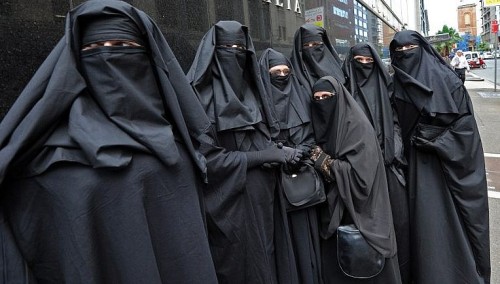
Take, for example, the extent to which modesty and chastity is emphasized for women. In both modern Islamic cultures and ancient agrarian cultures, a virtuous woman was one who didn’t show off her body, didn’t have promiscuous sex, and didn’t thrust herself into major issues. At the same time, modesty in men is never mentioned.

Why is this? I know some feminists will cite the nefarious patriarchy as the source of all female marginalization. That makes for a great melodrama, but it does not reflect reality. I know I’ll upset a few feminists here when I say this, but I think it needs to be said.

The obsession over the female body has nothing to do with patriarchy and everything to do with the fact that women bear children. That’s the one intractable difference between men and women that no ideology can deny. One gender has to carry the future of the species inside their bodies for nine months and the other doesn’t.

Any woman who has endured a pregnancy can attest that this process is strenuous, to say the least. Unfortunately, it’s necessary for the continuation of our species and, by default, the growth of society. From a purely pragmatic perspective, it makes sense to micromanage female bodies.

We need female bodies to be healthy and safe in order to bear children. The fact that, for much of recorded history, men needed to be certain those children were theirs for the inheritance of property only increased that need. Women who were promiscuous, injured, or in any way damaged didn’t just result in their own suffering. It could cause the entire tribe to suffer.

It certainly doesn’t help that we had a limited understanding of human biology and disease until recently. It also doesn’t help that these values of protecting female bodies became enshrined in religion and culture, some of which are still practiced today. This emphasis on controlling the female body is the foundation on which many taboos, traditions, and tropes are built.

On that same foundation is the other side of that dynamic that involves policing the thoughts of men. By that, I don’t just mean men acting immature at the sight of a naked woman or cringing at discussions concerning female biology. I’m talking about a mentality that builds assumptions and expectations about an entire gender based on unknowable thoughts.

Think back to what Judeo-Christian morals say about men who look at a women with lust. It’s such an important issue that Jesus himself says outright that just thinking sexy thoughts about a woman is a major transgression. He didn’t say anything about homosexuality, but he made it clear that contemplating lust is as bad as acting on it.

Many religious traditions and cultures place a similar emphasis on the subject. It’s why traditions in Islam and ancient China advocate separating men from women. If they’re in close proximity, they may look at one another. If they look at one another, then they may think lustful thoughts.

This isn’t just cultures being sexually uptight or overly patriarchal. This emphasis on scorning men’s thoughts makes logistical sense when you look at the intent. From perspective of a functional society, it has to emphasize thought over actions because just judging a man for his actions is insufficient when you extrapolate the consequences.

Say a man sexually assaults a woman. The community rightfully convicts him and punishes him as harshly as possible. No matter how harsh or cruel, though, it doesn’t undo the harm he inflicted on the woman. She is still traumatized. She might even be permanently injured. As I noted before, when a female body suffers, it puts the future of the community in danger.

As a result, we have no choice but to attack the thoughts of the man that preceded his assault. The only way to prevent damage to the female body is to prevent those violent thoughts from occurring in the first place. Unfortunately, we can’t read thoughts. We don’t know what a man is or isn’t thinking when he commits an egregious crime. As a result, we’re left with expectations and assumptions.

That’s where we get flawed concepts like toxic masculinity, the male gaze, and mansplaining. That’s also why there’s a greater emphasis on assuming the guilt of men and believing the claims of women. Attacking their thoughts is the only sure-fire way to prevent them from turning into actions that would harm women and their bodies.

Please note that I emphasized the harm to the female bodies with respect to men’s actions. That’s not an accident. The assumptions are the same today as they were in ancient times when protecting the reproductive function of women wasn’t just a cultural tradition. It was a matter of survival. Any effort that could reduce the chances of a female body being harmed had merit. From there, natural selection does the rest.

With this dynamic in mind, look at some of the relevant cultural issues going on today. Even if the connections aren’t direct, the influencing factors are there. Nearly every one of them come back to controlling women’s bodies and policing men’s thoughts.

At the heart of the abortion debate is controlling women’s bodies.

At the heart of the debate over depictions of women in media is policing men’s thoughts.

At the heart of the anti-harassment movement, the anti-pornography movement, and the opposition to prostitution is the control of female bodies and the policing of men’s thoughts.

It’s rarely stated outright. However, that is what many issues comes back to. Often times, the people involved won’t use words like “control” or “policing.” They’ll claim they’re protecting women’s bodies and enlightening men’s thoughts. That may be the intention, but there are only so many ways anyone can go about pursuing such recourse.

To protect anything, you have to be able to control it to some degree. We can’t protect people, pets, or possessions without some kind of containment. The same goes for reforming someone’s attitudes. It’s necessary to police undesired thoughts to promote the thoughts you want.

In both cases, the outcome is the same. It’s both impossible and untenable to completely control women’s bodies. That requires a level of subjugation that even the most brazen misogynist cannot stomach or maintain. It’s just as impractical to police men’s thoughts. We can never know for sure what someone else is thinking. We’re left to assume and that’s usually the first step towards expecting the worst.

Despite the efforts of government, culture, tradition, and organized religion, nobody has come close to controlling women’s bodies and policing men’s thoughts to any sustainable extent. Men will still think sexy thoughts, a small part of which will precede a serious crime. Women will still put themselves at risk to be free, have fun, and enjoy their bodies on their own terms.

Even if 99 percent of what men think results in no crimes and 99 percent of what women did with their bodies resulted in no negative effects, we’ll still obsess over that one percent of the time when something goes horribly wrong. That obsession will continue to fuel the most radical parts of feminism and the most vocal parts of men’s rights activists.

For now, there’s no way to bridge the gap. That may change as a result of major social and technological trends, but this is the current situation. Again, I don’t claim this idea of controlling women’s bodies and policing men’s thoughts is the definitive catalyst for all gender-driven conflicts. This is just an idea I wanted to share in hopes of providing perspective.

14 Comments

Filed under gender issues, human nature, men's issues, outrage culture, political correctness, sex in society, sexuality, women's issues

Why Extremists (Of All Kinds) Seek To Destroy Sex And Love

198420teaser-850x510

Whenever a tyrannical power gains influence, it’s only a matter of time before it attempts to control sex and subvert love. Whether it’s a theocracy like “The Handmaid’s Tale” or a communist dictatorship like North Korea, those in power will eventually get to it. It’s just a matter of how repressive they dare to be.

When it comes to the extremes of authoritarianism, those envisioned by George Orwell are the standards by which all are measured. Whether they’re fictional tyrannies like those in “Star Wars” or real-life autocracies like Nazi Germany, the extent of their repression is best measured by contrasting it with the one Orwell crafted in “1984.”

This isn’t the first time I’ve cited that book or Orwell’s writing, but I do so for a reason and it’s not just because it’s one of my favorite novels. The narrative Orwell envisioned took our understanding of repression and pushed it to its greatest extremes. On every level, the world of “1984” is a worst-case-scenario for anyone who values freedom.

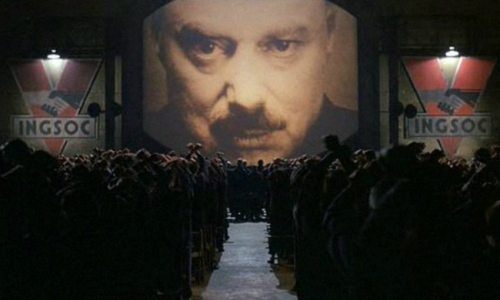
Under the ruling party, Ingsoc, every aspect of human life is controlled, managed, or outright subverted. That includes sex, but it’s certainly not limited to it. Through institutions like the ironically-named Ministry of Love and the Junior Anti-Sex League, people aren’t just shamed or bullied into certain sexual practices. They’re tortured, brainwashed, and forced into it.

It’s a level of control that the Catholic Church, the religious right, and even conservative Muslims would find excessive. It’s also an important part of the story because so much of the events surrounding “1984” emerge from Winston’s relationship with Julia. In fact, the love they share is framed one of the biggest threats to the party.

That, in and of itself, is extremely telling of the power of sex and the love that emerges from it. Even in a world in which the repression is so complete that the party can convince people that two plus two equals five, it still has a problem dealing with sex. If Big Brother can’t manage it, then what hope does the Vatican have?

I ask that question within the context of “1984” because I’m seeing more and more issues inevitably link back to sexuality. It’s not just from religious institutions, though. They’ve made their eagerness to shape sexuality to serve their interests known for centuries. They aren’t always overt about it, but it’s not too hard to understand why they want their adherents having sex only for procreation.

For them, linking sex to making babies means all those sexual thoughts people have will result in more adherents. More adherents means more money. More money means more power and influence. It’s often cloaked in sin and morality, but this is the ultimate byproduct of their sexual morals.

However, it’s at the other end of the spectrum where a different, but powerful kind of sexual subversion is at work. The link isn’t quite as obvious as those espoused by religious institutions, but it is there in that the byproduct is the same and the underlying themes are richly reflected in “1984.”

On that end of the spectrum are those who identify as secular, but still hold extreme ideologies. This includes extreme brands of feminism, social justice ideology, and even old school communism. These are people who don’t just want to reform the current system through political and social discourse. They seek to overthrow the system and replace it with their own Utopian ideal.

Like the religious zealots they often clash with, they see the current order as oppressive. Whether it’s a religious sect facing persecution or the historical oppression against anyone who isn’t part of a historic majority, these individuals see revolution as the only way to right these wrongs. Part of that revolution involves destroying sex, albeit indirectly.

Whereas religious zealots rely on outright censorship, those on the opposite end employ a more subtle approach. They denigrate and bemoan sexual imagery, be it in video game characters or a shirt somebody happens to be wearing. They obsess over inequities and victimization, singling out egregious crimes while ignoring others that don’t fit the narrative.

Some will go so far as to claim sex as inherently oppressive. A few radical feminists have gone so far as to say that the fundamentals of sex can only ever be oppressive. In the same way some religious preachers will shame someone for looking at anyone with lust, this ideology identifies anyone who has or pursues sex as an oppressor.

That might have been absurd several decades ago, but in the current state of outrage culture where the dress Jennifer Lawrence wears to a movie premier becomes a controversy, it’s steadily creeping into the discourse. Concepts like beauty are now oppressive to those not born with beautiful bodies. Anything that may titillate or excite is seen as dangerous or damaging to the oppressed.

It’s at a point where the idea of people seeking any kind of release outside the narrative espoused by extremists is pathologized. For religious zealots, it’s sinful. For the non-religious extremists, it’s oppressive. Both see it as something that needs to be reformed or envisioned.

Chances are these individuals don’t see themselves as the authoritarians depicted in “1984.” They still see themselves as the underdogs in a “Rocky” movie, fighting to win an epic battle against an oppressive bully. Beyond being an absurd conflation of what they’re fighting for, this very approach is envisioned by Orwell and is key to empowering Ingsoc.

In the world of “1984,” the Ministry of Truth builds a similar narrative for the masses. They’re told that prior to Ingsoc taking power, the world was a terrible, oppressive place. It was only by rallying around the party and Big Brother that they were able to triumph. Moreover, it’s through the wisdom and guidance of the party that they escape this oppression.

Part of that process involves reshaping/subverting sex. In “1984,” the party isn’t just looking to control it. They seek to destroy it. The Junior Anti-Sex League even says it outright at one point.

“The sex inherent aptitude will be eradicated. Reproduction will be a one-year formality like the reclamation of a ration card. We shall get rid of the orgasm.”

Even by extreme repression standards, this seems extreme. It might even seem like something that would give zealots of all types pause. However, Orwell’s way of justifying such extremes reveal more than just a twisted ideology. He ends up exposing why sex is such a huge concern for any extreme ideology.

“When you make love you’re using up energy; and afterwards you feel happy and don’t give a damn for anything. They can’t bear you to feel like that. They want you to be bursting with energy all the time. All this marching up and down and cheering and waving flags is simply sex gone sour. If you’re happy inside yourself, why should you get excited about Big Brother?”

Read over that quote again, but replace Big Brother with the name of any religious sect or political ideology. It has the same meaning and the same implications. In order for both the zealots and the radicals to achieve their goal, they have to destroy sex. It’s the only way they can achieve their Utopian ideal.

Religious zealots can’t shame or guilt people entirely out of wanting to enjoy sex for non-procreative purposes. They can certainly make it difficult and painful for many, even to the point of serious abuse, but it never works in the long run. The drive to just want to hump for fun is too strong.

Certain brands of radical feminism have a similar issue. They can’t stop straight men from enjoying the sight of a beautiful woman. They can’t stop anyone from wanting to enjoy something different in their sex lives that they don’t like. No matter how much they’re triggered, it doesn’t turn off that powerful, instinctual drive.

In “1984,” the party actively works towards destroying that drive through technology. This is a lot scarier now because that kind of technology is already in the works. In theory, an extremely repressive religious zealot or a very regressive feminist could turn the implants in development at Neuralink into something that removes all pleasure from sex.

From there, they could redirect that energy into serving their ideology/religion. The procreative function could still be utilized, but only to the extent that it’s necessary. That may not be the ultimate goal. It’s not even the ultimate goal of Ingsoc. It’s just necessary in the grand scheme of pursuing and securing power.

As it stands, those in the religious right and other extremist circles aren’t remotely close to gaining the influence and control exercised by Big Brother in “1984.” Logistically speaking, it’s impossible for them because subverting human nature requires an understanding of it and the scientific process for achieving that understanding rarely adheres to ideology.

It still says something about their goals when the only way to achieve them in the long run requires that they destroy sex. I don’t think it’s a coincidence that Orwell built a major part of “1984” around two characters falling in love and experiencing the joys of the sex act. That proved to be one of most powerful ways for them to oppose the party.

To that extent, Orwell’s understanding of sexuality is nothing short of prophetic in terms of how revolutionaries on both ends of the political spectrum view it. In an Orwellian world, sex and love aren’t just a hindrance to a revolution. They’re an outright threat.

The fact that it took repression on the level of Big Brother to confront that threat is a testament to the power of sex and love. If Big Brother couldn’t contain it, then what hope does any religion or ideology have?

1 Comment

Filed under gender issues, human nature, Marriage and Relationships, men's issues, outrage culture, religion, sex in society, sexuality, women's issues

Abortion, Prostitution, And The Indirect (But Powerful) Link Between Them

Pic

When it comes to conflict between genders, there are many factors driving it. Chief among them is the unavoidable ignorance that comes with men not knowing what it’s like to be a woman and women not knowing what it’s like to be a man. Add those who identify as transgender into the mix and there’s a massive disparity in understanding.

While I consider that limited understanding to be the primary driving force behind gender-driven conflicts, there’s another force that is a close second. It has less to do with how people relate to one another and more to do with who determines the accessibility and availability of sex.

As an aspiring erotica/romance writer, this issue is more relevant to me than others. However, after a few notable news stories, one involving prostitution and another involving abortion, the issue is now relevant to everyone and that’s why I feel it’s worth talking about.

The concept of sex being this tangible commodity that certain people control is already bound to cause plenty of consternation among people from every part of the political spectrum, but for logistical purposes, this is how we treat sex in a modern context. It’s no longer something we do for survival or for the passing on of property.

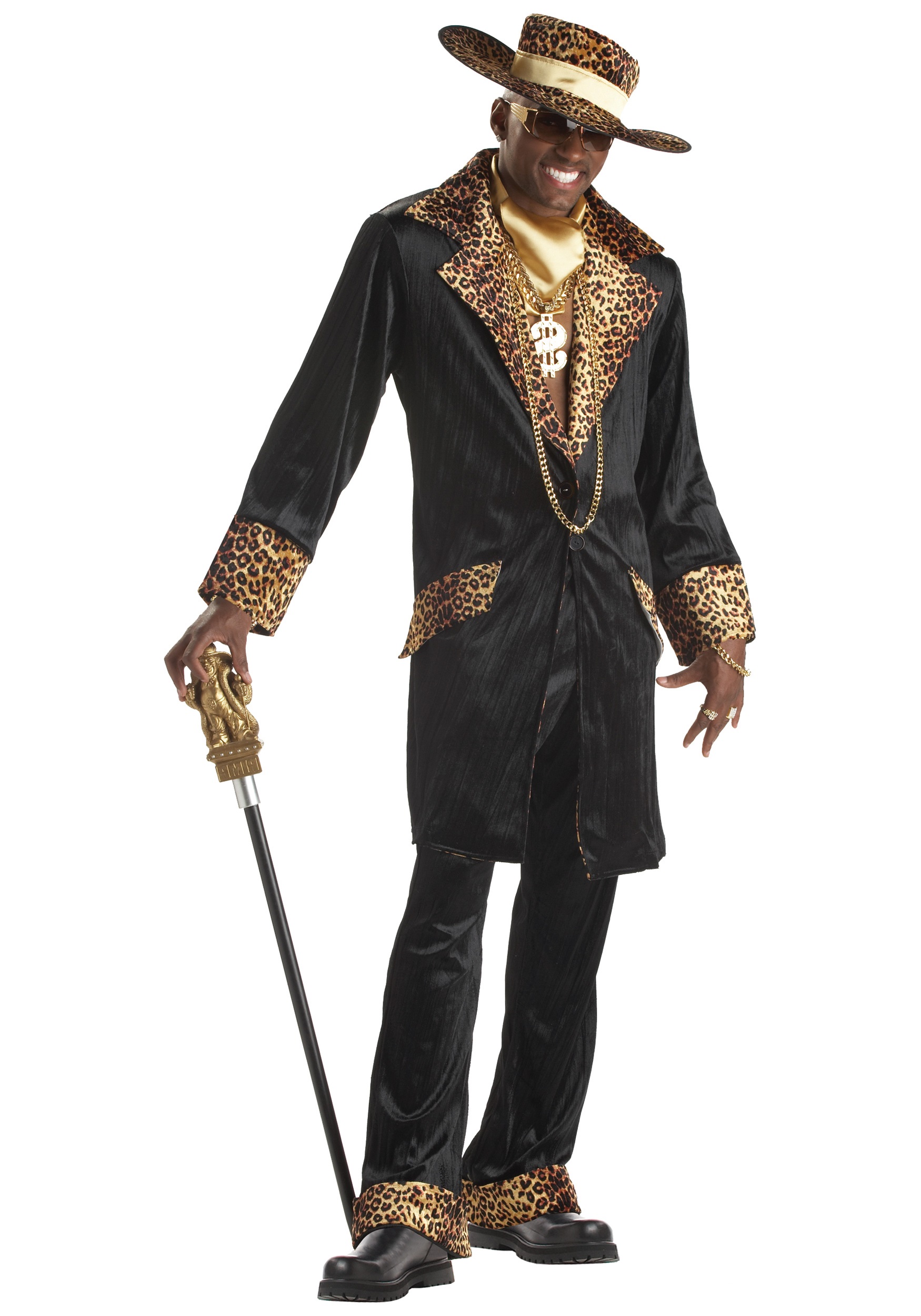
Like food, sex has developed a more diverse role in the modern world. We treat it as a tangible asset that we must manage. Like any asset, though, there are logistics to it and those who do the managing wield a great deal of power. Why else would pimps be so glorified in popular culture?

Who actually wields that power, though, depends on the political affiliation of who you talk to. If you ask someone who is liberal, feminist, or left-leaning, they will claim that the power is held primarily by rich old men who try to manage sex by punishing those who do it in ways they don’t like.

Ask someone who is conservative, traditional, and right-leaning, and they’ll probably say the power is held by radical feminists and their submissive male allies who wield the power of sexual management. They’re just as convinced as those opposing them that they’re right. It’s difficult to convince them otherwise and I’m not going to try. That’s not the purpose of this article.

My goal here is to point out a connection from which the conflict has evolved. Given recent events in the political world, that evolution is likely to continue and not in a direction that benefits either side in the long run. To understand that connection, I need to dig a little deeper into the unspoken, but powerful link between abortion and prostitution.

I know that just talking about one of these issues is abound to send peoples’ passions into overdrive. I’ve discussed abortion before. I’ve discussed prostitution as well. I haven’t really touched on the link between them because they’re tied up in different political domains, but have enough similarities affect one another.

Prostitution is commonly known as the world’s oldest profession and for good reason. It only ever makes the news when there’s a scandal or a legal upheaval. For once, there has been an uptick in the latter rather than the former. It began with new laws that made it more difficult for prostitutes to operate online. In some respects, these efforts are the byproduct of a trend that has been going on since the early 2000s.

Most industrialized countries in the world accept, to some degree, that it’s impossible to stamp out prostitution completely. As a result, there have been more elaborate efforts to reduce it that don’t rely entirely on blanket prohibition. Currently, the most popular approach is known as the Swedish model.

In this setup, it’s legal for someone to sell sex, but it remains illegal to buy it. It’s akin to making it legal to set up a lemonade stand, but illegal to buy lemonade. While that sounds absurd on paper, the intent of the law is somewhat clever. It’s a means to criminalize the buyer of sex to give the seller more leverage. Since the seller is often assumed to be an exploited woman, it’s viewed as an equalizer of sorts.

Granted, the assumption that those selling sex are always exploited women is flawed, as an estimated 20 percent of prostitutes are men. There are people in the world who enter the business willingly, just as there are people who willingly work in coal mines.

There’s also plenty of data that indicates that the Swedish model doesn’t have the desired effect. There’s also no evidence that it has reduced human trafficking, either. That hasn’t stopped it from spreading to other countries. In the process, it has had another effect that goes beyond the issue of prostitution.

Essentially, this approach to combating prostitution places more power in the hands of women with respect to managing sexuality. Since they make up the majority of the prostitutes in the world and men are the primary clients, this dynamic ensures they have more leverage. They can, under this model, decide whether or not their client becomes a criminal. That’s a lot of leverage and not the kinky kind.

This is where the link to abortion comes into play. It’s an indirect link, but it utilizes the same dynamics. In countries where abortion is legal, the women wield a significant amount of power in terms of sexual decision-making. In the context of abortion, they can decide how the consequences of sex play out.

Women can, in this dynamic, decide whether or not to have a child if she becomes pregnant. Whether or not the father wants to child is irrelevant. The woman can abort the child against the father’s wishes. She can even have the child against his wishes, in which case he would be on the hook for child support for 18 years.

Again, that’s a lot of power for one gender to wield. That’s not to say it isn’t understandable. Women are the ones who bear children. They’re the one whose bodies undergo the 9-month rigor that is pregnancy. It’s totally logical that women would have more leverage in this situation because they’re putting themselves at greater risk.

However, and I know this is where I’ll upset a few people, there comes a point where that leverage can become excessive. There are cases where men lose their money and their freedom because of what a woman chooses. There’s no way for them to opt out of their parental responsibilities. That hasn’t stopped some from attempting to create a legal mechanism for that choice, but to date those efforts have not been successful.

Within this context, it shouldn’t be that surprising that abortion rights are steadily eroding. In the United States, it’s looking more likely with recent upheavals in the Supreme Court that this erosion will accelerate. Some are already claiming that we’re on our way to becoming the kind of oppressive society depicted in “The Handmaid’s Tale.”

While most of those concerns are overly apocalyptic, I think part of that effort is tied directly to who wields the power in the sexual landscape. Women are poised to gain more of that power as prostitution laws in the mold of the Swedish model spread. They’ve also gained even more leverage socially through the anti-harassment movement.

From the perspective of men, who cannot turn off their sex drives, women already wield so much authority in matters of sex. They’re the ones more likely to get paid to do it. They get to decide when and where it happens. They get to decide whether or not a sex act was consensual. They don’t even face the same stigma or consequences when sex crimes does occur and are granted greater protections by the law.

That perspective is not going to sway most women, though. The same women arguing for abortion rights are just as likely to argue for the Swedish model in combating prostitution. It’s a common thread among certain brands sex-negative feminism that see prostitution as an inherently oppressive force for women in every circumstance.

This is where the paths converge and where the fuel for the conflict gets a boost. Whether intentionally or by accident, both prostitution and abortion eventually link back to who wields authority in sexual matters. Both sides can claim some form of oppression. Both sides can even be right to a limited extent. By fighting to secure the most leverage though, they inevitably invite more backlash.

I don’t claim to know what the endgame is. I have a feeling that once sex robots enter the picture, and they have to some extent, there will be a major upheaval in the whole sexual landscape that neither side will be able to confront. Until then, though, the conflict over sexual leverage will continue. In the end, though, it’s unlikely that anyone will ever be truly satisfied.

1 Comment

Filed under gender issues, human nature, Marriage and Relationships, political correctness, prostitution, psychology, sex in society, sexuality

The Humor In Mutilating Men Versus The Atrocity Of Harming Women

45ee4ed9041461da247f826745881661e77f2046

It’s one of the most traumatic things a man can experience, the permanent damage or total removal of his penis. Whether by accident or intentional violence, he’s badly injured on a physical physical and psychological level. His ability to identify as a man, experience intimacy with others, or just feel basic pleasure is irreparably damaged.

Just mentioning the possibility of losing his penis will make most men cringe. Joke all you want about how much men glorify their genitals, but it really is an important part of their bodies and their identities. Losing it is like losing a limb, which does plenty to cause serious mental trauma. Add losing a key aspect of their masculinity to the mix and that trauma becomes amplified.

Despite that trauma, men losing their genitals is fodder for comedy. Recently, Netflix released a movie called “The Package,” the plot of which is built entirely around a man who loses his penis in an accident. That movie, if you look it up on IMDB, is listed as a comedy. Imagine, for a moment, a movie that tried to make a comedy out of female genital mutilation. How much outrage would that generate?

There’s nothing funny about women’s bodies getting mutilated or even harmed in any serious way. For men, though, it’s actually a pretty common trope. You don’t have to look too deep into the history of media to find jokes about men losing their genitals.

It’s a famous line in “The Big Leboswki.”

It’s a recurring theme in “Fight Club.”

It’s a sub-plot in an episode of “Rick and Morty.”

It’s a primary plot in an episode of “Family Guy.”

Even in media that isn’t overtly comedic, it still becomes a joke. Just look up the various internet memes about Theon Greyjoy from “Game of Thrones” for proof of that. In each case, the mutilation of men and the loss of their masculinity is portrayed as something that’s inherently funny. The fact that Netflix made a movie about that premise shouldn’t surprise anyone.

Even in the cases of real stories about real men losing their genitals, it’s prone to plenty of humor. The most famous case is probably that of John Wayne Bobbitt, whose wife cut off his penis after he raped her. While Bobbitt was, by all accounts, a horribly abusive man who deserved plenty of condemnation for what he did, his name still inspires jokes.

When people say the name Bobbitt, they don’t think of all the abuse he imparted on his wife. They think of how funny it is that his wife cut his dick off. While he was able to get it re-attached, many other men aren’t so lucky. Whether it’s public perception or daytime talk shows, a man losing his penis is still seen as funny.

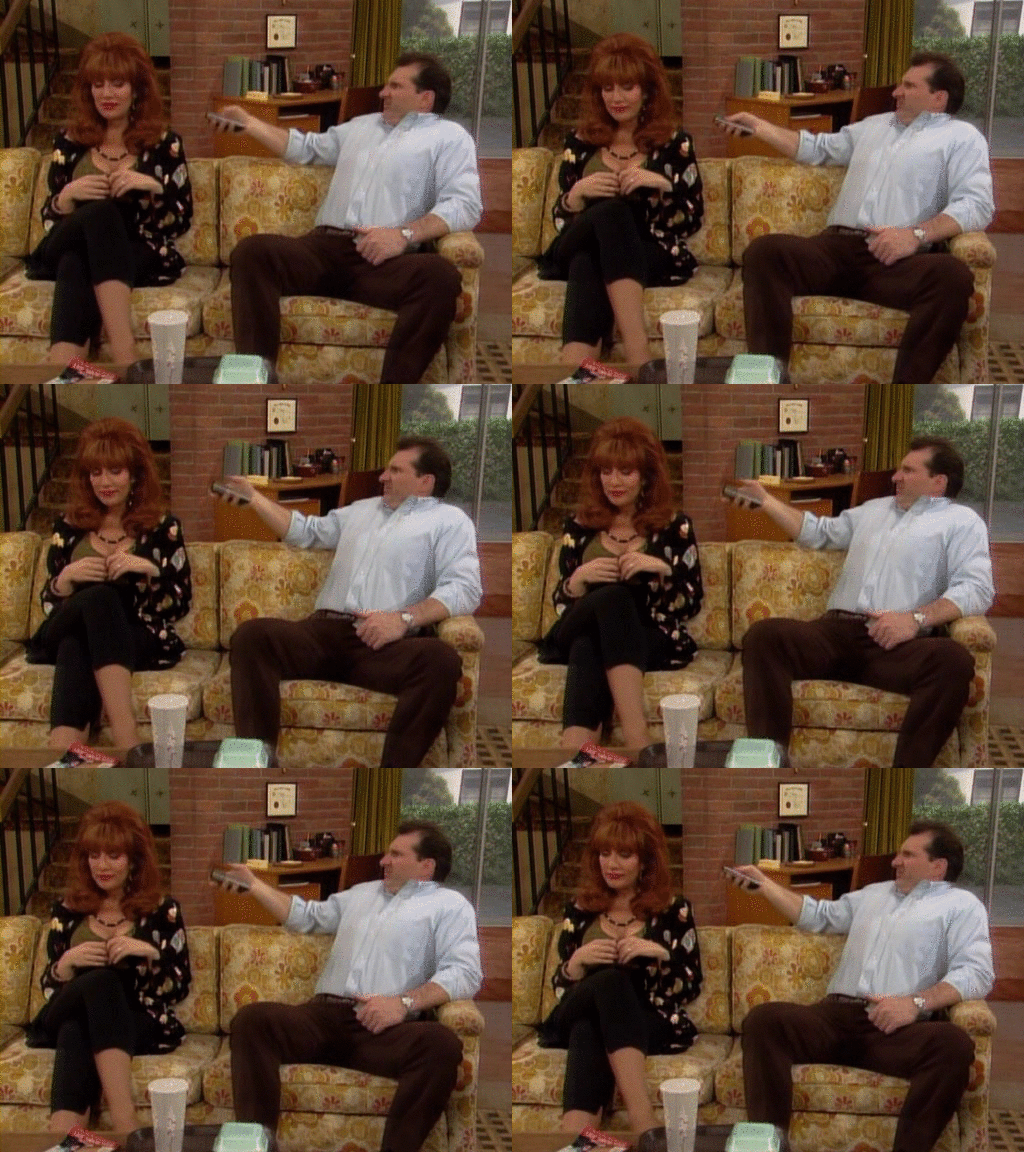
Conversely, any media that shows a woman being harmed in any way, even if it’s just a slap in the face, is seen as an irredeemable atrocity. Watch shows like “Married With Children” or “The Simpsons” and you’ll see plenty of scenes where Al Bundy and Homer Simpson badly injure themselves through their antics. However, there are exceedingly few scenes that ever lead to the women being harmed.

Anything that leaves any lasting scar on a woman is inherently abhorrent. There are even major international organizations that work to combat practices like female genital mutilation. When women lose their reproductive organs from disease or injury, it’s seen as a tragedy. Anyone who laughs at their pain is rightly scorned.

Why is this, though? Why is it that an entire comedy can be built around a man losing his penis while any plot that involves a woman getting hurt in any way is dead serious? That’s not an easy question to answer. It can’t be entirely attributed to the gender-driven  double standards that I’ve singled out before.

I don’t claim to know the full answer, but I think it’s worth discussing, if only for the sake of maintaining a balanced perspective. I don’t doubt that many have their theories. Some may attribute the humor we find in men getting mutilated to trends in modern feminism. I would strongly disagree with that.

I believe that this idea of laughing at male mutilation while gasping at female victimization preceded modern feminism by a great deal. I would go so far as to say it goes back much further than that. I believe this unique quirk in gender dynamics has roots in ancient pre-modern societies that transcend geography, culture, and ethnicity.

At the core of this phenomenon is one unpleasant, but inescapable truth. I’m probably going to upset some of my fellow men by saying this, but I think it needs to be said.

We NEED to be comfortable with men getting mutilated on some levels.

Take a moment to stop fuming. Then, take a moment to consider why we would need to be okay with this in both current and ancient societies. From a purely logistic standpoint, it makes sense.

For most of human history, men were expected to carry out the dangerous, back-breaking, body-maiming work that built our civilization. Regardless of location, culture, or traditions, putting men in these situations was necessary. Someone needed to fight the wars, plow the fields, hunt dangerous animals, and work in factories.

Until very recently, men had to fill that role because women were at a severe disadvantage due to the dangers and risks of child-rearing. In the pre-modern world, the most vulnerable individuals in a society were pregnant women, newborn infants, and women in labor. In 18th-century England alone, there were 25 deaths per 1,000 births.

With odds like that, there was a legitimate reason to give women extra protection and care that was not afforded to men. Men didn’t have the babies and no society could survive in the long run if it didn’t have a growing population. That’s why, for better or for worse, there are so many cultural and religious traditions that encourage women to remain in domestic roles.

Those same traditions, however, establish a dynamic requiring that we accept a certain level of male victimization. It’s one thing for a man to die in battle or having his genitals maimed in an accident. It’s quite another for a woman, who are tasked with birthing and caring for a new generation, to endure similar harm. Another man can still impregnate a healthy woman. No amount of men can impregnate an injured woman.

I know that dynamic is offensive to both feminists and men’s rights activists because it reduces their value to their reproductive capacity. I get why that’s offensive. Even I find it offensive, as a man. However, therein lies the most critical detail with respect to male mutilation versus male victimization.

These disparate standards, which predate the modern era by centuries, are still very much ingrained in our society. We still see women, especially those of breeding age, as more valuable than men. We romanticize young men who heroically sacrifice themselves in war, but recoil at the idea of young women suffering a similar fate.

Add emerging demographic issues with respect to declining fertility rates and the same incentives for accepting male mutilation are there. We still need people to have children for society to grow and function, but more women are having fewer children and more men are eschewing the pursuit of families entirely.

In terms of logistics, that increases the value of every woman who wishes to have a children and decreases the value of men who refuse to go along with that plan. In that system, a man losing his genitals or suffering a severe injury has to be funny in order for the situation to be tenable. By the same token, any harm coming to a woman has to remain extremely taboo.

Logistics aside, it’s still an unfair predicament that undermines the suffering and trauma that men endure. The fact that we have to be okay with their suffering while overvaluing the suffering of women is bound to fuel more egregious double standards. Movies like “The Package” certainty don’t help, but so long as this age-old gender disparity persists, men losing their penises will remain fodder for comedy rather than tragedy.

10 Comments

Filed under circumcision, gender issues, human nature, media issues, men's issues, outrage culture, political correctness, psychology, sex in media, sex in society, women's issues

Al Bundy, Circumcision, And Double Standards In Humor

does-male-circumcision-shield-women-from-hiv-750

When you want to know how taboo a topic is, it helps to look at how sensitive people are to jokes about it. Most people can comfortably joke about teenagers, old people, the President, the French, and the Pope. Some of those jokes even make it into popular cartoons and sitcoms that we still laugh at to this day.

Then, there are topics for which making jokes is a gamble. Make the wrong remark at the wrong time and it could really cost you. Just ask Gilbert Gottfried or Roseanne Barr. The stakes get even higher when you joke about religion. Some have a better sense of humor than others, but those that don’t tend to make the news for all the wrong reasons.

Since humor and religion rarely mix, I want to focus on a topic that’s slightly less sensitive in circumcision. I say slightly because gender-specific humor is a lot trickier these days. Old jokes about women drivers and gay men just don’t work anymore and not because more cars are driving themselves.

Between trends in feminism and outrage over Wonder Woman’s armpit hair, the current state of gender politics is no laughing matter. I’ve talked about gender conflicts on many occasions and I’ve also discussed serious issues surrounding circumcision. I’m also aware that the current issues surrounding circumcision aren’t on many peoples’ radar, but I still think it’s worth talking about.

This isn’t just about representation in media or offensive stereotypes. This is about purposefully mutilating parts of the human body. When it happens to women, it’s a major problem that warrants major resources to combat. When it happens to men, though, it’s no big deal and prone to plenty of humor.

It’s more than just a double standard. It reveals a lot about our overall attitudes when we’re willing to joke about something. It shows how much the issue matters and how much energy we’re willing to put in to confront it. To understand the state of circumcision for men, you need look no further than an old episode of “Married With Children.”

I’ve mentioned this classic Fox sitcom before. I put it at the top of my list of TV shows that could never be made today. The fat jokes alone would get it cancelled. It’s a show that went out of its way to be controversial, much to the chagrin of a Michigan house wife. That included an episode about circumcision.

This particular episode was called “A Little Off The Top” and if you know anything about male circumcision, you understand why that’s an overly appropriate title. It starts with Al Bundy getting injured in a basketball game, going to a hospital, and getting circumcised due to a medical error.

It’s all portrayed with typical “Married With Children” hilarity. In fact, one of the most memorable moments of the episode is when Peggy gets a call from the hospital and Marcy, the Bundy family’s neighbor and one of Al’s many enemies, laughs hysterically. I’m not going to lie. When I saw a recent rerun of the episode, I laughed too.

That’s the genius of “Married With Children.” It can take depressing situations like a loveless marriage, a lousy job, and idiot kids and make it funny. It’s part of why this show is one of my favorite shows of all time. When you strip away the humor in this episode, though, there are some disturbing overtones.

To illustrate, here’s a quick thought experiment. Imagine, for a moment, that this isn’t happening in a TV show and you just randomly stumbled across a news article.

“Local Chicago man rushed to a hospital after injury playing basketball is mistakenly circumcised. Family and neighbors make fun of him.”

Take away the iconic Bundy family and the context of a sitcom. Just look at it in terms of raw facts. A man gets an injury, goes to the hospital, has his genitals mutilated against his will due to an error, and is laughed at because of it. The fact that it happens to Al Bundy makes it funny. If it happened to anyone in the real world, it’s not likely to be as funny.

Medical errors are already horrifying enough. This one is extra disturbing for men because it involves our genitals. There’s already a growing reservation about circumcising baby boys for no medical reason who cannot consent, which did not exist when “Married With Children” was on the air. On top of that, there’s a distinct double standard in play.

Even in the lewd world of a 90s Fox sitcom, there are lines that even the Bundy family cannot cross. If you were to reverse the genders in this episode, as I’ve put forth as part of previous thought experiments, then the humor just doesn’t work. If the episode involved a woman who’d been circumcised against her will by accident, then it wouldn’t be funny. It would be disturbing.

The reasons for that aren’t entirely simple. There is a medical and logistical difference between male and female circumcision. For the most part, female circumcision in its various forms are prone to more complications, even in a medical setting. Male and female anatomy are different. There’s no getting around that.

However, the logistics are the same. They both involve cutting, altering, or outright mutilating someone’s genitals against their will. Despite these similarities, one is still capable of being funny while the other is not.

That idea matters because when something can be funny, it impacts how seriously we take it as a society. We can joke about ditzy blonde women, bone-headed men, and irresponsible teenagers because they’re not seen as dire issues. That’s also the reason why we can make jokes about the Vatican in 2018 that probably would’ve gotten people killed half-a-century ago.

The fact that male circumcision can be a joke or the premise of a sitcom says that it’s not serious enough to be on the same level as female genital mutilation. They may not be the same thing, but the implications are still there. When a woman is mutilated, it’s a travesty. When a man is mutilated, it’s comedy. That is not a trivial gap.

I doubt “Married With Children” was trying to make a statement about male circumcision when the episode first aired. The show made a lot of controversial jokes and circumcision barely cracks the top ten. Even if that episode aired today, it probably wouldn’t be that controversial, which says a lot about how little our attitudes about male circumcision have changed since the mid-90s.

In that same time, though, efforts to combat female genital mutilation have gained ground. Efforts to beautify and protect the female body are part of a larger social trend. However, those efforts are not equally prescribed to men, even when the concept is the same.

Now, I’m in no ways in favor of making jokes about male circumcision taboo. Historically speaking, making anything taboo only tends to make an issue worse. I’m also not advocating that we start joking about female genital mutilation, either. My point in citing a memorable episode from a raunchy 90s sitcom is to show the vast disparity in the circumcision debate.

When something is a joke for one group of people, but an atrocity for another, then there’s a major disconnect in the issue. Both sides can and should be discussed seriously. Both can and should be held to similar standards are humor, as well. When you start making exceptions for one over the other, then that obscures the debate for both.

3 Comments

Filed under circumcision, gender issues, political correctness, sex in media, sex in society, sexuality

How The Idea Of “Toxic Fandom” Is Fundamentally Flawed

toxic-comments-e1516922359181

The internet is a vast, wonderful place full of mesmerizing gifs, amazing stories, and the collective knowledge of our entire species. I would argue that the internet is one of humanity’s most important tools since the invention of fire. I strongly believe that is has done more good any other tool we’ve created.

I have a feeling that this rosy view of the internet is a minority opinion. These days, all the good the internet does tends to get lost in the stories that highlight its many dangers. I don’t deny that there are dangers there. The internet does have some dark places where hate, harassment, and outright depravity are on full display.

More and more, it seems, the internet is becoming an enabler of a new manifestation of popular culture. It’s called “toxic fandom” and it relies on the greatest strengths of the internet to bring out the absolute worst in people. It didn’t start with the heated fan reaction of “Star Wars: The Last Jedi,” but it certainly made it relevant.

Before I go any further, I want to make one thing clear. There are assholes on the internet. There are also assholes in real life. The internet doesn’t make them that way. It just gives them a platform to be an asshole on a larger scale. That’s an unfortunate side-effect of the internet, but one that tends to obscure a larger narrative.

That’s because, much like inane terms such as “toxic masculinity,” the idea of toxic fandom relies on a series of assumptions that only ever have a sliver of truth behind them. It builds around this idea of there’s this grand, over-arching effort by immature, angry young men who secretly wish they could sexually harass women with impunity. It’s not quite on the level of an Alex Jones type conspiracy, but it’s close.

There have always been overly-passionate fans. It existed long before the internet and would still exist if the internet disappeared tomorrow. “Toxic fandom,” and there’s a reason I’m putting it in quotes, is something very different.

This doesn’t involve obsession with a particular celebrity. It involves a particular type of media like a movie, a TV show, or a video game. In some respects, this sort of fandom is a byproduct of overwhelming success. When something like “Star Wars” or “Star Trek” comes along, it resonates with an audience on a profound level. That sort of impact can last a lifetime.

I can attest to the power of that impact through my love of comic books. I’ve even cited a few that I find deeply moving, both in good ways and in not-so-good ways. Most everybody has had an experience like that at some point in their life, whether it’s their reaction to seeing “Titanic” for the first time or the feeling they get after they binge-watch “Breaking Bad.”

The toxic part usually comes when the media they’ve come to love manifests in a way that’s not just disappointing. It undermines those powerful feelings they’ve come to associate with that media. The results can be very distressing and until recently, the only way to express that distress was to sulk quietly in a darkened room.

Then, the internet comes along and suddenly, fans have a way to voice their feelings, for better and for worse. They can even connect with fans who feel like they do so that they don’t feel alone. The human tendency to form groups is one of the most fundamental acts anyone can do as a member of a highly social species.

Now, there’s nothing inherently “toxic” about that behavior. It has only made the news because the passions/vitriol of fans is more visible, thanks to the internet. Just browse any comments section of any movie or show on IMDB. Chances are you’ll find a few people who claim that this thing they once loved has been ruined and will use every possible medium to voice their displeasure.

This is where the “toxic” aspects of fandom start to have real-world consequences. Most recently, Kelly Marie Tran became the face of those victimized by toxic fandoms. After her portrayal of Rose Tico in “Star Wars: The Last Jedi,” she became the most polarizing figure in the history of Star Wars since Jar Jar Binks.

The story surrounding Ms. Tran’s harassment, which was objectively horrible, became vindication for those who believed that the Star Wars fanbase had become a mess of angry, hate-filled fanboys. They didn’t like that something they loved was changing and becoming more diverse. As such, their criticisms don’t matter. They may as well be wounded storm troopers in a room full of angry wookies.

The problem with this assumption is the same problem we get when someone writes off facts as fake news or diversity efforts as a neo-Marxist conspiracy. It’s a simple, convenient excuse to ignore possible flaws and justify personal assumptions. It also conflates the inescapable truth that assholes exist in the world and there’s nothing we can do about it.

None of this is to imply that harassment is justified or that fans can be exceedingly unreasonable. By the same token, this doesn’t imply that studios don’t deserve criticism when they attempt to revamp a beloved franchise in a way that does not keep with the spirit of the original. It’s only when criticism gets lost in the outrage that the “toxic” behaviors become more prominent.

It’s within that outrage, though, where the true flaws in the “toxic fanbase” narrative really break down. To a large extent, the “toxicity” that many complain about aren’t a product of unhealthy attitudes. They’re a manifestation of an inherent flaw in the relationship between fans and those who produce the iconic media they love.

To illustrate that flaw, think back to a recent controversy involving a “toxic fanbase.” Before the reaction “Star Wars: The Last Jedi” became the poster child for this issue, the all-female “Ghostbusters” remake was the most prominent example. It earned a lot of hatred for reasons that I’d rather not scrutinize.

With that hatred in mind, imagine a long-time Ghostbusters fan seeking to express their dismay. They decide to write a kind, detailed, and thoughtful letter to the studio, the director, and anyone else involved detailing their dismay and their criticisms. They may even cite specific examples on what they felt was wrong with the movie.

Chances are this sort of thoughtful, well-worded message would get deleted, ignored, or just plain lost in the digital landscape. Even if the head of Sony studios read it and agreed with every point made, they wouldn’t respond. They wouldn’t do anything ot change it. That would just be too inconvenient and it would look bad publicly.

From the perspective of the fan writing the letter, though, it sends the message that their sentiment doesn’t matter. Their passion for the media doesn’t matter. They might as well not even exist in the eyes of the producers. The only way for them to even acknowledge their existance is to be louder, angrier, and even a little meaner. Even if the reponse is negative, it at least acknowledges their existence.

It’s not the same as trolling. Trolls just want upset people for the fun of it. Fans voicing their displeasure are more sincere in the sense that they believe they’re protecting something they love. Whether or not that’s misguided is debatable. Some, namely those who harass and make threats, are more misguided than others. However, they only ever make up a very small percentage of fans.

In the end, that’s the most important perspective to have when it comes to fandom. Those who are the loudest tend to be the most obnoxious, but they’re loud because they feel like they have to be. The internet just gives them a way to be heard, which is something most fans haven’t had before.

That’s still not an excuse for being an asshole, but it’s also not an excuse for using those same assholes to call an entire fanbase toxic. It overlooks and undermines the genuine and sincere love people have of these cultural icons. As as a result, when someone feels like their love is being ignored, that’s when toxic hate often finds a way to fill that void.

5 Comments

Filed under Celebrities and Celebrity Culture, Current Events, human nature, media issues, movies, political correctness, Star Wars

Biotechnology And The Future Of Gender

future-woman-cyber-technology-eye-panel-concept-33807025

With each passing year, it seems gender-driven conflicts are becoming more and more heated and less and less rational. Every time I bring them up, which is distressingly often, I feel like I have to walk through a minefield while juggling chainsaws. I know it doesn’t take much to start a controversy these days and I’d rather not add fuel to that fire.

The current state of gender conflict is pretty intense. I expect it to get worse before it gets better, but I don’t want to dwell on that too much for the moment. Instead, I’d like to do what I often do when I discuss emerging technology and contemplate the future. Moreover, I want to focus on the potential for a better future between the genders.

Yes, I realize the situation is pretty hectic now. I also don’t deny that trends in feminism and the associated backlash make it difficult to be optimistic. I’m still going to try because I believe we’re getting close to a point where the barriers that hinder a truly egalitarian society will eventually fall. It’s just a matter of developing the right tools.

Chief among those tools are those emerging in the field of biotechnology. It’s a subject I’ve highlighted before, primarily in terms of its potential to treat disease and provide better contraception. Those kinds of advances are just stepping stones, though. The true potential of biotechnology goes much further.

With respect to gender, I think most won’t deny that there’s room for improvement in terms of the current dynamic. Whether you’re a man, woman, or something in between, most people don’t have to think too hard to surmise imperfections in the current system. I’ve mentioned a few, but they’re worth scrutinizing.

If you’re a woman, those imperfections take a fairly direct toll and not just in terms of being the gender that bears children. Beyond the burdens that facet of womanhood has incurred historical, there are still some fairly substantial gaps between women and men today. Regardless of whether or not you’re a feminist, the data is pretty clear. Women are not on a level playing field with men.

If you’re a man, that’s just as true. Men may not bear children, but they also bear plenty of burdens. They are expected to fight in bloody wars, making up 97 percent of all war deaths. They work harder, more dangerous jobs that disproportionately kill them. They’re also expected to be okay with having their genitals mutilated as babies. By those metrics, men are not on a level playing field, either.

Things get even more unequal when you put transgender issues into the mix and I’m not just talking about which bathrooms they have to use. Transgender individuals face a unique brand of issues, ranging from housing discrimination to healthcare access. Regardless of how you feel about transgender issues, and some question whether it’s even real, these people are struggling under the current dynamic.

It’s a dynamic that, for most of human history, has been heavily influenced by the limits of biology. Like it or not, we’re very much at the mercy of what evolution has wrought. Even if you’re among the crowd who thinks gender is entirely socially constructed, it’s impossible to get around hard biology, at least for now.

The hard data is fairly clear. Human beings are sexually dimorphic, which means there are intrinsic physical differences between men and women. Since one gender bears children while the other doesn’t, that kind of has to be the case. Considering how well our species has thrived over the past several thousand years, you could make the case that these dynamics have worked fairly well.

However, there’s still room for improvement. In the tradition of the Doug Stanhope principle, it’s worth asking a simple question about our current gender situation. If the current dynamic didn’t exist, would you invent it that way? If you were working from scratch, would you create a species in which half the population had to bear children for nine months while the other half had part of their genitals hanging outside their bodies?

I’m not saying the human body, in its current form, isn’t a beautiful work of nature, but there’s no denying its flaws. As long as those flaws remain in place, the amount of progress we can make towards a truly egalitarian society will be limited. With the emergence of biotechnology, though, there may come a time when we may not be subject to those constraints.

When you get right down to the differences in muscle mass and endurance, much of it is driven by genetics. There’s only so much we can do with hormones and supplements, as female body builders have shown, before genetics comes into play. We’re only just starting to hack some of those genes, but there’s still room for refinement.

That refinement will come as the technology matures, just as we’ve seen with refinements to in vitro fertilization and LASIK eye surgery. It won’t happen all at once, but there may come a point when we have a sufficient understanding of the human genome and how to change it at the genetic level with tools like CRISPR.

Once we have that knowledge, then there’s no reason why we couldn’t modify individual genomes to a point where men and women are completely equal in terms of strength, stamina, and overall physicality. In that situation, there’s no reason why a woman couldn’t carry out the same physically demanding tasks as men.

For the mental side, though, that may end up being trickier. There’s still a lot we don’t know about the brain in general, let alone the innate differences between men and women. Most current research seems to suggest there are some differences, but the extent of those differences aren’t really clear. There’s evidence that there could be even more differences in the brains of transgender individuals.

Even if those differences are biologically innate, they can still be manipulated with the right tool. Some of those tools are already in development in the form of brain implants, such as those being developed by Neuralink. Whether it’s problem solving or emotional intelligence, there’s no reason why any gender-based difference can’t be resolved with a properly-calibrated implant.

Put all these advances together and the future of gender may render our current conflicts obsolete. I believe that if it is the goal of society to create a truly egalitarian structure for men, women, and everything in between, then the necessary tools to do so will make that possible at some point. The only question is whether or not that will actually be the goal.

I can’t speak for everyone who has ever argued for a certain gender-based issue. Being a man, I don’t deny that my perspectives on gender are limited by my experiences. However, if we’re going by what has worked best from an evolutionary perspective, a species that can effectively cooperate, communicate, and share knowledge has a huge advantage.

Reducing gender disparity at a genetic and physical level has plenty of benefits on paper. Add artificial wombs to the mix, effectively removing the burden of child-rearing from half the population, and suddenly our entire species is on a level playing field. That opens the door to entirely new manifestations of gender, as we know it.

I can’t predict what form that will take. Once we start manipulating our genes and our looks, by default, then the line between what is feminine and what is masculine may blur. While I don’t think it will disappear entirely, I think there will be some adjustments. It may even lead to entirely new gender-driven conflicts in the short term.

In the long run, though, I think the future of gender will arc towards greater equality overall. There may come a time where every individual born has the same physical and mental potential, regardless of their gender. Women will be as physically strong as men. Men will be able to multi-task like women. They may still look distinct, but their abilities will be truly equal.

A society full of those individuals will require an entirely new dynamic, one built around a host of new tools that we’re just starting to develop. It could just as easily go in the opposite direction with various gender gaps widening as a result of those tools. However, I believe that the benefits of equality will win out, albeit for purely pragmatic reasons. A future with that level of equality will likely result in the greatest potential for everyone.

2 Comments

Filed under futurism, gender issues, human nature, Marriage and Relationships, sex in society, sexuality

Why Henry Cavill Shouldn’t Apologize For His Comments On The Anti-Harassment Movement (But Still Had To)
gettyimages-873854634-1200x800

What does it say about the state of a society when people have to apologize for voicing honest, legitimate concerns? Pragmatically speaking, it implies that the value of truth and just has been subsumed by other influences. Whether it’s politics or ideology, it’s not hard for society to get to a point where unreasonable forces subvert reasonable issues.

In that sense, it’s ironic that the latest person to experience those influences once played Superman, the personification of truth, justice, and the American way. Henry Cavill, whose star has risen significantly since he broke out in “Man of Steel,” got into some hot water recently after an interview with GQ.

In that interview, he essentially made the same mistake Matt Damon made when he tried to comment on the anti-harassment movement. He said something that was reasonable, honest, and understandable from a purely logistical standpoint. He’s worried that something as simile as flirting with a woman could somehow be construed as harassment, which could lead to a full-blown scandal.

For reference, these were his exact words from the interview and the ones that subsequently led him down the same path as Matt Damon.

It’s very difficult to do that if there are certain rules in place. Because then it’s like: ‘Well, I don’t want to go up and talk to her, because I’m going to be called a rapist or something’. So you’re like, ‘Forget it, I’m going to call an ex-girlfriend instead, and then just go back to a relationship, which never really worked’. But it’s way safer than casting myself into the fires of hell, because I’m someone in the public eye, and if I go and flirt with someone, then who knows what’s going to happen?

Now? Now you really can’t pursue someone further than, ‘No’. It’s like, ‘OK, cool’. But then there’s the, ‘Oh why’d you give up?’ And it’s like, ‘Well, because I didn’t want to go to jail?’

Think about what he’s saying here and take a step back to see how he got to that point. He’s talking about being called a rapist just for going up to a woman and talking to her. How is that reasonable? It’s not. It sounds paranoid, but it’s perfectly understandable in the current social climate.

It’s easy to picture a scenario where someone like Cavill walks up to a woman, starts flirting, and ends up saying something inappropriate. That’s not just something men do. Women do that too. Being vulgar knows no gender. However, if the woman in this scenario takes particular offense, it could be construed as harassment or even assault.

If a woman was especially vindictive or just prone to exaggeration, she could accuse him of assaulting her. Even if those accusations aren’t even close to warranting an actual crime, it would still be devastating. The accusation alone would be enough to derail a promising career.

You don’t have to look far for evidence of this. Aziz Ansari was not charged with any crimes for the infamous incident that came out earlier this year and even if he had been, there’s no way he would’ve been convicted. An incident built entirely around a he said/she-said situation doesn’t come close to meeting the burden of proof for a criminal conviction.

That doesn’t matter, though. Ansari’s career has already taken a major down turn. His hit show, “Masters of None,” has not been renewed by Netflix since the allegations came out. Men like Henry Cavill, whose careers are ascending, certainly take notice of that. They don’t even have to commit a crime and suddenly, everything they worked for is in ashes.

For powerful men in Hollywood, it’s a reasonable concern, but one they probably won’t get much sympathy for expressing. Men like Henry Cavill are rich, successful, and handsome enough to comfortably wear Superman’s skin-tight costume. He’s a man who can attract women just by breathing. However, that may end up making him even more vulnerable.

Most people aren’t going to be inclined to make a big deal about someone who flirts inappropriately. When that person is a celebrity, though, the incentives are much stronger. You need only have an overreaction or a burning desire for attention to twist it into something much worse.

It’s for that reason that Cavill shouldn’t have apologized for his comments. His concerns are legitimate and after all the work he’s put in, he’s right to worry about the forces that might destroy it. That still didn’t matter. His comments still triggered a major backlash on social media. He also had to apologize for it. These were his exact words.

“Having seen the reaction to an article in particular about my feelings on dating and the #metoo movement, I just wanted to apologize for any confusion and misunderstanding that this may have created. Insensitivity was absolutely not my intention. In light of this I would just like to clarify and confirm to all that I have always and will continue to hold women in the highest of regard, no matter the type of relationship whether it be friendship, professional, or a significant other. Never would I intend to disrespect in any way, shape or form. This experience has taught me a valuable lesson as to the context and the nuance of editorial liberties. I look forward to clarifying my position in the future towards a subject that it so vitally important and in which I wholeheartedly support.”

Notice that there’s nothing in that apology that expands on his concerns. Cavill doesn’t attempt to re-frame his point or address some of the complaints levied against him. He just throws his hands up and apologizes about everything, as though every word he said was factually wrong.

Now, to be fair to Cavill, it’s very likely that the statement he gave was written by a publicist or agent. Chances are he was pressured to read that as quickly as possible in order to prevent him from getting labeled a misogynist or someone who did not wholly support the anti-harassment movement. Even if he didn’t feel inclined to apologize, he still had to do it in order to preserve his career and reputation.

Regardless of his reasons for doing so, he still apologized for telling the honest truth. The backlash he received didn’t even argue that truth. Most of it amounted to scoffing at the concerns of a rich, handsome celebrity who is undeserving of any sympathy. One commenter even went so far as to call him a wannabe victim.

Such criticism is every bit as absurd as the kind Matt Damon got when he dared to point out that there’s a difference between patting a woman on the butt and full-blown rape. They also fail to acknowledge that it’s entirely possible for a woman to be vindictive enough to falsely accuse someone of a heinous crime for the sole purpose of ruining their career, despite documented cases that this has happened.

It’s one thing to expose the serious crimes of predators like Bill Cosby and Harvey Weinstein. Those cases did have evidence and are being processed through appropriate legal means. The behaviors Henry Cavill described don’t even come close to that kind of conduct.

The fact that Cavill had to apologize sets a dangerous precedent for the anti-harassment movement. History has shown that any movement that throws off honest truth and basic justice is built on a poor foundation. In time, that foundation eventually crumbles and the merits of the movement get lost.

There are plenty of behaviors among celebrities and non-celebrities that warrant outrage. What Henry Cavill said wasn’t one of them. The fact he still had to apologize for his words does not bode well for anyone concerned with the values that heroes like Superman embody.

10 Comments

Filed under Celebrities and Celebrity Culture, Current Events, gender issues, media issues, political correctness, sex in media, sex in society, sexuality