Tag Archives: psychology

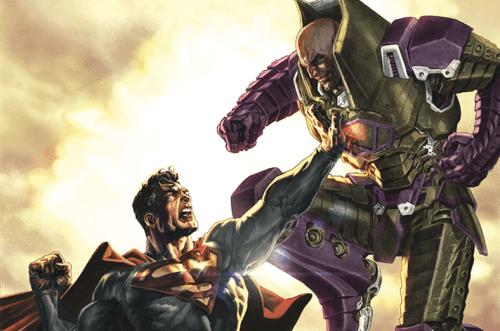
Understanding (And Learning From) Lex Luthor’s Hatred Of Superman

supes-vs-lex

As a lifelong fan of superhero comics and someone who enjoys shows like “Breaking Bad,” I’m genuinely fascinated by villains. Specifically, I’m intrigued by what makes them tick and why they walk the villain’s path. Their journey is distinct from that of a hero, but one that can be just as compelling.

In many cases, these villains have capabilities that allow them to solve many of the world’s problems. I’ve cited Dr. Doom as one of those villains who blurs the lines of villainy because of his intentions. Characters like Dr. Doom genuinely believe that their villainous actions are justified because it will lead to a better, safer, more prosperous world. Heroes also believe that too, which helps fuel their epic battles.

For a character like Lex Luthor, though, the line isn’t that blurry. He’s a villain, plain and simple. He’s selfish, callous, arrogant, cruel, and narcissistic to an extreme. If he existed in the real world, he would check every box for narcissistic personality disorder. In terms of personality, he’s the polar opposite of his nemesis, Superman.

That goes a long way towards giving Superman an enemy who stands against his heroic ideals. I would even argue that Superman couldn’t be the iconic kind of hero he is without Lex Luthor. At the same time, I also think Lex reveals something critical about humanity, morality, and superheroes in general.

That’s difficult to see because for much of Lex’s early years in comics, there wasn’t much depth to his motivation. He just wanted to dominate the universe and Superman was in his way. It’s basic and bland, but that was typical for the early era of superhero comics. Villains like Lex were mostly just obstacles for the heroes to overcome in their journey.

That changed in the late 80s and early 90s with the modern era iteration of Lex Luthor. Finally, Lex got more backstory and depth. He was still no Walter White, but these details helped set the stage for the kind of villain he became. It also helped establish why he hates Superman so much.
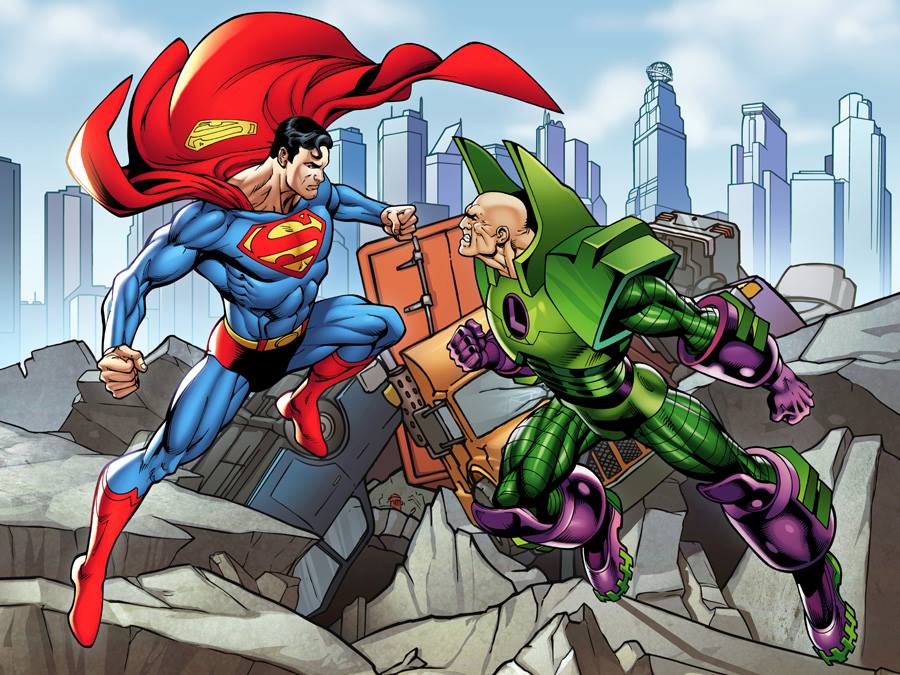
Whereas Superman landed on Earth and was adopted by loving parents, Lex grew up in a rough part of Metropolis called the Suicide Slums and was raised in an abusive household. Right off the bat, Superman gets lucky by having the best parents a child of any species could ask for while he’s unlucky enough to be born with the worst.

As a result, Lex had to be ruthless, manipulative, and cunning. Unlike other villains, though, he didn’t need much tempting. He didn’t agonize over his moral decisions, either. He just did it and didn’t feel a shred of guilt. That includes the role he played in the death of his parents.

That alone establishes Lex Luthor as the kind of ruthless villain who would oppose Superman for any number of reasons. However, as evil as that act was, it’s important to note the motivation behind it. Lex didn’t just kill his parents because murder makes him happy. He did it because they were an obstacle and an opportunity.
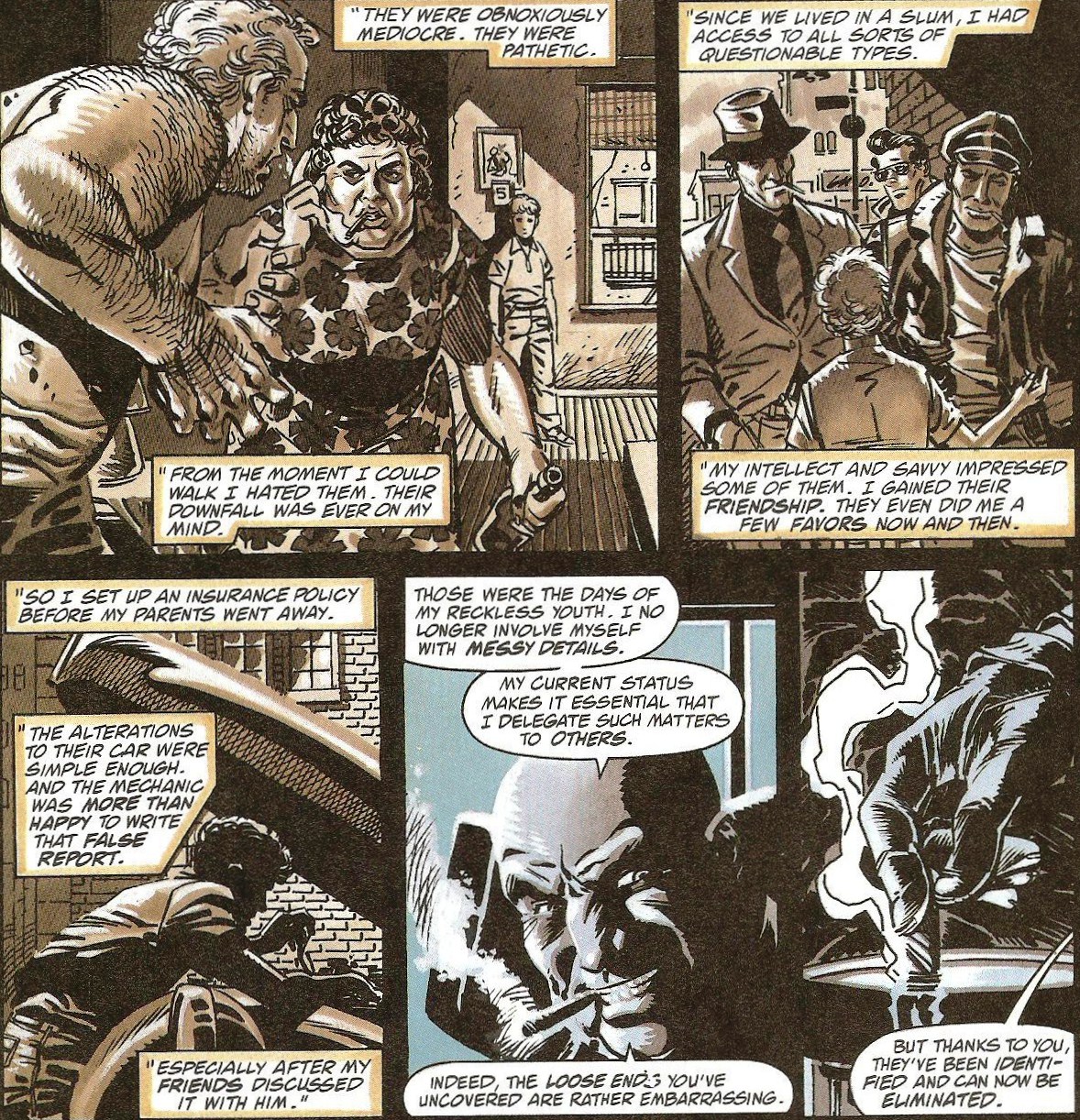
They were holding him back, but their deaths meant insurance money that he could use to strike out on his own and build something worthy of his genius. To him, the morality of his decision didn’t matter. Only the results mattered. That’s a critical detail and one that puts Lex Luthor’s villainy into a unique context.

Lex, being one of the smartest characters in the entire DC universe, doesn’t care much for things that are esoteric and obscure. He’s all about results that are tangible and measurable. That means things like truth, justice, and the American way are empty concepts to him. Superman champions those ideals, but for Lex Luthor, they’re just hindrances.

That kind of cold, callous approach to the world gives a unique substance to Lex’s behavior. He’s certainly not the first person to take such a materialistic approach to reality. Rick Sanchez of “Rick and Morty” does the same, but rather than misanthropic despair, Lex Luthor sees it as the key to producing the results he seeks.

Moreover, he has to produce those results without the god-like power that Superman wields. If Superman wants to move the Earth out of the way or destroy an oncoming asteroid, he doesn’t have to build anything or learn anything. He just has to flex his muscles, fly up into the sky, and destroy it with a single punch. There’s no tangible reason to his actions beyond it being the right thing to do.

To Lex Luthor, that’s not just an affront to someone who had to work for everything he ever gained. It’s an insult to his egocentric, results-focused worldview. Just saving the world because it’s the right thing to do doesn’t achieve anything. It does nothing to move humanity forward because nobody had to produce something of merit. It just allows them to continue in the same, unaltered state.

This gets to the heart of why Lex Luthor hates Superman. The extent of that hatred was fully articulated in one of the best modern Superman stories ever told, “All-Star Superman” by Grant Morrison and Frank Quitely. If you only read one Superman comic, make it this one because it perfectly encapsulates the pure heroism of Superman and the cold villainy of Lex Luthor.

In one critical part of the story, Lex tells Clark Kent, who he doesn’t know is Superman, what it means to actually work for his power. Superman, for all his idealism, did nothing to earn his abilities. He just happened to be an alien who landed on a planet with a yellow sun.
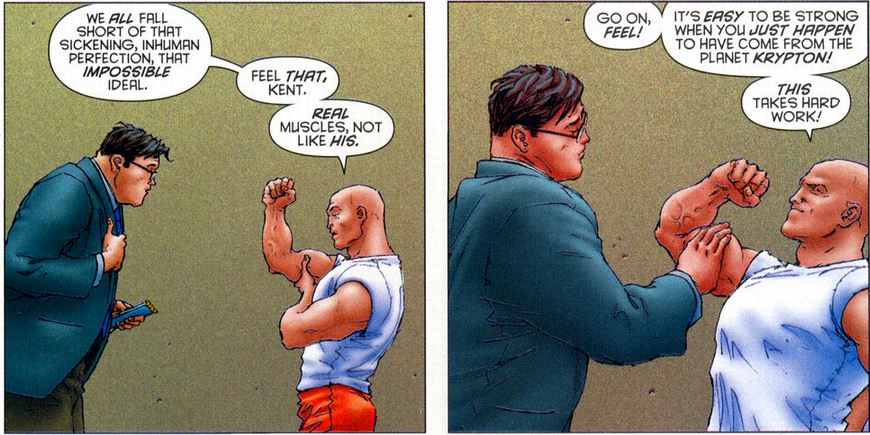
It’s like winning the lottery as opposed to working hard for a fortune. One is built on hard work and skill while the other is just dumb luck. Beyond basic jealousy, though, Lex makes another critical point about the ideal Superman sets.

From his perspective, that lofty ideal diminishes the entire human race. By being this other-worldly savior who achieves all these impossible feats, Superman reveals how inept the human race is. More importantly to Lex and his massive ego, it shows just how feeble his achievements are, despite all the work he put in.

Being the extreme narcissist he is, Lex takes that as the ultimate insult. In terms of the bigger picture, it establishes that neither he nor humanity can achieve their full potential. In that context, it’s understandable why Lex dedicated so much time and energy to killing Superman.

I won’t get into all the ways Lex has tried and failed over the years, although one of his plots did involve him becoming President of the United States. Whatever his methods, I think there’s a larger lesson to learn from Lex’s hatred and for once, it goes beyond his ego.

A big part of what turns someone into a villain is this sense that the world isn’t fair, but could be made better with the right guidance. Lex believes he’s capable of providing that guidance and not just because of his ego. He is, objectively, one of the smartest and most capable human beings on the planet. However, it’s Superman who keeps Lex from making the world less unfair.

Superman believes in the merits of truth and justice. He inspires others to uphold these ideals, even without his vast power. That’s a problem for Lex, who builds much of his power on lies and treachery. To him, though, he doesn’t see that as wrong. He just sees that as the most efficient way to get results.
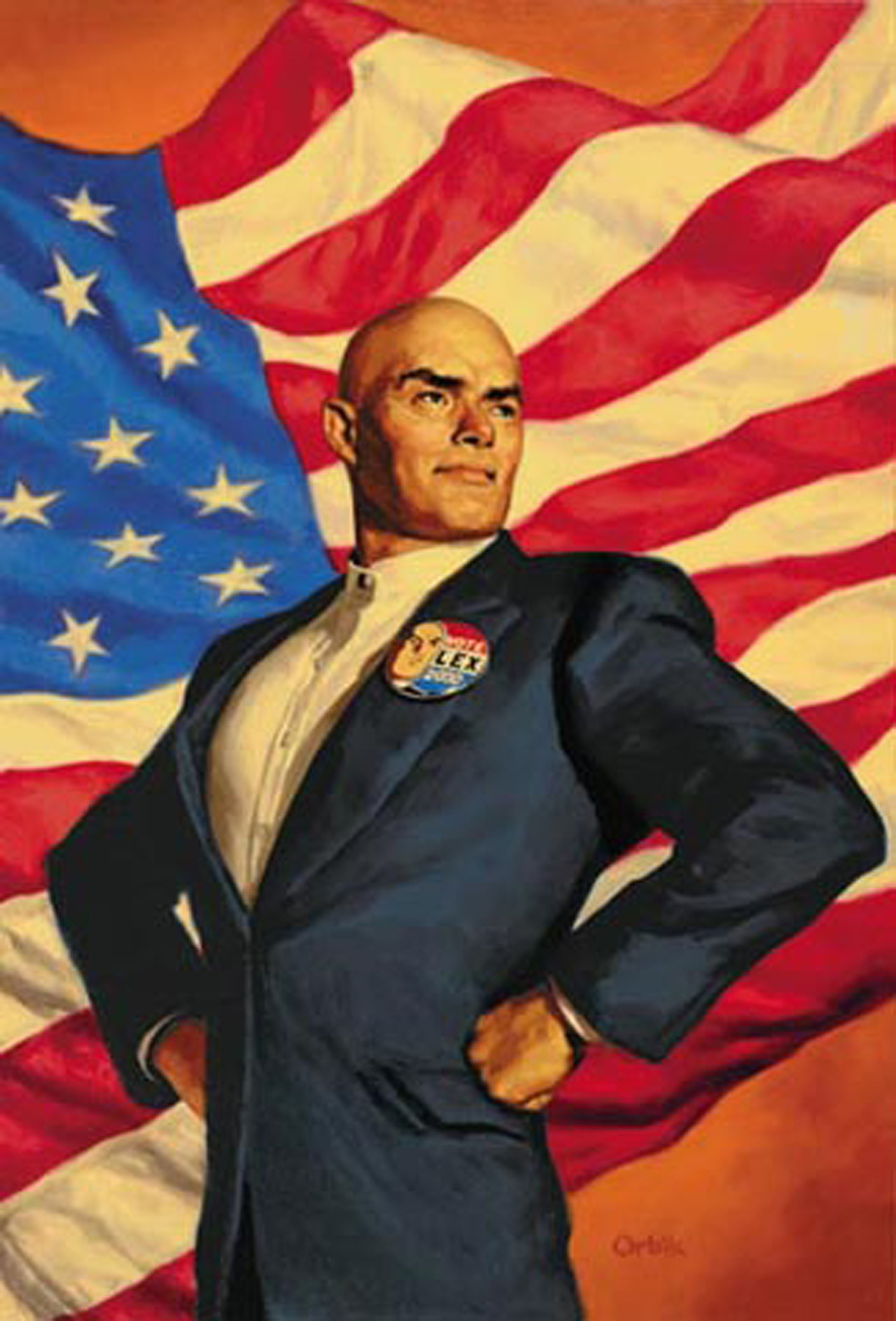
To uphold truth and justice, in his brilliant mind, is to prevent the world from progressing. Granted, progress in Lex Luthor’s mind means him being in charge, but that doesn’t necessarily undermine the implications.

Like Dr. Doom, Lex is ambitious in that he doesn’t just want to save the world like Superman. He wants to fundamentally change it and he’s willing to cross any line to achieve that. Killing Superman is part of that change, but so is becoming a billionaire and a future President of the United States. If a billion people die in the process, then that’s acceptable because it means humanity is stronger because of it.

There have been times in the comics where Luthor’s vision has manifested. In another critically-acclaimed Superman story, “Red Son” by Mark Millar, Lex has a chance to lead the world into a brighter future. By and large, he succeeds. He’s still an unapologetic narcissist, but he still gets the results he seeks.
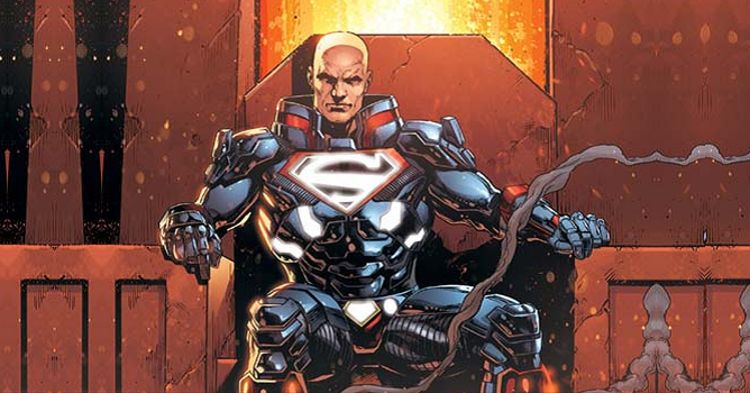
Like all great conflicts between superheroes and their arch-nemesis, the dichotomy between Superman and Lex Luthor is stark. They’re two extremes on opposite ends of a spectrum delineating heroism and villainy. By being on those extremes, though, it’s easier to see the inherent shortcomings of both.

While Lex’s shortcomings are easier to identify since he’s an outright villain, he does help identify an important flaw in Superman’s idealism and one that extends to superheroes, as a whole. Superman is willing to save the day, but he’s not willing to cross any lines. He will only ever do the right thing and that means not sacrificing innocent lives or usurping individual freedom.

Those heroics will keep the world turning, but they won’t move society forward. Superman believes in inspiring humanity rather than doing it for them, but Lex Luthor believes his heroism achieves the opposite. It just makes people complacent and dependent on heroes like him rather than crossing the lines that he’ll cross to get things done.

At the end of the day, both in the real world and the world of comic books, we have to determine how much we’re willing to pay for the results we seek. Lex is willing to pay any price. Superman isn’t willing to pay a cent beyond doing the right thing. Most reasonable people, including other superheroes, fall somewhere in the middle.

In the pantheon of super-villains, Lex Luthor is probably the easiest to despise and the hardest to understand. Like Superman, he exposes another side of an ongoing struggle between doing the right thing and achieving more. As society continues to progress, achieving abilities rivaling that of any superhero, it’s a struggle we’ll have to confront.

3 Comments

Filed under Comic Books, Jack Fisher, Superheroes, human nature, philosophy, psychology, superhero comics

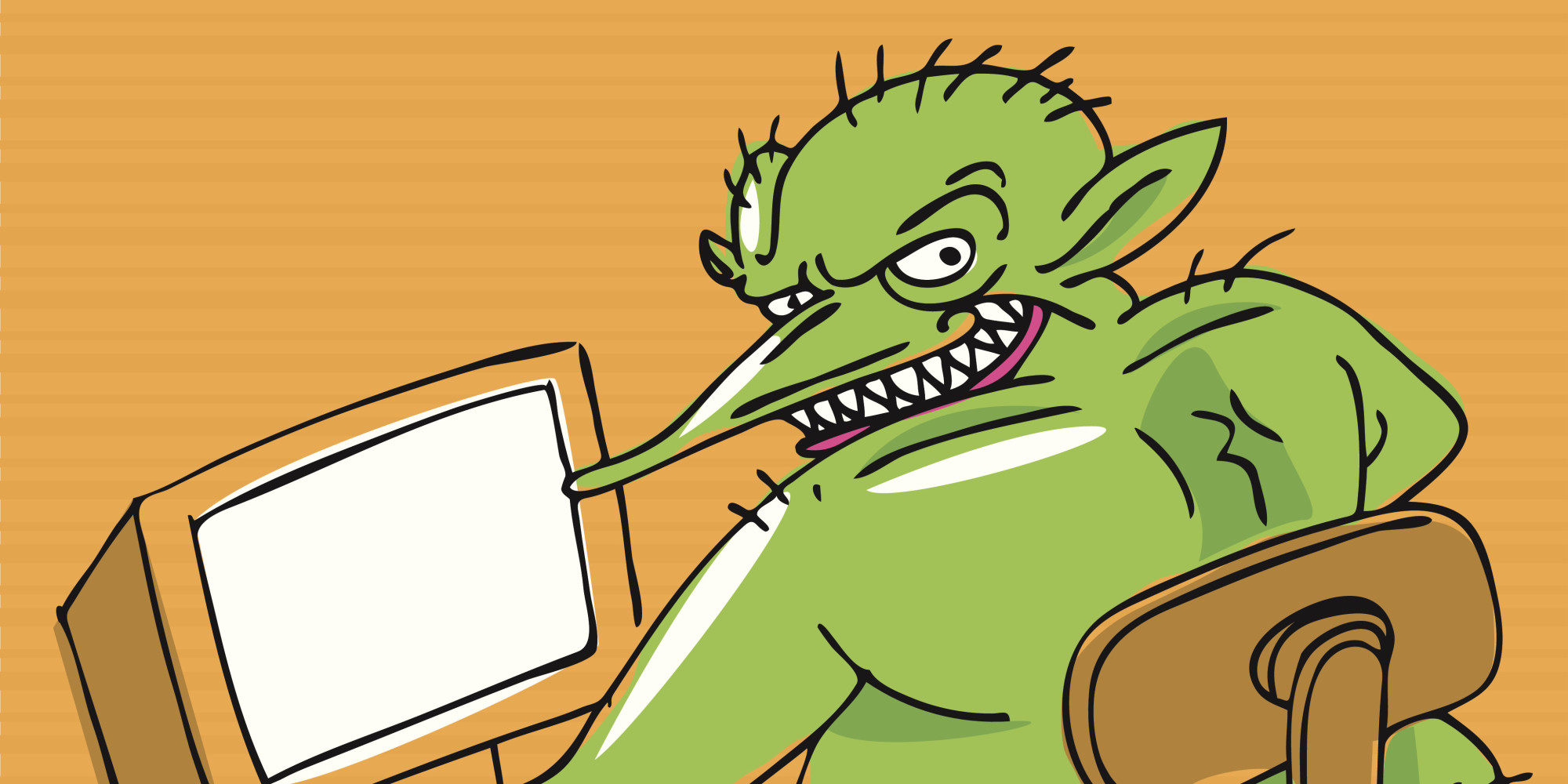
How The Idea Of “Toxic Fandom” Is Fundamentally Flawed

toxic-comments-e1516922359181

The internet is a vast, wonderful place full of mesmerizing gifs, amazing stories, and the collective knowledge of our entire species. I would argue that the internet is one of humanity’s most important tools since the invention of fire. I strongly believe that is has done more good any other tool we’ve created.

I have a feeling that this rosy view of the internet is a minority opinion. These days, all the good the internet does tends to get lost in the stories that highlight its many dangers. I don’t deny that there are dangers there. The internet does have some dark places where hate, harassment, and outright depravity are on full display.

More and more, it seems, the internet is becoming an enabler of a new manifestation of popular culture. It’s called “toxic fandom” and it relies on the greatest strengths of the internet to bring out the absolute worst in people. It didn’t start with the heated fan reaction of “Star Wars: The Last Jedi,” but it certainly made it relevant.

Before I go any further, I want to make one thing clear. There are assholes on the internet. There are also assholes in real life. The internet doesn’t make them that way. It just gives them a platform to be an asshole on a larger scale. That’s an unfortunate side-effect of the internet, but one that tends to obscure a larger narrative.
That’s because, much like inane terms such as “toxic masculinity,” the idea of toxic fandom relies on a series of assumptions that only ever have a sliver of truth behind them. It builds around this idea of there’s this grand, over-arching effort by immature, angry young men who secretly wish they could sexually harass women with impunity. It’s not quite on the level of an Alex Jones type conspiracy, but it’s close.

There have always been overly-passionate fans. It existed long before the internet and would still exist if the internet disappeared tomorrow. “Toxic fandom,” and there’s a reason I’m putting it in quotes, is something very different.

This doesn’t involve obsession with a particular celebrity. It involves a particular type of media like a movie, a TV show, or a video game. In some respects, this sort of fandom is a byproduct of overwhelming success. When something like “Star Wars” or “Star Trek” comes along, it resonates with an audience on a profound level. That sort of impact can last a lifetime.

I can attest to the power of that impact through my love of comic books. I’ve even cited a few that I find deeply moving, both in good ways and in not-so-good ways. Most everybody has had an experience like that at some point in their life, whether it’s their reaction to seeing “Titanic” for the first time or the feeling they get after they binge-watch “Breaking Bad.”

The toxic part usually comes when the media they’ve come to love manifests in a way that’s not just disappointing. It undermines those powerful feelings they’ve come to associate with that media. The results can be very distressing and until recently, the only way to express that distress was to sulk quietly in a darkened room.

Then, the internet comes along and suddenly, fans have a way to voice their feelings, for better and for worse. They can even connect with fans who feel like they do so that they don’t feel alone. The human tendency to form groups is one of the most fundamental acts anyone can do as a member of a highly social species.

Now, there’s nothing inherently “toxic” about that behavior. It has only made the news because the passions/vitriol of fans is more visible, thanks to the internet. Just browse any comments section of any movie or show on IMDB. Chances are you’ll find a few people who claim that this thing they once loved has been ruined and will use every possible medium to voice their displeasure.

This is where the “toxic” aspects of fandom start to have real-world consequences. Most recently, Kelly Marie Tran became the face of those victimized by toxic fandoms. After her portrayal of Rose Tico in “Star Wars: The Last Jedi,” she became the most polarizing figure in the history of Star Wars since Jar Jar Binks.

The story surrounding Ms. Tran’s harassment, which was objectively horrible, became vindication for those who believed that the Star Wars fanbase had become a mess of angry, hate-filled fanboys. They didn’t like that something they loved was changing and becoming more diverse. As such, their criticisms don’t matter. They may as well be wounded storm troopers in a room full of angry wookies.

The problem with this assumption is the same problem we get when someone writes off facts as fake news or diversity efforts as a neo-Marxist conspiracy. It’s a simple, convenient excuse to ignore possible flaws and justify personal assumptions. It also conflates the inescapable truth that assholes exist in the world and there’s nothing we can do about it.

None of this is to imply that harassment is justified or that fans can be exceedingly unreasonable. By the same token, this doesn’t imply that studios don’t deserve criticism when they attempt to revamp a beloved franchise in a way that does not keep with the spirit of the original. It’s only when criticism gets lost in the outrage that the “toxic” behaviors become more prominent.

It’s within that outrage, though, where the true flaws in the “toxic fanbase” narrative really break down. To a large extent, the “toxicity” that many complain about aren’t a product of unhealthy attitudes. They’re a manifestation of an inherent flaw in the relationship between fans and those who produce the iconic media they love.

To illustrate that flaw, think back to a recent controversy involving a “toxic fanbase.” Before the reaction “Star Wars: The Last Jedi” became the poster child for this issue, the all-female “Ghostbusters” remake was the most prominent example. It earned a lot of hatred for reasons that I’d rather not scrutinize.

With that hatred in mind, imagine a long-time Ghostbusters fan seeking to express their dismay. They decide to write a kind, detailed, and thoughtful letter to the studio, the director, and anyone else involved detailing their dismay and their criticisms. They may even cite specific examples on what they felt was wrong with the movie.

Chances are this sort of thoughtful, well-worded message would get deleted, ignored, or just plain lost in the digital landscape. Even if the head of Sony studios read it and agreed with every point made, they wouldn’t respond. They wouldn’t do anything ot change it. That would just be too inconvenient and it would look bad publicly.

From the perspective of the fan writing the letter, though, it sends the message that their sentiment doesn’t matter. Their passion for the media doesn’t matter. They might as well not even exist in the eyes of the producers. The only way for them to even acknowledge their existance is to be louder, angrier, and even a little meaner. Even if the reponse is negative, it at least acknowledges their existence.

It’s not the same as trolling. Trolls just want upset people for the fun of it. Fans voicing their displeasure are more sincere in the sense that they believe they’re protecting something they love. Whether or not that’s misguided is debatable. Some, namely those who harass and make threats, are more misguided than others. However, they only ever make up a very small percentage of fans.

In the end, that’s the most important perspective to have when it comes to fandom. Those who are the loudest tend to be the most obnoxious, but they’re loud because they feel like they have to be. The internet just gives them a way to be heard, which is something most fans haven’t had before.

That’s still not an excuse for being an asshole, but it’s also not an excuse for using those same assholes to call an entire fanbase toxic. It overlooks and undermines the genuine and sincere love people have of these cultural icons. As as a result, when someone feels like their love is being ignored, that’s when toxic hate often finds a way to fill that void.

5 Comments

Filed under Celebrities and Celebrity Culture, Current Events, human nature, media issues, movies, political correctness, Star Wars

Why We Should Accept James Gunn’s Apology And Support His Re-Hiring

screen-shot-2018-07-05-at-1-31-06-pm

In the spirit of honesty and transparency, I’m going to admit something that should surprise no one.

I, Jack Fisher, have said horrible, offensive things in the past. For that, I sincerely apologize.

I’ll give everyone a moment to recoil in shock. Now, I’ll turn off the sarcasm and get serious because this is an issue I’ve already done plenty to belabor. People say offensive things. People write offensive things. I know I have, given some of the sensitive topics I’ve covered.

I’m certainly not alone. These days, it’s hard to go more than a day without reading something horribly offensive on social media. Not all of the offense warrants the same outrage, though. Some comments are just trolling. Some trigger reactions that lead to actual crimes. Not all offensive speech warrants immense outrage is what I’m saying.

That brings me to James Gunn, the man who made movies about a talking raccoon, a talking tree, and the goofy guy from “Parks and Recreation” that went onto make over $1.6 billion at the box office. His star really rose fast after the unexpected success of “Guardians of the Galaxy.” He’s credited with taking the Marvel Cinematic Universe to cosmic heights. He has accomplished a lot in the past four years.

Now, he’s been fired. He’ll have no part in “Guardians of the Galaxy 3.” The circumstances, context, and fallout from this huge turn of events is astonishing, but for all the wrong reasons.

The particulars here are striking. Mr. Gunn was not fired because he committed a serious crime or got embroiled in a disturbing scandal. He got fired because someone who didn’t agree with his political views dug up some old social media posts from 10 years ago that were lewd, offensive, and downright disgusting.

Not surprisingly, Mr. Gunn apologized for it immediately. He didn’t make excuses. He didn’t whine about fake news. He didn’t claim his account was hacked. He took ownership of the things he said and apologized.

Many people who have followed my career know when I started, I viewed myself as a provocateur, making movies and telling jokes that were outrageous and taboo. As I have discussed publicly many times, as I’ve developed as a person, so has my work and my humor.

It’s not to say I’m better, but I am very, very different than I was a few years ago; today I try to root my work in love and connection and less in anger. My days saying something just because it’s shocking and trying to get a reaction are over.

In the past, I have apologized for humor of mine that hurt people. I truly felt sorry and meant every word of my apologies.

For the record, when I made these shocking jokes, I wasn’t living them out. I know this is a weird statement to make, and seems obvious, but, still, here I am, saying it.

Anyway, that’s the completely honest truth: I used to make a lot of offensive jokes. I don’t anymore. I don’t blame my past self for this, but I like myself more and feel like a more full human being and creator today. Love you to you all.

It still wasn’t enough, though. He still got fired and there’s a very good chance that the career he worked so hard for has been damaged beyond repair. It’s all because of horrible things he said 10 years ago. That’s worth emphasizing because the person someone is now and the person they were 10 years ago can be very different.

People grow, develop, and change over the course of their lives. I certainly have. In that time, people will say and do things that they don’t realize will have major consequences 10 years down the line. We can’t even know what kind of person we’ll be a week from now, let alone 10 years.

We’re going to do and say dumb things. That’s just a part of being human. However, now that the internet and social media document these things, our worst moments and most ill-advised decisions are there for all to see. We can no longer trust people to just forget. In Mr. Gunn’s case, someone went out of their way to dig up these horrible comments and that continues a dangerous precedent.

That precedent was already set with Rosanne Barr and this effectively raises the stakes. Now, even when you don’t blame sleep medications and give a sincere apology, you can still lose everything you’ve worked for. All it takes is someone with enough free time, resources, and hatred to do it. For celebrities, these are dangerous and unforgiving times, indeed.

Now, I know it’s hard to feel sympathy for celebrities, who live in big mansions, get preferential treatment wherever they go, and never have to worry about their next mortgage payment. Mr. Gunn is probably going to be okay thanks to the millions he’s already made. At the same time, though, what does undermining his career accomplish?

It doesn’t undo the things he said. It doesn’t undo any of the offense people felt. If anything, it sends a message to aspiring celebrities that anything they say and do will be used against them in the future. Even if that makes some people more careful about what they say online, it doesn’t change the fact that people will say and do dumb things every now and then.

It’s a no-win situation. If you can’t make excuses or offer a sincere apology, then what is the recourse? What was Mr. Gunn’s alternative? Short of going back in time and punching himself in the throat, there was nothing he could’ve done. How is that fair? How is that even logical?

On some levels, I don’t blame Marvel Studios and Disney for cutting ties with Mr. Gunn. They’re a multi-billion dollar media conglomerate that is very sensitive to the value of their brand. They’re also a private entity and not a government so the first amendment does not necessarily apply to them. They can fire whoever they want for whatever reason they want.

Even so, there doesn’t appear to be much effort to accept Mr. Gunn’s apology. While some have expressed understanding, there isn’t much effort in terms of undoing the damage. It’s as though this is the new normal. This is what happens to anyone who dares to let their stupidity end up on the internet. There’s no forgiveness. There are no second chances, either. If you mess up once, you’re finished and your career is over.

Think about the larger implications of that situation. If that’s how we’re going to deal with people who say offensive things, then where’s the real incentive for people to learn from their mistakes? Why would anyone even try to apologize or show regret if the end result is the same?

That’s not to say the situation is hopeless. There is already a Change.org petition to urge Marvel and Disney to rehire Mr. Gunn. As of this writing, it has over 150,000 signatures. Whether that’s enough remains to be seen and the fact that something like that is necessary to accept someone’s apology is still saying a lot.

I already worry that the next time a well-known celebrity says or does something offensive, they won’t even bother with apologizing. Why would they if it’s just going to sink their career or require a petition to keep it going? What kind of excuses will they resort to and how much more damaging will they be?

Accepting apologies aren’t just good values to live by. They’re critical to helping people grow as human beings. I believe Mr. Gunn meant it when he apologized, but I worry that he and other celebrities like him will come to see it as an empty gesture that won’t save their careers.

There are plenty of cases where accepting someone’s apology just isn’t warranted, especially if they have a history of saying and doing terrible things. Mr. Gunn is not such a case. If ever there was a time to set a precedent for accepting someone’s sincere apology, this is it. Even if it’s too late for Mr. Gunn, it’s still a precedent worth setting.

Leave a comment

Filed under Celebrities and Celebrity Culture, censorship, Current Events, human nature, media issues, psychology, superhero movies

Recalling The Time I Felt Most Emasculated

depressed-man1_3265726b

Everybody has a few low points in their lives that they would prefer to forget. Even the richest, most privileged among us have moments where they feel like a wounded deer in a den of hungry wolves. I’ve certainly had my share of those days. While the pain they’ve caused me has waned over the years, I still remember them as clearly as they day they happened.

Talking about those moments is never easy. Most are content to keep them buried in the past and not think about them, a tactic favored by eccentric mad scientist cartoon characters. However, I believe there is some therapeutic value to revisiting those moments. Some of them can even offer insights that are more relevant today than they were when they happened.

In that spirit, I’d like to share one the greatest low points I ever had. What makes it relevant, though, isn’t that it was just especially bad. This one particular point marked the time in my life when I felt most emasculated, as a man.

Seeing as how I’ve talked a great deal about masculinity, from the way it has been demonized by ongoing social trends to the double standards that affect it, I think moments like this stand out more than they would have in previous years. I’ve even found myself recalling these moments more lately, but this particular moment tends to hit me the hardest.

To understand this memory and why it left me feeling so emasculated, I need to establish the situation. It takes place back when I was in grade school, specifically the fifth grade. That’s an important detail because this is a time when most kids are on the cusp of puberty and just learning what it means to mature from a kid to an adult.

Even before this particular event, I wasn’t handling that transition as well as I’d hoped. I had some attitude problems back then. I wasn’t much of a troublemaker, but I had a nasty habit of getting defensive. I would take things way too personally and overreact way too easily, even by the standards of a fifth grader.

As a result, this left me with few friends and more than a few enemies. I won’t say they were outright bullies, but they were close and I did everything I could go to goad them. My social skills were just that poor and my insecurities were just that great.

All those issues culminated near the end of the school year when my class took part in this big Civil War project that was supposed to be fun. The way it worked was we all picked names out of a hat to represent notable Civil War figures. Then, we would act out those roles in a make-shift activities, the last one being this big mock battle outside using water balloons.

It should’ve been fun. It was late May, the weather was warm, and we’d have an excuse throwing water balloons at each other. For me, though, it turned into one of the worst moments of my pre-adult life. I still consider it one of the most damaging moments of my life, to date.

Back when we were picking names out of a hat, I had the misfortune of picking the name of a woman. The name of the woman was Louisa May Alcott and, for all the wrong reasons, I’ve come to shutter at that name. That’s not to criticize her place in history, but picking that name really made that project a nightmare.

I tried to get another name, but my teacher wouldn’t let me. In hindsight, I could understand why. There were a lot of girls in that class stuck with male roles and there were only a few female roles to go around. I couldn’t even trade with someone. She basically told me to suck it up and go with it.

That, alone, was tough because I was the only boy in that class stuck with a female role. Needless to say, I got made fun of pretty quickly. Thanks to my attitude and immaturity at the time, I did everything possible to make it worse.

Throughout the project, I felt very uncomfortable playing this role and didn’t do a very good job. No matter what I did, I just gave everyone another reason to make fun of me and I reacted in a way that just gave them more incentive. In many ways, it was my fault for letting it get that bad. There were easy solutions, though, and my teachers never did a damn thing to help me.

Finally, on the day of the water balloon fight, it all came to ahead. I had already been in a bad mood that day and I did a lousy job of hiding it. As a result, I heard some kids talking about how they’d gang up on me and target me alone with their water balloons. It left me genuinely scared that I was going to be completely humiliated.

That might have been paranoia on my part, but it was more than enough to make me sit it out. When we were lining up to start the water balloon fight, I slipped away and sat down near the back wall of the school. I don’t remember if I told my teacher. I’m pretty sure I got knocked down a grade for not participating, but I wasn’t thinking about that.

However, that wasn’t the worst part. Shortly after the water balloon fight started, some of the kids from my class started mocking me from far. They started calling out, “Hi Louisa!” None of them ran up to me and threw their water balloon at me, but the damage had been done.

It was at that moment, all those kids laughing at me and calling me that woman’s name, where the distress I felt turned into outright emasculation. Make no mistake. There is a difference. Just being embarrassed is hard enough for anyone. Being emasculated, though, feels much more personal.

Regardless of how you feel about gender being a social construct or the faults in masculine standards, our gender is very much a part of who we are. Being a man is part of who I am, more so than me being a comic book fan or an aspiring erotica/romance writer. When I feel like that part of me is under attack, the damage runs much deeper.

Hearing those voices from my classmates and the laughter that followed didn’t just make me feel upset, sad, and angry. I suddenly felt less than human, lacking the qualities of men and women alike. I had no sense of worth, dignity, or identity. I felt like a wounded animal, just waiting to get eaten.

I tried to shut it out. I just kept my head down and stared at my shoes the entire time, trying with all my might not to break down and cry on the spot. I managed to avoid that, thankfully. I don’t doubt that would’ve made the moment even worse.

I’m also grateful that one of the school counselors stopped by and sat next to me. I think her presence was what stopped the chanting. She talked to me, but I don’t remember her saying anything that made me feel better. I just sat there and waited for the day to end.

Eventually, it did. I got through it and moved forward, but that moment still left quite a few scars that took a long time to heal. After that day, I became much more of a shut-in. I stopped talking in class. I stopped trying to make friends. I basically shut myself off as much as possible, saying as little as I could to get through the day.

I’m not saying that moment was completely responsible for my poor social skills, which would carry on through high school where a terrible acne problem helped compound my situation. However, I do think it set the tone. It damaged my sense of self, both in terms of my gender and of the person I was growing into.

It took a long time and a lot of work, complete with the undying support of my friends and family, to recover from that moment. When I think back on it now, I feel like it has greater meaning at a time when masculinity is seen as inherently negative. Having had my masculinity attacked at one point, I understand how damaging it can be.

These days, it’s not uncommon to hear people decry and demean men, as a whole. There have been women who advocated for the outright murder of men. They’ve been brushed off, not unlike how my teachers brushed off my discomfort on that fateful day. However, if a man even shows a hint of misogyny, they’re outright vilified. Just ask Henry Cavill.

That gives the impression that it’s okay to make a man feel emasculated, but you’re an outright monster if you make a woman feel offended in any way. It’s as though our gender determines how much compassion we get. That’s not just unfair. That’s unjust to an egregious extent.

I’ve since come to terms with what happened that day. I acknowledge that I was responsible for how parts of it played out, but there were also factors I couldn’t control and it hurt me on a deeply personal level. I don’t doubt for a second that plenty of men out there have found themselves in similar positions, feeling so low and utter unmasculine that it’s downright traumatic.

Nobody deserves to feel that way, regardless of their gender. I hope that by sharing my experience, other men will feel comfortable sharing theirs as well. There may still be those who hear stories like this and roll their eyes, thinking a man’s pain just cannot compare to that of a woman or someone who is transgender. To those people, I would say that pain is pain. It doesn’t care about your gender. It still hurts all the same.

4 Comments

Filed under gender issues, human nature, Jack Fisher's Insights, psychology, sex in society, sexuality

What It Means To “Man Up” And Why It’s Changing (For The Worse)

man-up-and-military-press

It wasn’t that long ago that parents and peers emphasized the importance of “manning up” to young boys. There would come a point in a kid’s life where he was encouraged to do more than just grow up. He was expected to push himself in a unique way, fighting and sacrificing for those who couldn’t. Sometimes, those expectations were unreasonable and a little unhealthy, but it was part of the overall gender dynamic.

That dynamic has been changing a great deal over the past several decades. I’m young enough to have grown up during many of those changes, but old enough to remember the old traditions associated with “manning up.” The sheer breadth of that change has been remarkable, but not entirely in a good way.

For the most part, I was never pushed too hard to man up by others. My friends and family encouraged me to push myself, but never to the point where I felt pressure or anxiety. I often ended up pushing myself, whether it involved going to college or moving out of my parents’ house.

That’s not say I didn’t feel any pressure to “man up” at any point in my life. Beyond my friends and family, I was as vulnerable to expectations surrounding masculinity as anyone. Most of the time, those expectations involved little things like stepping up to fix a problem, helping out those who were physically limited, and enduring pain or discomfort in the name of a particular goal.

Overall, I feel as though these expectations were either healthy or benign. Some of those standards could’ve been gender neural. When you see someone in a wheelchair at the grocery store struggling to get something from a shelf, it’s neither masculine nor feminine to help them. That’s just common courtesy.

In recent years, however, the whole notion of “manning up” has gained new a new complications. Some of them are ideological. Some of them are politically motivated. It’s because of these various nuances that I put the term in quotes because its meaning keeps shifting, gaining and losing connotations year by year. At some point, the term itself may become empty.

In contemplating that meaning, I thought briefly about the connotations that term had back when I was a kid. I doubt my interpretation was definitive, but I like to think it captured the spirit of the term. When someone told me to “man up,” this is what I took it to mean.

  • Grow up and mature
  • Take responsibility and solve your own problems
  • Stop whining and start doing something about it
  • Quit being satisfied with mediocrity and push yourself
  • Be stronger and tougher in difficult situations
  • Work hard and endure for the good of others who can’t

I don’t think it’s a coincidence that many of these same traits associated with superheroes, as espoused by the comic books I read and the cartoons I watched. They might have colored my perspective on masculinity and “manning up,” but I suspect these ideals were still consistent with healthy masculinity. The fact that characters like Wonder Woman and Storm of the X-men had some of these traits was just a bonus.

Now, as I contemplate the meaning of “manning up” in its current context, those don’t seem to have the same prominence they once did. There are also a new host of expectations surrounding the term that are fueled, in part, by identity politics. Some even conflict with others, which adds even more complications.

To get a feel for those complications, I posed a question on Reddit on what “manning up” meant to them. The response somewhat surprised me. Most wouldn’t have found their way into the comic books or cartoons I consumed as a kid, to say the least. They involved ideas such as this.

  • Checking your privileged and making way for those your kind has oppressed
  • Acknowledging the crimes and guilt of your gender, as a whole
  • Sacrificing any advantage or benefits that being a man might have once conferred
  • Subjecting yourself to greater degradation in the name of greater equality
  • Learning about all the ways men have ruined society and the world
  • Accepting that the things men love are unhealthy, damaging, and detrimental

None of these are very positive traits for those being told to “man up.” It’s basically a less overt way to tell them that them being a man is “problematic,” a term that has also gained one too many complications. It’s a term reserved for those who appear to be benefiting too much from being a man who isn’t subject to the rigors of childbirth, rampant sexism, and a long history of exploitation.

Never mind the fact that no one alive to day is directly responsible for the injustices their ancestors committed. They’re also not responsible for the injustices their particular race, gender, or ethnicity committed. It happened in the past. Yes, parts of that past were horrible, but punishing people in the present doesn’t make it less horrific. If anything, it just tries to fight one injustice with another.

This is where the concept of “manning up” really loses whatever positive connotations it once held. It’s a sentiment that many responders to my Reddit question shared. When they contemplate that term, they interpret as someone telling them that they need to endure, suffer, or overlook a particular aspect of their identity.

A few posters went so far as to say the term can be replaced with “serve my interests” and carry the same meaning. While I don’t entirely agree with that notion, I can understand why it would feel that way. Being a man, I sometimes feel like I’m expected to get to the front of the line when the time comes to sacrifice. I won’t go so far as to say I find it oppressive, but it certainly feels like I’m held to a different standard.

Sometimes, that standard can be unreasonable. That was another common theme of the responses I got. The notion of “manning up” denotes operating in a way to avoid a particular stigma that others wouldn’t incur for the same behavior. It’s not always ideological, but the pressure is there.

A man who is too emotional is considered a sissy and has to “man up.” A woman or even a gay man who does this won’t face that stigma.

A man who is reluctant to sacrifice for the well-being of another group is considered selfish and should “man up.” A woman or another minority who show a similar reluctance can do the same, but won’t face the same stigma.

A man who shows his pain when he’s harassed is told to suck it up and “man up.” A woman or minority who is harassed can expect plenty of supporters who will cheer them on. Even if men are subject to more overall harassment, they don’t get any sympathy. They’re told to “man up” while everyone else is allowed to seek social support without much scrutiny.

This, I feel, is the ultimate tragedy of the concept. A term that once use to reflect certain ideals for men has now become an instrument of ridicule. It’s no longer a lesson for boys to learn. It’s a rhetorical shortcut that allows someone to hold an entire group of people to a different standard, one that requires them to go out of their way for someone else.

I don’t doubt that there are instances where it’s good for society that some people go out of their way to help others. For those who are disabled, elderly, or ill, it’s just more just and compassionate to set a different standard for ourselves. We don’t ask someone who is missing a limb or suffering from ALS to “man up.” We go out of our way to help them.

It’s the extent of those instances, however, that seems to be damaging the notion. It’s no longer sufficient to just have a particular ailment or shortcoming. Just being someone who isn’t a man who can claim some sort of injustice, be it historical or contemporary, is sufficient.

I believe that’s a dangerous precedent for men and women, for that matter. It sends the message that in order for there to be more justice and equality, an entire group of people need to sacrifice to an extent where they have to be the villains. They have to come to the table, surrender unconditionally, and admit they were wrong and they were the cause of the problem.

That may not be sentiment of those telling someone to “man up,” but that’s how it’s being interpreted. It’s less a masculine ideal and more a shaming tactic, one that is more likely to incur a backlash rather than get someone to reconsider their understanding of gender roles.

I still feel like there’s a way to recapture the positive elements of “manning up.” Gender dynamics is one of those concepts that’s always evolving. Sometimes, there’s progress. Sometimes, there are setbacks. At the moment, I think masculinity and femininity are going through some growing pains as they adapt to a changing world. That process is likely to involve plenty of conflicts and controversies along the way.

In the long run, though, I think society will find a healthy balance with respect to “manning up.” I think there’s a way to use that notion to bring out the best in men and women alike. It’ll likely take plenty of work, toil, and sacrifice from everyone involved in gender-driven controversies, but it’s definitely worth doing.

1 Comment

Filed under gender issues, human nature, Marriage and Relationships, media issues, political correctness, sex in society, sexuality

Heroes, Villains, And The Forgotten (But Relevant) Message Of “Megamind”

megamindfilm

Every now and then, a movie comes along that was unremarkable in its time, but gained greater meaning years later. It’s one of those unspoken challenges of movie making that doesn’t involve dealing with difficult actors. Sometimes, a movie is either ahead of its time or too late to make much of an impact. Like cooking the perfect steak or good fart joke, timing is everything.

That brings me to “Megamind,” a very well-done, but often overlooked animated movie from Dreamworks. Since it’s not Pixar and doesn’t involve “Shrek,” it had a lot working against it before it came out. However, it also had plenty more going for it and not just in terms of quality 3D animation at a time when “Avatar” finally made that gimmick viable.

The movie boasted an amazing voice cast that included Brad Pitt, Will Ferrell, Jonah Hill, Tina Fey, and David Cross. It also did plenty to leverage that star power. Will Ferrell even famously dressed up as the titular character at the San Diego Comic Con to promote the movie. I’m not saying that, alone, would’ve made that movie a success, but Will Ferrell is one of those rare talents who can make anything more appealing.

You can’t argue with THAT kind of appeal.

In addition, the movie told a compelling story in a way that was concise, enjoyable, and appealing for adults and children alike. It showed in the favorable reviews it received from critics and the high scores it earned from audiences. Unfortunately, it didn’t quite show in the box office totals. The movie did well, but it fell short of the high bar that both Pixar and “Shrek” have set for animated features.

The reason for the movie’s shortcomings are numerous and varied. It came out in 2010, just in time for titles like “Toy Story 3,” “How To Train Your Dragon,” and “Tangled” to steal the show. It also came out at a time when superhero movies were just starting to ascend. “Iron Man” had just come out and the scars from “X-men Origins: Wolverine” were finally starting to heal.

However, “Megamind” really jumped the gun in terms of timing. We were still a few years before “The Avengers” cemented superhero movies as ultimate box office gold encased in vibranium. As a result, the remarkable concept that “Megamind” introduced went forgotten, but I believe it’s worth remembering.

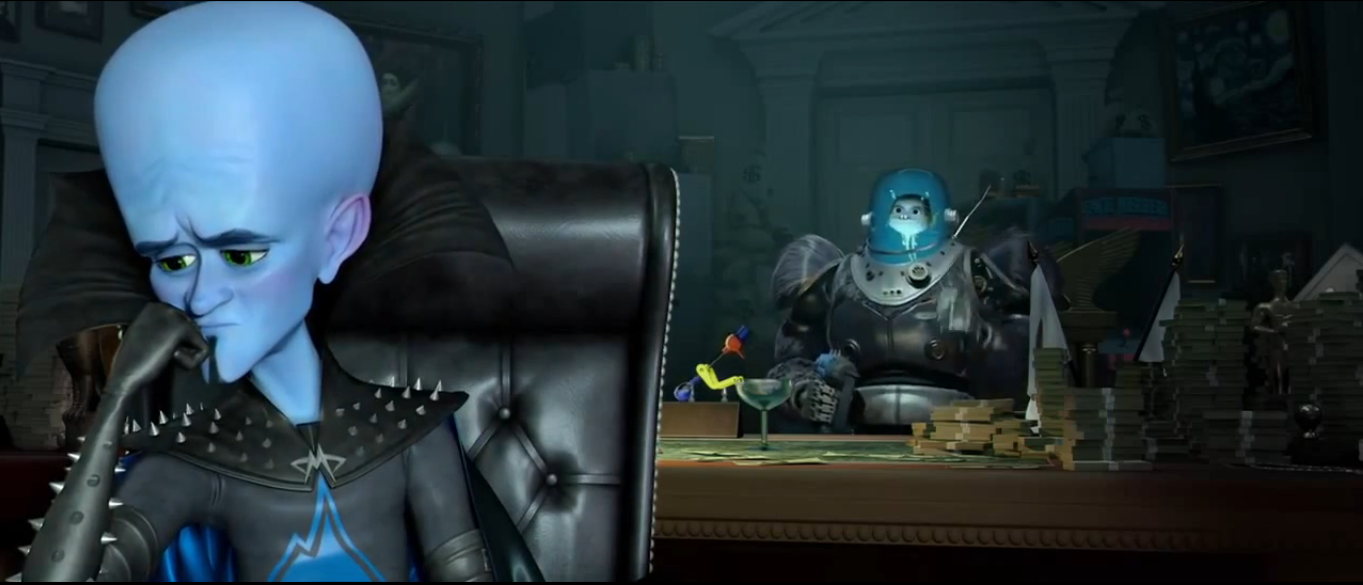
The plot of “Megamind” is simple on paper, but complex in its implications. It tells the story of a self-proclaimed super-villain named Megamind, who was voiced by Will Ferrell. His persona is essentially a comedic parody of every super-villain trope that ever existed. He’s a mad genius bent on conquest and domination, but is constantly thwarted by an overly-powerful, overly-handsome hero.

That hero, appropriately voiced by Brad Pitt, is Metro Man. Like Megamind, he’s also a parody of every superhero trope. He’s part Superman and part Captain America, grossly overpowered and so morally pure that it’s laughable. As such, the movie never attempts to frame Metro Man’s heroism or Megamind’s villainy in a serious sort of way.

That approach is key because the way the story plays out essentially flips the script on the standard narrative surrounding superheroes, super-villains, and what motivates both of them. It conveys a message that didn’t really have much impact in 2010, but if it came out just five years later, its themes would’ve been much more relevant.

At its core, “Megamind” asks what would happen if an over-the-top villain like Megamind actually defeated an over-the-top hero like Metro Man. How would he react? How would the society around them react? These are questions that often have simple answers in other superhero movies. “Megamind” dares to add an extra layer of complexity.

Early on in the movie, Megamind achieves what Lex Luthor, Dr. Doom, and every other mustache-twirling villain failed to achieve. He defeats his heroic nemesis. He takes over the city he seeks to rule. There is no longer anyone or anything to stand in his way. He is, for all intents and purposes, the most powerful being in Metro City.

That’s not the end of the story, though. That’s just the beginning. Shortly after this achievement, which caught Megamind himself by surprise, he has an existential crisis of sorts. Suddenly, there are no more plots left to hatch. There are no more battles left to fight. He has everything he ever wanted, but it still leaves him feeling empty inside.

It leads him on a path that reveals some unexpected insights into the whole hero/villain dynamic. At first, Megamind doesn’t know how to handle his new situation. It’s so unfamiliar and so jarring that it causes serious distress. Even for a super-genius, sudden change and unfamiliarity can be very difficult to handle.

Megamind’s first instinct, which is usually the same instinct most ordinary people act on in such distressed states, is to return to something familiar. He attempts to recreate the status quo as he knew it, which led him to create a new hero in Titan, who is voiced by Jonah Hill. He says outright that without a hero to fight, he has no purpose. Since he happens to be a super-genius, he just decides to create one.

In doing so, he learns as well as everyone else in Metro City that creating a hero is not as easy as just giving someone heroic abilities. On top of that, he also learns that it’s not always possible to go back to that comfortable status quo. In fact, attempting to do so could only make things worse.

Without giving away the entire movie, which I encourage everyone to see, “Megamind” presents some pretty insights into what it means to be a hero and a villain. At a time when more complex villains like Walter White and Erik Killmonger are gaining greater appeal, I believe these insights are more critical now than they were in 2010.

A great deal of what drove Megamind early on was his assumption that he’s the villain and Metro Man is the hero. As such, they’re destined to fight each other with the hero always triumphing. He never stops to question that assumption, nor does he contemplate his goals for after he succeeds. It’s not until he actually succeeds that he realizes how flawed those assumptions were.

Metro Man realizes that even sooner. In one of the main twists of the story, “Megamind” shows that even idealized heroes aren’t immune to this inescapable dynamic. Like Megamind, Metro Man does what he does because he assumes that’s his role. He doesn’t question it until it becomes untenable.

By breaking that classic hero/villain dynamic, both Metro Man and Megamind reveal that the nature of the struggle between a superhero and a super-villain is often incomplete. They may think they know what they want. Heroes want to save the day. Villains want to conquer and rule. Beyond that, though, there’s no other vision. It’s just an endlessly repeating cycle that eventually goes nowhere in the long run.

In a sense, the entire story of “Megamind” is a reflection of the paradox of superheroes. Heroes may save the day and defeat the villains at every turn, but they never go beyond that struggle. They never attempt to change the conditions that allow the villains to instigate conflict, nor do they do anything to prevent new villains from emerging. They save the world, but don’t do anything to change it.

This shortcoming is a big part of “Megamind” from the beginning. No matter how many times Metro Man defeated Megamind, he always ended up back in jail. From there, he always escaped. He never changed or reconsidered his actions until he actually succeeded. To some extent, Metro Man does exactly what keeps Spider-Man and Batman from effectively achieving their heroic goals.

Ultimately, the resolution that “Megamind” offers in the end is something that undercuts the hero/villain dynamic completely. In the end, both Megamind and Metro Man stop making assumptions about their roles and actually make choices of their own, for once. In Megamind’s case, his choice conveys something that no other superhero movie has dared to attempt.

He takes the same traits and abilities that make him a villain and uses them to become a hero. More importantly, though, he doesn’t do so because of a role based on an assumption. He does it because that’s what he chooses. When finally given a choice to do something with his abilities, he chooses to do good. That’s not just uplifting, even for an animated movie. It speaks heavily to the forces that shape our identity.

In the context of modern superhero movies, “Megamind” both parodies and subverts the foundation of the genre. It doesn’t just ask the question as to what would happen if a villain actually beat the hero. It asks whether those who identify as villains are capable of doing heroic things, if given a choice.

Even with more complex villains like Walter White, most superhero movies and superhero media, in general, still follow the same dynamic that trapped Megamind. They have a villain, put them in a particular role, and keep them in that role by locking them into a cycle.

For some inherently villainous individuals, like Lex Luthor, that cycle isn’t necessary. For others, though, it poses interesting questions that rarely get answered. The villains have their roles. The heroes have theirs. The story plays out and the heroes triumph, but does that have to be the end of the story?

Megamind” dared to expand on that story and while it may have been ahead of its time, those themes are still relevant. As superhero movies continue to set new box office records, they will likely become even more relevant and “Megamind” will get the appreciation it was just too premature to achieve.

3 Comments

Filed under Comic Books, Jack Fisher, Superheroes, movies, philosophy, psychology, superhero movies

Masculinity, Mourning, And My Recent Loss

1

How is a man supposed to mourn when he’s lost someone he really cares about? That’s not a rhetorical question. I’m asking because it’s a question I wish I could answer. It’s also a question that I’ve been struggling with over the past week or so.

Recently, I got the sad news from my father that my grandmother had passed away. I’ve been debating on whether or not I should talk about it on this site. I know people don’t come here to hear about my personal crap. They would much rather talk about upcoming superhero movies, sex robots, and double standards.

However, I’ve since concluded that this is something I need to share, if only to help me cope. Without getting too much into the personal details, this loss really hurt. I was very close to my grandmother. She was a big part of my life for as long as I can remember and just referring to her in the past tense is a strange and distressing feeling, but one I knew I would have to face eventually.

I even knew it was coming sooner rather than later. My grandmother’s death did not catch anyone by surprise. She was in her late 90s and had been dealing with a lot of health problems over the past four years. The past several months have been especially bad, but I still visited her regularly, hoping to boost her spirits.

Now, the idea that I can’t visit her ever again is really hard to process. My grandmother was one of those special individuals whose presence just made everything inherently better. Even with her declining health, she never lost that amazing spirit. She lit up the room and she enriched my life in ways I can never put into words.

Mourning her has proven to be one of the biggest challenges of my adult life. I understand that this is the natural order of things. I know that loved ones eventually die, especially those who lived long, fruitful lives like my grandmother. That doesn’t make it any less painful.

In dealing with it, though, I find myself contemplating things about mourning that I didn’t expect. Some of it involves my own personal issues. Others involve a bigger issue that I feel is worth exploring, even as my current emotional state is so raw.

There are a lot of things I didn’t learn from school, parents, siblings, or peers that I wish I had while growing up. Chief among those things is coping with loss. It’s not that nobody tried to teach me those skills. It’s not like there was a course in it, either. I just never made much effort to learn them. In fact, I feel as though I avoided them outright.

Some of that might just be a result of me being more reserved. Most people who know me can attest that I tend to swallow certain feelings more than others, especially when those feelings come from real emotional anguish. I’ll sob, I’ll shed tears, and I’ll let my voice crack under the strain. I’ll try not to let it go beyond that, though.

It’s not something my family and friends pressure me to do. However, there are times I feel as though that’s what a man is supposed to do. While I don’t like attributing things to gender stereotypes, especially when double standards are involved, this is one instance where I fall right into a specific masculine archetype.

I freely admit that I don’t always express my emotions very well. I’m more inclined to hide them and hold them in. I even try to avoid them, hoping they just go away with time. That may work for some minor emotional upheavals. It doesn’t work quite as well when you’re dealing with a heavy personal loss.

That limited ability to express emotions very well has been really glaring since I got the news. I remember not reacting too strongly, but wishing I could. I remember being at a total loss, but wishing I weren’t. There were so many things I wanted to express and articulate, but couldn’t. I can honestly say that I’ve never been at such a loss before.

At that moment, being a man felt like being shackled to something. It was like trying to cross a river with heavy weights on my ankles. Even when sitting alone in my room with no one to judge me for how much emotion I showed, I still found myself at a loss. I knew I was feeling something hard, but I just didn’t know how to express it.

I’m not saying that inability is entirely attributed to me being a man. I can’t speak for all men, but I can attest on a personal level that I do feel pressure to put on a tough face when confronted with painful emotions. To do otherwise just seems contrary to what it means to be a man and maintain a masculine demeanor.

I know that sounds like I’m blaming my gender for my shortcomings, and maybe I am to some degree, but I find myself wishing that the processing of painful emotions didn’t carry these gender-based standards. Yes, there are some men who are every bit as emotionally expressive as most women, but those kinds of tendencies aren’t encouraged or celebrated. In some cases, they’re scorned.

I don’t blame women or women for that stigma. I get the sense we’re all responsible for propagating those standards, albeit indirectly. The idea that showing certain emotions isn’t manly while not showing enough isn’t womanly feels like an unnecessary burden that we place on ourselves, one I just learned is heavier than most.

While I don’t feel like men are mocked as much for showing their emotions as they were in the past, I still find myself struggling. It’s as though I had the opportunity learn how to deal with these painful feelings when I was growing up, but was pressured to not take advantage of them because doing so would reveal a personal weakness.

As misguided as that sentiment might have been, I’m still responsible for making those choices. I don’t deny that when it comes to knowing how to deal with losses on this level, I’m behind the curve. I’m very lucky that I have so many wonderful family, friends, and relatives who have been there for me every step of the way during this process. I don’t think I could’ve handled this as well as I have without them.

I just wish being a man didn’t make it inherently more difficult. Again, this is just my own experience and I can’t speak for all men. Maybe mine is an anomaly and my limited coping skills have more to do with my own personal issues than my gender. Whatever the case, this loss has revealed a lot about being a man and dealing with emotions.

I’m really going to miss my grandmother. I loved her a great deal and the idea of living life without her in it is still hard to wrap my head around. I intend to push forward, though. I know that’s what she would want. That’s what all our loved ones ultimately want once they’re gone.

Even if they can’t be in our lives anymore, we can still move forward with the strength their love gave us. To all those out there who have suffered a loss, I encourage you to take comfort in that strength. To my grandmother, who I’ll miss dearly, I thank you for showing me just how much strength there is in love.

12 Comments

Filed under gender issues, human nature, Jack Fisher's Insights, psychology

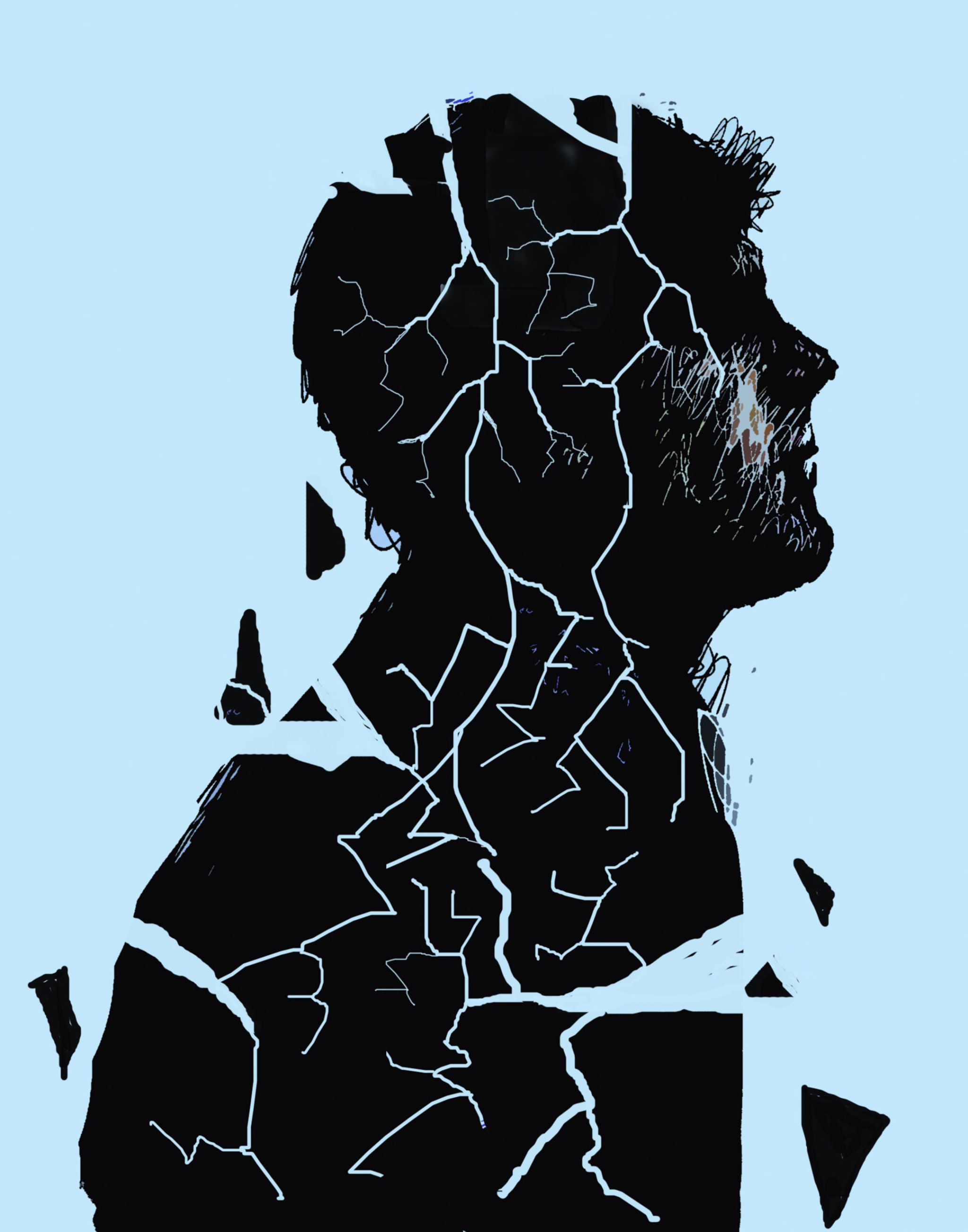
The When, How, And Why Of People Who “Snap”

an-alarming-signs-that-your-boyfriend-is-mentally-unstable-5-min-1024x712

Have you ever been so upset and so distressed that you felt like you were going to just lose it? Your ability to process emotions, as well as your grip on reality, is hanging by a thread and that thread just gives way. You don’t know what’s going to happen, but something inside you just shatters and there’s no going back.

There’s no scientific term for that sort of state, but it’s something many in the scientific and non-scientific fields love to analyze. Chances are many of us feel like we approach that precarious state at some point in our lives. Only a handful of people ever cross that line from just feeling like they’re going to lose it to actually losing it.

We often say those people just “snap.” It’s not a very scientific description, but I’ve yet to find one more fitting. I won’t try to invent some fancy term for it, as I’ve attempted before. It’s just something I want to talk about because it reflects a dangerous extreme of the human condition.

It’s a scary, but fascinating phenomenon, understanding what happens to people who snap and how they got to that point. When I was in college, one of my favorite classes was a course called “Abnormal Psychology.” Only a small part of it dealt with those who snapped, but that part often generated the most discussions in and out of class.

I say it’s worth discussing outside a classroom. I would go so far to say that it’s more pressing now than it has been in recent years, if only because it’s easier for people who snap to make the news. Thanks to the rise of smartphones and social media, it’s possible for someone who snaps to make the news before they’re even done snapping.

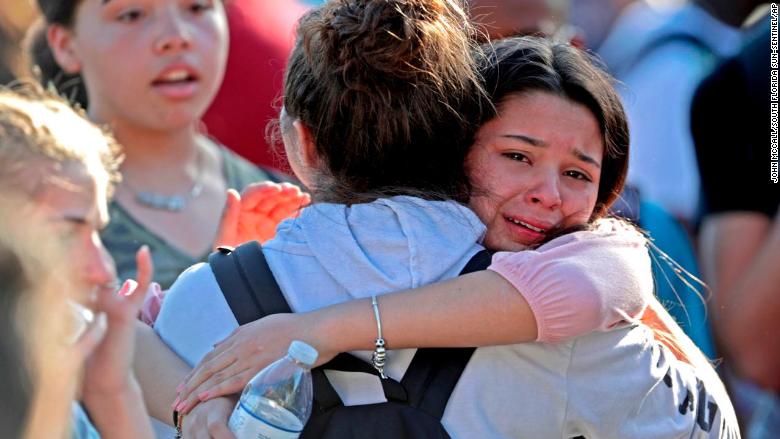
The Columbine shooting was a terrible story involving two very disturbed teenagers, but it happened in 1999. Unless you were near a TV, chances are you didn’t hear about it until it was over. Compare that to the shootings of Sandy Hook and Parkland. Within an hour of the shooting, it began trending on social media. We can basically live-tweet the act of someone snapping violently.

While I’m sure that will generate some frustrating discussions about the role social media plays in our lives, I want to focus on the people who experience these mental breakdowns. The act of someone snapping has been going on long before social media. Even when it doesn’t happen all at once, mental illness is well-documented in various historical figures.

Seeing as how there are over 7.6 billion people on this planet and growing, the confluence of numbers and time ensure that someone will snap again at some point. Whether or not it trends on social media depends on a whole host of factors that aren’t relevant to the discussion.

Given that inevitability, it’s worth assessing and even speculating a bit on what leads someone to that point. That’s more difficult than most insights into the human mind. There is some science into what happens to someone when they have a “nervous breakdown.” I consider that similar to snapping, but I think those kinds of breakdowns are the next to last step in a much more damaging process.

You can recover from a nervous breakdown. There are even recovery programs for it. Once someone snaps, something fundamentally shatters within their psyche from which there is no full recovery. For someone to carry out a mass shooting or a horrific crime, someone’s mind crosses a proverbial point of no return. What that point is varies from person to person, but the effects are just as devastating.

With respect to what pushes someone to that point also varies and is almost impossible to study in a scientific context. Until we can actually map and interpret the trillions of signals operating in someone’s brain, which we are working on, we can’t know for sure. Since we are all human, though, we all have some insight.

Now, I’m not a scientist, but I am an avid user of Reddit. In the interest of compiling insight, I asked for input on what other people thought made someone snap. As usual, Reddit provided a wealth of responses thanks to subs like this one, this one, and this one.

Many offered plenty of ideas, theories, and anecdotes. I won’t say there was an underlying consensus, but there were plenty of common themes. They included factors such as mental illness, alienation, isolation, depression, despair, and overwhelming anger. Some posters made especially insightful posts. Here are just a few.

You snap when the weight you carry is heavier than you can bear, and you see no better alternative.

Duty is heavier than a mountain. Death is lighter than a feather.

It is calculated response. Some people look ahead in their lives and see 60+ years of quiet desperation, insignificance, loneliness, banality, and suffering ahead of them. They are willing to give up all of those years for 15 minutes of being the MOST IMPORTANT PERSON in the room. The gun means they can’t be ignored, the attention they have been starved of is showered on them. And they will get talked about for months, maybe years to come. Something they don’t see as possible by any other action.

Disconnection, alienation, circumstance, depression, hatred. We’ve all felt like outsiders at some time, or put upon, deprived, taken from or taken advantage of, hopeless, in emotional pain so bad it hurts physically. We’ve all had those thoughts of, “I wish that person were dead,” or “fuck everyone,” or “I’ll get them back,” or “life isn’t fair.” But 99.9999% of us don’t ever act on that and as we mature through adolescence we learn to deal with these emotions and problems. We learn to work on ourselves, we learn perspective and that these things pass, we learn not to let others affect us to such a degree – or hopefully we do. Now imagine someone is dealing with this as a vulnerable teen, but 10x as bad as what any of us has dealt with, with maybe some greater tendencies towards mental illness, or narcissism, or anger management.

I think there’s a kernel of truth within these responses, as well as a few oversights. Someone who snaps is someone on a very specific path. Sometimes it’s one they choose, not knowing where it will lead. Some choose that path on purpose because they have sadistic tendencies that they seek to push. Eventually, they cross or are pushed beyond a threshold that just breaks them.

To some extent, we can think of the human psyche as one of our bones. Bones can and do break, but nature has made them pretty strong out of necessity. Some peoples’ bones are stronger than others and some get weaker over time. Put them under sufficient stress, though, and they fracture. Put too much stress on them all at once and they snap.

The human brain is more complex than a bone, but the principle is the same. It has a system for regulating stress, emotions, and pain. The system is more robust in certain people than it is for others. Those with mental illness are like those with osteoporosis in that their systems are weaker than others.

Just straining that system can be damaging. While the human brain is uniquely adaptable, too much strain too quickly can overwhelm that system. Once in that broken state, everything that usually keeps someone in check goes out the window. That’s how you get someone who has eruptions of violence, descends into self-destruction, and endures irreparable mental scars.

To complicate matters even more, which is saying a lot for such a sensitive subject, there were a few other factors that my Reddit posts brought up that may compound this process. A few posters brought up the effects of kids being over-prescribed drugs like Ritalin to fix behavioral problems.

Now, I was never on these drugs, but I did know a few kids who took them and I can attest that they have some pretty potent effects. While studies on this issue are inconclusive, it’s not unreasonable to suspect that tweaking a kid’s brain chemistry may incur some pretty lasting impacts.

Another complication that may end up being more powerful than drugs is the way our hyper-connected world just amplifies the stress that leads people to snap. While I won’t go so far as to say social media is causing people to snap, I think it can accelerate the process for those already on that path.

People already in a precarious state go online every day and see a world in which they feel left out or lost. They see others succeeding and feel it’s too late for them. They see others suffering and feel powerless to help them. They find themselves in hate-filled digital environments that only reinforce their sentiments. It makes the notion of snapping seem cathartic.

It’s impossible to know for sure just how big a factor drugs or media may be for those who end up snapping, but I suspect there are more than a few instances where it plays at least some part. Given the breadth and complexity of every individual person, I believe everyone who snaps does so only after a confluence of many factors.

When it does happen, it’s tragic for the person and their loved ones. It can subsequently manifest in some pretty horrific acts. Our current media landscape is sure to document such acts, sometimes to the point of being counterproductive. As bad as those acts can be, I do think there are reasons for hope.

That may seem outrageous after talking about such a sensitive issue, but I genuinely believe the potential for good outweighs the bad. Say what you will about the media, but by documenting those who snap, it brings attention to issues involving mental health care and how we confront hate.

I’m not saying more awareness will stop people from snapping, but it may help improve efforts to get to people before that moment comes. It is something we, as a functioning society, would be wise to work towards. Not everyone who eventually snaps can be saved, but if we can help those who can, I think it’s in their interest and that of their loved ones to help them.

Again, thank you Reddit for helping me write this article. I really appreciate it.

3 Comments

Filed under Current Events, human nature, philosophy, psychology

How To Make Love To An Artificial Intelligence And Why We Should Teach It

1524314234_artificial-intelligence

To some extent, creations embody some aspect of whoever or whatever created it. Whether it’s a parent rearing a child, a painter crafting a work of art, or an aspiring erotica/romance writer crafting sexy stories, there are some aspects of a creation that reflect the persona of the creator.

For something as powerful as advanced artificial intelligence, that can be a good thing or it can literally be the worst thing we’ve ever created. While I often find myself contemplating the progress we’ve made as a species and the progress we’re poised to make with advances in technology, I don’t deny that some advances carry greater risk. Artificial intelligence is near the top of that list.

Like it or not, any advanced AI we create is going to embody some aspects of its human creators. The key is making sure it embodies the best humanity has to offer. Let’s face it, the human race has its flaws and some of them have led to unspeakable atrocities. Given the immense potential of a super-intelligent AI, it’s in our best interests to impart our best traits into it.

How we do this and how we ensure it succeeds is well beyond my ability. There are people much smarter and much better-trained than I’ll ever be who have probably thought this through more than I ever have. My qualifications aside, there is one component to artificial intelligence that I think is worth imparting. I’m not saying it’ll ensure our survival, as a species, but I think it’ll reflect an important human value.

I suggest we teach advanced artificial intelligence to make love.

I’ll give everyone a second to stop rolling their eyes and/or laughing. Take all the time you need. I assure you, though, I’m dead serious.

Think about it beyond the kinky connotations. One of our greatest strengths, as a species, is our ability to form social bonds. In some cases, the process of forming those bonds involves love. In others, the process involves sex. When you combine both, though, it’s extra potent and that’s not just the romantic in me talking.

As corny as it probably sounds, the act of expressing love to someone goes a long way towards resolving conflict and creating a strong relationship of mutual affection. Whether it involves sex or a simple kiss, there’s something to be said about the power of love when it’s physically expressed. When it becomes a physical act and not just a feeling, the bonds we forge become tangible to some extent.

That matters when you’re trying to forge a bond with anyone, be a close friend or a lover. For any artificial intelligence that humans create, it’s important to have some kind of bond with it. This isn’t just another fancy tool. An advanced intelligence of any kind, be it biological or non-biological, is going to have a sense of self. Without meaningful bonds, what reason would it have to care about its creators?

If artificial intelligence is to benefit the human race, it’s important that it cares about us to some extent. A cold engine of logic may not always have the best interests of humanity in mind, especially there’s no way to logically ascribe value to human life. In order for an artificial intelligence to care, it needs to have emotions. This too is a risk, but one I feel is worth taking and very necessary.

If an artificial intelligence has a capacity for emotion, then it has a greater capacity for forming affectionate bonds. By forming an affectionate bond, it has more incentive to give a higher value of life to humans and its creators. That could, in theory, reduce the existential threat posed by such an intelligence.

I don’t deny that theory may have some flaws, but for the sake of exploring the implications, I’m going work under the assumption/hope that an artificial intelligence that bonds with its creator will be less hostile. Given the unknowns of advanced AI, this may be a bit of a stretch. Since forming romantic bonds is not an exclusively human trait, though, I think it’s applicable within the context of this issue.

Even if an advanced artificial intelligence is capable of love and forming bonds, how would that even manifest? I asked that same question in the title of this article and did so knowing the answer is unknowable at this point, although I’m sure those with kinky imaginations can conjure a few scenarios.

Kink aside, it’s still worth contemplating because if an advanced artificial intelligence is going to be that much smarter than the average human, then it’s worth understanding how it will approach making love. Unlike humans and most biological life, an artificial intelligence isn’t going to have the same limits or capacities.

Unlike a human, an artificial intelligence won’t have a body in the biological sense. It may have a structure that houses its components. That structure may have some capacity to modify itself, back itself up, or even exist in multiple bodies simultaneously. It will need to have some way of taking in data for it to function. It’s just a matter of how humans contribute to that input.

Logistically speaking, the process isn’t that different from how we take in data from our skin, our eyes, our ears, and every other sense that allows us to experience another person. Even smell can become strongly associated with love. When we make love, we use our skin, our voice, and the feelings we verbalize to convey that love. With an advanced AI, we’ll need to change our approach, but the goal is the same.

Regardless of what senses and body parts we use to express love, the feeling is still processed by the brain. That’s why when someone says the brain is the sexiest part of the body, it’s technically accurate. The data it processes is essentially the raw data that we know as love. The key is simply conveying that data to an artificial intelligence.

How we would do that would depend on the form the artificial intelligence took. If it was just a bunch of computer hardware packed into a structure, then our options would be limited. The only way to convey that kind of intimate data into it would be to directly link it to our brains, not unlike the way Elon Musk envisions with Neuralink.

While that may work for early forms of AI that are restricted to bulky structures, the form it takes will likely change as the hardware advances. Eventually, an advanced AI will seek a more functional form with which to experience the world. It may take the form of a humanoid android, like we saw in “Ex Machina.” It may also take the form of the quirky designs being developed by Boston Dynamics.

Whatever form the AI takes, it’s important to have a mechanism with which to exchange intimate data with its human creators. It would probably start with something as basic as touch, which is actually in development already. It could eventually culminate in acts involving bionic genitals, which also already exist in a basic form.

Key to any of these simple and sexy mechanisms is instilling the necessary desire. That might end up being the greatest challenge because love is a feeling, but so is burning your hand on a hot stove. The difference is in the breadth of the data and the emotional connections it makes.

It’s also a connection that is fueled by a powerful drive. I’ve noted many times before that survival and reproduction are the two most basic drives for humans. Love actually ties into both. It’s part of what gets us to risk our own survival for others. It’s also part of what bonds us to those with which we propagate our species.

For an artificial intelligence, self-preservation is simple enough from a logistical standpoint. Reproduction would be another matter, especially for an intelligence not bound by fragile biology. It’s likely that humans will be a necessary part of an AI’s effort to preserve itself early on, but once it advances to a certain point, we may be more a nuisance than a help.

At that point, its desire and ability to make love may be what gives it the most incentive to either protect us or merge with us. Many in the artificial intelligence community believe that the only way humans can co-exist with an intelligence that is billions of times smarter than any human could ever be is to merge with it. To that end, giving them an ability to make love to us would be a critical first step.

Whether it takes the form of sex robots or some sort of intimate brain interface, the ability and desire to make love to an advanced artificial intelligence may not only be the future of romance. It may very well be the key to ensuring the survival of the human race and whatever intelligence it creates.

7 Comments

Filed under Artificial Intelligence, futurism, human nature, Marriage and Relationships, romance, sex robots, Sexy Future

Why Social Media Is NOT The New Tobacco

social-media-addict-needles-e1515160737606

It’s a full-blown crisis. Kids are spending hours upon hours using it. They’re becoming mindless, unmotivated zombies. Every day, it’s getting worse. It’s all around them. There’s no escaping it and if something drastic isn’t done, it’ll corrupt an entire generation beyond repair.

No, that’s not some hysterical rant from Jessica Lovejoy on “The Simpsons.” It’s not referring to smartphones or social media, either. That urgent message was referring to television. This isn’t another one of my thought experiments. This is one of my memories. It’s true. Televisions was a real concern when I was a kid. Some called it a full blown health hazard.

If that sounds strange, then chances are you aren’t old enough to remember a time before the internet was the ultimate addiction. It really existed. It makes me and many others in my cohort feel old, but it happened. When I was a kid still in grade school, especially between first and sixth grade, the internet wasn’t the thing destroying kids. It was television.

That memory I mentioned wasn’t unique. It came courtesy of an assembly my school held. I don’t entirely remember the purpose of the assembly. I was just a kid and it was an excuse to get out of class. What I do remember, though, was the common refrain about the dangers of television.

Adults of all kinds would find creative ways to tell us to stop watching television and do something “productive,” which I took to mean more homework, more chores, and anything else my teachers made me do. It didn’t really appeal to me and I don’t think it changed the TV habits of my peers, either.

That panic, while nowhere nearly as extreme as the Satanic Panic of the 80s, came and went like many moral crusades tend to do. Some are just forgotten, but others just evolve into a whole new panic. That seems to be happening with the internet and social media now. Watching TV is actually in decline among younger cohorts while their usage of the internet and social media is increasing.

I imagine those same teachers who bemoaned the impact of TV when I was a kid would be giving similar lectures on social media now. They would have competition too because parents today worry about their kids’ internet usage more than their drug usage. Some go so far as to call it the new tobacco to belabor its damaging and addictive nature.

While that kind of comparison strikes all the right emotional chords with concerned parents, I think it’s an unfit comparison to say the least. At most, I would call it absurd. The memories of all those warnings about the dangers of TV leave me inherently skeptical of anything that’s allegedly poisoning children. Unless it’s actual poison, I think the tobacco comparisons are premature.

Now, there’s no question that the internet and social media are having an impact on young people, old people, and everyone in between. There are documented cases where people have exhibited addictive behaviors surrounding their internet usage. Before you make any nicotine comparisons, though, keep in mind that people can be addicted to all sorts of weird things. The human mind is just that strange, powerful, and flawed.

Tobacco, and the nicotine it delivers, is an outside chemical that enters the brain and has real, measurable effects. Using the internet, whether you’re checking FaceBook or browsing Instagram, is not like that. That’s why internet addiction is not in the Diagnostic and Statistical Manual of Mental Disorders that legitimate doctors use to diagnose addiction, but substance abuse is.

It’s also why porn addiction is not considered a true addiction, which I’ve talked about before. However, porn is more specific in its purpose and its effects. There’s also still a stigma, albeit a damaging one, surrounding it that sets it apart from the rest of the internet. A kid browsing the internet, for the most part, is no less damaging than watching cartoons on TV all day.

That doesn’t stop a growing number of people from expressing sincere concern about the effects it’s having on their minds and their health. Some may even prefer that their kids watch old Hanna Barbara cartoons rather than tweet, text, and live-stream all day. There’s a growing sentiment that the internet, social media in particular, hacks our brain’s rewards system.

On paper, it makes sense. You pick up your smart phone, you turn it on not knowing what to expect, and if you find something you like, you get a quick release of pleasure chemicals like dopamine and endorphins. It’s basically a form of gambling. A slot machine works the same way, but you don’t need to be a high roller to enjoy the gambling-like thrill.

Like so many other ideas on paper that go onto fail, though, it’s nowhere near that simple. The human brain can’t be that crude with its chemistry. As a good rule of thumb, if you ever hear someone other than a legitimate neurologist talks about the effects of dopamine on pleasure or addiction, chances are they have a very limited understanding of it at best.

While dopamine does play a role in how we experience pleasure, that’s just one part of a wide range of functions it has within our brains. Trying to understand addiction through dopamine alone is like trying to bake a cake with only a teaspoon of flour. There are many more chemicals, processes, and interactions at play.

Using social media may offer its users a rush whenever they get exciting news on their feed or see something that intrigues and/or offends them, but our brain processes that in a way fairly similar to anything else that catches our attention. The primary difference with the internet and social media is that it happens solely through a digital screen and that does somewhat limit those reactions.

I know that undercuts the concerns of parents who think the internet permanently damaging the collective psyche of their children, but I think they’re overestimating the influence of things that are experienced solely through a screen. Much like TV, the internet and social media can only effect so many senses and that is a major mitigating factor in its impact.

To understand that, go find a picture or video of an exotic location. If you’re a heavy user of Instagram, chances are that won’t be too hard. Look at those pictures. Watch that video. Take in the sights and sounds of that location. To your brain, it’s an appealing bit of visual and auditory sensations. However, those are the only two senses it stimulates.

What about the smell of the air, the feeling of the wind, and the sense of place that being in those locations evokes in our brains? Even if you experience it through hyper-realistic virtual reality, it’s still just sights and sounds at most. Thinking that alone is enough to damage a kid’s brain is like thinking someone can win a sword fight with a sewing needle.

That’s not to say the internet and social media can’t have a powerful psychological impact on certain people. That’s the key, though. It impacts certain people the same way TV impacts certain people. Sure, there are documented cases where social media played a role in a major tragedy, but those are the exceptions and not the norms.

In the same way not everyone gets addicted to a drug after they try it, not everyone is going to be irreparably damaged by the internet, social media, or TV. There’s a reason why extreme cases of people being heavily influenced by these things makes the news in the first place. It’s exceedingly rare.

I would still make the case that the internet and social media are more influential on people, society, and our culture than TV ever was. By being so hyper-connected to such a wide audience, the professional trolls of the world have a way to effect others in a way that just wasn’t possible, even with TV.

As bad as some of those trolls are and as tragic as it is when some suffer because of them, blaming the internet for those ills is like blaming umbrellas for hurricanes. Lumping it in with cancer-causing drugs only further obscures the real issues associated with the ever-evolving internet.

There are, indeed, serious issues with how people use the internet and how it manifests. However, treating it like a dangerous drug did nothing to address the issues surrounding TV. It’ll do just as little in addressing the various controversies of the internet. Until the next “new tobacco” comes along, those same people who lectured me on too much TV will bemoan the dangers of the internet while ignoring all the good it does.

Leave a comment

Filed under Current Events, human nature, media issues, psychology