Tag Archives: mental health

Improving Your Love Life And Your Sex Life (With Sleep)

sleeping-positions

Maintaining a healthy romance is a lot like pursuing good sex. There’s no one right way to do it that works for everyone, but there are any number of wrong ways that can fail spectacularly. I’ve shared a few personal stories about my love life and even offered some insights on how to improve romance in the world of fiction. When it comes to real world advice, though, I try to be careful.

I’m not a relationship expert or a licensed therapist. I’m an aspiring erotica/romance writer who shares weekly sexy thoughts and bemoans how love is portrayed in popular media. Sure, I’ll occasionally give my opinion on serious issues involving gender politics and trends in popular culture, but I try to avoid giving the impression that I’m qualified to give advice.

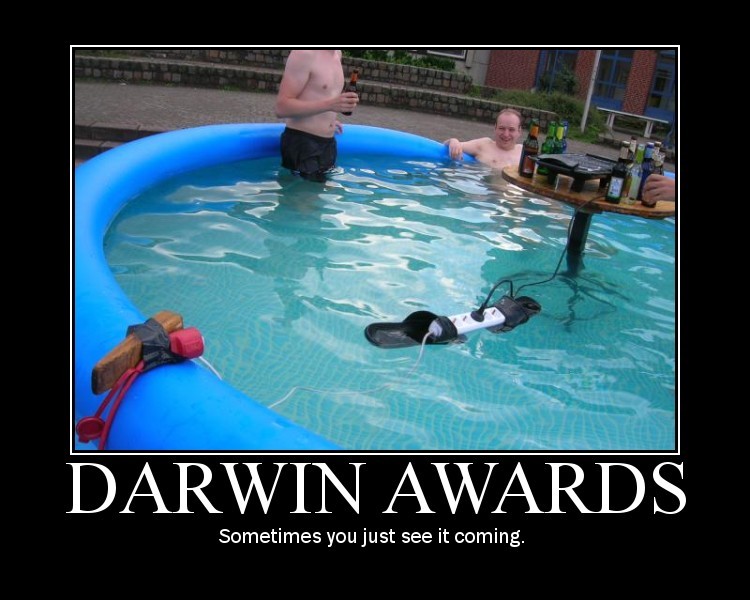
However, there are a number of things we can all do for our love lives, a sex lives, and everything in between that makes it better. There are personal experiences that demonstrate it and even scientific research that supports it. Some are just common sense, but anyone who is familiar with the Darwin Awards knows that’s not always sufficient.
With that in mind, I’d like to offer the wonderful readers of this site the simplest and easiest advice they’ll ever get. It’ll improve your relationship. It’ll enhance your sex life. It’ll make you feel better, overall. What is the magical method that does so much to help so many aspects of your personal life? It’s simple.

Get better sleep.

That’s it. That is a real, effective method for improving your relationships, be it with a long-time lover or a one-night stand in Las Vegas. There’s no need for expensive therapy. You don’t have to pay a guru or a life coach. For once, it really is that simple. Get better sleep and your love life will improve.

Now, in the interest of not sounding too obvious, there are some details here that are worth highlighting. In recent years, the importance of getting a good night’s sleep has been become more critical. A great deal of research has shown a long list of benefits that come with good sleep and an equally lengthy list of detriments for those who don’t get enough.

Good sleep helps you lose weight, alleviate illness, and recover from serious injuries. None of that is news to anyone, but I get the sense that people don’t appreciate the role sleep plays in a healthy romance and a good sex life. That role goes beyond work and afterglow, as well.

According to research published in the Journal of Psychosomatic Medicine, poor sleep can disrupt your emotions and not just in terms of being groggy in the morning. Managing and regulating emotions is core component of any functional relationship. Even those who don’t mind melodrama are going to get burned out from someone who can’t figure out whether they’re stressed, miserable, or pissed off.

It even goes beyond messy emotional exchanges. That same study also showed a link between poor sleep and depression. Considering how depression tends to dull passion of any kind, romantic or otherwise, it’s understandable how it can undermine a relationship.

It’s even more understandable in terms of how it hurts your sex life. In addition to depression limiting your capacity to get in the mood, it also creates situations where people use sex as a band aid instead of a basic emotional expression. I’ve seen this happen before with friends and relatives. They try to use sex as an anti-depressant. It can offer temporary reprieve, but it does little to resolve any actual issues.

Then, there’s the simple logistics that a lack of sleep will create. If your lover is on a different sleep schedule than you, then that makes spending time together a chore because one of you is going to be groggy. Whether it’s due to work schedules or one person being a night owl, love can only do so much when a couple is rarely rested at the same time.

This goes beyond just being restless and buying overpriced lattes. A lack of sleep can actually cause damage to the brain. Sleep is supposed to be the time when your brain heals and refreshes itself after a long, arduous day. If it never gets a chance to heal, then that could impact everything from your memories to your emotions to your genitals.

Yes, a lack of sleep does have sexual side-effects. For men, it lowers testosterone, the magically masculine hormone that drives a significant part of the male libido. It effects men whether they’re gay, straight, bisexual, or trans. When your hormones are off, your sex life will suffer. It can even lead to erectile dysfunction, which is sure to compound that nasty mood I mentioned earlier.

Women experience a similar effect as well. On top of research showing that well-rested women tend to have more sex, a lack of sleep can make it significantly more difficult to achieve orgasm. At a time when women are already already dealing with an orgasm gap, this certainly doesn’t help. Even with adequate sleep, a lack of orgasms can hurt any relationship.

Again, a lot of this is common sense, but for those looking to improve or maintain their love lives, it may seem too common. It goes against the standard romantic narrative that two people in love always have to be doing something. They always have to be off going on adventures, working hard every hour of every day to stay in love, have great sex, and grow together.

While there’s certainly a place for that kind of effort in a relationship, it doesn’t have to come at the cost of a good night’s sleep. If anything, a couple sharing a restful night in bed together should count as an act of genuine romance. It doesn’t even have to come after sex or even involve nudity, although couples who sleep naked do enjoy added benefits.

Ideally, good sleep shouldn’t just be a byproduct of a quality romance. It should be part of the process. It could be as easy as communicating with your lover how much sleep you need, when to do it, and what helps you feel most rested. It may sound mundane, but these are little things that real loving couples often overlook.

One of my old college roommates actually got sleep down to a science. He and his girlfriend made a genuine effort to line up their sleep cycles so perfectly that I could pretty much set my watch to when they would turn in. It wasn’t always romantic, but I can’t argue with the results. They were together that entire semester and I rarely saw them in a bad mood.

Most people, whether they’re in a relationship or not, are willing to put in the work to make romance work. They’re just as willing to listen to gurus, pop pills, and read sexy stories to improve their sex lives as well. While I try to do my part with the sexy stories I tell, I think it’s ironic that just getting better sleep rarely comes to mind.

Even if it makes too much sense, it’s probably the easiest way for anyone to improve their relationship. We already know how to sleep. Most of us relish the opportunity to get more. If more sleep means better sex and quality romance, then it more than warrants a higher priority in our intimate efforts.

After all, a good lover is a well-rested lover.

Leave a comment

Filed under gender issues, human nature, Marriage and Relationships, psychology, romance, sex in society, sexuality

Prison Or Brain Hacking? A Choice That May Shape Our Future

fajb_brain_hacking_01_sep2012

How does a civilized society deal with its least civilized individuals? This is a question that every society has had to answer, going back to the hunter/gatherer era. We live in an imperfect world full of imperfect individuals. Some are more imperfect than others, so much so that it’s not always possible to reform them into functional members of society.

Most people who commit crimes are not monsters, nor are they sadists who get their joy by torturing the innocent. A vast majority are just people who find themselves in bad situations where they make wrong decisions, exercise poor judgment, or lack impulse control. For these people, fines and brief imprisonment are usually sufficient.

For those who become career criminals, neither respecting the law nor seeking to abide by it, the current system is woefully inadequate. It’s part of the reason why criminal justice reform has become a hot topic. We’re finally learning that throwing people into prisons where they’re dehumanized, degraded, and tortured doesn’t help them become productive members of society. Go figure.

There’s plenty of room for improvement. Some countries have demonstrated that there are more effective, more humane ways to treat criminals. However, even those systems have their limits. As long as human beings remain an imperfect species, we’ll still have to deal with these deviant, violent, and inherently dangerous individuals.

For the moment, our options for dealing with these people are few. It primarily involves incarceration or intense therapy, often coupled with drug therapy. While this can be helpful to some, there are severe limitations. Some individuals don’t even want treatment and even those who are caught don’t always respond.

With that in mind, allow me to present a not-quite-hypothetical scenario. What if, instead of prison or therapy, we gave offending criminals an option to undergo an invasive treatment that affects the primary source of their deviant behavior in the brain? Jail is still an option for those who aren’t keen on messing with their brain wiring, but for certain people, an alternative is an alternative.

What I just described is one of those concepts in which the science is there, but the technology and the courts haven’t caught up to it. I know whenever I talk about emerging technology, be it sex robots or artificial wombs, I venture pretty far into speculation territory. Some of these advances rely on science and tools that don’t yet exist. This isn’t one of those cases.

In July 2018, the Journal of Neuroscience published a study revealing that targeted stimulation of the prefrontal cortex reduced aggressive tendencies in test subjects. Before you start getting fever dreams of mad scientists strapping people to gurneys and sticking wires in their ears, you can rest easy. This isn’t the kind of electroshock treatment that find their way into one too many horror movies.

These treatments have ground-breaking implications. They prove that it’s possible to temper or mitigate certain behaviors in people. The study doesn’t specify the limits of the effects or if it can be applied to something other than aggressive behaviors. It’s still a proof of concept and one that could compound the impact of other emerging technologies.

We already have tools like CRISPR that allow us to tweak our genes. We also have companies like Neuralink that are actively working on implants that could fix, augment, or expand our brain capacity. While men like Elon Musk and Ray Kurzweil often discuss these advances within the context of keeping humanity on pace with artificial intelligence, there will likely be some interim uses for these technologies.

Tempering violent behavior in people with significant cognitive impairments is just one possible use, but one that has the potential to change how we think about crime and punishment. Think back to those people I mentioned earlier who just inherently violent. They can’t manage their emotions or control their anger. They don’t think before they act and some don’t even feel guilty about what they do.

Like it or not, these people exist. I’ve known people in my life who have terrible impulse control and fly into a rage over the smallest things. Some of those people have had issues with the law and I often see in them a sense of never-ending frustration. Many don’t like that they have these issues. A few have tried to get help, but it doesn’t always work.

I suspect that if some of those people were given a chance to treat their tendencies with targeted shock therapy or a brain implant, they would jump at the chance. Deviant tendencies aside, they seek some level of function in their lives. If tweaking their brain is the difference between prison and freedom, then they’ll take that risk.

Turning people who might have been unrepentant psychopaths into productive, non-violent members of society is an objective good. The technology to do just that is not that far off and more study could help us refine the process, so much so that prison might be less necessary in certain cases. Given how expensive it is to imprison people, it’s an alternative worth pursuing.

Along with that undeniable good, however, there are plenty of potential dangers. Anyone who has ever seen one too many psychological thrillers or just read “One Flew Over The Cuckoo’s Nest,” can easily imagine how this kind of technology could be abused.

Tempering someone’s violent behaviors is all well and good, but why would it stop there? The brain is capable of all sorts of behaviors, deviant and otherwise. Say a society determines that other non-violent behaviors, be it sexual promiscuity or binge-watching Netflix for too many hours, are not socially desirable. What’s to stop them from imposing this on their citizens?

Some countries probably already fantasize about technologies that enable them to directly pacify their citizens, rendering them weak, passive, and easily manipulated. In his famous novel, “1984,” George Orwell called these people proles. However, in the book, the deviants had to be tortured and re-educated. If Big Brother had access to this technology, it would be a simple medical procedure.

That has plenty of terrifying possibilities for abuse. What if someone uses brain stimulation to prevent people from having homosexual urges? What if someone uses it to treat those who identify as transgender? There’s no evidence that the techniques in the study would work on that, but there’s no evidence to say it’s impossible.

Its use will definitely be controversial. That much, I’m certain of. It’s not advanced enough to become a legitimate treatment for anything. At the moment, direct brain stimulation is utilized for a specified set of conditions and it’s often a last resort. Using it on healthy people who just want to cull their violent urges is uncharted territory.

Whether it enters the picture for criminal justice reform is anyone’s guess, but if the process works, someone who has dealt with one too many repeat offenders will try to use it. From there, the precedent will be set. It’s hard to say what form it’ll take, but it’ll take society into uncharted territory with respect to controlling our minds.

Perhaps, at first, the process would be voluntary and only be presented in conjunction with jail or some other treatment. It’s also possible that the courts will determine a strict set of criteria for when the state could force this treatment onto someone. There are probably a few repressive governments who would try to use this on an industrial scale. I won’t say they’re names, but most people know who they are.

Like any emerging technology, there are risks and rewards worth considering. We stand to benefit greatly by having a society with as few violent individuals as possible. We also stand to lose a great deal if we allow misguided authority figures to determine how we use this technology.

I’m not qualified to determine whether or not someone should have their brain hacked. I don’t know that anyone is. However, I also don’t deny that the human brain, as magnificent as it is, has plenty of flaws. We should go about fixing those flaws, especially in people who are disproportionately impacted by them. We just have to be very careful about how we manage it.

Leave a comment

Filed under futurism, human nature, psychology, sex in society, Sexy Future, Thought Experiment

Daily Sexy Musings: Underneath Our Clothes

truly20feeling20good20

The following are some of my sexy musings to help start your day, among other things. Enjoy!

We’re all naked underneath our clothes. Thin layers of fabric separate modesty from obscenity. We go outside every day, knowing that our most private areas are protected only by the attire we choose. We never give it a second thought, but we cover ourselves, as though exposure will bring us irreparable harm.

We come out of the womb blissfully unaware of all taboos. We simply seek warmth from the elements and nothing more. There is purpose to covering ourselves, but it gets lost as we grow into a world afraid of its own reflection, aghast at what the sight of our bodies may evoke. Is it out of fear? Is it out of uncertainty as to how we’ll react? We don’t know, but we never bother to ask.

Perhaps it’s because it makes us horny, wanting sensual experiences that go beyond what society deems appropriate.

Perhaps it’s because it makes us complacent, realizing that every person is equally vulnerable at the end of the day. No matter their race, creed, wealth, or status, they are as frail as any animal in the wild.

Perhaps it’s because it reminds us that we are conditioned to avert our eyes, avoiding vanity and the thoughts that go with it. There is danger in self-obsession, large and small. How are we to function when we are too captivated by our own beauty?

At the end of every day, we are still naked. Our skin, genitals and all, are there for us to see. We cannot avoid them. We can only make excuses, but never valid reasons. The mirror still reveals everything, unfiltered and unobscured. Dread it or embrace it. One will bring acceptance. The other will only bring more excuses.

Leave a comment

Filed under Daily Sexy Musings

Lessons In Mental Health And Outrage Culture From “Daria”

hulu0d894330f-d10c-4641-ac8a-787dd3a5b6ac

How does anyone stay sane in this day and age? Between fake news, outrage culture, alternative facts, and the everyday struggle to survive in an economy being subsumed by tech companies, I don’t blame anyone for being a bit uptight. I envy anyone who can step back, see the bigger picture, and retain their sanity.

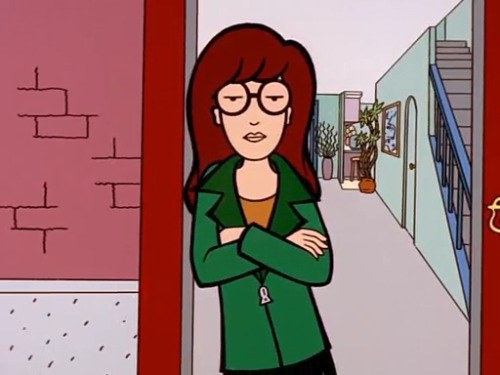
For some, it takes a special kind of strength, perspective, and mental toughness to deal with the totality of the absurdities in this world. Then, there’s Daria Morgendorffer from her remarkably-ahead-of-its-time TV show, “Daria.” When it comes to maintaining a level head while surrounded by the insanities of the modern world, she’s in a league of her own.

I’ve made my love for “Dariaknown before. I’ve even shared my excitement on the prospect of a new series. Every time I make the mistake of watching the news for more than two minutes, I find myself wishing I had her nuanced perspective. It’s part of what makes her character so enduring. She’ll see things for what they are, tell it like it is, and offer revealing insights along the way.

Earlier this year, research from Clinical Psychological Science indicated that mental health issues are on the rise among young people. Every day, it seems, a new mental ailment emerges from the evolving media landscape. While mental health issues can be serious, they can also be subject to plenty of absurdities.

As it just so happens, one of my favorite episodes of “Daria” tackled this issue in a way that’s more relevant now than it was back in the early 2000s when it first aired. The title of the episode is called “Psycho Therapy” and the lessons it offers are worth learning.

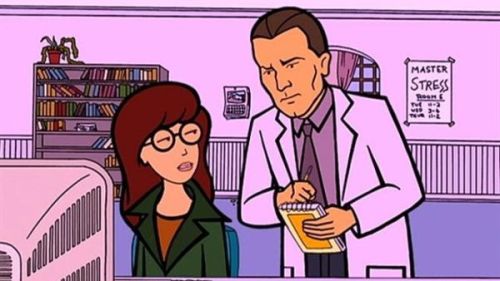
The synopsis of the episode is fairly basic. Daria’s mother, Helen, is up for a promotion. However, before the law firm she works at can consider her, she and her family are sent to a psychiatric center for personality evaluations. Hilarity ensue, but it’s Daria who ends up making the most astute observations, more so than the doctors on hand.

When Daria and her family first arrive, the staff is most concerned about Daria. Considering how she answered her survey with her trademark sarcasm, that’s understandable. However, when the doctors start to evaluate her and her family, they learn something remarkable.

Compared to everyone else in her family, she’s the most mentally stable. Even if you’ve only seen a few episodes of “Daria,” that should be pretty jarring. That’s not to say that she’s the picture of mental health, but according to the doctors in the episode, she’s the most well-adjusted. These are the exact words of Dr. Jean-Michael to Daria.

Dr. Jean-Michael: Daria, I was afraid you had some rather deep-seated problems. But I must say, you’re remarkably well adjusted considering…

Quinn: You’d think someone would’ve invented eye liner before me.
But no, I, Cleopatra, have to come up with all my beauty products on my own.
Oh, what a hard life.

In Quinn’s defense, she was hypnotized when she went on that incoherent ramble. Then again, Quinn Morgandorffer is probably the least defensive character in the show and would probably benefit from a healthy bit of therapy.

What makes this assessment more revealing is just how much Daria is surrounded by intense personalities, so to speak. I won’t go so far as to say these personalities are on par with mental illness, but they certainly walk the line. While that’s part of what makes these characters interesting, it also highlights an important concept that Daria Morgandorffer embodies.

At her core, Daria is a hardcore realist. She’s not a nihilist, a social constructionist, or an existentialist. She’s someone who sees both the surface and the forces just below that surface. From there, she makes a cold, calculated assessment that is devoid of needless emotional breadth, unless you count the sarcasm.

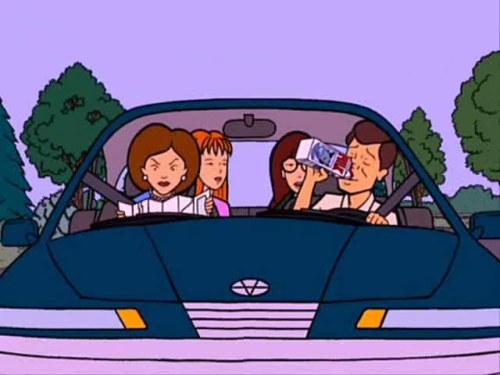
This is how she’s able to effectively break down the mental quirks of her parents, Jake and Helen Morgandorffer. Throughout the series, their relationship goes through a lot of atypical stresses. Just check out Season 3, Episode 10, entitled “Speedtrapped” for a clear depiction of those stresses.

On top of that, they both have some fairly eccentric personality quirks. Her mother is an incredibly high-strung, career-obsessed woman who constantly worries about how “normal” both her daughters are. Her father is an overly-dense, exceedingly histrionic man who always seems like he’s in the middle of a mid-life crisis.

Even a professional would have trouble making sense of their mental state. Daria does it in just a few short sentences.

Daria: Mom’s resentful that she has to work so hard, which obscures her guilt about actually wanting to work so hard. Dad’s guilty about being less driven than Mom, but thinks it’s wrong to feel that way. So, he hides behind a smokescreen of cluelessness.

Behind the heavy monotone and light sarcasm, this shows that Daria knows her parents. Given how they behave throughout the episode, she demonstrates that she actually knows them better than they know themselves. There’s even a scene towards the end of the episode where they try to mimic one another. It ends up getting pretty dramatic for everyone, except for Daria.

Helen: I mean Dammit! I lost another client! I can’t understand why! Dammit! Nobody likes poor old Jake. Should I think about the reason? Oh, must be my father’s fault. Where’s the newspaper, dammit!

Jake: Let me bring home the pizza. I have to be the one doing everything so everyone will thank me and tell me what a big superwoman I am. I’m very, very important and very, very stressed and I don’t have time to actually do anything for anyone else, but I can pretend I care, can’t I?

This is some pretty brutal honesty, even by “Daria” standards. They reveal some pretty unhealthy sentiments that probably need more than just advice and therapy. They reflect many of the quirks and side-plots that Daria’s parents experience throughout the show with Helen constantly obsessing over her career and Jake obsessing over whatever is stressing him out at the moment.

Daria’s ability to sift through all that and make a clear, honest assessment is both remarkable and refreshing. Even though these are her parents, she doesn’t pull any punches. Moreover, she doesn’t make any value judgments either. She doesn’t take sides or show scorn. She’s just tells it like it is. She says what the audience feels and does it in that lovable, monotone sort of way.

Her being able to make that assessment is profound. Doing so while maintaining mental stability is just as amazing. The fact she can maintain this perspective around personalities that range from ditzy cheerleader types like Brittney Taylor and touchy-feely teachers like Timothy O’Neill show why Daria is the emotional anchor of the show.

Back in the early 2000s, Daria’s knack for being level-headed while surrounded by so many bizarre characters made for great entertainment. Today, it acts as a radical departure from how we make sense of a world where every news clip, viral video, and hashtag is measured by the emotional outburst it triggers.

What Daria does in “Psycho Therapy” is something that has become far less common with each passing year. She makes a clear, concise assessment of other peoples’ behaviors and attitudes without casting judgement. She doesn’t whine about other peoples’ shortcomings or bemoan misguided efforts to treat them. She just points out the cold, hard facts and lets them stand on their own merit.

Contrast that with how every comment about someone, whether it’s in person or online, is laced with value judgments. You say you like video games and immediately, you’re judged as this angry fanboy who rages whenever someone dares to significantly change a particular aspect of your game. You say you’re a feminist and immediately, you’re judged as a man-hating bitch who blames men for every single ill on the planet.

It’s not enough to just have an opinion. It’s not even enough to have personal likes or dislikes. Everything you do and why you do it has to be an indictment on your politics, your identity, and the society around you. That’s not just misguided and judgmental. It’s mentally exhausting.

Being constantly judged, online and offline, every hour of every day is sure to be stressful. It’s no wonder why it seems as though more young people are development mental health issues. Daria may seem like the most unhappy person in her show, but compared to what some people deal with in the real world, she’s a picture of sanity.

At the end of the episode, it’s not Daria’s choices that lead to the resolution. All she does is provide commentary. It’s Helen and Jake, her emotionally convoluted parents, who chart their own path. That kind of lesson wasn’t as necessary in June 2000 when this episode first aired, but it’s one worth re-learning today.

2 Comments

Filed under Daria, gender issues, human nature, nihilism, psychology

Masculinity, Mourning, And My Recent Loss

1

How is a man supposed to mourn when he’s lost someone he really cares about? That’s not a rhetorical question. I’m asking because it’s a question I wish I could answer. It’s also a question that I’ve been struggling with over the past week or so.

Recently, I got the sad news from my father that my grandmother had passed away. I’ve been debating on whether or not I should talk about it on this site. I know people don’t come here to hear about my personal crap. They would much rather talk about upcoming superhero movies, sex robots, and double standards.

However, I’ve since concluded that this is something I need to share, if only to help me cope. Without getting too much into the personal details, this loss really hurt. I was very close to my grandmother. She was a big part of my life for as long as I can remember and just referring to her in the past tense is a strange and distressing feeling, but one I knew I would have to face eventually.

I even knew it was coming sooner rather than later. My grandmother’s death did not catch anyone by surprise. She was in her late 90s and had been dealing with a lot of health problems over the past four years. The past several months have been especially bad, but I still visited her regularly, hoping to boost her spirits.

Now, the idea that I can’t visit her ever again is really hard to process. My grandmother was one of those special individuals whose presence just made everything inherently better. Even with her declining health, she never lost that amazing spirit. She lit up the room and she enriched my life in ways I can never put into words.

Mourning her has proven to be one of the biggest challenges of my adult life. I understand that this is the natural order of things. I know that loved ones eventually die, especially those who lived long, fruitful lives like my grandmother. That doesn’t make it any less painful.

In dealing with it, though, I find myself contemplating things about mourning that I didn’t expect. Some of it involves my own personal issues. Others involve a bigger issue that I feel is worth exploring, even as my current emotional state is so raw.

There are a lot of things I didn’t learn from school, parents, siblings, or peers that I wish I had while growing up. Chief among those things is coping with loss. It’s not that nobody tried to teach me those skills. It’s not like there was a course in it, either. I just never made much effort to learn them. In fact, I feel as though I avoided them outright.

Some of that might just be a result of me being more reserved. Most people who know me can attest that I tend to swallow certain feelings more than others, especially when those feelings come from real emotional anguish. I’ll sob, I’ll shed tears, and I’ll let my voice crack under the strain. I’ll try not to let it go beyond that, though.

It’s not something my family and friends pressure me to do. However, there are times I feel as though that’s what a man is supposed to do. While I don’t like attributing things to gender stereotypes, especially when double standards are involved, this is one instance where I fall right into a specific masculine archetype.

I freely admit that I don’t always express my emotions very well. I’m more inclined to hide them and hold them in. I even try to avoid them, hoping they just go away with time. That may work for some minor emotional upheavals. It doesn’t work quite as well when you’re dealing with a heavy personal loss.

That limited ability to express emotions very well has been really glaring since I got the news. I remember not reacting too strongly, but wishing I could. I remember being at a total loss, but wishing I weren’t. There were so many things I wanted to express and articulate, but couldn’t. I can honestly say that I’ve never been at such a loss before.

At that moment, being a man felt like being shackled to something. It was like trying to cross a river with heavy weights on my ankles. Even when sitting alone in my room with no one to judge me for how much emotion I showed, I still found myself at a loss. I knew I was feeling something hard, but I just didn’t know how to express it.

I’m not saying that inability is entirely attributed to me being a man. I can’t speak for all men, but I can attest on a personal level that I do feel pressure to put on a tough face when confronted with painful emotions. To do otherwise just seems contrary to what it means to be a man and maintain a masculine demeanor.

I know that sounds like I’m blaming my gender for my shortcomings, and maybe I am to some degree, but I find myself wishing that the processing of painful emotions didn’t carry these gender-based standards. Yes, there are some men who are every bit as emotionally expressive as most women, but those kinds of tendencies aren’t encouraged or celebrated. In some cases, they’re scorned.

I don’t blame women or women for that stigma. I get the sense we’re all responsible for propagating those standards, albeit indirectly. The idea that showing certain emotions isn’t manly while not showing enough isn’t womanly feels like an unnecessary burden that we place on ourselves, one I just learned is heavier than most.

While I don’t feel like men are mocked as much for showing their emotions as they were in the past, I still find myself struggling. It’s as though I had the opportunity learn how to deal with these painful feelings when I was growing up, but was pressured to not take advantage of them because doing so would reveal a personal weakness.

As misguided as that sentiment might have been, I’m still responsible for making those choices. I don’t deny that when it comes to knowing how to deal with losses on this level, I’m behind the curve. I’m very lucky that I have so many wonderful family, friends, and relatives who have been there for me every step of the way during this process. I don’t think I could’ve handled this as well as I have without them.

I just wish being a man didn’t make it inherently more difficult. Again, this is just my own experience and I can’t speak for all men. Maybe mine is an anomaly and my limited coping skills have more to do with my own personal issues than my gender. Whatever the case, this loss has revealed a lot about being a man and dealing with emotions.

I’m really going to miss my grandmother. I loved her a great deal and the idea of living life without her in it is still hard to wrap my head around. I intend to push forward, though. I know that’s what she would want. That’s what all our loved ones ultimately want once they’re gone.

Even if they can’t be in our lives anymore, we can still move forward with the strength their love gave us. To all those out there who have suffered a loss, I encourage you to take comfort in that strength. To my grandmother, who I’ll miss dearly, I thank you for showing me just how much strength there is in love.

12 Comments

Filed under gender issues, human nature, Jack Fisher's Insights, psychology

The When, How, And Why Of People Who “Snap”

an-alarming-signs-that-your-boyfriend-is-mentally-unstable-5-min-1024x712

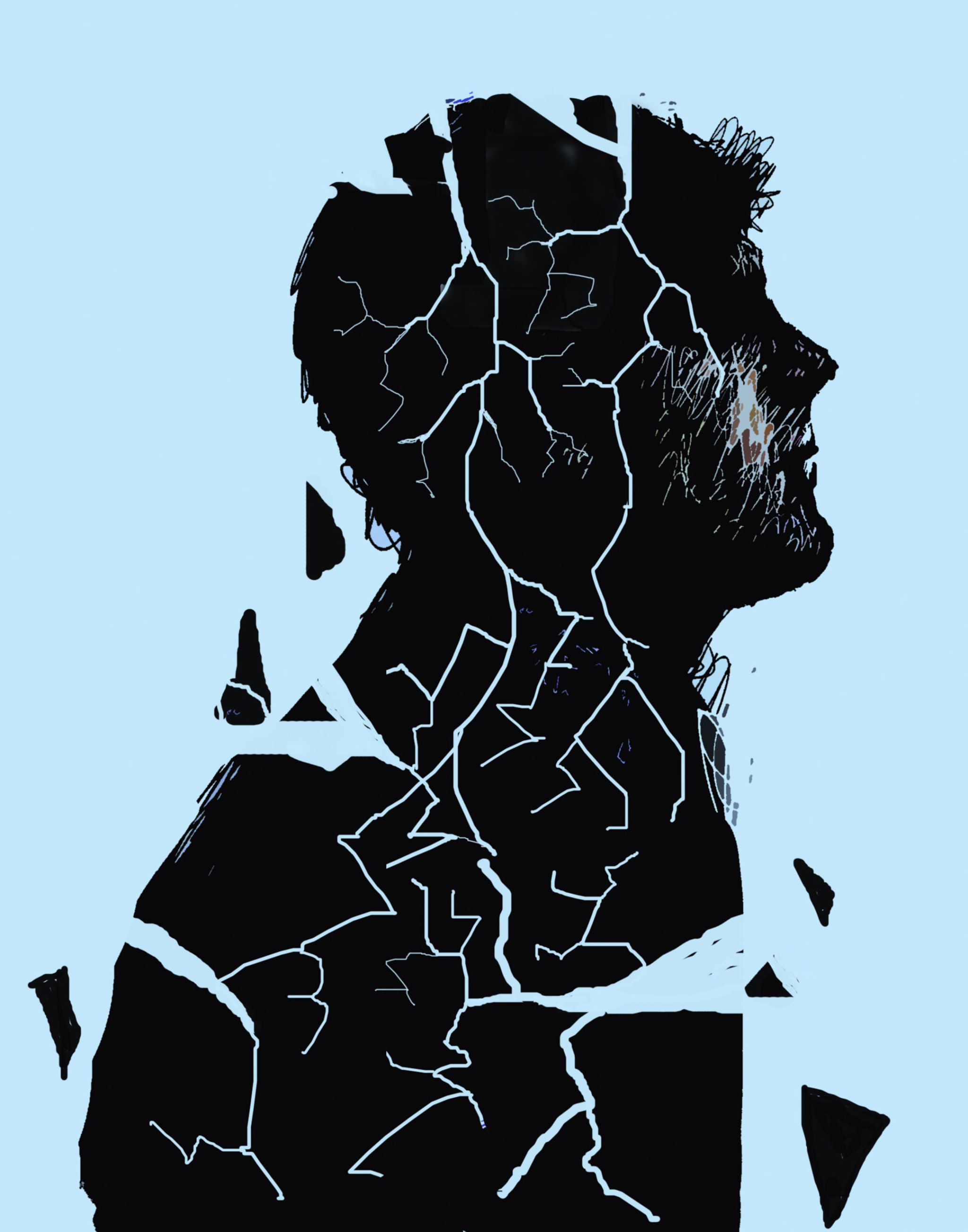
Have you ever been so upset and so distressed that you felt like you were going to just lose it? Your ability to process emotions, as well as your grip on reality, is hanging by a thread and that thread just gives way. You don’t know what’s going to happen, but something inside you just shatters and there’s no going back.

There’s no scientific term for that sort of state, but it’s something many in the scientific and non-scientific fields love to analyze. Chances are many of us feel like we approach that precarious state at some point in our lives. Only a handful of people ever cross that line from just feeling like they’re going to lose it to actually losing it.

We often say those people just “snap.” It’s not a very scientific description, but I’ve yet to find one more fitting. I won’t try to invent some fancy term for it, as I’ve attempted before. It’s just something I want to talk about because it reflects a dangerous extreme of the human condition.

It’s a scary, but fascinating phenomenon, understanding what happens to people who snap and how they got to that point. When I was in college, one of my favorite classes was a course called “Abnormal Psychology.” Only a small part of it dealt with those who snapped, but that part often generated the most discussions in and out of class.

I say it’s worth discussing outside a classroom. I would go so far to say that it’s more pressing now than it has been in recent years, if only because it’s easier for people who snap to make the news. Thanks to the rise of smartphones and social media, it’s possible for someone who snaps to make the news before they’re even done snapping.

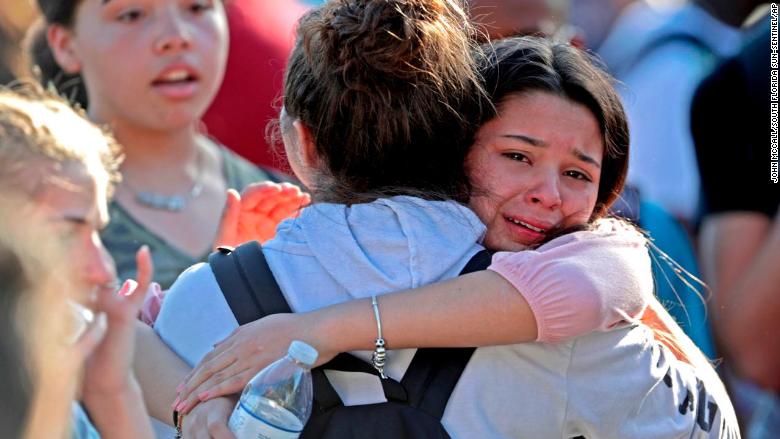
The Columbine shooting was a terrible story involving two very disturbed teenagers, but it happened in 1999. Unless you were near a TV, chances are you didn’t hear about it until it was over. Compare that to the shootings of Sandy Hook and Parkland. Within an hour of the shooting, it began trending on social media. We can basically live-tweet the act of someone snapping violently.

While I’m sure that will generate some frustrating discussions about the role social media plays in our lives, I want to focus on the people who experience these mental breakdowns. The act of someone snapping has been going on long before social media. Even when it doesn’t happen all at once, mental illness is well-documented in various historical figures.

Seeing as how there are over 7.6 billion people on this planet and growing, the confluence of numbers and time ensure that someone will snap again at some point. Whether or not it trends on social media depends on a whole host of factors that aren’t relevant to the discussion.

Given that inevitability, it’s worth assessing and even speculating a bit on what leads someone to that point. That’s more difficult than most insights into the human mind. There is some science into what happens to someone when they have a “nervous breakdown.” I consider that similar to snapping, but I think those kinds of breakdowns are the next to last step in a much more damaging process.

You can recover from a nervous breakdown. There are even recovery programs for it. Once someone snaps, something fundamentally shatters within their psyche from which there is no full recovery. For someone to carry out a mass shooting or a horrific crime, someone’s mind crosses a proverbial point of no return. What that point is varies from person to person, but the effects are just as devastating.

With respect to what pushes someone to that point also varies and is almost impossible to study in a scientific context. Until we can actually map and interpret the trillions of signals operating in someone’s brain, which we are working on, we can’t know for sure. Since we are all human, though, we all have some insight.

Now, I’m not a scientist, but I am an avid user of Reddit. In the interest of compiling insight, I asked for input on what other people thought made someone snap. As usual, Reddit provided a wealth of responses thanks to subs like this one, this one, and this one.

Many offered plenty of ideas, theories, and anecdotes. I won’t say there was an underlying consensus, but there were plenty of common themes. They included factors such as mental illness, alienation, isolation, depression, despair, and overwhelming anger. Some posters made especially insightful posts. Here are just a few.
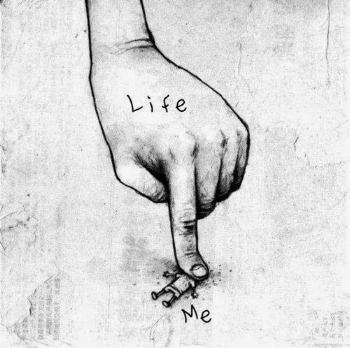
You snap when the weight you carry is heavier than you can bear, and you see no better alternative.

Duty is heavier than a mountain. Death is lighter than a feather.

It is calculated response. Some people look ahead in their lives and see 60+ years of quiet desperation, insignificance, loneliness, banality, and suffering ahead of them. They are willing to give up all of those years for 15 minutes of being the MOST IMPORTANT PERSON in the room. The gun means they can’t be ignored, the attention they have been starved of is showered on them. And they will get talked about for months, maybe years to come. Something they don’t see as possible by any other action.

Disconnection, alienation, circumstance, depression, hatred. We’ve all felt like outsiders at some time, or put upon, deprived, taken from or taken advantage of, hopeless, in emotional pain so bad it hurts physically. We’ve all had those thoughts of, “I wish that person were dead,” or “fuck everyone,” or “I’ll get them back,” or “life isn’t fair.” But 99.9999% of us don’t ever act on that and as we mature through adolescence we learn to deal with these emotions and problems. We learn to work on ourselves, we learn perspective and that these things pass, we learn not to let others affect us to such a degree – or hopefully we do. Now imagine someone is dealing with this as a vulnerable teen, but 10x as bad as what any of us has dealt with, with maybe some greater tendencies towards mental illness, or narcissism, or anger management.

I think there’s a kernel of truth within these responses, as well as a few oversights. Someone who snaps is someone on a very specific path. Sometimes it’s one they choose, not knowing where it will lead. Some choose that path on purpose because they have sadistic tendencies that they seek to push. Eventually, they cross or are pushed beyond a threshold that just breaks them.

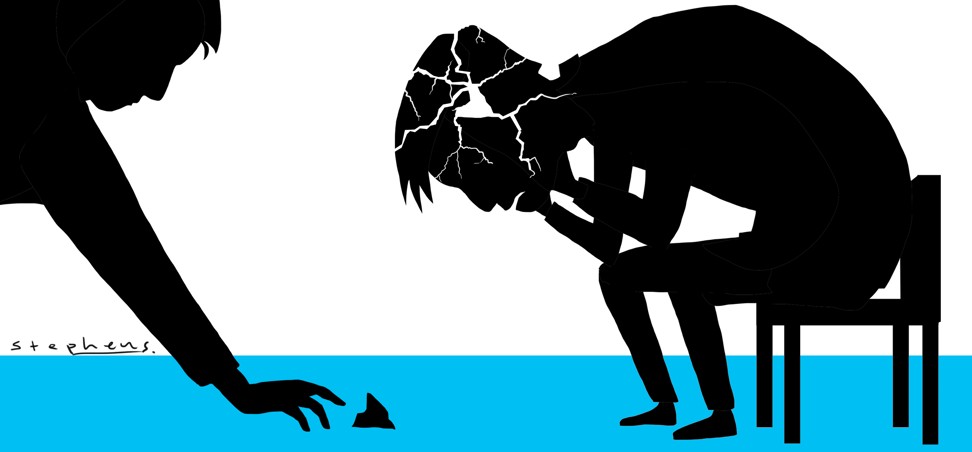
To some extent, we can think of the human psyche as one of our bones. Bones can and do break, but nature has made them pretty strong out of necessity. Some peoples’ bones are stronger than others and some get weaker over time. Put them under sufficient stress, though, and they fracture. Put too much stress on them all at once and they snap.

The human brain is more complex than a bone, but the principle is the same. It has a system for regulating stress, emotions, and pain. The system is more robust in certain people than it is for others. Those with mental illness are like those with osteoporosis in that their systems are weaker than others.

Just straining that system can be damaging. While the human brain is uniquely adaptable, too much strain too quickly can overwhelm that system. Once in that broken state, everything that usually keeps someone in check goes out the window. That’s how you get someone who has eruptions of violence, descends into self-destruction, and endures irreparable mental scars.

To complicate matters even more, which is saying a lot for such a sensitive subject, there were a few other factors that my Reddit posts brought up that may compound this process. A few posters brought up the effects of kids being over-prescribed drugs like Ritalin to fix behavioral problems.

Now, I was never on these drugs, but I did know a few kids who took them and I can attest that they have some pretty potent effects. While studies on this issue are inconclusive, it’s not unreasonable to suspect that tweaking a kid’s brain chemistry may incur some pretty lasting impacts.

Another complication that may end up being more powerful than drugs is the way our hyper-connected world just amplifies the stress that leads people to snap. While I won’t go so far as to say social media is causing people to snap, I think it can accelerate the process for those already on that path.

People already in a precarious state go online every day and see a world in which they feel left out or lost. They see others succeeding and feel it’s too late for them. They see others suffering and feel powerless to help them. They find themselves in hate-filled digital environments that only reinforce their sentiments. It makes the notion of snapping seem cathartic.

It’s impossible to know for sure just how big a factor drugs or media may be for those who end up snapping, but I suspect there are more than a few instances where it plays at least some part. Given the breadth and complexity of every individual person, I believe everyone who snaps does so only after a confluence of many factors.

When it does happen, it’s tragic for the person and their loved ones. It can subsequently manifest in some pretty horrific acts. Our current media landscape is sure to document such acts, sometimes to the point of being counterproductive. As bad as those acts can be, I do think there are reasons for hope.

That may seem outrageous after talking about such a sensitive issue, but I genuinely believe the potential for good outweighs the bad. Say what you will about the media, but by documenting those who snap, it brings attention to issues involving mental health care and how we confront hate.

I’m not saying more awareness will stop people from snapping, but it may help improve efforts to get to people before that moment comes. It is something we, as a functioning society, would be wise to work towards. Not everyone who eventually snaps can be saved, but if we can help those who can, I think it’s in their interest and that of their loved ones to help them.

Again, thank you Reddit for helping me write this article. I really appreciate it.

3 Comments

Filed under Current Events, human nature, philosophy, psychology

The WRONG Way To Deal With The Incel Phenomenon (And Ideas For A Better Way)

wallpaper-man-and-woman-at-sunset

When dealing with complex social issues, people have a frustrating tendency to propose solutions that cause more problems. Some of them are unintended and manageable. Some are just absurd and untenable.

I say that as someone who has stated before that complaining about a problem without pursuing a solution amounts to little more than empty whining. I’m in favor of confronting major issues, be they small-scale problems on a local level and bigger problems that may end up being an existential threat to the human race.

However, most reasonable people agree that attempting to solve a problem with a bad solution is akin to killing a fly with a machine gun. Even if it works, it causes plenty of damage and creates an entirely new set of problems that need solving.

This brings me to what I feel is the most asinine issue to emerge since religious zealots got needlessly outraged over the Teletubbies. I’m referring, sadly, to the incel phenomenon and believe me, it makes me miss the days when the Teletubbies were a problem.

I’ve mentioned it before and I’d really prefer to talk about less frustrating topics, but this is quickly evolving/devolving into an issue that isn’t going away on its own. People have started dying because of this phenomenon. Some depraved individuals are already being idolized because of it. This is not one of those things that will blow over after the next Kardashian scandal.

Before I go any further, I need to make clear that I do not think highly the incel phenomenon. It brings out the absolute worst in those who espouse it. I also do not associate incels with other movements involving men’s rights, gender equality, or any mainstream political ideology. These individuals are their own entity.

Their deplorable behavior and demeaning attitudes are solely on them. Their hatred, misogyny, and violent acts are not the least bit justified. I can only manage so much sympathy for those who identify as incel, given the recent news surrounding them. With all that being said, I’m going to try and be fair in addressing this problem.

As much as I abhor the ideology of self-identified incels, I don’t deny that they’re real human beings who are in a state of deep distress. I also don’t deny that their distress is painful to them. Others can call it pathetic all they want. To them, the pain is real.

This is a group of people who genuinely feel that they are the victims of a gross injustice. They see themselves as individuals who have followed all the rules that society has laid out for them. They believe themselves to be good, decent people who are worthy of sex, love, and intimacy. To them, the fact that they aren’t getting any of that is akin to denying a starving child food while donating meals to Bill Gates.

It certainly doesn’t help that popular culture has been selling us all the narrative for decades that being a nice person will get you the lover you want. Since kids, we’ve been led to believe that if we just follow the examples of our favorite photogenic heroes, we’ll get what we want. It always works out in the movies and on TV. Why shouldn’t it work out in real life?

Anyone with a passing knowledge of reality knows why that sentiment is dead wrong. We all have to learn at some point that we are not the heroes of our own story. Things don’t always work out. Life isn’t fair. Nobody owes you anything and the universe doesn’t give a wet fart about your feelings.

It’s a painful revelation, but for those in the incel movement, that pain is too much. It’s not that they haven’t gotten over it. It’s that they’ve given up. They call it “taking the black pill” instead of the red pill. Rather than the truth offered by “The Matrix,” the black pill is akin to just waving the white flag and conceding the battle to the machines.

In this case, though, the machines are the social conditions that ensure incels will never have sex, find love, or feel intimacy. Like sexual and romantic nihilists, they stop trying to navigate a world that they believe is actively working against them. They don’t try to change it or help it. They’re just left wallowing in their hatred and misery.

To some, it’s self-deprecating melodrama. I think it’s tragic. I even understand to some extent how certain people might look at the challenges before them, see how many forces are working against them, and not even try because the odds are so stacked against them. Whether or not that’s actually true doesn’t matter. This is their mentality and it’s a very damaging mentality.

It’s for that reason that the potential “solutions” some have set forth seem intent on either furthering that damage or exchanging one problem for another. One emerging “solution” comes in the form of something called enforced monogamy. It’s not quite what it sounds, but it still lends itself to a great many problems.

The logic, on paper, makes some sense. It posits that in a sexually free market, most of the women will only pursue the top tier of men. It works if you have the looks of Brad Pitt or the bank account of Warren Buffet, but for most everyone else, they’re left behind. As such, monogamy must be rigidly enforced and promiscuity significantly discouraged.

It could take many forms. People who have sex with one too many people could be taxed, fined, or jailed. People who refuse to marry someone could be required to do so. If someone doesn’t sufficiently perform they’re monogamous duties, then they’re subject to both condemnation and punishment. Whatever form it takes, the inherent flaws ensure this “solution” will only incur more problems.

Never mind the fact that human beings, as a species, may not be naturally monogamous. Never mind the fact that sexual monogamy is exceedingly rare throughout the animal kingdom. For the good of society and repressed incels, it has to be imposed and enforced. I’ll give everyone a minute to fume over that half-hearted effort at sarcasm.

In any case, this recourse requires that some segment of the population be oppressed to placate another. Historically speaking, that has never worked out. Sure, using the power of society to guide and/or micromanage sexuality might grant a little intimacy to those who wouldn’t otherwise have it. It will also significantly undermine the freedom and liberty of another individual.

It doesn’t just exchange one problem for another. Whenever society tries to micromanage peoples’ lives, it tends to collapse and not just because it fails the Boredom Filter. Human beings are complex and difficult to manage. Trying to manage the unmanageable is destined to end in failure.

While it’s doubtful that forced monogamy will ever gain favor in any society outside “The Handmaid’s Tale,” other less oppressive solutions have been put forth, relatively speaking. They largely center around legalizing sex work or hastening the development of sex robots.

While I’ve spoken favorably about sex robots and advocated the decriminalization of prostitution, I don’t think either would resolve the incel issue. In fact, I think it would make the situation worse.

Even if we all woke up tomorrow and discovered that prostitution was legal and sex robots were perfected, the incel phenomenon would still exist because those who identify as such would still feel like failures. Even if they had plenty of satisfying sex with prostitutes and sex robots, the fact they had to resort to those means would only affirm their failure.

On top of that, those working in prostitution who served them would probably be subject to stigma of their own. That’s on top of the stigma already associated with sex work. There would be a similar stigma on the manufacturers of sex robots or sex dolls, which has already drawn ire from sex-negative feminists.

In the end, not only will incels still feel angry and resentful, but those associated with this “solution” would have a reason to feel that way too. Given the breadth of that problem and the inherent flaws of the proposed solutions, is there any recourse that is both effective and tenable? I believe there is, but it’s not one of those solutions that’s simple, direct, and requires the passage or removal of a particular law.

The incel phenomenon was born of chaotic social issues that were further compounded by mass media and popular culture. Before solutions like prostitution and sex robots can even enter the conversation, the stigma associated with sex, both for the incels and those involved in sex work, must be confronted.

The idea that anyone who has too much sex or not enough sex deserves stigma is the primary driving force behind controversies surrounding sexuality. Whether it comes from uptight religious zealots or radical feminists, heaping stigma on someone else’s sex life is both damaging and demeaning.

Beyond confronting the stigma, it’s also important to educate those who identify as incels that it’s not entirely hopeless. They can still find love, sex, and intimacy. Part of that process, though, involves learning that they are not owed sex and they have to actually work for someone else’s affection.

That could come in the form of helping people develop better social skills. It could also come in the form of identifying those in the incel community that have legitimate issues with mental health. At the end of the day, they’re still people. Helping them should be prioritized over resenting them.

Re-shaping attitudes and teaching better social skills will be a slow, arduous process. People do have a nasty tendency to cling to their hate. However, it is possible to help someone overcome it. I believe most incels can be helped and are deserving of it. Only those who commit acts of violence should face such scorn.

This is not the kind of effort that one particular gender must take on. It has to be a collective effort, which I know will upset some who feel incels are an exclusive manifestation of toxic masculinity, a term I still contend is inherently flawed. We’re all still human, regardless of our gender. If some of us our suffering, then we’re still the one’s responsible for confronting it.

We can’t expect the incel issue to resolve itself. We also can’t expect those who identify as such to change just because others scorn, mock, or hate them. At some point, one side has to take a deep breath, be the adult, and confront the issue in a meaningful way.

Chances are it’ll get worse before it gets better. It’s also likely that both incels and those who despise them will hate dealing with the issues associated with them. However, that’s exactly why it’s so important to address. The longer a group of people remain at the mercy of stigma and self-loathing, the more suffering the world around them is likely to incur.

13 Comments

Filed under Current Events, gender issues, human nature, political correctness, sex in media, sex in society, sexuality

What Radical Feminists and Incel Men Have In Common

bandw-man-and-woman-arguing

Since I’ve been browsing the internet, I’ve tried to keep up with its assorted jargon, slang, and euphemisms. Given the rapid pace of technology and the uneven pace at which society adapts, it can be pretty daunting. There are times I feel like I have fallen behind. I still remember feeling foolish when I asked someone what a hashtag was.

While I make an effort to keep up, there are certain parts of net-based sub-culture that I prefer to avoid. I’m not just talking about Twilight message boards. I’m talking about the kind of domains on the internet where people who have genuine, in-need-of-help problems congregate to whine, complain, and otherwise compound their problems.

One such sub-culture that I’ve avoided talking about on this site or in general is that of the so-called incel community. For those of you who haven’t heard of it, and I envy those who had avoided it thus far, incel stands for “involuntary celibate.” In essence, they identify themselves as men who would like to have sex, but cannot because women and society at large has prevented this. It’s as crass as it sounds, but it gets much worse.

I would’ve been content to never even mention the incel community on this site. Then, a self-identified incel carried out a deadly attack in Toronto that killed 10 people and suddenly incels weren’t just in the news. They were a genuine danger. Since I try to discuss relevant topics on this site, be they sex robots or superhero movies, I’m going to grit my teeth and talk about this frustrating phenomenon.

It’s not just frustrating because it gives men, masculinity, and people with poor social skills a bad name. It’s frustrating because it’s so inherently pathetic and juvenile. Moreover, it’s something that has an ironic, but fitting parallel with radical feminism.

Yes, I know that sounds counter-intuitive. I also imagine there are some self-identified feminists out there who want to punch me through their computer screen. To those individuals, I ask that you restrain yourself for just a moment so I can explain.

Before I go any further, I want to make one thing clear. I do not associate radical feminism with more mainstream brands of feminism that, for the most part, are fairly reasonable in their rhetoric and sincere in their efforts. I also want to make clear that I do not associate the incel community with men’s rights activists, who are every bit as reasonable and sincere.

The incel community and radical feminists are extremists, plain and simple. They don’t even try to be reasonable. Like the extremists of a religion or political ideology, they cannot and will not be dissuaded. Their attitudes and conduct are built on a foundation of unceasing, uncompromising outrage.

This is where, ironically and fittingly, both incels and radical feminists intersect. They are, to a large extent, defined by their outrage. They despise a world that they feel has deprived them of something they deserve. They carry themselves as perpetual victims, trapped in a society that actively plots against them to keep them miserable.

You don’t have to look too far to see the similarities here. The incel community doesn’t even try to hide its blatant misogyny, just as radical feminists don’t even try to hide their overt man-hating. The targets of their hate are different, but the intent behind it is the same.

The hatred is a catalyst and a rallying point for those inclined to embrace more extreme forms of ideology. That hatred simplifies complex issues, allows them generalize large swaths of people, and believe without question that there’s a cabal of evil bullies actively plotting against them. They are basically the Alex Jones of gender conflicts.

It’s for that reason that few take them seriously, even within feminist and men’s rights communities. Even when a radical feminist claims all heterosexual sex is rape or an incel man claims that all women are sluts, they’re either ignored or written off as trolls. However, in wake of recent events, that’s getting somewhat harder.

Between the attacks in Toronto and the growing spread of outrage culture, both radical feminism and the incel community have many ways of making their voices louder and spreading their hatred. Like any extreme within an ideology, they will complicate or outright corrupt reasonable debate on reasonable issues involving gender.

I believe those issues should be discussed and I’ve tried to approach them on this site in as balanced a way I can, at least to the extent I can as a man and an aspiring erotica/romance writer. However, in the same way creationism obscures science, radical gender ideology obscures real gender issues.

It even goes beyond derailing otherwise important debates about relevant issues. In the one area where both incel men and radical feminists are most alike goes back to their attitudes. Beyond the hate and trolling, there’s one other trait that binds them. They embrace and cling to the idea of perpetual victim-hood.

Incel men believe they are victims of greedy, selfish women who refuse to give them the sex and intimacy they want. Radical Feminsts believe they are victims of a greedy, oppressive patriarchy that only exists to bully them and hold them back. In that context, they are always victims. They never have to claim a shred of responsibility. They can just blame their perceived oppressors.

That’s not just insulting to real victims. It’s flat out lazy. Incel men and radical feminists carry themselves as though other people must go out of their way to give them something, be it sex, justice, or reparations of some sort. They, themselves, don’t have to do anything. They just whine, complain, and shame others to get what they want.

I would call that approach childish, but that would be insulting to children. The absurdity of that mentality is impossible to overstate. However, and I think reasonable feminists and men’s right activists would agree, there are a few basic truths that we all must accept, regardless of our gender.

The universe is not fair.

Some people are born with more advantages than others.

Nobody owes you anything, be it sex or preferential treatment.

Respect, achievement, and merit must be earned and not given.

These are the simple, inescapable facts of life. We learn them at some point in our lives. Some take longer than others, though. What makes incels and radical feminists so similar, and so unworthy of respect, is how they utterly refuse to learn those lessons. As a result, they’re just setting themselves up for more frustration.

6 Comments

Filed under gender issues, human nature, political correctness, sex in society, sexuality

Why Wolverine Of The X-men Is The Perfect Counter To Toxic Masculinity

During a debate, the biggest challenge is making a point that strikes the right chords, evokes the right emotions, and has some semblance of logic. Anyone who has ever engaged in a meaningful debate, be it a formal contest or an argument on a message board, understands the extent of that challenge.

Sometimes, you have to get creative to make those points. Thankfully, getting creative for an aspiring erotica/romance writer and die-hard comic book fan is easier than it is for most people. Every now and then, your mind makes unexpected connections that perfectly encompasses the message you’ve been trying to convey.

This brings me back to “toxic masculinity,” a term I still believe should be retired from the English language, and every other language for that matter. I’ve dedicated multiple posts to deconstructing this concept. Now, I want to take it a step further.

I want to re-frame my stance on this concept by offering a different kind of argument. I’ve already argued that context and social situations are the primary driving force of the traits often ascribed to toxic masculinity.

I still think the point I made about context and social situation is difficult to grasp, even with the references to the rat park experiments. Most people outside of psychology buffs aren’t familiar with those experiments. Instead, I want to make my point by referencing a character that the vast majority of people have heard of to some extent.

Some know him as Logan, James Howlett, Weapon X, or that snarling guy with the claws who helped make Hugh Jackman famous. Most simply know him as Wolverine.

Yes, I’m going to bring Wolverine, one of the most famous male superheroes of all time, into a discussion about toxic masculinity, but not in the way you think. Being an ardent X-men fan who has used superheroes to make points in the past, I feel uniquely qualified to link this iconic character to this concept that so many resent.

On the surface, that sounds like a losing battle. Bear with me, though. When you take a step back and look at Wolverine in the context of masculinity, as a whole, you’ll find that he’s the perfect embodiment of a man who guts the idea of toxic masculinity with his claws and spits on its corpse.

That may seem counter-initiative because anyone who is even somewhat familiar with Wolverine might see him as a man who embodies all the negative traits associated with masculinity. He’s brutish, crude, ill-mannered, ill-tempered, impulsive, violent, and irresponsible. He has all those traits on top of a tendency to go after married women.

However, before anyone starts attributing those traits to toxic masculinity, it’s important to understand the complexities of Wolverine’s story. There’s a reason why he’s often ranked as one of the most compelling characters in the history of comics. His life, persona, and story are full of all sorts of twists and turns. More than anything else, though, Wolverine’s story is one built on dehumanization.

Whether it’s the comics, movies, are cartoons, this is the primary driving force of Wolverine’s story. From his earliest origins to his most defining moments, Wolverine is a man who has been subjected to extreme forms of dehumanization. Some of them, especially those involved in the Weapon X program that made him, have no real-world parallel outside the mind of a North Korean mad scientist.

He’s had his memories erased, his mind warped, his body tortured, and even his soul stolen by a demon. Even by comic book standards, Wolverine has been roughed up more than most. Many people of exceedingly villainous tendencies have tried to strip him of his humanity and turn him into a living, breathing weapon. Needless to say, most of those people died horribly.

As a result, Wolverine is one of the most violent and unpredictable characters in all of comics. He’s also one of the most dangerous, having killed every major hero in the Marvel universe at one point and survived death itself on more than one occasion.

The most remarkable feat though, which also happens to strike directly at the very foundation of toxic masculinity, is his continued desire to cling to his humanity and be the iconic hero that so many X-men fans love.

It’s that drive, and the endearing persona that emerges from it, that makes Wolverine the perfect counter-punch to toxic masculinity. Despite all these dehumanizing forces, he still clings to his humanity. That effort, which has played out in many comics, movies, and cartoons over the years, reflects one important concept.

In essence, Wolverine reflects the idea that it’s really hard to make a man behave in such a toxic way. In order for him to be the kind of man that most people attribute to toxic masculinity, it’s necessary to torture him endlessly, strip him of all identity, and undercut his humanity in the worst way possible. If that kind of force is required, then how can anyone claim that masculinity is inherently toxic?

If those sorts of traits were inherent in men, then someone like Wolverine wouldn’t need that kind of conditioning. He wouldn’t need to be tortured or coerced into being the brutish, blood-thirsty monster that Weapon X wants him to be. If toxic masculinity were valid, someone would just have to give him some metal claws, send him out into the world, and let the magic of testosterone do the rest.

That’s not how men work, though, even in the fictional world. In X-men comics, as well as real life, ideas of masculinity guide men in different ways. For Wolverine, those ways led him to becoming an X-men, an Avenger, and an iconic hero who helped make Hugh Jackman famous. It shows in more than just his heroism.

Throughout his history in the X-men comics, Wolverine has shown that when he’s not being coerced or tortured, he makes an effort to live an honorable life. He seeks love, having even married a couple of a times. He seeks friendships and relationships, some of which have helped make characters like Kitty Pryde and Jubilee famous in their own right. He basically tries to be his own man.

Even though he’s still an asshole at times, he’s an asshole in a way that’s gender neutral. The things Wolverine does that make him an ass are the same things that apply to women. Whether it’s going after someone else’s spouse, undercutting someone’s authority, or randomly running off to do his own thing, there’s nothing Wolverine does that a woman couldn’t also do.

That leads directly to what might be an even more compelling argument for Wolverine being the antithesis of toxic masculinity. That’s because there is a female character who shares many of Wolverine’s experiences and exemplifies the same traits. Those who saw the “Logan” movie last year already know where I’m going with this.

It’s his clone/daughter, Laura “X-23” Kinney. In a sense, she doubles down on the idea that these “toxic” traits are not inherently masculine because she endured dehumanization to a similar extent. In fact, her dehumanization was even worse because she wasn’t given a name, only a number.

Like Wolverine, being subjected to such dehumanization rendered Laura violent, impulsive, and callous. If she were male, then it would be easy for advocates of toxic masculinity to slap her with that label, just like Wolverine. However, her being female undercuts that argument from its very foundation.

Together, the character and story surrounding Wolverine and X-23 undercuts toxic masculinity by establishing that the toxic effects of dehumanization don’t apply to just one gender. Strip away someone’s identity, social support, and humanity and they’ll demonstrate more than a few toxic traits.

What this means in terms of the bigger picture is that those traits attributed to toxic masculinity have a larger context that goes beyond gender. These traits that are tied to certain male behaviors are correlated to one thing, but not necessarily tied to the actual cause. Being a man doesn’t make Wolverine who he is. Being a man who was subject to dehumanizing treatment did that.

Now, apply that to a world where the very idea of masculinity is being subject to all sorts of scrutiny. Joss Whedon went so far as to call certain masculine tendencies a disease when making excuses for his infidelity. By linking everything bad in the world to masculinity, it dehumanizes men by making them seem inherently flawed.

That’s the most insidious implication of toxic masculinity. It’s very much akin to the forces behind Weapon X in that it attempts to deconstruct a core part of someone’s identity, reducing them to a hunk of flesh to be molded for someone else.

Most men don’t want that. Most people, in general, don’t want that. It’s yet another reason why the idea of toxic masculinity needs to be gutted with adamantium claws, locked in an adamantium case, and thrown into the deepest, darkest pits of the real and fictional world.

5 Comments

Filed under gender issues, sex in media, sex in society, sexuality

No, Porn Is NOT A Public Health Crisis (But Our Attitudes About It Are)

porn-industry

In his book, “Sex and God,” which I highly recommend, author Darrel Ray tells a brief, but revealing story about the topic of porn addition. It goes something like this:

One day, an anxious and distressed man walks into a therapist’s office. He tells the therapist he’s addicted to porn. He spends no less than six hours a day watching, masturbating at least three times in the process. Needless to say, this habit has completely disrupted his life.

He struggles to hold down a job. He struggles to maintain a relationship. His porn consumption is so all-encompassing that it is a serious detriment to his day-to-day living. He desperately seeks help and the therapist listens intently, hoping to help this man overcome this issue and forge a healthier life.

The next day, another anxious and distressed man walks into the same therapist’s office. He also tells the therapist he’s addicted to porn. However, when the therapist asks how much porn he consumes, the man says he watches only a few hours every week. He does masturbates, but not every day and never more than twice.

He holds down a steady job. He has a wife and kids that he loves dearly. He also comes from a deeply religious community where he’s widely respected. He’s terrified that someone will find out that he watches porn or masturbates. The guilt he feels is so serious and he desperately seeks help.

The therapist still listens intently, but has to find a way to explain to the man that the porn itself is not the problem. It’s the undue guilt he feels that’s causing all these issues.

It’s a basic story, but one that reflects the strange, eccentric nature of our attitudes towards porn. It exists. It’s legal. It’s a multi-billion dollar industry, complete with some of the most heavily trafficked websites on the internet. There have been efforts to ban it in the past, but those efforts rarely succeed. Even in non-democratic countries, porn finds a way to feed the human libido.

Image result for anti-porn crusade

Despite this, there are still efforts by regressive people on both sides of the political spectrum who see porn the same way others see crystal meth. It’s not just an addictive drug. It’s one that has seriously detrimental side effects on those who use it and society as a whole. It’s one of those strange sentiments that both radical feminists and right-wing conservatives share for different reasons.

I don’t want to focus too much on the reasons for those sentiments, nor do I want to break down all the reasons why I believe they’re misguided. That’s not the reason I’m writing this article. In general, I try avoid talking about these sorts of moral crusades because, like other notable crusades, they tend to be more spectacle than substance.

That said, I have noticed the anti-porn crowd shifting their tactics in their quest to temper human desire. Rather than push for outright censorship, which is rarely popular in democratic societies, this crowd is attempting to label porn a public health crisis.

Image result for anti-porn crusade

The government of Utah, the current title holder for most porn subscriptions by state, was the first to declare porn a public health crisis back in 2016. Other states have followed, but the most notable is Florida, who managed to declare it a public health crisis after denying a ban on assault rifles.

Let that sink in for a moment. Florida says that porn is a crisis that warrants greater scrutiny than assault weapons, which actually kill people. If that doesn’t show just how flawed our attitudes are about porn and guns, then I don’t know what does.

Bear in mind that just declaring porn a health crisis has limited effect beyond bad PR for the business. A government cannot censor porn any more than they can shut down another multi-billion dollar industry with massive global reach. As CNN reported, it’s more a symbolic gesture, which is just a fancy way of saying it’s one huge act of virtue signaling. It’s as empty and worthless as any declaration can possibly be.

Image result for anti-porn crusade

While this crowd will eagerly cite studies that claim porn leads to all sorts of negative behaviors that destroy families and relationships, they’re just as eager to ignore the many flaws in those studies. They’ll also ignore data that suggests an increase in porn consumption actually decreases instances of sex crimes.

As I’ve noted before, human beings are complex, multi-layered creatures. Porn is just one of those few things that impacts a wider range of those complexities than most. It strikes at our moral values, our understanding of intimacy, our insights into sex, and our concept of love.

For some people, it has no effect. For some, it has a positive effect. For others, it has a negative effect. You could say the same thing for everything from fast food to video games to stamp collecting. When it comes to the effect, it depends on the attitude of the individual and how they’re wired.

Image result for anti-porn crusade

The republican party in America has made no secret of their attitudes towards porn. That attitude is not unlike the one of the second man who walked into the therapists office that I described earlier. It’s not the porn that made him feel so damaged. It was his attitude and overbearing guilt, which is often religiously motivated.

It’s for this reason that organizations like the American Psychological Association don’t put porn addiction in the same category they do with substance abuse. They’ve noted that the vast majority of porn consumers rarely suffer ill-effects. For some, it even provides significant benefits.

There is, however, a small subset of the population that struggles with it. By small, I mean less than 10 percent. These people are, in their own minds, hopelessly addicted to porn. However, when compared to the prevalence of alcoholism or prescription drugs, porn is hardly a fair comparison. That’s not to take away from the suffering of those people, but there is a context to it.

Image result for anti-porn crusade

Porn is not like a chemical you inject into your brain to directly evoke a particular effect. It’s not sort of mental conditioning, either. For those addicted to it, as with other addictions, there are other factors involved. It’s not the porn itself as much as it is the mentality behind it.

Maybe someone is using it because they’re just a lot hornier than the average person. Maybe it’s because they’re not getting enough sex from their current personal life. Maybe it’s because there’s a particular aspect of their sexuality that they cannot otherwise explore. Whatever their reason, the damage only gets worse when they’re racked with guilt about it.

Image result for racked with guilt

Everyone’s experience with porn, sex, and everything in between is different. Actor Terry Crews claimed he battled porn addiction, but absent any larger context, it’s hard to know whether porn was actually the problem or whether it was an effect of something else.

That’s the ultimate irony of calling porn a public health crisis. It attempts to label an effect as a cause, which isn’t just asinine. It’s utterly backwards and detracts from other, more substantive issues. By calling porn a crisis, it creates the sentiment that there’s this one, simple target that’s the source of all these complex troubles.

I can already spoil the outcome of that effort right now. Even if porn disappeared tomorrow, those troubles would remain. Those attitudes would continue hurting those who were addicted. It won’t solve any problems. It’ll just redirect those issues, waste time, needlessly spend taxpayer money, and further undermine our ability to be comfortable with our sexuality.

Related image

4 Comments

Filed under Current Events, gender issues, sex in media, sex in society, sexuality