Apes, CGI, And The (Potentially Sexy) Future Of Hollywood

Trends in Hollywood are like fad diets. There’s always one emerging or fading at any given time. In the same way low-fat diets fade while low-carb diets emerge, the glut of “Die Hard” rip-offs fade while superhero movies emerge.

However, every now and then, a trend comes along that really shakes up the industry in ways that don’t fade. Some are more obvious than others. Movies with color, sound, and better picture quality are here to stay. Even the most douche-bag hipster in he world probably won’t claim that old crappy black-and-white movies are somehow superior to the style that lets us see the sweat on Megan Fox’s face.

Chief among those trends is the use of CGI, which is effectively Hollywood’s ultimate cheat code when facing a scene considered unfilmable. Sometimes, that’s necessary. How else are you going to film Dr. Manhattan’s junk in a movie like “Watchmen?”

There are countless movies that never would’ve been made if it weren’t for CGI. There’s no amount of costume design or camera tricks that could’ve brought “Transformers,” “Iron Man,” and “Guardians of the Galaxy” to life. Say what you will about movies that involve transforming trucks and talking raccoons. They still thrilled audiences and made Hollywood boatloads of money.

However, CGI is still treated like dings on a fancy car. It doesn’t prevent the car from being fancy, but it is seen as a taint of sorts. Look at any poorly-reviewed movie these days and chances are, critics and fans will bitch about the overuse of CGI. It doesn’t matter that it’s the kind of visual spectacle that was impossible before 1990. People still roll their eyes whenever they see it used too often.

There’s a valid reason for that, though. While it may make some of us feel old, the CGI we see in movies today has been around for decades. Going all the way back to the groundbreaking effects we saw in “Terminator 2: Judgment Day,” there has been an entire generation born into a world that has become numb to CGI.

It used to be that these kinds of special effects inspired the kind of awe and wonder usually reserved for fireworks, the Grand Canyon, and Pamela Anderson’s tits. That’s because they were so new and had to be used sparingly, due to the cost. Now, it’s such a common practice that many movies contain scenes that audiences don’t realize are CGI.

Common or not, CGI still has the capacity to evoke that same awe and wonder. “Titanic” and “Avatar” are the top-grossing movies of all time and for good reason. They are enchanting, visually stunning spectacles, complete with a compelling story that often involves some sexy moments. Yes, I’m counting the kinky, ponytail stuff of the Na’vi as one such moment.

Despite these massive successes, CGI still has a trashy reputation. Movies that use too much of it and aren’t directed by James Cameron are seen as cop-outs, of sorts. They couldn’t tell a great story that would get enough asses in movie theaters, so they resort to fancy visuals. It’s like trying to put chocolate sauce on chopped liver. There’s only so much anyone can do to hide the truth.

Then, the new round of “Planet of the Apes” movies came along. Even though they’re entering a world crowded by superhero movies and Pixar films, they found a way to leave a mark and it’s one that might have much larger implications.

Earlier this year, I listed all the reasons why quality erotica/romance movies are next to impossible. I also cited animation as a possible solution to these issues. While nobody in Hollywood seems eager to explore those sexy possibilities, the success of “Planet of the Apes” may be the precursor of sorts to a new era of CGI.

Before anyone starts thinking too much about kinky monkey sex, take a step back and look at what “Planet of the Apes” accomplished. It’s main character, Caesar, is entirely CGI. Actor, Andy Serkis, provided motion capture, but the character itself is a product of CGI and not the clunky ape costumes that made the old movies so cheesy.

This was a huge risk on the part of the studio, creating a character entirely through CGI. With the exception of Pixar, Hollywood has a poor track-record of making quality characters with nothing but CGI. Just go to any executive and say the name Jar Jar Binks. Then, watch their eyes glaze over in horror and shame.

In a sense, Caesar is the anti-Jar Jar. He’s entirely CGI, but he’s also a complex, multi-dimensional character over the course of multiple films. He has personality, depth, and heart. On top of that, he doesn’t look like a compilation of poorly-rendered clip art from a late 90s PC game. The studio actually made a concerted effort to make these CGI characters feel real, detailed, and human.

That effort has paid off with both audiences and critics alike. The latest entry in the franchise, “War for the Planet of the Apes,” has been a critical and commercial success by most measures. It further proved that the approach its predecessor made was not a fluke.

That’s all the excuse Hollywood ever needs to invest lavishly in a new trend. It did so with superhero movies, which led to the rise of the multi-billion dollar behemoth that is the Marvel Cinematic Universe. As successful as that has been, the trends in CGI may have even greater potential.

In a sense, you can look at the advances in CGI in the same way you look at the difference between the first PlayStation gaming system and the latest model of the PlayStation 4. It effectively documents just how far we’ve come, in terms of raw processing power.

That power is only going to keep increasing, thanks to exceedingly fast growth rate of computer technology. We’re not that far off from technology that can render characters so well that it’s impossible to tell whether they’re real or not.

Even before “War for the Planet of the Apes” came out, it took another major step, albeit an ominous one. In 2016’s “Star Wars: Rogue One,” the story required that Grand Moff Tarkin make an appearance. The problem was that the actor who originally played him, Peter Cushing, passed away two decades ago.

That didn’t turn out to be much of a problem. Thanks to CGI and a stand-in actor, the movie was able to bring Grand Moff Tarkin back to life. That would’ve been next to impossible to pull off six years ago. With modern CGI, it’s not just possible. It’s setting a precedent.

A composite of Peter Cushing playing Grand Moff Tarkin in Star Wars and a CGI imitation of his character.

It’s a precedent that already has some people worried. It’s one thing to get emotionally invested in an adorable character from a Pixar movie, as there are many. What happens, though, when CGI can create a human actor so realistic, so advanced, and so believable that most audiences can’t tell the difference?

The success of “Planet of the Apes” and “Star Wars: Rogue One” may be a tipping point, of sorts. It shows that audiences can accept CGI characters and will fork over obscene amounts of money to see them. That has huge implications for Hollywood, but even bigger implications for actors and actresses.

A CGI character that’s sufficiently realistic doesn’t need the same treatment as a skilled actor. A CGI character doesn’t age, get fat, or get caught sleeping with the babysitter while their wife is out of town. Given how some actors command salaries in the tens of millions, Hollywood has a lot of incentive to develop CGI characters.

For the time being, flesh and blood actors will still make up most Hollywood’s manpower. However, the next generation of audiences may not care much for that distinction. “Planet of the Apes” may have already laid the foundation. Once CGI characters become more functional and efficient, then all bets are off.

Suddenly, concepts and stories considered unfilmable are now viable. That includes movies that feature erotica/romance. Animation may act as a stop-gap, of sorts. At some point, though, someone is going to use advances in CGI to make erotica. It’s an unwritten law. If it can be used for sex, then it will be used for sex.

This may mean that both porn stars and actors won’t get as much work in the future. It also means that the many barriers for erotica/romance no longer apply. We could see a scenario where one of my overtly sexy novels, such as “The Final Communion” or “Skin Deep,” can be made into movies cheaply, efficiently, and with plenty of sex appeal.

513k9qqhpdl-_sx331_bo1204203200_

While I doubt I’ll live long enough to ever see one of my novels turn into a movie, I take comfort in the knowledge that the technology to make them possible is coming. The demand for media, as well as the cost of making it, is rising fast. CGI may very well be the only way to meet that demand.

There will still be a place for flesh and blood actors. Let’s face it, though. CGI characters will always have more potential sex appeal. It doesn’t matter how skilled an actress is. A CGI character can make her breasts bigger with the click of a mouse. There’s just no way they can compete.

85de4-qkflfko-nsnl

1 Comment

Filed under Jack Fisher's Insights, Sexy Future

Sex Robots, The Risks, And The Impact On Our Sex Lives

Talking about fascism and repressive governments is rarely sexy. I’ve yet to meet anyone whose panties ever got wet while talking about regressive free speech policies. You know what is fun, sexy topic to talk about, though? That’s right, I’m talking about sex robots again. Can you think of a better way to lighten the mood after all this political talk?

Traditionally, I don’t need a lot of reasons to talk about sex robots on this blog. I’ve even been known to make any excuse to talk about how sex robots will effect us, whether it’s how they’ll affect the prostitution industry or how they’ll make us better people. Granted, I do want to talk about something sexier than George Orwell, but there actually is a relevant reason for bringing up this sexy topic again.

It’s relevant because it tends to happen with all new technology to some extent. When there’s a clear trend emerging, it tends to generate this wave of irrational fear regarding its impact on society. We saw that with television when people though Elvis’ hips were part of a communist conspiracy to corrupt America. It’s only a matter of time before we see that with sex robots.

As such, it should surprise precisely no one that some people are already stoking the same fears about sex robots as their parents did with Elvis’ hips. This past week, the Salvation Army actually brought up the issue of sex robots and not in a very sexy way. These were their exact words.

It believes the technology could result in more people brought into the UK illegally for sexual exploitation instead of lessening demand for sex workers, the Birmingham Mail reports.

That’s not entirely surprising. Remember, the Salvation Army is a Christian organization. They do wonderful work, but religion have a long and stories history when it comes to sexual fear-mongering. The fact the Catholic Church still considers masturbation a sin in the age of internet porn shows how regressive religion can be on sexual matters.

It’s not just religion, though. Other more pragmatic organizations that don’t rely on people breeding uncontrollably expressed some concerns as well. A paper by Responsible Robotics, a non-profit that contemplates the sexy and non-sexy impact of robots on society, issued a paper called “Our Sexual Future With Robots” that expressed concerns similar to those of the Salvation Army. Here are some highlights.

“When we look at the question of whether or not sex robots could help to prevent sex crimes, there is major disagreement. On one side there are those who believe that expressing disordered or criminal sexual desires with a sex robot would satiate them to the point where they would not have the desire to harm fellow humans.”

“Many others believe that this would be an indulgence that could encourage and reinforce illicit sexual practices. This may work for a few but it is a very dangerous path to tread. It may be that allowing people to live out their darkest fantasies with sex robots could have a pernicious effect on society and societal norms and create more danger for the vulnerable.”

It sounds pretty dire. Then again, those fears about Elvis’ hips were pretty dire as well. Fears about cartoon violence, video games, and comic books were pretty dire as well. That’s not to say the concerns from Responsible Robotics and the Salvation Army are on the same level, but this kind of sentiment is nothing new.

I can see the logic behind these fears on some levels. The idea that people who fulfill their sexual needs with robots will somehow become socially isolated makes intuitive sense. It’s easy to imagine some creepy guy spending his every waking out in a windowless basement, acting out the most nauseating fantasies ever conceived with a sex robot that is programmed to be completely obedient.

It’s easy, but as is often the case with most fear-mongering, it focuses on an incomplete picture, of sorts. It simplifies and generalizes the impact that such a profound advancement would have on society. Given the sheer breadth of human society, that’s a crude, shallow understanding of the subject at best.

New technology always negatively affects some people. The simple advance of texting generated approximately 330,000 traffic-related injuries accidents in 2010 alone. It’s hard to know how many injuries sex robots will cause, but chances are it’ll be more than zero and heavily inflated if done while driving.

Despite the clear and documented harms of texting while driving, there’s no effort to un-invent the technology. It’s already here and it’s exceedingly profitable. Since the sex industry is already worth hundreds of millions of dollars, the incentives for sex robots are just too great to ignore, no matter how much religious organizations condemn it.

That’s not to say there won’t be issues. There are always issues with new technology. As advanced as smartphones had become, we still had faulty tech as recently as last year that caused some phones to explode. It’s terrifying enough to think about your phone exploding in your pocket. It’s hard to imagine how terrifying it would be if a sex robot malfunctioned in such a away.

Being an erotica/romance writer, I like to think I can imagine more than most. I also like to think that after hearing so many of the same arguments about video games, violent TV shows, and what not, I can sift the legitimate concerns from the agenda-driven fear-mongering.

Make no mistake. Sex robots will undermine certain peoples’ agendas. There are a lot of industries that cater to lonely, sexually frustrated men and women. It’s easier to convince a lonely, sexually frustrated person that a particular product will alleviate those feelings. Every marketing department in the world knows things get tougher when customers are happy, content, and satisfied.

There will also be cases of people who are already unhinged to begin with becoming even more unhinged due to sex robots. The rock band, Judas Priest, found that out the hard way in 1985 when two depressed teenagers listened to their music and committed suicide. While the band was found not liable for the deaths, it was still one case too many for the fear-mongers.

As soon as sex robots become more mainstream and more affordable, there will likely be a similar incident. Some poor loner will seek an outlet with a sex robot and somehow that will exacerbate, if that’s not too loaded a word, issues that are already festering inside his brain.

It could lead to people who become so isolated, they never leave their home again and end up dead.

It could lead to people who are so socially awkward that just being in public triggers a panic attack.

It could lead to people who can only have a functioning sexual relationship with a robot they can control and not a human being.

These are all possibilities and if I had to bet money on it, I’d say there will be at least one such case. Like the Judas Priest controversy, though, it’ll only take one to justify ramping up the fear-mongering. We may very well see governments and advocacy groups seeking to ban sex robots altogether or at least regulate them.

Seeing as how there’s too much money to be made in sex robots, it’s unlikely they’ll be banned. Chances are there will be some form of regulation or standards. Since the government is so uptight when it comes to regulating sexual matters, it’s more likely that the industry itself will try to regulate its own affairs. The last thing the industry needs is prudish bureaucrats telling sex doll manufacturers how big a pair of breasts can be.

It’s hard to say just how the sex robot industry will manifest. Unlike smartphones and TV, there’s far less precedent. While we do have sex dolls that are extremely realistic, we’ve yet to produce a sex robot that’s truly indistinguishable from the real thing and has a comparable measure of intelligence.

It will happen, though. The financial incentives are too strong and people are too horny. There will be issues. There will be reservations. However, we humans have proven incredibly adaptable over the centuries when it comes to bold new technology.

We adapted to cars and planes. We adapted to vaccines and contraception. We adapted to sexting and internet porn. We’ll find a way to adapt to sex robots. When people are that horny, they’ll find a way. It’s a beautiful, sexy thing that brings tears of joy to an erotica/romance writer’s eye.

20 Comments

Filed under Sexy Future

How To Resist A Fascist Government (And Survive)

There’s been a lot of talk about fascism lately and I don’t deny that I’ve contributed to it. I tried to make that contribution meaningful and even sexy, but I know I’m facing some pretty strong headwinds that have managed to undermine far more relevant voices, like CNN.

Even if it is an uphill, fruitless discussion to have in the long run, it’s still worth having, if only to understand the forces behind it. It’s only when we understand something so daunting and dire that we can better deal with it. Like divorce, a death in the family, or a slow internet connection, it helps to maintain some sense of perspective.

With that in mind, I want to shift the discussion somewhat to something more practical. No, that doesn’t mean I’m about to trivialize the horrors of fascist regimes or make light of their victims. I like to inject sex appeal into everything I talk about, including fascism, but even I can’t make those topics sexy.

To that end, I’d like to focus on what people can do to actually resist a fascist regime. The topic of “resistance” has been a major issue lately, especially after what happened in the 2016 Presidential Election. There have been major protests, some of which I’ve discussed and some of which have become talking points for major media figures.

There’s plenty of angry rhetoric. There’s plenty more whining, yelling, and personal insults. I’m pretty sure that everyone’s mother has been called a whore at least once since January 2017. None of it is very productive, though. Most of it is just fodder for cable news and cheap laughs for those in power.

The truth of the matter is that there’s a right way to do a resistance movement, even against a fascist regime. Even the most authoritarian governments in history are vulnerable to collapse. It’s worth pointing out that nearly every major empire in history has collapsed, including the repressive ones. It may seem like a fascist regime can never fall. History, to date, says otherwise.

So with that in mind, I’d like to make another contribution to the discussion about fascism and the best ways to resist it. Moreover, I want to list the ways people can resist and have a good chance of surviving.

History shows that the kind of violent uprisings glorified in movies like “Red Dawn” may get people excited, and even horny in some cases, but it also shows that such violence tends to breed more violence. You need only look at the French Revolution or the Tiananmen Square protests for proof of that.

To bring down a fascist regime requires patience, foresight, and perseverance. Most importantly, the resistance needs to have easy tactics that everyone can do. That’s why I’ve compiled a quick list of easy tips on how to resist a fascist regime the smart way. It’s easy to do. It requires no violence. It just requires patience, perseverance, and a little luck. If done right, you’re much more likely to survive.

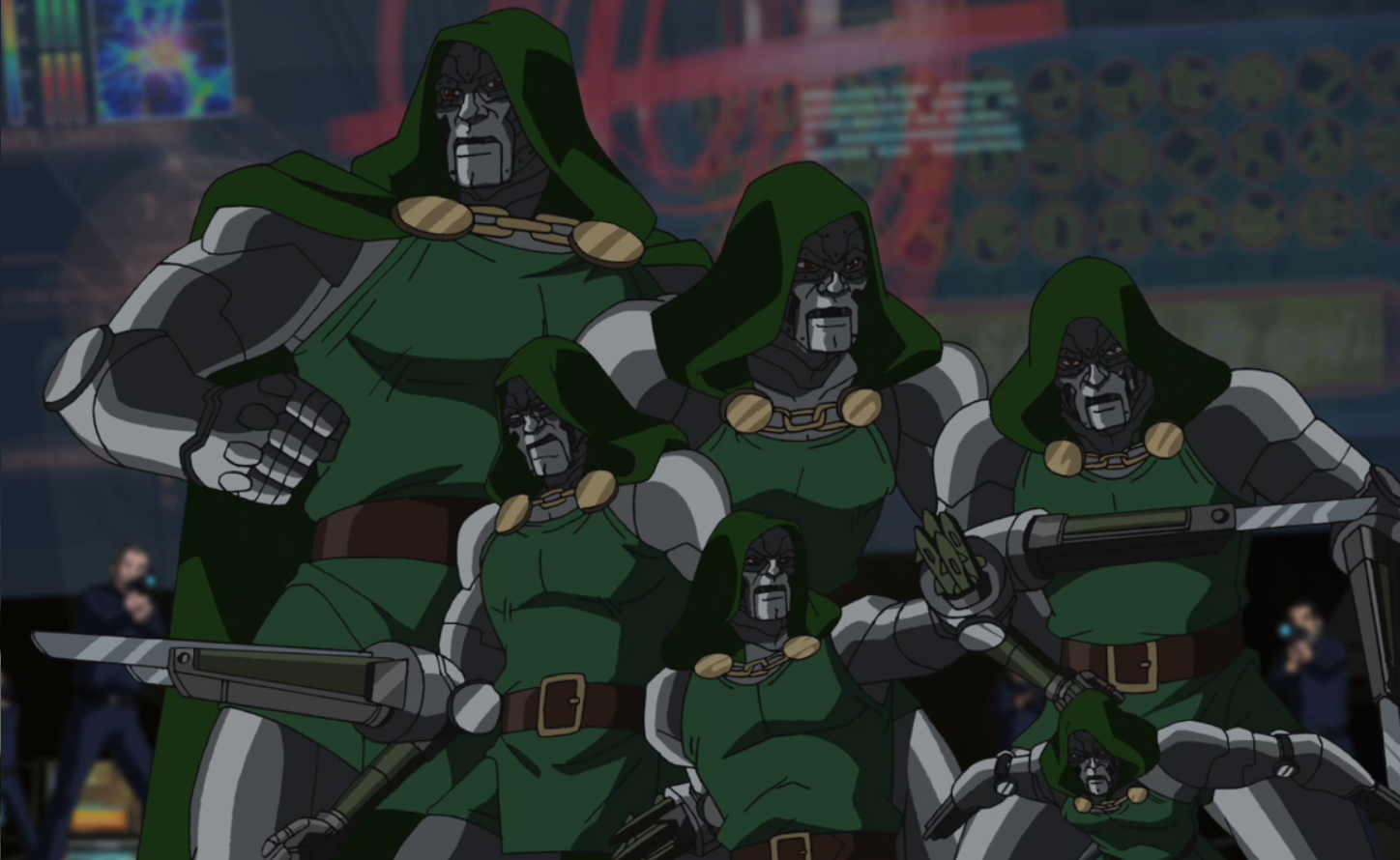
Please keep in mind, though, these tips only apply to fascist regimes that are run by humans, administered by humans, and populated by humans. That means subjects of advanced alien overlords like the Borg or superhuman despots like Dr. Doom need not apply.


Tip #1: Leave If You Can, But Survive If You Can’t

This is the simplest, most obvious tip to anyone unlucky enough to be living under a fascist government. I understand it isn’t always possible. I also understand that dealing with refugees are a complex hot-button issue. However, when it comes to bringing down a repressive government, it can’t be avoided.

One of the ways a fascist regime is inherently unstable is how it deals with it’s smart, highly skilled population. Fascist leaders tend to not like anyone smarter than them. That usually means brilliant, highly skilled people end up leaving the country, taking their knowledge and expertise with them. Nazi Germany found that out the hard way.

Countries like Iran are finding out too. When your country is a repressive, uptight society that won’t let well-paid, well-educated people have a beer or go to a strip club in peace, they tend to take their talents elsewhere. Without that professional class of people, a fascist regime can’t really accomplish much. It’s hard to make weapons of doom when you scare all the mad scientists away.

For those who aren’t highly skilled individuals and are unable to leave, the best thing you can do is survive. I know that’s much easier said than done, especially in the inherent poverty of fascist countries. However, being alive is important because it means the state still needs you. Without you, who’s going to provide the slave labor and constant adulation that a fascist leader demands?

Brutal or not, a fascist regime still has to care for its citizens to some extent. It needs to spend time, money, and resources ensuring that its people are actually capable of providing the labor and human resources to make the system work.

They may not provide much, especially if you end up in prison or a work camp, but the mere act of being alive still undermines the regime. So long as your existence forces the regime to spend time and money making you a productive member of their agenda, you’ve got the edge to some extent. Letting yourself die would only do them a favor. So in a sense, the best resistance anyone can do in such a horrible situation is just survive.


Tip #2: Tell Rulers Exactly What They Want To Hear (But Don’t Mean It)

This is another one of those inescapable pitfalls of living in a fascist regime. On paper, it may sound like you’re just emboldening the regime. That’s true, if you’re only looking at it in the short-term. If you’re willing to play a little three-dimensional chess, though, you can turn the tables.

There’s no doubt that living in a fascist regime will require you to glorify some despotic leader. You may hate their guts. You may pleasure yourself to the idea of them dying a violent death. That’s fine. Keep that hatred and kink strong within you, but keep it within you. If ever you have to put on a fake smile and tell the ruler how big their dick is, just grit your teeth and do it.

You’ll hate it in the short-term, but you’ll see the benefits in the long run. It’s one of those few times when the harshness of reality is on your side. If people only ever tell a dictator what they want to hear, they’ll avoid telling them about serious issues that need to be addressed. They won’t give the full story. They’ll avoid the hard facts, but those facts won’t avoid them.

As a result, fascist rulers will have a poor understanding of a situation or crisis. They’ll be incapable of making the kinds of decisions that strengthen their hold on power. Eventually, those decisions will erode the regime’s ability to function. They’ll leave their society in such a poor state that no amount of adulation will change it. At that point, the regime is as good as gone.


Tip #3: Conform In Public, Defy In Private

This ties directly into the previous tip. If you’re going to survive a fascist regime, you’re going to have to put on a public face you hate and do everything the regime demands that you to do in order to be a good citizen. You’ll hate it inside, but you’ll still do it because that’ll help you survive.

In private, however, you can afford to let yourself go. In fact, doing so will help inoculate you from the propaganda that all fascist regimes depend on to keep their population in line. Even repressive places like Iran are finding out the hard way that while some people show the necessary piety in public, they tend to get really freaky in private.

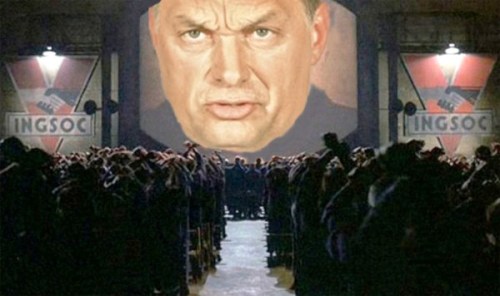
Now, I understand this would be even harder in a regime like the one described by George Orwell in “1984.” However, keep in mind that the kind of surveillance described in that book is pretty much impossible in the real world. Even North Korea has a hard time preventing smuggling.

If anything, more intensive surveillance means that your actually winning. All that surveillance, costing the regime time and money that it would rather spend strengthening its power. Having to micromanage its citizens is a huge drain on any regime, fascist or otherwise.

Welcome that kind of micromanaging whenever you can. In the long run, the regime will run out of money before you run out of things for them to manage. That way, when the regime starts to collapse, it’ll be easier for you and others dissatisfied with the regime to help it collapse. All you had to do was be deviant in private. Most people do that anyway so it’s something everybody can do.


Tip #4: Create Impossible Issues For Rulers To Deal With

This is a bit harder, but still fairly critical. By creating impossible issues, I don’t mean protest and complain to the fascist government. That’s usually a quick way to end up dead, in prison, or in a forced labor camp. You can still frustrate the regime, but you can do it indirectly.

The easiest way to do this is to just not do your job very well. Channel your inner Wally from “Dilbert” and do just enough to avoid getting into trouble, but nothing more than that. Don’t do your best. Don’t go the extra mile. That forces the regime to commit more resources to doing something that shouldn’t take so many to begin with.

Beyond just being a marginal worker, go out of your way to make day-to-day issues complex and tedious for the authorities. Think of it as a form of trolling, minus the insults to other peoples’ mothers. The key is to get the government to deal with multiple issues on multiple fronts. They don’t need to be big issues. In fact, the smaller the issue, the better.

Small issues frustrate governments far more than larger issues. Government, and its assorted bureaucracy, is a blunt instrument by nature. It can’t deal with smaller issues for the same reason a doctor can’t perform brain surgery with a baseball bat. It just doesn’t have the tools. That won’t stop it from trying. It’ll just made a mess of things and that works to your advantage.


Tip #5: Weaponize The Power of Apathy, Boredom, And Dispassion

This goes along with the previous tip in that it takes being lousy at your job a step further. One of the most important tools that fascist rulers use is their ability to rally up the passions of the public. They use their gift for rhetoric and giving fancy speeches to work people into a frenzy so that they’ll ditch all forms of critical thinking and follow them into battle.

While it helps fascist governments come to power, it’s not very useful when it comes to maintaining power. Sure, fascist governments will hold military parades and create these big, gaudy monuments to their glory. However, it amounts to an oversized toilet for pigeons if it can’t generate the same solidary.

That solidarity is the glue that holds a fascist society together. Apathy, Boredom, and utter dispassion is the solvent that breaks up that glue. If a government spends all that time and money blaring their glorious message to the populous, only to have them look back with blank and tired stares, they’re screwed.

If the people aren’t united and in an orgasmic frenzy of support, they’re less likely to sacrifice or aid the regime. Sure, they’ll follow the rules. They’ll march in the parades. They’ll even put on happy faces. They just won’t put much energy or effort into helping the regime stay together. That’s why the greatest tool any citizen in the resistance can have is their apathy. Without that, a fascist society just falls apart.


Tip #6: Let The Rulers Frustrate Themselves (And Stay Out Of Their Way)

This is probably the most enjoyable tip on this list and not just because it doesn’t require much effort. Technically, you really don’t have to do anything to make this happen, so long as you follow the other tips I’ve listed.

That’s because government and bureaucracy, at least those run by humans, are inherently flawed. That’s because people are inherently flawed. No matter how dedicated or passionate they may be, they’re going to make mistakes. They’re going to fall flat on their faces. All you have to do is let them.

This is especially true of dictators, who everybody is afraid to restrain. Eventually, they’ll get back up, blame everyone but themselves, and try to correct it. Chances are, they’ll fall flat on their face again. They’ll get even angrier. That kick-starts a brutal cycle that the dictator can’t escape. Eventually, they’ll frustrate themselves to the point of utter failure. Once they fail, the regime fails.

When this happens, the best thing anyone can do is stay out of its way. Every fascist regime has inherent flaws. You just have to be patient enough and tough enough to let them happen. It can be grueling and downright dangerous. In the long run, though, human nature and inept dictators will be on your side.

That, in essence, is the greatest and most fitting irony of fascism.

6 Comments

Filed under Jack Fisher's Insights

Doomed Superheroes And The Paradox Of Heroism

thor-defeated-fear-itself

When I wrote my post on Dr. Doom being the perfect ruler, I expected that a follow-up would be unnecessary. Dr. Doom is one of those characters who gets the point across, regardless of how fictional he might be. When Dr. Doom makes a point, it doesn’t need to be made again. That’s just how he rolls.

Then, someone on a message board brought up an interesting point that I didn’t cover, one that highlighted some even larger implications to Dr. Doom’s character and superheros as a whole. That’s pretty remarkable since a lot of discussions on comic book message boards tend to devolve into arguments about Thor’s hammer and the Hulk’s penis. As such, I feel it’s worth discussing.

Whenever I do a blog post about comic books, whether it’s a movie review or why Spider-Man sucks at his job, I often post links in message boards, such as the one run by Comic Book Resources. For the Dr. Doom article, I posted it in the Official Dr. Doom Appreciation Thread. Yes, that’s a thing.

That’s where one of the regular posters of that thread replied to my link. This is what he said.

Regardless, the existence of Doom in the Marvel Universe does raise an important point, that few Marvel stories actually deal with ruling. It’s been said that ‘with great power comes great responsibility’ but in many ways Marvel’s superheros are dangerously irresponsible. They fight to save the day and defeat evil but they draw the line at actually trying to change society or assume any real positions of authority. Instead, they hand power back to the same short-sighted and corrupt officials, allowing the whole cycle of violence to perpetuate itself. That ultimately, Marvel’s superheros can’t truly save the world, it all ends in ruin eventually as Marvel’s endless crisis and civil wars attest. Only Doom’s leadership has ever been able to bring a measure of stability to the Marvel universe.

Those bold parts are the ones I highlighted. They’re also the parts that stood out to me most because it speaks to a much larger issue about superheroes, one that Dr. Doom reveals just by being what he is.

It’s an issue I’ve touched on, in part, before on this blog. A while back, I wrote about how most superheroes are incompetent by design. They kind of have to be incompetent to keep the story going. If a hero ever became too competent, the world would have too little conflict and no interesting story to tell. At that point, the comics would stop and there would be no new material for billion-dollar superhero movies.

That’s why Superman will never defeat Lex Luthor. That’s why Batman will never defeat the Joker. That’s why the Avengers will never beat Thanos. However, that’s just a matter of publishers and movie studios not wanting to throw away good villains. The problem is that this inescapable flaw in the system creates a paradox, of sorts.

Superheroes, be they in comics or movies, can save the day and stand for all that is good and noble in the world. They can save countless innocent lives, stop every major threat, and embody the greatest qualities that we humans value. However, in the long run, they do nothing to actually fix the flaws in the system that makes their heroics necessary.

It’s like fighting the symptoms, but never attacking the disease. In the real world, that’s a problem because it means someone will think they just have the flu when they actually have something much worse. For superheroes, everything is the flu. There’s no real effort to find another ailment. As such, they never change their tactics.

The approach of most superheroes is fairly standard. It varies in scope, scale, and personalities involved. However, it tends to follow a few major themes.

  • A dangerous threat emerges

  • A superhero, or team of heroes, respond to that threat

  • A battle ensues, complete with setbacks, losses, and personal growth

  • The heroes win the battle, throw the villains in prison or exile them, and go back to the way they were before

Granted, that’s a very basic and general assessment of how superheros work. However, it’s the first and last parts of the process where the flaw emerges.

For the most part, superheroes aren’t very proactive. They only react to threats. In fact, some major superhero conflicts are built around the idea that being too proactive is evil and working with the authorities will turn you into a villain. Anyone who has ever read Sun Tzu’s “The Art of War” or just played any real-time strategy game in the past 20 years knows that’s a losing strategy.

It’s the end of that process, though, where the paradox really takes hold. Whenever a conflict or story ends for a superhero, they usually go back to their lives and nothing really changes. In fact, it’s somewhat of a running joke among comic book fans that every major change is subject to a “retcon” eventually. That’s not always the case, but it happens so frequently that most comic fans aren’t shocked by it anymore.

As a result, the heroes never really learn from the conflicts. They never attempt to change anything about the system they live in. Bruce Wayne spends much of his vast fictional wealth fighting crime as Batman. However, he never uses any of that wealth to reform the government, create major social programs, or fund projects that actually reduce crime. The same can be said for someone like Iron Man.

With Superman, the potential for change is even greater. Superman isn’t just a paragon of virtue. He has access to advanced alien technology, which he keeps at his Fortress of Solitude. That alien technology could probably solve every major global issue by the end of the week. Technology that advanced could cure cancer, eliminate pollution, and provide clean, safe energy for everyone.

However, Superman never shares this technology with anyone. He never gives a reason for it. In the first “Superman” movie, his father, Jor-El, claims sharing such technology goes against Krypton’s highest laws. He never fully justifies those laws. Keep in mind, though, there are many major laws that have since become obsolete. That makes Superman’s inaction all the more egregious.

By not at least trying to use that advanced alien technology to improve the world, heroes like Superman, Iron Man, and the Fantastic Four effectively doom the planet to the same ills it has always had. At the moment, many of those ills are impossible to fix. With alien technology, they’re not just fixable. They’re basically an afterthought.

Beyond the technology, Superman and other heroes like him never attempt to get involved in the process of actually managing human affairs. They never try to improve the laws, governments, and regulations that effect peoples’ lives far more than an occasional alien invasion. They leave all those ills and flaws untouched.

In a sense, the inaction of many major superheros constitutes a crime in and of itself. If Superman ran for President of any country, he’d win in a landslide. If the Avengers campaigned to take over the United Nations, most average people who aren’t overpaid government bureaucrats would be for it. The fact they don’t do these things means they’re dooming the world to a brutal cycle of conflict that it need not suffer.

Even when they do, which happens from time-to-time, they end up getting corrupted. They become cruel, heartless tyrants. It happened with the Justice League. It happened to Tony Stark. When heroes try to rule the world, they just become evil asshats. That says a lot more about them than it does the villains they fight.

That brings me back to Dr. Doom, a man who doesn’t give half a cow fart about heroic ideals. In a sense, heroes only ever go halfway towards saving the world. Sure, they’ll stop it from being blown up, but they’ll do nothing to fix the cracks.

Victor Von Doom never does anything half way. Hell, he actually became God at one point. He never stops at simply keeping the world in one piece. He seeks to change it in a huge way. Sure, change is scary, but who’s to say those changes wouldn’t be better?

People resisted major changes like same-sex marriage, the abolition of slavery, and not beating children. Some people still resist those changes, some more than others. However, these changes did lead to improvements in the human condition and a reduction in overall suffering.

Superheroes may be willing to confront that suffering, but Dr. Doom is willing to go ten steps further and actually change the conditions that led to it. Sure, he’ll be ruthless about it, bullying and killing anyone who dares get in his way. However, villainous rulers have, historically, inspired positive change.

Since Dr. Doom has no equal in the real or fictional world, he might very well inspire more positive change than any superhero. In that sense, he has the potential to be a greater hero than anyone. Conversely, the deeds of superheroes will always be empty in the long run, their potential squandered by their unwillingness to do more.

Essentially, superheroes are doomed, if that’s not too fitting a word, to be villains through their sheer inaction. Conversely, villains like Dr. Doom have the potential to do the most good. It’s tragic, but painfully pragmatic in the grand scheme of things.

5 Comments

Filed under Comic Books, Jack Fisher, Superheroes

Sexy Sunday Thoughts: All-Star Break Edition

This time of year is great for those who enjoy hot weather, beaches, and bikinis. For sports fans, though, it’s somewhat bittersweet because there’s not a lot going on. Other than Major League Baseball, there’s not much going on. Unless you can somehow watch golf while sober and awake, you won’t find much worth watching.

I consider myself a marginal sports fan. I love football, as I’ve mentioned before, and I’ll occasionally watch hockey and basketball. However, I don’t wake up every day eager to watch two hours of SportsCenter and play fantasy leagues. I try to save most of my passion for erotica/romance, comic books, and writing sexy novels.

That said, I do have a soft spot for baseball. It has a sentimental value to me because that’s the sport I watched most with my dad growing up. On a hot summer day, few things relax me more than a cold beer and a baseball game. To me, I couldn’t be more content in that moment without a naked bikini model on my lap.

As it just so happens, this past week had the MLB annual All-Star game, which the American League won 2-1 in a thrilling game that went into extra innings. At a time of year where most sports fans are dangerously close to sports withdraw, it’s a great reprieve.

As such, I dedicate this week’s edition of Sexy Sunday Thoughts to baseball fans and sports fans in general. I hope it makes the All-Star break that much easier to endure. I also hope it can tide people over until the NFL season starts.


“In certain divorce proceedings, irreconcilable differences is just code for two people developing different levels of horniness.”


“Isn’t it ironic that some of the people who complain about others not thinking things through wouldn’t be alive if their parents hadn’t acted the same way?”


“Horniness plus romance equals passion. Horniness plus opportunity equals lust. Horniness plus ambition minus patience equals hilarity and/or disgust.”


“Practically speaking, a beautiful woman on a beach full of straight men has no excuse for being sunburned on her back.”


“For now, exotic accents are the closest thing we have to female Viagra.”


“No civilization has ever failed because its population was too sexually satisfied. Conversely, no civilization has ever succeeded for very long when it’s population is too sexually frustrated.”


“Internet porn has given an entire generation of people the impression that sex involves a lot more seething and hissing than it should.”


I hope that makes your next trip to the ball park a little more enjoyable. If nothing else, it’ll give you something think about other than the inflated price of a hot dog. I know sports typically appeal to men, but true sex appeal knows no gender. Whether it’s a ball park or a brothel, it unites us all.

Leave a comment

Filed under Sexy Sunday Thoughts

Wonder Woman Exceeds Deadpool At The Box Office (And Deadpool Is Okay With That)

I talk about movies fairly frequently on this blog, especially the sexy kind. Sometimes I talk about the sex appeal they have in the present. Sometimes I explore the potential for sex appeal in the future. When it comes to specific movies though, the two I’ve discussed most are “Deadpool” and “Wonder Woman.”

The reasons for this should be obvious. They’re both awesome movies with an insane amount of sex appeal. One of them has the most iconic female hero of the past century coming to life in her first, big-budget solo movie. The other has a naked Ryan Reynolds. It’s hard to get more awesome and sexy than that.

Recently, though, both movies made the news in a wonderfully fitting way. First, the “Wonder Woman” box office total achieved a milestone, raking in $373 million domestically. That puts it beyond the $363 million that “Deadpool” pulled in. While “Wonder Woman” still hasn’t matched the international total for “Deadpool,” it’s closing the gap fast and has a good chance of matching it.

Now, that’s not to say both movies are entirely on an equal footing. Remember, “Deadpool” was a bloody, R-rated poop joke that included Ryan Reynolds getting naked and enough F-bombs to make a Mormon faint. It managed to rake in nearly $800 million worldwide despite this rating, not being released in China, and on a paltry $58 million budget.

That’s not to undermine the accomplishments of “Wonder Woman” in any way. This movie, despite having nearly three times the budget, was made for $100 million less than “Batman v. Superman: Dawn of Justice” and still managed to make more domestically.

In addition, Gal Gadot did not have the same profile as Ryan Reynolds did when he made Deadpool. Other than her role in “Batman v. Superman: Dawn of Justice,” she hadn’t established herself as a draw like Reynolds did. She also accomplished all this with a female director in Patty Jenkins, who had proven herself in TV, but not in movies.

For “Wonder Woman,” a female superhero starring in her own movie after “Catwoman” nearly killed the genre, that’s still a hell of an accomplishment. Deadpool actor, Ryan Reynolds, understands this as well as anyone who has been following superhero movies for the past two decades. Being the awesome, formerly sexiest man alive that he is, he even responded.


That’s right. In the spirit of good sportsmanship and dirty jokes about body odor, Reynolds congratulated “Wonder Woman” for accomplishing so much. In such a highly competitive, cocaine-fueled world, that just warms my heart.

Gal Gadot, being badass beauty that brought Wonder Woman to life, responded as well on Twitter. True to the heart of her character, she acknowledges and accepts the loving sentiment of others, regardless of whether they’re male, female, or used to be married to Scarlett Johanssen.

After talking about such dire topics like fascism on this blog, this really made my week. As a fan of superhero movies and people being decent to each other, it just put a smile on my face in the best possible way.

Deadpool and Wonder Woman may be two characters owned by different companies. They may be very different in how they operate, what they stand for, and how they go about making awesome movies. However, for them to unite in the spirit of making awesome superhero movies is just too fitting.

Excuse me. I just teared up a little.

5 Comments

Filed under Comic Books, Jack Fisher, Superheroes

Dr. Doom, Perfect Rulers, And Ultimate Peace

There aren’t a lot of official rules on this blog. I try not to micromanage the what, how, and why of the content I talk about, beyond my sexy novels. However, there is one rule that might as well be a law of physics . If a particular topic can apply to comic books, then I will apply it to comic books.

I’ve already done it so many times on this blog, from sex-positive superheroes to showing why Magneto is the original Walter White to using an X-men comic to explore concepts of a balanced romance. While I love writing and talking about erotica/romance, I’ll still use every opportunity to tie it into comics.

For the past few days, I’ve been talking about fascism and repressive government. It’s a somewhat relevant topic, even after the 4th of July, because everybody seems to be throwing that word around these days. Liberals think conservatives are fascist. Conservative think liberals are fascist. At this rate, even anarchists will call each other fascist and fail to see the irony.

The concept of fascism is pretty complex. It has a dictionary definition, but that definition tends to get obscured by anyone who thinks a different political opinion is a threat to their own. Major conflicts like World War II have conditioned us to associate all the evils of the world with fascism. If your ideology seems bad, greedy, or evil in any way, then it must be fascist.

While that is a very childish approach to political rhetoric, relatively speaking, it also underscores the reason fascism and authoritarian governments exists in the first place. As George Orwell explored in “1984,” these kinds of systems emerge anywhere people seek security and peace in the midst of war and conflict.

We see it happen all the time throughout history. There are many occasions where a repressive regime has arisen out of bloody conflict. Some of those regimes are still around and frustratingly contentious. At their core, thought, the dynamics are the same.

In times of chaos, conflict, and scarcity, people seek power and influence. Once they have it, they seek to maintain it at all costs. They’ll try to control anything and everything, from the amount of bread everyone gets to how they conduct their sex lives. It manifests in many different ways, but the underlying principles are the same.

At the end of the day, the biggest problem with the systems surrounding fascism and repressive governments is that they still depend on flawed, petty humans with caveman brains. Sometimes, the rulers themselves are mentally unhinged. Sometimes, the people around them are petty, corrupt, or just plain incompetent. Often, it’s a potent mixture of the two.

In some sense, we can thank our own inherent flaws as humans as the ultimate weapon against a fascist, authoritarian state. George Orwell may have highlighted the darker elements of humanity, but he grossly overestimated peoples’ ability to manage others competently.

That leads me to Victor Von Doom, the alpha and omega of Marvel’s long list of iconic villains. In any list of the top villains of all time, Dr. Doom usually ranks near the top. A series of sub-par “Fantastic Four” movies have routinely failed to do justice to the breadth of Doom’s villainy. However, once you understand his roots, you understand why he is the ultimate counter to George Orwell’s dystopian fever dream.

There are too many details about Dr. Doom’s life and history to do him justice in one post. WatchMojo does a fairly good job of summarizing where he came from, but for the sake of this post and how he relates to my discussions on fascism, all you need to know is that Dr. Doom is the perfect ruler.

I don’t just mean that in the sense that he has the power, charisma, and resources to rule a country. I mean that, by almost every objective measure, Dr. Doom is the perfect ruler. Put him at the top of any government, be it a democracy or an authoritarian state, and he’ll make it work. Moreover, he’ll do it in a way that’s terrifyingly efficient.

That’s because Dr. Doom isn’t just some evil sadist who just wants to control people for the fun of it. He’s one of the smartest human beings to have ever lived. He didn’t just master science as a kid. He mastered science and magic. Even Lex Luthor can’t make that claim. He just mastered science. Compared to Dr. Doom, Lex is an underachiever.


Beyond just being smart and mastering things few can ever hope to master, Dr. Doom is extremely driven and makes no bones about it. He doesn’t just think he’s superior to every other human being on the planet. He knows it. If anyone dares question it, he won’t just prove them wrong. He’ll do so in the scariest, most intimidating way possible.

This isn’t just someone you respect. This is someone that scares the hell out of you, but for all the right reasons. As arrogant as he is, he doesn’t see himself as a villain either. Even Stan Lee, his co-creator, doesn’t see him that way. In an 2016 interview, he said this about Marvel’s greatest villain.

“Everybody has Doctor Doom misunderstood,” Lee said. “Everybody thinks he’s a criminal, but all he wants is to rule the world. Now, if you really think about it objectively, you could walk up to a policeman, and you could say, ‘Excuse me, officer, I want to tell you something: I want to rule the world.’ He can’t arrest you; it’s not a crime to want to rule the world. So […] it’s unfair that he’s considered a villain, because he just wants to rule the world. Then maybe he could do a better job of it. So I’m very interested in Doctor Doom, and I’d like to clear his name.”

Therein lies the greatest irony of Dr. Doom’s villainy. Sure, he wants to take over the world and he routinely clashes with Marvel’s most iconic heroes in the process. However, it’s why he does it that makes him stand out.

In one iconic story from 2010 fittingly called “Doomwar,” his true motivations for conquering the world come to light. In that story, Dr. Doom encounters a god-like being named Bast, also known as the Panther God. In that encounter, Bast reveals something critical about the future of the world.

As anyone who has ever followed Marvel comics for any number of years will tell you, there are a lot of alternative universes and timelines. Some are dystopian, even by George Orwell standards. Some are just different in a few minor details.

However, the Panther God saw all these universes and timelines and came to one inescapable conclusion. The only timeline in which humanity was free from suffering and want was a timeline in which Dr. Doom ruled the world. In a sense, that almost makes Doom a hero. Then again, he’s still the same guy who once sacrificed the woman he loved for more power.

Beyond those overtly villainous details, there’s a lot of merit behind that vision and not just because it came from the Panther God. Dr. Doom already knows how to run a country and a government. For much of his history, he’s run his fictional home country of Latveria and, by all accounts, he’s run it very well.

He ran it so well that, when he took over the country, every soldier and citizen that had been fighting for the previous ruler just stepped aside and let him take over. He didn’t force his people to love or respect him into submission. He proved himself. He did such a good job that nobody in Latveria besides the previous rulers wanted to stand in his way.

He didn’t just stop at taking over his home country either. Dr. Doom helped it prosper. In another iconic line of Marvel comics, Dr. Doom turned a country of bankrupt peasants into one of the top 10 economies on the planet within a couple years. That’s the kind of growth that even hardcore libertarians have to respect.

Doom does this because, and this is worth emphasizing, he’s extremely smart. He’s not just smart in that he can outwit gods and cosmic forces. He’s smart in that he knows how to manage a country, a people, and everything in between.

He does this largely through an army of loyal robotic minions, including specialized robots called Doombots. They’re not just ordinary killer robots either. These robots actually think, behave, and act as though they’re the real Dr. Doom. It’s kind of a running gag in the Marvel universe. Every time Doom is “defeated,” it’s often revealed that they just defeated a Doombot.

Beyond being a clever plot device, it also ensures that Dr. Doom’s government never has to worry about insubordination, betrayal, or corruption. His robots, gadgets, and ability to use mind control ensures he maintains perfect control of his government from top to bottom.

Unlike the ruling party in George Orwell’s “1984,” there’s no need for a massive professional class of bureaucrats that need to be constantly monitored. There’s no need to set up a kind of thought police to ensure nobody even thinks about undermining the party. For Dr. Doom, that would be redundant. No matter what any of his citizens think, he knows he’s smarter and more resourceful than any of them.

In addition, the party in “1984” didn’t care much for the welfare of the people. They only cared enough to ensure the stability of their rule. Dr. Doom, on the other hand, does express a genuine concern for the well-being of his people. He will go out of his way to make sure that his people are free from suffering and want. Sure, they’ll still fear Dr. Doom’s wrath, but that’s the only thing they fear.

That, more than anything, is what makes Dr. Doom the perfect ruler. He’s so smart, so capable, and so resourceful that no other human in his home country or any other country could come close to matching him. On top of that, Doom actually produces results. The things that are typically impossible for a government to do, such as providing prosperity for all its people, are easy for someone like Dr. Doom.

Thanks to Dr. Doom’s expertise, cunning, and willingness to cross any line, anyone under his rule will be safe and prosperous. They won’t have to fear anyone harming them because they’d have to go through Dr. Doom first, a man who one-shot the Incredible Hulk and battled a race of space gods. With him, a border wall is both unnecessary and redundant.

Under Doom’s rule, you are as safe as it’s possible to be without locking yourself in an adamantium cage. You’re also probably as free as you’ll ever be. While Dr. Doom is a despot, he’s never shown an inclination to micromanage his citizens’ lives. He doesn’t tell them who to love, how to love, and what to do with their free time. So long as they acknowledge his authority, they can do as they please.

He doesn’t get involved in his peoples’ sex lives. He doesn’t try to run the economy. Near as anyone can tell, he doesn’t even demand that certain words be censored from TV and movies. In that sense, Dr. Doom is less tyrannical than the FCC.

Sure, his citizens are still at Doom’s mercy. If, at any point, they become a threat to Doom, he’ll kill them without a second thought. However, Dr. Doom is not obsessively paranoid like the Stalins and Kim Jong Uns of the world. He’s too smart, too cunning, and has too many Doombots on his side to worry about such trivial things. He is, for all intents and purposes, a benevolent despot.

There is no real-world, or even fictional, equivalent to Dr. Doom. However, much like Superman, Dr. Doom presents an ideal of sorts. He is everything people want in a ruler. He is smart, charismatic, imposing, strong, capable, resourceful, logical, and fair. He has the means, vision, and drive to do everything that people want their government to do.

In that sense, it wouldn’t even matter whether a system is fascist or democratic. So long as there’s someone like Dr. Doom at the top, it’ll work. There are still many parts of his character that make him undeniably villainous. However, it’s hard to deny his ability as a ruler. To live under his authority is to live in perfect freedom and security.

Remember that the next time you get into a debate about fascism or democracy. In the end, the only truth path to perfect governance is through Dr. Doom. That’s enough to make both the Avengers and the Justice League cry.

All Hail Doom!

12 Comments

Filed under Comic Books, Jack Fisher, Superheroes, Jack Fisher's Insights

Why Fascists Want To (And Need To) Control Your Sex Life

Whenever I bring up a topic on this blog, be it advances in biotechnology or news on the “Wonder Woman” movie, it’s only a matter of time before I explore the sexy side of that topic. Sometimes that also involves the kinky side, but sometimes sexy and kinky aren’t mutually exclusive issues in certain topics.

Now, when it comes to issues of fascism and totalitarian governments, it’s hard to make that too sexy. However, it’s hard to discuss these issues without also discussing the implications on our sex lives. Even the most repressive governments still need people having sex o they can make babies that will eventually become works, soldiers, etc.

Throughout history, the government has always had some interest or policy in our sex lives. From state-sanctioned fertility festivals in Ancient Rome to rigid traditions in Ancient China, there’s always been some amount of government between the sheets. So those yelling for government to get out of their bedrooms probably don’t realize just how long it has been there.

For the most part, a government’s only real interest in your sex life extended to whether or not you were producing children that would become soldiers, workers, and tax payers. Beyond that, it could care less what you do with your genitals and how you do it. Those governments usually lacked the power, resources, and will to micromanage.

There were some exceptions, primarily with the sex lives of rulers and aristocrats. Since preserving the royal lineage was of the most vital importance, often leading to massive upheaval in a kingdom, they had to micromanage to some extent. If they weren’t producing heirs to the throne or to inherit the family land, then that was a problem. The entire premise of “Game of Thrones” is proof of that.

However, the world has changed a great deal since the days of kings, feudalism, and fertility rituals. Industrialization, modernization, and a better understanding of how our sexy anatomy works has changed how the people and the government approaches matters of sexuality. Sure, some people in government still have a poor understanding of certain lady parts, but our knowledge is more comprehensive for the most part.

It’s because of that knowledge, though, that a fascist or overly authoritarian regime has an even greater interest in controlling your sex life. At least the kings and emperors of the ancient world lost interest at the part where your sex life made the babies that would become soldiers and workers. Modern rulers with a keen interest in controlling a population know to go much further than that.

The best example of this is how Nazi Germany and Fascist Italy approached its citizens’ sex lives. For these governments, it wasn’t enough for people to make babies that would become soldiers and workers. They had to make perfect, super-babies and a lot of them. That whole “master race” ideology wasn’t just about subverting minorities. At some point, they need to have the race they prefer to propagate.

Sometimes, they did this through incentives. Giving birth to a healthy, racially pure baby in Nazi Germany came with all sorts of benefits. However, those benefits sometimes hid the heavy hand of the state. Women in this society were not expected to work. Their sole focus was supposed to be on producing more racially pure babies.

It wasn’t much different or better for women in Fascist Italy. While it didn’t rely heavily on concepts of genetic purity or racial supremacy, there was this ideal espoused by the state. The perfect woman, in their eyes, was supposed to be poor, subservient, and doing everything she could to give birth to as many babies as possible.

Beyond simply controlling the population, these fascist states also sought to control the nuts and bolts of family life. There was only one ideal family structure and one form of acceptable sexual activity. Any citizen that deviated from it in any way, be it homosexuality or watching certain types of porn, was prohibited.

Again, it goes several steps further than the prudish policies we sometimes get in non-fascist states. In America, we had policies like the Comstock Laws that effectively made talking about sexual issues a crime. Even today, issues surrounding sex education, which are prescribed by the government, are subject to plenty of controversy.

However, it’s that very presence of a controversy that highlights just how different a fascist state approaches sexuality compared to a non-fascist one. Say what you will about America and western governments. At least it’s possible to have a debate about sexual issues. It’s not always productive, but having that debate won’t get you killed.

The same can’t be said in a fascist state because controlling sexuality isn’t just necessary for population control. It’s a primary component of maintaining its overall power. A fascist state, by definition, needs to exercise a lot of control over its people. In general, people don’t like to be controlled. History shows it’s hard to control people. Even organized religion is finding this out.

For any fascist state to maintain control, it needs to be able to control the two most important drives in human beings, namely survival and reproduction. It needs to make sure that the citizens are completely dependent on the state to fulfill those drives.

It’s somewhat easier to confiscate food and use hunger to keep people in line. If someone is hungry, they’ll say or do anything to get a good meal, especially if a government dangles it in front of them as incentive.

The same applies to sex. Through policy, policing, and public shaming, it can dissuade people from exercising their sexuality in ways that the fascist state does not sanction. Like hunger, those who are horny will do anything they can to fulfill that basic drive. Some religions have already weaponized this drive. A fascist state would make it part of a larger system.

It’s because of that systemic approach to sexuality that it’s hard to claim that modern conservatives or liberals are seeking to control sexuality on the same levels as a fascist state. I know I make a lot of jokes about Rick Santorum’s views on sexuality, but he’s never favored creating an entire bureau of government to ensure that people have only the kind of sex that he approves of.

I also make a lot of jokes about how sex-negative radical feminism is making us more sexually uptight. While those on the more extreme liberal side of the spectrum may protest and shame those who dare exercise a form of sex they don’t like, they don’t actively ask the government the manage the sex lives of others.

That’s not to say both sides don’t have ridiculous, harmful, and often detrimental views of sexuality. They’re just not even in the same hemisphere as a fascist state, which would use human sexuality as a method of controlling its population.

It’s not just that a fascist state tends to be inherently prudish and tradition. It has to control things like sexuality because it has to control the people to achieve its goals, be it stability or some sort of racial agenda. So if and when the day comes when you need government approval to have an orgasm, you’ll know you’re living in a fascist state.

4 Comments

Filed under Jack Fisher's Insights

George Orwell, 1984, And The Perfect Totalitarian State

There were a lot of reasons I hated high school. I’ve listed more than a few of them on this blog. Somewhere on that list, but nowhere near the top, involved the books I had to read. To say they weren’t very sexy would be like saying a baseball bat to the head isn’t a very good massage.

However, every now and then, my English and social studies teachers managed to assign a book that didn’t make me want to make me stick my head in a deep fryer. One of my favorite non-sexy books of all time, which also happened to be a homework assignment, is George Orwell’s “1984.” It’s a book that always seems relevant and insightful, albeit for all the wrong reasons.

When I read Orwell’s depiction of the ultimate dystopian future, I see it as the ultimate thought experiment, of sorts. Orwell wrote this book in the 1940s, a time when there were actual, dystopian totalitarian regimes operating in the world. Sadly, one of them was a chief ally during World War II.

He had a lot to reference in his time, much more so than we have today. Other than North Korea, most people today aren’t as familiar with rigid, totalitarian governments. Since the fall of the Soviet Union, there’s an entire generation of people whose idea of a totalitarian regime is relegated to detention at a high school. They can’t even begin to fathom the kind of world that “1984” described.

That’s a good thing in some respects. In a sense, those governments are almost impossible these days. The rise of the internet, modern technology, and complex geopolitics makes it next to impossible for a regime to be as totalitarian as “1984.” North Korea comes close, but even that regime is wholly inept compared to Big Brother.

However, I believe there’s a unique value, of sorts, when it comes to understanding what makes a totalitarian regime work. I also think there’s value in knowing the tenets behind it, the ways in which it operates, and why it takes hold in the first place. Even in an age of people protesting the removal of the McRib from McDonald’s menu, we’re not immune from the threat of a totalitarian regime.

With that in mind, let’s dig a little deeper into Orwell’s extreme thought experiment that played out in “1984.” If you haven’t read the book or had even worse English teachers than I did, you might not be familiar with Big Brother, how it operates, what what it represents. You might have heard the term, but you might not be familiar with what it is.

For the sake of providing context, here’s a quick video from the Alternate History Hub channel on YouTube. It’s a channel that focuses primarily on alternate history scenarios, which I’ve touched on before, but it also provides remarkable insight onto other subjects. Given how many totalitarian regimes are involved in alternate history, it makes sense to explore the ultimate extreme, as it played out in “1984.”

It’s hard for most people in the industrialized world to imagine a system like this. The idea that facts, history, and the very thoughts we think are all controlled by this all-encompassing, all-powerful government seems insane. It’s hard to imagine living in a world like that. It almost seems impossible. In a sense, it is.

No government in history has ever come close to wielding the kind of power that Big Brother does in “1984.” Some have tried. There’s the first emperor of China, the sun king in France, and our old frenemy, Joseph Stalin. They only ever succeeded in part and often failed in the long run.

That’s because, as we’re seeing with the ongoing health care debate in America, human beings are impossibly chaotic creatures. We all have so many different needs and wants. We’re all petty about different things and apathetic towards others. No two people are completely wired the same. We all think different thoughts for different reasons, sometimes with downright kinky undertones.

It’s because of all that chaos/diversity within the human condition that no government can hope to achieve what Big Brother achieved in “1984.” It would require so much power, so much micromanaging, and so much information that it just wouldn’t be practical for any one human or party of humans.

Again, that won’t stop some from trying and that’s where Orwell’s thought experiment becomes relevant. In looking at the structure of Big Brother, we can observe the nuts and bolts of the perfect totalitarian regime. We can see what the ultimate fascist is seeking when they want to create an all-power, completely centralized government.

Impossible or not, the features of this government reveal some common themes that have a basis in the real world. Those are themes worth understanding because they help us know when someone is trying too hard to emulate Big Brother. Without getting too deep into the book, here are the key features of a perfect totalitarian regime.

  • There’s a single, unambiguous ruling party and no opposition of any kind

  • The ruling party makes up a small percentage of the population, never more than one or two percent

  • The members of the ruling party rarely, if ever, interact with the public directly

  • The public consists of two classes, a professional middle class that never makes up more than a quarter of the population and a working lower class that usually makes up over two-thirds of the population

  • The middle class is educated to some degree, but wholly controlled by the ruling party and is completely dependent on them for their livelihood

  • The lower class is uneducated, under-informed, and easily manipulated

  • All economic activity is controlled or guided by the party, ensuring the middle class has just enough to do their job and the lower class has just enough to propagate

  • The ideals for family structure and social structure are imposed by the party with any variations being deemed deviant

  • The lower classes are allowed to be more deviant and decadent in order to keep them content with their state

  • The middle class is held to a higher standard of conduct to ensure their loyalty and submission to the party

  • The flow of information, the accepted knowledge of the world, and the entire history of the state is dictated by the party and accepted by the masses

There are probably more features I could list, but these are the core elements of Big Brother and the society we see in “1984.” Now, some people will attempt to apply these features to whatever state, country, or office environment they’re in at the moment. Some might actually apply, but never to the same degree as Orwell depicted.

The biggest takeaway from these traits, as well as the themes in “1984,” is how a society structures itself in the face of such overwhelming control. At the top, there’s always a ruling class. That class has only one primary purpose, which is to preserve its power. From the Galactic Empire in “Star Wars” to the battle for the iron throne in “Game of Thrones,” preservation is always the top concern of a totalitarian regime.

Part of preserving that power means relying on a professional middle class, of sorts, to deal with the bureaucracy and administration of the state. It’s in this area where totalitarian regimes tend to be most vulnerable. History has shown that authoritarian states like Nazi Germany were anything but efficient, which in turn undermined the ruling party’s primary goal.

It seems like a paradox, but it’s more a matter of pragmatism. A state needs people to run these massive, complex machinations to maintain so much control. To not impose such control would mean granting people freedom and that’s dangerous to any ruling party that wants to preserve control.

This is why those in these middle class professions are subject to such greater scrutiny. A poor, unemployed man taking a piss on a street corner creates no controversy. However, if a highly educated professional did that, it would be a major scandal. We often see this in how major corporate scandals play out.

In a sense, the lower classes have more freedom in this system than the professional middle class. That’s because the ruling party doesn’t really care about them. They don’t have to because they’re not a threat.

Uneducated, lower class people are too stupid and gullible to really pose a threat. So long as they work and breed, the ruling party has no reason to micromanage them. They don’t care if they have orgies in the streets, drink paint thinner for breakfast, or wear horse masks to work. Their only purpose is to work and breed. If they do that, then the ruling party couldn’t care less.

In a sense, the ruling party will always be at odds with a certain segment of the population. In order to exercise control in an authoritarian regime, there needs to be a sizable number of loyal, competent underlings to carry out the functions of the state. Finding people who can act as such underlings with perfect loyalty is difficult, if not impossible.

It’s hard to say whether Orwell knew this on some level. Keep in mind, he was heavily influenced by what he saw around him, a massive world war and the rise of communist states. Perhaps he had studied how powerful, repressive governments had operated in the ancient past and saw parallels in the present. Perhaps he saw that as an inevitable recourse for humanity.

I choose to have a more optimistic, albeit cynical view of human affairs. I don’t believe a system like Big Brother could ever take hold in a world where people can’t even agree on pizza toppings, let alone a singular vision for human civilization. I also don’t believe any government is equipped to exercise the kind of control that Big Brother did in “1984.”

However, that still won’t stop some from trying and the very process of trying can be very dangerous. Seeking order within the chaos is a very human trait, but one that can easily get derailed by pettiness and corruption. That’s why Orwell’s lessons in “1984” are more relevant than ever and may always be relevant to some extent.

6 Comments

Filed under Jack Fisher's Insights

On Fascism (And Why It Fails)

Brace yourself and temper your outrage because I’m about to talk about fascism. No, I’m not talking about the kind of fascism that teenagers whine about whenever they have a strict teacher in high school. I’m not even talking about the kind of fascism that that certain people attribute to college professors, LGBT rights, Hollywood, the NRA, the Catholic Church, and Negan from “The Walking Dead.”

Today, I’m going to talk about actual, real-world fascism and how it functions. I’m also going to talk about why it tends to fail in the long run and why it’s become such an empty term. Now, I know that means putting a big target on my ass and daring the more vocal parts of the internet to take a shot. I like think my ass is harder and more durable than most so I’m prepared to take that chance.

I know people like to throw the word fascism around like middle fingers in mid-day traffic, but it does have a definition. That definition has been twisted and amended many times over the past half-century, so much so that the word evokes so many different connotations.

For the sake of this post, I’ll be using the definition from Merriam-Webster’s dictionary. It offers a fairly concise assessment of what it entails.

A political philosophy, movement, or regime (such as that of the Fascisti) that exalts nation and often race above the individual and that stands for a centralized autocratic government headed by a dictatorial leader, severe economic and social regimentation, and forcible suppression of opposition.

Under this definition, America and most developed countries are not fascist. No matter what some kale-eating hippie or Jerry Falwell wannabe theocrat may claim, the systems and laws in place are antithetical to fascism.

Western countries have codified laws and traditions that value individual rights, protect minorities, and restrain central government power. Now, that’s not to say it’s perfect in practice. There are plenty of examples, historical and contemporary, that of inequality and oppression by the government.

However, those examples are more a product of misguided groups of people and inherent systemic corruption. To call an entire system fascist because of those instances would be like calling an entire swimming pool dirty because a few people spit in it. With fascism, the entire pool is spit so there’s no need for cherry picking.

Thanks to the cruel mistress that is history, we have a few well-known examples of true fascism that even vegan hippies can agree on. By most objective measures, Fascist Italy and Nazi Germany are the alpha and omega of all things fascist. If fascism were music, these two would be Elvis and the Beatles.

These governments were repressive, authoritarian, corrupt, and powerful. They could do whatever it wanted to its citizens and act however it wanted on a national stage, not giving a damn about public support of any kind. There was no hesitation to lie, cheat, and mislead the people. In these governments, people are either pawns or cogs in a machine. The very notion of freedom might as well be as fanciful as a unicorn fart.

There’s no question that these fascist governments did a lot of damage and caused a lot of suffering. There’s also no question that their actions scared and traumatized an entire world. They revealed to a modern world that wars between despots and industrial powers was truly horrific. Most human beings tend to avoid such horrors. A massive world war was enough to make everyone hyper-vigilant of all things fascist.

It’s in this heightened mentality where I think it’s worth having some perspective about fascism. We hear pundits, politicians, and protesters throw that word around, as though it’s the rhetorical equivalent of an “avoid critical thinking” card. It’s an easy label to throw around, but it rarely sticks because actual fascism is actually pretty frail.

In a modern context, fascism is different from the kings and despots of the ancient world. In those times, corrupt and blood-thirsty kings could only get away with so much. A kingdom and a nation state, complete with modern infrastructure, are two very different things.

A king needs to only hold a kingdom together and fight off the occasional invader. A nation state has to deal with bureaucracy, social welfare, and legal issues. No matter how big a king’s castle is, there’s just no way to manage all that in a modern context. There needs to be some sort of system in place.

A fascist government tries to centralize that system and organize it in a simple, stable way that definitively benefits certain persons or groups. Nazis sought to benefit a favored race. Italian Fascist sought to benefit a favored class. The argument could be made that Stalinist Russia and the current regime in North Korea are fascist in nature. I would tend to agree with those claims.

The goal is almost always the same. A fascist government directly and overtly attempts to control and centralize power for a select group of elites. It’s for this very reason that fascism tends to fail in the long run or never succeed in the first place.

Now, don’t go cheering and waving American flags just yet. That’s not to say that fascism inevitably falls under the glowing light of freedom, democracy, and bald eagles. That’s a romantic idea that makes for great war movies and comic book characters. It’s not necessarily reflective of real-world machinations.

The biggest flaw in fascism is its attempt to control and manage an entire state. That’s not just difficult. It’s impossible for any ordinary human or groups of humans. Our caveman brains can barely control when we get horny. How can we expect to control an entire government, let alone one meant to benefit a specific group of people?

The short answer is we can’t. The long answer is that such centralization and power requires a lot of bullying, corruption, subversion, and back-stabbing. That’s why you have Nazi Storm Troopers and Stalinist purges. It isn’t just because powerful people get a thrill out of ordering rampant death. They need to scare, bully, and intimidate everybody into going along with their agenda and being completely loyal.

That’s a huge problem though because, as I’ve pointed out before, it’s impossible to know how truthful someone is. You can never know who is truly loyal and who is plotting against you. That’s why men like Joseph Stalin were obscenely paranoid, which guaranteed that allies and enemies alike would die by his hand. Without those allies, any system is inherently weaker.

On top of that problem, there’s also the issue of the terrified masses who live under a fascist thumb. Say what you will about whiny protesters complaining about weed, but at least they’re willing to tell the government what they don’t want to hear. In a fascist system, the impoverished masses will likely keep their mouth shut.

That may help a paranoid fascist get through the day, but it limits their ability to make it through the year. That’s because in a complex world, having incomplete facts tends to be a huge detriment. If nobody is willing to tell a fascist ruler that their rusty old trucks with canons are no match for drone strikes, then that’s going to be a problem.

That’s why, contrary to what the History Channel and video games may claim, fascist regimes like Nazi Germany were never close to winning the war. Between major blunders and micromanaging, there was never a scenario that didn’t involve time travel or aliens that would’ve allowed them to win.

That’s because a fascist regime can’t trust anyone, be it military generals or the public. At some point, the political ties break down and the system just can’t handle it. They can delay the collapse, but they usually can’t stop it. It’s remarkable that Nazi Germany lasted as long as it did, given all the assassination attempts.

It’s the dirty, but unavoidable secret of almost every fascist governments. They function only to live another day, rather than build a future. Some are better at it than others. Castro’s Cuba has managed to survive for over a half-century, albeit with significant support from other neighboring countries.

The same goes for North Korea. The only reason that country still exists is because China doesn’t want a failed state on its border. At this point, North Korea can only endure, but not build. As the old dynastic cycle in China often proved, a system concerned only with survival tends to collapse in the long run.

I say this not as a way to undermine the horrors that fascism has and could potentially unleash on this world. It is a real danger in a world that’s full of crazy dictators and obscene corruption. However, it’s a danger with an inherent weakness and an expiration date. It’s one instance where you can depend on caveman logic to win out in the end.

It may not inspire the kind of ravenous patriotism that Americans tend to enjoy. However, it does show that, despite protests the contrary, there’s a lot to appreciate about our current system. It’s not perfect, but it’s building towards a better, sexier future more so than any fascist government ever will.

2 Comments

Filed under Jack Fisher's Insights