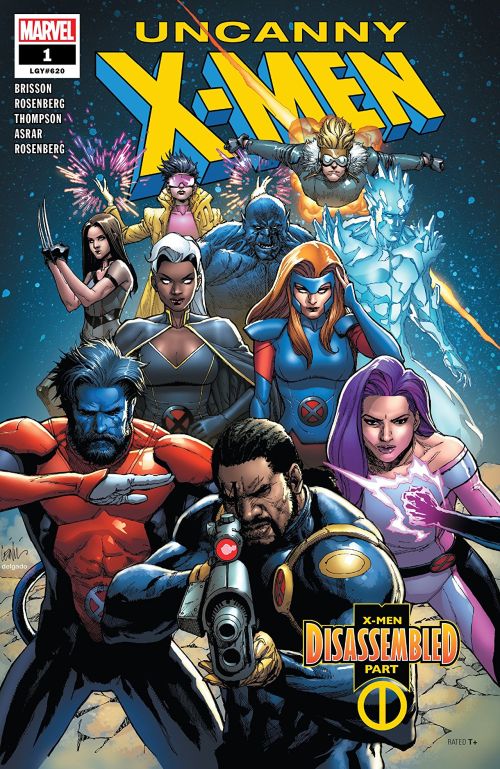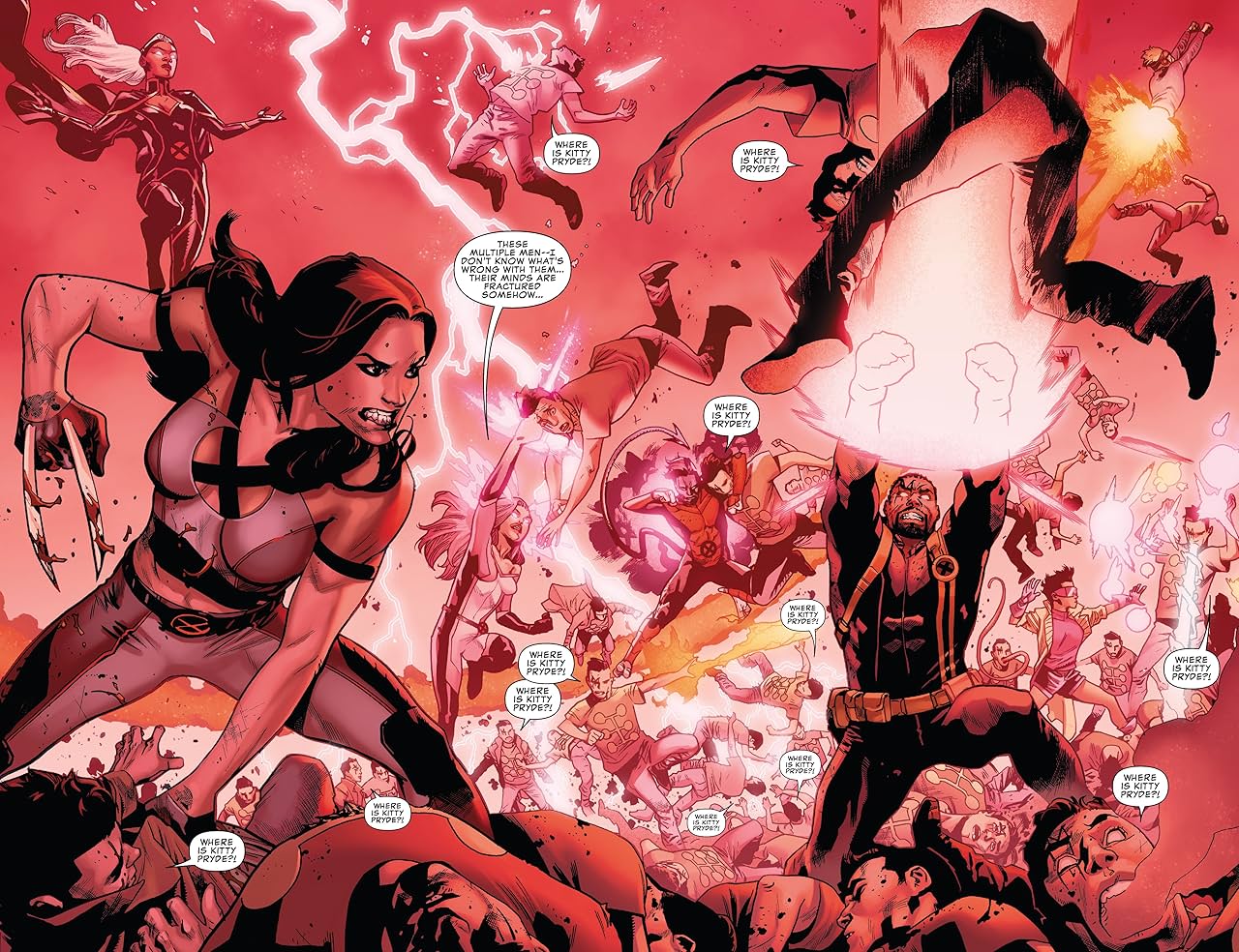
The following is a review for “X-men Red #9” that I wrote for PopMatters. Enjoy!
Marvel’s ‘X-men Red #9’ Gets into Psychic Wargames and Battling Ideas

The following is a review for “X-men Red #9” that I wrote for PopMatters. Enjoy!
Marvel’s ‘X-men Red #9’ Gets into Psychic Wargames and Battling Ideas

Who doesn’t enjoy a good quickie? When you think about it, there’s something wholly pragmatic about the concept, just getting sexy and getting the job. There doesn’t have to be an elaborate setup or a drawn-out act of passion. It can be quick, brief, and effective. We value that sort of efficiency in every other part of our lives. Why not apply it to our love lives?
Quickies get a bad rap, in my opinion. They’re seen as shallow and unromantic. I respectfully disagree. I believe they can be a powerful tool in our romantic arsenal. When used correctly, they can compound our passions rather than undercut them. The key is using them correctly, which I believe is possible, but difficult.
The following Daily Sexy Musing attempts to apply the power of the quickie. There is a right way and a wrong way to go about it. When done wrong, it can be pretty bland. When done right, though, it can be a special kind of sexy. Enjoy!
I walk into a room. There’s no candles, no fancy dinner, and no fancy lingerie. There’s only you and me, two lovers in a private setting. That’s all we need. That’s all we’ve ever needed. This time, however, there’s no room for seduction. I tell you with my gaze that I intend to skip every typical step from seduction to afterglow.
We skip the banter.
We skip the teasing.
We skip the ambience.
We skip the theatrics and get right to the good stuff.
I don’t say a word and neither do you. We just approach one another and let primal instincts do the rest. Somewhere between our first gaze and our first embrace, our clothes come off. There’s no theatrics or coy antics. We know what we want, we remove the barriers, and we go about getting it.
Now naked and free, we kiss and we touch. We don’t bother being gentle. Our needs outweigh our wants. Our every passion is channeled, focused a singular task. We crave each other’s love in its most basic form. A simple kiss, a simple touch, and a simple gesture is all it takes. From there, we take a short-cut to ecstasy.
There’s no wasted effort.
There’s no wasted breath.
There’s no wasted energy.
We don’t even make it to the bedroom. Any enclosing or piece of furniture that can accommodate our presence will do. We find the nearest site. We align our bodies accordingly. From there, our flesh unites and everything falls into place.
We don’t hold back.
We don’t draw it out.
We don’t squander a single moment.
Every movement takes us closer and every touch draws us nearer. It’s the ultimate shortcut, a direct route to the heights of passion. We let ourselves be reckless and greedy, allowing our lust to subvert our love. The end result is the same, a sweet release of euphoria between us. It’s takes only moments, but the impacts run much deeper.
It’s quick, but meaningful. We get what we want and we cherish the feeling. No words are needed. No explanation is necessary. We can make love like angels and mate like animals in heat. One way or another, our passion finds a way. Some are just more direct than others.
Filed under Daily Sexy Musings

Some characters are iconic from the get-go. Spider-Man, Superman, Wonder Woman, and Batman all managed to establish themselves as special early on in their history. They’re the lucky ones, though. Most characters have to go through a long, arduous process to reach the top tier of superhero icons. A lot of them never make it, but those that do are special in their own right.
These days, the character who best embodies that spirit is Carol Danvers. You don’t have to go back too far to remember a time when she was relegated to the superhero B-list. As Ms. Marvel, she had her share of fans. I was one of them. She also had her place in the annuls of Marvel lore. However, she was never able to break through and join that elite club occupied almost exclusively of Stan Lee creations.
That all changed when Kelly Sue DeConnick came along and reinvented Carol Danvers as Captain Marvel in 2012. That process, which has since become one of my favorite runs on a comic book series of the past 10 years, helped Carol finally break into the upper echelon of superheroes. With a movie coming out in 2019 staring Brie Larson, it’s safe to say she’s entrenched.

I could write a dozen articles about why Carol Danvers’ character resonates more now than it did when she first showed up in 1968. I’ve already mentioned some of the unique challenges she faces as she enters rarefied air among Marvel heroes and female superheroes, in general. However, I want to focus on one particular aspect of her character that helps her stand out.
As it just so happens, it’s also part of her character that recently underwent a major upheaval in the comics. Among other comic book fans, it has been controversial. I’ve certainly seen more than a little whining on message boards and Reddit. I have my share of criticisms too, but I intend to justify why I believe this is a promising new era for Carol “Captain Marvel” Danvers.

The upheaval in question occurred in a recently-launched mini-series called “The Life of Captain Marvel.” Written by Margaret Stohl, who has been guiding Carol’s journey for several years now, I cannot recommend this series enough. It is, by far, one of the best Carol Danvers stories ever written. Years from now, it will likely mark a major turning point for her story.
That’s because Stohl does something that’s both critical and controversial to Carol’s history. She makes a major alteration to an aspect of Carol’s life that doesn’t change her past, but puts it in a very different perspective. That change, in my opinion, makes Carol a much more intriguing character.
If you want to avoid spoilers, you should probably stop reading here and check out the series. Again, I highly recommend it. The big change, however, takes place in the fourth issue. Here, her mother, Marie, drops a bombshell revelation on Carol that rocks her world. She reveals that she’s half-human and half-alien. Specifically, she’s half-Kree.

Anyone who saw “Guardians of the Galaxy” knows why that’s a big deal.
Anyone who has a passing knowledge of Marvel history knows why that’s a huge deal.
The fact that she’s half-alien isn’t that unique. Peter “Starlord” Quill has a similar heritage. The reason it’s such a big deal for Carol is because it changes the context of how she got her powers and the role she plays in the greater Marvel universe.
Before this change, Carol’s powers were somewhat of an afterthought. Like Spider-Man, they were the result of an accident. Her’s just involved alien device called the Psyche Magnetron. She got caught in an explosion and that explosion allegedly fused her DNA with Kree DNA to give her superpowers. It’s not the most contrived origins story, but it’s not exactly epic.

To some extent, getting her powers by accident undercut all the work she did before that. Even without powers, she managed to carve out a successful career in the air force and NASA. That work became somewhat superfluous once she got superpowers. Unlike Peter Parker, she was already on a heroic path. Getting powers just seemed like skipping a bunch of steps.
With the revelation by her mother, there’s more connective tissue between her journey as Carol Danvers and her journey as Captain Marvel. Her mother, who comes out as a full-blooded Kree warrior, tells Carol that the accident wasn’t the sole cause of her abilities. It was just the catalyst. These are her exact words.
“What humans see as Kree powers are just our biological adaptations to a life of combat. They’re triggered in battle, usually around adolescence. Sadly, most of us have known war by then.”
This implies that even if she hadn’t been caught in the crossfire of the Psyche Magnetron, her Kree abilities would’ve come out at some point. For some fans, including die-hard Captain Marvel fans, it feels like this is denigrating her origins. I respectfully disagree with that notion. I believe this gives Carol’s story a new kind of appeal.

In terms of how superheroes become iconic, how they get their powers and how they choose to use them plays a huge part in their appeal. I would argue that just making Carol an ordinary human who got caught in an accident has limited appeal. Like I said before, she’s not Peter Parker. She’s not an average person. She’s more like Batman in that she’s an overachiever who strives to do more.
Her being half-Kree adds a new dynamic to the mix because it makes Carol a product of two different worlds. She is born on Earth and lives her whole life as a human. However, she now has this alien heritage that has already influenced her life in ways she didn’t understand. You need only look at the mass appeal of Superman to see why that story is compelling.
Being half-Kree means Carol suddenly has a connection to a race that has waged war on Earth before. She also has a connection to a world that has blatantly experimented on humans before. At the same time, her human life wasn’t exactly ideal. Unlike Superman, she was not raised by picture perfect parents like the Kents.

Her mother, despite being a Kree warrior, was in an unstable relationship with Carol’s very human father. Their family suffered a devastating loss when Carol’s brother, Steve, died in combat. They never really recovered from that and, for most of Carol’s history, that loss kept her parents as a side-note at best in her journey.
With Carol’s mother being a Kree warrior, it changes her into something more than a woman who stayed in a bad marriage. It adds more layers to why she and her husband clashed. Even in the first few issues of “The Life of Captain Marvel,” her father comes off as a generic asshole. Finding out he was dealing with an alien wife makes his struggles a lot less generic.
In many ways, Carol’s parents represent her divided heritage. Her father didn’t want her embracing her Kree side and fighting alien wars. Having already lost a son, who can blame him? Her mother didn’t want to stop Carol from embracing both sides of her heritage, even though that was sure to leave her conflicted.

It effectively connects Carol’s superhero journey with that of her family. Those journeys involve some heavy losses, painful secrets, and destructive alcoholism. It’s something you’re not going to find with Superman, Spider-Man, Batman, or any of the X-men. It leaves Carol Danvers in an uncertain, but promising state.
It’s not yet clear how much of Stohl’s revisions will find their way into the “Captain Marvel” movie. To some extent, it helps that Carol’s origin isn’t as iconic as that of other heroes. The Marvel Cinematic Universe has already done some considerable tweaks to certain characters to make them fit the narrative. I have a feeling we’ll see plenty of that in the movie.

However things plays out on the big screen for Carol, I think her story in the comics just became a lot more interesting. I know there are some fans upset by this. I’ll even concede there are some parts of this revision I don’t care for. There was some appeal to Carol just being an ordinary human who worked her ass off to achieve what she did.
Every major revelation or retcon in a comic or movie comes at a price. You’re bound to upset some people. That’s unavoidable in a world full of such diverse tastes. However, I believe that Carol gained much more than she lost in “The Life of Captain Marvel.” I believe she’s bound to gain a whole lot more, both through her movie and through the new host of stories that can be told.
Whatever the case, I hope Brie Larson takes plenty of notes.


A while back, I wrote a musing about the added sexiness of late night loving. I had a lot of fun with that, contemplating all the lurid things adventurous lovers might do under the cover of darkness. When the sun goes down and people get restless, they’ll find creative ways to occupy their passions. It’s a beautiful thing.
In the preface for that musing, I mentioned that I’m not a night owl. However, I am very much a morning person. In fact, I would go so far as to say I’m kind of morning person that does his best work and his best loving at the crack of dawn. That may sound strange to those who struggle to get out of bed, but that’s how I’m wired and I make no apologies for it.
In that spirit, the following Daily Sexy Musing is a testament to the spirit of early-morning people like myself. More specifically, it’s also an exercise in how that spirit can be channeled into intimate endeavors. Enjoy!
The sun has risen. The first rays enter the window, illuminating our domain and our sleeping bodies. The light hits me and my eyes open. I sense you lying next to me. I remember how we entered the bed, tired and drained. Now, that is no longer the cast.
My body is rested.
My mind is clear.
My heart is eager to start the day.
We work so hard, every other minute of the scarce time we have in this world. We reserve so many moments for the tedious act of living, toiling and struggling in the name of sustenance. To sacrifice so many waking hours, we want and need a sliver of temporal bliss, if only to remember why the rising sun matters.
That moment is here.
That time is now.
I roll over and stir you from your slumber. I find that you’re already awake. Your eyes go from groggy to alert in an instant. You feel it too, the light of the sunrise warming our flesh. Gone is the darkness and all the exhaustion that came with it. We are recharged and reinvigorated. What are two lovers to do with so much energy?
I smile at you and you smile back. No words are necessary. We know what we want. The world is still waking up, but we’re already roused. For some, making love is an endgame for a long day. For us, it is a catalyst.
We waste no time. There’s no need to remove any clothes. We’re already naked, a proactive act from the night before. We skip the theatrics, logistics, and setups of intimacy. We’re already there. Like starting the race at the finish line, what we desire is literally lying next to us.
Under the morning sun, our naked skin touches.
Under the morning sun, our love is illuminated.
Under the morning sun, our passions are ignited.
Like a spark triggering a firestorm, a simple awakening becomes an intimate journey. Rested and rejuvenated, we are at our strongest. As such, our love is at its most powerful. The fruits of peaceful slumber taste so sweet. Lips, skin, and gasps of bliss signal the start of new day.
The sun is now risen. Our love has been made. From here on out, our day can only get better.
Filed under Daily Sexy Musings

Whenever a tyrannical power gains influence, it’s only a matter of time before it attempts to control sex and subvert love. Whether it’s a theocracy like “The Handmaid’s Tale” or a communist dictatorship like North Korea, those in power will eventually get to it. It’s just a matter of how repressive they dare to be.
When it comes to the extremes of authoritarianism, those envisioned by George Orwell are the standards by which all are measured. Whether they’re fictional tyrannies like those in “Star Wars” or real-life autocracies like Nazi Germany, the extent of their repression is best measured by contrasting it with the one Orwell crafted in “1984.”

This isn’t the first time I’ve cited that book or Orwell’s writing, but I do so for a reason and it’s not just because it’s one of my favorite novels. The narrative Orwell envisioned took our understanding of repression and pushed it to its greatest extremes. On every level, the world of “1984” is a worst-case-scenario for anyone who values freedom.
Under the ruling party, Ingsoc, every aspect of human life is controlled, managed, or outright subverted. That includes sex, but it’s certainly not limited to it. Through institutions like the ironically-named Ministry of Love and the Junior Anti-Sex League, people aren’t just shamed or bullied into certain sexual practices. They’re tortured, brainwashed, and forced into it.
It’s a level of control that the Catholic Church, the religious right, and even conservative Muslims would find excessive. It’s also an important part of the story because so much of the events surrounding “1984” emerge from Winston’s relationship with Julia. In fact, the love they share is framed one of the biggest threats to the party.

That, in and of itself, is extremely telling of the power of sex and the love that emerges from it. Even in a world in which the repression is so complete that the party can convince people that two plus two equals five, it still has a problem dealing with sex. If Big Brother can’t manage it, then what hope does the Vatican have?
I ask that question within the context of “1984” because I’m seeing more and more issues inevitably link back to sexuality. It’s not just from religious institutions, though. They’ve made their eagerness to shape sexuality to serve their interests known for centuries. They aren’t always overt about it, but it’s not too hard to understand why they want their adherents having sex only for procreation.

For them, linking sex to making babies means all those sexual thoughts people have will result in more adherents. More adherents means more money. More money means more power and influence. It’s often cloaked in sin and morality, but this is the ultimate byproduct of their sexual morals.
However, it’s at the other end of the spectrum where a different, but powerful kind of sexual subversion is at work. The link isn’t quite as obvious as those espoused by religious institutions, but it is there in that the byproduct is the same and the underlying themes are richly reflected in “1984.”
On that end of the spectrum are those who identify as secular, but still hold extreme ideologies. This includes extreme brands of feminism, social justice ideology, and even old school communism. These are people who don’t just want to reform the current system through political and social discourse. They seek to overthrow the system and replace it with their own Utopian ideal.

Like the religious zealots they often clash with, they see the current order as oppressive. Whether it’s a religious sect facing persecution or the historical oppression against anyone who isn’t part of a historic majority, these individuals see revolution as the only way to right these wrongs. Part of that revolution involves destroying sex, albeit indirectly.
Whereas religious zealots rely on outright censorship, those on the opposite end employ a more subtle approach. They denigrate and bemoan sexual imagery, be it in video game characters or a shirt somebody happens to be wearing. They obsess over inequities and victimization, singling out egregious crimes while ignoring others that don’t fit the narrative.
Some will go so far as to claim sex as inherently oppressive. A few radical feminists have gone so far as to say that the fundamentals of sex can only ever be oppressive. In the same way some religious preachers will shame someone for looking at anyone with lust, this ideology identifies anyone who has or pursues sex as an oppressor.

That might have been absurd several decades ago, but in the current state of outrage culture where the dress Jennifer Lawrence wears to a movie premier becomes a controversy, it’s steadily creeping into the discourse. Concepts like beauty are now oppressive to those not born with beautiful bodies. Anything that may titillate or excite is seen as dangerous or damaging to the oppressed.
It’s at a point where the idea of people seeking any kind of release outside the narrative espoused by extremists is pathologized. For religious zealots, it’s sinful. For the non-religious extremists, it’s oppressive. Both see it as something that needs to be reformed or envisioned.
Chances are these individuals don’t see themselves as the authoritarians depicted in “1984.” They still see themselves as the underdogs in a “Rocky” movie, fighting to win an epic battle against an oppressive bully. Beyond being an absurd conflation of what they’re fighting for, this very approach is envisioned by Orwell and is key to empowering Ingsoc.

In the world of “1984,” the Ministry of Truth builds a similar narrative for the masses. They’re told that prior to Ingsoc taking power, the world was a terrible, oppressive place. It was only by rallying around the party and Big Brother that they were able to triumph. Moreover, it’s through the wisdom and guidance of the party that they escape this oppression.
Part of that process involves reshaping/subverting sex. In “1984,” the party isn’t just looking to control it. They seek to destroy it. The Junior Anti-Sex League even says it outright at one point.
“The sex inherent aptitude will be eradicated. Reproduction will be a one-year formality like the reclamation of a ration card. We shall get rid of the orgasm.”
Even by extreme repression standards, this seems extreme. It might even seem like something that would give zealots of all types pause. However, Orwell’s way of justifying such extremes reveal more than just a twisted ideology. He ends up exposing why sex is such a huge concern for any extreme ideology.
“When you make love you’re using up energy; and afterwards you feel happy and don’t give a damn for anything. They can’t bear you to feel like that. They want you to be bursting with energy all the time. All this marching up and down and cheering and waving flags is simply sex gone sour. If you’re happy inside yourself, why should you get excited about Big Brother?”
Read over that quote again, but replace Big Brother with the name of any religious sect or political ideology. It has the same meaning and the same implications. In order for both the zealots and the radicals to achieve their goal, they have to destroy sex. It’s the only way they can achieve their Utopian ideal.
Religious zealots can’t shame or guilt people entirely out of wanting to enjoy sex for non-procreative purposes. They can certainly make it difficult and painful for many, even to the point of serious abuse, but it never works in the long run. The drive to just want to hump for fun is too strong.

Certain brands of radical feminism have a similar issue. They can’t stop straight men from enjoying the sight of a beautiful woman. They can’t stop anyone from wanting to enjoy something different in their sex lives that they don’t like. No matter how much they’re triggered, it doesn’t turn off that powerful, instinctual drive.
In “1984,” the party actively works towards destroying that drive through technology. This is a lot scarier now because that kind of technology is already in the works. In theory, an extremely repressive religious zealot or a very regressive feminist could turn the implants in development at Neuralink into something that removes all pleasure from sex.
From there, they could redirect that energy into serving their ideology/religion. The procreative function could still be utilized, but only to the extent that it’s necessary. That may not be the ultimate goal. It’s not even the ultimate goal of Ingsoc. It’s just necessary in the grand scheme of pursuing and securing power.

As it stands, those in the religious right and other extremist circles aren’t remotely close to gaining the influence and control exercised by Big Brother in “1984.” Logistically speaking, it’s impossible for them because subverting human nature requires an understanding of it and the scientific process for achieving that understanding rarely adheres to ideology.
It still says something about their goals when the only way to achieve them in the long run requires that they destroy sex. I don’t think it’s a coincidence that Orwell built a major part of “1984” around two characters falling in love and experiencing the joys of the sex act. That proved to be one of most powerful ways for them to oppose the party.

To that extent, Orwell’s understanding of sexuality is nothing short of prophetic in terms of how revolutionaries on both ends of the political spectrum view it. In an Orwellian world, sex and love aren’t just a hindrance to a revolution. They’re an outright threat.
The fact that it took repression on the level of Big Brother to confront that threat is a testament to the power of sex and love. If Big Brother couldn’t contain it, then what hope does any religion or ideology have?

Some people are night owls. Whatever they do, be it dancing at clubs or underwater basket weaving, they just function best at night. I am not one of those people. I never have been. I’m a morning person, by nature. I do my best work bright and early, whether it’s writing a sexy story or working out.
While I tend not to function as well at night, I can appreciate the appeal it has for some people. I’ve been out late at night before. There’s something inherently exciting and even a little sexy when it’s dark, quiet, and eerie. It’s like hiding in a shadow, free from scorn and scrutiny. It allows us to be a little bolder. For some, it allows us to be a little naughty as well.
What follows is a Daily Sexy Musing dedicated all those naughty things we do under cover of night. Whether it’s sneaking over to see your lover or just sneaking in a shot of whiskey past midnight, it adds a little spice to our lives and that’s worth celebrating.
The clock strikes midnight. Then, it passes. The air gets colder. Every light gets a little dimmer, from the moon to a candle. It’s like a blanket covering every inch of land. None can escape its grasp, but I’ve no intention of running towards the light.
I got your call. Your voice is so soft, yet it booms in the late hour. While everyone else sleeps, your loins are wide awake. You want me. You need me. I’ve no intention of denying you. No matter the hour, my passions keep me alert. They guide me to you and my legs cannot carry me fast enough.
Through the darkness, your love finds me.
Through the late hours, your lust rouses me.
Through the blackest night, your presence lures me in.
For once, darkness is an ally and not an obstacle. Too many people are home resting. Too few people are out and about, creating noise and prying eyes. It’s like the entire world is letting its guard down. I don’t have to filter my feelings. From the most romantic to the most lurid, I can follow every one of them with impunity.
When we finally meet, it’s like the darkness is affirms our every whim. It surrounds us in its protective shroud, hiding us from the constraints that attempt to contain our wildest whims. In broad daylight, there’s only so much we can do to express our love. Without that daylight, we are truly free. It’s as if the night is daring us. Except, we don’t need to be dared.
In the darkness, I don’t just want to make love.
In the darkness, I don’t just want to hold you.
In the darkness, I don’t want to settle for something careful and safe.
Together, we find a place that neither the sun nor moon can hope to reach. I smile at you and you smile at me. You have the look of the most angelic angel and the most devious demon at the same time. You’re not going to be gentle with me. I intend to return the favor.
Under cover of night, we don’t just get undressed. We rip our clothes off.
Under cover of night, we don’t just make love. We ravage one another with our passions.
There is no restraint, limit, or burden. There is only us and our passion, unfiltered and raw. Under the light, it is a lurid spectacle. In the late hours of the night, it is real. Thanks to the darkness, though, it is ours.
Filed under Daily Sexy Musings

I like to cuddle. No, I don’t consider that unmanly. No, I’m not going to apologize for it. In the same way I’m an unapologetic romantic who admits to sleeping naked, I happily say outright that I enjoy cuddling. If you think less of me because of that, then that’s your problem.
I don’t know when it became cool for men to despise something as simple as cuddling. For reasons I don’t understand, it’s one of those things that people consider girly. Saying you enjoy cuddling is the same as admitting you have shriveled balls and bad breath. Even among women, it’ll get most men awkward looks.
I think that’s one of the many gender-driven tropes that we need to crush with a 50-ton boulder and a gallon of napalm. I know from my experience with ex-girlfriends that cuddling can be fun, sexy, and even a little kinky if you do it right. I won’t get into specifics, but if any of my ex-girlfriends are reading this, I hope I conjured some pleasant memories.
I doubt I’ll convince anyone that cuddling can be both sexy and manly today, but I can couple it with my weekly does of Sexy Sunday Thoughts. If nothing else, I hope this convinces you to try a little extra cuddling with your lover the next chance you get. You may be surprised by how much you enjoy it.
“Drinking and driving is dangerous, but drinking and flirting is hilarious.”

“Having big balls is the only compliment that can also be a diagnosis.”

“Finding a lover is like finding a G-spot in that it can be pretty messy, but rewarding.”

“When you think about it, every romantic endeavor contains some element of prostitution.”

“Cuddling is just a PG version of foreplay.”

“Food critics and oral sex enthusiasts utilize similar methods in refining their craft.”

“A fashion statement is just someone silently proclaiming how far they’re willing to go to get laid.”

I hope that put everyone in a more cuddly mood. The weather is starting to change. We have at least six months of cold weather ahead of us. Now is as good a time as any to exercise your cuddling skills. It can help keep you warm, save money on heating, and enhance your sex life. What’s not to love?
Filed under Sexy Sunday Thoughts

When “Wonder Woman Earth One: Volume 1” came out in 2016, it was groundbreaking in how it re-imagined Wonder Woman while reconnecting her with her kinkier roots. For years, she’d been moving away from the unique brand of feminism that her creator, William Moulton Marston, had once defined her. This culminated in her 2017 movie in which all the BDSM connotation were purged from her persona.
While many creative forces over multiple decades turned Wonder Woman into someone very different from her creator had intended, Grant Morrison and Yanick Paquette went in the opposite direction. They dared to embrace the kinks and reshape Wonder Woman’s story in a way that works while retaining Marston’s original themes.
That story remains one of my favorite Wonder Woman stories of all time and one I’ve gone out of my way to praise. Finally, after a two-year wait and a prolonged absence of kink from superhero comics, “Wonder Woman Earth One: Volume 2” has arrived. Fans of warrior women, feminist utopias, and not-so-subtle bondage themes can rejoice.

Like any sequel, it faces the inescapable challenge of matching the high bar set by its predecessor. On top of that, it also has to dig deeper into an aspect of Wonder Woman that generations of writers have tried to overwrite or ignore. Even with an elevated profile, thanks to her movie, this is a part of Wonder Woman’s persona that is largely unknown or undeveloped.
The greatest challenge of Volume 1 was to reintroduce Marston’s radical concepts of love, submission, and domination in a way that didn’t feel like bad fan fiction. Morrison and Paquette succeeded by building the story around this dazzling, techno-feminist utopia on a mythology built on ideas that seem antithetical to the world dominated by lies, mistrust, and cynicism.
If the goal of that story was to affirm the potential of these ideas, then “Wonder Woman Earth One: Volume 2” is built around how those ideas are challenged. It’s one thing to defend them on an island paradise populated by immortal warrior women of unyielding compassion. It’s quite another to defend them in a world where gay frogs inspire conspiracy theories.

Wonder Woman’s situation is considerably different this time around. She’s not insulated on her island paradise. She’s well-known public figure, an established superhero, and a vocal proponent for her radical ideology. She presents it as a viable way of achieving peace and justice in a world full of suffering and hatred. Unlike other wide-eyed idealists, she comes off as entirely genuine.
Not surprisingly, the world isn’t eager to sign up for her novel approach of peace through submission to a loving authority. It doesn’t just come from grumpy old men who only want women to make babies and sandwiches, either. Even among other women, her ideas are challenged and deconstructed throughout the story.
What does it even mean to submit to a loving authority?
Why is she so sure that it’ll work in the world outside her idyllic homeland?
How are men supposed to approach this concept?
How far is she willing to go to implement her ideas?
These are all difficult questions that get asked throughout the story. Wonder Woman doesn’t avoid these questions, but she doesn’t get a chance to answer them either. Even though she is celebrated by many, nobody seems capable of embracing her ideology as completely as her.
To further complicate this challenge, Nazis enter the picture. Trust me, it’s not as shallow as it sounds. The story isn’t built around Wonder Woman acting like Captain America, traveling the world and punching Nazis. In fact, the way she handles her enemies in this story is very different to the methods she used in the “Wonder Woman” movie. However, that’s where the story gains both complications and nuance.

Through a few flashbacks and side-plots, we get to see how Wonder Woman’s ideology confronts something that’s completely antithetical to everything she stands for. Initially, it looks like her approach works. She’s so compassionate and so empathetic that she can take violent, hate-filled Nazis and redeem their souls. That’s where the complications come in.
In both the events that unfolded in the past and those that play out in the present, we see shortcoming of Wonder Woman’s ideals. It’s not that someone taints or disproves them. As the conflict plays out, we see how the components necessary to make her ideology work aren’t as abundant as they are in her homeland. As a result, Wonder Woman pays a price for her idealism and it’s a steep, heartbreaking price.
Not all of it is a direct result of her ideology, though. Wonder Woman also deals with a devious adversary in Dr. Psycho, who effectively turns her ideals against her. He doesn’t just question or deconstruct the merits of submission to a loving authority. He manipulates them to his own ends, which plays right into the hands of her critics.

It’s tragic in that it leads to heartache for Wonder Woman and her friends, but it stops short of breaking her. This is Wonder Woman, after all. Loss, defeat, and criticism do not break her. No mortal or God can break her. Those are her words, not mine. These challenges, however, put her in a difficult position where she has to confront unpleasant truths.
Without spoiling too many plot points, I’ll note that Wonder Woman comes to realize that there are grater complexities to loving submission than she ever could’ve realized. She sees first-hand how difficult it is to get someone to willingly submit in a world where weakness can invite harm, exploitation, and injustice. Just preaching her message isn’t enough. By not doing more, it costs her and those she cares about.
In terms of the larger narrative, “Wonder Woman Earth One: Volume 2” is a wonderfully effective evolution of the world that Morrison and Paquette created. Along the way, the story continues to embrace the unique principles of the original iteration of Wonder Woman that Marston crafted in 1942.

Not entirely, that is.
If there’s any shortcoming to the narrative, it’s how incomplete it feels at the end. It’s not a cliff-hanger, but there are many lingering plot threads that don’t get resolved. Granted, it says on the final page that there is a Volume 3 planned for this series. Given the two-year gap in between this book and its predecessor, the wait seems nothing short of agonizing.
Even with those dangling threads, “Wonder Woman Earth One: Volume 2” is still a complete Wonder Woman story that’s unlike anything you’ll get in the movies or comics. If I had to score it, I would give it a 9 out of 10. The lack of resolution at the end is the only thing keeping it from a perfect score. It still gets so many things right about who Wonder Woman is and why she’s so endearing.

The fact that she can be endearing while retaining the radical spirit that Marston had envisioned helps make “Wonder Woman Earth One: Volume 2” all the more remarkable. She’s not just a fierce warrior woman. She’s the personification of a different approach to gender, power, and love. It may seem bizarre and kinky to us, but it has powerful implications for people of any gender.
It doesn’t go overboard with the BDSM undertones, nor does it focus heavily on gender politics. They are mentioned, but not forced into the plot. There are things Wonder Woman does that feminists, conservatives, and BDSM fans can get behind. At every turn, she carries herself as someone who is willing to embrace everyone. It’s that unconditional, universal compassion that makes her Wonder Woman.

The following is a review I did for PopMatters for “The Life of Captain Marvel #4.”
Carol Danver’s Past Has a Twist in “The Life of Captain Marvel #4”