Category Archives: Marriage and Relationships

More Women Are Watching Porn (And Why That’s A Good Thing)

I don’t often talk about the porn industry on this blog. I know that sounds like an oversight, but it’s a deliberate oversight. In my experience, porn is just one of those things that either bothers certain people to no end or is just shrugged off by everyone else.

We know it exists. We know it’s a big business that has always existed, to some extent. Sure, it’s controversial. Some still try to fight it, but to date, nobody has ever won that fight and the sheer amount of porn that exists is proof of that.

As an aspiring erotica/romance writer, who also happens to be a straight man with an internet connection, I’m very much aware of porn, the industry that makes it, and the consumer base that fuels it. While erotica novels aren’t quite as taboo as porn, it does have many similarities. “50 Shades of Grey” proved those similarities aren’t that subtle.

In addition, those same trends can also reflect evolving attitudes towards sex, sexuality, and how people treat intimacy. One might be forgiven for thinking that everything involving sex, intimacy, and how we consume erotic content is devolving into chaos. However, in the midst of all these unsexy trends, I’d like to offer some news that should further complicate the evolving sexual landscape.

According to recent data released by PornHub, also known as the most popular porn site on the internet, 2017 saw the biggest surge in porn consumption came from women. More specifically, the search term “porn for women” increased in popularity by 359 percent. Even if you’re terrible at math, you understand that’s a significant increase.

It’s an increase that the porn industry is noticing, among others. They kind of have to notice it because women still make up half the population last I checked. Even though catering to mostly men has helped make porn a multi-billion dollar industry, it still has room to grow and women are the key, just not in the way the industry is used to.

Whether it’s due to the impact of “50 Shades of Grey” or the impact that feminism has had over the past few decades, more women are consuming porn than ever. Granted, that could just be because more women are willing to admit it, but the data is there. This is happening, regardless of what men or other women say about it.

The type of porn they’re consuming is also noteworthy, if only because their patterns of consumption are different from those of men. According to Vice.com, the type of porn women search for varies in terms of theme and genre. They’re not wildly different from men, but it does highlight some differences in terms of the erotic content both genders pursue.

While I’d love to talk more about the types of adult content women are seeking, if only to highlight how I can work that content into my novels, there’s a particular detail to this story that I want to highlight. I have a feeling it’ll be controversial for some. I’m willing to take that risk because I think this is worth saying.

More women consuming porn is a GOOD thing for both genders.

Take a moment to finish rolling your eyes. I understand that sounds exactly like something a man who regularly writes about sex robots and sex-positive superheroes would say. That doesn’t make the statement any less valid.

While I won’t claim that trends in women consuming porn are all good, as the breadth of human nature is far too broad for a claim that bold, I strongly believe that this is one of those trends where the positives outweigh the negatives. It’s not just because it shows women are more comfortable exploring sexy things. I actually think the positives run much deeper than that.

That’s because in recent years, the porn industry has only ever made headlines for all the wrong reasons. Between the recent spike in porn stars committing suicide and uptight politicians declaring it a public health crisis, it’s safe to say that porn has a public image problem, to put it mildly. However, I think the foundation of that problem goes beyond the explicit content behind it.

To illustrate that, it’s necessary to point out an unusual quirk in the effects of porn on men compared to women. There have been plenty of studies on how porn affects men. Some of it documents negative effects while others reveal positive or no effects. For women, though, the effects are considerably different.

It often occurs whenever there’s a correlation between a negative consequence, like broken relationships and porn consumption. Whenever that correlation exists for men, it rarely occurs to the same extent, if at all, for women. That means that even if there are harmful effects of porn consumption, it does not affect women as much as men.

most-sexually-charged-excerpts-from-erotica-books

To further complicate those insights, as often tends to happen in sexually-charged issues, research has shown that couples who watch porn together are either not negatively affected or enjoy greater levels of satisfaction. That means when it comes to the effects of porn, context and attitudes matters. I’ve mentioned the importance of context when it comes to assessing masculinity. It seems to apply even more to porn.

That’s why I believe women consuming more of it is a good thing, in terms of evolving that context. Unlike other hobbies, porn is unique in that it involves sex and sex often other people. When only one part of that equation is consuming the content, then that content is going to skew in the direction of those consumers. That’s just basic economics.

In this case, those skewed economics can have unpleasant consequences. To those who claim porn creates unrealistic expectations about sex, this is why that occurs. When the consumer base is so narrow, it’s going to become unbalanced. We saw that in the disparity of contraceptive development. Porn did the same.

Over time, that has the effect of narrowing the appeal of the content. To those not consuming that, it takes on a strange, if not taboo context. In the past, this has been reflected by women seeing men’s consumption of porn as creepy or perverse. It’s not unlike how comic books used to be seen as something for kids. Then, they evolved to capture a wider audience.

With women entering the consumer base, the porn industry has a chance to change that narrative. If women are watching more porn, then it becomes less taboo. On top of that, it expands the industry. I’ve talked before about how taboos fade or die off. One of the most potent ways taboos falter is when there are economic forces working against it.

In a sense, the best way for women to make the porn that men consume more equitable is to consume it themselves. By giving the industry a powerful incentive to balance out the content, they create the necessary incentives for producers to make the kind of erotic content that both gets them off and spices things up with their lover. It’s ironic that this is how to make the porn industry friendlier to women, but it’s also somewhat fitting.

As it stands, women’s taste in porn are still evolving and the industry is still figuring it out. However, there are a number of sites out there looking to tap this once overlooked market. In wake of the recent sexual misconduct scandals, there’s even a new sub-genre of porn called ethically produced porn. Think of it as fair-trade coffee for sex.

Regardless of how some feel about the porn industry, in general, or women entering a consumer base once dominated by men, their presence will have an impact. That impact may make some uncomfortable or upset at first, but I believe in the long term, it’ll be a net positive.

We’re entering a world where it’s not taboo for a woman to say she enjoys watching porn. It’s also a world where men don’t have to be as ashamed or secretive about their own porn consumption. I think when those respective taboos fade, it’ll be easier for men and women to have honest conversations about what they like, what turns them on, and everything in between.

Sure, it’ll be awkward. Men and women talking about their respective porn consumption is bound to cause more than a few stressful conversations. However, if the end result is a more open and honest understanding of our sex lives, then I honestly say that extra awkwardness is worth it.

2 Comments

Filed under gender issues, Marriage and Relationships, sex in media, sex in society, sexuality

Why The Anti-Harassment Movement May Make Open Relationships More Practical (And Necessary)

If history has shown us anything about the power of the human libido, it’s that people will find a way adapt their passions, even within strict, regressive situations. They did it during the pre-modern, pre-literate ancient eras from the Middle East to China. They did it during the he exceedingly prudish eras of the Puritans and Victorian England. They even find a way to do it today under brutally repressive regimes.

Love, sex, and everything in between finds a way. Even those who claim we’re in the midst of a full-fledged sex panic where the mere act of touching someone on the shoulder constitutes full-blown assault can’t deny that the human race has navigated such periods before. We literally wouldn’t be here if we hadn’t.

Even so, it’s still distressing to see a world that feels increasingly sensitive to certain desires, expressions, and attitudes. Between recent sex scandals and the noble, yet sometimes misguided efforts to combat sexual misconduct, it seems as though we’re entering a sexually regressive period where men and women can’t interact with one another out of fear that they’ll get labeled a sexist, a bigot, or something of the sort.

It may get worse before it gets better, but I believe we’ll find a way to navigate it. That’s not just me being an optimist. That’s me, the aspiring erotica/romance writer, acknowledging that our capacity for passion is difficult to contain. You can shame, scorn, and condemn it all you want. You’re never going to stop it.

No matter what extremes the ongoing crusade against sexual misconduct may manifest, people are still going to get horny. They’re still going to seek love. They’re still doing to pursue the passions that are so critical to the human experience. That’s just part of who we are. We’ll just have to find a way to adapt our approach to pursuing those passions.

As it stands, the current methods leave a lot to be desired, both literally and figuratively. I’ve already mentioned how the disconnect surrounding consent and the paradox of traditional romance aren’t that conducive to fostering intimate and romantic bonds. It still works for some, but I doubt it’ll work enough for coming generations, especially when those generations have so many emerging quirks.

As such, I’m going to take a step back and present a potential, but unorthodox recourse. It’s not a prediction. It’s not even all that radical because it’s happens already. I’ve already mentioned it before, but now I’m offering it as a more serious solution to an ongoing issue.

Open Relationships/Polyamory/Swinging/Non-Monogamy

Yes, I know it sounds exactly like something that someone who writes sexy novels might suggest. I also realize it’s one of those joke solutions you might hear from comedians, libertarians, or softcore porn. However, I’m dead serious with this suggestion.

I’m not implying that this is the future or the only solution for a society that may or may not be getting more sexually uptight. I’m simply suggesting the evolving social, cultural, and sexual landscape may very well make open relationships more viable, if not entirely pragmatic.

To understand how, it’s important to also understand how functional open relationships work. Like traditional relationships, there’s a right way and a wrong way to do it. It’s not nearly as lurid or kinky as sexy novels, bad porno, or reality TV would have you believe. There are ways to go about it and last year, Cracked.com offered a uniquely balanced insight into how such relationships work.

My Wife And I Are Swingers: Here’s What It’s Actually Like

The particulars aren’t quite as lurid as you think. It’s not necessarily something you’d find in one of my novels. However, there are a few themes that make a functional open relationship a better fit for the current year than what we’ve had in the past. Here are just a few of the traits.

  • Open, continuous, and outright excessive communication between partners
  • Clear, unambiguous understanding of desires and how to go about pursuing them
  • Rules, guidelines, and parameters for both partners to follow
  • A clear understanding of the difference between sexual and romantic intimacy
  • Emphasizing a significant degree of trust and faith in partners
  • Sufficient and overt empowerment of both parties, regardless of gender

Take a moment to go over these traits and then assess them within the context of the ongoing movement to combat sexual misconduct. In terms of creating a more equitable, robust relationship between partners, this sort of dynamic checks most boxes by default.

Good open relationships need a lot of communication. A major aspect of the current anti-harassment movement involves confusion regarding standards of consent. That’s a challenge when that very concept is still debated among some circles. There are instances where nobody is even sure what constitutes consent and it has ruined lives, as a result.

Open relationships don’t just belabor consent. They belabor all aspects of negotiating sex, romance, and intimacy. Those involved in functional open relationships understand the dynamics. It leaves less room for ambiguity and misunderstanding. That, in and of itself, is vital for those concerned with consent.

Beyond consent, open relationships require degrees of trust that are antithetical to notions that everyone of a particular gender or group is a monster. You really can’t have that kind of assumption with someone you trust in an open relationship. You have to actually believe in the love and lust they demonstrate for you. Otherwise, the relationship doesn’t work, regardless of whether it’s open.

For both opponents and proponents of the anti-harassment movement, these are critical elements to a successful relationship. They’re just a lot more emphasized in an open relationship. By emphasizing them, it’s easier to mitigate the ambiguities of evolving sexual norms. At a time when everyone is worried about being harassed or being accused, an open relationship already uses the necessary tools.

Beyond the practical and social aspects of open relationships, there are other unrelated forces at work that may make them more viable. In years past, open relationships were still prone to the same risks as general promiscuity. There was the risk of diseases, unplanned pregnancies, and all sorts of unsexy health issues.

Emerging technologies in the treatment of diseases, such as CRISPR and smart blood, combined with advances in contraception, like Vasalgel, and those risks are either minimized or eliminated. The concerns that might have kept some people from ever trying such a relationship won’t be an issue at some point, meaning open relationships could become a viable option to more people.

The circumstances are either already present or beginning to emerge. Add the growing use of social media to existing open relationships and the particulars become even more feasible. Emerging generations are already demonstrating an uncanny ability to forge connections in new ways. This could be one of them, albeit one made necessary by larger cultural forces.

Now, I’m not under the illusion that the practice of open relationships will benefit everybody. I don’t deny that there are some people who either just cannot handle open relationships or simply favor monogamy. There’s nothing wrong with that. In fact, those relationships need not be taboo or counterproductive to the never-ending effort to forge meaningful bonds. They should just be part of a more diverse tool kit.

There are still a great deal of unknowns, both in terms of how society handles open relationships and how society adapts to changing cultural trends. I imagine that certain divorce laws and marriage laws would need to be modified to accommodate these sorts of relationships, but that’s largely a bureaucratic matter that can be addressed with the proper application of well-paid lawyers.

However anyone might feel about the merits of open relationships or their feasibility in our current society, I think one thing is clear. Our current approach to forging romantic and sexual connections is not sufficient. The movement against sexual misconduct wouldn’t be necessary if it were.

That same movement isn’t going away anytime soon. It’s also going to result in plenty of changes to our culture and society, for better and for worse. It’s just a matter of how we adapt to them and, in the never-ending quest to fulfill our romantic and intimate desires, we’re going to find a way at some point. Of that, I’m certain.

7 Comments

Filed under Current Events, gender issues, Marriage and Relationships, polyamory, sex in society, sexuality

What Colossus And Kitty Pryde Of The X-men Can Teach Us About Love

I know it’s been a while since I talked about comic books, comic book romances, or general life lessons from comic books. As a self-proclaimed comic book fan who loves to tie that passion into other sexy topics, I feel like I owe myself and certain readers an apology. Consider this part of my effort to make up for it.

Just because I haven’t been writing about comics much lately doesn’t mean I haven’t been following them. It also doesn’t mean I’m not aware of the major developments unfolding in the comic book world. As I write this, there’s a lot going on, from Tony Stark’s return as Iron Man to the return of Superman’s iconic red trunks.

If you’re a comic book fan, though, you already know about this and I don’t need to say anything to get you excited. If you’re a comic book fan who also happens to be a big romance fan, there are other stories that excite you. I mentioned one late last year with the big announcement that Batman and Catwoman are getting married. Now, I have another.

Kitty Pryde and Colossus of the X-men are getting married too!

The big announcement was actually teased last November in the form of a wedding invitation that designated the summer of 2018 as the big day. It also highlighted some of Marvel’s most famous superhero marriages. Never mind the fact that Marvel has a shaky track record with married characters. It’s still exciting news, especially for X-men fans like me.

It’s big news for Marvel as well. They’re already promoting this as a major event for these characters and for the Marvel universe as a whole. Sure, it may just be their way of competing with the upcoming Batman/Catwoman wedding, but that doesn’t make the sentiment involved any less genuine. It also doesn’t make the promo video for X-men Gold #30, the wedding issue set to come out this summer, any less sweet.

I know Kitty Pryde and Colossus are not exactly on the same level as Superman and Lois Lane, Batman and Catwoman, Cyclops and Jean Grey, or even Deadpool and tacos. In the pantheon of superhero romances, they’re not exactly top five, but they’re not afterthoughts either.

Their romance has never been a major plot in an X-men movie, nor has it been a focus in any X-men cartoons. However, for those familiar with the X-men comics, this relationship is as special as it is unique. It’s one of those romances that blossomed in unique and sometimes controversial ways.

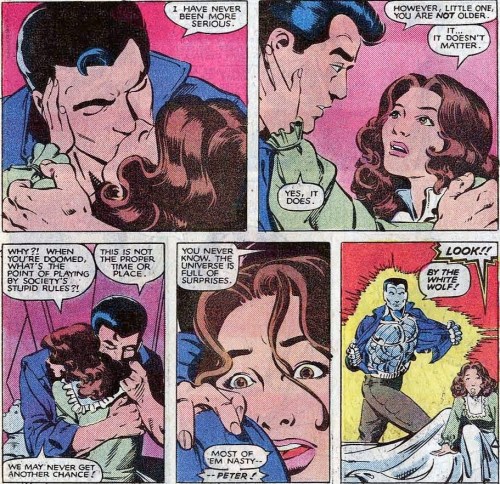
Chief among that controversy was the age difference between the characters when they first met. When Kitty first joined the X-men in Uncanny X-men #129, she was 14-years-old and Colossus was 19. Needless to say, it didn’t sit well with Marvel’s editors at the time when writer Chris Claremont had Kitty develop a crush on him.

That crush, however, never got as creepy as some of the other romances that Marvel had teased. As the characters grew, aged, and developed within the pages of the X-men comics, that teenage crush evolved into something more serious. Eventually, they developed one of those relationships where they always seemed to find their way back to one another.

I won’t recount all the chaotic elements of their romance. I’ll just point out there have been many times where they’ve gotten closer, been friend-zoned, ended up in other relationships, and even died on one another, which happens a lot in comics. I’ll also say that the love between Kitty Pryde and Colossus carries with it some unique insights into love, relationships, and how they blossom.

So, in the spirit of celebrating the upcoming nuptials of these fictional characters that I hold dear, I’d like to share some of those insights that translate into real-world lessons on love. Being both a romance fan and a comic book fan, I’m especially fond of the parallels that tie works of fiction into serious matters of the heart.

Whether or not the marriage of Kitty Pryde and Colossus lasts or prospers in the X-men comics remains to be seen. Regardless of Marvel’s poor track record with marriage, they’re a couple worth rooting for and this is what they can teach us.


Lesson #1: Failed Relationships Can Still Succeed

For many fictional romances, especially those involving superheroes, the romantic dynamics are often idealized, pure, and heavy on melodrama. They’re basically “Romeo and Juliet” with superpowers, built around a love that’s so pure it can only ever be corrupted by a horribly contrived love triangle.

Colossus and Kitty Pryde are decidedly not that. Theirs is a more clumsy romance, one where they sort of stumble their way towards one another. Throughout their history, they have tried to forge a relationship, but failed on multiple occasions, sometimes due to circumstances and sometimes due to hard choices.

In those failures, Kitty Pryde dated other men, like Pete Wisdom and Iceman. Colossus dated other women, like Domino. Along the way, they each followed their own stories. They each grew in their own way. They weren’t dependent on each other. They didn’t have to be together to become strong.

These failures may have derailed their romance at times, but it didn’t end their love or their desire to be together. Eventually, they found themselves in a position to act on that love in the pages of X-men Gold. Now, they’re getting married. Ironically, their past failures helped get them to that point.

Learn from failures in a relationship and build a better one from the ashes. That’s not just a critical lesson. In a world where the ideal love stories of “Romeo and Juliet” are reserved for high school English classes, it’s a much more realistic way to approach love.


Lesson #2: Love Who Someone Is Trying To Be (And Not What They Were)

This kind of gets into those creepier elements I mentioned earlier. It’s true. Kitty and Colossus had a sizable age gap when they first met. Age gaps in young romances are taboo and for good reasons, beyond just the legal reasons. However, that age gap hid another important lesson that Kitty and Colossus later embodied.

Beyond the basic flirty exchanges they had in their youth, Kitty Pryde distinguished herself as a special character by how quickly she grew and matured throughout the pages of Uncanny X-men. Sure, she was a vulnerable young girl when she first joined the X-men, but she didn’t stay that way.

The same goes for Colossus, who underwent more than his share of upheavals. Some of his greatest moments involved him trying to be a kinder, gentler soul, despite having the kind of obscene strength that steroid-laden meatheads can only envy.

Again, a lot of complications get in their way, as is often the case with superheroes, but whether or not they manage those complications isn’t the point. It’s who they’re trying to be, as individuals, that makes them who they are. It’s that striving that often draws them together. It’s that constant effort to be better that fuels their chemistry.

That chemistry is built less on who they are and more on who they’re trying to be. Kitty and Colossus saw who they were trying to be in the midst of the chaos that comes with being X-men. That’s the person they fell in love with and in a chaotic world where everyone has to better themselves just to keep up, that’s an important and underrated facet of love.


Lesson #3: Seek To Grow With AND Love Someone

This also ties, somewhat, to the age gap between Kitty Pryde and Colossus, but without the taboo. Age gaps matter when two people are young, immature, and don’t have a firm grasp of their emotions. They matter less and less at time goes on. I say that as someone whose parents have an age gap that’s actually wider than Kitty and Colossus.

In a sense, the age gap worked to Kitty and Colossus’ advantage because they didn’t just see each other in their impressionable youth. They actually watched each other grow into adults. While they weren’t always on the same team, they were able to grow together within a similar environment. In doing so, that innocent crush evolved into something deeper.

That’s an important distinction that a lot of young people, myself included, don’t often realize until much later in life. We focus so much on the here and now when it comes to loving someone that we forget that we’re still growing as individuals. Sometimes, two don’t realize we’re growing apart until it’s too late.

I’ve seen this happen in the real world with once strong relationships that just drift apart as the couple gets older. I’ve also seen it happen in the opposite direction, watching two people grow closer as they actually seek to grow with someone, as well as love them. Kitty Pryde and Colossus are a perfect embodiment of the latter.


Lesson #4: Let The Moment Be Right For Love (And Guide It If You Can)

I know I keep repeating this and it’s worth belaboring, but Kitty Pryde and Colossus had a lot of obstacles when it came to getting together, the least of which involved Colossus dying at one point. It’s worth belaboring because it reflects how hard these two had to work in order to get together over the course of several decades of X-men comics.

Within those complications, though, is an important lesson that best played out in Joss Whedon’s legendary run on Astonishing X-men. The circumstances aren’t always right for two people to come together. However, when that moment is right, don’t be afraid to act on it. You can’t force those moments. You can only let them unfold and embrace them.

For Kitty Pryde and Colossus, those moments were rare, but they weren’t random. When Colossus returned from the dead, they had every reason to just jump each other’s bone in an overly dramatic moment. They didn’t do that, though. They didn’t try to force that moment. They just led each other to it.

A similar situation unfolded in X-men Gold. They had an opportunity to jump back into their relationship, but they didn’t. Sure, they made excuses at first, which I found annoying, along with many other long-time X-men fans. However, by taking it slow and letting the moment come to them, it made the eventual culmination in X-men Gold #20 that much more satisfying.

You can’t force a romantic moment, nor should you. However, you can guide the situation towards those moments. If the love is strong, like it is with Kitty Pryde and Colossus, it’ll happen and it’ll be beautiful.


Lesson #5: Don’t Make Excuses For Loving (Or NOT Loving) Someone

This is a common and annoying trope with fictional romances. For those not built on love-at-first-sight or sickeningly-pure infatuation, a romantic sub-plot in most stories will be full of excuses on why they should not be together. Given my take on excuses, it should surprise no one how much this annoys me.

Kitty Pryde and Colossus made a lot more excuses than most and not just because of the early age gap. Sometimes it was because they were on different teams. Sometimes it was because they were caught up in other relationships. Sure, some of those excuses were valid, like being dead or trapped in a giant bullet flying through space. Those that kept them apart, however, were often shallow or contrived.

Now, some of this might have been due to whoever was writing the X-men comics at the time. As I’ve noted before, there have been instances where bias writers force contrived plots to keep certain characters apart. Chris Claremont’s efforts with Cyclops, Jean Grey, and Wolverine are well-documented.

The efforts surrounding Kitty Pryde and Colossus, though, never got that extreme. They also never undid the chemistry between them or fundamentally changed the elements that attracted them to one another. In that respect, they didn’t make excuses. They didn’t hide from those emotions, even if they avoided them. That ended up strengthening their relationship in the long run.

It’s another important lesson about excuses and reasons. When your reasons for not being with someone are built on excuses, then you’re missing the point. Kitty and Colossus stopped making excuses in X-men Gold #20. If they can do it, then there’s hope for everyone, real and fictional alike.


5 Comments

Filed under Comic Books, Jack Fisher, Superheroes, Marriage and Relationships, sexuality, X-men

An Important Question That Feminists And MRAs Must Answer (Honestly)

There are certain debates that I try to avoid. Sure, I’ll contribute to a debate between Marvel and DC fans. That often inspires some trolling, but it won’t inspire outright threats. When those debates revolve around unpleasant issues like race, religion, gender, or anything having to do with politics since last year’s election, I avoid it like the plague.

Every now and then, though, I feel compelled to at least comment on an ongoing debate. While I doubt that comment will resolve anything, I try to make sure it’s something worth adding to the conversation, if only to provide perspective. In my experience, perspective is the first thing lost when people start insulting each other’s mothers.

Before I started writing erotica/romance novels, I actually enjoyed debates. I thought they represented meaningful dialog. Then, I learned the hard way that the desire to win an argument often gets in the way of having productive discussions. There are few topics that don’t involve religion where this plays out more in gender issues.

Sometimes it’s between sex positive feminists and sex negative feminists. Sometimes it’s between feminists and men’s rights activists. Sometimes it’s between alpha males and beta males. In any case, the drama and the vitriol is the same. The sides of the argument are passionate and committed. Neither is likely to ever sway the other.

I can understand that, to some extent. There are undeniable gender disparities in this world, as well as a few subtle disparities that rarely come up in debates. I can also understand why certain people take the sides they do. Feminists, no matter what type they may be, are going to argue for women’s issues. MRAs, no matter how adversarial they may be to feminists, will take the side of men.

There are important issues that are worth debating, regardless of how much or how little you care about gender disparities. Even if neither side can completely win the argument, the debates do inspire all sorts of ideas that enrich everybody involved.

That being said, I still feel compelled to inject a little perspective into the debate. I think emotions on both sides are in overdrive after some pretty major sex scandals, which is fueling more outrage than discussion. As such, I’d like to reorient that perspective by asking one basic question to feminists, MRAs, and gender-driven ideologues of all types.

Do the goals of your ideology directly benefit you to the direct detriment of another?

It’s a yes-or-no question, but I imagine it’s one of those questions that few can answer honestly on a whim. That’s the key part that I want to emphasize. Anyone who answers this question, regardless of which side on gender issues they take, should answer this question with the kind of brutal honesty usually reserved for British TV personalities.

That’s because the question is twofold. The first part is somewhat a given. If you’re in the business of discussing gender issues, you usually have a goal. A part of that goal usually involves benefiting you and others like you. That’s the point of any effort that requires you to endure arguments, insults, and trolling.

The goals of feminism, men’s rights advocates, and everything in between involve benefitting individuals within their tribe. That’s not the issue here. It’s the second part where the honesty is harder to discern because it requires a self-assessment and a greater understanding of the bigger picture.

If you’re looking to achieve a goal that hurts or inconveniences no one, then chances are it’s not going to inspire many debates. Those efforts rarely face any political or social overtones. They’re as simple as being low on marshmallows and wanting to get more. The only one you’re inconveniencing is yourself.

When that goal involves something detrimental or inconvenient to someone else, regardless of whether it’s real or perceived, that’s when you run into problems. If that benefit you seek requires someone else to pay a price, then you’ve got a problem. It’s not always a bad problem. There are times when that the absence of that benefit is an injustice. Issues like voting or protection from violence are good examples.

Those kinds of goals tend to be simple with tangible, documented harm that is directly linked to a gender disparity. It’s the more complicated goals, such as those involving body image, mass media, or cultural trends, that tend evoke the kind of cyclical vitriol on both sides that never seems to abate.

These issues can’t be easily solved by passing a law or flipping a switch. They often require large groups to change their attitudes, beliefs, and assumptions about the world. In the same way people struggle to break bad habits, this sort of thing is not easy to do. It plays out in all sorts of ways.

“Stop admiring sexy women! That’s sexist!”

“Stop asking for free stuff because you’re a woman! That’s fascist!”

“Stop demanding that I find you attractive! That’s body shaming!”

“Stop enjoying what you love because it’s perpetuating misogyny/racism/misandry/homophobia/transphobia!”

However it plays out, the end result has a similar dynamic. In achieving the goal for one side, it negatively impacts the other. Sometimes their power and influence isn’t as great. Sometimes they’re shamed for liking something or supporting a certain position. Sometimes they have to pay a price, sometimes with money and sometimes with other forms of social currency.

In that situation, it creates a predicament to whoever is arguing on the other side. It undermines they’re objectivity. That person, be they a feminist or an MRA, has something to gain by their side prevailing. Like an investor who has a vested interest in a product failing, they’ll argue louder than most that the product is crap.

This is difficult to acknowledge because it undermines someone’s inherent sense that they’re the hero in this story. If Superman only did what he did because he acknowledged he got free ice cream for every criminal he stopped, then that would affect how people saw his motivations.

I don’t doubt that feminists and MRAs are motivated to pursue what they feel is an objective good. However, if they have something to gain from their side prevailing, then there’s a non-zero amount of subjectivity involved. Absent that perspective, the effort becomes less about confronting those gender disparities and more about maximizing your own personal advantage.

Let’s not lie to ourselves. If life were a video game, we would want to use cheat codes every now and then. It’s not wrong to admit that or even to seek advantages that others can’t have. However, to not acknowledge those self-serving facets of an issue is to claim your character is somehow greater and your opponents might as well be Nazis.

Very little good can some from any debate when both sides think their opponents are just monsters to be slain and not people with their own interests at heart. I don’t doubt that debates over gender disparities and gender-related issues will continue. I also don’t doubt that some of those debates will be as rational as the “Deadpool 2” synopsis.

It’s for those reasons that this question needs to be asked and answered honestly. I get it. Honesty is tough in a world of fake news, internet trolls, and all-around assholes. That’s why, if we’re serious about achieving our goals, we need to value it in any discussion about gender. The future of the human race literally depends on it.

2 Comments

Filed under gender issues, Marriage and Relationships

Sex Advice From Porn Stars (And Why We Should Listen)

There are certain people who just love giving advice, but overestimate the quality of that advice. Usually, their heart is in the right place. They genuinely believe they have something to offer and are willing to share it. Sincere or not, though, their advice doesn’t always line up with their expertise.

When it comes to advice about something as expansive as sex, everyone likes to think they have a unique skill to offer. Ask anyone who isn’t a priest, mullah, or monk and they’ll claim to have the secret to a satisfying sex life, especially after a few beers. More often than not, those secrets are just a bland mixture of common sense and basic anatomy.

For the more advanced stuff, you need to find people who really do have expertise. When you want to learn more about building houses, you go to an architect. When you want to know about finances, you talk to a licensed accountant. Following that same logic, if you want advanced advice on sex, then you should consult a porn star.

No, that’s not the basis of a dirty joke or a kinky anecdote. I’m as serious as a rug burn on a newlywed’s honeymoon. A satisfying sex life is a major ingredient to a satisfying life, in general. It’s also the kind of advice that’s more than a little awkward to get from your parents or family members. As such, porn stars are uniquely qualified to help.

Granted, porno sex and actual sex are as different as drag racing and your typical morning commute. Sure, porn can be a great way to spice things up, as can reading sexy novels. It shouldn’t be your sexual baseline any more than Ron Jeremy should be the baseline for penis size.

Even if porn is essentially a Photoshopped version of sex, those involve have more experience with sex than 99 percent of us ever will. You don’t have that much experience without gaining some level of expertise. That’s why I’ve compiled a few tips from famous porn stars, courtesy of the fine folks at Women’s Health Magazine and Maxim.

Beyond the advice, I’d also like to highlight its merits. Porn stars may engage in the kind of sex that most people without fake tits or a nine-inch cock can only dream of, but experience is experience. That’s why their advice should carry more weight than most.


Porn Star Sex Tip #1: Alternate Between Foreplay And Intercourse

This one comes courtesy of Jessica Drake, a veteran porn star that most men will claim not to know, but are definitely aware of. It’s also my favorite sex tip ever and one I try to employ in my sexy novels at every turn.

I’ve already made my love of foreplay known, but it’s one of those things that’s worth belaboring. Using it in conjunction with all the juicier bits of sex makes for a potent combination. With it, the physical act of sex gains a whole new dimension.

It becomes intense, emotional, and even a little exhausting. A porn star knows all those things in their work, but it works just as well for ordinary people. A little sex here, followed by some foreplay, followed by some more sex, and followed by even more foreplay doesn’t just mix it up. It turns up the heat, the energy, and everything else that goes into sex.

If you only follow one tip from one porn star, make it this one. You and your lover will be glad you did.


Porn Star Sex Tip #2: Talk Dirty

This is another one of those tips that uniquely appeals to aspiring erotica/romance writers. I kind of have to have my characters talk dirty in order to set the tone, build the passion, and create drama.

Porn stars have to use it too. It’s how they keep a scene hot and sexy to improve the overall experience. Again, this comes from Jessica Drake, who is known to have as dirty a mouth as any porn star can claim. However, that kind of talk isn’t relegated to porn stars and erotica/romance writers.

A big part of great sex involves communication. Talking dirty, while not the most refined form of conversation, helps convey your desires. Sure, it can get vulgar and crude at times, but that kind of rhetoric is uniquely appropriate for the bedroom. Also, crude and vulgar also tends to be blunt and easy to understand. It might just be the easiest way for lovers to communicate their desires so it makes sense to use it.


Porn Star Tip #3: Listen To EVERYTHING

This tip is deceptively simple, but exceedingly important. It comes from a male porn star named Ryan Driller. You might not recognize the name, but if you’ve been on the internet for more than a year, you’ve probably seen his face or his penis. The man has acted in both straight and gay porn so he knows how to tend both sides of the field.

Unlike dirty talk, though, this kind of listening involves more than just getting the right moans out of your partner. When Ryan Driller says listen to everything, he means everything. That means listening to your partner’s breathing, their heartbeat, and the way they react to every move you make.

Even with dirty talk, some people are going to struggle to convey their wants and needs in the bedroom. Sometimes, you have to be the one who listens to those subtle queues and make the most of them. Sure, it’s more work, but the end result is a more satisfied partner who think you can read their mind. Is there any other kind of work that’s more worth it?


Porn Star Tip #4: Make Your Lover Feel Desired

This is one of those sex tips that should be common sense, but is easy to forget in the heat of the moment. It’s also another one of those tips that takes center stage in erotica/romance novels like mine. However, in the real world, that sentiment becomes an afterthought all too often.

This tip comes from Veronica Vain, who doesn’t have the same pedigree as Jessica Drake, but still has enough experience to know the value of desire. Porn stars may make their living having crazy kinky sex with people they don’t have any emotional connection with, but they still have feelings. They still share in basic concepts of desire.

Making your partner feel desired is another one of those things that takes work. Again, it’s the kind of work that’s worth doing. It gives depth and meaning behind the basic mechanics of sex. Put in that work and those actions become more than basic. The more desired your partner feels, the more they’ll desire you. Everybody wins and has orgasms. That’s as big a win-win as you’ll ever get.


Porn Star Tip #5: Pay Attention To Your Needs

This is one more tip from Jessica Drake. Like I said, she has a lot of experience. As such, she has a lot of intimate wisdom to share. This is also a tip that most other porn stars tend to give, on and off the camera. Porn stars don’t always get to prioritize their needs any more than a baker prioritizes theirs when they’re making a cream pie. Actually, that might not be the best terminology for this discussion.

Whatever the case, the nature of a porn star’s work means they know the value of their needs better than most. They also know that taking care of those needs can add to the spectacle, as many porn scenes and sexy novels. This is one of those tips that works as well in real life, as well as porn and novels.

Sure, it’s important to put in the work, as I’ve stated with other tips. However, that doesn’t mean doing all the work. Sex is supposed to be mutual. Sex that involves one person doing everything while the other just lays there is barely a step above masturbation.

Meeting your needs is an important part of sex, although it’s not the only part. However, taking care of them helps ensure that everything else after that is just a bonus. When used in conjunction with the other tips, it can make for one hell of a bonus.

2 Comments

Filed under Marriage and Relationships, polyamory, sex in media, sexuality

The Doug Stanhope Principle (And Why We Should Apply It)

In my experience, comedians offer the most memorable and insightful commentaries on otherwise serious issues. Even if they’re just trying to be funny, which is their job, I think those commentaries have worth beyond the laughs. There are even times I think comedians don’t realize just how insightful their humor can be.

I’ve made my love of comedy known before and not just through my weekly Sexy Sunday Thoughts. I’ve cited accomplished comedians like Christopher Titus when exploring very non-funny issues, such as jealousy. I don’t just do this to help lighten the mood on a site I want to keep light and sexy. I do it because comedy can reveal more than the breadth of our sense of humor.

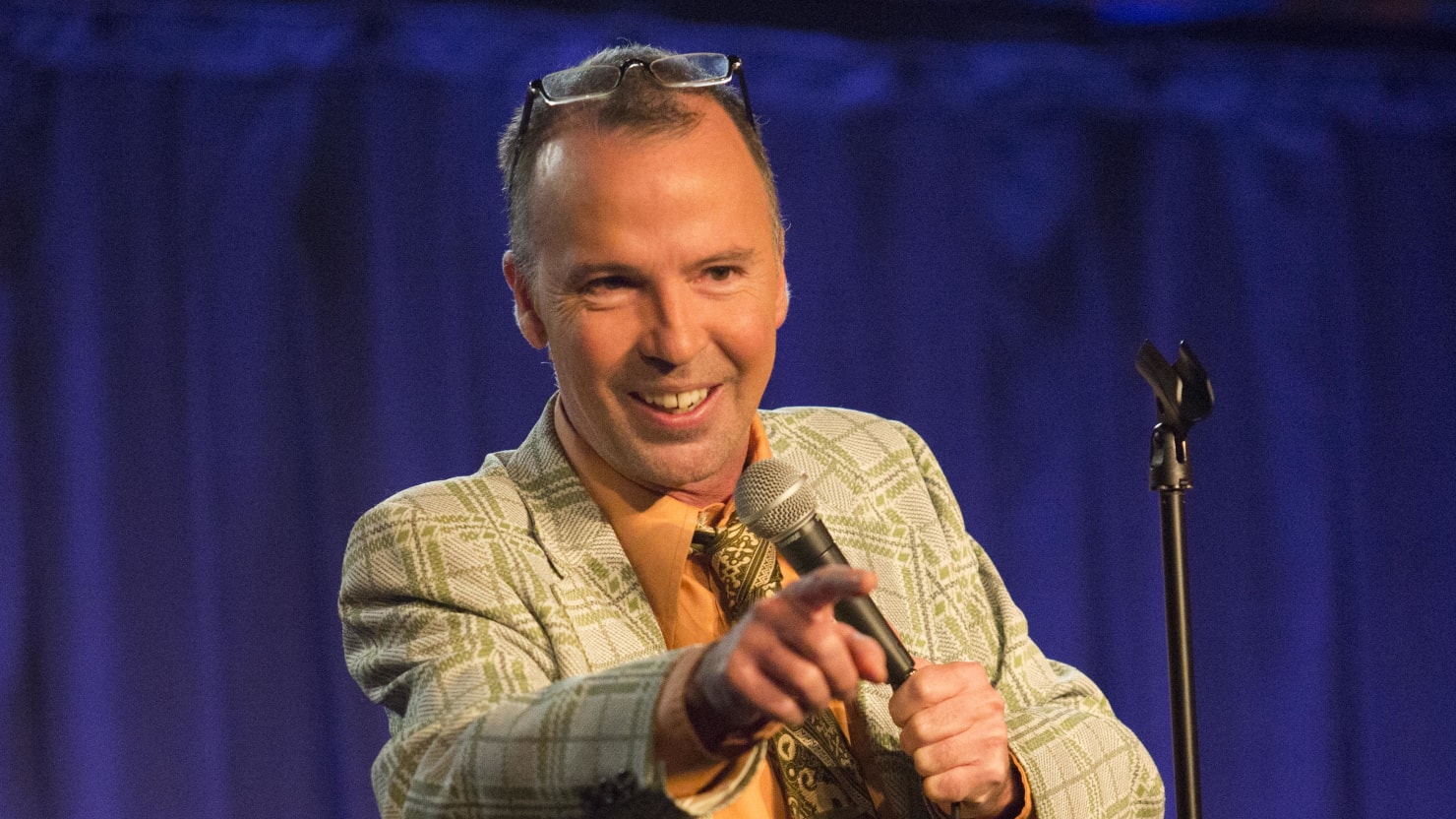
With that in mind, I’d like to cite a comedian by the name of Doug Stanhope. I’ve never mentioned before, but has been one of my personal favorites for years. He’s not on the same level as a Jon Stewart, George Carlin, or Lewis Black. However, given his brand of humor, that’s not too surprising.

Stanhope’s comedy is decidedly NSFW, touching on issues that would give most network producers brain aneurisms. His opinions are overtly harsh and unconcerned with your delicate sensibilities. If you’re wondering just how harsh he can be, here’s a quick taste.

That said, he is not a shock comic in the tradition of Howard Stern or Andrew Dice Clay. Stanope’s comedy, as crude as it can be at times, is very smart. One bit in particular stands out. It comes from his “Deadbeat Hero” album, one of my personal favorites and one I think every comedy fan should listen to at least once.

In that album, he talks about a number of issues, but one in particular stands out. That issue is marriage, one I’ve discussed too on this site, albeit not with the same level of humor. On this topic, he makes one of the most insightful observations I’ve ever seen on a treasured institution.

If marriage didn’t exist, would you invent it? Would you go “Baby, this shit we got together, it’s so good we gotta get the government in on this shit. We can’t just share this commitment ‘tweenst us. We need judges and lawyers involved in this shit, baby. It’s hot!”

The bolded parts are my doing because I think the implications of that question go beyond the comedy, more so than I think Stanhope himself intended. In a sense, it reflects the paradox of marriage and traditional romance that I’ve talked about before in that we see it as natural, yet we need all these social institutions to protect it.

The fact those institutions exist is a subtle, but telling sign that these traditions aren’t as natural as we think they are. More than anything else, they’re the product of taboos and social norms that people cling to out of fear, familiarity, and ignorance. I won’t go so far as to call it a form of excuse banking, but I think it highlights our imperfect understanding of human nature.

One of Doug Stanhope’s greatest strengths as a comedian is his ability to break down a treasured and cherished concept in a way that’s both revealing and insightful. What he did for marriage with this one question immediately makes us ponder the flaws in our current understanding of it.

Once we stop laughing at the punch-line, though, I would take it a step further. I would ask that question again in more general form as a means to help us scrutinize our traditions, values, and everything else we hold sacred. Sure, that’s bound to make some people uncomfortable, but that’s exactly the point of certain brand of comedy, especially Stanhope’s.

Like the Simpson Filter I coined earlier this year, let’s coin another using this question. Since I’m not a branding expert with only a fraction of the wit of Doug Stanhope, I’ll call it “The Stanhope Principle.” The core of that principle can be summed up in one simple question.

If something didn’t exist in its current form, would you invent it that way?

Sure, it’s not nearly as funny as Stanhope’s bit on marriage, nor is it meant to be. In essence, it’s a question meant to get your brain thinking about things that it usually doesn’t think about. In some cases, they’re issues you’ve gone out of your way to avoid.

Take any current issue, be it a major political controversy or a certain state in your personal life. Now, apply the Stanhope Principle and try to answer the question honestly. Here are just a few possible examples.

  • If our tax system existed in its current form, would we invent it that way?
  • If our health care system existed in its current form, would we invent it that way?
  • If our current relationship existed in its current form, would we invent it that way?
  • If the job we worked existed in its current form, would we invent it that way?
  • If our website/blog/product existed in its current form, would we invent it that way?

If you ask that question and answer it honestly, which is key, you might be surprised by what you find out. You might think your personal relationships are functional, but applying the Stanhope Principle could expose flaws that you’ve been overlooking or ignoring.

Apply in a larger context, such as politics, marriage, and gender issues, and the insights get a bit more complicated. Given the current inequalities that still pervade in our society, as well as the double standards we apply, the Stanhope Principle reveals the breadth of the flaws within these institutions.

It can be distressing, acknowledging those flaws. That’s usually where the excuse banking enters the picture, but that can only further mask them. Another honest application of the Stanhope Principle will only remind us of those flaws and even reveal how we’ve made our situation worse.

Ideally, the Stanhope Principle should be a basis for improvement. A good example is Apple, one of the biggest, most successful companies in the world. Steve Jobs and Steve Wozniak probably didn’t know they were applying that principle, but they were.

They saw the current state of computers. They saw there was a lot of room for improvement. Given how cumbersome computers were for much of their early history, they decided to innovate and create a better way of using them. The result is a company that is worth over half-a-trillion dollars.

Applying the Stanhope Principle for worked out pretty well for Apple. I’m not saying it can make everyone a billionaire, but it does help break down a situation and an issue in a way that allows us to see the bigger picture.

More than anything else, it exposes the imperfections of our current situation. For some, it motivates them into improving their situation, be it a relationship, a business, or a social policy. For others, it’s an uncomfortable reminder that there’s a flaw in that they need to cover up or mask. In that sense, it should be easy to see who are more likely to become billionaires.

There are all sorts of way to apply the Stanhope Principle. I’ll certainly try to apply it to future issues that I discuss on this site. For now, I just want to offer my sincere thanks to Doug Stanhope and the principle he inspired. He has made the world inherently funnier and more interesting to explore.

4 Comments

Filed under Current Events, Marriage and Relationships, Reasons and Excuses

Why Stupid Love Is Honest Love (According To Batman)

Whenever someone says love is stupid, they’re usually getting over having their heart broken or upset that other people aren’t lining up to fuck them. It’s a cynical, jaded position on one of the most fundamental and powerful emotions there is in the human experience. As an aspiring erotica/romance writer, I’m often reminded of its power.

Sometimes, though, you need other kinds of reminders to appreciate the breadth of love. In a sense, it is stupid, but not in the way ex-lovers, recent divorcees, and Evanescence fans often claim. It is an inherently irrational, exceedingly overwhelming emotion that drives us to do some pretty crazy things. However, that’s exactly what makes it beautiful.

That beauty isn’t easy to see. Sometimes, it manifests in subtle ways. Other times, though, it’s front and center in a Batman comic. No, that’s not some colorful aside. I’m dead serious. The stupidity of love has actually manifested itself in a Batman comic and it’s beautiful to a level that only Batman can achieve.

This beauty was on full display in Batman #35, which picks right up from the huge development that occurred a few issues back when Catwoman accepted Batman’s marriage proposal. It has little to do with wedding plans, overpriced engagement rings, or how good Catwoman looks in skin-tight outfits. It actually goes out of the way to highlight the stupidity of love and all its uncanny beauty.

The context of the issue is secondary. If you really want to know the particulars, I highly recommend you read Batman #35 to get the full context of the situation. With respect to the topic at hand, namely the stupidity of love, all you need to know is that Catwoman has a chance to confront one of Batman’s other famous flames, Talia Al Ghul.

That’s a big deal for anyone who dares to get involved with Batman’s personal life. Talia Al Ghul isn’t just someone that both Batman and Bruce Wayne were fond of seeing naked. She’s also the mother of Damien Wayne, but not in the classic sense. He wasn’t conceived in the classic, fun sort of way.

The creation of Damien Wayne, much like Baman’s relationship with Talia, was largely a byproduct of a cold, unfeeling agenda. It had a specific purpose, a defined goal, and very little passion involved. It’s even less sexy than it sounds. It’s basically the antithesis of the stupidity of love.

That’s very much who Talia Al Ghul is. Sure, she looks almost as good as Catwoman in skin-tight outfits, but she’s not much of a romantic. She’s a cold, calculating bitch who sees love as an asset at best and an inconvenience at worst. She’s also the one Catwoman has to deal with in Batman #35 and not just because she’s marrying her baby daddy.

The clash between these two women may not be as sexy as nude oil wrestling at the Playboy mansion. It may not even be as epic as a battle between Superman and Doomsday. However, the way this fight plays out perfectly highlights both the stupidity and the beauty of love. Catwoman herself articulates it perfectly.

It’s not just that loving Batman carries with it a lot of baggage. It’s not just that being involved with the goddamn Batman is overwhelming and not just because he tends to attract homicidal clowns. To love someone like Batman is not to ignore the sheer stupidity of being involved with him in the first place. It’s to embrace it.

It’s a message that fans of romance and aspiring erotica/romance writer alike can get behind. Instead of scrutinizing or overthinking why someone loves another person, you just focus on the love itself. Sure, it’s stupid in the sense that it ignores the logistics. Sometimes, though, that’s the key to making love work.

When you’re in love with a complex person with loads of baggage, like Batman, there’s a lot to think about and scrutinize. It’s one of the many reasons that Batman has had such a colorful history with women. Between being a costumed crime fighter and a billionaire playboy, he’s a complicated man with a lot of moving parts.

It’s because of those complications that many of those women who may genuinely love him find plenty of reasons to walk away. Talia Al Ghul is a perfect example of this because she approaches her love with Batman in a way that’s cold and calculated.

To love him, in her mind, isn’t to embrace his baggage. It’s to re-shape and re-mold it into something she sees as greater. What she tries to do with Batman is very similar to what many people try to do with their lovers in the sense that they try to change and mold them into the person they want them to be, even if it means undermining the person they are.

That’s not just a losing battle that only leads to greater heartache. It goes against the very principles of love. You don’t love someone for who you want them to be. You love them for who they are.

Talia Al Ghul wants Batman to be a certain way for her. She feels she knows what’s best for him, their future, and their family. She’s also willing to lie, cheat, and manipulate him into achieving those goals. She may leave his balls intact, but she’ll make sure his soul is hers to guide. Even Regina George isn’t quite that ambitious.

Catwoman does the exact opposite. She doesn’t try to change Batman into some ideal version of a man that she has in her head. She loves him for who he is and doesn’t want to mold him into something else. On paper, that’s still kind of stupid in the sense that it basically permits him to keep doing the crazy things he does. However, it’s probably the most sincere and honest love anyone can offer.

That does more than contrast Catwoman’s love for Batman from that of Talia Al Ghul. It shows how genuine love compares to the shallow brand of love that comes with caveats. Some people build their relationships around an agenda, much like Talia Al Ghul. They see it as a means to an end. Love, in that context, is indistinguishable from a mortgage application.

Loving someone honestly means loving their flaws as much as their strengths. Catwoman doesn’t overlook or deny those flaws in Batman. Batman himself doesn’t try to hide them either. That honesty, making themselves so vulnerable to one another, is stupid from a purely logistical point of view.

However, that’s exactly what makes their love so sincere. Even if you’re not a comic book fan or a fan of beautiful women in skin-tight outfits, it’s still a love that’s worth celebrating.


2 Comments

Filed under Comic Books, Jack Fisher, Superheroes, Marriage and Relationships

Sex Education Vs. Love Education: Why We Need More Of The Latter

Talk to most teenagers about the awkward moments of their lives and they’ll usually agree on a couple themes. Puberty did all sorts of weird things to their bodies, talking about sex with parents is very uncomfortable, and there’s no easy way to explain certain stains in your underwear.

Even adults who survived their teenage years would agree. That jarring transition from kid to adult is fraught with all sorts of challenges, obstacles, and exceedingly embarrassing moments. I’m not just talking about awkward boners either. It’s overwhelming, so much so that we often need guidance, even though most never admit to seeking it.

This is a big reason why sex education is so difficult, which I’ve discussed before. At least parents, teachers, priests, and poorly-produced after school specials tried to teach kids about these topics. Sure, some of it was misguided and misleading, but at least it wasn’t ignored.

There was one particular topic, which happened to be closely related to sex, that rarely got mentioned. In fact, it was only ever hinted at indirectly, if not overlooked purposefully. It might very well be the greatest oversight that school, parents, and society have committed, short of informing teenagers that pictures of their genitals are never secure.

It has to do with love. No, I’m not talking about the kind we make in a bedroom or within my sexy novels. I’m talking about the real, sincere love that most of us only know from old Beatles songs. Yes, I realize that sounds cheesy as hell, but that’s exactly my point.

Growing up, talking about sex was awkward and uncomfortable. It evoked all sorts of giggles, jokes, and crude remarks, often with respect to certain aspects of human anatomy. At least we talked about it. At least we acknowledged that it’s there and it’s something adults at least try, albeit haphazardly, to teach us about.

The same can’t be said for love. In some respects, talking about love is even more taboo than talking about sex. There was never a class about love. There was never an open discussion about what it meant, how it felt, and how to approach it. We, as hormonal teenagers, were left to figure it out on our own. That already leads to all sorts of problems with sex. Why wouldn’t the same apply to love?
Unlike sex, though, the silence on love has nothing to do with the agenda of religious zealots, government bureaucrats, or parents too horrified to think about their children getting naked. It had more to do with our attitudes, as teenagers.

I don’t know how it is now, but when I was a teenager, I hid the fact that I enjoyed romance. In many ways, my love of comics provided a shield since comics have all sorts of great romance stories. If someone found out I read comics, that wasn’t too big a deal. Liking comics wasn’t too taboo, but liking romance was different.

To enjoy romance, especially for a man, was to be a sissy. It was like there was something wrong with you to actually be into that sort of thing. Just talking about love made you less manly. Never mind the fact that men have done some insanely manly things in the name of love. Just being a fan of love and wanting to explore it was akin to dressing up in bunny pajamas and going to a Metallica concert.

For women, it was somewhat easier, but not by much. Girls were more expected to be into love and melodrama, but that came at a cost too. I knew girls in high school and college who got a lot of crap for being too sentimental, so to speak. Whenever they would talk about love, I could actually see others rolling their eyes and secretly wishing they could mute their friend.

In any case, talking about love was just something that seemed uncool, lame, or insipid. Never mind the fact that everyone seeks love, on some level, and that it goes onto become a major driving force in our lives, just like sex. We just didn’t talk about it and were expected to know it when we felt it.

That, unfortunately, was the most anyone ever dared teach me about love. It was the advice I got from parents and relatives. It was the advice I got from teachers. They would tell me the same things.

“Love is just one of those things you’ll know when you feel. Trust me!”

Now, I trust my parents and teachers with a lot of things. For the most part, the advice my parents give me is pretty damn good. When it comes to love, though, their advice felt empty and unsatisfying.

To some extent, I suspect they said that because even they didn’t know. I doubt they got an education on love, even if they got an education on sex. It’s also worth remembering that our concept of love and actually marrying for it is fairly recent. However, that doesn’t make the lack of insight any less jarring.

Even as a kid, I wanted to learn more about love, but had no idea how to go about it or who to talk to. I suspect others felt the same, but didn’t want to bring it up because it was just too uncool. I ended up learning most from comic books, TV shows, and movies like “Crazy/Beautiful.”

While those offered some insights, you generally don’t want to learn too much from mass media. That’s why we have an ongoing issue about kids learning about sex through porn. It’s also why we, as a society, don’t trust movies to teach teenagers how to drive. We understand mass media is going to horribly skew reality. However, we seem okay with letting it teach us about love.

Naturally, that’s going to cause problems. There are any number of doomed or toxic romances that the media loves to convey as romantic ideals. At least with sex, given the physical elements involved, it’s a bit easier to figure out you’re doing something wrong. Usually, your partner will tell you. With love, though, its a bit harder.

How do you know your understanding of love is healthy or even feasible? How do you know that your concept of love isn’t misguided or flawed? How do you even go about pursuing love, forging intimate bonds, and working with someone to strengthen that bond?

Those are not rhetorical questions. Those are actual questions that never get asked, let alone answered. Humans are a very emotional species. Love is among the most powerful emotions any human can feel. To not talk about it is akin to ignoring that at least half your body is on fire. At some point, the burning becomes too intense.

I don’t deny that our current standards for sex education have room for improvement. However, we haven’t even contemplated standards for education about love. Like our desire for sex, love is one of those innate human feelings that we cannot and should not turn off. It shouldn’t be one of those issues that’s uncool to talk about. It sure as hell shouldn’t be one of those issues that we ignore, especially for young people.

In a sense, though, maybe this is one of those rare issue where adults and teenagers are on the same page. Neither can claim to have a firm understanding of love. That may mean we have to learn and teach it together, but as an aspiring erotica/romance writer, I can think of few things more worthy of learning.

2 Comments

Filed under gender issues, Love Or Obsession, Marriage and Relationships

Scare Tactics, Sex Education, And The (Post-AIDS) Future

Let’s face it. We all have embarrassing memories about how we learned about sex. It might as well be a law of physics among youth. At some point, you’re going to learn about sex. Shortly after that, you’ll probably learn something you didn’t want to learn from a parent, teacher, or priest.

For me, one particular memory stands out and it’s one I suspect most people my age share, as well. It happened in health class during middle school, just as puberty kicked in. It had nothing to do with male or female anatomy. I already knew about that, thanks to my parents. This particular lesson was more basic in that it had a simple message.

“If you get AIDS, you will die.”

It wasn’t as much a lesson as it was a warning. Everyone in that class had been learning about sex, at least as much as any public school was allowed to teach us. We were all at that age when we started thinking, wanting, and obsessing over it. Then, this distressing caveat gets thrown into the mix and suddenly, these overwhelming desires we can’t turn off take on a whole new context.

I’m not going to lie. That was pretty terrifying. The idea that doing something you were hardwired to do, and needed to do for the propagation of the species, could kill you was akin to being forced into a cage match with a chainsaw-wielding John Cena.

It’s one thing to avoid angry predators, sharp cliffs, and confined spaces with O.J. Simpson. It’s quite another to avoid the natural horniness that comes with being human. It gives the impression that sex is so dangerous and so risky that we might as wear hazmat suits while doing it.

Thankfully, I was mistrustful enough of my health teachers to learn more on my own. Even with lousy, dial-up internet, I was able to find out that a some of the dangerous claims my teachers had given me about sex, disease, and all those other lurid topics was not entirely accurate.

Granted, I understood why they used those kinds of tactics on young, hormonal pre-teens like me. Back then, AIDS was a death sentence. A diagnosis with AIDS was like a diagnosis of terminal cancer. When it started claiming the lives of celebrities like Rock Hudson and Eazy-E, even hormonal kids took note of the danger.

It was still a dick move, though, using those kinds of scare tactics on hormonal teenagers. I remember entire classes dedicated to teaching kids the horrors of AIDS and other nasty diseases that we could get if we didn’t have sex in the way the Catholic Church or the Saudi Arabian government approved. In case you’re wondering, yes, some schools still use these tactics.

Ignoring, for a moment, the outright cruelty of scaring kids like that, it’s worth noting that the situation with AIDS and other diseases is very different. Medical science has advanced. Innovations in antibioticsanti-viral drugs and vaccines have improved treatment or even cured some of those terrible diseases that my teachers used to scare me with.

While AIDS still has no cure, it’s not a death sentence anymore. Just ask Magic Johnson. There’s even a pill called Truvada that, when taken daily, can prevent the spread if the HIV virus. While it’s still a huge problem in places like Sub-Saharan Africa, we’re at the point in modern medicine where it can be managed.

However, it’s not going to stop there. At some point, medical science will cure diseases like AIDS. We’re already closer than you think and I’m not just referring to recent advances in technology like CRISPR.

Just this past month, a research team at the Scripps Research Institute developed a method that effectively blocks the HIV virus from infecting new cells. They’re calling it a “functional cure” in that, while it doesn’t remove the virus from the body, it effectively stops it from spreading.

This news comes shortly after the National Institutes of Health announced that they had produced an anti-body that blocks 99 percent of all HIV strains. If the results are replicated, that means a functional vaccine is not that far off. Add tools like CRISPR to the mix and it’s entirely possible that there are children alive today that will never have to worry about diseases like AIDS.

Given the amount of suffering this disease has caused, that’s an undeniable good. However, it removes a major tactic from the arsenals of sex educators who don’t want teenagers experimenting with their genitals. Now, I can understand that worry to some extent. Teenagers do have a history of doing stupid things and not just with their genitals.

Even without that stupidity, how are teachers going to convince horny teenagers to keep their pants on when they can’t scare them with diseases like AIDS? How many parents are going to gasp in horror at the notion that their precious little angels might be able to have sex with minimal consequences?

I ask these questions only half-jokingly. I also ask them with the full understanding that I may have kids of my own at some point and I too might vomit uncontrollably at the thought of them having sex. Given our collective capacity for excuse banking, I don’t doubt that anxious parents and teachers will come up with some sort of scare tactic to discourage teenagers from having sex.

It’s just going to get a lot more challenging in a world where diseases like AIDS are no longer a factor. History is certainly not on the side of those clinging to such puritanical attitudes. As I’ve mentioned before, the advent of modern antibiotics played a major part in the sexual revolution of the 1960s. A cure for AIDS might incur the same.

If that weren’t challenging enough, advances in contraception are sure to compound that effort. Advances like Vasalgel for men and IUDs for women will make it so that even the fear of pregnancy won’t be much of a scare tactic. Unlike every other generation of teenager, those in the near future may never have to worry about the kinds of consequences that have plagued horny teenagers for centuries.

That naturally doesn’t sit well with the uptight regressive crowd that belabors personal responsibility and bemoans any level of sexual freedom that goes beyond what the Catholic Church sanctions. In years past, they could refer to diseases and unwanted pregnancy to justify those attitudes. Once those factors are removed, what will they have left?

Never mind the fact that teenagers are already having less sex now than previous generations. In the minds of parents, priests, and health teachers, it’s still too much. I could bemoan how much of that reflects our poor, unhealthy attitudes towards sex, but that’s not going to change minds or sell sexy novels.

A part of me genuinely worries that there will be some people who actively oppose treating diseases like AIDS. There’s already a precedent. There are people out there who oppose the widespread use of Gardasil, a vaccine meant to treat HPV, a common virus that is often transmitted during sex and known to cause cancer.

Think about that for a moment. There are people in this world who are willing to risk young people, including their own children, getting cancer rather than risk them having care-free sex. That shows the lengths certain people will go to in order to ensure sex still has serious consequences. It says something about these attitudes when they feel they need those consequences to get their message across.

In time, some of these regressive attitudes may fade. These days, most people aren’t going to be publicly scorned for not being a virgin on their wedding night. Some parts of the world still cling to those attitudes, but most people in the developed world don’t have to worry about the Spanish Inquisition bursting into their bedroom and arresting them for having sex just for fun.

Better education will help improve attitudes and addressing the orgasm gap will go a long way, as well. It’s hard to know for sure what a future health class will look like in a world without AIDS or major disease. That world isn’t here yet, but it’s fast approaching. Parents, priests, and puritans of all stripes need to prepare. However, we should worry about how far they’ll take those preparations.

1 Comment

Filed under gender issues, Marriage and Relationships, Second Sexual Revolution, Sexy Future

Al Bundy Syndrome: The Face Of Learned Helplessness

Some concepts are so vague that it’s hard to put a human face on it. I suspect that’s part of why many people suck at math. You can’t personalize it, humanize it, or imagine it on a pair of breasts. Even things that directly affect people, like learned helplessness, are hard to grasp.

That’s why if you find a way to put a human face on a serious issue, you jump at the chance. It doesn’t just make it easier. It makes them memorable in an unexpected way. I consider the concept of learned helplessness a serious issue that affects our personal lives, our professional lives, and our sex lives. It goes beyond the world of an aspiring erotica/romance writer. It’s way bigger than we’re comfortable admitting.

That’s why, in the interest of putting a human face on a serious issue, I’d like to present the greatest personification of learned helplessness in the history of media. Some of us grew up with him. Some of us were appalled by him. He’s a myth, a legend, and an icon in his own tragic right.

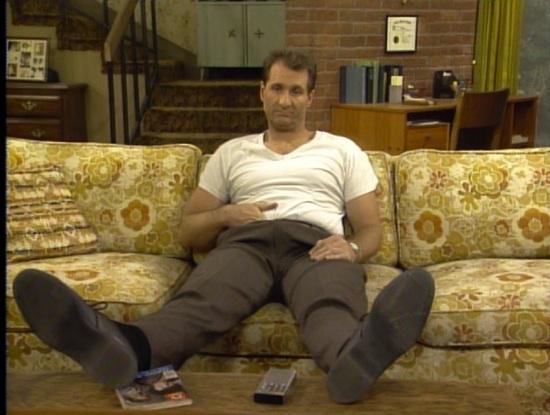
His name is Al Bundy, the hapless husband and father of the Bundy family from the Fox classic, “Married With Children.” To those who have watched every episode and love the show as much as I do, you already understand why Al is the perfect embodiment of learned helplessness.

For those who aren’t familiar with “Married With Children” or why it was such a groundbreaking show, I feel sorry for you. For most people under the age of 20, they have no idea how much this show shook our collective understanding of modern television.

Say what you will about the trash currently on TV now, but before “Married With Children,” it was much worse. By worse, I mean they were boring. Most sitcoms were bland, generic, feel-good stories that tried to paint the world in an overly-rosy picture. Every one of them basically tried to capture the spirit of “Father Knows Best” or “Leave It To Beaver.”

Married With Children” saw that and decided to do the exact opposite, so much so that when it was in development, the title of the show was called “Not The Cosbys.” It was a show where all the conflicts weren’t solved at the end. It was a show where the world wasn’t idealized, perfect, or fair. In other words, it was more in line with the real world.

In that world, Al Bundy gets dealt a worse hand than most. At one point, he was a high school football star with a promising future. Then, he got hit with a streak of bad luck that effectively crushed his spirits.

He got injured and lost his football scholarship. He got involved with Peggy Bundy, a woman I’ve cited before as a character that men should rightly dread. He eventually has two kids that don’t respect him and works a dead-end, low-paying job as a shoe salesman.

While other sitcoms glorify the innate dignity of working class men like Ralph Cramden, Archie Bunker, and even Homer Simpson, there’s nothing glorious about Al Bundy’s life. There’s nothing noble about his poverty. He doesn’t even try to come off as sympathetic. His life doesn’t raise the bar or embody an ideal. If anything, it reminds ordinary people just how bad things can get.

Whereas other TV sitcoms try to uplift an audience by showing how loving, functional families solve their problems in a simple, 30-minute show, “Married With Children” sent a different message. It presented the audience with a level of dysfunction so extreme, so exaggerated that even if you’re home life was a mess, you could take comfort in the fact that you were not the Bundy family.

What makes that message so powerful is also what makes Al Bundy such a perfect example of learned helplessness. Fittingly enough, the actor who played him, Ed O’Neill, actually drew inspiration from someone in his own family.

In a sense, Al Bundy was built around the idea that he was just resigned to his fate. He realized how much his life sucked, that his family didn’t respect him, and that his best days were behind him. Dealing with all that in addition to working a dead-end job effectively destroyed his spirit, so much so that he stopped trying to better his situation.

That perfectly reflects some of the early experiments done about learned helplessness, namely those involving a poor dog that just stopped trying to avoid painful shocks. Al Bundy is basically that dog after it has been shocked so many times that it just doesn’t bother anymore. It accepts that it will suffer and doesn’t try to avoid it.

In a sense, it becomes a mentality akin to a psychological illness. In the spirit of caveman logic and excuse banking, I’ll give it a name. From here on out, let’s call it “Al Bundy Syndrome.” That’s a much more memorable name than the overly-technical term, learned helplessness. With Al Bundy Syndrome, the condition has a name and a face that Ed O’Neill made iconic.

Given that we already have weird diseases like restless leg syndrome and walking corpse syndrome, which I swear is a thing, I don’t see why we can’t create a syndrome out a fictional character. In fact, it wouldn’t even be the first time.

I’m not a doctor, nor do I claim to be an expert in anything that doesn’t involve telling sexy stories, but it’s for that reason that I feel it’s so important to put an actual face on an issue that’s hard to understand. Psychology is tricky, complicated, and messy. Al Bundy is simple, crude, and crass. One is innately funnier than the other.

In that sense, it’s easier to see the signs and symptoms of learned helplessness, so long as you frame it in Al Bundy syndrome. Watch any old episode of “Married With Children” and the symptoms reveal themselves. They include feelings like:

  • Being hopelessly numb to the misery around you, like Al Bundy
  • Making little to no effort to improve your situation, like Al Bundy
  • Assuming the worst in every situation, like Al Bundy
  • Having an extremely cynical outlook, like Al Bundy
  • Not caring about whether the world likes or respects you, like Al Bundy
  • Having no shame or filter about what you say, like Al Bundy

The list goes on, but there are too many to list and watching old episodes of “Married With Children” is probably far more informative than any list, not to mention funnier. It’s a show that probably couldn’t get made today, due to how politically incorrect it was, even for its time. That makes its impact all the more vital.

I doubt that Ed O’Neill or the producers of “Married With Children” intended Al Bundy to be the poster boy for learned helplessness, but sometimes the connections are there and all we have to do is make them. So, moving forward, if you want to know what learned helplessness is and how to avoid it, just remember this face. It may save your life, your marriage, and your soul.

For that, I thank you Ed O’Neill.

5 Comments

Filed under gender issues, Marriage and Relationships