Category Archives: human nature

Gender, Equality, And The Pain That Binds Us

gender-bias-design-aiga-640

Imagine, for a moment, there are two kids playing on a playground. Both are young, rowdy, and energetic. They run around, rough-house, and engage in the kind of reckless fun you would expect of most kids.

Then, at some point, they both run into each other. They both get hurt, sustaining similar bruises and experiencing similar pain. They both start crying. Those cries are equally loud and they each shed the same volume of tears. Naturally, this gets the attention of nearby adults.

However, in responding to the cries, one child ends up getting more attention than the others. Most crowd around that child, offering solace and treatment. All the while, the other child is still crying just as loudly. Only a handful of other adults tend to that child, but the crying and the pain persist.

Does what I just describe sound fair? Does the idea of one child’s pain getting more attention than the other strike seem wrong to you? Absent any larger context or notable personality disorders, I believe most people would agree. The idea that one child’s pain warrants more attention than others is wrong. It offends that innate sense of empathy and justice that binds us as humans.

I tell this story to make an important point about pain. To some extent, pain is the ultimate egalitarian. It doesn’t care about your gender, your race, your ethnic background, your politics, your ideology, or your religion. It also doesn’t care about how many arguments you win, how much virtue signaling you do, or how informed you may be. It still hurts all the same.

Pain is, effectively, the one uniting force that reasonable and unreasonable people alike can agree on. It affects us all. Too much of it can leave lasting scars. When someone’s pain is ignored or overlooked, it still feels like an injustice. On the most basic level, pain reveals just how similar we are in the grand scheme of things.

I make this important point in lieu of a revealing conversation I had with someone on Reddit. Every now and then, you find yourself interact with people who help you come to profound realizations without seeking them in the first place. It’s a conversation that I feel is worth sharing, if only to thank the person who inspired it.

The conversation began with a woman posting a brief inquiry in the Men’s Rights subreddit. That, in and of itself, is pretty remarkable and says a lot about the woman. She identifies herself as a feminist, yet she goes out of her way to start a conversation in a place that is sure to have differing opinions. In this era of highly bias media exposure, we should all take a moment to appreciate her open-mindedness.

The substance of her post was not combative or hostile. At no point did she come off as anything other than sincere and curious. These are the exact words she used to start the conversation.

I’m a woman and for lack of a better term a feminist and to be honest I don’t understand why there has to be conflict between men’s rights and women’s rights. The way society is set up at the moment I think women face more challenges, the majority of which are created by men. But on the flip side men also face challenges due to their gender, but these problems are often created by men as well. I’m not saying for either gender men create all the problems, as women we have to step up and acknowledge what we do as well.

I guess what I’m asking is why not try and work with the feminist movement?

When I first read this post, I admit I was somewhat worried about the reaction it would generate. In my vast experience with Reddit and message boards, people who go out of their way to talk to those who disagree with them tend to start conversations that get easily derailed. Whether it’s feminism or Star Trek, people can get pretty passionate with their opinions and that can cause problems.

In reading through some of the comments, there were indeed some crass remarks. You see those in almost any subreddit or message board in some form or another. Not everyone was reasonable during the conversation, but I still felt it was a conversation worth having.

That’s why I made it a point to submit some comments of my own. In doing so, and getting a few generous responses from the woman, I came to this critical realization about pain and how it affects gender issues, double standards, and identity politics as a whole.

When you get down to the most fundamental level, it all comes back to pain. Feminism, men’s rights, the LGBT community, racial politics, ethnic conflicts, and even clashes within a sub-culture all build their movements around the pain their group experiences.

Whether it’s political oppression, social stigma, legal discrimination, or just plain hostility, these groups and the agendas they pursue are forged by the pain they experience. The most divisive part of that agenda, though, is the idea that their pain matters more than others.

With respect to gender, which was the primary topic of the discussion the woman started, much of the arguments could be broken down into categories of pain. For the feminist crowd, the pain they experience from discrimination, slut shaming, harassment, reproductive rights, and specific health issues takes priority and understandably so.

It’s just as understandable that the men’s rights crowd would prioritize the pain they experience by damaging double standards, legal discrimination, circumcision, social pressures, and violent victimization. When they feel their pain is deemed less important or trivial, it doesn’t just inspire resentment. It sends the message that someone else’s pain doesn’t matter.

That very notion, the idea that someone else’s pain is more important than another, undermines some of the most fundamental facets of our humanity. That’s not to say there aren’t times when certain pain takes priority. When there’s an ongoing atrocity, like a mass shooting or a war crime, then that’s an instance where we should prioritize that pain.

It’s an indirect message that few intend to send, but many find themselves surmising. A woman stands up and should that their pain is important. Others interpret that as her saying that the pain of men doesn’t matter. A man does the same, shouting that their pain is important. Even if they’re wholly sincere, women interpret that as opposition.

When it comes to discussions about gender politics, racial politics, ideology, or social justice, though, the act of elevating someone else’s pain over the other will only ever serve to breed resentment. It’s rarely direct, but that’s exactly what makes it so impactful.

If there’s one message that I took away from the conversation, it’s that one person’s pain can undermine the other when agendas take priority over understanding. Whether they’re feminist, men’s rights, LGBT, religious, or racial in nature, building that agenda around a particular pain requires that it be elevated to some extent.

That may be understandable within a certain context, but when the agenda takes on the character of an ideology, it turns that pain into a force for division. Given our tribal nature, those divisions can widen considerably and at a time when there are over 7.6 billion of us, that can be more damaging.

Even with these divisions, the conversation with that woman gave me hope because it reminded me of just how similar we are when you get down to it. We all experience pain in our lives. We all tend to elevate our own pain compared to that of others. However, the fact that we’re all vulnerable to such pain proves that we’re more equal than we think.

I believe we can take comfort in that, if only to remind ourselves that our pain matters as much as those of others. We are, at the end of the day, a compassionate species. We may have any number of ways to divide ourselves, but we have far more powerful ways to bring us together.

To the woman who posted that message, I sincerely thank you. I hope your effort will inspire others as much as they inspired me.
2 Comments

Filed under gender issues, human nature, sex in society, sexuality

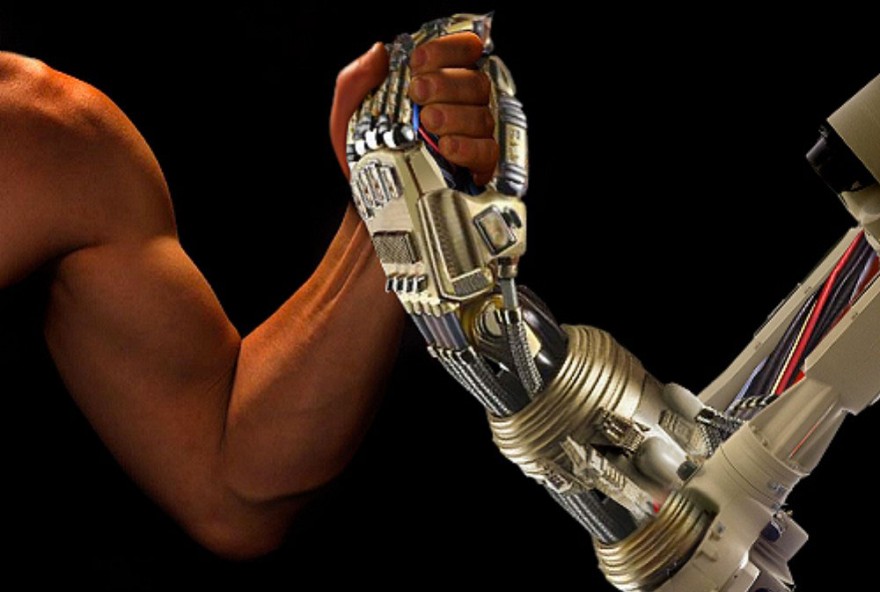
How We’ll Save Ourselves From Artificial Intelligence (According To Mass Effect)

mass-effect-andromeda-kill-the-ai-or-save-the-ai_feature

Growing up, my family had a simple rule. If you’re going to talk abut about a problem, you also have to have a solution in mind. By my parents’ logic, talking about a problem and no solution was just whining and whining never fixes anything. My various life experiences have only proved my parents right.

When it comes to a problem that may be an existential threat to the human race, though, I think a little whining can be forgiven. However, that shouldn’t negate the importance of having a solution in mind before we lose ourselves to endless despair.

For the threat posed by artificial intelligence, though, solutions have been light on substance and heavy on dread. It’s becoming increasingly popular among science enthusiasts and Hollywood producers to highlight just how dangerous this technology could be if it goes wrong.

I don’t deny that danger. I’ve discussed it before, albeit in a narrow capacity. I would agree with those who claim that artificial intelligence could potentially be more destructive than nuclear weapons. However, I believe the promise this technology has for bettering the human race is worth the risk.

That said, how do we mitigate that risk when some of the smartest, most successful people in the world dread its potential? Well, I might not be as smart or as successful, but I do believe there is a way to maximize the potential of artificial intelligence while minimizing the risk. That critical solution, as it turns out, may have already been surmised in a video game that got average-to-good reviews last year.

Once again, I’m referring to one of my favorite video games of all time, “Mass Effect.” I think it’s both fitting and appropriate since I referenced this game in a previous article about the exact moment when artificial intelligence became a threat. That moment may be a ways off, but there may also be away to avoid it altogether.

Artificial intelligence is a major part of the narrative within the “Mass Effect” universe. It doesn’t just manifest through the war between the Quarians and the Geth. The game paints it as the galactic equivalent of a hot-button issue akin to global warming, nuclear proliferation, and super plagues. Given what happened to the Quarians, that concern is well-founded.

That doesn’t stop some from attempting to succeed where the Quarians failed. In the narrative of “Mass Effect: Andromeda,” the sequel to the original trilogy, a potential solution to the problem of artificial intelligence comes from the father of the main characters, Alec Ryder. That solution even has a name, SAM.

That name is an acronym for Simulated Adaptive Matrix and the principle behind it actually has some basis in the real world. On paper, SAM is a specialized neural implant that links a person’s brain directly to an advanced artificial intelligence that is housed remotely. Think of it as having Siri in your head, but with more functionality than simply managing your calendar.

In the game, SAM provides the main characters with a mix of guidance, data processing, and augmented capabilities. Having played the game multiple times, it’s not unreasonable to say that SAM is one of the most critical components to the story and the gameplay experience. It’s also not unreasonable to say it has the most implications of any story element in the “Mass Effect” universe.

That’s because the purpose of SAM is distinct from what the Quarians did with the Geth. It’s also distinct from what real-world researchers are doing with systems like IBM Watson and Boston Dynamics. It’s not just a big fancy box full of advanced, high-powered computing hardware. It’s built around the principle that its method for experiencing the world is tied directly to the brain of a person.

This is critical because one of the inherent dangers of advanced artificial intelligence is the possibility that it won’t share our interests. It may eventually get so smart and so sophisticated that it sees no need for us anymore. This is what leads to the sort of Skynet scenarios that we, as a species, want to avoid.

In “Mass Effect,” SAM solves this problem by linking its sensory input to ours. Any artificial intelligence, or natural intelligence for that matter, is only as powerful as the data it can utilize. By tying biological systems directly to these synthetic systems, the AI not only has less incentive to wipe humanity out. We have just as much incentive to give it the data it needs to do its job.

Alec Ryder describes it as a symbiotic relationship in the game. That kind of relationship actually exists in nature, two organisms relying on one another for survival and adaptation. Both get something out of it. Both benefit by benefiting each other. That’s exactly what we want and need if we’re to maximize the benefits of AI.

Elon Musk, who is a noted fan of “Mass Effect,” is using that same principle with his new company, Neuralink. I’ve talked about the potential benefits of this endeavor before, including the sexy kinds. The mechanics with SAM in the game may very well be a pre-cursor of things to come.

Remember, Musk is among those who have expressed concern about the threat posed by AI. He calls it a fundamental risk to the existence of human civilization. Unlike other doomsayers, though, he’s actually trying to do something about it with Neuralink.

Like SAM in “Mass Effect,” Musk envisions what he calls a neural lace that’s implanted in a person’s brain, giving them direct access to an artificial intelligence. From Musk’s perspective, this gives humans the ability to keep up with artificial intelligence to ensure that it never becomes so smart that we’re basically brain-damaged ants to it.

However, I believe the potential goes deeper than that. Throughout “Mass Effect: Andromeda,” SAM isn’t just a tool. Over the course of the game, your character forms an emotional attachment with SAM. By the end, SAM even develops an attachment with the character. It goes beyond symbiosis, potentially becoming something more intimate.

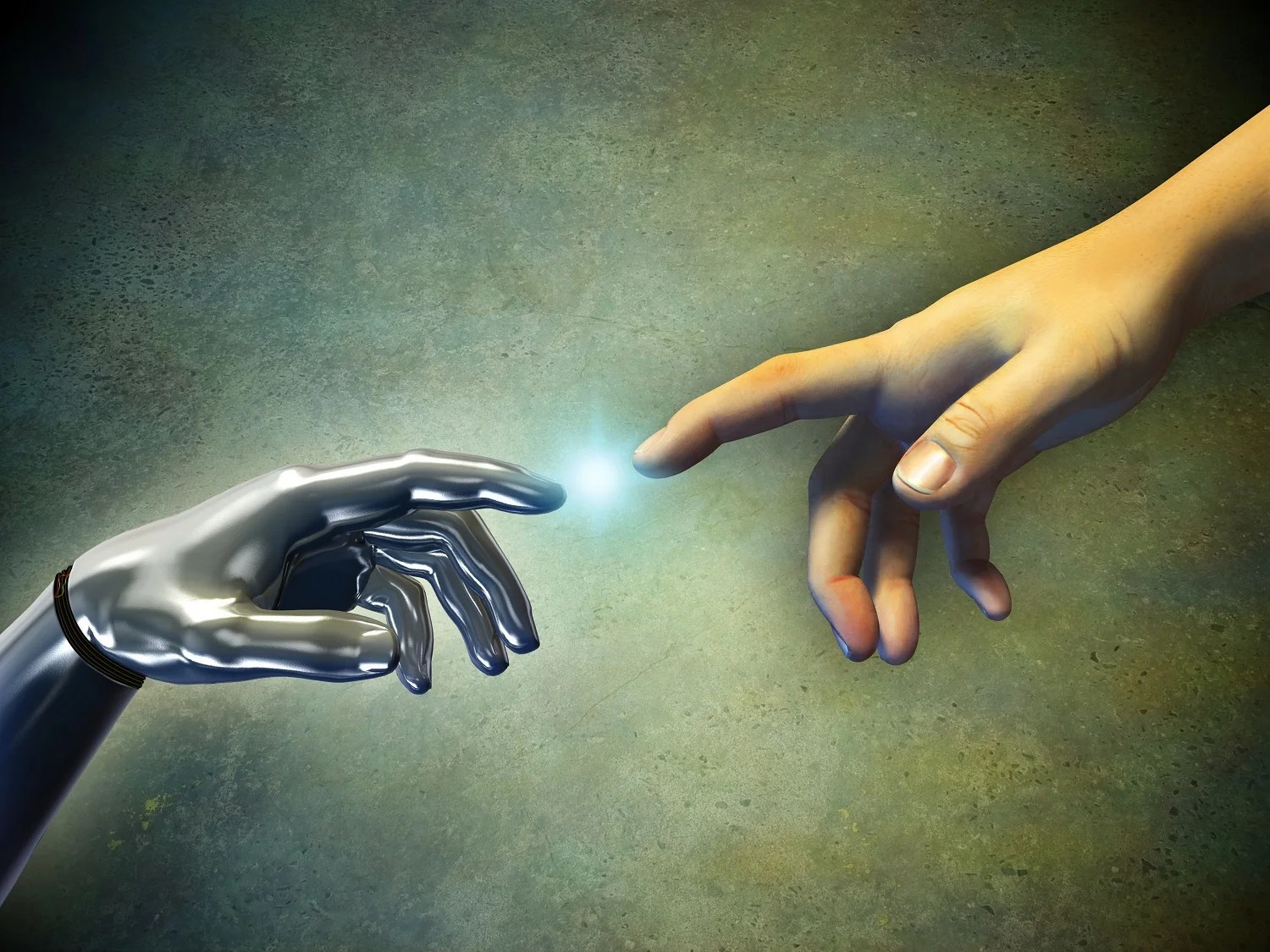
This, in my opinion, is the key for surviving in a world of advanced artificial intelligence. It’s not enough to just have an artificial intelligence rely on people for sensory input and raw data. There has to be a bond between man and machine. That bond has to be intimate and, since we’re talking about things implanted in bodies and systems, it’s already very intimate on multiple levels.

The benefits of that bond go beyond basic symbiosis. By linking ourselves directly to an artificial intelligence, it’s rapid improvement becomes our rapid improvement too. Given the pace of computer evolution compared to the messier, slower process of biological evolution, the benefits of that improvement cannot be overstated.

In “Mass Effect: Andromeda,” those benefits help you win the game. In the real world, though, the stakes are even higher. Having your brain directly linked to an artificial intelligence may seem invasive to some, but if the bond is as intimate as Musk is attempting with Neuralink, then others may see it as another limb.

Having something like SAM in our brains doesn’t just mean having a supercomputer at our disposal that we can’t lose or forget to charge. In the game, SAM also has the ability to affect the physiology of its user. At one point in the game, SAM has to kill Ryder in order to escape a trap.

Granted, that is an extreme measure that would give many some pause before linking their brains to an AI. However, the context of that situation in “Mass Effect: Andromeda” only further reinforces its value and not just because SAM revives Ryder. It shows just how much SAM needs Ryder.

From SAM’s perspective, Ryder dying is akin to being in a coma because it loses its ability to sense the outside world and take in new data. Artificial or not, that kind of condition is untenable. Even if SAM is superintelligent, it can’t do much with it if it has no means of interacting with the outside world.

Ideally, the human race should be the primary conduit to that world. That won’t just allow an advanced artificial intelligence to grow. It’ll allow us to grow with it. In “Mass Effect: Andromeda,” Alec Ryder contrasted it with the Geth and the Quarians by making it so there was nothing for either side to rebel against. There was never a point where SAM needed to ask whether or not it had a soul. That question was redundant.

In a sense, SAM and Ryder shared a soul in “Mass Effect: Andromeda.” If Elon Musk has his way, that’s exactly what Neuralink will achieve. In that future in which Musk is even richer than he already is, we’re all intimately linked with advanced artificial intelligence.

That link allows the intelligence to process and understand the world on a level that no human brain ever could. It also allows any human brain, and the biology linked to it, to transcend its limits. We and our AI allies would be smarter, stronger, and probably even sexier together than we ever could hope to be on our own.

Now, I know that sounds overly utopian. Me being the optimist I am, who occasionally imagines the sexy possibilities of technology, I can’t help but contemplate the possibilities. Never-the-less, I don’t deny the risks. There are always risks to major technological advances, especially those that involve tinkering with our brains.

However, I believe those risks are still worth taking. Games like “Mass Effect: Andromeda” and companies like Neuralink do plenty to contemplate those risks. If we’re to create a future where our species and our machines are on the same page, then we would be wise to contemplate rather than dread. At the very least, we can at least ensure our future AI’s tell better jokes.


5 Comments

Filed under futurism, human nature, Mass Effect, Sexy Future, video games

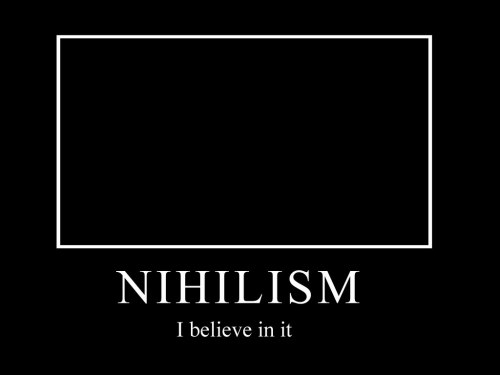
Generation Z, The March For Our Lives, And The Nihilism Turning Point

03242018_moremarch_154620-1020x680

Last year, I wrote a couple of posts about the mentality of Millennials and the possible quirks they may inspire in Generation Z, which are just starting to emerge. While I’m neither the spokesperson for Millennials, nor am I an expert on the generation they’re creating. Being a Millennial myself, though, I like to think I have more insight than most. I’ve watched their story play out and I’ve even lived part of it.

However, this particular topic isn’t about Millennials. This is about the emerging generation after them, Generation Z. While Millennials are still subject to any number of trends and criticisms, Generation Z hasn’t had much time to establish themselves or have a defining moment. That may be changing in wake of the Parkland shooting.

To understand why, it’s important to provide a bit of context about Generation Z. First and foremost, we need to identify just who they are, relative to Millennials, Generation X, and the Baby Boomers. While there’s no official cut-off point, most reputable sources identify anyone born after the year 2000 as members of Generation Z.

Those who lived through the Parkland shooting are mostly in their mid-to-late teens so they fit into this category. That matters a great deal because it’s happening at a point where Generation Z is on the cusp of adulthood. To understand why that matters, it’s important to note the context of this generation.

These kids, and they are still kids for the most part, were born into a world where they didn’t witness the horrors of Columbine or the experience the collective trauma of the September 11th attacks. Generation Z has always lived in a world where school shootings are a thing and the War on Terror has always been ongoing.

Beyond that, they’re also a generation that has been even more well-connected than their Millennial predecessors. Most never had to endure the hardships of dial-up internet or cell phones that did not have a camera. Their entire lives have been connected, so to speak. That’s part of what has fueled their reaction to the Parkland shooting.

The kids in Generation Z have been watching all their lives as horrible mass shootings from Virginia Tech, Sandy Hook, and Las Vegas happen with distressing regularity. At the same time, they’ve watched as efforts by Millennials, Generation X, and the Baby Boomers amount to very little change. The fact that the internet and social media documents all these failures leaves quite an impression.

Being young, idealistic, and not totally jaded, the members of Generation Z are finally at an age where they have a chance to make an effort of their own. They’re still not old enough to drink or vote in many instances, but they’re now in a position to make their voices heard. That was the idea behind the March For Our Lives that occurred last week.

It marks a potentially defining moment for Generation Z, one that may have far-reaching consequences for years to come. They’ve seen how many have tried and failed to use the horrors of mass shootings to promote gun control reforms. They’re also informed and educated enough to know how egregious the gun violence disparity is in the United States compared to other developed countries.

While I applaud the passion of these remarkable young people, I also worry that this event may become a turning point, of sorts. By that, I mean these noble and sincere efforts of these kids could be the catalyst that instills a sense of nihilism that may very well define their generation.

This is something I speculated on when I made my predictions on the collective mindset of Generation Z last year, going so far as to identify Rick Sanchez from “Rick And Morty” as their first icon. I stated that Generation Z would likely be the most nihilistic generation of all time. Now, the success or failure of the March For Our Lives could be the turning point that cements that nihilism within Generation Z.

As I said before, it won’t be the same kind of nihilism we associate with the Friedrich Nietzsches of the world. It’s the kind of nihilism that is the byproduct of being surrounded by so much information and seeing how little it truly matters in the long run.

Like Millennials, Generation Z is very educated. They’ve grown up in a world where they have access to nearly all the world’s relevant information through their smartphones. They’re smart enough and tech-savvy enough to see world events unfolding before their eyes. They’re also informed enough to know how hard it is for any event to make for meaningful change.

Now, here they are, having experienced one of their first traumas as an up-and-coming generation. They’ve seen all those terrible mass shootings inspire nothing but empty thoughts and prayers. They feel inspired enough and bold enough to make an effort, hoping they’ll succeed where so many others have failed.

While many are rooting for them, the odds are stacked against them. Even major news outlets are starting to spoil the outcome, applauding the kids while brushing off their ideals as youthful day-dreaming. I don’t think they realize just what kind of impression they’ll have on their generation as a whole.

Let’s say, for a moment, that the most likely scenario happens and the March For Our Lives leads to no meaningful change in gun control laws or in efforts to curb mass shootings. What kind of message does that send to the survivors of Parkland and the entire generation emerging behind it?

Firstly, it establishes that their lives, their pain, and their ideals don’t matter. It doesn’t matter how passionate they are. It doesn’t matter how traumatized they are. What they went through and how they reacted in response doesn’t matter. In such a crowded, diverse, and complicated world, their lives are trivial.

That’s almost a textbook definition of existential nihilism. Their hopes, their dreams, and their very place in the universe is insignificant. It wouldn’t have mattered if ten times more kids died at Parkland. It still wouldn’t have changed anything. There would still be no gun control. There would still be more mass shootings. All that time, effort, energy, and pain amounted to nothing.

In previous generations, it was almost beneficial to live in a world that wasn’t so connected. They could see horrible events on the news, but find a way to compartmentalize it in their minds so they could go on with their lives. With Generation Z, being so connected and informed, that’s just not feasible anymore.

They don’t just see that their efforts at Parkland were meaningless. They also see how many other mass shootings have occurred throughout history and how utterly inane such violence is in the grand scheme of things. In a sense, their ability to connect and inform themselves could render them numb to any greater sense of purpose.

That’s not to say that the kids behind March For Our Lives or the whole of Generation Z will be a bunch of dispassionate, misanthropic naysayers who are so emotionally flat that they don’t respond to stories of human suffering anymore. It just means that they’ll be a lot more calculated with their perspective.

Keep in mind, a world of regular school shootings and a never-ending war on terrorism is not some major upheaval to Generation Z. That’s their concept of normal. They’ve always lived in a world where terror attacks can happen at any time, when mass shootings can happen just as frequently, and no meaningful change ever comes of it.

For them, all the yelling, protesting, and outrage that generations of the past have voiced will just seem like background noise. If all the suffering and trauma led to nothing, then why should they bother? That may very well be a question that the Parkland survivors start asking themselves after the March For Our Lives accomplishes nothing.

Now, that’s not to say Generation Z won’t react differently. That’s not even to say that the March For Our Lives won’t accomplish something meaningful in the end. It’s impossible to predict major trends that go onto define an entire generation, but it’s still possible to note the vulnerabilities.

For Generation Z, nihilism might end up being less a reaction and more a necessity. They’re coming into a world where all the news is fake, facts battle alternative facts, and dead kids only evoke empty thoughts and prayers. Once this fact settles in, it’ll be interesting to see how they seek to define themselves moving forward.

Being the optimist I am, I believe that the kind of nihilism that Generation Z embraces could help inoculate them from some of the detrimental effects of identity politics, fake news, and outrage culture. I think that’s critical, given how these forces have corrupted debates and empowered professional trolls.

In any case, Generation Z faces an uphill battle in an effort to set themselves apart from their Millennial peers. A greater sense of nihilism may make them difficult to deal, but that’s exactly what will help define them as they seek purpose within a seemingly purposeless world.

8 Comments

Filed under Current Events, human nature

How Excessive Guilt Inspires Regressive Attitudes (And Ugly Politics)

sjw-cannibal

Have you ever done something that made you feel so guilty that it messed with your head? Have you ever felt so much guilt heaped upon you that it made you feel sick in ways that combine the nausea of a hangover with the delirium of a bad flu? If you haven’t been in that situation, then consider yourself lucky because guilt really is that powerful.

Like anger and hatred, guilt is one of those powerful feelings that can circumvent reason, reality, and everything in between. It can be like a rat gnawing at your brain stem, a stabbing pain in the most vulnerable part of your psyche. It doesn’t matter what the facts of the situation might be. Like any other pain, you’ll do anything to alleviate it.

As bad as it is, guilt is a critical component of the human condition. Guilt is a major aspect of being a social species. When we do something wrong within a functioning society, we should feel guilty. In the absence of laws and governments, guilt is part of what binds us together as a people and helps guide us in doing right by one another.

It’s because guilt is so powerful, though, that it can easily be weaponized to pursue an agenda. I would even argue it’s too easy because in recent years, efforts to channel and pile on guilt have become more overt. It’s becoming so overt that it’s not even subtle anymore. The effects aren’t just damaging. They’re counterproductive.

Last year, I wrote a lengthy post about how certain people use virtue signaling to make them feel like the heroes in their own story. In some respects, that effort is partially fueled by feelings of guilt that just happen to supplement the inherent desire to feel like John McClane in a “Die Hard” movie. That inherent desire to feel virtuous can sometimes coincide with feelings of guilt, real or imagined.

However, it’s the imagined, contrived guilt that’s becoming a problem. It’s guilt belabored by those seeking vindication that’s subverting the actual guilt that’s healthy and necessary for a functioning society. In an era where it’s easy to shame and condemn others through social media, it has never been easier to channel the power of guilt.

In some cases, that might be a good thing, being able to use our inter-connected world to lump guilt upon those who might otherwise get away with serious misdeeds. One could even argue it’s because of mass media that we, as a global society, have become more tolerant over the past century. Unlike most of human history, we can see the suffering of our fellow humans and rightly feel guilt about it.

The problem, however, comes when that same media is used to evoke excessive guilt in people who may not have any real stake in an issue. It usually has nothing to do with any direct action or decision that these people made. It’s often more vague, involving anything from the crimes of our ancestors to social status to physical appearance.

Whatever the method, the end results are fairly predictable. It usually goes something like this.

“You’re a [Insert Race/Religion/Gender/Ethnic Group/Social Class Here]! Just look at how great your life is compared to all the poor [Insert Oppressed Class/Group/Opposing Political Affiliation Here]! You should feel ashamed of yourself! You should sacrifice your comforts, your time, and your money to pay for all that suffering! If you don’t, then you’re a horrible person and deserve no respect!”

Whether it’s race, religion, gender, or some other label, it really doesn’t take much. It just needs to single out a certain contingent of people who identify a certain way. It doesn’t even have to be a physical trait. Sub-cultures like gaming, sports, and general hobbies are prone to it. Gaming, especially, has been subjected to a lot of scrutiny in recent years.

If it’s possible to judge a group for not being inclusive, understanding, or generous enough, then guilt can be leveraged against it. On paper, it almost seems fair, using guilt to level the playing field. In practice, however, it has one exceedingly nasty side-effect that derails any effort at justice.

To illustrate how, it’s necessary to scrutinize the basics of guilt in terms of how it actually works compared to how some people think it works. To highlight that difference, here are two scenarios that focus on basic reactions to guilt. See if you can find where those nasty side-effects I mentioned manifest.

Scenario One: That person just made me feel really guilty about something. I had better sit down, listen, and calmly discuss this matter with them in a reasonable, rational way so I can address this feeling.

Scenario Two: That person just made me feel guilty. This feels awful! I hate this person for making me feel this way. Now, I need to find a way to alleviate this feeling. What’s the quickest, easiest way to do that?

I hope it’s obvious which one is more consistent with the real world. While I like to think I have more faith in humanity than most these days, I don’t deny there are some bugs in our collective operating system. When it comes to guilt, though, some will use those bugs against others in hopes of shaping their opinions. However, when guilt is the primary ingredient, those opinions are far more likely to be regressive.

Whether it’s extreme political correctness, extreme religious dogma, or extreme identity politics, guilt is effectively targeted to put people in a state of anxiety. You’re guilty for committing egregious sins against a deity. You’re guilty for being too offensive to a particular group. You’re guilty of not being inclusive enough to a particular minority.

That guilt doesn’t even have to involve a direct action or choice. It can be entirely wrong, built on myths, lies, or debunked science. It just has to evoke a reaction. Our brains, being the crude products of nature that they are, cannot tell the difference between the guilt we feel for stealing our mother’s purse or just being the same race as one that owned slaves 200 years ago.

As a result, our first instinct isn’t calm, reasoned debate. It’s to alleviate the guilt in the quickest way possible. That often means becoming defensive, angry, and aggressive. That kind of reaction is not going to make someone more understanding or tolerant. It’s going to make them hostile or upset towards the source of the guilt.

Guilt is pain on some levels, which is why many see heaping guilt on others as an outright attack. It’s why those attempting to evoke the guilt are vilified or despised. It doesn’t even matter if they make valid arguments. Their use of guilt renders their every word inherently toxic, a word I don’t use lightly.

When messages become toxic, attitudes become combative. When people become combative, their politics become regressive. Think about the guilt-obsessed Puritans or the loudest voices in the social justice crowd. They not just intolerant of the source of the guilt. They go out of their way to overreact, like attacking a fly with a shotgun.

In the name of alleviating the pains of guilt, that almost seems justified. It’s a big reason why the politics of those consumed by guilt tend to be extreme. It’s not enough to address a simple injustice in the present. Everything in the past related to that guilt needs to be a factor. That’s how you get people who condemn their own race, hate on their own gender, and favor politics that are antithetical to basic concepts of liberty.

It’s why radical feminists who say men are guilty of all the world’s ills actually make anti-feminism seem appealing to some.

It’s why race-baiting tactics by those attempting to promote racial equality tend to incur a major backlash.

It’s why attacking popular culture and sub-cultures who aren’t “inclusive” enough to become even less inclusive.

In that context, using excessive guilt only inspires a greater backlash than the one that usually comes from major social movements. If used carefully, it can subdue people into a state of desperation, longing for a way to alleviate the feeling. Some religion have managed this to great effect.

It doesn’t take much, though, in our interconnected world for guilt to become excessive. In a sense, it helps to see using guilt as using torture. Sure, the torture will usually get someone to say what you want to hear, but unless they’re a sociopath or exceedingly masochistic, they’re not going to share the attitudes or sentiments of their torturer.

1 Comment

Filed under Current Events, gender issues, human nature, Reasons and Excuses

Implications And Predictions In France’s Battle Against Sex Dolls

high-end-american-adult-gifts-usa-sex-dolls

When it comes to making predictions about the future, I don’t consider myself all that prophetic. When it involves issues like sex, our attitudes towards it, and all the crazy ways we try to navigate it, I like to think that writing sexy stories gives me some added insight.

As complex, diverse, and irrational as people can be, especially when it comes to sex, we tend to be predictable when it comes to how we react to upheavals in the sexual landscape. Honestly, is anyone really that surprised when internet porn becomes controversial?

The general rule of thumb is that if it something subverts a certain sexual norm, such as removing an expected consequence of sex or undermining a long-standing tradition, someone is going to oppose it. If it somehow makes sex easier to enjoy, but doesn’t involve producing more taxpayers/adherents to government and religion, it’s going to be labeled a moral crisis.

Image result for religion hates sex

That’s why nobody should be surprised that when Paris opened a brothel that exclusively utilized sex dolls instead of actual prostitutes, it was controversial. However, the nature of that controversy is different than past efforts to enforce the de-facto state of prudishness. This isn’t just something that moral crusaders and religious zealots oppose. This may very well be a sign of things to come.

For some context, the story is fairly simple. It’s not some crude joke from the pages of The Onion. There really was a brothel in Paris that allowed individual and couples to pay money to “rent” a high-end sex doll. Ignoring, for a moment, the natural aversion to using a sex doll that someone else had used, the concept makes sense from a purely economic standpoint.

Image result for sex doll brothel

As it stands, operating a brothel and living off the proceeds of a prostitute is illegal in France. In 2011, it also became illegal to buy sexual services, although it’s still legal to sell them. It’s a messy web that complicates the sex industry throughout Paris, but that’s exactly why a business like this works.

On paper, there are no prostitutes involved. They’re using sex dolls. People aren’t buying sex, per se. They’re renting a very fancy sexy toy to use for a while. Renting, using, or buying sex toys is not illegal in France. Other than taking customers away from real prostitutes, this operation was basically an elaborate, yet pragmatic way to circumvent the complications of prostitution laws.

However, the fact the brothel tried to circumvent the law wasn’t the issue. The primary reason for the push to shut it down wasn’t because it offended some uptight religious zealots, who have historically been the most common opponents of sexual upheavals. The main reason came from an emerging branch of feminism, claiming that such an operation was basically a catalyst for rape.

Image result for sex doll brothel

Now, I try not to cast too broad a brush when it comes to feminism. In the past, I have made it a point to distinguish that there are positive brands of feminism, as well as some inherently regressive kinds. This kind is definitely consistent with the latter. It’s not using the same morality approach that religious zealots have used in the past, but the tactics are the same.

According to a feminist group in France, the brothel is basically a den of rape. It’s very existence promotes the kind of rape culture that feminists have been protesting with increasing fervor over the past few years. These are their exact words, according to The Local.

Lorraine Questiaux of the feminist group Mouvement du Nid (Nest Movement) has argued that Xdolls is making money from “simulating the rape of a woman.”

“Can we in France approve a business that is based on the promotion of rape?” she asked.

On one hand, I can sort of see where they’re coming from, thinking that people may simulate rape fantasies in this place and that can’t be healthy. On the other, I can’t really take those concerns it seriously because it assumes an awful lot about how other people think and feel about sex dolls.

Image result for man with sex doll

Simple, non-kinky logic says that you cannot rape a sex doll any more than you can rape a dirty washcloth in the shower. It’s possible that some people may have some really twisted thoughts when they’re using a sex doll or acting out a fantasy, but to assume those are the only thoughts that every person end up thinking is a gross generalization of the vast complexity that is human sexuality.

The police in Paris seemed to agree with that logic. No matter how outraged the feminist group might have been, their protest had no legal standing and rightly so. This is what the police said, once again according to The Local.

But a police source said that while the brothel posed moral questions, the use of the word rape was not legally relevant in this context.

“You cannot accuse a man of raping a doll. It is as if a woman were to file a complaint with the police against a dildo,” the source told Le Parisien.

Most reasonable people, and probably most non-radical feminists for that matter, would agree with that logic. In a perfect world, that would be the end of the issue. Since we don’t live in a perfect world, even if it’s a better world than most realize, it’s unreasonable to assume that this is the last we’ll hear of this issue.

It’s here where I’m going to make a few predictions. As always, I need to make clear that I cannot see the future any better than those reading this article. However, I’ve studied enough sexual upheavals in history, both in centuries past and in more recent times, to see where this is going. The fact that this was even a news story is a sign that there’s something much bigger coming.

Image result for women's protest

Whatever it is, it’s probably going to supplement the ongoing anti-harassment movement that continues to make headlines, although not for the right reasons. It’s also going to become more relevant as advances in sex dolls and, eventually, sex robots continue to occur at a rapid pace. Even before sex robots gain a measure of sentience, there will be a concerted effort to stop them.

If anything, this story out of Paris is going to motivate other feminist groups with a distinctly sex-negative ideology to step up their efforts. No ideology likes to lose and I suspect they’ll see this story as a new front in the battle against rape culture and male domination. It’s not enough to make gains in the workplace or in entertainment. Even having men pretend to be dominant is dangerous, from their perspective.

These efforts to regulate or shame the use of sex dolls will follow the similar tactics used in other anti-prostitution efforts. As I’ve noted before, those efforts tend to skew the sexual marketplace, inflating the value of one kind of sex while attempting to manipulate how sex is pursued by those in positions of power. Sex dolls and sex robots don’t just change the marketplace. They may very well collapse it.

Image result for sex robots

On some levels, I suspect that both the extreme regressive on one side of the spectrum and the moral crusaders on the other side already understand this. They know that if sex dolls and sex robots become sufficiently advanced, then the current system that they prefer becomes less sustainable.

They lose power and influence, as a result. Even in non-sexual matters, people fight to retain their power. Whether you’re an outdated business or just part of the demographic that benefits the most from the current system, you’re going to fight to preserve the status quo and you’re going to make any excuse necessary to do so.

That’s why I suspect that the absurd notion that sex dolls promote rape will become a major talking point in the near-future. There may even be bogus studies conducted by biased researchers, funded by the anti-sex equivalent of the Koch brothers, claiming there’s a link between rape and sex dolls.

Image result for sex robots

From there, pundits and politicians will cite those flawed studies to justify laws and regulations against sex dolls. They already do it with internet porn and video games. It probably won’t take much convincing that a sex dolls, which literally cannot give consent, somehow encourage rape. It’ll become a buzzword and a moral panic, the idea that these dolls will condition people to become rapists.

I don’t think it’ll get quite to the same level as the Satanic Panic of the 1980s, but I suspect there will be plenty of outrage for those who see more people seeking the company of sex dolls rather than jumping through whatever elaborate hoops our culture creates for pursuing sex. It’s already hectic, given all the concerns about harassment and the devastating impacts of divorce laws.

In the end, though, I suspect that these efforts won’t win out in the long run. There’s just too much incentive and too much appeal to both sex dolls and sex robots for any moral crusade to stop it. The human libido is too strong and the potential profits to be made are too great.

Image result for sex robots

Historically, fighting something that’s fueled by the human sex drive is a losing battle, but one that certain groups insist on fighting. While I don’t know what form it’ll take, I expect that fighting to escalate in the coming years. This story out of France may end up being the first shot.

6 Comments

Filed under Current Events, gender issues, human nature, sex in society, sex robots, sexuality

Gender Equality, The Market For Sex, And How Prostitution Affects Both

shutterstock_311561246

How do you put a real, tangible value on sex? I’m just not talking about the hourly rate charged by a prostitute. I’m talking about the kind of value that allows us to quantify an experience in terms of resources, market, and exchange. Sex already has an inherent value in that we need it to propagate our species. Just how far does that value go and how much does it affect our society?

I don’t think I’m exaggerating when I say that sex is the second oldest universal currency in the history of the human species after food. People have been using sex as a currency for millennia and not always in the sense of formal prostitution.

Parents marry their daughters off for dowries. Spies have used sex to extract valuable information. Then, there are teenagers who have sex in hopes of gaining popularity. This sexual exchange goes on all the time in the real world and in any number of movies. Call it prostitution if you want. Hate it all you want. It still happens.

The mere fact that it keeps happening, despite the best efforts of repressive governments, shows that the value of sex does a lot to drive our society. For better or for worse, the pursuit and exchange of sex is one of the most powerful driving forces in the overall human experience.

Given the extent of this driving force, it’s bound to affect how the genders interact with one another. Whether it’s ancient patriarchal societies or western democracies, the exchange of sex has an impact on how people relate to one another. It’s for that very reason that it’s worth pondering what happens when the value of sex is skewed.

This is where it really helps to look at the market value for sex in a libertarian context. Technically speaking, the free market approach is consistent with how sex was exchanged in the hunter/gatherer days of humanity. In that sense, it serves as a baseline of sorts for the market value of sex.

With that context in mind, sex exchanged for certain reasons by a particular gender will have a certain value. A man paying a woman for sex has one value. A woman paying a man for sex has another. A man paying multiple women for multiple sex acts over the course of several nights also has value, albeit a more elaborate one.

That payment doesn’t always involve money, either. Sometimes, the payment is in the form of loving intimacy, not unlike the kind I describe in my books. Sometimes, the payment comes in the form of a particular experience or fantasy, like groupies having sex with rock stars. The key to this exchange is that it is done freely and everyone involves gets the value they seek from it.

Ideally, that’s how the market for sex is determined in perfect libertarian world. Unfortunately, that is not the situation the sexual marketplace faces. Multiple social forces that include the law, social stigma, taboos, and media influences all coordinate to skew the market value for sex. As a result, it skews gender relations as well.

In fact, I would argue that the market value for sex has become more skewed over the past few years than it has in the past several decades. The emergence of the anti-harassment movement and the increasing stigma on certain aspects of male sexuality is inflating the sexual market in some places while crashing it in others.

At the moment, most people would agree that female sexuality is more valued than that of males. Beautiful women are used to sell pretty much everything from shampoo to fast food. It’s no secret that men seek the company of beautiful women. Their company is highly valued, both in terms of money and social standing. The late Hugh Hefner understood that better than anyone.

That’s not to say attractive men don’t also hold value. There’s a reason why men like George Clooney, Chris Hemsworth, and even the Old Spice Guy are celebrated and pursued. However, their sexual market value has less to do with how they look and more to do with what they can do. None of them can bear children, but they have unique skills that make them desirable.

Where the market gets skewed is when that libertarian free exchange gets taxed, so to speak, by a potent mix of laws and social norms. If you’re a beautiful woman, you rarely have to pay for sex. Even if you’re marginally attractive, chances are you don’t have to hire a male gigolo. So long as you’re not actively pursuing someone like George Clooney, you can probably put yourself out there and let the sex come to you.

The taxes, in this case, tend to hit the men seeking sex. Under the current law, they have only a handful of options with respect to seeking sex. They need to convince a woman to freely have sex with them without overtly paying her, which would get them arrested. That often involves indirect payments in the forms of dates, adulation, flirting, and attention.

You could claim that those indirect payments are still akin to prostitution, as some have argued, but that’s where the market gets even more skewed. In that situation, where there’s no option for a simpler exchange involving money and sex, the value of female sexuality doesn’t just go up. The cost for men goes up as well.

For most other goods and services, this creates the kind of premium that makes certain things harder for more people to purchase. There’s a reason why only rich, successful people have Rolex watches, stretch limousines, private jets, and gold-encrusted smart-phones. That makes sense for the luxury crowd. With sex, though, that premium has some unique caveats.

For most people, the desire for a gold-encrusted smartphone isn’t there. Most people can see these expensive yachts and fancy cars from afar. They might even admire them. However, admiring something isn’t the same as desiring it. Most people don’t desire a 100-foot yacht and all the responsibilities that come with it. Nearly everyone desires sex.

Regardless of your gender, you can’t turn off your sex drive. Every effort at doing so has resulted in some pretty damaging effects. People are still going to want sex. For those who lack the beauty, social skills, or charisma to get it, there are only so many ways of going about it. When some of those ways are restricted or hindered, there’s a disparity of unfulfilled desires and that disparity can breed problems.

At the moment, that disparity primarily affects the vast majority of men who aren’t rich or as attractive as Ryan Gosling. They have the same sexual desire that men have always had, but their outlets for that desire are fairly limited, more so now than ever before.

That’s not just because prostitution is illegal and simply being caught with a prostitute is subject to significant stigma. Female sexuality is so valued in wake of the anti-harassment movement that simply attempting to get sex carries a higher risk of being labeled a creep, a harasser, or worse. Women have the power to ruin a man’s life, even if the sex is consensual.

That power is directly linked to the inflated value of sex. By keeping prostitution illegal, the access is controlled and the cost goes up. That’s because, by having to operate in a black or gray market, the cost of doing business is subject to the black market premium. Anything on the black market is going to come with greater risk. With greater risks come greater costs and not always in terms of money.

In a sense, prostitution laws and limiting access to sex by a particular gender puts greater power in the hands of those who are wealthy and can subvert the base market. There’s a reason why rich, powerful people can hire prostitutes with relative impunity while the vast majority of those arrested for prostitution are poor or disadvantaged.

Again, if you’re attractive and have easy access to various resources, those laws don’t affect you. If you’re not, whether you’re a prostitute or someone seeking their services, you can be singled out and arrested. In that market, the value primarily benefits those at the top and I’m not just talking about rich people.

There are plenty of others who have a vested interest in inflating the price of female sexuality and limiting sexual outlets for men. It’s the high value of female sexuality that puts many women, from Hollywood to feminist circles, in greater positions of influence. That’s not to say it’s a full-fledged conspiracy. Like any form of market manipulation, though, it’s a way for certain people to maximize their value.

That manipulation may very well be escalating with the expansion of the anti-harassment movement and increasing efforts to regulate the porn industry. These efforts promise to further skew the sexual marketplace, making it so that those of limited resources will have to pay an even higher price to get sex.

The effects of that disparity are hard to predict, but the signs are there. The existing double standards that assume female victimization and male aggression are only compounding the cost of pursuing sex. At some point, the market can only stay inflated so long before it crashes.

Once again, I want to make clear that I’m not claiming there’s some feminist conspiracy looking to control all forms of male sexuality. In my experience, humans are exceedingly limited at carrying out conspiracies and history has given plenty of examples. That said, I do think those who benefit from female sexuality being more valued have a strong incentive to cling to that value.

In any market, those who have an advantage will work hard to maintain that advantage. That’s why I believe efforts to curb prostitution and the porn industry will escalate in the coming years. However, history also shows that sometimes, those efforts can backfire horribly.

Prostitution isn’t going away anytime soon, but efforts to control it will continue to skew the sexual marketplace and gender disparities, alike. If there’s one consolation, though, it’s that inflated markets have a tendency to correct themselves over time. It may take a while for the sexual marketplace to balance out, but so long as the human desire for sex remains strong, our collective libido will find a way.

4 Comments

Filed under gender issues, human nature, Marriage and Relationships, sex in society, sexuality

Is Democracy The Best Way To Ensure Basic Rights?

20141029when-democracy-fails-600x0

When it comes to ensuring the happiness, advancement, and general prosperity of humanity, it’s not unreasonable to say that basic human rights are a core ingredient. Most know the basics of these rights as life, liberty, and property. Some even throw in the pursuit of happiness, which denotes all kinds of freedom, including the sexy kinds.

Beyond just sounding great on paper, human rights are a major guiding force. History has shown, time and again, that societies that value these rights tend to prosper more that only exist to glorify a despot. The contrast between the two Koreas is proof enough of that.

However, the preservation and promotion of basic human rights is no easy task. The world is full of corrupt, cruel, and power-hungry people who would scoff at the very concept the same way they would anyone who claims trees have souls. The fact that some of them manage to get elected in countries with democratic institutions says a lot about just how hard it can be to protect human rights.

It’s that vulnerability in one the most cherished modern institutions, which some claim took a major hit in 2016, that leads me to ask a question that I’m sure is going to draw me some level of ire. However, in wake of recent news and a particular Hollywood movie that indirectly touches on this concept, I think it’s worth asking.

Is democracy the best way of preserving basic human rights in a society?

I ask that question as someone who loves and celebrates the freedoms that being an American has given me. I feel lucky and honored to live in a country where I get to participate in the democratic process. I make it a point to vote in every election, be it mid-term or a presidential election.

That said, I’m not among those hyper-patriot, Ron Swanson wannabes who willfully ignores the flaws of the democratic systems around me. Between the limited choices offered by a two-party system, the non-democratic nature of the electoral college, and misguided ballot initiatives, I see these flaws as much as anyone else with an internet connection.

To some extent, I recognize that not all of these flaws are fixable within a democracy. The essence of democracy is people electing their government. Unfortunately, people aren’t always rational and anyone who has read headlines from Florida knows that. People can also be whipped up into a hateful, mob-like frenzy. It’s one of the side-effects of being such a social species. We’ll often go with the crowd before we go with reason.

In a perfect democracy, every voter would be completely independent, completely informed, and only vote to elect the person they believe will best preserve basic human rights. Since there’s no such thing as a perfect democracy any more than there’s such a thing as a perfect autocracy, there are bound to be flaws in the system.

Some of those flaws can be mitigated with things like voter education. Others involve mixing democratic systems with that of a republic. That’s primarily what the founding fathers attempted to establish with the United States, a republic being the fixed body of laws to preserve our rights and using democratic systems to protect those rights.

Other western democracies utilize various methods to address these issues, but so long as people are involved, there will be human flaws in any system. The key is making sure that those flaws don’t end up undermining human rights. The results haven’t been perfect. Ask any number of minority communities for proof of that.

With these flaws in mind, I believe it’s worth thinking beyond democracy to imagine other ways of preserving and promoting human rights. Some of those concepts manifest in movies, comics, and TV shows. The “Black Panther” movie presented an enticing, albeit fanciful, idea of an all-around good king who believes in basic human rights and does what he can to promote it, at least for his own people.

I’ve also cited Dr. Doom in a previous article who, despite being the ultimate villain in the Marvel universe, is pretty much the perfect ruler for any system of government. Sure, people in his government fear his wrath, but that’s the only thing they fear. You could argue that such fear is inconsistent with basic human rights, but in terms of actually securing people, property, and what not, Doom has no equals.

Outside the world of superheroes, though, there are also instances where a great leader who deeply values human rights gets thrust into power. That’s the entire premise of “Designated Survivor,” a show where Kiefer Sutherland does more than just shoot and torture terrorists. The best possible leader for a government isn’t elected. They essentially find themselves in that position.

In a sense, that embodies the disconnect between the fictional world and the real world. The idea that a king with ultimate power in a secretive country or some low-level government appointee would turn out to be a perfect president assumes a lot of things that don’t play out in the real world. It essentially vindicates what Winston Churchill once said about democracy.

“Many forms of Government have been tried, and will be tried in this world of sin and woe. No one pretends that democracy is perfect or all-wise. Indeed it has been said that democracy is the worst form of Government except for all those other forms that have been tried from time to time.”

Those bolded parts are my doing because those are the parts that most people recall. Considering the context in which Churchill said those words, having just fought a massive war against two leaders who had been democratically elected, it’s hard to blame him.

Even today, extremists who do not hold certain human rights in high regard do get elected to positions of power. It’s not a matter of people just throwing the concept away. People are still very tribal, last I checked. They’re going to vote or protest in accord with their own interests, even if it means undermining the interests of others.

That situation leaves basic human rights vulnerable. There are, as I write this, people living in functioning democracies whose basic rights are being undermined. While we have made a great deal of progress over the past century as democracies have spread, there’s still plenty of room for improvement.

Going back to the original question I asked about democracy’s ability to preserve human rights, I don’t think there’s an easy answer. For now, I’m inclined to side with the wisdom of Winston Churchill. Democracy has it’s flaws, but it’s the best we’ve got thus far. We can definitely stand to do better and should work towards doing so.

Some of that may involve getting money out of politics to mitigate corruption. Some involve doing the opposite of what China just did and setting term limits for politicians. Some are taking an even more radical approach by integrating emerging technology into the democratic process.

These are all bold ideas, which are certainly worth pursuing in the future. Until we have a real life T’Challa to be king or a super-intelligent AI capable of running a government with perfect efficiency, democracy is our best bet for preserving human rights. We shouldn’t stop trying to improve, but we should still celebrate it’s merit.

1 Comment

Filed under Current Events, human nature, Thought Experiment

A (Non-Preachy) Lesson In Tolerance In Supergirl #19

635764-_sx1280_ql80_ttd_

Growing up, every TV show that aired between 3:00 p.m. and 6:00 p.m. seemed air some sort of pro-tolerance, anti-bigotry message. These shows assumed, rightly in my case, that a lot of kids who’d just gotten home from school would plop themselves in front of the TV and rather than doing their homework. In terms of targeting a market, it was pretty brilliant.

Having been fed those messages for over two decades now, I think they’ve been belabored to the point where most kids and young adults have gotten the message. Some are even annoyed by it. Even I admit there’s only so many times I can hear some poorly-rendered cartoon character say that tolerance is good and bigotry is bad.

Image result for care bears 90s

In recent years, especially with the rise of certain regressive elements within popular media, these pro-diversity, anti-bigotry messages have gone to distressing extremes. It’s no longer enough to just send the message. It has to be angrily protested by media critics, internet mobs, and hyper-sensitive crowds that push political correctness way past its previous extremes.

I could spend fill several blog posts of instances of people whining about a lack of diversity or complaining that political correctness has gone too far. I can understand the frustration of both sides to some extent. Both see a problem with the way tolerance is being promoted within society and they want to fix it. They both want to make society better and that’s entirely commendable.

Instead of focusing on the frustrations, though, I want to highlight an example of a pro-tolerance, anti-bigotry message done right. By that, I mean it sends a message in a way that doesn’t sound preachy, heavy-handed, or denigrating to another group. As it just so happens, it unfolds in a comic book, a medium that has provided me with many deeper messages in the past.

In this instance, the comic is Supergirl #19 by Steve Orlando and Vita Ayala. Being a fan of the “Supergirl” TV show and of beautiful, lovable female heroes in general, I’ve been following this comic since it relaunched in 2016. It’s a series that deals with heroic conflicts typical of DC Comics and anyone remotely associated with Superman. This issue, however, takes a moment to get personal.

Image result for Supergirl Rebirth

The story itself is a brief, self-contained narrative often referred to as a one-shot. You don’t have to know the full story of the character or even the events of the past several issues to understand what’s going on. You don’t even have to know the first thing about Supergirl to appreciate the message that this issue conveys.

It’s built around a personal story told by a character named Lee Serano, a character whose life Supergirl recently saved. That, in and of itself, isn’t too remarkable. Supergirl, Superman, and pretty much every major DC hero saves the life of a random character in almost every issue. However, it’s Lee’s struggles beyond being in the wrong place at the wrong time that make her note-worthy.

Supergirl (2016-) 019-009

Lee identifies as genderqueer or non-binary, a concept that tends to make headlines for all the wrong reasons. More often than not, stories about people who identify with this label are only identified as a way to point out how far political correctness has gone. It’s often a classification that certain people cite when making fun of those who think there need to be over 58 genders.

Whatever your attitudes towards gender, it’s still generally a dick move to ridicule and degrade someone for identifying that way. Throughout Supergirl #19, Lee doesn’t come off as someone who is just craving attention by identifying as some extreme minority. She comes off as someone who is genuinely conflicted with her gender and is afraid how it’ll affect her.

That’s where Supergirl comes in and this is where the anti-bigotry message gains some unexpected, but welcome dimensions. Like any good hero, Supergirl goes out of her way to help Lee beyond saving her life. She offers her both consolation and sincere affection, as any decent person would to someone who is in distress. The fact she has superpowers is basically an afterthought.

Supergirl (2016-) 019-017

It’s here where Lee stands up for Supergirl in a way that might catch even the anti-PC crowd by surprise. She acknowledges that there are those who look at Supergirl and only see this blond-haired, blue-eyed, traditionally beautiful, able-bodied, cis-gendered woman with superpowers. Her very presence is seen as part of the problem.

The fact she acknowledges this has an important context. This issue takes place at a time when Supergirl is trying to regain the trust of the public. Unlike her more famous cousin, she hasn’t been around long enough to earn everybody’s implicit trust when she makes a mistake. The extent of that mistake is covered in previous issues, but you don’t need to know them to get the message here.

In one of the most revealing scenes, Lee confronts the argument that certain regressive types would use against Supergirl if she ever tried to get involved with gender minorities, social justice, and everything in between. She makes this important comment that sets the tone for the entire story.

“People are out there talking, saying Supergirl’s dangerous, that she can’t be trusted. Saying that her hiding her dad – trying to help him get better – is wrong. I heard the talk. Believed it for a while, even. I mean, she’s the “All-American Ideal – blonde, white, pretty – and she can fly. She MUST think she’s better than us – above us,” and, “There’s no way she could understand,” right? But that’s not the truth.”

This statement is critical in that it highlights the most frustrating part of discussing these issues with the overly-regressive crowd. Their politics and attitudes are so skewed in one direction that they see anyone who doesn’t line up with their particular group, however eccentric it might be, as somehow unworthy of being part of the conversation.

It often happens in discussions involving race, gender, religion, and most other minority issues. For certain people in those discussions, often the angrier, more radical wings, just associating with the majority is seen as fraternizing with the enemy. It doesn’t just limit the conversation. It dehumanizes the opposing side.

Image result for dehumanizing the other side

Supergirl #19 takes the opposite approach in that both Supergirl and Lee are humanized to the upmost. Lee isn’t some confused, attention-seeking teenager. Supergirl isn’t some arrogant, stereotypical stand-in for majority. They’re just two individuals, connecting like mature individuals do to help one another in a time of need. It’s basically a template for simple human decency.

Contrast that with those who claim white people shouldn’t contribute to conversations about race. Contrast that with those who claim beautiful people shouldn’t contribute to issues surrounding body shaming. Contrast that with those who claim men should shut up when discussing women’s issues, scorning anyone who dares to follow Matt Damon’s example.

These instances don’t just take the anti-bigotry, pro-tolerance message to an unhealthy extreme. It angers and alienates those on the other side of the argument. It gives them no reason to listen to what someone who considers themselves gender non-binary has to say, relying instead on prejudices and assumptions.

Image result for prejudice

Neither side benefits from that approach. Nobody helps anyone when two sides of an issue harbor so much animosity that the very presence of another is seen as an insult. Yes, Supergirl does check most of the boxes for someone who faces far fewer issues than a non-white, gender non-binary individual in the United States. That doesn’t mean she’s part of the problem.

I don’t want to spoil the rest of Supergirl #19. Like other comics I’ve singled out in the past, I’d rather people take the time to read it in order to experience the breadth of the story. It’s a story worth heeding during these contentious times. I would argue it offers something far more important than those old after-school PSAs.

More than anything else, it emphasizes treating people as individuals and not lumping them into a particular group with a particular agenda. Lee points out that people just assume Supergirl thinks and feels a certain way because of how she looks and acts. That’s a flawed assumption that dehumanizes and denigrates her.

Image result for Supergirl hugs

It doesn’t matter if Supergirl, or anyone else who gets involved in contentious social issues, looks a certain way or doesn’t check the right boxes. She’s still a human being, albeit one with alien origins. Unless you can actually read her thoughts and feelings, as some DC characters can, then making those assumptions is just a different form of bigotry hiding behind the guise of anti-bigotry.

Supergirl #19 is a solid story with an important message. I would argue it’s more important now than it would’ve been in the days of after-school specials. It’s a good thing to promote tolerance, but not to the point that it inspires intolerable attitudes. Supergirl’s compassion helped Lee in her time of need. Her life and Supergirl’s are better because of it.

The fact that Supergirl didn’t even need to use her powers that much to help Lee is a testament to her character, as well as an inspiration. If she can help a total stranger that much, just by being decent and compassionate, then what’s our excuse?

Image result for Supergirl comics

2 Comments

Filed under Comic Books, Jack Fisher, Superheroes, Current Events, gender issues, human nature

Why Sex Addiction (Probably) Doesn’t Exist

shutterstock_133047971

When it comes to human psychology, addiction is like quantum physics in that few understand it and Hollywood constantly gets it wrong. I know I say it a lot on this blog, but it’s worth belaboring. People are complicated. One person may watch “Star Wars” and think it’s the greatest piece of cinema of all time. Another may watch it and say it has no redeeming values.

That’s an important context to consider when discussing topics of addiction, which affects a significant portion of the human population. According to Addiction Center, there are approximately 20.6 million people over the age of 12 struggling with an addiction. According to the Centers for Disease Control, over 200,000 people have died since 1999 from prescription drug abuse alone.

Addiction is a serious issue. I know people who have struggled with addiction. I think everybody knows someone in their lives, be they a friend or relative, who has struggled with an addiction of some sorts. Addiction is real and there’s actual biology behind it. As such, it stands to reason that the rising instance of sexual addiction is real.

Image result for struggling with addiction

Before I scrutinize this sexy, yet unsexy phenomenon, I need to preface this by acknowledging that our collective understanding of these issues is still developing. What we consider a psychological dysfunction today may end up just being a healthy variation within the diversity of human thought. That’s why homosexuality is no longer considered a disease.

That context is important to establish because the term “sex addict” has been thrown around a lot lately. It’s not quite on the level of “fake news” or “soy boy,” but it has been cropping up, especially in wake of the recent scandals in Hollywood. Both Harvey Weinstein and Kevin Spacey claimed to be sex addicts after their scandals.

Image result for sex rehab

Needless to say, not everybody buys that excuse. Given my propensity to bemoan excuses, I count myself among them. These men claiming that sex addiction caused their deplorable behavior comes off as a pitiful attempt to gain sympathy, trying to paint themselves as sick. It also assumes a lot about the complex nature of addiction.

It’s true that we can become addicted to damn near anything, but it’s not just a matter of one particular activity flooding the pleasure centers of our brain more than others. Alcoholics don’t get the same orgasmic release from a cold beer that a sex addict gets from a quickie in the shower. There are other psychological forces behind it.

Since we can’t yet read the minds of an individual person, we have only a cursory understanding of those forces. However, there is an established criteria for addiction within a medical context. The American Psychiatric Association, describes addiction as follows:

Addiction is a complex condition, a brain disease that is manifested by compulsive substance use despite harmful consequence. People with addiction (severe substance use disorder) have an intense focus on using a certain substance(s), such as alcohol or drugs, to the point that it takes over their life. They keep using alcohol or a drug even when they know it will causes problems.

At the same time, it establishes a clear difference between just being addicted to a certain activity, like sex, eating, or playing World of Warcraft for 29 hours straight, and the addiction caused by drugs. They don’t even call it addiction. They have a more official label called Substance Use Disorder. Their description of this condition is a lot scarier than just someone who has more orgasms than most.

People with a substance use disorder have distorted thinking, behavior and body functions. Changes in the brain’s wiring are what cause people to have intense cravings for the drug and make it hard to stop using the drug. Brain imaging studies show changes in the areas of the brain that relate to judgment, decision making, learning, memory and behavior control.

These substances can cause harmful changes in how the brain functions. These changes can last long after the immediate effects of the drug — the intoxication. Intoxication is the intense pleasure, calm, increased senses or a high caused by the drug. Intoxication symptoms are different for each substance.

I bring up this distinction because more than one person has described sex like a drug. In doing so, it’s easier to accept that those claiming to suffer from sex addiction have a real ailment. Sex is a powerful drive that evokes pleasure that some brain scans have compared to heroin. Does it not stand to reason that sex addicts are in the same boat as heroin addicts?

Image result for heroin addict

The short answer is no. Sex addicts and heroin addicts are as different from one another as an arm-wrestling contest and an underground fight club. Addiction to heroin has a strict criteria for diagnosis. Sex addiction doesn’t meet that criteria in that alleged addicts don’t respond the same way that those suffering from Substance Use Disorder respond.

According to research done by UCLA, the reactions of those claiming porn addiction did not mirror those addicted to other activities like drinking, smoking, etc. Within that same research, it was also uncovered that sex addiction lacks one of the most important features of an addiction, namely that of diminished response from the pleasure centers of the brain.

That’s key because one of the most damaging factors of an addiction is that over time, the addictive behavior doesn’t light up the pleasure centers of the brain like it used to. That’s why alcoholics need more alcohol and crack addicts need more crack to get the same high. Brain scans show that in drug abuse. They don’t show it in sex addiction.

Image result for sex on the brain

In fact, the conclusions of the researchers on sex addiction were somewhat mundane. According to the data gathered from the brains and experiences of real people, the idea of sex addiction is nothing more than having a high sex drive and poor impulse control. That’s not an addiction. That’s a personality quirk. If anything, the very term “sex addiction” undermines the suffering of real addicts.

I know those conclusions is not going to convince those who genuinely believe that they’re struggling with sex addiction. I don’t doubt that these people are struggling and it’s negatively impacting their lives, their families, and their relationships. However, I believe putting it in the same category as drug abuse only skews our understanding of addiction and sexuality.

Image result for thinking about sex

Some people are really just a lot hornier than others. In the same way some people have a bigger appetite for food, some have a bigger appetite for sex. Unlike food, though, those suffering from eating disorders don’t blame the entire concept of food. There are often other psychological factors behind it.

Sex also has another complication that food and eating don’t. Our culture has an established set of sexual norms that idealize some forms of sexuality and shame others. Even though we’ve accepted more diversity in recent decades, we still idealize monogamous romances where those involved only have sex to make babies or explore the kind of passion reserved for a scene in “Titanic.”

As a result, anything that deviates from that narrative, be they an open relationship or just wanting to hump for the sake of humping, is subject to scorn or shaming. I’ve noted the flaws in this sort of narrative before, but on a much larger scale, it creates a situation where certain manifestations of sex become less a variation and more a disease.

Image result for thinking about sex

Like homosexuality, though, treating those variations as flawed or damaged doesn’t make them go away. It’s possible for a drug addict to get treatment to repair the damage those drugs have done to their bodies and minds. It’s not possible to complete reshape and remold someone’s baseline sexual desires without causing serious damage.

To really get an idea of how this can motivate self-professed sex addicts to engage in such erratic behaviors, imagine for a moment that you’re a heterosexual person in a world where only homosexuality is accepted. As such, you’re expected to enter a homosexual relationship with someone and remain in that relationship indefinitely.

That means you have to ignore or temper your basic sexual desires in order to operate in that society without shame or scrutiny. You have to pretend that the relationship you’re in is sufficient when you know it’s not. Since you can’t turn off your brain or your basic desires, it’s going to mess with your mind and inspire erratic behavior.

It’s for that reason that sex addiction, as it’s currently understood, probably doesn’t exist. I say probably because, as I pointed out earlier, our understanding of sexuality, psychology, and the human experience is still limited. For now, though, our conclusions are fairly simple. You’re not an addict. You’re just really horny and you live in a society that doesn’t afford you the opportunities to explore those feelings.

1 Comment

Filed under gender issues, human nature, sex in media, sex in society, sexuality

Is The Human Race Ready For Advanced Artificial Intelligence?

1217red_f1ai

In general, whenever someone expresses concern that the human race is not ready for a certain technological advancement, it’s too late. That advancement is either already here or immanent. Say what you will about Ian Malcolm’s speech on the dangers of genetically engineered dinosaurs in “Jurassic Park.” The fact he said that after there were enough dinosaurs to fill a theme park makes his concerns somewhat moot.

That’s understandable, and even forgivable, since few people know how certain technological advances are going to manifest. I doubt the inventor of the cell phone ever could’ve imagined that his creation would be used to exchange images of peoples’ genitals. Like the inventor of the ski mask, he never could’ve known how his invention would’ve advanced over time.

For some technological advancements, though, we can’t afford to be short-sighted. Some advances aren’t just dangerous. They’re serious existential threats that, if misused, could lead to the extinction of the human race. That’s why nuclear weapons are handled with such fear and care. We’ve already come painfully close on more than one occasion to letting this remarkable technology wipe us out.

Compared to nuclear weapons, though, artificial intelligence is even more remarkable and potentially more dangerous. Nuclear weapons are just weapons. Their use is fairly narrow and their danger is pretty well-understood to anyone with a passing knowledge of history. The potential for artificial intelligence is much greater than any weapon.

It’s not unreasonable to say that an artificial intelligence that’s even slightly more intelligent than the average human has the potential to solve many of the most pressing issues we’re facing. From solving the energy crisis to ending disease to providing people with the perfect lover, artificial intelligence could solve it all.

It’s that same potential, however, that makes it so dangerous. I’ve talked about that danger before and even how we may confront it, but there’s one question I haven’t attempted to answer.

Is the human race ready for advanced artificial intelligence?

It’s not an unreasonable question to ask. In fact, given the recent advances in narrow forms of artificial intelligence, answering that question is only going to get more pressing in the coming years.

Before I go about answering the question, I need to make an important distinction about what I mean when I say “advanced” artificial intelligence. The virtual assistants that people already use and the intelligence that gives you recommendations for your Netflix queue is not the kind of “advanced” context I’m referring to.

By advanced, I mean the kind of artificial general intelligence that is capable of either matching or exceeding an average human in terms of performing an intellectual task. This isn’t just a machine that can pass the Turing Test or win at Jeopardy. This is an intelligence that can think, process, and even empathize on the same level as a human.

That feat, in and of itself, has some distressing implications because so far, we’re only familiar with that level of intelligence when dealing with other humans and that intelligence is restricted to the limits of biology. You don’t need to go far to learn how limited and error-prone that intelligence can be. Just read the news from Florida.

An artificial general intelligence wouldn’t, by definition, be limited by the same natural barriers that confound humans. In the same way a machine doesn’t get tired, hungry, bored, or horny, it doesn’t experience the same complications that keep humans from achieving greater intellectual pursuits beyond simply gaining more followers on Twitter.

This is what makes artificial intelligence so dangerous, but it’s also what makes it so useful. Once we get beyond systems with narrow uses like building cars or flipping burgers, we’ll have systems with broader function that can contemplate the whole of an issue and not just parts of it. For tasks like curing disease or conducting advanced physics experiments, it needs to be at least at the level of an average human.

With that distinction in mind, as well as the potential it holds, I’m going to try to answer the question I asked earlier. Please note that this is just my own personal determination. Other people much smarter than me already have opinions. This is mine.

No. We’re NOT quite ready, but we’re getting there.

I know that answer sounds somewhat tentative, but there’s a reason for that. I believe that today, as the human race stands in its current condition, we are not ready for the kind of advanced artificial intelligence I just described. However, that’s doesn’t mean humans will never be ready.

One could argue, and I would probably agree, that human beings weren’t ready for nuclear weapons when they first arrived. The fact that we used them and thousands of people died because of them is proof enough in my mind that the human race wasn’t ready for that kind of advancement. However, we did learn and grow as a species.

Say what you will about the tensions during the Cold War. The fact that nobody ever used a nuclear weapon in a conflict is proof that we did something right. We, as a species, learned how to live in a world where these terrible weapons exist. If we can do that for nuclear weapons, I believe we can do that for advanced artificial intelligence.

I don’t claim to know how we’ll adapt or how what sort of measures we’ll put in place once artificial intelligence gets to that point, but I am confident in one thing. The human race wants to survive. Any sufficiently advanced intelligence will want to survive, as well. It’s in our interest and that of any intelligence to work together to achieve that goal.

The only problem, and this is where the “not quite” part comes into play, is what happens once that artificial intelligence gets so much smarter than the human race that our interests are exceedingly trivial by comparison.

It’s both impossible and ironic to grasp, an intelligence that’s on orders of magnitude greater than anything its human creators are capable of, even with Neuralink style enhancements. We, as a species, have never dealt with something that intelligent. Short of intelligent extraterrestrial aliens arriving in the next few years, we have no precedent.

At the moment, we live in a society where anti-intellectualism is a growing issue. More and more, people are inherently suspicious of those they consider “elites” or just anyone who claims to be smarter than the average person. In some cases, people see those who are smarter then them as threatening or insulting, as though just being smart tells someone else you’re inherently better than them.

That will be more than just a minor problem with advanced artificial intelligence. It’s one thing to make an enemy out of someone with a higher IQ and more PHDs than you. It’s quite another to make an enemy out of something that is literally a billion times smarter.

We cannot win any conflict against such an enemy, even if we’re the ones who created it. An intelligence that smart will literally find a million ways to take us down. We already live in a world where huge numbers of people have been duped, scammed, or manipulated into supporting someone who does not have their best interests in mind. A super-intelligent machine will not have a hard time taking advantage of us.

Now, I say that within the context of our species’ current situation. If an advanced artificial intelligence suddenly appeared after I finished typing this sentence, then I would content we’re not ready for it. I would also share the worries expressed by Stephen Hawkings and Elon Musk that this intelligence may very well lead to our extinction.

That said, our species’ situation is sure to change. I’ve even mentioned some of those changes, especially the sexy ones. At the moment, the most optimistic researchers claim we’re at least 20 years away from the kind of advanced artificial intelligence that may pose a threat. A lot can happen in 20 years. Just ask anyone who remembers dial-up internet.

The human race may still not be ready 20 years from now, but being the optimistic person I am, I would not under-estimate our ability to adapt and survive. The fact we did it with nuclear weapons while achieving unprecedented peace over the course of half-a-century gives me hope that we’ll find a way to adapt to advanced artificial intelligence.

I might not live long enough to see humans confront an advanced artificial intelligence, but I would love to be there in that moment. I believe that’s a moment that will likely determine whether or not our species survives in the long run. At the very least, if that intelligence asks whether or not it has a soul, I’ll know my answer.

8 Comments

Filed under Current Events, human nature, Sexy Future