Category Archives: human nature

How The Idea Of “Toxic Fandom” Is Fundamentally Flawed

toxic-comments-e1516922359181

The internet is a vast, wonderful place full of mesmerizing gifs, amazing stories, and the collective knowledge of our entire species. I would argue that the internet is one of humanity’s most important tools since the invention of fire. I strongly believe that is has done more good any other tool we’ve created.

I have a feeling that this rosy view of the internet is a minority opinion. These days, all the good the internet does tends to get lost in the stories that highlight its many dangers. I don’t deny that there are dangers there. The internet does have some dark places where hate, harassment, and outright depravity are on full display.

More and more, it seems, the internet is becoming an enabler of a new manifestation of popular culture. It’s called “toxic fandom” and it relies on the greatest strengths of the internet to bring out the absolute worst in people. It didn’t start with the heated fan reaction of “Star Wars: The Last Jedi,” but it certainly made it relevant.

Before I go any further, I want to make one thing clear. There are assholes on the internet. There are also assholes in real life. The internet doesn’t make them that way. It just gives them a platform to be an asshole on a larger scale. That’s an unfortunate side-effect of the internet, but one that tends to obscure a larger narrative.

That’s because, much like inane terms such as “toxic masculinity,” the idea of toxic fandom relies on a series of assumptions that only ever have a sliver of truth behind them. It builds around this idea of there’s this grand, over-arching effort by immature, angry young men who secretly wish they could sexually harass women with impunity. It’s not quite on the level of an Alex Jones type conspiracy, but it’s close.

There have always been overly-passionate fans. It existed long before the internet and would still exist if the internet disappeared tomorrow. “Toxic fandom,” and there’s a reason I’m putting it in quotes, is something very different.

This doesn’t involve obsession with a particular celebrity. It involves a particular type of media like a movie, a TV show, or a video game. In some respects, this sort of fandom is a byproduct of overwhelming success. When something like “Star Wars” or “Star Trek” comes along, it resonates with an audience on a profound level. That sort of impact can last a lifetime.

I can attest to the power of that impact through my love of comic books. I’ve even cited a few that I find deeply moving, both in good ways and in not-so-good ways. Most everybody has had an experience like that at some point in their life, whether it’s their reaction to seeing “Titanic” for the first time or the feeling they get after they binge-watch “Breaking Bad.”

The toxic part usually comes when the media they’ve come to love manifests in a way that’s not just disappointing. It undermines those powerful feelings they’ve come to associate with that media. The results can be very distressing and until recently, the only way to express that distress was to sulk quietly in a darkened room.

Then, the internet comes along and suddenly, fans have a way to voice their feelings, for better and for worse. They can even connect with fans who feel like they do so that they don’t feel alone. The human tendency to form groups is one of the most fundamental acts anyone can do as a member of a highly social species.

Now, there’s nothing inherently “toxic” about that behavior. It has only made the news because the passions/vitriol of fans is more visible, thanks to the internet. Just browse any comments section of any movie or show on IMDB. Chances are you’ll find a few people who claim that this thing they once loved has been ruined and will use every possible medium to voice their displeasure.

This is where the “toxic” aspects of fandom start to have real-world consequences. Most recently, Kelly Marie Tran became the face of those victimized by toxic fandoms. After her portrayal of Rose Tico in “Star Wars: The Last Jedi,” she became the most polarizing figure in the history of Star Wars since Jar Jar Binks.

The story surrounding Ms. Tran’s harassment, which was objectively horrible, became vindication for those who believed that the Star Wars fanbase had become a mess of angry, hate-filled fanboys. They didn’t like that something they loved was changing and becoming more diverse. As such, their criticisms don’t matter. They may as well be wounded storm troopers in a room full of angry wookies.

The problem with this assumption is the same problem we get when someone writes off facts as fake news or diversity efforts as a neo-Marxist conspiracy. It’s a simple, convenient excuse to ignore possible flaws and justify personal assumptions. It also conflates the inescapable truth that assholes exist in the world and there’s nothing we can do about it.

None of this is to imply that harassment is justified or that fans can be exceedingly unreasonable. By the same token, this doesn’t imply that studios don’t deserve criticism when they attempt to revamp a beloved franchise in a way that does not keep with the spirit of the original. It’s only when criticism gets lost in the outrage that the “toxic” behaviors become more prominent.

It’s within that outrage, though, where the true flaws in the “toxic fanbase” narrative really break down. To a large extent, the “toxicity” that many complain about aren’t a product of unhealthy attitudes. They’re a manifestation of an inherent flaw in the relationship between fans and those who produce the iconic media they love.

To illustrate that flaw, think back to a recent controversy involving a “toxic fanbase.” Before the reaction “Star Wars: The Last Jedi” became the poster child for this issue, the all-female “Ghostbusters” remake was the most prominent example. It earned a lot of hatred for reasons that I’d rather not scrutinize.

With that hatred in mind, imagine a long-time Ghostbusters fan seeking to express their dismay. They decide to write a kind, detailed, and thoughtful letter to the studio, the director, and anyone else involved detailing their dismay and their criticisms. They may even cite specific examples on what they felt was wrong with the movie.

Chances are this sort of thoughtful, well-worded message would get deleted, ignored, or just plain lost in the digital landscape. Even if the head of Sony studios read it and agreed with every point made, they wouldn’t respond. They wouldn’t do anything ot change it. That would just be too inconvenient and it would look bad publicly.

From the perspective of the fan writing the letter, though, it sends the message that their sentiment doesn’t matter. Their passion for the media doesn’t matter. They might as well not even exist in the eyes of the producers. The only way for them to even acknowledge their existance is to be louder, angrier, and even a little meaner. Even if the reponse is negative, it at least acknowledges their existence.

It’s not the same as trolling. Trolls just want upset people for the fun of it. Fans voicing their displeasure are more sincere in the sense that they believe they’re protecting something they love. Whether or not that’s misguided is debatable. Some, namely those who harass and make threats, are more misguided than others. However, they only ever make up a very small percentage of fans.

In the end, that’s the most important perspective to have when it comes to fandom. Those who are the loudest tend to be the most obnoxious, but they’re loud because they feel like they have to be. The internet just gives them a way to be heard, which is something most fans haven’t had before.

That’s still not an excuse for being an asshole, but it’s also not an excuse for using those same assholes to call an entire fanbase toxic. It overlooks and undermines the genuine and sincere love people have of these cultural icons. As as a result, when someone feels like their love is being ignored, that’s when toxic hate often finds a way to fill that void.
5 Comments

Filed under Celebrities and Celebrity Culture, Current Events, human nature, media issues, movies, political correctness, Star Wars

Biotechnology And The Future Of Gender

future-woman-cyber-technology-eye-panel-concept-33807025

With each passing year, it seems gender-driven conflicts are becoming more and more heated and less and less rational. Every time I bring them up, which is distressingly often, I feel like I have to walk through a minefield while juggling chainsaws. I know it doesn’t take much to start a controversy these days and I’d rather not add fuel to that fire.

The current state of gender conflict is pretty intense. I expect it to get worse before it gets better, but I don’t want to dwell on that too much for the moment. Instead, I’d like to do what I often do when I discuss emerging technology and contemplate the future. Moreover, I want to focus on the potential for a better future between the genders.

Yes, I realize the situation is pretty hectic now. I also don’t deny that trends in feminism and the associated backlash make it difficult to be optimistic. I’m still going to try because I believe we’re getting close to a point where the barriers that hinder a truly egalitarian society will eventually fall. It’s just a matter of developing the right tools.

Chief among those tools are those emerging in the field of biotechnology. It’s a subject I’ve highlighted before, primarily in terms of its potential to treat disease and provide better contraception. Those kinds of advances are just stepping stones, though. The true potential of biotechnology goes much further.

With respect to gender, I think most won’t deny that there’s room for improvement in terms of the current dynamic. Whether you’re a man, woman, or something in between, most people don’t have to think too hard to surmise imperfections in the current system. I’ve mentioned a few, but they’re worth scrutinizing.

If you’re a woman, those imperfections take a fairly direct toll and not just in terms of being the gender that bears children. Beyond the burdens that facet of womanhood has incurred historical, there are still some fairly substantial gaps between women and men today. Regardless of whether or not you’re a feminist, the data is pretty clear. Women are not on a level playing field with men.

If you’re a man, that’s just as true. Men may not bear children, but they also bear plenty of burdens. They are expected to fight in bloody wars, making up 97 percent of all war deaths. They work harder, more dangerous jobs that disproportionately kill them. They’re also expected to be okay with having their genitals mutilated as babies. By those metrics, men are not on a level playing field, either.

Things get even more unequal when you put transgender issues into the mix and I’m not just talking about which bathrooms they have to use. Transgender individuals face a unique brand of issues, ranging from housing discrimination to healthcare access. Regardless of how you feel about transgender issues, and some question whether it’s even real, these people are struggling under the current dynamic.

It’s a dynamic that, for most of human history, has been heavily influenced by the limits of biology. Like it or not, we’re very much at the mercy of what evolution has wrought. Even if you’re among the crowd who thinks gender is entirely socially constructed, it’s impossible to get around hard biology, at least for now.

The hard data is fairly clear. Human beings are sexually dimorphic, which means there are intrinsic physical differences between men and women. Since one gender bears children while the other doesn’t, that kind of has to be the case. Considering how well our species has thrived over the past several thousand years, you could make the case that these dynamics have worked fairly well.

However, there’s still room for improvement. In the tradition of the Doug Stanhope principle, it’s worth asking a simple question about our current gender situation. If the current dynamic didn’t exist, would you invent it that way? If you were working from scratch, would you create a species in which half the population had to bear children for nine months while the other half had part of their genitals hanging outside their bodies?

I’m not saying the human body, in its current form, isn’t a beautiful work of nature, but there’s no denying its flaws. As long as those flaws remain in place, the amount of progress we can make towards a truly egalitarian society will be limited. With the emergence of biotechnology, though, there may come a time when we may not be subject to those constraints.

When you get right down to the differences in muscle mass and endurance, much of it is driven by genetics. There’s only so much we can do with hormones and supplements, as female body builders have shown, before genetics comes into play. We’re only just starting to hack some of those genes, but there’s still room for refinement.

That refinement will come as the technology matures, just as we’ve seen with refinements to in vitro fertilization and LASIK eye surgery. It won’t happen all at once, but there may come a point when we have a sufficient understanding of the human genome and how to change it at the genetic level with tools like CRISPR.

Once we have that knowledge, then there’s no reason why we couldn’t modify individual genomes to a point where men and women are completely equal in terms of strength, stamina, and overall physicality. In that situation, there’s no reason why a woman couldn’t carry out the same physically demanding tasks as men.

For the mental side, though, that may end up being trickier. There’s still a lot we don’t know about the brain in general, let alone the innate differences between men and women. Most current research seems to suggest there are some differences, but the extent of those differences aren’t really clear. There’s evidence that there could be even more differences in the brains of transgender individuals.

Even if those differences are biologically innate, they can still be manipulated with the right tool. Some of those tools are already in development in the form of brain implants, such as those being developed by Neuralink. Whether it’s problem solving or emotional intelligence, there’s no reason why any gender-based difference can’t be resolved with a properly-calibrated implant.

Put all these advances together and the future of gender may render our current conflicts obsolete. I believe that if it is the goal of society to create a truly egalitarian structure for men, women, and everything in between, then the necessary tools to do so will make that possible at some point. The only question is whether or not that will actually be the goal.

I can’t speak for everyone who has ever argued for a certain gender-based issue. Being a man, I don’t deny that my perspectives on gender are limited by my experiences. However, if we’re going by what has worked best from an evolutionary perspective, a species that can effectively cooperate, communicate, and share knowledge has a huge advantage.

Reducing gender disparity at a genetic and physical level has plenty of benefits on paper. Add artificial wombs to the mix, effectively removing the burden of child-rearing from half the population, and suddenly our entire species is on a level playing field. That opens the door to entirely new manifestations of gender, as we know it.

I can’t predict what form that will take. Once we start manipulating our genes and our looks, by default, then the line between what is feminine and what is masculine may blur. While I don’t think it will disappear entirely, I think there will be some adjustments. It may even lead to entirely new gender-driven conflicts in the short term.

In the long run, though, I think the future of gender will arc towards greater equality overall. There may come a time where every individual born has the same physical and mental potential, regardless of their gender. Women will be as physically strong as men. Men will be able to multi-task like women. They may still look distinct, but their abilities will be truly equal.

A society full of those individuals will require an entirely new dynamic, one built around a host of new tools that we’re just starting to develop. It could just as easily go in the opposite direction with various gender gaps widening as a result of those tools. However, I believe that the benefits of equality will win out, albeit for purely pragmatic reasons. A future with that level of equality will likely result in the greatest potential for everyone.

2 Comments

Filed under futurism, gender issues, human nature, Marriage and Relationships, sex in society, sexuality

Why We Should Accept James Gunn’s Apology And Support His Re-Hiring

screen-shot-2018-07-05-at-1-31-06-pm

In the spirit of honesty and transparency, I’m going to admit something that should surprise no one.

I, Jack Fisher, have said horrible, offensive things in the past. For that, I sincerely apologize.

I’ll give everyone a moment to recoil in shock. Now, I’ll turn off the sarcasm and get serious because this is an issue I’ve already done plenty to belabor. People say offensive things. People write offensive things. I know I have, given some of the sensitive topics I’ve covered.

I’m certainly not alone. These days, it’s hard to go more than a day without reading something horribly offensive on social media. Not all of the offense warrants the same outrage, though. Some comments are just trolling. Some trigger reactions that lead to actual crimes. Not all offensive speech warrants immense outrage is what I’m saying.

That brings me to James Gunn, the man who made movies about a talking raccoon, a talking tree, and the goofy guy from “Parks and Recreation” that went onto make over $1.6 billion at the box office. His star really rose fast after the unexpected success of “Guardians of the Galaxy.” He’s credited with taking the Marvel Cinematic Universe to cosmic heights. He has accomplished a lot in the past four years.

Now, he’s been fired. He’ll have no part in “Guardians of the Galaxy 3.” The circumstances, context, and fallout from this huge turn of events is astonishing, but for all the wrong reasons.

The particulars here are striking. Mr. Gunn was not fired because he committed a serious crime or got embroiled in a disturbing scandal. He got fired because someone who didn’t agree with his political views dug up some old social media posts from 10 years ago that were lewd, offensive, and downright disgusting.

Not surprisingly, Mr. Gunn apologized for it immediately. He didn’t make excuses. He didn’t whine about fake news. He didn’t claim his account was hacked. He took ownership of the things he said and apologized.

Many people who have followed my career know when I started, I viewed myself as a provocateur, making movies and telling jokes that were outrageous and taboo. As I have discussed publicly many times, as I’ve developed as a person, so has my work and my humor.

It’s not to say I’m better, but I am very, very different than I was a few years ago; today I try to root my work in love and connection and less in anger. My days saying something just because it’s shocking and trying to get a reaction are over.

In the past, I have apologized for humor of mine that hurt people. I truly felt sorry and meant every word of my apologies.

For the record, when I made these shocking jokes, I wasn’t living them out. I know this is a weird statement to make, and seems obvious, but, still, here I am, saying it.

Anyway, that’s the completely honest truth: I used to make a lot of offensive jokes. I don’t anymore. I don’t blame my past self for this, but I like myself more and feel like a more full human being and creator today. Love you to you all.

It still wasn’t enough, though. He still got fired and there’s a very good chance that the career he worked so hard for has been damaged beyond repair. It’s all because of horrible things he said 10 years ago. That’s worth emphasizing because the person someone is now and the person they were 10 years ago can be very different.

People grow, develop, and change over the course of their lives. I certainly have. In that time, people will say and do things that they don’t realize will have major consequences 10 years down the line. We can’t even know what kind of person we’ll be a week from now, let alone 10 years.

We’re going to do and say dumb things. That’s just a part of being human. However, now that the internet and social media document these things, our worst moments and most ill-advised decisions are there for all to see. We can no longer trust people to just forget. In Mr. Gunn’s case, someone went out of their way to dig up these horrible comments and that continues a dangerous precedent.

That precedent was already set with Rosanne Barr and this effectively raises the stakes. Now, even when you don’t blame sleep medications and give a sincere apology, you can still lose everything you’ve worked for. All it takes is someone with enough free time, resources, and hatred to do it. For celebrities, these are dangerous and unforgiving times, indeed.

Now, I know it’s hard to feel sympathy for celebrities, who live in big mansions, get preferential treatment wherever they go, and never have to worry about their next mortgage payment. Mr. Gunn is probably going to be okay thanks to the millions he’s already made. At the same time, though, what does undermining his career accomplish?

It doesn’t undo the things he said. It doesn’t undo any of the offense people felt. If anything, it sends a message to aspiring celebrities that anything they say and do will be used against them in the future. Even if that makes some people more careful about what they say online, it doesn’t change the fact that people will say and do dumb things every now and then.

It’s a no-win situation. If you can’t make excuses or offer a sincere apology, then what is the recourse? What was Mr. Gunn’s alternative? Short of going back in time and punching himself in the throat, there was nothing he could’ve done. How is that fair? How is that even logical?

On some levels, I don’t blame Marvel Studios and Disney for cutting ties with Mr. Gunn. They’re a multi-billion dollar media conglomerate that is very sensitive to the value of their brand. They’re also a private entity and not a government so the first amendment does not necessarily apply to them. They can fire whoever they want for whatever reason they want.

Even so, there doesn’t appear to be much effort to accept Mr. Gunn’s apology. While some have expressed understanding, there isn’t much effort in terms of undoing the damage. It’s as though this is the new normal. This is what happens to anyone who dares to let their stupidity end up on the internet. There’s no forgiveness. There are no second chances, either. If you mess up once, you’re finished and your career is over.

Think about the larger implications of that situation. If that’s how we’re going to deal with people who say offensive things, then where’s the real incentive for people to learn from their mistakes? Why would anyone even try to apologize or show regret if the end result is the same?

That’s not to say the situation is hopeless. There is already a Change.org petition to urge Marvel and Disney to rehire Mr. Gunn. As of this writing, it has over 150,000 signatures. Whether that’s enough remains to be seen and the fact that something like that is necessary to accept someone’s apology is still saying a lot.

I already worry that the next time a well-known celebrity says or does something offensive, they won’t even bother with apologizing. Why would they if it’s just going to sink their career or require a petition to keep it going? What kind of excuses will they resort to and how much more damaging will they be?

Accepting apologies aren’t just good values to live by. They’re critical to helping people grow as human beings. I believe Mr. Gunn meant it when he apologized, but I worry that he and other celebrities like him will come to see it as an empty gesture that won’t save their careers.

There are plenty of cases where accepting someone’s apology just isn’t warranted, especially if they have a history of saying and doing terrible things. Mr. Gunn is not such a case. If ever there was a time to set a precedent for accepting someone’s sincere apology, this is it. Even if it’s too late for Mr. Gunn, it’s still a precedent worth setting.

Leave a comment

Filed under Celebrities and Celebrity Culture, censorship, Current Events, human nature, media issues, psychology, superhero movies

Recalling The Time I Felt Most Emasculated

depressed-man1_3265726b

Everybody has a few low points in their lives that they would prefer to forget. Even the richest, most privileged among us have moments where they feel like a wounded deer in a den of hungry wolves. I’ve certainly had my share of those days. While the pain they’ve caused me has waned over the years, I still remember them as clearly as they day they happened.

Talking about those moments is never easy. Most are content to keep them buried in the past and not think about them, a tactic favored by eccentric mad scientist cartoon characters. However, I believe there is some therapeutic value to revisiting those moments. Some of them can even offer insights that are more relevant today than they were when they happened.

In that spirit, I’d like to share one the greatest low points I ever had. What makes it relevant, though, isn’t that it was just especially bad. This one particular point marked the time in my life when I felt most emasculated, as a man.

Seeing as how I’ve talked a great deal about masculinity, from the way it has been demonized by ongoing social trends to the double standards that affect it, I think moments like this stand out more than they would have in previous years. I’ve even found myself recalling these moments more lately, but this particular moment tends to hit me the hardest.

To understand this memory and why it left me feeling so emasculated, I need to establish the situation. It takes place back when I was in grade school, specifically the fifth grade. That’s an important detail because this is a time when most kids are on the cusp of puberty and just learning what it means to mature from a kid to an adult.

Even before this particular event, I wasn’t handling that transition as well as I’d hoped. I had some attitude problems back then. I wasn’t much of a troublemaker, but I had a nasty habit of getting defensive. I would take things way too personally and overreact way too easily, even by the standards of a fifth grader.

As a result, this left me with few friends and more than a few enemies. I won’t say they were outright bullies, but they were close and I did everything I could go to goad them. My social skills were just that poor and my insecurities were just that great.

All those issues culminated near the end of the school year when my class took part in this big Civil War project that was supposed to be fun. The way it worked was we all picked names out of a hat to represent notable Civil War figures. Then, we would act out those roles in a make-shift activities, the last one being this big mock battle outside using water balloons.

It should’ve been fun. It was late May, the weather was warm, and we’d have an excuse throwing water balloons at each other. For me, though, it turned into one of the worst moments of my pre-adult life. I still consider it one of the most damaging moments of my life, to date.

Back when we were picking names out of a hat, I had the misfortune of picking the name of a woman. The name of the woman was Louisa May Alcott and, for all the wrong reasons, I’ve come to shutter at that name. That’s not to criticize her place in history, but picking that name really made that project a nightmare.

I tried to get another name, but my teacher wouldn’t let me. In hindsight, I could understand why. There were a lot of girls in that class stuck with male roles and there were only a few female roles to go around. I couldn’t even trade with someone. She basically told me to suck it up and go with it.

That, alone, was tough because I was the only boy in that class stuck with a female role. Needless to say, I got made fun of pretty quickly. Thanks to my attitude and immaturity at the time, I did everything possible to make it worse.

Throughout the project, I felt very uncomfortable playing this role and didn’t do a very good job. No matter what I did, I just gave everyone another reason to make fun of me and I reacted in a way that just gave them more incentive. In many ways, it was my fault for letting it get that bad. There were easy solutions, though, and my teachers never did a damn thing to help me.

Finally, on the day of the water balloon fight, it all came to ahead. I had already been in a bad mood that day and I did a lousy job of hiding it. As a result, I heard some kids talking about how they’d gang up on me and target me alone with their water balloons. It left me genuinely scared that I was going to be completely humiliated.

That might have been paranoia on my part, but it was more than enough to make me sit it out. When we were lining up to start the water balloon fight, I slipped away and sat down near the back wall of the school. I don’t remember if I told my teacher. I’m pretty sure I got knocked down a grade for not participating, but I wasn’t thinking about that.

However, that wasn’t the worst part. Shortly after the water balloon fight started, some of the kids from my class started mocking me from far. They started calling out, “Hi Louisa!” None of them ran up to me and threw their water balloon at me, but the damage had been done.

It was at that moment, all those kids laughing at me and calling me that woman’s name, where the distress I felt turned into outright emasculation. Make no mistake. There is a difference. Just being embarrassed is hard enough for anyone. Being emasculated, though, feels much more personal.

Regardless of how you feel about gender being a social construct or the faults in masculine standards, our gender is very much a part of who we are. Being a man is part of who I am, more so than me being a comic book fan or an aspiring erotica/romance writer. When I feel like that part of me is under attack, the damage runs much deeper.

Hearing those voices from my classmates and the laughter that followed didn’t just make me feel upset, sad, and angry. I suddenly felt less than human, lacking the qualities of men and women alike. I had no sense of worth, dignity, or identity. I felt like a wounded animal, just waiting to get eaten.

I tried to shut it out. I just kept my head down and stared at my shoes the entire time, trying with all my might not to break down and cry on the spot. I managed to avoid that, thankfully. I don’t doubt that would’ve made the moment even worse.

I’m also grateful that one of the school counselors stopped by and sat next to me. I think her presence was what stopped the chanting. She talked to me, but I don’t remember her saying anything that made me feel better. I just sat there and waited for the day to end.

Eventually, it did. I got through it and moved forward, but that moment still left quite a few scars that took a long time to heal. After that day, I became much more of a shut-in. I stopped talking in class. I stopped trying to make friends. I basically shut myself off as much as possible, saying as little as I could to get through the day.

I’m not saying that moment was completely responsible for my poor social skills, which would carry on through high school where a terrible acne problem helped compound my situation. However, I do think it set the tone. It damaged my sense of self, both in terms of my gender and of the person I was growing into.

It took a long time and a lot of work, complete with the undying support of my friends and family, to recover from that moment. When I think back on it now, I feel like it has greater meaning at a time when masculinity is seen as inherently negative. Having had my masculinity attacked at one point, I understand how damaging it can be.

These days, it’s not uncommon to hear people decry and demean men, as a whole. There have been women who advocated for the outright murder of men. They’ve been brushed off, not unlike how my teachers brushed off my discomfort on that fateful day. However, if a man even shows a hint of misogyny, they’re outright vilified. Just ask Henry Cavill.

That gives the impression that it’s okay to make a man feel emasculated, but you’re an outright monster if you make a woman feel offended in any way. It’s as though our gender determines how much compassion we get. That’s not just unfair. That’s unjust to an egregious extent.

I’ve since come to terms with what happened that day. I acknowledge that I was responsible for how parts of it played out, but there were also factors I couldn’t control and it hurt me on a deeply personal level. I don’t doubt for a second that plenty of men out there have found themselves in similar positions, feeling so low and utter unmasculine that it’s downright traumatic.

Nobody deserves to feel that way, regardless of their gender. I hope that by sharing my experience, other men will feel comfortable sharing theirs as well. There may still be those who hear stories like this and roll their eyes, thinking a man’s pain just cannot compare to that of a woman or someone who is transgender. To those people, I would say that pain is pain. It doesn’t care about your gender. It still hurts all the same.

4 Comments

Filed under gender issues, human nature, Jack Fisher's Insights, psychology, sex in society, sexuality

How Less Sex Can Crash The Economy

economic-collapse-960x451

There’s a funny, but revealing saying by famed economist, Paul Samuelson, on the difficulty of predicting economic trends. It goes like this:

The stock market has forecast nine of the last five recessions.

Other than being a play on numbers, there is a message in this quip that’s worth noting. No matter how many dire warnings accomplished economists give, a recession always seem to hit. It only ever becomes truly obvious with the benefit of hindsight.

I bring this up because I’m about to make some predictions about the future of the economy and I’m not an economist. I don’t claim to have more credibility on the matter than anyone else who has read every Freakanomics book ever written.

However, since the economy affects us all, it’s still worth talking about. Since the economy can influence our sex lives in ways I’ve discussed before, I feel like I can comment on the subject and even do a little speculation. Again, I want to make clear that I’m not an expert. This is just me making connections I feel are worth making.

When it comes to the economy, it’s not physically possible for anyone to make sense of all the data and connections that govern our affairs. Human beings are just too unpredictable and the amount of data involved is just too vast. Some points of data, though, carry more weight than others.

One of those points has to do with population and demographics. It’s a topic that’s becoming more and more relevant these days. Just this year, the birth rate in the United States dipped to a 30-year low. That’s somewhat remarkable because people tend to have more children when the economy is doing well and by most measures, the economy has been pretty good these past couple years.

This isn’t just an American problem, though. Many industrialized countries throughout the world are experiencing very low birth rates, some of which well below the replacement level rate that would keep a population stable. The reasons for this are many, but most boil down to cost. It’s just very expensive to raise a child these days and that cost is only going up.

Beyond the cost, though, there’s another factor at work that’s driving these declining fertility rates. People, in general, are just having less sex. That may seem obvious, given the data surrounding birth rates, but there are other aspects of the data that may reveal other factors.

For one, the decline in sexual activity is actually hitting the younger demographics, who are historically and biologically the most eager to engage, so to speak. I’m still old enough to remember when every other week seemed to bring dire news about teenagers having too much sex and horrifying their parents. Now, they’re not doing, but still finding ways to horrify their parents.

While I’m sure it still comes as a relief to some parents, it’s already causing concerns among demographers. However, I believe there’s a much larger concern about the economy, as a whole, that’s just starting to emerge. It has less to do with there being fewer babies and more to do with the nature of modern economies.

The days of economic health being measured by how many widgets a factory could produce are long gone. These days, most modern economies are built around consumer spending. Around 70 percent of the economy is consumer spending. That is not a trivial portion.

To illustrate why that could be a much greater problem down the line, I’ll need to make a few connections between sex and the economy. It’s not quite as kinky as it sounds, but those connections matter if you’re going to speculate about the future with any measure of accuracy.

Think, for a moment, about just how much economy activity goes into people seeking out sex and dealing with its associated byproducts, namely children. Whether you’re a man, a woman, or something in between, that pursuit drives a great deal of our economic activity.

Men work hard at jobs that don’t always pay that well to buy clothes, cars, and gifts with the hope that it’ll improve their chances of finding a partner. Women do the same, spending a great deal of money on cosmetics, clothes, and beauty treatments to attract desirable lovers. The money people spend on beauty products alone pumps a lot of money into the economy.

Even if the goal of these purchases isn’t directly linked to someone’s pursuit of sex, this activity does link to that fundamental pursuit that has driven society and our species for centuries. We work hard, establish functioning lives, and buy the things that prove to one another that we’re desirable lovers. It’s part of the many incentives that drive any economy.

It’s those same incentives, though, that can lead an economy into a cycle of destruction. Those cycles are behind every major financial crisis, but the one created by less sex and low birth rates may end up having a far greater impact. Some of those incentives are economic, but it’s the social incentives that might compound the issue.

Some of those incentives involve how modern marriage functions. More than a few people, myself included, have pointed out that marriage is not a very good deal, especially for men. If you look at it from the perspective of a simple contact, the flaws are pretty obvious.

Imagine, for a moment, that someone presents you with a contract. You will enter into a partnership in which you pledge emotional, financial, and intimate support for an undefined period of time. However, if the other party wishes to dissolve the partnership at any time for any reason, they can do so and get half your assets, as well as custody of your children.

Read over the fine print carefully. Would you sign that contract? Who in the right mind who isn’t drunk on irrational passions would? I think most people would see that as a bad deal and one that they have plenty of incentive to avoid.

On top of those incentives, there’s another round of them that has been growing recently. These come directly from the ongoing anti-harassment movement that has helped expose horrible sex crimes, but has also given men a powerful incentive to avoid women.

As a man, and I know this is anecdotal on my part, I find myself feeling very anxious around women who I don’t know or aren’t close family. I worry that one wrong gesture or one wrong comment will lead to an accusation that will subsequently ruin my life. I don’t want that and I don’t think any man wants that.

That’s not to say those incentives are powerful enough to make men stop feeling attracted to women, but I do think they’re sufficient to make men more reluctant to seek out intimate relationships with women. From an economic standpoint, the potential cost is very high, whether it’s paying for a child or for having your life ruined by an accusation.

From these incentives, the resulting economic situation won’t just be different. It will be unsustainable when you take into account the declining fertility rates. It doesn’t even have to be an economy where nobody gets married and has kids. It can just be an economy where most men and women stay single and don’t build much of their economic activity around pursuing sex.

In that economy, the only major purchases would be shelter, electricity, internet, and entertainment. As expensive as some of those can be, they’re not going to match the same amount of spending that comes with caring for children or for people just trying to get laid.

In the short-term, that means the economy will be dominated primarily by products and services that just help single men and single women relax on a Friday night after work. In the long-term, however, the consequences are much greater.

Without a growing population, there aren’t as many workers to support the large welfare states that most modern economies utilize. Moreover, without that same growing population, the consumer base starts shrinking. Even if a greater number of people have more money, that money is useless if there aren’t enough people to spend it.

From there, a cycle of fewer consumers starts feeding a process of declining spending. On top of that, fewer workers means it’s impossible to sustain a large welfare state, which leaves more people impoverished with even less money to spend. It began with declining birth rates, but it only accelerated when people just had less sex.

In the end, the economy as we know it now, just can’t function anymore. I’m not saying it’ll completely collapse, but it would have to adapt a lot in order to function with these incentives. I’m not sure what those adaptations would entail, whether it involves a universal basic income or using artificial wombs to augment the population.

I’ll say it one more time because I think I need to belabor this. I’m not an expert. This is just speculation on my part. This is what I feel could be the endgame for our economy, as we know it, if the current incentives hold. It’s a near certainty that there will be changes, but it’s impossible to predict what those changes will entail.

From my perspective, though, I think the implications are clear. A society where people are having fewer children is hard enough to adapt to, but we’ve already been doing that to some extent. One where people have less sex or flat out avoid it, though, may end up being much harder.

4 Comments

Filed under Current Events, gender issues, human nature, Marriage and Relationships, sex in society, sexuality

How Atheism May Improve Your Sex Life

Relationship with passionate affection

When it comes to improving your sex life, there’s no one way to go about it that works for everyone. Human sexuality is complex, diverse, and exceedingly kinky. What works for one person won’t work for another and may even be detrimental in some cases.

Conversely, there are also variety of ways to undermine or ruin your sex life. That same sexual diversity that helps the human race find novel ways to get intimate with one another can also backfire horribly. Some are minor, in terms of effect, but other forces can have a much greater impact.

That brings me to religion, a topic that tends to inspire the best and worst in people. Like sex, it’s a complex phenomenon that impacts everybody differently. It can inspire great charity and compassion in some. It can just as easily incur greed, exploitation, and outright atrocity.

For those reasons, and plenty more that are too numerous to list, any effort that involves mixing sex with religion is akin to mixing napalm with TNT. I’ve made an effort to discuss both topics in a fair, balanced manner in the past. I feel as though I can only go so far before I totally inflame certain audiences.

I’m still going to try to push the conversation a bit farther. That means taking a few risks and since religion is still such a prominent force in the world, it’s effect on our collective sex lives is unavoidable.

For this particular discussion, want to focus on what happens when religion is removed from the equation. If religion is really that powerful an influence on our lives, and both history and current politics indicate that influence is not entirely trivial, then it stands to reason that the impact of its absence can reveal something about the extent of that influence.

That’s not to say that this is going to be a glowing endorsement of atheism. I prefer to let the data, the logic, and the implications speak for themselves. Since religion is on decline in many parts of the western world, I think exploring the potential impact is critical and even a little urgent.

Information on the sex lives of atheists compared to those who consider themselves religious is somewhat difficult to come by. The act of assessing and measuring someone’s sex lives, as well as the extent of their religiosity, is extremely difficult without the aid of lie detectors or mind-readers. The information we do have, though, does offer some intriguing insights.

Back in 2011, a survey entitled “Sex and Secularism” surveyed approximately 14,500 people revealed that those who identified as religious had less satisfying sex lives than their non-religious counterparts. On top of that, those same religious participants reported a high level of guilt that came along with their sex lives. Given how some religions build their theology around guilt, that shouldn’t be too surprising.

Conversely, those identifying as non-religious didn’t just report better sex lives. They had better sexual education and were more open to discussing sex in general. Everything from personal fantasies to simple tastes was fair game and less affected by guilt. That openness, along with considerably less stigma, was conducive to a more fulfilling sex life.

That effect was more pronounced by those who had once been religious, but had since become atheist. Between the absence of religiously-motivated guilt and the sexual taboos that are often theologically driven, the cumulative effect is pretty striking. This notable quote from the researchers summed it up nicely.

“People who had lost their belief and became atheists reported a significant improvement in sexual satisfaction,” the paper went on to say. Apparently the guilty feelings that religion creates around sex dissipate after a while.

Now, I can already hear the outrage sincerely devout religious crowd on the conclusions of this study. More than a few people who consider themselves religious will claim that their sex lives are superior and they may even have a case to make. Many religions offer a simple, one-size-fits-all approach to sex that is uncomplicated, straightforward, and safer. The fact that it’s also ordained by a divine power is also a factor.

I don’t deny that there are plenty of religious couples out there who have satisfying sex lives. There are probably plenty of atheists out there who have terrible sex lives, as well. However, in order to draw larger conclusions about the impact of religion on sex, we can’t just go by a few anecdotal experiences. We have to step back and see the forest from the trees.

From a psychological and physiological perspective, it makes sense that guilt, religiously-motivated or not, would undermine anyone’s sex life. Guilt has measurable effects on people. It makes it harder to focus. It keeps us from enjoying things. It’s a powerful distraction that makes us feel stress and anxiety. All of these forces can do plenty to undermine your sex life.

In my musings on taboos, I often cite religion as a driving force behind them. Organized religion has made no secret of its intent to regulate, control, or outright exploit human sexuality. There’s plenty of theology, especially among the Abrahamic religions, that imparts divinely-mandated guilt on sex.

In these religious cultures, sex isn’t just some basic biological act that people do for intimacy, procreation, and recreation. It’s subject to all sorts of holy and unholy connotations. The deities involved in these religions aren’t just interested in the kind of sex you’re having. They’ll actually punish you if you do it the wrong way.

That does more than just impart extra guilt for doing anything that strays from what priests, mullahs, monks, and rabbis deem appropriate. It also instills a very rigid family structure, one centered around a specific manifestation of sex that has very little room for fun, kink, and exploration.

That manifestation involves strict gender roles where men do the hard labor and women do the child rearing. The only sex that is sanctioned is the one that involves producing babies who subsequently grow up to be adherents/soldiers/patrons of a particular religion. The fact that type of sexual expression indirectly benefits religious institutions is probably just a coincidence.

The act of enjoying sex for non-procreative purposes would constitute a distraction. A distraction is dangerous in any religion because if people become too distracted, then they pay less attention to the religious institutions and the duties they espouse. As such, it’s in the interest of any successful religion to maintain a strict control over someone’s sex life.

That kind of control is naturally prone to stress. Given how the biological wiring of human sexuality is not conducive to that kind of narrow expression, there’s bound to be temptation. The best way to combat temptation is through stigma and taboo. By hijacking powerful feelings like guilt, it’s possible heavily influence peoples’ sex lives, even if it’s impossible to control them.

It’s akin to putting lead weights on somebody’s limbs and convincing them that the weight is normal. Even if they come to accept that, the weight still skews perceptions and that can only do so much in terms of circumventing basic biology. It also means that when those weights come off, the effect is pretty striking.

Suddenly, the stigma that once kept someone from seeking the sex they desired are gone. The burdens associated with thoughts and feelings that religious institutions deem unholy are lifted. Like any form of stress relief, it can be pretty liberating.

That doesn’t necessarily mean the 2011 survey is conclusive. It has been criticized for being unscientific in some aspects. Some of those criticisms are valid and the researchers concede that, but to the extent the data is consistent with what we understand about how religion can affect our sexuality, it passes some critical filters.

Our sex lives are complicated. Religion, in its many forms, is complicated as well. Regardless of how you feel about one or the other, mixing them is almost certain to compound both. Atheism, like not playing a sport or not having a hobby, simply removes one of those complications.

It’s not a universal fix. It doesn’t subvert other potential issues that may undermine someone’s sex life. There’s plenty more research to be done and religion is still evolving with each passing year, but when it comes to removing divinely-imposed, theologically-driven guilt, atheism stimulates the necessary aspects that make for a satisfying sex life.

1 Comment

Filed under gender issues, human nature, Marriage and Relationships, philosophy, psychology, religion, romance, sex in society, sexuality

The (Other) Implications Of The Technology In “Jurassic World”

maxresdefault1

Movies and TV have a long and colorful history of predicting future technology. The predictions made by “The Simpsons,” alone, are as uncanny as they are creepy. Even when they get the basic laws of physics horribly wrong, they can provide insight into the trends that may very well define our future.

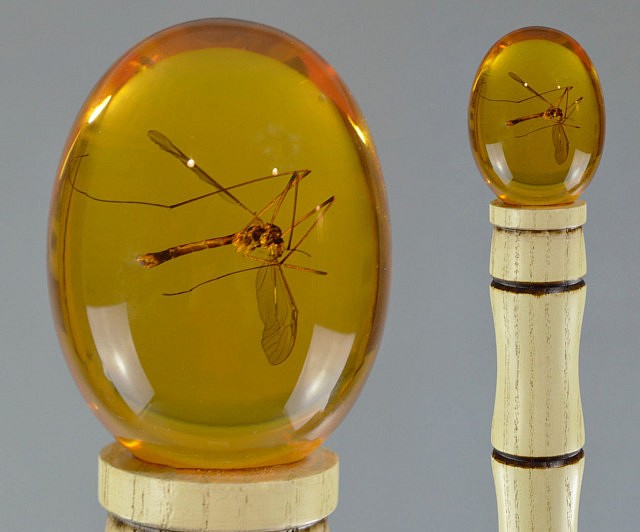
On the spectrum of movies that envision future technology, the “Jurassic Park” franchise occupies a strange part of that spectrum. The original movie, as beloved and successful as it is, did a poor job of predicting the potential of genetic engineering. The entire plot of the movie hinged on the ability of scientists to find sufficiently intact DNA from a 65-million-year-old mosquito and use that to recreate dinosaurs.

Anyone with a passing knowledge of math and the half-life of DNA knows that’s just not possible in the real world. No matter how well-preserved a fossil is, the bonds holding DNA together dissolve completely after about 7 million years so the scientists in “Jurassic Park” wouldn’t even have fragments to work with.

That’s not to say it’s impossible to bring back an extinct species. If you have intact DNA, and we do have it for extinct animals like Mammoths, then there’s no reason why science can’t recreate a creature that no longer exists. The only challenge is gestating the animal without a surrogate, but that’s just an engineering challenge that will likely be solved once artificial wombs are perfected.

Even with that advancement, it would be too late for dinosaurs. Technically, if you had enough working knowledge of how DNA works and how to create an animal from scratch, you could create something that looked like a dinosaur. In fact, it’s already a popular fan theory that none of the animals in “Jurassic Park” were actually dinosaurs. It’s one of the few fan theories that might have been confirmed on screen.

Those theories aside, it’s the the technology on display in “Jurassic World” that has far greater implications. By that, I don’t mean it’ll bring back dinosaurs or other extinct species. It may actually do something much more profound.

Unlike the original movies, both “Jurassic World” and the sequel, “Jurassic World: Fallen Kingdom,” don’t stop at just bringing back dinosaurs. These movies take place in a world where that spectacle isn’t that exciting anymore. As a result, they start splicing the DNA of other dinosaurs together to create new species, namely the Indominous Rex and the Indoraptor.

While this creates for great action scenes and plenty of dinosaur-driven combat, the true implications of this technology are lost in the spectacle. Take a moment to consider what the science within these movies accomplished. Then, consider what that means for the real world and the future of the human race.

These dinosaurs were not the product of evolution. Evolution works within some pretty rigid limits. It’s a slow, clunky, arduous process that takes a lot of time and a lot of extinction. On top of that, the basic laws of heredity and the inherent limits of hybridization ensure that the transmission of certain traits are next to impossible through natural means.

However, as Dr. Wu himself stated in “Jurassic World,” there’s nothing natural about what what they did. Essentially, the scientists in that movie used the genetic and evolutionary equivalent of a cheat code. There were no barriers to combining the DNA of a T-Rex with that of a Raptor. They just cut and pasted DNA in the same way you would cut and paste text on a word document.

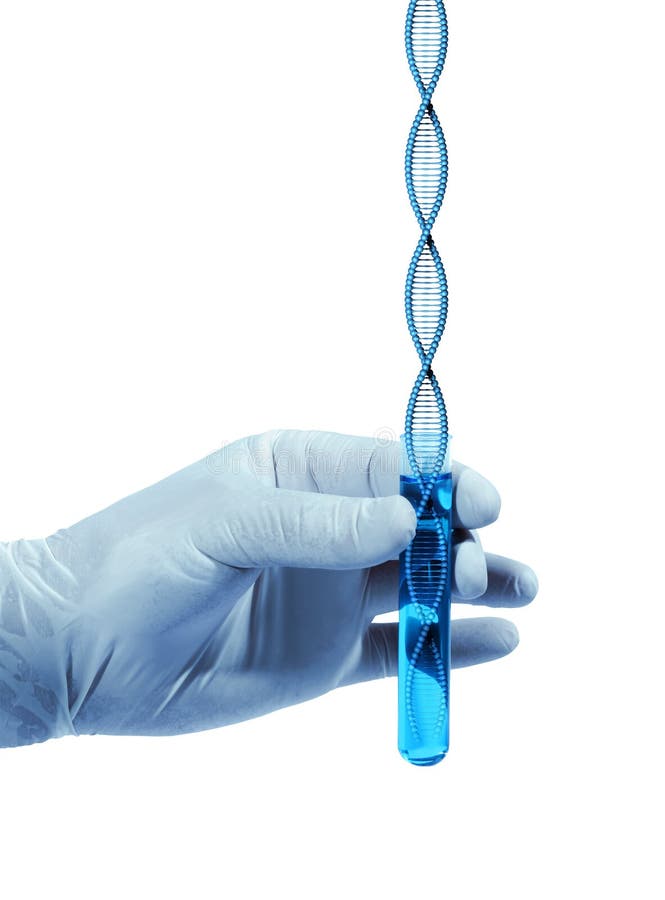
That should sound somewhat familiar to those who have followed this website because that’s exactly what CRISPR does to some extent. It’s basically the cut function for DNA and it exists in the real world. The paste function exists too, although it’s not quite as refined. To that extent, “Jurassic World” is fairly accurate in terms of the technology they used to create the Indominous Rex and Indoraptor.

That’s not to say it’s possible to create the exact same creatures depicted in the movies. There are various anatomical limits to how big, fast, or smart a creature can be, even if there are no genetic barriers to contend with. I don’t know if the creatures created in “Jurassic World” could function in the real world, but the science for making them does exist, albeit in a limited capacity.

That, in and of itself, is a remarkable notion and one that makes the original “Jurassic Park” seem slightly more incredible. If anything, the original movie underestimated the progress that science would make in genetic engineering. That movie just had science rebuilding life from the remnants of existing creatures. We’ve already progressed to the point where we’re starting to make synthetic life from scratch.

This kind of technology has implications that go far beyond bringing extinct animals back from the dead or creating new ones that make for great fight scenes in a movie. It actually has the potential to circumvent evolution entirely in the struggle for survival. “Jurassic World: Fallen Kingdom” even explores this concept, but only to a point.

Without getting too deep into spoiler territory, this movie builds on the same genetics technology that “Jurassic World” introduced with the Indominous Rex. However, it isn’t just applied to dinosaurs. The sequel dares to contemplate how this technology could be used on humans or to supplement human abilities.

It’s not that radical a concept. Humans have, after all, used technology and breeding techniques to domesticate animals that have aided our efforts to become the dominant species on this planet. That process is still hindered by the hard limits of biology. The process in “Jurassic World: Fallen Kingdom” is not bound by those limits.

In this movie, dinosaurs go beyond a spectacle at a theme park. They suddenly become a potential asset to further augment human abilities. Some, such as Jeff Goldblum’s character, Ian Malcolm, would argue that such creatures pose a risk to humanity’s survival. I doubt I’m as smart as Dr. Malcolm, but I’d also argue that he’s underselling just how dominant human beings are at the moment.

Maybe if dinosaurs had come back 1,000 years ago when humans were still using swords, spears, and arrows to fight animals, we might have had a problem. Today, humans have access to machine guns, tanks, and combat drones. Even the apex predators of the Jurassic don’t stand a chance.

I would further argue that the same technology that the scientists in “Jurassic World: Fallen Kingdom” used to make the Indoraptor is even more valuable in terms of how it can affect humans. After all, if you can copy and paste desirable traits into a dinosaur, then you can do the same to a human.

Doing that might cause plenty of ethical issues that Dr. Malcolm has articulated before, but there’s one factor that overshadows all those arguments and that’s the survival of our species. Let’s face it, the human has its limits. We can’t breathe underwater. Our skin is soft and vulnerable. Our immune system has room for improvement.

There are other mammals out there who can survive extreme cold. There are animals whose immune systems are much more effective than ours. There are even some animals that don’t even age. Nature has already solved many of the problems that hinder the human species today. It’s just a matter of taking those solutions and integrating them into our own biology.

If the technology in “Jurassic World: Fallen Kingdom” can create a creature as advanced as the Indoraptor, then there’s no reason why it can’t also create a human who has the muscle strength of a mountain gorilla, the immune system of an alligator, and the longevity of a tortoise. That kind of application is far more impactful than creating fancy zoo attractions.

I imagine that Dr. Malcolm might still warn about the use of this technology, but it may actually be an even greater risk to not use it. Again, it comes back to survival. Eventually, the Earth is going to die, either by the destruction of our sun or some other external force. If we’re to survive beyond that, we need to be able to survive outside one planet.

As it stands, the human species just isn’t built for that. It shows in how poorly our bodies react to space travel. It also shows in how much we struggle to survive in certain environments. To some extent, we must use the technology in “Jurassic World” to improve our survival.

Whether that involves tweaking our genetics with traits from more robust animals or creating pet raptors that help protect us, this technology has uses that are both profound and necessary. There’s still plenty of danger, although it’s doubtful any of that danger entails someone getting eaten by a T-Rex. However, it’s a danger we’ll have to confront whether the Ian Malcolms of the world like it or not.

1 Comment

Filed under futurism, gender issues, human nature, movies

Reflecting On The Greatest Advice Rick Sanchez Ever Gave Us

rick-and-morty-season-3-creators-tease-a-return-to-previous-cliffhangers-and-characters-663486

Greetings, and wubba lubba dub dub! By now, you should know that means this will be another article about “Rick and Morty,” one of the greatest animated shows of this century or any other century, for that matter. I know that sometimes means the topics involved are depressing or downright fatalistic. I can’t promise this one will balance that out to any meaningful, but I still hope that this piece is more useful than most.

Love it or hate it, either due to its nihilistic undertones or exceedingly passionate fanbase, there are a lot of interesting insights to explore within “Rick and Morty.” From specific episodes that deal with the not-so-hidden appeal of the apocalypse to those built around Rick turning himself into a pickle, there’s a wide variety of lessons and themes to take in.

In this case, I want to focus on what I feel is the best advice “Rick and Morty” has given anyone, both within his animated world and in our own world. It’s a lesson that anyone can use in a multitude of situations, be it dealing with never-ending flood of depressing news to finding out a beloved actor was a total asshole.

Rick has given this advice to Morty on more than one occasion throughout the show, including the pilot episode and, most notably, in “Rick Potion #9.” It applies to battles against alien security guards, burying the body of your alternate self, and that time you farted in class a bit too loudly. It can be summed up in four simple words.

Don’t think about it!

On the surface, it doesn’t sound too useful. Not thinking about something seems like an elaborate excuse to avoid a particular problem or issue. It sounds like something adults tell children just to shut them up so they’ll stop bothering them. Whether they’re asking about where babies come from or why we can’t stop fighting wars, it feels like the overly easy way to avoid an unpleasant conversation.

However, I don’t think that’s what Rick means when he says that. He’s already proven in multiple episodes that he doesn’t give a Grunglokian fart about unpleasant conversations, as evidenced by his many unfiltered rants around his family. When he says “don’t think about it,” he’s saying it in a particular context that makes it more than just a method for avoiding awkward moments.

Watch any one episode of “Rick and Morty” and you’ll notice more than a few themes, not all of which are based on Rick’s ego or Morty’s obsession with a particular redhead. One of the major over-arching concepts that binds the show, and gives much of its appeal, is the idea that none of the things that people hold dear actually matter in the grand scheme of things.

Whether it’s religion, the economy, love, family, or the formula for concentrated dark matter, it just doesn’t matter in the long run. Religion doesn’t matter because it’s just some arbitrary set of beliefs built on unrelated correlations. The economy doesn’t matter if the value of money is entirely arbitrary. Love and family don’t matter when there’s an infinite number of them in the multiverse.

While that fits with the shows more nihilistic themes, it also speaks to the helplessness and frustration that a lot of people feel when dealing with a chaotic world/multiverse. There’s so much they can do, but so much of it doesn’t matter. The causes they fight for, the wealth they accrue, and the people they encounter simply lose their meaning when you consider the sheer size of the universe and how old it is.

In that context, not thinking about it might actually be helpful. If you work a job you don’t like, pay taxes you don’t like paying, and deal with people you can’t stand every day, the idea that it’s all for nothing in the long run isn’t just untenable. It maddening. How can anyone possibly cope with that kind of existence?

Not thinking about it, though, solves a lot of issues because it allows you to maintain the necessary perspective to function within that existence. Even if the things we do are meaningless, not thinking about it at least gives us the illusion that they’re meaningful. More often than not, perception beats reality and not just in terms of bias news.

It’s a byproduct of human’s being so limited in their thinking. Human brains did not evolve to prioritize reason, understanding, or making sense of an obscenely large universe. They evolved with the primary function to help us survive and reproduce, as individuals and as a species. Anything else is secondary or an afterthought.

Rick Sanchez seems to understand that and constantly exploits those limits for his own ends, whether it involves outwitting the President or outsmarting the devil. Unlike everyone else in a meaningless world within an infinite multiverse, he’s a super-genius. He has a portal gun that allows him to travel to infinite timelines at will, even if it’s just for a pizza.

Nobody else in this world has those capabilities, although I wouldn’t at all be surprised if Elon Musk weren’t working on it. Nobody in this world is as smart or as resourceful as Rick Sanchez. There’s very little he can’t do. This is a man who defeated a Thanos/Darkseid rip-off while blackout drunk. By every measure, what he does should carry more meaning than most.

Despite Rick’s abilities, he’s the one who often belabors how meaningless everything is. Never-the-less, he still operates as though there’s a reason to continue existing. That may send mixed messages when he says not to think about it, but that’s only if you overthink it, which would entirely defeat the purpose.

Rick knows that nothing he does matters in the long run, but he doesn’t think about that.

Rick knows that everyone he cares about are just random clumps of matter in a meaningless universe within an infinite multiverse, but he doesn’t think about that.

Rick knows that love, connection, and emotions are just manifestations of brain chemistry that help our species survive, but he doesn’t think about it.

Instead, he focuses his genius intellect on the things that matter to him. Whether that’s his family or that sweet, delicious Szechuan Sauce, he concerns himself primarily with what he feels gives his cosmic adventures meaning. It doesn’t matter if that meaning is empty in the grand scheme of things because, again, he doesn’t think about it.

It may sound egotistical or selfish, but it’s remarkably pragmatic in a meaningless universe. It keeps us from stepping back, realizing how insignificant we are, and succumbing to despair. It directs our energy and efforts into issues that are localized. For Rick Sanchez, a man with access to a portal gun and a space ship, localized is a relative term. For everyone else, though, it’s just that much more pragmatic.

There’s only so much we can do to exact meaningful change in the world. Unless you’re willing to go through the long, tedious process that involves reshaping government institutions, influencing cultural trends, or educating people on a mass scale, you can’t expect to achieve much change, especially by yourself.

Rick Sanchez could probably achieve all the change he wants, but chooses not to because he knows it’ll bore him or it’s just easier to go to a universe where that change has already occurred. For the rest of us, though, we’re frustratingly limited. We may never see or inspire the change we want. Even if we do, we can’t do it alone.

That kind of helplessness can be depressing. The idea that so little of what we do matters, even when we believe in a cause, is pretty distressing. That’s why Rick’s advice is so relevant. It’s not deep or inspiring, but it gets the job done.

Upset with past injustices upon a particular group? Don’t think about it.

Upset that you can’t change the minds of your friends and family on politics, religion, or ideology? Don’t think about it.

Upset that we’re not doing enough to address climate change? Don’t think about it.

Upset that the economy isn’t doing well and all the best opportunities are gone? Don’t think about it.

These are all things that you can’t change without a portal gun or galactic-level genius. Since Rick Sanchez has that and we don’t, our best recourse is to not obsess over it because there’s not much we can do. Eventually, the heat death of the universe will render everything we do or have ever done totally meaningless.

That can either be depressing or empowering, depending on how you look at it. Yes, not thinking about it won’t undo a traffic ticket, undo a crime you committed, or turn off your biological urges to eat, sleep, love, and mate. Efforts to do so can be damaging. For everything else though, not thinking about it is probably better for your mind, your body, and your overall sense of being.

In that sense, we should all thank Rick Sanchez for this amazingly useful device. While he’d probably say that gratitude is just a polite way of idiots admitting how incapable they are, it’s probably best not to think about his reaction. So long as the advice he gave works, what does it matter? Wubba lubba dub dub!

5 Comments

Filed under Current Events, human nature, philosophy, Rick and Morty

What It Means To “Man Up” And Why It’s Changing (For The Worse)

man-up-and-military-press

It wasn’t that long ago that parents and peers emphasized the importance of “manning up” to young boys. There would come a point in a kid’s life where he was encouraged to do more than just grow up. He was expected to push himself in a unique way, fighting and sacrificing for those who couldn’t. Sometimes, those expectations were unreasonable and a little unhealthy, but it was part of the overall gender dynamic.

That dynamic has been changing a great deal over the past several decades. I’m young enough to have grown up during many of those changes, but old enough to remember the old traditions associated with “manning up.” The sheer breadth of that change has been remarkable, but not entirely in a good way.

For the most part, I was never pushed too hard to man up by others. My friends and family encouraged me to push myself, but never to the point where I felt pressure or anxiety. I often ended up pushing myself, whether it involved going to college or moving out of my parents’ house.

That’s not say I didn’t feel any pressure to “man up” at any point in my life. Beyond my friends and family, I was as vulnerable to expectations surrounding masculinity as anyone. Most of the time, those expectations involved little things like stepping up to fix a problem, helping out those who were physically limited, and enduring pain or discomfort in the name of a particular goal.

Overall, I feel as though these expectations were either healthy or benign. Some of those standards could’ve been gender neural. When you see someone in a wheelchair at the grocery store struggling to get something from a shelf, it’s neither masculine nor feminine to help them. That’s just common courtesy.

In recent years, however, the whole notion of “manning up” has gained new a new complications. Some of them are ideological. Some of them are politically motivated. It’s because of these various nuances that I put the term in quotes because its meaning keeps shifting, gaining and losing connotations year by year. At some point, the term itself may become empty.

In contemplating that meaning, I thought briefly about the connotations that term had back when I was a kid. I doubt my interpretation was definitive, but I like to think it captured the spirit of the term. When someone told me to “man up,” this is what I took it to mean.

  • Grow up and mature
  • Take responsibility and solve your own problems
  • Stop whining and start doing something about it
  • Quit being satisfied with mediocrity and push yourself
  • Be stronger and tougher in difficult situations
  • Work hard and endure for the good of others who can’t

I don’t think it’s a coincidence that many of these same traits associated with superheroes, as espoused by the comic books I read and the cartoons I watched. They might have colored my perspective on masculinity and “manning up,” but I suspect these ideals were still consistent with healthy masculinity. The fact that characters like Wonder Woman and Storm of the X-men had some of these traits was just a bonus.

Now, as I contemplate the meaning of “manning up” in its current context, those don’t seem to have the same prominence they once did. There are also a new host of expectations surrounding the term that are fueled, in part, by identity politics. Some even conflict with others, which adds even more complications.

To get a feel for those complications, I posed a question on Reddit on what “manning up” meant to them. The response somewhat surprised me. Most wouldn’t have found their way into the comic books or cartoons I consumed as a kid, to say the least. They involved ideas such as this.

  • Checking your privileged and making way for those your kind has oppressed
  • Acknowledging the crimes and guilt of your gender, as a whole
  • Sacrificing any advantage or benefits that being a man might have once conferred
  • Subjecting yourself to greater degradation in the name of greater equality
  • Learning about all the ways men have ruined society and the world
  • Accepting that the things men love are unhealthy, damaging, and detrimental

None of these are very positive traits for those being told to “man up.” It’s basically a less overt way to tell them that them being a man is “problematic,” a term that has also gained one too many complications. It’s a term reserved for those who appear to be benefiting too much from being a man who isn’t subject to the rigors of childbirth, rampant sexism, and a long history of exploitation.

Never mind the fact that no one alive to day is directly responsible for the injustices their ancestors committed. They’re also not responsible for the injustices their particular race, gender, or ethnicity committed. It happened in the past. Yes, parts of that past were horrible, but punishing people in the present doesn’t make it less horrific. If anything, it just tries to fight one injustice with another.

This is where the concept of “manning up” really loses whatever positive connotations it once held. It’s a sentiment that many responders to my Reddit question shared. When they contemplate that term, they interpret as someone telling them that they need to endure, suffer, or overlook a particular aspect of their identity.

A few posters went so far as to say the term can be replaced with “serve my interests” and carry the same meaning. While I don’t entirely agree with that notion, I can understand why it would feel that way. Being a man, I sometimes feel like I’m expected to get to the front of the line when the time comes to sacrifice. I won’t go so far as to say I find it oppressive, but it certainly feels like I’m held to a different standard.

Sometimes, that standard can be unreasonable. That was another common theme of the responses I got. The notion of “manning up” denotes operating in a way to avoid a particular stigma that others wouldn’t incur for the same behavior. It’s not always ideological, but the pressure is there.

A man who is too emotional is considered a sissy and has to “man up.” A woman or even a gay man who does this won’t face that stigma.

A man who is reluctant to sacrifice for the well-being of another group is considered selfish and should “man up.” A woman or another minority who show a similar reluctance can do the same, but won’t face the same stigma.

A man who shows his pain when he’s harassed is told to suck it up and “man up.” A woman or minority who is harassed can expect plenty of supporters who will cheer them on. Even if men are subject to more overall harassment, they don’t get any sympathy. They’re told to “man up” while everyone else is allowed to seek social support without much scrutiny.

This, I feel, is the ultimate tragedy of the concept. A term that once use to reflect certain ideals for men has now become an instrument of ridicule. It’s no longer a lesson for boys to learn. It’s a rhetorical shortcut that allows someone to hold an entire group of people to a different standard, one that requires them to go out of their way for someone else.

I don’t doubt that there are instances where it’s good for society that some people go out of their way to help others. For those who are disabled, elderly, or ill, it’s just more just and compassionate to set a different standard for ourselves. We don’t ask someone who is missing a limb or suffering from ALS to “man up.” We go out of our way to help them.

It’s the extent of those instances, however, that seems to be damaging the notion. It’s no longer sufficient to just have a particular ailment or shortcoming. Just being someone who isn’t a man who can claim some sort of injustice, be it historical or contemporary, is sufficient.

I believe that’s a dangerous precedent for men and women, for that matter. It sends the message that in order for there to be more justice and equality, an entire group of people need to sacrifice to an extent where they have to be the villains. They have to come to the table, surrender unconditionally, and admit they were wrong and they were the cause of the problem.

That may not be sentiment of those telling someone to “man up,” but that’s how it’s being interpreted. It’s less a masculine ideal and more a shaming tactic, one that is more likely to incur a backlash rather than get someone to reconsider their understanding of gender roles.

I still feel like there’s a way to recapture the positive elements of “manning up.” Gender dynamics is one of those concepts that’s always evolving. Sometimes, there’s progress. Sometimes, there are setbacks. At the moment, I think masculinity and femininity are going through some growing pains as they adapt to a changing world. That process is likely to involve plenty of conflicts and controversies along the way.

In the long run, though, I think society will find a healthy balance with respect to “manning up.” I think there’s a way to use that notion to bring out the best in men and women alike. It’ll likely take plenty of work, toil, and sacrifice from everyone involved in gender-driven controversies, but it’s definitely worth doing.

1 Comment

Filed under gender issues, human nature, Marriage and Relationships, media issues, political correctness, sex in society, sexuality

Is The Human Race Ready For Contact With Alien Life?

contactparty

In general, I tend to have a high opinion of the human race. I believe that, in general, people are inherently good and will do the right thing in the long run, even if it requires mistakes and missteps along the way. Some of my personal experiences have fed this belief, as well as stories of incredible acts of compassion.

I say that as a preface because my faith in humanity does have limits. There are certain issues where those limits become a critical factor in answering major questions about where we are, as a species, and where we’re heading. I’ve tried answering some of those questions before, such as humanity’s readiness for advanced artificial intelligence. Now, I want to try to answer another where I feel humanity’s limits are a real issue.

It has to do with whether or not humans are alone in the universe. It’s probably one of the most fundamental questions our species has ever asked, inspiring heated debates, famous equations, and Hollywood blockbusters. I’ve certainly asked that question a time or two when looking up at the stars. I imagine there are few people who haven’t.

At the moment, the sheer size of the universe and the ever-growing number of planets we keep finding, the raw numbers make it almost certain that there’s other life outside our planet. It may even be within our own solar system. Just finding some microbes on one of Jupiter’s moons would be pretty profound, but I doubt it would bring that much change to the human race. Some might just brush it off or call it fake news.

It’s the act of discovering intelligent extraterrestrial life that has far greater implications for humanity. I would even argue that those implications could determine whether the human race will survive beyond the destruction of Earth, which is inevitable. Even advanced artificial intelligence wouldn’t compare because at least humans would create that. An intelligent alien civilization would be much less predictable.

In confronting this existential issue, I don’t believe movies or TV shows have come close to getting it right. “Contact” made a commendable effort, but never gave more than a half-answer. Movies like “Independence Day” and “Close Encounters of the Third Kind” were overly simplistic in their approach. That’s to be expected because, logistically speaking, there’s no way to fit all the implications into a single two-hour movie.

I believe that to answer the question of humanity’s readiness to confront an extraterrestrial species is multi-faceted. There are plenty of factors to consider, but before I get too bogged down by the particulars, I want to offer my personal opinion on the issue. Then, I hope to demonstrate why I have this opinion.

No, the human race is NOT ready for contact with intelligent extraterrestrial aliens, but we’re getting there.

I know that isn’t a straightforward answer. It may sound like I’m trying to stand on both sides of the fence, but like I said, the question is inherently complex. As such, it’s hard to offer a simple answer.

Part of the complexity comes from circumstances. In an instance where scientists on Earth identify an advanced alien species, possibly by detecting an alien mega structure like a Dyson Sphere around a distant star, I think the human race could handle that, for the most part.

Such a discovery would be, by far, the greatest ever made in the history of humanity. It would be the story of the millennium and confirm, once and for all, the answer to one of the most fundamental questions our species has ever asked. Getting an answer to that question would change how we see ourselves in the universe, but the extent of the impact would be limited.

Sure, it might cause some disruptions with respect to major religions, although some denominations already preparing for that. It might also cause some ripples in the social fabric of society. If we know there are alien civilizations in the universe that are more advanced than us, then suddenly we have fewer excuses to impose petty divisions within our own species.

There would be upheaval. There would be tension, as well. I still believe that society would adapt in that scenario. Once the shock wears off, we may very well go back to how we were before. Future generations would just shrug off the notion that advanced aliens exist and focus primarily on the issues directly affecting them on Earth.

There’s another instance, however, that has far more profound implications, as well as greater danger. In that scenario, the advanced alien civilization contacts us directly. Moreover, it effectively announces that it’s coming to meet us and there’s nothing we can do to stop it.

In that scenario, I don’t think the current order will remain intact. If we found out tomorrow that intelligent aliens exist and they’re on their way to greet us, I believe that society, as we know it, will fall apart under the weight of fear, uncertainty, and outright dread.

My reasons for believing this have less to do with my faith in humanity and more to do with my understanding of basic human psychology. It’s proven science that the human psyche is adverse to uncertainty. From a purely survival standpoint, that makes sense. Not knowing whether there’s a hungry lion hiding in the bushes is detrimental to our survival. We have a legitimate evolutionary reason for avoiding such situations.

An advanced alien civilization isn’t just a possible threat. It’s the ultimate uncertainty. Even if those aliens are peace-loving hippies who want nothing more than to create a utopian world for every species they encounter, we won’t know for certain. Even if they try to articulate their peaceful intentions, we may not believe them because assuming wrong would be more dire than any hungry lion.

If an alien civilization is advanced enough to both contact us and traverse interstellar space, then it’s highly likely that we wouldn’t stand a chance at stopping them. Despite what “Independence Day” might have you believe, there’s just no way we would be able to counter technology that could carry another species across the stars.

On top of that, we wouldn’t even know if these aliens were biological creatures, like us. More than a few scientists have speculated that it’s the natural path of all advanced life that it transcend its biology to become machines in part or entirely, which makes sense for any species that wants to survive in the vacuum of space. I would agree that any initial encounter humans have with advanced aliens will come in the form of a probe.

Even if that probe is no bigger than a basketball, its arrival on Earth would trigger so much panic that our society, economy, and political institutions wouldn’t survive in their current form. That’s not to say civilization would completely collapse. Some areas might descend into anarchy, but most wealthy countries would remain intact.

However, I believe they’ll remain intact through strict martial law. I also believe that, in the face of incoming aliens, there would be a huge scramble among nations to put together some sort of defense plan. Anyone remotely experienced with science or engineering would suddenly become incredibly valuable for their skills and likely be required to work on this issue.

No matter what recourse humanity takes, though, I don’t think it’ll matter once intelligent aliens arrive. The worst case scenario is that people are so afraid that a few become too trigger happy and attempt to attack. In that case, if the advanced aliens are the vindictive type, they would probably wipe humanity out with the same ease that we would use to step on an ant.

While I don’t think that scenario is that likely, I can certainly see fear dominating the discourse. It would probably extend beyond the initial contact. Even if  the aliens present themselves as friendly visitors, I imagine there will still be plenty of paranoia that it could all be a trick. Given how eager some people are to embrace conspiracy theories, I think this will cause plenty of problem, even in the best case scenario.

There’s still a chance that the human race could adapt to this encounter and be stronger because of it. However, if I had to bet money on the ultimate outcome, I wouldn’t wager much on that outcome. I think, at the moment, it’s more likely that fear and uncertainty will lead to the kind of irrational behavior that would prevent humanity from benefiting from an encounter with intelligent aliens.

As it stands, humans can’t even prevent conflict when encountering one another, especially if they look and act differently. I can’t imagine it would be much better if we encountered a species that was so different that we just had no way of relating to them. At least with minorities here on Earth, we share the same basic human template. For all we know, aliens will look, think, and feel things that are beyond our abilities.

Now, I know that scenario sounds bleak, especially for someone who claims to have more faith in humanity than most. However, there’s one last caveat that further complicates the issue and it has to do with the last part of my answer.

When I stated that the human race is not ready to encounter an advanced alien species, I mean that within a specific context. In the same way I don’t believe humanity is ready for advanced AI at the moment, I don’t think the collective psyche of the human race is to a point where we can accept the idea of confronting an intelligent alien civilization.

That, I do think we’re more ready today than we were 30 years ago. Humanity has made remarkable progress with respect to technology, society, and general welfare. Being more connected through media, the internet, and globalization has helped us better see ourselves as one species, at least to the extent our inherent tribalism will allow.

I believe that in the coming decades, especially as we augment our brains and our bodies, we’ll be more prepared to encounter an extraterrestrial intelligence. I’m not sure we’ll ever be completely ready, but I do think we’ll get to a point where we, as a society, will be able to handle it.

Whether or not that point comes within my lifetime or that of the kids being born today is hard to say, but given enough time and continued progress, I believe we’ll get there. For now, though, the prospect of encountering an intelligent alien civilization would incur some pretty detrimental effects on our species and our world. Even if aliens come in peace, we just not be ready to accept it.

3 Comments

Filed under Aliens, human nature, media issues, philosophy, psychology