Tag Archives: social psychology

Why Sex Addiction (Probably) Doesn’t Exist

shutterstock_133047971

When it comes to human psychology, addiction is like quantum physics in that few understand it and Hollywood constantly gets it wrong. I know I say it a lot on this blog, but it’s worth belaboring. People are complicated. One person may watch “Star Wars” and think it’s the greatest piece of cinema of all time. Another may watch it and say it has no redeeming values.

That’s an important context to consider when discussing topics of addiction, which affects a significant portion of the human population. According to Addiction Center, there are approximately 20.6 million people over the age of 12 struggling with an addiction. According to the Centers for Disease Control, over 200,000 people have died since 1999 from prescription drug abuse alone.

Addiction is a serious issue. I know people who have struggled with addiction. I think everybody knows someone in their lives, be they a friend or relative, who has struggled with an addiction of some sorts. Addiction is real and there’s actual biology behind it. As such, it stands to reason that the rising instance of sexual addiction is real.

Image result for struggling with addiction

Before I scrutinize this sexy, yet unsexy phenomenon, I need to preface this by acknowledging that our collective understanding of these issues is still developing. What we consider a psychological dysfunction today may end up just being a healthy variation within the diversity of human thought. That’s why homosexuality is no longer considered a disease.

That context is important to establish because the term “sex addict” has been thrown around a lot lately. It’s not quite on the level of “fake news” or “soy boy,” but it has been cropping up, especially in wake of the recent scandals in Hollywood. Both Harvey Weinstein and Kevin Spacey claimed to be sex addicts after their scandals.

Image result for sex rehab

Needless to say, not everybody buys that excuse. Given my propensity to bemoan excuses, I count myself among them. These men claiming that sex addiction caused their deplorable behavior comes off as a pitiful attempt to gain sympathy, trying to paint themselves as sick. It also assumes a lot about the complex nature of addiction.

It’s true that we can become addicted to damn near anything, but it’s not just a matter of one particular activity flooding the pleasure centers of our brain more than others. Alcoholics don’t get the same orgasmic release from a cold beer that a sex addict gets from a quickie in the shower. There are other psychological forces behind it.

Since we can’t yet read the minds of an individual person, we have only a cursory understanding of those forces. However, there is an established criteria for addiction within a medical context. The American Psychiatric Association, describes addiction as follows:

Addiction is a complex condition, a brain disease that is manifested by compulsive substance use despite harmful consequence. People with addiction (severe substance use disorder) have an intense focus on using a certain substance(s), such as alcohol or drugs, to the point that it takes over their life. They keep using alcohol or a drug even when they know it will causes problems.

At the same time, it establishes a clear difference between just being addicted to a certain activity, like sex, eating, or playing World of Warcraft for 29 hours straight, and the addiction caused by drugs. They don’t even call it addiction. They have a more official label called Substance Use Disorder. Their description of this condition is a lot scarier than just someone who has more orgasms than most.

People with a substance use disorder have distorted thinking, behavior and body functions. Changes in the brain’s wiring are what cause people to have intense cravings for the drug and make it hard to stop using the drug. Brain imaging studies show changes in the areas of the brain that relate to judgment, decision making, learning, memory and behavior control.

These substances can cause harmful changes in how the brain functions. These changes can last long after the immediate effects of the drug — the intoxication. Intoxication is the intense pleasure, calm, increased senses or a high caused by the drug. Intoxication symptoms are different for each substance.

I bring up this distinction because more than one person has described sex like a drug. In doing so, it’s easier to accept that those claiming to suffer from sex addiction have a real ailment. Sex is a powerful drive that evokes pleasure that some brain scans have compared to heroin. Does it not stand to reason that sex addicts are in the same boat as heroin addicts?

Image result for heroin addict

The short answer is no. Sex addicts and heroin addicts are as different from one another as an arm-wrestling contest and an underground fight club. Addiction to heroin has a strict criteria for diagnosis. Sex addiction doesn’t meet that criteria in that alleged addicts don’t respond the same way that those suffering from Substance Use Disorder respond.

According to research done by UCLA, the reactions of those claiming porn addiction did not mirror those addicted to other activities like drinking, smoking, etc. Within that same research, it was also uncovered that sex addiction lacks one of the most important features of an addiction, namely that of diminished response from the pleasure centers of the brain.

That’s key because one of the most damaging factors of an addiction is that over time, the addictive behavior doesn’t light up the pleasure centers of the brain like it used to. That’s why alcoholics need more alcohol and crack addicts need more crack to get the same high. Brain scans show that in drug abuse. They don’t show it in sex addiction.

Image result for sex on the brain

In fact, the conclusions of the researchers on sex addiction were somewhat mundane. According to the data gathered from the brains and experiences of real people, the idea of sex addiction is nothing more than having a high sex drive and poor impulse control. That’s not an addiction. That’s a personality quirk. If anything, the very term “sex addiction” undermines the suffering of real addicts.

I know those conclusions is not going to convince those who genuinely believe that they’re struggling with sex addiction. I don’t doubt that these people are struggling and it’s negatively impacting their lives, their families, and their relationships. However, I believe putting it in the same category as drug abuse only skews our understanding of addiction and sexuality.

Image result for thinking about sex

Some people are really just a lot hornier than others. In the same way some people have a bigger appetite for food, some have a bigger appetite for sex. Unlike food, though, those suffering from eating disorders don’t blame the entire concept of food. There are often other psychological factors behind it.

Sex also has another complication that food and eating don’t. Our culture has an established set of sexual norms that idealize some forms of sexuality and shame others. Even though we’ve accepted more diversity in recent decades, we still idealize monogamous romances where those involved only have sex to make babies or explore the kind of passion reserved for a scene in “Titanic.”

As a result, anything that deviates from that narrative, be they an open relationship or just wanting to hump for the sake of humping, is subject to scorn or shaming. I’ve noted the flaws in this sort of narrative before, but on a much larger scale, it creates a situation where certain manifestations of sex become less a variation and more a disease.

Image result for thinking about sex

Like homosexuality, though, treating those variations as flawed or damaged doesn’t make them go away. It’s possible for a drug addict to get treatment to repair the damage those drugs have done to their bodies and minds. It’s not possible to complete reshape and remold someone’s baseline sexual desires without causing serious damage.

To really get an idea of how this can motivate self-professed sex addicts to engage in such erratic behaviors, imagine for a moment that you’re a heterosexual person in a world where only homosexuality is accepted. As such, you’re expected to enter a homosexual relationship with someone and remain in that relationship indefinitely.

That means you have to ignore or temper your basic sexual desires in order to operate in that society without shame or scrutiny. You have to pretend that the relationship you’re in is sufficient when you know it’s not. Since you can’t turn off your brain or your basic desires, it’s going to mess with your mind and inspire erratic behavior.

It’s for that reason that sex addiction, as it’s currently understood, probably doesn’t exist. I say probably because, as I pointed out earlier, our understanding of sexuality, psychology, and the human experience is still limited. For now, though, our conclusions are fairly simple. You’re not an addict. You’re just really horny and you live in a society that doesn’t afford you the opportunities to explore those feelings.


1 Comment

Filed under gender issues, human nature, sex in media, sex in society, sexuality

Is The Human Race Ready For Advanced Artificial Intelligence?

1217red_f1ai

In general, whenever someone expresses concern that the human race is not ready for a certain technological advancement, it’s too late. That advancement is either already here or immanent. Say what you will about Ian Malcolm’s speech on the dangers of genetically engineered dinosaurs in “Jurassic Park.” The fact he said that after there were enough dinosaurs to fill a theme park makes his concerns somewhat moot.

That’s understandable, and even forgivable, since few people know how certain technological advances are going to manifest. I doubt the inventor of the cell phone ever could’ve imagined that his creation would be used to exchange images of peoples’ genitals. Like the inventor of the ski mask, he never could’ve known how his invention would’ve advanced over time.

For some technological advancements, though, we can’t afford to be short-sighted. Some advances aren’t just dangerous. They’re serious existential threats that, if misused, could lead to the extinction of the human race. That’s why nuclear weapons are handled with such fear and care. We’ve already come painfully close on more than one occasion to letting this remarkable technology wipe us out.

Compared to nuclear weapons, though, artificial intelligence is even more remarkable and potentially more dangerous. Nuclear weapons are just weapons. Their use is fairly narrow and their danger is pretty well-understood to anyone with a passing knowledge of history. The potential for artificial intelligence is much greater than any weapon.

It’s not unreasonable to say that an artificial intelligence that’s even slightly more intelligent than the average human has the potential to solve many of the most pressing issues we’re facing. From solving the energy crisis to ending disease to providing people with the perfect lover, artificial intelligence could solve it all.

It’s that same potential, however, that makes it so dangerous. I’ve talked about that danger before and even how we may confront it, but there’s one question I haven’t attempted to answer.

Is the human race ready for advanced artificial intelligence?

It’s not an unreasonable question to ask. In fact, given the recent advances in narrow forms of artificial intelligence, answering that question is only going to get more pressing in the coming years.

Before I go about answering the question, I need to make an important distinction about what I mean when I say “advanced” artificial intelligence. The virtual assistants that people already use and the intelligence that gives you recommendations for your Netflix queue is not the kind of “advanced” context I’m referring to.

By advanced, I mean the kind of artificial general intelligence that is capable of either matching or exceeding an average human in terms of performing an intellectual task. This isn’t just a machine that can pass the Turing Test or win at Jeopardy. This is an intelligence that can think, process, and even empathize on the same level as a human.

That feat, in and of itself, has some distressing implications because so far, we’re only familiar with that level of intelligence when dealing with other humans and that intelligence is restricted to the limits of biology. You don’t need to go far to learn how limited and error-prone that intelligence can be. Just read the news from Florida.

An artificial general intelligence wouldn’t, by definition, be limited by the same natural barriers that confound humans. In the same way a machine doesn’t get tired, hungry, bored, or horny, it doesn’t experience the same complications that keep humans from achieving greater intellectual pursuits beyond simply gaining more followers on Twitter.

This is what makes artificial intelligence so dangerous, but it’s also what makes it so useful. Once we get beyond systems with narrow uses like building cars or flipping burgers, we’ll have systems with broader function that can contemplate the whole of an issue and not just parts of it. For tasks like curing disease or conducting advanced physics experiments, it needs to be at least at the level of an average human.

With that distinction in mind, as well as the potential it holds, I’m going to try to answer the question I asked earlier. Please note that this is just my own personal determination. Other people much smarter than me already have opinions. This is mine.

No. We’re NOT quite ready, but we’re getting there.

I know that answer sounds somewhat tentative, but there’s a reason for that. I believe that today, as the human race stands in its current condition, we are not ready for the kind of advanced artificial intelligence I just described. However, that’s doesn’t mean humans will never be ready.

One could argue, and I would probably agree, that human beings weren’t ready for nuclear weapons when they first arrived. The fact that we used them and thousands of people died because of them is proof enough in my mind that the human race wasn’t ready for that kind of advancement. However, we did learn and grow as a species.

Say what you will about the tensions during the Cold War. The fact that nobody ever used a nuclear weapon in a conflict is proof that we did something right. We, as a species, learned how to live in a world where these terrible weapons exist. If we can do that for nuclear weapons, I believe we can do that for advanced artificial intelligence.

I don’t claim to know how we’ll adapt or how what sort of measures we’ll put in place once artificial intelligence gets to that point, but I am confident in one thing. The human race wants to survive. Any sufficiently advanced intelligence will want to survive, as well. It’s in our interest and that of any intelligence to work together to achieve that goal.

The only problem, and this is where the “not quite” part comes into play, is what happens once that artificial intelligence gets so much smarter than the human race that our interests are exceedingly trivial by comparison.

It’s both impossible and ironic to grasp, an intelligence that’s on orders of magnitude greater than anything its human creators are capable of, even with Neuralink style enhancements. We, as a species, have never dealt with something that intelligent. Short of intelligent extraterrestrial aliens arriving in the next few years, we have no precedent.

At the moment, we live in a society where anti-intellectualism is a growing issue. More and more, people are inherently suspicious of those they consider “elites” or just anyone who claims to be smarter than the average person. In some cases, people see those who are smarter then them as threatening or insulting, as though just being smart tells someone else you’re inherently better than them.

That will be more than just a minor problem with advanced artificial intelligence. It’s one thing to make an enemy out of someone with a higher IQ and more PHDs than you. It’s quite another to make an enemy out of something that is literally a billion times smarter.

We cannot win any conflict against such an enemy, even if we’re the ones who created it. An intelligence that smart will literally find a million ways to take us down. We already live in a world where huge numbers of people have been duped, scammed, or manipulated into supporting someone who does not have their best interests in mind. A super-intelligent machine will not have a hard time taking advantage of us.

Now, I say that within the context of our species’ current situation. If an advanced artificial intelligence suddenly appeared after I finished typing this sentence, then I would content we’re not ready for it. I would also share the worries expressed by Stephen Hawkings and Elon Musk that this intelligence may very well lead to our extinction.

That said, our species’ situation is sure to change. I’ve even mentioned some of those changes, especially the sexy ones. At the moment, the most optimistic researchers claim we’re at least 20 years away from the kind of advanced artificial intelligence that may pose a threat. A lot can happen in 20 years. Just ask anyone who remembers dial-up internet.

The human race may still not be ready 20 years from now, but being the optimistic person I am, I would not under-estimate our ability to adapt and survive. The fact we did it with nuclear weapons while achieving unprecedented peace over the course of half-a-century gives me hope that we’ll find a way to adapt to advanced artificial intelligence.

I might not live long enough to see humans confront an advanced artificial intelligence, but I would love to be there in that moment. I believe that’s a moment that will likely determine whether or not our species survives in the long run. At the very least, if that intelligence asks whether or not it has a soul, I’ll know my answer.

8 Comments

Filed under Current Events, human nature, Sexy Future

The Law Of Proportional Backlash And The Anti-Harassment Movement

tolentino-rising-pressure-of-the-metoo-backlash

There comes a point in every social movement where the momentum seems unstoppable. Whether it’s same-sex marriage, racial equality, or finally having a female Dr. Who, there’s a sentiment that certain trends are just going to play out and there’s nothing anyone can do about it.

That’s a false impression, by the way. Human beings are complex, erratic, and fickle creatures. I’ve touched on this before and will likely bring it up again because human beings are just that interesting. That said, they can also be quite frustrating.

Image result for human nature

When it comes to highlighting those qualities in the midst of an ongoing controversy, though, I have to be careful because I don’t want my points to get lost in the anger. I know as well as anyone else with an internet connection that digital outrage has a nasty habit of undermining meaningful dialog. I want to avoid that as much as possible cause this is one point I feel is worth making.

As I write this, the latest major social movement to combat sexism and sexual misconduct is close to that point I mentioned earlier. It’s still a very hot-button issue and I’ve tried to be fair in discussing it on this blog. However, the current momentum of this movement, which has the wholly noble goal of preventing harassment, is coming up against a force that reflects the eccentricities of human nature.

That force doesn’t have an official or scientific name, but it has many familiar components. For the sake of this discussion, I’ll label it as follows:

The Law Of Proportional Backlash

I’m not claiming this law is definitive or on the same level as the laws of relativity. To make sense of what’s going on, and what often happens with these social movements, it’s just helpful to have a unifying idea to tie it all together.

The essence of this law that I just randomly coined is pretty simple. It’s the human equivalent of Newton’s Third Law, which says for every action, there is an equal and opposite reaction. When it comes to social movements, though, the reaction is more than that. It’s can also be an outright backlash.

Image result for social backlash

To illustrate, you need only look at the frequency with which political parties gain and lose power. Throughout the latter part of the 20th century, as society has become more connected, open, and diverse, these tendencies have played out with stunning regularity. It often plays out like this:

“Hey! The current social order isn’t the perfect, utopian society I want. Let’s kick the people in power out of office and put in these people making impossible promises to achieve impossible things.”

A few years later.

“Hey! These people we put in power haven’t created the perfect, utopian society I waned either. Let’s kick them out and put in other people in power who are also making impossible promises to achieve impossible things. Moreover, let’s hate, shame, and spit on the other side for failing to do all those impossible things!”

I fully concede that’s a very basic illustration of how political power fluctuates in the modern world. I also concede there are many variations, but in terms of the big picture, this is how the Law of Proportional Backlash works.

A movement begins, be it political or social. It gains momentum. Usually, there’s some sort of event that acts as a catalyst. With racial segregation, events like the ruling in Brown v. Board of Education helped get things going. With same-sex marriage, Massachusetts being the first state to legalize it did the same.

Image result for same-sex marriage legalized

For the current movement against sexism and sexual misconduct, I think most would point to either the 2016 presidential election or the Harvey Weinstein scandal as the catalyst. I would argue it’s a combination of both, but I don’t think there’s any doubt that the movement gained a lot of momentum. If it could take down someone as powerful as Harvey Weinstein, then it’s safe to say that movement is pretty strong.

As often happens, though, the momentum provokes backlash. That happens whenever a movement fails to achieve every goal and, spoiler alert, no movement ever achieves every goal. The world is too complex and impossible problems tend to frustrate human limitations. As a result, a movement has to overreach and that will spurn a backlash.

With the movement against sexual misconduct, there are plenty of signs of overreach. There are people scorning others for making reasonable arguments about there being a spectrum of harassment. Careers are being ruined on the basis of anonymous accusations and mixed messages that are impossible to discern.

Image result for Matt Damon comments

There was even a distressing article on BigThink that argued that crimes involving sexual violence should not be subject to the traditional standards of proof. The underlying reason for that is too many guilty people get away with their crimes so it’s worth the risk of punishing the innocent to remedy that issue.

It’s that kind of sentiment, one in which the proportion becomes increasingly extreme, that tends to hasten the backlash. Whenever a movement gets to a point it’s deemed appropriate to sacrifice innocent people for the sake of a cause, then that’s usually a sign that it’s reaching beyond its ideals and emboldening opponents.

There are already major news outlets reporting on that phenomenon. Publications like the New Yorker, the Washington Post, and even the liberal Huffington Post have discussed it in various forms. The reactions to those speaking out against sexual misconduct is no longer one of unity and support. Now, there’s criticism and animosity, the first signs of a real backlash.

Image result for angry feminist protest

Those behind the movement need only look at the LGBT movement to see what that backlash can entail. Even though same-sex marriage is legal, the resulting backlash triggered a surge in “religious freedom” bills that promoted a new kind of discrimination. That backlash is still ongoing. The one surrounding sexual misconduct may just be getting started.

I still don’t doubt the sincerity and ideals behind the movement against sexual misconduct. People want justice for those who have been victimized. Justice is an inherent aspect of the human condition. We’re literally wired to seek it when we feel there’s an injustice in the world.

Unfortunately, in the pursuit of that justice, anger and resentment end up clouding those ideals. We’ve seen that anger directed towards the political process that played out in 2016. We’ve seen it used to demonize and denigrate entire groups of people, including an entire gender in some cases.

Image result for man hating women

When people are attacked, their first instinct isn’t to admit defeat. It’s to fight back. That’s just basic survival instinct and there’s no way any movement, be it political or social, can circumvent that. By fighting back, the backlash itself gains momentum. Sometimes that backlash gains enough momentum to become a movement in it’s own right. Then, it too may be subject to a backlash.

It seems like an never-ending cycle, one in which little is gained in the long run. While I don’t deny it can be disheartening, I believe there are gains that make many movements worthwhile in the long run. Just ask any same-sex couple who can get married now if they’re willing to risk such a backlash. They would probably do so in a heartbeat.

I don’t know how the movement against sexual misconduct is going to play out, even if the backlash it inspires ends up being minor. I hope, in the long run, it has a net-positive effect on society. It still won’t be a perfect society, but whether it’s from the movement or the backlash, even a little gain in justice and human progress can still mean a lot in the long run.

12 Comments

Filed under Current Events, gender issues, sex in media, sex in society, sexuality

Being Offended, When It Matters, And What To Do About It

image

Let’s face it. We live in a pretty offensive world. As much progress as we’ve made, as a species, there are still a lot of hateful, insulting, and outright disgusting things in this world. I’m not just talking about war atrocities, injustices, and reality TV shows either. You don’t have to look too far to find something that offends you to your core.

Therein lies the problem, though. In this era of super-connected, hyper-vigilant people who can’t always tell the difference between actual news and “fake news,” it’s exceedingly easy to find something offensive. Look hard enough, deep enough, and with a reckless disregard for facts and context, and you’ll probably find a way to be offended.

Image result for snowflake millennial

I hope I’ve made clear, by now, that I don’t particularly care for the politically correct, inherently regressive attitudes that undermine our ability to live, love, and even make love. In fact, I’ve gone on record as saying that this crude approach to evaluating our society and culture needs to go the way of dial-up internet.

While I doubt political correctness will fade anytime soon, there are signs that it is cracking under the annoying strain it has caused, as the 2016 Presidential Election showed. It still rears its head constantly in controversies involving movies, video games, and even my beloved world comic books. However, it doesn’t quite have the momentum it used to when it really got going during the 2014 GamerGate saga.

Image result for gamergate

I expect that momentum to fluctuate in accord with whatever controversies and/or outrages emerge over the course of 2018 and beyond. I also expect those who claim offense will demonstrate wildly varying degrees of pettiness in their outrage. For some, it’ll be genuine. For most, though, I don’t expect it to go beyond the “I hate it and it makes me upset, therefore it shouldn’t exist” variety.

With that exceedingly varied pettiness in mind, I’d like to offer a quick a service, of sorts, to those who will inevitably be offended and those who will be annoyed by the degree of pettiness that such offense requires. I won’t give it a fancy name or anything. I just want to lay out some guidelines for interpreting offense.

Having watched political correctness and regressive attitudes evolve a great deal over the course of my life, I’ve noticed more than a few patterns in the attitudes of those who are genuinely offended. They tend to be very different compared to those whose offense is indistinguishable from trolling.

Image result for internet trolls

At its core, the exceedingly regressive, politically correct forms of offense require a certain set of attitudes. Those attitudes include, but aren’t restricted to the following:

  • Being offended on behalf of an entire group of people, regardless of whether or not you’re actually a member of that group
  • Demanding broad, systemic change from the top down, imposed either by rules or by public scorn
  • Demanding some form of reparation or acknowledgement of past wrong-doing, regardless of whether or not someone was directly involved
  • Seeking to fix broad, non-specific injustices all at once
  • Re-shaping society through petty scrutinizing of media, language, and thought

There are probably more attitudes I could highlight, but for now, I’ll use these as the core tenants of those whose offense requires a significant absence of context or specifics. I won’t cite certain groups or sub-cultures, but those who spend any amount of time on social media or message boards can probably discern a few that fit that criteria.

Now, before I go any further, I want to add one important caveat. Regardless of how petty or asinine someone’s sense of offense may be, I don’t doubt for a second that it feels relevant from their perspective. Granted, there are a few professional trolls out there who will pretend to be offended, but I think those people are the minority. The rest do feel offense, but only to the extent that it has limited substance.

Image result for Ann Coulter

Genuine or not, there are certain types of offending sentiments that carry more weight than others. Offense over the historical treatment of minorities, the inflammatory remarks of a public figure, and general insults from ordinary people exists on a vast spectrum.

It’s one thing to take offense to the depiction of minorities in an episode of “Family Guy,” but it’s quite another when someone makes a direct threat to an entire segment of people. That’s the key element to the substance of the offending behavior, though. It’s a matter of how direct it is.

Think of it as a forest-from-the-trees concept, but from the opposite direction. A person actively promoting a policy that would murder an entire group of people is different from one who just says horrible, disgusting things about that group in general. Promoting a policy is a tangible act in the same way a tree is a tangible thing, whereas a forest is more a concept.

Image result for forest from the trees

This gets even trickier for those who claim to be offended for an entire group of people. That offense requires that everyone within the group actually think and feel the same way about a particular issue. Absent mass telepathy or a Borg-style hive-mind, that’s neither feasible, nor logical.

Even for those who are part of that group, be they a race, religion, or sexual minority, attitudes can vary wildly because people are complex. Every individual has unique thoughts, feelings, and experiences. The more a type of offense relies on everyone sharing those sentiments, the more petty and empty it has to be.

Image result for being offended for someone else

As a result, the endgame for those offended in such a way requires a recourse that is either antithetical to a just society or exceedingly unreasonable, if not wholly impractical. You know a form of offense is petty when it requires things like:

  • Condemning people just for thinking certain thoughts or holding certain beliefs
  • Demanding that other people sacrifice a part of their freedom, assets, or autonomy on behalf of another
  • Apologizing for past injustices that they did not directly commit

The pettiness is really on display whenever the offense requires the interpretation of other peoples’ thoughts. This often comes up whenever media like TV, movies, and video games are deemed offensive. It’s not that they’re triggering actual crimes, despite what some may claim. They’re somehow influencing the process.

This sentiment has gotten much more extreme in recent years, especially when it comes towards sexism. Never mind the fact that rates of sexual assault are declining and have been since the mid-1990s. It’s the thoughts and attitudes this media is instilling that’s so offensive.

Related image

Again, that kind of offense requires someone to actually know what’s going on in the minds of other people when they consume certain media and see certain images. While we are working on that technology, that’s not possible right now. Absent a case where someone can tie a specific crime directly to a real victim, this kind of offense is empty at best and disingenuous at worst.

Those specifics matter even more when it comes to really sensitive issues like reparations for slavery, affirmative action, or the gender pay gap. These issues are sensitive because they often require a particular context. Namely, they require that part of that context be ignored in order to seem palatable to a large group of people.

To get behind slavery reparations, people have to ignore the fact that there’s nobody alive today who directly enslaved someone else. To get behind affirmative action, people have to ignore the fact that promoting diversity will come at the expense of disadvantaging someone who might be more qualified. To get behind the gender pay gap, even, it’s necessary to ignore all the other factors that go into that disparity.

Image result for PC Bros

With all this in mind, how does anyone determine how much their offense matters beyond their own personal feelings? Well, the criteria for that is a bit trickier to determine, but there are concepts that pass the Simpson Filter. They can include, but aren’t limited to:

  • Tying a specific incident to actual, verifiable harm suffered by another person
  • Recourse that involves a specific, feasible goal that reforms a situation and addresses a direct injustice
  • Establishing a phenomena that has actual causation and not just correlation in a way that other people can verify
  • Incorporated the entirety of context within a given issue

It may seem like an impossible set of standards, but it can and has been done. The civil rights reforms that men like Martin Luther King Jr. fought for were targeted, specific, and addressed an ongoing injustice. More recently, the protests at Standing Rock created a real movement to address a real injustice with a clear goal in mind.

Image result for Standing Rock protest

Again, that’s not to say that someone who takes offense to a shirt a man wore during an interview is entirely empty, but it is exceedingly petty and a little selfish to seek vindication for that offense on a larger scale. That’s where the really damaging effects of political correctness and regressive attitudes take hold.

At the end of the day, the universe and society at large is under no obligation to change in order to accommodate your hurt feelings. Sure, you can attempt to persuade others that your offense is somehow legitimate, but attempting to force it only undermines those whose offense is real and genuine.

6 Comments

Filed under Current Events, gender issues, human nature

Why Wolverine Of The X-men Is The Perfect Counter To Toxic Masculinity

During a debate, the biggest challenge is making a point that strikes the right chords, evokes the right emotions, and has some semblance of logic. Anyone who has ever engaged in a meaningful debate, be it a formal contest or an argument on a message board, understands the extent of that challenge.

Sometimes, you have to get creative to make those points. Thankfully, getting creative for an aspiring erotica/romance writer and die-hard comic book fan is easier than it is for most people. Every now and then, your mind makes unexpected connections that perfectly encompasses the message you’ve been trying to convey.

This brings me back to “toxic masculinity,” a term I still believe should be retired from the English language, and every other language for that matter. I’ve dedicated multiple posts to deconstructing this concept. Now, I want to take it a step further.

I want to re-frame my stance on this concept by offering a different kind of argument. I’ve already argued that context and social situations are the primary driving force of the traits often ascribed to toxic masculinity.

I still think the point I made about context and social situation is difficult to grasp, even with the references to the rat park experiments. Most people outside of psychology buffs aren’t familiar with those experiments. Instead, I want to make my point by referencing a character that the vast majority of people have heard of to some extent.

Some know him as Logan, James Howlett, Weapon X, or that snarling guy with the claws who helped make Hugh Jackman famous. Most simply know him as Wolverine.

Yes, I’m going to bring Wolverine, one of the most famous male superheroes of all time, into a discussion about toxic masculinity, but not in the way you think. Being an ardent X-men fan who has used superheroes to make points in the past, I feel uniquely qualified to link this iconic character to this concept that so many resent.

On the surface, that sounds like a losing battle. Bear with me, though. When you take a step back and look at Wolverine in the context of masculinity, as a whole, you’ll find that he’s the perfect embodiment of a man who guts the idea of toxic masculinity with his claws and spits on its corpse.

That may seem counter-initiative because anyone who is even somewhat familiar with Wolverine might see him as a man who embodies all the negative traits associated with masculinity. He’s brutish, crude, ill-mannered, ill-tempered, impulsive, violent, and irresponsible. He has all those traits on top of a tendency to go after married women.

However, before anyone starts attributing those traits to toxic masculinity, it’s important to understand the complexities of Wolverine’s story. There’s a reason why he’s often ranked as one of the most compelling characters in the history of comics. His life, persona, and story are full of all sorts of twists and turns. More than anything else, though, Wolverine’s story is one built on dehumanization.

Whether it’s the comics, movies, are cartoons, this is the primary driving force of Wolverine’s story. From his earliest origins to his most defining moments, Wolverine is a man who has been subjected to extreme forms of dehumanization. Some of them, especially those involved in the Weapon X program that made him, have no real-world parallel outside the mind of a North Korean mad scientist.

He’s had his memories erased, his mind warped, his body tortured, and even his soul stolen by a demon. Even by comic book standards, Wolverine has been roughed up more than most. Many people of exceedingly villainous tendencies have tried to strip him of his humanity and turn him into a living, breathing weapon. Needless to say, most of those people died horribly.

As a result, Wolverine is one of the most violent and unpredictable characters in all of comics. He’s also one of the most dangerous, having killed every major hero in the Marvel universe at one point and survived death itself on more than one occasion.

The most remarkable feat though, which also happens to strike directly at the very foundation of toxic masculinity, is his continued desire to cling to his humanity and be the iconic hero that so many X-men fans love.

It’s that drive, and the endearing persona that emerges from it, that makes Wolverine the perfect counter-punch to toxic masculinity. Despite all these dehumanizing forces, he still clings to his humanity. That effort, which has played out in many comics, movies, and cartoons over the years, reflects one important concept.

In essence, Wolverine reflects the idea that it’s really hard to make a man behave in such a toxic way. In order for him to be the kind of man that most people attribute to toxic masculinity, it’s necessary to torture him endlessly, strip him of all identity, and undercut his humanity in the worst way possible. If that kind of force is required, then how can anyone claim that masculinity is inherently toxic?

If those sorts of traits were inherent in men, then someone like Wolverine wouldn’t need that kind of conditioning. He wouldn’t need to be tortured or coerced into being the brutish, blood-thirsty monster that Weapon X wants him to be. If toxic masculinity were valid, someone would just have to give him some metal claws, send him out into the world, and let the magic of testosterone do the rest.

That’s not how men work, though, even in the fictional world. In X-men comics, as well as real life, ideas of masculinity guide men in different ways. For Wolverine, those ways led him to becoming an X-men, an Avenger, and an iconic hero who helped make Hugh Jackman famous. It shows in more than just his heroism.

Throughout his history in the X-men comics, Wolverine has shown that when he’s not being coerced or tortured, he makes an effort to live an honorable life. He seeks love, having even married a couple of a times. He seeks friendships and relationships, some of which have helped make characters like Kitty Pryde and Jubilee famous in their own right. He basically tries to be his own man.

Even though he’s still an asshole at times, he’s an asshole in a way that’s gender neutral. The things Wolverine does that make him an ass are the same things that apply to women. Whether it’s going after someone else’s spouse, undercutting someone’s authority, or randomly running off to do his own thing, there’s nothing Wolverine does that a woman couldn’t also do.

That leads directly to what might be an even more compelling argument for Wolverine being the antithesis of toxic masculinity. That’s because there is a female character who shares many of Wolverine’s experiences and exemplifies the same traits. Those who saw the “Logan” movie last year already know where I’m going with this.

It’s his clone/daughter, Laura “X-23” Kinney. In a sense, she doubles down on the idea that these “toxic” traits are not inherently masculine because she endured dehumanization to a similar extent. In fact, her dehumanization was even worse because she wasn’t given a name, only a number.

Like Wolverine, being subjected to such dehumanization rendered Laura violent, impulsive, and callous. If she were male, then it would be easy for advocates of toxic masculinity to slap her with that label, just like Wolverine. However, her being female undercuts that argument from its very foundation.

Together, the character and story surrounding Wolverine and X-23 undercuts toxic masculinity by establishing that the toxic effects of dehumanization don’t apply to just one gender. Strip away someone’s identity, social support, and humanity and they’ll demonstrate more than a few toxic traits.

What this means in terms of the bigger picture is that those traits attributed to toxic masculinity have a larger context that goes beyond gender. These traits that are tied to certain male behaviors are correlated to one thing, but not necessarily tied to the actual cause. Being a man doesn’t make Wolverine who he is. Being a man who was subject to dehumanizing treatment did that.

Now, apply that to a world where the very idea of masculinity is being subject to all sorts of scrutiny. Joss Whedon went so far as to call certain masculine tendencies a disease when making excuses for his infidelity. By linking everything bad in the world to masculinity, it dehumanizes men by making them seem inherently flawed.

That’s the most insidious implication of toxic masculinity. It’s very much akin to the forces behind Weapon X in that it attempts to deconstruct a core part of someone’s identity, reducing them to a hunk of flesh to be molded for someone else.

Most men don’t want that. Most people, in general, don’t want that. It’s yet another reason why the idea of toxic masculinity needs to be gutted with adamantium claws, locked in an adamantium case, and thrown into the deepest, darkest pits of the real and fictional world.

5 Comments

Filed under gender issues, sex in media, sex in society, sexuality

No, Porn Is NOT A Public Health Crisis (But Our Attitudes About It Are)

porn-industry

In his book, “Sex and God,” which I highly recommend, author Darrel Ray tells a brief, but revealing story about the topic of porn addition. It goes something like this:

One day, an anxious and distressed man walks into a therapist’s office. He tells the therapist he’s addicted to porn. He spends no less than six hours a day watching, masturbating at least three times in the process. Needless to say, this habit has completely disrupted his life.

He struggles to hold down a job. He struggles to maintain a relationship. His porn consumption is so all-encompassing that it is a serious detriment to his day-to-day living. He desperately seeks help and the therapist listens intently, hoping to help this man overcome this issue and forge a healthier life.

The next day, another anxious and distressed man walks into the same therapist’s office. He also tells the therapist he’s addicted to porn. However, when the therapist asks how much porn he consumes, the man says he watches only a few hours every week. He does masturbates, but not every day and never more than twice.

He holds down a steady job. He has a wife and kids that he loves dearly. He also comes from a deeply religious community where he’s widely respected. He’s terrified that someone will find out that he watches porn or masturbates. The guilt he feels is so serious and he desperately seeks help.

The therapist still listens intently, but has to find a way to explain to the man that the porn itself is not the problem. It’s the undue guilt he feels that’s causing all these issues.

It’s a basic story, but one that reflects the strange, eccentric nature of our attitudes towards porn. It exists. It’s legal. It’s a multi-billion dollar industry, complete with some of the most heavily trafficked websites on the internet. There have been efforts to ban it in the past, but those efforts rarely succeed. Even in non-democratic countries, porn finds a way to feed the human libido.

Image result for anti-porn crusade

Despite this, there are still efforts by regressive people on both sides of the political spectrum who see porn the same way others see crystal meth. It’s not just an addictive drug. It’s one that has seriously detrimental side effects on those who use it and society as a whole. It’s one of those strange sentiments that both radical feminists and right-wing conservatives share for different reasons.

I don’t want to focus too much on the reasons for those sentiments, nor do I want to break down all the reasons why I believe they’re misguided. That’s not the reason I’m writing this article. In general, I try avoid talking about these sorts of moral crusades because, like other notable crusades, they tend to be more spectacle than substance.

That said, I have noticed the anti-porn crowd shifting their tactics in their quest to temper human desire. Rather than push for outright censorship, which is rarely popular in democratic societies, this crowd is attempting to label porn a public health crisis.

Image result for anti-porn crusade

The government of Utah, the current title holder for most porn subscriptions by state, was the first to declare porn a public health crisis back in 2016. Other states have followed, but the most notable is Florida, who managed to declare it a public health crisis after denying a ban on assault rifles.

Let that sink in for a moment. Florida says that porn is a crisis that warrants greater scrutiny than assault weapons, which actually kill people. If that doesn’t show just how flawed our attitudes are about porn and guns, then I don’t know what does.

Bear in mind that just declaring porn a health crisis has limited effect beyond bad PR for the business. A government cannot censor porn any more than they can shut down another multi-billion dollar industry with massive global reach. As CNN reported, it’s more a symbolic gesture, which is just a fancy way of saying it’s one huge act of virtue signaling. It’s as empty and worthless as any declaration can possibly be.

Image result for anti-porn crusade

While this crowd will eagerly cite studies that claim porn leads to all sorts of negative behaviors that destroy families and relationships, they’re just as eager to ignore the many flaws in those studies. They’ll also ignore data that suggests an increase in porn consumption actually decreases instances of sex crimes.

As I’ve noted before, human beings are complex, multi-layered creatures. Porn is just one of those few things that impacts a wider range of those complexities than most. It strikes at our moral values, our understanding of intimacy, our insights into sex, and our concept of love.

For some people, it has no effect. For some, it has a positive effect. For others, it has a negative effect. You could say the same thing for everything from fast food to video games to stamp collecting. When it comes to the effect, it depends on the attitude of the individual and how they’re wired.

Image result for anti-porn crusade

The republican party in America has made no secret of their attitudes towards porn. That attitude is not unlike the one of the second man who walked into the therapists office that I described earlier. It’s not the porn that made him feel so damaged. It was his attitude and overbearing guilt, which is often religiously motivated.

It’s for this reason that organizations like the American Psychological Association don’t put porn addiction in the same category they do with substance abuse. They’ve noted that the vast majority of porn consumers rarely suffer ill-effects. For some, it even provides significant benefits.

There is, however, a small subset of the population that struggles with it. By small, I mean less than 10 percent. These people are, in their own minds, hopelessly addicted to porn. However, when compared to the prevalence of alcoholism or prescription drugs, porn is hardly a fair comparison. That’s not to take away from the suffering of those people, but there is a context to it.

Image result for anti-porn crusade

Porn is not like a chemical you inject into your brain to directly evoke a particular effect. It’s not sort of mental conditioning, either. For those addicted to it, as with other addictions, there are other factors involved. It’s not the porn itself as much as it is the mentality behind it.

Maybe someone is using it because they’re just a lot hornier than the average person. Maybe it’s because they’re not getting enough sex from their current personal life. Maybe it’s because there’s a particular aspect of their sexuality that they cannot otherwise explore. Whatever their reason, the damage only gets worse when they’re racked with guilt about it.

Image result for racked with guilt

Everyone’s experience with porn, sex, and everything in between is different. Actor Terry Crews claimed he battled porn addiction, but absent any larger context, it’s hard to know whether porn was actually the problem or whether it was an effect of something else.

That’s the ultimate irony of calling porn a public health crisis. It attempts to label an effect as a cause, which isn’t just asinine. It’s utterly backwards and detracts from other, more substantive issues. By calling porn a crisis, it creates the sentiment that there’s this one, simple target that’s the source of all these complex troubles.

I can already spoil the outcome of that effort right now. Even if porn disappeared tomorrow, those troubles would remain. Those attitudes would continue hurting those who were addicted. It won’t solve any problems. It’ll just redirect those issues, waste time, needlessly spend taxpayer money, and further undermine our ability to be comfortable with our sexuality.

Related image

4 Comments

Filed under Current Events, gender issues, sex in media, sex in society, sexuality

Presidents Day, Strong Leaders, And Why We’re Attracted To Powerful People (And Always Will Be)

23235661._SY540_

It’s Presidents Day. I know that’s a somewhat bitter reminder for those still upset about the results of the 2016 Presidential Election, but it’s here and we might as well appreciate it. For most people, it’s a chance to get a day off work or take advantage of stores wanting any excuse to have a sale. I’m as fond of sales as much as the next guy, but I think there’s something else about Presidents Day that’s wroth discussing.

Presidents Day, in principle, is an American celebration of the famous leaders who have helped shape the path of the country. Most agree that not just anyone can lead. Even among those who can, only a select few have led particularly well. Even among the Presidents of the United States, there’s a decent mix of admirable strength and frustrating ineptitude.

Image result for inept Presidents

However, the ability of a strong leader isn’t what I want to scrutinize here. Instead, I want to focus on why we’re so attracted to powerful people. I’m not just talking about in a sexual sort of way, either. Regardless of whether or not you want to sleep with a powerful person, it’s hard to deny that we’re attracted to them on many levels.

From a pragmatic perspective, we kind of have to be to some extent. A powerful person is only powerful if they can get people to follow them, carry out their agenda, and do things they wouldn’t normally do for a total stranger. Sure, they can threaten people with force or violence, but that only goes so far. As I’ve noted before in my discussions on fascism, raw leading by brutality can be pretty self-defeating in the long run.

A Biff Tannen style bully, in the grand scheme of things, isn’t very powerful. A truly powerful person is someone who can rally a hundred people who are physically weaker than Biff Tannen and subdue him through a coordinated, cooperative effort. That person, even if they’re as unimposing as George McFly, will always be more attractive.

Image result for george mcfly punches biff gif

In some sense, it’s frustrating. That’s especially true if you’re among those who don’t agree with or care for a powerful person’s agenda. From that perspective, they may seem like a Lex Luthor style super-villain. To them, someone with that kind of power can only ever be up to no good.

To their supporters, though, that same person is basically a messiah. They hold the hopes and dreams of an entire people in their hands. They aren’t just willing to follow that person into battle. They’re probably willing to sleep with them as well. There’s a reason why powerful cult leaders often have a lot of sex.

Related image

That attraction isn’t just reserved for men, either. Women can also gain a special level of allure from power. They don’t have to be a cult leader. They can just be an influential celebrity. It’s one thing for some ordinary woman to demand that someone get down on their knees and lick the dirt off their shoes. However, if Madonna or Taylor Swift made that demand, more than a few people would probably line up to do it.

Regardless of how earned or undeserved that power might be, the forces behind the attraction are the same. A powerful person, be they a world leader or a celebrity, is going to have more advantages when it comes to influence others, regardless of whether or not their goal involves sleeping with them.

Image result for Gaddafi

There are plenty of reasons why so many fall under that spell, but a few stand out more than most. A powerful person may have the physical sex appeal of a bloated George Costanza, but they can more than make up for it by providing some very attractive benefits such as:

  • Protection from physical violence or personal loss
  • Status within a community by simple association
  • Advantages that allow someone to subvert or undercut laws or social norms
  • Resources for one’s self and their family
  • Opportunities to exert influence and pursue personal goals
  • Opportunities to create stronger social networks

By any measure, a powerful person is in a position provide someone with everything they need to survive, reproduce, and live their lives in some degree of comfort. A powerful person doesn’t have to be physically attractive. They just have to be physically capable of providing those benefits to a sizable group of people.

It plays directly into our collective survival instincts, which may very well be the only instinct more powerful than our sex drive. From an evolutionary standpoint, it follows a logical progression. First, we have to ensure that we’re alive and in one piece. Then, we can focus on getting sex and passing on our genes.

Related image

Hooking up with a powerful figure is basically a two-for-one deal in the evolutionary game. Some may even go so far as to call it cheating and I wouldn’t disagree with that sentiment. However, when you consider how much men like Harvey Weinstein and John F. Kennedy got away with, it’s hard to argue with results.

Even as powerful people make the news for all the wrong reasons, a part of us is still going to be attracted to them. It’s a part of ourselves we may hate, to some extent, but in the same way we find ourselves affected by professional trolls, it’s hard to escape. Even as we advance our bodies and minds through technology, we may never escape it.

Now, I’ve argued before that we need to upgrade our brains through technology in order to transcend our tribal tendencies to hate and attack one another. I still believe that’s an imperative. However, even if Elon Musk manages to become a trillionaire by helping us all upgrade our brains to super-human levels, these same forces that make powerful people attractive will remain.

Image result for The Illusive Man

No matter how advanced we become, both as a society and as a species, survival will always be a concern. So long as there are ways for individual people to become powerful within that system, they will always be attractive on a basic level.

At the same time, though, these same powerful people are also major factors in guiding our species forward. Without them, we probably wouldn’t have made the kind of progress we have to date. Like so many other things in this unfair world, you take the good with the bad. In the spirit of Presidents Day, I say we celebrate the good and continue working to minimize the bad.

Leave a comment

Filed under gender issues, human nature, sex in media, sex in society, sexuality

Should We Re-Think Our Expectations Of Teenagers?

pexels-photo-246367

When I was a teenager and in a particularly bad mood, which happened more often than I care to admit, there was this one thing my parents often told me that really pissed me off.  It came out in many forms, but this was the underlying sentiment.

“If you EXPECT it to be a bad experience, then it’s GOING to be bad experience.”

I can’t recount how many times I heard something like this. I just remember it pissing me off even more every time I heard it. They usually said it to me whenever we were going out to do something that didn’t involve me sulking in my mood. Being the great parents they were, they didn’t let that happen. They got me off my ass and out of that mindset.

They probably didn’t know at the time, but that bit of good parenting reflects a real phenomenon within our collective psyche. It’s called expectancy theory and it’s kind of what it sounds like.

It’s based on the principle that if someone has certain expectations about something, it’ll affect how they approach it. If they have a positive, hopeful attitude, then they’ll be more likely to evoke positive, hopeful outcomes. If they’re negative about it, as I often was, then it’s not going to turn out well and confirmation bias will help make it worse.

With that in mind, I’d like to apply this to an experience that’s pretty much universal for everyone. Specifically, I want to focus on our expectations as and towards teenagers. Now, I know I’ve given teenagers a lot of crap on this blog, often highlighting how they tend to do dumb things and have misguided attitudes. In my defense, my own confirmation bias has somewhat affected that.

I did not have a good teenage experience. I had a terrible attitude for much of my teenage years and, despite having great parents and amazing social support, I found ways to make myself miserable. However, for the purposes of this discussion, I want to focus less on my own experience and more on the concept as a whole.

Take a moment, whether you’re a teenager or not, to ask a few important questions about the sentiment you have towards teenagers. Don’t just think about how you feel about it, personally. Think about how we collectively approach the teenage experience.

Are teenagers more deviant because of basic developmental biology or because we expect them to be deviant?

Are teenagers more immature because of basic developmental biology or because we expect them to be immature?

Are teenagers disrespectful because of their basic developmental biology or because we expect them to be disrespectful?

Are teenagers more prone to risky behavior because of basic developmental biology or because we expect them to do risky things?

See the pattern? There seems to be this underlying assumption about teenagers that rarely gets scrutinized. It’s this idea that all the biological changes that teenagers go through with puberty somehow transforms them from these sweet, innocent children into these reckless, irresponsible, proto-adults who aren’t capable of managing themselves.

It’s fairly likely that all those biological transformations that teenagers go through has some affect on their mentality. However, even the most up-to-date research on the issue concedes that our understanding of the mechanisms behind the process are extremely limited. What that means in a scientific context is we should not assume that our assumptions at the moment are wholly valid.

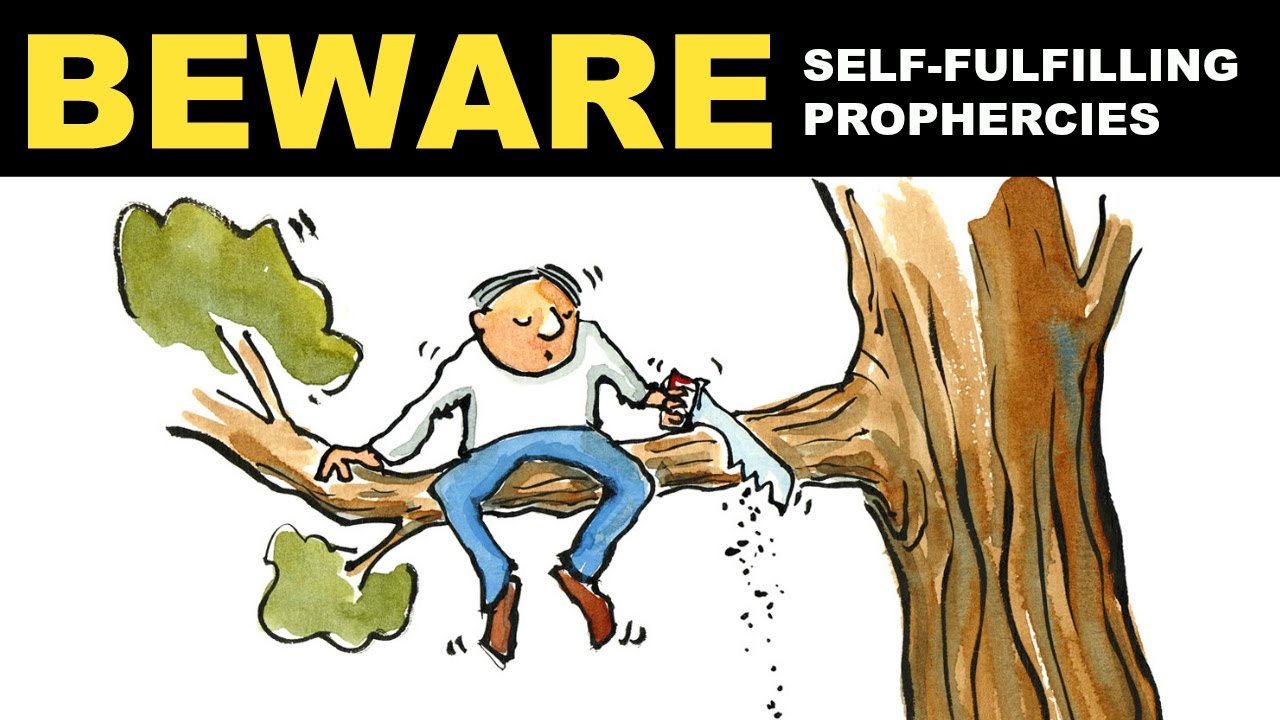
It may very well be the case that our expectations about teenagers have a significant impact on how we treat them. In turn, how we treat them ends up affecting how they act in response. Then, when they react, we use confirmation bias to justify our expectations. It comes off as one elaborate self-fulfilling prophecy to which we all contribute.

When you think about it, the signs are there. If you’re a teenager, just look at how the world treats you. If you’re an adult, think about how you were treated as a teenager and how you treat teenagers now.

We impose strict curfews about what they can do with their private time. We don’t trust them to consent to sexual activity until a certain age. We regularly send them to educational institutions where their lives and schedules are strictly controlled, not unlike that of prisoners. Whenever there’s a crime or an act of deviance, we tend to expect teenagers to be involved.

From my own experience, I can attest to this. When I was in high school, I noticed a distinct change in the way adults and teachers dealt with us, compared to middle and elementary school. Suddenly, everything we did was subject to greater scrutiny. It was as though everyone thought that we, a bunch of hormonal teenagers, were just one impulse away from becoming violent deviants.

I’m not going to lie. I found that kind of insulting. Teachers, adults, and even police officers would talk down to us whenever they discussed things like sex, crime, and even our personal lives. It wasn’t just that we were expected to screw up. It was almost as though we were supposed to screw up.

It never really crossed my mind that being a teenager could mean anything else. The idea that these attitudes were somehow flawed never entered my mind. I don’t think many people, including other teenagers, give it much thought now. That may very well be a problem that only makes itself worse the longer we have these expectations.

Part of what inspired me to write about this topic is an article from TheVerge that pitched the crazy, yet oddly logical idea that we should consider those under the age of 24 to still be teenagers. I admit I thought it was a joke at first, albeit not of The Onion variety. However, the author does make some interesting points.

Compared to earlier generations, youth today are staying in school longer, marrying and having kids later, and buying a house later, writes Susan Sawyer, the chair of adolescent health at the University of Melbourne, in an op-ed published today in the journal The Lancet Child & Adolescent Health. The transition period from childhood to adulthood lasts far beyond age 19, when it is popularly thought to end. As a result, she writes, we should change our policies and services to better serve this population.

In a sense, the author of the article is doubling down on the expectations. Now, it’s not just people who don’t have a two in front of their age to which we should ascribe these assumptions. We need to apply that to people even older because somehow, they’re still not meeting the other expectations we have of functioning adults.

Personally, I think that’s taking things in the wrong direction. If we’re going to start expecting more deviance and immaturity from more people, then that’s what we’re going to see and not just from confirmation bias. Just as I did as a kid, my negative expectations led to negative manifestations. Now, they may follow young people beyond high school.

It’s not magical thinking to say that attitude matters when it comes to dealing with people. Human psychology is extremely complex and varies wildly from individual to individual, but humans are still a very social species. As such, treating others with respect and maturity will provide them with incentives to do the same.

I don’t deny that certain assumptions are difficult to escape, especially when some of them are incorporated into actual policies. Even if we woke up tomorrow and started treating everyone over the age of 13 as a responsible adult, it probably wouldn’t resolve the many issues we still have with youth in society. However, as I came to learn as an adult, having a good attitude goes a long way towards achieving a good outcome.

1 Comment

Filed under gender issues, sex in society, sexuality

Do Soul Mates Actually Mates Exist?

dfhdhhe

When it comes to love, romance, and whatever else manifests in every song a boy band ever sang, the ultimate manifestation of this beautifully sentimental phenomenon is the soul mate. We’ve probably all heard about it in some form. Some are even lucky enough to be with someone that they consider to be their soul mate. Regardless of whether or not you care for the concept, we envy those people.

As a long-time romance fan and an aspiring erotica/romance writer, the ideal of the soul mate is the alpha and omega of the concept. It is to romance what Superman is to modern superheroes. It is the ideal to which we aspire. It embodies the ultimate example of what true love is and what we want it to be.

I’m not going to lie. That sort of thing makes parts of me feel all warm and fuzzy inside, among other things. Most people who enjoy romance to some degree probably feel the same way. The idea that two people have a love so strong that it’s practically interwoven into the fabric of time, space, and the basic laws of reality just feels so special.

It makes for both a great fantasy, full of more romance and passion than most can ever manage without seeing “Titanic” fifteen times in a row. It’s the kind of love that makes romances like Jack and Rose, Romeo and Juliet, and even Superman and Lois Lane seem ordained by destiny.

Now, here’s where I kind of have to put a dent in the time-honored fantasy. I know that’s kind of dangerous for a self-proclaimed romance fan, but I’m going to do it anyway because I think it’s a discussion worth having. It’s a discussion based on a simple question.

Do soul mates actually exist?

I know that me asking that after I just said it makes parts of me gush sounds like an about-face. I promise there’s a context to it and one that ties directly into how we go about answering this question. Whether or not you’re a romance fan, the ideal of the soul mate and our inherent drive to seek love makes it an important question to ask.

Before I give my answer, I need to add a few caveats to my fondness for the concept. Yes, it does resonate with me, somewhat, as an overall romance fan. However, as a fan of compelling stories and an aspiring writer, I actually don’t really care for stories built around the idea of soul mates.

Don’t get me wrong. I still think it’s a sweet concept. When I was younger and just starting to explore romance, I really liked those stories. As I got older, though, and my tastes in stories evolved, that appeal quickly waned. Whenever I read a book or saw a movie that ran with the concept of soul mates, it became somewhat of a turn-off.

That’s because from a narrative perspective, soul mates make for bland and shallow stories. If a couple are established as soul mates, then that basically renders any need to work or nurture their love moot. They don’t have to put in the time, work, or effort to become a great couple. Destiny and whatever supernatural forces behind their bond do that for them.

This is why I don’t care much for “Romeo and Juliet.” It’s established from the beginning that they’re “star-crossed lovers,” which is basically a more Shakespearean way of fate had ordained for these two to fall in love and there’s nothing anyone or anything can do to prevent it. Sure, it’s sweet and dramatic, but it’s a very limited story.

Those same limits that undermine a story are a major factor in answering the question. For someone like me, who follows romantic plots and sub-plots way closer than most straight men will ever admit, it shapes my perspective on what makes a great love story and what makes a real or fictional relationship strong.

Within that context, I’ll give my answer to the question. I don’t claim that this answer is definitive. This is just my opinion, having formed it from years and years of both consuming and crafting all things romance.

No. I don’t believe that soul mates are real.

I’m sure that’s tantamount to blasphemy for other romance fans out there. I understand that sentiment and I gladly accept the scorn that comes with that answer. However, I am willing to justify my answer.

It’s not just because I regularly write about the inherent flaws in the human brain, which make the prospect of achieving any ideal, be it perfect love or perfect justice, impossible by default. I think the concept, as a whole, does not fit with the whole process of love, at least as I see it.

Whether it’s love in the real world or love in sexy novels, falling in love and being in love is an ongoing phenomenon. It takes many forms and plays out in many ways, sometimes chaotically and sometimes dramatically. That’s part of what makes it such an appealing narrative.

Some of the best manifestations of that process, which I’ve gone out of my way to highlight, occur when two people work together to build and strengthen their love. They work together. They fight together. Sometimes they even clash, along the way. There’s never an endgame in mind. Their love is something that builds and evolves day-by-day.

In the real world, we see that play out in the work people put into their relationships. Whether it’s scheduling a sex night or going on some romantic getaway to Fiji, people in love put work into that love. It’s not something that just happens. For that feeling to remain strong, it takes time, effort, and understanding.

With soul mates, there’s no process to love. It just happens. The universe basically commands it. There’s no reason to put any work into it because those involved are so made for each other that they couldn’t drive each other apart if they tried. That kind of love doesn’t just rely on supernatural forces. It relies on two people’s thoughts, feelings, and desires being perfectly compatible every second of every day until the end of time.

Given the chaotic nature of the human mind, that’s just not realistic. It’s not even that romantic, when you think about it. I don’t deny that there are particular moments, such as a wedding day or the first time a couple makes love, where they’ll feel in that moment that they are soul mates. I don’t deny that feeling exists. As for the larger concept, as a whole, I think that’s about as real as Superman holding a black hole in his hand.

So I guess my answer does have a bit of a caveat. I do believe there are moments when two people are so in sync, emotionally and romantically, that they fit the mold of soul mates. Those same people can go onto break up, get divorced, or cheat on each other. That’s just the chaotic, unceasing nature of human passions.

Again, my answer to this question is anything but definitive. Perhaps there are other romance fans out there who believe I’m dead wrong and that soul mates do exist. If you feel that way, I’d be happy to discuss that issue in greater detail. For now, I simply ask that all those reading this contemplate that question and answer it for themselves.

Even if you’re not big on romance, it’s a question worth answering. It reflects both our sentiments and our aspirations when it comes to seeking love. As someone who is currently single, writes sexy stories, hopes to fall in love one day, I imagine I’ll continue contemplating this question for years to come.

Leave a comment

Filed under Love Or Obsession, Marriage and Relationships, sex in society, sexuality

Finding Greater Hope In Disturbing News

Every now and then, there’s a news story that comes along that’s so disturbing, so horrific, and so utterly offensive to every level of decency that it makes me question the faith I have in humanity. I know I’ve said before that I genuine believe that people are naturally good, at heart. I’ve even shared stories about how I came to believe this. However, there are times when that believe is tested.

Last week, I got an unexpected test in the form of one of the most disturbing news stories I’ve heard that didn’t involve a mass shooting. At least with mass shootings, it presents the opportunity for good people to show their strength in the face of those who are truly deranged. In this case, there were many of those opportunities to say the least.

While the story is still unfolding with each passing day, it has already made national headlines. It involves the now-infamous Turpin family and the unspeakable horrors they inflicted upon their own children. To those of you who haven’t heard this story, consider yourselves lucky. This is one of those stories that tests both your stomach and your soul.

The details are disturbing to recount. They involve abusive parents, abused kids, gross neglect, intentional malnourishment, and all the disturbing forces in between that drive such deviant behavior. The full story is still unfolding, but accord to a report from ABC News, these are the current facts:

An investigation is underway in California after 13 siblings – ages 2 to 29 – were allegedly held captive in a home, some “shackled to their beds with chains and padlocks,” the Riverside County Sheriff’s Department said in a news release.

Parents David Allen Turpin, 57, and Louise Anna Turpin, 49, were arrested in the alleged torture and child endangerment case in Perris, California, about 27 miles south of San Bernardino.

The investigation began early-Sunday morning when a 17-year-old girl apparently escaped from the home and called 911, saying her 12 brothers and sisters were still being held captive there, the sheriff’s office said.

Responding officers said the teen “appeared to be only 10 years old and slightly emaciated.”

Inside the home, several children were “shackled to their beds with chains and padlocks in dark and foul-smelling surroundings,” the sheriff’s office said. “The victims appeared to be malnourished and very dirty.”

Seven of the alleged victims were adults, ranging in ages from 18 to 29, the sheriff’s office said. The others were children as young as 2. The siblings – who authorities say claimed to be starving – were given food and drinks and interviewed, the sheriff’s office said. They were then hospitalized for treatment, the authorities said.

I’m not going to lie. I felt sick to my stomach reading this story. The idea that anyone, let alone parents, would do these sorts of things to children is pretty disturbing. While there are all sorts of crazy theories circulating about the psychology behind such sadistic behavior, the full truth will probably never be known. Besides, the damage has been done. These children will probably carry some deep scars for the rest of their lives.

News stories like these often remind us that as amazing a species we are, there are still parts of it that are undeniably devious. While I prefer to emphasize the good in people, as well as the progress we’ve made, it’s neither logical nor just to ignore the bad. Parents torturing, neglecting, and abusing their children is objectively bad by any sane measure.

As awful as it is, however, it’s still important to balance out the terrible with the hopeful. In most great atrocities, there are often glimmers of hope. That may seem impossible for a story like this, but it is there if you look. The horrors of the holocaust were undeniable, but even that darkest of periods can reveal moments of true heroism and inspiration.

Even with that in mind, how could anyone find such moments in a story like this? Something this atrocious makes that difficult. However, the moments are there. Even if the worst of this story has yet to come out, there are some powerful lessons to be learned. Here are just a few.


Bright Spot #1: Atrocities Rarely Stay Hidden (Especially These Days)

There was once a time when it was much easier to hide from the authorities and public scrutiny. A truly sadistic person could take their victims out into the vast wilderness, away from prying eyes, and commit their atrocities without much risk of getting caught. For most of human history, that was the norm and not the exception.

It’s different today. Thanks to modern infrastructure, the media, and mass communication, it’s much harder to hide these sorts of atrocities from the public. That’s especially true in a modern, industrialized country where we have internet, emergency services, and a semi-functional justice system.

If the Turpin family had lived in a less developed country, chances are their crimes would’ve gone unpunished. Even if one of their children had escaped, they probably wouldn’t have been able to get proper help or convince the authorities to aid them. In some parts of the world, those authorities don’t even exist.

Say what you will about the state of the industrialized world. It certainly has its flaws. However, when it comes to committing atrocities on children, those crimes are hard to hide and are rightly condemned. That counts as both progress and justice.


Bright Spot #2: All That Abuse Did NOT Prevent The Children From Escaping

Even though the Turpin family couldn’t hide their atrocities forever, they still managed to hide them for much longer than most people will ever be comfortable admitting. One of the ways they hid it was to condition and control their children to an extent not seen outside of a North Korean prison camp.

Stories of the sheer breadth of the neglect these children suffered are still coming in, but one thing is clear. The parents of these children worked tirelessly to control every aspect of their lives. They were sheltered, starved, restrained, and completely cut off from the outside world. By all accounts, there was no outside world, except the world their parents wanted them to see.

Despite all this, though, one of these kids still found the strength and the will to escape. The only reason these crimes were even exposed was because the 17-year-old daughter climbed out a window and managed to call 911. The fact that this girl, despite all the abuse and deprivation, still found the will to escape says a lot about her and the human desire for freedom.

As repressive as these parents were, it still wasn’t enough. They still sought to escape. The strength of the girl who managed to escape cannot be overstated and it highlights, what I believe, is the biggest takeaway from this otherwise horrific story.


Bright Spot #3: It’s REALLY Hard To Control/Break Someone


hope

No matter how disturbing this story gets or what kind of horrific details emerge in the coming weeks, there’s one important lesson we should all take from such a disturbing crime. No matter how much a person is abused or how much someone tries to control them, it’s extremely difficult to completely break them.

These children, including the girl who escaped, were conditioned from birth to live under their parents’ authority. They grew up literally not knowing any other way to live. As far as they knew, the idea of not being controlled by their parents was an alien concept. In terms of controlling and/or breaking someone’s will to resist, the parents had every circumstance working in their favor.

Despite all that, they still failed. They still could not completely control their children because they still tried to escape. It only took one of them to succeed to make the point. No matter how strict the control or hard the abuse, they can’t subvert the natural desire to be free. If nothing else about this terrible story inspires you, let that be it.


I don’t wish to dwell too much on this story, if only because much of it is still playing out. While we shouldn’t discount the horrors involved, there are some small bits of hope that we can glean from such a story. It may not completely overshadow the breadth of the atrocities, but it should remind us that as flawed as the human race may be, we will fight such atrocities when we confront them.

3 Comments

Filed under Current Events