Tag Archives: social justice

When Fighting For Equality Is Counterproductive

632318086-dc-rally-women-march-washington

Have you ever met someone who is just inherently better at something than you? No matter how hard you practice, you just can’t reach their level. They’re still better. It’s an unfortunate fact of life that we all have to learn at some point, but I worry that some people are trying to put that lesson off while others are trying to outright subvert it.

In general, the intent is noble. The world is full of horrendous inequality. There’s wealth inequality, gender inequality, and even inequality in representation within superhero comics. While we have done a lot in the century to reduce inequality, there’s still plenty of room for improvement.

For the most part, people support those efforts. You won’t find many people who aren’t enjoying a fat inheritance that will say outright they want less equality. Segregation, rigid caste systems, and the dehumanization of minorities is largely frowned upon for reasons I hope I don’t have to recount.

Seeking a more equal and just world is a perfectly respectable endeavor. For the most part, I support those efforts. I believe we should work towards a more egalitarian society where the rights and dignity of individuals are protected and respected. Even though we have laws in place, as well as principles espoused at an international level, we could do a better job at enforcing them.

With all that said, there’s still one burning question that I feel is worth answering. It relates directly to the first question I asked earlier and the harsh lesson it teaches us.

How much equality is actually possible?

It’s one of those questions that’s impossible to answer, but evokes many heated debates, regardless of politics or affiliation. Whether it’s economic issues or gender issues, these debates often devolve into one side calling the other a fascist or a bully. Every now and then, there’s some meaningful discourse and even a few novel ideas. In the era of outrage culture, though, this seems to be getting increasingly rare.
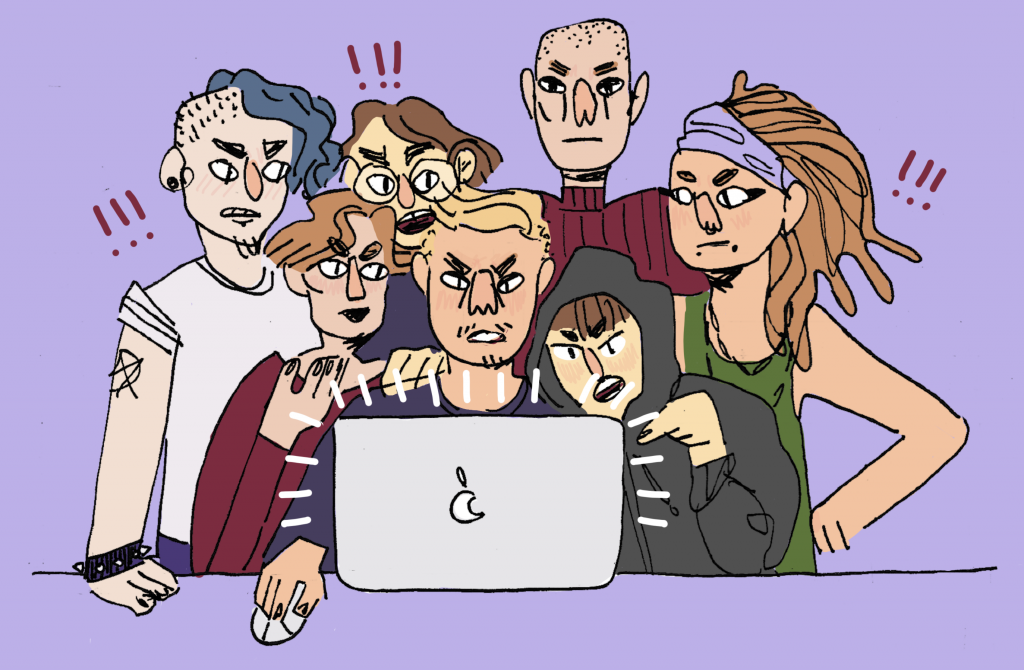
We’re at a point where even the slightest hint of inequality is deemed untenable.

Are there too few female superheroes in comic books? That’s not equal!

Are there too few people of color being cast in major move roles? That’s not equal!

Are there too few minorities in Forbes list of 100 richest people? That’s not equal!

Are there too few women in fields of science, medicine, and technology? That’s not equal!

Are there too few dating options for people who are disabled or obese? That’s not equal!

Are there too many beautiful women who only hook up with assholes? That’s not equal!

Are there too many handsome men who only date supermodels? That’s not equal!

I could list dozens of other situations that are grossly unequal. I purposefully omitted big ones like the gender wage gap and racial disparity in criminal arrests because these are cases that best highlight the logistics of promoting equality versus the ideals surrounding equality.

By law, it’s illegal to pay someone less because of their gender and has been since 1963. The courts have also historically ruled that it’s illegal to selectively enforce laws on the basis of race. These precedents are decades old and on the books for any lawyer to enforce. Why is there still so much inequality?

There are many reasons for that and I’m not smart enough to make sense of all of them. However, I think the mechanisms that continue to drive inequality can be best summed up by a terrible Jennifer Aniston movie from 2006 called “The Break-Up.” Yes, I know that sounds ridiculously random. I promise there’s a reason behind it and it relates to the underlying concept of equality.

In that movie, a couple is going through some nasty conflicts that are only mildly amusing at best. However, the most revealing quote from the movie, which also happens to be most relevant to this topic, is when Jennifer Aniston’s character tells her significant other this.

“I want you to WANT to do the dishes.”

It is, without question, an absurd statement that makes an unreasonable demand on someone she claims to love. It nicely sums up the entire conflict of the movie and effectively spoils the ending. These two are not in a functional relationship. In fact, if they had actually stayed together at the end, it would have been unhealthy for both of them.

That’s not because the relationship was unequal. It’s because both Jennifer Aniston’s character and Vince Vaughn’s character had very different ideas of what was “fair.” I put fair in quotes because it was an empty concept in this context. They didn’t just want equality in terms of roles, responsibilities, and privileges. They wanted equality of outcome and consequences.

That’s not just an unreasonable expectation. It’s a catalyst for outrage. It’s one thing to fight for legal equal protection, but fighting for equal outcomes and consequences is a losing battle. You’re better off trying to divert Niagara Falls by spitting at it. On top of that, it sets people up for disappointment and outrage.

The all-female remake of “Ghostbusters” was never going to make as much money or be as beloved as the original.

The push for less sexy video game characters was never going to improve gender relations in the gaming community.

Attempts to replace Iron Man with a 15-year-old black girl from Chicago was never going last for very long.
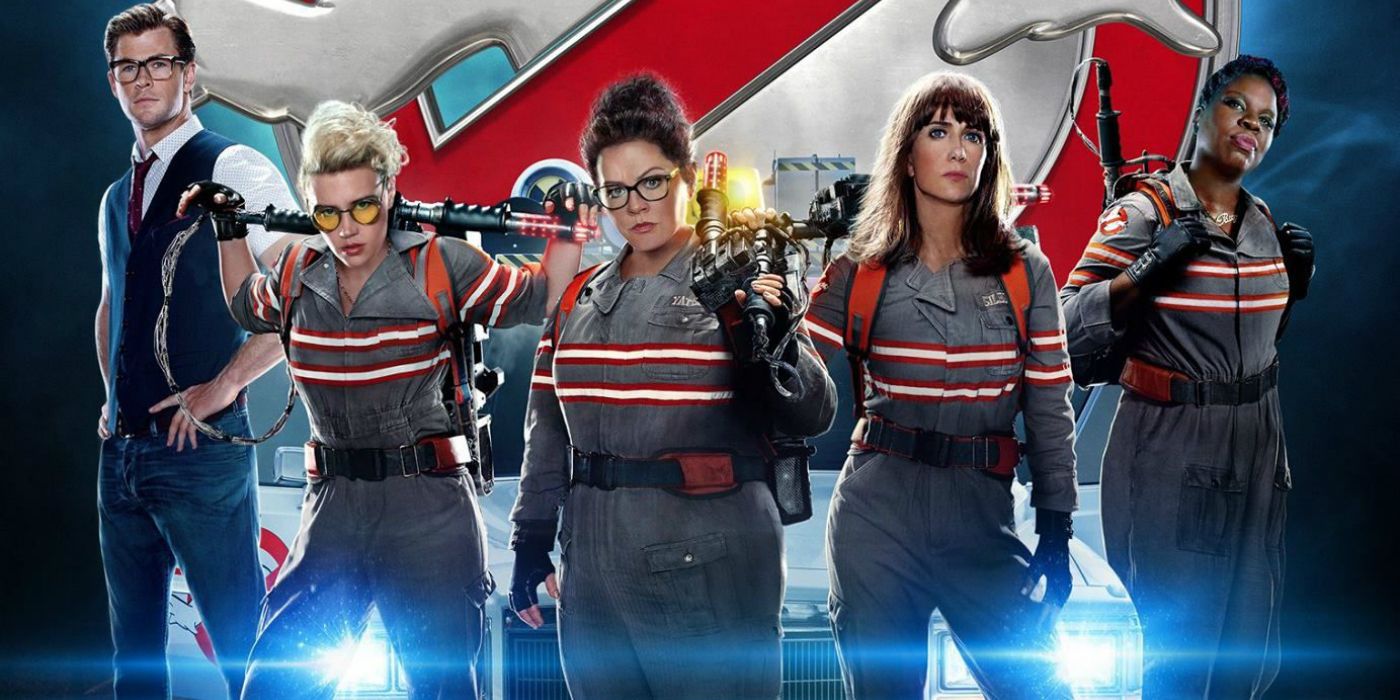
All these outcomes were fairly predictable, but still generated incredible outrage with people crying discrimination, racism, sexism, and every other kind of insult in keeping with Godwin’s Law. As a result, those still fighting for what they see as “fair” have to step up their game and push harder. That often means becoming more extreme in rhetoric, emotions, and tactics.

Since things like reality, facts, and basic human nature often get lost in extremes, it makes sense that we have such radical segments of the political and social spectrum. I believe most of them genuinely believe they’re fighting for greater equality and greater fairness, as they see it. A few are probably just genuine assholes looking for excuses to be bigger assholes, but they’re the minority.

To some extent, I can appreciate the intent and effort of those fighting for more equality. The world is still imperfect and humanity, as a whole, is exceedingly imperfect. Our collective history is riddled with injustices and atrocities of staggering proportions. We should strive to be better, as individuals and as a civilization. A part of that effort pursuing a society of equal rights, privileges, and responsibilities.

At the same time, some levels of inequality are unavoidable. Sometimes, it’s due to simple demographics. Sometimes, it’s due to the basic laws of biodiversity or sexual dimorphism. Sometimes, there are individuals that are just inherently better at you than something. I could practice basketball every hour of every day for the rest of my life. I’ll still never be as good as LeBron James.

That kind of equality is just not possible in the real world. Until we all become shape-shifting cyborgs, we can only be equal to a certain extent. Many sincere people disagree on where that extent is and where it should apply.

However, there’s a real danger in trying to achieve the impossible and getting upset whenever it’s not achieved. It doesn’t just suck up energy, ideas, and resources from other meaningful endeavors. It fosters hostility towards others and their ideas. In the same way Jennifer Aniston’s character couldn’t make her boyfriend want to do the dishes, we can’t make someone else want our idea of equality.


1 Comment

Filed under gender issues, human nature, Marriage and Relationships, media issues, men's issues, outrage culture, political correctness, psychology, sex in media, sex in society

Why “Adulting” Is Getting Harder

adulting-1

I’ve stated before that there are certain words I believe should be purged from the English lexicon. Contrived, agenda-driven terms like “toxic masculinity” or “mansplaining” are at the top of my list. I strongly believe that terminology like that is doing everything to further hostility and hinder understanding.

That being said, there are a few words that I have mixed feelings about. I think they also do plenty to divide people for all the wrong reasons, but I also understand why they exist. One term that I feel is increasingly relevant, albeit for negative reasons, is the concept of “adulting.”

I put that term in quotes for a reason, but it’s not out of sarcasm or scorn. This is one of those words that exists because there’s a need for it. Even if you think “adulting” sounds silly, chances are a word every bit as silly, if not more so, would’ve been coined. That’s because what it means to be a functioning adult is changing and not in a way that makes things easier.

This sentiment is implied in the popular definition. Even though it’s a fairly new term, it has become relevant enough to warrant a listing in the Oxford Dictionary, which defines it as follows:

The practice of behaving in a way characteristic of a responsible adult, especially the accomplishment of mundane but necessary tasks.

It may seem too simple to warrant scrutiny and maybe that was right several decades ago. However, a lot has changed in the past 30 years. A lot has changed in the past 10 years. The world isn’t as simple as it used to be. It’s become incredibly complex, full of fake news, alternative facts, and contrived outrage. That has changed what it means to be an adult.

I know this will elicit plenty of groans from certain crowds, but I’ll say it anyways. Being an adult is hard these days. Yes, I’m aware that it’s supposed to be hard to some extent. It always has been, going back to the hunter/gatherer days. Being an adult means functioning on your own and contributing to your society. You can no longer rely on parents or elders to provide for you. You must now do the providing.

It’s a challenge for many, some more so than others. However, there are some unique challenges facing adults today, especially among the younger crowds. I know this because I’m one of them. I’ve discussed the distressing issues surrounding Millennials and the potential issues that Generation Z will face in the coming years. Many of those issues, though, will affect everyone of any generation.

I’m not just referring to the crippling student loan debts that are burdening Millennials or the rising cost of housing in urban areas. There are deeper, more fundamental struggles that hinder or even discourage our ability to embrace adulthood. You want to know why nostalgia is so popular or why escapism is so prominent in media? Well, the complications and frequent frustrations that come with “adulting” are huge factors.

To understand, here’s a list of a few reasons why “adulting” is a thing and why just being an adult is getting harder. Hopefully, it’ll help make sense of this annoying, but relevant term. You’ll still probably roll your eyes whenever someone claims they cannot “adult” anymore for the day. If nothing else, this will help you understand where they’re coming from.


Too Much Information Is Overwhelming Us (And Making Us Mentally Ill)

This isn’t just a Millennial thing. It’s not even a byproduct of social media. The trend of people just getting more and more information has been happening for decades as people moved further and further away from rural, agrarian communities. Today, more people are educated now than at any point in human history. That has many benefits, but it comes at a cost.

Now, we can’t just see what’s going on in our world through pictures and streaming media. We can read about things, learn about them, and scrutinize them. That’s helpful in some instances, but in a world that’s increasingly connected and full of conflicting information, it can be overwhelming.

On top of that, we tend to find out about bad news and horrific atrocities as they’re unfolding. Many people alive today actually saw the horrors of the September 11th attacks occur on live TV. More recently, people were able to follow the horrors of the Parkland shooting as it unfolded on social media.

Being informed is part of being an adult, but when you’re informed of every horrific thing that happens in the world, it can wear on you. Some research has shown that this sort of system is impacting peoples’ mental health. In that context, it makes sense for someone to want to step back from that part of adulting.

For most of human history, we didn’t know or care about the horrors going on outside our tiny community. In the past 30 years, we know everything that’s going on everywhere. The human mind is good at a lot of things. Making sense of that much information isn’t one of them.


Our Options Feel Increasingly Limited (And We Don’t Know Which To Follow)

Growing up, every adult told me the path to success was simple. If you just stayed in school, got good grades, went to a decent college, and got a bachelor’s degree, then you were set. You could expect to find a good job with decent pay that would allow you to build a comfortable living for yourself and your future family. I believed in that path. I followed it. I can safely say it was half-true at best.

While there is plenty of merit to a college education, it’s no longer the clear-cut path it once was. I personally know people who graduated from good schools with quality degrees in subjects like engineering and they’re struggling. It’s not that people are getting useless degrees in underwater basket weaving. It’s that just getting a degree is no longer sufficient.

After graduating from college, I was in this daze for a while and many of my fellow graduates were the same. We were all told that getting this degree would set us on the right path, but nobody told us how to navigate that path or what it even looked like. As a result, most people ended up in jobs that had nothing to do with their college major.

On top of that, the job market is becoming increasingly unstable. The rise of the gig economy is making it so people don’t just live paycheck to paycheck. They live job to job, never knowing if they’ll even have one when they wake up the next day. These are not the same well-paying, blue collar factory jobs of the past. This is work that will not help pay a mortgage or a student loan debt.

However, we’re still told that this is the path. This is how we’ll prosper in the future. Even as we look for other options, most adults today don’t know how viable they are. We’re left in a state of uncertainty that past adults never had to deal with. We still need to choose, though, because our bills aren’t going to pay themselves.


There’s No Margin For Error And Every Mistake Will Follow You Forever

Remember when it was possible to make a dirty, offensive joke among friends and not worry about it haunting you for the rest of your life? I’m not being old or cantankerous. I’m serious because I do remember when that was possible. In my youth, I heard plenty of jokes that would’ve ruined someone’s life today if they’d been captured on video or posted on social media.

This isn’t just about political correctness or identity politics corrupting discourse. Adults today live in a world where any mistake they make, be it a bad joke or an off-hand comment, can come back to haunt them. It doesn’t matter if it’s from a celebrity or even if it occurs in private. It can still cost you dearly.

Now, I wish I didn’t have to say this, but I have to since I’m posting this on the internet. None of what I’m saying is implying that certain behavior, language, or comments are justified. I think it’s a good thing, for the most part, that certain people are paying a price for their bigoted attitudes. However, that good does come at a cost and it’s felt by adults at every level.

To some extent, we envy kids now because kids can say dumb things and get away with it. They’re kids. They have an excuse and it’s one of the few excuses most people accept these days. If you’re an adult, though, you’ve got nothing of the sort. You can blame liberals, conservatives, or Ambien all you want. You’re still going to pay a price.

As adults, we’re responsible for what we say and do. That’s part of what it means to be an adult. The problem is that in a world where every mistake is documented and preserved forever, our margin for error is exceedingly small. How many people don’t get the job they want because of an embarrassing photo or tweet they made a decade ago? How many people get fired because of it?

Regardless of how justified it may or may not be, it adds further stress to the inherently-stressful responsibilities that come with being an adult. The adults of today have many complications to deal with and if you mess even one up, then it could haunt you to the day you die. Now, do you understand why so many adults seem so uptight about adulting?


We Feel Like We Cannot Escape (And Badly Need To)

Life has always carried harsh burdens. Whether it was escaping wars or fighting disease, people of every generation in every period have sought out some reprieve from the endless struggle. Sometimes, it takes the form of games, drugs, books, or sports. After a long day of working the fields or gathering food, we needed some form of reprieve.

It’s as important today as it was in previous centuries. The big difference today is that we feel like we have fewer and fewer opportunities to do so. Life on farms and fields was rough, but at least the challenges were clear and laid out. We worked to survive. If we survived, we celebrated. It was simple.

Today, surviving just isn’t enough. We have bills to pay, debts to service, jobs to find, and connections to make. On top of that, we have to keep up with the news and popular trends. We have to fit into an increasingly diverse world where people of different communities and cultures are connected. It’s a lot of work, taking time and energy that go beyond plowing a field.

It doesn’t help that the abundance of information and the prominence of bad news makes the future seem so bleak. Even if society is progressing on almost every measurable level, our perceptions imply that the world outside our windows is dangerous, hostile, and hopeless. We can’t do anything about it, our politicians are inept, and our votes don’t even count.

In those frustrating circumstances, it makes sense for people to lose themselves in video games, movies, and TV shows. The whole concept of binge-watching allows adults to lose themselves in hours of content, which subsequently allows them to detach from a harsh reality that they have no hope of effecting.

Say what you want about adults who still love comic books and video games. The fact that they’re both multi-billion dollar industries is a sign that many are desperate for an escape from the frustrations of their adult lives. The things we loved as kids are just the easiest and most familiar paths.


There are plenty of other reasons I could list about “adulting” and why it’s getting increasingly difficult. I have a feeling that many adults reading this have their own sets of reasons and there will probably be more within the coming years. There will also be others who complain about anyone who tries to talk about those reasons. It’s sure to evoke more frustration and whining.

In the end, we all have to be adults at some point. There’s a time and a place to just step back from it all and take a breath. That shouldn’t be controversial, but the fact that “adulting” is now a thing means there are a lot of complications to adult life and we’re not doing a good enough job handling them.

Leave a comment

Filed under human nature, outrage culture, philosophy, psychology

Prison Or Brain Hacking? A Choice That May Shape Our Future

fajb_brain_hacking_01_sep2012

How does a civilized society deal with its least civilized individuals? This is a question that every society has had to answer, going back to the hunter/gatherer era. We live in an imperfect world full of imperfect individuals. Some are more imperfect than others, so much so that it’s not always possible to reform them into functional members of society.

Most people who commit crimes are not monsters, nor are they sadists who get their joy by torturing the innocent. A vast majority are just people who find themselves in bad situations where they make wrong decisions, exercise poor judgment, or lack impulse control. For these people, fines and brief imprisonment are usually sufficient.

For those who become career criminals, neither respecting the law nor seeking to abide by it, the current system is woefully inadequate. It’s part of the reason why criminal justice reform has become a hot topic. We’re finally learning that throwing people into prisons where they’re dehumanized, degraded, and tortured doesn’t help them become productive members of society. Go figure.

There’s plenty of room for improvement. Some countries have demonstrated that there are more effective, more humane ways to treat criminals. However, even those systems have their limits. As long as human beings remain an imperfect species, we’ll still have to deal with these deviant, violent, and inherently dangerous individuals.

For the moment, our options for dealing with these people are few. It primarily involves incarceration or intense therapy, often coupled with drug therapy. While this can be helpful to some, there are severe limitations. Some individuals don’t even want treatment and even those who are caught don’t always respond.

With that in mind, allow me to present a not-quite-hypothetical scenario. What if, instead of prison or therapy, we gave offending criminals an option to undergo an invasive treatment that affects the primary source of their deviant behavior in the brain? Jail is still an option for those who aren’t keen on messing with their brain wiring, but for certain people, an alternative is an alternative.

What I just described is one of those concepts in which the science is there, but the technology and the courts haven’t caught up to it. I know whenever I talk about emerging technology, be it sex robots or artificial wombs, I venture pretty far into speculation territory. Some of these advances rely on science and tools that don’t yet exist. This isn’t one of those cases.

In July 2018, the Journal of Neuroscience published a study revealing that targeted stimulation of the prefrontal cortex reduced aggressive tendencies in test subjects. Before you start getting fever dreams of mad scientists strapping people to gurneys and sticking wires in their ears, you can rest easy. This isn’t the kind of electroshock treatment that find their way into one too many horror movies.

These treatments have ground-breaking implications. They prove that it’s possible to temper or mitigate certain behaviors in people. The study doesn’t specify the limits of the effects or if it can be applied to something other than aggressive behaviors. It’s still a proof of concept and one that could compound the impact of other emerging technologies.

We already have tools like CRISPR that allow us to tweak our genes. We also have companies like Neuralink that are actively working on implants that could fix, augment, or expand our brain capacity. While men like Elon Musk and Ray Kurzweil often discuss these advances within the context of keeping humanity on pace with artificial intelligence, there will likely be some interim uses for these technologies.

Tempering violent behavior in people with significant cognitive impairments is just one possible use, but one that has the potential to change how we think about crime and punishment. Think back to those people I mentioned earlier who just inherently violent. They can’t manage their emotions or control their anger. They don’t think before they act and some don’t even feel guilty about what they do.

Like it or not, these people exist. I’ve known people in my life who have terrible impulse control and fly into a rage over the smallest things. Some of those people have had issues with the law and I often see in them a sense of never-ending frustration. Many don’t like that they have these issues. A few have tried to get help, but it doesn’t always work.

I suspect that if some of those people were given a chance to treat their tendencies with targeted shock therapy or a brain implant, they would jump at the chance. Deviant tendencies aside, they seek some level of function in their lives. If tweaking their brain is the difference between prison and freedom, then they’ll take that risk.

Turning people who might have been unrepentant psychopaths into productive, non-violent members of society is an objective good. The technology to do just that is not that far off and more study could help us refine the process, so much so that prison might be less necessary in certain cases. Given how expensive it is to imprison people, it’s an alternative worth pursuing.

Along with that undeniable good, however, there are plenty of potential dangers. Anyone who has ever seen one too many psychological thrillers or just read “One Flew Over The Cuckoo’s Nest,” can easily imagine how this kind of technology could be abused.

Tempering someone’s violent behaviors is all well and good, but why would it stop there? The brain is capable of all sorts of behaviors, deviant and otherwise. Say a society determines that other non-violent behaviors, be it sexual promiscuity or binge-watching Netflix for too many hours, are not socially desirable. What’s to stop them from imposing this on their citizens?

Some countries probably already fantasize about technologies that enable them to directly pacify their citizens, rendering them weak, passive, and easily manipulated. In his famous novel, “1984,” George Orwell called these people proles. However, in the book, the deviants had to be tortured and re-educated. If Big Brother had access to this technology, it would be a simple medical procedure.

That has plenty of terrifying possibilities for abuse. What if someone uses brain stimulation to prevent people from having homosexual urges? What if someone uses it to treat those who identify as transgender? There’s no evidence that the techniques in the study would work on that, but there’s no evidence to say it’s impossible.

Its use will definitely be controversial. That much, I’m certain of. It’s not advanced enough to become a legitimate treatment for anything. At the moment, direct brain stimulation is utilized for a specified set of conditions and it’s often a last resort. Using it on healthy people who just want to cull their violent urges is uncharted territory.

Whether it enters the picture for criminal justice reform is anyone’s guess, but if the process works, someone who has dealt with one too many repeat offenders will try to use it. From there, the precedent will be set. It’s hard to say what form it’ll take, but it’ll take society into uncharted territory with respect to controlling our minds.

Perhaps, at first, the process would be voluntary and only be presented in conjunction with jail or some other treatment. It’s also possible that the courts will determine a strict set of criteria for when the state could force this treatment onto someone. There are probably a few repressive governments who would try to use this on an industrial scale. I won’t say they’re names, but most people know who they are.

Like any emerging technology, there are risks and rewards worth considering. We stand to benefit greatly by having a society with as few violent individuals as possible. We also stand to lose a great deal if we allow misguided authority figures to determine how we use this technology.

I’m not qualified to determine whether or not someone should have their brain hacked. I don’t know that anyone is. However, I also don’t deny that the human brain, as magnificent as it is, has plenty of flaws. We should go about fixing those flaws, especially in people who are disproportionately impacted by them. We just have to be very careful about how we manage it.

Leave a comment

Filed under futurism, human nature, psychology, sex in society, Sexy Future, Thought Experiment

Why Extremists (Of All Kinds) Seek To Destroy Sex And Love

198420teaser-850x510

Whenever a tyrannical power gains influence, it’s only a matter of time before it attempts to control sex and subvert love. Whether it’s a theocracy like “The Handmaid’s Tale” or a communist dictatorship like North Korea, those in power will eventually get to it. It’s just a matter of how repressive they dare to be.

When it comes to the extremes of authoritarianism, those envisioned by George Orwell are the standards by which all are measured. Whether they’re fictional tyrannies like those in “Star Wars” or real-life autocracies like Nazi Germany, the extent of their repression is best measured by contrasting it with the one Orwell crafted in “1984.”

This isn’t the first time I’ve cited that book or Orwell’s writing, but I do so for a reason and it’s not just because it’s one of my favorite novels. The narrative Orwell envisioned took our understanding of repression and pushed it to its greatest extremes. On every level, the world of “1984” is a worst-case-scenario for anyone who values freedom.

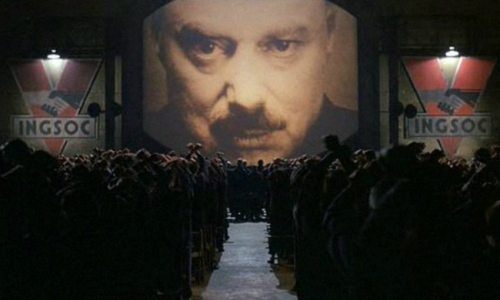
Under the ruling party, Ingsoc, every aspect of human life is controlled, managed, or outright subverted. That includes sex, but it’s certainly not limited to it. Through institutions like the ironically-named Ministry of Love and the Junior Anti-Sex League, people aren’t just shamed or bullied into certain sexual practices. They’re tortured, brainwashed, and forced into it.

It’s a level of control that the Catholic Church, the religious right, and even conservative Muslims would find excessive. It’s also an important part of the story because so much of the events surrounding “1984” emerge from Winston’s relationship with Julia. In fact, the love they share is framed one of the biggest threats to the party.

That, in and of itself, is extremely telling of the power of sex and the love that emerges from it. Even in a world in which the repression is so complete that the party can convince people that two plus two equals five, it still has a problem dealing with sex. If Big Brother can’t manage it, then what hope does the Vatican have?

I ask that question within the context of “1984” because I’m seeing more and more issues inevitably link back to sexuality. It’s not just from religious institutions, though. They’ve made their eagerness to shape sexuality to serve their interests known for centuries. They aren’t always overt about it, but it’s not too hard to understand why they want their adherents having sex only for procreation.

For them, linking sex to making babies means all those sexual thoughts people have will result in more adherents. More adherents means more money. More money means more power and influence. It’s often cloaked in sin and morality, but this is the ultimate byproduct of their sexual morals.

However, it’s at the other end of the spectrum where a different, but powerful kind of sexual subversion is at work. The link isn’t quite as obvious as those espoused by religious institutions, but it is there in that the byproduct is the same and the underlying themes are richly reflected in “1984.”

On that end of the spectrum are those who identify as secular, but still hold extreme ideologies. This includes extreme brands of feminism, social justice ideology, and even old school communism. These are people who don’t just want to reform the current system through political and social discourse. They seek to overthrow the system and replace it with their own Utopian ideal.

Like the religious zealots they often clash with, they see the current order as oppressive. Whether it’s a religious sect facing persecution or the historical oppression against anyone who isn’t part of a historic majority, these individuals see revolution as the only way to right these wrongs. Part of that revolution involves destroying sex, albeit indirectly.

Whereas religious zealots rely on outright censorship, those on the opposite end employ a more subtle approach. They denigrate and bemoan sexual imagery, be it in video game characters or a shirt somebody happens to be wearing. They obsess over inequities and victimization, singling out egregious crimes while ignoring others that don’t fit the narrative.

Some will go so far as to claim sex as inherently oppressive. A few radical feminists have gone so far as to say that the fundamentals of sex can only ever be oppressive. In the same way some religious preachers will shame someone for looking at anyone with lust, this ideology identifies anyone who has or pursues sex as an oppressor.

That might have been absurd several decades ago, but in the current state of outrage culture where the dress Jennifer Lawrence wears to a movie premier becomes a controversy, it’s steadily creeping into the discourse. Concepts like beauty are now oppressive to those not born with beautiful bodies. Anything that may titillate or excite is seen as dangerous or damaging to the oppressed.

It’s at a point where the idea of people seeking any kind of release outside the narrative espoused by extremists is pathologized. For religious zealots, it’s sinful. For the non-religious extremists, it’s oppressive. Both see it as something that needs to be reformed or envisioned.

Chances are these individuals don’t see themselves as the authoritarians depicted in “1984.” They still see themselves as the underdogs in a “Rocky” movie, fighting to win an epic battle against an oppressive bully. Beyond being an absurd conflation of what they’re fighting for, this very approach is envisioned by Orwell and is key to empowering Ingsoc.

In the world of “1984,” the Ministry of Truth builds a similar narrative for the masses. They’re told that prior to Ingsoc taking power, the world was a terrible, oppressive place. It was only by rallying around the party and Big Brother that they were able to triumph. Moreover, it’s through the wisdom and guidance of the party that they escape this oppression.

Part of that process involves reshaping/subverting sex. In “1984,” the party isn’t just looking to control it. They seek to destroy it. The Junior Anti-Sex League even says it outright at one point.

“The sex inherent aptitude will be eradicated. Reproduction will be a one-year formality like the reclamation of a ration card. We shall get rid of the orgasm.”

Even by extreme repression standards, this seems extreme. It might even seem like something that would give zealots of all types pause. However, Orwell’s way of justifying such extremes reveal more than just a twisted ideology. He ends up exposing why sex is such a huge concern for any extreme ideology.

“When you make love you’re using up energy; and afterwards you feel happy and don’t give a damn for anything. They can’t bear you to feel like that. They want you to be bursting with energy all the time. All this marching up and down and cheering and waving flags is simply sex gone sour. If you’re happy inside yourself, why should you get excited about Big Brother?”

Read over that quote again, but replace Big Brother with the name of any religious sect or political ideology. It has the same meaning and the same implications. In order for both the zealots and the radicals to achieve their goal, they have to destroy sex. It’s the only way they can achieve their Utopian ideal.

Religious zealots can’t shame or guilt people entirely out of wanting to enjoy sex for non-procreative purposes. They can certainly make it difficult and painful for many, even to the point of serious abuse, but it never works in the long run. The drive to just want to hump for fun is too strong.

Certain brands of radical feminism have a similar issue. They can’t stop straight men from enjoying the sight of a beautiful woman. They can’t stop anyone from wanting to enjoy something different in their sex lives that they don’t like. No matter how much they’re triggered, it doesn’t turn off that powerful, instinctual drive.

In “1984,” the party actively works towards destroying that drive through technology. This is a lot scarier now because that kind of technology is already in the works. In theory, an extremely repressive religious zealot or a very regressive feminist could turn the implants in development at Neuralink into something that removes all pleasure from sex.

From there, they could redirect that energy into serving their ideology/religion. The procreative function could still be utilized, but only to the extent that it’s necessary. That may not be the ultimate goal. It’s not even the ultimate goal of Ingsoc. It’s just necessary in the grand scheme of pursuing and securing power.

As it stands, those in the religious right and other extremist circles aren’t remotely close to gaining the influence and control exercised by Big Brother in “1984.” Logistically speaking, it’s impossible for them because subverting human nature requires an understanding of it and the scientific process for achieving that understanding rarely adheres to ideology.

It still says something about their goals when the only way to achieve them in the long run requires that they destroy sex. I don’t think it’s a coincidence that Orwell built a major part of “1984” around two characters falling in love and experiencing the joys of the sex act. That proved to be one of most powerful ways for them to oppose the party.

To that extent, Orwell’s understanding of sexuality is nothing short of prophetic in terms of how revolutionaries on both ends of the political spectrum view it. In an Orwellian world, sex and love aren’t just a hindrance to a revolution. They’re an outright threat.

The fact that it took repression on the level of Big Brother to confront that threat is a testament to the power of sex and love. If Big Brother couldn’t contain it, then what hope does any religion or ideology have?

1 Comment

Filed under gender issues, human nature, Marriage and Relationships, men's issues, outrage culture, religion, sex in society, sexuality, women's issues

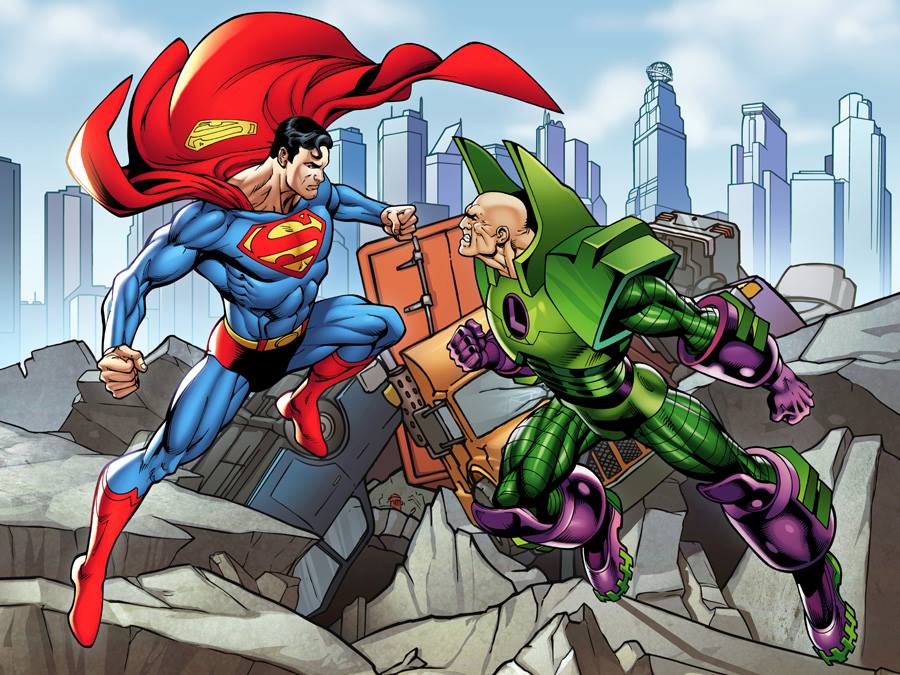
Understanding (And Learning From) Lex Luthor’s Hatred Of Superman

supes-vs-lex

As a lifelong fan of superhero comics and someone who enjoys shows like “Breaking Bad,” I’m genuinely fascinated by villains. Specifically, I’m intrigued by what makes them tick and why they walk the villain’s path. Their journey is distinct from that of a hero, but one that can be just as compelling.

In many cases, these villains have capabilities that allow them to solve many of the world’s problems. I’ve cited Dr. Doom as one of those villains who blurs the lines of villainy because of his intentions. Characters like Dr. Doom genuinely believe that their villainous actions are justified because it will lead to a better, safer, more prosperous world. Heroes also believe that too, which helps fuel their epic battles.

For a character like Lex Luthor, though, the line isn’t that blurry. He’s a villain, plain and simple. He’s selfish, callous, arrogant, cruel, and narcissistic to an extreme. If he existed in the real world, he would check every box for narcissistic personality disorder. In terms of personality, he’s the polar opposite of his nemesis, Superman.

That goes a long way towards giving Superman an enemy who stands against his heroic ideals. I would even argue that Superman couldn’t be the iconic kind of hero he is without Lex Luthor. At the same time, I also think Lex reveals something critical about humanity, morality, and superheroes in general.

That’s difficult to see because for much of Lex’s early years in comics, there wasn’t much depth to his motivation. He just wanted to dominate the universe and Superman was in his way. It’s basic and bland, but that was typical for the early era of superhero comics. Villains like Lex were mostly just obstacles for the heroes to overcome in their journey.

That changed in the late 80s and early 90s with the modern era iteration of Lex Luthor. Finally, Lex got more backstory and depth. He was still no Walter White, but these details helped set the stage for the kind of villain he became. It also helped establish why he hates Superman so much.

Whereas Superman landed on Earth and was adopted by loving parents, Lex grew up in a rough part of Metropolis called the Suicide Slums and was raised in an abusive household. Right off the bat, Superman gets lucky by having the best parents a child of any species could ask for while he’s unlucky enough to be born with the worst.

As a result, Lex had to be ruthless, manipulative, and cunning. Unlike other villains, though, he didn’t need much tempting. He didn’t agonize over his moral decisions, either. He just did it and didn’t feel a shred of guilt. That includes the role he played in the death of his parents.

That alone establishes Lex Luthor as the kind of ruthless villain who would oppose Superman for any number of reasons. However, as evil as that act was, it’s important to note the motivation behind it. Lex didn’t just kill his parents because murder makes him happy. He did it because they were an obstacle and an opportunity.

They were holding him back, but their deaths meant insurance money that he could use to strike out on his own and build something worthy of his genius. To him, the morality of his decision didn’t matter. Only the results mattered. That’s a critical detail and one that puts Lex Luthor’s villainy into a unique context.

Lex, being one of the smartest characters in the entire DC universe, doesn’t care much for things that are esoteric and obscure. He’s all about results that are tangible and measurable. That means things like truth, justice, and the American way are empty concepts to him. Superman champions those ideals, but for Lex Luthor, they’re just hindrances.

That kind of cold, callous approach to the world gives a unique substance to Lex’s behavior. He’s certainly not the first person to take such a materialistic approach to reality. Rick Sanchez of “Rick and Morty” does the same, but rather than misanthropic despair, Lex Luthor sees it as the key to producing the results he seeks.
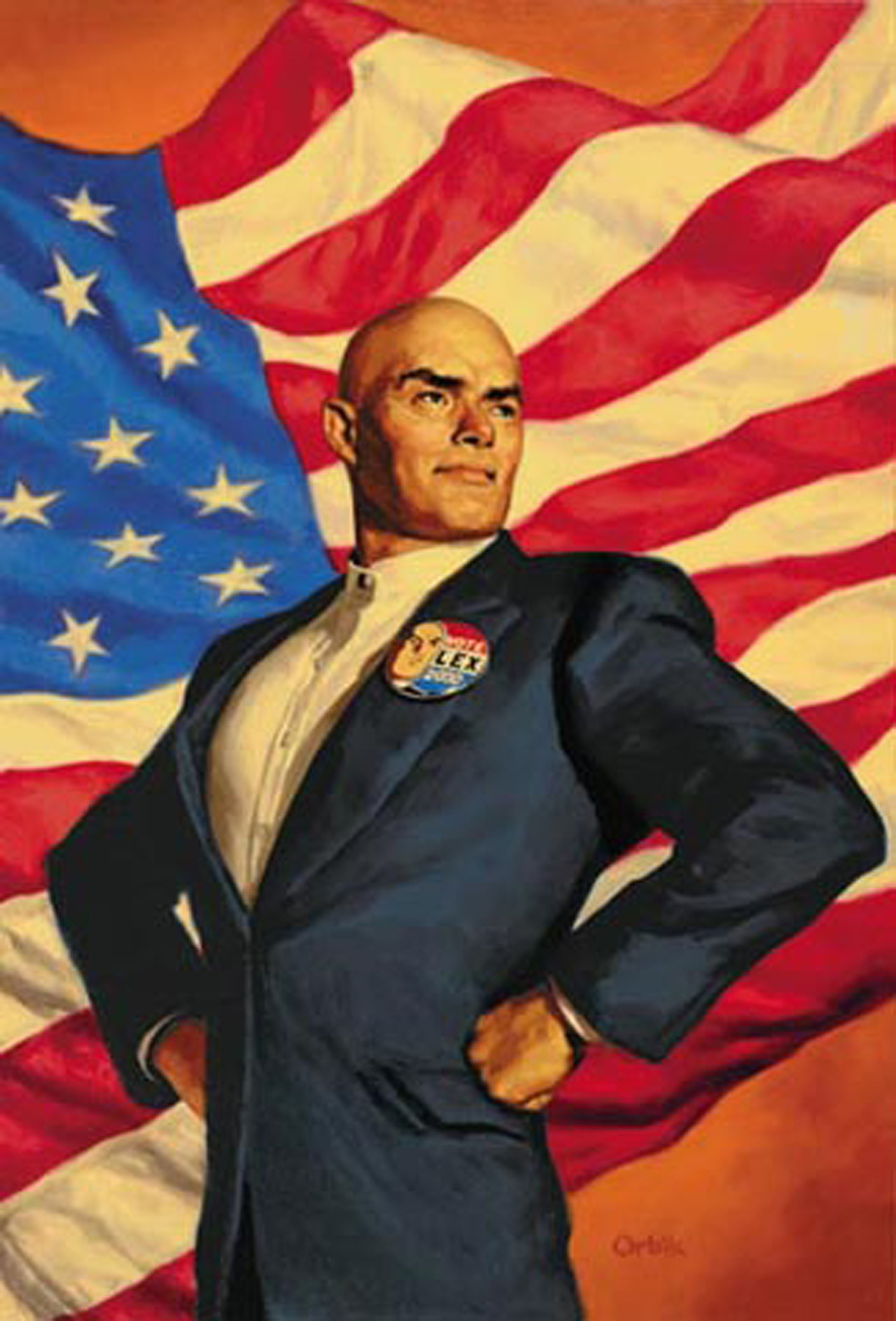
Moreover, he has to produce those results without the god-like power that Superman wields. If Superman wants to move the Earth out of the way or destroy an oncoming asteroid, he doesn’t have to build anything or learn anything. He just has to flex his muscles, fly up into the sky, and destroy it with a single punch. There’s no tangible reason to his actions beyond it being the right thing to do.

To Lex Luthor, that’s not just an affront to someone who had to work for everything he ever gained. It’s an insult to his egocentric, results-focused worldview. Just saving the world because it’s the right thing to do doesn’t achieve anything. It does nothing to move humanity forward because nobody had to produce something of merit. It just allows them to continue in the same, unaltered state.

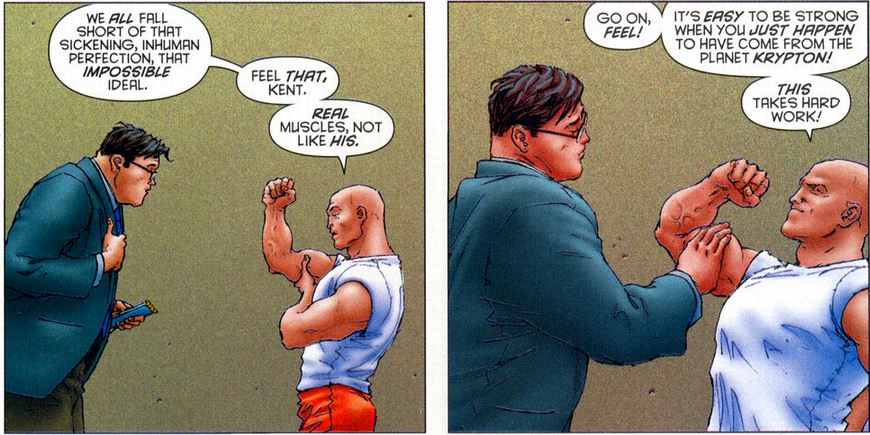
This gets to the heart of why Lex Luthor hates Superman. The extent of that hatred was fully articulated in one of the best modern Superman stories ever told, “All-Star Superman” by Grant Morrison and Frank Quitely. If you only read one Superman comic, make it this one because it perfectly encapsulates the pure heroism of Superman and the cold villainy of Lex Luthor.

In one critical part of the story, Lex tells Clark Kent, who he doesn’t know is Superman, what it means to actually work for his power. Superman, for all his idealism, did nothing to earn his abilities. He just happened to be an alien who landed on a planet with a yellow sun.

It’s like winning the lottery as opposed to working hard for a fortune. One is built on hard work and skill while the other is just dumb luck. Beyond basic jealousy, though, Lex makes another critical point about the ideal Superman sets.

From his perspective, that lofty ideal diminishes the entire human race. By being this other-worldly savior who achieves all these impossible feats, Superman reveals how inept the human race is. More importantly to Lex and his massive ego, it shows just how feeble his achievements are, despite all the work he put in.

Being the extreme narcissist he is, Lex takes that as the ultimate insult. In terms of the bigger picture, it establishes that neither he nor humanity can achieve their full potential. In that context, it’s understandable why Lex dedicated so much time and energy to killing Superman.

I won’t get into all the ways Lex has tried and failed over the years, although one of his plots did involve him becoming President of the United States. Whatever his methods, I think there’s a larger lesson to learn from Lex’s hatred and for once, it goes beyond his ego.

A big part of what turns someone into a villain is this sense that the world isn’t fair, but could be made better with the right guidance. Lex believes he’s capable of providing that guidance and not just because of his ego. He is, objectively, one of the smartest and most capable human beings on the planet. However, it’s Superman who keeps Lex from making the world less unfair.

Superman believes in the merits of truth and justice. He inspires others to uphold these ideals, even without his vast power. That’s a problem for Lex, who builds much of his power on lies and treachery. To him, though, he doesn’t see that as wrong. He just sees that as the most efficient way to get results.

To uphold truth and justice, in his brilliant mind, is to prevent the world from progressing. Granted, progress in Lex Luthor’s mind means him being in charge, but that doesn’t necessarily undermine the implications.

Like Dr. Doom, Lex is ambitious in that he doesn’t just want to save the world like Superman. He wants to fundamentally change it and he’s willing to cross any line to achieve that. Killing Superman is part of that change, but so is becoming a billionaire and a future President of the United States. If a billion people die in the process, then that’s acceptable because it means humanity is stronger because of it.

There have been times in the comics where Luthor’s vision has manifested. In another critically-acclaimed Superman story, “Red Son” by Mark Millar, Lex has a chance to lead the world into a brighter future. By and large, he succeeds. He’s still an unapologetic narcissist, but he still gets the results he seeks.

Like all great conflicts between superheroes and their arch-nemesis, the dichotomy between Superman and Lex Luthor is stark. They’re two extremes on opposite ends of a spectrum delineating heroism and villainy. By being on those extremes, though, it’s easier to see the inherent shortcomings of both.

While Lex’s shortcomings are easier to identify since he’s an outright villain, he does help identify an important flaw in Superman’s idealism and one that extends to superheroes, as a whole. Superman is willing to save the day, but he’s not willing to cross any lines. He will only ever do the right thing and that means not sacrificing innocent lives or usurping individual freedom.

Those heroics will keep the world turning, but they won’t move society forward. Superman believes in inspiring humanity rather than doing it for them, but Lex Luthor believes his heroism achieves the opposite. It just makes people complacent and dependent on heroes like him rather than crossing the lines that he’ll cross to get things done.

At the end of the day, both in the real world and the world of comic books, we have to determine how much we’re willing to pay for the results we seek. Lex is willing to pay any price. Superman isn’t willing to pay a cent beyond doing the right thing. Most reasonable people, including other superheroes, fall somewhere in the middle.

In the pantheon of super-villains, Lex Luthor is probably the easiest to despise and the hardest to understand. Like Superman, he exposes another side of an ongoing struggle between doing the right thing and achieving more. As society continues to progress, achieving abilities rivaling that of any superhero, it’s a struggle we’ll have to confront.

3 Comments

Filed under Comic Books, Jack Fisher, Superheroes, human nature, philosophy, psychology, superhero comics

The Hard Consequences Of Soft Censorship

internet-censorship

If you walked up to any random person on the street and asked them how they feel about censorship, chances are they would say they’re against it. Absent any context, most people equate censorship with tyranny and rightly so. Historically speaking, tyrannical societies are not beacons of free speech.

When you add context to that same question, though, then people are a bit more diverse in their response. They may say they’re against censorship, but they’ll also oppose hate speech and even support efforts to remove it from certain venues or platforms. It’s not the same as government-suppressed speech, but it’s still censorship on some levels.

A government’s effort to prohibit or punish speech is more daunting. That’s exactly why we have things like the First Amendment. Governments are big, powerful entities with armies and tax collectors. Their brand of censorship is a lot more concrete than others. That’s why such extensive legal protections are necessary.

When it comes less overt forms of censorship, though, the line isn’t as clear and neither are the legal protections. It can take the form of de-platforming a controversial speaker, which has happened on college campuses. It can also take the form of banning certain websites or certain subgroups within a website. These efforts aren’t usually called censorship. They’re usually referred to as preventing the spread of hate.

Personally, I don’t buy that excuse. As much as I abhor some of the things people say, both online and in person, any attempt to indirectly silence them is still censorship in my book. I call it “soft censorship” because it doesn’t involve government force. In many cases, it’s a grass roots effort to combat certain ideas that many find offensive.

That seems to be the most notable standard these days, the offensiveness of certain speech. That’s understandable, given how the world is more connected than it has ever been in human history. It’s now easier than ever for hateful, offensive speech to spread. Conversely, it’s also easy for the outrage to that speech to spread as well.

As a result, the forces behind that outrage are often the most powerful forces behind soft censorship. That outrage takes many forms too. It can be driven by political correctness, religious dogma, and general trolling. Censorship or suppression of speech is not always the stated goal, but it is often a desired result.

Given the ongoing changes to the media landscape, this brand of censorship seems to be getting more prominent than anything government effort. In fact, the reason I chose to bring this issue up is because of a few notable incidents that highlight the growing disconnect between free speech and movements to combat hate speech.

The first incident happened earlier this year and came from the gaming world, a domain that is no stranger to censorship and targeted outrage. The outrage in this case, though, had nothing to do with how beautiful women are depicted and everything to do with the policy of the popular Steam platform by Valve.

The particulars of the issue are simple. Valve was getting criticism for allowing too many violent, adult-oriented games on their platform, including those with overtly erotic themes. For a while, it looked like they would follow the same policy as Nintendo and Apple, who don’t allow anything that can’t be shown in a Disney movie.

Surprisingly, and refreshingly for some, Valve opted for a more libertarian policy. The standards are simple. As long as the content isn’t illegal or outright trolling, then it’s permitted. In the context of freedom of speech and creative freedom, this should count as a victory. However, that’s not how some saw it.

Almost immediately, Valve was heavily criticized for this freedom-centric policy and for all the wrong reasons. Some went so far as to call it irresponsible and cowardly, daring to permit games on their platform that might be overly graphic, crude, or sexy. Being a private company and not a government, that’s certainly their right.

Even so, it generated outrage. People didn’t see it as an act to promote free expression. They see it as a means of spreading hateful, offensive, sexist content and profiting from it. At at time when the video game industry sparks outrage every time it depicts a female character, Valve really took a chance by taking this approach and it’s sure to generate plenty more controversy, albeit for the wrong reasons.

Those same reasons showed up in another incident involving Reddit, a site on which I’m very active. Specifically, it involved a subreddit called KotakuInAction, which emerged in wake of the infamous GamerGate controversy in 2014. As a result, it has a reputation for being pretty brutal in its criticisms of regressive, far-left attitudes.

It’s oftent cited as one of the most “toxic” places on Reddit. There have been more than a few efforts to ban it. At one point, for reasons that I’d rather not get into, it was actually removed by its original creator. However, it was saved and put back up within less than a day, much to the relief of the nearly 100,000 subscribers.

Few will call that a victory for free speech. Those who criticize Valve and Reddit for permitting it don’t see their actions as suppressing speech. They see it as combating harassment and hate. Therein lies the problem with that effort, though. Harassment and hate are serious issues, but attacking only the speech is like attacking a single symptom of a much larger disease.

Even if Reddit had permanently banned KotakuInAction and Valve had opted to censor offensive games, it wouldn’t have made the ideas behind them disappear. Like putting a censor bar in front of female breasts, it doesn’t change the fact that they’re there and that they have an impact.

You could turn off the internet, burn every book, and shut down every newspaper tomorrow. That still wouldn’t stop people from thinking and feeling the things that lead them to want to say something offensive or create an offensive game. Speech is just a byproduct of ideas. Attacking the speech is not the same as confronting the source.

In fact, doing so can be counterproductive. There’s a real phenomenon called the Streisand Effect wherein efforts to hide, remove, or cenors something ends drawing more attention to it. The fact that Area 51 is a super-secret government facility that everyone knows about shows how powerful that effect can be.

In the context of combating hate, efforts to censor those behind it can end up elevating their message. When someone is censored, there’s an application of force implied. Whether it’s from a government or a moderator on a message board, censorship requires some level of force. Applying it to anyone is going to put them in a position to feel oppressed and that oppression tends to fuel hatred.

Harassment is different because when it comes to free speech, the line between discourse and threats is a bit less ambiguous. The Supreme Court has established a criteria for what constitutes “fighting words,” but it’s when things happen on a computer screen where it gets tricky.

Like hate, though, there’s a right and wrong way to deal with harassment. The right way to deal with a direct threat is to contact local law enforcement. The wrong way is to make it into a spectacle that requires that both the harasser and the platform they used to be condemned.

It’s an inescapable fact of life in any functioning society. The same platforms we use to interact will be used by others for disgusting, hateful, and offensive activities. We may feel disgust and revulsion for these things, but trying to silence both the people and the platform doesn’t make the sentiment behind it go away.

That’s the ultimate danger of soft censorship. It’s not like a censorship-loving government that can be overthrown or reformed. It’s a mentality that seeks to remove content from certain mediums in hopes that it will subsequently discourage the mentality behind it. Unfortunately, human beings aren’t wired that way.

That’s the ultimate danger of soft censorship. It’s not like a censorship-loving government that can be overthrown or reformed. It’s a mentality that seeks to remove content from certain mediums in hopes that it will subsequently discourage the mentality behind it. Considering the impact of the the Streisand Effect, it’s utterly backwards.

I’m all for confronting hate and combating harassment, but not through censorship, hard or soft. It’s hard enough trying to change someone’s mind in an era where they can customize their news feeds. At the end of the day, we can only truly affect someone’s heart and mind by focusing on the person and not what’s on their computer screens.

Leave a comment

Filed under censorship, Current Events, human nature, media issues, political correctness

How The Idea Of “Toxic Fandom” Is Fundamentally Flawed

toxic-comments-e1516922359181

The internet is a vast, wonderful place full of mesmerizing gifs, amazing stories, and the collective knowledge of our entire species. I would argue that the internet is one of humanity’s most important tools since the invention of fire. I strongly believe that is has done more good any other tool we’ve created.

I have a feeling that this rosy view of the internet is a minority opinion. These days, all the good the internet does tends to get lost in the stories that highlight its many dangers. I don’t deny that there are dangers there. The internet does have some dark places where hate, harassment, and outright depravity are on full display.

More and more, it seems, the internet is becoming an enabler of a new manifestation of popular culture. It’s called “toxic fandom” and it relies on the greatest strengths of the internet to bring out the absolute worst in people. It didn’t start with the heated fan reaction of “Star Wars: The Last Jedi,” but it certainly made it relevant.

Before I go any further, I want to make one thing clear. There are assholes on the internet. There are also assholes in real life. The internet doesn’t make them that way. It just gives them a platform to be an asshole on a larger scale. That’s an unfortunate side-effect of the internet, but one that tends to obscure a larger narrative.

That’s because, much like inane terms such as “toxic masculinity,” the idea of toxic fandom relies on a series of assumptions that only ever have a sliver of truth behind them. It builds around this idea of there’s this grand, over-arching effort by immature, angry young men who secretly wish they could sexually harass women with impunity. It’s not quite on the level of an Alex Jones type conspiracy, but it’s close.

There have always been overly-passionate fans. It existed long before the internet and would still exist if the internet disappeared tomorrow. “Toxic fandom,” and there’s a reason I’m putting it in quotes, is something very different.

This doesn’t involve obsession with a particular celebrity. It involves a particular type of media like a movie, a TV show, or a video game. In some respects, this sort of fandom is a byproduct of overwhelming success. When something like “Star Wars” or “Star Trek” comes along, it resonates with an audience on a profound level. That sort of impact can last a lifetime.

I can attest to the power of that impact through my love of comic books. I’ve even cited a few that I find deeply moving, both in good ways and in not-so-good ways. Most everybody has had an experience like that at some point in their life, whether it’s their reaction to seeing “Titanic” for the first time or the feeling they get after they binge-watch “Breaking Bad.”

The toxic part usually comes when the media they’ve come to love manifests in a way that’s not just disappointing. It undermines those powerful feelings they’ve come to associate with that media. The results can be very distressing and until recently, the only way to express that distress was to sulk quietly in a darkened room.

Then, the internet comes along and suddenly, fans have a way to voice their feelings, for better and for worse. They can even connect with fans who feel like they do so that they don’t feel alone. The human tendency to form groups is one of the most fundamental acts anyone can do as a member of a highly social species.

Now, there’s nothing inherently “toxic” about that behavior. It has only made the news because the passions/vitriol of fans is more visible, thanks to the internet. Just browse any comments section of any movie or show on IMDB. Chances are you’ll find a few people who claim that this thing they once loved has been ruined and will use every possible medium to voice their displeasure.

This is where the “toxic” aspects of fandom start to have real-world consequences. Most recently, Kelly Marie Tran became the face of those victimized by toxic fandoms. After her portrayal of Rose Tico in “Star Wars: The Last Jedi,” she became the most polarizing figure in the history of Star Wars since Jar Jar Binks.

The story surrounding Ms. Tran’s harassment, which was objectively horrible, became vindication for those who believed that the Star Wars fanbase had become a mess of angry, hate-filled fanboys. They didn’t like that something they loved was changing and becoming more diverse. As such, their criticisms don’t matter. They may as well be wounded storm troopers in a room full of angry wookies.

The problem with this assumption is the same problem we get when someone writes off facts as fake news or diversity efforts as a neo-Marxist conspiracy. It’s a simple, convenient excuse to ignore possible flaws and justify personal assumptions. It also conflates the inescapable truth that assholes exist in the world and there’s nothing we can do about it.

None of this is to imply that harassment is justified or that fans can be exceedingly unreasonable. By the same token, this doesn’t imply that studios don’t deserve criticism when they attempt to revamp a beloved franchise in a way that does not keep with the spirit of the original. It’s only when criticism gets lost in the outrage that the “toxic” behaviors become more prominent.

It’s within that outrage, though, where the true flaws in the “toxic fanbase” narrative really break down. To a large extent, the “toxicity” that many complain about aren’t a product of unhealthy attitudes. They’re a manifestation of an inherent flaw in the relationship between fans and those who produce the iconic media they love.

To illustrate that flaw, think back to a recent controversy involving a “toxic fanbase.” Before the reaction “Star Wars: The Last Jedi” became the poster child for this issue, the all-female “Ghostbusters” remake was the most prominent example. It earned a lot of hatred for reasons that I’d rather not scrutinize.

With that hatred in mind, imagine a long-time Ghostbusters fan seeking to express their dismay. They decide to write a kind, detailed, and thoughtful letter to the studio, the director, and anyone else involved detailing their dismay and their criticisms. They may even cite specific examples on what they felt was wrong with the movie.

Chances are this sort of thoughtful, well-worded message would get deleted, ignored, or just plain lost in the digital landscape. Even if the head of Sony studios read it and agreed with every point made, they wouldn’t respond. They wouldn’t do anything ot change it. That would just be too inconvenient and it would look bad publicly.

From the perspective of the fan writing the letter, though, it sends the message that their sentiment doesn’t matter. Their passion for the media doesn’t matter. They might as well not even exist in the eyes of the producers. The only way for them to even acknowledge their existance is to be louder, angrier, and even a little meaner. Even if the reponse is negative, it at least acknowledges their existence.

It’s not the same as trolling. Trolls just want upset people for the fun of it. Fans voicing their displeasure are more sincere in the sense that they believe they’re protecting something they love. Whether or not that’s misguided is debatable. Some, namely those who harass and make threats, are more misguided than others. However, they only ever make up a very small percentage of fans.

In the end, that’s the most important perspective to have when it comes to fandom. Those who are the loudest tend to be the most obnoxious, but they’re loud because they feel like they have to be. The internet just gives them a way to be heard, which is something most fans haven’t had before.

That’s still not an excuse for being an asshole, but it’s also not an excuse for using those same assholes to call an entire fanbase toxic. It overlooks and undermines the genuine and sincere love people have of these cultural icons. As as a result, when someone feels like their love is being ignored, that’s when toxic hate often finds a way to fill that void.

5 Comments

Filed under Celebrities and Celebrity Culture, Current Events, human nature, media issues, movies, political correctness, Star Wars

Why We Should Accept James Gunn’s Apology And Support His Re-Hiring

screen-shot-2018-07-05-at-1-31-06-pm

In the spirit of honesty and transparency, I’m going to admit something that should surprise no one.

I, Jack Fisher, have said horrible, offensive things in the past. For that, I sincerely apologize.

I’ll give everyone a moment to recoil in shock. Now, I’ll turn off the sarcasm and get serious because this is an issue I’ve already done plenty to belabor. People say offensive things. People write offensive things. I know I have, given some of the sensitive topics I’ve covered.

I’m certainly not alone. These days, it’s hard to go more than a day without reading something horribly offensive on social media. Not all of the offense warrants the same outrage, though. Some comments are just trolling. Some trigger reactions that lead to actual crimes. Not all offensive speech warrants immense outrage is what I’m saying.

That brings me to James Gunn, the man who made movies about a talking raccoon, a talking tree, and the goofy guy from “Parks and Recreation” that went onto make over $1.6 billion at the box office. His star really rose fast after the unexpected success of “Guardians of the Galaxy.” He’s credited with taking the Marvel Cinematic Universe to cosmic heights. He has accomplished a lot in the past four years.

Now, he’s been fired. He’ll have no part in “Guardians of the Galaxy 3.” The circumstances, context, and fallout from this huge turn of events is astonishing, but for all the wrong reasons.

The particulars here are striking. Mr. Gunn was not fired because he committed a serious crime or got embroiled in a disturbing scandal. He got fired because someone who didn’t agree with his political views dug up some old social media posts from 10 years ago that were lewd, offensive, and downright disgusting.

Not surprisingly, Mr. Gunn apologized for it immediately. He didn’t make excuses. He didn’t whine about fake news. He didn’t claim his account was hacked. He took ownership of the things he said and apologized.

Many people who have followed my career know when I started, I viewed myself as a provocateur, making movies and telling jokes that were outrageous and taboo. As I have discussed publicly many times, as I’ve developed as a person, so has my work and my humor.

It’s not to say I’m better, but I am very, very different than I was a few years ago; today I try to root my work in love and connection and less in anger. My days saying something just because it’s shocking and trying to get a reaction are over.

In the past, I have apologized for humor of mine that hurt people. I truly felt sorry and meant every word of my apologies.

For the record, when I made these shocking jokes, I wasn’t living them out. I know this is a weird statement to make, and seems obvious, but, still, here I am, saying it.

Anyway, that’s the completely honest truth: I used to make a lot of offensive jokes. I don’t anymore. I don’t blame my past self for this, but I like myself more and feel like a more full human being and creator today. Love you to you all.

It still wasn’t enough, though. He still got fired and there’s a very good chance that the career he worked so hard for has been damaged beyond repair. It’s all because of horrible things he said 10 years ago. That’s worth emphasizing because the person someone is now and the person they were 10 years ago can be very different.

People grow, develop, and change over the course of their lives. I certainly have. In that time, people will say and do things that they don’t realize will have major consequences 10 years down the line. We can’t even know what kind of person we’ll be a week from now, let alone 10 years.

We’re going to do and say dumb things. That’s just a part of being human. However, now that the internet and social media document these things, our worst moments and most ill-advised decisions are there for all to see. We can no longer trust people to just forget. In Mr. Gunn’s case, someone went out of their way to dig up these horrible comments and that continues a dangerous precedent.

That precedent was already set with Rosanne Barr and this effectively raises the stakes. Now, even when you don’t blame sleep medications and give a sincere apology, you can still lose everything you’ve worked for. All it takes is someone with enough free time, resources, and hatred to do it. For celebrities, these are dangerous and unforgiving times, indeed.

Now, I know it’s hard to feel sympathy for celebrities, who live in big mansions, get preferential treatment wherever they go, and never have to worry about their next mortgage payment. Mr. Gunn is probably going to be okay thanks to the millions he’s already made. At the same time, though, what does undermining his career accomplish?

It doesn’t undo the things he said. It doesn’t undo any of the offense people felt. If anything, it sends a message to aspiring celebrities that anything they say and do will be used against them in the future. Even if that makes some people more careful about what they say online, it doesn’t change the fact that people will say and do dumb things every now and then.

It’s a no-win situation. If you can’t make excuses or offer a sincere apology, then what is the recourse? What was Mr. Gunn’s alternative? Short of going back in time and punching himself in the throat, there was nothing he could’ve done. How is that fair? How is that even logical?

On some levels, I don’t blame Marvel Studios and Disney for cutting ties with Mr. Gunn. They’re a multi-billion dollar media conglomerate that is very sensitive to the value of their brand. They’re also a private entity and not a government so the first amendment does not necessarily apply to them. They can fire whoever they want for whatever reason they want.

Even so, there doesn’t appear to be much effort to accept Mr. Gunn’s apology. While some have expressed understanding, there isn’t much effort in terms of undoing the damage. It’s as though this is the new normal. This is what happens to anyone who dares to let their stupidity end up on the internet. There’s no forgiveness. There are no second chances, either. If you mess up once, you’re finished and your career is over.

Think about the larger implications of that situation. If that’s how we’re going to deal with people who say offensive things, then where’s the real incentive for people to learn from their mistakes? Why would anyone even try to apologize or show regret if the end result is the same?

That’s not to say the situation is hopeless. There is already a Change.org petition to urge Marvel and Disney to rehire Mr. Gunn. As of this writing, it has over 150,000 signatures. Whether that’s enough remains to be seen and the fact that something like that is necessary to accept someone’s apology is still saying a lot.

I already worry that the next time a well-known celebrity says or does something offensive, they won’t even bother with apologizing. Why would they if it’s just going to sink their career or require a petition to keep it going? What kind of excuses will they resort to and how much more damaging will they be?

Accepting apologies aren’t just good values to live by. They’re critical to helping people grow as human beings. I believe Mr. Gunn meant it when he apologized, but I worry that he and other celebrities like him will come to see it as an empty gesture that won’t save their careers.

There are plenty of cases where accepting someone’s apology just isn’t warranted, especially if they have a history of saying and doing terrible things. Mr. Gunn is not such a case. If ever there was a time to set a precedent for accepting someone’s sincere apology, this is it. Even if it’s too late for Mr. Gunn, it’s still a precedent worth setting.

Leave a comment

Filed under Celebrities and Celebrity Culture, censorship, Current Events, human nature, media issues, psychology, superhero movies

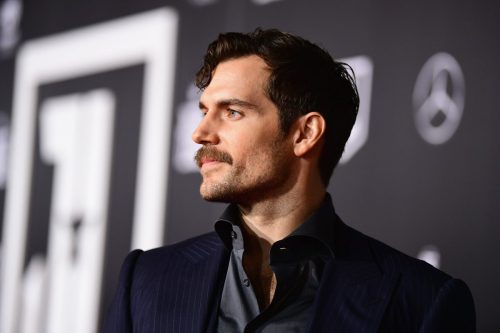
Why Henry Cavill Shouldn’t Apologize For His Comments On The Anti-Harassment Movement (But Still Had To)

gettyimages-873854634-1200x800

What does it say about the state of a society when people have to apologize for voicing honest, legitimate concerns? Pragmatically speaking, it implies that the value of truth and just has been subsumed by other influences. Whether it’s politics or ideology, it’s not hard for society to get to a point where unreasonable forces subvert reasonable issues.

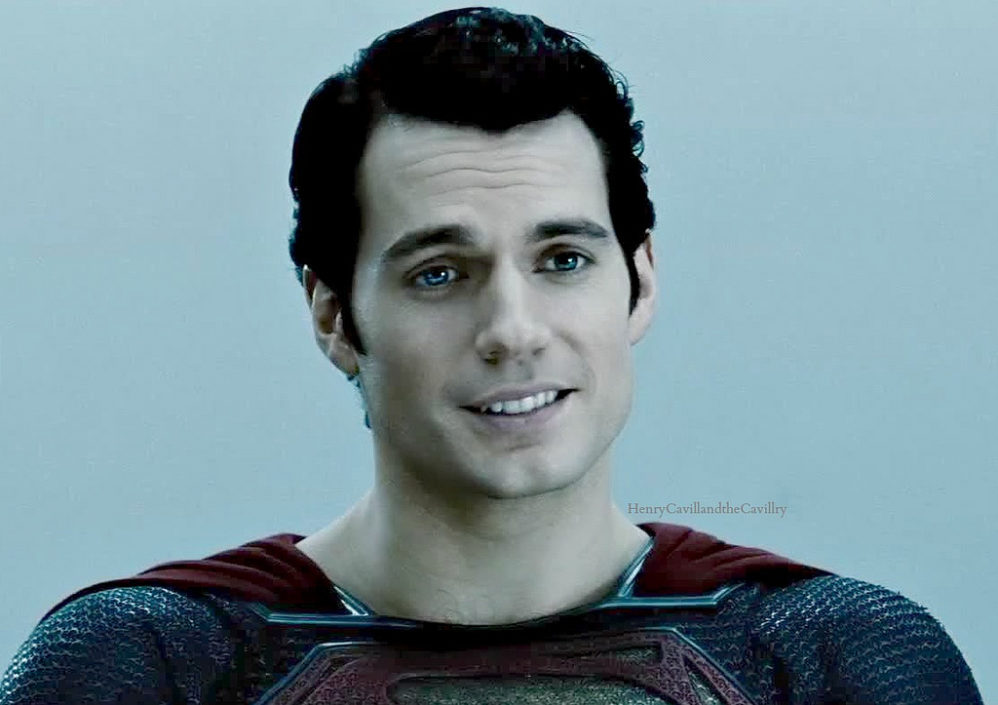
In that sense, it’s ironic that the latest person to experience those influences once played Superman, the personification of truth, justice, and the American way. Henry Cavill, whose star has risen significantly since he broke out in “Man of Steel,” got into some hot water recently after an interview with GQ.

In that interview, he essentially made the same mistake Matt Damon made when he tried to comment on the anti-harassment movement. He said something that was reasonable, honest, and understandable from a purely logistical standpoint. He’s worried that something as simile as flirting with a woman could somehow be construed as harassment, which could lead to a full-blown scandal.

For reference, these were his exact words from the interview and the ones that subsequently led him down the same path as Matt Damon.

It’s very difficult to do that if there are certain rules in place. Because then it’s like: ‘Well, I don’t want to go up and talk to her, because I’m going to be called a rapist or something’. So you’re like, ‘Forget it, I’m going to call an ex-girlfriend instead, and then just go back to a relationship, which never really worked’. But it’s way safer than casting myself into the fires of hell, because I’m someone in the public eye, and if I go and flirt with someone, then who knows what’s going to happen?

Now? Now you really can’t pursue someone further than, ‘No’. It’s like, ‘OK, cool’. But then there’s the, ‘Oh why’d you give up?’ And it’s like, ‘Well, because I didn’t want to go to jail?’

Think about what he’s saying here and take a step back to see how he got to that point. He’s talking about being called a rapist just for going up to a woman and talking to her. How is that reasonable? It’s not. It sounds paranoid, but it’s perfectly understandable in the current social climate.

It’s easy to picture a scenario where someone like Cavill walks up to a woman, starts flirting, and ends up saying something inappropriate. That’s not just something men do. Women do that too. Being vulgar knows no gender. However, if the woman in this scenario takes particular offense, it could be construed as harassment or even assault.

If a woman was especially vindictive or just prone to exaggeration, she could accuse him of assaulting her. Even if those accusations aren’t even close to warranting an actual crime, it would still be devastating. The accusation alone would be enough to derail a promising career.

You don’t have to look far for evidence of this. Aziz Ansari was not charged with any crimes for the infamous incident that came out earlier this year and even if he had been, there’s no way he would’ve been convicted. An incident built entirely around a he said/she-said situation doesn’t come close to meeting the burden of proof for a criminal conviction.

That doesn’t matter, though. Ansari’s career has already taken a major down turn. His hit show, “Masters of None,” has not been renewed by Netflix since the allegations came out. Men like Henry Cavill, whose careers are ascending, certainly take notice of that. They don’t even have to commit a crime and suddenly, everything they worked for is in ashes.

For powerful men in Hollywood, it’s a reasonable concern, but one they probably won’t get much sympathy for expressing. Men like Henry Cavill are rich, successful, and handsome enough to comfortably wear Superman’s skin-tight costume. He’s a man who can attract women just by breathing. However, that may end up making him even more vulnerable.

Most people aren’t going to be inclined to make a big deal about someone who flirts inappropriately. When that person is a celebrity, though, the incentives are much stronger. You need only have an overreaction or a burning desire for attention to twist it into something much worse.

It’s for that reason that Cavill shouldn’t have apologized for his comments. His concerns are legitimate and after all the work he’s put in, he’s right to worry about the forces that might destroy it. That still didn’t matter. His comments still triggered a major backlash on social media. He also had to apologize for it. These were his exact words.

“Having seen the reaction to an article in particular about my feelings on dating and the #metoo movement, I just wanted to apologize for any confusion and misunderstanding that this may have created. Insensitivity was absolutely not my intention. In light of this I would just like to clarify and confirm to all that I have always and will continue to hold women in the highest of regard, no matter the type of relationship whether it be friendship, professional, or a significant other. Never would I intend to disrespect in any way, shape or form. This experience has taught me a valuable lesson as to the context and the nuance of editorial liberties. I look forward to clarifying my position in the future towards a subject that it so vitally important and in which I wholeheartedly support.”

Notice that there’s nothing in that apology that expands on his concerns. Cavill doesn’t attempt to re-frame his point or address some of the complaints levied against him. He just throws his hands up and apologizes about everything, as though every word he said was factually wrong.

Now, to be fair to Cavill, it’s very likely that the statement he gave was written by a publicist or agent. Chances are he was pressured to read that as quickly as possible in order to prevent him from getting labeled a misogynist or someone who did not wholly support the anti-harassment movement. Even if he didn’t feel inclined to apologize, he still had to do it in order to preserve his career and reputation.

Regardless of his reasons for doing so, he still apologized for telling the honest truth. The backlash he received didn’t even argue that truth. Most of it amounted to scoffing at the concerns of a rich, handsome celebrity who is undeserving of any sympathy. One commenter even went so far as to call him a wannabe victim.

Such criticism is every bit as absurd as the kind Matt Damon got when he dared to point out that there’s a difference between patting a woman on the butt and full-blown rape. They also fail to acknowledge that it’s entirely possible for a woman to be vindictive enough to falsely accuse someone of a heinous crime for the sole purpose of ruining their career, despite documented cases that this has happened.

It’s one thing to expose the serious crimes of predators like Bill Cosby and Harvey Weinstein. Those cases did have evidence and are being processed through appropriate legal means. The behaviors Henry Cavill described don’t even come close to that kind of conduct.

The fact that Cavill had to apologize sets a dangerous precedent for the anti-harassment movement. History has shown that any movement that throws off honest truth and basic justice is built on a poor foundation. In time, that foundation eventually crumbles and the merits of the movement get lost.

There are plenty of behaviors among celebrities and non-celebrities that warrant outrage. What Henry Cavill said wasn’t one of them. The fact he still had to apologize for his words does not bode well for anyone concerned with the values that heroes like Superman embody.

10 Comments

Filed under Celebrities and Celebrity Culture, Current Events, gender issues, media issues, political correctness, sex in media, sex in society, sexuality

Why I Don’t Use The Term “Social Justice Warrior” And Ideas For A Better Label

sjw-o-face

Every now and then, I get comments and criticisms about my writing style. Some are constructive. Some are just angry rants that I’m perfectly content to ignore. There is one criticism, though, that I feel is worth addressing.

Specifically, it involves some specific terms I avoid using. Most people with an internet connection or access to cable news have probably heard the term “social justice warrior” at least once. It’s rarely in a positive light. It’s often used as an insult or a signal that you’re about to say something that’s going to evoke a lot of angry comments on social media.

I’ve been tempted to use it in the past. I’ve discussed many topics involving feminism, men’s issues, and social inequality that often get people throwing that term around as though it were a demonic chant. There’s a reason I’ve avoided it, though, and I hope to demonstrate that it’s a good reason.

First off, I want to make clear that I despise the term “social justice warrior” almost as much as I despise “toxic masculinity,” a phrase I believe cannot fade from our language fast enough. I see this label as one of the worst manifestations of the English language since the hippie era and at least they could blame psychedelic drugs.

I also believe that its continued usage will do more to breed hatred, outrage, and division at a time when we’re already more divided than ever. It derails a conversation and detracts from discussions about serious issue involving society, justice, and gender. This term is literally holding back progress, which is ironic given the nature of its definition.

The actual definition of a social justice warrior, or SJW as it’s colloquially used, is somewhat vague. It’s a modern-day catch-all term for a particular brand of politics and social attitudes. According to Wikipedia, the definition is as follows:

A pejorative term for an individual who promotes socially progressive views, including feminism, civil rights, and multiculturalism, as well as identity politics. The accusation that somebody is an SJW carries implications that they are pursuing personal validation rather than any deep-seated conviction, and engaging in disingenuous arguments.

I think that definition covers most of the most common ways the term is used, but I think it underscores how much vitriol it inspires. Spend any amount of time on social media and you’ll find some of the most hateful, demeaning, and divisive rhetoric you can imagine.

However, it’s not just the extreme rhetoric this term inspires that discourages me from using it. It’s not even the tendency for a conversation to devolve rapidly as soon as the words “social justice warrior” show up in a sentence. What I find most objectionable about this term is how fundamentally dishonest it is.

To illustrate how, look at the anti-abortion movement, another extremely divisive issue that tends to evoke all the wrong emotions. There are some pretty passionate opponents to abortion, but they don’t call themselves anti-abortion. They call themselves “pro-life.” It’s a disingenuous term, but from a marketing standpoint, it’s brilliant.

That’s because, if you go by the literal meaning of the words, it means you’re for life in general. It doesn’t directly imply anything about abortion. By calling themselves “pro-life,” they skew the meaning so that they can claim they’re on the side of all things alive and good.

Again, it’s a smart ploy, but it’s also dishonest and George Carlin did a brilliant job of explaining why. Those who use the “social justice” label use a similar tactic. They use words that denote inherently positive concepts like society and justice. However, I would argue that this ploy is even more dishonest than those hiding behind the “pro-life” table.

Most reasonable people are for justice. They’re also for a functional society in which people of any race, gender, religion, or ethnic background can live in peace and enjoy the same protections under the law. On paper, we have that. In practice, there’s room for improvement.

However, whenever I listen to someone who adheres to the Wikipedia definition of “social justice warrior,” I never get the impression that their ideas of justice are genuine. They tend to reflect a personal, selfish brand of justice that is more concerned with how the world makes them feel and less with how it really works.

A “social justice warrior” will look at issues like female depictions in video games, cultural appropriation in media, and proper pronoun usage and not see the full picture. In fact, they’ll go out of their way to ignore that picture and focus only on the parts that sends their emotions into overdrive.

It’s not enough to just criticize these injustices. A “social justice warrior” has to treat them like some grand conspiracy by wannabe fascists who bathe in the tears of orphans and wish they could still own slaves. It becomes a potent blend of holier-than-thou grandstanding and virtue signaling. To say that brings out the worst in some people would be an understatement.

Talk to most people outside a 4chan board and chances are, they’ll be in favor of a just society whether they’re liberal, conservative, progressive, feminist, or whatever other political affiliation they may have. The fact that “social justice” now has more to do with misguided outrage and little to do with actual justice is downright tragic.

The term gets thrown around so often that I’ve made a conscious decision to just avoid using it in my writing. After this article, I intend to use different words that I feel are more reflective of the outrageous attitudes that “social justice warrior” evokes.

I’m not doing that because using words gives them power and I don’t want to give “social justice warrior” more power than it already has. While I doubt that’ll reduce the vitriol it currently carries, I still prefer terminology that’s more reflective of these damaging attitudes.

In the name of offering some potential solutions to this issue, I want to put forth a new approach to dealing with the “social justice warrior” phenomenon. I believe that it reflects an ideology that’s worth confronting. It espouses attitudes that promote censorship, infantilize groups of people, and elevates one person’s feelings over another for all the wrong reasons.

These are people and attitudes that will continue to make noise and push bad ideas on a society that already has too many circling around. For that reason, I believe that warrants creating some new labels for them, one that I think is more descriptive of what they truly area. Here are just a few.

Professional Whiner

Regressive Whiner

Weakly Whiner

Sad Whiner

I think the theme here is pretty obvious. Most of the time, “social justice warriors” don’t really protest. They whine. They whine in a way that’s worse than any child. They don’t try to solve a problem. They don’t try to learn the facts and figure out a better process for doing something. They just whine.

That’s not just pathetic. That makes whole “warrior” part of their label hypocritical. Warriors are supposed to fight and not whine. When reality doesn’t cater to your feelings, whining never changes that. A “social justice warrior” may even understand that, but they also understand that without validation of some sort, their outrage is empty.

That, I believe, is the key to confronting the misguided attitudes of the “social justice warrior” phenomenon. Attitudes that have little to do with actual justice or a healthy society need to be called out for what they are. I say that as someone who does have attitudes that some may consider progressive, but I understand that whining about them won’t do much to further those ideals.

At the end of the day, if all “social justice warriors” have to go on is whining, then the harsh reality of the world will do plenty to undercut their attitudes in the long run. Calling them what they truly are will just help remind them a little sooner.

4 Comments

Filed under Current Events, gender issues, philosophy, political correctness, sex in society