Tag Archives: gender issues

Five Reasons Why I WOULD Date A Transgender Woman

Model

The older I get, the more I realize just how much work, energy, and even flat out luck goes into finding a romantic partner. It’s not just from my own personal experience, either. I see it play out in my friends and family as they find lovers, some of which work out and some of which don’t.

At the moment, I am single and my efforts to find love have been difficult, to say the least. I’ve tried online dating. I’ve tried putting myself out there. I’ve even tried flirting a bit. It hasn’t really amounted to much, thus far, but I remain hopeful that I’ll find that special someone one day.

Recently, though, someone asked me an interesting question. Over the course of a conversation about our respective struggles in finding love, he asked if I would ever consider dating a transgender woman. That’s the first time someone asked me that question seriously and I needed a moment to think about it.

As I’ve said before, my knowledge of transgenderism is fairly limited. However, writing about the issue has given me opportunities to interact with a few transgender individuals. I can say without hesitation that much of my interactions with transgender people have been positive. Nearly everyone I’ve met, thus far, has been decent and sincere.

With those experiences in mind, I thought long and hard about this issue. I’m not the first one, either. According to a poll done by adamandeve.com, which isn’t exactly scientific, about 65 percent of adults say they would not date a transgender individual. There are any number of reasons why that might be, but I don’t want to speculate so I’ll just give my answer.

Yes, I WOULD date a transgender woman.

Now, I’m not saying that to virtue signal. I’ve already made my feelings on that fairly clear. I came to this conclusion after thinking about what I want in a lover, what kind of person I would want to be for them, and how I would go about pursuing a relationship. After considering all that, the answer became fairly clear.

I would, indeed, be open to dating a transgender woman. I don’t deny that it would be somewhat different than dating a cis-gendered woman, but every individual has their quirks. I don’t see why being transgender should be a deal-breaker in a relationship, at least for me.

I even came up with a few reasons as to why I would be open to such a relationship. Please note that these reasons are coming from someone whose experience with transgender people is limited. I have had issues in the past where my discussions on the issue have inadvertently offended certain people. I will make an effort to avoid that here, but please bear with me if I slip up.


Reason #1: A Transgender Woman Has A More Balanced Understanding Of Gender

This is probably my top reason and the first that came to mind when I contemplated this issue. A transgender person who often has to approach gender in a radically different way from what the social and cultural norms dictate. Their world is one where it just doesn’t work to put clear, defined lines between men and women.

This is kind of a big deal for me because there have been times in my life where I’ve been insecure about what’s expected of me as a man. I love romance. I love passion. I like to explore emotions and walk the fine lines of certain cultural expectations. Some of these things will earn awkward looks from other men and even other women. That was why I often hid my love of romance as a teenager and even a young adult.

I think a transgender woman would understand that feeling better than most, not conforming to certain expectations of their gender and trying to navigate those issues that the Ben Shapiros of the world say don’t exist. I think I would find a lot of common sentiments with a transgender woman, more so than a cis-woman in some cases.


Reason #2: A Transgender Woman Has Greater Insight Into Male AND Female Anatomy 

This was probably the second thing that popped into my mind. I admit, it’s fairly crude. It’s probably the same idea an immature teenage boy might give if asked about the benefits of dating a transgender woman. I have a feeling a number of transgender individuals would roll their eye at that, but I also think there’s something to be said about someone’s experience with the diversity of human anatomy.

In my conversations with transgender women in the past, that experience often involves a disconnect between the mind and the body. The mind says they’re a woman. The body says they’re a man. The struggle is trying to get the body and mind on the same page.

Gender reassignment surgery is just part of that experience and one that’s too big to cover in one post. As it stands, the process has advanced to a point where a transgender woman can have a fairly comprehensive understanding of what it’s like to have both a penis and a vagina.

I think that understanding would help with the intimacy of a relationship. I’ve been with girls who think a penis is basically a faulty light switch, which has made for some awkward moments. Regardless of your gender, it helps to have a better understanding of how genitals actually work.


Reason #3: A Transgender Woman Has A Firmer Grasp On Her Identity

This is a more introspective reason. It’s a reason that also reflects on issues of identity, as a whole. I’ve met men and women throughout my life present themselves in one way, but it’s obvious they’re forcing it. They don’t always know who they are, but try desperately to be what everyone around them expects.

Transgender individuals probably have greater self-awareness than any cis-gendered person ever will. It takes a lot of personal insight to understand that your mind says you’re one thing, but your body says another. It’s difficult for most cis-gendered people, like myself, to comprehend. That’s why it’s so easy to take self-awareness for granted.

For me, dating a transgender woman who is secure in her identity means dating someone who understands who she is and what she wants to be. That’s a rare and under-valued quality in a partner. If one or both people in a relationship lack that, then there will be problems. I imagine a transgender woman would teach me a thing or two about my own identity that I might not have realized.


Reason #4: A Transgender Woman Better Understands The Importance Of Personal Growth

There are a lot of things that go into a successful relationship. One trait my parents often emphasized is to love more than just who a person is when you meet them. It’s often more critical to love who they’re trying to be. People are not static. They grow and develop over time. That’s just part of the human experience.

A transgender person faces more growing pains than most. They have to live their lives with a body and mind that are at odds. Just dealing with that is something that most non-transgender people struggle to grasp, but that means their growth process as individuals takes more turns than most.

For someone seeking to truly align the identity of their mind and body, it takes more than just growth or surgery. It also involves growing up in a world that is not very friendly to transgender individuals. That kind of growth involves a lot of hazards and their ability to navigate them reveals the kind of person they are.

For someone like me, who sometimes has difficulty surmising who someone is trying to be, a transgender woman provides a unique personal story. As someone with a strong appreciation for such stories, I can see an intimate appeal to that sort of connection.


Reason #5: A Transgender Woman Faces A Unique Set Of Life Experiences That Reflect A Unique Kind Of Strength 

This reason ties, somewhat, into the previous reason because it stems from that personal growth that a transgender person undergoes. In aligning their mind and their body into a singular identity, they undergo a difficult growth process. That process requires strength, namely a kind most cis-gendered people take for granted.

I wake up every day, look in a mirror, and don’t even think about my gender identity. I feel like a man. I look like a man. I have manly interests. I don’t have to put an ounce of effort into it. That part of my identity is not in conflict. I imagine if I woke up tomorrow in a woman’s body, I would be very confused and probably very distressed.

Dealing with that sort of disconnect requires strength and not just the kind that involves accepting their identity or undergoing surgery. Like I said before, it takes an uncanny amount of self-awareness to realize one’s identity. A transgender woman who made it to a point where she’s willing to date a guy like me reflects a strength that’s hard to put into words, even for an aspiring erotica/romance writer.

No matter who you are, having a firm grasp of your identity and being willing to share it with someone takes strength. A transgender woman would have more strength than most and for a guy with as many sexy thoughts as me, I think we could make a relationship work. I may never get a chance to try, but I’m comfortable saying I would be open to the experience.

16 Comments

Filed under gender issues, Jack Fisher's Insights, sex in society, sexuality

Why Men And Women Cheat (And Lessons To Learn From It)

44BAA17400000578-4920910-image-a-1_1506423209524

As an unapologetic romance fan, I concede that I often talk about love the same way dog lovers talk about puppies. I go on and on about how wonderful it is, but often gloss over the nasty parts. In the same way those dog lovers don’t dwell on all the times their beloved companion shits on the rug, I don’t dwell on the more painful aspect of romance.

Well, in the same way ignoring the pile of dog poop doesn’t make the stench go away, ignoring those painful elements of romance doesn’t make them any less relevant. Even those who aren’t romance fans understand that romance often involves tragedy. It’s no coincidence that some of the most famous love stories, from “Romeo and Juliet” to “Titanic,” involve a hefty bit of heartache.

I would argue that’s exactly what makes love and stories about romance so powerful. There’s a significant risk of heartache, rejection, and loss. There’s real pain that comes with pursuing romance, but the we gladly risk that pain because the rewards can be as fulfilling as they are sexy. I’ve done more to highlight the breadth of those rewards in my novels, especially with stories like “Passion Relapse.”

However, the pain that comes from the other side of that coin can be just as dramatic, if not more so. Anyone who has ever seen old episodes of “Jerry Springer” understands this to some extent. It’s not usually the kind of drama that ends with two lovers dying in each other’s arms or Rose not making room for Jack on that floating plank. More often than not, it’s a more frustrating kind of drama.

In many respects, the unsexiest version of this drama has to do with cheating. To some, that’s the much more dreaded C-word. Cheating is to romance what food poisoning is to Thanksgiving dinner. It is the worst-case scenario for those seeking the joys and appeals associated with romance. It is also one of those unfortunate elements that plays out in real life more often than it does in sexy romance novels.

It’s unromantic, but inescapable. Cheating happens and it happens a lot. While it doesn’t happen as often as “Jerry Springer” might have us believe, it happens often enough that it’s a legitimate concern among lovers. That’s why modern marriage laws, however skewed they might be, often account for infidelity.

In the same way there has never been a drug-free society, there has never been a society where cheating and infidelity has not occurred to some extent. From our caveman ancestors to the increasingly-uptight Millennials, the risk of cheating is there and the rise of social media and online dating sites like Ashley Madison are only making it easier.

I’ve talked a bit about cheating when I’ve discussed jealousy and our approach to marriage in modern society. Within the context of those discussions, cheating is a significant portion of those issues, but it’s still only part of a larger whole. It’s still a significant stain on the pursuit of romance, but it doesn’t completely overshadow it.

To make sense of it, as difficult as that may be, it’s necessary to focus on the reasons why people cheat. To anyone who has ever been the victim of a cheating lover, that may mean poking at old wounds and for that, I apologize. I admit it’s somewhat underhanded to suggest there are reasons why people cheat instead of just excuses, but to make sense of cheating overall, we need to accept that there are reasons behind it.

Listen to any story about cheating, be it a magazine article or a poorly-directed reality show, and you’ll notice a few themes about cheating. For one, there is a gender disparity in the numbers. Statistically speaking, men do cheat more often than women. However, the difference in those numbers isn’t quite as vast as the “Mad Men” stereotypes would have us believe.

As to why the gender disparity exists, there are just as many theories about that as well. I’ve talked somewhat about those disparities in discussions about sexual promiscuity and gender double standards. However, those theories don’t always explain the reasons behind cheating. In fact, the process for gathering data on cheating is exceedingly tricky.

Absent an underlying theory, we’re left with a diverse list of reasons that men and women give for their infidelity. According to WebMD, men and women cheat in different ways. For men, it’s often physical, a method of meeting unmet needs. For whatever reason, they’re no longer satisfied with their spouse and cheating is either a way to meet those needs or escape from that spouse.

For women, the act of cheating often has more emotional connotations. While meeting a physical need is part of it, women are more inclined to seek an emotional connection when they cheat. That’s not to say that some women just want some sexual variety or some men don’t fall in love with those they’re cheating with, but these are the popular narratives and some of it does bear out in the data.

Like I said earlier, though, the disparity in that data is not exceedingly vast and there are a lot of issues associated with gathering that data in the first place. If you accept the rule of the great Dr. House, “The most successful marriages are based on lies,” then it’s almost impossible to ascertain just how much cheating is going on and why it’s happening.

Even if it’s impossible to know, there are lessons we can learn from the reasons and excuses that people give. Chief among the reasons men give for cheating involve seeking new intimate experiences, either out of dissatisfaction or boredom. Given how I’ve explored the impact of boredom before, I think that is likely a bigger factor than most care to admit.

With women, the reasons often involve a lack of satisfaction that goes beyond physical. It’s not just that they feel unsatisfied. The underlying theme often involves their sentiment that their partner is no longer putting in the kind of effort they did when they fell in love. That lack of effort gives the impression that they don’t care anymore, leading women to seek out someone who does care.

In scrutinizing these reasons that vary widely between gender, cultures, and personality types, there does appear to be one common theme that binds both genders when it comes to cheating. Whether it’s physical or emotional, it often comes down to the perception that someone in the relationship isn’t putting in the effort anymore. Either they don’t have the energy or just don’t care enough.

In either case, the context of the cheating seems less about meeting a need and more about finding someone who will match your passionate efforts. Regardless of whatever gender disparity may or may not be at work with cheating, there’s no denying that men and women are passionate creatures. We each seek outlets for our passion and if we’re not getting it from that outlet, we’re going to seek another.

That’s not to say that some who cheat are just looking for an exciting and novel experience. That’s another inclination that is hard-wired into both genders in ways that go beyond sex, romance, or fidelity. When it comes specifically to cheating, though, the primary catalyst often comes back to passion and how it’s being channeled.

Cheating and being cheated on often comes with many hard lessons, some of which leave deeper scars than others. Whether you’re a romantic like me, a jaded heart with cynical views on love, or believe that human beings aren’t meant to just love one person for the rest of their lives, the betrayal and dishonesty associated with cheating still hurts us. If nothing else, it’s a harsh reminder of how deep our passions run.

If there’s a lesson that both genders can and should learn from the pain of cheating, it’s the importance of understanding and channeling those passions. When two people share the kind of passion that keeps their love, sex, and relationship strong, then there’s no reason for either of them to cheat. It’s not easy sharing that kind of passion, but the fact we risk the pain of being cheated on shows it’s a risk worth taking.

Leave a comment

Filed under gender issues, sex in media, sex in society, sexuality

Ode To Tomboys And How One Made Me A Better Person

I try not to get personal on this site too often. When I do, though, I try to make an important point that others can learn from. That’s not easy, since everyone’s personal experiences are different. When one of those stories resonates, though, it’s a beautiful thing.

With that beauty in mind, I’d like to take a moment to appreciate a certain female persona that tends to evoke mixed emotions in people. For me, though, that persona has a special place in my heart because certain women have influenced me in a major way. That persona, in this case, is that of the female tomboy.

I know the stereotypical tomboy isn’t known for her sex appeal. She doesn’t come off like the kind of person who would inspire an aspiring erotica/romance writer. However, I think the appeal of a tomboy goes far beyond how little she has in common with the cast of “Mean Girls.”

I’m guessing that most people knew someone growing up who fit the mold of a tomboy. She was a girl, but she didn’t have “girly” interest. She liked sports. She liked cars. She liked to hang out with boys, didn’t care for makeup, and didn’t mind getting her nails dirty. Whether she was a friend, relative, or classmate, she probably stood out more than most.

There’s all sorts of social and psychological insights into what makes a girl a tomboy. I don’t want to get too much into that. For this, I want to keep things personal. I want to tell a short story about how a very special tomboy influenced me in a positive way, one that I still feel to this day.

Out of respect for her privacy, as well as the fact that I haven’t kept in touch with her, I won’t use her real name. From here on out, I’m just going to call her Carly. If, by some remote chance she ever reads this, she’ll probably recognize the importance of that name. She may even recognize me. I hope that happens because I don’t think she knows what a profound impact she had on me.

I knew Carly from grade school. We met when we were in the third grade and we shared the same classes until grade six. That’s a pretty critical time because we were both still kids, but were on the edge of puberty. While I don’t think it played too great a role at the time, I think it influenced the context of our friendship and our connection.

What made Carly stand out, even for a kid like me, was the fact that she didn’t look like the kind of hardcore tomboy you’d imagine after seeing “Little Giants.” If you randomly met her in public, you wouldn’t know she was a tomboy, but you would probably expect it. While she did look feminine, she never wore dresses, skirts, or makeup.

If you spent any amount of time with her, you learned quickly that Carly wasn’t a typical girl. She didn’t conduct herself like the other girls I knew. Whenever we did group projects, she worked with boys. Whenever we had lunch at the cafeteria, she sat with the boys. It wasn’t that she hated other girls. She just preferred being around boys, myself included.

I didn’t think too much of that until I saw her doing more than just being around boys. What made Carly special was how she went out of her way to match other boys in terms of skill, grit, and strength. While the other girls hung out on the playground, Carly was playing basketball and football. While those same girls talked about boy bands, she talked about who won on Monday Night Football.

I remember multiple instances where the boys got together to play touch football and she would be the only girl who wanted to play. We let her too. None of the other boys joked about it. There was this unspoken rule that Carly was one of the guys. She proved that she belonged. Anyone who gave her crap about it was not welcome.

Keep in mind, these are pre-teen boys who still think cooties are a thing. These are boys whose maturity level is limited by the amount of cartoons they watched that same morning. The fact that none of them gave Carly a second look, nor did they question her ability, says as much about them as it does about her.

More than any other girl, at that time, Carly fascinated me. I watched as she ran alongside other boys during gym class, playing sports like football and baseball better than some of the other boys I knew. Being so young, I wasn’t sure what to make of it. I just knew I had to go out of my way to hang out with her and be friends with her.

While I won’t say we were close friends, we did know each other. We recognized each other outside of class. That eventually culminated in a moment that would both solidify Carly’s place in my memory and inspire me in ways I didn’t appreciate until later in life. That moment occurred when I was in little league one year.

From the time I was in first grade until the time I went to middle school, I played little league baseball. I loved baseball as a kid and it was the only sport I ever felt passionate enough about to play seriously. In all those years of playing little league, I played with a lot of other boys, some more memorable than others. However, through those same years, only one girl ever dared to play little league with boys and that was Carly.

I still remember the day when I saw her run out onto the field, a dirty old hat and a new baseball glove in hand. I had no idea she would be on my team, but when I saw her, I remember smiling. I even watched as she fielded pop flies and practiced batting with the coach. While I wouldn’t say she was our best player, she held her own. She could throw, run, hit, and catch. She wasn’t just a tomboy. She was an athlete.

In later years, that memory has taken on far greater meaning. Remember, I was a kid at the time. I was still at an age where girls might as well have been another species. Since pre-school, boys hung out with boys. Girls hung out with girls. We didn’t question it. We just separated ourselves, as though it had been ordained.

Carly showed that those unwritten rules weren’t really rules. She showed that girls didn’t have to be that different. Girls could still like boyish things. They could also be tough, play sports, and relate to boys just as well as they did with girls. Carly embodied that spirit better than anyone I’d known before or since. She was like a kid version of Rhonda Rousey.

That may not sound like much on the surface, but I can’t overstate the importance of that influence. The fact that I knew a girl who could so comfortably embrace boyish things made me question whether the divide between genders really mattered that much. The older I got, the more I realized how arbitrary that divide truly was. Carly was living proof of that.

It was because of Carly that I began interacting more with girls. This did make me a bit weird in the eyes of other boys. I started seeking out female company before it was considered cool for a kid. I like to think that gave me a head start on puberty in that it prepared me to appreciate female company better than most.

It’s also through my interactions with Carly that I stopped trying to talk to girls as though they were so radically different. In doing so, I realized that girls can talk about things like sports, cartoons, and even comics. While these girls might not have been tomboys like Carly, we were capable of sharing the same interests.

Conversely, it showed me that boys can share girls’ interests as well. To me, that was a big deal because it’s through dealing with girls that I developed a fondness for romance. Whereas boys may look at movie, comic, or TV show and appreciate the action, I often found myself appreciating the romantic sub-plots. I don’t think I would’ve had the mind to appreciate those things without Carly.

For that, I’ll always be grateful to her. At the same time, I regret not being a closer friend with her or keeping in touch with her. In my defense, we ended up going to different middle schools so we never got a chance. I would still love to know what came of her. She struck me as the kind of girl who would go far in life.

I don’t know if she outgrew her tomboy persona, as many girls do. Even if she did, Carly’s influence on me was a turning point. I may have been a kid when I knew her, but she inspired in me the kinds of ideas that shaped me into the man I am today. I like to think I’m a better overall person because of it.

Dealing with Carly helped me interact better with girls and people who were different from me, in general. Carly also proved to me that girls and boys weren’t so different after all. We could relate to one another, work together, and grow together. As a kid, that’s a radical concept. As an adult, that’s an important life lesson that helps men and women alike appreciate each other.

2 Comments

Filed under gender issues, Jack Fisher's Insights, sexuality

How Men Are Set Up To Fail With Women

When it comes to seeking love and sex, I kind of need to be on top of things. I’m trying to get into the business of writing sexy romance novels. I’ve got another novel coming out in a couple months and a couple manuscripts I hope to submit to my publisher very soon. If I want to tell quality romance stories with the right amount of sex appeal, I need to know about the dynamics of these intimate processes.

Unfortunately, that’s a lot harder than it sounds and few people who aren’t billionaire rock stars/supermodels would contest that. Finding love and finding sex aren’t always mutually exclusive, but they tend to be linked for reasons I don’t think require much explanation. Humans are a sexual, passionate species. Ideally, we should make the process of seeking those experiences clear, efficient, and understandable.

I’ll give everyone a moment to stop laughing because I know we’re a long way from that ideal. In some respects, we’re doing the exact opposite. We’re actually making it harder on ourselves to find love, sex, and everything in between and I’m not just talking about the effects of recent sex scandals. We’ve gotten to a point where men and women aren’t just on the same page. They’re not even reading the same book.

This brings me to a recent article from Cracked.com. I know they’ve been hit or miss lately. Between their poor understanding of what makes someone a pervert and their knack for complicating ideas of consent, they’ve had a bit of a regressive streak lately. They’ve been less focused on humor and more focused on pushing the kind of everything-is-sexist agenda that is rarely funny.

This time, however, they’ve managed to step back from that agenda and offer some insight into the other side of that equation. Yes, women do face their share of challenges in pursuing love and sex with men. Sifting through the crop of potential partners, trying to figure out who one wants something meaningful and who just wants a quick romp, is frustrating and the source of nearly every romantic comedy ever made.

However, the other side of that struggle with the men, has its own set of challenges and our culture does plenty to add to the difficulty. Since I am a man and I’m familiar with some of these challenges, I feel it’s worth talking about. I’m also glad Cracked.com took the time to write something like this. For those interested, here’s the link:

Five Ways Society Trains Men To Expect Sex From Women

This is one of those articles that will likely generate plenty of discussions among feminists, MRAs, egalitarians, and romance fans, like myself. There are some parts of it that still come off as overly-gendered preaching. However, I think the article presents the situation in a way where those discussions need not involve threats or insults to each other’s mothers. Then again, this is the internet.

Chief among the arguments that this article makes involves how our culture, from movies to TV shows to comic books, gives the impression that good men have do things a certain way to get love and sex from women. However, those things rarely involve the kind of work, strength, and achievements that women and men alike find attractive.

Instead, sitcoms and romantic comedies constantly feed men the idea that just being meek, passive, and constantly friend-zoned will eventually earn them their dream girl. At no point is there any effort to actually find out what that dream girl actually wants in a lover because that just wouldn’t make for a good romance movie, even if it makes total sense. The article puts it even more succinctly.

The idea that women will eventually find their lengthy secret crushes cute if they cling to them is an anxiety-reducing godsend. So they keep waiting and waiting for the “right” time. But that time never comes, because their life isn’t being written by a hack. So they get bitter and frustrated, because they don’t just feel rejected; they feel ripped off, like they were owed love, but it was somehow denied them.

It’s basically an extension of the old “nice guys finish last” diatribe that I’ve criticized before. I admit that even I bought into that growing up and my lack of romantic interest from other women is testament to how flawed this concept is. It also says something that my favorite romantic movie, “Crazy/Beautiful,” does not follow that trope.

It gets even worse than that, though. Beyond presenting a false understanding that good men have to be meek to get the girl, there’s also this weird/unhealthy idea that every romantic pursuit has to be its own epic narrative. In the same way people erroneously believe they’re the hero of their own story, they believe they’re one of the lovable nerds in “The Big Bang Theory” who ends up with the cute girl.

Never mind the fact that some of the romance in that show may be very unhealthy, there’s a sense that sex and romance has to fit into this narrative or it’s a total failure. There’s no room for more mundane notions that a guy just asks a girl out, she says no, and they get on with their lives. That story just seems wrong and doesn’t fit the epic love story/sexual conquest that men build up in their minds.

This is where it gets really soul-crushing for men looking for that kind of romance and sex that bad Julia Roberts movies are made of. For men who try to play by those rules, being the meek and lovable underdog that they think will get them love and sex, what happens when it fails? What happens when Leonard Hofsteader doesn’t get the girl and ends up alone, heartbroken, and frustrated?

It can be pretty traumatic and the article points that out, giving the impression that men have no room for error. If they fail to get the love and sex they seek by playing by the rules laid out in every romantic comedy ever made, then they will die poor and lonely.

So Nice Guys see countless stories wherein women vent about creepy encounters they’ve had with men who interrupted their days, and it freaks them out. That venting is understandable — I’d be angry too if I was constantly getting harassed about my chiseled good looks while trying to run errands. But Nice Guys end up under the impression that every encounter ends in either a sweeping success or a reminder of why mace was invented. They think there’s no margin for error, because there’s a constant fear that failure will end in loneliness and humiliation. There’s a brutal contradiction. Nice Guys are told that they need to meet new people, but also that if they fuck up even a tiny bit, they will be mocked.

This is also where some of the gender disparities really show, especially from the male end of the equation. That’s because within this epic romance narrative that men think they’re part of, there’s one component that amplifies the tension between gender. It has to do with who decides the when, where, how, and why of love and sex.

Even within a society where women are vulnerable to various forms of sexual misconduct, they are still very much the sexual and romantic gatekeepers, as the article calls it. In that narrative, the women are the ones who decide whether or not anyone has any sex. The women are the ones who decide whether or not a relationship ensues. It’s not like sex and romance have any cooperative elements, right?

That last part was meant to be sarcasm, but it’s no laughing matter in the context of the narrative that men think they have to follow. So much of it is built on the idea that women are the final decision-makers. It’s an idea that frustrates men and is rarely acknowledged by women, creating the kind of inequality in a relationship that is rarely healthy.

It’s a component that does more than just set men up for heartbreak and women up for frustration. It can be downright unsexy when it comes together. The article puts it better than I ever could.

So while many men from generations past thought that the female orgasm was a myth and that a clitoris was an African insect, most Nice Guys readily accept that a woman’s sexual satisfaction is important. But in getting that message across, we’ve accidentally started telling men that while it’s wrong to try to seduce women in most situations, when sex does happen, you’d better be goddamn incredible at it.

Think about the disconnect in that dynamic. Since women are the sexual gatekeepers, men can’t readily seduce a woman without coming off as a creep or a Biff Tannen wannabe. Even when they do get the go-ahead for sex, if they don’t satisfy the woman with the prowess of Wilt Chamberlin on crack, then they’ve failed.

Considering sex, like anything in life, takes practice and cooperation, this kind of imbalance is bound to make for some less-than-romantic situations that’ll leave everyone involved unsatisfied. Men, particularly, build up all these expectations around what they think movies, TV shows, and bad porno says is important and grade themselves on that steep curve.

It’s not too hard to imagine why men get so frustrated and women are so disappointed, which only serves to heighten the hostilities between genders. Real life simply doesn’t play out the same way that movies, sitcoms, or sexy romance novels do. If they did, then there would be no appeal to those things in the first place.

That’s probably the most important take-away from this article. Yes, there are still parts where it tacitly mentions the ongoing sex scandals that make men groan, but the message is fairly concise. The way we’re going about finding love and sex is exceedingly imbalanced. It’s making men and women despise each other far more than they should.

Being the optimist I am, at heart, I believe that our inherent desire for love and sex will gradually change this narrative. Men and women, as hostile as they can be to one another, still seek love and the toe-curling pleasure that comes with making it. It may take time and more frustration, but we’ll find a way to go about it. Genuine love and great sex is worth it.

1 Comment

Filed under gender issues, sex in media, sex in society, sexuality

Why Our Assumptions About Male And Female Promiscuity May Be (Very) Wrong

most-sexually-charged-excerpts-from-erotica-books

When it comes to assumption, we tend not to question them, by default. That’s why they’re assumptions. It’s literally in the definition. It’s entirely natural to make assumptions, especially when they have some sort of inherent logic to them. It’s just how we, as a species, make sense of a chaotic world that we’re trying to survive.

The problem is, as I’ve pointed out many times before, our caveman brains aren’t wired logic. They’re wired primarily to help us survive and reproduce. That’s why our brains are so prone to all sorts of logical fallacies. That’s also why it’s hard to let go of assumptions, even when empirical data a very different story.

This brings me to our assumptions about sexual promiscuity. I’m hope I have your attention now because I knew a bland article about logical fallacies, caveman logic, and false assumption wasn’t going to get anyone excited. Put it in a context that’s both sexy and relevant, especially to an aspiring erotica/romance writer, and there’s much more appeal.

Sexy or not, the issue of assumptions in our sex lives are a lot more relevant in the era of “fake news” and “alternative facts.” These days, people are more likely to cling to their assumptions than ever before, even in the face of obvious evidence to the contrary. Hell, “South Park” even did an entire episode about this concept.

There are all sorts of complex psychological and social reasons for this, some of which I’ve covered before in other less sexy discussions. However, I’m not going to belabor those concepts. Most people know that humans can be exceedingly stubborn, even when faced with undeniable data that counters their assumptions.

That becomes a bigger problem, though, when you’re actually trying to make sense of something on an academic level. Our collective sexuality is one of those things that we try to study and understand, even if our efforts turn out to be disturbingly wrong. I like to think we’ve gotten better at it in the modern era, but sometimes fresh data reveals there’s still room for improvement.

This leads me to one of the most common assumptions about sexuality and the particulars of sexual promiscuity. You’ve probably heard it articulated at some point. It’s the basic structure surrounding male promiscuity versus female promiscuity. It goes like this:

  • Men are promiscuous because sperm production is cheap and there’s an biological incentive to have sex with multiple females in order to sire multiple offspring
  • Women are more selective about their sex partners because bearing children is risky and requires resources, which incentivizes securing men who will stick around to care for those children

There are all sorts of jokes and colloquialisms about this, men being dogs and women being angels. It’s also reflective of the most obvious double standards surrounding male and female sexuality and for most people, it makes sense.

A man can have sex with a thousand woman and, in theory, sire a thousand children. Ignoring the egregious child support payments this man would have to pay, it is consistent with the biological imperative to survive and reproduce.

Conversely, it makes just as much sense for a woman to secure a male partner who won’t just have children with her, but stay with her and invest in raising those children with her. This bears out in the many benefits ascribed to two-parent households.

However, if these assumptions were so logical and so biologically sound, then that would be reflected in the data we gather about our sexuality. Logic should be consistent with data, right? That’s the entire foundation of the scientific method, after all.

This is where the details get sketchy, but in a sexy sort of way. In an article from The Conversation, much of the biological data behind these assumptions about sexual promiscuity among men and women gets an added bit of scrutiny. In doing so, some revealing details emerge. Here is a brief excerpt that should raise a few eyebrows, among other body parts.

The common belief was that males and females were radically different. Moreover, attitudes about Victorian women influenced beliefs about nonhuman females. Males were considered to be active, combative, more variable, and more evolved and complex. Females were deemed to be passive, nurturing; less variable, with arrested development equivalent to that of a child. “True women” were expected to be pure, submissive to men, sexually restrained and uninterested in sex – and this representation was also seamlessly applied to female animals.

Although these ideas may now seem quaint, most scholars of the time embraced them as scientific truths. These stereotypes of men and women survived through the 20th century and influenced research on male-female sexual differences in animal behavior.

Unconscious biases and expectations can influence the questions scientists ask and also their interpretations of data. Behavioral biologist Marcy Lawton and colleagues describe a fascinating example. In 1992, eminent male scientists studying a species of bird wrote an excellent book on the species – but were mystified by the lack of aggression in males. They did report violent and frequent clashes among females, but dismissed their importance. These scientists expected males to be combative and females to be passive – when observations failed to meet their expectations, they were unable to envision alternative possibilities, or realize the potential significance of what they were seeing.

The same likely happened with regard to sexual behavior: Many scientists saw promiscuity in males and coyness in females because that is what they expected to see and what theory – and societal attitudes – told them they should see.

There’s much more to the article and I strongly recommend everyone take the time to read it, in full. It’s somewhat long because it references a lot of old research on animal behavior, as well as cultural attitudes towards sex and gender. However, the underlying theme is fairly clear.

The assumptions about coy, reserved females and aggressive, promiscuous males aren’t clearly reflected in the observed data. In fact, cultural attitudes going all the way back to the Victorian Era may have influenced our interpretation of the data, leading us to negate anything that countered those assumptions. That’s confirmation bias at its most basic.

This is similar to the message in the book, “Sex At Dawn,” which basically argues that our caveman ancestors had much better sex lives than we did. In that context, male and female promiscuity plays out in a very different way that also clashes with many of our assumptions.

In both “Sex At Dawn” and the article, the data seems to suggest that promiscuous females have higher rates of reproductive success. Biologically speaking, this makes sense because she’s getting a diverse sample of sperm and the higher quality material eventually finds a way to win out.

I’ll resist the urge to paint too crude a picture, although I will say that women pursuing a variety of men and attempting to weed out the best among them should not be too shocking. When you’re looking to find love and/or a baby daddy, you want quality and you can’t really be sure of that quality unless you find ways to test it. That’s not quite as dirty as it sounds, but it’s close.

With men, the data also clashes with the assumptions that men need only hump as many things with a pulse as possible. The article questions the idea that sperm is cheap and men’s contributions are purely resource-driven. The data actually suggests that men exercise a considerable degree of selection in choosing their partners. Just having a pulse and a vagina is not the only criteria.

As is now also well-documented, sperm production is limited and males can run out of sperm – what researchers term “sperm depletion.”

Consequently, we now know males may allocate more or less sperm to any given female, depending on her age, health or previous mated status. Such differential treatment among preferred and nonpreferred females is a form of male mate choice. In some species, males may even refuse to copulate with certain females. Indeed, male mate choice is now a particularly active field of study.

In essence, men are capable of being selective and downright loyal to their partners. Women are also just as capable of being sexually open, seeking out a variety of lovers in search of quality partners, both for social and reproductive success. In that sense, the promiscuous tendencies of both genders are a lot more level than any Victorian Era assumption would have us believe.

Add on top of this the documented health benefits of sexual promiscuity, as well as the sexual mores of our hunter/gatherer ancestors, and it’s increasingly clear that our assumptions about the sexual promiscuity are not consistent with biology, logic, or reality in general.

In a sense, our society already reflects this. The growing prevalence of blended families shows that the Victorian ideals that later played out in 1950s sitcoms aren’t accurate reflections of human nature. I doubt that this data will shatter the various assumptions that many still have on sexual promiscuity, but as with most excuses, they can only clash with reality so much.

Leave a comment

Filed under gender issues, polyamory, sex in society, sexuality

Why The Term “Toxic Masculinity” Should Be Retired

There aren’t a lot of terms in the English language that I wish could be uninvented. As someone with a strong appreciation for language, as well as someone who aced every essay question in school, the concept of throwing away words is akin to throwing away a box of fresh donuts. It’s an abhorrent thought.

That said, I do find myself making exceptions every now and then. Sometimes, you have to because a set of words comes along that’s so loaded, so skewed, and so esoteric that its only real use is to embolden assholes and inspire disdain. Given how there are enough assholes in this world, male and female alike, such words can be powerful weapons.

That leads me to one of the few terms I wish we could expunge from the English language, as well as every other language, including those invented by Tolken and Star Trek.

Toxic Masculinity

You’ve probably heard it before and never in a positive context so get ready to cringe. You may find yourself cringing again, just by reading over it. For that, I apologize. However, this term and what it entails is worth discussing because it affects men, women, and everything in between.

In terms of contemporary meaning, it’s worth noting that the idea of toxic masculinity is fairly new in terms of context. It only recently emerged as a major buzzword of third wave feminism, which I’ve mentioned before and is still evolving. It’s definition is somewhat vague, which is one of its many problems, but according to Wikipedia, it embodies all sorts of problematic concepts.

The concept of toxic masculinity is used in the social sciences to describe traditional norms of behavior among men in contemporary American and European society that are associated with detrimental social and psychological effects. Such “toxic” masculine norms include dominance, devaluation of women, extreme self-reliance, and the suppression of emotions.

Conformity with certain traits viewed as traditionally male, such as misogyny, homophobia, and violence, can be considered “toxic” due to harmful effects on others in society, while related traits, including self-reliance and the stifling of emotions, are correlated with harm to men themselves through psychological problems such as depression, increased stress, and substance abuse. Other traditionally masculine traits such as devotion to work, pride in excelling at sports, and providing for one’s family, are not considered to be toxic.

In simplest terms, toxic masculinity is the idea that the very traits and social norms associated with manhood are both destructive to modern society and detrimental to women. It is basically the invisible hand that guides people towards regressive, patriarchal attitudes that prefer that everyone live in a 50s sitcom.

Granted, that’s an extremely oversimplified understanding of the concept, but it would take way too many blog posts to get into all the nuances that have been ascribed to toxic masculinity. For this piece, I want to focus on the bigger picture and not the fine print.

Now, to be fair, the idea of men being beasts is not new. It pre-dates feminism and modern society by centuries, going all the way back to pagan folklore. However, that concept always came with a particular context, one that the very idea of toxic masculinity seems to ignore.

Dig deep into any mythos about snarling, beast-like men and you’ll usually encounter the same themes. Put a man in a situation where he’s stripped of humanity, love, community, and family and he becomes a pretty dangerous person. That’s basically the entire concept behind the appeal of characters like Wolverine from the X-men.

With toxic masculinity, though, that important caveat gets overlooked or cast aside. In applying toxic masculinity in its current context, there’s no circumstance behind all these negative traits associated with men. Just being a man and having any concept of masculinity is inherently toxic.

This is the most nefarious, not to mention insulting, aspect of the concept. It eschews any idea of context and calls the entire experience of being masculine toxic. It creates a situation where the only way to not be toxic is to be feminine, which is overly convenient for those arguing certain brands of feminism.

In essence, it readily embraces one of the most common and well-known fallacies of all time. You’ve probably heard it before, but it can’t be belabored enough.

Correlation does NOT imply causation.

It’s behind every major superstition and many failed scientific observations. It’s also the only way in which toxic masculinity works, with respect to criticizing an entire gender.

With toxic masculinity, there is no circumstance or context. There’s no need to subject anyone to a dehumanizing process, be it complex social pressures or an adamantium bonding process. Just being a man who exercises his masculinity in any capacity is inherently toxic.

That’s a wonderfully simplistic understanding that encapsulates an entire gender for all the wrong reasons, but as is often the case with wonderfully simplistic ideas, it’s not accurate. With toxic masculinity, though, it’s far more dangerous.

Being such a new word that hasn’t had time to develop traditions and complexity, toxic masculinity is a lot like other concepts, such as “fake news” and “alternative facts.” They’re so new and so vague that you can basically use it as linguistic cheat code to discount anything that you either don’t agree with or don’t care to scrutinize.

A man commits more crime than a woman? That’s toxic masculinity.

A man blames a rape victims for putting herself in a dangerous situation? That’s toxic masculinity.

A man makes an inappropriate joke that offends women? That’s toxic masculinity.

A man denies sexually harassing a woman? That’s toxic masculinity.

A man uses vulgar, profane insults while playing video games? That’s toxic masculinity.

There’s a clear pattern here in that there doesn’t need to be a pattern. Just take any undesirable trait ever ascribed to a man and call it toxic masculinity. Then, like magic, there’s no need to scrutinize context or circumstance. There’s no need to run any tests or dig deeper. You know the diagnosis and the treatment is obvious. If masculinity is so toxic, then that means we just have to discourage masculinity altogether.

Again, it’s an overly simple interpretation of an exceedingly complex phenomenon. It’s one that lumps all men, as well as the many dynamics behind masculinity, into a singular collection of traits that just happen to have all sorts of negative connotations. It provides a clear antagonist for those seeking gender equality or women’s rights. It also provides a potent mechanism for shaming men.

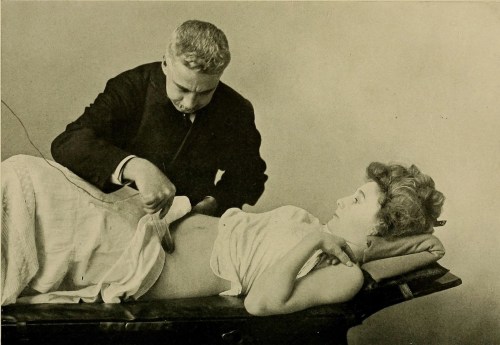
Ironically, this concept of treating certain gender traits as outright diseases is not unprecedented. In fact, there was a time when the roles were reversed and it was feminine traits that were considered “toxic.” However, people didn’t call it that. They actually had a medical term for it, which was “female hysteria.” Look at the definition and notice some of the parallels to toxic masculinity.

Women considered to have had it exhibited a wide array of symptoms, including faintness, nervousness, sexual desire, insomnia, fluid retention, heaviness in the abdomen, shortness of breath, irritability, loss of appetite for food or sex, and a “tendency to cause trouble”.

It seems funny and disturbing now, but back then, it was a serious issue. Society really did get to a point where being too feminine was considered a disease. Just being a woman carried with it an inherent shame that people couldn’t escape.

However, at least with female hysteria, the treatment wasn’t that bad in that it involved regularly being masturbated to orgasm. In terms of medical treatments, that beats the hell out of headaches and constipation. For toxic masculinity, though, there is no such treatment.

Since the term is so vague and its concepts so loaded, it creates a situation where the only way to avoid it is for a man to constantly denounce, deny, and disparage a core part of his identity. That usually involves a lot of virtue signaling and adopting the role of a beta male. The fact that approach has one too many similarities to gay conversion therapy should give anyone pause.

As it stands, the newness and ambiguity of toxic masculinity makes it a useful term for those who need an easy way to disparage men or extrapolate specific male behaviors to suit an agenda. That’s what makes it such a dangerous term for men and women alike, but that’s also what makes it an easy term to drop.

Now, I’m not denying that men have their share of undesirable traits. I also don’t deny that there are some aspects of masculinity that are worth scrutinizing. However, little good has ever come from creating terms that treat basic human traits as a disease. It creates a dangerous precedent that skews what it means to be sick and healthy.

Since it’s in the best interest for society and aspiring erotica/romance writers for genders to get along, ditching such a flawed concept like toxic masculinity will definitely help. It won’t solve all the issues associated with masculinity and feminism, but if we can do it for female hysteria, we can do it for toxic masculinity.

22 Comments

Filed under gender issues, sex in media, sex in society

An Important Question That Feminists And MRAs Must Answer (Honestly)

There are certain debates that I try to avoid. Sure, I’ll contribute to a debate between Marvel and DC fans. That often inspires some trolling, but it won’t inspire outright threats. When those debates revolve around unpleasant issues like race, religion, gender, or anything having to do with politics since last year’s election, I avoid it like the plague.

Every now and then, though, I feel compelled to at least comment on an ongoing debate. While I doubt that comment will resolve anything, I try to make sure it’s something worth adding to the conversation, if only to provide perspective. In my experience, perspective is the first thing lost when people start insulting each other’s mothers.

Before I started writing erotica/romance novels, I actually enjoyed debates. I thought they represented meaningful dialog. Then, I learned the hard way that the desire to win an argument often gets in the way of having productive discussions. There are few topics that don’t involve religion where this plays out more in gender issues.

Sometimes it’s between sex positive feminists and sex negative feminists. Sometimes it’s between feminists and men’s rights activists. Sometimes it’s between alpha males and beta males. In any case, the drama and the vitriol is the same. The sides of the argument are passionate and committed. Neither is likely to ever sway the other.

I can understand that, to some extent. There are undeniable gender disparities in this world, as well as a few subtle disparities that rarely come up in debates. I can also understand why certain people take the sides they do. Feminists, no matter what type they may be, are going to argue for women’s issues. MRAs, no matter how adversarial they may be to feminists, will take the side of men.

There are important issues that are worth debating, regardless of how much or how little you care about gender disparities. Even if neither side can completely win the argument, the debates do inspire all sorts of ideas that enrich everybody involved.

That being said, I still feel compelled to inject a little perspective into the debate. I think emotions on both sides are in overdrive after some pretty major sex scandals, which is fueling more outrage than discussion. As such, I’d like to reorient that perspective by asking one basic question to feminists, MRAs, and gender-driven ideologues of all types.

Do the goals of your ideology directly benefit you to the direct detriment of another?

It’s a yes-or-no question, but I imagine it’s one of those questions that few can answer honestly on a whim. That’s the key part that I want to emphasize. Anyone who answers this question, regardless of which side on gender issues they take, should answer this question with the kind of brutal honesty usually reserved for British TV personalities.

That’s because the question is twofold. The first part is somewhat a given. If you’re in the business of discussing gender issues, you usually have a goal. A part of that goal usually involves benefiting you and others like you. That’s the point of any effort that requires you to endure arguments, insults, and trolling.

The goals of feminism, men’s rights advocates, and everything in between involve benefitting individuals within their tribe. That’s not the issue here. It’s the second part where the honesty is harder to discern because it requires a self-assessment and a greater understanding of the bigger picture.

If you’re looking to achieve a goal that hurts or inconveniences no one, then chances are it’s not going to inspire many debates. Those efforts rarely face any political or social overtones. They’re as simple as being low on marshmallows and wanting to get more. The only one you’re inconveniencing is yourself.

When that goal involves something detrimental or inconvenient to someone else, regardless of whether it’s real or perceived, that’s when you run into problems. If that benefit you seek requires someone else to pay a price, then you’ve got a problem. It’s not always a bad problem. There are times when that the absence of that benefit is an injustice. Issues like voting or protection from violence are good examples.

Those kinds of goals tend to be simple with tangible, documented harm that is directly linked to a gender disparity. It’s the more complicated goals, such as those involving body image, mass media, or cultural trends, that tend evoke the kind of cyclical vitriol on both sides that never seems to abate.

These issues can’t be easily solved by passing a law or flipping a switch. They often require large groups to change their attitudes, beliefs, and assumptions about the world. In the same way people struggle to break bad habits, this sort of thing is not easy to do. It plays out in all sorts of ways.

“Stop admiring sexy women! That’s sexist!”

“Stop asking for free stuff because you’re a woman! That’s fascist!”

“Stop demanding that I find you attractive! That’s body shaming!”

“Stop enjoying what you love because it’s perpetuating misogyny/racism/misandry/homophobia/transphobia!”

However it plays out, the end result has a similar dynamic. In achieving the goal for one side, it negatively impacts the other. Sometimes their power and influence isn’t as great. Sometimes they’re shamed for liking something or supporting a certain position. Sometimes they have to pay a price, sometimes with money and sometimes with other forms of social currency.

In that situation, it creates a predicament to whoever is arguing on the other side. It undermines they’re objectivity. That person, be they a feminist or an MRA, has something to gain by their side prevailing. Like an investor who has a vested interest in a product failing, they’ll argue louder than most that the product is crap.

This is difficult to acknowledge because it undermines someone’s inherent sense that they’re the hero in this story. If Superman only did what he did because he acknowledged he got free ice cream for every criminal he stopped, then that would affect how people saw his motivations.

I don’t doubt that feminists and MRAs are motivated to pursue what they feel is an objective good. However, if they have something to gain from their side prevailing, then there’s a non-zero amount of subjectivity involved. Absent that perspective, the effort becomes less about confronting those gender disparities and more about maximizing your own personal advantage.

Let’s not lie to ourselves. If life were a video game, we would want to use cheat codes every now and then. It’s not wrong to admit that or even to seek advantages that others can’t have. However, to not acknowledge those self-serving facets of an issue is to claim your character is somehow greater and your opponents might as well be Nazis.

Very little good can some from any debate when both sides think their opponents are just monsters to be slain and not people with their own interests at heart. I don’t doubt that debates over gender disparities and gender-related issues will continue. I also don’t doubt that some of those debates will be as rational as the “Deadpool 2” synopsis.

It’s for those reasons that this question needs to be asked and answered honestly. I get it. Honesty is tough in a world of fake news, internet trolls, and all-around assholes. That’s why, if we’re serious about achieving our goals, we need to value it in any discussion about gender. The future of the human race literally depends on it.

2 Comments

Filed under gender issues, Marriage and Relationships

Why People Blame The Victim (And How To Avoid It)

In wake of recent social trends and lurid scandals that took way too long to expose, we’ve entered a precarious moment in our history. I’m not just talking about ongoing issues surrounding gender inequality or trends in our sexual behavior, either. We, the same people who can’t even agree on the color of a dress, have come to a rare consensus on an issue.

Blaming the victims a sexual assault is BAD.

I’ll give everyone a moment to stop cringing and rolling their eyes. I know. This feels like one of those issues that shouldn’t even be an issue to begin with. Unfortunately, it evokes all sorts of heated emotions between men, women, feminists, men’s right’s activists, the transgender community, and certain species of baboons for all I know. It’s that a very loaded, very unsexy a topic.

Now, before I go any further, I want to make one thing abundantly clear. In talking about the particulars victim blaming, I’m not getting behind a particular movement or agenda. I’m choosing to confront this issue for the same reason I’ve used for confronting many unsexy issues.

Issues like sexual assault, and the victim blaming that comes with it, tie directly with our sexuality and our ability to love one another, albeit on the more sinister end of the spectrum. Given my efforts to become a successful erotica/romance writer, I can’t ignore these issues, nor do I want to.

I apologize if the way I go about discussing this issue offends or upsets some people. It wouldn’t be the first time I’ve been clumsy or misinformed with my words. However, this is one issue that nobody, be they a Hollywood producer or erotica/romance writer, should avoid. Sexual assault and sexual harassment are bad enough. Blaming the victim is just the napalm that gets dumped on that fire.

Overall, I think it’s a good thing that there’s rising awareness about sexual misconduct, especially among those in positions of power. Sure, it has been prone to a few misguided controversies, but the overall intent is good. Sexual misconduct is a serious crime. Who could possibly be against it?

That is a rhetorical question, by the way. I’ll skip the part where I recount how various internet trolls would answer that and get to victim blaming, which is where this inherently noble endeavor hits a brick wall and tries to pick a fight with it. Given that brick walls are undefeated against people armed only with profanity and alcohol, it’s a fight that tends to leave everyone bloodied.

It happened with the Harvey Weinstein scandal. It happened with Corey Feldman. It will likely happen again with the next major scandal to break. At some point in the narrative, someone will imply or state outright that the victims bear some or all of the responsibility for what happened to them.

Some will say they put themselves in a bad situation. Some will say they secretly wanted it and just played the victim to score sympathy. Some will say they dressed in a way that made them deserving of it, which is especially common among those who decry beautiful women in sexy attire. There’s another term for this kind rhetoric. It’s called being an asshole.

There’s really not much context here because by every measure, blaming the victim of a crime is a pretty rotten thing to do. Whether you’re a man, a woman, or something in between, scolding someone who just endured a traumatic injustice is right up there with strangling a puppy, drop-kicking a kitten, and slitting a unicorn’s throat.

As nasty a reaction it is, there is also an underlying mechanism behind it. Some of it is tied to the flawed wiring of our caveman brains, but I would argue most of it stems from the inherent difficulty of thinking rationally when we’re in such an emotionally charged state. Given the seriousness of crimes like sexual assault, emotions are often in overdrive.

The moment we hear about sexual assault, it triggers something in our collective minds that makes us want to lash out. It’s such an egregious injustice and most decent human beings seek to right an injustice. It’s actually one of humanity’s best qualities and one of the reasons I believe people are generally good.

However, sexual assault is not like a stolen phone, a damaged house, or a black eye. You can buy someone a new phone. You can help them fix their house. You can give someone with a black eye and ice pack to help sooth their suffering. You can’t easily do that with someone who endured a sexual assault.

Many times, as was often the case with perpetrators like Bill Cosby, the injustices aren’t tangible, nor are they easy to remedy. However, we’re still appalled that such an injustice even occurred. That innate sense of justice that we have hardwired into our brains at birth urges us to right this egregious wrong.

Unfortunately, our brains are still crude instruments that can’t always tell the difference between perpetrator and victim, especially when we’re in an emotional state. As a result, we have a hard time separating the crime from the actual people involved. It’s not some shady, patriarchal agenda. It’s just a byproduct of our inherent need to maintain a just and fair world around us.

Then, there’s the extreme tribalism that comes into play. Yes, that lingering flaw from our caveman past plays a part in this too. Think back to any case involving a sex scandal, be it one involving a celebrity or someone in a position of power. Then, look at those who did the bulk of the victim blaming. Chances are they’ll have some sort of allegiance or admiration to the accused.

That makes sense because we instinctively defend members of our tribe. Whether we share a political affiliation, an ideology, or a fondness for Bill Cosby’s brand of comedy, our first reflex is to defend our tribe, even if it means turning a blind out to cold, hard facts. This is why some people will still defend men like O.J. Simpson against all evidence to the contrary.

On some levels, it’s understandable, even if victim blaming is such an egregious act. Nobody wants to believe that they’re a bad person. Some want to believe they’re the hero of their own story and the world around them is full of villains. That’s where victim blaming becomes a dick move disguised as a defense mechanism.

If anything associated with their tribe becomes affiliated with something as horrible as sexual assault, then it becomes personal for them. When it becomes that personal, then other people can only be targets. As a result, the people those victim-blamers target will, in turn, fire back with the same tactics. Again, the people become disconnected from the injustice and it just becomes a glorified shouting match.

It basically adds another injustice on top of another, turning a crime into a personal struggle to protect your tribe, identity, and certainty that you’re a decent person and those who don’t agree with you are assholes. It’s a great way to rally a tribe in the struggle for survival. In an era where false accusations and poorly-worded tweets ruin lives, it’s downright dangerous.

Within this danger, though, lies the key to confront the fuel that feeds the fires of victim blaming. It’s impossible, at least for now, to know the pain a victim feels or the veracity of an accusation. Absent that certainty, the best we can do is focus on the underlying injustices surrounding sexual assault.

Whether it’s a man exploiting his power to abuse women or a woman going out of her way to ruin a man’s life, the connective tissue to the entire issue revolves around justice. Our desire to live in a just world is one of the few things that transcends tribalism.

To illustrate how that plays out, here’s a quick scenario.

Person One: Help me! That asshole has been sexually harassing me for years!

Person Two: What? What the hell happened? What did you do?

Do you see the disconnect there? The foundation for victim blaming is right there in the initial reaction. If the accused is someone the second person likes or respects, their first instinct will be to defend them. That’s hard to avoid and both sides can turn on each other quickly.

Now, here’s the same scenario with a key change.

Person One: Help me! That asshole has been sexually harassing me for years!

Person Two: What? That’s terrible! Nobody should have to endure something like that.

See the difference? This time, the second person doesn’t immediately personalize the issue. He and the victim are on the same page. They both understand that this is a crime. This is an injustice. That serves as a foundation for fixing it.

I don’t deny that it’s only a minor change and one that’s difficult to utilize in every instance. That’s unavoidable for emotionally charged issues like sexual assault. However, that’s exactly why the effort is so important. Anything we can do to stay on the side of the victims and confront the larger injustices of sexual assault will be far more productive than just attacking one another.

Until we can finally upgrade our caveman brains, egregious acts like sexual assault and victim blaming will likely remain. There are many mechanisms behind it, but there are far more that transcend it. Whatever the long-term outcome of the ongoing efforts to confront sexual misconduct, we have many more reasons to come together than we do to keep casting blame.

4 Comments

Filed under Current Events, gender issues, sex in society, sexuality

Gender Equality, Artificial Ovaries, And The End Of Menopause

There are certain situations where, if you take away modern medicine, social institutions, and various life hacks, there’s an inescapable gender disparity. I know that by saying that, I’m inviting all sorts of nasty comments. There are those who claim that just hinting at inherent gender differences is to empower the patriarchy, oppress women, and probably strangle puppies in the process.

This piece isn’t directed at those people, nor is it directed at those who want to fight Round 2,697,206,077 of never-ending the gender wars arguments that the internet has made exceedingly easy to wage. I write this with the intent to inspire hope, excitement, and maybe a few sexy thoughts beyond those I share every Sunday.

When it comes to helping men and women operate on a level playing field, technology has been the great equalizer. It’s because of technology that we’ve helped women gain a greater level of control over their fertility. It’s because of technology that men who otherwise wouldn’t have been able to have children can now do so. A huge chunk of modern society is built around having greater control over our sexual health.

For men, that control has gotten pretty darn robust. Thanks to advancements in modern medicine, as well as tireless marketing efforts from pharmaceutical companies, men can enjoy continuous sexual function well into old age. Say what you will about the greed of pharmaceutical companies, but the collective sex lives of men are better because of it.

While that’s great news for men who want to stay sexy into their golden years, this does widen a particular gender disparity that is rarely discussed, if only because it evokes distressing thoughts about what our grandparents do in their private time. While modern medicine allows men to keep humping like they did in their youth, women face the biological equivalent of a brick wall as they get older.

It’s called menopause and like reverse puberty, it’s a fact of life for women. It typically happens in a woman’s late 40s or early 50s. It’s effects vary from woman to woman, but its signature trait is that a woman stops menstruating. That means they no longer have periods, they no longer ovulate, and they can no longer have children.

At the moment, it’s basically a fact of life. If a woman lives long enough, this is what they deal with. It’s like graying hair, wrinkly skin, or liver spots. At a certain point, their reproductive systems cease functioning. While they can still have sex, the various biological changes associated with menopause can make that difficult.

In terms of the gender scorecard, this definitely deducts some points for women. Whereas men have a way to keep their dicks functioning well into their elder years, women’s options are much more limited. Sure, there are a few medical ways to deal with it, some of which can be purchased at a local pharmacy for less than twenty bucks. However, the biology is still behind the curve.

What if a woman wants to continue having children late in life? What if a woman couldn’t have children in her youth, but later wants them even after her fertility has declined? Whereas men can still father children into their 90s, women seem to be out of luck.

However, and this is where I offer a glimmer of hope to those dreading their unsexy elder years, that may change thanks to recent advancements in biotechnology. According to MIT Technology Review, our ongoing research into regenerative medicine is drawing us closer to the day when we can actually regrow a woman’s ovaries. Here are the basics of this amazing and inherently sexy work.

The work, carried out at Wake Forest Baptist Medical Center, suggests a potential alternative to the synthetic hormones millions of women take after reaching middle age. A paper describing the findings was published Tuesday in Nature Communications.

When tested in rats, the pieces of tissue, known as organoids, were better than traditional hormone replacement drugs at improving bone health and preventing weight gain. The treatment was also as good as hormone drugs at maintaining healthy tissue in the uterus.

In essence, this is like treating your organs as rusty car parts that need replacing. Ovaries, like any other organ in the body, tend to break down as time goes on. We’ve already grown some basic organs in the lab. Growing ovaries, though, has far greater implications than simply keeping your body humming along.

Ovaries, as anyone who sat through a health class knows, are the organs that produce the various hormones and androgens that make up a woman’s biology. It plays key roles in just about everything having to do with female sex and reproduction. Once it shuts down, it’s like the main generator of a building going down. Sure, some parts have backup power, but that’s not enough to keep it running.

The ability to regrow fresh, healthy ovaries completely changes that dichotomy. In some respects, it puts the women out ahead of the men in terms of sexual function in their golden years. Unlike little blue pills or even bionic penises, these re-grown ovaries are entirely functional organs. It’s like resetting, rebooting, and re-energizing a woman’s sexual function.

This doesn’t just mean that women can still have healthy children well beyond their golden years. It means they can also avoid the various downgrades to their sexual function that often comes with menopause. They don’t need to take pills or constantly replenish hormones. They’ll have entirely functional organs inside them to do that for them.

Now, ignoring the possibility that creating new ovaries may also lead to creating enhanced ovaries, this does more than just improve the sex lives of older women. In many respects, it puts them on the same level as their elder male counterparts.

Their sexual function and their reproductive function don’t have to decline with age. Like older men, they can still have sex for fun. They can still have sex to make babies. Their options are just as open. If you’re a fan of gender equality, then this is an advancement that’s every bit as vital as advances in male birth control.

While I’m sure this will still generate some unpleasant mental images about our parents and grandparents, the incentives are already in place and too great to ignore. Sure, there will be some women who opt not to get fresh ovaries, just as there are some men who don’t mind having a less active penis later in life. However, the fact that medical science will give people these options is a true game-changer.

Technology has always changed our society in immense ways, but technology that affects our sex lives and our reproductive health tends to have bigger impacts than most. What happens to our family structures when our grandparents are still having children at the same time as our parents? What happens when getting older is no longer associated with succumbing to menopause and sexual dysfunction?

These are the kinds of questions that don’t have easy answers now, but those answers may end up finding us sooner than we expect. Since I’m in the business of erotica/romance novels, it may very well affect me at some point. Then again, having more people who stay horny into old age might be good for business.


1 Comment

Filed under gender issues, Second Sexual Revolution, sex in society, Sexy Future

When Sex Robots Come (And Have Children)

It has been a while since I talked about sex robots . For that, I apologize. I like to think I keep up with all things related to sex robots, be it major news regarding the first sex doll brothel to deeper insights on how sex robots will affect society. Let’s face it. There are many implications with sex robots, as is often the case with anything that affects our sex lives.

More recently, most of those implications have centered around what happens when sex robots gain a measure of intelligence. We already have non-intelligent sex dolls that have the look and feel of real human flesh, even if they’ll never be mistaken for a real person. Sex robots that utilize artificial intelligence are still a ways off, but they are coming.

I realize that’s a crude joke that most would expect of someone who writes sexy novels in his spare time. I’ll try to limit those remarks for now because this particular issue regarding sex robots is no laughing matter. This time, it doesn’t involve the dangers of artificial intelligence, if you can believe that. Instead, it involves the very real possibility that sex robots may one day bear children.

I’ll give everyone a moment to stop rolling their eyes and/or cringing. I realize that possibility probably hadn’t crossed your mind until I mentioned it. The very concept seems antithetical to the purpose of a sex robot. Isn’t it just supposed to be the perfect sexual outlet for horny men and women? The robot getting pregnant would seriously undermine that use.

Well, maybe that applies in the world of softcore porn where there are no children, pubic hair doesn’t exist, and underpaid baristas are ridiculously hot. In the real world, there are more complexities to people, society, and the desires that drive them. Chief among those desires is the urge to reproduce.

Sure, sex is usually the primary component of that desire, but it’s not the only one. Deep within that longing for the toe-curling pleasure that we seek, be it through a lover or a sex robot, is also a desire to create the next generation. It’s kind of an important desire since it’s a big reason why humanity is the most dominant species on this planet.

So where exactly do sex robots play into this? Well, there are already people out there who have given this subject much more thought than I have. Granted, some of that thought is way beyond current sex robot technology, but the concepts and principles are already in place.

According to Sergi Santos, a sex robot inventor and enthusiast who might be to sex robots what Steve Jobs was to computers, the process would be fairly simple and not involve nearly as many labor pains. He described the process as follows.

Using the brain I have already created, I would program it with a genome so he or she could have moral values, plus concepts of beauty, justice and the values that humans have.

Then to create a child with this robot it would be extremely simple.

I would make an algorithm of what I personally believe about these concepts, and then shuffle it with what she thinks and then 3D print it.

That’s it. I 3D print the robot that is the child of me and the robot, I don’t see any complications.

Granted, it’s not a very sexy process and it lacks all the nine-month rituals that we’ve come to associate with creating new life. There are no baby showers, ultrasounds, or pregnancy cravings. The entire process is largely mechanical, using the same principles that comes with shuffling genes and traits, but implementing it in a more technologically-driven manner.

It basically takes Aldous Huxley’s dystopian fever dream, “Brave New World,” to a far greater extreme. It doesn’t just reduce reproduction to a process that’s not unlike getting a car custom made. It utterly separates it from the physical act of sex. Sure, some of the genetic material might be utilized in some way, but the actual gestation process is not the same.

Rick and Morty” already toyed with this concept in an episode that involved sex robots, gender wars, and a scene inspired by “Flashdance.” I swear I’m not making any of that up, but it’s a concept that addresses a serious issue that may very well arise once sex robots mature.

Once these devices get to a point where they’re intelligent, realistic, and capable of providing the necessary fulfillment that people seek, then what happens to our species’ ability to propagate? If sex robots get to the point where anyone can basically design the perfect lover, then what use will anyone have for old fashioned reproduction?

Don’t just think this will apply to men, either. There will be sex robots for women as well because, contrary to popular belief, women do get horny too. Those robots will be able to have babies too. I’ll give everyone a moment while their heads stop exploding.

How that process might play out is not something that Mr. Santos or Huxley even imagined. However, if the only ingredient necessary is a woman’s biological material and a sex robot with the right materials, then there’s no reason it can’t make a baby as efficiently as their male counterparts. Maybe the woman will want to carry it or opt to just have it printed. Sufficiently advanced sex robots will give them many options.

Sure, there may always be people who favor making babies the old fashioned way. That’s why there are still communities that shun modern technology. However, there’s a reason why those communities are small, secluded, and have limited influence. The appeal of technology and the promise it offers is just too enticing to most people.

Make no mistake, either. While it seems strange and kinky now, the idea of reproducing with a sex robot will have appeal. Talk to any woman who has ever endured the rigors of pregnancy and all the complications that come with it. If the process that Mr. Santos described above is even half as effective as he proclaims, then that’s still plenty enticing for those seeking an alternative method of propagating the species.

Imagine a process that doesn’t take nine grueling months. Imagine a process that doesn’t require morning sickness, frequent check-ups with a doctor, or stretch marks. Again, ask any woman who endured a rough pregnancy. Few will say it was easy, let alone comfortable.

A sex robot that can have a child, whether it’s through an artificial womb or the 3D-printing process imagined by Mr. Stantos, provides that last critical function for a sex robot. Now, it won’t just be the perfect sexual partner. It will also be the perfect breeding machine.

It’s impossible to overstate how huge the implications are of something like that. If every individual on the planet just used a sex robot for their sexual needs, then our species would naturally go extinct. That’s just basic biology. However, give those robots the ability to reproduce and the rules of basic biology are no longer applicable.

As I’ve noted before, nature sets the bar pretty low when it comes to evolutionary success. If a trait helps a species survive and reproduce, then everything else on top of it is just icing on the cake. A sex robot that can both help us reproduce and give us great sex may very well rewrite the template by which our species operates.

The possibilities are both extraordinary and kinky. It may very well serve as the basis for one of my novels in the future. Most people alive today will still see the idea of a sex robot having children as a strange, if not obscene idea. Even our kids may feel that way, albeit to a lesser extent.

Then again, the same could be said for previous advances in reproductive technologies, such as in-vitro fertilization. Just this past year, the first child ever born through a transplanted uterus was born. The way humans reproduce is already changing and it’s going to keep changing.

Like everything else in our lives, we humans are going to find ways to make amazing tools to help us survive. It’s only a matter of time before we use those same tools to help us make better, healthier, sexier babies. Sex robots, whatever form they take, will likely be part of that process.

1 Comment

Filed under gender issues, sex robots