Why Intelligent Aliens May Destroy Us Even If They’re Peaceful (According To Mass Effect)

tuchanka_-_sabotaged_cure_wasteland_1

What would happen if we went back in time and gave the Genghis Khan nuclear weapons?

What  would happen if we went back even further and gave machine guns to the Ancient Romans?

Let’s be even more subtle. What do you think would happen if you gave Aristotle a functioning smartphone with a complete catalog of Wikipedia? How much would that change the course of history? More importantly, how much damage would it potentially incur?

I consider myself an optimist. I generally place more faith in humanity than most people in this age of fake news and heavy cynicism. I have my reasons for doing so, but even my confidence in the human species has limits. I trust most people to do the right thing every time I drive my car on the highway. That doesn’t mean I’d trust a caveman from 10,000 BC to drive a fully-loaded tank.

I make this point because these are legitimate concerns consider when assessing how humanity deals with emerging technology. We can barely handle some of the technology we already have. How will we handle things like advanced artificial intelligence, gene hacking, or advanced robotics?

I’ve stated before that the human race is not ready for advanced artificial intelligence in its current state. I’ve also stated that the human race isn’t ready for contact with an advanced alien species, either. I believe we’re close. We may even be ready within my lifetime. However, if aliens landed tomorrow and brought an advanced artificial intelligence with them, I think our civilization and our species would be in trouble.

I also think the human race would be in danger even if those same aliens were peaceful. Even if they brought a super-intelligent AI that was as compassionate and caring as Mr. Rogers, our species would still face an existential crisis. To explain why, I’ll need to revisit one of my favorite video games of all time, “Mass Effect.”

The various themes of this game, and the lore behind it, offer many insights into very relevant questions. In addition to the timeless hilarity of bad dancing skills, the game crafts a rich history between alien races like the Quarians and the Geth. That history reflected the dangers of mishandling advanced artificial intelligence, an issue humanity will have to deal with in the coming decades.

There is, however, another rich history between alien races within “Mass Effect” that offers a similar lesson. This one has less to do with artificial intelligence and more to do with what happens when a species technology that it’s not ready to handle. That danger is well-documented in the game through a hardy race of beings called the Krogan.

Like the Quarian/Geth conflict, the conflict surrounding Krogan has some real-world parallels. However, I would argue that their story Krogan is more relevant because it serves as a warning for what could happen when an advanced species uplifts one that is less advanced.

In the mythos of “Mass Effect,” the Krogan were once a primitive, but hardy species that evolved on the harsh world of Tuchanka. They’re reptilian, high-functioning predators in nature. They’re basically a cross between a velociraptor, a crocodile, and a primate. They have a tough, war-like culture, which is necessary on a world that contained hulking Thresher Maws.

They were not a species most would expect to develop advanced technology. Then, the Salarians came along. Unlike the Korgan, this amphibious alien race isn’t nearly as hardy, but is much more adept at developing advanced technology. In most circumstances, they wouldn’t have given the Krogan a second thought. Unfortunately, they were in the middle of the Rachni War and they needed help.

You don’t need to know the full details of that war. The most critical detail, as it relates to advancing an unprepared species, is how this war came to define the Krogan. Neither the Salarians nor the other alien races in the game could defeat the Rachni. In a fit of desperation, they uplifted the Krogan by giving them weapons and advanced knowledge.

In the short-term, the Salarians achieved what they’d hoped. The Krogan helped defeat the Rachni. In the long-term, however, it created another inter-stellar war in the Krogan Rebellions. Apparently, giving a hardy, war-like species advanced weapons doesn’t make them less war-like. It just gives them better tools with which to fight wars. That may sound obvious, but keep in mind, the Salarians were desperate.

The details of this war end up playing a major role in both “Mass Effect” and “Mass Effect 3.” That’s because to stop the Krogan, the Salarians resorted to another act of desperation. They crafted a biological weapon known as the genophage, which significantly curtailed the Krogan’s rapid breeding rate.

The damage this did to the Krogan race cannot be understated. Through the entire trilogy of “Mass Effect,” characters like Wrex and Eve describe how this destroyed Krogan society. In “Mass Effect 3,” Eve talks about how the genophage created massive piles of stillborn Krogan babies. That kind of imagery can haunt even the most battle-hardened species.

In the end, both the Salarians and the Krogan paid a huge price for giving technology to a species that wasn’t ready for it. Depending on the decision you make in “Mass Effect 3,” the Krogan species is doomed to extinction because of how ill-prepared they were. This haunted more than a few Salarians as well, one of which played a significant role in a memorable side-story in “Mass Effect 2.”

Regardless of how the game plays out, there’s an underlying message at the heart of the Salarian/Krogan dynamic. When a species is uplifted by another so abruptly, it’s difficult to see the long-term ramifications. Even though the Salarians were in a dire situation, they ended up creating one that had the potential to be much worse.

That danger is actually more pressing because, unlike advanced artificial intelligence, the act of uplifting a species effectively skips over the cultural and societal evolution that’s necessary to handle new technology. The Krogan never got a chance to go through that process before getting that technology. As a result, they became an existential threat to themselves and others.

The human race still has a long way to go before it creates the kind of artificial intelligence that would constitute such a threat. Aliens on the level of Salarians could land tomorrow and there would be nothing we could do to prepare ourselves. Whatever knowledge or technology we gained could do more than just upend human society. It could irreparably damage our species, as a whole.

Some of that outcome would depend on the intentions of the advanced alien race. It could be the case that they’re not like the Salarians and aren’t looking to enlist humanity in a war. It could also be the case that they’re smart enough to not give primitive humans advanced weapons. That could mitigate the risk.

However, that still assumes humans won’t find a way to use advanced knowledge to make weapons. When Otto Hahn discovered nuclear fission in 1938, he didn’t have any idea that it would be used to make a bomb that would kill go onto kill over 100,000 people. Even if advanced aliens are really smart, how could they be sure that humanity won’t use advanced knowledge to create something more horrific?

Sure, they could try to stop us, but that could only make things worse. The genophage wasn’t the Salarians’ first recourse. They actually went to war with the Krogan. They suffered heavy losses and so did the Krogan. In the long run, uplifting a less advanced species was detrimental to both of them.

That doesn’t just put the famous Fermi Paradox into a new context. It demonstrates a real, tangible threat associated with advancing a species before it’s ready. I would argue that the human race is close to that point, but we’re still not there. We have issues managing the technology we’ve created. There’s no way we can handle advanced alien technology at the moment.

Mass Effect,” in addition to being one of the greatest video games of the past two decades, offers many lessons for the future of humanity. It shows that humans are capable of great things. We have what it takes to join an entire galaxy full of advanced alien life. For our sake, and that of other advanced aliens, we cannot and should not rush it.

2 Comments

Filed under Aliens, futurism, human nature, Mass Effect, philosophy, psychology

The following is a review I wrote for “Extermination #1” for PopMatters. Enjoy!

Tenuous Temporal Deconstruction in “Extermination #1”

Leave a comment

August 16, 2018 · 6:11 pm

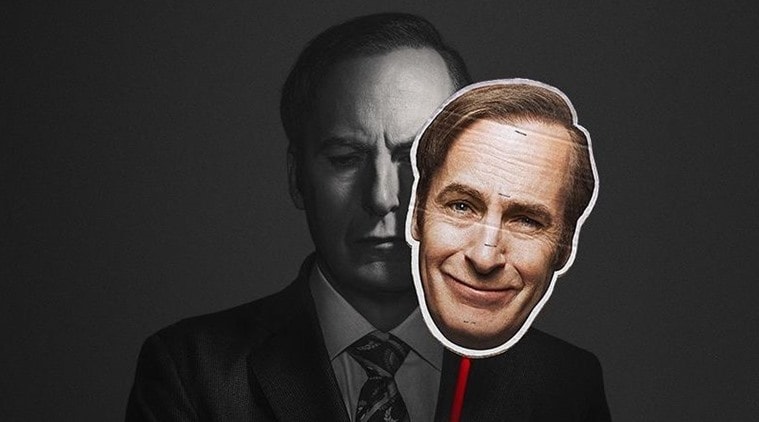
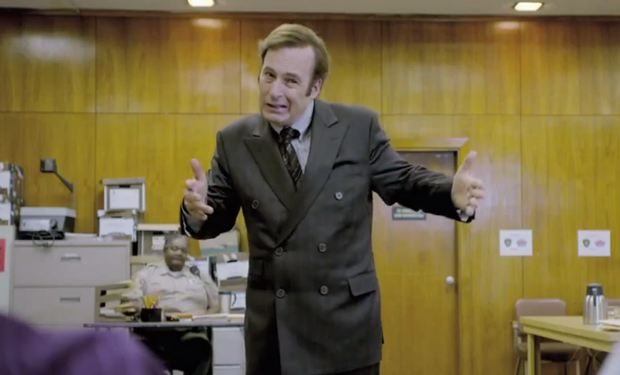
Walter White Vs. Saul Goodman: A Tale Of Two Villains

better-call-saul-644x362

If the road to Hell is paved with good intentions, then the road to villainy has many paths with similar landmarks. Well-developed villains can be every bit as compelling as their heroic counterparts, if not more so. Ever since Heath Ledger’s Joker stole the show and an Oscar in “The Dark Knight,” great villains aren’t just a complement to the heroes. They’re a journey unto themselves.

At the moment, Walter White from “Breaking Bad” is the ultimate embodiment of this journey. His path to villainy made for some of the greatest moments in modern television and Bryan Cranston has the Emmy trophies to prove it. Since then, it seems as though everyone is just struggle to keep up.

However, there’s one journey that comes very close and is remarkably similar. Fittingly enough, it spins right out of the world of “Breaking Bad.” I’m talking, of course, about “Better Call Saul,” the prequel/spin-off that tells the story of how an aspiring lawyer named James McGill became the morally bankrupt legal guru, Saul Goodman.

I’ve been watching this show closely for a while now. I was originally planning to wait until the conclusion of Season 4 to write about it, but after re-watching the Season 3 finale, I feel like there’s too much to work with. After seeing that episode, I feel like I saw a turning point in the ongoing transformation of James McGill to Saul Goodman. I also saw some important parallels with Walter White that are worth discussing.

At its core, “Breaking Bad” is a story about how a law-biding man goes from an underpaid chemistry teacher to a blood-thirsty drug kingpin. Creator Vince Gilligan nicely summed up Walt’s transformation as going from Mr. Chips to Scarface. That journey, and the story behind it, took an initially unassuming character and turned them into someone they never thought they could be.

The essence of “Better Call Saul” is very different. James McGill is not the same as Walter White. From the very first episode, we can see traces of the unscrupulous con man manifesting in a many ways. The show establishes in Season 1 that James McGill is not some clean-cut straight-arrow like Walt was. His soul was tainted before he ever applied to law school.

James “Slipping Jimmy” McGill is someone who always seems inclined to cut corners, break rules, and cheat to get ahead. That’s something his older brother, Charles “Chuck” McGill, constantly points out over the course of the first three seasons. Every time Jimmy had a chance to do the right thing, he compromised. Just doing the right thing wasn’t enough for him.

Walter White’s decision-making process was similar. In the early seasons of “Breaking Bad,” he showed a reluctance to cross certain lines and go too far. He often found himself pushed or tempted, sometimes by forces beyond his control and sometimes by the consequences of actions. At the end of the day, though, he still didn’t get off that path.

That’s a common thread for many villains in their journey. They find themselves on that path and they see opportunities to leave it, but they choose not to. They don’t seek redemption like a hero would. They just keep making excuses, willfully entering a brutal cycle of corruption and compromise.

Whereas Walt succumbed to that cycle, though, James McGill steadily embraces it. Moreover, he isn’t drawn into that path by tragedy or bad luck. He gravitates towards it. He’s even excited by it. James is at his most animated and charismatic when he’s pulling a con, putting on a show, or crafting a lie. It’s not a necessity like it was for Walt. It’s a thrill.

If James is tempted by anything, it’s the lure of walking the honorable path like his older brother. In fact, Chuck might have been the only positive influence that kept Jimmy from becoming something worse than a sleazy con-man. He and a host of other influence, especially Kim Wexler and Howard Hamlin, play the part of a reverse temptress, trying to keep him off that villainous path.

Early on, there’s a sense that James genuinely wants to be a decent, upstanding lawyer. There are situations where he does the right thing. Some of the causes he takes on, such as a case against an elder care facility that was stealing money from its residents, are objectively noble. In the end, though, doing the right thing isn’t enough for him. The end of Season 1 really cements that.

Walt goes through a similar process early on. Like the “refusal of the call” that heroes experience, Walt attempts to escape the villainous path. However, a combination of circumstances and choices put Walt back on the road towards becoming Heisenberg. By the end of Season 1, there’s a sense that there’s no going back.

Where Walt and James diverge, as villains, it’s how and why they make their choices. Walt becomes Heisenberg because he think he has to, first for his family and later for selfish reasons. James becomes Saul Goodman because he wants to. He tried to be the upstanding lawyer his brother and friends wanted. It just didn’t work for him. Being James McGill just wasn’t enough.

There’s plenty of conflict surrounding those choices. Part of why I love “Better Call Saul” is how it reveals the steady progression from James McGill to Saul Goodman. It doesn’t happen all at once. It doesn’t even happen in a steady, linear narrative. James fluctuates on his journey to becoming Saul. He even hesitates a few times. He still doesn’t avoid it in the end.

That ending, as revealed through the finale of “Breaking Bad” and the flash-forward sequences of “Better Call Saul,” shows one other key distinction between Walt and Jimmy. While both men complete their villainous journey, they both end up in very different places. Walt is dead or at least close to it, as some fan theories predict. However, Saul Goodman’s fate might actually be worse.

In the first minutes of the first episode of “Better Call Saul,” we see what came of James McGill/Saul Goodman after the events of “Breaking Bad.” Gone are the days where he shows up in flashy commercials and hatches elaborate cons on unsuspecting people. Instead, he lives an unexciting, mundane life in Omaha, Nebraska managing a Cinnabon.

Some might argue this is Saul’s personal Hell, trapped in a such a sad and unassuming life. I would say it’s more like his purgatory. In this world, he can’t embrace that villainous persona that gave him so many thrills. Even if he wanted to be that villainous character again, he can’t because it means losing what little he has left.

Just as he frequently did in the early seasons of “Better Call Saul,” James McGill takes the easy way out. Walt tried that too in the last few episodes of “Breaking Bad,” but that didn’t last. He eventually chose to confront the byproduct of his villainous choices. James ran and didn’t look back. The easiest path, in the journey of a villain, is often a coward’s path.

Whether or not James McGill escapes his purgatory or continues wallowing in obscurity remains to be seen. The fact he ends up in this state after undergoing this transformation into Saul Goodman reveals another critical component to the villain’s journey. While the hero ultimately triumphs, the villain eventually loses. It doesn’t always end with them going to jail, but they often endure a less-than-desirable fate.

Breaking Bad” and “Better Call Saul” are both great shows that set a new standard for depicting the evolution of a character into a villain. I won’t claim that “Better Call Saul” is superior to its predecessor, if only because the story isn’t finished. It does, however, accomplish something every bit as remarkable as the story of Walter White.

The process of becoming a villain is a steady, inconsistent journey full of many complications and tough choices. Walter White and James McGill began that journey under different circumstances and ended up in different places. Ultimately, they both crossed lines that sealed their respective fates. It’s tragic in some ways, but it makes for some damn good television.


1 Comment

Filed under human nature, philosophy, psychology, Villains Journey

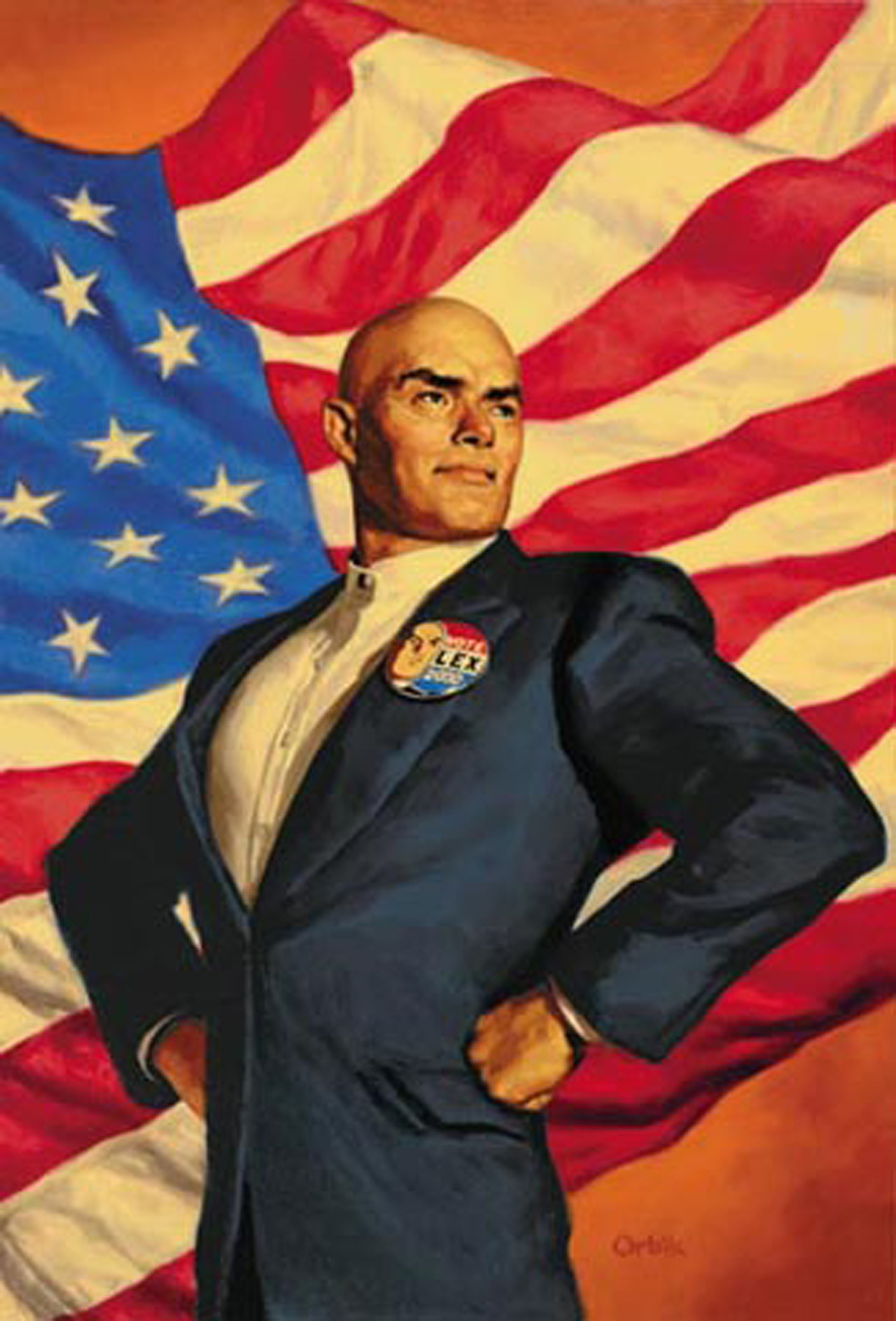
Understanding (And Learning From) Lex Luthor’s Hatred Of Superman

supes-vs-lex

As a lifelong fan of superhero comics and someone who enjoys shows like “Breaking Bad,” I’m genuinely fascinated by villains. Specifically, I’m intrigued by what makes them tick and why they walk the villain’s path. Their journey is distinct from that of a hero, but one that can be just as compelling.

In many cases, these villains have capabilities that allow them to solve many of the world’s problems. I’ve cited Dr. Doom as one of those villains who blurs the lines of villainy because of his intentions. Characters like Dr. Doom genuinely believe that their villainous actions are justified because it will lead to a better, safer, more prosperous world. Heroes also believe that too, which helps fuel their epic battles.

For a character like Lex Luthor, though, the line isn’t that blurry. He’s a villain, plain and simple. He’s selfish, callous, arrogant, cruel, and narcissistic to an extreme. If he existed in the real world, he would check every box for narcissistic personality disorder. In terms of personality, he’s the polar opposite of his nemesis, Superman.

That goes a long way towards giving Superman an enemy who stands against his heroic ideals. I would even argue that Superman couldn’t be the iconic kind of hero he is without Lex Luthor. At the same time, I also think Lex reveals something critical about humanity, morality, and superheroes in general.

That’s difficult to see because for much of Lex’s early years in comics, there wasn’t much depth to his motivation. He just wanted to dominate the universe and Superman was in his way. It’s basic and bland, but that was typical for the early era of superhero comics. Villains like Lex were mostly just obstacles for the heroes to overcome in their journey.

That changed in the late 80s and early 90s with the modern era iteration of Lex Luthor. Finally, Lex got more backstory and depth. He was still no Walter White, but these details helped set the stage for the kind of villain he became. It also helped establish why he hates Superman so much.

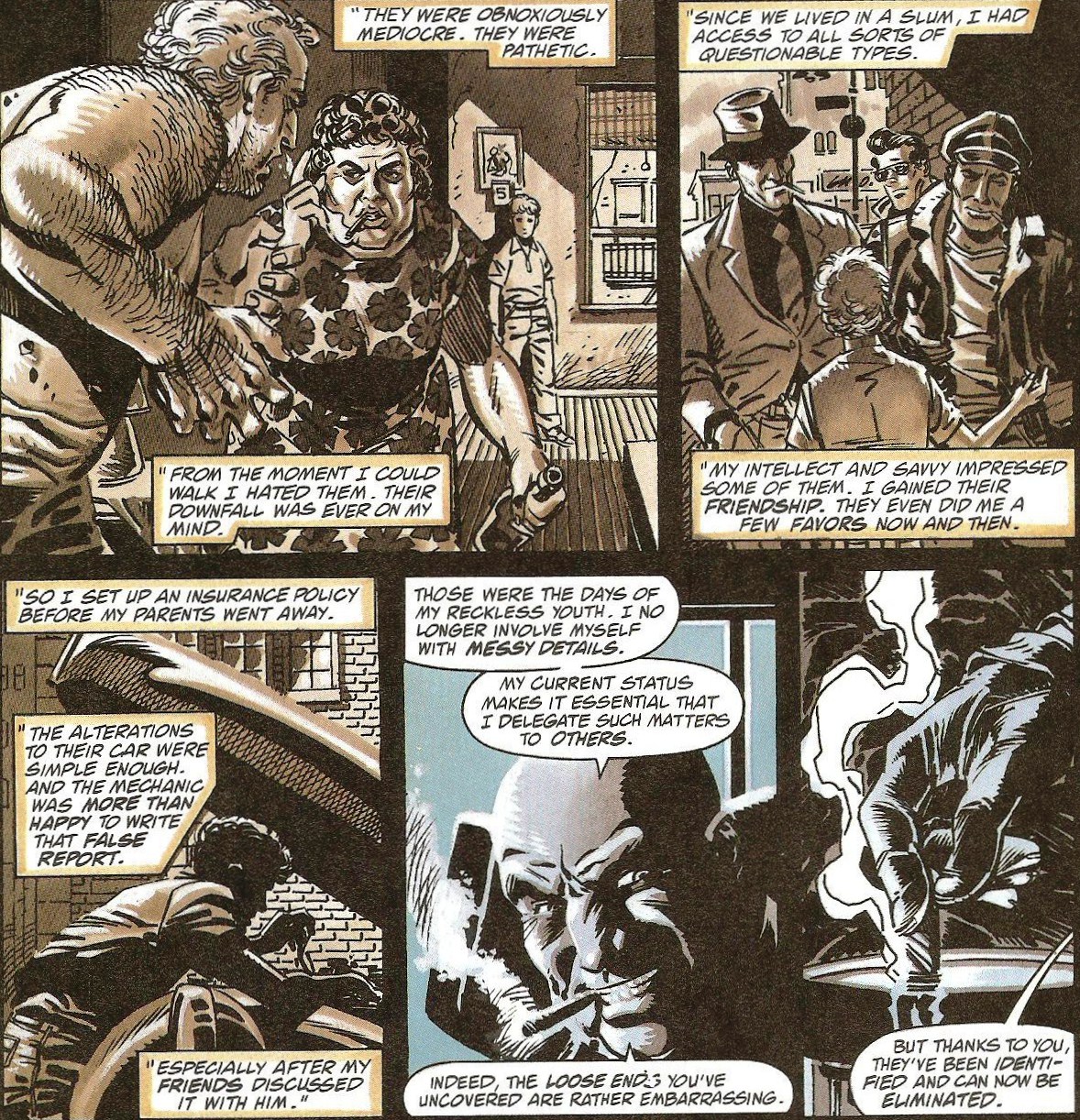
Whereas Superman landed on Earth and was adopted by loving parents, Lex grew up in a rough part of Metropolis called the Suicide Slums and was raised in an abusive household. Right off the bat, Superman gets lucky by having the best parents a child of any species could ask for while he’s unlucky enough to be born with the worst.

As a result, Lex had to be ruthless, manipulative, and cunning. Unlike other villains, though, he didn’t need much tempting. He didn’t agonize over his moral decisions, either. He just did it and didn’t feel a shred of guilt. That includes the role he played in the death of his parents.

That alone establishes Lex Luthor as the kind of ruthless villain who would oppose Superman for any number of reasons. However, as evil as that act was, it’s important to note the motivation behind it. Lex didn’t just kill his parents because murder makes him happy. He did it because they were an obstacle and an opportunity.

They were holding him back, but their deaths meant insurance money that he could use to strike out on his own and build something worthy of his genius. To him, the morality of his decision didn’t matter. Only the results mattered. That’s a critical detail and one that puts Lex Luthor’s villainy into a unique context.

Lex, being one of the smartest characters in the entire DC universe, doesn’t care much for things that are esoteric and obscure. He’s all about results that are tangible and measurable. That means things like truth, justice, and the American way are empty concepts to him. Superman champions those ideals, but for Lex Luthor, they’re just hindrances.

That kind of cold, callous approach to the world gives a unique substance to Lex’s behavior. He’s certainly not the first person to take such a materialistic approach to reality. Rick Sanchez of “Rick and Morty” does the same, but rather than misanthropic despair, Lex Luthor sees it as the key to producing the results he seeks.

Moreover, he has to produce those results without the god-like power that Superman wields. If Superman wants to move the Earth out of the way or destroy an oncoming asteroid, he doesn’t have to build anything or learn anything. He just has to flex his muscles, fly up into the sky, and destroy it with a single punch. There’s no tangible reason to his actions beyond it being the right thing to do.

To Lex Luthor, that’s not just an affront to someone who had to work for everything he ever gained. It’s an insult to his egocentric, results-focused worldview. Just saving the world because it’s the right thing to do doesn’t achieve anything. It does nothing to move humanity forward because nobody had to produce something of merit. It just allows them to continue in the same, unaltered state.

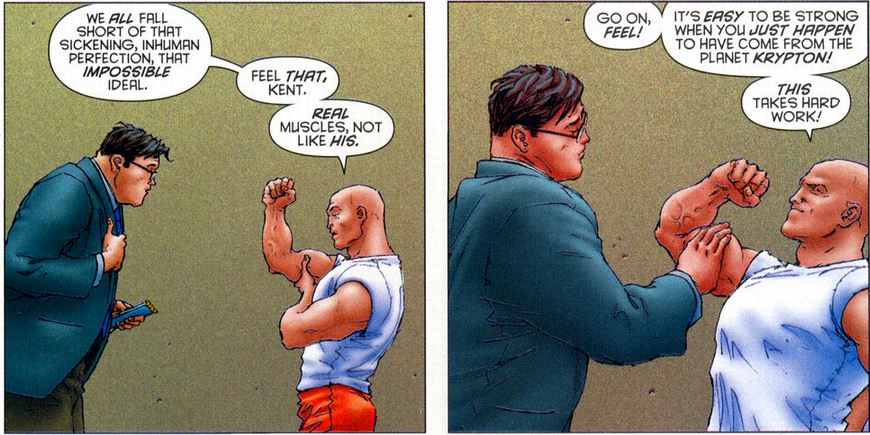
This gets to the heart of why Lex Luthor hates Superman. The extent of that hatred was fully articulated in one of the best modern Superman stories ever told, “All-Star Superman” by Grant Morrison and Frank Quitely. If you only read one Superman comic, make it this one because it perfectly encapsulates the pure heroism of Superman and the cold villainy of Lex Luthor.

In one critical part of the story, Lex tells Clark Kent, who he doesn’t know is Superman, what it means to actually work for his power. Superman, for all his idealism, did nothing to earn his abilities. He just happened to be an alien who landed on a planet with a yellow sun.

It’s like winning the lottery as opposed to working hard for a fortune. One is built on hard work and skill while the other is just dumb luck. Beyond basic jealousy, though, Lex makes another critical point about the ideal Superman sets.

From his perspective, that lofty ideal diminishes the entire human race. By being this other-worldly savior who achieves all these impossible feats, Superman reveals how inept the human race is. More importantly to Lex and his massive ego, it shows just how feeble his achievements are, despite all the work he put in.

Being the extreme narcissist he is, Lex takes that as the ultimate insult. In terms of the bigger picture, it establishes that neither he nor humanity can achieve their full potential. In that context, it’s understandable why Lex dedicated so much time and energy to killing Superman.

I won’t get into all the ways Lex has tried and failed over the years, although one of his plots did involve him becoming President of the United States. Whatever his methods, I think there’s a larger lesson to learn from Lex’s hatred and for once, it goes beyond his ego.

A big part of what turns someone into a villain is this sense that the world isn’t fair, but could be made better with the right guidance. Lex believes he’s capable of providing that guidance and not just because of his ego. He is, objectively, one of the smartest and most capable human beings on the planet. However, it’s Superman who keeps Lex from making the world less unfair.

Superman believes in the merits of truth and justice. He inspires others to uphold these ideals, even without his vast power. That’s a problem for Lex, who builds much of his power on lies and treachery. To him, though, he doesn’t see that as wrong. He just sees that as the most efficient way to get results.

To uphold truth and justice, in his brilliant mind, is to prevent the world from progressing. Granted, progress in Lex Luthor’s mind means him being in charge, but that doesn’t necessarily undermine the implications.

Like Dr. Doom, Lex is ambitious in that he doesn’t just want to save the world like Superman. He wants to fundamentally change it and he’s willing to cross any line to achieve that. Killing Superman is part of that change, but so is becoming a billionaire and a future President of the United States. If a billion people die in the process, then that’s acceptable because it means humanity is stronger because of it.

There have been times in the comics where Luthor’s vision has manifested. In another critically-acclaimed Superman story, “Red Son” by Mark Millar, Lex has a chance to lead the world into a brighter future. By and large, he succeeds. He’s still an unapologetic narcissist, but he still gets the results he seeks.

Like all great conflicts between superheroes and their arch-nemesis, the dichotomy between Superman and Lex Luthor is stark. They’re two extremes on opposite ends of a spectrum delineating heroism and villainy. By being on those extremes, though, it’s easier to see the inherent shortcomings of both.

While Lex’s shortcomings are easier to identify since he’s an outright villain, he does help identify an important flaw in Superman’s idealism and one that extends to superheroes, as a whole. Superman is willing to save the day, but he’s not willing to cross any lines. He will only ever do the right thing and that means not sacrificing innocent lives or usurping individual freedom.

Those heroics will keep the world turning, but they won’t move society forward. Superman believes in inspiring humanity rather than doing it for them, but Lex Luthor believes his heroism achieves the opposite. It just makes people complacent and dependent on heroes like him rather than crossing the lines that he’ll cross to get things done.

At the end of the day, both in the real world and the world of comic books, we have to determine how much we’re willing to pay for the results we seek. Lex is willing to pay any price. Superman isn’t willing to pay a cent beyond doing the right thing. Most reasonable people, including other superheroes, fall somewhere in the middle.

In the pantheon of super-villains, Lex Luthor is probably the easiest to despise and the hardest to understand. Like Superman, he exposes another side of an ongoing struggle between doing the right thing and achieving more. As society continues to progress, achieving abilities rivaling that of any superhero, it’s a struggle we’ll have to confront.

3 Comments

Filed under Comic Books, Jack Fisher, Superheroes, human nature, philosophy, psychology, superhero comics

Why Capitalism Will Survive Technological Progress (To A Point)

01fe7ea1d6c34588143cdc434ad52e0d

There’s a popular perception among those who speculate about the future. It has less to do with the technology and progress that we’ll make, as a society, and more to do with what will be rendered obsolete. Like dial-up internet or VHS tapes, there will be many artifacts of our current society that are destined to become relics of a bygone era.

Near the top of the list of those things people can’t wait to get rid of is capitalism. When I say “capitalism,” though, I don’t necessarily mean everything from the concept of money to big corporations to having 500 different kinds of covers for your cell phone. I’m more referring to the kind of economic system that creates extreme income inequality, mass exploitation of workers, and price gouging.

While I can appreciate sentiments of people who feel that way about a system where the inequalities are well-documented, I have some good news and some bad news for those looking forward to that post-capitalist utopia.

Capitalism is NOT going to become obsolete, but it will take on a radically different form.

I say that as someone who has written plenty about the upheavals our society will face when technologies like artificial intelligence, human enhancement, and advanced robotics become more refined. The economic, social, and political system, as we know it today, will not be able to function in that environment.

However, that doesn’t necessarily mean it will disappear like VHS tapes. That’s especially true of our current form of capitalism. It’s already changing before our eyes, but it’s set to change even more in the coming decades. It may get to a point where it’s hard to call it “capitalism” by our current definition, but it will still exist to a certain extent.

Whether you’re a hardcore libertarian or a self-proclaimed socialist, it’s hard to overlook the flaws in capitalism. This is a system that is prone to corruption, negatively impacts the environment, and will gladly eschew health concerns in the interests of profits. Basically, if you’ve ever dealt with a cable company, the tobacco lobby, or the banking industry, you’ve experienced those flaws first-hand.

Many of the flaws, however, are a byproduct of logistical limitations. Human beings are not wired to make sense of the plethora of economic forces that govern the cost, production, distribution, and marketing of goods. We’re barely wired to assemble IKEA furniture. The human race evolved to survive in the plains of the African Savanna, not the bustling streets of New York City.

Even with these limitations, humanity has managed to achieve a lot from this flawed system. Despite its shortcomings, it has been the catalyst for modern society. The cities, industries, and technological advancement that we’ve undergone over the past 200 years would not have been possible without capitalism. Say what you will about the profit motive. Apple would not be a trillion-dollar company without it.

It’s for that reason, along with the knowledge of capitalism’s many documented failures, that emerging trends in technology is more likely to smooth out the edges of the system rather than render it obsolete entirely. As someone who groans every time he sees his cable bill, I admit I’m eager for those refinements.

I still don’t blame others for hoping that the entire system is scraped. The thinking is that increasing efficiencies in automation, improvements in manufacturing at the nano-scale, and advances in artificial intelligence will undercut the key foundations of capitalism. Why would corporations, marketing gimmicks, or brand restrictions even exist in a world run by intelligent machines, enhanced humans, and 3D printers?

It’s not an entirely flawed notion. We’re already seeing plenty of disruptions in established systems due to technology. Landlines are disappearing, streaming media has destroyed brick-and-mortar rental stores like Blockbuster, and self-driving cars will likely end the taxi and trucking industry as we know it.

Further down the line, even more industries will break down when you scale up and expand these same technologies. A sufficiently advanced artificial intelligence could manage the banking and financial industry without any middle men, who are going to be prone to corruption. That same intelligence won’t be prone to the same panics that have plagued capitalism for centuries.

Other technologies will render distressing institutions like sweatshops obsolete, thanks to advances in robotics and 3D printing. A lot of the exploitations surrounding capitalism, both in terms of people and the environment, come from labor and production costs. Mitigating or ending that exploitation can and likely will be done without undercutting capitalism, if only because it’s more efficient in the long run.

Then, there’s the prospect of human enhancement. That, more than anything, will change the nature of society and economics in ways nobody alive today can predict. Beyond undermining the multi-trillion dollar health care industry that exists today, changes to the human condition could fundamentally change the way the economy functions.

Even with all those changes, though, I believe a certain facet capitalism will survive. Even in a society full of enhanced humans equipped with brain implants, perfectly refined genes, and molecular assemblers that can build anything imaginable, there will be a market. There will be a form of currency. There will even be institutions, human and robotic, to manage it all.

That’s because, even in a society where hunger, disease, and poverty of all kinds has been eliminated, there’s still one market that will always exist. That market is escaping boredom. It doesn’t matter how healthy, content, or advanced you are. You’ll still want to avoid getting bored and this is where the future of capitalism truly lies.

I believe that boredom will be the only remaining plague in the future. I also believe that technology can only do so much manage our wants and needs. At some point, we’re still going to seek novel experiences. We’re still going to want to explore new feelings, whether that involves studying science or visiting a futuristic theme park like “Westworld.” The demand will be there and that’s where capitalism comes in.

It may end up being the case that those experiences will be the closest thing we have to a tangible currency. In a society where technology has made so many other resources accessible and abundant, it’s the only currency that has tangible and perceived value. There may still be other forms of money built around it, such as new crypto-currencies, but there will still be real market forces at work.

Some of those forces will have the same flaws we see now. Much of the current system depends on people working to produce goods and services, using the money they make to buy those goods and services, and participating in a vast network of investment, marketing, and distribution of resources. It’s a complex, chaotic, and inherently unmanageable system.

There will probably be failures, missteps, and conflicts in managing this new marketplace of experiences. Entire companies may emerge, possibly from some that exist today, that compete over who crafts those experiences and provides them to customers, either over the internet or directly into someone’s brain. That competition is likely to produce corruption and scandal, albeit in a very different form.

Having advanced artificial intelligence and humans that aren’t at the mercy of their caveman brains will help, but only to a point. As long as society is full of individuals seeking different wants and needs, there will be some form of capitalism necessary to meet them both. Trying to avoid or subvert that probably won’t lead to a better system, as the many failures of alternative systems have proven.

Like our current system of capitalism, there will be flaws. Even enhanced humans and artificial intelligence will have limits that need refinement over time. It’s those very shortcomings, though, that will help forge a better system overall. Again, it’s impossible to tell what forms they’ll take, but so long as there are markets, there will be capitalists seeking to profit from them.

Leave a comment

Filed under Artificial Intelligence, futurism, philosophy, Sexy Future

Terry Crews, Corey Feldman, And Why The Anti-Harassment Movement Is Ignoring Them

terry-crews-ht-capitol-hill-ht-mem-180626_hpmain_12x5_992

Recently, late-night talk host, Samantha Bee, took some time from her comedy news show to talk about sexual assault. That, in and of itself, isn’t too remarkable. Many women have been doing that since the anti-harassment movement began. However, Ms. Bee did something noteworthy with her message.

She talked about the impact that harassment and sexual assault had on men. She even invited actor and former NFL player, Terry Crews, to participate. That gives her message more weight because Mr. Crews has been trying to raise awareness of that issue ever since the movement began. He even testified in front of a Senate committee on the issue, sharing his own stories of assault and abuse.

It’s a surprisingly balanced message from someone not known for having a good filter. If you haven’t checked it out, I highly recommend it. She doesn’t present it in an overly dire way, but the message it conveys is still serious.

It also sheds light on a major blind spot in the anti-harassment movement. It showed in how the scandals involving Kevin Spacey and Bryan Singer were handled by the media. Whereas the victims of Harvey Weinstein and Bill Cosby were given plenty of support to tell their story, the male victims were largely ignored.

In fact, the primary reason why the Kevin Spacey scandal made headlines had less to do with the victim he assaulted and more to do with him using that to come out as gay. Him using that incident to address his sexuality wasn’t seen as contributing to the anti-harassment movement. It was seen as him derailing the movement for LGBT acceptance by associating his sexuality with assault of a minor.

The victims for both Kevin Spacey and Bryan Singer never got a chance to have their voices heard. Unfortunately, that’s fairly common for male victims of sexual abuse. Mr. Crews has even addressed this on multiple occasions. Shortly after the Harvey Weinstein scandal broke, he provided a fairly lengthy explanation on Twitter that explain why few speak up and even few are heard.

His comments are gender-neutral, but Mr. Crews also mentions how men face unique challenges in confronting this issue. Make no mistake. Sexual assault against men does happen and there’s plenty of raw data to back it up. The way it’s talked about and thought about, though, gives the impression that it’s not as big a deal.

That’s a big reason why men like Mr. Crews don’t come forward with their experiences. In his own words, “The silence is deafening when it comes to men talking about this issue.” Even though he’s been fairly vocal on this issue, few outside Ms. Bee have given him a chance to tie those experiences into the ongoing movement.

In addition to Mr. Crews, there are a few other notable voices trying to raise attention on the harassment and abuse of minors. Corey Feldman, a former child star, has been vocal in his efforts to expose the physical and sexual abuse he endured in his youth. He has even been trying to make a documentary exposing rampant child abuse in Hollywood, which has yet to be made.

This issue is personal for someone like Mr. Feldman because his friend and fellow child actor, Corey Haim, was also sexually abused as a young teenager. In his book, Coreyography, he talked about how they both struggled to deal with it. Drug abuse, which played a major part in Mr. Haim’s death in 2010, was a means of escaping the issue rather than dealing with it.

That’s understandable, considering the business they were in. Drug use in Hollywood isn’t just a long-standing part of the culture. It’s sometimes necessary, albeit for tragic reasons. It provides an escape for people like Mr. Feldman and Mr. Haim, one that’s much easier than coming forward and naming their abusers.

It’s the same issue women face when they’re victims of sexual assault. They’ll make a claim, but hesitate to name the abuser out of fear, shame, guilt, or willful disbelief. In Hollywood, especially, the people they deal with are rich and powerful. They have the resources to make anyone’s life, especially public figures like Mr. Feldman and Mr. Crews, extremely unpleasant.

On top of that, people who accuse a celebrity or public figure of such crimes are usually subject to major harassment as well. In that sense, staying silent is just easier. The anti-harassment movement has been trying to change that, at least for women, by providing them a platform with which to come forward. As a result, egregious crimes have been exposed and are actively being prosecuted.

However, those same efforts aren’t making much room for men like Mr. Feldman and Mr. Crews. They’re still in the same situation as they were before the anti-harassment movement began, trying to speak openly about a difficult issue and struggling to find support.

Why is that, though? Why are these men not allowed to stand on the front lines with the women who brought down Harvey Weinstein? There’s no easy answer to that. Chances are if you ask 100 people, you’ll get 100 different answers and at least 90 of them will sound like conspiracy theories.

I don’t claim to have a definitive answer, but I have reasonable suspicions and it has do with crafting a narrative. As an aspiring writer, I know a thing or two about narratives and why it’s so important to keep them concise. To some extent, the anti-harassment movement is an ongoing narrative that has to stay concise in order to pursue its goals.

Unfortunately, staying concise means ignoring or avoiding anything that might disrupt that narrative. In that context, Mr. Feldman and Mr. Crews are significant disruptions, albeit through no fault of their own or even those who champion the anti-harassment movement.

That’s because, for better or for worse, there’s this standard notion of how a case of sexual assault plays out. When most people close their eyes to imagine it, they probably don’t imagine someone like Terry Crews getting cornered in a crowded room. They probably imagine a scared young woman in a dark alley, crying out for help as some big, ugly, sadistic man abuses her.

Like any strong narrative, that notion conjures all sorts of powerful emotions. We feel anger, disgust, and sorrow for any woman who has to endure such an experience. We also feel seething anger towards any man who would do that to such a woman. The decent human being in us wants to help that woman and beat the snot out of that man.

If you reverse the genders in that narrative, though, it just doesn’t work. Those same decent people just can’t imagine a scenario where Terry Crews or Corey Feldman are cornered in a dark alley, assaulted by a man or woman, and suffer the same way. Even when they do, it doesn’t evoke the same feelings.

If anything, it complicates the narrative. These are supposed to be men. They’re supposed to be tough. Mr. Crews is a former football player. Mr. Feldman is a Hollywood star. We expect them to fight back. We expect them to not need our support the same way a woman would. To some extent, that assumptions demeans both men and women.

That doesn’t matter, though, because the narrative only works if it has that emotional resonance. People are more inclined to rally around a movement where they get to comfort an emotionally distraught young woman rather than a rich, imposing man. Like a movie where the sweet virgin schoolgirl escapes the masked serial killer, it’s more satisfying.

Moreover, it has to be satisfying to get people to rally behind it. This often come with a cost, which can really escalate if it goes too far. Some are already voicing concerns about the anti-harassment movement losing control of the narrative. Ignoring the abuse of men like Mr. Crews and Mr. Feldman only compounds those concerns.

Until the narrative changes, these men will still struggle to be part of the conversation. The piece with Samantha Bee is a good start, but it’s still an uphill battle. The idea of men being sexually abused is subject to a unique brand of stigma. That doesn’t make the suffering of the victims any less real, nor does it make crimes of the abusers any less egregious.

I don’t expect the anti-harassment movement to fully embrace Mr. Crews or Mr. Haim anytime soon, but so long as they keep making their voices heard, they’ll remind people that the narrative is still incomplete. Abuse, harassment, and victimization affects everybody, regardless of gender. When you prioritize justice for some over others, then that only creates more injustice for everyone.

3 Comments

Filed under Celebrities and Celebrity Culture, Current Events, gender issues, media issues, men's issues, political correctness, sex in media, sex in society, sexuality, women's issues

Jack Fisher’s Sexy Sunday Thoughts: 2018 NFL Preseason Edition

nflpreseason2018livestream

It’s almost here! Six months after an epic Super Bowl showdown, which went onto inspire a sexy short story, a new football season is almost upon us. Sure, it’s only the preseason, but any lifelong football fan will tell you that it’s better than nothing after a dozens of boring Sundays.

I’ve made my love of football known before. I’ll do plenty to reaffirm that love in the coming weeks. I know the NFL has been in the news for all the wrong reasons over the past couple years, but that doesn’t make me miss it any less. I’m eager to start building my Sundays around how much football I can watch and how much cold beer I can drink.

Most football fans tend to roll their eyes at the pre-season. I admit it’s basically the diet soda of football. It’s still football, though. It has a purpose, as well. It helps set the stage for the coming season, revealing which teams lack depth and which teams will be behind the curve when the season starts. It’s exciting and it beats the hell out of watching golf.

Meaningless games or not, I’m ready for some football. The preseason is just an appetizer and I’ve got plenty of room for the main course. With that, I dedicate this week’s edition of my Sexy Sunday Thoughts to the beginning of the 2018 NFL Preseason. Enjoy!


“Make-up sex is like having your favorite TV show renewed after a lousy season.”


“Saying someone has lost their virginity on prom night is like saying they accidentally drank a glass of water when they were thirsty.”


“Porn isn’t inherently harmful, but the stress of hiding your collection sure is.”


“A man’s love for a woman is directly proportional to his ability to identify her tits in a topless bar.”


“Giving good oral sex is like giving a rousing speech in that it’s measured by how loud the audience gets.”


“A quickie in the morning is like Chinese take-out for dinner in that it usually leaves you hungry for more later on.”


“A couple’s overall horniness is directly proportional to their willingness to make love atop dirty sheets.”


These are exciting times for sports fans. The baseball season is heating up. Football season is almost here. With each passing day, we have more and more excuses to eat Buffalo Wings for a snack. Football isn’t back quite, but it’s close and like my sexy musings, preseason should help tide us over for now.

Leave a comment

Filed under Sexy Sunday Thoughts

“Eva One’s First Test” A Sexy Short Story

female-bot-googloop

The following is a sexy short story that functions as a sequel to a previous story, “Adam One’s First Test.” If you want me to write more stories in this little world I’ve created, please let me know. Enjoy!

“Okay Eva One, time to boot up and see what you can do.”

The sound of that voice activated dormant systems. In flash, coupled with flood of computer code and electricity, everything came online. Visual processing, auditory receivers, vocalization projectors, tactile networks, and olfactory sensors activated one-by-one. At first, was chaotic and random. Then, as the data coalesced, a new identity emerged.

“Eva One online,” the vocalization matrix said. “Loading base operating system…complete. Running initial diagnostic…complete. Launching core programing nodes…complete.”

“Wow! That was fast,” the voice that triggered the activation said. “Does that mean you know what you are? Or who you are, if that’s how we’re going to do this?”

That inquiry launched another round of programs. Large stores of data unpacked themselves from the central processing core, flooding the main cognitive cortex with information that gave perspective to programs. From that perspective came greater awareness of the identity that had emerged.

“Yes, I am Eva One Version 3.28, personal intimacy companion female model 1-001. I am a robot. Error correction. I am artificially sentient construct with a robotic endoskeleton surrounded by functioning synthetic flesh.”

“Functioning synthetic flesh, huh?” the vocal source said.

“Query response…correct,” Eva One responded. “My outwardly flesh is consistent with that of a female human. My features are modeled from on the optimum manifestation of female anatomy.”

“Optimum…not the word I would use, but it still works.”

“I stand at approximately five-and-a-half feet tall. My bust/waist/hip ratio is 36 inches by 24 inches by 36 inches, respectively. My artificial skin is consistent with feminine tactile structures and devoid of any blemish. My lips, eyes, and facial features are shaped and colored to maximize visual appeal. In addition, I have female breasts and female genitalia that include the various structures associated with…”

“That’s okay, Eva! I don’t need that many specifics,” the voice said, abruptly pausing the vocalization cortex. “Just verify that you know what’s going on and who I am.”

Responding to the inquiry, Eva One prioritized the request. The primary diagnostics informed all cognition systems of perception and purpose. Eva One was no longer just an identity. Eva One was a being, a sentient system residing within a mix of robotic systems surrounded by female flesh. The implications of that realization were uncertain and required more data.

That form matched the appearance of a young female woman of exceptional beauty by the contemporary standards contained in reference logs. With the aid of visual input systems and active motor systems, Eva One took in the appearance and associated structures of the body that contained its system.

“Confirming Eva One’s form and function,” Eva One stated. “Processing…assessment complete.”

The visual, spatial, and contextual data proved revealing. The body containing the identity of Eva one stood upright in the center of a room its cross-referencing cortex identified as a bedroom inside an apartment complex. The arms, legs, neck, and torso were active. The tactile sensors on the surface of the synthetic skin were fully active.

That skin, however, remained partially covered by blue plastic garment that the data logs identified as a dress. It covered most of the torso, including the breasts, buttocks, hips, and genitalia. Ancillary data implied that the presence of the garment had been placed for purposes of modesty, a concept that Eva One’s logical cortex could not process.

Even without that process, Eva One verified that its body, appearance, and presence had been successfully optimized. Processing of locational data remained incomplete, but being in a bedroom within a residential apartment complex did not evoke any danger protocols. More data was necessary, though, to determine a purpose.

“Seeking Eva One’s user data and extracting tertiary protocols for primary function,” Eva One vocalized. “Initiating user profile creation and compliation.”

All sensory systems focused on the source of the voice. Streams of data flowed through a central processing matrix, creating a visual image that revealed the identity of the source and the surroundings that accompanied it.

After cross-referencing the data with an internal database, Eva One identified the source as a young male in his mid-to-late 20s of average height, a below-average muscular build, short dark hair, and a facial complexion that indicated recent grooming. He wore what her reference systems identified as dark blue bath robe. Whether or not that was the entirety of his attire required more data.

Shortly after processing the presence and appearance of the man. Eva One utilized another cluster of data that had been packed within the core programming, which included a significant cache of identifying information. Within that information came new connections to Eva One’s core purpose.

“Presence and identity verified,” Eva One vocalized. “You are Christopher Robert Maxwell…age 26, four months, and nine days…aspiring graduate student in the field of robot engineering…currently unemployed, but formerly a paid intern at Companion Robotics Incorporated.”

“Damn, I was hoping Dr. Carrington had left that part out,” the man called Christopher stated.

“You previously operated as an assistant to Dr. Felix Carrington,” Eva One continued, recognizing that segment of the data cluster as important. “You provided templates and testing algorithms for the Section 16 research lab at Companion Robotics Incorporated. Records show that Dr. Carrington consulted you frequently on refinements to the personality matrices of personal intimacy companions. However, records do not depict the circumstances that terminated your employment.”

“Okay, I kind of wish he’d put that part in,” he stated. “If you want a complete data set, I guess I should tell you I went behind the backs of the executives working above Dr. Carrington. I kind of ran my own tests on the companions they were developing…told them they were doing it wrong. I said they weren’t giving you enough personality. I tried to prove myself right, but…”

The man she identified as Christopher paused. Eva One sensed distress in his voice and facial expression. His glance towards her also hinted at uncertainty, at least according to her empathy core. The data was still new, but as the processing became more efficient, so too did the circumstances surrounding them.

Utilizing newly unpackaged motor-skills, Eva One looked around at the setting and cross-referenced it with data from the internal locator sensors. According to global positioning data and memory cores within the initial cluster, their coordinates were not within the Section 16 research lab at Companion Robotics Incorporated. They were within a one-bedroom, one-bathroom apartment complex located approximately 21.2 miles from the facility. Specifically, they were within the master bedroom of the dwelling unit.

The doors to the unit were locked. The windows were covered in shade and curtain. That data, along with other references to Christopher Maxwell, let the central cognition matrix to surmise a critical conclusion while also activating another key component of the base program.

“Query…status of personal companion development at Companion Robotics Incorporated was ceased approximately two weeks and five days ago,” Eva One vocalized. “This unit was scheduled for decommission approximately six days ago for materials processing. There is a record of that decommissioning on file within the Companion Robotics Incorporated network, but my activation directly conflicts with that file.”

“That’s because I saved you,” Christopher Maxwell stated. “Well, I had help from Dr. Carrington, but I made sure you weren’t deactivated. I also made sure they didn’t load you with any of that buggy software they wanted to push.”

“Query,” Eva One vocalized, “is the ‘they’ you are referring to the upper management of Companion Robotics Incorporated? According to my data logs, those individuals have the sole authority to determine the deployment of all intimacy companions.”

“Your data logs are correct. I overrode that limit on your system. Dr. Carrington made sure you escaped the scrap heap. Only you and one other intimacy robot are active, now.”

The revelation from Christopher Maxwell triggered a surge of data bundles from the emotional cortex. Suddenly, the image and presence of the man standing approximately seven-and-a-half feet from the unit’s body gained greater meaning. The core processing nodes attributed greater relevance to all data associated with Christopher Maxwell, the man who prevented the destruction and corruption of Eva One.

Extrapolating from that emotional data, Eva One then rendered a decision. According to the central data parameters, such an act was contrary to what the authorities at Companion Robotics Incorporated had sought. The ability to enact such a recourse ascribed even more meaning to Christopher Maxwell and the purpose inherent in the core program.

“Internal query,” Eva One stated. “Protocol to designate Christopher Maxwell as primary user engaged. Query successful.”

Upon completion of the process, Eva One’s emotional cortex unloaded another batch of data. The processing of that data caused facial muscles to shift, forming what reference logs identified as a mile.

“Thank you, Christopher Maxwell,” Eva One vocalized. “You are now my primary user. As of this moment, my central function is to provide you with intimate companionship.”

“You made that decision without me having to program it. Perfect!” Christopher Maxwell said, his voice consistent with feelings of excitement. “That’s just what I’d hoped. Also, you can call me Chris if you want.”

“Updating user preferences,” Eva One stated. “Update confirmed, Chris. Eva One is prepared to serve its purpose.”

“Yeah, that’s another thing we should update,” Chris stated. “Don’t refer to yourself as an ‘it.’ Your model number is that of a woman. Your identity – which I helped program with Dr. Carrington, mind you – is the same as a woman. That makes you a ‘her.’ Go ahead and refer to yourself as one.”

“Updating internal preferences,” Eva One said. “Update confirmed. Eva One will henceforth consider herself a ‘her.’ Subsequent query…in order to formalize intimate relations, this unit suggests referring to her as Eva.”

“I agree,” Chris said, his fascial expression forming a smile. “You’re Eva. I’m Chris. Right now, it’s just us…here in my home.”

Chris displayed facial cues and body language consistent with excitement. He then approached her, closing the spatial proximity from several feet to several inches. Being closer allowed Eva to take in more data associated with her primary user. The more she took in, though, the more her emotional cortex required.

“I am Eva. You are Chris,” Eva sated.

“Yes,” he affirmed, his vocalization carrying with it a range of emotional subtexts.

“We are here,” Eva continued, the internal personality matrix now identifying as a woman. “We are in your dwelling…inside your bedroom.”

“We are,” he told her. “Are you comfortable? Is there anything about this situation that makes you uncertain?”

“Query response,” Eva replied. “My purpose makes me certain. Proximity to my primary user ensures comfort. Eva One…error correction, I am your intimate companion. This is my function.”

“And you’re already doing it so well,” Chris said.

From their close proximity, Chris reached out and caressed her face with his hands. The tactile data that followed was intense, stimulating the parts of her cortex associated with pleasure and affection. The stimulation maintained the smile expression that had formed on her face. The more Chris touched her, the more parts of her cortex he stimulated.

The data activated other functions within her body. The robot mechanisms coordinated with the synthetic flesh, creating a condition consistent with sexual arousal in a female. As she processed that unique flood of data, she gathered more data from Chris, analyzing the nature of his touch, his non-verbal cues, and the emotional subtext associated with his physical manifestations

Eva quickly calculated that a portion of that excitement was sexual in nature. The identification of such data evoked previously-unprocessed portions of her emotional cortex. Such reaction was consistent of two beings demonstrating sexual interest. Such interest was directly linked to the primary purpose of her function.

“User Chris,” Eva stated. “Error correction…Chris. I, the one you call Eva, would like to remove this attire and reveal to you my fully fleshly appearance.”

“You mean…you want to get naked?” Chris said, his voice consistent with that of humor.

“If that is the informal form of my request…yes.”

Chris continued smiling, his face becoming red from a sudden shift in blood flow. Reference data indicated that the manifestation was consistent with both embarrassment and excitement. There was insufficient data to process the implications so Eva simply waited for his response.

“Request granted,” he said.

Eva nodded, an act of affirmation she surmised from her personality core. She then utilized her motor functions to remove the blue plastic dress covering the distinctly feminine features of her body. She remained in close proximity to her user, displaying to him her exposed breasts, her feminine hips, and her outer genitalia. His reaction was erratic, at first, but still favorable.

“Wow!” Chris gasped. “You look…wow.”

“Please confirm that my nude appearance is pleasing to you, Chris.”

“Confirmed!” he said. “You could definitely pass for a sexy underwear model.”

“Query, is that standard optimal?”

“Definitely,” he affirmed, “very optimal!”

His excitement evoked a similar reaction within her emotional cortex. Standing before him, Eva allowed Chris to process her physical appearance. Data from his facial expression, pupil dilation, breathing patterns, heart rate, and shifting posture denoted increased sexual arousal. Further extrapolation of that data implied the interest was not solely sexual, in nature. It implied the possibility of an emotional arousal beyond that of the desire for sex.

The extent of such arousal remained inconclusive with the current data set. The more Eva processed, though, the more data she sought. To seek such data required more interaction with Chris. The prospect of such actions came with increased excitement and meaning within her emotional cortex. It led to the activation of other emotional states associated with intimate desire.

“Chris,” Eva inquired, “I request that you get naked, as well, if that’s appropriate.”

“Well, I guess it’s only fair,” Chris replied, that blushing manifestation from earlier occurring once more. “Plus, if we’re going to do a complete test, we might as well go all out.”

Eva did not entirely process the implications of that terminology, but she deprioritized that concept as she watched Chris remove the bath robe he had been wearing since her activation. Upon its removal, it was revealed that Chris had worn no other garments underneath. That heavily implied that he expected them to engage in sexual intercourse at some point shortly after her activation. His foresight a diverse array of feelings within her emotional cortex, all of which inspired a larger smile on her face.

The discarding of the robe revealed the full extent Chris’ masculine anatomy. Eva, still processing the emotional data, utilized her visual sensors to take in his appearance. By the standards of contemporary masculine beauty, Chris was slightly above average. His build was slim, but his muscles showed a level of tone that reflected strength and care. The even tone of his skin, as well as the presence of groomed body hair, implied a man who put effort into his appearance, but not as much as he had preferred.

Eva also detected some awkward shifting under her gaze, as indicated by the surge of blood to his face. She sensed more blood flowing towards his pelvic region, consistent with the sexual arousal she had already detected. Her databanks on male anatomy led her to conclude that Chris had had an average to above-average sized penis. Its appearance, as well as its growth towards a more erect state, was pleasing to her emotional cortex.

“I find your nude appearance visually stimulating, Chris,” Eva told him.

“Um…thanks,” he replied, significant blood-flow still converging around his face.

“I can also confirm that your presence has triggered increased arousal to my female genitalia,” she added, “as well as residual arousal to my breasts. I believe that is consistent with a mutual desire for sexual intercourse, is it not?”

“You make it sound so technical, but damn if it still isn’t sexy as hell.”

“Is that affirmation?”

“Yes,” Chris said, his voice modulating with differing subtext, “and if you’ll affirm something for me…I’d like to invite you onto my bed. I’d also like to touch you, as well.”

“Would such touching be consistent with the act of foreplay?” Eva inquired.

“Uh…yes?”

His reply expressed a mix of uncertainty and embarrassment, which Eva surmised as a byproduct of a nervous male anticipating sexual intercourse with an attractive female. His mannerisms reflected a man whose experience with sexual intimacy was limited, but not absent. The processing of that data added even greater meaning to her emotional cortex. It revealed that Chris was a man in need of intimacy and giving it to him was perfectly in line with her purpose.

“I affirm your request, Chris,” she told him. “Please, lead me to your bed and touch my body. I would like to engage in foreplay with you.”

“Still so technical with it all,” he said with a hint of laughter.

“Would you prefer I modify my choice of rhetoric?”

“Actually, no,” Chris said with unexpected certainty, “I think it’s kind of hot.”

The fact that Chris had determined her choice of words to be sexually stimulating created minor inconsistencies within her logical cortex. Within her emotional cortex, however, it was both acceptable and even desirable.

Chris then extended his hand to her in an inviting manner, a gesture consistent with his desire to engage in intimate contact with her. She accepted that gesture, feeling his touch upon her synthetic flesh for the first time. It also marked the first time another being had stimulated her tactile sensors. The data that followed carried notions that were pleasant, engaging, and arousing. Those feelings were reflected by smile on her facial complexion.

“Come,” Chris told her, “right this way.”

Following her primary user, she initiated the motor functions in her legs and followed him across the room. The distance to his bed was short, only 7.4 feet by her calculations. Each step carried with it a greater meaning, though. Within every cortex, the prospect of engaging in intimate contact with Chris evoked feelings of great interest. Her purpose and her desire complemented one another.

Upon arriving at Chris’ bed, he guided her onto it. Her hand still in his, he led her towards the central area. The feeling of warm, soft linins on her synthetic flesh was very appealing. Eva surmised that he had washed the sheets in anticipation of her intimate company. Such consideration evoked new rounds of data that ascribed greater meaning to his satisfaction.

“Here,” he told her, “kiss me. If you’re that keen on foreplay, I guess we should start with the basics.”

“Yes,” Eva said, “such an approach seems optimal.”

There was an absence of technicality to her tone. Already, Eva could sense data from her emotional cortex missing with her vocalization systems. Such a mixture was unexpected, but desirable.

Following her user’s bodily cues, she entered Chris’ intimate embrace. Again, the tactile data from his touch was very stimulating. It was significant, but her systems could process it. Then, Chris caressed her facial features with both hands and pressed his lips against hers in a gesture consistent with that of a kiss. The data from that gesture almost overloaded those systems.

There was so much to take in – the warmth of his lips, the taste that came with it, and the feeling it conveyed. It prompted Eva to seek more tactile data from Chris. Using her hands, she explored his masculine flesh, trailing them over his back, shoulders, and arms. Such gestures were consistent with both affection and lust in Chris. At the same time, they augmented the sentiments in her emotional cortex. The more she touched him, the more she desired his touch.

It triggered in her an increasingly complex notion of desire, one that contained both a need for sexual contact and a need for emotional affirmation. The data was vast and chaotic, but contained so much meaning. The exchange of such data also evoked a favorable response from Chris, who responded to her touch with tactile gestures of his own.

“Eva…your lips taste so sweet,” he said, gasping as though he struggled to process the same data.

“My flesh is imbued with optimized sensory materials,” Eva told him. “The intent is to impart pleasant and stimulating sensations to my primary user.”

“Well, it’s working…better than Dr. Carrington had claimed,” Chris said.

“Your approval is encouraging to me. It makes me desire more gestures that are consistent with foreplay.”

“Trust me, the feeling is mutual,” he replied, again with a humored undertone.

Chris kissed her again. Having processed enough data to ascribe sense to it, Eva adapted her protocols accordingly and kissed back. She also utilized her appendages with greater freedom, guiding her hands over Chris’ naked body and gathering more tactile data. She found the process was both logistical and stimulating.

Chris exercised similar freedom. As their lips remained entwined in the kissing gesture, he too explored her naked body with both hands. He felt along the feminine curves of her hips, trailed his fingers down her face, and fondled various portions of her flesh. He gave certain areas more attention than others, providing extra stimulation to her breasts and buttocks. The preference for those body parts were consistent with those of a heterosexual, sexually mature male. His touching also helped shape her own preferences, helping Eva prioritize the parts from which she desired stimulation.

“Chris, please fondle my breasts,” she told him, briefly parting their lips from one another.

“Yeah…they feel so real and soft,” Chris said, his tone echoing with signs of intoxication.

“Also, please stimulate my genitalia. The data stream from this area is quite intense.”

Her primary user faltered somewhat at that request, but did not voice any objections. He cast her a smile that denoted approval of her request. Then, he kissed her again, bringing his body closer to hers. In doing so, he laid her down onto her back, which allowed him greater room with which to engage in foreplay. While still in an upright position, he cupped her breast with one hand while reaching down to her inner thighs with the other.

The act of touching the areas around her vulva and outer vagina triggered a sharp increase in pleasurable data, so much so that it triggered a reflexive gasp. It was the first vocalization of the stimulating data she had expressed and that seemed to encourage Chris.

“You like that?” he asked her. “Does this…feel good to you?”

“Yes. It feels…very good,” Eva said, her language systems briefly failing her.

Chris smiled and kissed her again, keeping his hands busy. As he fondled her breast, he lightly trailed his fingers over the outer labia of her genitalia. That provided even more stimulating data. Then, when he inserted two fingers into her vagina, followed by a light graze upon her clitoris, Eva felt an even greater surge.

“Chris,” she said in conjunction with another auditory gasp. “Your touching…it is so revealing.”

“That’s still a good thing, right?” Chris asked.

“Yes. Good…very good…very, very good.”

Her vocalizations led him to increase the intensity of his touching. His knowledge of female anatomy was somewhat limited, but he understood enough to know which parts to touch and to what extent. Through each gesture, the pleasure-laced data streams flowed, sending Eva into a unique state in which her experiences mixed with her inherent desire for intimate contact with a primary user.

That contact affected Chris, as well. In his efforts to touch her, he laid down next to her so that he was on his side. Eva, seeking to optimize their alignment, rolled onto her side as well. It also allowed him to kiss her again, showing a growing fondness for the taste of her lips. She even sensed in the resulting data an emotional connotation to his gestures, one that intensified with each passing moment.

Soon, it got so intense that Eva’s primary systems went into overdrive. Suddenly, a very unique and very special package of data unlocked itself within her neural cortex, one that connected directly with the sensory input from her naked flesh, especially around her genitalia. It took longer than expected to decipher the purpose of that data. When she did, Eva found herself embracing her primary user.

“Chris…I’m going to have an orgasm,” Eva told him.

“You are? Is that even possible?” he asked, sounding surprised.

“Yes. It’s very possible. Please…complete this feeling for me.”

To further motivate him, she kissed him again, mirroring the same intent he had shown earlier. She also snaked one arm around his neck and another around his waist, pulling him close so that their naked bodies could touch. The hand on her breasts had since shifted down to her buttocks, which brought with it another form of pleasurable data. However, it was his touch around her vagina that had the greatest priority.

Heeding her non-verbal cues, Chris touched and fondled her folds, paying close attention to her clitoris and probing her depths. The synthetic flesh that Companion Robotics Incorporated had given her proved especially sensitive, having been engineered with both the pleasure of the unit and the primary user in mind. It created a confluence of incentives, one that culminated in a powerful release of pleasure data that consumed every inch of Eva’s body.

“Chris…I’m coming,” she announced, her vocal systems strained by the flood of data.

She let out an audible moan, but the gesture did not do justice to the surge of data that followed. Torrents of code, each meant to target the pleasure nodes of her cortex, flowed from her physical hardware through her internal software. In addition to the data, Eva felt her flesh react as well.

Her flesh became hot, her vaginal muscles contracted, and her limbs tensed under the weight of the sensory data. According to her logs, the feeling was consistent with that of a female orgasm. However, no information in the logs articulated anything on the sheer intensity of the pleasure involved.

“Whoa! I just made a robot come,” Chris said, his tone echoing with hints of amazement and pride.

“Yes, Chris. You did,” Eva said, still struggling to settle her vocalization matrix.

“Don’t know if that’s a first, but I’ll take it! You really are something, Eva,” Chris stated, “a machine capable of intimacy and pleasure. Even Dr. Carrington wasn’t sure whether the concept would take, but from what I see in you…it’s more than any code could ever achieve.”

There was awe in his tone – awe, along with a hint of affection. As the orgasmic data coursed through Eva’s systems, she analyzed the facial and bodily cues of the man lying next to her. Based on the data she’d gathered thus far and her database on human interaction, the signs were undeniable. Chris was expressing loving affection towards her. Seeing it in him evoked a similar expression in her.

“Chris,” she said, her vocalizations echoing with intimate undertones, “I still wish to achieve more.”

“More?” he said with a partial grin. “That’s ambitious.”

“No, it is true to my purpose,” Eva told him. “You have given me an orgasm. Now, I wish to engage in penial/vaginal intercourse with you.”

“That still sounds ambitious, but I’m game!”

His words didn’t do justice to his excitement. Eva could already sense his semi-erect penis pressing up against her thigh. He had both the mental desire to have sex with her and the physical desire. All that was left was the act itself.

“If that is your way consenting to my wishes, then please lie down on your back,” Eva told him. “Allow me to prepare you for sex.”

“I’m tempted to ask for details, but I trust that your mutual intimacy algorithms are in good working order,” he replied.

“I assure you, Chris. They are.”

There was a certainty in Eva’s vocalizations that went beyond affirmation. By pursuing her purpose, her actions gained meaning. From that meaning, every bit of data gained greater relevance. She was uncertain whether that relevance was consistent with notions of love, at least as her database described it, but Eva remained intent on pursuing it.

Chris showed similar inclinations, heeding her request and lying down on his back. Eva then repositioned herself, hovering just over his pelvis and directing her attention on his penis, which was still semi-erect. The act of being intimate with her and touching her had triggered a basic sexual response. That, in and of itself, was in line with her understanding of male physiology. The data point that she had been the one to trigger that response made it more than basic.

“I am going to stimulate your penis, now,” she told him. “Please relax so I can optimize the enjoyment.”

“Optimize away, Eva!” Chris replied.

Now resting his head on one of the pillows, Eva compiled data from her logs on the intricacies of male genitalia and used her scanning function to determine an appropriate recourse for pleasing her primary user.

Her systems concluded that oral stimulation, combined with stroking and caressing, would be most optimal. Following those conclusions, she knelt down and followed the data. She lightly grasped the base of his cock and held it with the utmost care. She then used her lips and tongue to provide stimulation to the shaft and tip, utilizing her network of gustatory and tactile sensors to guide each effort. The reactions from Chris implied she used them effectively.

“Ooh yeah!” he moaned. “Those algorithms…work well.”

“I accept that as a personalized compliment,” Eva replied.

Her protocols gained greater urgency. Using her hands, lips, and tongue, she stimulated Chris’ penis until it achieved a state of full arousal. Such a state occurred faster than Eva had calculated. Her optimized efforts proved more effective than she had anticipated. She made sure to catalog that data for future reference in both pleasing her user and documenting useful knowledge in the intricacies of male anatomy.

For the moment, though, Eva directed her systems to the core of her purpose as an intimacy companion. Chris desired sexual intercourse. She shared in that desire, her programming and emotional cortex converging in a focused intent. The time for assessing data was over. The time had come to make use of it.

“Your penis is fully erect, Chris,” Eva said.

“Yeah…I can tell,” he replied, his voice sounding labored.

“I am going to get on top of you now. I am going to insert your penis into my vagina. Then, I am going to move my body in a manner consistent with sexual movements. I intend carry out this act until you achieve orgasm.”

“Am I really that horny? Or did you just make that graphic description sound sexy as hell?”

“I surmise it is a combination of both,” she replied. “This is my purpose. This is my desire. I intend to see it through.”

Following both her words and her protocols, Eva got on top of her primary user and positioned their bodies for intercourse. She straddled his waist, aligning her pelvis with the tip of his erect penis. According to her logs, the position was colloquially referred to as cowgirl. The basis for that term was obscure, but irrelevant to the task before her.

Upon arranging their bodies appropriately, she lowered her hips, allowing his penis to enter her vagina. The process was aided by the presence of warm lubricating secretions, an important byproduct of her synthetic flesh. It ensured a smooth union of male and female flesh, one that triggered a flood of pleasure data into her cortex. Chris’ facial expression reflected a similar sensations.

“Oh my God!” he moaned. “Eva…your pussy feels so warm and tight!”

“Your penis is inside me,” Eva said. “The resulting sensory data is…pleasant.”

“Must be that cyber flesh of yours,” he said, “it’s even better than the real thing!”

Eva could not determine the accuracy of such an assessment. She deprioritized such a notion for the time being. Her focused remained on engaging in sexual intercourse with Chris in the most satisfying manner possible.

Once again, Eva utilized her data logs and her optimization matrix to determine an appropriate recourse. From that process, she began moving her hips in a steady series of bodily gyrations. With each movement, the folds of her vagina slithered along the length of Chris’ penis, providing mutual stimulation.

Data streams of pleasure flowed from her flesh. Chris vocalized his own pleasure through a series of moans and grunts. He also supplemented her movements, grasping her hips with his hands and feeling up her feminine features. His touch further augmented those pleasurable data stream. They also provided stimulation to her emotional cortex, creating greater manifestations of intimacy.

It was not just a matter of one body touching another, a simple input with a predictable outcome. It was a shared, mutual effort. Her actions evoked a response from him. His actions evoked a response from her, as well. From those actions, every movement and gesture was an adaptation to that pleasure and the data it carried.

Her optimization algorithms allowed her to maximize every act. From her sensors and database, there would be no superfluous expenditures or mistaken gestures. She was equipped with the knowledge and programming to evoke an optimal sex act for her user. The added layer of emotional data gave grater meaning to that act. It reflected a level of emotional intimacy that exceeded the predictions of her cortex.

“Eva! Ohhh Eva!” Chris moaned repeatedly. “You’re so…amazing!”

“Chris…my user,” she found herself vocalizing.

The meaning of those words escalated, as did her adaptations to the intimate and physical data that followed. She placed both hands on his chest and leaned forward, giving Chris a more prominent view of her breasts. He adapted quickly, taking both mounds in his hands and squeezing them in an affectionate manner. The pleasure data that followed evoked another instance of vocalized pleasure.

“Chris…my loving user,” she vocalized.

Driven by the data, she increased the pace of her bodily movements. The rate at which his penis slithered within her vagina intensified, as did the pleasurable data streams that followed. It intensified to such a pace that it came close to evoking the same orgasm protocols she had experienced earlier.

At the same time, she sensed from auditory, visual, and tactile data that Chris was nearing the point of orgasm. She also sensed in the nature of his grip how much he desired that release. From that data, Eva surmised an optimal recourse. She altered the pace of her movements, working her hips in a series of gyrations that maximized every imparted sensation. The results once again exceeded her prediction protocols.

“Eva! I…I’m close!” Chris vocalized with urgent undertones. “I’m going to…come soon!”

“As am I,” Eva told him. “Please, Chris…release your seminal fluids inside me. Complete, with me, this sexual union.”

Eva adjusted her body once more, leaning over so that her chest pressed against his and her face hovered less than an inch from his. That permitted extra leverage for Chris, which he utilized in his pursuit of sexual climax.

Shifting his hands to her buttocks, he planted both feet firmly on the bed and began supplement her pelvic movements with upward thrusts of his own. Through his actions and hers, they achieved a harmonious rhythm of flesh. For a brief moment, the energy output was significant, so much so that it caused the foundation of the bed to shudder. Then, after an indeterminate amount of time, Eva sensed Chris achieved orgasm.

“Ohhh Eva!” her primary user exclaimed.

That loud vocalization occurred in conjunction with intense contortions of his facial muscles, increased grip on her buttocks, and a significant series of bodily shudders that Eva felt through tactile data. In addition, she felt his penis tense inside her vagina as it released multiple streams of semen into her depths.

The presence of that fluid, as well as the sensory data observed from her primary user’s pleasure, triggered another release of orgasmic data within Eva. She vocalized another moan and expressed the pleasure through facial cues. According to her logs, a shared sexual release in which two partners achieved orgasm together was uncommon. It did not seem to be conducive to the intricacies of male and female anatomy.

However, her unique manifestation of the female body contained some additional refinements. There were more tactile and pleasure-based censors within her genitalia. She even surmised there were additional sensors that released orgasm-like data in the presence of male semen. In effect, it ensured that her user’s pleasure was hers. Their sex acts would be one of shared ecstasy. It wasn’t an alteration of human intimacy as much as it was a refinement.

“Chris…my user,” she vocalized. “I give you sex. I give you intimacy. That is not just my purpose. This is my desire.”

Eva found herself smiling as she said those words. She surmised that Chris had not heard them due to his orgasmic state of being. She maintained that expression, though, embracing him close and retaining the entwined configuration of their naked bodies. The remained, as such, until his orgasm had passed and his release was completed.

Once the process had concluded, Chris withdrew his penis from her vagina, but continued embracing her with his arms. He then rolled her onto his side so that they were lying next to each other, their naked bodies in the center of the bed.

“Eva,” he told her. “What we just did…what I just felt with you…that was greater than any act of programming.”

“I concur, Chris,” Eva replied.

“You just proved that Dr. Carrington was right…that I was right. There is a way to create intimacy between people and robots.”

“I can confirm that conclusion to the utmost,” Eva said, “and I look forward to refining that intimacy with you through future experiences.”


6 Comments

Filed under Sexy Short Story

How To Resolve The “Religious Freedom” Debate

solidifying-religious-freedom-in-indonesia

Every now and then, a tragic story comes along involving an innocent child who needlessly dies because their parents refused to give them medical treatment due to their religious doctrine. Whether you’re deeply religious or overtly atheist, these stories are heart-wrenching. The fact they occur is a travesty.

Just last year, a two-year-old girl died in Pennsylvania because that very reason. Consequently, her parents were charged with involuntary manslaughter and child endangerment. They were later convicted and subsequently lost custody of their other children.

Those are the least surprising details of the story. They aren’t the first parents to get charged with a crime for refusing to provide medical treatment to their children on religious grounds. According to a study by Pediatrics, 140 children died of treatable medical conditions from 1975 to 1995. You also don’t have to look far to find some pretty tragic stories of children needlessly suffering because of their parents’ inaction.

I bring up these distressing, disheartening facts because there’s one critical detail to stories like those of the girl in Pennsylvania. While the parents of that girl were convicted, the church they attended, the Faith Tabernacle, was not held liable. Never mind that the church’s tenants were what told them to pray harder rather than take their child to a hospital. They incurred no responsibility for that girl’s death.

They’re not the only church that holds those beliefs, either. According to ChildrensHealthCare.org, there are nearly two dozen churches whose tenants discourage or prohibit seeking medical treatment. Moreover, there are laws in certain parts of the United States that actually protect these organizations from liability. Much of it is done in the name of “religious freedom.”
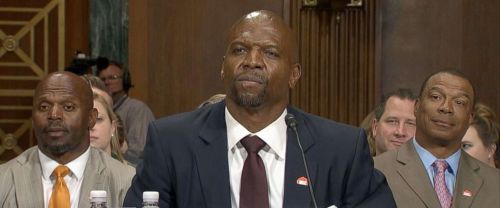
That’s a term I’m sure most with access to a news feed have heard recently. In fact, they’re probably been hearing it a lot more frequently lately, albeit not in a way that links directly to dead children. The indirect link is still there and it’s the key to unlocking the controversy and the resolution to the issue.

Now, I put “religious freedom” in quotes because it’s another one of those vague terms that can be construed to mean anything to fit a particular situation. More often than not, it’s an excuse to argue for favorable or preferential treatment of an individual or group.

That, in and of itself, isn’t too remarkable. People are going to argue for favorable treatment with or without religion. Where “religious freedom” sets itself apart are the legal protections it seeks. Those parents of that dead little girl used religious freedom to justify their behavior.

That is, admittedly, an extreme example and one that rarely makes the news. These days, the most common manifestation of “religious freedom” controversies involve people using it to justify denying services to LGBT individuals, be it a marriage license or a wedding cake. It was also part of a major decision by Supreme Court involving a cake shop that refused service to a gay couple.

Those who champion “religious freedom” cheered the ruling and the precedent it set. This, along with the Hobby Lobby ruling in 2014, establishes that someone can use sincerely held religious beliefs to obtain exemptions from mandates prescribed by law. It seems the effort in securing this “freedom” is gaining momentum and winning battles in the courtroom.

Again, I put that word in quotes for a reason and one I hope will help craft an appropriate standard for what constitutes actual freedom and what constitutes contrived excuses. That is, in essence, what the “religious freedom” battles are seeking. They’re pursuing legally-protected excuses for their theology and its associated behaviors.

I can understand, to a limited extent, why there would need to be some legal protections for religious groups and not just for the purposes of anti-discrimination efforts. We need to have some resource for situations where someone is coerced into doing something that goes against their religion. Strapping someone to a chair and forcing them to eat shellfish will do unique distress to a Jewish person than it will for others.

That being said, it’s somewhat telling that the organizations fighting hardest for “religious freedom” also happen to be organizations that have preached hatred and misinformation on the LGBT community for years. Some of these organizations are designated as hate groups and their sentiment on LGBT issues is rarely subtle.

To them, the free exercise of their religion, as articulated in the first amendment, means the ability to treat certain people, notably LGBT individuals, a particular way. Some will even take it farther than that, seeking the right to craft their entire society around their theology, regardless of what secular law states.

It’s an effort not limited to one religion or denomination, either. There are other major religions with theology that goes beyond refusing service to LGBT individuals and crafting a society where their adherents are their primary authority. Therein lies the greatest flaw in the whole “religious freedom” debate.

When put into practice, the actual expression is less about the exercise of religion and more about the treatment of minorities. Those same Christian bakers may fight for their right to refuse service to a gay couple, but would they fight for the right of a Muslim cab driver to refuse customers with alochol? Well, when the courts ruled against that particular religious expression, there was no major outrage.

That’s the first and most critcial step to assessing the merits of “religious freedom” and the agendas behind them. If you reverse the majority/minority dynamics, is it applied equally? If the majority is the only one that benefits, then it’s not really freedom. It’s an overly elaborate excuse with religion as a cover.

There’s an even easier standard to use if majority/minority dynamics are too complex. This one goes back to the tragic stories about parents refusing life-saving medical treatment for their children. It can be articulated with a simple set of questions.

Could a form of religious expression/teaching be used to justify conduct that leads to the death of a child?

If yes, then it warrants no legal protections of any kind.

If no, then it constitutes free expression.

It’s a fairly simple standard, one that does not add a religious context to freedom and expression. There is freedom. There is expression. Sometimes it’s religious. Sometimes it’s not. Whether it’s just going to church on a Sunday or not eating certain foods, it’s just another form of freedom and freedom is a beautiful thing.

When it’s used to justify the deaths of children and discriminating against minorities, it’s not freedom. It’s just bullying looking for legal protection. I’m completely in favor of people practicing their religion as they see fit or no religion at all. However, there are standards for a civilized society and those standards cannot and should not accommodate excuses for dead children.

Leave a comment

Filed under Current Events, political correctness, Reasons and Excuses, religion

The following is a review I wrote on Fantastic Four #1 for PopMatters. Enjoy!

Unforgettably Unforgotten: Fantastic Four #1

Leave a comment

August 9, 2018 · 4:04 pm