A Troubling (But Probable) Thought Experiment Involving Sex Robots And Stalkers

It’s an unavoidable rule of technology. Nobody truly knows how a new machine, gadget, or invention will be used in the future. I doubt the person who invented ski masks knew it would be a common tool of criminals. We can try and anticipate how certain technology will affect society, but there will always be unexpected impacts that come from unplanned uses.

When it comes to sex robots, the impacts are far greater in scope and scale than anyone can possibly predict. I’ve made a concerted effort on multiple occasions. I don’t gloss over the more distressing impacts, either. Chances are this technology will effect people, society, and culture in ways nobody will be able to predict, including aspiring writers who use sex robots in multiple short stories.

It’s often through writing sexy short stories and erotica/romance novels that I often come up with ideas I hadn’t previously considered. Some of those ideas lead to larger thought experiments. Since sex robots are making the news more and more often lately, I thought I’d share one.

It goes as follows:

A man or woman meets someone. They immediately fall for them. It’s love, lust, and passion all rolled into one. They become so obsessed with this person that they can’t imagine not being with them in some way.

Naturally, they pursue this person. They try befriending, flirting, and seducing them. It doesn’t work. They get rejected. At first, it’s just a setback. They try harder to win the love of this special someone. It ultimately fails. Eventually, that someone threatens to call the police and put a restraining order on them.

The person is dejected and sad, but not dissuaded. Since they can’t be with this person they love so dearly, they seek the next best thing. When their would-be love isn’t looking, they scan their body. They then send those specifications to a company that makes sex robots.

They request that the company make them a robot that perfectly resembles the love that rejected them. They also request that the robot be programmed to love them unconditionally and obey them. The company agrees. They make a sex robot that looks, sounds, smells, and acts like the lover they couldn’t have.

Naturally, the person is overjoyed. They lovingly tend to the sex robot, treating it like a real lover. They live out the love they wish they’d had. At some point, it becomes so real that they don’t bother with the person who rejected them. They’re content to leave them alone and live out the fantasy for as long as they please.

Take a moment to think about what I just described. I admit it has some disturbing elements. Stalkers who obsess over someone to an unhealthy degree is a real phenomenon. It ruins lives and can be very damaging to both people.

Throw sex robots into the mix and things get more complicated. What I just described is not technically impossible. It probably won’t be feasible for decades, but there’s nothing against the laws of physics that prevent people from creating perfect sex robot duplicates of random people they see on the streets.

All that anyone would need is the right data. Whether it’s done directly with a device or surmised from a collection of pictures, practically anyone can be made into a sex robot. I’ve noted before how this could effect the porn industry with stars and celebrities licensing their bodies as sex robots. However, I doubt it would stop there.

Whereas celebrities might have the money and legal resources to license their bodies and combat unauthorized use as a sex robot, most ordinary people wouldn’t have that luxury. In the same way most people don’t have access to high-powered attorneys that keep celebrities and rich people out of jail, the average person probably wouldn’t have much recourse.

If some random person found out their high school crush made a sex robot of them, how would they combat it? Could they sue them? Could they sue the manufacturer? What if the sex robot came from an illicit source? How they deal with that?

Moreover, would it even be worth the effort? If a would-be stalker is content to make a sex robot of their obsessive crush, which in turn stops them from stalking altogether, then why would anyone care? Who’s being harmed in this situation?

You could argue the would-be stalker is hurting themselves, but how could we possibly police that? We can’t stop people from hurting themselves. Prohibition proved that. However, with sex robots, we essentially give people a way to cling to an obsession and never move on. Is that healthy? Is there any way to stop it? Is it even worth the effort?

Try to put yourself in this scenario. How would you feel about it? How would you go about confronting it, if at all?

This is just one of the many scenarios that may play out once this technology matures. Again, there will likely be other effects I can’t imagine. Unfortunately, not all of those effects will be inherently sexy.

Leave a comment

Filed under Artificial Intelligence, futurism, psychology, sex in society, sex robots, sexuality, Sexy Future, technology

How Much Money Do You Really Need?

Most people aren’t born into wealth. The vast majority of the population has no idea what it’s like to be a billionaire, a millionaire, or someone who just doesn’t live with the constant dread that they’re just one missed paycheck away from total ruin. There’s a reason why they’re called the one percent and it goes beyond basic math.

I admit I’ve often contemplated what it would be like if I suddenly became wealthy. I’ve even articulated some of those musings in detail. I suspect most people have day-dreamed at some point what they would do if they suddenly had a billion dollars at their disposal. For most people, it’s difficult to contemplate because, like it or not, money changes people and not always for the better.

When someone asks what you would do with a million dollars, it’s easy to come up with all sorts of answers. Some are inevitably going to be more absurd than others. The movie “Office Space” articulated that point perfectly. However, there’s another question that I feel is worth asking and I also feel it’s more revealing.

How much money do you really need?

I’m not talking about fantasy wealth here.

I’m not talking dream vacations, dream homes, or spending sprees.

How much money do you actually need to live a happy, comfortable life by whatever standards you define it?

That’s a harder question to answer because it varies for everyone. There are some people in the world who think a million dollars isn’t enough. Depending on where you live in the world, that’s not an unreasonable position. Even with those variations, it still doesn’t zero in on the answer. How much is enough?

I’ve seen how people act when the lottery gets above the $300 million mark. In my experience, once things get over $100 million, that’s when even a typical day dream isn’t enough to appreciate just how much money that is. I’ve tried to imagine it and in every case, I come to the same conclusion.

If I had that much money, I honestly wouldn’t know what to do with it.

It’s not that my needs are simple or cheap. I think my costs are fairly average for someone living in a suburban area. If I had $100 million, didn’t invest a penny in stocks or bonds, and stopped making money today, I still wouldn’t be able to spend it all before I turned 100.

I probably couldn’t even spend $50 million. When things get into the billion-dollar territory, it gets even more absurd. Even millionaires have a hard time fathoming how billionaires operate. Most people, even with decent math skills, don’t understand just how much money a billion dollars is.

At that point, you’re way beyond basic needs and wants. You’re in a domain in which you literally cannot spend all that money at once. You have to legitimately try to lose it all and while some people have done that, it often happens in the process of seeking even more billions to add to their fortune. It rarely occurs just by spending money on your day-to-day needs.

In that context, contemplating how much money you actually need says more about you and your situation than it does about your understanding of finance. If you need that much money to be comfortable, then that says something about your mindset and it’s not just about greed. Some want to change the world for the better with that money. Some want to impose their will on it. It depends on who you are and what drives you.

For me, personally, I don’t think I need anything above $10 million. I probably wouldn’t need more than $5 million just to maintain my current living costs, adjusting for inflation, and planning for my future. That might change if I ever get married and have kids, but for now, that’s my perspective.

I’m interesting in hearing how others would respond to this question. How much money is enough for you? How much would you need to be content, stable, and happy? Let me know in the comments. I’d be happy to revisit this issue again down the line.

Leave a comment

Filed under Current Events, human nature, philosophy, politics, psychology

Jack Fisher’s Sexy Sunday Thoughts: First Crush Edition

love

Who doesn’t remember their first crush? Maybe a better question for some is why can’t we forget our first crush? Most of us know remember the name, face, eye-color, and shoe size of the first person we had a crush on in our youth. I certainly do. I’ve shared some personal details of that experience before. I think it’s an experience we can all relate to on some levels.

Most of the time, our first rush isn’t the person we end up with. More often than not, they coincide with that fateful moment when we realize we’re attracted to other people. We gradate from that point in our lives when we’re not just looking for a friend. We’re seeking a more intimate connection. It can be profound, but it can also be scary.

When we’re young, our emotions are all over the place. They’re still new to us. We don’t know how to deal with them, let alone share them. Our first crush is like our first attempt to make that connection. Some are lucky enough to share the awkwardness with someone special. It can seem immature in hindsight, but it still represents a meaningful step in our romantic, emotional, and sexual journey.

I certainly learned a lot from my first crush. Some of those lessons took longer than others to sink in. Even if you ended up with someone different in the end, that first crush will always be special to us on some levels. Please keep that in mind as I share with you some Sexy Sunday Thoughts. If you’re among the lucky ones to still be with your first crush, I hope it gets you in the right spirit. Enjoy!


“When you’re bisexual, every close friend is a potential lover.”


“The first three-way that involved twins was also the first two-for-one deal.”


“Underwear is only as sexy as your lover’s desire to rip it off.”


“There’s a right way and a wrong way to talk dirty, but the line gets very blurry when one lover is kinky.”


“Can a mistake that results in an orgasm truly count as a mistake?”


“Finding true love and finding a steady supply of shared orgasms aren’t the same thing, but they involve similar processes.”


“Every love song takes on a different meaning when sung from the perspective of someone who’s very horny.”


My first crush probably doesn’t remember me. They may have similar feelings about their first crush. Whatever the case may be, there’s value in knowing that moment in which you desired something deeper than friendship. It’s the first step to developing sexier feelings for others. Those first steps may be awkward, but they can take us to some wonderful places later in life.

Leave a comment

Filed under Sexy Sunday Thoughts

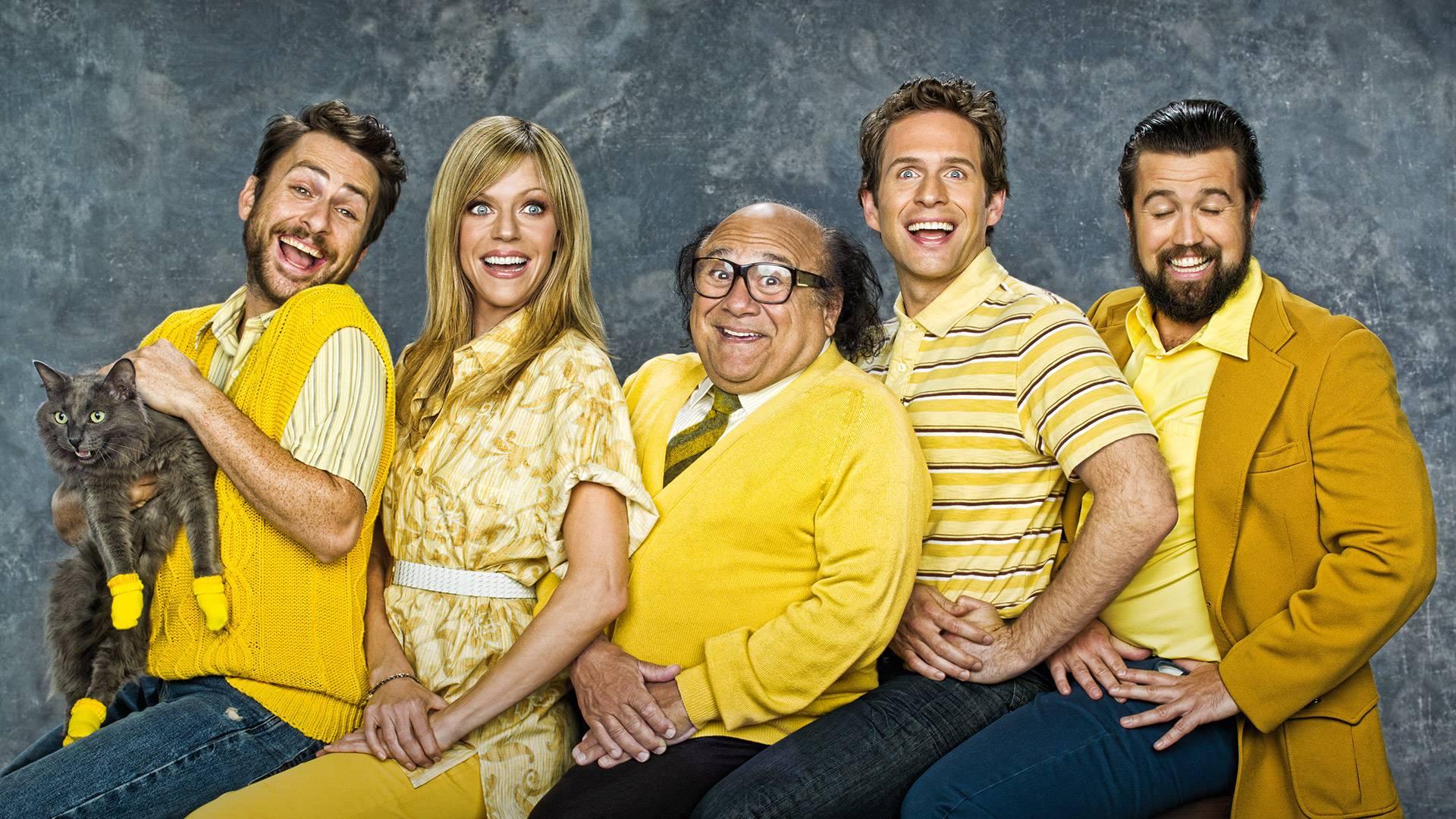
The “It’s Always Sunny In Philadelphia” Filter: A Simple Process For Making Choices

How do you make good choices?

How do you know when something is right, just, and ethical?

How do you go about determining the morality and ethics of any given situation?

These are the kinds of questions that lawmakers, philosophers, scientists, religious leaders, and YouTube commenters debate constantly. It’s one of those deep, fundamental issues that everyone contemplates regularly, but few can claim to understand. The world is so chaotic and complicated. It’s incredibly difficult to surmise a simple, concise, consistent standard for making good choices.

However, there are ways of simplifying that daunting process. It may still be impossible to completely resolve such issues for every person in every situation, but we can make it easier. As it just so happens, one of the greatest TV shows of all time, “It’s Always Sunny in Philadelphia,” provides us with an important tool that also happens to be hilarious.

Using that tool is simple. It goes like this.

If a certain choice, response, or recourse seems like someone that the Gang would do in It’s Always Sunny in Philadelphia,” then chances are it’s not the one you should follow.

To anyone who has watched this show in any capacity, that makes total sense. For those who haven’t had a chance to watch this hilariously obscene middle finger to every sitcom ever made, here’s just a sample of what I’m talking about.

Even if you’re not familiar with the show, this should at least get you familiar with the implications. I’ve written aboutIt’s Always Sunny in Philadelphia” in the context of its masterful handling of dark comedy. I concede that this is one of those shows that isn’t for everyone. It’s hard to explain to most people the appeal of a show that finds humor in baby funerals, crack binges, and unauthorized Lethal Weapon sequels.

At the same time, it’s because this show dives head-first into dark comedy that it paints a clear picture on what goes into making bad decisions. There’s no getting around it. The characters in this show, also known as the Gang, are not morally upstanding people. In fact, they don’t even try to be moral. Nearly every episode involves them pursuing some elaborate plot based entirely on selfishness, greed, ego, or misguided pettiness.

They’re not stupid on the level of Homer Simpson or Peter Griffin, but they aren’t very smart either. Everything they do, from hoarding gasoline in an oil crisis to stalking a waitress, is incredibly simplistic. It can always be reduced to a basic level of selfish narcissism that never goes beyond basic.

It’s because the Gang’s choices are so basic and self-serving that the show is so funny in the first place. “It’s Always Sunny in Philadelphia” essentially takes the unique setup of a sitcom to amplify all the terrible traits and tropes that frequently go along with other shows that try too hard to be deeper.

At its core, It’s Always Sunny in Philadelphia” doubles down on the simplicity of having characters who don’t even try to be moral. Through 14 seasons, the Gang actively avoids any effort to change or grow in a meaningful way. Charlie, Dee, Dennis, Mac, and Frank are the same selfish narcissists they are in Season 14 as they are in Season 4.

Even as the show has gotten bolder and more absurd with the Gang’s antics, their motivations are the same. They don’t need to be overly complex to be funny. That’s what makes these characters and the entire premise of “It’s Always Sunny in Philadelphia” such a great filter.

The next time you’re in a situation where you need to make a decision, try and apply this filter. What would Sweet Dee do? What would Frank Reynolds do? What would Dennis, Mac, and Charlie do? If you can determine that, then you can also determine exactly what not to do.

Even if it’s not specific, the moral filter of It’s Always Sunny in Philadelphia” can act as a reminder. If you’re going to be exceedingly selfish and narcissistic in making decisions, then you’re tempting fate the same way the Gang does with every absurd antic. Doing so will rarely pan out well for you and those around you.

If you need further proof, just look at Rickety Cricket.

Leave a comment

Filed under human nature, philosophy, political correctness, psychology, television

Why “Last Action Hero” Was Almost A Great Movie

Some movies and TV shows just fail to find an audience when they initially come out. Some are even ahead of their time in terms of concepts, themes, and storytelling. It’s how movies like “The Princess Bride,” “The Big Lebowski,” or “Community” go onto become cult classics, despite not getting much acclaim when they came out.

I have a soft spot for those movies too. Everyone has at least one movie that they feel strongly about in a way that doesn’t quite match the popular sentiment surrounding it. It’s not always the case that you love a movie that everyone else hates, although that does happen. In some cases, you just have that one movie or show that confounds you with so many mixed feelings.

A part of you loves it on a personal level.

Another part of you hates it for certain flaws you can’t overlook.

Overall, you’re just not sure what to make of it. For me, this perfectly sums up my feelings on “Last Action Hero.”

First off, if you’ve never seen this movie, I recommend that you check it out. It’s a movie that feels very out of place in an era dominated by superhero movies, Pixar movies, and Oscar bait. This movie was a sloppy convergence of trends in the mid to late 90s. It was an era in which Arnold Schwarzenegger was at the height of his power and every month brought at least one “Die Hardrip-off.

As a concept, it was still groundbreaking for its time. Last Action Hero” built a story around a movie-loving kid named Danny getting pulled into a generic, over-the-top Schwarzenegger action flick through the use of a magic movie ticket. Action, comedy, and hi-jinks ensues. It has plenty of objectively great moments that demonstrate why Schwarzenegger movies are so entertaining.

However, at the end of the day, it’s not a great movie.

I say that as someone who watched this movie multiple times in the late 90s. Even then, I understood it had a shady reputation, even among fans of Schwarzenegger. I even remember the jokes some people made about how bad it was. While I don’t think the movie is that bad, it’s still not great. It could’ve been great, but it fell short in critical areas.

Even as a kid, I saw the flaws. For one, it’s too long. The movie suffers from a lot of bloat and side-plots. At times, it drags, especially towards the end. It tries to balance itself out with more action and comedy, but it doesn’t work. If anything, it makes things worse.

In addition to the length, it’s a movie that tries too hard to do too many things. On paper, it has two compelling concepts. One involves a kid actually venturing into an action movie and experiencing what it’s like first-hand. The other involves someone finding out that they’re a fictional character within a fictional world and having an existential crisis about it.

These are both quality concepts that could make for great stories. However, Last Action Hero” fails at handling both because it tries so hard to blend them together. If it had stuck with just one and pursued it to the utmost, then it would’ve been a very different movie. I also think it would’ve been a better movie. By trying to use one plot to supplement the other, they just end up falling apart in the end.

For its time, it was a bold idea. It went out of its way to parody some of the overplayed clichés that dominated every other action movie at the time, including ones starring Arnold Schwarzenegger. I think if the movie came out today, it would actually work better. Audiences respond more to that kind of meta-commentary than they did in the 1990s, as the success ofDeadpool” can attest.

Even if it did come out today or just five years ago, I still think it would fail to find an audience. It’s just too messy and disorganized. It has everything else going for it, from the plot to the acting to the concept to the effects. It just doesn’t blend together.

That’s a shame because it’s still a fun movie. I often find myself watching the first half-hour and enjoying it. Right around the halfway point, though, I usually turn it off because that’s when it starts to drag.

Ultimately, “Last Action Hero” is one of those movies that could’ve been something really special. It still has the feel of a cult classic. It has aged somewhat better than many other action movies of the era. It was almost a great movie. It could’ve been a great movie. It just didn’t pan out.

It still has a special place in my heart and it always will. For that, it’s good enough in my book.

Leave a comment

Filed under movies, philosophy, rants, superhero movies

A (Hopeful) Perspective On The Coronavirus

See the source image

As a general rule, I always watch the news with a skeptical eye. That’s not just because we live in an era of fake news, misguided outrage, and conspiracy theories about shape-shifting lizard people. I’ve learned from time, experience, and observation that the news can only ever tell part of a story as it’s happening. The full story never comes out until much later. Sometimes, it’s years later.

That’s not easy when following stories like the coronavirus. Unlike other major news stories that make headlines for all the wrong reasons, this is a serious issue. This is something the public needs to know about. The coronavirus is not just a nasty cold. It’s killing people all over the world. That’s an indisputable fact and one that warrants serious concern.

At the same time, there’s a context worth noting. As bad as the coronavirus is, it’s not the second coming of the Black Death or the Spanish Flu. This is not the kind of disease that will turn the planet into a post-apocalyptic wasteland in the mold of a Stephen King novel. It’s still serious, but it’s not a global cataclysm. Even if it ends up killing millions, there are over 7.6 billion people on this planet.

Human beings adapt.

Human beings survive.

It’s one of the few things we’re good at.

There’s another perspective worth considering when following the news of the coronavirus. Unlike the devastating plagues of the past, humanity has developed a decent infrastructure for medicine, technology, and research. Granted, it took us centuries of trial, error, and mass death and there’s still plenty of room for improvement, but that system is there. It’s better than nothing. Just ask Medieval Europe.

That system is already doing its job in combating the virus. Already, researchers at the University of Texas in Austin have mapped out critical portions of the virus. That sort of thing couldn’t have been done this quickly or at all just 30 years ago. This data is critical for the development of treatments and, ultimately, a vaccine.

The fact that this happened so quickly after the outbreak is something the news hasn’t reported on. Even if treatments develop and the virus is contained, as we’ve seen with other recent outbreaks, it probably won’t be a huge story within the ever-changing news cycle.

We know this because in late 2019, the first vaccine for Ebola was approved for use by the FDA and it barely showed up in the headlines. Considering how much panic the Ebola outbreak caused several years ago, this is quite a triumph. It shows just how quickly our current system can respond to these diseases.

Again, there’s still room for improvement and accessibility to medicine is a major issue, but the coronavirus is not some new form of disease. It’s a virus. We know what viruses are. We have the technology to study, treat, and combat them, more so than we have at any point in human history. Considering how much better we’ve gotten since the heyday of the AIDS pandemic, I say that’s reason to be hopeful.

That doesn’t mean we should let our guard down. When the CDC issues a warning about the coronavirus, we should take it seriously. At the same time, we should take comfort in the knowledge that we live in an era where human ingenuity has limited the suffering caused by these devastating plagues.

As with Ebola, we will eventually develop a treatment for the coronavirus. It won’t be perfect, but it will limit the death and suffering it causes. It also won’t make the news because it’s just not scary or dire enough. At this point, finding effective treatments for diseases is so mundane it barely qualifies as news. That’s an objectively good thing.

I hope that helps provide a bit of context and hope to the news surrounding the coronavirus. It’s still worth taking seriously, but we shouldn’t let grim headlines distract us from the great things that humanity achieves when faced with a challenge.

2 Comments

Filed under biotechnology, Current Events, technology, Uplifting Stories

New Comic Book Day February 26, 2020: My Pull List And Pick Of The Week

Everyone has their vice. Some are more destructive than others. There’s no question that crack and heroin are more damaging than a spicy foods and late 90s boy bands. Some are only destructive to your wallet. In that sense, I’m lucky my vice is comics. Say what you will about the cost of a collector’s item. It’s still cheaper than cocaine, cars, and caviar.

Wednesdays are the days I know I’ll blast a hole in my wallet. When I was in college, new comic day almost always coincided with Ramen Noodle day. I don’t doubt that dining on cheap food had an impact on my health. For a fresh stack of comics, it was worth the stomach pains.

I’m not in college any more and I don’t have to plan new comic day around cheap meals either. For that, I’m thankful. I’m also thankful that as my financial situation has improved, I’m able to better absorb the weekly splurge I often do at the comic shop and on Comixology. It makes new comic day that much more enjoyable.

In terms of vices, it’s plenty manageable. Sometimes, the message boards are a little dramatic and so is social media. It’s still a price worth paying. Some weeks cost more than others. This week is definitely one of them, but considering what I get from that money, it’s still a bargain.

With that in mind, here’s my pull list and my pick for the week. My wallet may be hurting, but I’ll manage.


My Pull List

Amazing Spider-Man #40

Avengers #31

Batgirl #44

Batman/Superman #7

Giant-Size X-Men: Jean Grey And Emma Frost #1

Mighty Morphin Power Rangers #48

New Mutants #8

Rick and Morty #59

Star #2

Wonder Woman #752

X-Men #7

X-Men/Fantastic Four #2


My Pick of the Week

When you’ve been a fan of a particular comic or franchise for years, you get a sense for which issues will be controversial. It doesn’t always involve character deaths or betrayals, although that is an all-too-common trope. In fact, those that don’t involve character deaths tend to be the most controversial because they raise difficult questions that even long-time fans struggle to answer.

That’s exactly the kind of controversy that I imagine “X-Men #7” will inspire. It’s one of those books that introduces concepts that are sure make certain fans feel uneasy, but for entirely nuanced reasons. This goes far beyond Charles Xavier lying to the X-Men or Wolverine sleeping with Squirrel Girl. Writer Jonathan Hickman is taking the X-Men into some very morally gray areas that are sure to have larger consequences down the line.

There’s a context to those actions and one that has a basis in the founding of Krakoa. It’s established in “House of X/Powers of X” that creating a powerful mutant nation isn’t enough. Mutants are still a vulnerable species. They’ve been decimated through acts of genocide and de-powered through reality warping. To realize their potential, they need to get take back what they’ve lost.

However, doing so requires a somewhat distressing recourse, to say the least. It involves a process they call Crucible. It’s nothing what it sounds like. I won’t spoil it, but the goal is simple. It gives mutants who have been de-powered a chance to regain their powers, but how they go about it raises some serious moral dilemmas.

It’s a dilemma that some veteran X-Men, namely Cyclops and Nightcrawler, have mixed feelings about. It also raises questions about Krakoa’s resurrection protocols, which they’ve both experienced at one point. They act mostly as observers because as distressing as Crucible is, it’s something that de-powered mutants freely choose and who is anyone to question their choice?

It still feels like the X-Men are crossing some lines in their effort to make mutants stronger. It also raises more concerns about the nature of Krakoa and how the X-Men are going about realizing their goals. Years from now, “X-Men #7” might be one of those comics that acts as a turning point in a larger narrative. Hickman has never shied away from bold ideas, but this might be his boldest to date.

There are many concepts he’s explored since Krakoa’s founding in “House of X/Powers of X.” Many others are hinted at in “X-Men #7,” including some innuendo with Cyclops and Wolverine I’m sure will get a certain sub-set of fans talking. The X-Men franchise is entering uncharted, morally ambiguous territory. If nothing else, “X-Men #7” makes clear that there’s no going back and that’s why I believe it’s my pick of this week.

That said, it might be a good idea to avoid comic book message boards for a while. It’s going to get heated.

Leave a comment

Filed under Jack's Quick Pick Comic

A Perspective On Generation Gaps

As a general rule, I try not to talk about politics with anyone. I avoid getting into political debates online, as well. I used to actively seek that out. I’ve since learned there are less frustrating ways to waste my time.

A significant part of that frustration comes from talking politics with people who are significantly older or significantly younger than me. I’m in my thirties now. I still remember my teen years, but I also can’t deny that I’m different now than I was back then. I’m still the same person. Time and perspective just have a cumulative effect.

I think most people experience the same thing, regardless of their age. I’ve talked about issues regarding generation gaps before. I imagine they’ll become even more prominent as Generation Z comes of age. It’ll only get more divisive as the Baby Boomers start to retire.

I know this because I’ve gotten into more than a few debates with older relatives and family members. Every time politics comes up, they’ll share stories with me about how things used to be, how they see things now, and how they think things are going to pan out in the future. I’m not going to lie. It has led to more than a few “Okay Boomer” moments.

Those moments shouldn’t define the discourse, nor should it be an intractable barrier. I’ve faced similar barriers in talking politics with people far younger than me. It’s hard to explain the complexities of the world to teenagers when their experiences are so limited.

With that in mind, I’d like to take a moment to offer a brief perspective on generation gaps and discussing controversial issues. Whether it’s politics, society, or life in general, I feel it might help to take a step back and try to see the forest from the trees. To that end, here’s a quick insight that I hope people from every generation can appreciate.

Your attitudes, beliefs, and assumptions are not the same as they were 10 years ago.

Your attitudes, beliefs, and assumptions will not be the same as they are 10 years from now.

However, at your core, you are still the same person.

The attitudes, beliefs, and assumptions of every functioning adult you’ll encounter are not the same as they were 10 years ago.

The attitudes, beliefs, and assumptions of every functioning adult you’ll encounter will not be the same 10 years from now.

However, at their core, they’re still the same people.

You and the people around you may change, but change is never anyone’s first inclination. It only takes hold when it feels right, necessary, or convenient.

Whether you’re young, old, or middle aged, I hope this helps make sense of things. I don’t claim to be smarter or more insightful than anyone else with an internet connection. I just believe that making sense of this chaotic world and the many people within it starts with a balanced perspective.

You won’t be able to understand every idea from every generation, but it’ll remind you that people have more alike than they are different. We don’t have to identify with all those differences. It’s just easier to get along when we remember just how similar we are.

Leave a comment

Filed under Current Events, human nature, philosophy, political correctness, politics, psychology

How Do We Regulate Artificial Intelligence? Seriously, How?

In general, I don’t pay much attention to doomsayers who claim the end is near and we should all cower, tremble, and give them our credit card number. Don’t get me wrong. I still believe there are serious existential threats facing humanity today. Some are worth taking seriously and dedicating resources to addressing. Others are not. Some simply require a more balanced perspective.

There’s a long list of failed apocalyptic predictions. The fact we’re surviving and thriving by most measures shows just how resilient, adaptable, and capable humanity is. There are some threats that I believe humanity will eventually resolve, thanks largely to our accelerating progress in science, technology, and logistics.

Others, however, have me more concerned. While some are more immediate than others, one in particular continues to confound me, as well as some of the smartest people in the world. It involves artificial intelligence, an emerging technology that’s as promising as it is unpredictable. Given the complexity of this technology, it’s difficult to explain in totality, but it can be best summed up by one simple question.

How do you regulate artificial intelligence?

That’s not a rhetorical question. It’s not a thought experiment either. It’s a serious, honest question that people far smarter and far more capable than me are just starting to ask.

Elon Musk is one of them. Very recently, he called for more regulation on artificial intelligence. That, alone, should be both telling and worrying. This man is a billionaire. Usually, billionaires are more inclined advocate removing regulations. Whenever they make an exception, that’s a sign they know it’s serious.

Even though Musk is one of the top advocates for solving big problems with technology, he still has concerns about the problems associated with artificial intelligence. In AI circles, it’s often called the control problem. It’s not a very creative name, but it gets the point across.

How do you control something that is potentially as smart, if not smarter than a human?

How do you manage something that thinks, adapts, and evolves faster than any machine or living thing?

How do you regulate an artificial intelligence that was built by humans, but isn’t at all human?

These are all difficult questions to contemplate, let alone legislate. Even Musk doesn’t provide specifics. Chances are he doesn’t know any more than the rest of the non-billionaire population. That’s a problem because if we’re going to try and regulate this technology, we need to understand it. On top of that, politicians and lawmakers have a long and embarrassing history of failing to understand technology.

However, this isn’t just about writing laws that protect citizens from being exploited by tech companies. Artificial intelligence, especially the kind that exceeds human intelligence, has capabilities that go beyond sending text messages from bathroom stalls. If handled improperly, it wouldn’t just be an existential threat. It could destroy humanity in ways we literally cannot contemplate.

Now, I try to be an optimist in most things involving emerging technology. Humanity has found a way to manage dangerous technology before, namely with nuclear weapons. However, artificial intelligence is a different beast entirely. Regulating it isn’t as easy as simply controlling the materials that make it. The very concept of regulating this technology lacks precedent.

The closest we have to date is Isaac Asimov’s famous three laws of robotics, which were introduced in 1942. Asimov was a brilliant writer and very ahead of his time on some concepts, but this is one issue where we need more than just three simple tenants. We need to think bigger and bolder. If we don’t, then an advanced artificial intelligence will quickly leave us behind.

After that, it won’t matter what kind of regulations we try to pass. It’ll be smart enough to circumvent them. That doesn’t mean humanity is doomed at that point, but we’ll be distressingly vulnerable. I know it’s in our nature to procrastinate on things we don’t see as vital, but if ever there was an issue to make an exception, this is it.

3 Comments

Filed under Artificial Intelligence, biotechnology, futurism, philosophy, technology, Thought Experiment

Jack Fisher’s Sexy Sunday Thoughts: Leftover Chocolates Edition

couple-feeding-chocolate

The end of every holiday, large or small, brings with it some underrated perks. Whether it’s Halloween, Christmas, or Valentine’s Day, those perks have appeal for those in love, as well as those who are single. One of my favorite involves the glut of cheap, leftover candy that’s often in abundance after a holiday.

If you’ve been to a store in the past week, you’ve probably seen it. Shelves upon shelves of unsold Valentine’s Day treats are just sitting there, having not been used in any grand romantic gesture. It’s tragic anytime delicious treats go uneaten, but even though Valentine’s Day is over, there’s still hope for them and for those who don’t need a holiday to do something special.

At the end of the day, it’s cheap candy. If you, your friends, and your lover can’t find a way to enjoy cheap candy, then you’re just being difficult. I say take advantage of it. It doesn’t make you cheap. Technically, you’re working smarter by saving money that you could use for yourself and your lover on your own terms. Hallmark may not like it, but that’s their problem.

There aren’t many situations that aren’t improved by extra candy. As long as you don’t mind the Valentine’s Day themes at this point, you’ve got a golden opportunity to make your day a little sweeter. If you can make your lover’s sweeter too, then that’s a nice bonus. No holidays are necessary. Hopefully, these Sexy Sunday Thoughts will help you work up an appetite. Enjoy!


“Technically, romantic tension can’t function without some degree of horniness.”


“You can only be so romantic when you’re really horny.”


“How much do you trust someone who says they’ve never watched porn?”


“If a crazy stunt gets you laid, does it still count as crazy?”


“Pursuing love means finding someone willing to regularly get naked with you.”


“A whore is just a slut with better business savvy.”


“Great love stories often come from those who are lonely, horny, or both.”


We’re entering a time of year in which there aren’t a lot of holidays to look forward to. That means you’re not going to see elaborate treats or decorations. Those cheap, leftover chocolates from Valentine’s Day aren’t going to last forever. Get them while you can. Enjoy them on your own terms. Share them with the ones you love if you can. It’s as sweet a gesture as you can give.

Leave a comment

Filed under Sexy Sunday Thoughts