Category Archives: sex in media

The Pathetic Life Of Alan Harper: A Prelude/Warning To Men?

maxresdefault

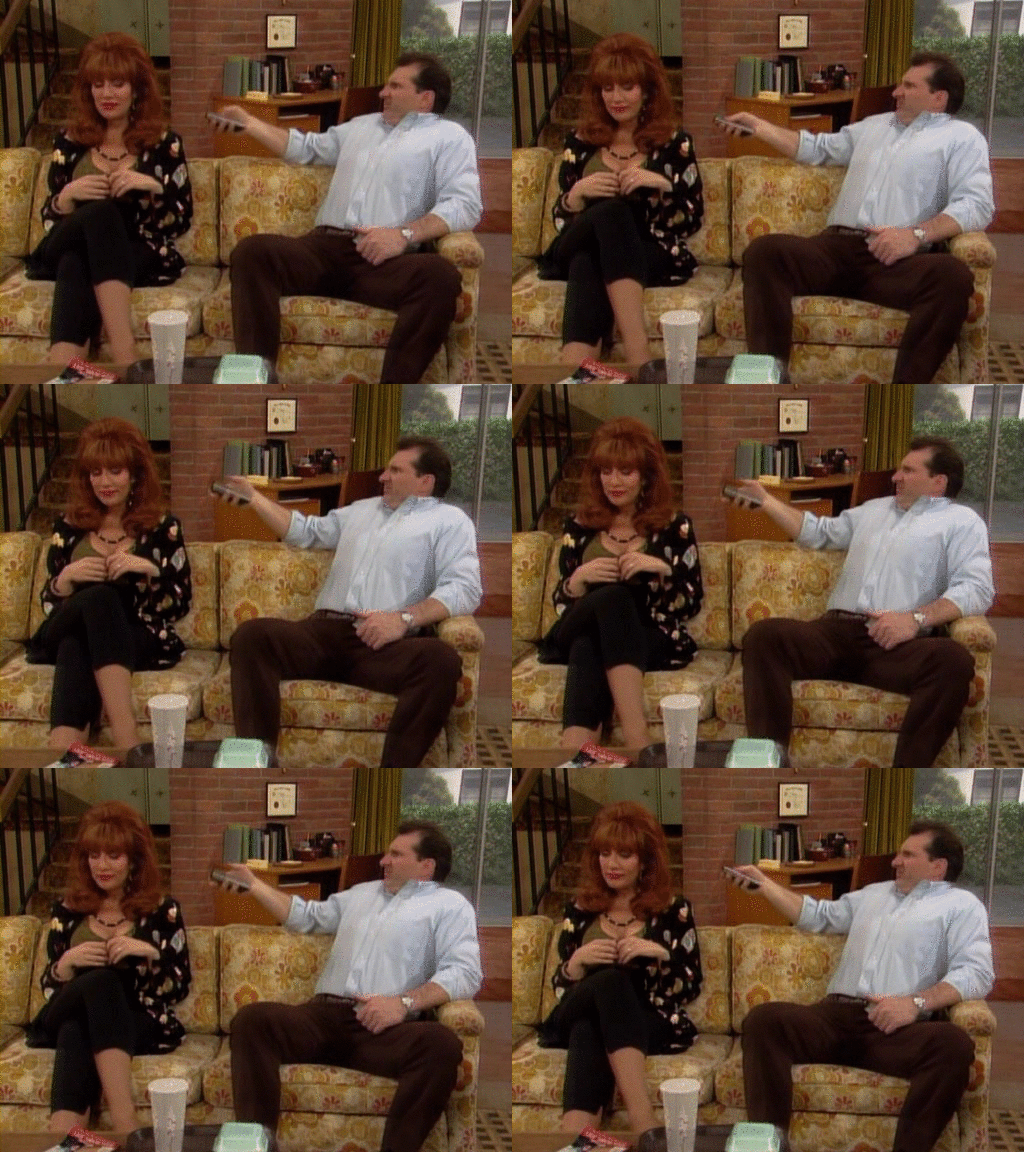
Sometimes, popular culture is uncanny at predicting the future. “Star Trek” famously predicted cell phones. “2001: A Space Odyssey” predicted tablet computers. Then, there’s “The Simpsons,” which has predicted so many things that it’s creepy. Some predictions, however, fly under the radar. Some aren’t even predictions as much as they are worst case scenarios.

One such scenario played out in “Two and a Half Men,” a show more famous for its off-screen drama than its on-screen antics. Granted, those antics were fairly crude. Most episodes revolved around dirty jokes, sexual innuendo, and glorified hedonism. In today’s social climate, this show would trigger mass protests with every episode.
That didn’t stop it from being funny. I consider myself a fan of the show. However, this is one of those shows that could never be made today, even with an emotionally-stable Charlie Sheen. Its brand of comedy just wouldn’t work in an era where sexy Halloween costumes are considered controversial.

However, the message “Two and a Half Men” conveyed goes beyond its brand of humor and the actors who made it controversial. It’s a message that probably wasn’t intended when the show first aired, but one that manifested with time. That message centers around the only male character to make it through every season alive and unaltered, Alan Harper.

As a character, Alan is the catalyst for the whole show. It begins with him getting kicked out of his house by his wife, forcing him to live with his brother, Charlie. It serves as the foundation for the antics that follow. However, in light of recent trends in feminism, Alan Harper has become more of a concept than a character.
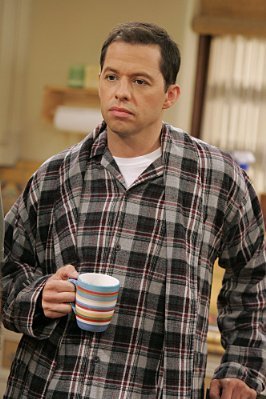
Simply put, Alan Harper is the perfect embodiment of a defeated, emasculated man. He’s a step below the stereotypical beta male. He’s the masculine equivalent of rock bottom. Even the entire cast of “The Big Bang Theory” or Al Bundy from “Married With Children” would feel sorry for him.

You don’t need to watch every episode of every season to see how this plays out. The show rarely goes more than a few minutes without highlighting how pathetic Alan is. The denigration goes beyond his ex-wife kicking him out of his house, divorcing him, and hitting him with egregious alimony payments.

Alan Harper, at his core, is a man dependent on everyone around him for affirmation, but is incapable or unwilling to earn it. His womanizing brother, Charlie Harper, often describes him as a parasitic leech who feeds on the pity of others to survive. In terms if how he conducts himself throughout the show, that’s pretty accurate.

Everything Alan does, from trying to make a living to pursuing romance, is done from a position of dependence. He depends on his brother for a place to live. He depends on his ex-wife to see his son, Jake. He depends on all the women he encounters for love, sex, and affection. He never has any leverage, always working from a position of weakness.

This earns him sympathy, but he’s no lovable loser. In addition to being dependent and weak, he’s also neurotic, selfish, and lazy. He rarely puts much effort into improving his lot in life. He never stands up for himself, rarely accepts responsibility for his mistakes, and endures failure without ever learning from it.

This is especially true in the later seasons of the show after Charlie Sheen was fired. Instead of having to leech off his brother, Alan managed to leech off a total stranger in Walden Schmidt. He makes every possible excuse to keep living in his brother’s house, never pay for anything, and avoid any semblance of personal growth.

Even if you pity Alan Harper, there’s little reason to respect him. Whenever he has a chance to make choices that can change that, he either makes the wrong decision or avoids it entirely. He’s not just a perpetual victim of a vindictive ex-wife, a hedonistic brother, and an idiot son. He actually clings to his victimhood, as though it were part of his identity.

It was fodder for comedy when “Two and a Half Men” was still on the air. Now, it’s a serious issue that affects men and women alike. That’s because leveraging victimhood has become less a comedy trope and more an ideological tactic.

The current discourse, especially when it comes to gender, is often built around who victimizes who. A big part of the anti-harassment movement is driven by the idea that women have been victims for years, suffering in silence under the thumb of misogynistic men. There are more than a few situations like that in “Two and a Half Men.”
Men are just as guilty of using that tactic too, albeit not to the extent of Alan Harper. Men have cited the lack of attention people give Terry Crews or Corey Feldman whenever they talk about issues like sexual abuse. They’ll point out the ways in which women get preferential treatment in our society, some of which actually plays out in “Two and a Half Men.”

There’s no question that harassment and inequality are problems, but just being a victim can’t be the end of the conversation. Alan Harper is, in essence, the personification of what happens when we don’t attempt to further that conversation. It impacts everybody, but it’s especially relevant for men.

Alan reflects a worst-case-scenario. In the overall gender dynamic, he draws every bad card and makes every wrong move. He marries a woman who hates him and exerts immense control over his life. He has a callous, egocentric mother who gives him no affection, guidance, or support. The entire world takes advantage of him and he does nothing to stop it.

To make matters worse, there’s very little Alan can do to stop it. Even if he stands up for himself, he has no support because he’s so dependent on other people. If he gets kicked out of the house, he has nowhere to go. If he makes any money, someone else ends up getting it, often his ex-wife or an ex-girlfriend. He’s not just pathetic in how he handles it. He’s utterly trapped.

This is the kind of nightmare scenario that men genuinely worry about. Many women may laugh it off, but men aren’t blind to the bigger picture. If Alan Harper were gay or transsexual, then he would have organizations that support him. There are many groups that work hard to help disadvantaged members in the LGBT community.

There are also plenty of organizations that help women as well. If Alan were a woman who had been kicked out of his house by a vindictive husband, then there’s no way that the comedy in “Two and a Half Men” would’ve worked. It’s not funny to see a poor woman get thrown out on the streets and denied custody of her child. When it happens to a man like Alan, though, it’s hilarious.
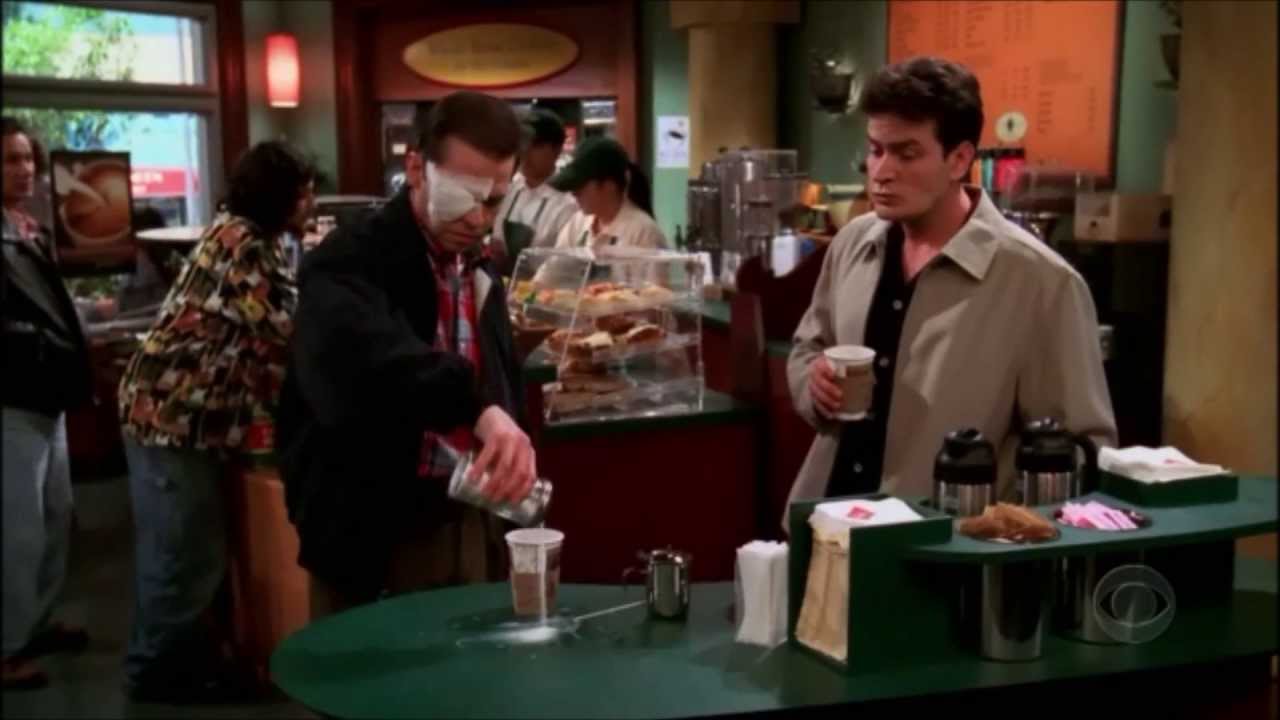
That’s where the humor in “Two and a Half Men” becomes distressingly serious. A character like Alan Harper lends himself to ridicule, but his situation is no laughing matter. He’s the pinnacle of a defeated man. Society does nothing to help him and everything to mock him. If he weren’t a man, it would be a tragedy. Instead, it’s a comedy.

For men, that’s a scary thought. On top of that, his situation can manifest in the real world, minus the laugh track. It is possible for a man to lose his home, his kid, and his money thanks to a vindictive wife. It is possible for a man to be so utterly helpless that he has to depend on everyone’s pity to survive.

The fact that it’s possible, but still funny in the context of a sitcom, gives men more pause today than it did when “Two and a Half Men” was still on the air. Men’s lives are being ruined by a society that does not give them the benefit of the doubt. Any debate that tries to take the side of men tends to get labeled as misogynistic.

We can either take those concerns seriously or create a society where men may end up like Alan Harper, laughably pathetic and utterly destitute. “Two and a Half Men” was still a funny show. However, the core of its comedy has serious implications and that are worth taking seriously, now more than ever.

12 Comments

Filed under gender issues, human nature, Marriage and Relationships, political correctness, psychology, romance, sex in media, sex in society, sexuality, women's issues

Jack Fisher’s Top Five Romance Comics

tumblr_m9f6wpy3tu1qjzyxso1_1280

I love comics. I love romance, too. When you put them together, it’s like putting bacon on pizza. It takes two inherently wonderful concepts and combines them, thereby compounding everything that makes them awesome.

I talk a lot about comics and romance. I’ve cited certain relationships that stand out in the current romantic landscape and praise certain comics that raise the bar for romance between superheroes. I think I’ve made the extent of my fondness for both fairly clear. Now, I’d like to offer some specifics.

For a while now, I’ve gotten comments and emails from people asking for recommendations of good romantic comics. I feel like I’ve contemplated this enough to craft a list of the comics I feel have the most to offer in terms of romance. While there are plenty of comics that cater specifically to romance, I’ve left those out in favor of those that offer a broader story that general comics fans can also appreciate.

What follows are my top five picks for the best romance comics. Please note that this is a personal list. I don’t wish to imply that this ranking is definitive. These are just my hand-picked comics that I feel offer the perfect blend of love and comic book level awesome.


Number 5: Spider-Man Loves Mary Jane

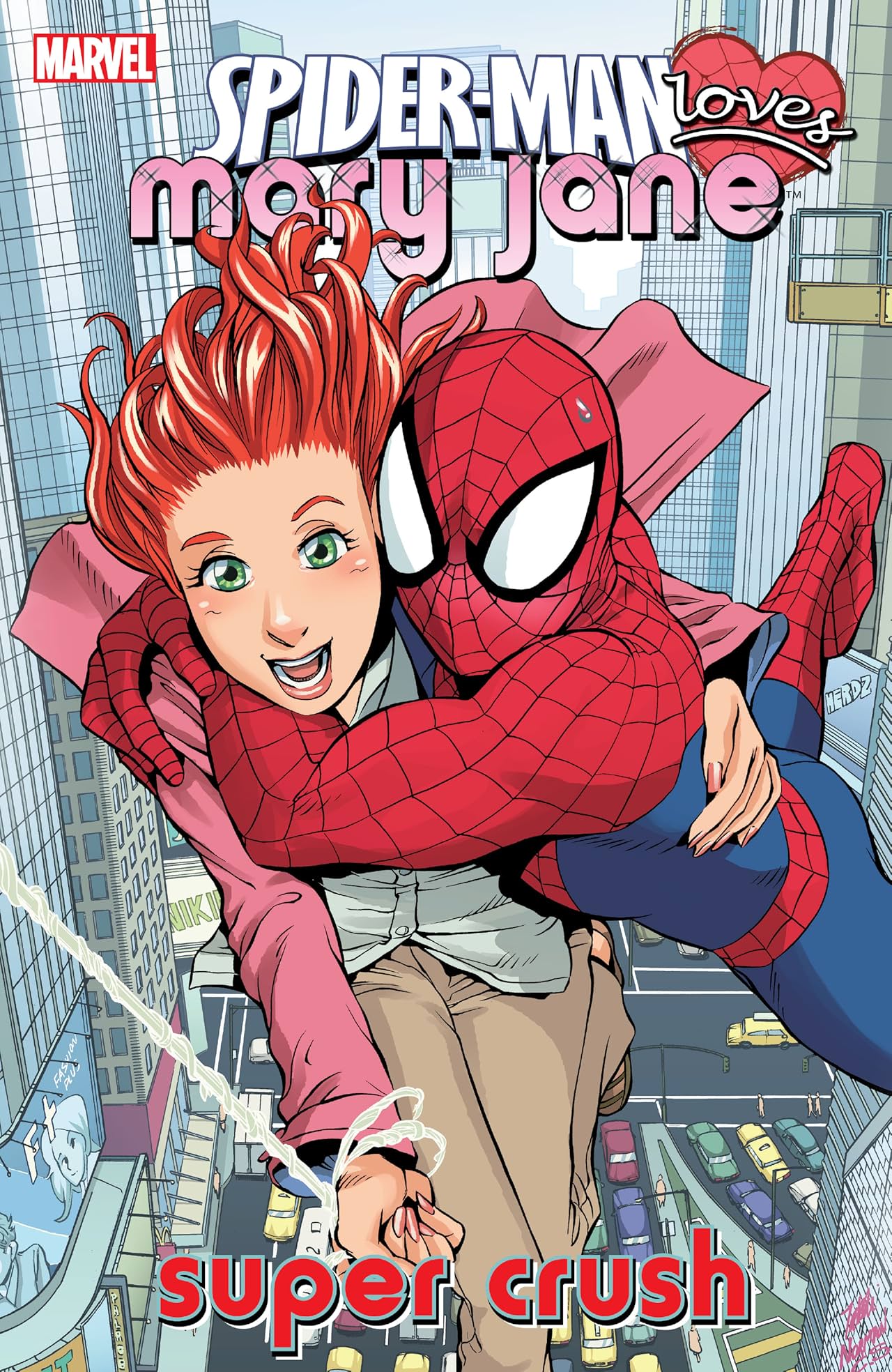
This sweet, fun little series from the mid-2000s is one of Marvel’s more underrated gems. There’s a lot of drama, angst, and frustration surrounding the romance between Spider-Man and Mary Jane Watson. I’ve cited some of the “complications” these two have endured on more than one occasion.

This series basically avoids all of that and doesn’t rely on elaborate retcons to do it. The story is less about Spider-Man and more about Mary Jane Watson. Specifically, it’s about a young, pre-supermodel Mary Jane Watson who hasn’t quite become the gold standard for sex redheaded comic book characters. That’s critical to what makes this series so great in terms of story and romance.

For once, Peter Parker being Spider-Man is secondary. That story is unfolding behind the scene, but the real drama comes directly from Mary Jane. She’s at an age where she’s blossoming into a beautiful young woman, but still figuring herself out. She’s not sure of what she wants, how to love, or where she fits into this crazy world. On every level, she’s far more relatable than any superhero.

As she navigates that world, she makes touch choices and even a few mistakes. More than anything else, though, this series shows how and why Mary Jane came to love Peter Parker so much. It doesn’t rely on overt sex appeal or excessive heroics. The story focuses entirely on chemistry and growth.

On paper, it sounds like something that shouldn’t work in a superhero comic, but it totally does. It’s a romance story that’s balanced and well-developed. It also isn’t too mature. Anyone from age 8 to 80 can appreciate the romance here. On top of that, Takeshi Miyazawa’s artwork is gorgeous, bringing light and heart to a romance that badly needs it.


Number 4: Rogue and Gambit

This is a very recent entry on my list, but one that did more than enough to justify its position. Over the course of five issues, “Rogue and Gambit” accomplished something extraordinary. It took a well-known romance that had been deconstructed, denigrated, and mishandled for years and effectively rebuilt it into something truly uncanny.

Kelly Thompson, one of Marvel’s rising stars, took the baggage surrounding the Rogue/Gambit relationship and channeled it in a way that felt both rewarding and sincere. It starts as an undercover mission, but evolves into some overdue couple’s therapy. Thompson doesn’t ignore all the factors that kept them apart. She even lets them argue and agonize over them.

In doing so, this series presents this romance as one you won’t find in any fairy tale. This isn’t a case of star-crossed lovers destined to be together. It’s a romance in which the two people involved have to really work at it. They have to confront their flaws, their failures, and all the excuses they’ve made to avoid their feelings. It gets ugly, but beautiful at the same time.

I would go so far as to cite this series a template for how a modern superhero romance can work, even without an iconic legacy. The Rogue/Gambit romance isn’t ideal, but that’s exactly what makes it so enjoyable and endearing. These are flawed characters who have both found themselves playing villainous roles at some point in their history. Them coming together despite all that just feels so right.

The only reason this series isn’t higher on my list is because it’s so recent. It’s also still evolving through a companion series, “Mr. and Mrs. X.” I’ve reviewed and praised that series too, but it wouldn’t be possible without this series. Whatever complications the Rogue/Gambit relationship faces in the future, this series will remain one of its most defining moments.


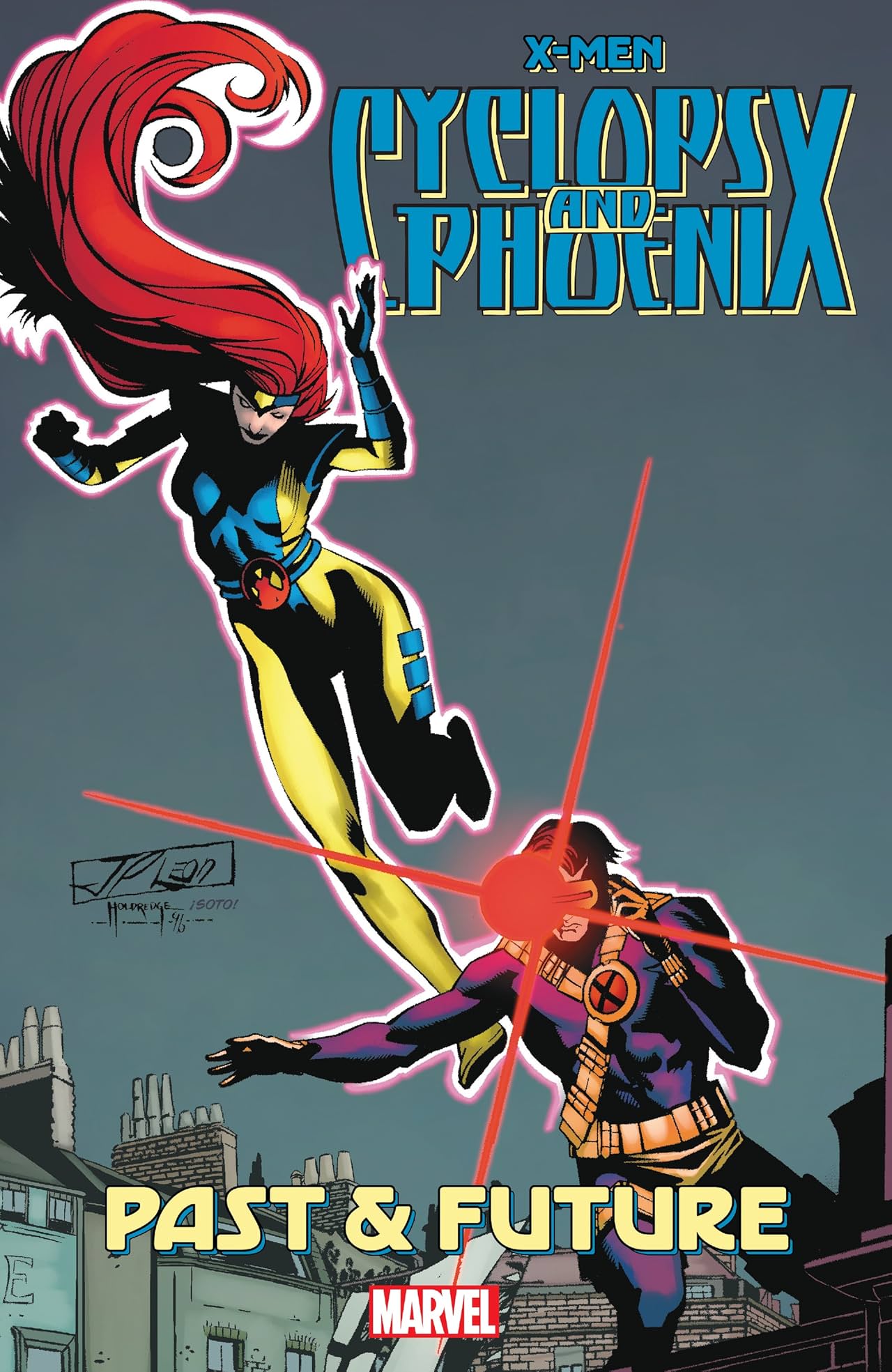
Number 3: The Adventures of Cyclops and Phoenix

I’ve made no secret of how much I love the romance between Cyclops and Jean Grey. I’ve cited them as one of those uniquely special relationships that is both iconic and balanced, a rare combination for a romance that has been unfolding for over 50 years now. While they’ve endured plenty of tribulations, complications, and retcons along the way, they remain iconic for a reason.

This series from the late 1990s is a testament to just how strong their romance can be when retcons, cosmic forces, and terrible love triangles are set aside. At their core, Cyclops and Jean Grey are two people don’t just want to love each other. They want to create a better world for their friends, their family, and their future children. They get to do all of that and then some here.

Much of the story takes place in one of the many dystopian futures that plague the X-men, namely one ruled by Apocalypse. It puts Cyclops and Jean in a position where they can’t fall back on their fellow X-men or the support of other superheroes. They have to navigate this wasteland of a world with only each other to fall back on. It’s a true testament to the strength of their relationship.

As the title implies, though, the story emphasizes the adventure more than the romance. While there are plenty of sweet moments between Cyclops and Jean, their relationship is not the primary focus. It’s certainly a factor driving them forward, but the meat of the story is how it drives them through the conflict. If you enjoy adventure with your romance, then this is definitely the series for you.


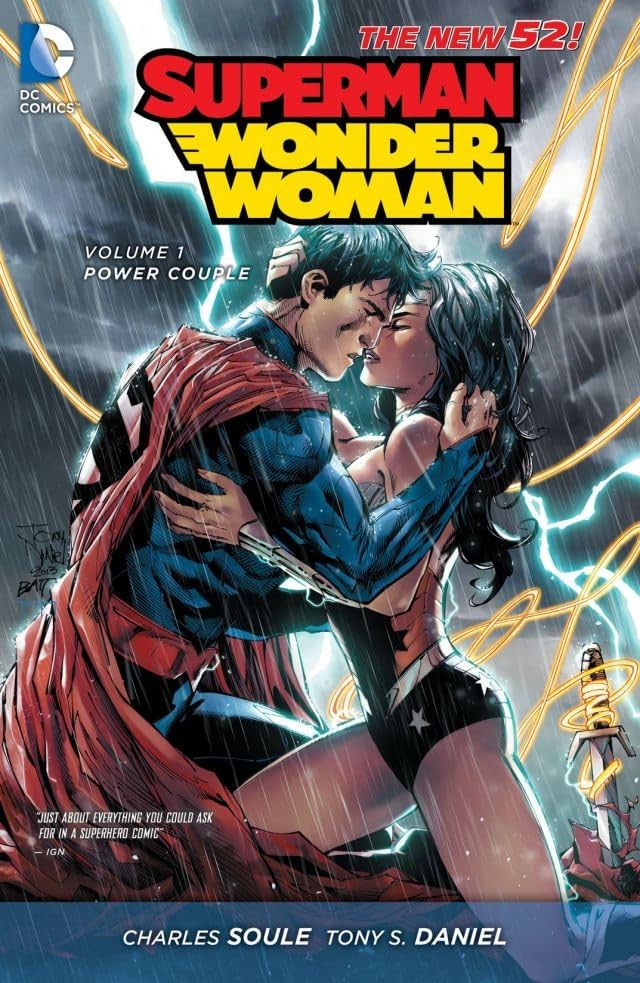
Number 2: Superman and Wonder Woman Volumes 1 and 2

Yes, I know Superman and Lois Lane are still considered the most iconic superhero couple of all time.

Yes, I know there’s an extremely vocal contingent of Superman fans that believe there’s something missing whenever he’s not with Lois.

No, I do not care. That’s because the run on this series by Charles Soule and Tony Daniel really raised the bar for just how great a romance can be for these two iconic characters.

There’s a lot I can say about the romantic potential between Superman and Wonder Woman. It would probably take me multiple blog posts and several essays to adequately describe what sets it apart from Superman’s relationship with Lois and why it works so beautifully. Thanks to this series, though, I don’t need to do that.

This particular series takes place during the controversial, but endearing New 52 era of DC Comics. During this strange, but amazing period of DC Comics, Superman and Lois aren’t married. They know each other, but they aren’t romantically involved. That opens the door for Superman to explore a relationship with Wonder Woman. However, this series makes clear that this romance is no gimmick.

They’re not forced together, nor is it presented as a gimmick. From the very beginning, as well as the events that led up to it, there’s a distinct sense that Superman and Wonder Woman find one another during tenuous times in their lives. They’re two powerful characters making their way through a world in which they feel isolated. When they’re together, though, they’re at their best.

This story brands them as a power couple and they do plenty to earn it. Together, they face threats from alien tyrants and renegade Greek gods. Their worlds collide, but they guide each other through. They make each other stronger. They make each other better. They fight as individuals and as equals. If that’s not the definition of a power couple, I don’t know what is.

Again, if you’re a die-hard supporter of Superman and Lois, that’s fine. This series does nothing to undercut that. However, it does plenty to prove that Superman and Wonder Woman can share a powerful romance, literally and figuratively. Even after DC has undergone extensive retcons and reboots, this series still captures the power of that romance in the best possible way.


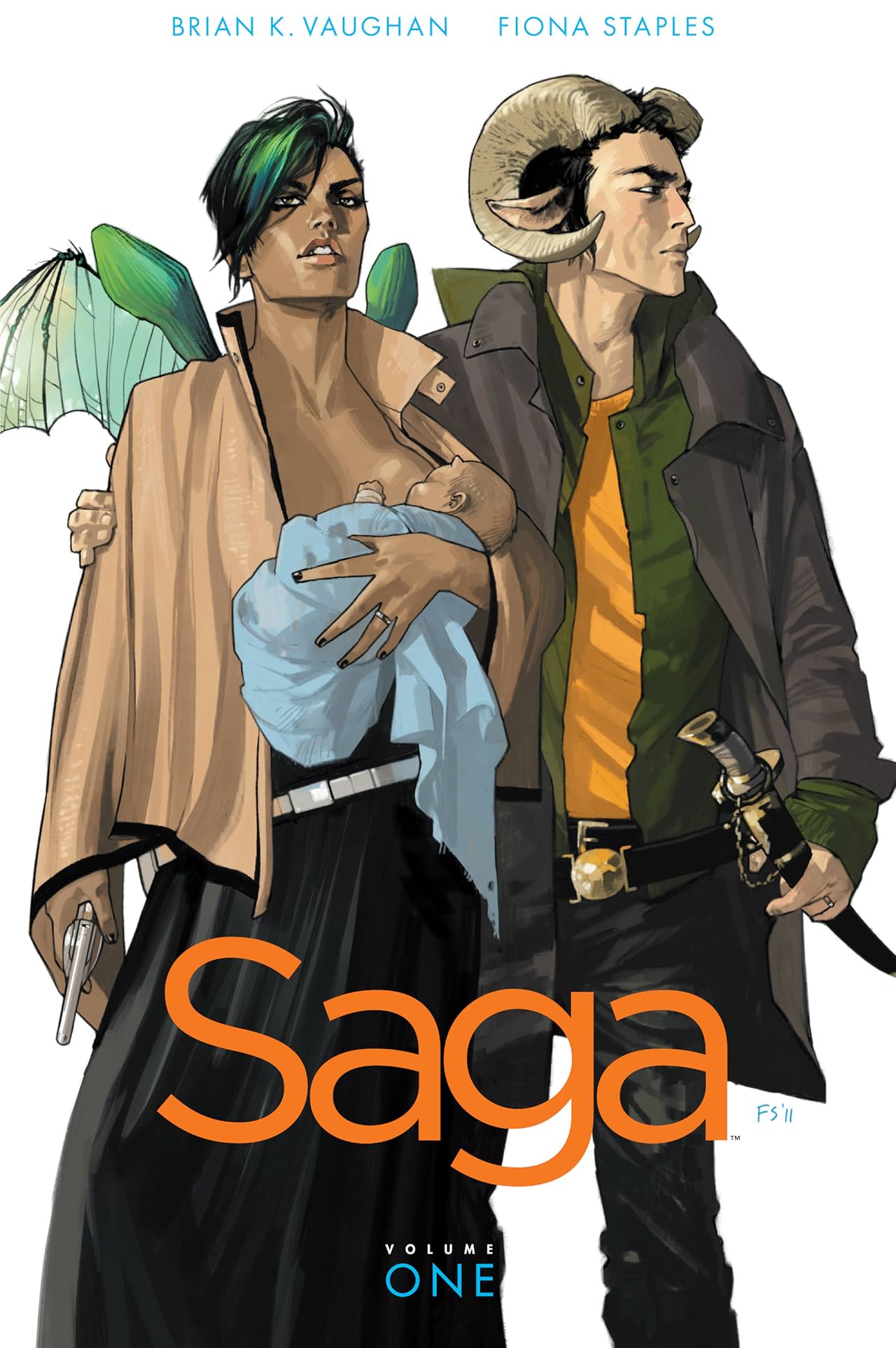
Number 1: Saga

This is probably a controversial selection for those who aren’t familiar with this series. It doesn’t involve superheroes. It’s not a product of Marvel or DC Comics. It’s an entirely different world full of bizarre creatures that include talking cats, a humanoid seal, and an entire race of beings with TVs for heads. I swear I’m not making any of that up.

However, at the heart of this amazing series by Brian K. Vaughan and Fiona Staples is an amazing love story between two characters from warring worlds. That love is very much the driving force between all the conflict and the characters that get caught up in it. It’s one of those romances that has every conceivable force working against it, but it still happens and it’s downright beautiful

Alana and Marko aren’t Superman and Lois Lane. They’re not even Rogue and Gambit. They’re not exactly heroes trying to live up to an ideal. They’re soldiers in a war between two worlds, but they somehow find each other, fall in love, and create a family together.

It’s not a fairy tale romance, though. Their romance involves more than a few explicit sex scenes, as well as a scene where Alana gives birth to their daughter. Nothing is filtered or polished. The sexy and unsexy parts of their relationship is laid bare within a world that is full of fanciful characters and locales.

It’s a genuinely epic journey, but one that all comes back to the romance between Alana and Marko. No matter what kind of romantic you are, these two find a way to check the right boxes. There are many moments of passion, sorrow, and loss. There are also plenty of moments that are funny, cute, and endearing. It has everything a great romance needs and then some.

I should offer a fair warning, though. You will get attached to these characters. You will feel it during certain moments. As a self-professed romantic, I can safely say that it’s worth the risk.

There you have it! These are my top five selections for romance comics. I’m sure some will disagree with my selections. The list may even change as other great romance comics emerge in the coming years. That’s perfectly fine and I welcome any debates on my list.


Romance is in every medium and comics are no exception. I would even argue that the romance in comics is under-appreciated and under-valued. As the genre continues to evolve, I have a feeling that’ll change and I hope to be part of that change.

5 Comments

Filed under Comic Books, Jack Fisher, Superheroes, Marriage and Relationships, romance, sex in media, superhero comics, X-men

The Humor In Mutilating Men Versus The Atrocity Of Harming Women

45ee4ed9041461da247f826745881661e77f2046

It’s one of the most traumatic things a man can experience, the permanent damage or total removal of his penis. Whether by accident or intentional violence, he’s badly injured on a physical physical and psychological level. His ability to identify as a man, experience intimacy with others, or just feel basic pleasure is irreparably damaged.

Just mentioning the possibility of losing his penis will make most men cringe. Joke all you want about how much men glorify their genitals, but it really is an important part of their bodies and their identities. Losing it is like losing a limb, which does plenty to cause serious mental trauma. Add losing a key aspect of their masculinity to the mix and that trauma becomes amplified.

Despite that trauma, men losing their genitals is fodder for comedy. Recently, Netflix released a movie called “The Package,” the plot of which is built entirely around a man who loses his penis in an accident. That movie, if you look it up on IMDB, is listed as a comedy. Imagine, for a moment, a movie that tried to make a comedy out of female genital mutilation. How much outrage would that generate?

There’s nothing funny about women’s bodies getting mutilated or even harmed in any serious way. For men, though, it’s actually a pretty common trope. You don’t have to look too deep into the history of media to find jokes about men losing their genitals.

It’s a famous line in “The Big Leboswki.”

It’s a recurring theme in “Fight Club.”

It’s a sub-plot in an episode of “Rick and Morty.”

It’s a primary plot in an episode of “Family Guy.”

Even in media that isn’t overtly comedic, it still becomes a joke. Just look up the various internet memes about Theon Greyjoy from “Game of Thrones” for proof of that. In each case, the mutilation of men and the loss of their masculinity is portrayed as something that’s inherently funny. The fact that Netflix made a movie about that premise shouldn’t surprise anyone.

Even in the cases of real stories about real men losing their genitals, it’s prone to plenty of humor. The most famous case is probably that of John Wayne Bobbitt, whose wife cut off his penis after he raped her. While Bobbitt was, by all accounts, a horribly abusive man who deserved plenty of condemnation for what he did, his name still inspires jokes.

When people say the name Bobbitt, they don’t think of all the abuse he imparted on his wife. They think of how funny it is that his wife cut his dick off. While he was able to get it re-attached, many other men aren’t so lucky. Whether it’s public perception or daytime talk shows, a man losing his penis is still seen as funny.

Conversely, any media that shows a woman being harmed in any way, even if it’s just a slap in the face, is seen as an irredeemable atrocity. Watch shows like “Married With Children” or “The Simpsons” and you’ll see plenty of scenes where Al Bundy and Homer Simpson badly injure themselves through their antics. However, there are exceedingly few scenes that ever lead to the women being harmed.

Anything that leaves any lasting scar on a woman is inherently abhorrent. There are even major international organizations that work to combat practices like female genital mutilation. When women lose their reproductive organs from disease or injury, it’s seen as a tragedy. Anyone who laughs at their pain is rightly scorned.

Why is this, though? Why is it that an entire comedy can be built around a man losing his penis while any plot that involves a woman getting hurt in any way is dead serious? That’s not an easy question to answer. It can’t be entirely attributed to the gender-driven  double standards that I’ve singled out before.

I don’t claim to know the full answer, but I think it’s worth discussing, if only for the sake of maintaining a balanced perspective. I don’t doubt that many have their theories. Some may attribute the humor we find in men getting mutilated to trends in modern feminism. I would strongly disagree with that.

I believe that this idea of laughing at male mutilation while gasping at female victimization preceded modern feminism by a great deal. I would go so far as to say it goes back much further than that. I believe this unique quirk in gender dynamics has roots in ancient pre-modern societies that transcend geography, culture, and ethnicity.

At the core of this phenomenon is one unpleasant, but inescapable truth. I’m probably going to upset some of my fellow men by saying this, but I think it needs to be said.

We NEED to be comfortable with men getting mutilated on some levels.

Take a moment to stop fuming. Then, take a moment to consider why we would need to be okay with this in both current and ancient societies. From a purely logistic standpoint, it makes sense.

For most of human history, men were expected to carry out the dangerous, back-breaking, body-maiming work that built our civilization. Regardless of location, culture, or traditions, putting men in these situations was necessary. Someone needed to fight the wars, plow the fields, hunt dangerous animals, and work in factories.

Until very recently, men had to fill that role because women were at a severe disadvantage due to the dangers and risks of child-rearing. In the pre-modern world, the most vulnerable individuals in a society were pregnant women, newborn infants, and women in labor. In 18th-century England alone, there were 25 deaths per 1,000 births.

With odds like that, there was a legitimate reason to give women extra protection and care that was not afforded to men. Men didn’t have the babies and no society could survive in the long run if it didn’t have a growing population. That’s why, for better or for worse, there are so many cultural and religious traditions that encourage women to remain in domestic roles.

Those same traditions, however, establish a dynamic requiring that we accept a certain level of male victimization. It’s one thing for a man to die in battle or having his genitals maimed in an accident. It’s quite another for a woman, who are tasked with birthing and caring for a new generation, to endure similar harm. Another man can still impregnate a healthy woman. No amount of men can impregnate an injured woman.

I know that dynamic is offensive to both feminists and men’s rights activists because it reduces their value to their reproductive capacity. I get why that’s offensive. Even I find it offensive, as a man. However, therein lies the most critical detail with respect to male mutilation versus male victimization.

These disparate standards, which predate the modern era by centuries, are still very much ingrained in our society. We still see women, especially those of breeding age, as more valuable than men. We romanticize young men who heroically sacrifice themselves in war, but recoil at the idea of young women suffering a similar fate.

Add emerging demographic issues with respect to declining fertility rates and the same incentives for accepting male mutilation are there. We still need people to have children for society to grow and function, but more women are having fewer children and more men are eschewing the pursuit of families entirely.

In terms of logistics, that increases the value of every woman who wishes to have a children and decreases the value of men who refuse to go along with that plan. In that system, a man losing his genitals or suffering a severe injury has to be funny in order for the situation to be tenable. By the same token, any harm coming to a woman has to remain extremely taboo.

Logistics aside, it’s still an unfair predicament that undermines the suffering and trauma that men endure. The fact that we have to be okay with their suffering while overvaluing the suffering of women is bound to fuel more egregious double standards. Movies like “The Package” certainty don’t help, but so long as this age-old gender disparity persists, men losing their penises will remain fodder for comedy rather than tragedy.

10 Comments

Filed under circumcision, gender issues, human nature, media issues, men's issues, outrage culture, political correctness, psychology, sex in media, sex in society, women's issues

Terry Crews, Corey Feldman, And Why The Anti-Harassment Movement Is Ignoring Them

terry-crews-ht-capitol-hill-ht-mem-180626_hpmain_12x5_992

Recently, late-night talk host, Samantha Bee, took some time from her comedy news show to talk about sexual assault. That, in and of itself, isn’t too remarkable. Many women have been doing that since the anti-harassment movement began. However, Ms. Bee did something noteworthy with her message.

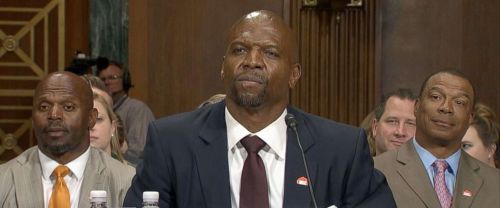
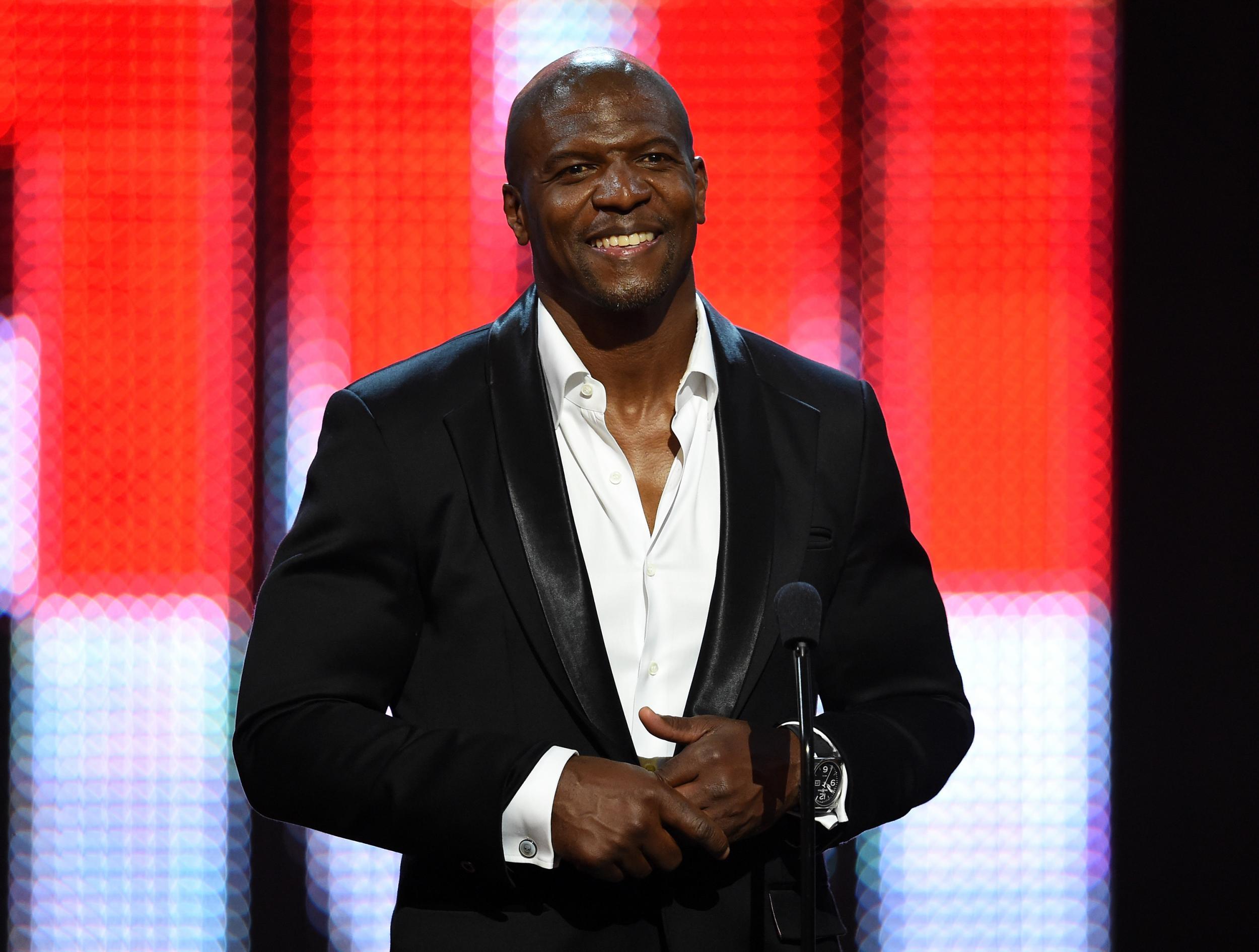
She talked about the impact that harassment and sexual assault had on men. She even invited actor and former NFL player, Terry Crews, to participate. That gives her message more weight because Mr. Crews has been trying to raise awareness of that issue ever since the movement began. He even testified in front of a Senate committee on the issue, sharing his own stories of assault and abuse.

It’s a surprisingly balanced message from someone not known for having a good filter. If you haven’t checked it out, I highly recommend it. She doesn’t present it in an overly dire way, but the message it conveys is still serious.

It also sheds light on a major blind spot in the anti-harassment movement. It showed in how the scandals involving Kevin Spacey and Bryan Singer were handled by the media. Whereas the victims of Harvey Weinstein and Bill Cosby were given plenty of support to tell their story, the male victims were largely ignored.

In fact, the primary reason why the Kevin Spacey scandal made headlines had less to do with the victim he assaulted and more to do with him using that to come out as gay. Him using that incident to address his sexuality wasn’t seen as contributing to the anti-harassment movement. It was seen as him derailing the movement for LGBT acceptance by associating his sexuality with assault of a minor.

The victims for both Kevin Spacey and Bryan Singer never got a chance to have their voices heard. Unfortunately, that’s fairly common for male victims of sexual abuse. Mr. Crews has even addressed this on multiple occasions. Shortly after the Harvey Weinstein scandal broke, he provided a fairly lengthy explanation on Twitter that explain why few speak up and even few are heard.

His comments are gender-neutral, but Mr. Crews also mentions how men face unique challenges in confronting this issue. Make no mistake. Sexual assault against men does happen and there’s plenty of raw data to back it up. The way it’s talked about and thought about, though, gives the impression that it’s not as big a deal.

That’s a big reason why men like Mr. Crews don’t come forward with their experiences. In his own words, “The silence is deafening when it comes to men talking about this issue.” Even though he’s been fairly vocal on this issue, few outside Ms. Bee have given him a chance to tie those experiences into the ongoing movement.

In addition to Mr. Crews, there are a few other notable voices trying to raise attention on the harassment and abuse of minors. Corey Feldman, a former child star, has been vocal in his efforts to expose the physical and sexual abuse he endured in his youth. He has even been trying to make a documentary exposing rampant child abuse in Hollywood, which has yet to be made.

This issue is personal for someone like Mr. Feldman because his friend and fellow child actor, Corey Haim, was also sexually abused as a young teenager. In his book, Coreyography, he talked about how they both struggled to deal with it. Drug abuse, which played a major part in Mr. Haim’s death in 2010, was a means of escaping the issue rather than dealing with it.

That’s understandable, considering the business they were in. Drug use in Hollywood isn’t just a long-standing part of the culture. It’s sometimes necessary, albeit for tragic reasons. It provides an escape for people like Mr. Feldman and Mr. Haim, one that’s much easier than coming forward and naming their abusers.

It’s the same issue women face when they’re victims of sexual assault. They’ll make a claim, but hesitate to name the abuser out of fear, shame, guilt, or willful disbelief. In Hollywood, especially, the people they deal with are rich and powerful. They have the resources to make anyone’s life, especially public figures like Mr. Feldman and Mr. Crews, extremely unpleasant.

On top of that, people who accuse a celebrity or public figure of such crimes are usually subject to major harassment as well. In that sense, staying silent is just easier. The anti-harassment movement has been trying to change that, at least for women, by providing them a platform with which to come forward. As a result, egregious crimes have been exposed and are actively being prosecuted.

However, those same efforts aren’t making much room for men like Mr. Feldman and Mr. Crews. They’re still in the same situation as they were before the anti-harassment movement began, trying to speak openly about a difficult issue and struggling to find support.

Why is that, though? Why are these men not allowed to stand on the front lines with the women who brought down Harvey Weinstein? There’s no easy answer to that. Chances are if you ask 100 people, you’ll get 100 different answers and at least 90 of them will sound like conspiracy theories.

I don’t claim to have a definitive answer, but I have reasonable suspicions and it has do with crafting a narrative. As an aspiring writer, I know a thing or two about narratives and why it’s so important to keep them concise. To some extent, the anti-harassment movement is an ongoing narrative that has to stay concise in order to pursue its goals.

Unfortunately, staying concise means ignoring or avoiding anything that might disrupt that narrative. In that context, Mr. Feldman and Mr. Crews are significant disruptions, albeit through no fault of their own or even those who champion the anti-harassment movement.

That’s because, for better or for worse, there’s this standard notion of how a case of sexual assault plays out. When most people close their eyes to imagine it, they probably don’t imagine someone like Terry Crews getting cornered in a crowded room. They probably imagine a scared young woman in a dark alley, crying out for help as some big, ugly, sadistic man abuses her.

Like any strong narrative, that notion conjures all sorts of powerful emotions. We feel anger, disgust, and sorrow for any woman who has to endure such an experience. We also feel seething anger towards any man who would do that to such a woman. The decent human being in us wants to help that woman and beat the snot out of that man.

If you reverse the genders in that narrative, though, it just doesn’t work. Those same decent people just can’t imagine a scenario where Terry Crews or Corey Feldman are cornered in a dark alley, assaulted by a man or woman, and suffer the same way. Even when they do, it doesn’t evoke the same feelings.

If anything, it complicates the narrative. These are supposed to be men. They’re supposed to be tough. Mr. Crews is a former football player. Mr. Feldman is a Hollywood star. We expect them to fight back. We expect them to not need our support the same way a woman would. To some extent, that assumptions demeans both men and women.

That doesn’t matter, though, because the narrative only works if it has that emotional resonance. People are more inclined to rally around a movement where they get to comfort an emotionally distraught young woman rather than a rich, imposing man. Like a movie where the sweet virgin schoolgirl escapes the masked serial killer, it’s more satisfying.

Moreover, it has to be satisfying to get people to rally behind it. This often come with a cost, which can really escalate if it goes too far. Some are already voicing concerns about the anti-harassment movement losing control of the narrative. Ignoring the abuse of men like Mr. Crews and Mr. Feldman only compounds those concerns.

Until the narrative changes, these men will still struggle to be part of the conversation. The piece with Samantha Bee is a good start, but it’s still an uphill battle. The idea of men being sexually abused is subject to a unique brand of stigma. That doesn’t make the suffering of the victims any less real, nor does it make crimes of the abusers any less egregious.

I don’t expect the anti-harassment movement to fully embrace Mr. Crews or Mr. Haim anytime soon, but so long as they keep making their voices heard, they’ll remind people that the narrative is still incomplete. Abuse, harassment, and victimization affects everybody, regardless of gender. When you prioritize justice for some over others, then that only creates more injustice for everyone.

3 Comments

Filed under Celebrities and Celebrity Culture, Current Events, gender issues, media issues, men's issues, political correctness, sex in media, sex in society, sexuality, women's issues

Sex Robots, 3D Printing, And The Future Of The Porn Industry

feature

Most people with a passing knowledge about the history of media know that the porn industry played a significant role in deciding the competition between VHS and Betamax back in the 1970s. Decades later, porn played a similar role in the growth of the internet. It’s not unreasonable to say that the growth of the internet was fueled by porn.

Love it or hate it, the adult entertainment industry is a powerful economic driving force. Every effort to combat or avoid it has failed. Protests and outrage has done little to undercut the billions in revenue it generates every year. Culture, tastes, and media technology keeps changing and porn finds a way to adapt to it.

Lately, though, it has had a harder time adapting than usual. While the internet helped grow the adult industry, that same medium is undermining it by facilitating piracy and limiting distribution channels. Unlike Netflix or other streaming services, most major media companies don’t allow adult content on their platforms. Some have even gotten rid of their softcore content.

These limitations and setbacks are likely temporary, though. For as long as there is a market for sexy content and a collective libido that remains unsatisfied, the adult industry will find a way to adapt and make profits. It’s very likely that 20 years from now, the porn industry will look nothing like it does today.

Whatever form it takes will likely astonish some and terrify others. It’s hard to know for sure how the economics of porn will evolve, but there are already signs that the future of the adult industry is taking shape. As we saw with the VHS/Betamax issue, the technology is already in place. It’s just a matter of maturation and refinement.

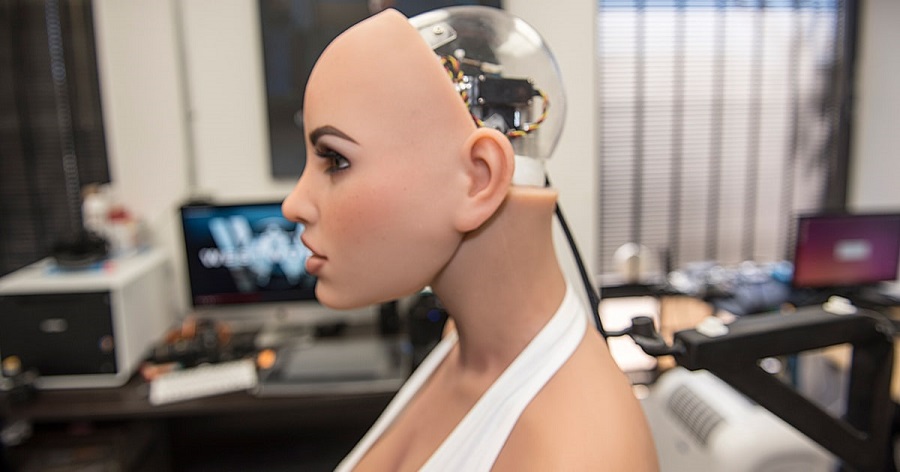
As I write this, the development of sex robots is well underway. There’s also already an established market for life-like sex dolls that can’t interact with users, but can still provide an intimate experience that you can’t get through a computer screen. This current situation has already been subject to controversy, but further refinements ensure there will be many more to come.

That’s not just me speculating, though, as I’ve done before with sex robots and sex dolls. I’m writing this because a critical, but under-reported refinement in the sex doll/sex robot industry took place recently in China from a company called DS Doll Robotics. Their plans, if they come to fruition, may do for sex dolls what McDonald’s did for cheeseburgers.

Those plans involve addressing one of the key limitations of sex dolls at the moment, which also will plague sex robots if it isn’t addressed. As it stands, just making a sex doll is expensive, labor-intensive, and difficult to mass produce. That’s why most high-quality sex dolls will set you back at least several thousand dollars. It’s actually comparable to the cost of cell phones in the early 1980s.

DS Doll Robotics is looking to change that. In July 2018, they launched plans to utilize 3D printing to help streamline the manufacturing process. What the assembly line did for cars, this company hopes to do for sex dolls and, eventually, sex robots that incorporate artificial intelligence.

It may sound mundane on paper since 3D printing has been an emerging technology in the manufacturing sector. It’s still has room to mature in the same way the early internet had to mature, but it’s one of those technologies that’s uniquely equipped to help the adult industry. In fact, it’s not unreasonable to say that it’ll completely reinvent it.

That’s because DS Doll Robotics isn’t just using 3D printing to streamline the manufacturing process. They’re also using new scanning techniques to scan the bodies of real humans as a baseline, of sorts. This is an exact quote from the July 2018 article that reported on the company’s plans.

“It is also connected to a 3D scanner which can be used to scan in the body of a full person as well as prototype parts for replication. This type of technology is excellent for creating new doll bodies and faces as they can be developed from a real human.”

That bold text is my doing because that’s the part of the story, I feel, that has far greater implications. Just making sex dolls cheaper and easier to produce isn’t going to change the adult industry too much. It may expand an existing market that had been cost-restrictive before, but it won’t provide a radically different experience compared to the one that exists today.

The part where sex doll manufacturers scan the bodies of real people, though, is something that will significantly impact the entire landscape of the adult entertainment industry. It won’t just change the economics of sex dolls. It’ll change the way the adult industry operates.

To understand how, it’s necessary to know how adult entertainers make money in the current economy. Most people in the adult industry, be they performers, directors, or producers, get paid a certain amount for each scene they perform. In the past, they could also depend on residuals from DVD sales, but those have declined sharply due to piracy and tube sides.

As a result, it’s becoming increasingly common for porn stars to do escorting on the side. Being a porn star makes it more lucrative than regular escorting, but that still comes with risks, especially in wake of recent legal issues attacking sex work. With sex dolls and 3D printing, though, these entertainers suddenly have a new way to monetize their sex appeal.

From a business standpoint, porn stars and beautiful celebrities in general are in the best possible position to franchise their bodies. Say there’s a moderately-successful porn star, male or female, who has some level of notoriety. If they do their job well, they create a fan base. Chances are there’s a significant portion of that fan base that wants to have sex with them.

Thanks to DS Doll Robotics, they can get that or at least something close to that without having to resort to escorting. Some porn stars already licence parts of their bodies as sex toys, but with 3D printing technology, they can do it all. With further refinements to the flesh and molding of the body, it wouldn’t just feel like plastic. It would feel real.

Some of this is already being done to a limited extent. Some porn stars have licensed their bodies to create life-like sex dolls. However, they’re still very expensive and labor intensive. Refinements of 3D printing will bring that cost down and that will grow the market, but it won’t stop there.

It’ll only be when sex robots and artificial intelligence enter the mix that the true future of the adult entertainment industry will take hold. Once those same licensed bodies develop an ability to interact with their users, then they’re not just over-sized masturbation aids. They deliver a full-on sexual experience.

Like brands of clothing or food, each adult entertainer could create a particular brand. One star might have a really cute, friendly personality. Another might have a very domineering, controlling personality. By incorporating them into a sex robot, they create a product that cannot be experienced through a computer screen, let alone pirated.

For the adult stars themselves, it’s easy money. They wouldn’t actually have to do anything, sexual or otherwise. They would just have to license their likeness to a company and collect a portion of the residuals like any merchandising company. If they prove really popular, then they could conceivably create a life-long income that continues well past their stint in the business.

That’s something that’s difficult to do in any entertainment industry, pornographic or otherwise. The use of 3D printing and more realistic materials will make that both possible and lucrative. If it becomes cheap enough, then the opportunities even go beyond direct sales.

There are already sex doll brothels operating in certain parts of the world. In areas where prostitution is legal, there’s even an app for people to order a prostitute the same way they would an Uber. In the future, if someone doesn’t want to buy, store, and maintain a sex robot, they may just rent one for a while. Between discretion and safety concerns, there would certainly be a market for that.

I’m sure that sort of business would attract a great deal of controversy and outrage. Sex dolls are already controversial and sex robots already have their opponents. However, if history is any guide, the prospect of making money and satisfying peoples’ burning libidos will win out. It’s just a matter of how quick the technology can progress and how quickly the ever-evolving adult industry adapts.

10 Comments

Filed under futurism, Marriage and Relationships, sex in media, sex in society, sex robots, sexuality, Sexy Future

Al Bundy, Circumcision, And Double Standards In Humor

does-male-circumcision-shield-women-from-hiv-750

When you want to know how taboo a topic is, it helps to look at how sensitive people are to jokes about it. Most people can comfortably joke about teenagers, old people, the President, the French, and the Pope. Some of those jokes even make it into popular cartoons and sitcoms that we still laugh at to this day.

Then, there are topics for which making jokes is a gamble. Make the wrong remark at the wrong time and it could really cost you. Just ask Gilbert Gottfried or Roseanne Barr. The stakes get even higher when you joke about religion. Some have a better sense of humor than others, but those that don’t tend to make the news for all the wrong reasons.

Since humor and religion rarely mix, I want to focus on a topic that’s slightly less sensitive in circumcision. I say slightly because gender-specific humor is a lot trickier these days. Old jokes about women drivers and gay men just don’t work anymore and not because more cars are driving themselves.

Between trends in feminism and outrage over Wonder Woman’s armpit hair, the current state of gender politics is no laughing matter. I’ve talked about gender conflicts on many occasions and I’ve also discussed serious issues surrounding circumcision. I’m also aware that the current issues surrounding circumcision aren’t on many peoples’ radar, but I still think it’s worth talking about.

This isn’t just about representation in media or offensive stereotypes. This is about purposefully mutilating parts of the human body. When it happens to women, it’s a major problem that warrants major resources to combat. When it happens to men, though, it’s no big deal and prone to plenty of humor.

It’s more than just a double standard. It reveals a lot about our overall attitudes when we’re willing to joke about something. It shows how much the issue matters and how much energy we’re willing to put in to confront it. To understand the state of circumcision for men, you need look no further than an old episode of “Married With Children.”

I’ve mentioned this classic Fox sitcom before. I put it at the top of my list of TV shows that could never be made today. The fat jokes alone would get it cancelled. It’s a show that went out of its way to be controversial, much to the chagrin of a Michigan house wife. That included an episode about circumcision.

This particular episode was called “A Little Off The Top” and if you know anything about male circumcision, you understand why that’s an overly appropriate title. It starts with Al Bundy getting injured in a basketball game, going to a hospital, and getting circumcised due to a medical error.

It’s all portrayed with typical “Married With Children” hilarity. In fact, one of the most memorable moments of the episode is when Peggy gets a call from the hospital and Marcy, the Bundy family’s neighbor and one of Al’s many enemies, laughs hysterically. I’m not going to lie. When I saw a recent rerun of the episode, I laughed too.

That’s the genius of “Married With Children.” It can take depressing situations like a loveless marriage, a lousy job, and idiot kids and make it funny. It’s part of why this show is one of my favorite shows of all time. When you strip away the humor in this episode, though, there are some disturbing overtones.

To illustrate, here’s a quick thought experiment. Imagine, for a moment, that this isn’t happening in a TV show and you just randomly stumbled across a news article.

“Local Chicago man rushed to a hospital after injury playing basketball is mistakenly circumcised. Family and neighbors make fun of him.”

Take away the iconic Bundy family and the context of a sitcom. Just look at it in terms of raw facts. A man gets an injury, goes to the hospital, has his genitals mutilated against his will due to an error, and is laughed at because of it. The fact that it happens to Al Bundy makes it funny. If it happened to anyone in the real world, it’s not likely to be as funny.

Medical errors are already horrifying enough. This one is extra disturbing for men because it involves our genitals. There’s already a growing reservation about circumcising baby boys for no medical reason who cannot consent, which did not exist when “Married With Children” was on the air. On top of that, there’s a distinct double standard in play.

Even in the lewd world of a 90s Fox sitcom, there are lines that even the Bundy family cannot cross. If you were to reverse the genders in this episode, as I’ve put forth as part of previous thought experiments, then the humor just doesn’t work. If the episode involved a woman who’d been circumcised against her will by accident, then it wouldn’t be funny. It would be disturbing.

The reasons for that aren’t entirely simple. There is a medical and logistical difference between male and female circumcision. For the most part, female circumcision in its various forms are prone to more complications, even in a medical setting. Male and female anatomy are different. There’s no getting around that.

However, the logistics are the same. They both involve cutting, altering, or outright mutilating someone’s genitals against their will. Despite these similarities, one is still capable of being funny while the other is not.

That idea matters because when something can be funny, it impacts how seriously we take it as a society. We can joke about ditzy blonde women, bone-headed men, and irresponsible teenagers because they’re not seen as dire issues. That’s also the reason why we can make jokes about the Vatican in 2018 that probably would’ve gotten people killed half-a-century ago.

The fact that male circumcision can be a joke or the premise of a sitcom says that it’s not serious enough to be on the same level as female genital mutilation. They may not be the same thing, but the implications are still there. When a woman is mutilated, it’s a travesty. When a man is mutilated, it’s comedy. That is not a trivial gap.

I doubt “Married With Children” was trying to make a statement about male circumcision when the episode first aired. The show made a lot of controversial jokes and circumcision barely cracks the top ten. Even if that episode aired today, it probably wouldn’t be that controversial, which says a lot about how little our attitudes about male circumcision have changed since the mid-90s.

In that same time, though, efforts to combat female genital mutilation have gained ground. Efforts to beautify and protect the female body are part of a larger social trend. However, those efforts are not equally prescribed to men, even when the concept is the same.

Now, I’m in no ways in favor of making jokes about male circumcision taboo. Historically speaking, making anything taboo only tends to make an issue worse. I’m also not advocating that we start joking about female genital mutilation, either. My point in citing a memorable episode from a raunchy 90s sitcom is to show the vast disparity in the circumcision debate.

When something is a joke for one group of people, but an atrocity for another, then there’s a major disconnect in the issue. Both sides can and should be discussed seriously. Both can and should be held to similar standards are humor, as well. When you start making exceptions for one over the other, then that obscures the debate for both.

3 Comments

Filed under circumcision, gender issues, political correctness, sex in media, sex in society, sexuality

How “Mr. And Mrs. X” Provides Hope (And A Template) For Married Superheroes

672890-_sx1280_ql80_ttd_

If you were to go back 40 years and ask someone to tell a story about epic space battles, death stars, and wookies, chances are you’d get a lot off odd looks and insipid excuses. Some might even laugh in your face, saying such a story could never be told, let alone make over $7.7 billion at the box office. George Lucas is probably laughing at them on top of a bed made of money.

Great stories like “Star Wars” didn’t just prove there were millions to be made from elaborate space operas and quality sci-fi. It helped establish a template for others to follow in telling similar stories. Some have followed it better than others, but the most important thing “Star Wars” was demonstrate that it can be done.

The current state of married superheroes is in a similar situation to what the sci-fi genre was before “Star Wars” came along. Both Marvel and DC Comics have done a lot over the past couple decades to undermine married superheroes, some of which have left major scars for fans and characters alike. Just look up a story called One More Day for proof.

The excuses Marvel and DC have made aren’t very convincing, but they’re not entirely wrong either. Telling stories about married superheroes is challenging. There are only a handful of married superheroes that have stood the test of time. However, even the most iconic superhero couples have been prone to the complications of marriage.

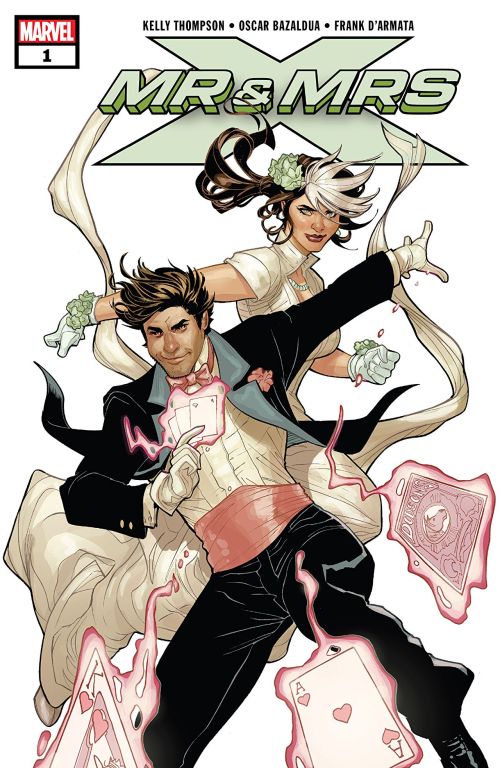
That’s why a series like “Mr. and Mrs. X” is coming along at the best possible time. This series, which spins directly out of the denigrating heartbreak that unfolded in “X-men Gold #30,” may very well provide both the hope and the template for married superheroes moving forward.

The first thing I need to say about “Mr. and Mrs. X #1” is that it’s part of a larger story that began unfolding before the events of “X-men Gold #30.” Kelly Thompson, who wrote “Mr. and Mrs. X,” also wrote a mini-series called “Rogue and Gambit,” which I highly recommend. That story did something important for both fans of superhero romance and of superhero cartoons from 1990s.

In the world of iconic superhero couples, Rogue and Gambit occupy a gray area of sorts. They’re one of those couples that rarely tops any list of notable superhero romances, but they’ve always been closely linked to one another. This is due largely to the chemistry they showed in the “X-men Animated Series” cartoon that defined so many childhoods back in 1990s. I know because I was one of them.

While Rogue and Gambit have always had romantic potential, it was never fully utilized. Neither the cartoon nor the comics ever took it beyond a certain point and not just because Rogue’s life-draining powers hindered their capacity for intimacy. There was just no real effort to evolve their romance beyond flirting and card puns.

Ms. Thompson changed that with “Rogue and Gambit.” This under-developed romance grew more in the span of five issues than it had in over 15 years of comics, cartoons, and failed efforts to get a Gambit movie off the ground. With “Mr. and Mrs. X #1,” Ms. Thompson dares to skip several steps and let this couple take the plunge into superhero marriage.

Considering how even a much more iconic couple in Batman and Catwoman failed to get that far, that’s quite an achievement. However, the way in which “Mr. and Mrs. X #1” portrays the sexy, romantic details of married superheroes is a far greater accomplishment. I would go so far as to say that it sets a new standard for just how appealing married superheroes can be.

One of the most important things “Mr. and Mrs. X #1” does is expand on the events of “X-men Gold #30.” This isn’t just critical for the sake of Rogue and Gambit’s relationship. It helps fix the greatest flaw in that issue. When the marriage of Kitty Pryde and Colossus fell through in a heartbreaking moment, Rogue and Gambit basically stepped in to keep the ending from being a complete tragedy.

The way their impromptu marriage presented in “X-men Gold #30” is both shallow and crude. It’s basically just forced in there, a marriage for the sake of saving a botched wedding. It never even gave the impression that Rogue and Gambit were serious about marrying one another. They just did it on a whim, their wedding having the depth of a drive-through chapel in Las Vegas.

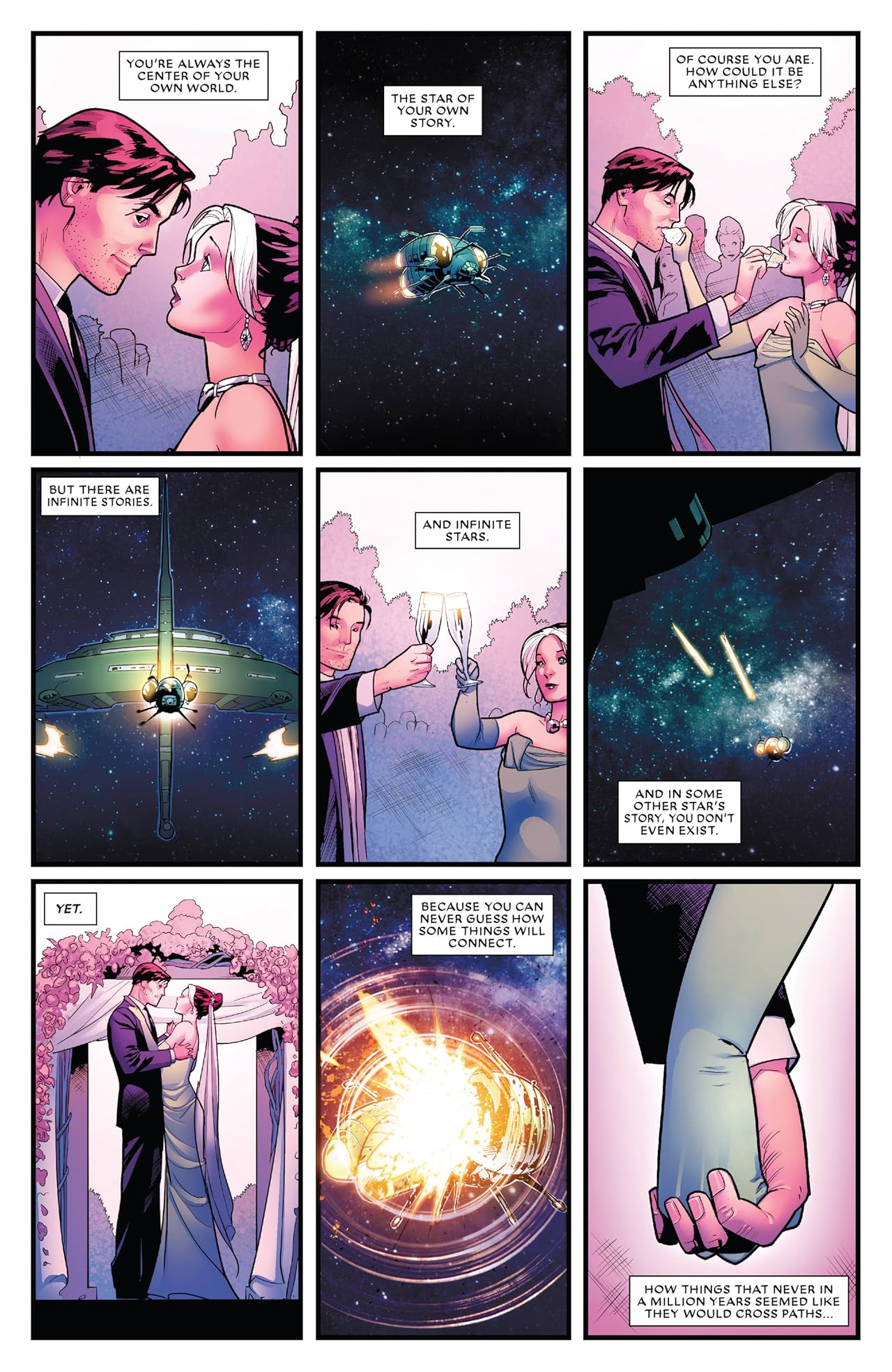
Mr. and Mrs. X #1” fundamentally changes that. It dedicates over half the issue to providing more details of that ceremony, making clear that Rogue and Gambit gave this more thought than the brand of cereal they ate that morning. There was preparation, planning, and even a surprise visit from Mystique, Rogue’s adopted mother.

This goes a long way towards showing that Rogue and Gambit are serious about getting married. Even if you didn’t read Ms. Thompson’s “Rogue and Gambit” series, the first eight pages do enough to show that there’s genuine love between these two. Moreover, they want take that love to the next level.

Even for a romance not built on Disney-style fairy tales, that’s a pretty important detail. There’s a major difference between characters actually wanting their relationship to evolve and just doing it because it makes for a nice event. It’s the same difference between wanting to eat to McDonald’s and having to eat at McDonald’s. It affects the experience.

That shared desire between Rogue and Gambit shows in both the ceremony and the honeymoon. That’s another key component that “Mr. and Mrs. X #1” adds to the template. It doesn’t just stop at the heartfelt wedding ceremony they share with friends and family. It acknowledges and even shows off the sexy tidbits of married life.

Rogue and Gambit don’t just love each other enough to want to get married. They also want to express that love like any other horny couple. It doesn’t have to be a dirty secret or some trivial side-note. It can be part of the story and thanks to the wonderful artwork of Oscar Bazaldua, it’s a spectacle to behold.

We get to see these two in expensive wedding attire and their birthday suit. There are moments of genuine affection. There are moments of playfulness. There are also moments where they address more serious issues, such as Rogue not being able to touch without the aid of a device that inhibits her powers. All of that is fit into a single issue.

On top of all that, “Mr. and Mrs. X #1” still finds time to squeeze in some heroics at the end. It’s not all heart-warming ceremonies and sexy honeymoons. Rogue and Gambit are still X-men. That means they still answer the call to adventure when it comes. That’s just what heroes do. Being married doesn’t have to change that.

That shouldn’t be such a novel concept, but that is a common criticism of married superheroes. Once they get married, their ability to be superheroes is somehow diminished. That’s like saying being a rock star diminishes someone’s ability to enjoy random songs on the radio. It’s a false flaw that Ms. Thompson and Mr. Bazaldua go out of their way to subvert.

The nature of the conflict that interrupts Rogue and Gambit’s sexy time is somewhat underdeveloped. It involves aliens and space battles, which is basically a typical Tuesday for the X-men. There’s not much in terms of refinement, but that’s less a flaw and more a logistical limitation.

Mr. and Mrs. X #1” is the first issue of a series, which means there will be other opportunities to expand that story. Rogue and Gambit’s life as married superheroes isn’t ending. It’s just beginning. They’re still going to be heroes. They’re still going to fight aliens in between hot romps between the sheets. Married life doesn’t have to be boring. What a concept, right?

I’m not being coy. That’s the ultimate takeaway from this comic. Two well-known, well-developed characters can get married, share some loving moments, get sexy, and still be superheroes. Being married doesn’t have to supercede their heroics. It can complement it as well.

It’s a lesson that other superhero couples, be they iconic or based on a random hook-up, would be wise to learn. Even powerful heroes like Superman are only as compelling as the relationships and interpersonal dynamics that highlight who they are. In the same way teamwork makes the Avengers and the Justice League strong, marriage can make a superhero couple strong.

That really shouldn’t be such a radical notion, but Ms. Thompson and Mr. Bazaldua do plenty to remind us why it shouldn’t be. “Mr. and Mrs. X #1” sets a bold tone for Rogue and Gambit. It doesn’t stop at a beautiful wedding or a sexy honeymoon. The heroics continue. It just takes a different tone.

The ending of the issue, which I won’t spoil, even sets up some new drama between the happy newlyweds. It’s not the kind that’ll instigate another frustrating love triangle, but it does hint at a conflict that wouldn’t be much of a conflict if Rogue and Gambit weren’t married. Rather than limit their story, it expands it.

Mr. and Mrs. X #1” does so much in the span of a single issue that it would take me all day to list them all. It’s not a perfect issue. If I had to score it, I would give it a 9 out of 10, just because it had piggy-back on the heartbreak in “X-men Gold #30.” The most important achievement, though, is the precedent it sets. Married superheroes can be sweet, sexy, and fun and this is how you do it.

Like a marriage in a real world, relationships evolve. Getting married is not an endpoint. It’s another step in the dramatic, yet sexy narrative that is romance. Superheroes are fully capable of taking that step without turning into a bad sitcom. “Mr. and Mrs. X #1” shows that this step is worth taking. Hopefully, other couples follow and build on this sexy new template.

7 Comments

Filed under comic book reviews, Comic Books, Jack Fisher, Superheroes, sex in media, X-men

The Other Orgasm Gap (Involving Men) And Why We Should Confront It

basic-secrets-male-orgasm

There are many disagreements about gender these days, but when it comes to orgasms, most reasonable people are on the same page. In general, regardless of politics or genital configuration, we’re in favor of them. We support efforts to experience more for ourselves and for our partners. In matters of sex, it’s one of the few unifying issues.

Even if most people agree that orgasms are awesome, there are still some sources of tension. I’ve already touched on the current status of the orgasm gap, as it pertains to women. That is still an unresolved issue and the current status of gender relations can only improve if that gap is reduced or eliminated.

However, there is another orgasm gap that is rarely touched on, but inescapably linked to the current pleasure parity. This one pertains to men and, unlike the female orgasm gap, is shackled by hard biological limits. Any man, myself included, knows those limits all too well.

It’s no secret, but it might as well be one because it’s rarely talked about. Without getting too graphic, I’ll just say that the female orgasm is a symphony whereas the male orgasm is like a kazoo. It’s a one-note instrument that is simple, basic, and blunt. You can still make music with it, but the range is limited.

That’s because men have something called a refractory period. It’s basically the cool-down period that men experience after orgasm. From a biological standpoint, it’s the part of sex where the brain and genitals tell one another that the job is done and it’s time to rest. That process involves releasing all sorts of hormones and chemicals that are responsible for men getting sleepy after sex.

It’s the reason why men have a difficult time getting aroused again after sex, both physically and mentally. Once a man reaches that peak, it takes a while to get to that level again. It can take as little as 15 minutes to almost an entire day. During that time, though, a man’s ability and desire are significantly hindered.

This inescapable process is also the source of many jokes about premature ejaculation and men who can’t last long in bed. I don’t doubt it’s a factor in the orgasm gap. Whereas it takes a man only two to three minutes to achieve orgasm, it takes a woman an average of 12 minutes to do the same. That is not a trivial gap.

Conversely, women aren’t hindered by a refractory period. Even though it takes women longer to climax, they’re capable of having more orgasms in rapid succession. To give you an idea of just how many more women are capable of, the record for most female orgasms in an hour is 134 whereas the most a man has ever had is 16. Again, that is not a trivial gap.

While men don’t have to look far for tips and tricks that allow men to have multiple orgasms, many of these so-called techniques are just gimmicks. They’re methods for improving stamina and control, which is a great thing to have with any partner. However, it doesn’t change the fundamental biology of refractory periods.

That’s not to say this particular gap is impossible to close. That’s also not to say that there aren’t documented cases of men achieving multiple orgasms. They do exist, but there’s not a lot of research on the topic, especially compared to the amount of research on the female orgasm.

If we’re to close the orgasm gap for everybody, though, this is something that’s worth studying. I would even argue that we can’t solve the orgasm gap with women without confronting this lesser-known gap with men. In essence, that refractory period is the greatest hindrance to true orgasm parity.

Just talking about it only goes so far, though. Unlike the female orgasm gap, the refractory period is rooted in biology rather than psychology. From an evolution standpoint, it makes sense. By achieving orgasm quickly, a man can spend less time impregnating a woman and more time surviving. It was a necessary trait for managing the survival/reproduction dynamic of the human species.

Like many other traits from our pre-modern ancestors, though, these traits are less necessary in the modern era. In fact, they can be a liability. In a world of low infant and maternal mortality, we have more incentive to seek quality over quantity in our lovers. The refractory period, much like our body’s tendency to get fat, is a real hindrance to that effort.

Addressing it is probably not going to be as simple as telling men to do kegel exercises. Men being able to achieve multiple orgasms may require an effort similar to that of developing the female birth control pill. In the same way modern medicine has given women control over their fertility, it may end up doing the same for male orgasms.

How modern medicine would go about that is well-beyond my expertise. However, we already do have some clues as to what goes into reducing the refractory period. Studies has shown that a chemical called prolactin may play a major role.

Specifically, when a man climaxes and goes through a refractory period, levels of prolactin in the body spike. In rare cases of multi-orgasmic men, though, it doesn’t rise in conjunction with an orgasm. Now, that could be only be part of a much more complex process, as is often the case in medicine, but it’s a start.

In the same way some people are already hacking their biology for reasons relating to health and beauty, it may be possible to tweak certain bodily processes to enable men to have the same orgasmic potential as women. It doesn’t even have to extend to modifying genetics. It can just involve tweaking chemical and hormonal processes, something we’ve been doing in medicine for years.

Unfortunately, research on this phenomenon is scant at best. However, given how much money pharmaceutical companies have made treating sexual dysfunction, I believe the incentives are there. It may take a long time, but given the progress medicine has made on male contraception lately, I think the infrastructure is in place and so is the market.

It’s hard to predict what form modern medicine will take in treating any condition, be it the limits of the male orgasm or the current orgasm gap with women. However, I am confident in saying that any advance that puts everyone on the same level of orgasmic potential will be a game-changer of the sexiest kind.

Leave a comment

Filed under gender issues, Marriage and Relationships, sex in media, sex in society, sexuality

Why Henry Cavill Shouldn’t Apologize For His Comments On The Anti-Harassment Movement (But Still Had To)

gettyimages-873854634-1200x800

What does it say about the state of a society when people have to apologize for voicing honest, legitimate concerns? Pragmatically speaking, it implies that the value of truth and just has been subsumed by other influences. Whether it’s politics or ideology, it’s not hard for society to get to a point where unreasonable forces subvert reasonable issues.

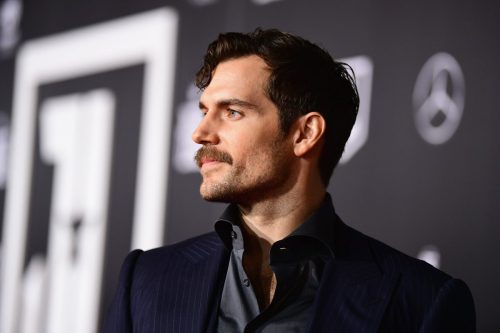
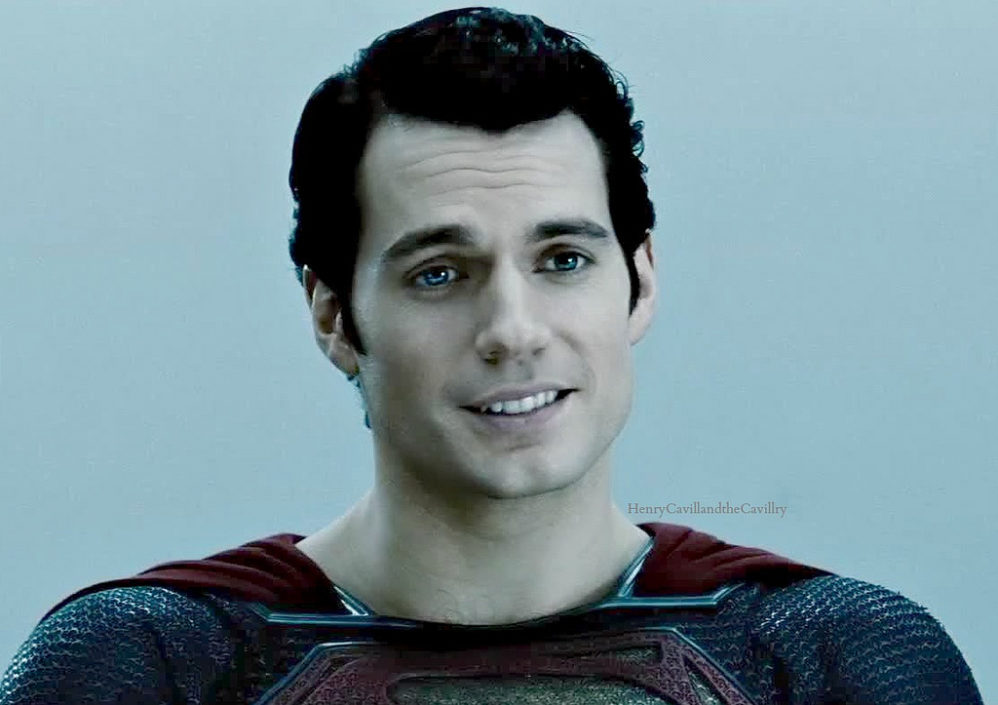
In that sense, it’s ironic that the latest person to experience those influences once played Superman, the personification of truth, justice, and the American way. Henry Cavill, whose star has risen significantly since he broke out in “Man of Steel,” got into some hot water recently after an interview with GQ.

In that interview, he essentially made the same mistake Matt Damon made when he tried to comment on the anti-harassment movement. He said something that was reasonable, honest, and understandable from a purely logistical standpoint. He’s worried that something as simile as flirting with a woman could somehow be construed as harassment, which could lead to a full-blown scandal.

For reference, these were his exact words from the interview and the ones that subsequently led him down the same path as Matt Damon.

It’s very difficult to do that if there are certain rules in place. Because then it’s like: ‘Well, I don’t want to go up and talk to her, because I’m going to be called a rapist or something’. So you’re like, ‘Forget it, I’m going to call an ex-girlfriend instead, and then just go back to a relationship, which never really worked’. But it’s way safer than casting myself into the fires of hell, because I’m someone in the public eye, and if I go and flirt with someone, then who knows what’s going to happen?

Now? Now you really can’t pursue someone further than, ‘No’. It’s like, ‘OK, cool’. But then there’s the, ‘Oh why’d you give up?’ And it’s like, ‘Well, because I didn’t want to go to jail?’

Think about what he’s saying here and take a step back to see how he got to that point. He’s talking about being called a rapist just for going up to a woman and talking to her. How is that reasonable? It’s not. It sounds paranoid, but it’s perfectly understandable in the current social climate.

It’s easy to picture a scenario where someone like Cavill walks up to a woman, starts flirting, and ends up saying something inappropriate. That’s not just something men do. Women do that too. Being vulgar knows no gender. However, if the woman in this scenario takes particular offense, it could be construed as harassment or even assault.

If a woman was especially vindictive or just prone to exaggeration, she could accuse him of assaulting her. Even if those accusations aren’t even close to warranting an actual crime, it would still be devastating. The accusation alone would be enough to derail a promising career.

You don’t have to look far for evidence of this. Aziz Ansari was not charged with any crimes for the infamous incident that came out earlier this year and even if he had been, there’s no way he would’ve been convicted. An incident built entirely around a he said/she-said situation doesn’t come close to meeting the burden of proof for a criminal conviction.

That doesn’t matter, though. Ansari’s career has already taken a major down turn. His hit show, “Masters of None,” has not been renewed by Netflix since the allegations came out. Men like Henry Cavill, whose careers are ascending, certainly take notice of that. They don’t even have to commit a crime and suddenly, everything they worked for is in ashes.

For powerful men in Hollywood, it’s a reasonable concern, but one they probably won’t get much sympathy for expressing. Men like Henry Cavill are rich, successful, and handsome enough to comfortably wear Superman’s skin-tight costume. He’s a man who can attract women just by breathing. However, that may end up making him even more vulnerable.

Most people aren’t going to be inclined to make a big deal about someone who flirts inappropriately. When that person is a celebrity, though, the incentives are much stronger. You need only have an overreaction or a burning desire for attention to twist it into something much worse.

It’s for that reason that Cavill shouldn’t have apologized for his comments. His concerns are legitimate and after all the work he’s put in, he’s right to worry about the forces that might destroy it. That still didn’t matter. His comments still triggered a major backlash on social media. He also had to apologize for it. These were his exact words.

“Having seen the reaction to an article in particular about my feelings on dating and the #metoo movement, I just wanted to apologize for any confusion and misunderstanding that this may have created. Insensitivity was absolutely not my intention. In light of this I would just like to clarify and confirm to all that I have always and will continue to hold women in the highest of regard, no matter the type of relationship whether it be friendship, professional, or a significant other. Never would I intend to disrespect in any way, shape or form. This experience has taught me a valuable lesson as to the context and the nuance of editorial liberties. I look forward to clarifying my position in the future towards a subject that it so vitally important and in which I wholeheartedly support.”

Notice that there’s nothing in that apology that expands on his concerns. Cavill doesn’t attempt to re-frame his point or address some of the complaints levied against him. He just throws his hands up and apologizes about everything, as though every word he said was factually wrong.

Now, to be fair to Cavill, it’s very likely that the statement he gave was written by a publicist or agent. Chances are he was pressured to read that as quickly as possible in order to prevent him from getting labeled a misogynist or someone who did not wholly support the anti-harassment movement. Even if he didn’t feel inclined to apologize, he still had to do it in order to preserve his career and reputation.

Regardless of his reasons for doing so, he still apologized for telling the honest truth. The backlash he received didn’t even argue that truth. Most of it amounted to scoffing at the concerns of a rich, handsome celebrity who is undeserving of any sympathy. One commenter even went so far as to call him a wannabe victim.

Such criticism is every bit as absurd as the kind Matt Damon got when he dared to point out that there’s a difference between patting a woman on the butt and full-blown rape. They also fail to acknowledge that it’s entirely possible for a woman to be vindictive enough to falsely accuse someone of a heinous crime for the sole purpose of ruining their career, despite documented cases that this has happened.

It’s one thing to expose the serious crimes of predators like Bill Cosby and Harvey Weinstein. Those cases did have evidence and are being processed through appropriate legal means. The behaviors Henry Cavill described don’t even come close to that kind of conduct.

The fact that Cavill had to apologize sets a dangerous precedent for the anti-harassment movement. History has shown that any movement that throws off honest truth and basic justice is built on a poor foundation. In time, that foundation eventually crumbles and the merits of the movement get lost.

There are plenty of behaviors among celebrities and non-celebrities that warrant outrage. What Henry Cavill said wasn’t one of them. The fact he still had to apologize for his words does not bode well for anyone concerned with the values that heroes like Superman embody.

10 Comments

Filed under Celebrities and Celebrity Culture, Current Events, gender issues, media issues, political correctness, sex in media, sex in society, sexuality

How Ellie From “The Last Of Us” Does LGBT Characters Right

1482574113135812936

In the current state of popular culture, one of the most emotionally-charged words is “diversity.” It gets thrown around like a nuclear hot potato. Anyone who holds it too long gets burned and anyone who doesn’t hold it long enough gets attacked. Whether it’s the handling of female characters or representation of minorities, diversity is one of those buzzwords that creates the wrong kind of buzz.

That’s not to say that it’s always mishandled. From a pure business standpoint, it makes sense for media companies to pursue diversity because the world is becoming an increasingly diverse place. New markets and consumer bases are emerging as people gain greater access to media, thanks largely to global connectivity. Any competent business would want to appeal to the most customers possible.

Economics aside, injecting diversity into a movie, TV, comic book, or video game is fraught with challenges and potential backlash. Movies have felt it. Comic books have felt it. Video games have especially felt it, thanks to scandals that seem to get more frustrating with each passing year.

The number of failed attempts to promote diversity is vast and tends to bring out the worst in many people. The successes, though, often fly under the radar and generate way too little attention. Other than the success ofBlack Panther” and the occasional Supergirl comic, the cases of diversity done right are few and far between.

That’s why I think it’s fitting that one of the best cases of diversity comes from the world of video games, an industry that finds itself in a new controversy every other week. It’s even more fitting that it comes courtesy of “The Last of Us,” a franchise I’ve praised before in how it portrays masculinity in a refreshingly positive way.

Beyond just being an excellent game with amazing characters, it also provides a case study in how diversity can be done effectively. It doesn’t have to be forced. It doesn’t have to be preachy. It doesn’t even have to have a larger agenda. It can just be a bonus on top of a well-made product.

The character in question this time is Ellie, the co-protagonist to Joel in the first game and the main protagonist in the upcoming sequel. Her story is every bit as rich and compelling as Joel’s. Her history, her personality, and even the way she complements the gameplay helps make her distinct. She’s a major reason why this game is so enjoyable and why it sold so well.

She achieved all this as both a female and an LGBT character. It sounds like one of those combinations that has to be forced, but that’s not the case with Ellie. In fact, anyone who plays the entire story of the first game wouldn’t even know about Ellie’s sexuality because it was only revealed through a DLC , or downloadable content.

Even within that content, though, Ellie’s sexual orientation was not a big part of the story it told. It effectively filled in a time gap within the main game while also exploring more of Ellie’s backstory, but at no point did it make her sexuality a bigger issue than it needed to be. You could’ve removed that detail entirely and the story would still work, but it wouldn’t be quite as memorable.

More recently, during a preview of “The Last of Us Part II” at E3 2018, Ellie’s status as a homosexual woman was reaffirmed. Again, it wasn’t critical to making the moment work. The fact she’s attracted to other women doesn’t take anything away from the emotional weight of the scene. It does help enhance it, though.

Therein lies the key. What makes Ellie a great character has nothing to do with her sexuality. It’s not a defining aspect of her persona, nor should it be. It defines her no more than Joel’s heterosexuality defines him. It doesn’t have to be thrown in someone’s face as this huge, all-encompassing feature. It’s just a small part of a much greater whole that is Ellie.

There’s no effort to make her this LGBT icon, which has a tendency obscure a character when forced. Her status as LGBT isn’t belabored, either. She’s not important to the overall narrative in “The Last of Us” because she’s female and gay. She’s important because of factors independent of those traits.

That importance grows throughout the story, but not because of her gender or her sexuality. It’s what she does that helps establish her as an important character and a compelling one, at that. Her story complements Joel’s and the various other characters she encounters.

In the process, she also demonstrates a unique personality. She’s tough and stubborn, but she’s also impulsive and temperamental. Many of those qualities are entirely gender-neutral. Some stand out more because she’s a woman and that’s okay because a girl acting girly isn’t a big deal, which tends to get lost with other female characters.

It may seem so obvious, but the fact that diversity in media is such an issue shows just how difficult it is to pursue. Ellie succeeds because the diversity she represents is never primary to her character. It’s not even secondary, either. That’s not to say her gender and her sexuality are ignored, but it’s never elevated beyond a certain point.

Before any of those diversity-related issues come up, “The Last of Us” works to establish who Ellie is and why she’s important. That process of establishing a good, compelling character without her gender or sexuality being the focal point does a lot to get you to care about her story. It’s a process that can’t be rushed and the game does a masterful job in that respect.

The person Ellie is when you first encounter her early in the game is not the same person by the end. She’s someone who undergoes a lot of growth, encountering more than a few setbacks along the way. There are times she’s easy to root for. There are times when she comes off as an arrogant brat. Before you ever find out about her sexuality, you learn about her as a person.

By the time her sexuality finally comes up, Ellie is already so much more than the gender she’s attracted to. She’s a survivor, a fighter, and someone who has seen everyone she’s ever cared about die or leave her until Joel comes along. She also has a vital part to play in the ongoing apocalypse the world around her faces. All of this, once again, is not dependent on her gender or her sexuality.

I know I keep belaboring that, but it’s worth belaboring because that aspect of character development keeps getting glossed over. Other efforts at diverse characters often rush to the diversity without establishing why anyone should care about them. It’s why all-female remakes rarely resonate. It also leads to characters whose diversity is so blatant that it’s hard to take them seriously.

That’s not to say Ellie is a perfect example of diversity done right. She has her flaws, as does Joel. There are times when she’s too tough for her own good. She has a tendency to push peoples’ buttons for the wrong reasons. She also has questionable tastes in jokes. Even proponents of diversity can find flaws in her.

Despite those flaws, there are many lessons that characters like Ellie and games like “The Last of Us” can teach when it comes to doing diversity and LGBT representation right. The most important can be boiled down to four basic components:

  • Don’t try and force diversity just to fill a quota
  • Develop the character before developing the diversity
  • Don’t make their status as a woman or LGBT their most defining trait
  • Have the character complement their supporting cast, regardless of their diversity status

There are probably many more lessons that I’m not qualified to teach, but I think characters like Ellie do plenty by just being memorable and endearing. She’s a great character within a great story. That wouldn’t change if she were straight, but her being a lesbian does help her stand out, albeit for all the right reasons.

It’s also worth noting that Ellie’s story is still ongoing. “The Last of Us Part II” is set to come out in 2019 and the next part of her story promises to get pretty dark. Whether she maintains the complexity and appeal of her current character remains to be seen, but she has a strong foundation to build on, which is key for any character, regardless of their sexual preferences.

Whether we like it or not, there’s a lot of animosity between both sides, there more diversity in future media because the world is a diverse place. It’s just a matter of going about it in a meaningful, compelling way. Ellie is an example of how an LGBT character can work and when done right, it works pretty damn well.

3 Comments

Filed under gender issues, political correctness, sex in media, sex in society, sexuality, video games