Category Archives: human nature

Five Common Expectations Of Men That I Would Change

forholde-seg-til-sinte-barn

I love being a man. I’ll go on record as saying I appreciate masculinity and its many values. While masculinity in general has gotten a bad rap in recent years, albeit for absurd reasons, there are many things to enjoy and admire. At their best, good men can achieve great things and effect positive change in the world.

I’ll also go on record as saying that appreciating masculinity does not require that we undermine femininity. That really should go without saying, but in these sensitive times, it’s too easy for mixed messages to go viral. Saying men are good is not the same as saying women are bad or vice versa. That’s just common sense and I genuinely wish it were more common.

Now, that’s not to say being a man is all fun, games, and fart jokes. It does have its share of downsides and I’m not just referring to the biological part of it. Yes, getting kicked in the balls really hurts. Yes, sweating and smelling more often can be annoying. Those aspects of masculinity simply come with the package.

There are other, less concrete ways in which being a man can be frustrating. They have less to do with hormones and more to do with certain expectations. I’ve explored some of those expectations with respect to how men pursue love and the egregious double standards by which men are judged.

Others far smarter than me have discussed some of the bigger issues surrounding how men are treated in modern society, from attitudes about how disposable they are to how sexual assault against them is treated like a joke. Those are serious, legitimate issues that certainly warrant further discussion.

There are also smaller, less-obvious expectations of men that I are just as asinine and are worth changing. They’re necessarily stereotypes or cultural traditions. They’re just subtle norms that rarely get scrutinized. I think, in the name of pursuing greater balance and equality for everyone, these lesser-known aspects of being a man should be part of the discussion.

What follows are five subtle, but common expectations about men that I would like to change or at least reconsider. Some are just standard norms while others reflect certain attitudes and practices. I realize that some are harder to change than others, but they’re worth acknowledging. If anyone has something they’d like to add to this list, please let me know in the comments.


Expectation #1: Having To Wearing A Suit (Even In Blazing Heat)

I look good in a suit. Distinguished men who wear well-made suits are often seen as the pinnacle of male fashion. It’s why you’ll rarely see James Bond fight nameless henchmen in anything less fashionable than imported Armani. While I’m all for men looking good, I feel like men’s choices for high-quality fashion are really limited.

This is especially true in the summer when men are still required to wear suits while women can wear equally fashionable, but far more functional dresses and blouses. I enjoy wearing a suit as much as any fashion-minded man, but it’s downright unbearable when it’s hot. You don’t even have to be outside to feel it. Just being a building with bad air conditioner is enough.

I’m no fashion expert, but I feel like the emphasis on suits for men is over-emphasized. Women’s fashion is more diverse and offers greater flexibility for certain occasions. I acknowledge that some of that fashion is also uncomfortable and impractical. Why should anyone suffer that much for the sake of looking good?

I know there’s only so much anyone can do to change fashion trends, but a little innovation in the field of men’s formal attire would definitely help. At the very least, just having clothes that make summer heat more bearable for everyone will help everyone be more comfortable.


Expectation #2: Not Going To A Doctor (Even When We Should)

In my experience, men not going to a doctor is part stereotype and part attitude. There are more than a few taboos surrounding men’s collective aversion of doctors. Whether it’s due to male bravado or just the underlying assumption that men don’t need doctors as much as women, I think this expectation does more harm than good.

I say that as someone who has been guilty of avoiding doctor visits in the past. At one point, it caused me genuine pain because I refused to go to a doctor for what I thought was just allergies. It turned out I had a bad case of strep throat that I made considerably worse by not going sooner. I don’t care what your gender is. When some expectations lead to needless suffering, they’re worth re-evaluating.

With people, in general, becoming more health conscious, I think the time is right for men to embrace going to the doctor with the same care as women. It’ll won’t just help men become healthier, overall. It’ll help affirm that men’s suffering deserves to be treated with just as much urgency as that of women.


Expectation #3: Taking Less Time Off And Working More Overtime

This is one of those unwritten rules that really ought to be articulated more frequently. Whatever your professional field, be it construction, law, or flipping burgers, there will be times when overtime is necessary. In my experience, which I freely admit is anecdotal, I get the impression that men are expected to bear that burden first and without question.

That’s not to say that women avoid overtime. I know many women who put in longer hours at their jobs than their male co-workers. There’s just a general assumption that a man is going to do more of it and if he doesn’t, then there’s something wrong with him.

The same goes for taking time off. Most people don’t seem to bat an eye when a woman asks for a few days off. They won’t even ask why. If a man makes a similar request, it raises more curiosity and he’s expected to justify it. Again, this isn’t the case everywhere, but even without bringing maternity leave into the mix, men are just expected to work more and work longer.

Some of these expectations are more pronounced in the United States where paid parental leave is not mandated by law. In general, workers in the United States take less time off and work longer than other industrialized countries, which further compounds the issue. Even with regional differences, the attitude about men having to bear a greater work burden is worth reassessing.

After all, I think everyone would benefit by having more time off and not overworking themselves regularly. It’s better for everyone at every level of society.


Expectation #4: Always Knowing What A Lover Likes (Without Having To Ask)

It’s a common fantasy for horny women, but men are just as guilty of fueling it. A woman meets a handsome man. Sparks fly and things get intimate. As soon as the clothes come off, everything happens naturally and perfectly. The man knows just how to please her and he gives her the best lovemaking of her life.

It makes for a great sexy story. I’ve written more than a few of them. While it’s a great fantasy, it obscures a less sexy reality in which men aren’t mind-readers. It doesn’t matter how attractive or naturally endowed a man might be. He’s not going to know exactly how his partner wants to be pleased, by default. They have to actually communicate.

It sounds so logical, but fantasy often fuels those lofty expectations. I’ve known women who get downright frustrated when their boyfriend doesn’t do exactly what they want in bed to satisfy them, but admit they’ve never actually told them. They’ll often drop hints. They’ll even be playful about it. If a man asks for too many specifics, though, then something must be wrong with him.

As a fan of romance and intimacy, I’m very much in favor of lovers enjoying a satisfying sex life. However, the idea that a man should automatically know what satisfies their partner is just not fair. It’s true that some men really don’t know how women’s bodies work, but it’s also true that everyone is different in terms of what pleases them. Nobody is going to be satisfied if nobody communicates.

Again, it’s just common sense that misguided expectations do plenty to complicate. I can attest that most men want to satisfy their lovers. Anything that helps us do that is always welcome.


Expectation #5: Needing To Yell In Order To Be Serious

For certain people, yelling might as well a local dialect. Like Frank Murphy going off on a profanity-laced rant, it might as well be casual conversation. However, for the non-Frank Murphys of the world, there are certain expectations about people who yell and it feels like men have to start the race behind the curve.

I’ve seen in in personal and professional settings. A man will make an argument, but it’s not considered serious. If a woman made the same argument, it’s given more weight. There’s an assumption that if a woman brings it up, then it must be a major issue. It only reaches that same level for a man if he’s willing to yell his case.

To some extent, it’s a double standard. A woman yelling angrily is treated as an aberration while a man yelling with the same anger is just standard operating procedure. At the same time, a man who doesn’t yell or show some kind of escalated anger carries its own set of assumptions. Men have to be angry for it to be serious and if they’re not yelling, it must not be serious.

It often happens during debates about hot-button topics. It can even happen in a simple argument about pizza toppings. There are plenty of important issues that warrant yelling, but I believe expecting one gender to yell more than another only compounds those issues.

We live in a flawed world full of flawed people. Sometimes, we have to temper our expectations. In others, we try to hold one another to a higher standard. Men and women yell at one another enough for trivial reasons. We’re never going to stop yelling. At the very least, we should play by the same rules.

1 Comment

Filed under gender issues, human nature, men's issues, outrage culture, psychology, sex in society, sexuality

The Lying God Paradox: An Inherent Flaw Of All-Powerful Deities

michelangelo_creation_of_the_sun_moon_and_plants_01

In general, I believe that arguing with religious people is a waste of time. While I’ve made no secret of my distaste for organized religion, I prefer not to discuss it. As I’ve noted before, I have people in my family who are deeply religious. They are wonderful, loving people and they get genuine fulfillment from their religion.

There was even a time in my youth when I went out of my way to debate religion. At one point, I genuinely believed I could convince people of the absurdities of religious dogma. That was before I learned just how strong these beliefs can be and how far people will go to hold onto them.

I now accept that there’s no argument I can make or fact I can list that would ever convince someone that their religion is wrong. For the most part, people have to change their own minds. The most you can do is get them thinking about their dogma and let them make up their own mind.

For that reason, I still find it helpful to share my thoughts on certain aspects of religion. It’s not always possible to engage in meaningful discussions, but I think it’s worth pursuing. I find that the more you connect with people who don’t necessarily agree with you, the more you humanize them and vice versa.

That being said, I have a feeling that this latest thought is not going to win me many friends from the religious crowd. I know this because I’m about to make a statement about gods, all-powerful deities, and an inherent flaw that comes with incorporating them into any theology. That would encompass the three major Abrahamic faiths, as well as most other monotheistic religions.

This statement is a simple explanation for why there are so many different religions, each of which can have many denominations and sects. It also assumes there is an all-powerful deity with the ability to effect human affairs. While I know that’s a lofty assumption, especially for the non-believing crowd, it still exposes an important flaw in the theology and dogma behind religion. It can be summed up in two simple words.

God lied.

I know that idea may make many believers recoil in disgust, but I urge those people to take a moment to contemplate the implications. We’re not talking about a miracle or some divine act that breaks the laws of physics. This is something that ordinary people do every day without the need for immense power. If simple mortals like us can do it, then why can’t an all-powerful deity?

An all-powerful being can literally do anything. Lying would be one of the easiest, least strenuous ways to effect change, especially among a species like ours that is prone to believing lies. On top of that, when you take a step back and look at how religion has manifested over the centuries, a lying deity makes more sense than any other deity.

It explains why there has never been a single, unified religion.

It explains why there has never been a concept of divinity that every human society shares.

It explains why there are so many different religious texts that vary considerably in terms of theology, morality, and practices.

Simply put, God lied to everyone. Whether by prophecy, revelation, or divine inspiration, it was all a lie. It wouldn’t even have to be an elaborate lie. An all-powerful deity could just present the ideas to a few select people in history and let them do the rest. If the goal of the deity was to create a wide variety of religious dogma, then that’s working smart rather than hard.

The fact that it helps make sense of all the disagreements and discords within religion also creates a paradox, of sorts. Religion, by its nature, is built around belief. Peoples entire understanding of gods, spirits, and the supernatural are contingent on how ardently they believe in a particular theology. However, if that understanding is built on lies, then the entire religion is a product of an inherent untruth.

It’s a distressing thought, the notion that such a powerful being could or would willingly lie. That’s why most believers of any faith usually scoff at the notion. They’ll often claim their deity cannot lie because their deity is all-good on top of being all-powerful. Even if their holy text contains some objectively terrible atrocities that a deity committed or condoned, they’ll still make the claim that their deity is inherently good.

However, that only exchanges one paradox for another. If a deity is all-powerful, then that means the deity can do anything by definition, regardless of whether it’s good or evil. If a deity is all good, then that means it is incapable of doing anything evil. As such, it cannot be all-powerful. A deity that can only do good simply cannot be all-powerful, by default.

A lying deity resolves both paradoxes. The ability to lie, whether it’s for good or for evil, is perfectly within the capabilities of an all-powerful being. Even if that deity is all-good, then perhaps it can still lie, but only for good reasons, which do exist. That deity just can’t be all-powerful.

Even with these paradoxes, I doubt adherents of a particular faith would accept the possibility that their deity ever lied to them, their ancestors, or their fellow believers. They may accept that lesser or evil deities lie to others who don’t share their beliefs. However, those same people could make the same claim about them and there would be no difference, in terms of merit.

Non-believers will often cite the vast diversity of religious beliefs, both today and throughout history. They all can’t be right, but they all can be wrong. That’s perfectly in line with the law of non-contradiction.

That won’t stop believers from arguing passionately that they have the right answer to these profound questions. Even if they don’t have a way of verifying that belief, they’ll still believe in what they see is divine truth. However, the paradox of a lying god further complicates that idea.

Even if there is an all-powerful deity that has interacted in human affairs, how does anyone know whether said deity lied? Being all-powerful, the deity wouldn’t even need a reason. Lying would just be another exercise of that power. In that case, a lying deity is indistinguishable from a non-existent one. Logistically, there’s no way to verify either.

I know making this claim isn’t going to win many arguments with the devoutly religious. I don’t doubt that even suggesting that their god is liar has offended some people. I understand that. At the same time, I think it’s an idea worth scrutinizing. Just contemplating the possibility that a deity has lied adds what I believe is a necessary wrinkle to religious dogma.

Religion is such a powerful force in peoples’ lives. For better or for worse, it guides society, politics, and culture all over the world. People believe what they believe with great passion and piety. Nobody wants to entertain the notion that such a big part of their life is based on a lie. For something this powerful, though, I believe it’s worth thinking about.

2 Comments

Filed under human nature, philosophy, psychology, religion, Thought Experiment

Five Terrible Life Lessons I Learned From Sitcoms

featuuuure

As a kid, I loved cartoons and comics. I think I’ve made my love of superhero comics abundantly clear on multiple occasions. However, I had other guilty pleasures as a kid that weren’t as common. Among those pleasures were sitcoms.

I’m not just referring to the popular or iconic ones, either. There was a time in my life where I would literally watch any sitcom that happened to be on TV at the moment. It didn’t matter if the premise was stupid. I still watched and I still enjoyed it. I certainly have my favorites. “Married With Children” and “Malcom in the Middle” are near the top of that list.

A big part of that love came from how I consumed them. My awesome mother also enjoyed sitcoms. I often watched them with her. She even let me watch sitcoms with themes that weren’t exactly kid friendly. That didn’t stop us from laughing hysterically at episodes of “Seinfeld” together. Those were good times.

As fun as they were, I also feel like I gleaned some less-than-helpful lessons from those shows. Unlike cartoons or kids shows, sitcoms involve real people who deal with real situations. I wasn’t the smartest kid, but I knew a show that involved superheroes, killer robots, and talking turtles was wholly unrealistic. Most kids with functional brains know that.

Sitcoms were a bit trickier. When the people are real and the scenarios look real, your inexperienced can’t always make sense of it. Even as an adult, the message of a sitcom can become muddled, even if it’s not based on a ridiculous premise.

Since I probably watched more sitcoms as a kid than most people did as an adult, I think I’ve been exposed to those misguided messages more than most. As a result, I learned plenty of terrible life lessons that did not help when reality hit me with a few gut punches.

I’m not saying that sitcoms were the reasons for my problems, growing up. I don’t blame the sitcoms themselves. I think that, in terms of the bigger picture, the themes of these shows tend to get complicated when it clashes with reality. In the same way fairy tales and porn create unrealistic expectations of romance and sex, sitcoms present false assumptions for making sense of the world.

What follows are five of those terrible lessons that I surmised from my excessive sitcom assumption. If you have other lessons you’d like to add, please share them in the comments. Some sitcoms tell better lessons than others, but these are some of the worst.


Terrible Lesson #1: All Great Romances Begin As Friendships

This lesson preyed off my inherent love of romance. While superhero comics offered plenty in terms of in-depth romance and melodrama, sitcoms were a bit more limited, thanks to their half-hour format. It was a tough, but not insurmountable limitation. Unfortunately, a great many sitcoms relied heavily on flawed, incomplete concepts of romance.

The most common involved romances that begin as friendships. Shows like “Friends” built almost every meaningful romance around this concept. While it wasn’t the only sitcom that did this, it’s by far the worst offender in sending the message that an epic romance starts with a great friendship.

While that makes for good TV, it’s a very flawed approach in the real world. I’m not saying that being friends with someone can’t lead to meaningful romance. It definitely can. However, shows like “Friends” give the impression that this is the only romance that has true depth. Every other romance is just flat and uninspiring, by comparison.

In the real world, seeking friendship is a good thing, but using that as a pre-cursor to romance can come off as deceitful. Sometimes, a person wants a friend more than a love interest and if that’s the only reason you’re friends with them, then that just comes off as insincere and a little creepy.

That’s not to say that sitcoms don’t contain meaningful romance lessons. This just isn’t one of them.


Terrible Lesson #2: Everyone Always Has Ulterior Motives

Chief among the hallmarks of sitcoms are the conflicting motivations of the characters involved. Whether it’s Charlie Harper trying to hook up with a new woman in “Two and a Half Men” or Kelly Bundy trying to win a modeling gig in “Married With Children,” those motivations are rarely that complicated. The only conflict arises when they encounter others whose interests aren’t in line with theirs.

In a half-hour sitcom, there’s little room for characters whose agenda has nothing to do with that of the main characters. Unlike real life, everyone around these characters is either looking to help or thwart their efforts. There’s rarely anyone who just wants to live their life and doesn’t care if someone like Kelly Bundy gets a modeling gig for a pest control company.

While that makes logistical sense within the context of a sitcom, it has some nasty implications for the real world. It further fosters a mentality that anyone who isn’t helping you is actively opposing you. That us versus them mentality already brings out the worst in people, both in the real and fictional world.

At least in the fictional world, that mentality is somewhat justified. It often is the case that the people around you, including close friends and family, have ulterior motives. In many sitcoms, close family members are the ones who screw you over the worst. It’s not a healthy approach to dealing with the world. If you can’t trust your family, then who can you trust?


Terrible Lesson #3: Every Authority Figure Conspires Against You

When it comes to villains or antagonists, there isn’t much room for nuance in sitcoms. You’re not going to find a Walter White within those constraints. Most of the time, the bad guys in a story are painfully obvious. That, in and of itself, isn’t too big a problem. Villains don’t have to be complex to work, even in a sitcom.

However, if a sitcom does have a villain of any kind, it’s almost guaranteed to be an authority figure. They can be a parent, a teacher, or an older sibling. If they have even a shred of authority, no matter how arbitrary, you can assume they’re going to oppose the protagonists in some form or another.

Whether it’s Red Foreman clamping down on the pot smoking in “That 70s Show” or Lois being a tyrannical mom in “Malcom in the Middle,” the authority figures are always the problem. There’s really not much to their villainy. They exist solely to prevent the main characters from having fun and achieving their goals.

Now, I’m not going to claim authority figures can’t be corrupt. There are real cases of authority figures acting like real villains. There are also cases in which authority figures do genuine good. Whether it’s the leader of a country or the chief of a police unit, it is possible for someone to wield authority over others and not be an asshole.

If your understanding of authority comes solely from sitcoms, then that’s like claiming pigs can do algebra. It’s not just that power corrupts. In sitcoms, any kind of power corrupts and it does so completely. It’s as simplistic as it is absurd. In reality, there are authority figures worthy of respect and sitcoms seem to go out of their way to avoid that point.


Terrible Lesson #4: There’s Never A Reason For Someone Being A Bully

In the same way sitcoms present a simplistic view of authority and villains, they take an equally bland approach when it comes to villains. For the most part, bullies in sitcoms aren’t characters. They might as well be robots programmed to insult, denigrate, or annoy the main characters at every turn. There’s no deeper motivation beyond that. They’re just mean, unrepentant assholes.

Characters like Libby Chessler in “Sabrina The Teenage Witch” and Harley Keener in “Boy Meets World” don’t exist to give depth to a sitcom. As bullies, they’re function is to present obstacles and setbacks for others. Giving them a reason for being a bully, be it a personality disorder or past trauma, would hinder their ability to achieve that function.

While this makes sense in the context of plotting a sitcom, it grossly simplifies the concept of bullying. When it happens in the real world, it’s nothing like what we see in a sitcom. I know this because I dealt with bullies in my childhood. It did not play out like any sitcom I ever saw.

Bullies aren’t robots fueled by the whimpering cries of their victims. They are human beings too and while few will sympathize with them, few people are born bullies. They may not even see themselves as one. There are some deeper complexities to the mental makeup of a bully and sitcoms pretend those complexities don’t against.

Granted, it’s difficult for a half-hour TV show to explore and flesh out the personality of a bully. It’s considerably easier to make them an unlikable asshole who helps glorify the main characters. As a result, it’s easy to see bullies as blunt instruments rather than people you need to deal with in your day-to-day life. In such a complicated world full of complicated people, it’s bound to cause problems beyond losing lunch money.


Terrible Lesson #5: Hard Work Is For Suckers

Let’s not lie to ourselves. Growing up, we tend not to appreciate hard work. Most of us go out of our way to avoid it or when we can’t, we take the path of least resistance. Many sitcoms reflect this sentiment. They certainly aren’t the reason why people avoid hard work. That inclination existed long before sitcoms, but they do take it to extremes that can be both hilarious and asinine.

In the world of sitcoms, hard work is tantamount to waterboarding. From Lucy standing on an assembly line in “I Love Lucy” to the over-the-top slacker behavior that plays out in “Workaholics,” hard work is only a step down from bullies. It’s something every major character either avoids or gets crushed by.

Sitcoms build entire plots around characters looking for a way to get out of hard work. Francis in “Malcom in the Middle” is the personification of this struggle. He once spent an entire episode willingly distracting himself from an overdue history assignment. While characters like him often pay a price for their slacking, it’s rarely a worse alternative than hard work.

In the world of sitcoms, you only work hard if you have your dream job. Since most people don’t get their dream job, hard work is basically tantamount to defeat. That’s the main take-away from sitcoms. Anyone with just a small amount of life experience knows how flawed that is.

Even when I was working a part-time job in high school, I learned the value of hard work very quickly. It’s a means to an end. It’s something that, when done right, gives you a sense of accomplishment. While we all can’t approach it with the same passion as Hank Hill, it does have value and sitcoms would have you believe that value doesn’t exist.


I still enjoy sitcoms. I still watch them regularly when there aren’t superhero movies or TV shows to see. While they can be funny and entertaining, they can also present a very flawed concept of life, people, and how to handle it. There are a lot of bad lessons to be learned from even great sitcoms, but if they make us a laugh, then I say that’s a price worth paying.

2 Comments

Filed under human nature, media issues, romance, television

Mia Kalifa, The Porn Industry, And Why Her (Lack Of) Earnings Matter

mia-khalifa

Imagine that you’re young, low on money, and in need of a quick buck. You do a few side-gigs, like drive a taxi or do some yard work. You make some money up front. You’re grateful for it. You wish you didn’t have to do it, but you still did and you’re ready to move forward with your life.

Now, imagine that same work you did ended up making someone else a boatload of money that continues to flow in, even though you’ve long since finished your part. Maybe while mowing the lawn, you discovered a priceless artifact under a tree stump. Maybe while driving a taxi, your car became the site of an infamous crime. Anyone with a white 1993 Ford Bronco SUV can attest to that.

With those ideas in mind, let’s talk about Mia Kalifa. If you don’t know who that is, just ask any straight man with an internet connection and a suspiciously large supply of tissue boxes. You might not get an honest answer, but rest assured, she’s a known public figure and not just because she has over 15 million followers on Instagram.

One of the reasons why she has so many.

She’s worth talking about, but not because she’s a former porn star who still garners a great deal of popularity, despite having not worked in the industry for years. Recently, she made the news after revealing that, even though she was one of the most popular porn stars in the world for a time, she made a total of $12,000 for her entire career.

For someone who was that successful in an industry that’s already exceedingly crowded by an abundance of content, that just doesn’t seem to add up. Most working people make more than $12,000 in a year, even if they’re paid minimum wage. They even get to keep their clothes on. What’s going on here?

There is a context to that story. By her own admission, she was in the industry for about three months. She only got paid a flat rate of about $1,000 for each scene she did and, given how few she ended up doing, it’s still more than minimum wage. She basically made $12,000 for approximately two weeks of work. Ignoring, for the moment, that the work involved making porn, it’s not a terrible rate.

However, what stands out most about her story is that she continues to generate money for the companies that initially paid her. To this day, those scenes she shot still generate traffic for popular sites like PornHub and that traffic still makes its parent company, MindGeek, some additional profit.

Most people don’t know, or want to know for that matter, that the most popular porn sites and studios are owned by MindGeek. Think of any site your significant other won’t admit to visiting. Chances are, they own it. They’re basically the Amazon of porn. They’re so big that there really isn’t a close second.

It’s because they’re so big that Ms. Kalifa’s story isn’t unique. Most people who enter the porn industry, be they male or female, have to go through MindGeek in some form or another. They’re basically a monopoly and because of that, they can get away with shady practices, such as underpaying workers or short-changing them with fine print.

Listed above are sites few will admit to knowing.

Most porn performers, including Ms. Kalifa, only get paid a flat rate per scene. They basically function as independent contractors, which means they’re not salaried employees who get benefits. They’re basically Uber drivers, but with sex. Unlike Uber drivers, though, the top performers can actually make a lot more, but they’re the exception and not the norm. Most performers are in Ms. Kalifa’s situation.

It’s not a situation unique to porn. Other elements of the entertainment industry have used similar practices for years. The music industry has plenty of examples of successful artists who sell millions of albums, but still go bankrupt because most of that money went to the companies they worked for rather than the artists themselves.

It even happens in the comic book industry. Few individuals have created and drawn more iconic character than Jack Kirby, but because he was a work-for-hire, he didn’t technically own his creations. The companies he worked for, both Marvel and DC Comics, owned them. As a result of this, there were some lengthy legal battles with Kirby’s estate. Not surprisingly, the companies won.

Think of any industry that involves performing or creating some kind of art. There’s a good chance that there are cases where someone creates something that becomes successful, but the creators themselves don’t profit from it. Only the companies profit.

Again, there’s a context to that. In industries like music, the top one percent of performers earn over three-quarters of the revenue. Most creative endeavors fail to turn a profit. As someone trying hard to break into the publishing industry, I can attest to how common failure and rejection are. These industries, as shady as their practices might be, need to make a profit and that often requires enduring many losses.

That’s exactly why Mia Kalifa’s story matters. It doesn’t just shed light on the less glamorous aspects of the porn industry. It highlights how the actual people behind popular media don’t reap as much of the benefits as we think. For porn stars, current and former, that’s made even harder by the stigma and taboos surrounding the industry. Ms. Kalifa endured those unpleasant elements more than most.

It’s a system that’s only getting worse. There was a time when porn stars could make considerably more money and even earn some residual income from the booming DVD market. Thanks to the advent of streaming media and excessive piracy, that’s no longer the case. It’s why many porn stars are turning to escorting or licensing products.

Given the dirty nature of the business, few politicians or advocates will loudly proclaim they want to help the people in the porn industry. The last few years have been very difficult for anyone in the sex industry. Laws are making sex work more restrictive and more dangerous to everyone involved. Performers will end up with the stigma, but the companies will get most of the profits.

To some extent, what happened to Mia Kalifa’s career is a microcosm of what’s happening to entertainment in general. We’re currently in an era where big companies are acquiring as much intellectual property as possible. Companies, be they major movie studios or porn producers, have a vested interest in controlling the content at the cost of the performers.

Since so few entertainment products turn a profit, these companies have too much incentive to short-change performers and creators. There’s no law that requires companies to give performers a small percentage of future earnings. There’s no law that stops them from exploiting the content created by performers, even if those same performers don’t want to be associated with the work anymore.

Given the money and influence of these companies, that’s not likely to change anytime soon. However, Mia Kalifa did us all a service by making people aware of this very flawed system. The fact that she did this while fully clothed and being brutally honest in a world that lives in alternative facts might be her best performance to date.

1 Comment

Filed under Celebrities and Celebrity Culture, human nature, media issues, outrage culture, political correctness, prostitution, sex in media, sex in society, women's issues

When Is It Okay To Tell Someone To Grow Thicker Skin?

offended-7

When I was a kid, I played little league baseball. My father also volunteered, being a lover of baseball and an all-around awesome guy. It was fun. I enjoyed it, even though I wasn’t that good. However, I still thought I was better than the majority of the kids on my team. I’d been playing baseball with my dad in the backyard for years. I had developed those skills more than most.

Then, one year, my skills started to slip. In my defense, that was also around the time I developed asthma. I still thought I was good, but there’s only so much you can do with those skills when you’re coughing and wheezing half the time. As a result, my coach had me bat next to last and made me play outfield, which I took as a personal affront.

I know he wasn’t trying to insult me, but I took it very personally. Being a kid, I gave him and everyone around me a bad attitude. When I told my father about this, I thought he would be on my side. Instead, he wasn’t having it. My dad was not the kind of guy who rewarded bad attitudes. No matter how much I told him the coach’s decision upset me, he had the same response.

“Can’t hack it? Get your jacket.”

That became a mantra of his. At the time, I hated it. As I got older, I came to appreciate it. On the surface, it may seem harsh, especially when it’s directed a kid in the context of a little league game. However, it conveys and important lesson while indirectly raising an important question.

When is it okay to tell someone they need to grow thicker skin?

I believe this question is more important now than it ever was when I was a kid playing little league baseball. With the rise of outrage culture and numerous controversies on issues that rarely warrant controversy, I feel as though my father’s wise advice is more relevant than ever.

That said, answering this question isn’t simple. I know it’s tempting for anyone annoyed by political correctness to just brush off outrage as coming from thin-skinned, over-coddled snowflakes. That is, after all, a popular perception among the most vocal critics of outrage culture. However, that recourse ignores some important caveats.

It’s one thing to tell an over-privileged college student majoring in underwater basket weaving that they need to grow thicker skin. It’s quite another to say the same thing to a wounded veteran or a rape survivor. Make no mistake. Those over-privileged professional whiners exist and they deserve both criticism and scorn. They’re still the extreme cases. Most people operate in that vast area between extremes.

To illustrate, consider the following example. You’re on a stage telling a story in front of a large group of people. The story isn’t political, nor is it an attempt to convince someone of a particular worldview. The story contains some difficult themes, including references to graphic violence, sexual abuse, and racism. It doesn’t have to be based on real events. Those themes just have to be sufficiently graphic.

After you’re done telling the story, a small segment of the audience comes up to you and tells you they found your story to be deeply offensive. They claim that the simple act of you telling a story caused them real psychological harm. How do you respond to them?

For some people, their first inclination will be to apologize to them and everyone else who felt offended. This is often the first recourse for any celebrity who tends to make a public gaff, of sorts. It’s an easy option and, at the very least, will mitigate some of the outrage, but it has the added effect of derailing serious discussions.

For others, the first inclination will be to brush off those who are offended and tell them to grow thicker skin. There are certain individuals who make this their primary response. They tend to be less concerned about hurting peoples’ feelings and often criticize those who are easily offended. While that may be warranted in some instances, it can often come off as callous. In some cases, it devolves into outright trolling.

Whatever the recourse, both responses have the same flaw. They ignore the actual substance behind those who took offense to the story. It generalizes the nature of the harm they claim to have endured. It essentially lumps the offense that some thin-skinned college kid feels with that of someone who has legitimate issues.

Without those insights, any apology or lack of apology will make light of any genuine offense someone endures. Those details are necessary in determining who needs to grow thicker skin and who deserves a sincere apology. In essence, the right response is determined on a case-by-case basis and that can get both tricky and cumbersome.

Say one of the audience members took offense because they felt the story glorified the current and historical oppression of women by way of patriarchal traditions. Someone harmed by anything that vague definitely needs to grow thicker skin.

Say one of the audience members took offense because they’re struggling with a legitimate mental illness and parts of the story caused them significant distress that required medical intervention. In that case, telling them to grow thicker skin isn’t just insensitive. It’s downright malicious. People with legitimate medical issues can only do so much to manage their reactions.

It can get a lot more complicated. One of the audience members may have endured a real trauma in their lives and while they’re not on medications, they’re still struggling and hearing the story opened some unhealed wounds. In this instance, an apology is warranted, but only in the context of acknowledging someone’s real-world issues. You can’t tell them to grow thicker skin, but you can encourage them to heal.

Maybe there’s another audience member who just says the story was patently offensive and is too heavy on outdated stereotypes. They’ll angrily rant at how certain elements denigrated their heritage, their culture, and their race. It’s not just that the story was offensive. They believe anyone who tells it is as bad as those who made it. This person may be sincere, but they could also benefit from growing thicker skin.

There are any number of ways someone can claim offense. Some are legitimate, but most are contrived. As a general rule, any offense that requires someone to be offended on behalf of other people is questionable at best and insincere at worst. It tends to happen whenever people try to make broad claims about cultural appropriation or stereotypes.

Even if certain generalizations about cultures are legitimate and certain stereotypes have a basis in fact, the offense is still taken personally. The very fact that it exists is an affront. That’s usually another sign that thicker skin is at least part of the solution. It’s one thing to abhor racist acts. It’s quite another to abhor that it exists at all.

Everyone is wired differently. Some are just more easily-offended than others. That’s an inescapable fact of life in world that’s diverse and has the technology to over-react to anything that anyone may say. Even with those caveats, it certainly helps to discern those who suffer real harm from certain rhetoric and those who really need to grow thicker skin.

There are some criteria that can help us make that determination. It may not help in every case, but here are just a few.

If someone is offended by the fact that something exists, then they need to grow thicker skin.

If someone is offended by mere opinions of other people, then they need to grow thicker skin.

If someone is offended on behalf of an entire group, then they need to grow thicker skin.

If someone is offended because other people can’t know the specifics of what offends them without reading their mind, then they need to grow thicker skin.

If someone is offended by something that was not intended to offend or harm, then they need to grow thicker skin.

Again, these are just general guidelines and there are certainly exceptions to many. However, if we apply these standards to my story as an upset little leaguer who took offense to his coach’s decisions, then my father’s reaction would be appropriate. In that situation, someone is right to tell me that I should grow thicker skin. Moreover, I became stronger and more mature as a result.

1 Comment

Filed under human nature, outrage culture, political correctness, psychology

When Sex Is Divorced From Reproduction: The Possibilities And Implications

virtual-reality-sex-110219

Relatively speaking, it wasn’t that long ago in humanity’s history when finding food was a matter of survival. It wasn’t as simple as walking into the nearest grocery store and buying whatever was on sale. Individuals, governments, and societies dedicated a good chunk of their time and energy into securing a stable food source. Those who didn’t were usually the first victims of the next famine.

These days, getting a meal is less about survival and more about logistics. Thanks to major advances in agricultural science, including those of the late Norman Borlaug, we have so much abundant food that overeating is now a bigger problem than famine. Hunger is still a major issue for certain parts of the world, but it’s more a logistical issue than a resource issue.

Once food was divorced from famine and survival, it changed the way society approached it. Most people don’t even think about where they’re going to get their next meal. Their main concern is whether it’ll be a tasty meal.

With this critical need met, we can focus more time and energy on other matters. Even before science gave us abundant food, sex and reproduction was usually our second most pressing focus. It’s the other powerful drive that unites us all as a species. As a result, it’s subject to all sorts of taboos and has been central to multiple revolutions.

There’s no question that technology has impacted sexuality every bit as much as it impacted food production. Even advances unrelated to sex, especially anti-biotics, affected various attitudes and norms. However, even with these advances, sex maintains much of its primary function in that it’s still necessary for reproduction.

With that in mind, what happens when that’s no longer the case?

What happens to sex when it’s completely divorced from reproduction?

This isn’t another speculative thought experiment. This process is already unfolding. I would argue that it started on July 25, 1978 when the first baby was born from in vitro fertilization. Since then, over 8 million babies have been born through this technology. That is not a trivial number when we’re dealing with human lives.

Just take a step back to appreciate the implications of these lives. They were all conceived and birthed without sex. In centuries past, this was grounds for a miracle that could serve as a basis for a major religion. These days, it’s so routine that it never makes the news. Most people don’t think about it. It helps that these people are just as healthy and prosperous as those who were conceived with sex.

In the near future, this could change as well. Late last year, our technology went a step further beyond conceiving babies through in vitro fertilization with the birth of the first genetically edited babies in China. Now, it’s not just normal babies being born through this technology. Thanks to tools like CRISPR, children born without sex could be healthier and stronger than those conceived through sex.

Again, that is not a trivial detail. It’s one thing for technology to simply match a natural process, especially one as critical as human reproduction. Once it starts doing it better than nature, then that’s a huge paradigm shift. It might even be a point of no return. Having babies through sex is still a thing, but it’s no longer the most effective way to have healthy, strong children.

While this has generated plenty of controversy around topics like designer babies, there hasn’t been as much discussion about what this means for sex. If sex is no longer the primary method for reproduction, or the safest for that matter, what happens to our society? What happens to centuries of taboos, attitudes, traditions, and gender roles?

It’s difficult to speculate, but some have tried. In a recent article with the BBC, author Henry T. Greely laid out a general timeline. It doesn’t rely entirely on huge leaps in reproductive technology. It simply follows the trends that began with in vitro fertilization. In the interview, these are just a few thoughts he shared.

In 20 to 40 years, most people all over the world with good health coverage will choose to conceive in a lab. Like most things, there will be a fair amount of visceral negative reaction initially, but as time goes on and kids prove not to have two heads and a tail, the public will come not only to tolerate but to prefer reproducing non-sexually.

From a logistic and public health standpoint, this makes sense. Any healthy and prosperous society would want to promote the birth of healthy children in a manner that preserves the health of the mother. With technology like in vitro and CRISPR, it might very well be preferable because it means fewer diseases, lower health care costs, and fewer burdens on parents.

That doesn’t even begin to factor in the impact of more advanced reproductive technologies. With advances like artificial wombs in development, sex wouldn’t just be divorced from reproduction. Reproduction might not require any intimate connection whatsoever. At that point, sex for reproduction is akin to drinking unpasteurized milk.

Will people still have sex at that point? I believe they will. Unless we radically change our bodies all at once, the hardware for sex will still be present. The drive to do it will still be there as well, although some might opt to turn it off if that were an option. Regardless of any lingering attitudes and taboos, there’s no getting around it. Sex still feels good. It’s still a profoundly intimate act with many health benefits.

How people go about it will likely change. A great many taboos about sex stem from its role in reproduction. Much of the stigma surrounding promiscuity and traditional gender roles have a basis in highlighting the importance of sex in the propagation of our society and species. If are reckless about it, then that can spread disease, destabilize families, and create unhealthy environments for children.

Going back to the parallels with food, the same logic was once used to discourage gluttony. For much of human history, we had to be careful with how we consumed our food. If people consumed too much and were reckless with our eating habits, then they were ill-prepared for the next famine that inevitably came.

While sex and reproduction are still very different from consuming food, the influence of technology had a major impact on collective attitudes. We don’t look at people who overeat the same way we look at people who have lots of sex. Both may still draw scorn, but few will worry for the survival of the future of their community if a handful of people overeat.

At the moment, there are very real concerns surrounding falling birth rates and people having less sex than ever before. In some countries, the low birth rates are seen as an outright crisis that has also fueled ongoing debates surrounding immigration. Crisis or not, this situation is adding more urgency to the development of reproductive technologies. That, along with the decline in sex, could hasten this pending divorce.

Once it’s finalized, what form will sex take? It could simply become an act of intimacy or recreation. Humans might ultimately treat it the same way Bonobo monkeys treat it. It’s just an intimate activity that people do. Reproduction never even enters the conversation. People save that for when they want to design their baby.

It could also gain another purpose entirely. Maybe sex becomes less an act of intimacy and more an elaborate handshake, of sorts. It could be seen as a way of establishing trust or differentiating between casual acquaintances and close friends. In that world, friends with benefits are just friends. The benefits are implied by the friendship.

There’s also the very real possibility that people will just lose interest in sex. If there’s no reason to do it and it has no bearing on the growth of a society, then it just might be an afterthought. People might still do it, but those who do would be like the people who still have their own gardens in the backyard. It’s a quaint echo of our past that most have moved past.

These are possibilities. For now, there are no inevitabilities with respect to how we’ll approach sex once it’s no longer necessary for reproduction. It’ll likely be several decades before reproductive technology gets to a point where it’s preferable to sex, both for individuals and societies at large. Until then, this lengthy divorce is already at the early stages. It’s just a matter of how messy it’ll get in the coming years.

1 Comment

Filed under biotechnology, CRISPR, futurism, gender issues, human nature, Marriage and Relationships, Second Sexual Revolution, sex in society, sexuality, Sexy Future, technology

How I Lost And Regained My Self-Esteem

depressed-guy

Self-esteem is one of those concepts that has gained a mixed reputation in recent years. To some extent, that reputation is well-earned. We’ve all dealt with people with an inflated ego. Being around them for extended periods can range from frustrating to intolerable. Some have even called the glut of self-esteem and its narcissistic byproducts an epidemic.

Personally, I think that claim is overly hyperbolic. However, I understand the popular sentiment. I was a kid around the time the cracks in the the self-esteem movement really started to show. I sat through many of those classes that espoused the value of self-esteem. I saw all those PSA’s after popular kids shows encouraging kids to believe in themselves no matter what. Even by kid standards, I thought they were cheesy.

At the same time, I was dealing with a lot of personal issues and my self-esteem was often a big part of those issues. I went through periods of my young life when I thought I could do anything. I went through other periods where I thought was a worthless waste of flesh. Going through the rigors of puberty, enduring high school, and dealing with some less-than-ideal health situations certainly didn’t help.

It was worse than this.

In short, I had a lot of self-esteem as a kid. I really believed in myself and I fought hard to affirm that belief. Then, as I became a teenager, I lost my self-esteem. I became a miserable, self-loathing hunk of living misery. I don’t know how I could’ve felt worse about myself. Then, as an adult, I got my self-esteem back and I haven’t let go over it since.

It was a roller coaster ride, to say the least. It wasn’t always a smooth ride and I found many ways to make it harder for myself. The older I get, the more I realize how misguided I was and how much of it was my own doing. I like to think I’ve learned form it. I also think the experience is worth sharing. Hopefully, others can relate. Perhaps, those who struggled like I did can glean lessons I wish I’d learned earlier.

Before I get into the details of this story, I want to make one thing clear. I don’t blame the self-esteem movement that has become so popular to bash.

I don’t blame the schools, either. I grew up in an area where the schools were great, for the most part. By almost any measure, I was lucky. I got an education that many kids in America would envy.

I sure as hell won’t blame my parents and family. In fact, they’re the heroes of this story. They put up with me at times when I was downright insufferable. My mother, my father, and my siblings did all the right things for a kid like me. I’m lucky they were there because things could’ve turned out way worse for me and I have nobody to blame but myself.

To understand where my self-esteem issues began, it’s necessary to understand the kind of kid I was growing up. For the most part, I was pretty normal. However, if there was one trait that set me apart from the other kids, it was how uptight I was.

By that, I don’t just mean I was stressed out by tests and homework. I was the kind of kid who would get anxious and upset if a school bus was late. I always had to be on time. I always had to get things done early. I didn’t procrastinate on anything. That may sound like a useful trait, but the way I went about it made it a liability.

Between being so uptight with timing, I was just as uptight when it came to grades. Anything less than a perfect score was disappointing. I had this mentality where there were only A’s and F’s and nothing in between. Again, this is not something my parents, teachers, or counselors imposed on me. This is something I did to myself.

I held myself to a high standard. I bought into the idea that just believing in yourself was enough to achieve anything. I’d read it in superhero comics. I’d seen it in cartoons. I genuinely believed I was smart and capable at a level that grossly exceeded my actual abilities. Call it inflated self-esteem, if you want. The end result was the same. When you set impossible standards, you set yourself up for inevitable failure.

My parents warned me, as did my siblings and friends. Everybody warned me that I was being too hard on myself. In hindsight, I should’ve listened. I really wish I had because it set me up for some very difficult teen years.

On top of that, this is around the same time I developed a terrible acne problem that plagued me into my 20s. I also developed asthma that made basic exercise or just a typical gym class feel like prolonged torture so on top of having an acne-ridden face, I was also out of shape. It made me extremely self-conscious of my looks and when you’re ready uptight, that’s a bad combination.

Altogether, this hit my self-esteem the same way a flame-thrower hit a wounded fly. I didn’t just lose my confidence. For a while, my sense of self-worth was hanging by the thinnest of threads. It got to a point where I just started randomly insulting myself. It wasn’t a funny kind of self-deprecation, either. My parents and siblings got downright angry with me whenever I did it, but that rarely dissuaded me.

It got bad. For a while, I had a hard time believing it would get much better. I honestly thought my self-esteem was gone and I was destined to be a walking ball of misery. Then, something remarkable happened.

It wasn’t some incredible epiphany, either. As soon as I graduated high school and entered the adult world, I found a new kind of confidence. It didn’t happen overnight, but there was definitely a transition. It started in college, but it only blossomed as I got older and gained more life experience.

I think the catalyst for that change came when I got my first taste of independence. In college, my life wasn’t so micromanaged. I could actually set my own schedule, plan my own day, and make my own choices. Granted, it wasn’t total freedom. I was going to college on my parents’ dollar. However, compared to high school, it was like getting paroled.

In this environment, I learned something critical that I hadn’t learned in high school or from cheesy after school specials. To have self-esteem, it’s not enough to just believe in yourself. You have to work for it. You have to earn that feeling of accomplishment. It’s not easy, but it’s worth doing and by achieving it, you’re going to feel better about yourself, by default.

It also helped that I became much less uptight in college. To some extent, I do blame some of the messages I got in high school. I had been under the impression that if I didn’t get perfect grades in high school, then I would never go to college and I would die poor and lonely. Even if that impression was misguided, it was such a relief to find out my failures in high school did not define me.

That Spanish test I failed in my sophomore year did not ruin my future.

That assignment I botched in my physics class during my Junior year did not decide my fate.

That may not sound like a big deal to most people, but for someone who was as uptight as me, it was eye-opening. It caused me to re-evaluate my approach to personal standards, real achievement, and how I graded myself.

Suddenly, my personal world didn’t seem so dire. There was some room for error. I could make mistakes, learn from them, and be better for it. To my younger self, that concept might as well have been an alien language. I didn’t care about the process. I cared only for the result. I had to learn that appreciating the process helped me work towards those results.

This didn’t just extend to college. It also helped with my personal life and my health. In college, I got my first girlfriend. I actually developed a social life where I made friends, went to parties, and hung out with people. I was still socially awkward. To this day, I’m still behind the curve in that respect. However, I’m light-years ahead of where I was in my youth.

Things really picked up when I started taking care of myself. Instead of just laying around, feeling sorry for myself, I started exercising. I got serious about treating my acne. I sank most of my savings into fixing my eyesight so that I didn’t have to wear thick glasses anymore. In short, I invested in myself. Like any good investment, it didn’t pay off immediately. Over time, though, the results compounded.

Bit by bit, my self-esteem returned. I had to work for it. Whether it was developing better study skills or getting into shape, I actually had to get up in the morning and make a concerted effort. I know it sounds like common sense, but to my younger self, it seemed so hopeless. If I couldn’t achieve everything all at once, then why bother? It was a terrible mindset and one that held me back.

Today, I have the confidence and self-esteem to share this story. I can even look back on those difficult times and laugh at how I acted. Some close family members will even laugh with me, even though I did not make things easy for them. They definitely did their part. They helped keep me from falling too deep into despair. It just took me a while to do my part, as well.

It would be easy for me to make excuses for my struggles. I could’ve blamed the self-esteem movement, misguided teachers, and after school specials that aired in between my favorite cartoon. In the end, they would still be empty. I still made the choices that made me miserable.

I set myself for disappointment and frustration. Nobody was going to come along and fix everything for me. Nothing was going to resolve itself, just by hoping for the best. In the end, my self-esteem was like any other skill or challenge. I had to apply myself. I had to work hard to earn the results I sought. They were hard lessons to learn, but they were worth learning.

I just wished I’d learned them sooner.

5 Comments

Filed under human nature, Jack Fisher's Insights, psychology

The Flaw In Happy Endings According To “Bojack Horseman”

1351058-1419981-zoomed

The world can be a harsh, unforgiving place. The extent of that harshness often depends on circumstances, attitude, and even blind luck. Most people, no matter how rich or successful they are, learn that lesson at some point in their lives. It’s rarely pleasant and often leaves scars that don’t heal.

Even with those scars, many cling to a hopeful, wide-eyed idealism about how much better the world could be. Moreover, that world is worth pursuing at every turn. TV shows, movies, music, and literature convinces us that it can be done and still have plenty of room for commercials, ads, and movie trailers. Nearly every great narrative tries to sell us on some unique kind of world-healing happy ending.

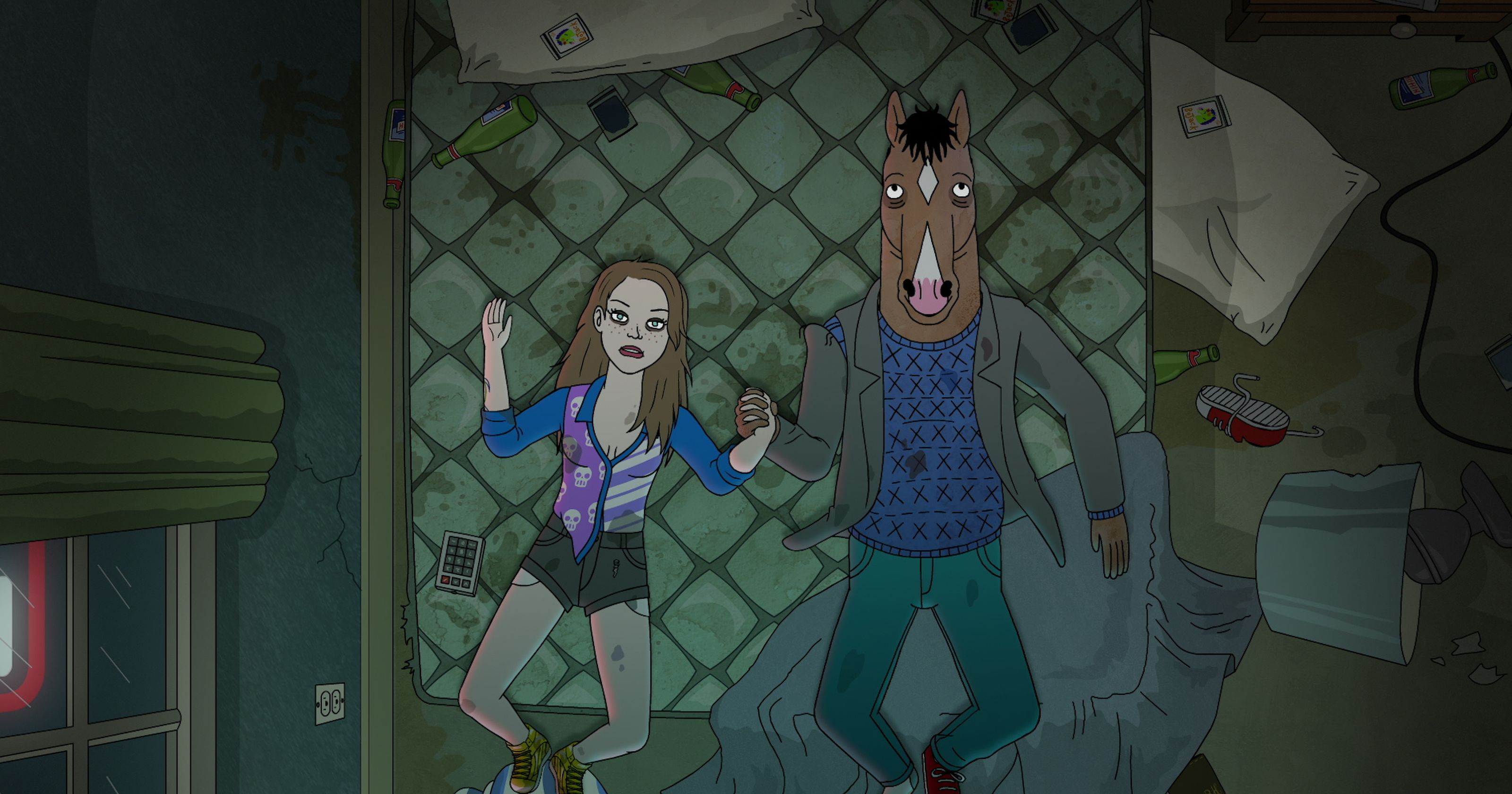
Then, there’s the strange and exceedingly depressing world of “Bojack Horseman.” If ever there was a show that went out of its way to kill happy endings with the force of a billion gut punches, it’s this one. Think of all our most cherished ideals from popular media, social movements, and ideology, in general. “Bojack Horseman” finds a way to crush it all while still being funny, albeit in its own dark way.

I promise it’s funnier than you think.

I say that as someone who has watched “Bojack Horseman” since the first season, but I find myself appreciating its dark themes more and more lately. However, it’s not just because the harshness of the real world is a lot harder to hide in the era of the internet and social media.

Recently, I had a chance to re-watch the past couple seasons. In doing so, I noticed just how much our collective worldview is built around our hope for a happy ending. Almost every character on the show, from Bojack Horseman to Diane Nguyen to Princess Caroline to Mr. Peanutbutter, is driven to achieve some idealized ending for themselves.

For Diane, she seeks to become a successful writer who exacts meaningful change through her work.

For Princess Caroline, she seeks to be an accomplished, independent woman who has it all, both in terms of career and family.

For Mr. Peanutbutter, he seeks to make everyone around him happy and pursue every new project with wide-eyed passion.

For the titular character, Bojack Horseman, pursuing that ending is more complicated. Through him, the harshness of reality seems to hit everyone and everything he comes across. It’s not always through his actions, which are often selfish, reckless, and downright deplorable. His story, which helps drive the show from the beginning, reveals how pursuing idealism can leave us vulnerable at best and destroyed at worst.

To understand how the show does this, it’s necessary to understand what makes this show both unique and appealing. If you only watch the first few episodes, then “Bojack Horseman” doesn’t come off as all that deep. It just seems like a story about a narcissistic washed-up actor who happens to be an anthropomorphic horse in a world full of various human/animal hybrids.

After a while, though, you start to appreciate how Bojack reflects the ugly reality of self-centered celebrities. Whether they’re at the height of their popularity or have been out of work for years, they live in a world that basically requires them to be utterly self-absorbed and completely detached from reality. Living in that world tends to obscure what reality is and provides one too many mechanisms for escaping it.

In the show that made him famous, “Horsin’ Around,” everything was skewed. Every problem was solved within a half-hour. Everyone was happy by the end of the episode. Bojack seems at his happiest and most fulfilled when the cameras are rolling and the show is on. Behind the scenes, which is where most of the show takes place, the ugliness of his reality takes hold.

Without the show, that ugliness consumes him. Over time, it wears on him, causing him to seek that idealized ending that his show often espoused. Throughout multiple seasons, it leads him down many paths. At the same time, others like Diane, Princess Carolyn, and Todd Chavez attempt paths of their own.

From this foundation, any number of ideals can take hold. In Hollywood, or “Hollywoo” as it comes to be called in the show for hilarious reasons, an entire industry is built around telling stories or crafting media that either champion those ideals or distract people from reality. For someone like Bojack, who gets crushed by reality harder than most, it’s the worst place for him to be.

Bojack, and his colorful cast of supporting characters, either embrace or get sucked into this fanciful world. Throughout the show, they get put into positions where they can pursue their dreams, achieve what they think will make them happy, and even are allowed to succeed in some instance. If this were any other show, then that would be the happy ending that both the characters and the audience expect.

Bojack Horseman” is different in that it goes out of its way to expose the flaws in those idealized endings. The creator of the show, Raphael Bob-Waksberg, has even gone on record as saying that he doesn’t believe in “endings,” at least in the way that TV, movies, and popular media present it. In a 2015 interview, he said this about endings.

Well, I don’t believe in endings. I think you can fall in love and get married and you can have a wonderful wedding, but then you still have to wake up the next morning and you’re still you. Like, you can have the worst day of your life, but then the next day won’t be the worst day of your life. And I think it works in a positive and a negative, that all these things that happen are moments in time. And that because of the narrative we’ve experienced, we’ve kind of internalized this idea that we’re working toward some great ending, and that if we put all our ducks in a row we’ll be rewarded, and everything will finally make sense. But the answer is that everything doesn’t make sense, at least as far as I’ve found. Maybe you’ll interview someone else today who’s like “I’ve figured it out, here’s the answer!” But I don’t know the answer, and so I think it would be disingenuous to tell our audience “Here’s the answer!” It’s a struggle, and we’re all trying to figure it out, and these characters are trying to figure it out for themselves.

This sentiment plays out time and again over the course of the show. On more than one occasion, Bojack seems like he’s on the verge of achieving that happy ending and turning those ideals into reality.

He thinks getting cast in his dream role as Secretariat will give him that ending, but it doesn’t.

He thinks being nominated for an Oscar will give him that ending, but it doesn’t.

He thinks being cast in a new TV show will give him that ending, but that only makes things much worse.

At every turn, reality catches up to him. Whether it’s his many vices, his habitual selfishness, or his terrible choices, it always comes back to haunt him. Even when that happy ending seems achievable, it always becomes mired in complications that Bojack can’t always control. The same complications often impact other characters seeking their own happy endings, as well. For some, it ends up being downright tragic.

At times, the show paints a grim picture about even attempting to pursue a happy ending. Even when Bojack has insights into the process, it’s never as easy as his old TV show makes it out to be. However, the fact he and others around him keep pursuing that ending says a lot about everyone’s need to achieve something greater.

Even in a world without talking horsemen, that’s something a lot of people can relate to. Most of us build our lives around hopes and aspirations that we’ll forge our own happy ending. There may even be moments when we feel like we achieve it, whether it’s graduating high school, getting married, having children, or finally beating level 147 in Candy Crush.

However, even after those moments, the credits don’t roll. Things don’t end. The things that led you to that moment only work to the extent that they led you to that one singular moment. Life still continues and the happiness fades. Bojack experiences this at greater extremes, some of which are downright absurd, but people in the real world experience it too throughout their lives.

I can personally attest to this. When I finally finished high school, I thought that was like slaying the final boss in an impossibly hard video game. I felt the same way after graduating college, getting my first girlfriend, or publishing my first book. If the credits started rolling at that moment, it would’ve made for a great ending.

Unfortunately, life just doesn’t work like that. “Bojack Horseman” belabors that every chance it gets while still managing to inject some meaningful comedy along the way. It’s a lesson worth learning, especially for Bojack. It’s one he’ll probably keep learning in future seasons. Chances are, we’ll all learn with him along the way.

In many respects, the one who best summed up this sentiment isn’t Bojack himself. In Season 3, it’s Diane who lays out the harsh reality that everyone in the real and fictional world struggles to accept.

“It’s not about being happy, that is the thing. I’m just trying to get through each day. I can’t keep asking myself ‘Am I happy?’ It just makes me more miserable. I don’t know If I believe in it, real lasting happiness. All those perky, well-adjusted people you see in movies and TV shows? I don’t think they exist.”

It sounds depressing, but that’s par for the course with “Bojack Horseman.” Reality is often depressing, but it’s not utterly untenable because happy endings are impossible. There are many points in the show that try to make that case. Even Bojack himself tries to make that case, albeit in his own twisted way.

I would even argue that the show’s brutal attack on the very concept of idealized happy endings is uplifting, in and of itself. By making the case that all the happy endings we see in the idealized versions of fiction are flawed, it shows how futile and counterproductive it is to pursue them. The real world is harsh and brutal, but you can find moments of happiness along the way. They’re not endings. They’re just part of life.

5 Comments

Filed under Bojack Horseman, Celebrities and Celebrity Culture, human nature, nihilism, philosophy, psychology, television

Should Teenagers Be Allowed To Use Sex Robots?

repsa

There are certain products and activities that society prohibits from teenagers. For the most part, there’s a reason behind that. Teenagers are young, inexperienced, and not mature enough to handle certain things. It’s not an insult, although I don’t blame any teenager for taking offense. It’s just an acknowledgement that most young minds aren’t ready to process the adult world.

That said, things get exceedingly tricky when sexuality enters the picture. Unlike smoking, drinking, or wanting to drive a car, sex is an innate desire that every teenager is wired to seek. You don’t need peer pressure, subversive advertising, or heavy metal music to make a teenager think about sex. Chances are they’re already thinking about it. For parents and teenagers alike, it makes for many awkward conversations.

Pictured are two people who do NOT want to have that conversation.

Thanks to the hormonal onslaught of puberty, a teenager’s sexuality is often in a state of chaos. They have thoughts, feelings, and desires they don’t entirely understand. Their bodies are changing and they’re just trying to keep up. On top of that, the most common refrain from parents and teachers is to repress all those feelings and shame anyone who doesn’t.

It’s an awkward situation, to say the least. I’m not a teenager or a parent, but I think most would agree there’s a lot of room for improvement. Improving comprehensive sex education, providing accurate information, and helping teenagers develop a mature understanding of sexuality will go a long way towards this effort. These are all things we can and should be doing now.

However, what happens once sex robots enter the picture?

It’s a serious question. While I’m sure it’ll elicit awkward laughter from some, I believe this issue is worth contemplating. As I’ve noted before, sex robots are coming. I know that’s a poor choice of words, but it’s true.

Some models are already available for purchase. While nobody will mistake them for actual people, the fact you can buy one today shows the market is there. Sex still sells and, like cell phones before it, the technology will improve. Even if we’re decades from something as lifelike as the model in “Ex Machina,” we’re not that far from something that provides realistic sexual experience.

While there will be plenty of adults who celebrate this technology, as well as a few who condemn it, what will it mean for teenagers? Will they be allowed to legally purchase sex robots? Even if they cannot purchase one, will they be allowed to use one? If not, then how will we go about policing it?

These are relevant questions and the answers don’t entirely depend on logistics. As I noted before, society prohibits teenagers from doing all sorts of activities. There are legitimate legal, social, and even medical reasons for these prohibitions. There are serious, long-term harms associated with teenagers who smoke and drink alcohol. For a healthy society, these prohibitions make sense.

With sex, it’s a lot trickier. While there is some research to indicate that viewing pornography affects teenage sexual behavior, it’s not as conclusive as the harms of drug addiction. Some of those harms have more to do with stigma and poor sexual education than the content itself. Once sex robots enter the equation, though, things get even more complicated.

Porn, for all its quirks and kinks, is a fantasy on a computer screen. A sex robot is a tangible, human-like figure that people can interact with. On top of that, if the robot has a human-like measure of intelligence, it can also provide a realistic sexual experience that the user can share. Robot or not, this experience can be as intimate and satisfying as anything someone might experience in their personal life.

For teenagers, as well as their parents and teachers, this creates both opportunities and risks. Let’s say, for instance, that sex robots are legally accessible for any teenager who wants one. These robots look and feel like any other person. They have a measure of intelligence that allows them to interact and form healthy, beneficial relationships with teenagers.

In this environment, every teenager has a sexual outlet, no matter how awkward or unattractive. They have a sex robot who can provide them companionship, teach them about their sexuality, and even help them learn what they want in an intimate partner. Maybe they even help teenagers struggling with their sexual orientation gain a better understanding of who they are.

Since these are robots, the risks of pregnancy and disease is not an issue. If these robots are sufficiently intelligent, they’ll be capable of guiding teenagers through their sexual maturation, regardless of gender, orientation, or disposition. Instead of hearing some teacher or parent just lecture them on all these awkward issues, they have a chance to experience it first-hand.

For parents, I imagine I’ll still be distressing to think about their teenage son or daughter having sex of any kind. Whether it’s with a person or a robot, it’s going to cause plenty of stress. That’s unavoidable, no matter how much the technology matures. At the same time, sex robots could ultimately be the safest and most satisfying way for a teenager to learn about their sexuality.

The ultimate sex ed teacher.

All that said, there are risks. In a perfect world, sex robots would ensure that every teenager navigates their adolescence with the benefit of a fulfilling, mature understanding of sexuality. Everyone from the most attractive athlete in high school to the ugliest kid in neighborhood enjoys intimate, satisfying experiences through these sex robots. Sadly, we don’t live in a perfect world.

There’s certainly a chance that sex robots could lead to potential harm, which would only be compounded for teenagers. In some situations, sex robots could cause certain individuals to dissociate themselves from other flesh-and-blood people. They may ultimately prefer the company of their sex robot over anyone else, including close friends and family.

This could lead to an entire generation of men and women who reject relationships with non-robot partners, intimate or otherwise. They would see sex with other people as this needlessly complicated, needlessly risky endeavor that offers few benefits. Beyond stagnating the population more than it already is, it could make people more distant from one another than they already are.

On top of that, there could be issues with the sex robots themselves. Ideally, every sex robot would be calibrated to foster healthy attitudes towards sex, intimacy, and relationships. Since computers are rarely perfect and prone to glitching, it’s a given that a sex robot will malfunction at some point. What will that do to the teenager who uses it?

In that case, a faulty sex robot fosters some very unhealthy attitudes in a young, impressionable user. If it’s not caught in time, this person could grow into someone with a very skewed understanding of sexuality. That already happens today with teenagers who are poorly educated on sex. With sex robots, the problems could escalate quickly.

Then, there are the parents, teachers, and authority figures themselves. This is one aspect of sex robots that might be the most difficult to contemplate. It’s easy to imagine a scenario where the adults of the world decide that teenagers shouldn’t use sex robots for the same reason they shouldn’t smoke cigarettes. That may just be the path of least resistance at first.

Where would you put the warning label?

At the same time, it’ll be adults who program, sell, and regulate sex robots. Who’s to say that they’ll do so in a way that has the best interests of teenagers in mind? If anything, people will be more tempted to use sex robots to exert a measure of control over teenagers that even more powerful than controlling their cell phone.

Perhaps parents in religious communities configure sex robots specifically designed to mold their teenagers’ sexuality to their liking. That means anything that may involve homosexuality or bisexuality would be strongly discouraged, shamed, or conditioned. The harm that would do to a teenager is difficult to quantify, although we do have some clues.

There could also be parents who don’t have healthy attitudes about sexuality themselves. Perhaps parents in abusive relationships program a sex robot to reinforce those relationships to their children. From their perspective, they’re not trying to harm or mold their teenager’s sexuality. They’re just conveying what they think is normal.

The (possible) future of normal.

There are probably plenty more risky scenarios I could contemplate. I’m sure those reading this have already imagined a few that I cannot put into words. Whatever the possibilities, the question remains. Teenagers are already thinking about sex. In every generation in every time period, part of being a teenager means contemplating sexuality and dealing with sexual urges.

It’s impossible to overstate just how impactful sex robots will be to society, sexuality, and how people relate to one another in general. Like it or not, teenagers will be affected. Sex robots can certainly do plenty of good. For some, they may be therapeutic. For others, they’ll be disruptive. For teenagers, it could be all of that and then some.

It’s difficult to say, at this point. It’s even harder to determine whether permitting teenagers to use sex robots will do more harm than good. One way or another, teenagers will continue thinking about sex and it’s still going to be awkward for them. No amount of technology will ever change that.

6 Comments

Filed under futurism, human nature, psychology, sex in society, sex robots, sexuality, Sexy Future

Why We Are All Jerry Smiths In A World Of Jerry Smiths

jerry_post

If you’re reading this, then chances are you’re not a famous scientist, celebrity, politician, intellectual, or cultural icon. If you are, I’m flattered and a little shocked that you’re reading a site built around sexy short stories, erotica romance novels, and multiple pieces on sex robots. Whatever your status, I hope you find this both informative and revealing. It’ll also help if you’re a fan of “Rick and Morty.”

I know I’ve used that show many times to make points about everything from love to nihilistic morality. It’s not my fault the show is so brilliant in how it presents complex issues in a way that’s entertaining, hilarious, and vulgar. Sometimes, we need certain concepts presented in such a way in order to make sense of them, especially if the implications are unpleasant.

While “Rick and Morty” explores many concepts through many colorful characters, some more memorable than others, there’s one particular character who embodies a particularly distressing concept. That character is Jerry Smith, Morty’s father and Rick’s son-in-law. You could argue Jerry represents a lot of things in this show, but I would argue that Jerry Smith, more than any other character, represents us.

Chances are you’ve done something like this today.

By us, I don’t mean the people who watch regularly “Rick and Morty.” I’m not even referring to those exceedingly passionate fans who went ballistic on McDonald’s employees for not having any Szechuan Sauce. When I say that Jerry Smith is us, I mean that this colorful character that we love to laugh at represents the hopes, dreams, flaws, and foils of the entire human race.

To understand this sentiment, it’s necessary to know who Jerry is and what role he plays in over-arching mythos of “Rick and Morty.” For the most part, he’s neither a protagonist nor an antagonist. He’s rarely a hindrance to the cosmic antics of Rick Sanchez and while he tries to be a capable father to Morty, his influence is limited, at best. For the most part, he’s an afterthought at best and an inconvenience at worst.

When the family has to ban together to fight off alien parasites, Jerry doesn’t do any fighting.

When the family first encounters the Council of Ricks, Jerry either cowers or is fodder for pranks.

Even when he does play a significant role in an episode, Jerry tends to make the problem worse with his actions or is the underlying catalyst for them.

Chances are you’ve been this frustrated recently.

It wouldn’t be accurate to say he’s completely inept. By and large, he is a respectable person who tries to do his best with his current situation. Granted, nobody in his family makes that easy for him, but there’s no doubting his intentions. He wants to do what’s best for his family, but his capabilities are exceedingly limited.

That’s understandable, given who he deals with. Rick Sanchez is an alcoholic super-genius who can travel across universes, enter other peoples’ dreams, and build intelligent robots whose sole purpose is to pass butter. His wife is a skilled horse surgeon who can also hold her own against Rick-level threats. His two kids are young, but still capable of handling themselves in a post-apocalyptic wasteland.

Pretty much every character in “Rick and Morty” demonstrates that they can handle themselves in the crazy situations that Rick often puts them in. When aliens, parasites, or intelligent dogs enter the picture, they can confront the situation and even help resolve it. Jerry has never shown that ability. Every time he tries, he either fails or makes it worse.

Or just looks foolish.

The reasons for his failure aren’t entirely his fault. Jerry’s biggest shortcoming is that he’s an ordinary person in a family of extraordinary people. In any other circumstance, he would be able to relate, understand, and cooperate with others. In an environment where alien creatures are kept in his garage, this just isn’t possible.

In essence, Jerry Smith is as powerless and inept as almost anyone else would be in that situation. That even extends to a real world full of Jerry Smiths and exceedingly few Rick Sanchezes. Unless your name is Elon Musk, Bill Gates, Tim Cook, or Barack Obama, you’ll have more in common with Jerry than you will with anyone else in “Rick and Morty.”

In many respects, that’s a little distressing. It reflects a hard truth that most people aren’t able to effect meaningful change that ripples across the multiverse. For the most part, they’re at the mercy of the powerful forces around them and people like Rick Sanchez who are able to guide them to some extent.

Drunk or sober, Rick will guide you.

Even when Rick Sanchez espouses his nihilistic rhetoric, it seems to hit Jerry and everyone else like him a lot harder. Even if nothing Rick does matters, he’s smart enough and skilled enough to pursue what he wants while minimizing the consequences. Jerry can’t do that. He can only ever react to the random meaningless chaos surrounding him.

Most everyone in the real world is in a similar position. When something crazy happens, be it a natural disaster or a controversial election, there’s little any of us can do about it. A select few, such as lawyers, judges, and other powerful politicians, may be in a position to effect some change. Everyone else is stuck watching, hoping, and living their meaningless lives along the way.

We can react to the meaningless chaos, but we rarely be proactive. If most people had that opportunity, they would likely mess it up in the same way Jerry messed up a simple Meeseeks Box. Even if your intelligence is above average, your credit score is good, and you have no criminal record, you’re still just one person. You can only do so much without a portal gun and a high-tech lab.

However, it gets even more depressing than that. Throughout three seasons of “Rick and Morty,” Jerry isn’t just shown to be inept whenever faced with a crazy situation. He’s also completely replaceable. This is best demonstrated in the episode, “Mortynight Run,” in which Rick takes Jerry to a special adult daycare center that’s specifically caters to keeping Jerrys from multiple universes safe.

It’s hilarious, but pragmatic for someone like Rick Sanchez because it gives him a place to keep Jerry from undermining his plans. It’s also disturbing how effective it is because as soon as Jerry arrives, he finds himself surrounded by other versions of himself. While upset and insulted, at first, he quickly finds himself enjoying the amenities that are tailor-made to pacify him.

By the end of the episode, it’s hard to tell what separates this Jerry Smith from all the other Jerry Smiths in the multiverse. In the end, even Rick and Morty don’t seem to care which one they take home. One Jerry is as good as any other. He’s basically an interchangeable part that fulfills as basic role and little else.

It’s a role in which many people in the real world find themselves. Modern society, especially after the industrial revolution, has reduced most ordinary people of Jerry Smith’s abilities to that of societal cogs. They’re not individuals as much as they are a mass of humanity that produces, consumes, and provides support for the select few who can achieve the kind of impact of a Rick Sanchez.

More than one episode of “Rick and Morty” has explored how society can dehumanize people and there are plenty of examples in the real world, as well. That dehumanization is just easier to inflict on someone like Jerry Smith. While Rick Sanchez may realize when he’s in a simulation, Jerry likely wouldn’t. In fact, he would be quite comfortable and content in such a simulation.

That’s the ultimate flaw in the character construct of Jerry Smith. By being so unremarkable, he is easy to outwit and even easier to placate. He’s basically a sheep that herders can keep docile just by making sure there’s fresh grass to eat. While Rick Sanchez isn’t always the herder, he and others like him knows how to guide the sheep whenever it benefits him.

Even the Devil is not immune.

Nobody will ever admit they’re just a sheep. People will tell themselves whatever they have to in order to believe that their lives have greater meaning than they actually do. Jerry does this more than once throughout the show. People in real life do so when they carry themselves as the heroic underdogs of their own movie. More often than not, it doesn’t amount to much, which even Morty points out at one point.

Like it or not, most people who aren’t rich, beautiful, or well-connected will always have more in common with Jerry Smith than with any other character in “Rick and Morty.” The number of Jerrys in the world will always vastly outnumber the Ricks. A huge chunk of society is structured around having a vast population of unremarkable, but easily placated Jerrys.

Whether we admit it or not, we are part of that system. We are the Jerrys who act as the cogs while the Ricks act as the operators. We don’t have the resources or genius of a Rick Sanchez so we can’t do much to subvert it. Even Rick can only do so much, even with his immense capabilities, which includes turning himself into a pickle.

It’s a bit depressing, but at the same time, there’s also a strange serenity that comes with the character of Jerry Smith. Even if he isn’t as capable as Rick or his family, he’s still someone who can find contentment and even peace in a chaotic world. Compared to Rick, whose famous catch-phrase masks his own inner pain, Jerry is probably happier overall, despite his meaningless lot in life.

Sometimes, ignorance is bliss, even if we’re oblivious to how ignorant we really are. In the long run, finding happiness will be easier for Jerry than it’ll ever be for Rick. For him, and the countless others who are just like him, the best recourse may be the same advice Rick often gives Morty.

Simply put, just don’t think about it.

2 Comments

Filed under human nature, philosophy, psychology, Rick and Morty, television