Tag Archives: psychology

Quality Life Lessons From The Cleveland Browns And Their Fans

NFL: SEP 18 Ravens at Browns

Even though I often say that the world is getting better by most measures, I don’t deny that it’s not improving for a sizable part of the global population. There are parts of the world still racked with disease, poverty, and despair of all kind. The unfortunate people in these parts deserve our respect, sympathy, and support.

However, there’s one particular part of that suffering population I want to focus on. While 2017 might have been bad for quite a few people, there’s one group of people whose anguish is unique in terms of its breadth and context. That group is the Cleveland Browns and their long-suffering fans.

Being a football fan, who often finds himself defending the unflattering situations in which the NFL often finds itself, I follow most major news stories surrounding the NFL throughout the season. Few stories have been as disheartening as those involving the Cleveland Browns, who became only the second team to lose all 16 games in 2017.

In terms of a major sports team in a major American city with a rich sports history, you literally cannot get worse than the 2017 Cleveland Browns. Between their long-standing issues at quarterback, a terrible track record in the NFL Draft, and a high turnover of coaches in the past several years, the Cleveland Browns have set a solemn standard for ineptitude.

It doesn’t matter how disappointed you were with your favorite team this year. It doesn’t matter how upset you were when they got eliminated from the playoffs, lost to a hated rival, or made a bone-headed play that made you ashamed to be affiliated with them. Cleveland Browns fans had it worse. There’s just no way around it.
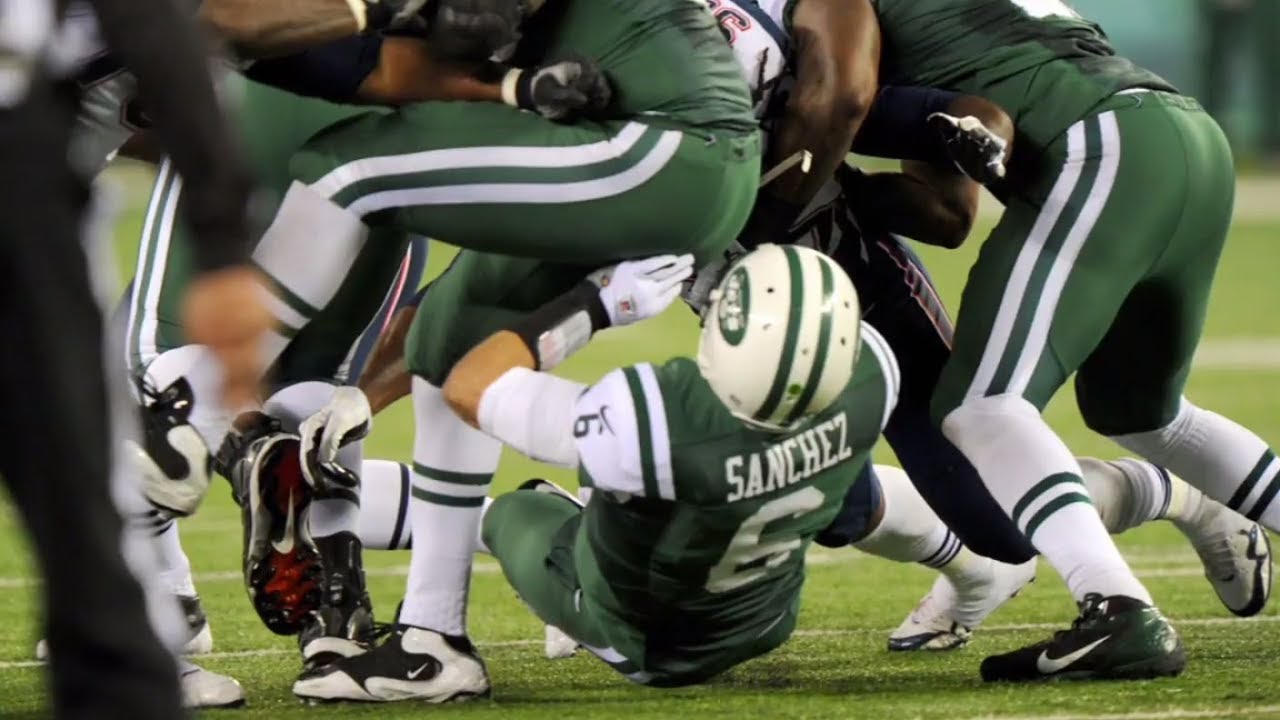
However you feel about the city of Cleveland, their sports teams, or LeBron James, you can’t help but feel bad for the fans of the Browns. They are a very passionate bunch, one whose history includes big names like Paul Brown, Jim Brown, and Bernie Kosar. Given the heartbreak they’ve endured over the years, this latest news is just salt in the wound.

I’m sure there are plenty of Browns fans out there who could talk for hours about how rough it is, being a Browns fan. Up until 2016, being a Cubs fans was the only fair comparison. Now, the Browns are very much alone in their solemn state. It’s a modern tragedy that seems downright masochistic to some.

That’s exactly why the decision by some fans to hold a parade to celebrate their ineptitude is so remarkable. It wasn’t a prank or an elaborate joke, either. This parade really did happen and it managed to draw over 2,000 people.

To some, it seems funny that a team that had such a historically bad season is worth celebrating. To others, it may seem like an elaborate form of therapy, holding a parade instead of just wallowing in the misery of being such a historically bad team. Personally, I see it as an important life lesson, of sorts, that we would all be wise to heed.

Losing in any capacity is hard, whether it’s a major sports team or just losing your keys. There’s actual psychology behind it that is wired into us, even as children. Losing, especially dealing with it, can be downright painful for some people. It’s like suffering a nasty wound and having that wound fester.

That’s why coping skills are so important. Most of us who aren’t billionaires or Tom Brady are going to endure our share of losing in life. Our ability to cope and learn from those losses help shape the kind of person we are. There’s a right way to cope and many wrong ways. Too many wrong ways risks breaking someone mentally or just making them an asshole.

When it comes to the coping skills of Cleveland Browns fans, throwing a parade and celebrating the absurdity of their team’s ineptitude is actually pretty damn healthy. Unlike the fans who riot when their team loses a championship game, this parade caused no real property damage.

It didn’t involve people angrily lashing out, which has been proven to be bad for you. It didn’t involve angry protests, which can be hit or miss in terms of effectiveness. It was a parade, one in which Browns fans overtly acknowledged their team’s failures and essentially accepted it. From a psychological and societal standpoint, that’s pretty damn healthy.

There’s even some real philosophy behind this concept, one that goes beyond sports and their fans. It’s called absurdism, the idea that in order to cope with the struggle to find meaning in a seemingly-meaningless world, we must embrace the absurd condition of life in general. We should even celebrate it.

Some philosophers cite the story of the myth of Sisyphus, the man doomed to endlessly push a boulder up a cliff for all eternity, only to fail every time. However, through the lens of absurdism, Sisyphus is actually the happiest guy in the world because he ascribes meaning to his meaningless act. He doesn’t see what he does as futile. He sees it as purpose and he celebrates it, as such.

The situation for the Cleveland Browns may not be as hopeless as Sisyphus, as many bad teams have gone from worst to first before, but the fact that fans are celebrating the struggle reflects strange comfort our minds find in absurdism. We know the situation is bad and it literally can’t get much worse, but we accept and embrace it. As such, it doesn’t’ destroy us. It actually makes our collective psyche stronger.


This is even more useful in sports because, even after such a historically bad season, things are pretty much guaranteed to get better for the Cleveland Browns. They literally cannot get worse. They enter the 2018 season with a new general manager, abundant cap space, and multiple high draft picks. They will get better. The history of bad NFL teams makes that a given.

Until that improvement comes, though, holding a parade to celebrate the rock bottom of such a proud franchise is both fitting and healthy. It’s an act from which we can all derive lessons. Sure, we all have bad days and some of them are worse than most. However, things do tend to improve when we know how to cope.

For the Cleveland Browns, such good coping skills will make future victories and championships feel that much sweeter. It may take a while. It may take a long while. As Red Sox fans and Cubs fans can attest, though, it’s worth the wait.


1 Comment

Filed under Current Events, sports

Aziz Ansari: A Case Study Of He Said/She Said And Impossible Justice

775097771ph00038-official-v

Ordinarily, I prefer to wait until an ongoing scandal involving a celebrity dies down before I comment on it. In my experience, it takes time for the full story to emerge. Most of the time, a more complete story tends to render any premature comments moot. John Carpenter recently provided a notable example of why such prudence is important.

That said, there are times when patience is also moot because the narrative follows an all too familiar pattern. It becomes so predictable that you can practically set your watch to it. Over the past several months, especially since the Harvey Weinstein scandal, we’ve seen that pattern play out in all sorts of disheartening ways. That’s why I’m opting not to wait on offering comments on Aziz Ansari.

By now, everybody with an internet connection, a social media feed, and a predilection for celebrity meltdowns knows the story. Aziz Ansari is the latest case of the Weinstein Effect. His name has officially been added to the growing list of male celebrities being accused of sexual misconduct.

The story first broke on Babe.net where a 23-year-old Brooklyn-based photographer calling herself Grace, which isn’t her real name, told a very distressing story about a night she had with Ansari. That story reads like a bad date, but still echoes with some of the same themes that Harvey Weinstein has helped make infamous. Naturally, this story is already striking a chord with the ongoing anti-harassment movement.

The way Grace tells it, she got into a situation that she lost control over and Ansari took advantage of that situation. I don’t want to get too caught up in the details. They’re just too unsexy, even for an aspiring erotica/romance writer.

Before I even attempt to comment, it’s worth pointing out that Grace said herself that she confronted Ansari about this privately. On the surface, it seemed like a terrible example of miscommunication and mixed messages. According to the article, this was the exchange.

Grace: I just want to take this moment to make you aware of [your] behavior and how uneasy it made me.

Ansari: Clearly, I misread things in the moment and I’m truly sorry.

If this had occurred several years ago, that probably would’ve been the end of it. The incident would’ve been a nasty experience for Grace and an uncomfortable memory for Ansari, but it probably wouldn’t have made the news, outside a few disreputable tabloids. Since powerful men harassing women has become a far greater issue, though, this is now national news.

It’s already generating the kind of divisive arguments that have been cropping up since the Weinstein scandal. Supporters of the anti-harassment movement are siding with Grace, accepting her story as another example of powerful men exploiting women. Opponents, including a few celebrities, are saying this movement is going too far and devolving into a man-hating witch-hunt.

Neither side is going to convince the other they’re wrong. Both sides have plenty of rhetoric to make their point. When I look at this story, though, I see far greater forces at work. I also see a devolving situation that is doing more to divide people in lieu of addressing real issues surrounding men, women, consent, and harassment.

When you read over Grace’s story and then read the statement Aziz Ansari issued in response, there’s one inescapable fact. It’s impossible to vindicate or disprove either version of the story. It is very much a classic he said/she said ordeal. She said he assaulted her. He said everything they did was consensual. There’s no way to be certain.

Sure, there’s a distinct possibility that one of them is lying. Everyone, celebrity and non-celebrity alike, is prone to lying. There have been documented incidents of women falsely accusing men. There have been men who have lied and gotten away with sexual misconduct. However, without knowing more details about the incident, it’s not possible to truly know.

Me being a guy who places a lot of faith in people, I suspect that both Grace and Ansari believe they’re telling the truth. I believe that if you hooked them up to a perfect lie detector, it would verify that both of them believe their respective stories with all their hearts.

This sounds like an impossible position until you remember that our memories are not very reliable, especially when it comes to unpleasant memories. Beyond simply not remembering the details of a terrible situation, our brains are wired to avoid the kind of mental discomfort that comes with enduring or committing a sexual assault at all costs, even if that means mis-remembering the truth.

It’s because of this that the he said/she said nature of stories like this is difficult to process. It creates a scenario that’s different from most other crimes and injustices. There’s no dead body. There’s no lost or damaged property. There’s nothing tangible to highlight the crime or misdeed. There are only two conflicting stories. As a result, it leads to a situation of impossible justice.

Even if everything Grace described happened exactly as she said it did, there’s no way to prove it in a courtroom or even a civil case. Even if Ansari is one-hundred percent innocent and is the victim of an elaborate extortion plot, there’s no way to prove that either, absent a confession or new information.

In both instances, there’s an injustice being committed. Since humans are wired with an innate sense of justice that shows even when we’re infants, that situation is untenable in our collective minds. People hear a terrible story like Grace’s and that inner justice system goes into overdrive.

Since we don’t have the time, energy, or even the capabilities to gather all the facts, we’re left relying on a certain degree of prejudice. This is where the impossible justice of he said/she said gets real ugly and this scandal with Ansari demonstrates it. When people start relying on prejudices, it tends to bring out the worst in humanity.

For those who believe our culture is full of entitled, misogynistic men who see women only as objects to be owned, then their prejudices will be reinforced by this story. For those who believe the movement against sexual misconduct is going too far and all men are being demonized, this story does the same.

That’s greatest tragedy of an impossible justice. It gives certain people the anecdotal evidence they need to further their agenda. It also gives those who stand against that agenda even more incentive to fight back. In the end, it only serves to heighten hostilities and intensify the rhetoric.

At a time when men and women are increasingly divided, especially in matters pertaining to sex and intimacy, this sort of story really drives us in all the wrong directions. It frames all men as sleazy pigs who jump at any opportunity to harass a woman. It frames all women as victims who must fight back against everyone and everything attacking them, real or imagined.

For me, personally, this story makes me sick to my stomach because it’s one of those stories that’s perfect for pushing an agenda, but not for pursuing justice. If what happened to Grace is true, then I’m in favor of having Ansari face justice for his misdeeds. I say that as someone who has been a fan of his comedy and his work on “Parks and Recreation.”

As it stands, though, there’s not enough evidence beyond the he said/she said dynamic to convict anyone of a crime. Absent that kind of justice, people are filling in the blanks with whatever gender-driven prejudices they want to strengthen.

In my personal opinion, which may put me at odds with both sides, I believe that there’s a third version of this story between Grace and Ansari that is closer to the truth. In that version, Ansari isn’t a total gentleman and Grace isn’t a hapless victim either. It’s just an experience that becomes awkward and unpleasant for them, the memories of which later get conflated and influenced by outside sources.

In the end, it’s still impossible to know for sure. Short of high-definition video, unambiguous audio, and an ability to read the exact thoughts of both Grace and Ansari during those moments when they were together, we can’t know how consensual or hostile the situation was between them. It messes with our desire for justice, especially when it comes to how men treat women.

In seeking that justice, though, it’s important to remember that there are instances where the truth isn’t just elusive. It’s physically impossible to ascertain. In those instances, trying to fill that uncertainty with agendas will only lead to more injustice in the long run for everyone.

7 Comments

Filed under Celebrities and Celebrity Culture, Current Events, gender issues, sex in media, sex in society

Why Our Assumptions About Male And Female Promiscuity May Be (Very) Wrong

most-sexually-charged-excerpts-from-erotica-books

When it comes to assumption, we tend not to question them, by default. That’s why they’re assumptions. It’s literally in the definition. It’s entirely natural to make assumptions, especially when they have some sort of inherent logic to them. It’s just how we, as a species, make sense of a chaotic world that we’re trying to survive.

The problem is, as I’ve pointed out many times before, our caveman brains aren’t wired logic. They’re wired primarily to help us survive and reproduce. That’s why our brains are so prone to all sorts of logical fallacies. That’s also why it’s hard to let go of assumptions, even when empirical data a very different story.

This brings me to our assumptions about sexual promiscuity. I’m hope I have your attention now because I knew a bland article about logical fallacies, caveman logic, and false assumption wasn’t going to get anyone excited. Put it in a context that’s both sexy and relevant, especially to an aspiring erotica/romance writer, and there’s much more appeal.

Sexy or not, the issue of assumptions in our sex lives are a lot more relevant in the era of “fake news” and “alternative facts.” These days, people are more likely to cling to their assumptions than ever before, even in the face of obvious evidence to the contrary. Hell, “South Park” even did an entire episode about this concept.

There are all sorts of complex psychological and social reasons for this, some of which I’ve covered before in other less sexy discussions. However, I’m not going to belabor those concepts. Most people know that humans can be exceedingly stubborn, even when faced with undeniable data that counters their assumptions.

That becomes a bigger problem, though, when you’re actually trying to make sense of something on an academic level. Our collective sexuality is one of those things that we try to study and understand, even if our efforts turn out to be disturbingly wrong. I like to think we’ve gotten better at it in the modern era, but sometimes fresh data reveals there’s still room for improvement.

This leads me to one of the most common assumptions about sexuality and the particulars of sexual promiscuity. You’ve probably heard it articulated at some point. It’s the basic structure surrounding male promiscuity versus female promiscuity. It goes like this:

  • Men are promiscuous because sperm production is cheap and there’s an biological incentive to have sex with multiple females in order to sire multiple offspring
  • Women are more selective about their sex partners because bearing children is risky and requires resources, which incentivizes securing men who will stick around to care for those children

There are all sorts of jokes and colloquialisms about this, men being dogs and women being angels. It’s also reflective of the most obvious double standards surrounding male and female sexuality and for most people, it makes sense.

A man can have sex with a thousand woman and, in theory, sire a thousand children. Ignoring the egregious child support payments this man would have to pay, it is consistent with the biological imperative to survive and reproduce.

Conversely, it makes just as much sense for a woman to secure a male partner who won’t just have children with her, but stay with her and invest in raising those children with her. This bears out in the many benefits ascribed to two-parent households.

However, if these assumptions were so logical and so biologically sound, then that would be reflected in the data we gather about our sexuality. Logic should be consistent with data, right? That’s the entire foundation of the scientific method, after all.

This is where the details get sketchy, but in a sexy sort of way. In an article from The Conversation, much of the biological data behind these assumptions about sexual promiscuity among men and women gets an added bit of scrutiny. In doing so, some revealing details emerge. Here is a brief excerpt that should raise a few eyebrows, among other body parts.

The common belief was that males and females were radically different. Moreover, attitudes about Victorian women influenced beliefs about nonhuman females. Males were considered to be active, combative, more variable, and more evolved and complex. Females were deemed to be passive, nurturing; less variable, with arrested development equivalent to that of a child. “True women” were expected to be pure, submissive to men, sexually restrained and uninterested in sex – and this representation was also seamlessly applied to female animals.

Although these ideas may now seem quaint, most scholars of the time embraced them as scientific truths. These stereotypes of men and women survived through the 20th century and influenced research on male-female sexual differences in animal behavior.

Unconscious biases and expectations can influence the questions scientists ask and also their interpretations of data. Behavioral biologist Marcy Lawton and colleagues describe a fascinating example. In 1992, eminent male scientists studying a species of bird wrote an excellent book on the species – but were mystified by the lack of aggression in males. They did report violent and frequent clashes among females, but dismissed their importance. These scientists expected males to be combative and females to be passive – when observations failed to meet their expectations, they were unable to envision alternative possibilities, or realize the potential significance of what they were seeing.

The same likely happened with regard to sexual behavior: Many scientists saw promiscuity in males and coyness in females because that is what they expected to see and what theory – and societal attitudes – told them they should see.

There’s much more to the article and I strongly recommend everyone take the time to read it, in full. It’s somewhat long because it references a lot of old research on animal behavior, as well as cultural attitudes towards sex and gender. However, the underlying theme is fairly clear.

The assumptions about coy, reserved females and aggressive, promiscuous males aren’t clearly reflected in the observed data. In fact, cultural attitudes going all the way back to the Victorian Era may have influenced our interpretation of the data, leading us to negate anything that countered those assumptions. That’s confirmation bias at its most basic.

This is similar to the message in the book, “Sex At Dawn,” which basically argues that our caveman ancestors had much better sex lives than we did. In that context, male and female promiscuity plays out in a very different way that also clashes with many of our assumptions.

In both “Sex At Dawn” and the article, the data seems to suggest that promiscuous females have higher rates of reproductive success. Biologically speaking, this makes sense because she’s getting a diverse sample of sperm and the higher quality material eventually finds a way to win out.

I’ll resist the urge to paint too crude a picture, although I will say that women pursuing a variety of men and attempting to weed out the best among them should not be too shocking. When you’re looking to find love and/or a baby daddy, you want quality and you can’t really be sure of that quality unless you find ways to test it. That’s not quite as dirty as it sounds, but it’s close.

With men, the data also clashes with the assumptions that men need only hump as many things with a pulse as possible. The article questions the idea that sperm is cheap and men’s contributions are purely resource-driven. The data actually suggests that men exercise a considerable degree of selection in choosing their partners. Just having a pulse and a vagina is not the only criteria.

As is now also well-documented, sperm production is limited and males can run out of sperm – what researchers term “sperm depletion.”

Consequently, we now know males may allocate more or less sperm to any given female, depending on her age, health or previous mated status. Such differential treatment among preferred and nonpreferred females is a form of male mate choice. In some species, males may even refuse to copulate with certain females. Indeed, male mate choice is now a particularly active field of study.

In essence, men are capable of being selective and downright loyal to their partners. Women are also just as capable of being sexually open, seeking out a variety of lovers in search of quality partners, both for social and reproductive success. In that sense, the promiscuous tendencies of both genders are a lot more level than any Victorian Era assumption would have us believe.

Add on top of this the documented health benefits of sexual promiscuity, as well as the sexual mores of our hunter/gatherer ancestors, and it’s increasingly clear that our assumptions about the sexual promiscuity are not consistent with biology, logic, or reality in general.

In a sense, our society already reflects this. The growing prevalence of blended families shows that the Victorian ideals that later played out in 1950s sitcoms aren’t accurate reflections of human nature. I doubt that this data will shatter the various assumptions that many still have on sexual promiscuity, but as with most excuses, they can only clash with reality so much.

Leave a comment

Filed under gender issues, polyamory, sex in society, sexuality

Social Context Versus “Toxic” Behaviors: Why The Difference Matters (A Lot)

There’s a fairly well-known set of experiments involving rats and cocaine. It’s a strange, yet revealing combination. In the initial experiment, a rat in a cage was given the choice between cocaine and food. Not surprisingly, especially for someone who has ever tried cocaine, the rat chose cocaine to the point of killing itself.

That experiment, which took place in the 1960s and 1970s, helped establish the idea that those who use cocaine would be so damaged, so addicted, and so utterly gone that they would rather take the drug than survive. It was pretty scary stuff and it helped inspire harsher anti-drug policies in the 1980s.

However, that experiment came into question in 1981 when a professor named Bruce Alexander re-did the experiment, but with one critical change. He didn’t isolate the rats in a cage. He put them in a colorful, positive environment with other rats that came to be known as “rat park.” The results weren’t nearly as scary.

As it turns out, when placed in a better environment with more social support, the rats didn’t become irreversibly damaged cocaine addicts. In fact, even when offered much more addictive drugs like morphine, the rats didn’t imbibe in illicit, drug-fueled bliss nearly as much as their caged counterparts.

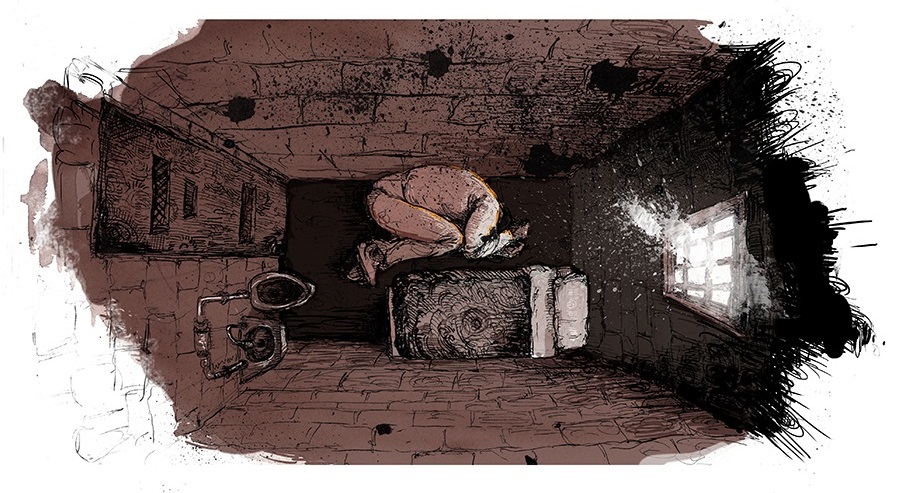
I bring up this experiment because it illustrates an important point about behavior and social creatures. Context and social setting matters. It matters a lot. Put someone in a cage, strip them of any social support, and isolate them from the world and they’re bound to endure some pretty toxic effects. That’s a big reason why solitary confinement is considered torture.

That brings me back to the inherently flawed idea of “toxic masculinity,” a term I’ve gone on record as saying should be buried in the deepest, darkest pit of our collective lexicon. I don’t want to re-hash or belabor any of the points I’ve already made about toxic masculinity. I’ll just note that some of the rhetoric surrounding it is distressingly similar to what anti-drug zealots used when demonizing cocaine.

Think, for a moment, about some of the negative traits associated with toxic masculinity. They include, but aren’t restricted to, stuff like:

  • Suppression of emotions
  • Being prone to violence
  • Increases in aggression
  • Associations with abhorrent sexual behavior

Then, look at the traits associated with cocaine addiction and note some of the parallels. In each case, there’s a direct association between these traits and a tangible, unambiguous cause. In one case, it’s a drug. In the other, it’s just being a man and associating with masculinity. Like the rats in that first experiment, though, there’s no context or social circumstances to consider.

That begs an intriguing, but important question, especially to those who still want to use “toxic masculinity” as a catch-all for certain behaviors. Is it really the nature of masculinity itself that’s behind these toxic behaviors or is it the social circumstances within the society?

That’s not a question anyone, especially not aspiring erotica/romance writers, can definitively answer. I don’t doubt it has been asked in other ways. It might even have been studied to some extent, but since it involves the complex machinations of the human psyche, definitive answers are hard to come by.

Even without the results of those studies, is it really that hard to contemplate the possibility that circumstances may effect how masculinity and femininity manifest? The rat park experiments alone hint at a fairly significant impact. Given the orders of magnitude in difference between rat and human brains, it’s not unreasonable to suspect that impact is substantial.

While we can’t run the kinds of experiments that Bruce Alexander did in 1981, we can assess the current status of masculinity within our culture. It may vary from region to region, but in terms of modern western culture, there are a number of traits that we’ve come to associate with masculinity.

It tends to manifest most distinctly in our standard models of romance, which puts men in situations where they have to be competitive, aggressive, cunning, and determined to get the kind of emotional and sexual satisfaction they want. Even when they do, those same situations make them just as inclined to seek other outlets of satisfaction.

Furthermore, men have to navigate these situations with the added baggage of being biologically wired to seek social, romantic, and sexual connections. Women have this wiring too, but the circumstances for them are different in that the culture has different expectations. Moreover, there’s no concept of “toxic femininity” to color their feminine traits as inherently negative.

What this means is the men are entering these circumstances pre-programmed to be very horny, very lonely, and in need of various forms of fulfillment. Being men, they’re expected to go out and get it while women are expected to just let it come to them. Now, I get that this is a gross oversimplification that obscures the overall gender dynamics, but in terms of the overall culture, these are the circumstances.

To illustrate the inherent issues with those circumstance, here’s a scenario that should help paint a picture of the male predicament. Again, it’s a gross oversimplification that I’m sure will offend more than a few people, but still reflects an important point.

Man: Hello, ma’am. I’m lonely and horny. How do I go about getting sex, love, and social support?

Woman: First of all, the fact that you just admitted you’re horny is disgusting. Women being horny, that’s beautiful and erotic. Men being horny is not, so you’re already a pig in my mind.

Man: What? Why? That’s not fair.

Woman: Don’t interrupt me! Talking down to a woman is rude and sexist. It’s basically the first step towards harassment and abuse. Raising your voice to a woman, showing any kind of dominance, is just perpetuating an oppressive gender stereotype that has no place in the current year.

Man: Okay. I’m sorry about that. So how do I go about it then?

Woman: You’re still talking over me. You’re getting dangerously close to harassing me and since you’re a man, everyone will believe me if I accuse you. So choose your words very carefully because if any woman feels upset by what you say or do, even if it’s unintentional, we can accuse you of being an abuser and ruin your life.

Man: Well, I’d like to avoid that at all costs.

Woman: Then, you’ll have to play by our rules. You’ll have to respect every choice a woman makes and take her side in every argument. Disagree with us or go against us and we’ll label you a sexist, misogynist pig. Then, you’ll never find love, sex, or any kind of social support.

Man: Wow. That almost sounds risky. I might just be better off watching porn and masturbating by myself.

Woman: Now, you’re just making it worse. For one, watching porn or admiring female bodies in any capacity is insulting, demeaning, and objectifying.

Man: But I’m attracted to beautiful women. Is that bad?

Woman: It’s awful! You’re contributing to unhealthy beauty standards that not every woman can hope to achieve. You’re part of a much larger problem in society that forces women to meet obligations that are difficult, inconvenient, or outright impossible. That makes you an accomplice to all the crimes ever committed against women.

Man: But I’ve never attacked, hurt, or insulted a woman in my entire life.

Woman: That doesn’t matter. Since men have gotten away with too many crimes in the past, you have to be the one to pay the price in the present. That means you have to carry the guilt of men you’ve never met for crimes and attitudes you had no part in creating. If you go against this in any way, then you’re an even bigger sexist misogynist.

Man: I don’t want that. I don’t want that at all. I guess I’ll have to find some other way to masturbate.

Woman: You’re still making it worse. You see, women can masturbate because it’s sexy and erotic. Men can’t. It’s just disgusting for reasons that neither of us can change. If any women finds out you’ve ever masturbated or paid for sex in any capacity, then they’ll think you’re a creep and a loser. They won’t even look at you, let alone want to be with you.

Man: But that’s not fair! I can’t turn off my desires.

Woman: That’s too bad. You’ll just have to suppress them while you jump through all the elaborate hoops a woman demands in the meantime. Just remember that even if you jump through all those hoops and do everything they ask, they still reserve the right to not have sex with you or love you in the way you want. That’s their choice and you can’t do anything about it.

Man: So what am I supposed to do? This is making me kind of frustrated and angry.

Woman: That’s not my problem. You either play by these arbitrary rules or we cut you off socially, sexually, and romantically. Try to change any of these rules and that just makes you the biggest misogynist of them all.

I’ll stop there and give everyone a moment to fume. Take all the time you need. It’s not the first time I’ve crafted a scenario with some pretty distressing monologues.

If you can get past the outrage, then try and take a moment to reflect on the circumstances in the scenario. Men are in a situation where the path to the kind of sexual, emotional, and social fulfillment that all social species seek is full of potential pitfalls.

Since those obstacles have gotten a lot more treacherous lately, it’s even harder for men to actively seek the very things that make them healthy and fulfilled. It’s akin to forcing the rats from the cocaine experiment back in the cage and demanding that they not succumb to the detrimental effects.

Now, it’s worth pointing out that women didn’t create these circumstances. There’s no feminist conspiracy any more than there’s a nefarious patriarchal conspiracy. In fact, some of these circumstances stem from traditions men have promoted, like the whole obsession with female purity and the concept of slut-shaming. Men have done more than their part to create and exacerbate these circumstances.

As it stands, though, the circumstances for men are such that frustration, anger, and isolation are almost inescapable. Unless you’re very rich and very well-connected, you’ve got a lot of hazards to navigate. Slip up and you’ll be labeled a creep, a misogynist, or worse. Even if that doesn’t put you in a literal cage, it’ll make you feel like you’re in one. At that point, is it really that surprising when a person’s behavior comes off as toxic?

With these circumstances in mind, the concept of “toxic masculinity” becomes even more asinine because it utterly ignores this context. Absent that context, it can only ever damage whatever harmony men and women have. Given how sensitive we’ve become to scandals and sexism, we can’t afford to do much more damage and expect either gender to come out better.

3 Comments

Filed under gender issues, sex in media, sex in society, sexuality

Why The Term “Toxic Masculinity” Should Be Retired

There aren’t a lot of terms in the English language that I wish could be uninvented. As someone with a strong appreciation for language, as well as someone who aced every essay question in school, the concept of throwing away words is akin to throwing away a box of fresh donuts. It’s an abhorrent thought.

That said, I do find myself making exceptions every now and then. Sometimes, you have to because a set of words comes along that’s so loaded, so skewed, and so esoteric that its only real use is to embolden assholes and inspire disdain. Given how there are enough assholes in this world, male and female alike, such words can be powerful weapons.

That leads me to one of the few terms I wish we could expunge from the English language, as well as every other language, including those invented by Tolken and Star Trek.

Toxic Masculinity

You’ve probably heard it before and never in a positive context so get ready to cringe. You may find yourself cringing again, just by reading over it. For that, I apologize. However, this term and what it entails is worth discussing because it affects men, women, and everything in between.

In terms of contemporary meaning, it’s worth noting that the idea of toxic masculinity is fairly new in terms of context. It only recently emerged as a major buzzword of third wave feminism, which I’ve mentioned before and is still evolving. It’s definition is somewhat vague, which is one of its many problems, but according to Wikipedia, it embodies all sorts of problematic concepts.

The concept of toxic masculinity is used in the social sciences to describe traditional norms of behavior among men in contemporary American and European society that are associated with detrimental social and psychological effects. Such “toxic” masculine norms include dominance, devaluation of women, extreme self-reliance, and the suppression of emotions.

Conformity with certain traits viewed as traditionally male, such as misogyny, homophobia, and violence, can be considered “toxic” due to harmful effects on others in society, while related traits, including self-reliance and the stifling of emotions, are correlated with harm to men themselves through psychological problems such as depression, increased stress, and substance abuse. Other traditionally masculine traits such as devotion to work, pride in excelling at sports, and providing for one’s family, are not considered to be toxic.

In simplest terms, toxic masculinity is the idea that the very traits and social norms associated with manhood are both destructive to modern society and detrimental to women. It is basically the invisible hand that guides people towards regressive, patriarchal attitudes that prefer that everyone live in a 50s sitcom.

Granted, that’s an extremely oversimplified understanding of the concept, but it would take way too many blog posts to get into all the nuances that have been ascribed to toxic masculinity. For this piece, I want to focus on the bigger picture and not the fine print.

Now, to be fair, the idea of men being beasts is not new. It pre-dates feminism and modern society by centuries, going all the way back to pagan folklore. However, that concept always came with a particular context, one that the very idea of toxic masculinity seems to ignore.

Dig deep into any mythos about snarling, beast-like men and you’ll usually encounter the same themes. Put a man in a situation where he’s stripped of humanity, love, community, and family and he becomes a pretty dangerous person. That’s basically the entire concept behind the appeal of characters like Wolverine from the X-men.

With toxic masculinity, though, that important caveat gets overlooked or cast aside. In applying toxic masculinity in its current context, there’s no circumstance behind all these negative traits associated with men. Just being a man and having any concept of masculinity is inherently toxic.

This is the most nefarious, not to mention insulting, aspect of the concept. It eschews any idea of context and calls the entire experience of being masculine toxic. It creates a situation where the only way to not be toxic is to be feminine, which is overly convenient for those arguing certain brands of feminism.

In essence, it readily embraces one of the most common and well-known fallacies of all time. You’ve probably heard it before, but it can’t be belabored enough.

Correlation does NOT imply causation.

It’s behind every major superstition and many failed scientific observations. It’s also the only way in which toxic masculinity works, with respect to criticizing an entire gender.

With toxic masculinity, there is no circumstance or context. There’s no need to subject anyone to a dehumanizing process, be it complex social pressures or an adamantium bonding process. Just being a man who exercises his masculinity in any capacity is inherently toxic.

That’s a wonderfully simplistic understanding that encapsulates an entire gender for all the wrong reasons, but as is often the case with wonderfully simplistic ideas, it’s not accurate. With toxic masculinity, though, it’s far more dangerous.

Being such a new word that hasn’t had time to develop traditions and complexity, toxic masculinity is a lot like other concepts, such as “fake news” and “alternative facts.” They’re so new and so vague that you can basically use it as linguistic cheat code to discount anything that you either don’t agree with or don’t care to scrutinize.

A man commits more crime than a woman? That’s toxic masculinity.

A man blames a rape victims for putting herself in a dangerous situation? That’s toxic masculinity.

A man makes an inappropriate joke that offends women? That’s toxic masculinity.

A man denies sexually harassing a woman? That’s toxic masculinity.

A man uses vulgar, profane insults while playing video games? That’s toxic masculinity.

There’s a clear pattern here in that there doesn’t need to be a pattern. Just take any undesirable trait ever ascribed to a man and call it toxic masculinity. Then, like magic, there’s no need to scrutinize context or circumstance. There’s no need to run any tests or dig deeper. You know the diagnosis and the treatment is obvious. If masculinity is so toxic, then that means we just have to discourage masculinity altogether.

Again, it’s an overly simple interpretation of an exceedingly complex phenomenon. It’s one that lumps all men, as well as the many dynamics behind masculinity, into a singular collection of traits that just happen to have all sorts of negative connotations. It provides a clear antagonist for those seeking gender equality or women’s rights. It also provides a potent mechanism for shaming men.

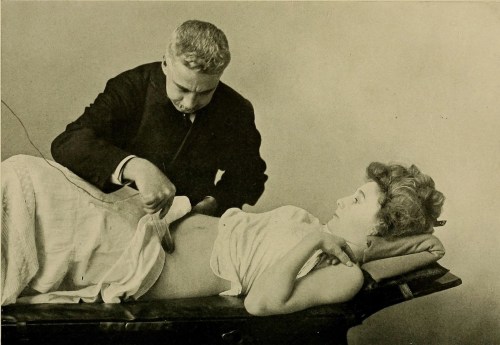
Ironically, this concept of treating certain gender traits as outright diseases is not unprecedented. In fact, there was a time when the roles were reversed and it was feminine traits that were considered “toxic.” However, people didn’t call it that. They actually had a medical term for it, which was “female hysteria.” Look at the definition and notice some of the parallels to toxic masculinity.

Women considered to have had it exhibited a wide array of symptoms, including faintness, nervousness, sexual desire, insomnia, fluid retention, heaviness in the abdomen, shortness of breath, irritability, loss of appetite for food or sex, and a “tendency to cause trouble”.

It seems funny and disturbing now, but back then, it was a serious issue. Society really did get to a point where being too feminine was considered a disease. Just being a woman carried with it an inherent shame that people couldn’t escape.

However, at least with female hysteria, the treatment wasn’t that bad in that it involved regularly being masturbated to orgasm. In terms of medical treatments, that beats the hell out of headaches and constipation. For toxic masculinity, though, there is no such treatment.

Since the term is so vague and its concepts so loaded, it creates a situation where the only way to avoid it is for a man to constantly denounce, deny, and disparage a core part of his identity. That usually involves a lot of virtue signaling and adopting the role of a beta male. The fact that approach has one too many similarities to gay conversion therapy should give anyone pause.

As it stands, the newness and ambiguity of toxic masculinity makes it a useful term for those who need an easy way to disparage men or extrapolate specific male behaviors to suit an agenda. That’s what makes it such a dangerous term for men and women alike, but that’s also what makes it an easy term to drop.

Now, I’m not denying that men have their share of undesirable traits. I also don’t deny that there are some aspects of masculinity that are worth scrutinizing. However, little good has ever come from creating terms that treat basic human traits as a disease. It creates a dangerous precedent that skews what it means to be sick and healthy.

Since it’s in the best interest for society and aspiring erotica/romance writers for genders to get along, ditching such a flawed concept like toxic masculinity will definitely help. It won’t solve all the issues associated with masculinity and feminism, but if we can do it for female hysteria, we can do it for toxic masculinity.

22 Comments

Filed under gender issues, sex in media, sex in society

Why People Blame The Victim (And How To Avoid It)

In wake of recent social trends and lurid scandals that took way too long to expose, we’ve entered a precarious moment in our history. I’m not just talking about ongoing issues surrounding gender inequality or trends in our sexual behavior, either. We, the same people who can’t even agree on the color of a dress, have come to a rare consensus on an issue.

Blaming the victims a sexual assault is BAD.

I’ll give everyone a moment to stop cringing and rolling their eyes. I know. This feels like one of those issues that shouldn’t even be an issue to begin with. Unfortunately, it evokes all sorts of heated emotions between men, women, feminists, men’s right’s activists, the transgender community, and certain species of baboons for all I know. It’s that a very loaded, very unsexy a topic.

Now, before I go any further, I want to make one thing abundantly clear. In talking about the particulars victim blaming, I’m not getting behind a particular movement or agenda. I’m choosing to confront this issue for the same reason I’ve used for confronting many unsexy issues.

Issues like sexual assault, and the victim blaming that comes with it, tie directly with our sexuality and our ability to love one another, albeit on the more sinister end of the spectrum. Given my efforts to become a successful erotica/romance writer, I can’t ignore these issues, nor do I want to.

I apologize if the way I go about discussing this issue offends or upsets some people. It wouldn’t be the first time I’ve been clumsy or misinformed with my words. However, this is one issue that nobody, be they a Hollywood producer or erotica/romance writer, should avoid. Sexual assault and sexual harassment are bad enough. Blaming the victim is just the napalm that gets dumped on that fire.

Overall, I think it’s a good thing that there’s rising awareness about sexual misconduct, especially among those in positions of power. Sure, it has been prone to a few misguided controversies, but the overall intent is good. Sexual misconduct is a serious crime. Who could possibly be against it?

That is a rhetorical question, by the way. I’ll skip the part where I recount how various internet trolls would answer that and get to victim blaming, which is where this inherently noble endeavor hits a brick wall and tries to pick a fight with it. Given that brick walls are undefeated against people armed only with profanity and alcohol, it’s a fight that tends to leave everyone bloodied.

It happened with the Harvey Weinstein scandal. It happened with Corey Feldman. It will likely happen again with the next major scandal to break. At some point in the narrative, someone will imply or state outright that the victims bear some or all of the responsibility for what happened to them.

Some will say they put themselves in a bad situation. Some will say they secretly wanted it and just played the victim to score sympathy. Some will say they dressed in a way that made them deserving of it, which is especially common among those who decry beautiful women in sexy attire. There’s another term for this kind rhetoric. It’s called being an asshole.

There’s really not much context here because by every measure, blaming the victim of a crime is a pretty rotten thing to do. Whether you’re a man, a woman, or something in between, scolding someone who just endured a traumatic injustice is right up there with strangling a puppy, drop-kicking a kitten, and slitting a unicorn’s throat.

As nasty a reaction it is, there is also an underlying mechanism behind it. Some of it is tied to the flawed wiring of our caveman brains, but I would argue most of it stems from the inherent difficulty of thinking rationally when we’re in such an emotionally charged state. Given the seriousness of crimes like sexual assault, emotions are often in overdrive.

The moment we hear about sexual assault, it triggers something in our collective minds that makes us want to lash out. It’s such an egregious injustice and most decent human beings seek to right an injustice. It’s actually one of humanity’s best qualities and one of the reasons I believe people are generally good.

However, sexual assault is not like a stolen phone, a damaged house, or a black eye. You can buy someone a new phone. You can help them fix their house. You can give someone with a black eye and ice pack to help sooth their suffering. You can’t easily do that with someone who endured a sexual assault.

Many times, as was often the case with perpetrators like Bill Cosby, the injustices aren’t tangible, nor are they easy to remedy. However, we’re still appalled that such an injustice even occurred. That innate sense of justice that we have hardwired into our brains at birth urges us to right this egregious wrong.

Unfortunately, our brains are still crude instruments that can’t always tell the difference between perpetrator and victim, especially when we’re in an emotional state. As a result, we have a hard time separating the crime from the actual people involved. It’s not some shady, patriarchal agenda. It’s just a byproduct of our inherent need to maintain a just and fair world around us.

Then, there’s the extreme tribalism that comes into play. Yes, that lingering flaw from our caveman past plays a part in this too. Think back to any case involving a sex scandal, be it one involving a celebrity or someone in a position of power. Then, look at those who did the bulk of the victim blaming. Chances are they’ll have some sort of allegiance or admiration to the accused.

That makes sense because we instinctively defend members of our tribe. Whether we share a political affiliation, an ideology, or a fondness for Bill Cosby’s brand of comedy, our first reflex is to defend our tribe, even if it means turning a blind out to cold, hard facts. This is why some people will still defend men like O.J. Simpson against all evidence to the contrary.

On some levels, it’s understandable, even if victim blaming is such an egregious act. Nobody wants to believe that they’re a bad person. Some want to believe they’re the hero of their own story and the world around them is full of villains. That’s where victim blaming becomes a dick move disguised as a defense mechanism.

If anything associated with their tribe becomes affiliated with something as horrible as sexual assault, then it becomes personal for them. When it becomes that personal, then other people can only be targets. As a result, the people those victim-blamers target will, in turn, fire back with the same tactics. Again, the people become disconnected from the injustice and it just becomes a glorified shouting match.

It basically adds another injustice on top of another, turning a crime into a personal struggle to protect your tribe, identity, and certainty that you’re a decent person and those who don’t agree with you are assholes. It’s a great way to rally a tribe in the struggle for survival. In an era where false accusations and poorly-worded tweets ruin lives, it’s downright dangerous.

Within this danger, though, lies the key to confront the fuel that feeds the fires of victim blaming. It’s impossible, at least for now, to know the pain a victim feels or the veracity of an accusation. Absent that certainty, the best we can do is focus on the underlying injustices surrounding sexual assault.

Whether it’s a man exploiting his power to abuse women or a woman going out of her way to ruin a man’s life, the connective tissue to the entire issue revolves around justice. Our desire to live in a just world is one of the few things that transcends tribalism.

To illustrate how that plays out, here’s a quick scenario.

Person One: Help me! That asshole has been sexually harassing me for years!

Person Two: What? What the hell happened? What did you do?

Do you see the disconnect there? The foundation for victim blaming is right there in the initial reaction. If the accused is someone the second person likes or respects, their first instinct will be to defend them. That’s hard to avoid and both sides can turn on each other quickly.

Now, here’s the same scenario with a key change.

Person One: Help me! That asshole has been sexually harassing me for years!

Person Two: What? That’s terrible! Nobody should have to endure something like that.

See the difference? This time, the second person doesn’t immediately personalize the issue. He and the victim are on the same page. They both understand that this is a crime. This is an injustice. That serves as a foundation for fixing it.

I don’t deny that it’s only a minor change and one that’s difficult to utilize in every instance. That’s unavoidable for emotionally charged issues like sexual assault. However, that’s exactly why the effort is so important. Anything we can do to stay on the side of the victims and confront the larger injustices of sexual assault will be far more productive than just attacking one another.

Until we can finally upgrade our caveman brains, egregious acts like sexual assault and victim blaming will likely remain. There are many mechanisms behind it, but there are far more that transcend it. Whatever the long-term outcome of the ongoing efforts to confront sexual misconduct, we have many more reasons to come together than we do to keep casting blame.

4 Comments

Filed under Current Events, gender issues, sex in society, sexuality

The Doug Stanhope Principle (And Why We Should Apply It)

In my experience, comedians offer the most memorable and insightful commentaries on otherwise serious issues. Even if they’re just trying to be funny, which is their job, I think those commentaries have worth beyond the laughs. There are even times I think comedians don’t realize just how insightful their humor can be.

I’ve made my love of comedy known before and not just through my weekly Sexy Sunday Thoughts. I’ve cited accomplished comedians like Christopher Titus when exploring very non-funny issues, such as jealousy. I don’t just do this to help lighten the mood on a site I want to keep light and sexy. I do it because comedy can reveal more than the breadth of our sense of humor.

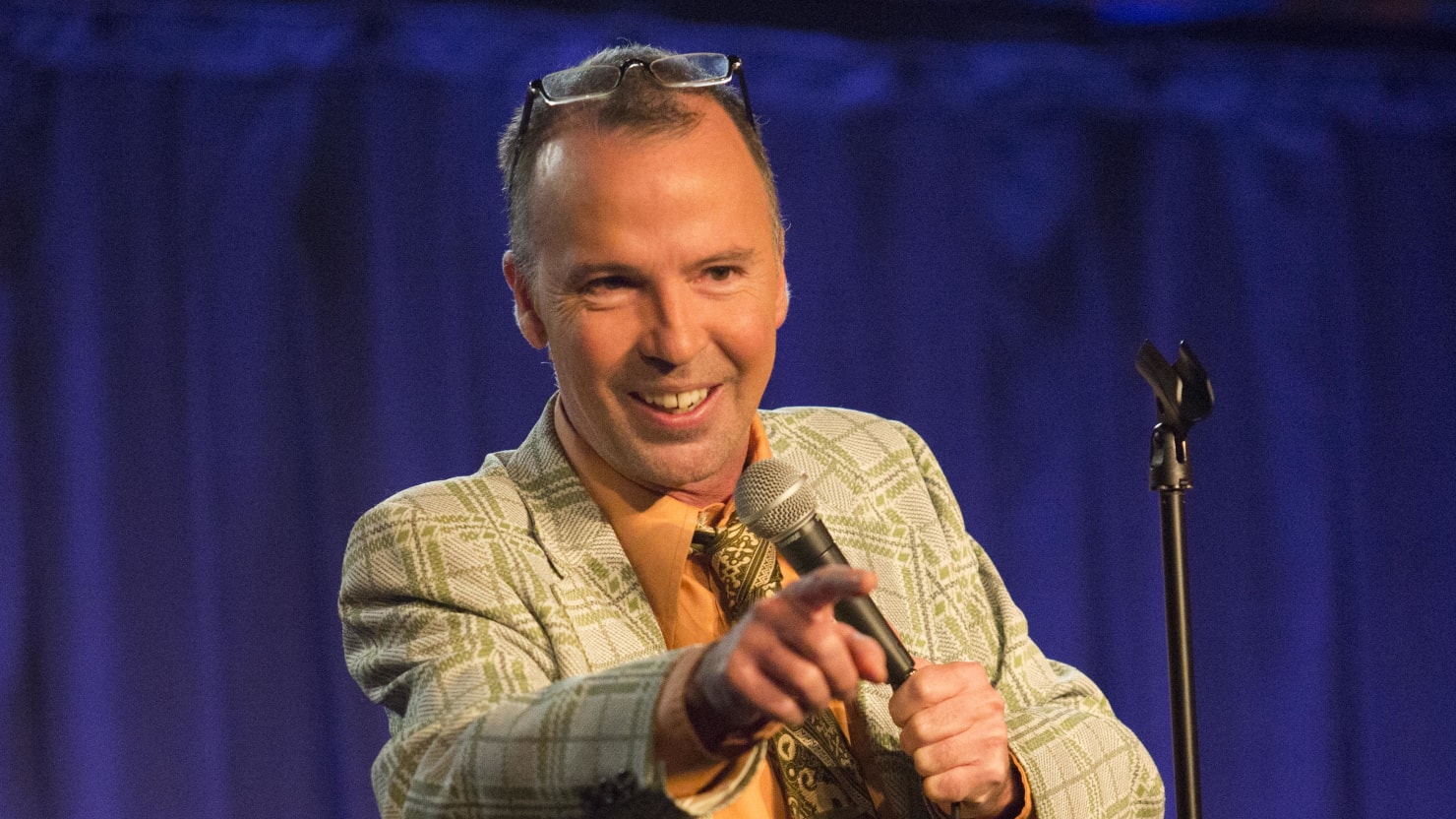
With that in mind, I’d like to cite a comedian by the name of Doug Stanhope. I’ve never mentioned before, but has been one of my personal favorites for years. He’s not on the same level as a Jon Stewart, George Carlin, or Lewis Black. However, given his brand of humor, that’s not too surprising.

Stanhope’s comedy is decidedly NSFW, touching on issues that would give most network producers brain aneurisms. His opinions are overtly harsh and unconcerned with your delicate sensibilities. If you’re wondering just how harsh he can be, here’s a quick taste.

That said, he is not a shock comic in the tradition of Howard Stern or Andrew Dice Clay. Stanope’s comedy, as crude as it can be at times, is very smart. One bit in particular stands out. It comes from his “Deadbeat Hero” album, one of my personal favorites and one I think every comedy fan should listen to at least once.

In that album, he talks about a number of issues, but one in particular stands out. That issue is marriage, one I’ve discussed too on this site, albeit not with the same level of humor. On this topic, he makes one of the most insightful observations I’ve ever seen on a treasured institution.

If marriage didn’t exist, would you invent it? Would you go “Baby, this shit we got together, it’s so good we gotta get the government in on this shit. We can’t just share this commitment ‘tweenst us. We need judges and lawyers involved in this shit, baby. It’s hot!”

The bolded parts are my doing because I think the implications of that question go beyond the comedy, more so than I think Stanhope himself intended. In a sense, it reflects the paradox of marriage and traditional romance that I’ve talked about before in that we see it as natural, yet we need all these social institutions to protect it.

The fact those institutions exist is a subtle, but telling sign that these traditions aren’t as natural as we think they are. More than anything else, they’re the product of taboos and social norms that people cling to out of fear, familiarity, and ignorance. I won’t go so far as to call it a form of excuse banking, but I think it highlights our imperfect understanding of human nature.

One of Doug Stanhope’s greatest strengths as a comedian is his ability to break down a treasured and cherished concept in a way that’s both revealing and insightful. What he did for marriage with this one question immediately makes us ponder the flaws in our current understanding of it.

Once we stop laughing at the punch-line, though, I would take it a step further. I would ask that question again in more general form as a means to help us scrutinize our traditions, values, and everything else we hold sacred. Sure, that’s bound to make some people uncomfortable, but that’s exactly the point of certain brand of comedy, especially Stanhope’s.

Like the Simpson Filter I coined earlier this year, let’s coin another using this question. Since I’m not a branding expert with only a fraction of the wit of Doug Stanhope, I’ll call it “The Stanhope Principle.” The core of that principle can be summed up in one simple question.

If something didn’t exist in its current form, would you invent it that way?

Sure, it’s not nearly as funny as Stanhope’s bit on marriage, nor is it meant to be. In essence, it’s a question meant to get your brain thinking about things that it usually doesn’t think about. In some cases, they’re issues you’ve gone out of your way to avoid.

Take any current issue, be it a major political controversy or a certain state in your personal life. Now, apply the Stanhope Principle and try to answer the question honestly. Here are just a few possible examples.

  • If our tax system existed in its current form, would we invent it that way?
  • If our health care system existed in its current form, would we invent it that way?
  • If our current relationship existed in its current form, would we invent it that way?
  • If the job we worked existed in its current form, would we invent it that way?
  • If our website/blog/product existed in its current form, would we invent it that way?

If you ask that question and answer it honestly, which is key, you might be surprised by what you find out. You might think your personal relationships are functional, but applying the Stanhope Principle could expose flaws that you’ve been overlooking or ignoring.

Apply in a larger context, such as politics, marriage, and gender issues, and the insights get a bit more complicated. Given the current inequalities that still pervade in our society, as well as the double standards we apply, the Stanhope Principle reveals the breadth of the flaws within these institutions.

It can be distressing, acknowledging those flaws. That’s usually where the excuse banking enters the picture, but that can only further mask them. Another honest application of the Stanhope Principle will only remind us of those flaws and even reveal how we’ve made our situation worse.

Ideally, the Stanhope Principle should be a basis for improvement. A good example is Apple, one of the biggest, most successful companies in the world. Steve Jobs and Steve Wozniak probably didn’t know they were applying that principle, but they were.

They saw the current state of computers. They saw there was a lot of room for improvement. Given how cumbersome computers were for much of their early history, they decided to innovate and create a better way of using them. The result is a company that is worth over half-a-trillion dollars.

Applying the Stanhope Principle for worked out pretty well for Apple. I’m not saying it can make everyone a billionaire, but it does help break down a situation and an issue in a way that allows us to see the bigger picture.

More than anything else, it exposes the imperfections of our current situation. For some, it motivates them into improving their situation, be it a relationship, a business, or a social policy. For others, it’s an uncomfortable reminder that there’s a flaw in that they need to cover up or mask. In that sense, it should be easy to see who are more likely to become billionaires.

There are all sorts of way to apply the Stanhope Principle. I’ll certainly try to apply it to future issues that I discuss on this site. For now, I just want to offer my sincere thanks to Doug Stanhope and the principle he inspired. He has made the world inherently funnier and more interesting to explore.

4 Comments

Filed under Current Events, Marriage and Relationships, Reasons and Excuses

Is Loneliness Really THAT Bad For You?

I’d like to preface this article with what I hope is an exciting announcement. As I write this, I’m preparing to move to a new place. By nearly every measure, it’s a good thing. My living situation is set to change for the better.

Without getting into the specifics, just know that I’ve been living with roommates in a shared house for quite some time now. That has been my standard living situation since college. For a while now, I’ve been looking to upgrade that situation by buying my own condo. I’ve been working hard, selling as many sexy novels as I can, to scrap together enough money.

Finally, I had the money and I found the perfect place. In less than a month, I’ll be living on my own in a beautiful one bedroom, one bathroom condo that I won’t have to share with anyone else. I won’t just be able to sleep naked anymore. My entire living situation will be clothing optional. Just thinking about it brings tears of joy to my eyes.

I’m genuinely excited about this and not just because it will provide more opportunities for nudity. However, it does give me some pause in terms of the larger implications. Every major change in life, be it a living situation or a new lover, is bound to have unforeseen impacts. Moving to a new place certainly qualifies.

The most jarring change in this instance is that, for the first time in my adult life, I’ll be living completely alone. I won’t have to contend with roommates. I won’t have to share any ounce of my living space. Everything from the thermostat to the brand of toilet paper to the visibility of my Playboy calendar will be completely under my control.

I don’t deny that living alone has its appeal, but I’m somewhat used to always being in a place where I could just go talk to someone if I wanted. Living in this new place will mean fewer opportunities of that nature. Then, I found this distressing article from the New York Times on the potential health hazards of living alone and suddenly, the price for clothing-optional living seems a bit higher.

The hazards are not necessarily trivial. This isn’t something that can be fixed by eating an extra bowl of fruit, running a few miles, or getting a coffee enema, which is a thing. According to the article, these are some of the issues that loneliness and isolation can breed.

Loneliness can accelerate cognitive decline in older adults, and isolated individuals are twice as likely to die prematurely as those with more robust social interactions. These effects start early: Socially isolated children have significantly poorer health 20 years later, even after controlling for other factors. All told, loneliness is as important a risk factor for early death as obesity and smoking.

While it’s important to note that the keyword in that conclusion is that it can incur these effects. That doesn’t necessarily mean it will. As I’ve noted before, human beings are frustratingly complex creatures. Anyone who claims that there’s a simple solution to a big problem is usually pursuing a bullshit agenda that makes lousy documentaries.

However, there is some relevant data behind this phenomenon of loneliness being detrimental to someone’s mental health. According to a 2013 study by the American Journal for Public Health, socially isolated men and women died earlier at a rate that was consistent with smoking and high blood pressure. Those kinds of correlations are disconcerting, even if they’re not akin to direct causation.

Smoking, Cigarette, Smoke, Unhealthy, Cigar, Addiction

Under the lens of caveman logic, that makes sense. Human beings are a very social species. Social interaction is a core need, right up there with food, water, and a regular orgasm. It’s because of our social nature that solitary confinement is rightly seen as torture.

While I do have plenty of other social outlets, primarily my friends and a very supportive family, living alone will make it easier to keep to myself more often. Granted, that could change fairly quickly if I fall in love and get into a relationship. That’s something I am actively working on. However, I’m not going to assume that’ll happen soon after I move in.

I’m taking these concerns seriously, but I’m still looking forward to the benefits. As if often the case with something as complex as human psychology, there are also potential benefits to living alone. There is some research that indicates that certain people do better when they live alone. I’m not sure that I’m one of those people, but Psychology Today summed it up nicely with the kind caveman logic that makes me smile.

For some people, living alone is not just a casual preference – it feels more like a need. What happens when you are deprived of a genuine need? You can’t stop thinking about it. You daydream about it, makes plans for when you will get to have that need fulfilled again. When living alone is a need and you finally get to do it after being deprived, you feel relief and a sense that your living situation is once again just what it should be.

So with these variations in mind, I’ve got a lot to think about as I prepare to take this big step in my life. I’m still excited about it. I’m really looking forward to actually owning my own place, having a space I can truly call my own. It goes beyond having an excuse to spend more time naked. It’s about me carving a real space for myself.

I don’t know entirely how I’m going to handle it. I like to think I know myself well enough to believe that I’ll be among those who benefit from living alone. I could very well be wrong, but I’ll finally have a chance to find out.

To everyone else who may be facing this issue, take some comfort in the knowledge that the question as to whether being alone is bad for you has no clear-cut answer. It varies from person to person. Some people benefit. Some people don’t. Human beings are kinky like that. As an aspiring erotica/romance writer, that’s something I can appreciate.

1 Comment

Filed under Jack Fisher's Insights, War on Boredom

What “The Gifted” Reveals (And Warns Us) About Ourselves

Every now and then, a TV show comes along at just the right time. Like bikinis in the summer, hot chocolate in the winter, or beer at a football game, it just makes the right connections for all the right reasons.

You could argue that shows like “Married With Children” or “South Park” were shows that just happened to come along at a time when audiences were eager for something different, but didn’t know it. Some, especially “Married With Children,” couldn’t be made today because of changing standards. The fat jokes alone would’ve triggered endless whining on social media that would’ve gone on for years.

That brings me to “The Gifted,” Fox’s latest effort to squeeze every cent of profit from the X-men franchise. Yes, this is going to be another one of those posts. As I’ve done before, I’m going to tie real-world issues to one of my favorite superheroes. Unlike other posts, though, those ties go beyond getting romance tips from Deadpool.

While I’m usually skeptical about efforts to shamelessly exploit the glut of superhero shows on TV, I gladly make an exception for “The Gifted” and for a good reason. Compared to superhero melodrama on the CW or the gritty violence of the superheroes on Netflix, it’s a very different kind of show with a very different kind of struggle. Unlike aliens, blind lawyers, and secret armies of ninjas, this struggle is more relevant.

That’s because “The Gifted” doesn’t focus on heroes. Sure, it takes place in the same world as the X-men, but they aren’t the focus. Instead, the show builds its story around the Von Strucker family. They don’t live in a mansion. They don’t have their own personal hypersonic jet. They don’t even have their own personal high-tech training room.

The Von Struckers, unlike their comic counterparts, are an ordinary middle class family. They aren’t concerned with superheroes, super-villains, and insane love triangles between heroes. They’re concerned with work, school, taxes, and taking out the garbage. In a sense, they are a reflection of real people in a world with unreal challenges.

That’s a perspective that rarely manifests in the X-men movies. In fact, other than a memorable scene in “X2: X-men United,” the impact that mutants have on ordinary people is rarely touched on. Sure, they’ll show humans running in terror from a Sentinel or a pissed-off Magneto. That doesn’t give us much insight into the lives these people live.

The Gifted” builds an entire narrative around a family that lives in this world and during exceedingly tense times, no less. This is not a world where seeing the X-men take down a Sentinel is the sort of thing that happens every other Tuesday. This is a world where both the X-men and the Brotherhood have disappeared in an event that has only been referred to as “The July 15th Incident.”

That incident, much like 9/11 or a major assassination, created a dramatic/traumatic shift in society. Suddenly, mutants aren’t just another minority issue. They’re an existential threat, like nuclear weapons or mass pandemics. Mutants aren’t just a distant threat anymore. They’re a real threat.

From the perspective of the Von Struckers, at least in the first episode, the danger of mutants is like the threat of terrorism. They know it’s there. They accept the systems and precautions that society has put in place to deal with it. They’ve learned not to think much of it. They’re too busy just being an ordinary family in a world that happens to have individuals who have the mutant ability to turn into ice cream.

In a sense, we’ve done the same thing in the real world. We accept that we live in a world where the NSA reads all our emails, the CIA tries to assassinate world leaders, and gross injustices happen every day. We know, to some extent, that it’s manifesting all around us. We just shut it out and try to live our lives.

What happens, though, when that injustice hits you or someone you love? That’s what happens to the Von Struckers in the very first episode of “The Gifted.” Their blissfully oblivious lives are shattered when Reed and Kate Strucker find out their children are both mutants. Not only that, one of them ends up trashing the school gymnasium when his powers first manifest.

Their happy, middle class lives aren’t just disrupted. They’re shattered, spit on, and covered in fresh whale shit. To make matters worse, Reed Strucker, played by Stephen Moyer, was a prosecutor who made his living sending mutants to prison. Short of beating mutant children with a baseball bat for a living, he couldn’t have had a worse job.

The mutants he sent to prison weren’t always guilty of crimes. Sometimes, it was just a matter of being in the wrong place when their biology decided to act up. It would be like a teenage boy being arrested for an awkward boner, something we can’t always control. Granted, mutant powers tend to be more destructive, but they can be just as unpredictable.

It’s this revelation, as well as the events that unfold in the episodes that follow, that really highlight the impact that “The Gifted” leaves. It’s an impact more relevant than most X-men stories, including the ones that involve jealous ex-lovers. In a sense, it’s one that many minorities already understand all too well.

From the beginning of the show, there’s never a sense that Reed Strucker believed that he was hurting anyone. He never came off as the kind of guy who hates mutants and longs for the days where men like him can throw mutants into internment camps. He’s just doing his job, which he believes is making the public safer.

It’s really no different from those who genuinely believe that homosexuality is inherently harmful or that gun control will only lead to more violence. Most of the people who believe these things, the Pat Robertsons and Richard Spencers of the world notwithstanding, are decent people who want to live in a world where they’re families are safe.

Then, something traumatic comes along that shatters this worldview. They find out they have a gay son or they find themselves in the crossfire of a mass shooting. Suddenly, they can’t ignore these injustices anymore. They can’t go about their happy lives as though the system isn’t victimizing someone. It’s one of those rare situations where no amount of excuse banking can change the truth.

In a sense, the Von Strucker family are reflections of the families in the real world that find themselves on the wrong end of injustice. Whether it’s a Muslim family victimized by racial profiling or being on the wrong side of a sexual harassment claim, it’s not possible to avoid or ignore it anymore. These injustices are hurting you and the people you love. It’s soul-shattering, but that’s what makes “The Gifted” so compelling.

In the fourth episode, this message really hits hard. Reed finds himself in a jail cell right next to Polaris, a mutant who he prosecuted in the first episode, who also happens to be Magneto’s daughter. In these bleak conditions, she basically lays out all the hard truths that he and others like him avoid.

Yes, there was an incident where a group of mutants, which you could substitute for any minority, did something terrible. That was a terrible incident, but efforts to prevent other incidents like that are just hurting real people who don’t want to be superheroes fighting killer robots. Polaris is just one of them. Reed’s children are two more.

That harsh message is one that carries over in the real world, often in tragic ways. Back in 2007, a documentary called “For The Bible Tells Me So” highlighted deeply religious families who had been vehemently anti-gay, only to have one of their children turn out to be gay. Sometimes, it changed their perspective. In some instances, though, it ended tragically.

It’s a harsh, but necessary truth. We can’t control our circumstances. Much like Reed Strucker, we sometimes find ourselves in the worst situations at the worst possible times. The world is chaotic, full of strange people who do terrible things. The fact we can’t control or prevent those things is agonizing, at times. We, as a society, will do as much as we can to mitigate that danger.

In the process, though, we’ll try to fight injustice with more injustice. We’ll obsess less over what is real and more about what is potentially real. It leads us to do extreme things like throw innocent people into internment camps or create killer robots to protect people.

The Gifted” reveals the cost of those measures. It goes beyond the eccentricities surrounding superheroes and focus on the real impact that real minorities feel. Most who are lucky enough to not be part of that group remain content to ignore it. Then, when it finally affects them, they realize just how unjust it is.

At a time when injustices are harder to hide and minorities are a growing part of society, these are important messages. The X-men have been exploring these themes for years, often with colorful adventures involving cosmic birds. “The Gifted” goes even deeper and during these troubled times, these are messages worth heeding.

2 Comments

Filed under Current Events, gender issues, X-men

Sex Cults: The Kinky (And Often Dark) Side Of Religion

Certain things don’t go well together, but still find a way to be potent, albeit for all the wrong reasons. I’m not just talking about people who dip their french fries in mayonnaise or banana peppers on pizza either. Certain combinations are just uniquely powerful and not always for the right reasons.

That brings me to religion, a topic I try to avoid like a rash on my scrotum. While I have written about religion and how it affects our sex lives before, I generally don’t like to bring it up on this blog. In my experience, few things kill the mood quicker than discussions about religion. It might as well be the antithesis of every Barry White.

I also feel compelled to point out that I have some deeply religious friends and family members. While I may not share their theology, I go out of my way to respect their beliefs. I don’t try to debate them or de-convert them. They have every right to believe what they believe with all their hearts and souls.

With those disclaimers out of the way, let’s talk about sex cults. I hope I have your attention now because this is one of those potent combinations I mentioned. More often than not, religion and sex are constantly at odds. For some, achieving orgasm and achieving spiritual enlightenment are the same thing. One just requires fewer tissues.

There seems to be a never-ending battle to temper, mitigate, or manage certain sexual desires in the name of religious zeal, often resulting in major taboos. That’s understandable in that sexuality is one of the things that influences the lives of every person on this planet, regardless of language, location, race, or attitude. It’s like a giant mountain. It can’t be circumvented. It can only be navigated.

Sex cults, on the other hand, do more than just navigate. They don’t just try to manage the sexual proclivities of its adherents either. In essence, they attempt to channel sexuality into forging stronger, more faithful adherents. Since people have sexuality hardwired into them at birth, you could argue they work smarter rather than harder.

In theory, this doesn’t have to be a bad thing. Not every sex cult needs to micromanage how its adherents use their genitals. Some are outright gleeful about sex. However, there are many that take it to unhealthy and unsexy extremes, which undermines the mood for everyone except the cult leader.

Speaking of which, one of the most common themes in a sex cult revolves around the leader, specifically with respect to how their genitals are somehow more holy than everyone else’s. This is how men like David Koresh and Warren Jeffs manage to convince dozens of pious women to do their religious duty, which requires them to make their bodies accessible to the cult leader in whatever holy or unholy way he sees fit.

That’s not to say there haven’t been female cult leaders. There have and yes, they can be every bit as perverse as the men. At the core of any sex cult, manipulation of sexuality is usually a secondary goal, at least officially. No successful religion, or any organized social movement, succeeds by being that transparent from the beginning.

Most cult leaders, male or female, won’t say outright that the entire basis of their cult is built around exploiting our most basic desires. They may not even believe it themselves. In fact, I would argue that most people, aside from admitted frauds, that they sincerely believe that they’re not just exploiting peoples’ spiritual sensibilities so they can more easily get sex from adherents.

In their own minds, those in a sex cult may be convinced that what they’re doing is spiritual and holy. Even if it is something as basic as an orgasm, they’ve ascribed some sort of spiritual significance to it. As an erotica/romance writer, I can kind of understand that.

There’s power in that kind of feeling, especially in cultures where it’s so easy to induce shame in others for simply having sexual feelings. I’ve mentioned before how sexual repression can really mess with someone’s psyche and not just with respect to their sex life. Building a cult around this powerful feeling that so few of us can escape isn’t just cunning. It’s distressingly practical.

There are a whole lot of factors that go into creating a cult, but most of them come back to control. Most religion, especially the successful and sincere ones, only go so far with control. When properly done, it can actually be beneficial to society. Cults, especially those of the sexual variety, take it ten steps further.

A sex cult won’t just try to control the when, how, and why you have sex. It won’t just try control how you feel about sex. It will actively shape, re-shape, and warp, if necessary, your entire perceptions about sex, intimacy, and everything in between. Again, it won’t do this directly. It’ll usually hide behind a vast excuse bank of morality, piety, and peer pressure.

More often than not, a sex cult will make you depend on the cult to get the release that your caveman brain still craves. I’m not just talking about the orgasm either. A sex cult will also try to provide the sense of intimacy, love, and community that most people get without sacrificing an animal or a piece of your penis.

It’s usually at that point where it’s hard to tell the difference between piety and subversion. Once people get locked into a cult that gives them a strict, but clear structure for how they get their sex, and all the sweet extras that come with it, they’re effectively locked in. Some may argue that they’re trapped, but I don’t suspect that most adherents will see it that way.

In addition to being very horny, we humans are a very social species. We form groups, tribes, and fan clubs with the same ease that a lion mauls a wounded zebra. Whether it’s a religion, erotica/romance novels, or Taylor Swift music, we’ll form a group about it and pursue it with religious fervor. In that sense, a sex cult isn’t doing anything magical. It’s just taking our own biology and pushing it to an extreme.

Now, I don’t bring up sex cults to warn people about them. I’m also not trying to point out the signs that the charismatic preacher who claims salvation comes through his penis might be a cult leader. Like I said before, most religion is fairly harmless and even beneficial to society. Sex cults, like any other cult, just hijacks a basic, yet powerful part of our being and exploits it.

It’s nefarious, but also fascinating. I built the entire premise of one of my novels around it, namely “The Final Communion.” In that novel, a young woman named Grace Maria Goodwin navigates a sex-fueled ritual that her deeply-religious community uses to control its adherents. Many of the themes I incorporated into this story come from my fascination with sex cults.

I’ve thought, at times, about expanding on novels like “The Final Communion.” I might not be able to develop a full-fledged sequel for Grace’s story, but I think there are untapped stories surrounding sex cults that are either too controversial or too distressing to contemplate.

It’s because they’re distressing, though, that we shouldn’t ignore it. So long as sex is such a powerful driving force in our lives, cults and even organized religion will continue to use it to exploit people. Religion, in and of itself, isn’t a bad thing, but when it starts to undermine our sex lives, then we should be concerned.

2 Comments

Filed under Celebrities and Celebrity Culture, polyamory, religion