Tag Archives: gender inequality

Why Men Remain Single: The Science, Lies, And Logistics

9a67b9b6-9c66-11e8-8838-278d266b5e3b

There’s an emerging crisis. To most, it’s just another distressing trend among the many we have in this chaotic world. More men are staying single. Some do it by choice. Some just do it because they’ve given up and decided to take themselves out of the dating pool. Whatever their reason, the results are the same.

Men aren’t seeking love, getting married, or having children. According to both Gallup and data from the United Kingdom, the number of single adults is increasing, especially among the younger generations. Even the number of couples cohabitating aren’t increasing. In the United States alone, 64 percent of young adults report being single. That’s nearly two-thirds of the youth population.

Naturally, the abundance of single men is causing more concern than single women. To governments, demographers, religious leaders, conservatives, and women looking for romance, that’s a major issue with enormous ramifications. They see perpetually single men as a danger that threatens to undercut the current social fabric. Some societies are already having to deal with it, albeit for different reasons.
There are plenty of theories as to why these men are opting to remain single. Conservatives claim they’ve lost touch with tradition. Feminists blame lingering misogyny. They’ll often cite the emerging incel phenomenon as proof that these men are toxic burdens who will hold everyone back.

To all those various groups and their theories, I respectfully disagree. Speaking as a man who is currently single, but very open to finding love, I like to think I have more insight than most on single male mentality. I can’t claim to speak for all men, single or otherwise. However, I can offer my personal take while also citing some actual research.

In August 2018, the Journal of Evolutionary Psychological Science published a study that surveyed approximately 13,400 men on this issue. The methods weren’t exactly sophisticated. They used Reddit as a source of data. As a regular user of Reddit, I can attest that there are some meaningful insights from commenters. I can also attest that there’s a lot of trolling and misinformation.

That said, the study still provides some insights into this phenomenon that has so many people worried. I won’t say it’s definitive. No study is. The author of the paper freely admits that. However, there’s still some truth to be gleaned from the data, as well as a few lies.

To appreciate both, here are the top five reasons that men in the study gave for being single.

1: Poor Looks

2: Low Self-Esteem/Confidence

3: Not Putting Much Effort Into Seeking Relationships

4: Not Being Interested In A Relationship

5: Poor Social Skills With Women

There were a total of 43 other categories of reasons/excuses that men gave, but these were the most common. I feel they’re worth highlighting because they identify some of the inherent complications men deal with in today’s relationship scene.

Of those five stated reasons, three of them reflect traits that a person can actually control to some extent. Looks, confidence, and social skills can all be improved through work and effort. I, myself, am a testament to that. It’s not easy, but it is possible. It’s the other two reasons, though, namely the third and fourth most common response, that are the most telling.

In those cases, being single is a choice. The men don’t want to seek out companionship. They want to stay single. That notion seems off-putting to a lot of people, implying that there’s something wrong with them. How could men not be miserable staying single? That concept just feels flawed in the context of our current culture.

It’s a concept that doesn’t apply equally to women. The idea of a single woman isn’t seen as a societal problem. It’s even glorified in the media. There are popular songs about it. The entire “Sex in the City” franchise is built around it. That’s understandable, to some extent. Historically, women have had very few opportunities for independence. I don’t think anyone should be surprised that some are celebrating it.

With men, though, there’s a disconnect between those who have certain assumptions about masculinity and the mentality of those who don’t abide by those assumptions. This is where some of the lies surrounding the study show. It isn’t explicitly stated in the data, but it is implied.

It all comes back to incentives. If you look at the current structure of relationships, as reflected in popular culture and social norms, men don’t necessarily have much incentive to pursue a relationship. To understand why, just consider the expectations men face in those relationships.

Men are expected to set aside their interests, hobbies, and passions for their partner. They need to stop playing video games, hanging out with friends, and watching sports all day so they can tend to their lover’s needs. They’re expected to support their partner emotionally and financially at every turn. In return, they get love, intimacy, sex, and family. To many men, that reward just isn’t sufficient.

What I just described is not an accurate description of how most relationships play out in the real world. It assumes a lot about how much women want to control their partners. Granted, there are some very controlling women out there. I’ve known a few, but they’re not nearly as common as 80s teen movies would indicate.

How common they are doesn’t matter, though. That is the perception men have of relationships. On top of that, many young people are currently swimming in student loan debt, unable to get a high-paying job, and withholding their rage every time older generations blame them for ruining things. From a logistical standpoint, it makes sense for men to protect their independence.

It certainly doesn’t help that young men are one of the easiest demographics to denigrate. They commit most of the crime. They’re the ones spreading hate, misogyny, and outrage throughout our hyper-connected culture. Even if they’re more likely to be victimized in violent crime and less likely to garner sympathy, you’re not going to face much stigma for hating them.

That doesn’t even factor in the serious inequities in marriage laws, which I’ve talked about before. A man entering a relationship is taking a chance, but unlike the woman, he’s risking more than just heartbreak. If ever that relationship gets to that stage and binding contracts become involved, he stands to lose more than just a partner.

Again, and I feel it’s worth belaboring, some of the reasons these men give for wanting to remain single are based on flawed assumptions about relationships. However, when it comes to issues surrounding our emotions and the hyper-connected media that evokes them, perception matters more than any data from a study.

The men who participated in this particular study are probably not an accurate reflection of all men. They do provide some important insight, though, on the current state of relationships, gender, and everything in between.

Regardless of the study’s conclusion, though, the romance-lover in me genuinely believes that there’s room for improvement. Whether or not we pursue that improvement depends largely on the choices men make and the incentives they have to make them.

11 Comments

Filed under gender issues, human nature, Marriage and Relationships, men's issues, psychology, sex in society, sexuality, Wonder Woman

Abortion, Prostitution, And The Indirect (But Powerful) Link Between Them

Pic

When it comes to conflict between genders, there are many factors driving it. Chief among them is the unavoidable ignorance that comes with men not knowing what it’s like to be a woman and women not knowing what it’s like to be a man. Add those who identify as transgender into the mix and there’s a massive disparity in understanding.

While I consider that limited understanding to be the primary driving force behind gender-driven conflicts, there’s another force that is a close second. It has less to do with how people relate to one another and more to do with who determines the accessibility and availability of sex.

As an aspiring erotica/romance writer, this issue is more relevant to me than others. However, after a few notable news stories, one involving prostitution and another involving abortion, the issue is now relevant to everyone and that’s why I feel it’s worth talking about.

The concept of sex being this tangible commodity that certain people control is already bound to cause plenty of consternation among people from every part of the political spectrum, but for logistical purposes, this is how we treat sex in a modern context. It’s no longer something we do for survival or for the passing on of property.

Like food, sex has developed a more diverse role in the modern world. We treat it as a tangible asset that we must manage. Like any asset, though, there are logistics to it and those who do the managing wield a great deal of power. Why else would pimps be so glorified in popular culture?

Who actually wields that power, though, depends on the political affiliation of who you talk to. If you ask someone who is liberal, feminist, or left-leaning, they will claim that the power is held primarily by rich old men who try to manage sex by punishing those who do it in ways they don’t like.

Ask someone who is conservative, traditional, and right-leaning, and they’ll probably say the power is held by radical feminists and their submissive male allies who wield the power of sexual management. They’re just as convinced as those opposing them that they’re right. It’s difficult to convince them otherwise and I’m not going to try. That’s not the purpose of this article.

My goal here is to point out a connection from which the conflict has evolved. Given recent events in the political world, that evolution is likely to continue and not in a direction that benefits either side in the long run. To understand that connection, I need to dig a little deeper into the unspoken, but powerful link between abortion and prostitution.

I know that just talking about one of these issues is abound to send peoples’ passions into overdrive. I’ve discussed abortion before. I’ve discussed prostitution as well. I haven’t really touched on the link between them because they’re tied up in different political domains, but have enough similarities affect one another.

Prostitution is commonly known as the world’s oldest profession and for good reason. It only ever makes the news when there’s a scandal or a legal upheaval. For once, there has been an uptick in the latter rather than the former. It began with new laws that made it more difficult for prostitutes to operate online. In some respects, these efforts are the byproduct of a trend that has been going on since the early 2000s.

Most industrialized countries in the world accept, to some degree, that it’s impossible to stamp out prostitution completely. As a result, there have been more elaborate efforts to reduce it that don’t rely entirely on blanket prohibition. Currently, the most popular approach is known as the Swedish model.

In this setup, it’s legal for someone to sell sex, but it remains illegal to buy it. It’s akin to making it legal to set up a lemonade stand, but illegal to buy lemonade. While that sounds absurd on paper, the intent of the law is somewhat clever. It’s a means to criminalize the buyer of sex to give the seller more leverage. Since the seller is often assumed to be an exploited woman, it’s viewed as an equalizer of sorts.

Granted, the assumption that those selling sex are always exploited women is flawed, as an estimated 20 percent of prostitutes are men. There are people in the world who enter the business willingly, just as there are people who willingly work in coal mines.

There’s also plenty of data that indicates that the Swedish model doesn’t have the desired effect. There’s also no evidence that it has reduced human trafficking, either. That hasn’t stopped it from spreading to other countries. In the process, it has had another effect that goes beyond the issue of prostitution.

Essentially, this approach to combating prostitution places more power in the hands of women with respect to managing sexuality. Since they make up the majority of the prostitutes in the world and men are the primary clients, this dynamic ensures they have more leverage. They can, under this model, decide whether or not their client becomes a criminal. That’s a lot of leverage and not the kinky kind.

This is where the link to abortion comes into play. It’s an indirect link, but it utilizes the same dynamics. In countries where abortion is legal, the women wield a significant amount of power in terms of sexual decision-making. In the context of abortion, they can decide how the consequences of sex play out.

Women can, in this dynamic, decide whether or not to have a child if she becomes pregnant. Whether or not the father wants to child is irrelevant. The woman can abort the child against the father’s wishes. She can even have the child against his wishes, in which case he would be on the hook for child support for 18 years.

Again, that’s a lot of power for one gender to wield. That’s not to say it isn’t understandable. Women are the ones who bear children. They’re the one whose bodies undergo the 9-month rigor that is pregnancy. It’s totally logical that women would have more leverage in this situation because they’re putting themselves at greater risk.

However, and I know this is where I’ll upset a few people, there comes a point where that leverage can become excessive. There are cases where men lose their money and their freedom because of what a woman chooses. There’s no way for them to opt out of their parental responsibilities. That hasn’t stopped some from attempting to create a legal mechanism for that choice, but to date those efforts have not been successful.

Within this context, it shouldn’t be that surprising that abortion rights are steadily eroding. In the United States, it’s looking more likely with recent upheavals in the Supreme Court that this erosion will accelerate. Some are already claiming that we’re on our way to becoming the kind of oppressive society depicted in “The Handmaid’s Tale.”

While most of those concerns are overly apocalyptic, I think part of that effort is tied directly to who wields the power in the sexual landscape. Women are poised to gain more of that power as prostitution laws in the mold of the Swedish model spread. They’ve also gained even more leverage socially through the anti-harassment movement.

From the perspective of men, who cannot turn off their sex drives, women already wield so much authority in matters of sex. They’re the ones more likely to get paid to do it. They get to decide when and where it happens. They get to decide whether or not a sex act was consensual. They don’t even face the same stigma or consequences when sex crimes does occur and are granted greater protections by the law.

That perspective is not going to sway most women, though. The same women arguing for abortion rights are just as likely to argue for the Swedish model in combating prostitution. It’s a common thread among certain brands sex-negative feminism that see prostitution as an inherently oppressive force for women in every circumstance.

This is where the paths converge and where the fuel for the conflict gets a boost. Whether intentionally or by accident, both prostitution and abortion eventually link back to who wields authority in sexual matters. Both sides can claim some form of oppression. Both sides can even be right to a limited extent. By fighting to secure the most leverage though, they inevitably invite more backlash.

I don’t claim to know what the endgame is. I have a feeling that once sex robots enter the picture, and they have to some extent, there will be a major upheaval in the whole sexual landscape that neither side will be able to confront. Until then, though, the conflict over sexual leverage will continue. In the end, though, it’s unlikely that anyone will ever be truly satisfied.

1 Comment

Filed under gender issues, human nature, Marriage and Relationships, political correctness, prostitution, psychology, sex in society, sexuality

Terry Crews, Corey Feldman, And Why The Anti-Harassment Movement Is Ignoring Them

terry-crews-ht-capitol-hill-ht-mem-180626_hpmain_12x5_992

Recently, late-night talk host, Samantha Bee, took some time from her comedy news show to talk about sexual assault. That, in and of itself, isn’t too remarkable. Many women have been doing that since the anti-harassment movement began. However, Ms. Bee did something noteworthy with her message.

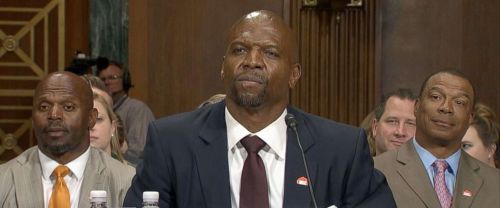
She talked about the impact that harassment and sexual assault had on men. She even invited actor and former NFL player, Terry Crews, to participate. That gives her message more weight because Mr. Crews has been trying to raise awareness of that issue ever since the movement began. He even testified in front of a Senate committee on the issue, sharing his own stories of assault and abuse.

It’s a surprisingly balanced message from someone not known for having a good filter. If you haven’t checked it out, I highly recommend it. She doesn’t present it in an overly dire way, but the message it conveys is still serious.

It also sheds light on a major blind spot in the anti-harassment movement. It showed in how the scandals involving Kevin Spacey and Bryan Singer were handled by the media. Whereas the victims of Harvey Weinstein and Bill Cosby were given plenty of support to tell their story, the male victims were largely ignored.

In fact, the primary reason why the Kevin Spacey scandal made headlines had less to do with the victim he assaulted and more to do with him using that to come out as gay. Him using that incident to address his sexuality wasn’t seen as contributing to the anti-harassment movement. It was seen as him derailing the movement for LGBT acceptance by associating his sexuality with assault of a minor.

The victims for both Kevin Spacey and Bryan Singer never got a chance to have their voices heard. Unfortunately, that’s fairly common for male victims of sexual abuse. Mr. Crews has even addressed this on multiple occasions. Shortly after the Harvey Weinstein scandal broke, he provided a fairly lengthy explanation on Twitter that explain why few speak up and even few are heard.

His comments are gender-neutral, but Mr. Crews also mentions how men face unique challenges in confronting this issue. Make no mistake. Sexual assault against men does happen and there’s plenty of raw data to back it up. The way it’s talked about and thought about, though, gives the impression that it’s not as big a deal.

That’s a big reason why men like Mr. Crews don’t come forward with their experiences. In his own words, “The silence is deafening when it comes to men talking about this issue.” Even though he’s been fairly vocal on this issue, few outside Ms. Bee have given him a chance to tie those experiences into the ongoing movement.

In addition to Mr. Crews, there are a few other notable voices trying to raise attention on the harassment and abuse of minors. Corey Feldman, a former child star, has been vocal in his efforts to expose the physical and sexual abuse he endured in his youth. He has even been trying to make a documentary exposing rampant child abuse in Hollywood, which has yet to be made.

This issue is personal for someone like Mr. Feldman because his friend and fellow child actor, Corey Haim, was also sexually abused as a young teenager. In his book, Coreyography, he talked about how they both struggled to deal with it. Drug abuse, which played a major part in Mr. Haim’s death in 2010, was a means of escaping the issue rather than dealing with it.

That’s understandable, considering the business they were in. Drug use in Hollywood isn’t just a long-standing part of the culture. It’s sometimes necessary, albeit for tragic reasons. It provides an escape for people like Mr. Feldman and Mr. Haim, one that’s much easier than coming forward and naming their abusers.

It’s the same issue women face when they’re victims of sexual assault. They’ll make a claim, but hesitate to name the abuser out of fear, shame, guilt, or willful disbelief. In Hollywood, especially, the people they deal with are rich and powerful. They have the resources to make anyone’s life, especially public figures like Mr. Feldman and Mr. Crews, extremely unpleasant.

On top of that, people who accuse a celebrity or public figure of such crimes are usually subject to major harassment as well. In that sense, staying silent is just easier. The anti-harassment movement has been trying to change that, at least for women, by providing them a platform with which to come forward. As a result, egregious crimes have been exposed and are actively being prosecuted.

However, those same efforts aren’t making much room for men like Mr. Feldman and Mr. Crews. They’re still in the same situation as they were before the anti-harassment movement began, trying to speak openly about a difficult issue and struggling to find support.

Why is that, though? Why are these men not allowed to stand on the front lines with the women who brought down Harvey Weinstein? There’s no easy answer to that. Chances are if you ask 100 people, you’ll get 100 different answers and at least 90 of them will sound like conspiracy theories.

I don’t claim to have a definitive answer, but I have reasonable suspicions and it has do with crafting a narrative. As an aspiring writer, I know a thing or two about narratives and why it’s so important to keep them concise. To some extent, the anti-harassment movement is an ongoing narrative that has to stay concise in order to pursue its goals.

Unfortunately, staying concise means ignoring or avoiding anything that might disrupt that narrative. In that context, Mr. Feldman and Mr. Crews are significant disruptions, albeit through no fault of their own or even those who champion the anti-harassment movement.

That’s because, for better or for worse, there’s this standard notion of how a case of sexual assault plays out. When most people close their eyes to imagine it, they probably don’t imagine someone like Terry Crews getting cornered in a crowded room. They probably imagine a scared young woman in a dark alley, crying out for help as some big, ugly, sadistic man abuses her.

Like any strong narrative, that notion conjures all sorts of powerful emotions. We feel anger, disgust, and sorrow for any woman who has to endure such an experience. We also feel seething anger towards any man who would do that to such a woman. The decent human being in us wants to help that woman and beat the snot out of that man.

If you reverse the genders in that narrative, though, it just doesn’t work. Those same decent people just can’t imagine a scenario where Terry Crews or Corey Feldman are cornered in a dark alley, assaulted by a man or woman, and suffer the same way. Even when they do, it doesn’t evoke the same feelings.

If anything, it complicates the narrative. These are supposed to be men. They’re supposed to be tough. Mr. Crews is a former football player. Mr. Feldman is a Hollywood star. We expect them to fight back. We expect them to not need our support the same way a woman would. To some extent, that assumptions demeans both men and women.

That doesn’t matter, though, because the narrative only works if it has that emotional resonance. People are more inclined to rally around a movement where they get to comfort an emotionally distraught young woman rather than a rich, imposing man. Like a movie where the sweet virgin schoolgirl escapes the masked serial killer, it’s more satisfying.

Moreover, it has to be satisfying to get people to rally behind it. This often come with a cost, which can really escalate if it goes too far. Some are already voicing concerns about the anti-harassment movement losing control of the narrative. Ignoring the abuse of men like Mr. Crews and Mr. Feldman only compounds those concerns.

Until the narrative changes, these men will still struggle to be part of the conversation. The piece with Samantha Bee is a good start, but it’s still an uphill battle. The idea of men being sexually abused is subject to a unique brand of stigma. That doesn’t make the suffering of the victims any less real, nor does it make crimes of the abusers any less egregious.

I don’t expect the anti-harassment movement to fully embrace Mr. Crews or Mr. Haim anytime soon, but so long as they keep making their voices heard, they’ll remind people that the narrative is still incomplete. Abuse, harassment, and victimization affects everybody, regardless of gender. When you prioritize justice for some over others, then that only creates more injustice for everyone.

3 Comments

Filed under Celebrities and Celebrity Culture, Current Events, gender issues, media issues, men's issues, political correctness, sex in media, sex in society, sexuality, women's issues

Al Bundy, Circumcision, And Double Standards In Humor

does-male-circumcision-shield-women-from-hiv-750

When you want to know how taboo a topic is, it helps to look at how sensitive people are to jokes about it. Most people can comfortably joke about teenagers, old people, the President, the French, and the Pope. Some of those jokes even make it into popular cartoons and sitcoms that we still laugh at to this day.

Then, there are topics for which making jokes is a gamble. Make the wrong remark at the wrong time and it could really cost you. Just ask Gilbert Gottfried or Roseanne Barr. The stakes get even higher when you joke about religion. Some have a better sense of humor than others, but those that don’t tend to make the news for all the wrong reasons.

Since humor and religion rarely mix, I want to focus on a topic that’s slightly less sensitive in circumcision. I say slightly because gender-specific humor is a lot trickier these days. Old jokes about women drivers and gay men just don’t work anymore and not because more cars are driving themselves.

Between trends in feminism and outrage over Wonder Woman’s armpit hair, the current state of gender politics is no laughing matter. I’ve talked about gender conflicts on many occasions and I’ve also discussed serious issues surrounding circumcision. I’m also aware that the current issues surrounding circumcision aren’t on many peoples’ radar, but I still think it’s worth talking about.

This isn’t just about representation in media or offensive stereotypes. This is about purposefully mutilating parts of the human body. When it happens to women, it’s a major problem that warrants major resources to combat. When it happens to men, though, it’s no big deal and prone to plenty of humor.

It’s more than just a double standard. It reveals a lot about our overall attitudes when we’re willing to joke about something. It shows how much the issue matters and how much energy we’re willing to put in to confront it. To understand the state of circumcision for men, you need look no further than an old episode of “Married With Children.”

I’ve mentioned this classic Fox sitcom before. I put it at the top of my list of TV shows that could never be made today. The fat jokes alone would get it cancelled. It’s a show that went out of its way to be controversial, much to the chagrin of a Michigan house wife. That included an episode about circumcision.

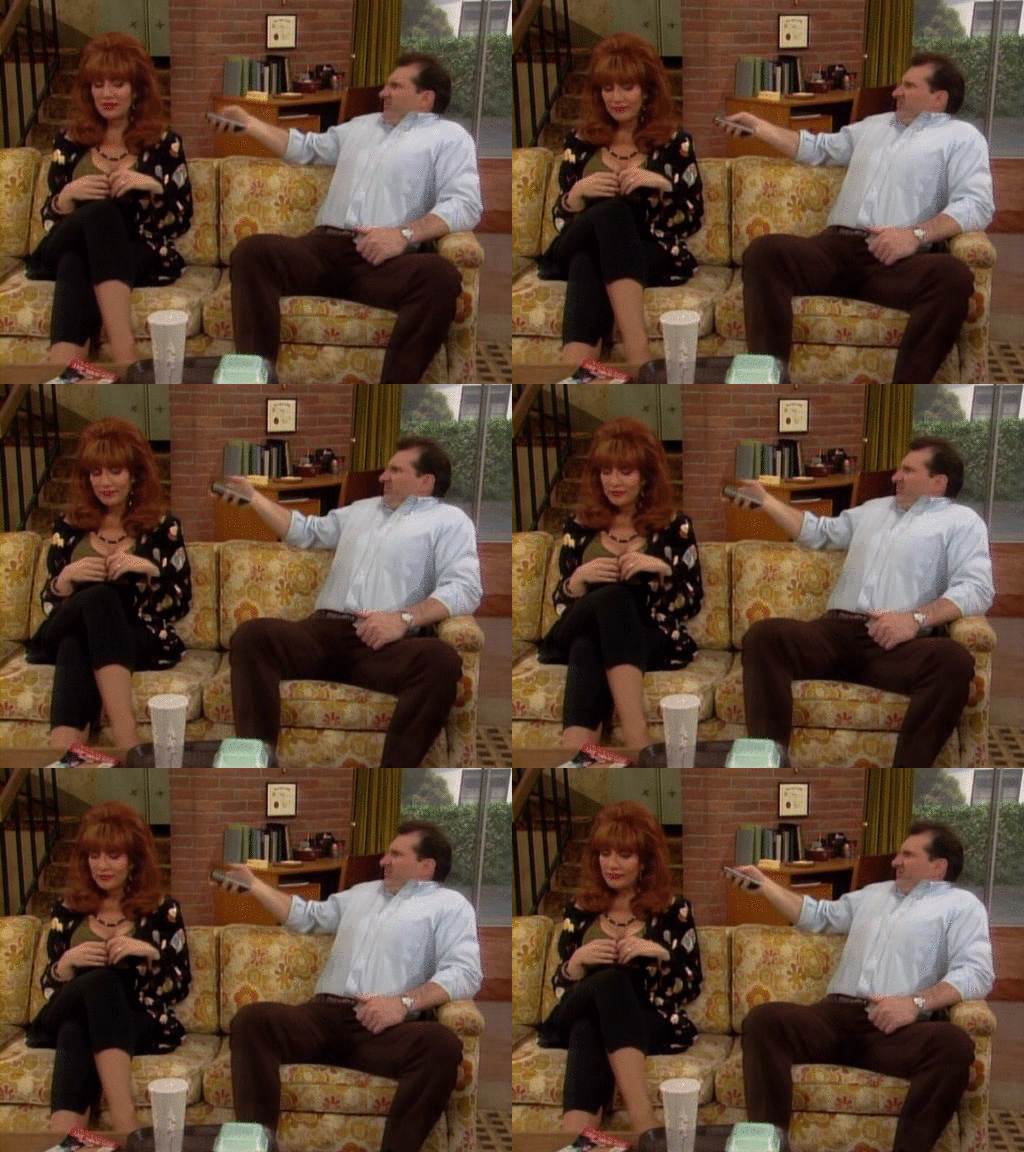
This particular episode was called “A Little Off The Top” and if you know anything about male circumcision, you understand why that’s an overly appropriate title. It starts with Al Bundy getting injured in a basketball game, going to a hospital, and getting circumcised due to a medical error.

It’s all portrayed with typical “Married With Children” hilarity. In fact, one of the most memorable moments of the episode is when Peggy gets a call from the hospital and Marcy, the Bundy family’s neighbor and one of Al’s many enemies, laughs hysterically. I’m not going to lie. When I saw a recent rerun of the episode, I laughed too.

That’s the genius of “Married With Children.” It can take depressing situations like a loveless marriage, a lousy job, and idiot kids and make it funny. It’s part of why this show is one of my favorite shows of all time. When you strip away the humor in this episode, though, there are some disturbing overtones.

To illustrate, here’s a quick thought experiment. Imagine, for a moment, that this isn’t happening in a TV show and you just randomly stumbled across a news article.

“Local Chicago man rushed to a hospital after injury playing basketball is mistakenly circumcised. Family and neighbors make fun of him.”

Take away the iconic Bundy family and the context of a sitcom. Just look at it in terms of raw facts. A man gets an injury, goes to the hospital, has his genitals mutilated against his will due to an error, and is laughed at because of it. The fact that it happens to Al Bundy makes it funny. If it happened to anyone in the real world, it’s not likely to be as funny.

Medical errors are already horrifying enough. This one is extra disturbing for men because it involves our genitals. There’s already a growing reservation about circumcising baby boys for no medical reason who cannot consent, which did not exist when “Married With Children” was on the air. On top of that, there’s a distinct double standard in play.

Even in the lewd world of a 90s Fox sitcom, there are lines that even the Bundy family cannot cross. If you were to reverse the genders in this episode, as I’ve put forth as part of previous thought experiments, then the humor just doesn’t work. If the episode involved a woman who’d been circumcised against her will by accident, then it wouldn’t be funny. It would be disturbing.

The reasons for that aren’t entirely simple. There is a medical and logistical difference between male and female circumcision. For the most part, female circumcision in its various forms are prone to more complications, even in a medical setting. Male and female anatomy are different. There’s no getting around that.

However, the logistics are the same. They both involve cutting, altering, or outright mutilating someone’s genitals against their will. Despite these similarities, one is still capable of being funny while the other is not.

That idea matters because when something can be funny, it impacts how seriously we take it as a society. We can joke about ditzy blonde women, bone-headed men, and irresponsible teenagers because they’re not seen as dire issues. That’s also the reason why we can make jokes about the Vatican in 2018 that probably would’ve gotten people killed half-a-century ago.

The fact that male circumcision can be a joke or the premise of a sitcom says that it’s not serious enough to be on the same level as female genital mutilation. They may not be the same thing, but the implications are still there. When a woman is mutilated, it’s a travesty. When a man is mutilated, it’s comedy. That is not a trivial gap.

I doubt “Married With Children” was trying to make a statement about male circumcision when the episode first aired. The show made a lot of controversial jokes and circumcision barely cracks the top ten. Even if that episode aired today, it probably wouldn’t be that controversial, which says a lot about how little our attitudes about male circumcision have changed since the mid-90s.

In that same time, though, efforts to combat female genital mutilation have gained ground. Efforts to beautify and protect the female body are part of a larger social trend. However, those efforts are not equally prescribed to men, even when the concept is the same.

Now, I’m in no ways in favor of making jokes about male circumcision taboo. Historically speaking, making anything taboo only tends to make an issue worse. I’m also not advocating that we start joking about female genital mutilation, either. My point in citing a memorable episode from a raunchy 90s sitcom is to show the vast disparity in the circumcision debate.

When something is a joke for one group of people, but an atrocity for another, then there’s a major disconnect in the issue. Both sides can and should be discussed seriously. Both can and should be held to similar standards are humor, as well. When you start making exceptions for one over the other, then that obscures the debate for both.

3 Comments

Filed under circumcision, gender issues, political correctness, sex in media, sex in society, sexuality

The Other Orgasm Gap (Involving Men) And Why We Should Confront It

basic-secrets-male-orgasm

There are many disagreements about gender these days, but when it comes to orgasms, most reasonable people are on the same page. In general, regardless of politics or genital configuration, we’re in favor of them. We support efforts to experience more for ourselves and for our partners. In matters of sex, it’s one of the few unifying issues.

Even if most people agree that orgasms are awesome, there are still some sources of tension. I’ve already touched on the current status of the orgasm gap, as it pertains to women. That is still an unresolved issue and the current status of gender relations can only improve if that gap is reduced or eliminated.

However, there is another orgasm gap that is rarely touched on, but inescapably linked to the current pleasure parity. This one pertains to men and, unlike the female orgasm gap, is shackled by hard biological limits. Any man, myself included, knows those limits all too well.

It’s no secret, but it might as well be one because it’s rarely talked about. Without getting too graphic, I’ll just say that the female orgasm is a symphony whereas the male orgasm is like a kazoo. It’s a one-note instrument that is simple, basic, and blunt. You can still make music with it, but the range is limited.

That’s because men have something called a refractory period. It’s basically the cool-down period that men experience after orgasm. From a biological standpoint, it’s the part of sex where the brain and genitals tell one another that the job is done and it’s time to rest. That process involves releasing all sorts of hormones and chemicals that are responsible for men getting sleepy after sex.

It’s the reason why men have a difficult time getting aroused again after sex, both physically and mentally. Once a man reaches that peak, it takes a while to get to that level again. It can take as little as 15 minutes to almost an entire day. During that time, though, a man’s ability and desire are significantly hindered.

This inescapable process is also the source of many jokes about premature ejaculation and men who can’t last long in bed. I don’t doubt it’s a factor in the orgasm gap. Whereas it takes a man only two to three minutes to achieve orgasm, it takes a woman an average of 12 minutes to do the same. That is not a trivial gap.

Conversely, women aren’t hindered by a refractory period. Even though it takes women longer to climax, they’re capable of having more orgasms in rapid succession. To give you an idea of just how many more women are capable of, the record for most female orgasms in an hour is 134 whereas the most a man has ever had is 16. Again, that is not a trivial gap.

While men don’t have to look far for tips and tricks that allow men to have multiple orgasms, many of these so-called techniques are just gimmicks. They’re methods for improving stamina and control, which is a great thing to have with any partner. However, it doesn’t change the fundamental biology of refractory periods.

That’s not to say this particular gap is impossible to close. That’s also not to say that there aren’t documented cases of men achieving multiple orgasms. They do exist, but there’s not a lot of research on the topic, especially compared to the amount of research on the female orgasm.

If we’re to close the orgasm gap for everybody, though, this is something that’s worth studying. I would even argue that we can’t solve the orgasm gap with women without confronting this lesser-known gap with men. In essence, that refractory period is the greatest hindrance to true orgasm parity.

Just talking about it only goes so far, though. Unlike the female orgasm gap, the refractory period is rooted in biology rather than psychology. From an evolution standpoint, it makes sense. By achieving orgasm quickly, a man can spend less time impregnating a woman and more time surviving. It was a necessary trait for managing the survival/reproduction dynamic of the human species.

Like many other traits from our pre-modern ancestors, though, these traits are less necessary in the modern era. In fact, they can be a liability. In a world of low infant and maternal mortality, we have more incentive to seek quality over quantity in our lovers. The refractory period, much like our body’s tendency to get fat, is a real hindrance to that effort.

Addressing it is probably not going to be as simple as telling men to do kegel exercises. Men being able to achieve multiple orgasms may require an effort similar to that of developing the female birth control pill. In the same way modern medicine has given women control over their fertility, it may end up doing the same for male orgasms.

How modern medicine would go about that is well-beyond my expertise. However, we already do have some clues as to what goes into reducing the refractory period. Studies has shown that a chemical called prolactin may play a major role.

Specifically, when a man climaxes and goes through a refractory period, levels of prolactin in the body spike. In rare cases of multi-orgasmic men, though, it doesn’t rise in conjunction with an orgasm. Now, that could be only be part of a much more complex process, as is often the case in medicine, but it’s a start.

In the same way some people are already hacking their biology for reasons relating to health and beauty, it may be possible to tweak certain bodily processes to enable men to have the same orgasmic potential as women. It doesn’t even have to extend to modifying genetics. It can just involve tweaking chemical and hormonal processes, something we’ve been doing in medicine for years.

Unfortunately, research on this phenomenon is scant at best. However, given how much money pharmaceutical companies have made treating sexual dysfunction, I believe the incentives are there. It may take a long time, but given the progress medicine has made on male contraception lately, I think the infrastructure is in place and so is the market.

It’s hard to predict what form modern medicine will take in treating any condition, be it the limits of the male orgasm or the current orgasm gap with women. However, I am confident in saying that any advance that puts everyone on the same level of orgasmic potential will be a game-changer of the sexiest kind.

Leave a comment

Filed under gender issues, Marriage and Relationships, sex in media, sex in society, sexuality

Biotechnology And The Future Of Gender

future-woman-cyber-technology-eye-panel-concept-33807025

With each passing year, it seems gender-driven conflicts are becoming more and more heated and less and less rational. Every time I bring them up, which is distressingly often, I feel like I have to walk through a minefield while juggling chainsaws. I know it doesn’t take much to start a controversy these days and I’d rather not add fuel to that fire.

The current state of gender conflict is pretty intense. I expect it to get worse before it gets better, but I don’t want to dwell on that too much for the moment. Instead, I’d like to do what I often do when I discuss emerging technology and contemplate the future. Moreover, I want to focus on the potential for a better future between the genders.

Yes, I realize the situation is pretty hectic now. I also don’t deny that trends in feminism and the associated backlash make it difficult to be optimistic. I’m still going to try because I believe we’re getting close to a point where the barriers that hinder a truly egalitarian society will eventually fall. It’s just a matter of developing the right tools.

Chief among those tools are those emerging in the field of biotechnology. It’s a subject I’ve highlighted before, primarily in terms of its potential to treat disease and provide better contraception. Those kinds of advances are just stepping stones, though. The true potential of biotechnology goes much further.

With respect to gender, I think most won’t deny that there’s room for improvement in terms of the current dynamic. Whether you’re a man, woman, or something in between, most people don’t have to think too hard to surmise imperfections in the current system. I’ve mentioned a few, but they’re worth scrutinizing.

If you’re a woman, those imperfections take a fairly direct toll and not just in terms of being the gender that bears children. Beyond the burdens that facet of womanhood has incurred historical, there are still some fairly substantial gaps between women and men today. Regardless of whether or not you’re a feminist, the data is pretty clear. Women are not on a level playing field with men.

If you’re a man, that’s just as true. Men may not bear children, but they also bear plenty of burdens. They are expected to fight in bloody wars, making up 97 percent of all war deaths. They work harder, more dangerous jobs that disproportionately kill them. They’re also expected to be okay with having their genitals mutilated as babies. By those metrics, men are not on a level playing field, either.

Things get even more unequal when you put transgender issues into the mix and I’m not just talking about which bathrooms they have to use. Transgender individuals face a unique brand of issues, ranging from housing discrimination to healthcare access. Regardless of how you feel about transgender issues, and some question whether it’s even real, these people are struggling under the current dynamic.

It’s a dynamic that, for most of human history, has been heavily influenced by the limits of biology. Like it or not, we’re very much at the mercy of what evolution has wrought. Even if you’re among the crowd who thinks gender is entirely socially constructed, it’s impossible to get around hard biology, at least for now.

The hard data is fairly clear. Human beings are sexually dimorphic, which means there are intrinsic physical differences between men and women. Since one gender bears children while the other doesn’t, that kind of has to be the case. Considering how well our species has thrived over the past several thousand years, you could make the case that these dynamics have worked fairly well.

However, there’s still room for improvement. In the tradition of the Doug Stanhope principle, it’s worth asking a simple question about our current gender situation. If the current dynamic didn’t exist, would you invent it that way? If you were working from scratch, would you create a species in which half the population had to bear children for nine months while the other half had part of their genitals hanging outside their bodies?

I’m not saying the human body, in its current form, isn’t a beautiful work of nature, but there’s no denying its flaws. As long as those flaws remain in place, the amount of progress we can make towards a truly egalitarian society will be limited. With the emergence of biotechnology, though, there may come a time when we may not be subject to those constraints.

When you get right down to the differences in muscle mass and endurance, much of it is driven by genetics. There’s only so much we can do with hormones and supplements, as female body builders have shown, before genetics comes into play. We’re only just starting to hack some of those genes, but there’s still room for refinement.

That refinement will come as the technology matures, just as we’ve seen with refinements to in vitro fertilization and LASIK eye surgery. It won’t happen all at once, but there may come a point when we have a sufficient understanding of the human genome and how to change it at the genetic level with tools like CRISPR.

Once we have that knowledge, then there’s no reason why we couldn’t modify individual genomes to a point where men and women are completely equal in terms of strength, stamina, and overall physicality. In that situation, there’s no reason why a woman couldn’t carry out the same physically demanding tasks as men.

For the mental side, though, that may end up being trickier. There’s still a lot we don’t know about the brain in general, let alone the innate differences between men and women. Most current research seems to suggest there are some differences, but the extent of those differences aren’t really clear. There’s evidence that there could be even more differences in the brains of transgender individuals.

Even if those differences are biologically innate, they can still be manipulated with the right tool. Some of those tools are already in development in the form of brain implants, such as those being developed by Neuralink. Whether it’s problem solving or emotional intelligence, there’s no reason why any gender-based difference can’t be resolved with a properly-calibrated implant.

Put all these advances together and the future of gender may render our current conflicts obsolete. I believe that if it is the goal of society to create a truly egalitarian structure for men, women, and everything in between, then the necessary tools to do so will make that possible at some point. The only question is whether or not that will actually be the goal.

I can’t speak for everyone who has ever argued for a certain gender-based issue. Being a man, I don’t deny that my perspectives on gender are limited by my experiences. However, if we’re going by what has worked best from an evolutionary perspective, a species that can effectively cooperate, communicate, and share knowledge has a huge advantage.

Reducing gender disparity at a genetic and physical level has plenty of benefits on paper. Add artificial wombs to the mix, effectively removing the burden of child-rearing from half the population, and suddenly our entire species is on a level playing field. That opens the door to entirely new manifestations of gender, as we know it.

I can’t predict what form that will take. Once we start manipulating our genes and our looks, by default, then the line between what is feminine and what is masculine may blur. While I don’t think it will disappear entirely, I think there will be some adjustments. It may even lead to entirely new gender-driven conflicts in the short term.

In the long run, though, I think the future of gender will arc towards greater equality overall. There may come a time where every individual born has the same physical and mental potential, regardless of their gender. Women will be as physically strong as men. Men will be able to multi-task like women. They may still look distinct, but their abilities will be truly equal.

A society full of those individuals will require an entirely new dynamic, one built around a host of new tools that we’re just starting to develop. It could just as easily go in the opposite direction with various gender gaps widening as a result of those tools. However, I believe that the benefits of equality will win out, albeit for purely pragmatic reasons. A future with that level of equality will likely result in the greatest potential for everyone.

2 Comments

Filed under futurism, gender issues, human nature, Marriage and Relationships, sex in society, sexuality

How Less Sex Can Crash The Economy

economic-collapse-960x451

There’s a funny, but revealing saying by famed economist, Paul Samuelson, on the difficulty of predicting economic trends. It goes like this:

The stock market has forecast nine of the last five recessions.

Other than being a play on numbers, there is a message in this quip that’s worth noting. No matter how many dire warnings accomplished economists give, a recession always seem to hit. It only ever becomes truly obvious with the benefit of hindsight.

I bring this up because I’m about to make some predictions about the future of the economy and I’m not an economist. I don’t claim to have more credibility on the matter than anyone else who has read every Freakanomics book ever written.

However, since the economy affects us all, it’s still worth talking about. Since the economy can influence our sex lives in ways I’ve discussed before, I feel like I can comment on the subject and even do a little speculation. Again, I want to make clear that I’m not an expert. This is just me making connections I feel are worth making.

When it comes to the economy, it’s not physically possible for anyone to make sense of all the data and connections that govern our affairs. Human beings are just too unpredictable and the amount of data involved is just too vast. Some points of data, though, carry more weight than others.

One of those points has to do with population and demographics. It’s a topic that’s becoming more and more relevant these days. Just this year, the birth rate in the United States dipped to a 30-year low. That’s somewhat remarkable because people tend to have more children when the economy is doing well and by most measures, the economy has been pretty good these past couple years.

This isn’t just an American problem, though. Many industrialized countries throughout the world are experiencing very low birth rates, some of which well below the replacement level rate that would keep a population stable. The reasons for this are many, but most boil down to cost. It’s just very expensive to raise a child these days and that cost is only going up.

Beyond the cost, though, there’s another factor at work that’s driving these declining fertility rates. People, in general, are just having less sex. That may seem obvious, given the data surrounding birth rates, but there are other aspects of the data that may reveal other factors.

For one, the decline in sexual activity is actually hitting the younger demographics, who are historically and biologically the most eager to engage, so to speak. I’m still old enough to remember when every other week seemed to bring dire news about teenagers having too much sex and horrifying their parents. Now, they’re not doing, but still finding ways to horrify their parents.

While I’m sure it still comes as a relief to some parents, it’s already causing concerns among demographers. However, I believe there’s a much larger concern about the economy, as a whole, that’s just starting to emerge. It has less to do with there being fewer babies and more to do with the nature of modern economies.

The days of economic health being measured by how many widgets a factory could produce are long gone. These days, most modern economies are built around consumer spending. Around 70 percent of the economy is consumer spending. That is not a trivial portion.

To illustrate why that could be a much greater problem down the line, I’ll need to make a few connections between sex and the economy. It’s not quite as kinky as it sounds, but those connections matter if you’re going to speculate about the future with any measure of accuracy.

Think, for a moment, about just how much economy activity goes into people seeking out sex and dealing with its associated byproducts, namely children. Whether you’re a man, a woman, or something in between, that pursuit drives a great deal of our economic activity.

Men work hard at jobs that don’t always pay that well to buy clothes, cars, and gifts with the hope that it’ll improve their chances of finding a partner. Women do the same, spending a great deal of money on cosmetics, clothes, and beauty treatments to attract desirable lovers. The money people spend on beauty products alone pumps a lot of money into the economy.

Even if the goal of these purchases isn’t directly linked to someone’s pursuit of sex, this activity does link to that fundamental pursuit that has driven society and our species for centuries. We work hard, establish functioning lives, and buy the things that prove to one another that we’re desirable lovers. It’s part of the many incentives that drive any economy.

It’s those same incentives, though, that can lead an economy into a cycle of destruction. Those cycles are behind every major financial crisis, but the one created by less sex and low birth rates may end up having a far greater impact. Some of those incentives are economic, but it’s the social incentives that might compound the issue.

Some of those incentives involve how modern marriage functions. More than a few people, myself included, have pointed out that marriage is not a very good deal, especially for men. If you look at it from the perspective of a simple contact, the flaws are pretty obvious.

Imagine, for a moment, that someone presents you with a contract. You will enter into a partnership in which you pledge emotional, financial, and intimate support for an undefined period of time. However, if the other party wishes to dissolve the partnership at any time for any reason, they can do so and get half your assets, as well as custody of your children.

Read over the fine print carefully. Would you sign that contract? Who in the right mind who isn’t drunk on irrational passions would? I think most people would see that as a bad deal and one that they have plenty of incentive to avoid.

On top of those incentives, there’s another round of them that has been growing recently. These come directly from the ongoing anti-harassment movement that has helped expose horrible sex crimes, but has also given men a powerful incentive to avoid women.

As a man, and I know this is anecdotal on my part, I find myself feeling very anxious around women who I don’t know or aren’t close family. I worry that one wrong gesture or one wrong comment will lead to an accusation that will subsequently ruin my life. I don’t want that and I don’t think any man wants that.

That’s not to say those incentives are powerful enough to make men stop feeling attracted to women, but I do think they’re sufficient to make men more reluctant to seek out intimate relationships with women. From an economic standpoint, the potential cost is very high, whether it’s paying for a child or for having your life ruined by an accusation.

From these incentives, the resulting economic situation won’t just be different. It will be unsustainable when you take into account the declining fertility rates. It doesn’t even have to be an economy where nobody gets married and has kids. It can just be an economy where most men and women stay single and don’t build much of their economic activity around pursuing sex.

In that economy, the only major purchases would be shelter, electricity, internet, and entertainment. As expensive as some of those can be, they’re not going to match the same amount of spending that comes with caring for children or for people just trying to get laid.

In the short-term, that means the economy will be dominated primarily by products and services that just help single men and single women relax on a Friday night after work. In the long-term, however, the consequences are much greater.

Without a growing population, there aren’t as many workers to support the large welfare states that most modern economies utilize. Moreover, without that same growing population, the consumer base starts shrinking. Even if a greater number of people have more money, that money is useless if there aren’t enough people to spend it.

From there, a cycle of fewer consumers starts feeding a process of declining spending. On top of that, fewer workers means it’s impossible to sustain a large welfare state, which leaves more people impoverished with even less money to spend. It began with declining birth rates, but it only accelerated when people just had less sex.

In the end, the economy as we know it now, just can’t function anymore. I’m not saying it’ll completely collapse, but it would have to adapt a lot in order to function with these incentives. I’m not sure what those adaptations would entail, whether it involves a universal basic income or using artificial wombs to augment the population.

I’ll say it one more time because I think I need to belabor this. I’m not an expert. This is just speculation on my part. This is what I feel could be the endgame for our economy, as we know it, if the current incentives hold. It’s a near certainty that there will be changes, but it’s impossible to predict what those changes will entail.

From my perspective, though, I think the implications are clear. A society where people are having fewer children is hard enough to adapt to, but we’ve already been doing that to some extent. One where people have less sex or flat out avoid it, though, may end up being much harder.

4 Comments

Filed under Current Events, gender issues, human nature, Marriage and Relationships, sex in society, sexuality

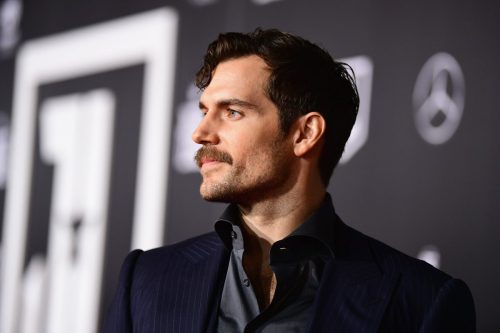
Why Henry Cavill Shouldn’t Apologize For His Comments On The Anti-Harassment Movement (But Still Had To)

gettyimages-873854634-1200x800

What does it say about the state of a society when people have to apologize for voicing honest, legitimate concerns? Pragmatically speaking, it implies that the value of truth and just has been subsumed by other influences. Whether it’s politics or ideology, it’s not hard for society to get to a point where unreasonable forces subvert reasonable issues.

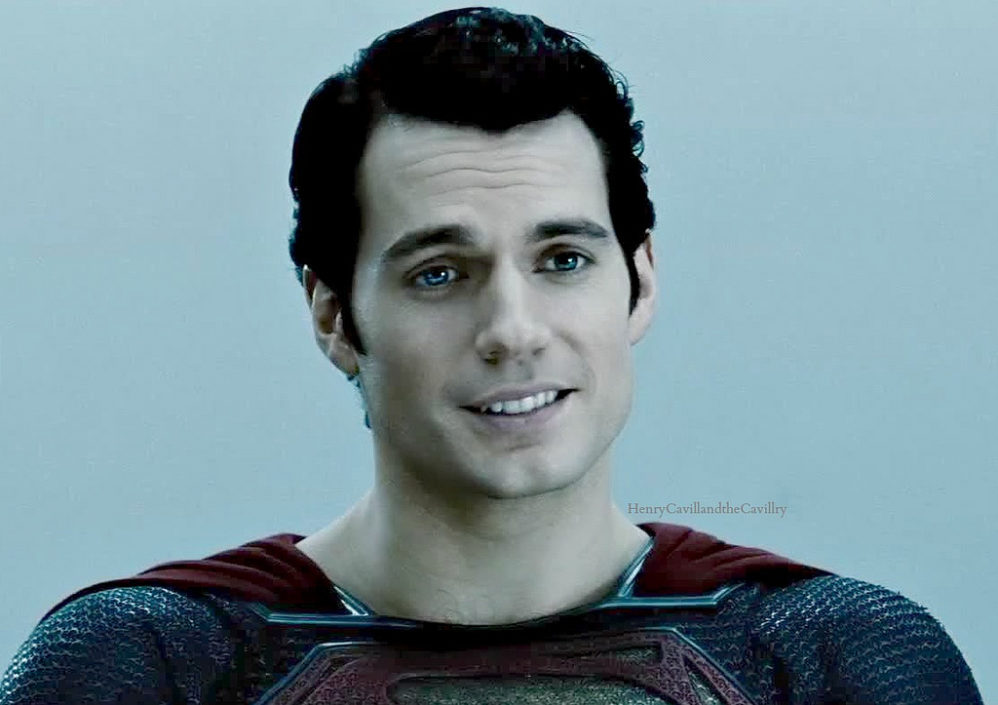
In that sense, it’s ironic that the latest person to experience those influences once played Superman, the personification of truth, justice, and the American way. Henry Cavill, whose star has risen significantly since he broke out in “Man of Steel,” got into some hot water recently after an interview with GQ.

In that interview, he essentially made the same mistake Matt Damon made when he tried to comment on the anti-harassment movement. He said something that was reasonable, honest, and understandable from a purely logistical standpoint. He’s worried that something as simile as flirting with a woman could somehow be construed as harassment, which could lead to a full-blown scandal.

For reference, these were his exact words from the interview and the ones that subsequently led him down the same path as Matt Damon.

It’s very difficult to do that if there are certain rules in place. Because then it’s like: ‘Well, I don’t want to go up and talk to her, because I’m going to be called a rapist or something’. So you’re like, ‘Forget it, I’m going to call an ex-girlfriend instead, and then just go back to a relationship, which never really worked’. But it’s way safer than casting myself into the fires of hell, because I’m someone in the public eye, and if I go and flirt with someone, then who knows what’s going to happen?

Now? Now you really can’t pursue someone further than, ‘No’. It’s like, ‘OK, cool’. But then there’s the, ‘Oh why’d you give up?’ And it’s like, ‘Well, because I didn’t want to go to jail?’

Think about what he’s saying here and take a step back to see how he got to that point. He’s talking about being called a rapist just for going up to a woman and talking to her. How is that reasonable? It’s not. It sounds paranoid, but it’s perfectly understandable in the current social climate.

It’s easy to picture a scenario where someone like Cavill walks up to a woman, starts flirting, and ends up saying something inappropriate. That’s not just something men do. Women do that too. Being vulgar knows no gender. However, if the woman in this scenario takes particular offense, it could be construed as harassment or even assault.

If a woman was especially vindictive or just prone to exaggeration, she could accuse him of assaulting her. Even if those accusations aren’t even close to warranting an actual crime, it would still be devastating. The accusation alone would be enough to derail a promising career.

You don’t have to look far for evidence of this. Aziz Ansari was not charged with any crimes for the infamous incident that came out earlier this year and even if he had been, there’s no way he would’ve been convicted. An incident built entirely around a he said/she-said situation doesn’t come close to meeting the burden of proof for a criminal conviction.

That doesn’t matter, though. Ansari’s career has already taken a major down turn. His hit show, “Masters of None,” has not been renewed by Netflix since the allegations came out. Men like Henry Cavill, whose careers are ascending, certainly take notice of that. They don’t even have to commit a crime and suddenly, everything they worked for is in ashes.

For powerful men in Hollywood, it’s a reasonable concern, but one they probably won’t get much sympathy for expressing. Men like Henry Cavill are rich, successful, and handsome enough to comfortably wear Superman’s skin-tight costume. He’s a man who can attract women just by breathing. However, that may end up making him even more vulnerable.

Most people aren’t going to be inclined to make a big deal about someone who flirts inappropriately. When that person is a celebrity, though, the incentives are much stronger. You need only have an overreaction or a burning desire for attention to twist it into something much worse.

It’s for that reason that Cavill shouldn’t have apologized for his comments. His concerns are legitimate and after all the work he’s put in, he’s right to worry about the forces that might destroy it. That still didn’t matter. His comments still triggered a major backlash on social media. He also had to apologize for it. These were his exact words.

“Having seen the reaction to an article in particular about my feelings on dating and the #metoo movement, I just wanted to apologize for any confusion and misunderstanding that this may have created. Insensitivity was absolutely not my intention. In light of this I would just like to clarify and confirm to all that I have always and will continue to hold women in the highest of regard, no matter the type of relationship whether it be friendship, professional, or a significant other. Never would I intend to disrespect in any way, shape or form. This experience has taught me a valuable lesson as to the context and the nuance of editorial liberties. I look forward to clarifying my position in the future towards a subject that it so vitally important and in which I wholeheartedly support.”

Notice that there’s nothing in that apology that expands on his concerns. Cavill doesn’t attempt to re-frame his point or address some of the complaints levied against him. He just throws his hands up and apologizes about everything, as though every word he said was factually wrong.

Now, to be fair to Cavill, it’s very likely that the statement he gave was written by a publicist or agent. Chances are he was pressured to read that as quickly as possible in order to prevent him from getting labeled a misogynist or someone who did not wholly support the anti-harassment movement. Even if he didn’t feel inclined to apologize, he still had to do it in order to preserve his career and reputation.

Regardless of his reasons for doing so, he still apologized for telling the honest truth. The backlash he received didn’t even argue that truth. Most of it amounted to scoffing at the concerns of a rich, handsome celebrity who is undeserving of any sympathy. One commenter even went so far as to call him a wannabe victim.

Such criticism is every bit as absurd as the kind Matt Damon got when he dared to point out that there’s a difference between patting a woman on the butt and full-blown rape. They also fail to acknowledge that it’s entirely possible for a woman to be vindictive enough to falsely accuse someone of a heinous crime for the sole purpose of ruining their career, despite documented cases that this has happened.

It’s one thing to expose the serious crimes of predators like Bill Cosby and Harvey Weinstein. Those cases did have evidence and are being processed through appropriate legal means. The behaviors Henry Cavill described don’t even come close to that kind of conduct.

The fact that Cavill had to apologize sets a dangerous precedent for the anti-harassment movement. History has shown that any movement that throws off honest truth and basic justice is built on a poor foundation. In time, that foundation eventually crumbles and the merits of the movement get lost.

There are plenty of behaviors among celebrities and non-celebrities that warrant outrage. What Henry Cavill said wasn’t one of them. The fact he still had to apologize for his words does not bode well for anyone concerned with the values that heroes like Superman embody.

10 Comments

Filed under Celebrities and Celebrity Culture, Current Events, gender issues, media issues, political correctness, sex in media, sex in society, sexuality

Why I Don’t Use The Term “Social Justice Warrior” And Ideas For A Better Label

sjw-o-face

Every now and then, I get comments and criticisms about my writing style. Some are constructive. Some are just angry rants that I’m perfectly content to ignore. There is one criticism, though, that I feel is worth addressing.

Specifically, it involves some specific terms I avoid using. Most people with an internet connection or access to cable news have probably heard the term “social justice warrior” at least once. It’s rarely in a positive light. It’s often used as an insult or a signal that you’re about to say something that’s going to evoke a lot of angry comments on social media.

I’ve been tempted to use it in the past. I’ve discussed many topics involving feminism, men’s issues, and social inequality that often get people throwing that term around as though it were a demonic chant. There’s a reason I’ve avoided it, though, and I hope to demonstrate that it’s a good reason.

First off, I want to make clear that I despise the term “social justice warrior” almost as much as I despise “toxic masculinity,” a phrase I believe cannot fade from our language fast enough. I see this label as one of the worst manifestations of the English language since the hippie era and at least they could blame psychedelic drugs.

I also believe that its continued usage will do more to breed hatred, outrage, and division at a time when we’re already more divided than ever. It derails a conversation and detracts from discussions about serious issue involving society, justice, and gender. This term is literally holding back progress, which is ironic given the nature of its definition.

The actual definition of a social justice warrior, or SJW as it’s colloquially used, is somewhat vague. It’s a modern-day catch-all term for a particular brand of politics and social attitudes. According to Wikipedia, the definition is as follows:

A pejorative term for an individual who promotes socially progressive views, including feminism, civil rights, and multiculturalism, as well as identity politics. The accusation that somebody is an SJW carries implications that they are pursuing personal validation rather than any deep-seated conviction, and engaging in disingenuous arguments.

I think that definition covers most of the most common ways the term is used, but I think it underscores how much vitriol it inspires. Spend any amount of time on social media and you’ll find some of the most hateful, demeaning, and divisive rhetoric you can imagine.

However, it’s not just the extreme rhetoric this term inspires that discourages me from using it. It’s not even the tendency for a conversation to devolve rapidly as soon as the words “social justice warrior” show up in a sentence. What I find most objectionable about this term is how fundamentally dishonest it is.

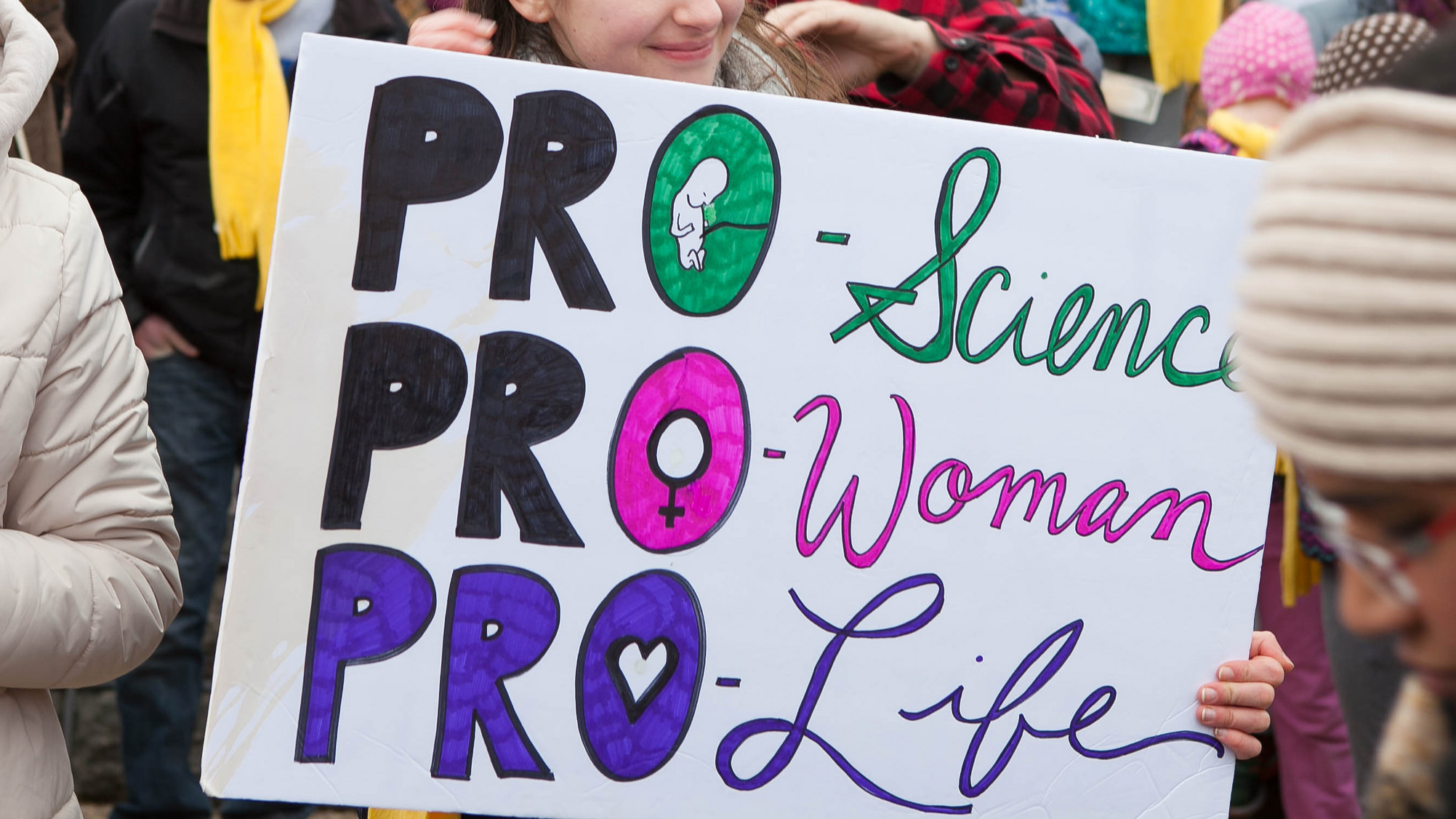
To illustrate how, look at the anti-abortion movement, another extremely divisive issue that tends to evoke all the wrong emotions. There are some pretty passionate opponents to abortion, but they don’t call themselves anti-abortion. They call themselves “pro-life.” It’s a disingenuous term, but from a marketing standpoint, it’s brilliant.

That’s because, if you go by the literal meaning of the words, it means you’re for life in general. It doesn’t directly imply anything about abortion. By calling themselves “pro-life,” they skew the meaning so that they can claim they’re on the side of all things alive and good.

Again, it’s a smart ploy, but it’s also dishonest and George Carlin did a brilliant job of explaining why. Those who use the “social justice” label use a similar tactic. They use words that denote inherently positive concepts like society and justice. However, I would argue that this ploy is even more dishonest than those hiding behind the “pro-life” table.

Most reasonable people are for justice. They’re also for a functional society in which people of any race, gender, religion, or ethnic background can live in peace and enjoy the same protections under the law. On paper, we have that. In practice, there’s room for improvement.

However, whenever I listen to someone who adheres to the Wikipedia definition of “social justice warrior,” I never get the impression that their ideas of justice are genuine. They tend to reflect a personal, selfish brand of justice that is more concerned with how the world makes them feel and less with how it really works.

A “social justice warrior” will look at issues like female depictions in video games, cultural appropriation in media, and proper pronoun usage and not see the full picture. In fact, they’ll go out of their way to ignore that picture and focus only on the parts that sends their emotions into overdrive.

It’s not enough to just criticize these injustices. A “social justice warrior” has to treat them like some grand conspiracy by wannabe fascists who bathe in the tears of orphans and wish they could still own slaves. It becomes a potent blend of holier-than-thou grandstanding and virtue signaling. To say that brings out the worst in some people would be an understatement.

Talk to most people outside a 4chan board and chances are, they’ll be in favor of a just society whether they’re liberal, conservative, progressive, feminist, or whatever other political affiliation they may have. The fact that “social justice” now has more to do with misguided outrage and little to do with actual justice is downright tragic.

The term gets thrown around so often that I’ve made a conscious decision to just avoid using it in my writing. After this article, I intend to use different words that I feel are more reflective of the outrageous attitudes that “social justice warrior” evokes.

I’m not doing that because using words gives them power and I don’t want to give “social justice warrior” more power than it already has. While I doubt that’ll reduce the vitriol it currently carries, I still prefer terminology that’s more reflective of these damaging attitudes.

In the name of offering some potential solutions to this issue, I want to put forth a new approach to dealing with the “social justice warrior” phenomenon. I believe that it reflects an ideology that’s worth confronting. It espouses attitudes that promote censorship, infantilize groups of people, and elevates one person’s feelings over another for all the wrong reasons.

These are people and attitudes that will continue to make noise and push bad ideas on a society that already has too many circling around. For that reason, I believe that warrants creating some new labels for them, one that I think is more descriptive of what they truly area. Here are just a few.

Professional Whiner

Regressive Whiner

Weakly Whiner

Sad Whiner

I think the theme here is pretty obvious. Most of the time, “social justice warriors” don’t really protest. They whine. They whine in a way that’s worse than any child. They don’t try to solve a problem. They don’t try to learn the facts and figure out a better process for doing something. They just whine.

That’s not just pathetic. That makes whole “warrior” part of their label hypocritical. Warriors are supposed to fight and not whine. When reality doesn’t cater to your feelings, whining never changes that. A “social justice warrior” may even understand that, but they also understand that without validation of some sort, their outrage is empty.

That, I believe, is the key to confronting the misguided attitudes of the “social justice warrior” phenomenon. Attitudes that have little to do with actual justice or a healthy society need to be called out for what they are. I say that as someone who does have attitudes that some may consider progressive, but I understand that whining about them won’t do much to further those ideals.

At the end of the day, if all “social justice warriors” have to go on is whining, then the harsh reality of the world will do plenty to undercut their attitudes in the long run. Calling them what they truly are will just help remind them a little sooner.

4 Comments

Filed under Current Events, gender issues, philosophy, political correctness, sex in society

What It Means To “Man Up” And Why It’s Changing (For The Worse)

man-up-and-military-press

It wasn’t that long ago that parents and peers emphasized the importance of “manning up” to young boys. There would come a point in a kid’s life where he was encouraged to do more than just grow up. He was expected to push himself in a unique way, fighting and sacrificing for those who couldn’t. Sometimes, those expectations were unreasonable and a little unhealthy, but it was part of the overall gender dynamic.

That dynamic has been changing a great deal over the past several decades. I’m young enough to have grown up during many of those changes, but old enough to remember the old traditions associated with “manning up.” The sheer breadth of that change has been remarkable, but not entirely in a good way.

For the most part, I was never pushed too hard to man up by others. My friends and family encouraged me to push myself, but never to the point where I felt pressure or anxiety. I often ended up pushing myself, whether it involved going to college or moving out of my parents’ house.

That’s not say I didn’t feel any pressure to “man up” at any point in my life. Beyond my friends and family, I was as vulnerable to expectations surrounding masculinity as anyone. Most of the time, those expectations involved little things like stepping up to fix a problem, helping out those who were physically limited, and enduring pain or discomfort in the name of a particular goal.

Overall, I feel as though these expectations were either healthy or benign. Some of those standards could’ve been gender neural. When you see someone in a wheelchair at the grocery store struggling to get something from a shelf, it’s neither masculine nor feminine to help them. That’s just common courtesy.

In recent years, however, the whole notion of “manning up” has gained new a new complications. Some of them are ideological. Some of them are politically motivated. It’s because of these various nuances that I put the term in quotes because its meaning keeps shifting, gaining and losing connotations year by year. At some point, the term itself may become empty.

In contemplating that meaning, I thought briefly about the connotations that term had back when I was a kid. I doubt my interpretation was definitive, but I like to think it captured the spirit of the term. When someone told me to “man up,” this is what I took it to mean.

  • Grow up and mature
  • Take responsibility and solve your own problems
  • Stop whining and start doing something about it
  • Quit being satisfied with mediocrity and push yourself
  • Be stronger and tougher in difficult situations
  • Work hard and endure for the good of others who can’t

I don’t think it’s a coincidence that many of these same traits associated with superheroes, as espoused by the comic books I read and the cartoons I watched. They might have colored my perspective on masculinity and “manning up,” but I suspect these ideals were still consistent with healthy masculinity. The fact that characters like Wonder Woman and Storm of the X-men had some of these traits was just a bonus.

Now, as I contemplate the meaning of “manning up” in its current context, those don’t seem to have the same prominence they once did. There are also a new host of expectations surrounding the term that are fueled, in part, by identity politics. Some even conflict with others, which adds even more complications.

To get a feel for those complications, I posed a question on Reddit on what “manning up” meant to them. The response somewhat surprised me. Most wouldn’t have found their way into the comic books or cartoons I consumed as a kid, to say the least. They involved ideas such as this.

  • Checking your privileged and making way for those your kind has oppressed
  • Acknowledging the crimes and guilt of your gender, as a whole
  • Sacrificing any advantage or benefits that being a man might have once conferred
  • Subjecting yourself to greater degradation in the name of greater equality
  • Learning about all the ways men have ruined society and the world
  • Accepting that the things men love are unhealthy, damaging, and detrimental

None of these are very positive traits for those being told to “man up.” It’s basically a less overt way to tell them that them being a man is “problematic,” a term that has also gained one too many complications. It’s a term reserved for those who appear to be benefiting too much from being a man who isn’t subject to the rigors of childbirth, rampant sexism, and a long history of exploitation.

Never mind the fact that no one alive to day is directly responsible for the injustices their ancestors committed. They’re also not responsible for the injustices their particular race, gender, or ethnicity committed. It happened in the past. Yes, parts of that past were horrible, but punishing people in the present doesn’t make it less horrific. If anything, it just tries to fight one injustice with another.

This is where the concept of “manning up” really loses whatever positive connotations it once held. It’s a sentiment that many responders to my Reddit question shared. When they contemplate that term, they interpret as someone telling them that they need to endure, suffer, or overlook a particular aspect of their identity.

A few posters went so far as to say the term can be replaced with “serve my interests” and carry the same meaning. While I don’t entirely agree with that notion, I can understand why it would feel that way. Being a man, I sometimes feel like I’m expected to get to the front of the line when the time comes to sacrifice. I won’t go so far as to say I find it oppressive, but it certainly feels like I’m held to a different standard.

Sometimes, that standard can be unreasonable. That was another common theme of the responses I got. The notion of “manning up” denotes operating in a way to avoid a particular stigma that others wouldn’t incur for the same behavior. It’s not always ideological, but the pressure is there.

A man who is too emotional is considered a sissy and has to “man up.” A woman or even a gay man who does this won’t face that stigma.

A man who is reluctant to sacrifice for the well-being of another group is considered selfish and should “man up.” A woman or another minority who show a similar reluctance can do the same, but won’t face the same stigma.

A man who shows his pain when he’s harassed is told to suck it up and “man up.” A woman or minority who is harassed can expect plenty of supporters who will cheer them on. Even if men are subject to more overall harassment, they don’t get any sympathy. They’re told to “man up” while everyone else is allowed to seek social support without much scrutiny.

This, I feel, is the ultimate tragedy of the concept. A term that once use to reflect certain ideals for men has now become an instrument of ridicule. It’s no longer a lesson for boys to learn. It’s a rhetorical shortcut that allows someone to hold an entire group of people to a different standard, one that requires them to go out of their way for someone else.

I don’t doubt that there are instances where it’s good for society that some people go out of their way to help others. For those who are disabled, elderly, or ill, it’s just more just and compassionate to set a different standard for ourselves. We don’t ask someone who is missing a limb or suffering from ALS to “man up.” We go out of our way to help them.

It’s the extent of those instances, however, that seems to be damaging the notion. It’s no longer sufficient to just have a particular ailment or shortcoming. Just being someone who isn’t a man who can claim some sort of injustice, be it historical or contemporary, is sufficient.

I believe that’s a dangerous precedent for men and women, for that matter. It sends the message that in order for there to be more justice and equality, an entire group of people need to sacrifice to an extent where they have to be the villains. They have to come to the table, surrender unconditionally, and admit they were wrong and they were the cause of the problem.

That may not be sentiment of those telling someone to “man up,” but that’s how it’s being interpreted. It’s less a masculine ideal and more a shaming tactic, one that is more likely to incur a backlash rather than get someone to reconsider their understanding of gender roles.

I still feel like there’s a way to recapture the positive elements of “manning up.” Gender dynamics is one of those concepts that’s always evolving. Sometimes, there’s progress. Sometimes, there are setbacks. At the moment, I think masculinity and femininity are going through some growing pains as they adapt to a changing world. That process is likely to involve plenty of conflicts and controversies along the way.

In the long run, though, I think society will find a healthy balance with respect to “manning up.” I think there’s a way to use that notion to bring out the best in men and women alike. It’ll likely take plenty of work, toil, and sacrifice from everyone involved in gender-driven controversies, but it’s definitely worth doing.

1 Comment

Filed under gender issues, human nature, Marriage and Relationships, media issues, political correctness, sex in society, sexuality