Six Technologies The Coronavirus/COVID-19 Pandemic Could Accelerate

Humanity is capable of amazing feats when given the right incentive and circumstances. The problem is that humanity is also rather stubborn when it comes to incentives and exceedingly evasive when it comes to changing circumstances. We’ll go the extra distance and beat the odds eventually. We just need to be dragged kicking and screaming for a while.

When it comes to the ultimate incentives and circumstances, few check more boxes than a global pandemic. I don’t think I need to belabor how bad the ongoing Coronavirus/COVID-19 pandemic has been. Even without media distortions and political agendas, there’s no getting around the damage it has and continues to inflict.

People are dying.

People suffering.

Societies and economies are teetering on the brink of collapse.

This is not a tenable situation and one nobody wants to see again. As bad as it is, there might be one silver lining to this global tragedy. It could help accelerate the development of technology that was already in the works, but lacked the necessary motivation to develop faster.

What follows are a few technologies that I believe this horrible pandemic might help in the sense that it’ll add some urgency. Nobody wants to see a mess like this again. Whether you’re rich, poor, powerful, or powerless, we have every reason to find new ways of preventing these plagues before they happen and these technologies are instrumental in doing just that.


Artificial Intelligence (Not Necessarily The Advanced Kind)

It’s impossible to overstate the potential benefits of artificial intelligence. I’ve certainly made a concerted effort when writing about it in the past. However, in the context of battling plagues, we don’t necessarily need the kind of super-advanced, super-intelligent AI to provide some of those benefits. When it comes to combating plagues, we don’t need an AI to be as intelligent as a human. We just need it to help us combat deadly disease.

This can be done without the kind of AI that finds its way into Skynet or Hal 9000. An AI that can better-analyze genetic data, run simulations on possible treatments, and track the spread of a disease can do plenty to prevent or mitigate future plagues. If it can just help us identify and isolate new cases in a short span of time, then that alone could save millions.

At a certain point, AI could get powerful enough to calculate entire treatment programs once it has the genetic data of a pathogen or condition. After this global, well-publicized crisis, it’ll have plenty of data to work with.


Space-Based Broadband Internet

When it comes to dealing with pandemics, the incentives don’t stop at treating the disease. Given all the closures and cancellations caused by COVID-19, we now know how challenging it is to endure an extended quarantine, especially for kids with no school and sports fans with no sports.

Enduring this crisis has revealed just how critical it is to have a strong, robust internet connection. It may not treat the disease, but it makes the measures recommended by the authorities more bearable. The problem is our current infrastructure for the internet is badly in need of upgrades and its role in helping us function has been made abundantly clear during this crisis.

For work, play, and just avoiding crippling boredom, we need a better internet. That’s where space-based internet, like the ones being developed by companies like FaceBook and Google come in. The idea is as simple as it is awesome. Use satellites and other high-flying crafts to deliver data more efficiently and reliably.

There are a few space-based internet service providers now, but they’re incredibly limited. This crisis, which needs reliable internet for so many reasons, might help pick up the pace in refining this technology. At the very least, it will allow people to binge-watch Netflix from the summit of Mount Everest.


Nanoparticle Vaccines

On the medical side of things, this crisis should go a long way towards teaching people the importance of vaccines. While I don’t doubt the anti-vax crowd will find an excuse to protest, even those skeptical of modern medicine can’t deny the need for better preventative measures for these treatments. Unfortunately, vaccine technology has been stagnant for decades.

This pandemic will hopefully change that and not a minute too soon. The current process for producing a vaccine is long and cumbersome, taking upwards of two years. It’s a process that has a lot of room for improvement. That’s where technology like nanoparticles come in.

The key to any medical treatment is the effectiveness of the delivery system. Vaccines have always had to take a messy path, but nanoparticles could change that. Instead of relying on the biological equivalent of a blunt instrument, nanoparticles could become biological smart-bombs, targeting pathogens with the precision we need to keep them from ever becoming pandemics.

Anti-vaxxers who refuse these just have a death with.


Gene Editing/Synthetic Biology

Not unlike vaccines, gene editing and synthetic biology stand to get a major boost from this crisis. I’ve written about gene editing tool like CRISPR in the past. I’ve touted it as a tool that could potentially treat all infectious disease, especially when combined with synthetic biology. That might have been hyperbole, but I stand by my claims on it’s potential.

Gene editing can do more than make pet fish glow. In theory, it can tweak and rewrite the DNA of organism, including the viruses that infect us. The challenge is refining the procedure so that we know how to modify diseases or create entirely new organisms that combat them through synthetic biology.

It’s not a small challenge. I’m grossly oversimplifying the obstacles in refining this technology into something usable. However, those obstacles are not insurmountable. It just requires time, resources, and motivation. After being economically and socially ravaged by a global pandemic, these efforts will have a lot more urgency.


Immersive Virtual Reality

While the scientists and doctors take up the challenge of fighting future pandemics, the rest of us are tasked with enduring the boredom they incur. I’ve noted before how boredom could become the plague of the future. I hope those stuck at home for weeks on end are done doubting me.

The entertainment industry may never be as vital as the medical industry, but it’ll play an important role in helping people stay sane, calm, and kind. Binge-watching TV and playing video games is helpful, but there’s room for improvement. At the end of the day, you’re still just sitting on a couch, looking at a screen.

To keep things both interesting and active, the development of virtual reality should get a major boost. It has existed for years and grown considerably from the days of the Virtual Boy, but it has room for improvement. Thanks to improving computer technology and more advanced interfaces like Neuralink, the experience could become even more immersive.

Beyond simply treating boredom, it could allow a greater sense of active engagement, which is critical when everyone is practicing social distancing. Being isolated and cut off from human contact may help temper a plague, but it’s not healthy. A way to immerse yourself in a realistic environment could help make future quarantines more bearable while also opening a new market, which gaming companies are sure to exploit.


Sex Robots (Obviously)

Does this one really need an explanation? When you’re stuck inside, horny, and run out of things to binge-watch, things are going to happen. Even if your partner or significant other is with you, they might get sick and you might feel lonely. Given how pandemics tend to temper the market for sex workers, a sex robot might be the best and only option.

If at least one company or horny entrepreneur hasn’t realized that by now, I’ll be shocked. The market for sex robots has been growing in recent years. After enduring a pandemic and weeks of social isolation, that market has likely grown. People rarely forget big global events like this. They’ll remember how lonely they were and that memory will fuel the development of sex robots more than any libido.

2 Comments

Filed under Current Events, futurism, technology

Why Do We Root For Characters Like Bojack Horseman?

Why do we root for people who do awful things?

Why do we root for the crazed killer in a slasher movie?

Why do we celebrate anti-heroes over traditional, upstanding heroes?

Why do we want people who do irredeemable things to be redeemed?

These are questions are similar in that they have a common theme, but they apply to a wide variety of situations. It feels like those questions have become more relevant in recent years as the standards for quality TV, movies, and characters has risen, which I’ve called the Walter White effect. While it can make for compelling stories, the questions themselves have distressing implications.

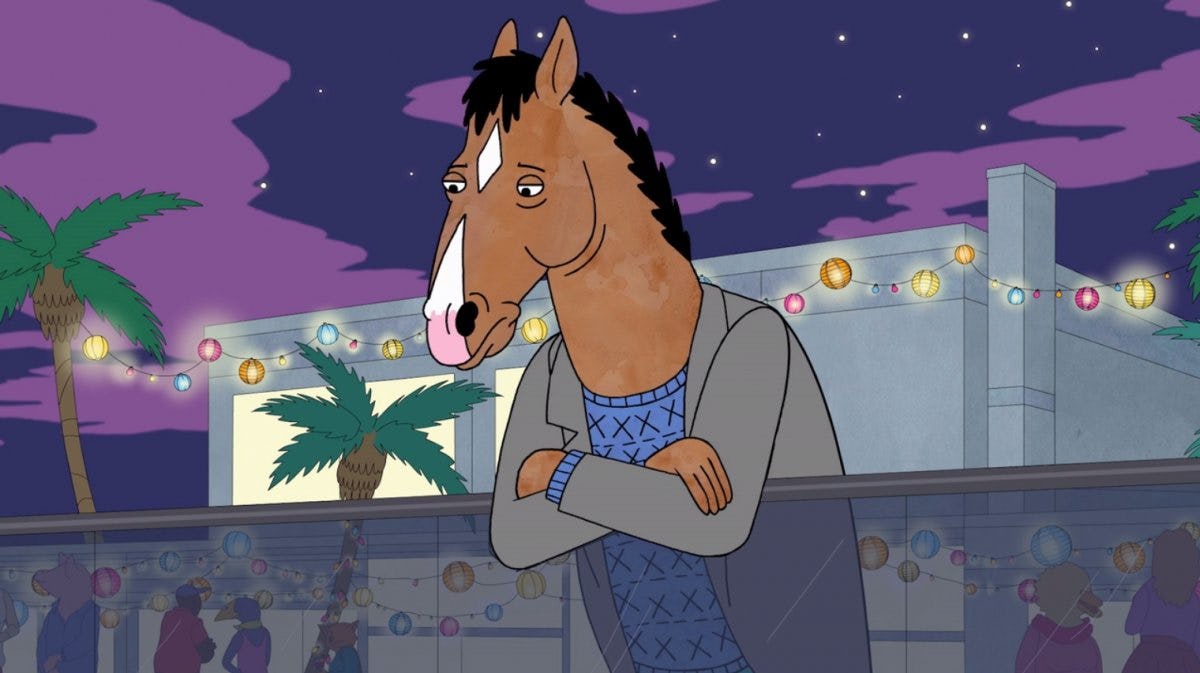
I’ve found myself contemplating those questions more seriously after the final season of “Bojack Horseman.” While I love this show and have praised its themes in the past, the final season really pushed the envelope on how far a show could go in telling stories about broken characters.

There’s no getting around it. From the first episode to the series finale, it’s abundantly clear that Bojack Horseman is not a respectable person. He’s a self-centered, narcissistic, alcohol, ego-centric asshole who has hurt people, exploited people, and taken full advantage of his celebrity status. If we knew someone like this in real life, we would never root for them. We’d probably root against them.

However, as I watched this show over the years, I still found myself rooting for Bojack. In following his story, learning about who he is, where he comes from, and how he deals with his problems, I genuinely hoped that he would find some semblance of peace in the end. Even as his sordid deeds started to come to light in the final season, a part of me didn’t want to see him fall, especially when he’d made so many strides.

Bojack isn’t the only character with this issue. There are countless other characters in popular culture, such as Don Draper and Wolverine, who do many awful things throughout their story. I’m a fan of those characters, especially Wolverine. At the same time, I can’t ignore the fact that he’s done terrible things that are on par with Bojack’s crimes.

At the same time, I root for Wolverine. I also find it easier to root for him over Bojack because while Wolverine is largely a product of what others have done to him, Bojack is a product of his own awful decisions.

Bojack has no special powers or excuses, outside being a celebrity. He has his share of issues and circumstances, from verbally abusive parents to substance abuse to legitimate mental illness. However, throughout the show, he’s still the one who makes the choices that ultimately hurt him and his loved ones. Moreover, he spends a great deal of time avoiding the consequences or downplaying them.

This is why I think the final season of Bojack Horseman” was so impactful. While I did often root for Bojack throughout the show, the final season made it a point to remind everyone of the terrible things he’s done. The show is brilliant in how it has everything collapse around Bojack, but not because of circumstance. Once again, his own terrible choices and endless excuses are what do him in.

Seeing him face real, actual consequences for his decisions helped give the show a sense of balance when it ended. Bojack didn’t have a happy ending. Very few characters did. At the same time, he wasn’t killed or endlessly punished. It just left him in an uncertain state where he faced consequences for his past choices. Now, he has to make new choices moving forward.

It’s not satisfying for anyone who’d been rooting for Bojack. At the same time, it’s cathartic for that part of us who wanted him to face consequences for the awful things he’d done. Even so, the fact we rooted for him in the first place is oddly jarring and I think it speaks to a part of our nature that’s difficult to understand.

On some level, I feel like people want to see horrible people redeem themselves. Redemption stories are powerful in both the world of fiction and the real world. I think it’s in our nature to want to see good in everyone, even when they’ve done awful things. The power and desire to forgive is real.

However, does that mean we should let horrible deeds go unpunished? It’s one thing to forgive someone for a lie, but what about someone who abandons his best friend when he gets fired? What about someone who nearly chokes a woman to death in a drug-fueled rage? What about someone who takes advantage of a woman with amnesia?

Those deeds are all things that Bojack did over the course of Bojack Horseman.” There are many others, some of which he never faced consequences for. Even though he’s an extreme example, even by fictional character standards, we still root for him. We still want him to find redemption. I think that says more about us than it does about him.

Awful people will do awful things, but when we see them trying to make things better, it’s hard not to cheer them on. I believe its in our nature to want to see others be the best they can be. The challenge is balancing that inclination to root for them and the need to punish shitty behavior.

Bojack’s story is over, but there are plenty of other characters like him that we root for. It’s not wrong to root for them, but it’s important to maintain a proper perspective. Redemption can be a powerful story. However, can there be any redemption without consequences?

I don’t know the answer. If you have some insights, please share them in the comments.

1 Comment

Filed under Bojack Horseman, human nature, media issues, psychology, television

Body Weight Exercises For Those Wanting To Stay In Shape During A Crisis

At this point, almost everyone’s life has been disrupted in some form or another by the ongoing Coronavirus/COVID-19 pandemic. Unless you live on a deserted island, a cave, or shack in the mountains, you’ve been effected by this crisis. Whether it’s living in an area that’s on total lockdown or just had your favorite sporting events cancelled, you’re feel the pinch of this crisis.

I certainly have. Recently, the crisis hit home in another profound way. Every gym in my area, including the one I go to on a regular basis, closed for the foreseeable future. A few may not open again until mid-May. That’s a long time to not have access to a gym. If ever you wanted an excuse to avoid working out, this is it.

However, I actually enjoy working out. That’s something my 21-year-old self might laugh at, but it’s true. Working out is one of the most cathartic parts of my week. The prospect of not having a gym to go to is genuinely jarring for me.

As difficult as it is, that doesn’t mean I’m just going to let myself go. I still intend to stay in shape and I strongly encourage everyone else to do the same. If you have free weights, an exercise bike, a treadmill, or some other piece of gym equipment in your house, I say use it. I don’t because I always had access to a gym. I didn’t imagine everything could be shut down to this extent.

Luckily, there are ways to stay in shape without the aid of equipment. I know because I’ve used them whenever I’ve had to travel or be away from home for an extended period. They mostly consist of bodyweight exercises, which is exactly what it sounds like. You work out, but you don’t use weights or a machine. You just use your body, physics, and a clear space.

They’re not quite as effective or satisfying, in my opinion, as using weights. They still get the job done for the most part. Combined with regular running and jogging, which I highly recommend as well, you can maintain your health and your physique. At a time when a novel disease is ravaging civilization, good health has never been more important.

To that effect, here are some handy charts I’ve found that depict both the types of bodyweight exercises you can do and ways to go about doing them. If I find a routine that works, I’ll gladly share it. If you have a routine, please share it in the comments.

Image result for bodyweight exercise

Image result for bodyweight workout

See the source image

Stay safe, stay healthy, and stay awesome everyone.

2 Comments

Filed under Current Events, exercise, health

New Comic Book Day March 25, 2020: My Pull List And Pick Of The Week

What do you do when you can’t go out to a movie, hit the gym, watch sports, or hang out at a bar? That’s not a rhetorical question. Seriously, what do you do? It’s a wholly relevant question when you’re living through a global pandemic and happen to be in an area that’s on lock-down. As I write this, pretty much everything is closed except grocery stores, hospitals, and gas stations. It’s scary and more than a little frustrating.

Thankfully, Wednesday morning still brings a brief reprieve in the form of new comics. It’s one of the few things I can still look forward to, although that might not be the case for much longer. I’m already bracing myself for the idea that new comics might be delayed because of this crisis. For a lifelong comic fan, it’s an inconceivably terrifying thought.

For now, though, New Comic Day is proceeding as usual, thanks largely the wonderful folks at Comixology. Seriously, these guys are a big reason why comic fans like myself can still enjoy this weekly batch of awesome that so enriches our lives. I really hope things continue to operate on their end without a hitch. There’s only so long a guy can last without new comics.

As such, my pull list this week is a little bloated. Does this count as panic buying? Yeah, it probably does. No, I’m not going to apologize for it. When every day brings terrible news about a worsening crisis, I think that kind of buying is forgivable. Please keep that in mind as I share my list and my pick of the week.

Stay safe and wash your damn hands!


My Pull List

Action Comics #1021

Amazing Spider-Man #42

Batgirl #45

Batman: Curse of the White Knight #8

Batman/Superman #8

Detective Comics #1021

Giant-Size X-Men: Nightcrawler #1

Hellions #1

Mighty Morphin’ Power Rangers #49

Rick and Morty #60

Star #3

Supergirl #40

Wolverine #2

Wonder Woman #754

X-Men #9

X-Men/Fantastic Four #3


My Pick of the Week

What does a fair, just, and functional society do with their most deviant citizens? It’s a very relevant question for the real world, as well as the world of superhero comics. Ever since the famed Golden Age of comics, that question has been largely overlooked. Most stories end with the heroes throwing the villains in jail, getting a pat on the back, and telling kids to eat their vegetables. It’s simple, comforting, and frustratingly inane.

Then, a book like “Hellions #1” comes along and decides to stop running from that question. On top of that, it even dares to have fun while trying to answer it. After all, comics should be fun. They can also answer profound questions about the endless pursuit of a better society. It just takes the right kind of story and that’s exactly what writer Zeb Wells and artist Stephen Segovia set up.

The world of mutants and the X-Men have faced massive upheavals since the events of “House of X/Powers of X.” With the founding of Krakoa, mutants aren’t just looking to survive the endless attacks of killer robots, hateful humans, and superhero civil wars. They’re looking to build their own society and establish their own culture. It has been an arduous process that has spanned many books. “Hellions #1” is now part of that effort.

Specifically, it addresses the inescapable question of what to do with the mutants who aren’t necessarily supervillans, but are as mentally unstable as Deadpool in a chimmichanga factory. Many have popped up in various parts of X-Men lore. Most casual fans won’t know who Wild Child, Empath, Scalphunter, Nanny, and Orphan Maker are. However, you don’t need to know who they are to follow the story. You just need to know they’re crazy, violent, chaotic, and they have mutant powers.

While it would be easier for the powers that be on Krakoa to just shut them out of their growing society, that wouldn’t fit with their ideals. They founded Krakoa to help all mutants and not just the ones who look good in yellow spandex. That includes the psychopaths.

Wells and Segovia put together a quirky, but entertaining ensemble of characters together. They feel less like a superhero team and more like a collection of irritable psychopaths who just need something to do to keep them from being too psychotic. Fittingly enough, Mr. Sinister is tasked with doing just that, complete with the blessing of Charles Xavier, Magneto, and the rest of Krakoa’s leadership.

On paper, it sounds like the kind of thing that can only end in unmitigated disaster. In practice, it’s still a messy disaster, but one that can be aimed properly. Under the watchful supervision of Havok and Psylocke, this new team of Hellions is tasked with channeling their psychotic tendencies for good. It’s one of those ideas that sounds so crazy that it has to work.

Wells and Segovia don’t just throw this new team into the nearest conflict involving killer robots or angry aliens. Like many other X-books since “House of X/Powers of X,” there’s a legitimate effort at world-building and depth. There’s motivation, purpose, and vision behind each decision. The fact that psychotic mutants often make for hilariously entertaining moments is just a nice bonus.

It’s an approach that feels distinctly different from what petty, unevolved humans do with their deviants. If the final page of “Hellions #1” is any indication, there will be ample opportunities to test that approach. It’s bound to be chaotic, messy, and mentally unhinged. That’s exactly what makes it so entertaining and my pick of the week.

Leave a comment

Filed under Jack's Quick Pick Comic

Marvel’s “New Warriors” Brings Out The Dumbest Criticisms (From Whiny Losers)

A big part of being a fan of anything is enduring the hard times. Whether you’re a fan of a sports team, a celebrity, or a particular author, there are going to be missteps. For every “Dark Knight,” there’s going to be a “Batman and Robin” that’ll make even the hardest of hardcore fans cringe.

It’s no different for superhero comics. There have been times when being a fan of X-Men, Justice League, the Avengers, or Batman have not been pleasant. Sometimes, the quality of the material being produced just isn’t that great. Sometimes, it’s downright infuriating. Just ask any Spider-Man fan about One More Day or the Clone Saga.

However, there’s a big difference between enduring hard times and just whining about something. There’s a big difference between criticism and whining, but some people who claim to be fans can’t seem to tell the difference. A few even manage to whine loud enough to draw an audience, albeit for the wrong reasons.

If you follow comics as closely as I do, you know who I’m talking about. They’re the kind of people who find a comic, single out a few particular elements, and go on these long whiny rants that basically say the same thing.

It’s all blah-blah-blah-SJW-blah-blah-blah-political correctness-blah-blah-blah-it’s too damn woke-blah-blah-blah-the industry is doomed-blah-blah-blah-they’re insulting older fans. I won’t single out any of these frail, emotionally-stunted losers by name or handle. They don’t deserve the extra attention and I refuse to give it to them.

They’ll claim they’re defending the industry they love. They’re just whining loudly and hoping to attract clicks in the process. It’s pathetic. It’s also predictable. That’s why I groaned when I saw this recent news from Marvel regarding a relaunch of their New Warriors series.

Marvel: Introducing The New ‘New Warriors’

When Kamala’s Law goes into effect in the highly anticipated one-shot, OUTLAWED, super heroics will be left to the adults and underage heroes will be banned unless they have official government assigned mentors. That’s where THE NEW WARRIORS come in.

Now, I’m not the biggest fan of New Warriors. I’ve heard of them before and I know their history to some extent, but this is hardly the most outrageous thing Marvel could’ve done. They’re not killing off older characters and replacing them with young, diverse characters, a la Riri Williams. They’re not radically changing the background or history of established characters, like they did with the Maximoff Twins.

In fact, they’re doing exactly what these same whiny losers always say they should do. They’re creating entirely new characters with diverse backgrounds instead of forcing them into roles that others have occupied. They’re not canceling, changing, or undermining the characters we’ve loved since the days of Stan Lee and Jack Kirby. They’re just creating something new to supplement those characters.

Despite that, these same “critics” still whine about it. They whine the same way they whined endlessly about “Star Wars: Rise of Skywalker.” The mere fact that this new title exists, especially its two non-binary characters, Snowflake and Safespace, is enough to make them cry like immature babies who just had their blanket taken away.

It’s one thing to criticize Marvel for trying to force new characters into the roles of established characters. That rarely works out. It’s quite another to complain when companies like Marvel try to make new characters from scratch who don’t resemble the many other characters around them. It’s almost as if characters aren’t allowed to be different beyond a certain point.

If that weren’t bad enough, these same whiny losers are judging this book before they’ve even read it. I admit it doesn’t look too appealing to me, but I haven’t read it. How am I supposed to know if it’s good? How will I know that Snowflake and Safespace aren’t good characters?

There’s a word for people who judge things before they actually give it a chance. It’s not a very flattering word, but I doubt the same whiners will admit to knowing it. They’ll still claim they’re defending their preferred genre, but all they’re doing is trying to justify their prejudice by whining.

Once again, the wise words of Abraham Simpson sum it up best.

giphy

Nuff said!

2 Comments

Filed under Marvel, outrage culture, political correctness, superhero comics

What The “Mass Effect” Trilogy Revealed About Paragons, Morality, And Human Nature

I genuinely believe in the inherent goodness of humanity. I know that’s not a popular opinion, these days. I’ve even tried to remind people of it a few times. You need only look at the news, history books, or headlines from Florida to undermine your faith in human nature. I don’t deny that there’s plenty of bad, but there’s also a great deal of good. Sometimes, you find it in unexpected places.

In this case, the place is the epic space opera that is “Mass Effect.” It’s not just one of my favorite video game franchises of all time, which I often go out of my way to reference. It’s a game that dares to give players a choice in how moral or immoral they want to be. There are plenty of games out there that let you play virtuous heroes and deplorable anti-heroes. This game lets the player decide which path they want to follow.

In the original trilogy, it’s called the Paragon/Renegade system. Throughout all three games, you’re given choices on what to say or what to do in various situations. Some are inherently selfless and heroic, such as saving the Rachni from extinction. Others are just pure dick moves, like punching a reporter or shooting Mordin.

The path you choose doesn’t prevent you from completing the game, but it does affect the story. It also effects the endings of certain games and the plots of others. You can basically play the same three games and forge a very different story. You can be a pillar of virtue and nobility or you can be a total dick who still gets the job done. It’s entirely up to you.

I’ve played this game so many times that I’ve done both, but I prefer the path of the paragon. It just feels more rewarding at the end, even though it doing so does come at a price throughout the game. Recently, in an article by Forbes that featured one of BioWare’s developers, I found out that I’m not the only one who shares that sentiment. In fact, that sentiment is revealing in ways that go beyond the game.

Forbes: You’ll Be Surprised What Percent Of ‘Mass Effect’ Players Chose Paragon

The information comes from BioWare’s John Ebenger, who was retweeting a meme on Twitter about how devs give players choices to be evil villains in games, yet people always pick the nice options anyway. And it turns out that’s even more true than the meme suggests, as Ebenger laments that with all the work they put into the Renegade content in Mass Effect, that something close to a whopping 92% of players chose Paragon in any given moment.

Those bold parts are my doing. Regardless of your math skills, 92% is not a slim margin. That’s an overwhelming majority of players. Given the many stereotypes of gamers, it’s somewhat refreshing. When given the choice to be a hero or be a dick, they choose to be a hero.

That’s a profound notion because this is a video game. There are no real stakes outside beating the game. Players have no real incentive to be good or evil, but they still choose good. Even when making the renegade choices comes with legitimate advantages, players still go with the way of the paragon. I think that says more about people in general than it does about those who play games like Mass Effect.”

Say what you will about the genuinely evil people in this world. They exist. They make the news. They’re the kind of people we can’t overlook, but therein lies the critical context. We’re aware of such evil because it’s so rare. When most of the people are simply making paragon choices, it’s not noteworthy. It’s considered normal.

As someone who has faith in humanity and loves all things “Mass Effect,” I find that genuinely uplifting. It proves to me that most people are inclined to be good and decent. Even if you put them in a galaxy-spanning adventure against rampaging Reapers, they’ll still do the right things for the right reasons.

In a sense, Commander Shepard gave us insight into the nature of humanity and showed us that most of us have the heart of a true paragon. That’s something worth celebrating and cherishing.

Leave a comment

Filed under human nature, Mass Effect, psychology, video games

Jack Fisher’s Sexy Sunday Thoughts: Rebound Love Edition

cro-one-after-the-other-how-long-do-rebound-relationships-last-1

Rebound sex has somewhat of a mixed reputation. It’s not uncommon for someone to tell a friend, be they a man or a woman, that the best way to get over one lover is to hop into bed with another. The logic sounds lurid, but it’s not entirely flawed. Sometimes, people need to reconnect with someone new to move forward. Like anything, there’s a healthy and unhealthy way to do it, but it does have merit.

Personally, I think just jumping into bed with the first person you can after a break-up does more harm than good. However, I also think that pursuing a new relationship shortly after another has fallen apart can work very well, provided those involved understand the circumstances. I think love in that context can be just as meaningful as any other.

It’s part of a very human tendency to seek love. When you feel broken, vulnerable, and lonely, you’re going to be a lot more motivated to seek it. Break-ups often leave us feeling all of those things and then some. I’d argue that you’re never more motivated to find a new love than you are when you’re still reeling from one that failed.

I’ve experienced this personally. I’ve also seen others experience it as well. Some ended up in a rebound relationship that has since become long-term. It’s an uncommon love story that doesn’t always have a romantic foundation, but it’s every bit as genuine. Love like that is certainly worthy of some Sexy Sunday Thoughts to cap off the weekend. Enjoy!


“If you and your lover are horny, creative, and daring, you can make love on any piece of furniture.”


“Pillow talk is basically a debriefing for your heart and your genitals.”


“Every time you think your job is awful, remember that there are janitors who work at brothels.”


“Sexting is basically an effort to be the one who makes someone horny from afar.”


“A good portion of peoples’ morality is built around which sources of orgasms warrant stigma.”


“As long as people have dirty minds, there will always be a source of free porn.”


“Decadence is just a sexy brand of fun that makes certain people uncomfortable.”


Pursuing love is rarely a smooth, predictable process. We all have this fanciful idea of how we’ll fall in love with someone. It rarely plays out that way in the real world. Rebound love might not be the most romantic kind of love we pursue, but it can still blossom. It can turn the pain of a breakup into something beautiful. What’s more romantic than that?

Leave a comment

Filed under Sexy Sunday Thoughts

Report: Rosario Dawson Has Been Cast As Ahsoka Tano For “The Mandalorian” (And The Galaxy Is More Awesome)

At a time when the stream of bad news seems endless and unyielding, you need to embrace the good news as much as you can, no matter what form it takes. Most of the time, you have to focus on the little things. While those can be good, there’s still a place for big, awesome revelations that make the world feel slightly less terrible.

Late yesterday, a uniquely awesome story broke in the world of Star Wars. Say what you will about the movies, but “The Mandalorian” was a perfect manifestation of everything that’s great about Star Wars. It had a little of everything on top of the galactic level of cuteness that is Baby Yoda. It’s hard to imagine this show getting any better.

Well, according to SlashFilm, “The Mandalorian” is about to raise the bar once again. This time, it comes from a familiar source and one that has a special place in my heart. That source is Ahsoka Tano, a character I go out of my way to praise and chrish with every midichlorian in my being. If SlashFilm’s report is true, she’s about to make her live-action debut in the next season of “The Mandalorian,” courtesy of Rosario Dawson.

SlashFilm: ‘The Mandalorian’ Season 2 Casts Rosario Dawson as Ahsoka Tano

We have exclusively learned that Rosario Dawson will appear in The Mandalorian season 2 and are excited to report that she will be playing a fan-favorite character previously only seen in the Star Wars animated productions. Dawson will be playing a live-action version of Ahsoka Tano, Anakin Skywalker’s Jedi padawan apprentice who appeared in Star Wars: The Clone Wars and Star Wars: Rebels. This would be the character’s first appearance in live-action.

I cannot put into words how excited I am. I’m already a fan of Rosario Dawson, having grown fond of her character in “Daredevil” and “The Defenders.” She has what it takes to bring Ahsoka to life. While Ashley Eckstein will always be Ahsoka’s true voice, I believe Rosario Dawson can bring her spirit to life.

Ahsoka reflects the best of what Star Wars can be. She embodies the journey, the struggle, and the hardship that comes with doing the right thing when everyone else is doing so much wrong. Her instincts aren’t always right and her attitude isn’t always endearing, but there’s no denying her spirit.

She’s a special soul and one that the world of Star Wars needs right now. I really hope this report turns out to be true. I look forward to seeing Ms. Dawson don her Togruta attire. Between her and Baby Yoda, the future of Star Wars looks both bright and adorable.

Leave a comment

Filed under Star Wars, television

Telework, Online Learning, And What A Global Pandemic Can Teach Us About Both

See the source image

In general, people don’t radically change their habits unless there’s a huge incentive and/or a major disruption. By that, I don’t just mean habits relating to drug addiction, exercise regiment, or bedroom kinks. I’m mostly referring to peoples’ overall tendency to keep doing things the way they’ve been doing them, even if they have major flaws.

While it’s rare to get huge incentives to change those tendencies, it’s just as rare to face the kind of disruption that would force people to re-evaluate how they do things. People are, broadly speaking, pretty stubborn. It takes a lot of time and energy to abandon old habits in exchange for new ones. There’s no guarantee they’ll work. Sometimes, they’ll fail miserably.

In terms of disruptions, it’s hard to top a global pandemic. There’s just no way to overstate how big an impact something like that can have on a society. Pandemics have changed the course of history, as well as the course of society. They are the million-ton sledgehammer to whatever stable social system we have in place.

The ongoing crisis surrounding the Coronavirus/COVID-19 pandemic is the biggest disruption our society has faced in over a century. It has jarred us all from our comfort zone, to say the least. Between cancellations of major events and concepts like social distancing, we’ve had to reassess how we go about our daily lives.

As frustrating and frightening as it has been, these kinds of disruptions also present rare opportunities. We may never face a situation like this that affords such opportunities, so we would be wise to take advantage of it. In this case, it has to do with how we go about work and school.

We all have this time-tested notion of what it means to have a job and get an education. Having a job means going to an office or work site, doing your work there, and then coming home after a certain amount of time. It varies from person to person, but that’s the general approach.

Going to school is similar. You get on a bus, go to some building across town, stay there for six or seven hours while going to multiple classes, and then you come home. That’s what we think of when we think about getting an education and going to school.

Now, thanks to a global pandemic, this time-tested system has been disrupted. Going to crowded facilities is now a health hazard. Kids can’t go to some big school facility and workers can’t go to some crowded office for a third of their day. Instead, people are having to telework or utilize online classes. For now, this is just a temporary measure while we endure all this massive social upheaval.

At the same time, it also gives us a rare opportunity to see just how necessary it is to go somewhere else to do our work or get our education. It’s a relevant issue that goes beyond our current crisis. These questions are worth asking.

How necessary is it for us to go to some office or school to achieve what we seek?

Is that system really the best we can do?

What are the limitations of telework and online schooling?

What can be done to mitigate those limitations within the current infrastructure?

Can people be more productive with telework and online schooling?

How effective is our current system at supporting these options?

Now, I’m the last person who should defend the current school system. My past experiences with public school give me a somewhat heavy bias in assessing it. However, I doubt I’m alone in saying the current system has room for improvement.

When it comes to telework, I have less experience. In the past, I’ve had instances when I’ve been successful with telework. It depends on the situation and what I’m working on. I suspect that’s common for many jobs. An accountant and a brain surgeon work in very different spheres. One is easier to do at home. The other is a lot messier, to say the least.

It’s worth taking note of just how much we’re able to function over the next few weeks with respect to telework and online schooling. If a sizable chunk of the population demonstrates they can get the job done this way, be it with telework or online schooling, then that’s valuable insight that we should not ignore.

I understand that there are some jobs that cannot be done from home. There are also some things you can’t learn remotely. However, looking back at my experience in school, I’d say about 80 percent of what I learned could’ve been learned online. In terms of work, over half of what I did could’ve been done from home with a laptop and an internet connection.

There’s no reason we should be locked into this mindset that work involves leaving our house or that learning has to take place within a school. There are other ways to do these things and certain people might function better that way.

During a massive upheaval like this, things cannot and should not go back to exactly how things were. We have an opportunity to find a new approach to school and work. I say we take advantage of it as best we can.

1 Comment

Filed under Current Events, Environment, futurism, human nature, technology

When Crisis Brings Humor, Irony, And Religious Absurdities

Whenever the news is consistently awful, you tend to get numb to it. At some point, you just can’t bring yourself to get too worked up anymore. It’s not a good thing. Once you get numb to terrible news, you’re less inclined to do something about it. That’s not healthy for any society.

I don’t deny that the news surrounding the Coronavirus/COVID-19 has been awful. It might be the single worst news story we’ve collectively endured in over a decade. It’s bad, especially if you’re a sports fan. It may very well get worse before it gets better.

However, it’s for that same reason that we should all laugh and take comfort in stories that expose absurdities, frauds, and assholes who don’t deserve the notoriety they usually enjoy. Of all the things that fit every one of those criteria, faith healers are right up there with creationists, snake oil salesmen, and conspiracy theorists.

Now, I could go on an extended rant about how faith healers are one of the most perverse manifestations of organized religion. I’ve gone on similar rants before on far less serious subjects. However, this is one instance where no rant is necessary. The facts alone expose the absurdity, hypocrisy, and stupidity of the whole endeavor.

It comes courtesy of a megachurch in California and a story covered by Raw Story. Rather than describe all the crazy details, I’ll just leave a link and a brief summary of the best parts.

Raw Story: ‘Faith-healing’ megachurch cancels hospital sessions over coronavirus fears

A megachurch in California that regularly conducts “faith-healing” sessions at local hospitals apparently doesn’t believe the power of prayer is strong enough to cure coronavirus.

The Bethel Church in Redding, California, which serves as the spiritual home to an estimated 6,300 weekly worshipers, announced this week that it is canceling its regularly scheduled visits to hospitals as fears of the coronavirus pandemic take hold.

Think about that for a moment. Faith healers profess the power of healing through prayer, specifically through prayers to their favored deity. They claim that their spiritual service can bring wellness to the sick while protecting the healthy. That’s the power of their faith.

Then, a virus comes along that is utterly unaffected by their dogma. It infects everyone, regardless of what they believe, and no amount of prayers can stop it. The fact that these “faith healers” have ceased going to hospitals out of fear of infection is an indirect admission that their healing doesn’t work. It also exposes just how weak it really is.

A virus is not some invading army or repressive government. It’s a tiny bit of biomatter. Despite that, it’s still strong enough to defeat any prayers that a believer may offer. No matter how ardent they may be, the virus still infects because wishful thinking is no match for harsh reality.

Now, I’m not foolish enough to believe that this crisis will put all faith healers out of business. At the very least, this offers a huge red flag to anyone whoever crosses paths with someone claiming to heal by faith. If they can’t heal you from a simple virus, then what does that say about their faith, their religion, and their motivations?

In this case, washing your hands more powerful than any prayers you could offer.

2 Comments

Filed under Current Events, health, psychology, religion