At what point does a romantic gesture become creepy?
These are all relevant questions that don’t have clear answers. Those who unlucky enough to have dealt with a stalker probably have different answers compared to those who’ve never had that experience. I haven’t, so I won’t try to speak for those who have.
Even without that experience, I think those questions are still worth contemplating. They help put our understanding of love, romance, and relationships into perspective. We may think we know what it means to be romantic, in love, and in a relationship, but tend to forget that this entire perspective has been shaped by our circumstances.
What constitutes romance today is not the same as it was 50, 100, or 500 years ago. It’s easy to forget that the concept of marrying for love is relatively new, historically speaking. The idea that you seek a partner, go out on dates with multiple individuals, and eventually settle on the one you fall in love with is downright radical compared to how society went about sanctioning intimate relationships.
It’s something I’ve mentioned before, but now I’d like to take it a step further. Take a moment to think about all the ways you were romantic with a current or previous partner. Then, try to take a step back and ask whether this same gesture could be done by a stalker for the same reason. How does that affect your perception of the gesture? What does it reveal about your concept of romance?
As an example, consider the following romantic gesture, but through the eyes of a stalker.
I love you. I love you so much that I want to spend the rest of my life being with you. My love for you is so intense that I want the law to sanction it in a contract that will legally bind our love. I also want to put this ring with a shiny stone on your finger and have you wear it every day to let the world that you love only me. Nobody else is allowed to love you. Only I can love you.
What I just described is a gross perversion of a marriage proposal. In one context, it’s the ultimate romantic gesture. In another, it’s an incredibly disturbing rambling by a stalker who desperately wants to secure the love of another.
Here’s another example, but from the eyes of a romantic.
I love you. I love you so much that I want to live with you, share my life with you, and bear part of your burdens. I want to be close to you constantly. I want us to be under the same roof and share the same responsibilities. I want our love to be the basis with which to share our lives.
It’s another sweet gesture. It highlights that critical step when a romance goes from just sharing affection and intimacy to sharing lives and building something together. At the same time, it also sounds like something a stalker would suggest.
With those two examples in mind, take a moment to contemplate the implications.
What is it about these actions make them romantic?
Why do we go about romance in this particular manner?
What do these gestures and rituals imply about our perspectives on romance?
I don’t present this experiment as a way to undermine the way we go about romance. I’m a genuine fan of romance, in general. The novels I write and the sexy short stories I tell reflect that. However, I think it’s helpful and somewhat necessary to scrutinize certain concepts, especially if they’re important to you. You may be surprised by what they reveal.
Please try this thought experiment on your own time when you get a chance. If you have any insights you’d like to share, please do so in the comments.
For better or for worse, we live in remarkable times. That’s a good and bad thing. Right now, I think the bad is making the news more often than usual, albeit for entirely understandable reasons. However, there’s still some good to be found. Human beings are remarkably adaptive, especially when it comes to their love life.
At a time when everyone is adapting to the idea of social distancing and extended quarantines, we need to find some way of getting sexy and sometimes that requires a little creativity. One method that I’ve known some couples to use involves FaceTime and video chatting. There’s nothing too novel or radical about it. It’s just people getting sexy and naughty over a video chat.
It’s simple, but it gets the job done. Given the market for Cam Girls these days, that shouldn’t surprise anyone. While there will always be a place and a preference for direct, skin-on-skin contact, there’s also a place for shared digital sexiness. Sometimes, that’s the only option we have. Given that it wasn’t an option just a few decades ago, I’d say that’s a remarkable luxury.
These are difficult times, especially if you’re away from your lover. Remarkable technology has made it so that we can be with our lovers in novel ways, even if they require a robust internet connection. Since we don’t know how long we’ll have to remain isolated, we might as well embrace it. This round of Sexy Sunday Thoughts is my contribution to that effort. Enjoy!
“Catching your parents having sex often runs the risk of knowing exactly when and how a sibling was conceived.”
“Bisexuals will always have more options when it comes to both lovers and strip clubs.”
“Just imagine how skilled someone would have to be if they were the world’s oldest prostitute.”
“A part of seeking love is seeking someone you trust to touch your genitals.”
“Meaningless sex doesn’t heal a broken heart, but it’s an effective distraction.”
“An impotent man is exceedingly motivated to use other body parts exceptionally well.”
“Falling in love isn’t a choice, but making your love sexy is.”
Not all video chatting has to be sexy. Not all digital exchanges have to have some sort of kinky element. However, when global affairs require extreme measures, we’ve no choice but to adapt and cope. That extends to our love lives. If we can’t be together physically, then a video chat might be the best we can hope for. It’s not the same, but it’s better than nothing. If it helps us feel less lonely, then I say that’s an extra-sexy bonus.
To some extent, a global crisis is the ultimate bullshit filter. You can bullshit your way through a lot of things. Things like politics, economics, theology, and philosophy can all be twisted and obscured by a skilled bullshitter who has little concern for the truth, ethics, or decency. However, no amount of bullshit can circumvent the grim realities of a global pandemic.
A disease like the coronavirus/COVID-19 doesn’t respond to fancy rhetoric, dogmatic beliefs, or ideological divides. It responds only to the immutable laws of physics and biology. To this virus, you’re not a liberal, conservative, Christian, Muslim, atheist, or Satanist. You’re just another host.
It’s a grim, yet sobering perspective. It’s also revealing in other ways. As I’ve noted before, I believe we’ll eventually beat this disease. Not since World War II has there been a crisis that has unified humanity’s effort to a singular cause. It will take time and people will still die, but we’ll ultimately save more lives because of the advances we make. The fact that nobody dies of Small Pox anymore is proof of that.
I’ve mentioned religion before in pointing out some of the humorous headlines they’ve inspired in this crisis, but there’s nothing funny about this particular issue. As always, I want to disclose that most religious people aren’t zealots. They don’t take their religion, their holy text, or their eccentric leaders too seriously. They believe what they believe, but live their lives as decent, loving human beings.
I single these people out because in a crisis like this, they can’t survive with the rest of society without being hypocrites in the highest order. I say that as someone who freely admits he can’t predict the future to any degree. However, I’ve met enough religious zealots in my life to surmise predictable patterns.
With that in mind, here’s how I predict religious zealots will react when a vaccine or treatment is found for COVID-19.
They’ll thank their deity and not the doctors or scientists.
They’ll eagerly get in line to receive the treatment, whatever it might be.
They’ll later claim that their deity protected them over the course of the crisis
They’ll then claim the crisis was a punishment for insert-hot-button-social-issue-here.
On top of that, they’ll do all of this with a straight face and a clear conscious. They won’t think of themselves as hypocrites, but that’s what they’ll be by the very definition of the word.
They’ll have claimed that prayer heals and protects adherents, but conveniently overlook how it failed to protect anyone during this crisis.
They’ll have claimed that any science that contradicts their theology, namely evolution, has no merit and should not be supported on any level. Then, they’ll gladly enjoy the fruits of that same science once a vaccine is perfected. Chances are they’ll go right back to bemoaning the same science because it doesn’t line up with their holy books.
Even those who openly defied orders by health officials will face few consequences for their behavior. Even if it’s proven that people suffered and died because of their reckless behavior in the face of a pandemic that doesn’t respond to prayers or preaching, they aren’t likely to change their ways. Even if their hypocrisy is thrown in their face, it won’t change them or their zealous dogma.
That’s the most frustrating part. Most reasonable people, regardless of their faith, understand that there’s a time for prayer and a time for working with the science we know to solve a big problem. Many of those working on a vaccine as I write this are religious. Some might even be motivated by their religion to save as many lives as possible. These people are truly heroic in their own right.
Those who build their religious zealotry on false promises, false hope, and even outright fraud deserve no such praise. Their theology depends on a foundation of bullshit and when a crisis like this cuts through it, then the only thing left is hypocrisy.
I take some comfort in the knowledge that, thanks to the internet and social media, a record of their hypocrisy will remain. They might try to bullshit their way around the facts, but at some point, all the bullshit in the world can’t overcome such hypocrisy.
The Coronavirus/COVID-19 pandemic has required everyone to get creative in alleviating boredom. At some point, there’s only so much binge-watching you can do with new shows. That’s because, along the way, you find out just how many of them turn out to be utter crap. As such, you find yourself returning to older shows that you haven’t forgotten, but haven’t seen in a long time.
I found myself in that exact position recently. Over the weekend, I was in search of a new show and came across one that I once followed closely. That show is “Chuck,” a quirky, yet endearing spy thriller/comedy/drama from the late 2000s. It’s one of those rare shows that sounds good on paper, but is even better in execution.
The premise of the show is simple. A once-promising young man named Chuck Bartowski is stuck in a dead-end job at a Best Buy-like electronics store, his future having been derailed by getting expelled from Stanford after being wrongfully excused of cheating.
Then, one day he gets a mysterious email from his old roommate, Bryce Larkin, who just happens to be the one responsible for him getting expelled. That email turns out to be a top secret program called the Intersect, a compilation of every NSA and CIA secret ever assembled. It gets downloaded into his brain, making him the most valuable intelligence asset in the world.
It puts Chuck in a strange position that requires him to become a spy under the protection of Major John Casey and Agent Sarah Walker. Action, drama, romance, and various hijinks ensue. The show often has a comedic undertone, but it gets serious in just the right amount to still be entertaining.
I started by just watching the first episode.
Then, I watched the second.
Then, I watched five more.
The next thing I know, I’m already in season two and the show is every bit as fun as I remember. It’s even aged remarkably well. I believe that if this show came out today and was completely unaltered, except for some of the technology, then it would still be a hit. It might even do better than it did when it came out because of just how well every character is handled.
This brings me to the part about “Chuck” that stood out most for me while re-watching it. Once again, it has to do with romance. There’s a lot I could say about how this show handles its romantic sub-plots, but I’ll sum it up in a simple statement.
This develops TV romance in a believable, balanced, and endearing way that everyone can appreciate.
A lot of shows have major romantic sub-plots that play out over the entire run of the show. Shows like “Castle” and “X-Files” are famous for drawing those plots out over years. The problem that often plagues these plots is that, by drawing them out, they often become stale. Some even become downright toxic. A show that successfully develops a balanced, sincere, believable romance is exceedingly rare.
I would gladly cite “Chuck” as one of those rare success stories. From the first episode to the emotional series finale, the primary romance that drives the plot of this show is between Chuck and Sarah. It’s set up in the first episode as a ploy for Sarah to get close to the man who possess the intersect, but it evolves into so much more over the course of five seasons.
There are many things that make this romance great, but a big part of what makes it work is how it gets the basics right. It’s a romance that never feels lopsided, forced, or insincere. It’s also not a romance that robs either character of their agency or their personality. It doesn’t move too fast or too slow, either. It evolves in a way that feels real and heartfelt.
Chuck and Sarah isn’t a run-of-the-mill, love-at-first-sight type romance. It’s also not one of those pretty-girl-falls-for-dorky-guy romance either, although that is how it seems initially. It starts off basic. One day, Sarah walks into the store. Chuck sees her and is attracted to her beauty. Call it shallow, but that’s how many romances start in the real world and this one certainly doesn’t remain shallow.
As their relationship and their partnership evolve, each character develops in their own way. Through their romance, we learn where they came from and who they are. Chuck was once a promising student at Stanford who had big dreams that got crushed by forces beyond his control. Sarah is the daughter of a con-man who was recruited to put those skills to use for the CIA.
Both characters have traits and histories that function outside the romance. They each develop along their own path. Chuck goes from being a bumbling, anxious, often-unwilling spy to a determined, capable, and dedicated agent. A big part of that evolution is due to the influence and support of Sarah.
Sarah goes from a simple role-player into someone with her own hopes, dreams, and ambitions. She has plenty of changes to become cold and callous like her partner, John Casey. She chooses to avoid that path and Chuck is a big inspiration for that choice. He makes her better, just as she makes him better. That’s exactly what a healthy romance should do.
As for the evolution of their romance, it’s hardly worthy of a fairy tale. Throughout the course of the show, Sarah and Chuck find themselves caught up in other romantic entanglements. Sarah has a romantic history with Chucks rival, Bryce. Chuck has more than a couple flings that range from a girl working at a sandwich shop to his lying ex-girlfriend, Jill.
Remarkably, none of these side-romances come off as basic obstacles. There are reasons and motivations behind these romantic pursuits. Even if Chuck and Sarah have feelings for one another, circumstances and uncertainties keep them from developing a functioning relationship, at least at first. Eventually, they are allowed to get together, be together, and even get married.
In many shows, that level of maturity is an endpoint. For “Chuck,” it’s another key component of their romantic evolution. That’s a big part of what makes both the series and the romance work. It doesn’t just end when the guy gets the girl. Being in a relationship and consummating that relationship is just part of what makes it function. The show finds a way to work that into the plot and it works beautifully.
There’s so much more I could say about the relationship between Chuck and Sarah, but there’s no way I could capture the full scope of their love story without recounting nearly every episode. That’s why I highly recommend bingeing the show on whatever platform it’s on. Last I checked, the show is on Amazon Prime.
In just watching the first two seasons, it’s easy to see how much time, effort, and thought was put into the Chuck/Sarah romance. It also helps that the acting skills of Zach Levi as chuck and Yvonne Strahovski as Sarah are maximized through plenty of dramatic moments.
It’s a romance that helps develop and benefit both characters over the course of the show. It’s easy to root for them and you really feel it when they’re hit with some devastating moments, especially in the penultimate episode of Season 5. It also shows that balanced romance can be told over the course of a show without it getting stale, hallow, or toxic.
In real life, quality romance occurs when two people bring out the best in one another. Chuck and Sarah prove that over five memorable seasons of “Chuck.” Their love may get messy, complicated, and convoluted at times, but it still feels real and genuine. If you’re a romance fan in any capacity, I encourage you to revisit this gem of a show.
Even if the romance doesn’t do it for you, the show is worth watching for Jeffster alone.
The crisis surrounding the Coronavirus/COVID-19 pandemic affected our world and our lives in ways too numerous to list. I hate talking about it and lamenting on all the things we’ve lost because of it, from March Madness to movies to new comics. Unfortunately, it’s unavoidable. Unlike misguided outrage or clickbait, I can’t just step away from my computer and escape. The world around me is still quarantined.
It’s a rare, unprecedented level of awful that will likely resonate for decades to come. It’s awful on so many levels, but it’s often through awful experiences that new perspectives emerge. I’d like to offer one today, if only to divert attention from how bad the news keeps getting.
Let’s face it. If you’re a very social person who enjoys going out, meeting new people, and forging new connections, this experience has been hell. It’s not just that bars, clubs, malls, and movie theaters are closed. You can’t even get close to people to connect with them anymore. Social distancing has made everyone less inclined to get close. For people who value that closeness, it’s nothing short of devastating.
At the same time, the less social crowd has probably noticed just how little their lives have changed. If you enjoyed sitting on your ass all day, watching TV and playing video games, then chances are you’re not feeling the impact that much. You might even take a perverse satisfaction out of the fact that your hobbies and passions have already equipped you to weather this crisis.
Between those extremes, however, lies the insights that are worth noting. Before this crisis took hold, it wasn’t uncommon to cite lonely, anti-social people, most of which were men, as damaged and dangerous. They’re behind many of the insults thrown at the “incel” community or those who debate feminism and social justice on message boards.
I know because I’ve been called that on more than one occasions. It’s often some variation of “basement-dwelling neckbeard” or something of the sort. I honestly don’t pay much attention to those insults. I’ve been on the internet long enough to grow fairly thick skin. At the same time, I think this crisis can offer a new perspective on loneliness to those who aren’t used to it.
Being trapped at home for days on end, unable to go out and socialize, means a sizable chunk of people who haven’t experienced loneliness to this extent can now know what it’s like. While I genuinely hope it ends soon and doesn’t leave any lasting scars on people, I hope it makes the necessary impression.
If you’re lucky enough to have a family, then you’ve got some support. If you’re lucky enough to have a lover, then you’ve got a source of intimate contact that feels like a precious luxury to many. That assumes that nobody you care about is sick, which adds a new level of dread to the loneliness. It’s not a pleasant feeling. It’s also a feeling worth scrutinizing.
To get that point across, I’d like to pose some questions to those who have ever labeled someone an incel, toxic, problematic, or any other insult that makes them unworthy of compassion.
How does it feel to have the desire to connect with others, but not the means?
How does it feel to be cut off from intimate human contact through no fault of your own?
How does it feel to have hours on end to yourself with nothing more than your hobbies to occupy yourself?
How does it feel to feel so utterly alone through no fault of your own?
How does it feel to be completely powerless to change your current situation?
I apologize if any of these questions come off as harsh. I hope they still convey the necessary message. Some of it may be personal for me. I’ve had people insult me whenever I’ve admitted to feeling lonely. Being a man, I feel like I don’t get much sympathy. People just assume I’m not doing something right and it’s up to me to fix it.
While part of that might be true, there are also parts that are simply beyond my control. A global pandemic is one of those things that’s beyond everyone’s control, from young men who play video games to world leaders who wield real power. For once, we’re all at the mercy of the same overwhelming force. We can’t hide from it or its effects.
There’s no patriarchal conspiracy, radical feminist plot, or secret cabal of lizard people working against us. This is just something that emerged from nature and hit us where it hurt at the worst possible time. For once, we’re all on the same page in terms of how vulnerable and concerned we are.
It’s a rare, but bittersweet opportunity. In recent years, there has been this narrative about lonely, bitter men, as well as lonely bitter women. They’re lonely and bitter because the world didn’t give them everything they wanted on a silver platter, so they take it out on everyone else.
They want the world to cater to their sensibilities.
They claim their preferences are right and anything to the contrary is flawed, political, or in some ways invalid.
They cling to their opinions, citing only the facts that justifies them while attacking those that oppose them.
Everyone is guilty of doing this. I certainly am. It’s tempting to write them off as products of a bitter, lonely existence for which they are wholly responsible. If nothing else, this pandemic shows that everyone is at the mercy of their circumstances.
Whatever someone’s attitude may be, even if it is misguided and flawed, it doesn’t make their loneliness any less real. It’s easy to insult those kinds of people when your situation is entirely different and arguably better. Now, this disease has put every one of us in the same boat, relatively speaking.
I hope we all remember this feeling and how much it sucks. I genuinely hope it inspires and educates others to understand how crippling loneliness can be for some people. Not everyone deals with it in a healthy way. Many will continue to cope in unhealthy ways long after this crisis is over.
At least now we know what drives those feelings. Whether you’re a lonely man, a lonely woman, or just lonely in general, we’ve all experienced the struggle it brings. Keep that in mind the next time you judge someone who seems bitter and angry at the world. They may just be lonely and no matter what your politics or ideology may be, it can make us feel as sick as any pandemic.
The past few weeks have been painful, frustrating, and downright demoralizing. Everything we love, from sports to major events to comic books, are being cancelled left and right because of a global pandemic. It’s almost at a point where you wonder if everything awesome has been cancelled.
Well, earlier today, and on April Fools Day no less, that dread was tempered by something special. “Rick and Morty,” which was only half-way through its fourth season after a prolonged absence, dropped a trailer on a day when we all needed a little something awesome to celebrate.
Sure, it’s only five more episodes.
Sure, it’s not debuting for another month.
Sure, it’s a bit of a dick move to drop this on April Fools Day during a global pandemic when everyone is dubious about the news.
Even so, it’s “Rick and Morty.” It’s the wacky, obscene, ultra-meta hi-jinx that we know and love. At a time when the world feels like an increasingly devolving shit storm, you got to take the awesome wherever you can and this is just what we need.
Then, it finally came and it still felt like the Hulk kicking me in the nuts.
New comic day this week has been officially cancelled. It came down yesterday morning from both Marvel and DC Comics. Nothing new is being released, both in print or digitally.
The wheels for this were already in motion when major distributors shut down a week earlier. Now, the doomsday scenario is complete. The release dates on Comixology that were scheduled for today have since changed. The only new books coming out are compilations, which are full of comics that were already released, and small digital-only books.
This is a dark day indeed for comic fans like myself. I cannot overstate how painful this is to fans like me, who have made it a habit of waking up at the crack of dawn on Wednesday morning to download my pull list for the week. I’d already lost all the sports I loved watching. Now, I’ve lost comics too.
This fucking sucks in ways I cannot hope to articulate. Every time I hope for things with this crisis to get better, it somehow gets worse. There isn’t enough beer and whiskey in the world to help me cope with a situation like this. Instead of a list and a pick, I’m just going to take a moment to mourn this sad, painful occasion with my fellow comic fans.
Fans of sports and movie releases can join in, as well. We’re all pissed off. We’re all miserable and just want this shit to end. However, the end seems so far away.
Usually, I try to end with something hopeful. The best I can do is this.
I love superhero comics. I love romance. Naturally, I love it when they’re combined into a perfect package of super-romantic sentiment. I’ve singled out a few favorites of mine in the past, as well as a few not-so-favorites that act as cautionary tales. Chances are I’ll find plenty more excuses to write about superhero romance in the future.
That said, I’d like to take a step back from the specifics of superhero romance and assess the forest from the trees, so to speak. Instead, I thought I’d highlight something that I’ve been noticing within the pages of some of my favorite comics. It’s not necessarily an egregious flaw, but it is a distressing trend for lovers of romance like myself.
It has to do with how superheroes are portrayed when they’re in romantic relationships. Almost every popular superhero is caught up in a romantic sub-plot. Superman has his ever-iconic love story with Lois Lane. Cyclops and Jean Grey have decades of romance and drama. Spider-Man gets around so much that he has multiple iconic romances.
Not every superhero is defined by their romantic sub-plot, although some are more effected by it than others. It’s hard to tell the story of Sue “Invisible Woman” Richards without involving her husband and children. However, certain characters are held to different standards when it comes to romance.
That’s to be expected, given the diverse circumstances of each hero. Not every hero is going to be affected by their romantic sub-plot in the same way. That effect also changes through different eras. Even the iconic relationship between Superman and Lois Lane has changed a great deal over the years, although not necessarily for the better.
However, this particular era has really twisted the standards for female superheroes in romantic relationships and not in a good way. I won’t go so far as to call it a double standard like the others I’ve cited, but the differences are stark. It goes like this.
A male superhero gets caught up in a romantic sub-plot. The plot progresses, he enters a relationship with his romantic interest, and continues being the same hero he’s always been. The relationship supplements his story.
A female superhero gets caught up in a romantic sub-plot. The plot progresses and she enters a relationship with her romantic interest, but the relationship conflicts with her ability to be a superhero. It gets to a point where the act of her being a hero is detrimental to the relationship. She can have one or the other, but not both.
These scenarios are somewhat generic, but they convey a similar message. Male superheroes can be in romantic relationships without it undermining their heroic persona, but female superheroes can’t have those relationships without it becoming an obstacle.
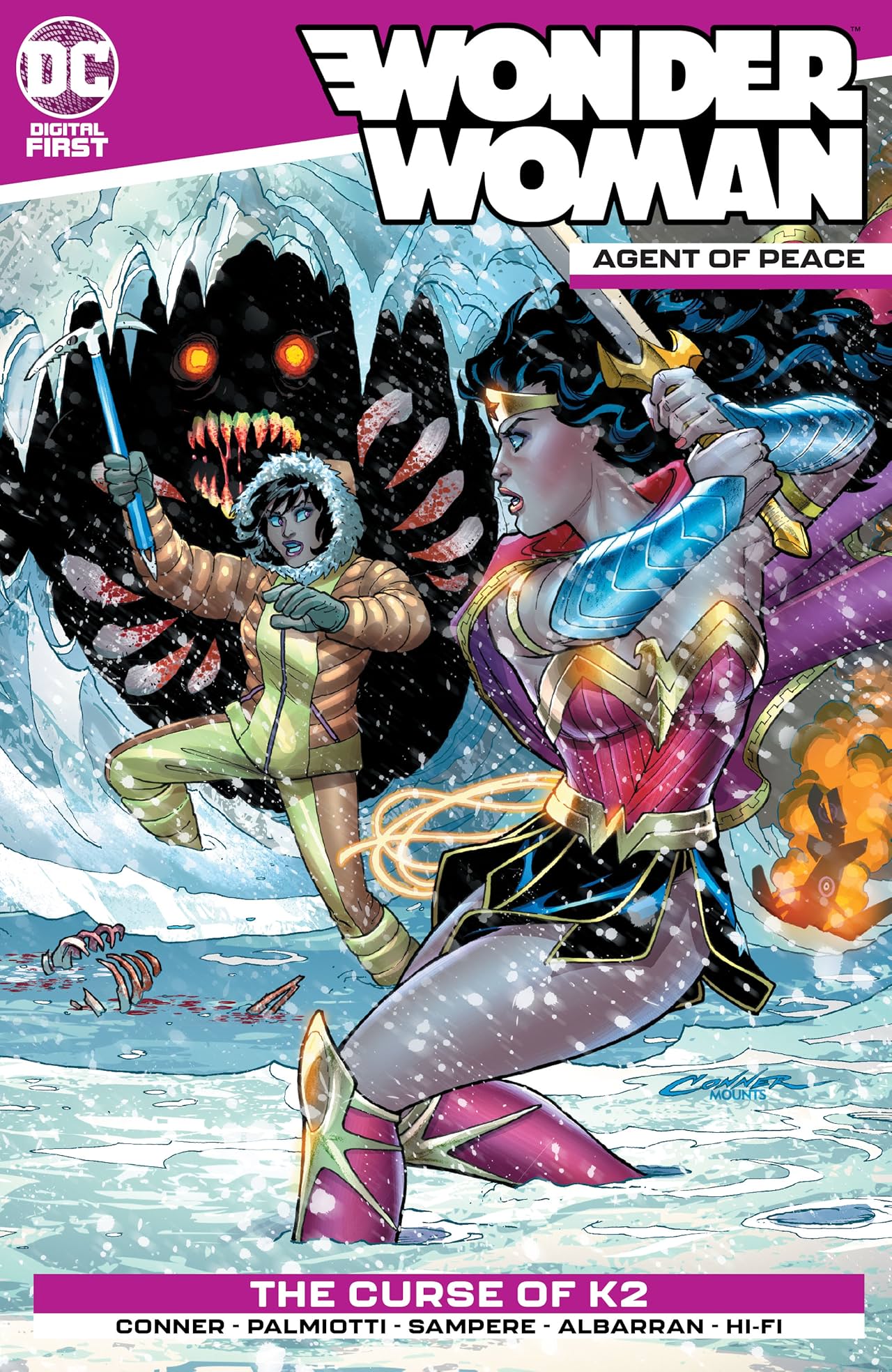
This strange, unbalanced dynamic played out recently in the pages of “Wonder Woman #754.” I’d even go so far as to argue that Wonder Woman suffers the most from this dynamic, despite being one of the most iconic female superheroes of all time. Given that she’s the ideal that other female superheroes are compared to, I think that’s telling.
The main plot of the issue isn’t important. The side-plot is where this dynamic showed up. There were frequent flashbacks that highlighted Diana’s recent “drama” with her long-time romantic interest, Steve Trevor. I put drama in quotes because it feels less like drama and more like forced excuses.
It’s been an issue for Wonder Woman for decades. Despite being her most iconic love interest, going back to the 1940s, Steve Trevor has never been that official with Diana. Even though they’ve professed their love for one another in many forms and in many timelines, they’re rarely ever shown as being in a functional, mature relationship.
It’s not just with Steve Trevor, either. Even in the classic “Justice League” cartoon in which she was romantically linked to Batman, nothing ever became official. There’s was never a point where Wonder Woman went from being single to being in a real, functioning relationship.
In fact, the only time Wonder Woman was ever in a functional romantic relationship was when she dated Superman during DC’s short-lived New 52 era in the comics. During that time, Wonder Woman and Superman had their own comics and their own stories. Sometimes, those stories became entwined. Sometimes, they didn’t. It never undermined their relationship or vice versa.
I know comic fans have strong opinions about the New 52 as a whole, but I find it telling that this was really the only time Wonder Woman was allowed to be in a relationship while still being Wonder Woman. For her to be someone’s girlfriend and still be the hero she’s always been, her significant other had to be Superman.
Take a moment to think about the scope of that standard. Wonder Woman, the standard-bearer for female superheroes for decades, can be in a functional relationship, but only with someone as capable as Superman. She and Steve Trevor can be in love, but they can’t have a relationship. He’s just an ordinary man. He’d just undermine Wonder Woman’s ability to be the ideal female hero we know and love.
Meanwhile, male heroes like Batman and Spider-Man can become romantically involved with far less capable individuals, many of which don’t have superpowers and can’t fly across the planet to be on time for date night. They’re still allowed to be in those relationships, but Wonder Woman can’t even make the effort with one of her most iconic romances with Steve Trevor.
As a fan of superhero comic, romance, and Wonder Woman, I find this both flawed and frustrating. While the “Wonder Woman” movie did an solid job establishing genuine romance between her and Steve Trevor, they still never got a chance to actually be in a relationship. It’s as though a female hero can’t be in a relationship without losing something. At the same time, a male hero can’t have a complete story without one.
It’s a strange disconnect and I think it’s getting worse. In recent years, superhero comics have made a concerted effort to develop female characters and I applaud that effort. It has led to some major successes. The problem is that, like Wonder Woman, these female characters aren’t really allowed to become anyone’s girlfriend. Being in a relationship is seen as an obstacle to being strong, independent, compelling characters.
Respectfully, I call bullshit.
Being in a relationship isn’t detrimental to any character, male or female, if the relationship is well-written. In addition, female characters don’t have to be completely, 100-percent independent to be great. In fact, making them that emotional single-minded is a good way to make them unlikable and unrelatable because, in the real world, people have relationships. They form bonds, rely on others, and are effected by those close ties.
Now, I don’t deny that writing great female characters is challenging, especially in recent years. It feels like you can’t write female characters without having an agenda anymore, even when it’s not printed on a shirt. Again, I call bullshit. Female characters, like all characters, are deeply affected by the loving bonds they form. They deserve the same development and exploration as their male counterparts.
Why can’t Wonder Woman be in an official relationship with Steve Trevor?
Does being Steve Trevor’s girlfriend make Wonder Woman any less a superhero?
Does any female superhero lose something when they become someone’s girlfriend?
These are relevant questions that are worth asking. If someone as iconic as Wonder Woman can’t be in a relationship with someone without undermining what makes her Wonder Woman, then that’s not a problem with her as a character. That’s a problem with the standards and assumptions we have about superhero romance.
I’m sorry if this rant feels dragged out, but this has been bothering me for a while. I’d be happy to discuss it more. Please share your thoughts in the comments.
We all have certain assumptions about prostitutes and the people who hire them. We have just as many assumptions about drug dealers, politicians, spies, celebrities, athletes, CEOs, minorities, the elderly, and our next door neighbors. Most of the time, those assumptions are inaccurate or incomplete. Even those with a shred of truth are just a tiny tree in a vast forest.
When it comes to prostitutes, though, it’s hard to shake those assumptions. It’s easy to find horror stories about victims of human trafficking and people who fell into sex work because they were desperate or coerced. However, those stories don’t paint a full picture of what this illicit and taboo world is like.
I’ve talked about prostitution before and why decriminalizing it is a good idea, both for sex workers and their clients. I’ve tried to be fair and objective when it comes to assessing the issue. I try to paint it in a legal, logical, and moral framework that does justice to all those involved. However, there are real human stories within this issue that are worth telling that transcend the legal and ethical issues.
Forget for a moment that sex is so taboo and complicated. For a moment, just focus on the people involved. Specifically, focus on those who actually hire sex workers. The profession wouldn’t exist without them. Most have assumptions about who these people are.
When you picture someone who hires a sex worker, you picture some fat, ugly, self-professed misogynist who sees women as walking playthings and their bodies as nothing more than toys to rent. I won’t say there aren’t assholes like that in this world, but they make up a very small minority. The actual people who hire sex workers are very different and very diverse.
Below is a video from Radio TTS, a channel I highly recommend, that has former and current sex workers tell the stories of clients who have made sad, tragic requests. By that, I don’t mean kinky or perverse. These are requests that reveal real, damaged individuals who seek the comfort of a sex worker. Some of these stories are very powerful. I urge you to listen to them with an open and compassionate mind.
I do have to issue a bit of a trigger warning, though. The last story in this video is not for the faint of heart. It’s downright tragic, but it’s still a story worth telling.
I hope that shifted your perceptions about sex workers and their clients. Like I said, their stories are worth telling. Regardless of how you feel about sex, sex work, or the people who hire them, the industry will continue to exist and stories like this will keep happening.
It’s officially spring. Traditionally, it’s the time of year when people finally emerge from months of staying indoors, dressing in layers, and scraping ice of windshields. It’s also the traditional time when love is in the air and lover’s embrace one another in the same way they embrace warmer weather. It may be corny, but for the romantic among us, it’s a beautiful thing.
Unfortunately, traditions of all kinds have been upended in recent weeks. Thanks to a global pandemic that has killed the mood for many, we’ve already lost major traditions in sports, holidays, and festivals. Chances are we’ll lose a lot more before all is said and done. As a romantic, I take no pleasure in conceding that.
However, I don’t believe in letting fear and dire news kill the spirit of the season. Pandemic or not, warmer weather and longer days have arrived. We can finally put away the heavy coats and the snow shovels. Even if we can’t go to the beach, we can still enjoy the luxury of wearing less clothing around the house and our lover. It may not take the place of other spring traditions, but it’s better than nothing.
These trying times will eventually pass. Eventually, our collective isolation will end, toilet paper will be on sale again, and people won’t be afraid to shake hands. Until then, let’s welcome the spring and the seasonal passions they inspire. Here are some Sexy Sunday Thoughts to get you in the spirit. Enjoy!
“Necessity may be the mother of invention, but the desire to get laid is a close relative.”
“A nice guy and a nice girl can still have the naughtiest sex lives.”
“To some extent, saving the human race requires helping people get laid.”
“The first act of drunk sex was probably messier than anyone expected.”
“If what doesn’t kill you makes you stronger, then it should follow that what makes you lonelier makes you hornier.”
“Parents want what’s best for their kids, but seem to hesitate when it comes to their sex lives.”
“To some extent, masturbation is general maintenance for our genitals.”
There’s no way around it. This spring will be one to remember for all the wrong reasons. Hopefully, it’s a lesson for how bad things can get and how much we can endure. No matter how bad it gets, we can’t let it temper our sense of romance. Better times are coming. Until then, we should to make the most of these difficult times.