Tag Archives: sexuality

Why Treating Sexuality As A Disease (Always) Fails

mentalhealth.jpg.size-custom-crop.1086x0

It wasn’t too long ago that discussions about reparative therapy, also known as gay conversion therapy, became more a joke than a serious concept. Going back to Michele Bachman’s failed presidential bid in 2012, and all the assorted jokes about her husband, who ran a religion-based therapy center, I think it’s safe to say that this issue has run its course and for good reason.

There was once a time when attempting to change someone’s sexuality into whatever society deemed acceptable was a serious pursuit. Even Sigmund Freud contributed to that effort, going so far as to claim that homosexuality could be cured through hypnosis. Seeing as how hypnotists are more likely to work in Las Vegas stage shows instead of clinics, it should be obvious how wrong he was.

As it stands, reparative therapy is rejected and discouraged by nearly every legitimate psychological and therapeutic organization on the planet. There are still those who claim that’s just part of the larger gay agenda, but those claims don’t deserve to be taken seriously. Whenever that many organizations to agree that something is so ineffective and harmful, it’s usually a pretty clear sign that there’s something wrong with it.

For the rest of the population that doesn’t buy into homophobic conspiracy theories, the issue is resolved. While there’s still a lot we don’t understand about human sexuality, our current understanding offers a fairly concise conclusion. It’s not possible to completely change or radically reorient someone’s sexuality.

So in light this widely-accepted conclusion, any subsequent efforts to radically alter someone’s sexuality through archaic tactics that involve shame, guilt, and pseudo-spiritual bunk should be just as asinine. The keyword there is it should be. Even though reparative therapy is roundly condemned, the spirit of that therapy continues, albeit with a different target.

This time, the targets aren’t homosexuals or some other sexual minority. Instead, the scope is bigger and more extensive than even defunct anti-gay ministries could ever hope to achieve. It’s taking aim at sexuality, as a whole, particularly that of men. While it doesn’t have an official title, the tactics are distressingly similar.

I’m reluctant to put a label on it because I’d rather not throw around blanket terms for an issue this vast. Much of it stems from those opposing everything associated with “toxic masculinity,” a term I’ve already condemned.

From sex scandals to advertising to representations in major movies, the obstacle is the same. A particular brand of male sexuality that caters to straight men seeking the company of beautiful women for basic, shallow reasons isn’t just falling out of favor. It’s seen as corrupt, part of some grand patriarchal conspiracy.

It’s so corrupt that some, such as Joss Whedon, describe it like a disease. Men who simply have these desires are somehow flawed and need to either be educated or scorned. It’s not quite at the level that homosexuals endured in the past, but the common themes are still there.

It’s hard to pinpoint where it began. Some might point to the Harvey Weinstein scandal as the catalyst that turned the public against the whims of horny men, but I think it goes back further than that, even past the 2016 Presidential Election. The concept of criticizing men’s preference to admire beautiful women isn’t new. The extent of that criticism, however, is unprecedented and still growing.

Regardless of how it began, either through vocal critics of breast depictions in video games or protesting sexy advertising, it’s a major movement now. It has popular hashtags and the backing of powerful media outlets. If you’re a straight man who enjoys admiring beautiful women, then congratulations. You’re the source of all the problems in our current sexual landscape.

Given the intensity of the rhetoric in the movement, it’s not just about protesting the injustices perpetrated by men in positions of power who freely exploited that power. It’s attacking certain manifestations of sexuality as a whole, deeming them “problematic” to the point where it’s practically pathologized. That’s how we end up with asinine terms like “toxic masculinity.”

It’s for that reason that the parallels between the long-debunked ideas of reparative therapy and ongoing condemnations of male sexuality are all the more disturbing. Stories about LGBT youth who survived reparative therapy, and not all of them do, tend to tell similar stories. The so-called therapy they get usually involves the following:

  • Excessive condemnation and shaming of certain desires
  • Attributing certain sexual desires with negative connotations
  • Demanding frequent confessions of guilt for past misdeeds, real or imagined
  • Demanding complete dissociation from a previous lifestyle
  • Attributing desires and feelings to disease or an unhealthy state of being
  • Attacking or subverting someone’s identity in an effort to re-shape it
  • Conditioning someone to associate natural feelings with negative sentiments

To anyone who has been keeping track of how men have been criticized for their attitudes towards some of the recent sexual misconduct scandals, these methods should sound painfully familiar. It’s also worth noting that these are methods that the American Psychological Association deems harmful and even dangerous.

Now, I want to be careful with my rhetoric here because I don’t want to imply that straight men who enjoy looking at beautiful women in bikinis are suffering to the same extent LGBT people suffered in these faux-therapeutic settings. That’s not the point I’m trying to make here. I’m just trying to highlight the extent to which the approaches are similar, even if they’re not the same.

It’s one thing to punish actual misconduct. It’s quite another to attack the underlying desires of an entire group. Men looking at beautiful women is now a symptom of objectification, patriarchy, and misogyny. Conversely, women looking at beautiful men is a major Hollywood movie starting Channing Tatum. See the difference?

That difference matters because treating those attitudes as diseases is every bit as misguided as treating homosexuality or transgenderism as a disease. It would be akin to referring to all homosexuality as “toxic sexuality” instead of a simple variation among the vast spectrum that is human sexuality.

That’s not to say there aren’t issues with certain attitudes men have towards sexuality. There are plenty of issues about women’s attitudes as well. However, the fact that the current culture, empowered by social media and selective biases, treats those attitudes the same way reparative therapy treats homosexuality is both revealing and distressing.

The negative impacts of those methods are well-documented, both in terms of harm and ineffectiveness. Relentlessly shaming people for their sexuality, be they straight men or gay women, is pretty damaging. It doesn’t take a licensed therapist to know that conditioning someone to hate their own desires will seriously affect their mental health.

There are many lessons to learn from the failures of reparative therapy. For one, it revealed just how powerful sexual and romantic desire can be in a person. It can also reflect how lonely it can be when those feelings are deemed defective, toxic, or deviant by a society, at large. Countless LGBT individuals have suffered because of these misguided efforts. More will suffer if those lessons aren’t heeded.


5 Comments

Filed under Current Events, gender issues, sex in media, sex in society, sexuality

More Women Are Watching Porn (And Why That’s A Good Thing)

I don’t often talk about the porn industry on this blog. I know that sounds like an oversight, but it’s a deliberate oversight. In my experience, porn is just one of those things that either bothers certain people to no end or is just shrugged off by everyone else.

We know it exists. We know it’s a big business that has always existed, to some extent. Sure, it’s controversial. Some still try to fight it, but to date, nobody has ever won that fight and the sheer amount of porn that exists is proof of that.

As an aspiring erotica/romance writer, who also happens to be a straight man with an internet connection, I’m very much aware of porn, the industry that makes it, and the consumer base that fuels it. While erotica novels aren’t quite as taboo as porn, it does have many similarities. “50 Shades of Grey” proved those similarities aren’t that subtle.

In addition, those same trends can also reflect evolving attitudes towards sex, sexuality, and how people treat intimacy. One might be forgiven for thinking that everything involving sex, intimacy, and how we consume erotic content is devolving into chaos. However, in the midst of all these unsexy trends, I’d like to offer some news that should further complicate the evolving sexual landscape.

According to recent data released by PornHub, also known as the most popular porn site on the internet, 2017 saw the biggest surge in porn consumption came from women. More specifically, the search term “porn for women” increased in popularity by 359 percent. Even if you’re terrible at math, you understand that’s a significant increase.

It’s an increase that the porn industry is noticing, among others. They kind of have to notice it because women still make up half the population last I checked. Even though catering to mostly men has helped make porn a multi-billion dollar industry, it still has room to grow and women are the key, just not in the way the industry is used to.

Whether it’s due to the impact of “50 Shades of Grey” or the impact that feminism has had over the past few decades, more women are consuming porn than ever. Granted, that could just be because more women are willing to admit it, but the data is there. This is happening, regardless of what men or other women say about it.

The type of porn they’re consuming is also noteworthy, if only because their patterns of consumption are different from those of men. According to Vice.com, the type of porn women search for varies in terms of theme and genre. They’re not wildly different from men, but it does highlight some differences in terms of the erotic content both genders pursue.

While I’d love to talk more about the types of adult content women are seeking, if only to highlight how I can work that content into my novels, there’s a particular detail to this story that I want to highlight. I have a feeling it’ll be controversial for some. I’m willing to take that risk because I think this is worth saying.

More women consuming porn is a GOOD thing for both genders.

Take a moment to finish rolling your eyes. I understand that sounds exactly like something a man who regularly writes about sex robots and sex-positive superheroes would say. That doesn’t make the statement any less valid.

While I won’t claim that trends in women consuming porn are all good, as the breadth of human nature is far too broad for a claim that bold, I strongly believe that this is one of those trends where the positives outweigh the negatives. It’s not just because it shows women are more comfortable exploring sexy things. I actually think the positives run much deeper than that.

That’s because in recent years, the porn industry has only ever made headlines for all the wrong reasons. Between the recent spike in porn stars committing suicide and uptight politicians declaring it a public health crisis, it’s safe to say that porn has a public image problem, to put it mildly. However, I think the foundation of that problem goes beyond the explicit content behind it.

To illustrate that, it’s necessary to point out an unusual quirk in the effects of porn on men compared to women. There have been plenty of studies on how porn affects men. Some of it documents negative effects while others reveal positive or no effects. For women, though, the effects are considerably different.

It often occurs whenever there’s a correlation between a negative consequence, like broken relationships and porn consumption. Whenever that correlation exists for men, it rarely occurs to the same extent, if at all, for women. That means that even if there are harmful effects of porn consumption, it does not affect women as much as men.

most-sexually-charged-excerpts-from-erotica-books

To further complicate those insights, as often tends to happen in sexually-charged issues, research has shown that couples who watch porn together are either not negatively affected or enjoy greater levels of satisfaction. That means when it comes to the effects of porn, context and attitudes matters. I’ve mentioned the importance of context when it comes to assessing masculinity. It seems to apply even more to porn.

That’s why I believe women consuming more of it is a good thing, in terms of evolving that context. Unlike other hobbies, porn is unique in that it involves sex and sex often other people. When only one part of that equation is consuming the content, then that content is going to skew in the direction of those consumers. That’s just basic economics.

In this case, those skewed economics can have unpleasant consequences. To those who claim porn creates unrealistic expectations about sex, this is why that occurs. When the consumer base is so narrow, it’s going to become unbalanced. We saw that in the disparity of contraceptive development. Porn did the same.

Over time, that has the effect of narrowing the appeal of the content. To those not consuming that, it takes on a strange, if not taboo context. In the past, this has been reflected by women seeing men’s consumption of porn as creepy or perverse. It’s not unlike how comic books used to be seen as something for kids. Then, they evolved to capture a wider audience.

With women entering the consumer base, the porn industry has a chance to change that narrative. If women are watching more porn, then it becomes less taboo. On top of that, it expands the industry. I’ve talked before about how taboos fade or die off. One of the most potent ways taboos falter is when there are economic forces working against it.

In a sense, the best way for women to make the porn that men consume more equitable is to consume it themselves. By giving the industry a powerful incentive to balance out the content, they create the necessary incentives for producers to make the kind of erotic content that both gets them off and spices things up with their lover. It’s ironic that this is how to make the porn industry friendlier to women, but it’s also somewhat fitting.

As it stands, women’s taste in porn are still evolving and the industry is still figuring it out. However, there are a number of sites out there looking to tap this once overlooked market. In wake of the recent sexual misconduct scandals, there’s even a new sub-genre of porn called ethically produced porn. Think of it as fair-trade coffee for sex.

Regardless of how some feel about the porn industry, in general, or women entering a consumer base once dominated by men, their presence will have an impact. That impact may make some uncomfortable or upset at first, but I believe in the long term, it’ll be a net positive.

We’re entering a world where it’s not taboo for a woman to say she enjoys watching porn. It’s also a world where men don’t have to be as ashamed or secretive about their own porn consumption. I think when those respective taboos fade, it’ll be easier for men and women to have honest conversations about what they like, what turns them on, and everything in between.

Sure, it’ll be awkward. Men and women talking about their respective porn consumption is bound to cause more than a few stressful conversations. However, if the end result is a more open and honest understanding of our sex lives, then I honestly say that extra awkwardness is worth it.

2 Comments

Filed under gender issues, Marriage and Relationships, sex in media, sex in society, sexuality

Pro Life, The Sanctity Of Life, And The (Literal) Value Of Life

People participate in the annual March for Life rally on the National Mall in Washington

As a general principle, I limit my discussions on abortion to a maximum of three per year with zero still being the preferred amount. Last year, I wrote a couple articles about it, but that was it. I tried to make clear on both occasions that while I don’t deny the seriousness of this issue, I generally have little to contribute.

It’s not just because I’m a man and will never need an abortion. Pretty much all the arguments surrounding abortion are intractable. Like debating creationism, there’s no way to convince someone who is set in their opinions to change them. You’d have a better chance convincing someone the sky is green, Mars is made of cheese, and “The Emoji Movie” wasn’t terrible.

All that said, abortion is still a serious issue that is evolving before our eyes both culturally and legally. This is one of those issues that affects everybody, either directly or indirectly. Regardless of whether you’re a baby, an old man, or an aspiring erotica/romance writer, abortion’s reach is vast because it involves life, sex, family, and the propagation of our species. The stakes can’t get much higher than that.

Even with those stakes, the only reason I’m talking about it now is because I live less than two hours away from Washington DC. When there’s a major protest, I generally know about it before it starts trending on social media. The latest gathering was the annual March For Life protest, a demonstration dedicated to decrying the ills of abortion and supporting “pro-life” legislation.

Now, I put “pro-life” in quotes for a reason that I hope will make sense in a bit. I’ve already criticized that term because there are those who use it to hide the fact that they care more about maintaining consequences for those who have more sex than churches, mosques, and synagogues prefer. I don’t intend to belabor that argument, but it is somewhat related to the point I want to make.

Having seen plenty of these protests, I notice a common theme that is at the forefront of the “pro-life” movement, but is rarely scrutinized. That’s the whole concept of the “sanctity of life.” I put that in quotes too for the same reasons I hope are obvious by the end of this article. Unlike the anti-sex crowd, this concept is central to the overall movement.

Beyond the intractable belief that life begins at conception and abortion is the taking of a life, the idea that there’s an inherent value to all life, regardless of what stage it’s at or how it affects the life of the mother bearing it. Without there being substantial value, then the whole arguments about when life even begins becomes meaningless.

I’m not going to make the argument that life has no value or that life, in general, should be devalued. I’m of the belief that we only get one life to live and that makes it valuable to some extent. However, I do want to take a minute to try and quantify that value, if only to provide some context to the “pro-life” movement.

I’m not first one to try this. The late, great George Carlin dug into this issue with more candor and brilliance than I or anyone else ever could in 1996. He dared to ask this question in a way that still came off as funny, yet insightful.

“Only living people care about it, so the whole thing grows out of a completely biased point of view. It’s a self-serving, man-made bullshit story. It’s one of these things we tell ourselves so we’ll feel noble. Life is sacred, makes you feel noble.

Well let me ask you this, if everything that ever lived is dead, and everything alive is going to die, where does the sacred part come in? I’m having trouble with that. Because even with the stuff we preach about the sanctity of life, we don’t practice it.”

It may sound cynical, but it’s relevant if the “pro-life” movement is to have any logical and moral validity to it. If it’s going to ascribe a high value to life, then that value can’t be too vague. There has to be some part of it that translates into real, tangible value. Without that, “pro-life” arguments are just empty rhetoric wrapped in inflamed emotions.

So in order to give that value to life, I want to pose a couple questions to the “pro-life” crowd. I don’t expect anyone to answer, but I think it’s important to put this question out there to put context into the anti-abortion arguments that seem so intractable.

“If you truly believe abortion is murder and want to save the lives of unborn children, are you willing to pay women to carry their unwanted children to term?”

That’s a simple yes/no question that shouldn’t be too hard to answer. I have a feeling many answers will be quick and brash, as most are in highly emotional debates. I expect the phrase “personal responsibility” to get thrown around a lot. That seems to be a catch-all word that conveniently provides an excuse to not help someone in a bad situation.

I’ll set aside the issues with that concept for now and ask the second question. This is where it gets more specific.

“How much are you willing to pay someone to not get an abortion and carry a child to term?”

I expect more variation with this question. I also expect more vitriol because I’m basically asking someone to put a price on a human life. I understand that very thought makes a lot of people uncomfortable. Nobody likes to think of themselves, a loved one, or a child as having some sort of number attached to it.

Then again, we don’t seem to mind that when we get our social security numbers, our addresses, or our paychecks. Like it or not, we’re all ascribed some amount of numeric value at some point in our lives. That doesn’t mean some lives are inherently more valuable than others, but it highlights the fact that we can and do link life to numbers.

Now, in order to help out those who may struggle with this question, allow me to do some simple math that should help make this question more palatable.

According to the Centers for Disease Control, there were 652,639 legal induced abortions in the year 2014. In addition, the average total cost for pre-natal care according to the Kaiser Family Foundation is approximately $2,000. Since that’s only for healthy babies, let’s make it $2,500 to account for complications.

Now, multiply 652,693 by $2,500 and we get $1,631,732,500. For the sake of redundancy and accounting for other possible complications, let’s round that up to a total of $1.7 billion. So for $1.7 billion, you could conceivably cover the cost of pre-natal care to every woman seeking an abortion. For that price, there could’ve been zero abortions in 2014.

With that number in mind, would you be willing to pay that price? I know $1.7 billion seems like a lot, but in terms of the US economy, it’s pennies. The size of the US economy is measured in trillions these days. Even with respect to government spending, the defense budget alone in 2014 was $614 billion. A sum of $1.7 billion barely would’ve registered.

Even if you’re against the idea of the government spending money, on principle, that kind of money is out there in the private sector. According to OpenSecrets.org, the pharmaceutical companies alone spent over $3.7 billion in lobbying over a 10-year span.

Even religious organizations have money to spend on this issue. Back in 2015, CNN reported that the vehemently anti-abortion Vatican had over $8 billion in assets. That’s just one denomination, too. According to the Giving USA Foundation, churches received over $114 billion in tax-free charitable donations in 2014. Given that sum, is $1.7 billion really that much?

It gets even better than that, though. Abortion, as a whole, is on the decline. That means it would be even cheaper to pay the price to stop all abortions in 2018. Abortion still happens, though, and if you genuinely think abortion is murder, then there’s just one more question.

“If you’re NOT willing to pay any price to stop all abortion, then how can you say life is sacred and has intrinsic value?”

I understand that sounds like a loaded question after overly simplifying the issue. I concede that if stopping all abortions were as easy as writing a check for $1.7 billion, somebody would’ve done it by now. It’s not that easy an issue. Abortion wouldn’t be such a hot-button issue if it were.

What I’m trying to get at here is that a general unwillingness to put any tangible value on life essentially undermines the arguments of the “pro-life” movement. We’re willing to pay hundreds of dollars for a smart phone and more than five bucks for a latte. What does it say about someone’s stance on abortion if they say life is sacred, but won’t put up any actual money for the lives they’re trying to preserve?

The March For Life demonstration, as well as most anti-abortion demonstrations, didn’t stress measures like encouraging women to carry a child to term, lowering the cost of pre-natal care, or improving contraception access so that abortions aren’t necessary. Most of it centered on favoring legislation that would make abortion more difficult to obtain.

Never mind the fact that such legislation often has some fairly detrimental effects on women’s health, as John Oliver highlighted a couple years ago. That effort doesn’t vindicate the arguments of the “pro-life” movement, nor does it even accomplish their stated goals. It’s basically a way to claim they’re winning the debate and, as I’ve pointed out before, winning a debate isn’t the same as being right.

I feel like I’ve already talked enough about abortion for one day/month/year. If I want to make one point with this article on abortion and the March For Life protest, as a whole, it’s being “pro-life” and promoting the inherent value of life is a great emotional argument. However, if there’s no substance behind that argument, then it’s not a movement that can logically sustain itself in the long run.

Now, do you understand why I put “pro-life” in quotes?

7 Comments

Filed under Current Events, gender issues, sex in society, sexuality

The Limited Appeal Of Male Sex Robots (For Now)

bionic4

Whenever I talk about sex robots, it’s usually within a particular context from a particular perspective. Being a straight man and an aspiring erotica/romance writer, it’s a perspective I feel more qualified to explore than most. Even so, I don’t deny that in the evolving world of sex robots, there are many perspectives to consider.

There will likely be many more in the years to come. Sex robots, and the potential impact they’ll have on society, is becoming more and more relevant as the technology evolves. Make no mistake. That technology will evolve rapidly because there is an established demand. It’s the same demand that fuels the thriving sex industry. People are horny and they’re willing to pay money to satisfy that horniness.

While I hope to do my part with my sexy novels, I understand there’s no substitute for something akin to a sex robot. A sex robot won’t just tell you a sexy story in the erotic voice of Pamela Anderson, Scarlett Johansson, or Morgan Freeman, if that’s what you’re into. In its perfected form, it’ll allow users to physically act out their sexual desires in whatever way they find satisfying.

We’re still a long way away from that form, but there has been progress in recent years and I have reported on it while also exploring the implications. As advances in robotics, artificial intelligence, and virtual reality become more refined, I’m sure I’ll have more to report. I’m sure there are many horny men out there who are already imagining how they’ll customize their own sex robot.

However, in discussing the future of sex robots and the various implications of their advancement, there is one perspective I’ve negated. That’s from those whose ideal form of a sex robot does not involve breast size, butt shapes, or a voice that sounds like Taylor Swift. Yes, I’m referring to male sex robots.

While they don’t make the news nearly as often, nor do they spark the same concerns in terms of societal impact, they will likely be part of any future society in which sex robots are a thing. They’ll be there in the future for the same reason that male prostitutes are here in the present. There’s still a demand, even if the consumer base is different.

Just like there are with female sex robots, there are people actively developing male sex robots that cater to women and gay men. In fact, much of that development is coming from the same companies. Realbotix, who made headlines last year when they debuted a prototype female sex robot, is just one of them. Recently, they confirmed that they’re working on a male sex robot too.

The particulars are unclear, but still plenty sexy to those women and gay men who are intrigued by the idea of a sexy robot lover. According to Realbotix CEO, Matt McMullen, this male sex robot will be customizable, allowing users to select various body shapes and sizes. That, unsurprisingly, includes the intricate details of the robot penis.

The technology is a lot closer than most people think. Bionic penises are already real. Like early smartphones and LASIK eye surgery, though, they’re in a nascent stage. In time, they’ll become more functional. It probably won’t be too long before most artificial penises are more effective than any natural penis. I’ll give every man who ever felt insecure about their man parts a moment to stop trembling.

Even with such promising advances, it’ll take more than putting a bionic penis on an attractive male body to create a functional sex robot. Even with all the sexy possibilities, the demand and interest in male sex robots is nowhere near what it is for female sex robots. According to the Daily Mail, the current market for sex robots is around 95 percent straight men. That is not a trivial disparity.

Even so, five percent is more than zero and every market changes, especially those relating to sex appeal. However, male sex robots have not generated the same conversations as their female counterparts. Whereas female sex robots have already inspired dystopian visions among feminists and a memorable episode of “Rick and Morty,” male sex robots haven’t generated any such visions.

Sure, there are some who worry that male sex robots could make men obsolete, but those worries haven’t translated into more robust conversations. Some of that may just be because the market is so limited for male sex robots at the moment. The reason for this might not be obvious for women who still find the concept of sex robots creepy, but it makes sense to any man who has struggled to find love.

The best example of this involves the current disparities in online dating. I’ve mentioned it before when talking about my own struggles to find love. As it stands, online dating works wonderfully if you’re a marginally attractive woman. The sheer volume of men searching for love grossly outnumbers the number of women doing the same.

Whether you’re using eHarmony or Tinder, being a woman means having a distinct mathematical advantage. When using these services, women basically have their pick of the litter. Even outside the online world, the number of horny men vastly outnumbers the number of available women. That’s why there are so many more female prostitutes compared to men.

It’s because of those raw numbers that the demand for a male sex robot isn’t that strong. Sure, there might be a few women who are intrigued by the concept. Some may even be turned on by it. For the moment, though, it’s not much more than a novelty. If a woman wants sex, it’s probably easier and cheaper for them to use Tinder.

For that reason, it’s likely that male sex robots probably won’t advance as quickly as their female counterparts. They may even lag for a while, especially if sex robots remain an expensive luxury. However, that limited appeal won’t stay limited.

I’m certain of this for the same reason I’m certain that female sex robots will change the overall sexual landscape. We’re already in some fairly sensitive times, with respect to gender-driven conflicts. Ongoing issues surrounding ideas of consent, concerns over sexual harassment, and widening double standards that negatively impact one gender over the other may end up accelerating the adoption of sex robots.

At some point, the math that favors attractive women won’t be as favorable. If there aren’t as many men seeking their company, thanks to sex robots, then what are they to do? Those women will still seek the same intimacy and connection that all human beings crave. They’ll still want more than just the basic release that a cheap sex toy may offer.

It’s one of the few things both genders share, regardless of whatever double standards divide us. Regardless of our ability to meet are most basic needs, we still seek something deeper. A beautiful woman with unlimited access to handsome men with the abs of David Beckham is still going to crave something greater.

A sex robot may not be the same as the kind of love I often write about in my novels, but when combined with artificial intelligence, it has the potential to create that connection that goes beyond the physical acts of sex. That connection has just as much appeal to women as it does to men. It will just take more time for one type of appeal to catch up with the other.

Now, as I write this, I concede that my perspective on this matter is skewed. I’m not a woman, nor do I claim to know how most women feel about the prospects of male sex robots. It could very well be the case that there’s more demand than most people think. Perhaps, this is one of those cases where we don’t know because we don’t bother to ask.

If there are any female readers willing to provide some insight, I’d love to hear about it. I imagine with companies like Realbotix making major investments in sex robots of all types, we’ll be asking more and more of these questions in the coming years. Some of those questions may not be as sexy as we prefer, but they’re still worth asking.

As it stands, the economics of sex robots will remain consistent with existing circumstances for men and women. For now, there are a lot of unsatisfied men out there. Once sex robots enter the picture, that’ll change a lot aspects about society, including those affecting unsatisfied women. Those changes will probably come sooner than expected, but that’s exactly why they’re worth contemplating now.

5 Comments

Filed under gender issues, sex in society, sex robots, sexuality

How Men Are Set Up To Fail With Women

When it comes to seeking love and sex, I kind of need to be on top of things. I’m trying to get into the business of writing sexy romance novels. I’ve got another novel coming out in a couple months and a couple manuscripts I hope to submit to my publisher very soon. If I want to tell quality romance stories with the right amount of sex appeal, I need to know about the dynamics of these intimate processes.

Unfortunately, that’s a lot harder than it sounds and few people who aren’t billionaire rock stars/supermodels would contest that. Finding love and finding sex aren’t always mutually exclusive, but they tend to be linked for reasons I don’t think require much explanation. Humans are a sexual, passionate species. Ideally, we should make the process of seeking those experiences clear, efficient, and understandable.

I’ll give everyone a moment to stop laughing because I know we’re a long way from that ideal. In some respects, we’re doing the exact opposite. We’re actually making it harder on ourselves to find love, sex, and everything in between and I’m not just talking about the effects of recent sex scandals. We’ve gotten to a point where men and women aren’t just on the same page. They’re not even reading the same book.

This brings me to a recent article from Cracked.com. I know they’ve been hit or miss lately. Between their poor understanding of what makes someone a pervert and their knack for complicating ideas of consent, they’ve had a bit of a regressive streak lately. They’ve been less focused on humor and more focused on pushing the kind of everything-is-sexist agenda that is rarely funny.

This time, however, they’ve managed to step back from that agenda and offer some insight into the other side of that equation. Yes, women do face their share of challenges in pursuing love and sex with men. Sifting through the crop of potential partners, trying to figure out who one wants something meaningful and who just wants a quick romp, is frustrating and the source of nearly every romantic comedy ever made.

However, the other side of that struggle with the men, has its own set of challenges and our culture does plenty to add to the difficulty. Since I am a man and I’m familiar with some of these challenges, I feel it’s worth talking about. I’m also glad Cracked.com took the time to write something like this. For those interested, here’s the link:

Five Ways Society Trains Men To Expect Sex From Women

This is one of those articles that will likely generate plenty of discussions among feminists, MRAs, egalitarians, and romance fans, like myself. There are some parts of it that still come off as overly-gendered preaching. However, I think the article presents the situation in a way where those discussions need not involve threats or insults to each other’s mothers. Then again, this is the internet.

Chief among the arguments that this article makes involves how our culture, from movies to TV shows to comic books, gives the impression that good men have do things a certain way to get love and sex from women. However, those things rarely involve the kind of work, strength, and achievements that women and men alike find attractive.

Instead, sitcoms and romantic comedies constantly feed men the idea that just being meek, passive, and constantly friend-zoned will eventually earn them their dream girl. At no point is there any effort to actually find out what that dream girl actually wants in a lover because that just wouldn’t make for a good romance movie, even if it makes total sense. The article puts it even more succinctly.

The idea that women will eventually find their lengthy secret crushes cute if they cling to them is an anxiety-reducing godsend. So they keep waiting and waiting for the “right” time. But that time never comes, because their life isn’t being written by a hack. So they get bitter and frustrated, because they don’t just feel rejected; they feel ripped off, like they were owed love, but it was somehow denied them.

It’s basically an extension of the old “nice guys finish last” diatribe that I’ve criticized before. I admit that even I bought into that growing up and my lack of romantic interest from other women is testament to how flawed this concept is. It also says something that my favorite romantic movie, “Crazy/Beautiful,” does not follow that trope.

It gets even worse than that, though. Beyond presenting a false understanding that good men have to be meek to get the girl, there’s also this weird/unhealthy idea that every romantic pursuit has to be its own epic narrative. In the same way people erroneously believe they’re the hero of their own story, they believe they’re one of the lovable nerds in “The Big Bang Theory” who ends up with the cute girl.

Never mind the fact that some of the romance in that show may be very unhealthy, there’s a sense that sex and romance has to fit into this narrative or it’s a total failure. There’s no room for more mundane notions that a guy just asks a girl out, she says no, and they get on with their lives. That story just seems wrong and doesn’t fit the epic love story/sexual conquest that men build up in their minds.

This is where it gets really soul-crushing for men looking for that kind of romance and sex that bad Julia Roberts movies are made of. For men who try to play by those rules, being the meek and lovable underdog that they think will get them love and sex, what happens when it fails? What happens when Leonard Hofsteader doesn’t get the girl and ends up alone, heartbroken, and frustrated?

It can be pretty traumatic and the article points that out, giving the impression that men have no room for error. If they fail to get the love and sex they seek by playing by the rules laid out in every romantic comedy ever made, then they will die poor and lonely.

So Nice Guys see countless stories wherein women vent about creepy encounters they’ve had with men who interrupted their days, and it freaks them out. That venting is understandable — I’d be angry too if I was constantly getting harassed about my chiseled good looks while trying to run errands. But Nice Guys end up under the impression that every encounter ends in either a sweeping success or a reminder of why mace was invented. They think there’s no margin for error, because there’s a constant fear that failure will end in loneliness and humiliation. There’s a brutal contradiction. Nice Guys are told that they need to meet new people, but also that if they fuck up even a tiny bit, they will be mocked.

This is also where some of the gender disparities really show, especially from the male end of the equation. That’s because within this epic romance narrative that men think they’re part of, there’s one component that amplifies the tension between gender. It has to do with who decides the when, where, how, and why of love and sex.

Even within a society where women are vulnerable to various forms of sexual misconduct, they are still very much the sexual and romantic gatekeepers, as the article calls it. In that narrative, the women are the ones who decide whether or not anyone has any sex. The women are the ones who decide whether or not a relationship ensues. It’s not like sex and romance have any cooperative elements, right?

That last part was meant to be sarcasm, but it’s no laughing matter in the context of the narrative that men think they have to follow. So much of it is built on the idea that women are the final decision-makers. It’s an idea that frustrates men and is rarely acknowledged by women, creating the kind of inequality in a relationship that is rarely healthy.

It’s a component that does more than just set men up for heartbreak and women up for frustration. It can be downright unsexy when it comes together. The article puts it better than I ever could.

So while many men from generations past thought that the female orgasm was a myth and that a clitoris was an African insect, most Nice Guys readily accept that a woman’s sexual satisfaction is important. But in getting that message across, we’ve accidentally started telling men that while it’s wrong to try to seduce women in most situations, when sex does happen, you’d better be goddamn incredible at it.

Think about the disconnect in that dynamic. Since women are the sexual gatekeepers, men can’t readily seduce a woman without coming off as a creep or a Biff Tannen wannabe. Even when they do get the go-ahead for sex, if they don’t satisfy the woman with the prowess of Wilt Chamberlin on crack, then they’ve failed.

Considering sex, like anything in life, takes practice and cooperation, this kind of imbalance is bound to make for some less-than-romantic situations that’ll leave everyone involved unsatisfied. Men, particularly, build up all these expectations around what they think movies, TV shows, and bad porno says is important and grade themselves on that steep curve.

It’s not too hard to imagine why men get so frustrated and women are so disappointed, which only serves to heighten the hostilities between genders. Real life simply doesn’t play out the same way that movies, sitcoms, or sexy romance novels do. If they did, then there would be no appeal to those things in the first place.

That’s probably the most important take-away from this article. Yes, there are still parts where it tacitly mentions the ongoing sex scandals that make men groan, but the message is fairly concise. The way we’re going about finding love and sex is exceedingly imbalanced. It’s making men and women despise each other far more than they should.

Being the optimist I am, at heart, I believe that our inherent desire for love and sex will gradually change this narrative. Men and women, as hostile as they can be to one another, still seek love and the toe-curling pleasure that comes with making it. It may take time and more frustration, but we’ll find a way to go about it. Genuine love and great sex is worth it.

1 Comment

Filed under gender issues, sex in media, sex in society, sexuality

Why Our Assumptions About Male And Female Promiscuity May Be (Very) Wrong

most-sexually-charged-excerpts-from-erotica-books

When it comes to assumption, we tend not to question them, by default. That’s why they’re assumptions. It’s literally in the definition. It’s entirely natural to make assumptions, especially when they have some sort of inherent logic to them. It’s just how we, as a species, make sense of a chaotic world that we’re trying to survive.

The problem is, as I’ve pointed out many times before, our caveman brains aren’t wired logic. They’re wired primarily to help us survive and reproduce. That’s why our brains are so prone to all sorts of logical fallacies. That’s also why it’s hard to let go of assumptions, even when empirical data a very different story.

This brings me to our assumptions about sexual promiscuity. I’m hope I have your attention now because I knew a bland article about logical fallacies, caveman logic, and false assumption wasn’t going to get anyone excited. Put it in a context that’s both sexy and relevant, especially to an aspiring erotica/romance writer, and there’s much more appeal.

Sexy or not, the issue of assumptions in our sex lives are a lot more relevant in the era of “fake news” and “alternative facts.” These days, people are more likely to cling to their assumptions than ever before, even in the face of obvious evidence to the contrary. Hell, “South Park” even did an entire episode about this concept.

There are all sorts of complex psychological and social reasons for this, some of which I’ve covered before in other less sexy discussions. However, I’m not going to belabor those concepts. Most people know that humans can be exceedingly stubborn, even when faced with undeniable data that counters their assumptions.

That becomes a bigger problem, though, when you’re actually trying to make sense of something on an academic level. Our collective sexuality is one of those things that we try to study and understand, even if our efforts turn out to be disturbingly wrong. I like to think we’ve gotten better at it in the modern era, but sometimes fresh data reveals there’s still room for improvement.

This leads me to one of the most common assumptions about sexuality and the particulars of sexual promiscuity. You’ve probably heard it articulated at some point. It’s the basic structure surrounding male promiscuity versus female promiscuity. It goes like this:

  • Men are promiscuous because sperm production is cheap and there’s an biological incentive to have sex with multiple females in order to sire multiple offspring
  • Women are more selective about their sex partners because bearing children is risky and requires resources, which incentivizes securing men who will stick around to care for those children

There are all sorts of jokes and colloquialisms about this, men being dogs and women being angels. It’s also reflective of the most obvious double standards surrounding male and female sexuality and for most people, it makes sense.

A man can have sex with a thousand woman and, in theory, sire a thousand children. Ignoring the egregious child support payments this man would have to pay, it is consistent with the biological imperative to survive and reproduce.

Conversely, it makes just as much sense for a woman to secure a male partner who won’t just have children with her, but stay with her and invest in raising those children with her. This bears out in the many benefits ascribed to two-parent households.

However, if these assumptions were so logical and so biologically sound, then that would be reflected in the data we gather about our sexuality. Logic should be consistent with data, right? That’s the entire foundation of the scientific method, after all.

This is where the details get sketchy, but in a sexy sort of way. In an article from The Conversation, much of the biological data behind these assumptions about sexual promiscuity among men and women gets an added bit of scrutiny. In doing so, some revealing details emerge. Here is a brief excerpt that should raise a few eyebrows, among other body parts.

The common belief was that males and females were radically different. Moreover, attitudes about Victorian women influenced beliefs about nonhuman females. Males were considered to be active, combative, more variable, and more evolved and complex. Females were deemed to be passive, nurturing; less variable, with arrested development equivalent to that of a child. “True women” were expected to be pure, submissive to men, sexually restrained and uninterested in sex – and this representation was also seamlessly applied to female animals.

Although these ideas may now seem quaint, most scholars of the time embraced them as scientific truths. These stereotypes of men and women survived through the 20th century and influenced research on male-female sexual differences in animal behavior.

Unconscious biases and expectations can influence the questions scientists ask and also their interpretations of data. Behavioral biologist Marcy Lawton and colleagues describe a fascinating example. In 1992, eminent male scientists studying a species of bird wrote an excellent book on the species – but were mystified by the lack of aggression in males. They did report violent and frequent clashes among females, but dismissed their importance. These scientists expected males to be combative and females to be passive – when observations failed to meet their expectations, they were unable to envision alternative possibilities, or realize the potential significance of what they were seeing.

The same likely happened with regard to sexual behavior: Many scientists saw promiscuity in males and coyness in females because that is what they expected to see and what theory – and societal attitudes – told them they should see.

There’s much more to the article and I strongly recommend everyone take the time to read it, in full. It’s somewhat long because it references a lot of old research on animal behavior, as well as cultural attitudes towards sex and gender. However, the underlying theme is fairly clear.

The assumptions about coy, reserved females and aggressive, promiscuous males aren’t clearly reflected in the observed data. In fact, cultural attitudes going all the way back to the Victorian Era may have influenced our interpretation of the data, leading us to negate anything that countered those assumptions. That’s confirmation bias at its most basic.

This is similar to the message in the book, “Sex At Dawn,” which basically argues that our caveman ancestors had much better sex lives than we did. In that context, male and female promiscuity plays out in a very different way that also clashes with many of our assumptions.

In both “Sex At Dawn” and the article, the data seems to suggest that promiscuous females have higher rates of reproductive success. Biologically speaking, this makes sense because she’s getting a diverse sample of sperm and the higher quality material eventually finds a way to win out.

I’ll resist the urge to paint too crude a picture, although I will say that women pursuing a variety of men and attempting to weed out the best among them should not be too shocking. When you’re looking to find love and/or a baby daddy, you want quality and you can’t really be sure of that quality unless you find ways to test it. That’s not quite as dirty as it sounds, but it’s close.

With men, the data also clashes with the assumptions that men need only hump as many things with a pulse as possible. The article questions the idea that sperm is cheap and men’s contributions are purely resource-driven. The data actually suggests that men exercise a considerable degree of selection in choosing their partners. Just having a pulse and a vagina is not the only criteria.

As is now also well-documented, sperm production is limited and males can run out of sperm – what researchers term “sperm depletion.”

Consequently, we now know males may allocate more or less sperm to any given female, depending on her age, health or previous mated status. Such differential treatment among preferred and nonpreferred females is a form of male mate choice. In some species, males may even refuse to copulate with certain females. Indeed, male mate choice is now a particularly active field of study.

In essence, men are capable of being selective and downright loyal to their partners. Women are also just as capable of being sexually open, seeking out a variety of lovers in search of quality partners, both for social and reproductive success. In that sense, the promiscuous tendencies of both genders are a lot more level than any Victorian Era assumption would have us believe.

Add on top of this the documented health benefits of sexual promiscuity, as well as the sexual mores of our hunter/gatherer ancestors, and it’s increasingly clear that our assumptions about the sexual promiscuity are not consistent with biology, logic, or reality in general.

In a sense, our society already reflects this. The growing prevalence of blended families shows that the Victorian ideals that later played out in 1950s sitcoms aren’t accurate reflections of human nature. I doubt that this data will shatter the various assumptions that many still have on sexual promiscuity, but as with most excuses, they can only clash with reality so much.

Leave a comment

Filed under gender issues, polyamory, sex in society, sexuality

Why The Men Were Silent At The Golden Globes (For Good Reason)

When I was in middle school, I had a particularly vindictive gym teacher one year who had a knack for breaking the spirits of pre-teens. If we forgot to wash our uniforms, failed to take our seats on time, or just farted too loud, we were given a choice. Either we had to run a mile or do 100 push-ups. We got to choose, but both choices sucked.

The real kicker was that if we didn’t choose, then the teacher would choose for us and would go out of his way to make that choice seem extra cruel. It was one of those situations where it really didn’t matter what we said or did. One way or another, we were going to suffer for our actions and inaction.

This brings me to this year’s Golden Globes. Bear with me. I promise that’s not as big a non-sequiter as it sounds. There’s a valid reason I brought up the story of my vindictive gym teacher and it ties directly into the ongoing social movement to combat the sexual misconduct of powerful men.

I’ve talked about this issue before and, to be honest, I wish I didn’t have to keep discussing it. I would much rather be telling sexy stories, sharing sexy thoughts, or discussing upcoming superhero movies. However, these issues surrounding sexual misconduct in Hollywood have an undeniable impact on the sexual landscape and as an aspiring erotica/romance writer, that’s not something I can ignore.

A lot has been said and done since the movement began in wake of the Harvey Weinstein scandal. There has been a great deal of outrage, complete with protests and hashtags. Powerful men have fallen. Careers and reputations have been ruined. Entire movies and TV shows have actually been changed, as a result of this effort.

In some respects, it’s a good thing and I have pointed out the silver linings. Men harassing or abusing women is not something a just society should overlook. This isn’t one of those irrational moral panics, such as Satanic ritual abuse or the impact of violent video games. These instances of men abusing women have happened and some of the accused have confessed.

However, this ongoing crusade against powerful men, as well as horny men in general, has walked a fine line between a pursuing justice and demonizing any man who ever dared to admire a beautiful woman. It’s not quite at the level of an old-fashioned witch hunt, but it’s already in that dark territory where passions obscure reality.

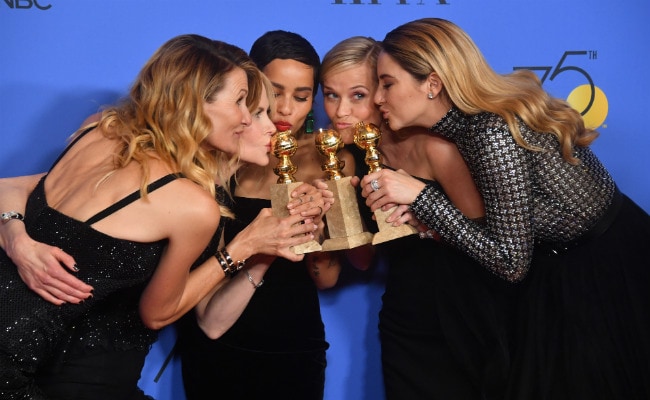
What happened at the Golden Globes might end up being the most telling sign of all. Initially, the big news for this event was positive. Some of the most prominent women in Hollywood, including Emma Watson and Oprah Winfrey, came together in a show of solidarity against the sexual victimization of women. They all wore black dresses and got behind the newly-created “Time’s Up” movement.

Like other movements before it, the intent is good. This movement seeks to provide legal defense and resources for those who have been victimized by sexual misconduct. That’s an objectively good thing, but that wasn’t the most revealing moment of the Golden Globes. Instead, the biggest message came from what was not said.

It has been reported by more than one outlet. While the women at the Golden Globes were quite vocal in their ongoing efforts to clamp down on sexual misconduct, the men were mostly silent. Other than a brief remark from Seth Meyers at the beginning and some men dressing in black, Hollywood’s male stars were largely silent.

To some, this is already very problematic. I imagine it’s going to stir quite a bit of outrage among those trying to further the movement. However, when you take a step back and look at the situation in which these men were in, their silence makes complete sense. In fact, those same women who are determined to combat the Harvey Weinsteins of the world may very well have made it their only option.

To understand why, think back to my vindictive gym teacher for a moment. That teacher understood that to break the spirits of powerless pre-teens, it was necessary to put them in a situation where their choices mattered less than the ugly gym uniforms the school forced them to wear. By establishing just how powerless they were, it made any effort to speak up seem pointless.

These men, as powerful and successful they may be, were in a situation not unlike the one my hapless classmates were in that year. There was nothing they could’ve said or done that wouldn’t have been deconstructed, dissected, or misconstrued. No matter what they said or didn’t say, it would be used to label them as enemies of the movement and of women, as a whole.

If one of the men stood up on that stage and gave an impassioned speech condemning Harvey Weinstein, then his reputation would suffer. He would be labeled a virtue signaling white knight who was compensating for something. After what happened to Joss Whedon, those concerns wouldn’t be unfounded. He may even still face condemnation among women for not speaking up earlier or naming other harassers.

If that same man stood up and tried to give an impassioned speech on the importance of confronting the issue responsibly, then he would likely have suffered condemnation similar to that of Matt Damon, who dared to question whether all harassment should be treated equally. Even hinting at such nuance would’ve earned that man the toxic label of a misogynistic victim blamer.

Essentially, the men at the Golden Globes knew they couldn’t win either way. No matter what they said, it would’ve been used against them or undermined their career, somehow. These men, as powerful and successful they may be, are still human, despite what Tom Cruise may claim. They want to protect their jobs and their reputations. They can’t do that if they get slapped with these toxic labels.

In the end, silence was their safest bet and that, in and of itself, reveals the extent to which this crusade against sexual misconduct has gone. It’s past the point where people can have reasoned arguments about the issue. Now, it’s all outrage and hyperbole. Either you’re completely on board with that outrage or you’re just as bad as Harvey Weinstein. There is no gray area.

That lack of gray area means men have to be silent, which is the exact opposite of what the women in the movement are trying to achieve. It’s ironic, but understandable. These men aren’t going to garner much sympathy. They’re rich, handsome, and successful. There’s only so much sympathy they can inspire, due to their position.

Silence is the only way to avoid the added scrutiny that would undermine a career. Silence is the only way to avoid saying something that might offend, enrage, or upset a public that has shown in recent times an uncanny unwillingness to ruin lives and reputations. It’s actually worse than censorship, when you think about it, because it is self-imposed rather than coerced.

The fact that the men didn’t speak up at the Golden Globes may or may not represent a tipping point, of sorts. If the anti-harassment movement has created an environment that’s so frail that silence is the safest recourse, then that same movement lacks a critical component it needs to succeed.

Like it or not, men need to be part of the conversation with respect to sexual misconduct. Silence on their part means the crimes, the culture, and the attitudes that fosters such misconduct won’t change. Moreover, their point of view cannot be discounted as virtue signaling or “mansplaining.” The fact remains that if people feel helpless, then they won’t care enough to make the effort.

Like the broken spirits of my old gym class, if the men don’t think their words matter or may be used against them, then it makes perfect sense for them to remain silent. Outrage, awareness, and condemnation alone is not going to inspire meaningful change in the dynamics between men and women.

Both sides actually have to listen to one another and feel their words actually matter. It’s only then when silence will no longer be the most preferred and logical recourse.

4 Comments

Filed under Celebrities and Celebrity Culture, Current Events, gender issues, sex in media, sex in society, sexuality

Social Context Versus “Toxic” Behaviors: Why The Difference Matters (A Lot)

There’s a fairly well-known set of experiments involving rats and cocaine. It’s a strange, yet revealing combination. In the initial experiment, a rat in a cage was given the choice between cocaine and food. Not surprisingly, especially for someone who has ever tried cocaine, the rat chose cocaine to the point of killing itself.

That experiment, which took place in the 1960s and 1970s, helped establish the idea that those who use cocaine would be so damaged, so addicted, and so utterly gone that they would rather take the drug than survive. It was pretty scary stuff and it helped inspire harsher anti-drug policies in the 1980s.

However, that experiment came into question in 1981 when a professor named Bruce Alexander re-did the experiment, but with one critical change. He didn’t isolate the rats in a cage. He put them in a colorful, positive environment with other rats that came to be known as “rat park.” The results weren’t nearly as scary.

As it turns out, when placed in a better environment with more social support, the rats didn’t become irreversibly damaged cocaine addicts. In fact, even when offered much more addictive drugs like morphine, the rats didn’t imbibe in illicit, drug-fueled bliss nearly as much as their caged counterparts.

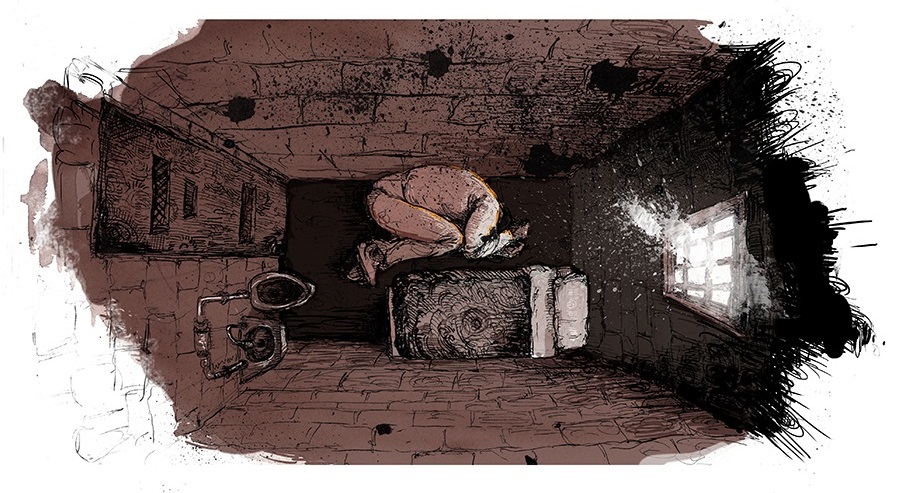
I bring up this experiment because it illustrates an important point about behavior and social creatures. Context and social setting matters. It matters a lot. Put someone in a cage, strip them of any social support, and isolate them from the world and they’re bound to endure some pretty toxic effects. That’s a big reason why solitary confinement is considered torture.

That brings me back to the inherently flawed idea of “toxic masculinity,” a term I’ve gone on record as saying should be buried in the deepest, darkest pit of our collective lexicon. I don’t want to re-hash or belabor any of the points I’ve already made about toxic masculinity. I’ll just note that some of the rhetoric surrounding it is distressingly similar to what anti-drug zealots used when demonizing cocaine.

Think, for a moment, about some of the negative traits associated with toxic masculinity. They include, but aren’t restricted to, stuff like:

  • Suppression of emotions
  • Being prone to violence
  • Increases in aggression
  • Associations with abhorrent sexual behavior

Then, look at the traits associated with cocaine addiction and note some of the parallels. In each case, there’s a direct association between these traits and a tangible, unambiguous cause. In one case, it’s a drug. In the other, it’s just being a man and associating with masculinity. Like the rats in that first experiment, though, there’s no context or social circumstances to consider.

That begs an intriguing, but important question, especially to those who still want to use “toxic masculinity” as a catch-all for certain behaviors. Is it really the nature of masculinity itself that’s behind these toxic behaviors or is it the social circumstances within the society?

That’s not a question anyone, especially not aspiring erotica/romance writers, can definitively answer. I don’t doubt it has been asked in other ways. It might even have been studied to some extent, but since it involves the complex machinations of the human psyche, definitive answers are hard to come by.

Even without the results of those studies, is it really that hard to contemplate the possibility that circumstances may effect how masculinity and femininity manifest? The rat park experiments alone hint at a fairly significant impact. Given the orders of magnitude in difference between rat and human brains, it’s not unreasonable to suspect that impact is substantial.

While we can’t run the kinds of experiments that Bruce Alexander did in 1981, we can assess the current status of masculinity within our culture. It may vary from region to region, but in terms of modern western culture, there are a number of traits that we’ve come to associate with masculinity.

It tends to manifest most distinctly in our standard models of romance, which puts men in situations where they have to be competitive, aggressive, cunning, and determined to get the kind of emotional and sexual satisfaction they want. Even when they do, those same situations make them just as inclined to seek other outlets of satisfaction.

Furthermore, men have to navigate these situations with the added baggage of being biologically wired to seek social, romantic, and sexual connections. Women have this wiring too, but the circumstances for them are different in that the culture has different expectations. Moreover, there’s no concept of “toxic femininity” to color their feminine traits as inherently negative.

What this means is the men are entering these circumstances pre-programmed to be very horny, very lonely, and in need of various forms of fulfillment. Being men, they’re expected to go out and get it while women are expected to just let it come to them. Now, I get that this is a gross oversimplification that obscures the overall gender dynamics, but in terms of the overall culture, these are the circumstances.

To illustrate the inherent issues with those circumstance, here’s a scenario that should help paint a picture of the male predicament. Again, it’s a gross oversimplification that I’m sure will offend more than a few people, but still reflects an important point.

Man: Hello, ma’am. I’m lonely and horny. How do I go about getting sex, love, and social support?

Woman: First of all, the fact that you just admitted you’re horny is disgusting. Women being horny, that’s beautiful and erotic. Men being horny is not, so you’re already a pig in my mind.

Man: What? Why? That’s not fair.

Woman: Don’t interrupt me! Talking down to a woman is rude and sexist. It’s basically the first step towards harassment and abuse. Raising your voice to a woman, showing any kind of dominance, is just perpetuating an oppressive gender stereotype that has no place in the current year.

Man: Okay. I’m sorry about that. So how do I go about it then?

Woman: You’re still talking over me. You’re getting dangerously close to harassing me and since you’re a man, everyone will believe me if I accuse you. So choose your words very carefully because if any woman feels upset by what you say or do, even if it’s unintentional, we can accuse you of being an abuser and ruin your life.

Man: Well, I’d like to avoid that at all costs.

Woman: Then, you’ll have to play by our rules. You’ll have to respect every choice a woman makes and take her side in every argument. Disagree with us or go against us and we’ll label you a sexist, misogynist pig. Then, you’ll never find love, sex, or any kind of social support.

Man: Wow. That almost sounds risky. I might just be better off watching porn and masturbating by myself.

Woman: Now, you’re just making it worse. For one, watching porn or admiring female bodies in any capacity is insulting, demeaning, and objectifying.

Man: But I’m attracted to beautiful women. Is that bad?

Woman: It’s awful! You’re contributing to unhealthy beauty standards that not every woman can hope to achieve. You’re part of a much larger problem in society that forces women to meet obligations that are difficult, inconvenient, or outright impossible. That makes you an accomplice to all the crimes ever committed against women.

Man: But I’ve never attacked, hurt, or insulted a woman in my entire life.

Woman: That doesn’t matter. Since men have gotten away with too many crimes in the past, you have to be the one to pay the price in the present. That means you have to carry the guilt of men you’ve never met for crimes and attitudes you had no part in creating. If you go against this in any way, then you’re an even bigger sexist misogynist.

Man: I don’t want that. I don’t want that at all. I guess I’ll have to find some other way to masturbate.

Woman: You’re still making it worse. You see, women can masturbate because it’s sexy and erotic. Men can’t. It’s just disgusting for reasons that neither of us can change. If any women finds out you’ve ever masturbated or paid for sex in any capacity, then they’ll think you’re a creep and a loser. They won’t even look at you, let alone want to be with you.

Man: But that’s not fair! I can’t turn off my desires.

Woman: That’s too bad. You’ll just have to suppress them while you jump through all the elaborate hoops a woman demands in the meantime. Just remember that even if you jump through all those hoops and do everything they ask, they still reserve the right to not have sex with you or love you in the way you want. That’s their choice and you can’t do anything about it.

Man: So what am I supposed to do? This is making me kind of frustrated and angry.

Woman: That’s not my problem. You either play by these arbitrary rules or we cut you off socially, sexually, and romantically. Try to change any of these rules and that just makes you the biggest misogynist of them all.

I’ll stop there and give everyone a moment to fume. Take all the time you need. It’s not the first time I’ve crafted a scenario with some pretty distressing monologues.

If you can get past the outrage, then try and take a moment to reflect on the circumstances in the scenario. Men are in a situation where the path to the kind of sexual, emotional, and social fulfillment that all social species seek is full of potential pitfalls.

Since those obstacles have gotten a lot more treacherous lately, it’s even harder for men to actively seek the very things that make them healthy and fulfilled. It’s akin to forcing the rats from the cocaine experiment back in the cage and demanding that they not succumb to the detrimental effects.

Now, it’s worth pointing out that women didn’t create these circumstances. There’s no feminist conspiracy any more than there’s a nefarious patriarchal conspiracy. In fact, some of these circumstances stem from traditions men have promoted, like the whole obsession with female purity and the concept of slut-shaming. Men have done more than their part to create and exacerbate these circumstances.

As it stands, though, the circumstances for men are such that frustration, anger, and isolation are almost inescapable. Unless you’re very rich and very well-connected, you’ve got a lot of hazards to navigate. Slip up and you’ll be labeled a creep, a misogynist, or worse. Even if that doesn’t put you in a literal cage, it’ll make you feel like you’re in one. At that point, is it really that surprising when a person’s behavior comes off as toxic?

With these circumstances in mind, the concept of “toxic masculinity” becomes even more asinine because it utterly ignores this context. Absent that context, it can only ever damage whatever harmony men and women have. Given how sensitive we’ve become to scandals and sexism, we can’t afford to do much more damage and expect either gender to come out better.

3 Comments

Filed under gender issues, sex in media, sex in society, sexuality

Study Confirms We’re Hornier Around The Holidays

I love the holidays. In terms of themes, traditions, and elaborate decorations, there’s just so much to love about them. I’ve loved them since I was a kid. I still love them as an adult. The older I get, the more reasons I find the love the holidays.

With that in mind, I’d like to share one of those reasons for anyone who might not have enough to love the holidays as much as I do. Even if you don’t need another reason, one more couldn’t hurt. On top of that, this one has to do with sex, love, and making babies under the light of a Christmas tree. I hope I have your attention now.

No, this isn’t just me trying to sell one of my sexy holiday-themed novels, although I do have one that I’m more than happy to promote. This is me reporting on a real scientific phenomenon that’s both sexy and festive, a potent combination for this time of year, if ever there was one.

It comes courtesy of Health.com, a site not known for being festive or sexy. However, one particular reports on a lesser-known phenomenon associated with the holidays and it has little to do with how many times people watch “The Charlie Brown Christmas Special.”

According to a real study published in Scientific Reports, there is a notable uptick in sexual interest during the holidays and that interest actually results in a surge of babies the following September. No, this isn’t something out of The Onion. This is a direct quote.

More babies are born in September than any other month in the United States, which means that nine months prior—right around Christmas and New Year’s—is the most popular time of year for conception.

Think about that for a moment, especially if your birthday is in September. Despite all the whining about the so-called War on Christmas or the overt commercialization of Christmas, there’s still something about the holidays that gets people in the mood. As an aspiring erotica/romance writer and a lover of Christmas, this fills my eyes with tears of holiday joy.

The actual data of the study is pretty revealing in that holidays seem to have a genuine effect on our collective libido. It’s not just Christmas that sees this effect either, but since it’s the biggest holiday of the year in terms of raw capital, the sexy effects are most pronounced.

If you’re interested in the raw data or just want to know the specifics of such a sexy study, here’s what researchers at Indiana University and the Instituto Gulbenkian de Ciencia in Portugal did to surmise this sexy, yet festive conclusion. It’s not exactly in depth, but the results speak for themselves.

To investigate mood and interest in sex, researchers looked at Google Trends data from 2004 to 2014, and Twitter data from 2010 to 2014, in nearly 130 countries. In predominantly Christian countries, they found that web searches for the word sex were highest around Christmas—even in countries in the Southern hemisphere, like Australia and Argentina, where Christmas takes place in the summer.

In majority Muslim countries, web searches for sex spiked around Eid-al-Fitr, a major holiday that marks the end of Ramadan. This was particularly interesting, say the researchers, since Ramadan is based on a lunar calendar and is observed during different seasons, depending on the year.

The study is the first “planetary-level” look at human interest and desire as they refer to sex and reproduction at different times of the year, says co-lead author Luis Rocha, PhD, professor of informatics and associate professor of cognitive science at Indiana University. And it offers strong support for the idea that interest in sex peaks during major cultural or religious celebrations, he says.

Beyond the data, it makes a lot of sense from a purely anecdotal perspective. The holidays, especially Christmas, make us all more inherently aware of traditions and personal connections. We often take time off work, break from our rigorous routines, and share quality moments with our loved ones.

More quality moments, absent the rigors of work, mean more opportunities to get sexy. Add cold weather that forces us to remain indoors and huddling together for body heat and those opportunities get even sexier. It’s just basic math and the sexiest kind of biology.

Considering there’s more than one person in my family who was born in September, I like to think my folks have contributed to this phenomenon. I think it’s a phenomenon that deserves more celebration, even if it can never exceed the strong association between holidays and overpriced toys.

It’s also worth noting that in the pre-Christian era of Western Civilization, there was this proto-Christmas holiday that Ancient Roman celebrated called Saturnalia. While some of its traditions aren’t directly linked to the holiday that became Christmas, it did involve such festivities as gift-giving, feasts, and constant partying. For those with particularly elaborate holiday traditions, that should sound familiar.

Whatever the source, be it the pre-Christian traditions or the modern commercialism we’ve all embraced, there’s just something about the holidays that makes us all feel a bit friskier. It’s a beautiful thing and the fact that there’s real science to bake it up just makes it all the more beautiful.

So, in the spirit of the holidays, I urge everyone to take some time in between gift-giving and Christmas cookies to get a little extra cozy with your lover. You won’t be offending anyone’s religious sensibilities by doing so. In fact, you’ll be carrying on a proud tradition that the human race has celebrated since it invented the concept of holidays. If we’re going to celebrate anything, we’re going to get sexy while doing it.

With that in mind, I hope this adds a little sex appeal to your holiday traditions. If, come September, you find that your festities resulted in the creation of a new life, then you just gave that child even more reasons to love Christmas. Everybody wins.

1 Comment

Filed under sex in society, sexuality

Making Sense Of Sexual Misconduct, Valid Arguments, And Matt Damon

We like to think that when there’s a serious problem, our first instinct is to approach it with a logical, reasoned understanding of what it is and how to go about solving it. Ideally, that’s how competent, civil societies go about these things. By those same ideals, though, nobody ever cheats on their taxes, lies on their resume, or downloads free movies from torrent sites.

In the real world, there are some problems where our emotions surrounding an issue are so powerful, so intense that they undercut our ability to approach it logically. It’s part of the flawed wiring in our caveman brains that seems to crop up in every major issue I discuss on this blog.

That brings me back to one of the most emotionally charged issues of the day in sexual assault. It’s an issue that has touched everything from movies to video games to the comic book industry that I’m so fond of. Between the scandals and the movements they inspire, it’s one of the most heated issues that doesn’t involve Star Wars fan theories.

It’s because the emotions surrounding sexual assault and sexual harassment are so heated right now that trying to force any level of logic or context into the discussion is next to impossible. If done poorly, it can come off as victim blaming, which is tends to intensify emotions even more.

This brings me to Matt Damon, an actor who has built much of his career about having to be rescued. Unfortunately, he didn’t get that memo about the current emotional state of this issue. It’s still very raw and very charged. There’s a reason for that, but that reason is secondary right now and he just found that out the hard way.

It happened during a recent interview for ABC’s “Popcorn with Peter Travers.” During the interview, Mr. Damon decided to give his opinion on the issue, as many other celebrities have on the issue. This is what he had to say.

“I think it’s wonderful that women are feeling empowered to tell their stories and it’s totally necessary,” he said. “I do believe there’s a spectrum of behavior. … You know, there’s a difference between, you know, patting someone on the butt and rape or child molestation, right? Both of those behaviors need to be confronted and eradicated without question, but they shouldn’t be conflated.”

The bold parts are my doing. That’s because these are the parts stirring even more emotion within an already heated discussion that shows no signs of settling. Harvey Weinstein triggered it and subsequent celebrity scandals escalated it. Matt Damon may have escalated it even more by trying to put a kind of logic into a discussion that isn’t ready for it.

On paper, what Mr. Damon said isn’t unreasonable. In fact, it’s fairly logical by most standards. There is, indeed, a spectrum of behavior for sexual misconduct, just as there’s a spectrum for behavior of any kind of deviance.

In the same way that stealing a bag of candy from a grocery store isn’t the same as stealing the Mona Lisa, an unwanted hug at an office Christmas party is not the same as a brutal rape in a dark alley. There is a spectrum for that kind of behavior. One warrants serious punishment and prosecution. The other warrants disapproval and scorn, but not much else.

However, that kind of approach is just too logical for something that’s so emotionally charged. I know I keep saying that, but it’s worth belaboring and it really does matter. Sexual assault is an extremely emotional topic, one that incurs an immense amount of trauma and suffering to the victims. To them, logic and spectrums mean as much as the weather on Neptune.

As a result, the reactions to Mr. Damon’s words have been more than a little charged. The most vocal reaction came from Alyssa Milano and Minnie Driver. This is what they had to say on the matter.

Now, I don’t doubt their sincerity. These are two women who have been in the entertainment industry long enough to know more than a few dirty secrets. There’s plenty of emotion and disdain in their words. They go out of their way to focus on the bigger picture that’s fueling the outrage, emphasizing past injustices and systemic problems that pre-dated them, Matt Damon, and most people alive today.

In terms of the emotions surrounding the ongoing discussion, their words struck all the right chords. They focused on the pain and suffering that sexual assault has done to women like them and many other before them. They also emphasize how these injustices went overlooked and unpunished.

That’s where they have Mr. Damon beat because, like I’ve noted before, we have this inherent sense of justice hardwired into us from birth. Injustice rightly makes us upset, uncomfortable, and outraged. However, it’s that same reaction that can also blind us to the logic behind the injustice.

There’s nothing that Ms. Driver and Ms. Milano said that disproves or undercuts Mr. Damon’s points. They don’t even try to argue that everything, from a hug to a rape, is equally egregious when judging sexual misconduct. They just point out that Mr. Damon is a terrible person and part of the problem they’re trying to fight. As such, there’s no reason for them to take his words seriously.

That may help them win the current argument, but it doesn’t necessarily make them right in the long run. I’ve said before that there’s a huge difference between winning an argument and being right. One matters in the long run. The other doesn’t. For an issue as serious as sexual misconduct, that’s a dangerous precedent.

Again, I get the reason why women like Ms. Driver and Ms. Milano react so strongly. It’s very personal for them. I doubt Mr. Damon has ever been a victim of the kind of misconduct they’ve endured. Therein lies the problem, though, if either side is serious about confronting the issue.

It’s so personal for some people. It’s a problem to be solved with logic and understanding for others. At the moment, those sides just can’t coexist. It doesn’t matter whether Matt Damon, a well-known celebrity, makes a valid point. It doesn’t even matter if that’s an important point to make in order to prevent this movement from enduring a backlash, which some have already expressed concerns about.

However, it has to matter. In order for us, men and women alike, to create a more just society that confronts sexual misconduct appropriately, both the high emotions and the logic has to matter. It’s the only way anyone can be motivated and informed enough to do something about it.

I’m not going to say that Mat Damon was wrong for saying what he said. I’m also not going to say that Alyssa Milano and Minnie Driver were wrong for reacting the way they did, either. I’ll only say that overlooking logic and ignoring context never work out in the long run. At some point, reality catches up to us all. In the long run, reality wins every argument, regardless of our emotions.

11 Comments

Filed under Celebrities and Celebrity Culture, Current Events, gender issues, sex in society