Tag Archives: relationships

How Atheism May Improve Your Sex Life

Relationship with passionate affection

When it comes to improving your sex life, there’s no one way to go about it that works for everyone. Human sexuality is complex, diverse, and exceedingly kinky. What works for one person won’t work for another and may even be detrimental in some cases.

Conversely, there are also variety of ways to undermine or ruin your sex life. That same sexual diversity that helps the human race find novel ways to get intimate with one another can also backfire horribly. Some are minor, in terms of effect, but other forces can have a much greater impact.

That brings me to religion, a topic that tends to inspire the best and worst in people. Like sex, it’s a complex phenomenon that impacts everybody differently. It can inspire great charity and compassion in some. It can just as easily incur greed, exploitation, and outright atrocity.

For those reasons, and plenty more that are too numerous to list, any effort that involves mixing sex with religion is akin to mixing napalm with TNT. I’ve made an effort to discuss both topics in a fair, balanced manner in the past. I feel as though I can only go so far before I totally inflame certain audiences.

I’m still going to try to push the conversation a bit farther. That means taking a few risks and since religion is still such a prominent force in the world, it’s effect on our collective sex lives is unavoidable.

For this particular discussion, want to focus on what happens when religion is removed from the equation. If religion is really that powerful an influence on our lives, and both history and current politics indicate that influence is not entirely trivial, then it stands to reason that the impact of its absence can reveal something about the extent of that influence.

That’s not to say that this is going to be a glowing endorsement of atheism. I prefer to let the data, the logic, and the implications speak for themselves. Since religion is on decline in many parts of the western world, I think exploring the potential impact is critical and even a little urgent.

Information on the sex lives of atheists compared to those who consider themselves religious is somewhat difficult to come by. The act of assessing and measuring someone’s sex lives, as well as the extent of their religiosity, is extremely difficult without the aid of lie detectors or mind-readers. The information we do have, though, does offer some intriguing insights.

Back in 2011, a survey entitled “Sex and Secularism” surveyed approximately 14,500 people revealed that those who identified as religious had less satisfying sex lives than their non-religious counterparts. On top of that, those same religious participants reported a high level of guilt that came along with their sex lives. Given how some religions build their theology around guilt, that shouldn’t be too surprising.

Conversely, those identifying as non-religious didn’t just report better sex lives. They had better sexual education and were more open to discussing sex in general. Everything from personal fantasies to simple tastes was fair game and less affected by guilt. That openness, along with considerably less stigma, was conducive to a more fulfilling sex life.

That effect was more pronounced by those who had once been religious, but had since become atheist. Between the absence of religiously-motivated guilt and the sexual taboos that are often theologically driven, the cumulative effect is pretty striking. This notable quote from the researchers summed it up nicely.

“People who had lost their belief and became atheists reported a significant improvement in sexual satisfaction,” the paper went on to say. Apparently the guilty feelings that religion creates around sex dissipate after a while.

Now, I can already hear the outrage sincerely devout religious crowd on the conclusions of this study. More than a few people who consider themselves religious will claim that their sex lives are superior and they may even have a case to make. Many religions offer a simple, one-size-fits-all approach to sex that is uncomplicated, straightforward, and safer. The fact that it’s also ordained by a divine power is also a factor.
I don’t deny that there are plenty of religious couples out there who have satisfying sex lives. There are probably plenty of atheists out there who have terrible sex lives, as well. However, in order to draw larger conclusions about the impact of religion on sex, we can’t just go by a few anecdotal experiences. We have to step back and see the forest from the trees.

From a psychological and physiological perspective, it makes sense that guilt, religiously-motivated or not, would undermine anyone’s sex life. Guilt has measurable effects on people. It makes it harder to focus. It keeps us from enjoying things. It’s a powerful distraction that makes us feel stress and anxiety. All of these forces can do plenty to undermine your sex life.

In my musings on taboos, I often cite religion as a driving force behind them. Organized religion has made no secret of its intent to regulate, control, or outright exploit human sexuality. There’s plenty of theology, especially among the Abrahamic religions, that imparts divinely-mandated guilt on sex.

In these religious cultures, sex isn’t just some basic biological act that people do for intimacy, procreation, and recreation. It’s subject to all sorts of holy and unholy connotations. The deities involved in these religions aren’t just interested in the kind of sex you’re having. They’ll actually punish you if you do it the wrong way.

That does more than just impart extra guilt for doing anything that strays from what priests, mullahs, monks, and rabbis deem appropriate. It also instills a very rigid family structure, one centered around a specific manifestation of sex that has very little room for fun, kink, and exploration.

That manifestation involves strict gender roles where men do the hard labor and women do the child rearing. The only sex that is sanctioned is the one that involves producing babies who subsequently grow up to be adherents/soldiers/patrons of a particular religion. The fact that type of sexual expression indirectly benefits religious institutions is probably just a coincidence.

The act of enjoying sex for non-procreative purposes would constitute a distraction. A distraction is dangerous in any religion because if people become too distracted, then they pay less attention to the religious institutions and the duties they espouse. As such, it’s in the interest of any successful religion to maintain a strict control over someone’s sex life.

That kind of control is naturally prone to stress. Given how the biological wiring of human sexuality is not conducive to that kind of narrow expression, there’s bound to be temptation. The best way to combat temptation is through stigma and taboo. By hijacking powerful feelings like guilt, it’s possible heavily influence peoples’ sex lives, even if it’s impossible to control them.

It’s akin to putting lead weights on somebody’s limbs and convincing them that the weight is normal. Even if they come to accept that, the weight still skews perceptions and that can only do so much in terms of circumventing basic biology. It also means that when those weights come off, the effect is pretty striking.

Suddenly, the stigma that once kept someone from seeking the sex they desired are gone. The burdens associated with thoughts and feelings that religious institutions deem unholy are lifted. Like any form of stress relief, it can be pretty liberating.

That doesn’t necessarily mean the 2011 survey is conclusive. It has been criticized for being unscientific in some aspects. Some of those criticisms are valid and the researchers concede that, but to the extent the data is consistent with what we understand about how religion can affect our sexuality, it passes some critical filters.

Our sex lives are complicated. Religion, in its many forms, is complicated as well. Regardless of how you feel about one or the other, mixing them is almost certain to compound both. Atheism, like not playing a sport or not having a hobby, simply removes one of those complications.

It’s not a universal fix. It doesn’t subvert other potential issues that may undermine someone’s sex life. There’s plenty more research to be done and religion is still evolving with each passing year, but when it comes to removing divinely-imposed, theologically-driven guilt, atheism stimulates the necessary aspects that make for a satisfying sex life.

1 Comment

Filed under gender issues, human nature, Marriage and Relationships, philosophy, psychology, religion, romance, sex in society, sexuality

The Emerging Problem Of Superman And Lois Lane

1234599567267158119

I think I’ve made it fairly clear that I’m a big fan of superhero romances. I’m a big fan of romance in general, but romance between superheroes has a special place in my heart. I was a comic book fan before I was a romance fan. As the years have gone by, it has been among my favorite combinations. I put it up there with pizza and a cold beer.

It certainly helps that superhero comics have inspired some of the most iconic romances of the past century. Say what you will about Rose and Jack in “Titanic.” I still find the love story between Batman and Catwoman is much more complex and compelling in terms of depth, not to mention many times sexier.

Superhero comics have informed a lot with respect to my fondness for romance. I also think they offer unique insights into the complexity of romance. Love is complicated enough. Adding superpowers and super-villains into the mix only compounds the drama. Sometimes it can end in tragedy. Sometimes it can make for some truly epic romance that strikes all the right emotional chords.

In some instances, though, mixing romance and superheroes can cause problems. Like relationships in the real world, there are many ways to screw it up. Comics have done plenty to mishandle romance. Just ask any Spider-Man fan about a story called One More Day and watch them recoil with disgust. I’ve even noted a few examples.

However, there are some instances where romance in superhero comics cause unique problems that are subtle in substance, but vast in implications. It doesn’t always involve relationships that are inherently toxic to multiple characters. Sometimes, those problems can emerge in even the most iconic relationship.

In the pantheon of superhero romances, the top spot is usually reserved for Superman and Lois Lane. In terms of romance in superhero comics, they are the gold-encrusted diamond standard by which all others are measured. Their love is isn’t just iconic. It’s a foundational component for both characters.

Superman loves Lois Lane. Lois Lane loves Superman. That romance is established in the pages of Action Comics #1. It’s a critical part of how both characters evolve over the years. You can’t tell Superman’s story without Lois Lane and you can’t tell Lois Lane’s story without Superman.

In the same way Superman always does the right thing and Deadpool always makes the dirtiest joke, this dynamic is fundamental. It establishes the kind of romance that is pure, unconditional, and uncorrupt. There’s no need for a previous love interest to die or a love triangle to provoke drama. Superman and Lois Lane just love each other and that’s all there is to it.

However, even with a romance this iconic, there is a problem and it’s actually a very recent problem. It affects both Superman and Lois Lane, but I believe it affects Lois to a much greater extent. It stems from an issue that I’ve been noticing more and more lately with certain romances. When it shows up in the most iconic romance in the history of comics, though, I take notice.

The nature of the problem has less to do with love and more to do with how a relationship defines certain characters. In both fiction and real life, it’s common and even romantic for two people to become so close that their lives become heavily entwined. There comes a point, though, where it stops being romantic and starts being destructive.

For most of their history, Superman and Lois Lane’s romance was built around simple, but effective dynamics. Lois Lane loved Superman, but not Clark Kent, who she didn’t know was Superman. Superman kept his identity from her to protect her many years, which created plenty of tension and made for some great moments.

Eventually, Superman reveals his identity to Lois and they eventually get married. I remember that moment. It was an amazing milestone for both romance and comics lore. The problem only came when that dynamic was complicated by a new theme that has since permeated the narrative.

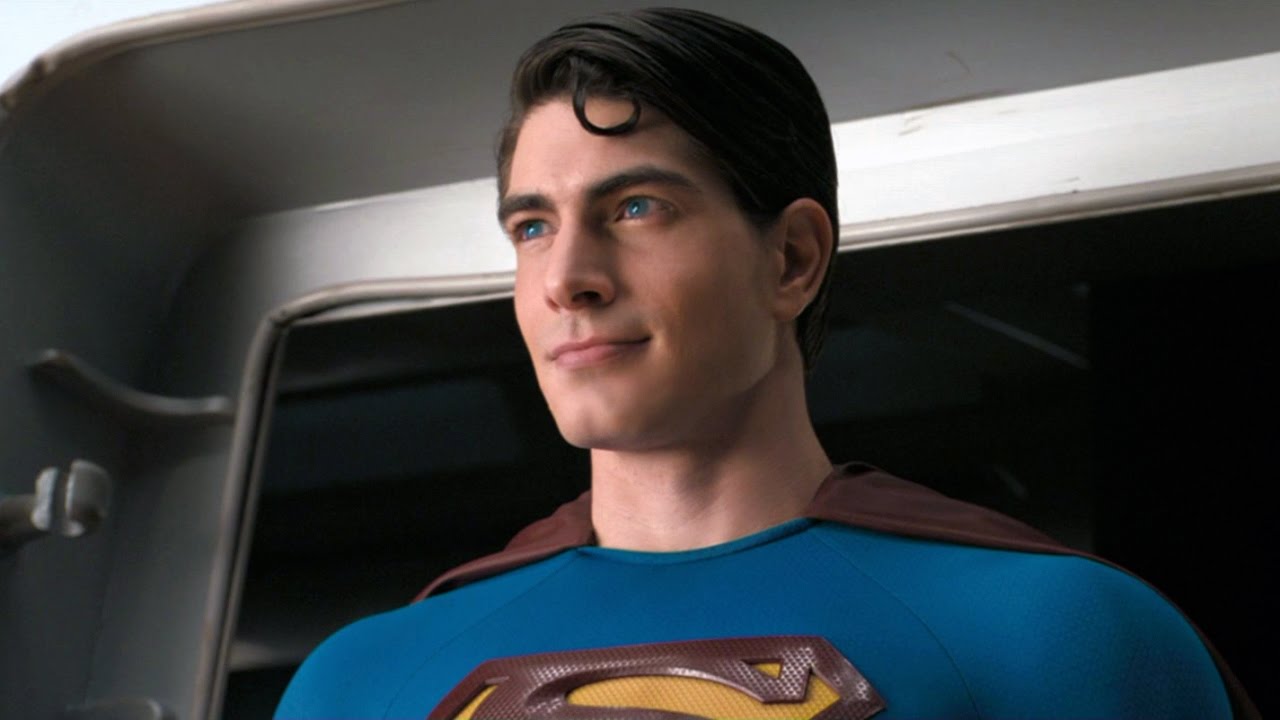
It didn’t start at any particular date, but I think “Superman Returns” marked the unofficial turning point. That movie, on top of turning Superman into a deadbeat dad, made a small, but critical tweak to the Superman/Lois romance. In essence, it turned their love from a strength to a liability that is detrimental to the ideals of Superman and romance, as a whole.

At the beginning of that movie, Superman’s actions are the same as they’ve always been. He does the right thing because it’s the right thing. That’s who he is and why he’s so iconic. Towards the end, though, what he does becomes less about doing the right thing and more about resolving his relationship with Lois Lane.

Suddenly, doing the right thing and saving Lois aren’t just supplementary plots. They’re indistinguishable. One is the other and that’s a problem for reasons that go beyond romance and heroism. It wouldn’t have been that big an issue if it had only played out in one sub-par Superman movie, but in recent years, the problem has escalated.

It manifested in its most overt form in “Injustice: Gods Among Us,” a video game with a comic book series tie-in that essentially provides a worst-case-scenario for Superman. In this story, Superman is tricked into killing both Lois and his unborn child by the Joker. It’s not just an atrocity and a tragedy. It fundementally breaks Superman.

I’m not just referring to his spirit either. The death of Lois Lane also marked the death of Superman, as an ideal. In both the game and the tie-in comics, he’s no longer a hero. He’s a tyrant who becomes everything he once fought against. I wouldn’t go so far as to call him a villain, but he’s definitely not the beacon of goodness that so defines his character.

While it makes for a powerful story, the particulars of that transformation are profound and not in a good way. It implies that Superman’s heroism is directly tied to Lois Lane and not supplemented by it. If she dies, then Superman ceases to be that iconic hero who stands for truth and justice.

That sends the message that Superman’s love for Lois Lane isn’t a strength. It’s a crutch. She’s not just his connection to humanity. She’s his lifeline. Beyond putting a burden on a character whose appeal is her ambitious pursuit of truth, it reduces Lois Lane to a singular role and one that’s impossible to maintain.

Unlike Superman, Lois is human. She’s going to age. She’s going to eventually die. Under this dynamic, Superman will eventually lose sight of his ideals. He’ll eventually stop being the hero that fights for truth, justice, and the American Way. Without Lois, he’s destined to give up and for a character who once moved the sun, that’s pretty weak.

This issue came up again in the plot for “Batman v. Superman: Dawn of Justice.” While I enjoyed the movie and don’t think it deserved half the criticism it got, there was one major issue that I felt undercut the story. Once again, it came back to Superman’s relationship with Lois.

Throughout the movie, Superman constantly questions his role and responsibilites as a hero, especially after seeing Batman’s approach to pursuing justice. That’s perfectly appropriate with respect to humanizing his character, but at the end of the day, he bases much of his decision to save the day around saving Lois.

That’s not to say that there isn’t merit to saving a lover, but this is Superman we’re talking about here. This is a hero whose entire appeal is built around him having god-like power, but still doing the right thing. When the right thing is only ever in the context of saving his girlfriend, then that undercuts both the ideals and the romance itself.

It’s largely for that reason, among others, that I find the romance between Superman and Wonder Woman more compelling. Back in 2012, there was a brief period in DC Comics where the timeline was tweaked, which happens fairly often, and Superman’s marriage to Lois Lane was nullified. That gave these two iconic heroes a chance to be together.

I could probably write several more articles about why I think the Superman/Wonder Woman romance is special in its own right. In many respects, I think it’s healthier than the Superman/Lois Lane relationship. It may never be as iconic, but it fundementally avoids this problem.

Wonder Woman can take care of herself. She can save herself and be a hero on her own terms. Lois Lane, however, is becoming more and more defined by how she defines Superman. For the most iconic superhero couple of all time, that’s pretty shallow.

The recent comics have done little to address this issue. With yet another tweak to the timeline, Superman is back with Lois. They even have a child now. However, the nature of their relationship is still on uncertain ground. I still feel it lacks the complementary dynamics that made it work so well for so many years.

There’s a chance it could change. Given the fickle nature of comic book continuity, it’s very likely that the Superman/Lois Lane dynamic will continue to evolve. However, I think it’s going in the wrong direction if Superman’s reasons for doing the right thing are that dependent on Lois.

Whether or not this problem deepens or subsides remains to be seen. Superman and Lois Lane are still the most iconic romance in the history of comics. That will continue to hold true, even if the problem deepens. Superman and Lois Lane are great characters in their own right. That aspect cannot and should not get lost under the weight of their iconic romance.

As much a romantic as I am, I don’t deny that it is possible for a love story to go too far. Loving someone and being dependant on them are not the same thing, especially when superpowers get involved. If a relationship becomes too dependent, then it can be more damaging than a mountain of kryptonite.

65 Comments

Filed under Comic Books, Jack Fisher, Superheroes, Marriage and Relationships, romance, superhero movies

How To Disappoint (But NOT Destroy) An Iconic Romance In Batman #50

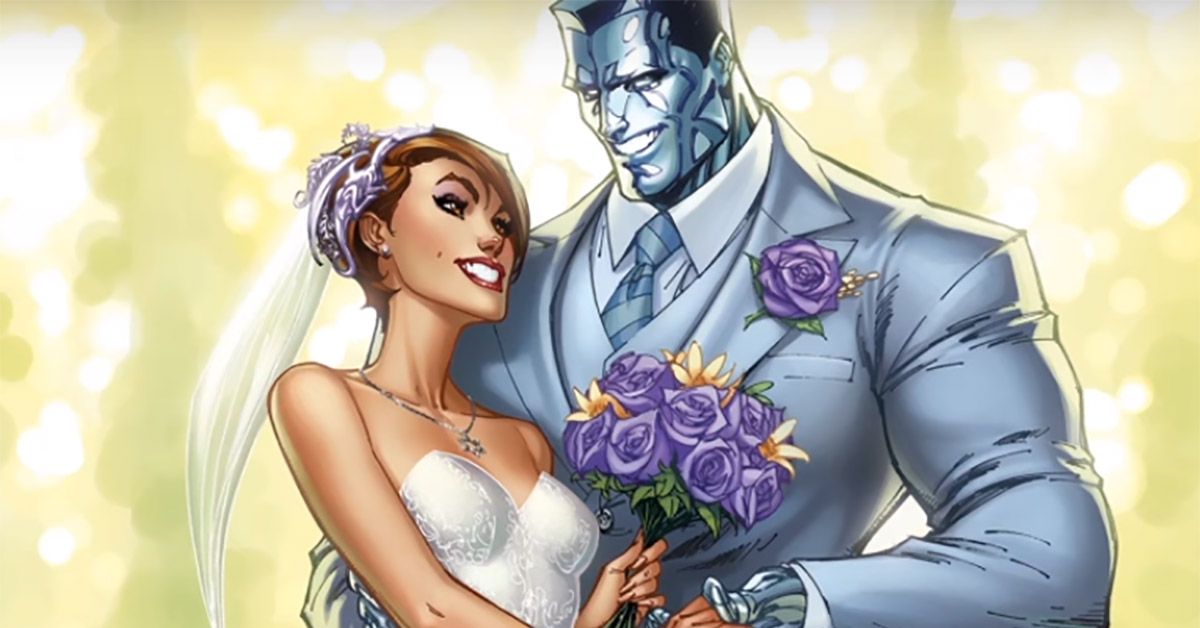
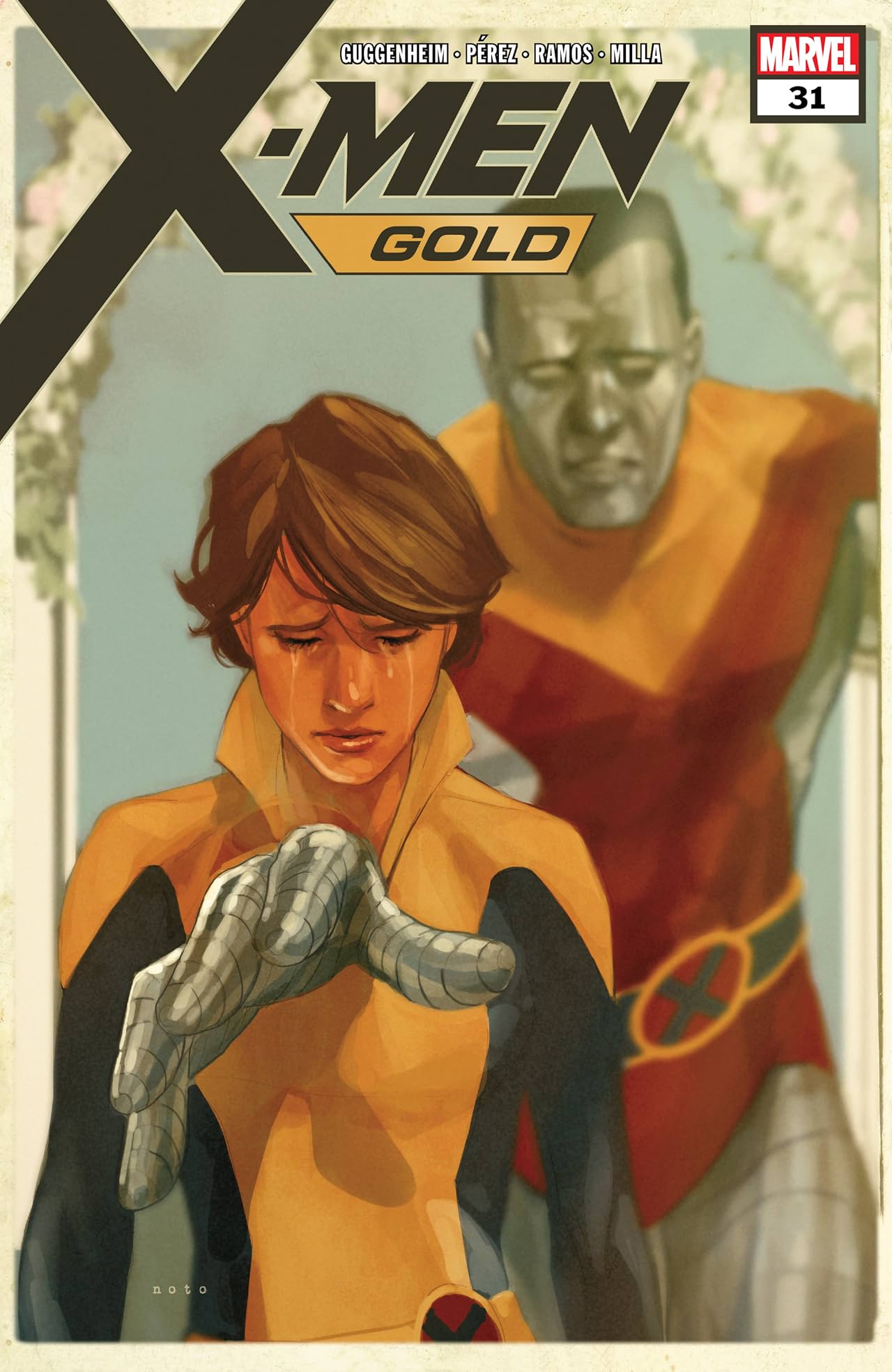
688356-_sx1280_ql80_ttd_It’s been a rough summer for fans of romance, superheroes, and superhero weddings. In fact, in all the years I’ve been reading comics and following romantic sub-plots, I can’t remember a time when there was this much melodrama and heartbreak. I understand that any epic romance is going to involve a healthy bit of emotional strain, especially when it involves superheroes. There comes a point when it just becomes too much.After the deconstruction and denigration of superhero romance that unfolded in X-men Gold #30, I feel like we’re dangerously close to that point. It’s as though everyone involved in making superhero comics is admitting that superheroes can’t get married. They can’t have a functional, compelling romance and still be interesting.That sort of sentiment is basically an affirmation of Marvel’s justification for undoing Spider-Man’s marriage to Mary Jane Watson in the infamous One More Day story. Given the relative infamy of that story line and the recent upheaval with the X-men, many fans of both superheroes and romance were placing a lot of hope that the wedding of Batman and Catwoman could help stop the bleeding in Batman #50.I certainly counted myself among those who was very excited about this event. I even admit I really wanted this to make up for the disheartening outcome of X-men Gold #30. The romantic in me wanted at least one superhero wedding this summer that didn’t end in heartbreak or tragedy.Well, if you saw the same spoilers in the New York Times that I did just two days before Batman #50 came out, you already know that’s not what happened. Bruce Wayne and Selina Kyle did not get married. That means in terms of superhero weddings, the summer of 2018 is now 0 for 2.However, that outcome did not compound my lingering disappointment from X-men Gold #30. I’ll even go so far as to say that Batman #50 didn’t send the state of superhero romance past the point of no return. It didn’t improve the state of affairs. It was disappointing, but not to the point where it damaged a story or a romance beyond repair.Before I explain, I want to establish that many of the details beyond this point are heavy spoilers. Seeing as how this comic was already spoiled a couple days prior to its release, much to the chagrin of comic retailers, I don’t think I need to place too many warnings. I still recommend that people buy the comic, but there’s more going on here than a wedding that didn’t happen, much more so than what we saw in X-men Gold #30.By nearly every measure, Batman #50 approaches the concept of a superhero wedding differently than X-men Gold #30. The wedding of Kitty Pryde and Colossus was set up as this big, momentous affair between an established couple that overcame a lot just to have the opportunity to get married. They brought in friends, family, and fellow superheroes from across the X-men comics.In contrast, the ceremony in Batman #50 was very small. In fact, there wasn’t much of a ceremony to speak of. The only ones who were present besides Batman and Catwoman were Aflred, Bruce Wayne’s butler and long-time confidante, and a lone judge who was already drunk so that he wouldn’t remember his or Catwoman’s identity. Batman always has a plan for that sort of thing. That’s why he’s Batman.On top of that, Batman is the one who proposed to Catwoman back in Batman #24. He’s the one who pitched the idea of getting married in the first place. That’s critical because Kitty Pryde was the one who proposed to Colossus in X-men Gold #20. That matters because she’s also the one who broke it off and at the last second, no less. Things were a bit less cruel in Batman #50 and that’s saying something for a Batman comic.At one point in the story, Batman makes clear that he still wants to marry Catwoman. He’s not having second thoughts. It’s Catwoman who makes the fateful decision to break it off and she doesn’t wait until half-way through the ceremony, either. To put that another way, an admitted jewel thief who enjoys having sex on rooftops showed more decency than Kitty Pryde on her failed wedding day.It’s not a public spectacle that turns into an equally public debacle. It’s a private affair that simply doesn’t pan out. There’s no awkward reception. There’s no attempt to salvage it by shoehorning another romance into the mix just so someone gets married, as though such romances can be swapped out like batteries. It just doesn’t happen.Moreover, Catwoman actually gives a reason for not going through with the wedding and, unlike Kitty Pryde, it’s not a wholly contrived. She establishes throughout Batman #50, through a series of montages documenting their romance over the years, why she loves him and why he’s such an effective hero. In the process, she reveals something profound about Batman.What makes Batman both effective and iconic is how he takes the pain of a tragedy, namely the death of his parents, and turns it into strength. The same pain that would break a lesser man drives him to do so much more. He’s the Dark Knight who defends Gotham. He’s a hero who deserves to fight alongside demigods and aliens on the Justice League. For him to be Batman, he needs that pain to fuel him.From Catwoman’s perspective, Batman finding happiness means denying him the fuel he needs to be Batman. That’s not a realization that just randomly pops into her mind at the last second, though. This is something the Joker actually points out to her in Batman #49. It has less to do with whether or not she loves him and more to do with him being the hero that Gotham needs.That doesn’t make Catwoman’s decision any less disappointing, but it’s still nowhere near as callous or selfish as Kitty Pryde’s decision in X-men Gold #30. I know it’s somewhat unfair to keep comparing the two, given the different circumstances of their relationship, but those distinctions highlight an important element that the failed Batman/Catwoman wedding has that the Colossus/Kitty Pryde wedding didn’t.What happens in Batman #50 is definitely a setback for Batman and Catwoman’s relationship, but it doesn’t fundamentally destroy it. In fact, there’s a very critical detail at the end of the issue that leaves the door open for this romance to keep evolving. I won’t spoil it, but it unfolds in such a way that makes romance fans like me want to root for this relationship.The same definitely cannot be said for the Colossus/Kitty Pryde relationship. After the way things played out during their wedding, it really feels as though their romance is damaged beyond repair. It’s no longer a love story. It’s an outright tragedy, one that would need an even greater contrivance to repair at this point. In a universe with shape-shifting aliens, though, that’s not wholly unfeasible.In the grand scheme of things, Batman #50 is still disappointing in the sense that it doesn’t let Batman and Catwoman take their love story to another level. In fact, not a whole lot changes. The way it plays out feels more like a setback rather than a tragedy. The writer of the comic, Tom King, even claims it’s just part of a much larger narrative between Batman and Catwoman.How that story will play out remains to be seen. Given how long it took Batman and Catwoman to get to a point where they try to get married, Batman #50 already gives the impression that their romance is being dragged out. For a couple who has been off and on again since the 1940s, that’s saying something.If I had to score Batman #50, as both a comic book fan and a romance fan, I’d give it a 6 out of 10. It’s a bit of a letdown, but it’s not nearly as soul-crushing as X-men Gold #30. It still leaves the state of superhero romance in a very precarious state, but at the very least, this book gives me reason for hope.I’ll still be very skeptical of any future superhero wedding for the foreseeable future, though.

5 Comments

Filed under Comic Books, Jack Fisher, Superheroes, Marriage and Relationships, romance

Reflecting On The Greatest Advice Rick Sanchez Ever Gave Us

rick-and-morty-season-3-creators-tease-a-return-to-previous-cliffhangers-and-characters-663486

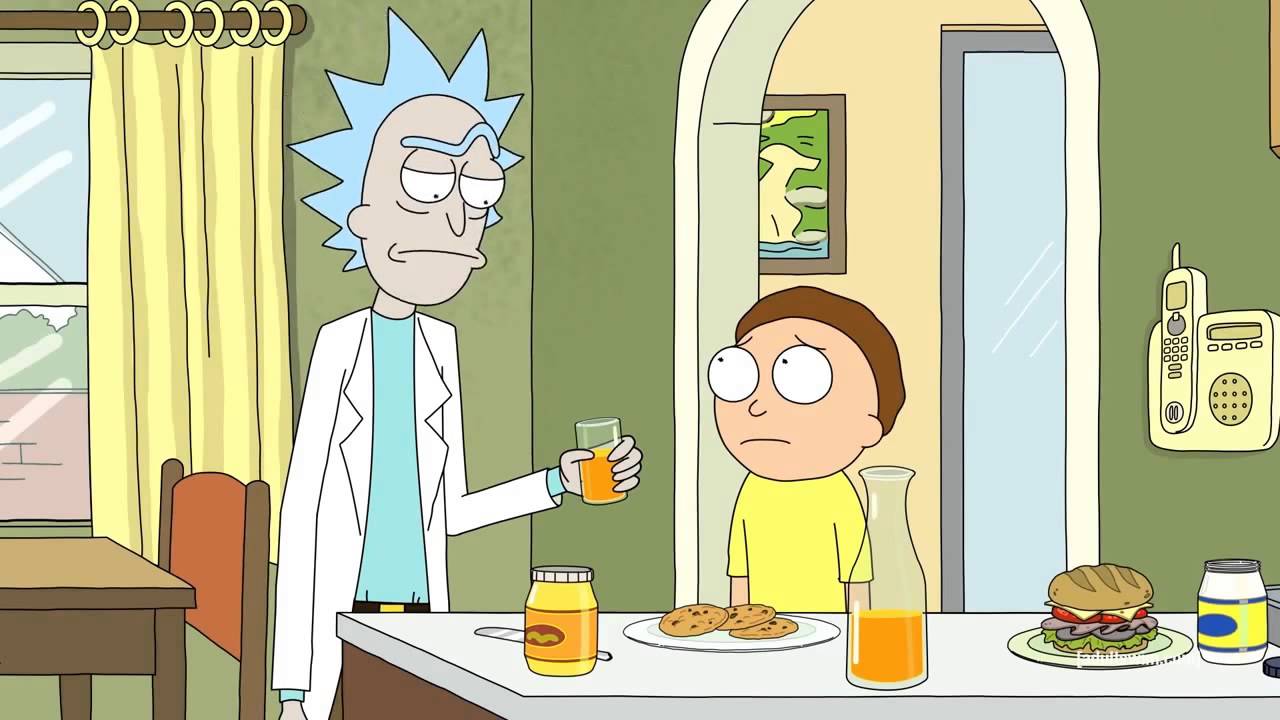
Greetings, and wubba lubba dub dub! By now, you should know that means this will be another article about “Rick and Morty,” one of the greatest animated shows of this century or any other century, for that matter. I know that sometimes means the topics involved are depressing or downright fatalistic. I can’t promise this one will balance that out to any meaningful, but I still hope that this piece is more useful than most.

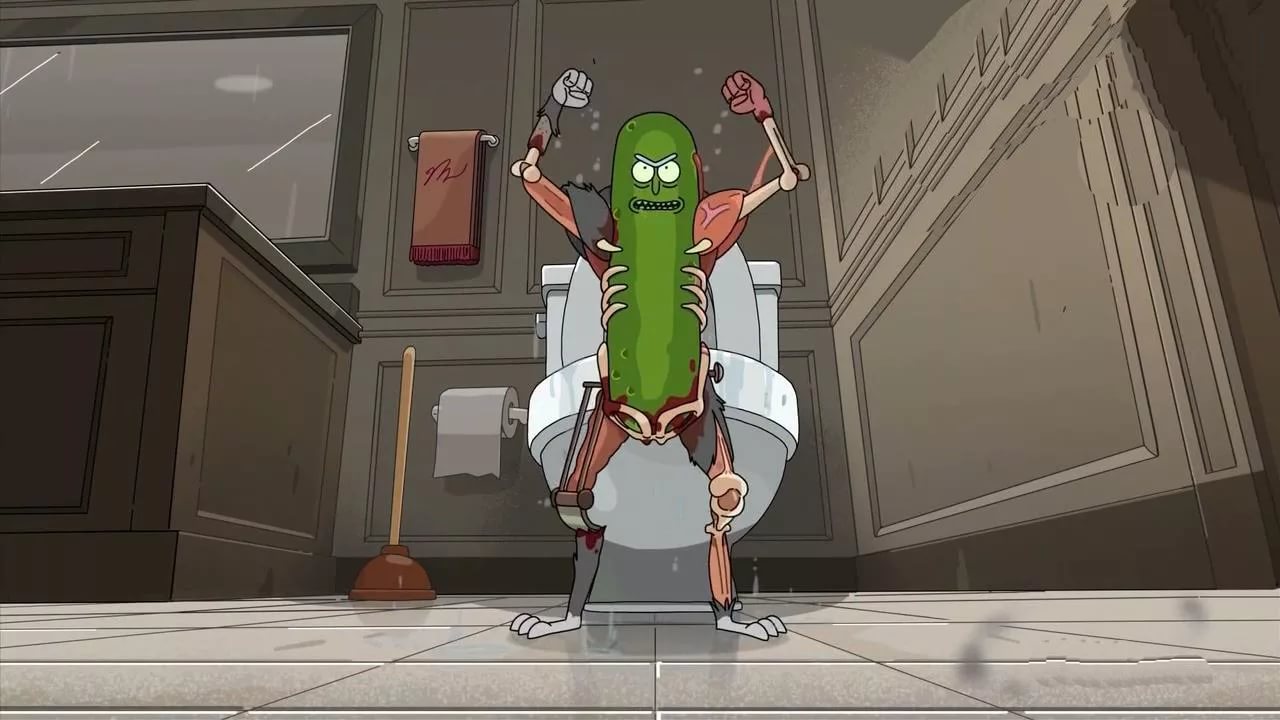
Love it or hate it, either due to its nihilistic undertones or exceedingly passionate fanbase, there are a lot of interesting insights to explore within “Rick and Morty.” From specific episodes that deal with the not-so-hidden appeal of the apocalypse to those built around Rick turning himself into a pickle, there’s a wide variety of lessons and themes to take in.

In this case, I want to focus on what I feel is the best advice “Rick and Morty” has given anyone, both within his animated world and in our own world. It’s a lesson that anyone can use in a multitude of situations, be it dealing with never-ending flood of depressing news to finding out a beloved actor was a total asshole.

Rick has given this advice to Morty on more than one occasion throughout the show, including the pilot episode and, most notably, in “Rick Potion #9.” It applies to battles against alien security guards, burying the body of your alternate self, and that time you farted in class a bit too loudly. It can be summed up in four simple words.

Don’t think about it!

On the surface, it doesn’t sound too useful. Not thinking about something seems like an elaborate excuse to avoid a particular problem or issue. It sounds like something adults tell children just to shut them up so they’ll stop bothering them. Whether they’re asking about where babies come from or why we can’t stop fighting wars, it feels like the overly easy way to avoid an unpleasant conversation.

However, I don’t think that’s what Rick means when he says that. He’s already proven in multiple episodes that he doesn’t give a Grunglokian fart about unpleasant conversations, as evidenced by his many unfiltered rants around his family. When he says “don’t think about it,” he’s saying it in a particular context that makes it more than just a method for avoiding awkward moments.

Watch any one episode of “Rick and Morty” and you’ll notice more than a few themes, not all of which are based on Rick’s ego or Morty’s obsession with a particular redhead. One of the major over-arching concepts that binds the show, and gives much of its appeal, is the idea that none of the things that people hold dear actually matter in the grand scheme of things.

Whether it’s religion, the economy, love, family, or the formula for concentrated dark matter, it just doesn’t matter in the long run. Religion doesn’t matter because it’s just some arbitrary set of beliefs built on unrelated correlations. The economy doesn’t matter if the value of money is entirely arbitrary. Love and family don’t matter when there’s an infinite number of them in the multiverse.

While that fits with the shows more nihilistic themes, it also speaks to the helplessness and frustration that a lot of people feel when dealing with a chaotic world/multiverse. There’s so much they can do, but so much of it doesn’t matter. The causes they fight for, the wealth they accrue, and the people they encounter simply lose their meaning when you consider the sheer size of the universe and how old it is.

In that context, not thinking about it might actually be helpful. If you work a job you don’t like, pay taxes you don’t like paying, and deal with people you can’t stand every day, the idea that it’s all for nothing in the long run isn’t just untenable. It maddening. How can anyone possibly cope with that kind of existence?

Not thinking about it, though, solves a lot of issues because it allows you to maintain the necessary perspective to function within that existence. Even if the things we do are meaningless, not thinking about it at least gives us the illusion that they’re meaningful. More often than not, perception beats reality and not just in terms of bias news.

It’s a byproduct of human’s being so limited in their thinking. Human brains did not evolve to prioritize reason, understanding, or making sense of an obscenely large universe. They evolved with the primary function to help us survive and reproduce, as individuals and as a species. Anything else is secondary or an afterthought.

Rick Sanchez seems to understand that and constantly exploits those limits for his own ends, whether it involves outwitting the President or outsmarting the devil. Unlike everyone else in a meaningless world within an infinite multiverse, he’s a super-genius. He has a portal gun that allows him to travel to infinite timelines at will, even if it’s just for a pizza.

Nobody else in this world has those capabilities, although I wouldn’t at all be surprised if Elon Musk weren’t working on it. Nobody in this world is as smart or as resourceful as Rick Sanchez. There’s very little he can’t do. This is a man who defeated a Thanos/Darkseid rip-off while blackout drunk. By every measure, what he does should carry more meaning than most.

Despite Rick’s abilities, he’s the one who often belabors how meaningless everything is. Never-the-less, he still operates as though there’s a reason to continue existing. That may send mixed messages when he says not to think about it, but that’s only if you overthink it, which would entirely defeat the purpose.

Rick knows that nothing he does matters in the long run, but he doesn’t think about that.

Rick knows that everyone he cares about are just random clumps of matter in a meaningless universe within an infinite multiverse, but he doesn’t think about that.

Rick knows that love, connection, and emotions are just manifestations of brain chemistry that help our species survive, but he doesn’t think about it.

Instead, he focuses his genius intellect on the things that matter to him. Whether that’s his family or that sweet, delicious Szechuan Sauce, he concerns himself primarily with what he feels gives his cosmic adventures meaning. It doesn’t matter if that meaning is empty in the grand scheme of things because, again, he doesn’t think about it.

It may sound egotistical or selfish, but it’s remarkably pragmatic in a meaningless universe. It keeps us from stepping back, realizing how insignificant we are, and succumbing to despair. It directs our energy and efforts into issues that are localized. For Rick Sanchez, a man with access to a portal gun and a space ship, localized is a relative term. For everyone else, though, it’s just that much more pragmatic.

There’s only so much we can do to exact meaningful change in the world. Unless you’re willing to go through the long, tedious process that involves reshaping government institutions, influencing cultural trends, or educating people on a mass scale, you can’t expect to achieve much change, especially by yourself.

Rick Sanchez could probably achieve all the change he wants, but chooses not to because he knows it’ll bore him or it’s just easier to go to a universe where that change has already occurred. For the rest of us, though, we’re frustratingly limited. We may never see or inspire the change we want. Even if we do, we can’t do it alone.

That kind of helplessness can be depressing. The idea that so little of what we do matters, even when we believe in a cause, is pretty distressing. That’s why Rick’s advice is so relevant. It’s not deep or inspiring, but it gets the job done.

Upset with past injustices upon a particular group? Don’t think about it.

Upset that you can’t change the minds of your friends and family on politics, religion, or ideology? Don’t think about it.

Upset that we’re not doing enough to address climate change? Don’t think about it.

Upset that the economy isn’t doing well and all the best opportunities are gone? Don’t think about it.

These are all things that you can’t change without a portal gun or galactic-level genius. Since Rick Sanchez has that and we don’t, our best recourse is to not obsess over it because there’s not much we can do. Eventually, the heat death of the universe will render everything we do or have ever done totally meaningless.

That can either be depressing or empowering, depending on how you look at it. Yes, not thinking about it won’t undo a traffic ticket, undo a crime you committed, or turn off your biological urges to eat, sleep, love, and mate. Efforts to do so can be damaging. For everything else though, not thinking about it is probably better for your mind, your body, and your overall sense of being.

In that sense, we should all thank Rick Sanchez for this amazingly useful device. While he’d probably say that gratitude is just a polite way of idiots admitting how incapable they are, it’s probably best not to think about his reaction. So long as the advice he gave works, what does it matter? Wubba lubba dub dub!

5 Comments

Filed under Current Events, human nature, philosophy, Rick and Morty

How To Denigrate Multiple Iconic Romances In A Single Comic

664803-_sx1280_ql80_ttd_

I love romance. I also love comics. I’ve made my fondness clear for both on numerous occasions. When they’re combined, I’m twice as thrilled. It has proven to be a very potent combination before. Like real life, comic book romance isn’t always done right, but when it works, it’s a beautiful thing.

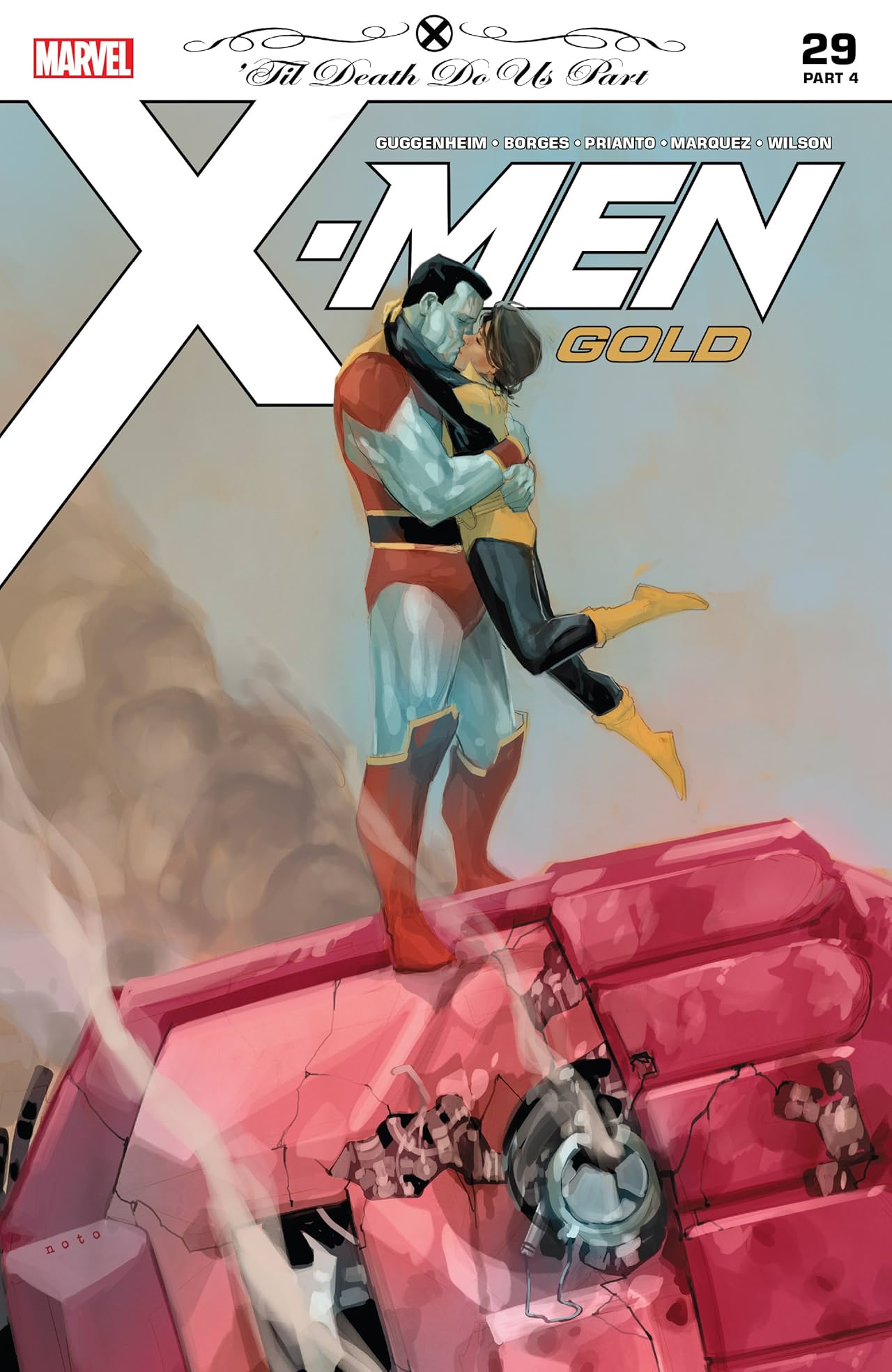
That’s what I had hoped to see with the release of X-men Gold #30, which was billed as the overdue wedding between Kitty Pryde and Colossus. They’re one of the X-men’s most prominent romances, having a history that spans decades and includes death, resurrection, and being trapped in a giant bullet. I swear I’m not making that last part up.

Earlier this year, I detailed why the Kitty/Colossus romance was so special in annuls of X-men lore. It’s one of those romances that isn’t assumed like Superman and Lois Lane. They have to actually work to make their relationship strong, which makes it feel more real than most superhero couples.

It’s why I had such high hopes for X-men Gold #30. It promised to reward these characters for their love and the work they put into it. Being the romance fans I am, I’m a strong believer in having that kind of effort pay off for a couple.

Sadly, and this was spoiled before the comic even came out, that’s not how things played out for Kitty and Colossus. I don’t mind spoiling it, either. Kitty and Colossus don’t get married. Kitty, for reasons that are more asinine than I can put into words, gets cold feet at the last possible second and calls it off.

She doesn’t even wait until she and Colossus are alone so she doesn’t create this mass spectacle that is sure to humiliate and hurt someone she loves in a very public way. She actually gets to the point where Colossus is about to put the ring on her finger and that’s where she stops it. Short of punching his jaw after being told he can kiss the bride, it’s one of the worst things she could’ve done to this man.

On top of that, Kitty was the one who proposed to him. This isn’t a case where a man pressures a woman into marrying someone or a woman feels pressure from her family and peers. The idea, request, and desire to get married came from Kitty and her being the one to call it off like that, after her friends and family did so much to help her, just makes her look more callous than an entire army of Lex Luthors.

I wish I could provide some context to her decision. I really do. I just can’t find a believable way to make her decision anything other than an act of heartlessness, cruelty, and cowardice. There were no hints, whatsoever, in the events that led up to the wedding that would imply Kitty was having second thoughts. In fact, the events of X-men Gold #29 doubled down on her love for this man.

Then, in just one scene that played out early in X-men Gold #30, it all comes apart thanks to a short, unspectacular conversation with Colossus’ sister, Illyana “Magik” Rasputin. It’s not dramatic. It’s not that revealing, either. Again, I don’t mind spoiling it.

Magik just reminds Kitty that she and Colossus had to overcome a lot in order to get to this point. She also throws in that, if they were meant to be, it would’ve happened already. Bear in mind, Magik is considered one of Kitty Pryde’s closest friends on top of being Colossus’ sister. Even if that remark could be attributed to her alcohol intake, it’s still a terrible thing to say to someone who is about to get married.

It’s one of those comments that shouldn’t have derailed a couple that has worked so hard to be together, but it did. Seriously, that’s all it took to convince Kitty that she had to stop the wedding, in the middle of the ceremony, and in front of all her friends and family. Considering she’s supposed to be a leader of the X-men and one of the toughest female X-men of all time, it’s pretty pathetic.

Her decision and terrible timing, alone, could’ve made X-men Gold #30 one of the least romantic stories in the history of the comics. I still wouldn’t have put it on par with some very disturbing romantic sub-plots that played out in some Spider-Man comics. If breaking off a wedding was all this comic did, I would still appreciate it for how it imparted so much heartbreak into a story.

However, it gets even worse than that. It wasn’t enough for X-men Gold #30 to undermine one of the X-men’s most likable romances. It actually succeeded in denigrating the entire concept of romance in superhero comics. I know that sounds like an exaggeration on my part, but I’m dead serious.

Yes, Kitty and Colossus don’t get married in this issue. However, a marriage does occur and it is between another iconic X-men couple that I’m actually really fond of. The lucky couple here is Rogue and Gambit. If you watched the old X-men 90s animated series, you understand why that’s a big deal.

Now, I could write several articles on the quirks of the Rogue/Gambit relationship. It’s another one of those romances that has become iconic in its own right. I would even go so far as to put it slightly above the Kitty/Colossus relationship, if only because both characters have had to deal with some pretty unique obstacles, the least of which involves Mystique being Rogue’s adopted mother.

In the context of X-men Gold #30, though, those various quirks don’t really play into the moment. They haven’t even played into any of the events throughout X-men Gold that led up to this wedding. In fact, they only recently rekindled their relationship in a mini-series called “Rogue and Gambit” by Kelly Thompson, which I highly recommend.

Even with that development, though, them getting married at this point would’ve been rushed, forced, and downright inappropriate, given what just happened to Kitty and Colossus. It would’ve given the impression that someone had to get married in this comic. It didn’t matter who, why, or for what reason. It just had to happen to salvage the issue.

To hell with crafting a story that documents the emotional journey two characters make to get to that point. Never mind the fact that other iconic couples have gone on that journey and made for some of the most memorable moments in the history of comics. Just having Rogue and Gambit randomly decide, on the spot, to get married should carry the same weight. If I could write that with more sarcasm, I could.

Again, I want to make clear that I like the Rogue/Gambit relationship. I’m glad their romance is evolving, once more, especially after some of the other characters they’ve been stuck with. The way it was handled, though, and at Kitty and Colossus’ expense, no less, was just downright demeaning to the very concept of meaningful romance.

It sends the message that romance is as interchangeable as a box of frozen burritos. If one doesn’t heat up right, then another one works just as well. It’s not like they’re unique, having unique emotional dynamics and personal journeys specific to multiple characters. One is no more special or meaningful than the other. Again, if I could write that with more sarcasm, I would.

What happened to Kitty and Colossus in X-men Gold #30 was tragic, but it didn’t undercut romance in superhero comics, as a whole. As soon as Rogue and Gambit were randomly thrust into the moment, doing on a whim what took other couples so much time and effort, the whole issue undercut any deeper meaning that both romances had going for them.

Great romance, especially those that go onto become iconic, can’t be the kind of exchangeable gimmicks that can be sold as easily as plastic cups at Costco. Great romance is like the cookies you bake with your grandmother from scratch. There’s work, patience, and a deeper personal touch to the effort.

I get the appeal of throwing in a major twist. Comics, movies, and everything associated with M. Knight Shyamalan have been doing that for years. That appeal isn’t there in X-men Gold #30 because it comes at the cost of treating romance with the same recklessness as super-villains treat their henchmen.

On it’s own, I thought X-men Gold #30 was just really disappointing for how it handled Kitty and Colossus. However, it’s the precedent and the implications that leave me concerned for the future of romance in comics, particularly Marvel. If this is how love is treated, as something easily cut and pasted into a plot, then I worry for other comic book couples that may face similar denigration.

Here’s to hoping that the upcoming wedding between Batman and Catwoman sets a better precedent.

10 Comments

Filed under Comic Books, Jack Fisher, Superheroes, Love Or Obsession, Marriage and Relationships, romance, X-men

The WRONG Way To Deal With The Incel Phenomenon (And Ideas For A Better Way)

wallpaper-man-and-woman-at-sunset

When dealing with complex social issues, people have a frustrating tendency to propose solutions that cause more problems. Some of them are unintended and manageable. Some are just absurd and untenable.

I say that as someone who has stated before that complaining about a problem without pursuing a solution amounts to little more than empty whining. I’m in favor of confronting major issues, be they small-scale problems on a local level and bigger problems that may end up being an existential threat to the human race.

However, most reasonable people agree that attempting to solve a problem with a bad solution is akin to killing a fly with a machine gun. Even if it works, it causes plenty of damage and creates an entirely new set of problems that need solving.

This brings me to what I feel is the most asinine issue to emerge since religious zealots got needlessly outraged over the Teletubbies. I’m referring, sadly, to the incel phenomenon and believe me, it makes me miss the days when the Teletubbies were a problem.

I’ve mentioned it before and I’d really prefer to talk about less frustrating topics, but this is quickly evolving/devolving into an issue that isn’t going away on its own. People have started dying because of this phenomenon. Some depraved individuals are already being idolized because of it. This is not one of those things that will blow over after the next Kardashian scandal.

Before I go any further, I need to make clear that I do not think highly the incel phenomenon. It brings out the absolute worst in those who espouse it. I also do not associate incels with other movements involving men’s rights, gender equality, or any mainstream political ideology. These individuals are their own entity.

Their deplorable behavior and demeaning attitudes are solely on them. Their hatred, misogyny, and violent acts are not the least bit justified. I can only manage so much sympathy for those who identify as incel, given the recent news surrounding them. With all that being said, I’m going to try and be fair in addressing this problem.

As much as I abhor the ideology of self-identified incels, I don’t deny that they’re real human beings who are in a state of deep distress. I also don’t deny that their distress is painful to them. Others can call it pathetic all they want. To them, the pain is real.

This is a group of people who genuinely feel that they are the victims of a gross injustice. They see themselves as individuals who have followed all the rules that society has laid out for them. They believe themselves to be good, decent people who are worthy of sex, love, and intimacy. To them, the fact that they aren’t getting any of that is akin to denying a starving child food while donating meals to Bill Gates.

It certainly doesn’t help that popular culture has been selling us all the narrative for decades that being a nice person will get you the lover you want. Since kids, we’ve been led to believe that if we just follow the examples of our favorite photogenic heroes, we’ll get what we want. It always works out in the movies and on TV. Why shouldn’t it work out in real life?

Anyone with a passing knowledge of reality knows why that sentiment is dead wrong. We all have to learn at some point that we are not the heroes of our own story. Things don’t always work out. Life isn’t fair. Nobody owes you anything and the universe doesn’t give a wet fart about your feelings.

It’s a painful revelation, but for those in the incel movement, that pain is too much. It’s not that they haven’t gotten over it. It’s that they’ve given up. They call it “taking the black pill” instead of the red pill. Rather than the truth offered by “The Matrix,” the black pill is akin to just waving the white flag and conceding the battle to the machines.

In this case, though, the machines are the social conditions that ensure incels will never have sex, find love, or feel intimacy. Like sexual and romantic nihilists, they stop trying to navigate a world that they believe is actively working against them. They don’t try to change it or help it. They’re just left wallowing in their hatred and misery.

To some, it’s self-deprecating melodrama. I think it’s tragic. I even understand to some extent how certain people might look at the challenges before them, see how many forces are working against them, and not even try because the odds are so stacked against them. Whether or not that’s actually true doesn’t matter. This is their mentality and it’s a very damaging mentality.

It’s for that reason that the potential “solutions” some have set forth seem intent on either furthering that damage or exchanging one problem for another. One emerging “solution” comes in the form of something called enforced monogamy. It’s not quite what it sounds, but it still lends itself to a great many problems.

The logic, on paper, makes some sense. It posits that in a sexually free market, most of the women will only pursue the top tier of men. It works if you have the looks of Brad Pitt or the bank account of Warren Buffet, but for most everyone else, they’re left behind. As such, monogamy must be rigidly enforced and promiscuity significantly discouraged.

It could take many forms. People who have sex with one too many people could be taxed, fined, or jailed. People who refuse to marry someone could be required to do so. If someone doesn’t sufficiently perform they’re monogamous duties, then they’re subject to both condemnation and punishment. Whatever form it takes, the inherent flaws ensure this “solution” will only incur more problems.

Never mind the fact that human beings, as a species, may not be naturally monogamous. Never mind the fact that sexual monogamy is exceedingly rare throughout the animal kingdom. For the good of society and repressed incels, it has to be imposed and enforced. I’ll give everyone a minute to fume over that half-hearted effort at sarcasm.

In any case, this recourse requires that some segment of the population be oppressed to placate another. Historically speaking, that has never worked out. Sure, using the power of society to guide and/or micromanage sexuality might grant a little intimacy to those who wouldn’t otherwise have it. It will also significantly undermine the freedom and liberty of another individual.

It doesn’t just exchange one problem for another. Whenever society tries to micromanage peoples’ lives, it tends to collapse and not just because it fails the Boredom Filter. Human beings are complex and difficult to manage. Trying to manage the unmanageable is destined to end in failure.

While it’s doubtful that forced monogamy will ever gain favor in any society outside “The Handmaid’s Tale,” other less oppressive solutions have been put forth, relatively speaking. They largely center around legalizing sex work or hastening the development of sex robots.

While I’ve spoken favorably about sex robots and advocated the decriminalization of prostitution, I don’t think either would resolve the incel issue. In fact, I think it would make the situation worse.

Even if we all woke up tomorrow and discovered that prostitution was legal and sex robots were perfected, the incel phenomenon would still exist because those who identify as such would still feel like failures. Even if they had plenty of satisfying sex with prostitutes and sex robots, the fact they had to resort to those means would only affirm their failure.

On top of that, those working in prostitution who served them would probably be subject to stigma of their own. That’s on top of the stigma already associated with sex work. There would be a similar stigma on the manufacturers of sex robots or sex dolls, which has already drawn ire from sex-negative feminists.

In the end, not only will incels still feel angry and resentful, but those associated with this “solution” would have a reason to feel that way too. Given the breadth of that problem and the inherent flaws of the proposed solutions, is there any recourse that is both effective and tenable? I believe there is, but it’s not one of those solutions that’s simple, direct, and requires the passage or removal of a particular law.

The incel phenomenon was born of chaotic social issues that were further compounded by mass media and popular culture. Before solutions like prostitution and sex robots can even enter the conversation, the stigma associated with sex, both for the incels and those involved in sex work, must be confronted.

The idea that anyone who has too much sex or not enough sex deserves stigma is the primary driving force behind controversies surrounding sexuality. Whether it comes from uptight religious zealots or radical feminists, heaping stigma on someone else’s sex life is both damaging and demeaning.

Beyond confronting the stigma, it’s also important to educate those who identify as incels that it’s not entirely hopeless. They can still find love, sex, and intimacy. Part of that process, though, involves learning that they are not owed sex and they have to actually work for someone else’s affection.

That could come in the form of helping people develop better social skills. It could also come in the form of identifying those in the incel community that have legitimate issues with mental health. At the end of the day, they’re still people. Helping them should be prioritized over resenting them.

Re-shaping attitudes and teaching better social skills will be a slow, arduous process. People do have a nasty tendency to cling to their hate. However, it is possible to help someone overcome it. I believe most incels can be helped and are deserving of it. Only those who commit acts of violence should face such scorn.

This is not the kind of effort that one particular gender must take on. It has to be a collective effort, which I know will upset some who feel incels are an exclusive manifestation of toxic masculinity, a term I still contend is inherently flawed. We’re all still human, regardless of our gender. If some of us our suffering, then we’re still the one’s responsible for confronting it.

We can’t expect the incel issue to resolve itself. We also can’t expect those who identify as such to change just because others scorn, mock, or hate them. At some point, one side has to take a deep breath, be the adult, and confront the issue in a meaningful way.

Chances are it’ll get worse before it gets better. It’s also likely that both incels and those who despise them will hate dealing with the issues associated with them. However, that’s exactly why it’s so important to address. The longer a group of people remain at the mercy of stigma and self-loathing, the more suffering the world around them is likely to incur.

13 Comments

Filed under Current Events, gender issues, human nature, political correctness, sex in media, sex in society, sexuality

On Nihilism And Love (And How Nihilism Enhances Love)

reverse-light-happy-couple-in-love-at-sunset-men-and-women_nj0u1rvxx__f0000

Whenever I talk about nihilism, it’s usually in the context of how it could effect an emerging generation or as an excuse to talk about one of my favorite cartoons. I try not to incorporate it into too many discussions, mostly because nihilism has some pretty sullen connotations. Whether you believe it or not as a philosophical principle, discussions about it can get pretty depressing.

Considering the underlying premise of nihilism, which is that life and existence has no inherent meaning, that’s somewhat unavoidable. At the same time, though, nihilism can provide a revealing context. Due to its inherently harsh nature, it can cut through the empty rhetoric and needless complications that overly complicate a subject. That can be exceptionally useful for a concept as broad and powerful as love.

Yes, I am going to talk about love and nihilism. I promise it’s not going to get as depressing as you expect. If anything, I believe that love and nihilism are a potent mixture that, when framed properly, can actually enhance both concepts.

Being an aspiring erotica/romance writer, I’m an unapologetic about my fondness of romance. I like to think I’ve made that abundantly clear. However, the more I write about love, the more I notice how often love gets twisted and contorted into something that undercuts its fundamental value.

That’s not to say I don’t enjoy the occasional fairy tale romance that makes love seem like this unstoppable force that is ordained by angles and guided by unicorn magic. That sort of thing has its place alongside stories of giant robots and superhero movies. In the real world, though, pursing that kind of love is like pursuing actual fairy dust. It’s woefully unrealistic and potentially damaging to someone’s psyche.

That’s where nihilism can provide an important filter, of sorts. At its core, nihilism strips away the magical thinking people ascribe to certain phenomena, be it love, honor, friendship, or happiness. From a purely nihilistic point of view, love is just another manifestation of brain chemistry within a larger manifestation of social dynamics.

On paper, that’s pretty cold. If it were incorporated into a fairy tale or an erotica/romance novel, it wouldn’t come off as very romantic. If you take a step back and go beyond what’s on paper, though, that nihilistic insight actually reveals the larger complexities of love.

To illustrate, think back to some of the most iconic love stories of all time, both classical and contemporary. Look at the epic love of Romeo and Juliet, Jack and Rose from “Titanic,” or Superman and Lois Lane. These are all held up as romantic ideals, the kind that make real world love seem inane by comparison.

However, applying a little nihilism to these narratives and something happens to these ideals. The strength of all these epic love stories is how passionate the characters feel for one another and all the obstacles they overcome to be together, sometimes at the cost of their own lives. That makes for an epic tale, but nihilism exposes a major oversight.

If we’re going to look at love as just a series of chemical reactions in the brain between two people, then we cannot overlook the other reactions surrounding it. To do so would mean ignoring real, tangible manifestations of reality. Since that’s the only manifestation that nihilism acknowledges, it has to accommodate those other feelings alongside love.

This is important, in terms of expanding love, because it establishes that it’s just one of many potential feelings that may manifest within the brains of two individuals. The mechanisms are the same. It’s just brain matter interacting with other brain matter. Sure, that reduces the biology of love to brain chemicals, like any other emotion, but at the same time it incorporates into all the other emotions in play.

In the cold, unfeeling world of nihilism, the mechanisms of love don’t carry any greater weight than the mechanisms of hate, happiness, sadness, and annoyance. While that’s bad news for fairy tales, it’s good news for love in a real world where love spells don’t exist and true romance rarely forms from a single kiss at the gate of an airport.

In that world, the basic brain chemistry of love can’t be enough. It’s necessary for two people to also get along in the sense that they can relate to one another, interact with one another, and deal with one another on a day-to-day basis. Those mundane, unromantic factors are rarely part of an epic love story, but an important part of a healthy romance.

When we conflate the meaning of love to the level of an old Beatles song, we undercut those less fanciful aspects of love. We focus only on those moments of intense passion that find their way into romance movies. Some, like my favorite romance movie, do a better job exploring other moments. Most though, along with music that blurs the line between love and obsession, don’t send that message.

That kind of love gives the impression that it’s the most meaningful experience anyone could have. It becomes the primary goal of every individual, seeking that special love that somehow makes them feel complete and content. To not have it is to be denied your very reason for being. It’s something you should dedicate every ounce of energy to, even at the expense of every other pursuit.

That romantic ideal shatters under the weight of nihilism because in that worldview, nothing matters to that degree. The very notion that anything would matter that much requires self-delusion to an egregious extent. Again, it’s a cold way of looking at the world, but it reveals the true tenants of a healthy, fulfilling love.

By mixing love and nihilism, love can no longer be that one feeling that gives someone a sense of purpose. That’s because, in the world of nihilism, nothing gives anything or anyone inherent purpose. Everything is just there by the random chaos and exists only temporarily, only to eventually perish at the eventual heat death of the universe.

Sure, that means that love can no longer be eternal or everlasting like a typical Disney movie, but that’s actually a good thing if love is to have any value. By rendering love a finite, temporary feeling, it becomes more precious on the basis of its rarity. The fact that it is so temporary is what makes it a powerful feeling to those who experience it.

It also leaves room for all the other feelings that go into a strong, healthy romance. Things like growing together, learning from one another, and complementing each other become part of an ongoing process that two people experience. For some, it can last a lifetime. For some, it can barely last a day.

In the long run, they don’t have inherent meaning in a nihilistic world. Whatever meaning love ultimately has is dependent on those who experience it. That means people can’t just rely on the fact that they’re in love and expect it to solve their problems. It means they actually have to work on preserving that meaning they’ve created in a cold, unfeeling world.

To some extent, that gives love true value and not just the inflated value portrayed in movies. By looking at love through the lens of nihilism, it’s possible to understand it for what it truly is, in relation to other experiences that sentient beings share. It’s no fairy tale, but it’s real in that we feel it and because we feel it, we give it meaning.

As a lover of romance and telling sexy stories, I find that uniquely inspiring. We can’t rely on an unfeeling, uncaring universe to give meaning to our love lives. We, as finite and fragile beings, have to do that ourselves. Those willing to take love as it is and not what we wish it were are better able to craft that meaning. If we can make it sexy along the way, then that’s just a nice bonus.

4 Comments

Filed under human nature, Marriage and Relationships, philosophy, romance

When Your Lover Uncovers Your Porn Collection (And What Their Reaction Reveals)

porn-addictive-1000x500

I talk a lot about taboos, double standards, and various gender quirks. I don’t just do that because it highlights significant disparities among people trying desperately to get along and/or make love to each other. I do it because it offers some fascinating insight into the conflicting mentalities that drive such conflicts.

A lot of those conflicts, however, are on a larger, more impersonal scale. A typical couple, be they heterosexual, homosexual, or something else entirely, can only do so much to impact larger cultural forces that they had no role in choosing, propagating, or subverting.

These forces, from our approach to marriage to the assumptions that guide our understanding of romance, usually only effect individuals and couples indirectly. We’re all somewhat at the mercy of what our culture has built for us and we can only do so much to guide it forward.

However, there are a few lesser-known aspects of that culture that we can influence on a day-to-day basis. One such aspects involves porn and whatever porn collection that you or your significant other might have, be it hidden or not. I’m sure just mentioning it has made certain individual’s tense for various reasons that I won’t state outright.

Regardless of how you or your lover feels about porn, it exists and it exists in a big way. It’s also a huge multi-billion dollar industry. The fact it’s so huge is a telling sign that both you and your lover have probably consumed it at some point. It’s also very likely that anyone claiming that porn is immoral has probably consumed it as well.

Despite this prevalence, porn is still immersed in taboos and quirks. I don’t want to focus too much on those, since I’ve already touched on a few. The ones I want to focus on have to do with how those in a romantic relationship react to it. That reaction, in many ways, goes beyond double standards and reflects something deeper about our concept of relationships as a whole.

Most people probably don’t need much imagination to surmise how their lover would react to their porn collection. Whether or not it’s a secret, there’s this underlying sentiment about someone in a relationship who consumes porn. That sentiment usually manifests in two scenarios. This is the first and probably most basic.

A woman casually walks by her lover’s desk. Their computer screen is open and so are a wide number of files. Curious, she takes a closer look, only to find out that there’s a sizable collection of pornographic videos on the computer. She’s utterly shocked at just how much content there is.

There are videos featuring extreme, hardcore scenes. There are videos featuring bondage, S&M, and various fetishes. When her lover returns, she is outraged. She sees this level of porn consumption as an affront to their relationship and demand that the files be deleted.

This isn’t just a basic thought experiment. This sort of thing does happen in real life. A part of what inspired this article were stories like this one where a woman kicked her husband out of the house after finding some porn on his phone. Granted, her reaction was extreme, but it reflects a similar sentiment.

There are those who, when they find their lover’s porn stash or just part of it, see it as an insult and an affront to their relationship. They see their lover’s desire to seek another sexual outlet as proof that they aren’t enough and their lover isn’t attracted to them anymore. For some, it can be fairly traumatic and for understandable reasons.

Now, I didn’t specify the gender of the person who voiced that outrage like I did in the scenario. I did so because I don’t want to generalize too much. From a purely anecdotal perspective, which is admittedly flawed, women are more angered by their lover’s porn consumption than men.

Again, that’s a generalization. It also says nothing about how homosexual or transgender relationships couples react to porn. I honestly had a hard time finding research to that effect. However, I found plenty that indicated how common porn consumption is among couples and how reserved many are to admit it.

That leads me to the next scenario, which isn’t as common, but is a bit more colorful. It involves a different kind of reaction for a couple that probably has a very different dynamic from the first, but that dynamic is key in understanding the implications.

A man casually walks by his lover’s desk. Their computer screen is open and so are a wide number of files. Curious, he takes a close look and discovers a sizable collection of pornographic videos. For a moment he’s shocked, but then he’s impressed at the sheer breadth of the collection.

There are videos featuring lesbian couples. There are videos featuring bondage, S&M, and various fetishes. When he confronts his lover, it’s awkward and a little funny. However, he’s also genuinely intrigued by this side to his lover and says they should talk about it so as to re-evaluate their outlook on their sex life.

It’s not nearly as dramatic, which is probably why it doesn’t make the news as often. Again, I was vague with the gender dynamics here and I’ll probably get in trouble for saying the person in the scenario was a man. I get it. That’s a general assumption fueled largely by existing cultural expectations.

Men are okay with porn. Women are a bit more sensitive about it. Not everyone is like that. Some women don’t have a problem with porn and even enjoy watching porn themselves. Some men don’t care for porn and are genuinely averse to it. Everybody has their own attitudes towards it.

That said, there is this prevailing sentiment that men are anxious about revealing their porn habits to their significant others and women don’t like the idea that their lover has a sexual outlet other than them. In both cases, there’s an anxiety over what this means for them and the relationship.

To some extent, porn consumption and learning that your lover consumes it undercuts the romantic script that we think we have to follow. Within that script, two people are in love. They only desire one another. They’re only attracted to one another. Anything that might diver that attraction must be a bad thing. Porn does all of that and then some.

In that context, it’s understandable why some would react harshly to their lover’s porn collection. It shatters the romantic ideal they once assumed. Suddenly, their love is not on part with Romeo and Juliet. Their relationship is not some epic romance. The idea that they’re still sexually aroused by other people makes it seem less special and less meaningful.

At the same time, such a reaction has more distressing implications. If someone is  disgusted by the notion that their lover is sexually aroused by something other than them, then that implies they somehow own their lover’s desires. They own their ability to have sex and be intimate. The idea of owning another person to that extent goes beyond love and into the realm of obsession.

In that circumstance, even a stray thought anyone has towards someone other than their lover is an affront. Given the many indications that humans aren’t entirely built for monogamy and the high divorce rate, this is wholly unrealistic and a little scary and it sets unreasonable expectations among couples that are bound to disappoint.

There are, indeed, certain cases where someone’s porn consumption is detrimental to a relationship. However, from a pure numbers perspective, those instances are the exception and not the norm. From a pure betting perspective, there’s a good chance that your current lover or future over consumes porn. How you deal with it will likely reveal the strength and/or weakness of your relationship.

Leave a comment

Filed under gender issues, human nature, Marriage and Relationships, romance, sex in media, sex in society, sexuality, Uncategorized

The (Fragile) State Of Modern Chivalry

Courtesy Photo

These days, you can’t go more than a few days without hearing someone complaining that chivalry is dead, dying, or some elaborate patriarchal conspiracy to keep women in their place. A few are even arguing it’s part of some matriarchal conspiracy to control men. The very concept of chivalry is in a precarious state is what I’m saying.

Now, I’m somewhat hesitant to write about this because in my experience, both in real life and online, it brings out a lot of mixed sentiments. I’ve met men who resent it. I’ve met women who are outright offended by it. No matter how I approach it, there’s no way to avoid rubbing certain people the wrong way.

Hesitation aside, I do feel compelled to talk about it because the idea of modern chivalry, the kind that involves common courtesy and not the medieval kind that made high school English class so frustrating, is kind of personal to me. That’s because I had awesome, loving parents who went out of their way to teach me and my siblings the manners, attitude, and mentality that go into modern chivalry.

They may not have built their entire parenting strategy around it, but I like to think that them emphasizing it was part of a larger life lesson. It’s one that effects me to this day. I still make it a point to hold doors, pull out chairs, and address people as sir/ma’am. If I don’t, then I feel like I’m not showing the respect I want.

It may not sound like much, but I find myself wondering and worrying about the state of this gender-driven quirk. Some of that worry stems from how relevant those vital lessons my parents taught me are today and whether they’re losing relevance with each passing year. That might just be a byproduct of me getting older, but it does concern me, if only because I feel there’s a lot of gender-driven conflict these days.

To understand why, I need to give a little background as to just how my parents instilled an appreciation of modern chivalry in me and, as a bonus, demonstrate why they’re so awesome. While both my parents were big on teaching me and my siblings manners, my father was more focused in emphasizing courteous behavior.

As a kid, I remember more than one occasion where we would go out somewhere and my father told me to hold the door for women and/or total strangers coming up behind you. It wasn’t just for women either. He made it clear that if you have a chance to hold the door for someone, you do it and you be a gentleman about it.

I only remembered why it was so important on the occasions I forgot. There was this one time when I was around 10-years-old that my parents took me and my siblings to the mall. I, being an overly excited kid, ran out ahead to get inside. In doing so, I forgot to hold the door for a woman and her daughter. My dad did not approve of that.

I vividly recall him catching up with me, grabbing me by the arm, and telling me that if I’m going to run out ahead like that, I damn well better hold the door like a goddamn gentleman. Remember, I was only 10 at the time and my father was holding me to higher standards than that. At the time, I was kind of annoyed, but as I got older, I came to appreciate that lesson.

There were probably other similar incidents. My dad, who I know occasionally reads this site, can probably remember plenty of others like that. I hope they’re still relatively few because as I got older, things like holding doors, pulling out chairs, and saying sir/ma’am became second nature to me. It got to a point where I really didn’t think about it.

Then, in a more recent incident, I had an encounter that kind of worried me. I was walking around my neighborhood. I then make my way into a fast food restaurant for a quick lunch. Since an older woman was behind me, I held the door for them. She smiled and thanked me. I replied with a simple, “You’re welcome, ma’am.”

It was that last part, though, that got a stronger reaction. She was genuinely surprised when I said “ma’am.” It was a pleasant surprised, though. She even went out of her way to thank me for being so courtesy, claiming she doesn’t hear that sort of rhetoric much anymore.

Now, this was not some old woman longing for the good old days, mind you. This woman didn’t look that much older than me. It really caught me off-guard, mostly because I was just doing what my parents had taught me to do all my life. It also kind of worried me, too.

That’s not the first time something like that happened. I’ve said “sir/ma’am” to strangers before and gotten strange looks, both from older and younger crowds. I’ve noticed the older women, though, are the ones that react most often to it. They tend to react most positively as well. Women who are around my age or younger just smile and shrug it off, as though it’s no big deal.

I’m honestly not sure what to make of it. I understand my experiences are purely anecdotal and it’s unreasonable to make broad generalizations about society, as a whole. However, the more reactions of this sort that I encounter, the more I worry that the value of modern chivalry is declining.

That worry, though, is not akin to some old man longing for the good old days. I understand that the good old days are never as good as we remember. I feel a more pressing concern is how this attitude reflects the growing tension between genders that seems to fuel so many conflicts, these days.

I’ve talked about a few of those conflicts, including the absurd ones. A part of me can’t help but wonder whether the lack of a reaction I get from younger women on my chivalrous acts reflects a distressing trend in attitudes towards men, in general.

I worry that recent scandals, trends in feminism, and even a few trends in men’s rights activism are conditioning people to just assume the worst in men, even when they demonstrate good conduct. Assuming the worst in any situation is usually the first step towards falling into a nasty cycle of self-fulfilling prophecies.

In that context, there’s no behavior, chivalrous or otherwise, that can convince anyone that they’re just trying to be polite. I hold a door for a woman with those assumptions and she won’t see it as good manners. She’ll just see it as some elaborate effort to get into her pants or somehow draw her into a system of patriarchal oppression.

The assumptions are just as bad for the men. I hold a door for a man, or just get seen holding the door for a woman, and the assumption is I’m trapped in some radical feminist agenda that seeks to turn all men into weak, submissive, beta-males. Again, it overlooks the mere possibility that it’s just the kind, courteous, polite thing to do.

I sincerely hope this is just empty concern on my part and the observations I’ve made are just a byproduct of growing cynicism. I also hope that the current state of gender politics doesn’t reduce the concept of modern chivalry to an agenda. Just acting like a decent human being to other people, regardless of their gender, should never be an agenda.

It’ll be interesting to see how the current social landscape evolves over the next several years. How it sees and interprets modern chivalry will reveal a lot about the direction we’re heading with respect to how men and women relate to one another. If every little action suddenly becomes part of an agenda, then I imagine it’ll get a lot harder to just show common courtesy to someone.

I hope it doesn’t get that bad. I sincerely hope that the lessons my parents taught me about showing good manners and common courtesy are just as relevant in the future as they are now. If I ever get around to having kids, I intend to teach them those same lessons.

Some things just don’t need to be part of a gender-driven conflict. They can just be an overly-formal way of showing respect to one another. Call it what you want, be it modern chivalry or just not being an asshole to someone. There’s still a place for it in any society and I believe there always will be.

1 Comment

Filed under gender issues, Jack Fisher's Insights, Marriage and Relationships, romance

Gender, Equality, And The Pain That Binds Us

gender-bias-design-aiga-640

Imagine, for a moment, there are two kids playing on a playground. Both are young, rowdy, and energetic. They run around, rough-house, and engage in the kind of reckless fun you would expect of most kids.

Then, at some point, they both run into each other. They both get hurt, sustaining similar bruises and experiencing similar pain. They both start crying. Those cries are equally loud and they each shed the same volume of tears. Naturally, this gets the attention of nearby adults.

However, in responding to the cries, one child ends up getting more attention than the others. Most crowd around that child, offering solace and treatment. All the while, the other child is still crying just as loudly. Only a handful of other adults tend to that child, but the crying and the pain persist.

Does what I just describe sound fair? Does the idea of one child’s pain getting more attention than the other strike seem wrong to you? Absent any larger context or notable personality disorders, I believe most people would agree. The idea that one child’s pain warrants more attention than others is wrong. It offends that innate sense of empathy and justice that binds us as humans.

I tell this story to make an important point about pain. To some extent, pain is the ultimate egalitarian. It doesn’t care about your gender, your race, your ethnic background, your politics, your ideology, or your religion. It also doesn’t care about how many arguments you win, how much virtue signaling you do, or how informed you may be. It still hurts all the same.

Pain is, effectively, the one uniting force that reasonable and unreasonable people alike can agree on. It affects us all. Too much of it can leave lasting scars. When someone’s pain is ignored or overlooked, it still feels like an injustice. On the most basic level, pain reveals just how similar we are in the grand scheme of things.

I make this important point in lieu of a revealing conversation I had with someone on Reddit. Every now and then, you find yourself interact with people who help you come to profound realizations without seeking them in the first place. It’s a conversation that I feel is worth sharing, if only to thank the person who inspired it.

The conversation began with a woman posting a brief inquiry in the Men’s Rights subreddit. That, in and of itself, is pretty remarkable and says a lot about the woman. She identifies herself as a feminist, yet she goes out of her way to start a conversation in a place that is sure to have differing opinions. In this era of highly bias media exposure, we should all take a moment to appreciate her open-mindedness.

The substance of her post was not combative or hostile. At no point did she come off as anything other than sincere and curious. These are the exact words she used to start the conversation.

I’m a woman and for lack of a better term a feminist and to be honest I don’t understand why there has to be conflict between men’s rights and women’s rights. The way society is set up at the moment I think women face more challenges, the majority of which are created by men. But on the flip side men also face challenges due to their gender, but these problems are often created by men as well. I’m not saying for either gender men create all the problems, as women we have to step up and acknowledge what we do as well.

I guess what I’m asking is why not try and work with the feminist movement?

When I first read this post, I admit I was somewhat worried about the reaction it would generate. In my vast experience with Reddit and message boards, people who go out of their way to talk to those who disagree with them tend to start conversations that get easily derailed. Whether it’s feminism or Star Trek, people can get pretty passionate with their opinions and that can cause problems.

In reading through some of the comments, there were indeed some crass remarks. You see those in almost any subreddit or message board in some form or another. Not everyone was reasonable during the conversation, but I still felt it was a conversation worth having.

That’s why I made it a point to submit some comments of my own. In doing so, and getting a few generous responses from the woman, I came to this critical realization about pain and how it affects gender issues, double standards, and identity politics as a whole.

When you get down to the most fundamental level, it all comes back to pain. Feminism, men’s rights, the LGBT community, racial politics, ethnic conflicts, and even clashes within a sub-culture all build their movements around the pain their group experiences.

Whether it’s political oppression, social stigma, legal discrimination, or just plain hostility, these groups and the agendas they pursue are forged by the pain they experience. The most divisive part of that agenda, though, is the idea that their pain matters more than others.

With respect to gender, which was the primary topic of the discussion the woman started, much of the arguments could be broken down into categories of pain. For the feminist crowd, the pain they experience from discrimination, slut shaming, harassment, reproductive rights, and specific health issues takes priority and understandably so.

It’s just as understandable that the men’s rights crowd would prioritize the pain they experience by damaging double standards, legal discrimination, circumcision, social pressures, and violent victimization. When they feel their pain is deemed less important or trivial, it doesn’t just inspire resentment. It sends the message that someone else’s pain doesn’t matter.

That very notion, the idea that someone else’s pain is more important than another, undermines some of the most fundamental facets of our humanity. That’s not to say there aren’t times when certain pain takes priority. When there’s an ongoing atrocity, like a mass shooting or a war crime, then that’s an instance where we should prioritize that pain.

It’s an indirect message that few intend to send, but many find themselves surmising. A woman stands up and should that their pain is important. Others interpret that as her saying that the pain of men doesn’t matter. A man does the same, shouting that their pain is important. Even if they’re wholly sincere, women interpret that as opposition.

When it comes to discussions about gender politics, racial politics, ideology, or social justice, though, the act of elevating someone else’s pain over the other will only ever serve to breed resentment. It’s rarely direct, but that’s exactly what makes it so impactful.

If there’s one message that I took away from the conversation, it’s that one person’s pain can undermine the other when agendas take priority over understanding. Whether they’re feminist, men’s rights, LGBT, religious, or racial in nature, building that agenda around a particular pain requires that it be elevated to some extent.

That may be understandable within a certain context, but when the agenda takes on the character of an ideology, it turns that pain into a force for division. Given our tribal nature, those divisions can widen considerably and at a time when there are over 7.6 billion of us, that can be more damaging.

Even with these divisions, the conversation with that woman gave me hope because it reminded me of just how similar we are when you get down to it. We all experience pain in our lives. We all tend to elevate our own pain compared to that of others. However, the fact that we’re all vulnerable to such pain proves that we’re more equal than we think.

I believe we can take comfort in that, if only to remind ourselves that our pain matters as much as those of others. We are, at the end of the day, a compassionate species. We may have any number of ways to divide ourselves, but we have far more powerful ways to bring us together.

To the woman who posted that message, I sincerely thank you. I hope your effort will inspire others as much as they inspired me.

2 Comments

Filed under gender issues, human nature, sex in society, sexuality