Category Archives: psychology

Why “Joker” Is Brilliant, But Controversial (For The Wrong Reasons)

960x0

Every now and then, a movie comes along that’s brilliant in so many ways, but undermined by the circumstances of its release. In the same way certain movies come along at just the right time to become a cultural phenomenon, others hit theaters with unexpected forces working against them.

When “The Dark Knight” came out in 2008, its timing was perfect. It struck all the right notes from a cinematic, narrative, and cultural perspective. On top of that, Heath Ledger’s performance as the Joker went down as one of the greatest displays of acting prowess of all time, and not just for a superhero movie. For many, myself included, Ledger’s version of the Joker will always be the one by which all others are measured.

By contrast, “Joker” couldn’t have been timed worse. The current social, political, and cultural landscape is vulnerable and hypersensitive to every one of the themes it explores. On top of that, the movie explores those things very well, so much so that it warrants being in the same conversation as “The Dark Knight” in terms of how it portrays the Joker.

While Heath Ledger’s Joker is still superior in almost every way, what Joaquin Phoenix accomplished in this movie deserves plenty of praise. At the very least, it helps cleanse the memories of those still cringing at Jared Leto’s rather eccentric take on the character in “Suicide Squad.”

This movie, as well as Phoenix’s performance, comes at a time when taboos about mental health and disturbed lonely men are hot-button topics. On top of that, a string of mass shootings perpetrated by disturbed men, some with disturbing manifestos, has created real-life horror while stoking genuine fears. The story in “Joker” neither avoids nor downplays those issues.

This movie also dares to do something that few beyond Alan More has been able to achieve, which is to give the Joker a backstory. For many lifelong comic fans, especially Batman fans, the very concept of fleshing out this character undermines the core of his appeal. He has always functioned better as a chaotic force of nature rather than a person with a tangible history.

Ever since his creation in 1940, his life and his story have been vague. He has been defined as a perfect counter to Batman’s never-ending crusade. Whereas Batman seeks justice through clear, defined rules, the Joker seeks chaos and laughs at such rules. He can never be too defined, as a character, if he’s to personify that chaos.

Despite these challenges, “Joker” finds a way to tell his story and, like “The Dark Knight” before it, actually manages to make the Joker even more terrifying. Through the character of Arthur Fleck, we see a disturbed mind trapped within an environment that does everything to make his condition worse. Through both unavoidable circumstances and fateful choices, we see this broken mind become something far more dangerous.

It doesn’t happen all at once. There’s no single trigger, like falling into a vat of chemicals. There’s a cumulative effect to Arthur Fleck’s transformation. It’s not always logical or smooth, which comes off as intentional from the beginning. The only constant is that Fleck gets more twisted and unhinged with each escalating event.

This is where Phoenix’s performance really shines. He carries himself with a presence that feels very close to what Ledger captured in “The Dark Knight.” He starts off as simply being mentally ill and struggling with it. However, what he does with his illness and what it does to him turns him into something more than just another disturbed loner.

It’s here where the controversy behind the “Joker” takes hold. I would argue it’s a dumb controversy, but it was serious enough for Aurora, Colorado to cancel screenings of the movie. While it feels like an overreaction, it’s somewhat understandable, given what happened in Aurora in 2012.

If that were the extent of the controversy, then “Joker” would only be a passing concern for most people. Then came the idea the movie celebrates or glorifies “incel culture” through Fleck’s story. While I usually try to be balanced when scrutinizing certain ideas, even if they’re absurd, I can’t do that this time.

Simply put, this part of the controversy is just plain stupid. There’s no better way to say it.

Worrying that this movie might somehow inspire lonely, disturbed men to go on killing sprees is completely without merit. It’s akin to worrying that “Friday the 13th” will inspire anyone who wears a hockey mask to brutally murder camp counselors. Moreover, the absurdity of this controversy undercuts the more substantive messages of this movie.

There is a real message in “Joker” and it has nothing to do with incels, masculinity, or even violence. In this world, Gotham City is the perfect symbol of a grossly flawed society that tries to pretend those flaws can be fixed by staying the course. From the perspective of people like Arthur Fleck, this notion is a complete joke.

Much like our world, there’s a small segment of very rich, very powerful people who benefit the most from this society. The Wayne family is the perfect manifestation of this joke. Even when they carry themselves as responsible, upstanding pillars of the community, they still look down at those who are dissatisfied. On top of that, they think their dissatisfaction is a flaw.

Arthur Fleck is as caught up as anyone in this decaying society. Then, through details I won’t spoil, he starts something that inspires chaos that would make Heath Ledger’s Joker proud. That chaos may or may not be entirely justified, but it’s understandable. In a sense, the Joker is just an extreme manifestation of something that seemed inevitable.

If there is a real controversy with “Joker,” it’s that the wrong issues became controversial. This movie conveys a message to the rich, powerful people who benefit the most from society that things aren’t as rosy as they seem. Those same people who think they know the solutions have no idea what people at the bottom are going through and dismissing them as “clowns” only makes things worse.

We’ve already seen this happen in the real world. The powerful who seek greater power call those who lash out as unimportant or misguided. They think those who protest loudly have nothing of merit to say, which only feels like an excuse to not listen. In that sense, it’s probably not surprising that many media outlets have turned on this movie, albeit for the wrong reasons.

At its core, “Joker” highlights the craziness that compounds craziness. In a world that’s unfair, unjust, and full of lies, how can sane person not be driven insane by their circumstances? Arthur Fleck had more circumstances than most and his mental illness only compounded the situation.

There are times when it’s not entirely clear when the events unfolding are real or vivid delusions. It nicely reflects the uncertain nature of the Joker’s origins, as both the Killing Joke and “The Dark Knight” have previously established. There’s a point in the movie where it becomes unclear where Arthur Fleck truly comes from or whether that name is truly his.

In the end, his name doesn’t matter because once he becomes the Joker, he becomes something more than just a mentally ill loner. For certain people who have seen mentally ill loners commit atrocities in the real world, it sparks real fear. At the same time, “Joker” makes clear that’s the wrong target.

After seeing “Joker,” I feel like I just saw a movie that people are going to be talking about for years to come. It’s a movie that can be interpreted in many ways, which is perfectly befitting of the Joker’s chaotic nature. At the same time, I knew some of those interpretations would be used in the name of an agenda and not in a good way.

In another time, “Joker” would be hailed as a movie worthy of praise on the level of “The Dark Knight.” However, because it came out at a time when people fear the lonely, deranged men more than the society that creates them, it’s not able to have the same impact. It’s still an excellent movie and one that will have a unique place in cinematic history for years to come.

1 Comment

Filed under human nature, outrage culture, philosophy, political correctness, politics, psychology, superhero comics, superhero movies

John Oliver, Sex Dolls, And The (Unwarranted) Shaming Of Lonely Men

6732

There’s a general rule in comedy with respect to insults. If you’re going to demean, denigrate, or make fun of a particular person or group, you don’t want to punch down. Granted, you can do it. You can even get a few laughs out of it if you do it well and are exceptionally funny. However, in the grand scheme of things, you’re still an asshole.

It’s the main reason why comedians, be they stand-up comics or talk show hosts, generally direct their insults at the rich, powerful, and privileged. There’s a general understanding that if you’re doing well in this chaotic game of life, either through luck or talent, you can afford to take a few insults. At the end of the day, you can still go home and cry into a pile of money, fame, and affluence.

When you insult a group that has none of those things in any abundance, it’s usually not something people respect, even if they laugh. It’s why even great comedians like George Carlin had to be very careful and exceptionally skilled when he joked about rape.

We miss you, George. We miss you SO much.

Unfortunately, not everyone can be as funny or talented as George Carlin. Sometimes, insult comedy hits an undeserving target. It tends to reveal something about the comedian delivering the insult and where society is, in terms of sympathies. It’s often subtle, but the subtext is there and it has larger implications.

That brings me to John Oliver, the nerdy smart-ass British comedian who owes 95 percent of his fame to John Stewart. His show, “Last Week Tonight,” has won multiple Emmy awards and has garnered substantial praise for its colorful approach to tackling major issues, from the abortion debate to annoying robocalls to the flaws in standardized testing.

While I don’t agree with Mr. Oliver’s politics all the time or his approach to tackling certain issues, I consider myself a fan of his show. Compared to other satirical comedy shows, he tends to strike just the right balance between quality comedy and tackling serious issues.

However, he recently took a comedic jab that deviated from his usual style and not in a good way. It occurred during his episode that focused on China’s controversial One Child Policy. It’s an issue that has been subject to plenty of controversy for years and I think Mr. Oliver was right to talk about it.

One of the major consequences of this policy, which Mr. Oliver rightly pointed out, was how it led to a massive gender population imbalance. Due to a historic preference for sons, there are millions more men than women in China. The disparity is so great that it has caused major social upheavals.

While discussing some of those upheavals, the issue of sex dolls came up. In a country where there are so many lonely men, it makes sense that they would seek some form of outlet and it helps that the market of sex dolls is growing. This is where Mr. Oliver did a little punching down and, unlike his jabs at New Zealand, this didn’t have the same impact. See for yourself in this clip.

Take a moment to consider what he’s joking about here. There are millions of men in China who, through no fault of their own, are likely doomed to a life of loneliness. It’s not because they’re bad men. They’re not creepy, cruel, or misogynistic. They’re just at the mercy of math and demographics. There simply aren’t enough women in their country.

For these men, the old saying that there’s plenty of fish in the sea is an outright lie. Their options are limited and Mr. Oliver is making light of that. He essentially claims that men who use sex dolls are somehow even more pathetic and destined for more loneliness. He makes that claim as someone who is married, has a child, and doesn’t have to deal with those prospects.

It’s not just bad comedy. It’s hypocritical. Earlier in that same clip, he showed sympathy and understanding to a Chinese woman who was forced to have an abortion against her will. He’s shown similar sympathy to people in other situations, from women dealing with restrictive abortion laws to prisoners who had been screwed over by an unfair justice system.

Why would he show no sympathy for these lonely men?

Moreover, why would he make a joke about it?

To some extent, it’s not all on him. There is an egregious double standard when it comes to men who use sex toys. A woman can walk into a sex shop, buy a vibrator, and talk about using it without too much stigma. Sure, there will be a few repressive, sex-negative religious zealots who will complain about anything that gives anyone unsanctioned pleasure, but most people don’t take them seriously.

For men, however, there’s a taboo surrounding the use of sex toys in any capacity. Some of that comes from men more than women. There’s this not-so-subtle assumption that a man who needs a sex toy is somehow less manly. Any man who has to resort to one must be somehow deficient. It can’t just be that he’s lonely or wants to use new tools to please his lover. That would make too much sense.

For the men in China, and other areas where there’s a huge gender disparity, the situation is even worse. These are men who are facing both loneliness and sexual frustration. There’s more than a little evidence that this is not healthy for them on any level. That’s not to say that sex dolls or sex toys will help fill that void, but it will give them an outlet, just as a vibrator gives a lonely woman an outlet.

Unlike a lonely woman, though, these men can’t expect much sympathy. As Mr. Oliver demonstrates, they can expect plenty of shame and stigma. It doesn’t matter that they can’t do anything about their situation. They’re victims of circumstance, demographics, and basic math. Adding stigma and taboo to the mix is akin to kicking them in the balls on the worst day of their lives.

I won’t say that Mr. Oliver should apologize for his remark. He’s a comedian. He’s a citizen in a free country. He can say what he wants. However, the fact that he can joke about lonely men and still get a laugh says a lot about the current attitudes towards lonely men, in general.

We know they’re suffering. We know there’s not much they can do about it, especially in places like China. While we’ll give plenty of sympathy to the lonely women who resort to using sex toys, we’ll stick to shaming and stigmatizing the men who dare to do the same. Then, we’ll pretend to be surprised when they get angry and resentful.

Is that fair? No, it isn’t.

Is that funny? No, I argue that it’s not, especially with the way Mr. Oliver went about it.

He’s no George Carlin. He’s no John Stewart, either. In this particular case, he’s just an asshole.

4 Comments

Filed under Current Events, gender issues, human nature, men's issues, outrage culture, psychology, sex in society, sex robots, sexuality, women's issues

Kids, Technology, And The Growing Bond Between Them

touchscreens-are-bad-for-toddlers-and-babies-sleep

Last year, I explored the idea of children being raised by intelligent robots. For the most part, it was a thought experiment. I approached it in the context of a technology that won’t be implemented anytime soon. Robotics technology hasn’t advanced to the point where it can properly mimic human-like behaviors, although Boston Dynamics is getting pretty damn close.

We also don’t have an artificial intelligence that could properly mirror human levels of intelligence, let alone basic parenting skills. Even when our technology gets to that level, it’ll probably still be a while before people start trusting it with children. Most people today probably recoil at the idea of a robot raising their kids, even if it were programmed with all the best parenting skills.

I tend to share that sentiment. While I’m generally of the opinion that technology will be a net positive, even for something as potentially dangerous as artificial intelligence, the idea of any non-human system raising kids just doesn’t seem workable. Recently, I’ve had to reassess that notion.

Over the past couple years, some close friends and relatives of mine welcomed their first children into the world. I’ve been lucky enough to share in some of these monumental moments. I’ve watched these kids grow from newborn infants into adorable toddlers. Some already know me as their awesome uncle.

While I could spend all day describing how adorable they are, I’ve noticed something remarkable in their growth that no generation before them has experienced before. It has to do with the way in which they interact with technology. I would even argue it’s gone a step further than basic interaction. It’s almost a bond at this point.

I first noticed when I saw a kid who wasn’t even two-years-old use his mother’s smartphone. Granted, he didn’t use it to do anything too fancy, but he was able to open apps, interact with icons, and do more than just put it in his mouth, which counted as a major feat for him.

He wasn’t the only one, either. You don’t have to look far to see videos of infants using tablets. Some use it better than others. I’ve met some who use it better than many adults. If you need further proof, check out this video of a two-year-old operating an iPad back in 2010.

https://www.youtube.com/watch?v=MGMsT4qNA-c

Not surprisingly, this has already caused concerns among parents, teachers, and doctors. There is genuine, legitimate concern about what these devices are doing to the minds of young children. While the research on this impact is still ongoing and inconclusive, the proverbial genie is out of the bottle. These devices exist, kids are using them, and they’re using them quite well.

I believe this has implications beyond causing yet another moral panic about how strange new technology affects children. Make no mistake. There will be a moral panic. I know because I lived through something similar when I was a kid.

Back then, the big fear was about television. Parents, teachers, and doctors were genuinely concerned about all the time kids were spending watching TV. Some went so far as to claim that they were letting TV raise their kids. I question whether these people understood how a TV worked.

Television is an entirely passive technology. You turn it on, pick a channel, and that’s all you can control. Until recently, it wasn’t very interactive. As a kid, I just saw it as another form of entertainment, like comic books, video games, and sports. These tablets that kids are using now are considerably different.

These aren’t devices that just flash colorful images in front of a kid to entertain them. Kids actually interact with these things. They can guide and manipulate what happens on the screen. Many tablets offer applications specifically tailored for children and can be valuable learning tools. A TV show can only do so much to teach a kid skills. An interactive application can do so much more.

At the moment, most of these applications are basically interactive games. Once artificial intelligence enters the equation, the potential changes considerably. Robot pets are becoming more sophisticated, operating on a level that makes it easier to establish a genuine bond with them. The same goes for virtual assistants. They were once a novelty. Now, they’re a mundane feature of most gadgets.

The kids being born today are entering a world where these same assistants are growing alongside them. They’re getting smarter with each passing day. At some point, they may become a more trustworthy source of information for kids than parents. Given the tendency of parents to lie to their kids, even if it’s for their own good, this could be a game-changer for kids and parents alike.

Going back to some of the kids in my own family, I’ve seen signs of this change. Some kids get genuinely upset when you take a tablet or smartphone away from them. They’ll react stronger than they would if someone took a treat or toy away from them. It gives the impression that these devices aren’t just toys to them. They’re something so much greater.

That has potential benefits and drawbacks. In terms of benefits, these devices and the applications they utilize could help children learn faster and more effectively at young ages. Just being able to effectively utilize a smartphone or tablet is a useful skill in almost any profession. A kid who literally grew up with this technology is going to have an edge over their elders in that respect.

There will still be costs. Kids who grow up around these devices and the connected world they link to could be prone to less-than-positive influences. They’ll be surrounded by the forces of outrage culture, online harassment, fake news, and professional trolls. It’s hard enough for adults to deal with these kinds of issues. For young kids who grew up in this system, it could be even harder.

At the moment, there are too many unknowns. One way or another, this technology exists and kids as young as one are capable of using it. They’re growing up with it. They’re bonding with it. The same goes for the technology itself. As it evolves and advances, it may get to a point where it’s a greater authority figure than any parent. At that point, robots raising kids might seem entirely natural.

I don’t claim to know how it will play out. At times, I do worry about the kids in my family or the kids I may have at some point in my life. However, I still tend to be optimistic about how this technology will impact kids. As scary as it may be to think about technology raising kids, let’s not forget that there are still plenty of dumb parents out there whose kids can only benefit from this.

1 Comment

Filed under Artificial Intelligence, Current Events, futurism, psychology, technology

What “Daria” Can Teach Us About Educating (Uninterested) Teenagers

daria-920x584

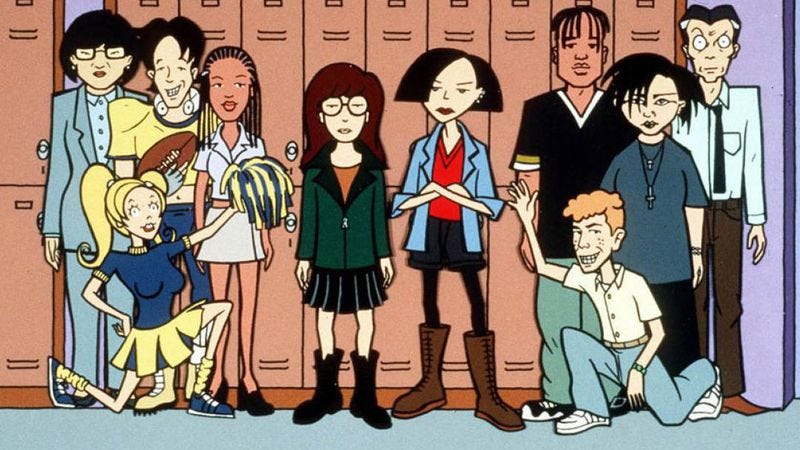
Some shows have one particular episode that you can watch again and again while still enjoying it. Great shows have multiple episodes like that. By that measure, “Daria” is greater than most. Even by the standards of late 90s animation, the show stands out in so many ways. It’s one of those rare shows that has aged remarkably well and feels more relevant now than when it originally aired.

I’ve already praised “Daria” for its unique approach to shedding a critical light on a world full of lies, half-truths, and fake news. I’ve even singled out a single episode for how the show handled a sensitive issue like mental health. These are issues that have only become more relevant since the show went off the air.

In that same spirit, I’d like to highlight another episode from the show that highlights another major issue. It also happens to be my favorite episode and the one I’ve probably re-watched the most. That episode is “Lucky Strike,” the sixth episode of the fifth season. On top of being one of the funniest episodes of the series, it also has some of the shows best moments while still tackling a major issue.

The issue, this time around, is education. It might not be the kind of a hot-button issue that makes for major headlines, but it’s still as relevant as ever, especially if we’re referring to the American education system. It’s not hard to find stories about just how bad it is, especially when compared to how other industrialized countries do it.

It was a big deal in the 90s and early 2000s, as well. Fittingly enough, this episode aired just a few months before the passage of the No Child Left Behind Act, which has been the cornerstone of the American education system. While reasonable people can debate how well it has or hasn’t worked, “Daria” has already made one of the most effective arguments about what constitutes good education.

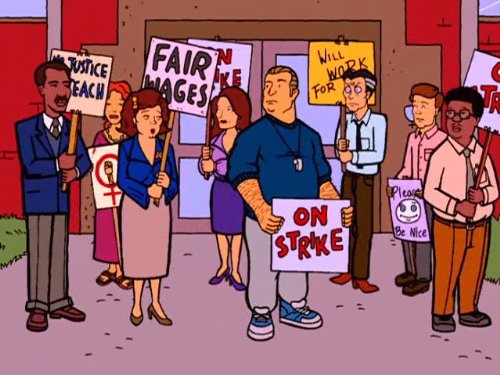
The premise of the episode begins with a teacher strike, an issue that has become distressingly common in recent years. Lawndale High’s notoriously uptight principal, Angela Li, short-changes a group of teachers who are underpaid, under-appreciated, and have to deal with uninterested idiots like Kevin Thompson and Brittney Taylor. By any measure, they have a very good reason to strike.

Never one to concede defeat or express genuine concern for student aptitude, she keeps the school running by hiring substitute teachers, some of which demonstrate limited qualifications at best. One even showed an overtly creepy attraction with one of the female students. This leads to Daria getting roped into teaching a class.

As it just so happens, the class she’s teaching is the same class that her sister and unapologetic popularity whore, Quinn, is in. Given how Quinn has spent almost the entire series denying she’s even related to Daria, it’s a great opportunity to make things awkward. Daria makes more than a few quips about it in her own wonderfully misanthropic way.

However, when it comes to actually teaching the class, Daria does something that sets herself apart from most substitutes. Even if she’s only doing it to mess with her sister, she takes her role seriously. She shows a genuine desire to teach, but she doesn’t use the same approach as the rest of her teachers. She utilizes her own unique way.

It helps that the class is an English class. Daria is a voracious reader. That is established in the first episodes of the series and belabored on multiple occasions. It also helps that the assignment is simple. The class is reading Romeo and Juliet, a story that almost every high school English class reads at some point. In terms of substitute teacher gigs, it’s as standard as it comes.

I remember reading this play in high school as well. I don’t remember it fondly, though. In class, we would just read through each act, do a few assignments in a textbook, and take a test at the end. Most of the time, the test involved multiple choice or short answer. There were only right and wrong answers. That was really all there was to it.

Daria’s approach is different. Daria doesn’t just teach from a textbook. She has the students read the play, but not so they can get the answers for an assignment. She takes the time to help them appreciate it. When one of her air-headed students doesn’t appreciate a particular part, she helps put it into a more relevant context. It doesn’t just work. It makes the story feel like something other than an assignment.

It’s an approach that anyone who loathes standardized tests can appreciate. I’ve made my disdain for standardized tests known before, but it’s not a personal peeve on my part. There is legitimate research that indicates that standardized testing is not a good way to educate kids.

Teaching kids to take a test is not the same as teaching. They’re learning how to memorize answers for a test. That’s not real learning. You can memorize all the answers for a particular test, but not know why those answers are correct. For someone like Daria Morgendorffer, who places a high value on thinking for yourself, this approach just doesn’t work for her.

For everyone else, the test is the only thing that matters. For the always-superficial Quinn, that’s her primary concern. She laments about how her sister might screw her over or worse, undermine her popularity. It’s such a burden that actually reading the play and knowing what it’s about barely registers.

Then, in one of Daria’s finest moments, she further deviates from the traditional educational model and gives her class a simple essay test. There’s no multiple choice or short answer. She just gives them a simple question.

What is Romeo and Juliet about?

That’s it. The only requirement is that they write at least 250 words and support their answer. For those who didn’t care enough to read the play, like Quinn’s equally-superficial posse, the Fashion Club, it’s the worst possible scenario. For Quinn, who actually read the play, it was easy.

In fact, it was because of that test that Quinn also had her finest hour. In one of the few moments of the show in which she’s actually likable, she defends Daria’s approach to teaching to the entire class. Then, in another pivotal moment for the series, she admits that Daria is her sister.

In addition to this critical moment of personal growth, Daria shows that she truly values people who think for themselves. Even when one of her students makes an objectively foolish comment about Romeo and Juliet, she still gives him a good grade because he actually tried to back it up. For her, that’s more valuable than simply knowing the difference between Paris and Tybalt.

Her approach is even appreciated by her students. Keep in mind, these are the same students who show little to no interest in class throughout the show. They are, like most teenagers, not that big on having to be at school for seven hours a day, learning things they don’t want to learn about. Daria understands this and tries to make the class less tedious. It’s something even an air-headed teenager can appreciate.

Most of them, anyway.

It’s also a valuable lesson that has real-world applications. Some places have even applied Daria’s approach, to some extent. Countries like Finland have a system that doesn’t rely so heavily on standardized tests. Not surprisingly, Finland’s education ranking is significantly better than the United States and by a significant margin. Daria would’ve actually fit in with that system.

It’s not just because that system eschews standardized tests. It actually emphasizes teaching a student how to think and reason. A test isn’t going to reveal that. On top of that, teachers are better-educated and well-compensated in places like Finland. They would not have had to strike like the teachers in this episode.

In some respects, Daria showed how much better someone could teach a class if they didn’t have to deal with the constraints of the current system. It even helped that the Principal Li was more focused on outwitting the teacher union than she was with teaching students. Without those constraints, Daria managed to teach a class in a way that her students appreciated.

Between that moment and the moment she shared with her sister, “Lucky Strike” accomplishes a great deal. Daria has a chance to shine and makes the most of it. On top of that, she demonstrates that it is possible to educate a room of disinterested teenagers in a way that’s genuinely effective.

There are many other moments in “Daria” where major complications, and the many absurdities they entail, get cut down by the show’s distinct brand of misanthropic humor. Daria rarely sets out to make big statements, be they about the educations system or our flawed understanding of mental health. However, she still finds a way to make her point and never crack a smile.

That’s why Daria is so lovable. It’s also why we need wisdom like hers more than ever.

Leave a comment

Filed under Current Events, Daria, human nature, psychology, television

Five Common Expectations Of Men That I Would Change

forholde-seg-til-sinte-barn

I love being a man. I’ll go on record as saying I appreciate masculinity and its many values. While masculinity in general has gotten a bad rap in recent years, albeit for absurd reasons, there are many things to enjoy and admire. At their best, good men can achieve great things and effect positive change in the world.

I’ll also go on record as saying that appreciating masculinity does not require that we undermine femininity. That really should go without saying, but in these sensitive times, it’s too easy for mixed messages to go viral. Saying men are good is not the same as saying women are bad or vice versa. That’s just common sense and I genuinely wish it were more common.

Now, that’s not to say being a man is all fun, games, and fart jokes. It does have its share of downsides and I’m not just referring to the biological part of it. Yes, getting kicked in the balls really hurts. Yes, sweating and smelling more often can be annoying. Those aspects of masculinity simply come with the package.

There are other, less concrete ways in which being a man can be frustrating. They have less to do with hormones and more to do with certain expectations. I’ve explored some of those expectations with respect to how men pursue love and the egregious double standards by which men are judged.

Others far smarter than me have discussed some of the bigger issues surrounding how men are treated in modern society, from attitudes about how disposable they are to how sexual assault against them is treated like a joke. Those are serious, legitimate issues that certainly warrant further discussion.

There are also smaller, less-obvious expectations of men that I are just as asinine and are worth changing. They’re necessarily stereotypes or cultural traditions. They’re just subtle norms that rarely get scrutinized. I think, in the name of pursuing greater balance and equality for everyone, these lesser-known aspects of being a man should be part of the discussion.

What follows are five subtle, but common expectations about men that I would like to change or at least reconsider. Some are just standard norms while others reflect certain attitudes and practices. I realize that some are harder to change than others, but they’re worth acknowledging. If anyone has something they’d like to add to this list, please let me know in the comments.


Expectation #1: Having To Wearing A Suit (Even In Blazing Heat)

I look good in a suit. Distinguished men who wear well-made suits are often seen as the pinnacle of male fashion. It’s why you’ll rarely see James Bond fight nameless henchmen in anything less fashionable than imported Armani. While I’m all for men looking good, I feel like men’s choices for high-quality fashion are really limited.

This is especially true in the summer when men are still required to wear suits while women can wear equally fashionable, but far more functional dresses and blouses. I enjoy wearing a suit as much as any fashion-minded man, but it’s downright unbearable when it’s hot. You don’t even have to be outside to feel it. Just being a building with bad air conditioner is enough.

I’m no fashion expert, but I feel like the emphasis on suits for men is over-emphasized. Women’s fashion is more diverse and offers greater flexibility for certain occasions. I acknowledge that some of that fashion is also uncomfortable and impractical. Why should anyone suffer that much for the sake of looking good?

I know there’s only so much anyone can do to change fashion trends, but a little innovation in the field of men’s formal attire would definitely help. At the very least, just having clothes that make summer heat more bearable for everyone will help everyone be more comfortable.


Expectation #2: Not Going To A Doctor (Even When We Should)

In my experience, men not going to a doctor is part stereotype and part attitude. There are more than a few taboos surrounding men’s collective aversion of doctors. Whether it’s due to male bravado or just the underlying assumption that men don’t need doctors as much as women, I think this expectation does more harm than good.

I say that as someone who has been guilty of avoiding doctor visits in the past. At one point, it caused me genuine pain because I refused to go to a doctor for what I thought was just allergies. It turned out I had a bad case of strep throat that I made considerably worse by not going sooner. I don’t care what your gender is. When some expectations lead to needless suffering, they’re worth re-evaluating.

With people, in general, becoming more health conscious, I think the time is right for men to embrace going to the doctor with the same care as women. It’ll won’t just help men become healthier, overall. It’ll help affirm that men’s suffering deserves to be treated with just as much urgency as that of women.


Expectation #3: Taking Less Time Off And Working More Overtime

This is one of those unwritten rules that really ought to be articulated more frequently. Whatever your professional field, be it construction, law, or flipping burgers, there will be times when overtime is necessary. In my experience, which I freely admit is anecdotal, I get the impression that men are expected to bear that burden first and without question.

That’s not to say that women avoid overtime. I know many women who put in longer hours at their jobs than their male co-workers. There’s just a general assumption that a man is going to do more of it and if he doesn’t, then there’s something wrong with him.

The same goes for taking time off. Most people don’t seem to bat an eye when a woman asks for a few days off. They won’t even ask why. If a man makes a similar request, it raises more curiosity and he’s expected to justify it. Again, this isn’t the case everywhere, but even without bringing maternity leave into the mix, men are just expected to work more and work longer.

Some of these expectations are more pronounced in the United States where paid parental leave is not mandated by law. In general, workers in the United States take less time off and work longer than other industrialized countries, which further compounds the issue. Even with regional differences, the attitude about men having to bear a greater work burden is worth reassessing.

After all, I think everyone would benefit by having more time off and not overworking themselves regularly. It’s better for everyone at every level of society.


Expectation #4: Always Knowing What A Lover Likes (Without Having To Ask)

It’s a common fantasy for horny women, but men are just as guilty of fueling it. A woman meets a handsome man. Sparks fly and things get intimate. As soon as the clothes come off, everything happens naturally and perfectly. The man knows just how to please her and he gives her the best lovemaking of her life.

It makes for a great sexy story. I’ve written more than a few of them. While it’s a great fantasy, it obscures a less sexy reality in which men aren’t mind-readers. It doesn’t matter how attractive or naturally endowed a man might be. He’s not going to know exactly how his partner wants to be pleased, by default. They have to actually communicate.

It sounds so logical, but fantasy often fuels those lofty expectations. I’ve known women who get downright frustrated when their boyfriend doesn’t do exactly what they want in bed to satisfy them, but admit they’ve never actually told them. They’ll often drop hints. They’ll even be playful about it. If a man asks for too many specifics, though, then something must be wrong with him.

As a fan of romance and intimacy, I’m very much in favor of lovers enjoying a satisfying sex life. However, the idea that a man should automatically know what satisfies their partner is just not fair. It’s true that some men really don’t know how women’s bodies work, but it’s also true that everyone is different in terms of what pleases them. Nobody is going to be satisfied if nobody communicates.

Again, it’s just common sense that misguided expectations do plenty to complicate. I can attest that most men want to satisfy their lovers. Anything that helps us do that is always welcome.


Expectation #5: Needing To Yell In Order To Be Serious

For certain people, yelling might as well a local dialect. Like Frank Murphy going off on a profanity-laced rant, it might as well be casual conversation. However, for the non-Frank Murphys of the world, there are certain expectations about people who yell and it feels like men have to start the race behind the curve.

I’ve seen in in personal and professional settings. A man will make an argument, but it’s not considered serious. If a woman made the same argument, it’s given more weight. There’s an assumption that if a woman brings it up, then it must be a major issue. It only reaches that same level for a man if he’s willing to yell his case.

To some extent, it’s a double standard. A woman yelling angrily is treated as an aberration while a man yelling with the same anger is just standard operating procedure. At the same time, a man who doesn’t yell or show some kind of escalated anger carries its own set of assumptions. Men have to be angry for it to be serious and if they’re not yelling, it must not be serious.

It often happens during debates about hot-button topics. It can even happen in a simple argument about pizza toppings. There are plenty of important issues that warrant yelling, but I believe expecting one gender to yell more than another only compounds those issues.

We live in a flawed world full of flawed people. Sometimes, we have to temper our expectations. In others, we try to hold one another to a higher standard. Men and women yell at one another enough for trivial reasons. We’re never going to stop yelling. At the very least, we should play by the same rules.

1 Comment

Filed under gender issues, human nature, men's issues, outrage culture, psychology, sex in society, sexuality

The Lying God Paradox: An Inherent Flaw Of All-Powerful Deities

michelangelo_creation_of_the_sun_moon_and_plants_01

In general, I believe that arguing with religious people is a waste of time. While I’ve made no secret of my distaste for organized religion, I prefer not to discuss it. As I’ve noted before, I have people in my family who are deeply religious. They are wonderful, loving people and they get genuine fulfillment from their religion.

There was even a time in my youth when I went out of my way to debate religion. At one point, I genuinely believed I could convince people of the absurdities of religious dogma. That was before I learned just how strong these beliefs can be and how far people will go to hold onto them.

I now accept that there’s no argument I can make or fact I can list that would ever convince someone that their religion is wrong. For the most part, people have to change their own minds. The most you can do is get them thinking about their dogma and let them make up their own mind.

For that reason, I still find it helpful to share my thoughts on certain aspects of religion. It’s not always possible to engage in meaningful discussions, but I think it’s worth pursuing. I find that the more you connect with people who don’t necessarily agree with you, the more you humanize them and vice versa.

That being said, I have a feeling that this latest thought is not going to win me many friends from the religious crowd. I know this because I’m about to make a statement about gods, all-powerful deities, and an inherent flaw that comes with incorporating them into any theology. That would encompass the three major Abrahamic faiths, as well as most other monotheistic religions.

This statement is a simple explanation for why there are so many different religions, each of which can have many denominations and sects. It also assumes there is an all-powerful deity with the ability to effect human affairs. While I know that’s a lofty assumption, especially for the non-believing crowd, it still exposes an important flaw in the theology and dogma behind religion. It can be summed up in two simple words.

God lied.

I know that idea may make many believers recoil in disgust, but I urge those people to take a moment to contemplate the implications. We’re not talking about a miracle or some divine act that breaks the laws of physics. This is something that ordinary people do every day without the need for immense power. If simple mortals like us can do it, then why can’t an all-powerful deity?

An all-powerful being can literally do anything. Lying would be one of the easiest, least strenuous ways to effect change, especially among a species like ours that is prone to believing lies. On top of that, when you take a step back and look at how religion has manifested over the centuries, a lying deity makes more sense than any other deity.

It explains why there has never been a single, unified religion.

It explains why there has never been a concept of divinity that every human society shares.

It explains why there are so many different religious texts that vary considerably in terms of theology, morality, and practices.

Simply put, God lied to everyone. Whether by prophecy, revelation, or divine inspiration, it was all a lie. It wouldn’t even have to be an elaborate lie. An all-powerful deity could just present the ideas to a few select people in history and let them do the rest. If the goal of the deity was to create a wide variety of religious dogma, then that’s working smart rather than hard.

The fact that it helps make sense of all the disagreements and discords within religion also creates a paradox, of sorts. Religion, by its nature, is built around belief. Peoples entire understanding of gods, spirits, and the supernatural are contingent on how ardently they believe in a particular theology. However, if that understanding is built on lies, then the entire religion is a product of an inherent untruth.

It’s a distressing thought, the notion that such a powerful being could or would willingly lie. That’s why most believers of any faith usually scoff at the notion. They’ll often claim their deity cannot lie because their deity is all-good on top of being all-powerful. Even if their holy text contains some objectively terrible atrocities that a deity committed or condoned, they’ll still make the claim that their deity is inherently good.

However, that only exchanges one paradox for another. If a deity is all-powerful, then that means the deity can do anything by definition, regardless of whether it’s good or evil. If a deity is all good, then that means it is incapable of doing anything evil. As such, it cannot be all-powerful. A deity that can only do good simply cannot be all-powerful, by default.

A lying deity resolves both paradoxes. The ability to lie, whether it’s for good or for evil, is perfectly within the capabilities of an all-powerful being. Even if that deity is all-good, then perhaps it can still lie, but only for good reasons, which do exist. That deity just can’t be all-powerful.

Even with these paradoxes, I doubt adherents of a particular faith would accept the possibility that their deity ever lied to them, their ancestors, or their fellow believers. They may accept that lesser or evil deities lie to others who don’t share their beliefs. However, those same people could make the same claim about them and there would be no difference, in terms of merit.

Non-believers will often cite the vast diversity of religious beliefs, both today and throughout history. They all can’t be right, but they all can be wrong. That’s perfectly in line with the law of non-contradiction.

That won’t stop believers from arguing passionately that they have the right answer to these profound questions. Even if they don’t have a way of verifying that belief, they’ll still believe in what they see is divine truth. However, the paradox of a lying god further complicates that idea.

Even if there is an all-powerful deity that has interacted in human affairs, how does anyone know whether said deity lied? Being all-powerful, the deity wouldn’t even need a reason. Lying would just be another exercise of that power. In that case, a lying deity is indistinguishable from a non-existent one. Logistically, there’s no way to verify either.

I know making this claim isn’t going to win many arguments with the devoutly religious. I don’t doubt that even suggesting that their god is liar has offended some people. I understand that. At the same time, I think it’s an idea worth scrutinizing. Just contemplating the possibility that a deity has lied adds what I believe is a necessary wrinkle to religious dogma.

Religion is such a powerful force in peoples’ lives. For better or for worse, it guides society, politics, and culture all over the world. People believe what they believe with great passion and piety. Nobody wants to entertain the notion that such a big part of their life is based on a lie. For something this powerful, though, I believe it’s worth thinking about.

2 Comments

Filed under human nature, philosophy, psychology, religion, Thought Experiment

When Is It Okay To Tell Someone To Grow Thicker Skin?

offended-7

When I was a kid, I played little league baseball. My father also volunteered, being a lover of baseball and an all-around awesome guy. It was fun. I enjoyed it, even though I wasn’t that good. However, I still thought I was better than the majority of the kids on my team. I’d been playing baseball with my dad in the backyard for years. I had developed those skills more than most.

Then, one year, my skills started to slip. In my defense, that was also around the time I developed asthma. I still thought I was good, but there’s only so much you can do with those skills when you’re coughing and wheezing half the time. As a result, my coach had me bat next to last and made me play outfield, which I took as a personal affront.

I know he wasn’t trying to insult me, but I took it very personally. Being a kid, I gave him and everyone around me a bad attitude. When I told my father about this, I thought he would be on my side. Instead, he wasn’t having it. My dad was not the kind of guy who rewarded bad attitudes. No matter how much I told him the coach’s decision upset me, he had the same response.

“Can’t hack it? Get your jacket.”

That became a mantra of his. At the time, I hated it. As I got older, I came to appreciate it. On the surface, it may seem harsh, especially when it’s directed a kid in the context of a little league game. However, it conveys and important lesson while indirectly raising an important question.

When is it okay to tell someone they need to grow thicker skin?

I believe this question is more important now than it ever was when I was a kid playing little league baseball. With the rise of outrage culture and numerous controversies on issues that rarely warrant controversy, I feel as though my father’s wise advice is more relevant than ever.

That said, answering this question isn’t simple. I know it’s tempting for anyone annoyed by political correctness to just brush off outrage as coming from thin-skinned, over-coddled snowflakes. That is, after all, a popular perception among the most vocal critics of outrage culture. However, that recourse ignores some important caveats.

It’s one thing to tell an over-privileged college student majoring in underwater basket weaving that they need to grow thicker skin. It’s quite another to say the same thing to a wounded veteran or a rape survivor. Make no mistake. Those over-privileged professional whiners exist and they deserve both criticism and scorn. They’re still the extreme cases. Most people operate in that vast area between extremes.

To illustrate, consider the following example. You’re on a stage telling a story in front of a large group of people. The story isn’t political, nor is it an attempt to convince someone of a particular worldview. The story contains some difficult themes, including references to graphic violence, sexual abuse, and racism. It doesn’t have to be based on real events. Those themes just have to be sufficiently graphic.

After you’re done telling the story, a small segment of the audience comes up to you and tells you they found your story to be deeply offensive. They claim that the simple act of you telling a story caused them real psychological harm. How do you respond to them?

For some people, their first inclination will be to apologize to them and everyone else who felt offended. This is often the first recourse for any celebrity who tends to make a public gaff, of sorts. It’s an easy option and, at the very least, will mitigate some of the outrage, but it has the added effect of derailing serious discussions.

For others, the first inclination will be to brush off those who are offended and tell them to grow thicker skin. There are certain individuals who make this their primary response. They tend to be less concerned about hurting peoples’ feelings and often criticize those who are easily offended. While that may be warranted in some instances, it can often come off as callous. In some cases, it devolves into outright trolling.

Whatever the recourse, both responses have the same flaw. They ignore the actual substance behind those who took offense to the story. It generalizes the nature of the harm they claim to have endured. It essentially lumps the offense that some thin-skinned college kid feels with that of someone who has legitimate issues.

Without those insights, any apology or lack of apology will make light of any genuine offense someone endures. Those details are necessary in determining who needs to grow thicker skin and who deserves a sincere apology. In essence, the right response is determined on a case-by-case basis and that can get both tricky and cumbersome.

Say one of the audience members took offense because they felt the story glorified the current and historical oppression of women by way of patriarchal traditions. Someone harmed by anything that vague definitely needs to grow thicker skin.

Say one of the audience members took offense because they’re struggling with a legitimate mental illness and parts of the story caused them significant distress that required medical intervention. In that case, telling them to grow thicker skin isn’t just insensitive. It’s downright malicious. People with legitimate medical issues can only do so much to manage their reactions.

It can get a lot more complicated. One of the audience members may have endured a real trauma in their lives and while they’re not on medications, they’re still struggling and hearing the story opened some unhealed wounds. In this instance, an apology is warranted, but only in the context of acknowledging someone’s real-world issues. You can’t tell them to grow thicker skin, but you can encourage them to heal.

Maybe there’s another audience member who just says the story was patently offensive and is too heavy on outdated stereotypes. They’ll angrily rant at how certain elements denigrated their heritage, their culture, and their race. It’s not just that the story was offensive. They believe anyone who tells it is as bad as those who made it. This person may be sincere, but they could also benefit from growing thicker skin.

There are any number of ways someone can claim offense. Some are legitimate, but most are contrived. As a general rule, any offense that requires someone to be offended on behalf of other people is questionable at best and insincere at worst. It tends to happen whenever people try to make broad claims about cultural appropriation or stereotypes.

Even if certain generalizations about cultures are legitimate and certain stereotypes have a basis in fact, the offense is still taken personally. The very fact that it exists is an affront. That’s usually another sign that thicker skin is at least part of the solution. It’s one thing to abhor racist acts. It’s quite another to abhor that it exists at all.

Everyone is wired differently. Some are just more easily-offended than others. That’s an inescapable fact of life in world that’s diverse and has the technology to over-react to anything that anyone may say. Even with those caveats, it certainly helps to discern those who suffer real harm from certain rhetoric and those who really need to grow thicker skin.

There are some criteria that can help us make that determination. It may not help in every case, but here are just a few.

If someone is offended by the fact that something exists, then they need to grow thicker skin.

If someone is offended by mere opinions of other people, then they need to grow thicker skin.

If someone is offended on behalf of an entire group, then they need to grow thicker skin.

If someone is offended because other people can’t know the specifics of what offends them without reading their mind, then they need to grow thicker skin.

If someone is offended by something that was not intended to offend or harm, then they need to grow thicker skin.

Again, these are just general guidelines and there are certainly exceptions to many. However, if we apply these standards to my story as an upset little leaguer who took offense to his coach’s decisions, then my father’s reaction would be appropriate. In that situation, someone is right to tell me that I should grow thicker skin. Moreover, I became stronger and more mature as a result.

1 Comment

Filed under human nature, outrage culture, political correctness, psychology

Why Heaven Is As Unjust As Hell

2016403_univ_lsr_xl

There are many aspects of religion that warrant criticism. I’ve certainly levied a few, from how it intensifies inequality to how it fosters a form of morality akin to the mafia. I always try to preface those criticism by acknowledging that most religious people are decent, honorable human beings. I also have close relatives who are religious and that doesn’t detract from their character whatsoever.

Even with that in mind, I believe that religion deserves a special kind of scrutiny. It’s a huge influence on people, society, and also government. Something that influential deserves no immunity, especially when certain tenants have serious implications. I’ve pointed out how the concept of Hell is rendered moot by boredom and undermines pro-life ideology. Now, I’m going to give similar scrutiny to the concept of Heaven.

While the problem of Hell and eternal punishment for finite transgressions have been discussed by people far smarter than I’ll ever be, there are far less criticisms levied against Heaven. That makes sense. Heaven, whatever form it takes, is one of those ideas that’s pleasant to contemplate. Even if you’re an atheist, imaging a blissful afterlife won’t inspire dread or outrage.

However, I would argue that the concept of Heaven is as immoral and unjust as Hell. While I don’t deny infinite torture is more deplorable than infinite bliss, I submit that the implications are just as damning, if that’s not too loaded a term.

Most people know the basics of Heaven. Their particular religion, sect, or denomination might not call it that, but the premise is simple. Those who are righteous, moral, and pious to a particular standard, as determined by a deity or doctrine, are rewarded after death with passage to an eternal paradise.

What makes this place paradise is often vague. Some see it as a place without suffering or sin. Others see it as a place of endless indulgence. Whereas Hell is the ultimate punishment, Heaven is the ultimate reward. Whatever form that reward takes, the attributes that make it unjust are the same.

To illustrate, consider two individuals who lived good lives. One is just a typical, every-day adherent. Most of us know someone like them. They’re kind, decent, and upstanding. They live their lives ethically and responsibly. They go to whatever church, temple, or mosque their religion requires. They play by the rules and do all the right things, but that’s it. They don’t have much impact beyond their community.

Then, consider an individual like Dr. Norman Borlaug. I’ve mentioned him before, but the good this man did for the world is worth belaboring. This isn’t just a man who lived a good, upstanding life. This is a man who saved millions of lives because of the work he did. His contributions to the green revolution are a big reason why countless people don’t go hungry at night.

The face of a real life hero.

If ever there was an individual who deserved a reward in the afterlife, it’s Norman Borlaug. Even those of differing faiths wouldn’t argue that a man like him deserves to go to a place like Heaven. That’s where the chief problem of Heaven comes in and, much like Hell, it has to do with its eternal nature.

Whenever eternity enters the equation, absurdities usually follow. In the case of Heaven, the implication is that a man like Norman Borlaug gets the same reward as the other person who didn’t save a billion lives and win a Nobel Prize. There’s nothing extra for someone who really goes the extra mile for humanity. With eternity, that’s just not possible.

It’s not unlike a group project where one person does most of the work, but everyone still gets the same grade. Most reasonable people would call that unfair. Human beings, like other animals, have an innate sense of fairness. When a reward or punishment is exceedingly disproportionate, it tends to cause distress, guilt, and resentment.

With Heaven, however, people make an exception. There’s no uneasiness or distress about someone like Norman Borlaug getting the same reward as some random person who just went to church every Sunday. Some of that might be due to an inability to process concepts like eternity, but I think the problem runs deeper than that.

On top of the reward being disproportionate, there’s also the issue of the standards for determining those who get it. For those who adhere to a dogmatic faith, including those of the Abrahamic traditions, it doesn’t matter how many lives men like Norman Borlaug save. It also doesn’t matter how little the typical adherent does. What matters, ultimately, is whether they believe the tenants of the faith.

It’s an issue that also comes up when discussing problem of Hell. Within the core of these theologies, the works they do in life don’t matter as much as what they believe. If they die believing the right deities for the right reason, then that’s enough. They get to go to Heaven. If they’re wrong, yet still do all sorts of objective good, then they still go to Hell to face eternal torment.

That’s not just unfair. That’s infinitely unjust. It’s infinitely immoral. It completely devalues the action, intentions, and sincerity of those doing their best to live their lives. If the only thing that matters in the end is what deity and doctrine they believe, then where’s the incentive to make life worth living for those alive today and those yet to be born?

It still gets worse than that. What about those who lived in a different time and place in which they only knew the particular theology of their community? There are still places in the world that violently resist any intrusion or visitation from the outside world. These people love their families and friends as much as anyone. Are they still denied eternal bliss and doomed to eternal suffering?

If even one person who lived a good, honorable life is condemned to infinite suffering because of what they believe, then that, by default, is infinitely unjust. By the same token, one person who gains infinite bliss just because of what they believe and nothing more, then that is every bit as unjust.

Heaven may be a pleasant, comforting thought for most people. It offers a tantalizing promise for adherents and their loved ones that death is not the end. There’s a better existence waiting for everyone, but only if they believe a certain set of tenants in accord with a specific deity. Having dealt with the death of close loved ones, I understand why that’s so appealing.

At the same time, it’s difficult to get around the problems that arise when infinite concepts are applied to finite lives. Regardless of what deity you believe, the very concept of eternal rewards alongside eternal punishments ensure that divine justice can only ever be infinitely unjust.

2 Comments

Filed under philosophy, psychology, religion

Why “The Boys” Is The Ultimate Superhero Satire

amazon-prime-the-boys-tv-show

In the history of superhero media, 2019 will likely go down as one of the greatest years of all time. This year included three superhero movies that grossed over a billion dollars, including the first female-led superhero movie to gross a billion dollars and one that became the highest grossing movie of all time. Whatever the future holds for the genre, there’s no doubt that 2019 will go down as a banner year.

Regardless of what the James Camerons of the world think, superheroes have made their mark on the pop culture landscape. They’ll likely keep making their mark for years to come, especially after Marvel’s latest announcements for the future of the Marvel Cinematic Universe. However, in the same year that superhero media achieved some of its greatest success, something comes along to utterly deconstruct it.

Whereas a movie like “Avengers Endgame” showed us just how great superheroes can be, a TV show like “The Boys” shows us just how depraved they can be. Being a comic book fan long before this golden age of superheroes, I already knew that. I followed the original comics when they came out in the mid-2000s. Now, thanks to a new TV show, everyone can experience the story that gave superheroes the ultimate gut punch.

Literally.

I’m not going to lie. I was genuinely surprised when I heard Amazon Prime was going to make this show. This is not the kind of story that you can turn into a Disney-approved, PG-13 spectacle for mass consumption. In anything, “The Boys” goes out of its way to explore the kinds of things that would make the censors at Disney and the MPAA throw up.

This is a story that does not hide the brutal violence, intense trauma, and unchecked hedonism that often seems unavoidable in the context of the narrative. Writer and co-creator, Garth Ennis, has a long history of embracing those darker elements of the genre. He did it with “Preacher” and his run on “The Punisher.” With “The Boys,” he took it to another level and beyond.

The world of “The Boys” is not unlike the early days of the MCU. The over-arching story tries to incorporate the fanciful ideals of superheroes into a real-world context. It doesn’t use fictional cities like Metropolis or Gotham. It doesn’t ignore how superheroes would affect society, government, or the economy. The many flaws of the real world are just as relevant in this world.

As are the sentiments about reality, in general.

From here, “The Boys” doesn’t necessarily portray a worst-case scenario for superheroes, but it comes pretty damn close. The “heroes” of this world are the Seven. They include the likes of Homelander, Black Noir, Queen Maeve, A-Train, and the Deep. They’re basically derivations of the Justice League, but in terms of heroic ideals, these characters have none of that.

The Seven conduct themselves as superheroes for the masses. They’re admired, respected, and idolized by many, just like their counterparts in the MCU. However, that heroic zeal is both a lie and a scam. Their entire image is built around a marketing ploy, courtesy of Vought American Consolidated, a defense contractor who incorporates superheroes into their arsenal.

Trust me. It’s even more corrupt than it sounds.

With that corruption comes greed, treachery, violence, and depravity the likes of which Batman would find too grim. These heroes basically get to smile for the cameras, enjoy the benefits of celebrity, and still conduct themselves as self-serving narcissist behind the scene. They can do whatever they want, get away with it, and still be beloved. It’s a recipe for all sorts of disasters.

On top of that, some of these characters are outright psychopaths. Homelander is a mentally unstable sadist who commits many vile acts throughout the comics, including rape. The TV show captures only a fraction of his depravity, but it’s more than enough to highlight the underlying message of “The Boys” and why it’s such a powerful story.

In essence, “The Boys” is the ultimate satire of the superhero genre. It’s entire narrative is built around exploring, exposing, and denigrating the ideals on which all superhero media is built upon. It’s not done for humor or comedic effect, either. The theme of “The Boys” is dead serious in showing how a world with superheroes becomes so depraved.

This is where the Boys themselves come in. They include Billy Butcher, Frenchie, Mother’s Milk, the Female, and Hughie. They both witness and directly experience the breadth of the Seven’s corruption. They take it upon themselves to expose these heroes for who they are.

However, their motivations aren’t entirely heroic. These characters often come off every bit as damaged, petty, and vindictive as the heroes they actively oppose. They don’t stick to high ideals, either. The Boys are brutal, albeit in a more focused and pragmatic sense.

It gets ugly.

It gets violent.

It gets downright traumatic.

It also gets the damn point across.

If “The Boys” has a unifying message that unites both the comics and the TV shows, it’s that superheroes can only ever make things worse in the long run. That ideal of a perfectly altruistic savior in the mold of Superman just doesn’t exist and wanting it to exist can be downright dangerous.

The people behind the scenes with the Seven feed into that. The government, big corporations, and the media glorify these heroes because the people latch onto them. They want these heroes to be the idealized figures that they read about in comics and see in blockbuster movies. They buy into it and both the Seven and the organizations that manage them keep selling it.

It’s a self-reinforcing cycle that only amplifies the corruption. The Boys dare to battle that corruption, but with the understanding they’re fighting a losing battle. They can attack, expose, and frustrate these superpowered sociopaths all they want. They’re never going to destroy those rosy ideals on which the entire genre is build upon. At most, they can just make them pay a price for their egregious misdeeds.

It’s hardly proportional to the many atrocities the Seven commits, but that’s kind of the point. These are superpowered beings who can only be hurt so much, even by other superheroes. The Boys can never punish them in a way that feels equitable, compared to the injustices the Seven inflict. That doesn’t stop them from making an effort and making it better than most would expect.

The right tool for the right job.

How they go about this and how the Seven reacts is a long, tortured story that has many shocking moments that are not for kids or the faint of heart. The trailer for the TV show offers a hint of that, but there are scenes from the comics that even the lenient censors of Amazon Prime wouldn’t dare put on film. I won’t spoil the bloody details, but if you have the stomach, I highly recommend you check out the comics.

More than anything else, the “The Boys” is a brutal reminder that the ideals behind superheroes are probably the most fanciful part of the genre. In a real world full of corruption and collateral damage, superheroes can be far more dangerous than the threats they confront. It’s almost impossible to be a superhero without becoming a self-absorbed asshole to some extent.

Even the Boys, who actively battle the superheroes that fuel this fantasy, never come off as entirely altruistic. They’re simply more respectable and less narcissistic. In that dynamic, nobody can ever come off as truly heroic. There’s just too much room for corruption and ego.

While “The Boys” wasn’t the first comic to satirize superheroes, it’s definitely the most complete. “Watchmen” may get more praise and respect, but even in that story, the heroes still try to act like heroes in their own perverse way. What characters like Ozymandias and Rorschach do is framed as something heroic, even if it gets violent and brutal. There’s none of that with “The Boys.”

In an ideal world, even assholes will find a way to be heroic under the right circumstances. Tony Stark proved that in “Avengers Endgame.” However, in the world of “The Boys,” there’s no such thing as right circumstances. If anything, the entire superhero genre has it ass-backwards. Heroes will inevitably find a way to become assholes and if nobody stops them, then they’ll just push their assholery to new heights.

The Boys” is a unique comic in its own right, but the TV adaptation is coming along at just the right time. I would even argue that this kind of satire is necessary in the current cultural landscape. We need something like this to remind us that the ideals of superheroes are still ideals. Like most things in the real world, ideals tend to crumble when subjected to scrutiny.

At a time when people are consuming the ideals of superheroes at an unprecedented level, it’s important to maintain a sense of perspective about the genre. A satire like “The Boys” may never have the same impact as anything from the MCU, but it’s still a story worth telling, if only to remind us that great power can also breed greater assholes.

1 Comment

Filed under political correctness, psychology, superhero comics, television

How I Lost And Regained My Self-Esteem

depressed-guy

Self-esteem is one of those concepts that has gained a mixed reputation in recent years. To some extent, that reputation is well-earned. We’ve all dealt with people with an inflated ego. Being around them for extended periods can range from frustrating to intolerable. Some have even called the glut of self-esteem and its narcissistic byproducts an epidemic.

Personally, I think that claim is overly hyperbolic. However, I understand the popular sentiment. I was a kid around the time the cracks in the the self-esteem movement really started to show. I sat through many of those classes that espoused the value of self-esteem. I saw all those PSA’s after popular kids shows encouraging kids to believe in themselves no matter what. Even by kid standards, I thought they were cheesy.

At the same time, I was dealing with a lot of personal issues and my self-esteem was often a big part of those issues. I went through periods of my young life when I thought I could do anything. I went through other periods where I thought was a worthless waste of flesh. Going through the rigors of puberty, enduring high school, and dealing with some less-than-ideal health situations certainly didn’t help.

It was worse than this.

In short, I had a lot of self-esteem as a kid. I really believed in myself and I fought hard to affirm that belief. Then, as I became a teenager, I lost my self-esteem. I became a miserable, self-loathing hunk of living misery. I don’t know how I could’ve felt worse about myself. Then, as an adult, I got my self-esteem back and I haven’t let go over it since.

It was a roller coaster ride, to say the least. It wasn’t always a smooth ride and I found many ways to make it harder for myself. The older I get, the more I realize how misguided I was and how much of it was my own doing. I like to think I’ve learned form it. I also think the experience is worth sharing. Hopefully, others can relate. Perhaps, those who struggled like I did can glean lessons I wish I’d learned earlier.

Before I get into the details of this story, I want to make one thing clear. I don’t blame the self-esteem movement that has become so popular to bash.

I don’t blame the schools, either. I grew up in an area where the schools were great, for the most part. By almost any measure, I was lucky. I got an education that many kids in America would envy.

I sure as hell won’t blame my parents and family. In fact, they’re the heroes of this story. They put up with me at times when I was downright insufferable. My mother, my father, and my siblings did all the right things for a kid like me. I’m lucky they were there because things could’ve turned out way worse for me and I have nobody to blame but myself.

To understand where my self-esteem issues began, it’s necessary to understand the kind of kid I was growing up. For the most part, I was pretty normal. However, if there was one trait that set me apart from the other kids, it was how uptight I was.

By that, I don’t just mean I was stressed out by tests and homework. I was the kind of kid who would get anxious and upset if a school bus was late. I always had to be on time. I always had to get things done early. I didn’t procrastinate on anything. That may sound like a useful trait, but the way I went about it made it a liability.

Between being so uptight with timing, I was just as uptight when it came to grades. Anything less than a perfect score was disappointing. I had this mentality where there were only A’s and F’s and nothing in between. Again, this is not something my parents, teachers, or counselors imposed on me. This is something I did to myself.

I held myself to a high standard. I bought into the idea that just believing in yourself was enough to achieve anything. I’d read it in superhero comics. I’d seen it in cartoons. I genuinely believed I was smart and capable at a level that grossly exceeded my actual abilities. Call it inflated self-esteem, if you want. The end result was the same. When you set impossible standards, you set yourself up for inevitable failure.

My parents warned me, as did my siblings and friends. Everybody warned me that I was being too hard on myself. In hindsight, I should’ve listened. I really wish I had because it set me up for some very difficult teen years.

On top of that, this is around the same time I developed a terrible acne problem that plagued me into my 20s. I also developed asthma that made basic exercise or just a typical gym class feel like prolonged torture so on top of having an acne-ridden face, I was also out of shape. It made me extremely self-conscious of my looks and when you’re ready uptight, that’s a bad combination.

Altogether, this hit my self-esteem the same way a flame-thrower hit a wounded fly. I didn’t just lose my confidence. For a while, my sense of self-worth was hanging by the thinnest of threads. It got to a point where I just started randomly insulting myself. It wasn’t a funny kind of self-deprecation, either. My parents and siblings got downright angry with me whenever I did it, but that rarely dissuaded me.

It got bad. For a while, I had a hard time believing it would get much better. I honestly thought my self-esteem was gone and I was destined to be a walking ball of misery. Then, something remarkable happened.

It wasn’t some incredible epiphany, either. As soon as I graduated high school and entered the adult world, I found a new kind of confidence. It didn’t happen overnight, but there was definitely a transition. It started in college, but it only blossomed as I got older and gained more life experience.

I think the catalyst for that change came when I got my first taste of independence. In college, my life wasn’t so micromanaged. I could actually set my own schedule, plan my own day, and make my own choices. Granted, it wasn’t total freedom. I was going to college on my parents’ dollar. However, compared to high school, it was like getting paroled.

In this environment, I learned something critical that I hadn’t learned in high school or from cheesy after school specials. To have self-esteem, it’s not enough to just believe in yourself. You have to work for it. You have to earn that feeling of accomplishment. It’s not easy, but it’s worth doing and by achieving it, you’re going to feel better about yourself, by default.

It also helped that I became much less uptight in college. To some extent, I do blame some of the messages I got in high school. I had been under the impression that if I didn’t get perfect grades in high school, then I would never go to college and I would die poor and lonely. Even if that impression was misguided, it was such a relief to find out my failures in high school did not define me.

That Spanish test I failed in my sophomore year did not ruin my future.

That assignment I botched in my physics class during my Junior year did not decide my fate.

That may not sound like a big deal to most people, but for someone who was as uptight as me, it was eye-opening. It caused me to re-evaluate my approach to personal standards, real achievement, and how I graded myself.

Suddenly, my personal world didn’t seem so dire. There was some room for error. I could make mistakes, learn from them, and be better for it. To my younger self, that concept might as well have been an alien language. I didn’t care about the process. I cared only for the result. I had to learn that appreciating the process helped me work towards those results.

This didn’t just extend to college. It also helped with my personal life and my health. In college, I got my first girlfriend. I actually developed a social life where I made friends, went to parties, and hung out with people. I was still socially awkward. To this day, I’m still behind the curve in that respect. However, I’m light-years ahead of where I was in my youth.

Things really picked up when I started taking care of myself. Instead of just laying around, feeling sorry for myself, I started exercising. I got serious about treating my acne. I sank most of my savings into fixing my eyesight so that I didn’t have to wear thick glasses anymore. In short, I invested in myself. Like any good investment, it didn’t pay off immediately. Over time, though, the results compounded.

Bit by bit, my self-esteem returned. I had to work for it. Whether it was developing better study skills or getting into shape, I actually had to get up in the morning and make a concerted effort. I know it sounds like common sense, but to my younger self, it seemed so hopeless. If I couldn’t achieve everything all at once, then why bother? It was a terrible mindset and one that held me back.

Today, I have the confidence and self-esteem to share this story. I can even look back on those difficult times and laugh at how I acted. Some close family members will even laugh with me, even though I did not make things easy for them. They definitely did their part. They helped keep me from falling too deep into despair. It just took me a while to do my part, as well.

It would be easy for me to make excuses for my struggles. I could’ve blamed the self-esteem movement, misguided teachers, and after school specials that aired in between my favorite cartoon. In the end, they would still be empty. I still made the choices that made me miserable.

I set myself for disappointment and frustration. Nobody was going to come along and fix everything for me. Nothing was going to resolve itself, just by hoping for the best. In the end, my self-esteem was like any other skill or challenge. I had to apply myself. I had to work hard to earn the results I sought. They were hard lessons to learn, but they were worth learning.

I just wished I’d learned them sooner.

5 Comments

Filed under human nature, Jack Fisher's Insights, psychology