For football fans, the NFL Draft is the annual celebration of hope for the teams that earned a high draft pick. By that, I mean they were terrible the previous year and are badly in need of some fresh talent. The NFL Draft gives them that opportunity. Sometimes, one pick can be the difference between another losing season and a slew of championship. Just ask the New England Patriots.
This year, however, the NFL Draft is set to have a different impact. Usually, the draft is mostly just a glorified news feed, detailing the picks for various teams. Only major football fans tune in or pay attention. That’s often because this is usually the time baseball, basketball, and hockey are playing relevant games.
These are not usual times, unfortunately. Thanks to a global pandemic, we are in the midst of the greatest dearth of sports in decades.
Despite this crisis, the NFL has made clear they are going forward with the draft. Granted, it won’t be the same massive party that they had last year in Nashville. It’s going to happen primarily in a TV studio with many players streaming their reaction from various locations. It’s not going to have much fanfare, but it’s the first major sporting event we’ve had in over a month.
As a lifelong football fan, I’ve always been fond of the draft. This year, I’m just happy to see anything sports related that isn’t a replay of some old game. The NFL Draft is a celebrated event because it brings hope to millions of fans. Hope is something we need a lot more of right now. These Sexy Sunday Thoughts are my way of supplementing it. Enjoy!
“Porn stars are business savvy in that they’ve monetized their genitals.”
“The difference between being adventures and kinky in the bedroom is in which body parts you’re willing to strain.”
“Sleeping with an asshole is an indirect form of masochism.”
“Building love on a foundation of lies is like having sex on a bed of broken glass.”
“Women should be inherently skeptical of a man who can’t hide his porn stash very well.”
“Someone who works hard and plays hard knows how to make love just hard enough.”
“Loneliness is your genitals reminding you that you’re not getting laid.”
I miss sports. I cannot overstate that enough. As much as I love the NFL Draft, I wish there was more to follow at the moment. Since that’s not likely to change anytime soon, I’ll be sure to watch this years draft with a bit more scrutiny than I have before. It’s not much, but during a crisis, I’ll gladly take it.
A while back, I highlighted a recent story about a man who became the first recipient of a “bionic penis.” If I’m being honest, I had a lot of fun writing about that topic. Being a man among many who know the issues, taboos, and anxieties men have about their penises, that story got me contemplating a bold and sexy future.
Since then, other major issues have stolen the medical spotlight, but the sexy prospects of bionic genitals have not disappeared completely. In fact, late 2019 brought us some revealing scientific insights that were published in a peer reviewed journal. I suspect that, were it not for a global pandemic, this would be getting a lot more attention. As a study, it might very well be the sexiest conclusion in the history of science.
Simply put, the study showed that men who received penile implants satisfied their partners better than men with ordinary, non-bionic penises. In terms of raw numbers, it’s not a trivial difference either. The women whose lovers packed a bionic member achieved orgasm at a higher rate than those without one. Given the continued existence of the orgasm gap, this is a big deal with respect to our collective sex lives.
If you want more detail, you can read the abstract of the study below. You can also get a copy of the full paper, but since it was published in late 2019, it’s behind a paywall. Even so, the abstract itself is fairly revealing.
Abstract: Post penile implant sexual satisfaction in elderly patients is a multi-factorial issue. In the present study, we investigated the possible implication of age on satisfaction after malleable penile implant surgery in elderly patients. We compared post‐operative sexual satisfaction in the elderly with that of a younger age group (reference group). Patients were classified into three groups according to their ages (group I <45, group II between 45 and 65, and group III older than 65 years old). Modified Erectile Dysfunction Inventory of Treatment Satisfaction (EDITS) questionnaire was used at 3, 6 and 12 months after implant surgery. EDITS scores showed statistically significant high satisfaction rates in all age groups. EDITS scores were higher in the early post‐operative period in younger groups compared to elderly patients. However, the difference between groups was insignificant at 12 months post‐operatively (p value = .06). Our results show that elderly patients have a high post‐operative satisfaction rate close to that of younger age groups, and they are suitable candidates for penile implant surgery with good and realistic post‐operative sexual satisfaction expectations.
Beyond the science and the data, let’s take a moment to appreciate the bigger picture. Penile implants have been around for years, but their capabilities and effectiveness had a lot of room for improvement. The implants being developed now may not be a giant leap, but they are a major step forward.
At a time when lab grown body parts, including vaginas, are advancing and biotechnology is becoming big business, this is one of those technologies that’s sure to get more attention than others. Curing diseases and easing suffering is great, but an advance that helps us have better sex and please our lovers is going to make more noise, literally and figuratively.
As any man, and many unsatisfied women, will tell you, the function of a natural penis has its limits. There’s a reason why treating sexual dysfunction is such a lucrative business. Unlike women, men have to deal with long refractory periods in between orgasms. Even when the desire is there, our bodies don’t always cooperate. It can be frustrating and that can ruin any sexy moment.
A bionic penis isn’t subject to those same limits. In theory, a well-designed mechanical member can operate beyond the capabilities of even a seasoned male porn star. The ones used in the study operate by pressing a button that operates an internal pump. It’s basically an erection on-demand, which might as well be a super power for some men and quite a few women.
It’s a good start, but it’s not going to stop there. If nothing else, this study shows that current technology can already meet or exceed the satisfaction achieved with a naturally functioning penis. That’s more then enough reason to keep refining this technology, making it cheaper and more accessible to men everywhere.
It still has a long way to go. Right now, these implants are basically a last resort for men for whom all other treatments have failed. With enough refinement, however, it could become to men what breast implants are to women. When coupled with other advances in biotechnology, they may get to a point where they’re not just marginally better than natural penises. They’re better by an entire order of magnitude.
What that means for men, their lovers, and our collective sex lives is hard to discern. I’ve tried to do my part by writing sexy short stories on such matters, but only time, research, and refinement will reveal how bionic penises will impact our future. This study is just the first of its kind. Given the breadth of our collective libido, I doubt it’ll be the last.
These past couple months have taught us a lot about ourselves. Granted, these are things we never wanted to learn, but it’s hard to avoid at this point. We’re in the middle of a global pandemic. It doesn’t matter who you are, where you’re from, what party you belong to, or what your background is. A virulent disease doesn’t give a damn. It infects everyone it can.
This disease has already ruined a lot so far. From sports to movie releases to comic book releases, this pandemic has disrupted everything, large and small. There were some major family events that occurred recently and I couldn’t be part of it because of this damn disease. It breaks my heart and pisses me off, but there’s nothing anyone can do about it.
Well, after nearly two months of isolation, I think I’m ready to declare that this pandemic has ruined something else. For me, at least, this disease has completely ruined Fridays.
I doubt I’m alone in this sentiment. I know plenty of people who will reach out to me on a Friday morning and say “Happy Friday!” in a semi-joking manner. I always appreciate the sentiment. It’s a nice reminder that the weekend is almost here and there’s plenty of fun to be had.
Now, what’s the point of looking forward to the weekend?
Why even get excited on Fridays anymore?
Those aren’t rhetorical questions. I’m not being sarcastic either. Seriously, what makes Fridays special anymore? School has already been canceled for many students. Social gatherings are effectively banned. There are no sports to watch. Movie theaters, bars, and restaurants are all closed. You can’t even throw a party in some states without breaking stay at home orders.
At this point, Fridays are nothing more than just another day that we have to endure in this pandemic-fueled shit storm. There’s nothing to look forward to. There’s no reason to get excited about anything. I usually try to avoid depressing rants, but this has been bugging me for a while. I just wanted to share that sentiment. Like I said, I doubt I’m the only one who feels that way.
With that in mind, let’s all stop saying “Happy Friday!” or “TGIF!” until this shit storm is over. At this point, it’s just a painful reminder of how bad this pandemic has gotten and we have enough of that.
How much agency do we actually have in our day-to-day lives?
How much freedom do we actually enjoy on a pragmatic basis?
I ask these questions as part of another thought experiment, albeit one that requires more introspection than the othersI’ve posed. I think it’s relevant at a time when we’re dealing with a global pandemic that has severely restricted everyone’s agency to significant degrees. It’s also relevant because it’s something we rarely scrutinize.
There’s another reason I’m discussing matters of agency. It has less to do with current events and more to do with frequent criticisms of certain stories. As an aspiring writer and an avid consumer, especially of superhero media, the agency of certain characters is an integral part of that process. You can’t tell a meaningful story without characters exercising some level of agency.
What has become a major issue in recent years is the source, degree, and structure surrounding that agency. I’ve noticed critics and consumers alike scrutinizing who makes the major choices in a story, as well as what role they play, how they look, and why they’re doing what they do. While these are relevant details, that scrutiny can be misguided.
I see it whenever a female character is perceived as having no agency or having too much.
I see it whenever a male character is perceived as being the only source of agency for every major detail.
I see it whenever a character of a different race, ethnicity, or sexual orientation play a role that isn’t just restricted to tokenism.
It has derailed many meaningful conversations about some genuinely great stories. It has also established this standard for some people that if any character with agency happens to be of a certain gender or ethnicity, they roll their eyes and discount the story as pushing some sort of agenda. I find that to be incredibly shallow and short-sighted.
That’s why I think it helps to analyze how much agency we think we have in the real world. It’s easy to quantify that agency within the rigid structure of a story, but the real world is larger, more complicated, and a lot less predictable. How can we determine how much agency we actually have in the grand scheme of things?
How much agency did you have in being born into a particular time, place, or socioeconomic level?
How much agency did you have in falling in love with the person you married?
How much agency did you have in getting the job you have or the career you pursued?
How much agency did you have in finding the friends and social circles you’re part of?
On the surface, it may seem like you’re exercising your ability to choose in these circumstance. I ask that you take a step back and think a bit harder about it.
When it comes to our lot in life, did we really have much say in the economic and social system that we’re part of? Sure, we can choose to not participate, but in doing so, we either starve to death because we don’t have money for food or we become completely isolated from the world and any semblance of social support.
We think we have choices when we go to the supermarket or a restaurant, but how many of those choices are already chosen for us? We don’t always by the cheapest brand of cereal because we want to. We buy it because we have to. In that same sense, we don’t always buy the car we want. We buy what we can afford.
To a large extent, our agency is incredibly limited by our economic resources. It’s limited even more by our social structure, as well. We can’t always do what we want, no matter how depraved. We can’t just walk outside naked, rub our genitals against the nearest person, and yell racial slurs at the top of our lungs. We’d get arrested, imprisoned, or ostracized, at the very least.
Even if what we do isn’t illegal, we still limit our choices because of peer pressure and social stigma. It’s not illegal to watch porn on a public bus, but it will get you odd looks and plenty of scorn. To some extent, we sacrifice some of our agency to maintain an orderly, functioning society. It’s just a question of how much we sacrifice and how much we’re willing cling to.
With all that in mind, see if you can take stock in the amount of agency you exercise in your day-to-day life. You may be surprised by how little or how much you actually have. It may not be the most interesting thought experiment you can do for yourself, but the implications it offers are profound.
Another new comic day has come. Once again, the global shit storm that comes with a global pandemic has robbed us of new comics. I want to say I’m getting used to it at this point, but that would be an egregious lie. Going weeks without a batch of new comics has been like losing a part of my soul every week. I’ve only so much soul left to give.
Last week, I managed to find a nice gem from Magdalene Visaggio and Claudia Aguirre to help mend some of those wounds. This week, unfortunately, I can find no such gems. That means I’m once again stuck with sifting through back issues to help tide me over for another week.
As depressing as that is, there is some potentially hopeful news to report. According to the New York Times, DC Comics is going to try and resume publishing next week. Granted, it won’t be a full slate. The same report indicates that Diamond, the primary distributor of comics, won’t resume its full operations until mid-May at the earliest. That seems so far off, but this could certainly help.
Given how quickly good news turns bad these days, I’m not going to get my hopes up too much. Like every other major industry these days, comics are operating on a week-to-week basis, watching with the rest of us as this world continues to descend into a deeper valley of shit. It could get many times worse by this time next month and we may have to wait even longer for new comics.
I’m still going to follow this story closely. In the meantime, I encourage all my fellow comic fans to do what they can to tide themselves over. While no new books have come out, a few compilations have been released via Comixology. If you haven’t already, I highly recommend you pick up the following collections.
Hopefully, next week brings us something positive. I know optimism is a radical concept at this point. That’s what makes it so important. Even Superman lost hope at some point. The best we can do is keep moving forward.
There’s also whiskey. That’s second best, but not by much.
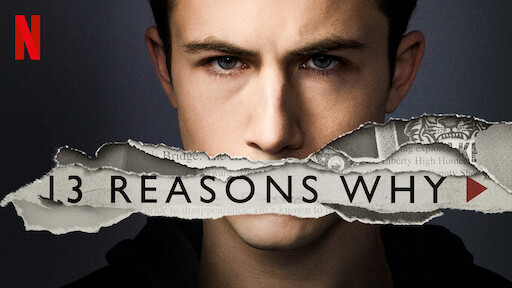
Whenever a TV show, movie, or other piece of media tries to do a realistic take on a serious issue, I tend to roll my eyes and brace myself. That’s because nine times out of ten, the writers and producers of these rarely sincere efforts get things half-assed or ass backwards. Sometimes, they’re not just wrong in their portrayal of an issue. It’s downright destructive. See the first season of “13 Reasons Why” for disturbing proof.
That makes any show that succeeds in portraying a serious issue all the more powerful. By that standard, “Bojack Horseman” is a diamond within a golden crown atop a pile of steaming cow shit. I apologize for the visual, but I feel like that’s the best way to get my point across.
I’ve found plenty of reasonsto praise this show since it ended, but being stuck at home for weeks on end has given me more time to appreciate the many amazing things this show achieved. It’s hard enough to get emotionally worked up over a show about real people. To get worked up about a show of cartoon human/animal hybrids counts as a special achievement.
It’s not secret that “Bojack Horseman“ tackles a lot of sensitive issues with varying degrees of sincerity, humor, and tact. The show always tries to entertain, but it also makes a concerted effort to approach these issues in a way that doesn’t feel shallow or half-hearted. Again, see “13 Reasons Why” for an example of how poorly this can go.
I’ve already highlighted how this show gives a well-developed take on the nature of addiction, an issue that is rarely more than plot catalyst for zany antics in most shows. There’s another issue that “Bojack Horseman” handles with just as much skill and it’s one that shows almost always get wrong when they try to tackle it. That issue is depression.
I’m not talking about the kind of depression we feel when a loved one dies, a spouse divorces us, or the show that made us a famous actor in the 1990s gets cancelled. I’m referring to real clinical depression, which is a real medical issue that plagues a lot of people in the real world, including people I know personally.
Now, I understand why depression is so difficult to confront in a half-hour/hour-long TV show. It’s not like the flu or some visible wound that you can treat directly and watch heal. Depression, at its core, is a one-two punch of chemical and mental that complement one another perfectly to make someone miserable to a crippling degree.
It’s chemical in that there are parts of the brain that just aren’t operating properly. The systems that usually make someone happy and content just aren’t working right. They often require medication or extensive cognitive therapy to get that system going again.
The mental part plays off those deficiencies in that they foster this mindset that keeps people in a constant state of doom, gloom, and misery. That mindset often acts as a catalyst for various destructive behaviors, from substance abuse to violent outbursts to self-harm. The effects vary wildly from person to person, but the mentality remains the same.
Where TV shows and movies often fail with depression is two-fold. First, it fails to depict the extent of someone’s depression. Second, it fails to show how it’s properly treated. Just showing someone in a saddened state isn’t the same as showing someone who’s clinically depressed. It only gets worse when that same show or movie tries to treat it as though it has a singular cause.
Sometimes, it’s because a character was abused.
Sometimes, it’s because a character lost a loved one.
Sometimes, it’s because a character didn’t make one single choice that haunts them.
Those are all decent catalysts for character development, but that’s not how depression works. It doesn’t just come from one action or inaction, nor can it be treated by confronting it. You can’t just go on a quest, save the day, and suddenly be a glowing ball of happiness. Depression is more complex than that.
That’s why it was so refreshing to “Bojack Horseman” take a very different approach. Throughout the show, Bojack is shown to have many issues. Depression is just one of them. He’s a substance abuser, a narcissist, and insanely self-destructive. If he went to a therapist, they’d need overtime to treat all his issues.
However, most therapists would agree that Bojack meets the criteria for clinical depression. He’s in a constant state of misery throughout the show and goes to great lengths to alleviate that misery, but often ends up making himself more miserable due to bad behavior and terrible judgement. In essence, his other personal issues often compound his depression.
Unlike other shows, though, the source of his depression is never framed as one particular thing. While he is shown to have abusive parents, substance abuse problems, and crippling guilt from his many bad decisions, there’s never a point where one issue becomes the source.
That, in and of itself, is an important distinction in portraying depression in a realistic way. However, of all the moments that highlight the extent of Bojack’s depression, one episode stands out over all the others. That episode is aptly called “Stupid Piece of Sh*t.”
In this episode, Bojack is trying to deal with his previously estranged daughter (who turns out to be his half-sister) and his abusive mother, who is declining mentally in her old age. Like the many other challenges he faces throughout the show, his depression makes this difficult. What makes this episode stand out, though, is how it’s rendered through Bojack’s thoughts.
Through the colorful animation and the haunting voice talent of Will Arnett, these internal monologues give a voice to a depressed mentality the likes of which few shows have captured. It still utilizes a semi-humorous tone, but never stops being real or serious. It’s a powerful insight into what Bojack goes through every day. It doesn’t excuse his awful behavior, but it does provide an important context.
What makes this portrayal all the more powerful is when Hollyhock, his half-sister, asks him about it later in the episode. Like Bojack, she appears to be struggling with that same inner monologue and it’s not a pleasant feeling. She’s young hasn’t lived long enough to make Bojack’s mistakes, which makes her question at the end downright heartbreaking.
That voice in the back of my head that tells me I’m dumb and stupid that’s just stupid, it goes away it’s just a teenage girl thing right. Those voices… they go away, right?
That question, and the way Bojack answers it, cements this episode and this show as one of the best portrayals of real depression in any medium. At a time when we’re all isolated, I think it’s important to understand what real depression looks like. Even if it comes from a show about talking horsemen who sound like Will Arnett, it’s an important perspective that we can all appreciate.
I’m not of the opinion that dreams are some profound indicator of the deepest, darkest recesses of our unconscious. I don’t buy into the old Freudian idea that what you dream about reflects some profound desire about the workings of your psyche. That’s not to say I think dreams are just random noise inside your brain that sometimes surfaces when you sleep. I just think they’re more mundane than we give them credit for.
I say this as someone who both took college level psychology courses and as someone who can recall certain dreams. I’m hardly an expert, but I’m familiar with the various theories as to why human beings have dreams. I think some are more plausible than others. I certainly have my leanings, but I admit those leanings are influenced by my personal experiences with dreams.
To understand, I’d like to share a common theme in my dreams that I’ve noticed over the years. I tend not to remember most of my dreams, but the ones I do seem to have many similarities that have held true since I was a teenager. If they were TV shows or sitcoms, they would all have the same plot.
I’m always running very late to something important.
I admit this is a somewhat bland theme for a dream, but I understand where it comes from. Any friends, family, or relatives who might be reading this wouldn’t be surprised either. They know, as well as I do, that for most of my early life, I was very uptight about being on time. I’d even go so far as to say I was downright obsessive about it. I’m pretty sure I annoyed more than one person with my constant desire to not be late.
As early as elementary school, I made a big deal about being on time or early to everything, be it school, a movie, or some kind of event. The mere thought that I might be late caused me a great deal of stress, so much so that I experienced panic attacks on some occasions.
Knowing that, it makes perfect sense that my dreams would center around this theme. Just last week, I had a dream that involved me standing in front of my old bedroom window, watching the bus go by, and realizing that I had just overslept big time and was incredibly late.
It’s similar to the one I had last year. Again, it involved me standing in my bedroom, looking at a clock, and realizing I was extremely late for a flight to a big wedding I was set to attend. The dream rarely stopped there. Often, I would attempt to catch up, packing my clothes and getting my things together in hopes of catching up. Most of the time, it didn’t work. In some dreams, I even face a setback that makes me even later.
It’s rarely scary or traumatizing. They don’t feel like nightmares in that I wake up in a cold, terrified sweat. They feel more like echoes of old attitudes that had a profound impact on my early life and some of my adult life.
I’ve gotten a lot better and healthier with respect to punctuality. College was really the time when I took a seriously look at my obsessive need to be on time and find other ways of dealing with it. It didn’t happen all at once. It took several years for me to get less uptight about running late. While I can still be somewhat anal about it, I’m nowhere near as anxious about it.
That doesn’t keep it from showing up in my dreams. Since this tendency was such a big part of my life, especially in my youth, I’m not surprised that it’s such a common theme. I have a feeling it’ll keep being a theme throughout my life. If that’s the extent of my most vivid dreams, then I’m okay with that.
To those who remember their dreams, what are the common themes you tend to notice? Do you think these dreams have greater meaning or are they just mental garbage that your brain clumps together while you sleep? I’d like to know. Please share your dream experiences in the comments.
I didn’t used to enjoy exercise. At one point, my least favorite activity in school was running and given how miserable I was at school for most of my life, that’s saying something. Then, as I got older and more health conscious, running became an integral part of my life. I’m at a point now where it feels weird when I don’t run in some form.
Whether it’s on a treadmill or on the trails throughout my neighborhood, I love to run. It’s not just good for my health. It gets my heart racing, my brain going, and my juices flowing. Yes, I understand that has some sexual connotations. Did you honestly expect anything less from me?
It’s only natural. Running makes me all hot and sweaty. There are times when I come in from a run and I’m just dripping with sweat. I may not smell great, but I feel downright sexy. After burning all those calories, it’s like I just made love to my muscles. It’s a great feeling and with the weather finally warming up, I can run without a shirt on to show off that sexiness. Again, you expect anything less from me?
I hope that when I meet the love of my life, she’ll go running with me. One day, I hope we can go on a long run together, get back, shed our sexy clothes, and share a nice shower together. I hope I find that woman one day. Until then, here are some Sexy Sunday Thoughts to help inspire all those other runners out there. Enjoy!
“The joy your child gives their parents is the echo of the orgasm that made them.”
“Learning about romance through chick flicks is as unhealthy as learning about sex through porn.”
“Trying to be monogamous with a slut is like trying to interrogate a pathological liar.”
“Friends with benefits are the take-home tests of relationships.”
“Imagine how much trust and/or bravery someone must have to allow a cannibal to give them oral sex.”
“Can you honestly believe someone who says they accidentally watched porn?”
“True love is never having to explain why you have so much lube in your dresser drawer.”
The spring and summer are the best seasons for running. The days are long, the heat rolls in, and the sweat feels earned. I try to take full advantage of it and any trail nearby. I encourage everyone else to give it a try. If a guy like me can grow to love running, then anyone can. That, I’m sure of.
Good news tends to slip through the cracks, especially in today’s world of misguided hashtags and contrived outrage. It’s unfortunate, but that’s just how people are wired. Bad news gets our attention. That’s just how we’re wired. During times of crisis, such as a global pandemic, good news might as well be an alien concept.
For that reason, and many others, highlighting good news is incredibly important. That’s especially true when it comes to breakthroughs in medical science. As of now, everyone is rooting for doctors, biologists, and researchers to find new breakthroughs in treating diseases like COVID-19. While that effort will likely to dominate headlines for months to come, there is another headline that I feel is worth citing.
It doesn’t involve COVID-19. Instead, it involves vaginas.
I’m assuming I have your attention now.
I promise this isn’t entirely an excuse to write about vaginas. This is a real, legitimate breakthrough with some major implications. Regardless of whether or not you have a vagina, it has the potential to effect you, your loved ones, and future generations. Seeing as how we’re all alive, in part, because of vaginas, those breakthroughs are worth taking note of.
Specifically, this development has to do with lab-grown body parts. It has been an emerging industry in recent years. It’s one of those industries that used to exist on paper, but has since become very real and very promising. Thanks to disease, accidents, and human stupidity, people have a tendency to damage their organs. With this technology, we we’ll be able to swap them out for perfectly functional replacements.
While some organs are much harder to grow than others, a vagina is one of the few we’ve successfully grown in labs and transplanted into actual patients. Like the bionic penis I wrote about a few years ago, this is real. There are currently women in this world who have a lab-grown vagina in them and it works as well as any other. This 2014 article from the BBC nicely documents the science behind this breakthrough.
Doctors at Wake Forest Baptist Medical Centre in North Carolina used pioneering technology to build vaginas for the four women who were all in their teenage years at the time.
Scans of the pelvic region were used to design a tube-like 3D-scaffold for each patient.
A small tissue biopsy was taken from the poorly developed vulva and grown to create a large batch of cells in the laboratory.
Muscle cells were attached to the outside of the scaffold and vaginal-lining cells to the inside.
The vaginas were carefully grown in a bioreactor until they were suitable to be surgically implanted into the patients.
One of the women with an implanted vagina, who wished to keep her name anonymous, said: “I believe in the beginning when you find out you feel different.
“I mean while you are living the process, you are seeing the possibilities you have and all the changes you’ll go through.
“Truly I feel very fortunate because I have a normal life, completely normal.”
All the women reported normal sexual function.
I highlighted that bold part because it emphasizes the current goal of this technology. It’s intended to give women who have developmental issues, such as vaginal aplasia, a chance at normal sexual function. That’s usually how all medical breakthroughs start. It heals patience back to a level of normal functioning.
However, this technology has been working since 2014. It’s still in its infancy, but the reason I bring it up is because we’re currently in a situation where everyone is rooting for medical science to progress faster. This crisis, even though it doesn’t directly involve vaginas, could benefit from our current desire to see medical science progress.
As with the bionic penis, the science of lab grown body parts starts at restoring patients to normal function, but it doesn’t stop there. If anything, that just provides a baseline. As humans, with our wide capacity for kink, we’re rarely satisfied with just normal functionality in our bodies. That’s why breast implants are a multi-billion dollar industry.
Now, I’m not saying lab-grown vaginas will follow a similar path, but there’s definitely a market for them. As I’ve noted before, there’s still a wide orgasm gap between women and men. Some of that is psychological, but there’s also some biology behind it. Most women don’t achieve orgasm through vaginal sex alone and most sex ed classes never teach them that.
Education and insight can help, but that too has limits. As this technology matures, it’ll eventually graduate from simply restoring normal sexual function to enhancing it. That may sound somewhat radical, but it’s not that different from what people do now. People already take drugs, both illicit and prescription, to enhance sexual function. A lab grown vagina could just be a more ambitious effort.
How ambitious could it get? It’s hard to say. I’m not a woman and I can’t speak for women who might contemplate enhancing certain parts of their anatomy. I just know that the desire for a satisfying sex life transcends gender, taboos, and body image. As medical science advances, we have more and more tools with which to achieve that. Lab grown vaginas and bionic penises are just the latest and boldest.
Whatever form they take, they’ll ensure our future is a sexy one.
The comic book industry is in a state of crisis. I know you can say that about a lot of industries amidst a global pandemic, but the comics industry has been extremely hard hit. Shipments of new comics have ceased. Comic shops are likely to go out of business without that influx of new product. The industry that I’ve loved since I was a kid has never been this vulnerable.
Even after the pandemic ends, this industry that I love will never be the same. It can’t go back to the way it used to be. This crisis has shown, among other things, that the current model that the comic industry utilizes just isn’t sustainable. It needs an overhaul of some kind.
I’m certainly not smart enough to know what that overhaul entails. I doubt few people are. However, as a long-time fan and follower of the industry, I have a few ideas. To keep it simple, here are four steps to saving the comic book industry in a post-pandemic world.
Step 1: Emphasize Quality Over Quantity
This is a simple metric. There are just too many books coming out all at once. However, this is a problem that predates the current crisis. It’s a problem that has lingered since the industry almost crashed completely in the early 1990s. It came down to simple economics. Publishers made too many books that not enough people bought. Even if they were only a dollar apiece, there’s only so much consumers can consume.
This is not a sustainable business model. Companies like Marvel and DC Comics grew the most when they were just publishing a dozen or so titles a month, with a few mini-series on the side. You could, conceivably, follow every major event in the Marvel or DC universe for less than $40, adjusted for inflation. That kind of easy access is what helped create the massive fandom that these franchises enjoy today.
That said, this isn’t the mid-1960s. The world is changed. Markets and consumer habits have changed. However, there’s still a place for comics in the publishing world. It’s just a matter of making those products more valuable. Books like DC’s Earth One series are basically single-issue graphic novels that tell a rich, complex story at a higher price and it’s worth every penny.
At a time when people are strapped for cash and looking for value, the comics industry is in a perfect position to tap into it. Make every comic count. Make every dollar feel like it was well-spent. It won’t just keep new fans happy. It’ll help create an entirely new generation of fans who are less inclined to go to crowded movie theaters.
Step 2: Embrace Digital (In A Novel Way)
This step plays directly off the first in that it embraces new technology. Decades ago, comics were easy to access because you could buy them at news stands and grocery stores. As a kid, I got most of my comics from the grocery store at first. They were easy and, much to my parents’ delight, cheap ways of putting a smile on my face.
These days, you can’t find comics in grocery stories. However, digital comics have grown a great deal and are more accessible than ever, thanks to companies like Comixology. Most comics are already released digitally on the same day they come out in shops. That’s great, but it’s basically just an extra convenience for those who don’t live near comic shops. That can’t be the extent of how digital comics impact the industry.
At the moment, digital comics are only a small part of overall comic sales, but they’re growing rapidly. In conjunction with that growth, the industry needs to embrace the other opportunities that digital offers. Services like Marvel Unlimited are nice, but they’re just giving us products that were already released. Why not give us something we can’t get anywhere else?
I’m not sure what that something is, be it a motion comic or something that sets itself apart from a traditional paperback. I’m not smart enough to figure it out, but digital offers so many rich opportunities. The first company to figure it out will make millions and entice a new generation of fans.
Step 3: Make Comic Shops More Than Comic Shops
I love comic shops. Some of my fondest memories have occurred in comic shops. I don’t want them to go away. However, embracing digital comics doesn’t mean the same as ditching these important brick-and-mortar structures. It just means changing their role in the overall comics infrastructure.
When I was a kid, there were two types of stores. One were the stores you could hang out in and the other were the stores in which the owners kicked you out if you lingered for more than 10 minutes. The future of the industry needs to embrace the former rather than the latter.
Comic shops can’t just be about selling comics and merchandise. Too much of that is online and relying on that model is doomed to failure. Instead, comic shops need to be part comic shop and part coffee shop. Make it a place where you don’t just browse the racks for new material. Make it a place where you can sit down with friends, get some coffee, get a snack, and enjoy comics in a communal manner.
Once comic shops are an experience again, people will visit them and not just because there are new comics to buy. If comics can become a popular hang-out once more, then they’ll have a place in a new market.
Step 4: Empower Creators (Instead Of Screwing Them Over)
As much as I love comics, I don’t doubt that it has engaged in some shady business practices. There are many stories about comic creators getting screwed over by major publishers. While every industry has shady practices, the comics industry relies too heavily on brilliant creators to screw them over.
While Marvel and DC have their Disney/WB overlords to please, they can’t just rely on being farms for intellectual property. There has to be a new and better way for compensating creators. Alan Moore may be a cankerous blow-hard, but he really did get screwed over when DC flat out broke their promise to him.
Broken promises always cost more in the long run, especially with respect to comics. It’s not enough for the publishers to just acknowledge the contributions of creators. They need to have a way to profit. It’s not impossible. Apple does it with their app store, creating a means for creative developers to profit from their creations while still making Apple billions.
When both benefit, everyone benefits. It’s really that simple.
I know the comics industry is undergoing rapid change. I don’t doubt I’ll be upset with some of those changes. However, I also understand that the industry needs to change in this increasingly chaotic world. These are just some ideas on how to go about it.
Whatever happens, I hope this industry that I love continues to thrive. I don’t know how, but I do know that a lot of people love it and they’ll find a way to make it work.