Category Archives: human nature

The Mixed (Yet Uplifting) Message Of “Malcolm In The Middle”

landscape-ustv-malcolm-in-the-middle-cast-shot

Not every TV show gets to have a series finale. In fact, it’s fairly rare for any show, be it a sitcom, a drama, or a Saturday morning cartoon, to get to that point. More shows tend to get canceled before a finale can ever make it to the drawing board.

When a show does get to that point, though, it’s still no guarantee that the finale will be satisfying. Ideally, the end of a long-running show should tie up loose ends, create a sense of closure, and reward the audience for sticking with the story since it began. That’s the best case scenario. More often than not, finales tend to be mixed.

Truly satisfying finales like that of “M*A*S*H” are a rarity. More often than not, a series finale is going to leave some fans elated and others upset. To this day, there are still people who argue about the finale of “Lost” and I imagine there will be just as many arguments about the finale to “How I Met Your Mother.”

It’s next to impossible to create a finale that satisfies everybody. The most anyone could hope for is a show that at least creates a complete story, even if it remains open-ended to some extent. That’s how the finale to “Breaking Bad” handled things and while not perfect, I think it worked in the context of the show.

There is another show, however, that didn’t try that hard to make the perfect finale. In fact, the show did something unique in that it embraced the idea that there’s no perfect ending, but there is a path forward. There’s no final triumph or ultimate reward for the characters. There’s only the understanding that life goes on, there’s no easy way to do things, and sometimes the things you don’t like will always guide you.

That show is “Malcolm In The Middle,” a quirky, but entertaining sitcom full of juvenile humor and questionable messages. For some, the show just took family dysfunction to an absurd extreme. Even so, it was pretty funny. Between lovable charisma of Frankie Muniz, the physical comedy of Bryan Cranston before he was Walter White, and the overly dramatic presence of Jane Kaczmarek, this show had a lot to offer.

Like “Married With Children” before it, this show went the opposite direction of the typical feel-good sitcom. Malcolm’s family aren’t the upstanding, upbeat models of society in the mold of “Father Knows Best.” They’re a collection of low-class, ill-mannered, under-privileged brutes who always find themselves in bad situations that inspire bad decisions.

They’re the kind of dysfunctional family that give other dysfunctional families a bad name. Part of their appeal was how they navigated that dysfunction. They rarely learned their lessons, they rarely underwent meaningful growth, and they often screw themselves over with their bad decisions. That’s what made it funny.

For seven seasons, the antics of Malcolm and his family followed a fairly successful formula. Malcolm, his brothers, and his parents find themselves in trouble or in over their heads. They struggle to rectify the situation, but often end up making things worse and incurring plenty of memorable comedy along the way.

In the series finale, however, the show takes that formula and injects something unique into the mix. After seven seasons of wild antics, spectacular failures, and memorable monologues, “Malcolm In The Middle” sent a message that went beyond the forces behind family dysfunction. I would even go so far as to say that message is more relevant now than it was when the episode aired in 2006.

The main premise of the episode revolves around Malcolm graduating valedictorian from high school. Being a certified genius, as revealed in the first episode, his life is the only one within his dysfunctional family that has the potential to be something. There are other assorted side-plots to the episode, one of which involves a giant bag of shit that Reese created, but this is the main catalyst for the ultimate conclusion of the show.

Shortly before graduation, Malcolm is given the kind of opportunity that most people can only dream of. Instead of college, he’s offered a lucrative job at a tech company that would’ve given him a six-figure salary, stock options, and a far less hectic life compared to the one his working class family afforded him.

Malcolm makes clear that he wants that job. He wants that life because, unlike his brothers, he has a chance to escape it. Like so many other times throughout the show, though, his control-freak mother steps in and stops it. She makes the decision for him. He’s going to college. On top of that, he’s going to have to work his way through, drudging along as a janitor instead of using his genius to make things easier.

Naturally, he’s not happy about this. It’s not the first time his mother has made choices that affected his entire life. In fact, that’s one of the most prevailing tropes of the show. No matter what Malcolm or his brothers do, they can never escape their mother’s neurotic control.

She doesn’t just want to control what he does after he graduates, either. She wants to put him and/or shove him down a path towards becoming President of the United States. Both she and Hal, played by Bryan Cranston, reveal that they’ve had this in mind for Malcolm since they found out he was a genius. It leaves him baffled, frustrated, and pretty upset.

Among other things.

However, this time his mother gives meaning to her decision that go beyond the usual “I’m your mother so do as I say” excuse. Instead, she does something that nobody on the show ever attempted to do to that point. She imparts upon Malcolm, and the audience by default, a series of harsh truths within the context of the bigger picture.

Those truths all hit hard as they come pouring out in a memorable exchange that helps encapsulate so much of the dysfunction Malcolm’s family endures. At the same time, it also makes a compelling case for why Malcolm should become President.

Lois: That doesn’t matter. What does matter is you’ll be the only person in that position who will ever give a crap about people like us. We’ve been getting the short end of the stick for thousands of years, and I, for one, am sick of it. Now, you are going to be president, mister, and that’s the end of it.

Malcolm: Did it ever occur to you that I could have taken this job, gotten really rich and then bought my way into being President?

Lois: Off course it did. We decided against it.

Malcolm: What?!

Lois: Because then you wouldn’t be a good President. You wouldn’t have suffered enough.

Malcolm: I’ve been suffering all my life!

Lois: I’m sorry. It’s not enough. You know what it’s like to be poor, and you know what it’s like to work hard. Now you’re going to learn what it’s like to sweep floors and bust your ass and accomplish twice as much as all the kids around you. And it won’t mean anything because they will still look down on you. And you will want so much for them to like you and they just won’t. And it’ll break your heart, and that’ll make your heart bigger and open your eyes and finally you will realize that there’s more to life than proving you’re the smartest person in the world. I’m sorry, Malcolm, but you don’t get the easy path. You don’t get to just have fun and be rich and live the life of luxury.

Beyond simply reinforcing how much Lois exerts control over her children, her words reflect the collective frustration of families mired in dysfunction. From the Bundy family in “Married With Children” to the real people in the world who have kids they can’t manage and jobs that don’t pay enough, she articulated a sentiment that is difficult for most non-working class people to grasp.

Malcolm and his family are essentially trapped in the dungeon of modern society. They’re low-class, ill-mannered people who never got the opportunities to climb the social ranks. Lois and Hal work demeaning, low-paying jobs that don’t provide nearly enough to support a large family, let alone one full of rowdy children that get in trouble every other week. How could they not be dysfunctional in that environment?

It’s an environment that keeps anyone who wasn’t born into a good situation from improving their lives. It’s an environment that breeds and reinforces the dysfunction that Malcolm and his brothers so hilariously embody. Any time somebody does get a chance to leave, they jump at the opportunity and never look back. Moreover, they don’t do anything to help those who never get that chance.

Lois knows this. She can already see that happening with Malcolm. If he takes that job, he’ll just get rich and comfortable, forgetting about where he came from and never giving another thought to those who weren’t as fortunate as him. That’s entirely understandable, as Malcolm’s reaction so nicely demonstrates.

Most people do take the easy path out of hardship, poverty, and dysfunction. It’s not just a temptation. It’s a reflex. Growing up poor and dysfunctional is akin to torture and, as is often the case with torture, people naturally do whatever it takes to make it stop. Lois, for all her neurotic tendencies, is pushing Malcolm to endure for the good of every other dysfunctional family like them.

What makes these final moments of the show so powerful is that Malcolm actually listens to his mother in this case. He doesn’t fight her, for once. In the final scenes of the show, he actually follows the path she lays out for him, going to Harvard and working as a janitor to pay his way through. He’ll continue to suffer the effects of his family’s dysfunction, but it’ll help him maintain perspective.

That perspective is something almost no modern President will have. They really can’t because most modern politicians are millionaires. They essentially do exactly what Malcolm suggested, getting rich first and then buying their way into power. The fact that many politicians seem so out of touch with ordinary people, especially the working class, gives further weight to Lois’ words.

Rather than leave his dysfunction behind, Malcolm will carry it with him. He’ll use it to bring a perspective that others either don’t know about or don’t want to confront. Unlike everyone else who tries to raise awareness of working class dysfunction, he’s smarter than them. He’s actually capable of overcoming the traditional barriers that keep people like him from achieving real power.

It’s an unexpected, but satisfying brand of hope. Most episodes of “Malcolm In The Middle” tend to end with a sense of misanthropy that reverts Malcolm’s family back to the status quo. They’re never allowed to get ahead or rise above their dysfunction. At the same time, though, they don’t sink into a defeatist malaise like the Bundy family.

That’s exactly what puts Malcolm in a position to do something more in the end. Everything that held him and his family back is now a catalyst for something greater. He has both the perspective and the aptitude to do great things, such as become a President who actually cares about helping dysfunctional family’s like his.

At a time when income inequality is on the rise and the working class is enduring greater hardship, the world needs leaders who have Malcolm’s perspective. Unfortunately, such leaders are exceedingly rare, especially as powerful institutions become more and more prone to the interests of the rich.

The “Malcolm In The Middle” finale dares people to imagine what we can do when capable people from dysfunctional backgrounds actually get a chance to do something greater. The show doesn’t offer too many details about what happens to Malcolm beyond Harvard, but it’s refreshing and even a little uplifting to think that a show full of so much exaggerated dysfunction could envision a brighter future.

That future may not improve for people like Reese, though, but that’s probably beyond Malcolm’s abilities. Some dysfunction is just too great, even for a genius President.

2 Comments

Filed under human nature, media issues, philosophy, psychology, television

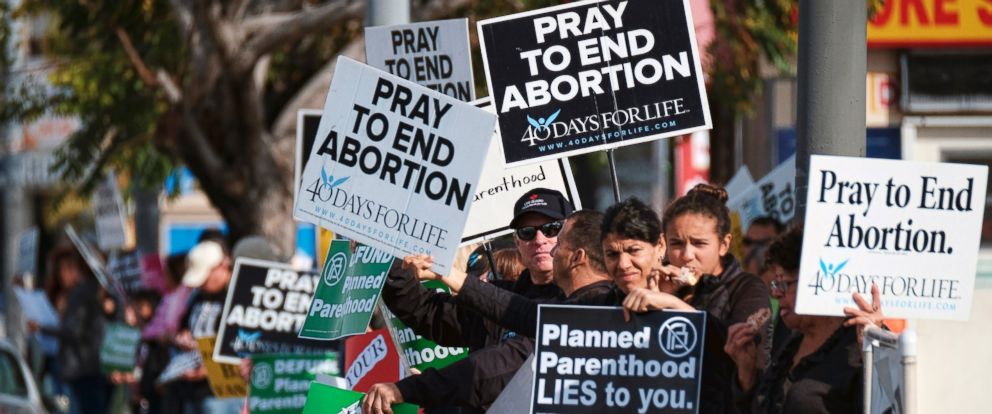
Abortion, Prostitution, And The Indirect (But Powerful) Link Between Them

Pic

When it comes to conflict between genders, there are many factors driving it. Chief among them is the unavoidable ignorance that comes with men not knowing what it’s like to be a woman and women not knowing what it’s like to be a man. Add those who identify as transgender into the mix and there’s a massive disparity in understanding.

While I consider that limited understanding to be the primary driving force behind gender-driven conflicts, there’s another force that is a close second. It has less to do with how people relate to one another and more to do with who determines the accessibility and availability of sex.

As an aspiring erotica/romance writer, this issue is more relevant to me than others. However, after a few notable news stories, one involving prostitution and another involving abortion, the issue is now relevant to everyone and that’s why I feel it’s worth talking about.

The concept of sex being this tangible commodity that certain people control is already bound to cause plenty of consternation among people from every part of the political spectrum, but for logistical purposes, this is how we treat sex in a modern context. It’s no longer something we do for survival or for the passing on of property.

Like food, sex has developed a more diverse role in the modern world. We treat it as a tangible asset that we must manage. Like any asset, though, there are logistics to it and those who do the managing wield a great deal of power. Why else would pimps be so glorified in popular culture?

Who actually wields that power, though, depends on the political affiliation of who you talk to. If you ask someone who is liberal, feminist, or left-leaning, they will claim that the power is held primarily by rich old men who try to manage sex by punishing those who do it in ways they don’t like.

Ask someone who is conservative, traditional, and right-leaning, and they’ll probably say the power is held by radical feminists and their submissive male allies who wield the power of sexual management. They’re just as convinced as those opposing them that they’re right. It’s difficult to convince them otherwise and I’m not going to try. That’s not the purpose of this article.

My goal here is to point out a connection from which the conflict has evolved. Given recent events in the political world, that evolution is likely to continue and not in a direction that benefits either side in the long run. To understand that connection, I need to dig a little deeper into the unspoken, but powerful link between abortion and prostitution.

I know that just talking about one of these issues is abound to send peoples’ passions into overdrive. I’ve discussed abortion before. I’ve discussed prostitution as well. I haven’t really touched on the link between them because they’re tied up in different political domains, but have enough similarities affect one another.

Prostitution is commonly known as the world’s oldest profession and for good reason. It only ever makes the news when there’s a scandal or a legal upheaval. For once, there has been an uptick in the latter rather than the former. It began with new laws that made it more difficult for prostitutes to operate online. In some respects, these efforts are the byproduct of a trend that has been going on since the early 2000s.

Most industrialized countries in the world accept, to some degree, that it’s impossible to stamp out prostitution completely. As a result, there have been more elaborate efforts to reduce it that don’t rely entirely on blanket prohibition. Currently, the most popular approach is known as the Swedish model.

In this setup, it’s legal for someone to sell sex, but it remains illegal to buy it. It’s akin to making it legal to set up a lemonade stand, but illegal to buy lemonade. While that sounds absurd on paper, the intent of the law is somewhat clever. It’s a means to criminalize the buyer of sex to give the seller more leverage. Since the seller is often assumed to be an exploited woman, it’s viewed as an equalizer of sorts.

Granted, the assumption that those selling sex are always exploited women is flawed, as an estimated 20 percent of prostitutes are men. There are people in the world who enter the business willingly, just as there are people who willingly work in coal mines.

There’s also plenty of data that indicates that the Swedish model doesn’t have the desired effect. There’s also no evidence that it has reduced human trafficking, either. That hasn’t stopped it from spreading to other countries. In the process, it has had another effect that goes beyond the issue of prostitution.

Essentially, this approach to combating prostitution places more power in the hands of women with respect to managing sexuality. Since they make up the majority of the prostitutes in the world and men are the primary clients, this dynamic ensures they have more leverage. They can, under this model, decide whether or not their client becomes a criminal. That’s a lot of leverage and not the kinky kind.

This is where the link to abortion comes into play. It’s an indirect link, but it utilizes the same dynamics. In countries where abortion is legal, the women wield a significant amount of power in terms of sexual decision-making. In the context of abortion, they can decide how the consequences of sex play out.

Women can, in this dynamic, decide whether or not to have a child if she becomes pregnant. Whether or not the father wants to child is irrelevant. The woman can abort the child against the father’s wishes. She can even have the child against his wishes, in which case he would be on the hook for child support for 18 years.

Again, that’s a lot of power for one gender to wield. That’s not to say it isn’t understandable. Women are the ones who bear children. They’re the one whose bodies undergo the 9-month rigor that is pregnancy. It’s totally logical that women would have more leverage in this situation because they’re putting themselves at greater risk.

However, and I know this is where I’ll upset a few people, there comes a point where that leverage can become excessive. There are cases where men lose their money and their freedom because of what a woman chooses. There’s no way for them to opt out of their parental responsibilities. That hasn’t stopped some from attempting to create a legal mechanism for that choice, but to date those efforts have not been successful.

Within this context, it shouldn’t be that surprising that abortion rights are steadily eroding. In the United States, it’s looking more likely with recent upheavals in the Supreme Court that this erosion will accelerate. Some are already claiming that we’re on our way to becoming the kind of oppressive society depicted in “The Handmaid’s Tale.”

While most of those concerns are overly apocalyptic, I think part of that effort is tied directly to who wields the power in the sexual landscape. Women are poised to gain more of that power as prostitution laws in the mold of the Swedish model spread. They’ve also gained even more leverage socially through the anti-harassment movement.

From the perspective of men, who cannot turn off their sex drives, women already wield so much authority in matters of sex. They’re the ones more likely to get paid to do it. They get to decide when and where it happens. They get to decide whether or not a sex act was consensual. They don’t even face the same stigma or consequences when sex crimes does occur and are granted greater protections by the law.

That perspective is not going to sway most women, though. The same women arguing for abortion rights are just as likely to argue for the Swedish model in combating prostitution. It’s a common thread among certain brands sex-negative feminism that see prostitution as an inherently oppressive force for women in every circumstance.

This is where the paths converge and where the fuel for the conflict gets a boost. Whether intentionally or by accident, both prostitution and abortion eventually link back to who wields authority in sexual matters. Both sides can claim some form of oppression. Both sides can even be right to a limited extent. By fighting to secure the most leverage though, they inevitably invite more backlash.

I don’t claim to know what the endgame is. I have a feeling that once sex robots enter the picture, and they have to some extent, there will be a major upheaval in the whole sexual landscape that neither side will be able to confront. Until then, though, the conflict over sexual leverage will continue. In the end, though, it’s unlikely that anyone will ever be truly satisfied.

1 Comment

Filed under gender issues, human nature, Marriage and Relationships, political correctness, prostitution, psychology, sex in society, sexuality

Lessons In Mental Health And Outrage Culture From “Daria”

hulu0d894330f-d10c-4641-ac8a-787dd3a5b6ac

How does anyone stay sane in this day and age? Between fake news, outrage culture, alternative facts, and the everyday struggle to survive in an economy being subsumed by tech companies, I don’t blame anyone for being a bit uptight. I envy anyone who can step back, see the bigger picture, and retain their sanity.

For some, it takes a special kind of strength, perspective, and mental toughness to deal with the totality of the absurdities in this world. Then, there’s Daria Morgendorffer from her remarkably-ahead-of-its-time TV show, “Daria.” When it comes to maintaining a level head while surrounded by the insanities of the modern world, she’s in a league of her own.

I’ve made my love for “Dariaknown before. I’ve even shared my excitement on the prospect of a new series. Every time I make the mistake of watching the news for more than two minutes, I find myself wishing I had her nuanced perspective. It’s part of what makes her character so enduring. She’ll see things for what they are, tell it like it is, and offer revealing insights along the way.

Earlier this year, research from Clinical Psychological Science indicated that mental health issues are on the rise among young people. Every day, it seems, a new mental ailment emerges from the evolving media landscape. While mental health issues can be serious, they can also be subject to plenty of absurdities.

As it just so happens, one of my favorite episodes of “Daria” tackled this issue in a way that’s more relevant now than it was back in the early 2000s when it first aired. The title of the episode is called “Psycho Therapy” and the lessons it offers are worth learning.

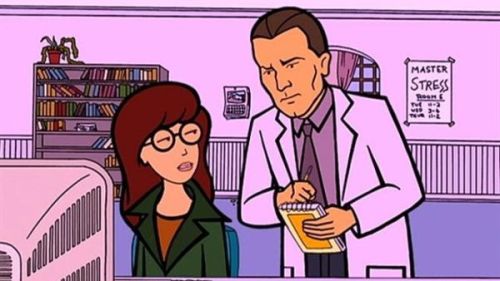
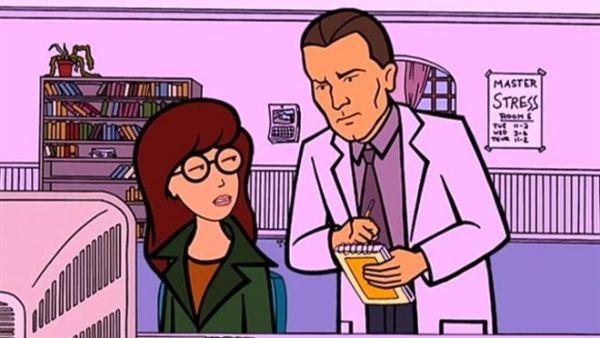
The synopsis of the episode is fairly basic. Daria’s mother, Helen, is up for a promotion. However, before the law firm she works at can consider her, she and her family are sent to a psychiatric center for personality evaluations. Hilarity ensue, but it’s Daria who ends up making the most astute observations, more so than the doctors on hand.

When Daria and her family first arrive, the staff is most concerned about Daria. Considering how she answered her survey with her trademark sarcasm, that’s understandable. However, when the doctors start to evaluate her and her family, they learn something remarkable.

Compared to everyone else in her family, she’s the most mentally stable. Even if you’ve only seen a few episodes of “Daria,” that should be pretty jarring. That’s not to say that she’s the picture of mental health, but according to the doctors in the episode, she’s the most well-adjusted. These are the exact words of Dr. Jean-Michael to Daria.

Dr. Jean-Michael: Daria, I was afraid you had some rather deep-seated problems. But I must say, you’re remarkably well adjusted considering…

Quinn: You’d think someone would’ve invented eye liner before me.
But no, I, Cleopatra, have to come up with all my beauty products on my own.
Oh, what a hard life.

In Quinn’s defense, she was hypnotized when she went on that incoherent ramble. Then again, Quinn Morgandorffer is probably the least defensive character in the show and would probably benefit from a healthy bit of therapy.

What makes this assessment more revealing is just how much Daria is surrounded by intense personalities, so to speak. I won’t go so far as to say these personalities are on par with mental illness, but they certainly walk the line. While that’s part of what makes these characters interesting, it also highlights an important concept that Daria Morgandorffer embodies.

At her core, Daria is a hardcore realist. She’s not a nihilist, a social constructionist, or an existentialist. She’s someone who sees both the surface and the forces just below that surface. From there, she makes a cold, calculated assessment that is devoid of needless emotional breadth, unless you count the sarcasm.

This is how she’s able to effectively break down the mental quirks of her parents, Jake and Helen Morgandorffer. Throughout the series, their relationship goes through a lot of atypical stresses. Just check out Season 3, Episode 10, entitled “Speedtrapped” for a clear depiction of those stresses.

On top of that, they both have some fairly eccentric personality quirks. Her mother is an incredibly high-strung, career-obsessed woman who constantly worries about how “normal” both her daughters are. Her father is an overly-dense, exceedingly histrionic man who always seems like he’s in the middle of a mid-life crisis.

Even a professional would have trouble making sense of their mental state. Daria does it in just a few short sentences.

Daria: Mom’s resentful that she has to work so hard, which obscures her guilt about actually wanting to work so hard. Dad’s guilty about being less driven than Mom, but thinks it’s wrong to feel that way. So, he hides behind a smokescreen of cluelessness.

Behind the heavy monotone and light sarcasm, this shows that Daria knows her parents. Given how they behave throughout the episode, she demonstrates that she actually knows them better than they know themselves. There’s even a scene towards the end of the episode where they try to mimic one another. It ends up getting pretty dramatic for everyone, except for Daria.

Helen: I mean Dammit! I lost another client! I can’t understand why! Dammit! Nobody likes poor old Jake. Should I think about the reason? Oh, must be my father’s fault. Where’s the newspaper, dammit!

Jake: Let me bring home the pizza. I have to be the one doing everything so everyone will thank me and tell me what a big superwoman I am. I’m very, very important and very, very stressed and I don’t have time to actually do anything for anyone else, but I can pretend I care, can’t I?

This is some pretty brutal honesty, even by “Daria” standards. They reveal some pretty unhealthy sentiments that probably need more than just advice and therapy. They reflect many of the quirks and side-plots that Daria’s parents experience throughout the show with Helen constantly obsessing over her career and Jake obsessing over whatever is stressing him out at the moment.

Daria’s ability to sift through all that and make a clear, honest assessment is both remarkable and refreshing. Even though these are her parents, she doesn’t pull any punches. Moreover, she doesn’t make any value judgments either. She doesn’t take sides or show scorn. She’s just tells it like it is. She says what the audience feels and does it in that lovable, monotone sort of way.

Her being able to make that assessment is profound. Doing so while maintaining mental stability is just as amazing. The fact she can maintain this perspective around personalities that range from ditzy cheerleader types like Brittney Taylor and touchy-feely teachers like Timothy O’Neill show why Daria is the emotional anchor of the show.

Back in the early 2000s, Daria’s knack for being level-headed while surrounded by so many bizarre characters made for great entertainment. Today, it acts as a radical departure from how we make sense of a world where every news clip, viral video, and hashtag is measured by the emotional outburst it triggers.

What Daria does in “Psycho Therapy” is something that has become far less common with each passing year. She makes a clear, concise assessment of other peoples’ behaviors and attitudes without casting judgement. She doesn’t whine about other peoples’ shortcomings or bemoan misguided efforts to treat them. She just points out the cold, hard facts and lets them stand on their own merit.

Contrast that with how every comment about someone, whether it’s in person or online, is laced with value judgments. You say you like video games and immediately, you’re judged as this angry fanboy who rages whenever someone dares to significantly change a particular aspect of your game. You say you’re a feminist and immediately, you’re judged as a man-hating bitch who blames men for every single ill on the planet.

It’s not enough to just have an opinion. It’s not even enough to have personal likes or dislikes. Everything you do and why you do it has to be an indictment on your politics, your identity, and the society around you. That’s not just misguided and judgmental. It’s mentally exhausting.

Being constantly judged, online and offline, every hour of every day is sure to be stressful. It’s no wonder why it seems as though more young people are development mental health issues. Daria may seem like the most unhappy person in her show, but compared to what some people deal with in the real world, she’s a picture of sanity.

At the end of the episode, it’s not Daria’s choices that lead to the resolution. All she does is provide commentary. It’s Helen and Jake, her emotionally convoluted parents, who chart their own path. That kind of lesson wasn’t as necessary in June 2000 when this episode first aired, but it’s one worth re-learning today.

2 Comments

Filed under Daria, gender issues, human nature, nihilism, psychology

Five Crazy Ways People Will Utilize Emerging Technology In The Future

22-ideas

Technology is amazing. Future technology promises to be even more amazing. I’ve covered some of the exciting trends for the near and distant future. Some are inherently sexier than others, but there’s no denying the appeal. Great leaps in technology promises to help humanity realize their full potential.

That’s not to say it won’t come at a price and I’m not just referring to the existential dangers, such as those involving artificial intelligence. As remarkable as the human species is when it comes to technology, it does have its share of eccentricities, for lack of a better word.

It’s not enough to just develop remarkable powerful tools for improving our collective well-being. We have to get creative in how we use them, sometimes to absurd lengths. I’m not just talking about the “creative” ways some people use ski-masks, either. Sometimes, new technology will inspire unexpected uses.

The Wright brothers didn’t invent planes with the expectation the it would create skydiving. The inventors of the internet probably didn’t expect it to be a massive hub for pornography and fake news. Those developing CRISPR, artificial intelligence, biotechnology, and nanotechnology are probably going to see their creations used in ways they never intended.

Now, I’ve never claimed an ability to predict the future, but I’m still human and I have an internet connection. I’ve seen plenty of footage of my fellow humans doing crazy/disturbing things with technology. If the past is any guide, then I feel like I can infer a few potential manifestations of future absurdities.

Some are more likely than others. Some may end up being completely wrong. Whatever happens, though, is still going to seem weird or crazy to everyone alive today. If you’re the kind of person who complains about the weird things young people do with their phones today, just you wait. Her are five weird ways that I believe people will utilize technology in the future.


Number 5: Women May Bear And Give Birth To Dead Loved Ones

Few experiences are more devastating than losing a loved one. This year, I had to endure that when my grandmother died. Every day, someone in this world has to suffer the sorrow of losing a parent, a spouse, a sibling, or a child. There are many ways to cope with that today, but the future will create more options, some more extreme than others.

One of those extremes involve women, or even transgender women with functioning wombs, bearing and giving birth to lost loved ones. Say you’re a woman whose spouse died tragically in an accident. Rather than live in a world without them, you decide to take their DNA, inject it into an ovum, and carry it to term. Nine months later, your dead loved one is born again and you’re reunited.

That sort of technology is not that far off. In vitro fertilization is a well-developed science. Cloning techniques have improved significantly since the late 90s. There have even been movies starring Robert De Niro on this very scenario. While the ethics and laws surrounding cloning are still somewhat messy, this technology is already coming.

Once it’s refined, there will be no reason why it couldn’t be done. It would just take someone who’s sufficiently devastated/daring to try it. This would definitely create some weird situations in which people give birth to dead siblings and children give birth to their reborn parents. It seems absurd, if not obscene, to us now, but it may end up being a legitimate way for some people to cope.

At the very least, it would certainly make for some interesting sitcoms in the future.


Number 4: People Will Purposefully Damage/Destroy Body Parts For Fun

Not everyone gets the appeal of extreme sports. Some just can’t wrap their head around the idea of doing something so dangerous that it could cause permanent/fatal injury. There are those who say society is gradually shifting away from such dangerous forms of entertainment. Some even say contact sports like football and boxing will be a thing of the past.

I respectfully disagree with that. I believe it’s going to get more extreme and more brutal. The reason I believe this is because of life-saving biotechnology that will help us regrow limbs, organs, and everything in between.

For most people, taking care of their bodies is a big deal and a primary factor in why they don’t do dangerous things. That’s because, for the moment, we only have one body and if we don’t take care of it, we’ll end up dead, disabled, or disfigured. Thanks to regenerative medicine, though, that may not always be the case.

We’re already on the cusp of being able to regrow organs in a lab. At some point, we may even able to grow entire limbs. Lose your arm accidentally while trying to juggle chainsaws? That’s not a problem. Just grow a new arm and you’re as good as new. Did you kill your liver by doing shots of diesel fuel and bleach with your friends? That’s not a problem either. You can just grow a new liver.

If injury or disfigurement is the only thing keeping you from doing something crazy/stupid, then regenerative medicine will give you all the reasons you need to try it. Even if you end up hating it, you’ll still be able to try it without worrying too much about long-term damage.

The kinds of extreme activities this could inspire is hard to imagine. Football may stop caring about shredded knees or damaged brains if regenerative medicine can just fix everything. The extreme sports we see today may not even be seen as that extreme because the injuries are more an inconvenience than a concern.

Considering how boredom may end up being the greatest plague of the future, I think it’s likely that people will find all sorts of ways to do crazy, dangerous things for fun. The prospect of pain may still keep some people from trying, but the prospect of boredom will at least give them pause.


Number 3: People Will Splice/Tweak Their DNA With Animals For Impossible Traits

I’m not the first one to make this prediction. There was an entire episode of “Batman Beyond,” an underrated Batman cartoon that takes place in the future, dedicated to this idea. In the episode, teenagers use genetic technology to splice their DNA with that of animals. It doesn’t just give them exotic looks that are impossible by the laws of evolution. It gives them animal-like traits to go with it.

Want to have fur like a cat and a tail like a monkey? With the right genetics, you can do that.

Want to have scales like a snake and muscles like a gorilla? Splice the right genes into your genome and you can have that too, minus the poop throwing.

People are already tweaking their genome through biohacking. Granted, those hacks are limited because even tools like CRISPR have limits. However, as those tools improve, it’ll be possible to do more than just tweak the human genome. In theory, we could use the genomes of every other species on Earth to enhance our own.

At first, it’ll just be to help us survive. There are some animals who have better muscles, better immune systems, and better resistance to aging. However, once those refinements are made, we’ll be able to get more creative. Why stop at just making ourselves healthier and stronger? We could turn splicing our genes with other animals into full-blown fashion trends.

Let’s face it, it wouldn’t be the craziest fashion trend humans have ever come up with. Look up something called “Lotus Shoes” and you’ll see what I mean.


Number 2: People Will Use Biotechnology And Brain Implants To Create Insanely Powerful Drugs

As I write this, the United States is in the midst of the worst drug epidemic in modern history. In 2016 alone, there were over 63,000 deaths caused by opioid overdoses. There’s no question that these drugs are as powerful as they are dangerous. However, through future advancements in biotechnology, these drugs will seem like breath mints by comparison.

That’s because all drugs, whether they’re pain killers or cheap vitamins, work the same way. Their chemical components interact with the complex biology of a person to induce a desired effect. Since they’re chemicals, though, those interactions are fairly crude. Trying to pursue those effects, be they simple pain relief or treating Ebola, is like trying to destroy a single house through carpet bombing.

Biotechnology, and the nanotechnology that will likely complement it, works more like a smart bomb. Rather than just flood the brain and body with chemicals, the drugs of the future will be more akin to programmable biomatter. They’ll have a measure of intelligence that will allow them to go to a particular part of the body and provide the necessary stimulation.

By being targeted and smart, that will allow for more effective treatments and alleviate pain. Why stop there, though? Why not use that same approach to produce the most potent, mind-altering effects our brains ever conjured? In theory, there’s no reason that the same smart blood that will treat disease could also stimulate every possible pleasure center in the brain.

As potent as today’s drugs are, they won’t be able to match what intelligent nanomachines in the bloodstream can produce. Beyond just eliminating pain without damaging side-effects, they could create a high that’s physically impossible to induce today. Add further brain enhancements to the mix through implants and all bets are off in terms of mind-altering highs.

Sure, that may resolve the opioid crisis, but it may end up triggering an entirely different set of problems. People can barely handle the drugs we have today. Will they be able to handle a high that’s mind-altering in a very literal sense? Only time will tell.


Number 1: People Will Eat Meat From Extinct Or Exotic Animals (Including Other Humans)

Producing enough food to support our growing population has long been the greatest challenge of civilization. Through the Green Revolution, and brilliant humanitarians like Norman Borlaug, we now have more food today than we’ve ever had in human history. There are still hungry people in this world, but producing the food is no longer quite the challenge it once was.

Thanks to biotechnology and synthetic meats, it’s about to get easier. Producing abundant food takes a lot of water, land, resources, and animals. The environmental impacts of that process are well-documented and prone to many fart jokes. Through new techniques like vertical farming and cultured meats, we may not even need fields or live animals to produce our food.

Back in 2013, the first ever lab-grown burger was created and eaten. It cost $330,000 to make and wasn’t that much better than a standard Big Mac. Since then, the cost has dropped considerably to less than $20. The only remaining step is to scale up production and refine the process.

That’s great for animal lovers and those concerned with environmental degradation. However, the ability to produce abundant meat without animals is going to open up an entirely new branch of food. If you can make unlimited quantities of beef with a few cow cells, why not try other animals to see what they taste like?

Why not take a few cells from a bald eagle, an endangered rhino, or even an extinct mammoth? If you have the cells and the DNA, then you can technically make meat from anything. That includes humans as well. While cannibalism is a major taboo in nearly every culture, why would it be if there was a way to eat human meat without ever harming a human?

Most people today probably wouldn’t try human meat, even if it was grown in a lab. Then again, most people alive 100 years ago probably would’ve been reluctant to try spray-cheese in a can as well. In a future where eating meat is no longer associated with the killing of animals, those taboos might not hold.

I can even imagine a whole culture emerging around it. Say you’re on a romantic date with a loved one. What better way to celebrate your love for each other than by eating burgers made from the lab-grown flesh of your lover? You love each other so much that you eat each other for a meal. It may seem weird, if not macabre, these days, but it may end up being an act of genuine intimacy in the future.


These are just some of the weird ways I we may use our technology in the future. If you have another idea for a crazy way people will use emerging technology, please let me know in the comments. Some of these trends may not occur within my lifetime or that of anyone reading this, but every generation ends up having a strange concept of “normal.” The future will just give us better tools to expand that strangeness.

Leave a comment

Filed under futurism, human nature, psychology, Sexy Future

The Humor In Mutilating Men Versus The Atrocity Of Harming Women

45ee4ed9041461da247f826745881661e77f2046

It’s one of the most traumatic things a man can experience, the permanent damage or total removal of his penis. Whether by accident or intentional violence, he’s badly injured on a physical physical and psychological level. His ability to identify as a man, experience intimacy with others, or just feel basic pleasure is irreparably damaged.

Just mentioning the possibility of losing his penis will make most men cringe. Joke all you want about how much men glorify their genitals, but it really is an important part of their bodies and their identities. Losing it is like losing a limb, which does plenty to cause serious mental trauma. Add losing a key aspect of their masculinity to the mix and that trauma becomes amplified.

Despite that trauma, men losing their genitals is fodder for comedy. Recently, Netflix released a movie called “The Package,” the plot of which is built entirely around a man who loses his penis in an accident. That movie, if you look it up on IMDB, is listed as a comedy. Imagine, for a moment, a movie that tried to make a comedy out of female genital mutilation. How much outrage would that generate?

There’s nothing funny about women’s bodies getting mutilated or even harmed in any serious way. For men, though, it’s actually a pretty common trope. You don’t have to look too deep into the history of media to find jokes about men losing their genitals.

It’s a famous line in “The Big Leboswki.”

It’s a recurring theme in “Fight Club.”

It’s a sub-plot in an episode of “Rick and Morty.”

It’s a primary plot in an episode of “Family Guy.”

Even in media that isn’t overtly comedic, it still becomes a joke. Just look up the various internet memes about Theon Greyjoy from “Game of Thrones” for proof of that. In each case, the mutilation of men and the loss of their masculinity is portrayed as something that’s inherently funny. The fact that Netflix made a movie about that premise shouldn’t surprise anyone.

Even in the cases of real stories about real men losing their genitals, it’s prone to plenty of humor. The most famous case is probably that of John Wayne Bobbitt, whose wife cut off his penis after he raped her. While Bobbitt was, by all accounts, a horribly abusive man who deserved plenty of condemnation for what he did, his name still inspires jokes.

When people say the name Bobbitt, they don’t think of all the abuse he imparted on his wife. They think of how funny it is that his wife cut his dick off. While he was able to get it re-attached, many other men aren’t so lucky. Whether it’s public perception or daytime talk shows, a man losing his penis is still seen as funny.

Conversely, any media that shows a woman being harmed in any way, even if it’s just a slap in the face, is seen as an irredeemable atrocity. Watch shows like “Married With Children” or “The Simpsons” and you’ll see plenty of scenes where Al Bundy and Homer Simpson badly injure themselves through their antics. However, there are exceedingly few scenes that ever lead to the women being harmed.

Anything that leaves any lasting scar on a woman is inherently abhorrent. There are even major international organizations that work to combat practices like female genital mutilation. When women lose their reproductive organs from disease or injury, it’s seen as a tragedy. Anyone who laughs at their pain is rightly scorned.

Why is this, though? Why is it that an entire comedy can be built around a man losing his penis while any plot that involves a woman getting hurt in any way is dead serious? That’s not an easy question to answer. It can’t be entirely attributed to the gender-driven  double standards that I’ve singled out before.

I don’t claim to know the full answer, but I think it’s worth discussing, if only for the sake of maintaining a balanced perspective. I don’t doubt that many have their theories. Some may attribute the humor we find in men getting mutilated to trends in modern feminism. I would strongly disagree with that.

I believe that this idea of laughing at male mutilation while gasping at female victimization preceded modern feminism by a great deal. I would go so far as to say it goes back much further than that. I believe this unique quirk in gender dynamics has roots in ancient pre-modern societies that transcend geography, culture, and ethnicity.

At the core of this phenomenon is one unpleasant, but inescapable truth. I’m probably going to upset some of my fellow men by saying this, but I think it needs to be said.

We NEED to be comfortable with men getting mutilated on some levels.

Take a moment to stop fuming. Then, take a moment to consider why we would need to be okay with this in both current and ancient societies. From a purely logistic standpoint, it makes sense.

For most of human history, men were expected to carry out the dangerous, back-breaking, body-maiming work that built our civilization. Regardless of location, culture, or traditions, putting men in these situations was necessary. Someone needed to fight the wars, plow the fields, hunt dangerous animals, and work in factories.

Until very recently, men had to fill that role because women were at a severe disadvantage due to the dangers and risks of child-rearing. In the pre-modern world, the most vulnerable individuals in a society were pregnant women, newborn infants, and women in labor. In 18th-century England alone, there were 25 deaths per 1,000 births.

With odds like that, there was a legitimate reason to give women extra protection and care that was not afforded to men. Men didn’t have the babies and no society could survive in the long run if it didn’t have a growing population. That’s why, for better or for worse, there are so many cultural and religious traditions that encourage women to remain in domestic roles.

Those same traditions, however, establish a dynamic requiring that we accept a certain level of male victimization. It’s one thing for a man to die in battle or having his genitals maimed in an accident. It’s quite another for a woman, who are tasked with birthing and caring for a new generation, to endure similar harm. Another man can still impregnate a healthy woman. No amount of men can impregnate an injured woman.

I know that dynamic is offensive to both feminists and men’s rights activists because it reduces their value to their reproductive capacity. I get why that’s offensive. Even I find it offensive, as a man. However, therein lies the most critical detail with respect to male mutilation versus male victimization.

These disparate standards, which predate the modern era by centuries, are still very much ingrained in our society. We still see women, especially those of breeding age, as more valuable than men. We romanticize young men who heroically sacrifice themselves in war, but recoil at the idea of young women suffering a similar fate.

Add emerging demographic issues with respect to declining fertility rates and the same incentives for accepting male mutilation are there. We still need people to have children for society to grow and function, but more women are having fewer children and more men are eschewing the pursuit of families entirely.

In terms of logistics, that increases the value of every woman who wishes to have a children and decreases the value of men who refuse to go along with that plan. In that system, a man losing his genitals or suffering a severe injury has to be funny in order for the situation to be tenable. By the same token, any harm coming to a woman has to remain extremely taboo.

Logistics aside, it’s still an unfair predicament that undermines the suffering and trauma that men endure. The fact that we have to be okay with their suffering while overvaluing the suffering of women is bound to fuel more egregious double standards. Movies like “The Package” certainty don’t help, but so long as this age-old gender disparity persists, men losing their penises will remain fodder for comedy rather than tragedy.

10 Comments

Filed under circumcision, gender issues, human nature, media issues, men's issues, outrage culture, political correctness, psychology, sex in media, sex in society, women's issues

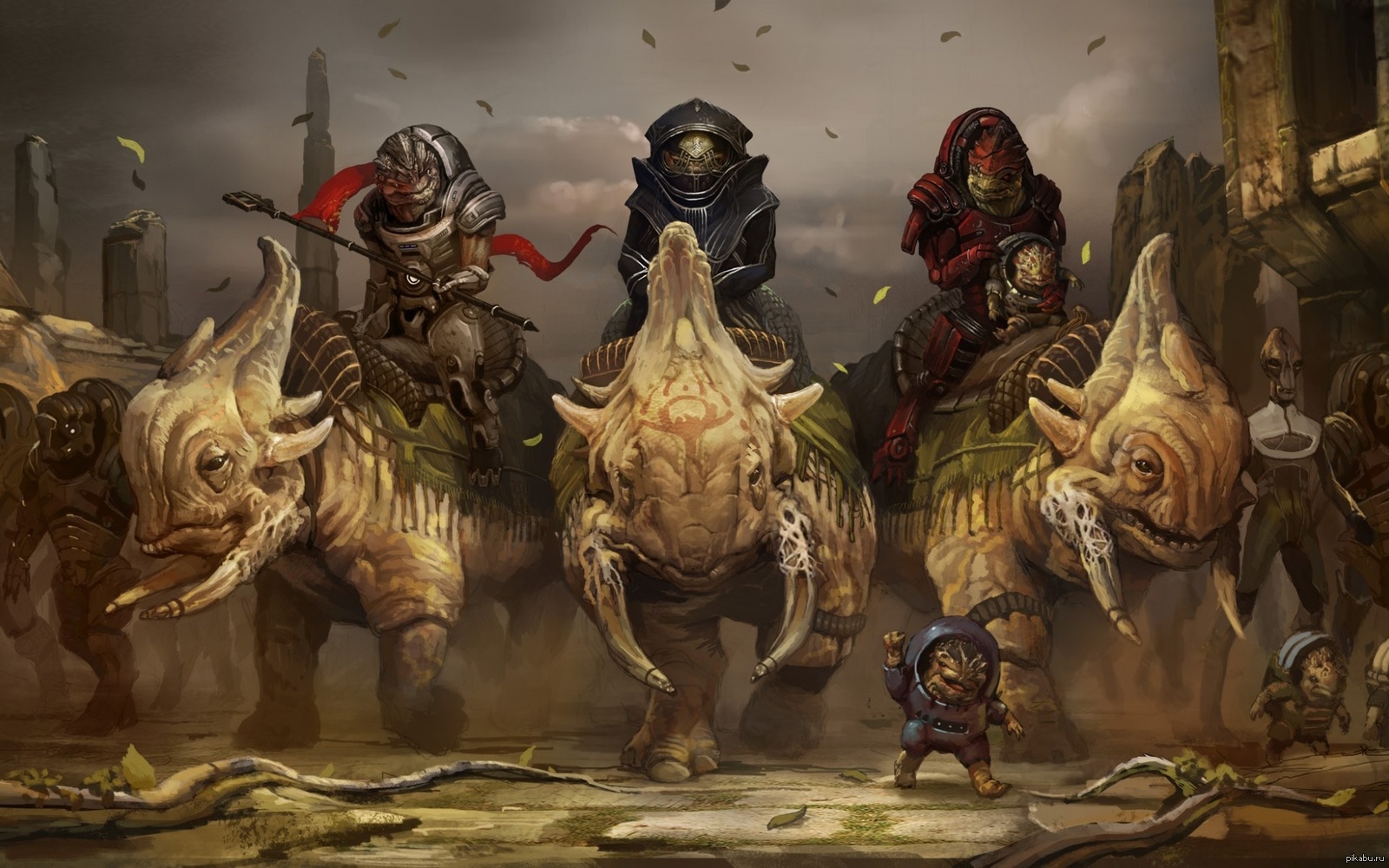
Why Intelligent Aliens May Destroy Us Even If They’re Peaceful (According To Mass Effect)

tuchanka_-_sabotaged_cure_wasteland_1

What would happen if we went back in time and gave the Genghis Khan nuclear weapons?

What  would happen if we went back even further and gave machine guns to the Ancient Romans?

Let’s be even more subtle. What do you think would happen if you gave Aristotle a functioning smartphone with a complete catalog of Wikipedia? How much would that change the course of history? More importantly, how much damage would it potentially incur?

I consider myself an optimist. I generally place more faith in humanity than most people in this age of fake news and heavy cynicism. I have my reasons for doing so, but even my confidence in the human species has limits. I trust most people to do the right thing every time I drive my car on the highway. That doesn’t mean I’d trust a caveman from 10,000 BC to drive a fully-loaded tank.

I make this point because these are legitimate concerns consider when assessing how humanity deals with emerging technology. We can barely handle some of the technology we already have. How will we handle things like advanced artificial intelligence, gene hacking, or advanced robotics?

I’ve stated before that the human race is not ready for advanced artificial intelligence in its current state. I’ve also stated that the human race isn’t ready for contact with an advanced alien species, either. I believe we’re close. We may even be ready within my lifetime. However, if aliens landed tomorrow and brought an advanced artificial intelligence with them, I think our civilization and our species would be in trouble.

I also think the human race would be in danger even if those same aliens were peaceful. Even if they brought a super-intelligent AI that was as compassionate and caring as Mr. Rogers, our species would still face an existential crisis. To explain why, I’ll need to revisit one of my favorite video games of all time, “Mass Effect.”

The various themes of this game, and the lore behind it, offer many insights into very relevant questions. In addition to the timeless hilarity of bad dancing skills, the game crafts a rich history between alien races like the Quarians and the Geth. That history reflected the dangers of mishandling advanced artificial intelligence, an issue humanity will have to deal with in the coming decades.

There is, however, another rich history between alien races within “Mass Effect” that offers a similar lesson. This one has less to do with artificial intelligence and more to do with what happens when a species technology that it’s not ready to handle. That danger is well-documented in the game through a hardy race of beings called the Krogan.

Like the Quarian/Geth conflict, the conflict surrounding Krogan has some real-world parallels. However, I would argue that their story Krogan is more relevant because it serves as a warning for what could happen when an advanced species uplifts one that is less advanced.

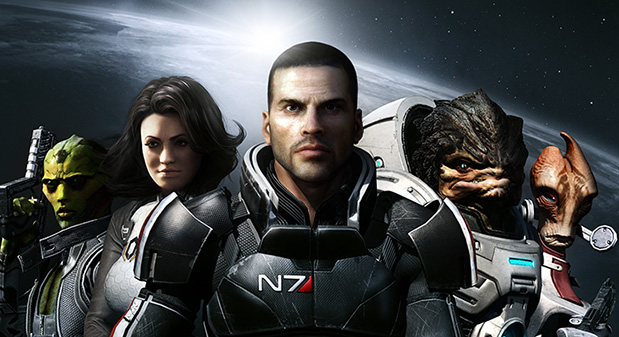
In the mythos of “Mass Effect,” the Krogan were once a primitive, but hardy species that evolved on the harsh world of Tuchanka. They’re reptilian, high-functioning predators in nature. They’re basically a cross between a velociraptor, a crocodile, and a primate. They have a tough, war-like culture, which is necessary on a world that contained hulking Thresher Maws.

They were not a species most would expect to develop advanced technology. Then, the Salarians came along. Unlike the Korgan, this amphibious alien race isn’t nearly as hardy, but is much more adept at developing advanced technology. In most circumstances, they wouldn’t have given the Krogan a second thought. Unfortunately, they were in the middle of the Rachni War and they needed help.

You don’t need to know the full details of that war. The most critical detail, as it relates to advancing an unprepared species, is how this war came to define the Krogan. Neither the Salarians nor the other alien races in the game could defeat the Rachni. In a fit of desperation, they uplifted the Krogan by giving them weapons and advanced knowledge.

In the short-term, the Salarians achieved what they’d hoped. The Krogan helped defeat the Rachni. In the long-term, however, it created another inter-stellar war in the Krogan Rebellions. Apparently, giving a hardy, war-like species advanced weapons doesn’t make them less war-like. It just gives them better tools with which to fight wars. That may sound obvious, but keep in mind, the Salarians were desperate.

The details of this war end up playing a major role in both “Mass Effect” and “Mass Effect 3.” That’s because to stop the Krogan, the Salarians resorted to another act of desperation. They crafted a biological weapon known as the genophage, which significantly curtailed the Krogan’s rapid breeding rate.

The damage this did to the Krogan race cannot be understated. Through the entire trilogy of “Mass Effect,” characters like Wrex and Eve describe how this destroyed Krogan society. In “Mass Effect 3,” Eve talks about how the genophage created massive piles of stillborn Krogan babies. That kind of imagery can haunt even the most battle-hardened species.

In the end, both the Salarians and the Krogan paid a huge price for giving technology to a species that wasn’t ready for it. Depending on the decision you make in “Mass Effect 3,” the Krogan species is doomed to extinction because of how ill-prepared they were. This haunted more than a few Salarians as well, one of which played a significant role in a memorable side-story in “Mass Effect 2.”

Regardless of how the game plays out, there’s an underlying message at the heart of the Salarian/Krogan dynamic. When a species is uplifted by another so abruptly, it’s difficult to see the long-term ramifications. Even though the Salarians were in a dire situation, they ended up creating one that had the potential to be much worse.

That danger is actually more pressing because, unlike advanced artificial intelligence, the act of uplifting a species effectively skips over the cultural and societal evolution that’s necessary to handle new technology. The Krogan never got a chance to go through that process before getting that technology. As a result, they became an existential threat to themselves and others.

The human race still has a long way to go before it creates the kind of artificial intelligence that would constitute such a threat. Aliens on the level of Salarians could land tomorrow and there would be nothing we could do to prepare ourselves. Whatever knowledge or technology we gained could do more than just upend human society. It could irreparably damage our species, as a whole.

Some of that outcome would depend on the intentions of the advanced alien race. It could be the case that they’re not like the Salarians and aren’t looking to enlist humanity in a war. It could also be the case that they’re smart enough to not give primitive humans advanced weapons. That could mitigate the risk.

However, that still assumes humans won’t find a way to use advanced knowledge to make weapons. When Otto Hahn discovered nuclear fission in 1938, he didn’t have any idea that it would be used to make a bomb that would kill go onto kill over 100,000 people. Even if advanced aliens are really smart, how could they be sure that humanity won’t use advanced knowledge to create something more horrific?

Sure, they could try to stop us, but that could only make things worse. The genophage wasn’t the Salarians’ first recourse. They actually went to war with the Krogan. They suffered heavy losses and so did the Krogan. In the long run, uplifting a less advanced species was detrimental to both of them.

That doesn’t just put the famous Fermi Paradox into a new context. It demonstrates a real, tangible threat associated with advancing a species before it’s ready. I would argue that the human race is close to that point, but we’re still not there. We have issues managing the technology we’ve created. There’s no way we can handle advanced alien technology at the moment.

Mass Effect,” in addition to being one of the greatest video games of the past two decades, offers many lessons for the future of humanity. It shows that humans are capable of great things. We have what it takes to join an entire galaxy full of advanced alien life. For our sake, and that of other advanced aliens, we cannot and should not rush it.

2 Comments

Filed under Aliens, futurism, human nature, Mass Effect, philosophy, psychology

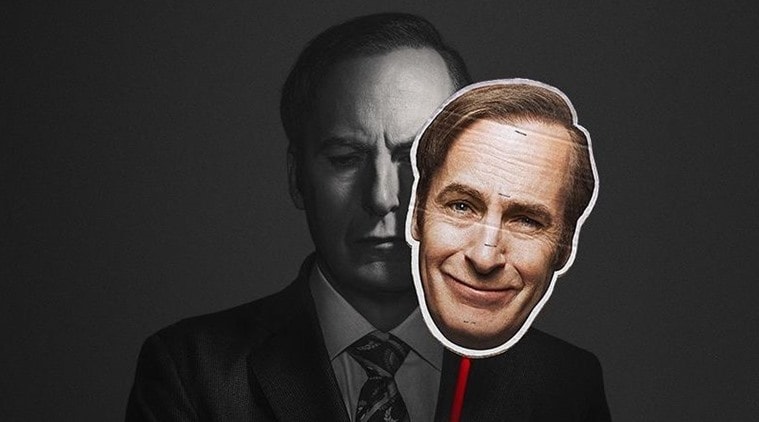
Walter White Vs. Saul Goodman: A Tale Of Two Villains

better-call-saul-644x362

If the road to Hell is paved with good intentions, then the road to villainy has many paths with similar landmarks. Well-developed villains can be every bit as compelling as their heroic counterparts, if not more so. Ever since Heath Ledger’s Joker stole the show and an Oscar in “The Dark Knight,” great villains aren’t just a complement to the heroes. They’re a journey unto themselves.

At the moment, Walter White from “Breaking Bad” is the ultimate embodiment of this journey. His path to villainy made for some of the greatest moments in modern television and Bryan Cranston has the Emmy trophies to prove it. Since then, it seems as though everyone is just struggle to keep up.

However, there’s one journey that comes very close and is remarkably similar. Fittingly enough, it spins right out of the world of “Breaking Bad.” I’m talking, of course, about “Better Call Saul,” the prequel/spin-off that tells the story of how an aspiring lawyer named James McGill became the morally bankrupt legal guru, Saul Goodman.

I’ve been watching this show closely for a while now. I was originally planning to wait until the conclusion of Season 4 to write about it, but after re-watching the Season 3 finale, I feel like there’s too much to work with. After seeing that episode, I feel like I saw a turning point in the ongoing transformation of James McGill to Saul Goodman. I also saw some important parallels with Walter White that are worth discussing.

At its core, “Breaking Bad” is a story about how a law-biding man goes from an underpaid chemistry teacher to a blood-thirsty drug kingpin. Creator Vince Gilligan nicely summed up Walt’s transformation as going from Mr. Chips to Scarface. That journey, and the story behind it, took an initially unassuming character and turned them into someone they never thought they could be.

The essence of “Better Call Saul” is very different. James McGill is not the same as Walter White. From the very first episode, we can see traces of the unscrupulous con man manifesting in a many ways. The show establishes in Season 1 that James McGill is not some clean-cut straight-arrow like Walt was. His soul was tainted before he ever applied to law school.

James “Slipping Jimmy” McGill is someone who always seems inclined to cut corners, break rules, and cheat to get ahead. That’s something his older brother, Charles “Chuck” McGill, constantly points out over the course of the first three seasons. Every time Jimmy had a chance to do the right thing, he compromised. Just doing the right thing wasn’t enough for him.

Walter White’s decision-making process was similar. In the early seasons of “Breaking Bad,” he showed a reluctance to cross certain lines and go too far. He often found himself pushed or tempted, sometimes by forces beyond his control and sometimes by the consequences of actions. At the end of the day, though, he still didn’t get off that path.

That’s a common thread for many villains in their journey. They find themselves on that path and they see opportunities to leave it, but they choose not to. They don’t seek redemption like a hero would. They just keep making excuses, willfully entering a brutal cycle of corruption and compromise.

Whereas Walt succumbed to that cycle, though, James McGill steadily embraces it. Moreover, he isn’t drawn into that path by tragedy or bad luck. He gravitates towards it. He’s even excited by it. James is at his most animated and charismatic when he’s pulling a con, putting on a show, or crafting a lie. It’s not a necessity like it was for Walt. It’s a thrill.

If James is tempted by anything, it’s the lure of walking the honorable path like his older brother. In fact, Chuck might have been the only positive influence that kept Jimmy from becoming something worse than a sleazy con-man. He and a host of other influence, especially Kim Wexler and Howard Hamlin, play the part of a reverse temptress, trying to keep him off that villainous path.

Early on, there’s a sense that James genuinely wants to be a decent, upstanding lawyer. There are situations where he does the right thing. Some of the causes he takes on, such as a case against an elder care facility that was stealing money from its residents, are objectively noble. In the end, though, doing the right thing isn’t enough for him. The end of Season 1 really cements that.

Walt goes through a similar process early on. Like the “refusal of the call” that heroes experience, Walt attempts to escape the villainous path. However, a combination of circumstances and choices put Walt back on the road towards becoming Heisenberg. By the end of Season 1, there’s a sense that there’s no going back.

Where Walt and James diverge, as villains, it’s how and why they make their choices. Walt becomes Heisenberg because he think he has to, first for his family and later for selfish reasons. James becomes Saul Goodman because he wants to. He tried to be the upstanding lawyer his brother and friends wanted. It just didn’t work for him. Being James McGill just wasn’t enough.

There’s plenty of conflict surrounding those choices. Part of why I love “Better Call Saul” is how it reveals the steady progression from James McGill to Saul Goodman. It doesn’t happen all at once. It doesn’t even happen in a steady, linear narrative. James fluctuates on his journey to becoming Saul. He even hesitates a few times. He still doesn’t avoid it in the end.

That ending, as revealed through the finale of “Breaking Bad” and the flash-forward sequences of “Better Call Saul,” shows one other key distinction between Walt and Jimmy. While both men complete their villainous journey, they both end up in very different places. Walt is dead or at least close to it, as some fan theories predict. However, Saul Goodman’s fate might actually be worse.

In the first minutes of the first episode of “Better Call Saul,” we see what came of James McGill/Saul Goodman after the events of “Breaking Bad.” Gone are the days where he shows up in flashy commercials and hatches elaborate cons on unsuspecting people. Instead, he lives an unexciting, mundane life in Omaha, Nebraska managing a Cinnabon.

Some might argue this is Saul’s personal Hell, trapped in a such a sad and unassuming life. I would say it’s more like his purgatory. In this world, he can’t embrace that villainous persona that gave him so many thrills. Even if he wanted to be that villainous character again, he can’t because it means losing what little he has left.

Just as he frequently did in the early seasons of “Better Call Saul,” James McGill takes the easy way out. Walt tried that too in the last few episodes of “Breaking Bad,” but that didn’t last. He eventually chose to confront the byproduct of his villainous choices. James ran and didn’t look back. The easiest path, in the journey of a villain, is often a coward’s path.

Whether or not James McGill escapes his purgatory or continues wallowing in obscurity remains to be seen. The fact he ends up in this state after undergoing this transformation into Saul Goodman reveals another critical component to the villain’s journey. While the hero ultimately triumphs, the villain eventually loses. It doesn’t always end with them going to jail, but they often endure a less-than-desirable fate.

Breaking Bad” and “Better Call Saul” are both great shows that set a new standard for depicting the evolution of a character into a villain. I won’t claim that “Better Call Saul” is superior to its predecessor, if only because the story isn’t finished. It does, however, accomplish something every bit as remarkable as the story of Walter White.

The process of becoming a villain is a steady, inconsistent journey full of many complications and tough choices. Walter White and James McGill began that journey under different circumstances and ended up in different places. Ultimately, they both crossed lines that sealed their respective fates. It’s tragic in some ways, but it makes for some damn good television.


1 Comment

Filed under human nature, philosophy, psychology, Villains Journey

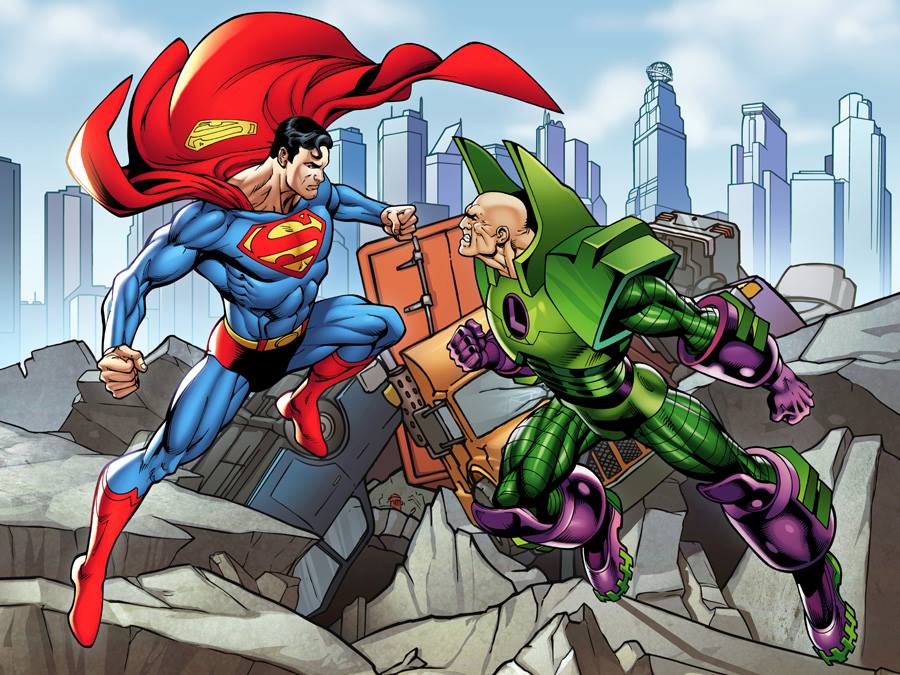
Understanding (And Learning From) Lex Luthor’s Hatred Of Superman

supes-vs-lex

As a lifelong fan of superhero comics and someone who enjoys shows like “Breaking Bad,” I’m genuinely fascinated by villains. Specifically, I’m intrigued by what makes them tick and why they walk the villain’s path. Their journey is distinct from that of a hero, but one that can be just as compelling.

In many cases, these villains have capabilities that allow them to solve many of the world’s problems. I’ve cited Dr. Doom as one of those villains who blurs the lines of villainy because of his intentions. Characters like Dr. Doom genuinely believe that their villainous actions are justified because it will lead to a better, safer, more prosperous world. Heroes also believe that too, which helps fuel their epic battles.

For a character like Lex Luthor, though, the line isn’t that blurry. He’s a villain, plain and simple. He’s selfish, callous, arrogant, cruel, and narcissistic to an extreme. If he existed in the real world, he would check every box for narcissistic personality disorder. In terms of personality, he’s the polar opposite of his nemesis, Superman.

That goes a long way towards giving Superman an enemy who stands against his heroic ideals. I would even argue that Superman couldn’t be the iconic kind of hero he is without Lex Luthor. At the same time, I also think Lex reveals something critical about humanity, morality, and superheroes in general.

That’s difficult to see because for much of Lex’s early years in comics, there wasn’t much depth to his motivation. He just wanted to dominate the universe and Superman was in his way. It’s basic and bland, but that was typical for the early era of superhero comics. Villains like Lex were mostly just obstacles for the heroes to overcome in their journey.

That changed in the late 80s and early 90s with the modern era iteration of Lex Luthor. Finally, Lex got more backstory and depth. He was still no Walter White, but these details helped set the stage for the kind of villain he became. It also helped establish why he hates Superman so much.

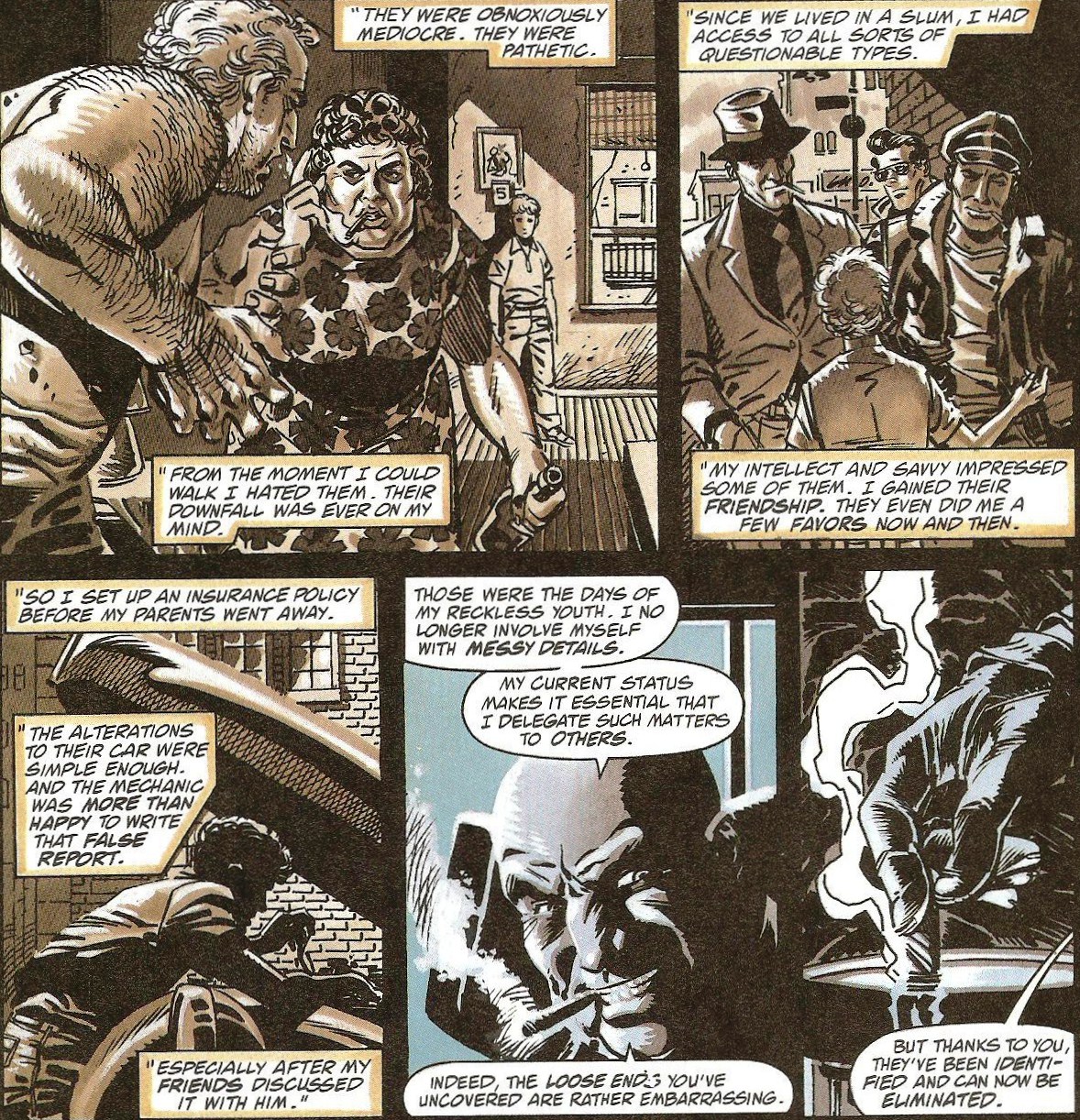
Whereas Superman landed on Earth and was adopted by loving parents, Lex grew up in a rough part of Metropolis called the Suicide Slums and was raised in an abusive household. Right off the bat, Superman gets lucky by having the best parents a child of any species could ask for while he’s unlucky enough to be born with the worst.

As a result, Lex had to be ruthless, manipulative, and cunning. Unlike other villains, though, he didn’t need much tempting. He didn’t agonize over his moral decisions, either. He just did it and didn’t feel a shred of guilt. That includes the role he played in the death of his parents.

That alone establishes Lex Luthor as the kind of ruthless villain who would oppose Superman for any number of reasons. However, as evil as that act was, it’s important to note the motivation behind it. Lex didn’t just kill his parents because murder makes him happy. He did it because they were an obstacle and an opportunity.

They were holding him back, but their deaths meant insurance money that he could use to strike out on his own and build something worthy of his genius. To him, the morality of his decision didn’t matter. Only the results mattered. That’s a critical detail and one that puts Lex Luthor’s villainy into a unique context.

Lex, being one of the smartest characters in the entire DC universe, doesn’t care much for things that are esoteric and obscure. He’s all about results that are tangible and measurable. That means things like truth, justice, and the American way are empty concepts to him. Superman champions those ideals, but for Lex Luthor, they’re just hindrances.

That kind of cold, callous approach to the world gives a unique substance to Lex’s behavior. He’s certainly not the first person to take such a materialistic approach to reality. Rick Sanchez of “Rick and Morty” does the same, but rather than misanthropic despair, Lex Luthor sees it as the key to producing the results he seeks.

Moreover, he has to produce those results without the god-like power that Superman wields. If Superman wants to move the Earth out of the way or destroy an oncoming asteroid, he doesn’t have to build anything or learn anything. He just has to flex his muscles, fly up into the sky, and destroy it with a single punch. There’s no tangible reason to his actions beyond it being the right thing to do.

To Lex Luthor, that’s not just an affront to someone who had to work for everything he ever gained. It’s an insult to his egocentric, results-focused worldview. Just saving the world because it’s the right thing to do doesn’t achieve anything. It does nothing to move humanity forward because nobody had to produce something of merit. It just allows them to continue in the same, unaltered state.

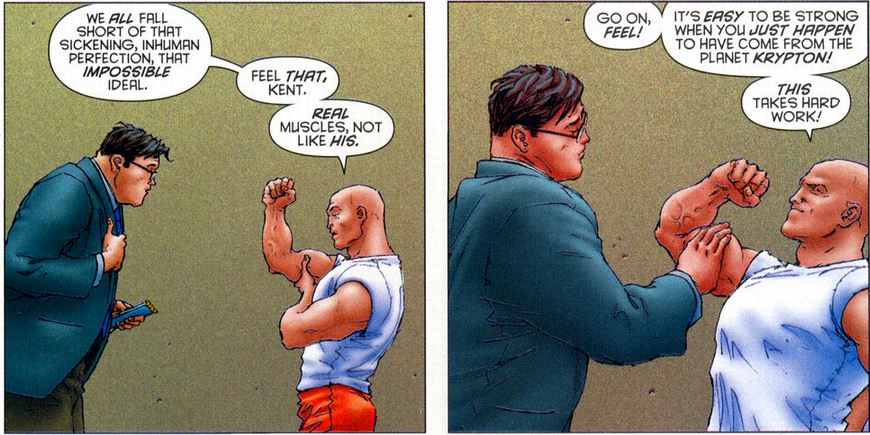
This gets to the heart of why Lex Luthor hates Superman. The extent of that hatred was fully articulated in one of the best modern Superman stories ever told, “All-Star Superman” by Grant Morrison and Frank Quitely. If you only read one Superman comic, make it this one because it perfectly encapsulates the pure heroism of Superman and the cold villainy of Lex Luthor.

In one critical part of the story, Lex tells Clark Kent, who he doesn’t know is Superman, what it means to actually work for his power. Superman, for all his idealism, did nothing to earn his abilities. He just happened to be an alien who landed on a planet with a yellow sun.

It’s like winning the lottery as opposed to working hard for a fortune. One is built on hard work and skill while the other is just dumb luck. Beyond basic jealousy, though, Lex makes another critical point about the ideal Superman sets.

From his perspective, that lofty ideal diminishes the entire human race. By being this other-worldly savior who achieves all these impossible feats, Superman reveals how inept the human race is. More importantly to Lex and his massive ego, it shows just how feeble his achievements are, despite all the work he put in.

Being the extreme narcissist he is, Lex takes that as the ultimate insult. In terms of the bigger picture, it establishes that neither he nor humanity can achieve their full potential. In that context, it’s understandable why Lex dedicated so much time and energy to killing Superman.

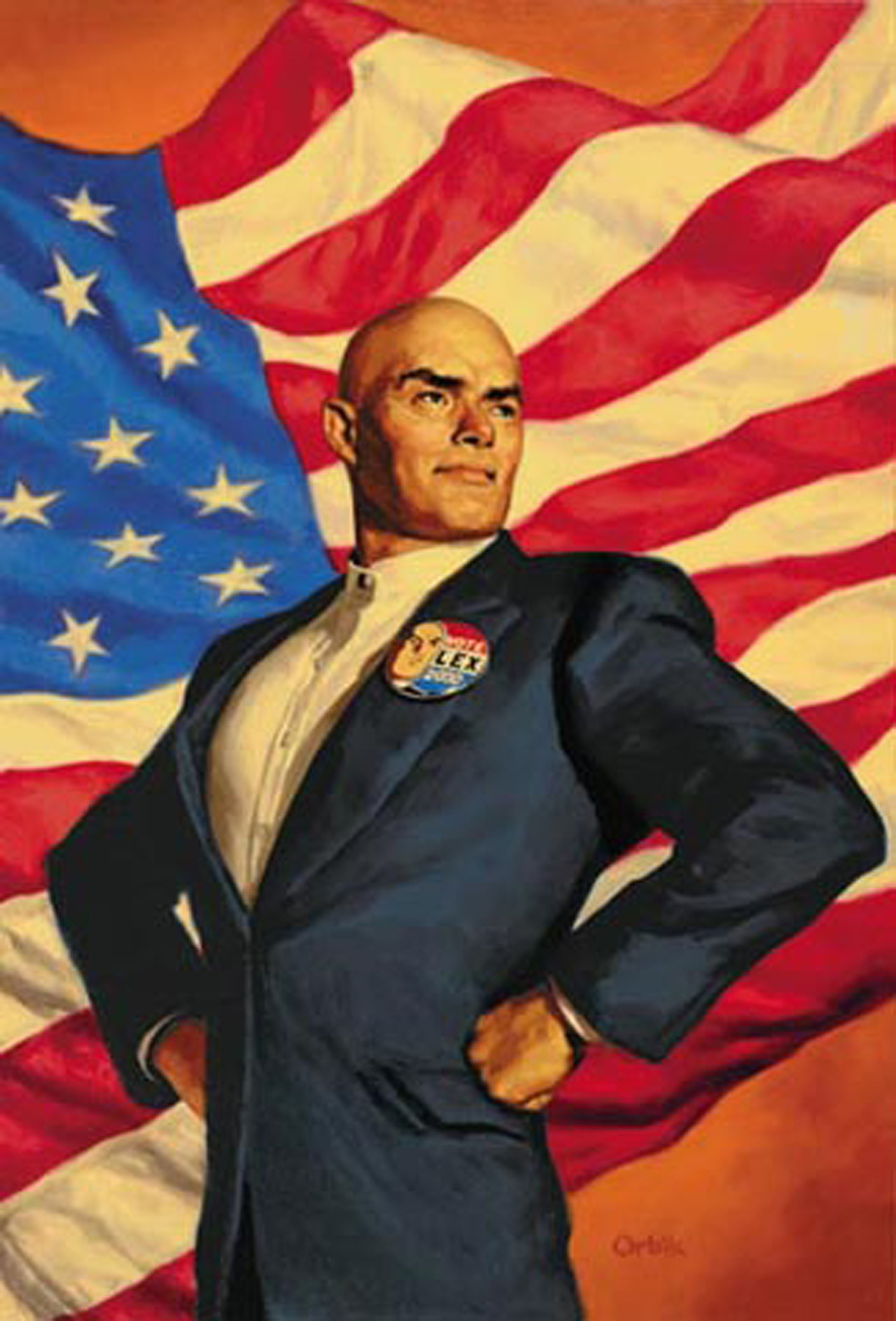
I won’t get into all the ways Lex has tried and failed over the years, although one of his plots did involve him becoming President of the United States. Whatever his methods, I think there’s a larger lesson to learn from Lex’s hatred and for once, it goes beyond his ego.

A big part of what turns someone into a villain is this sense that the world isn’t fair, but could be made better with the right guidance. Lex believes he’s capable of providing that guidance and not just because of his ego. He is, objectively, one of the smartest and most capable human beings on the planet. However, it’s Superman who keeps Lex from making the world less unfair.

Superman believes in the merits of truth and justice. He inspires others to uphold these ideals, even without his vast power. That’s a problem for Lex, who builds much of his power on lies and treachery. To him, though, he doesn’t see that as wrong. He just sees that as the most efficient way to get results.

To uphold truth and justice, in his brilliant mind, is to prevent the world from progressing. Granted, progress in Lex Luthor’s mind means him being in charge, but that doesn’t necessarily undermine the implications.

Like Dr. Doom, Lex is ambitious in that he doesn’t just want to save the world like Superman. He wants to fundamentally change it and he’s willing to cross any line to achieve that. Killing Superman is part of that change, but so is becoming a billionaire and a future President of the United States. If a billion people die in the process, then that’s acceptable because it means humanity is stronger because of it.

There have been times in the comics where Luthor’s vision has manifested. In another critically-acclaimed Superman story, “Red Son” by Mark Millar, Lex has a chance to lead the world into a brighter future. By and large, he succeeds. He’s still an unapologetic narcissist, but he still gets the results he seeks.

Like all great conflicts between superheroes and their arch-nemesis, the dichotomy between Superman and Lex Luthor is stark. They’re two extremes on opposite ends of a spectrum delineating heroism and villainy. By being on those extremes, though, it’s easier to see the inherent shortcomings of both.

While Lex’s shortcomings are easier to identify since he’s an outright villain, he does help identify an important flaw in Superman’s idealism and one that extends to superheroes, as a whole. Superman is willing to save the day, but he’s not willing to cross any lines. He will only ever do the right thing and that means not sacrificing innocent lives or usurping individual freedom.

Those heroics will keep the world turning, but they won’t move society forward. Superman believes in inspiring humanity rather than doing it for them, but Lex Luthor believes his heroism achieves the opposite. It just makes people complacent and dependent on heroes like him rather than crossing the lines that he’ll cross to get things done.

At the end of the day, both in the real world and the world of comic books, we have to determine how much we’re willing to pay for the results we seek. Lex is willing to pay any price. Superman isn’t willing to pay a cent beyond doing the right thing. Most reasonable people, including other superheroes, fall somewhere in the middle.

In the pantheon of super-villains, Lex Luthor is probably the easiest to despise and the hardest to understand. Like Superman, he exposes another side of an ongoing struggle between doing the right thing and achieving more. As society continues to progress, achieving abilities rivaling that of any superhero, it’s a struggle we’ll have to confront.

3 Comments

Filed under Comic Books, Jack Fisher, Superheroes, human nature, philosophy, psychology, superhero comics

Why You Can’t Believe In Eternal Hell, Be Anti-Abortion, And Be Morally Consistent

The Fallen Angels Entering Pandemonium, from 'Paradise Lost', Book 1 ?exhibited 1841 by John Martin 1789-1854

Brace yourself because I’m about to talk about two topics that make people very uncomfortable. One is abortion, a heated political topic that is poised to get even more heated, due to recent political upheavals. The other is Hell, a distressing theological issue that makes us dwell/lament on our impending death. If that weren’t volatile enough, I’m going to tie both topics together.

Rest assured, I’m not doing this to combine a couple of controversial issues for dramatic effect. While I loathe talking about issues like abortion, I don’t avoid it when it reveals something important about a particular movement or can demonstrate important lessons about society.

When it comes to Hell, a topic that heats up any debate between believers and non-believers, the conversations are just as difficult. I still feel they’re worth having. This one, in particular, counts as one of them because there are certain implications that warrant a more nuanced discussion.

It’s no secret that those who are vehemently anti-abortion also happen to be religious. Anti-abortion protesters even cite bible passages to justify their position. Now, I can understand and even accept certain ethical aspects of the pro-life position. However, when religion enters the debate, that’s where some real disconnects emerge.

That’s because when those factors enter the pro-life equation, both the morality and the math break down. To understand why, it’s important to focus on an aspect of the abortion debate that the late, great George Carlin famously emphasized. He sought consistency in the anti-abortion debate and noted its rarity in the most hilarious way possible.

Consistency is important if your argument is going to have merit. Even with emotionally-charged topics like abortion, consistency is key to ensuring that an argument has some semblance of logic. Since logic and faith tend to conflict, especially in matters of science, bringing religion into the mix can easily derail that consistency.

This is where the issue of Hell enters the picture. It’s a very unpleasant, but very critical concept to certain religions, namely Christianity and Islam. It’s central to their theology, which emphasizes punishment for the sinful. It’s a very morbid, but very relevant concept because everybody dies and nobody knows for sure what happens afterwards, if anything.

In the abortion debate, Hell matters for the anti-abortion side because their most frequent refrain is that abortion is murder. Having an abortion is the taking of a human life and murder is an egregious sin. It’s one of the few sins that’s enshrined in both secular law and the 10 Commandments.

By holding that position, though, it raises an important implication for both the consistency of the anti-abortion position and the theology used to justify it.

If abortion really does take a life, then what happens to that life? Does it go to Heaven or Hell?

That’s a critical question to answer, but it’s here where both the consistency and the moral underpinnings of the anti-abortion debate break down. In fact, it doesn’t even matter which way the question is answered. It still has critical implications that make an anti-abortion stance for religious reasons untenable.

To understand why, we need to look at the possible answers to the question and examine the bigger picture. Say, for instance, that you believe the deity you worship saves the souls of aborted fetuses. They all get to go to Heaven because sending unborn children to Hell just doesn’t make sense for a loving God.

By that logic, though, wouldn’t abortion actually be the best thing a woman could do for her unborn child? If, by aborting a pregnancy, she guarantees that her child goes to Heaven, wouldn’t that be the greatest act of love a mother could give?

In that moral framework, any woman who gives birth is basically gambling with their child’s soul. By bringing them into a sinful world, they put them in a position to live a life that will eventually send them to Hell. It doesn’t matter if that chance is remote. It doesn’t even matter if the deity reserves Hell for the worst of the worst. Any child born still has a non-zero chance of damnation.

In that context, being anti-abortion is the worst position to take for someone who believes that their deity sends aborted fetuses to Heaven. If anything, they would have to be in favor of abortion for every pregnancy, planned or unplanned, because it means more souls in Heaven and fewer in Hell.

The implications are just as distressing if you answer the question the other way. If your deity sends aborted fetuses to Hell, then logic follows that this deity cannot be just or loving. A fetus, by default, has no ability to even contemplate sin, let alone commit it. Sending it to Hell implies that sin, itself, is an empty concept.

It also undercuts key aspects of Judeo-Christian theology, which says that someone must sin to warrant damnation. Holding both a fetus and a young child with a limited capacity to understand such concepts is untenable. Keep in mind, Hell is supposed to be full of torture and suffering. What kind of deity puts a child through that?

Even if the deity knows which fetus or small child is destined to sin and punishes them accordingly, that still renders the anti-abortion position pointless. If the deity already knows which life is damned, then why does it matter whether a woman opts to have an abortion? If that has already been determined, then abortion has no religious implications whatsoever.

Whatever the case, the very concept of Hell creates an illogical loop that is incapable of consistency. Even if you grant the most generous assumptions of a religious argument, it still falls apart as soon as you try to put it into an ethical framework.

While the very concept of Hell is subject to all sorts of moral complexities, it effectively supercedes those complexities in the abortion debate. Either Hell is full of innocent aborted souls or is devoid of them. In both cases, it reveals more about the deity and the adherents of a religion than it does the actual issue.

None of this is to say that those who make anti-abortion arguments on the basis of faith aren’t sincere. I don’t doubt for a second that they are. They genuinely believe that abortion is immoral and constitutes murder. However, when it comes to making a moral argument, consistency matters. Without it, the arguments are entirely arbitrary and there’s no winning that debate.

6 Comments

Filed under gender issues, human nature, philosophy, political correctness, religion, sex in society, women's issues

The Hard Consequences Of Soft Censorship

internet-censorship

If you walked up to any random person on the street and asked them how they feel about censorship, chances are they would say they’re against it. Absent any context, most people equate censorship with tyranny and rightly so. Historically speaking, tyrannical societies are not beacons of free speech.

When you add context to that same question, though, then people are a bit more diverse in their response. They may say they’re against censorship, but they’ll also oppose hate speech and even support efforts to remove it from certain venues or platforms. It’s not the same as government-suppressed speech, but it’s still censorship on some levels.

A government’s effort to prohibit or punish speech is more daunting. That’s exactly why we have things like the First Amendment. Governments are big, powerful entities with armies and tax collectors. Their brand of censorship is a lot more concrete than others. That’s why such extensive legal protections are necessary.

When it comes less overt forms of censorship, though, the line isn’t as clear and neither are the legal protections. It can take the form of de-platforming a controversial speaker, which has happened on college campuses. It can also take the form of banning certain websites or certain subgroups within a website. These efforts aren’t usually called censorship. They’re usually referred to as preventing the spread of hate.

Personally, I don’t buy that excuse. As much as I abhor some of the things people say, both online and in person, any attempt to indirectly silence them is still censorship in my book. I call it “soft censorship” because it doesn’t involve government force. In many cases, it’s a grass roots effort to combat certain ideas that many find offensive.

That seems to be the most notable standard these days, the offensiveness of certain speech. That’s understandable, given how the world is more connected than it has ever been in human history. It’s now easier than ever for hateful, offensive speech to spread. Conversely, it’s also easy for the outrage to that speech to spread as well.

As a result, the forces behind that outrage are often the most powerful forces behind soft censorship. That outrage takes many forms too. It can be driven by political correctness, religious dogma, and general trolling. Censorship or suppression of speech is not always the stated goal, but it is often a desired result.

Given the ongoing changes to the media landscape, this brand of censorship seems to be getting more prominent than anything government effort. In fact, the reason I chose to bring this issue up is because of a few notable incidents that highlight the growing disconnect between free speech and movements to combat hate speech.

The first incident happened earlier this year and came from the gaming world, a domain that is no stranger to censorship and targeted outrage. The outrage in this case, though, had nothing to do with how beautiful women are depicted and everything to do with the policy of the popular Steam platform by Valve.

The particulars of the issue are simple. Valve was getting criticism for allowing too many violent, adult-oriented games on their platform, including those with overtly erotic themes. For a while, it looked like they would follow the same policy as Nintendo and Apple, who don’t allow anything that can’t be shown in a Disney movie.

Surprisingly, and refreshingly for some, Valve opted for a more libertarian policy. The standards are simple. As long as the content isn’t illegal or outright trolling, then it’s permitted. In the context of freedom of speech and creative freedom, this should count as a victory. However, that’s not how some saw it.

Almost immediately, Valve was heavily criticized for this freedom-centric policy and for all the wrong reasons. Some went so far as to call it irresponsible and cowardly, daring to permit games on their platform that might be overly graphic, crude, or sexy. Being a private company and not a government, that’s certainly their right.

Even so, it generated outrage. People didn’t see it as an act to promote free expression. They see it as a means of spreading hateful, offensive, sexist content and profiting from it. At at time when the video game industry sparks outrage every time it depicts a female character, Valve really took a chance by taking this approach and it’s sure to generate plenty more controversy, albeit for the wrong reasons.

Those same reasons showed up in another incident involving Reddit, a site on which I’m very active. Specifically, it involved a subreddit called KotakuInAction, which emerged in wake of the infamous GamerGate controversy in 2014. As a result, it has a reputation for being pretty brutal in its criticisms of regressive, far-left attitudes.

It’s oftent cited as one of the most “toxic” places on Reddit. There have been more than a few efforts to ban it. At one point, for reasons that I’d rather not get into, it was actually removed by its original creator. However, it was saved and put back up within less than a day, much to the relief of the nearly 100,000 subscribers.

Few will call that a victory for free speech. Those who criticize Valve and Reddit for permitting it don’t see their actions as suppressing speech. They see it as combating harassment and hate. Therein lies the problem with that effort, though. Harassment and hate are serious issues, but attacking only the speech is like attacking a single symptom of a much larger disease.

Even if Reddit had permanently banned KotakuInAction and Valve had opted to censor offensive games, it wouldn’t have made the ideas behind them disappear. Like putting a censor bar in front of female breasts, it doesn’t change the fact that they’re there and that they have an impact.

You could turn off the internet, burn every book, and shut down every newspaper tomorrow. That still wouldn’t stop people from thinking and feeling the things that lead them to want to say something offensive or create an offensive game. Speech is just a byproduct of ideas. Attacking the speech is not the same as confronting the source.

In fact, doing so can be counterproductive. There’s a real phenomenon called the Streisand Effect wherein efforts to hide, remove, or cenors something ends drawing more attention to it. The fact that Area 51 is a super-secret government facility that everyone knows about shows how powerful that effect can be.

In the context of combating hate, efforts to censor those behind it can end up elevating their message. When someone is censored, there’s an application of force implied. Whether it’s from a government or a moderator on a message board, censorship requires some level of force. Applying it to anyone is going to put them in a position to feel oppressed and that oppression tends to fuel hatred.

Harassment is different because when it comes to free speech, the line between discourse and threats is a bit less ambiguous. The Supreme Court has established a criteria for what constitutes “fighting words,” but it’s when things happen on a computer screen where it gets tricky.

Like hate, though, there’s a right and wrong way to deal with harassment. The right way to deal with a direct threat is to contact local law enforcement. The wrong way is to make it into a spectacle that requires that both the harasser and the platform they used to be condemned.

It’s an inescapable fact of life in any functioning society. The same platforms we use to interact will be used by others for disgusting, hateful, and offensive activities. We may feel disgust and revulsion for these things, but trying to silence both the people and the platform doesn’t make the sentiment behind it go away.

That’s the ultimate danger of soft censorship. It’s not like a censorship-loving government that can be overthrown or reformed. It’s a mentality that seeks to remove content from certain mediums in hopes that it will subsequently discourage the mentality behind it. Unfortunately, human beings aren’t wired that way.

That’s the ultimate danger of soft censorship. It’s not like a censorship-loving government that can be overthrown or reformed. It’s a mentality that seeks to remove content from certain mediums in hopes that it will subsequently discourage the mentality behind it. Considering the impact of the the Streisand Effect, it’s utterly backwards.

I’m all for confronting hate and combating harassment, but not through censorship, hard or soft. It’s hard enough trying to change someone’s mind in an era where they can customize their news feeds. At the end of the day, we can only truly affect someone’s heart and mind by focusing on the person and not what’s on their computer screens.

Leave a comment

Filed under censorship, Current Events, human nature, media issues, political correctness