
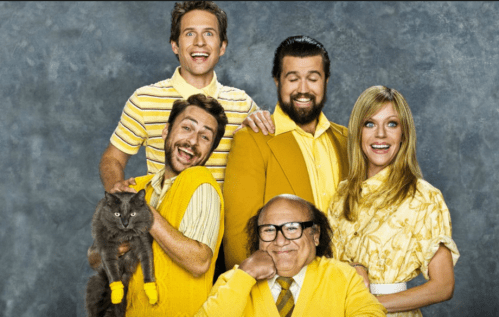
Every TV show, from sitcoms to talk shows to adult cartoons featuring dimension-hopping super-genius, attempts to capture a certain theme and hone it to the utmost. They try to craft the right kind of characters who exhibit the necessary traits to convey those themes while still being memorable, likable, and endearing. On top of that, they have to do it for multiple seasons, at least until they achieve syndication.
It’s an enormous challenge. Few shows succeed and even fewer do so consistently. Even among those select few, there’s a risk that the characters and stories will get stale. Due to the nature of half-hour TV shows, there’s only so much you can do before Archie Bunker’s casual bigotry becomes more pathetic than funny. That doesn’t even get into shows that end up crashing and burning in the series finale.
Then, there’s a little show called “It’s Always Sunny In Philadelphia.” In the annuls of TV history, this show is basically a unicorn wrapped in gold, covered in diamonds, and encoded with the browser history of every active politician.
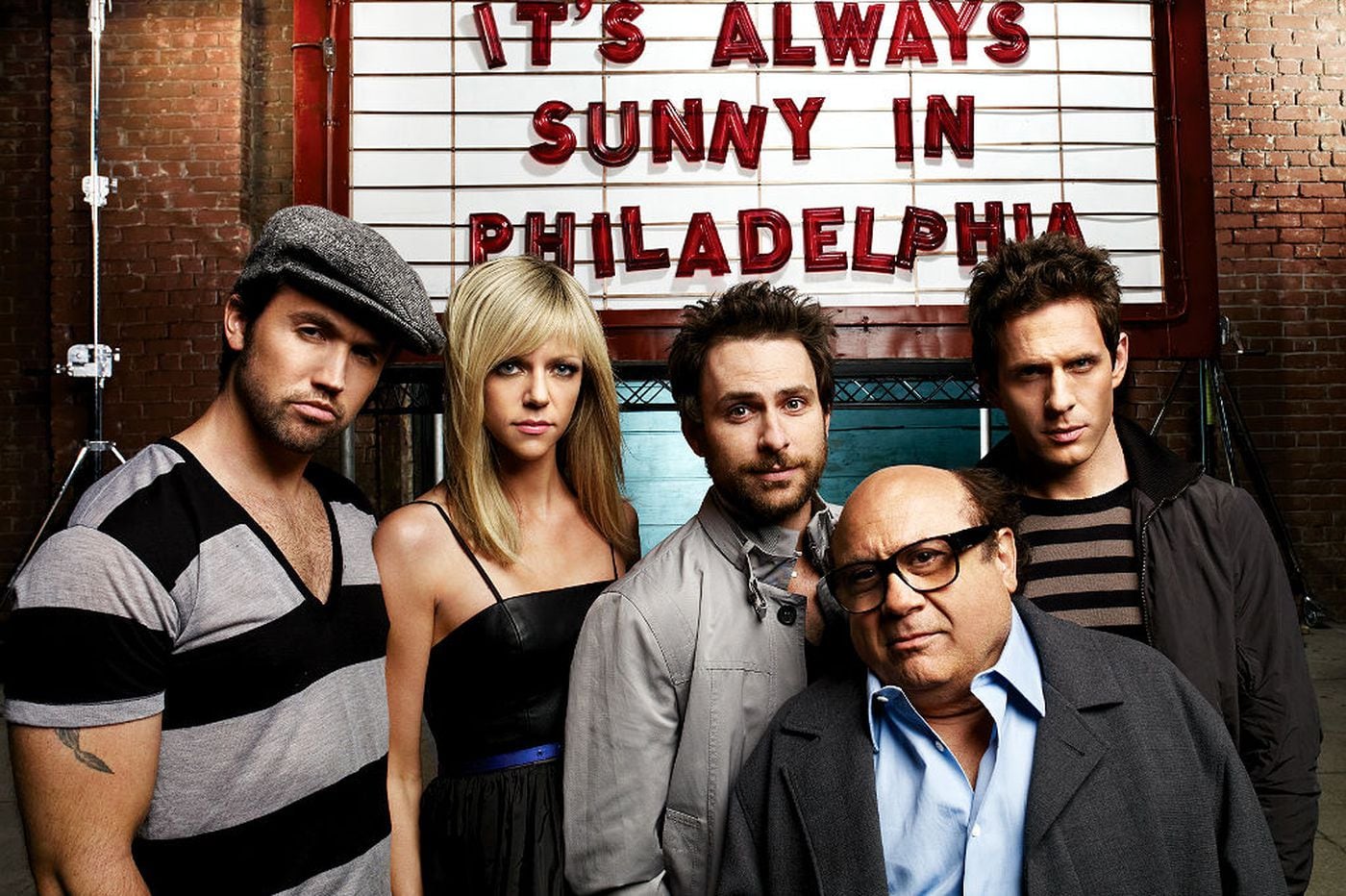
Pragmatically speaking, this is a show that should not have lasted 13 seasons. For one, it airs on FX, a network most people probably don’t know they have, if they actually have it. In addition, the show’s budget is incredibly limited. The pilot was allegedly shot for less than $100 by a cast of aspiring actors who had zero name recognition, at the time.
On top of that, there’s the premise of the show. In its simplest form, “It’s Always Sunny In Philadelphia” follows the shameless misadventures “the Gang.” This crew consisting of Charlie Kelly, Ronald “Mac” McDonald, Frank Reynolds, Dennis Reynolds, and Deandra “Sweet Dee” Reynolds basically take every traditional approach to making an enduring TV show and punches it in the kidneys.
This is a show where the characters will buy a boat with the intention of entrapping women.
This is a show where the cast will make an unauthorized Lethal Weapon sequel, complete with blackface, homoerotic subtext, and gratuitous sex scenes featuring Danny DeVito.
This is a show where two people are tricked into digging up the body of their dead mother.
This is a show where you’ll see people hold a funeral for a baby to get out of a tax audit by the IRS.
These are not the activities of lovable characters. Even Shelden Cooper had moments in “The Big Bang Theory” where he came off as genuinely compassionate. With the Gang, there are none of those moments. Sometimes, they’ll be teased. In some episodes, the Gang will give the impression that they’re about to finally realize just how deplorable they are.

Trust me, they’re doing exactly what you think they’re doing and then some.
Ultimately, they don’t just revert back to their less-than-reputable selves. They demonstrate that they never had any intention of changing their ways. Anyone who believed otherwise either hasn’t watched more than two episodes of the show or are deluding themselves. As antithetical as this is for crafting a compelling TV show might be, it doesn’t change one inescapable fact.
“It’s Always Sunny In Philadelphia” is funny, enjoyable, and obscenely entertaining.
It almost sounds like a paradox. As someone who only recently became a fan of the show, I have hard time explaining that appeal to most people in a way that doesn’t sound weird. It takes a moment to appreciate the appeal of watching a cast of self-absorbed, narcissistic alcoholics. However, within the tone and context of the show, it doesn’t just work. It achieves something profound.
Specifically, “It’s Always Sunny In Philadelphia” is the perfect manifestation of dark comedy at its finest.
Comedy, in any form, can be difficult. Jokes, gags, and bits can become overplayed and stale. There’s only so many times you can watch Charlie Brown fail to kick a football and still laugh. Dark comedy is even more difficult. It involves taking distressing, taboo subjects and trying to make them funny. Some, like George Carlin, can pull it off masterfully.
I like to think that if George Carlin were still alive, he would be a fan of “It’s Always Sunny In Philadelphia.” The show’s approach to dark comedy isn’t overly complex. It’s just exceedingly overt. It doesn’t try to balance out those dark themes with something serious or nuanced. It blatantly takes things to an extreme and dares to laugh at the absurdities.

Trust me, it gets more absurd than this.
Take, for instance, the funeral for the dead baby that I mentioned earlier. There are only so many ways you can make funerals and dead babies funny, but this show never shies away from a challenge. It also helps that every character in the Gang has the moral fiber of a Big Tobacco lobbyist on crack. They won’t just cross lines. They’ll make it a spectacle.
In this particular case, Sweet Dee is getting audited and for good reason. She acted as a surrogate to carry the child of a transgender woman that Mac used to date. Trust me, it’s more absurd that I can ever put into words. However, Dee didn’t do this out of the goodness of her heart. Nobody in the Gang is ever that altruistic. She did it because she got paid. Then, she decided to list the kid she gave up as a dependent for the tax benefits.
Naturally, this put her at odds with the IRS. Like every problem the Gang faces, she tries to run away from it or pass off the problem to somebody else. However, the problem only escalates. In most TV shows, especially half-hour sitcoms, this is the point where the characters face the consequences of their actions and try to learn from it. Instead, the Gang tries to resolve the problem by holding a baby funeral.
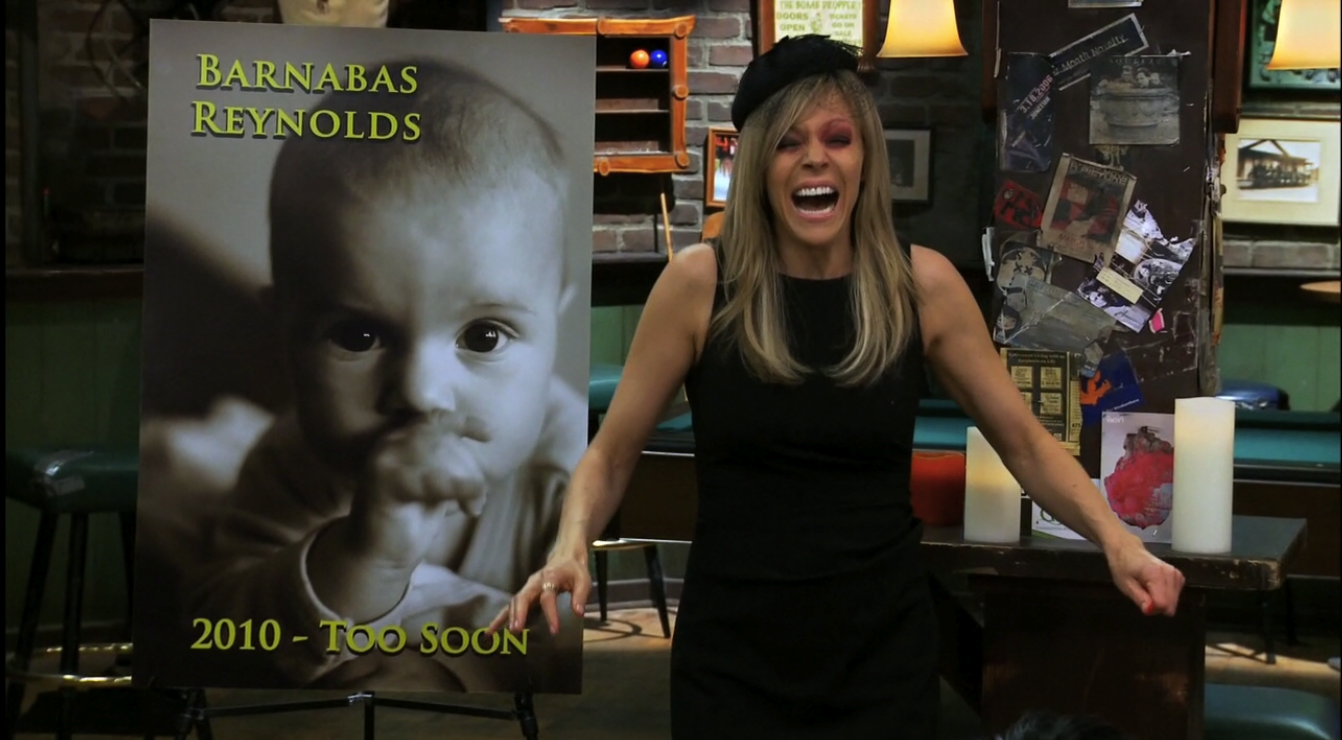
It’s undeniably dark, but the way it plays out is still funny. The way Dee and the rest of the Gang conducts themselves is so irreverent that the inherent darkness of the issue only makes it funnier. It shows just how far the Gang is willing to go to shirk responsibility and avoid consequences. It gets bad and it belabors just how irredeemable these characters are, but it’s still funny.
A big part of what makes that approach funny is how blatant this show is when it comes to the time-tested tropes that TV shows have relied on for decades. Take any show, from “Breaking Bad” to “Friends,” and you’ll see a concerted effort to develop and progress the characters over time. Ideally, they achieve some sort of ultimate goal by the end.
Instead of growth, the Gang actively avoids any effort at growth. Their only goal is to continue being the unapologetic assholes they’ve always been, drink heavily, and recklessly pursue whatever crazy ideas they come up with. Who they are in the first few seasons of “It’s Always Sunny In Philadelphia” aren’t considerably different than who they are in the latest season.
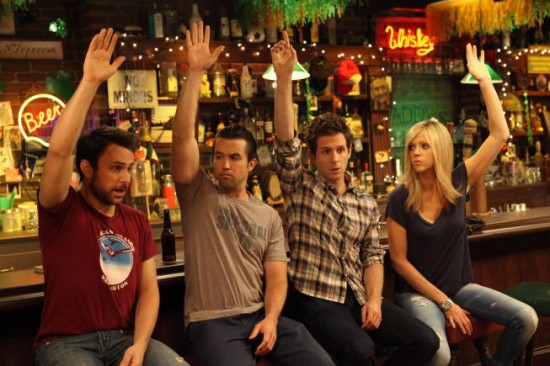
In any other show, characters who don’t grow and progress usually derail the underlying themes. Sometimes, that’s unavoidable. The very structure of a TV show, especially a half-hour sitcom, ensures that the characters can only grow so much. Even after the show achieves syndication, it tries to stick to a formula, even if doing so undermines the very process the characters need to evolve.
By going out of their way to not evolve, the Gang insures “It’s Always Sunny In Philadelphia” never deviates too far from the qualities that make it funny. It even channels its use of dark comedy to poke fun at the same tropes that other shows heavily rely on. From the frustrating use of clip shows to turning romantic sub-plots into a case study for excessive stalking, the show seems to revel in spitting on these time-tested methods.
What makes that comedy even more potent is that after 13 seasons, “It’s Always Sunny In Philadelphia” has lasted longer than some of the most iconic TV shows in history. It has outlasted the likes of “Cheers,” “Mash,” “Friends,” and “Frasier.” Moreover, it keeps finding a way to be funny and relevant. I think a non-insignificant part of that is how it uses dark humor.

There’s plenty more to be said about the show and why it has lasted so long. Even some of the show’s cast members have a hard time explaining why the show is still on the air. Even more likely wonder how the show can keep getting away with being so brazen about using dark comedy to tackle issues surrounding race, religion, gender, sexuality, mental health, and bird law.
There are likely many factors that have contributed to the success and longevity of “It’s Always Sunny In Philadelphia.” It helps that the actors and crew of the show really enjoy working together. There’s something to be said about a show in which the original cast have a genuine passion for their work. It’s well-documented how a toxic environment behind the scenes can derail successful shows.
At the end of the day, though, “It’s Always Sunny In Philadelphia” works because it’s funny and entertaining. It found a way to take the best aspects of dark comedy and run with it. As long as it can keep doing that, the show will have an audience. If it can include more episodes that involve Mac dancing or Danny DeVito getting naked, then that’s just a bonus.













/cdn.vox-cdn.com/uploads/chorus_image/image/61408593/BoJackS5_EP6.0.png)









/cdn.vox-cdn.com/uploads/chorus_image/image/59516921/avengers_thanos_concept.0.jpg)










 Jack Fisher's Official Publishing Blog
Why The Outrage Over Brie Larson And “Captain Marvel” Is Misguided (And Counterproductive)
Celebrities sometimes say dumb things. I doubt most people would contest that. Sometimes, celebrities say things that aren’t dumb, but badly taken out of context. I imagine most people would agree with that too. However, in an era where outrage is a national pastime and social media makes it way too easy to blow things out of proportion, it’s easy for a celebrity to cause controversy for all the wrong reasons.
Brie Larson, whose star is set to rise considerably with the release of “Captain Marvel,” is learning this the hard way and a large consortium of angry people on the internet are intent on making it harder. What should’ve been a culmination of a young woman’s career and a female hero’s ascension to the superhero A-list is now mired in the ugliest kind of gender politics.
The origin of that controversy actually had nothing to do with Ms. Larson’s role on “Captain Marvel.” Back in June 2018, she made some overly political comments while accepting the Crystal Award for Excellence in Film. While celebrities making political statements is nothing new, Ms. Larson’s statement was hardly extreme.
It wasn’t some radical feminist tirade.
It wasn’t some angry rant about the outcome of 2016 Presidential Election.
It wasn’t even some act of elaborate virtue signaling by some smug celebrity.
All Ms. Larson did was advocate for greater diversity among film critics. She didn’t just make such a statement on a whim, either. She did so in response to a study published by the USC Annenberg School for Communication and Journalism that revealed a significant lack of representation in the industry of film criticism.
That’s not an unreasonable concern. The western world is becoming more diverse and the success of movies like “Black Panther” and “Crazy Rich Asians” shows that there’s a market for such diverse tastes. Advocating for greater representation in the field of film criticism makes a lot of sense.
Unfortunately, that’s not the message that some people gleamed from Ms. Larson’s comments. All they heard was that she doesn’t want to hear from white men anymore. They somehow got the impression that Brie Larson resents white men and her movies, including “Captain Marvel,” aren’t made for them. They’re not even welcome in the conversation.
Who these people are and the politics they represent is difficult to discern. I don’t think it’s accurate to call them conservative, liberal, feminist, anti-feminist, leftist, or any other political label. Outrage culture rarely gets that specific, but given the heated politics surrounding movies like “Ghostbusters” and “Star Wars: The Last Jedi,” it’s a frustratingly familiar narrative.
While I can understand some of the outrage surrounding “Ghostbusters” and “Star Wars: The Last Jedi,” in this case I don’t think it’s justified. That’s not just because I’m a big fan of Marvel Comics, superhero movies, and all things Captain Marvel. It’s because the actual substance of Ms. Larson’s words don’t warrant the controversy she has generated.
For specific reference, here’s what she actually said during her speech in June 2018. Read it very slowly and try to understand the context of her statement.
Remember, she said these words after learning how little diversity there was among movie critics. Unlike most people, she was actually in a position to do something about it. Being an Oscar winning actress who was poised to join the Marvel Cinematic Universe, her words carry more weight than most.
Even so, those words were construed as racist and sexist, two exceedingly loaded terms that bring out the worst in people, especially on the internet. Never mind the fact that she made clear in her original speech that she did not hate white men. Never mind the fact that she has since clarified her words. She is still being attacked as some angry radical feminist who hates men, especially those who are white.
It would be one thing if she had said outright that white men should be banned from criticizing certain movies. Many celebrities, including a few still relevant today, have said far worse. However, that’s not what Ms. Larson said. She never, at any point, advocated disparaging white men. She didn’t even say that people who hate her movies are racist and sexist, something the “Star Wars” crowd is painfully familiar with.
Again, all Ms. Larson spoke out against was a lack of diversity among film critics. That part is worth emphasizing because it renders the outrage surrounding her statement as utterly absurd. It also makes the targeted attack on the fan reviews for “Captain Marvel” both asinine and misguided.
Even though the movie isn’t out yet, the movie is being targeted with negative comments on Rotten Tomatoes. Since it has only screened for a handful of audiences, it’s unlikely that any of these people actually saw the movie or were inclined to see it in the first place. Some are even claiming that this has already impacted the projected box office for the movie.
Whether that impact manifests remains to be seen, but it’s worth noting that when “Black Panther” was targeted with similar attacks, it failed miserably. At the moment, early reactions to “Captain Marvel” have been glowing so the chances of these attacks hurting the box office are probably minor at best. If the pre-ticket sales are any indication, the movie will likely turn a hefty profit for Marvel and their Disney overlords.
Even if there were an impact, it would be for all the wrong reasons. It would send the message that there’s a large contingent of people who are willing to work together to tank a movie because of comments a celebrity said that had nothing to do with that movie and weren’t the least bit controversial, when taken in context.
In this case, it was simply twisting someone’s comments to make them sseem like they said things that they never said or even implied. Then, those who bought into that narrative simply use that as an excuse to disparage a movie that they haven’t seen. That’s not just absurd, even by the skewed standards of outrage culture. It sends the worst possible message from those who think they’re protecting their favorite movie genre.
It tells the world that they don’t care what a celebrity actually says. They actively look for an excuse to hate someone who doesn’t completely buy into their preferred status quo. It would be one thing if that status quo was just and reasonable, but that’s not the case here.
All Ms. Larson did was advocate for more diversity among film critics. If that is somehow too extreme, then the problem isn’t with her or celebrities like her. It’s with those determined to hate her. There are a lot of issues in the world of celebrities and movies that warrant outrage, but advocating for more diversity in film criticism isn’t one of them.
I can already hear some people typing angry comments stating that if she had said those same words, but changed the demographic to something other than white men, then it would be an issue. However, the fact remains that this isn’t what she said.
It also doesn’t help that Brie Larson identifies as a feminist and that term has become incredibly loaded in recent years. However, she has never embraced the kind of radical rhetoric that other, less likable celebrities have espoused. Until she does, those determined to identify her and “Captain Marvel” as racist, sexist propaganda are only doing themselves and their politics a disservice.
16 Comments
Filed under Celebrities and Celebrity Culture, extremism, gender issues, Marvel, media issues, men's issues, movies, outrage culture, political correctness, superhero movies
Tagged as anti-feminism, Brie Larson, Brie Larson comments, Captain Marvel, Carol Danvers, celebrities, celebrity controversy, celebrity culture, celebrity scandals, ComicsGate, female superheroes, feminism, gender, gender disparity, gender inequality, gender politics, internet outrage, internet trolls, Marvel, Marvel Cinematic Universe, Marvel Comics, Men's Rights Activists, movie criticism, movie critics, movies, MRA, outrage, outrage culture, political correctness, politics, Racism, Rotten Tomatoes, Superheroes, trolls