Tag Archives: relationships

Gender Equality, The Market For Sex, And How Prostitution Affects Both

shutterstock_311561246

How do you put a real, tangible value on sex? I’m just not talking about the hourly rate charged by a prostitute. I’m talking about the kind of value that allows us to quantify an experience in terms of resources, market, and exchange. Sex already has an inherent value in that we need it to propagate our species. Just how far does that value go and how much does it affect our society?

I don’t think I’m exaggerating when I say that sex is the second oldest universal currency in the history of the human species after food. People have been using sex as a currency for millennia and not always in the sense of formal prostitution.

Parents marry their daughters off for dowries. Spies have used sex to extract valuable information. Then, there are teenagers who have sex in hopes of gaining popularity. This sexual exchange goes on all the time in the real world and in any number of movies. Call it prostitution if you want. Hate it all you want. It still happens.

The mere fact that it keeps happening, despite the best efforts of repressive governments, shows that the value of sex does a lot to drive our society. For better or for worse, the pursuit and exchange of sex is one of the most powerful driving forces in the overall human experience.

Given the extent of this driving force, it’s bound to affect how the genders interact with one another. Whether it’s ancient patriarchal societies or western democracies, the exchange of sex has an impact on how people relate to one another. It’s for that very reason that it’s worth pondering what happens when the value of sex is skewed.

This is where it really helps to look at the market value for sex in a libertarian context. Technically speaking, the free market approach is consistent with how sex was exchanged in the hunter/gatherer days of humanity. In that sense, it serves as a baseline of sorts for the market value of sex.

With that context in mind, sex exchanged for certain reasons by a particular gender will have a certain value. A man paying a woman for sex has one value. A woman paying a man for sex has another. A man paying multiple women for multiple sex acts over the course of several nights also has value, albeit a more elaborate one.

That payment doesn’t always involve money, either. Sometimes, the payment is in the form of loving intimacy, not unlike the kind I describe in my books. Sometimes, the payment comes in the form of a particular experience or fantasy, like groupies having sex with rock stars. The key to this exchange is that it is done freely and everyone involves gets the value they seek from it.

Ideally, that’s how the market for sex is determined in perfect libertarian world. Unfortunately, that is not the situation the sexual marketplace faces. Multiple social forces that include the law, social stigma, taboos, and media influences all coordinate to skew the market value for sex. As a result, it skews gender relations as well.

In fact, I would argue that the market value for sex has become more skewed over the past few years than it has in the past several decades. The emergence of the anti-harassment movement and the increasing stigma on certain aspects of male sexuality is inflating the sexual market in some places while crashing it in others.

At the moment, most people would agree that female sexuality is more valued than that of males. Beautiful women are used to sell pretty much everything from shampoo to fast food. It’s no secret that men seek the company of beautiful women. Their company is highly valued, both in terms of money and social standing. The late Hugh Hefner understood that better than anyone.

That’s not to say attractive men don’t also hold value. There’s a reason why men like George Clooney, Chris Hemsworth, and even the Old Spice Guy are celebrated and pursued. However, their sexual market value has less to do with how they look and more to do with what they can do. None of them can bear children, but they have unique skills that make them desirable.

Where the market gets skewed is when that libertarian free exchange gets taxed, so to speak, by a potent mix of laws and social norms. If you’re a beautiful woman, you rarely have to pay for sex. Even if you’re marginally attractive, chances are you don’t have to hire a male gigolo. So long as you’re not actively pursuing someone like George Clooney, you can probably put yourself out there and let the sex come to you.

The taxes, in this case, tend to hit the men seeking sex. Under the current law, they have only a handful of options with respect to seeking sex. They need to convince a woman to freely have sex with them without overtly paying her, which would get them arrested. That often involves indirect payments in the forms of dates, adulation, flirting, and attention.

You could claim that those indirect payments are still akin to prostitution, as some have argued, but that’s where the market gets even more skewed. In that situation, where there’s no option for a simpler exchange involving money and sex, the value of female sexuality doesn’t just go up. The cost for men goes up as well.

For most other goods and services, this creates the kind of premium that makes certain things harder for more people to purchase. There’s a reason why only rich, successful people have Rolex watches, stretch limousines, private jets, and gold-encrusted smart-phones. That makes sense for the luxury crowd. With sex, though, that premium has some unique caveats.

For most people, the desire for a gold-encrusted smartphone isn’t there. Most people can see these expensive yachts and fancy cars from afar. They might even admire them. However, admiring something isn’t the same as desiring it. Most people don’t desire a 100-foot yacht and all the responsibilities that come with it. Nearly everyone desires sex.

Regardless of your gender, you can’t turn off your sex drive. Every effort at doing so has resulted in some pretty damaging effects. People are still going to want sex. For those who lack the beauty, social skills, or charisma to get it, there are only so many ways of going about it. When some of those ways are restricted or hindered, there’s a disparity of unfulfilled desires and that disparity can breed problems.
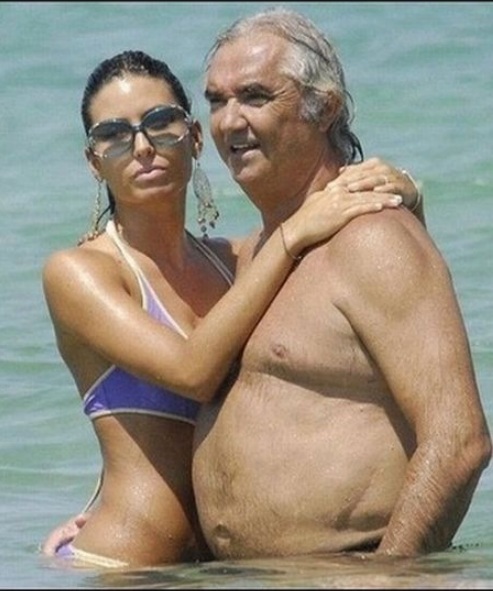
At the moment, that disparity primarily affects the vast majority of men who aren’t rich or as attractive as Ryan Gosling. They have the same sexual desire that men have always had, but their outlets for that desire are fairly limited, more so now than ever before.

That’s not just because prostitution is illegal and simply being caught with a prostitute is subject to significant stigma. Female sexuality is so valued in wake of the anti-harassment movement that simply attempting to get sex carries a higher risk of being labeled a creep, a harasser, or worse. Women have the power to ruin a man’s life, even if the sex is consensual.

That power is directly linked to the inflated value of sex. By keeping prostitution illegal, the access is controlled and the cost goes up. That’s because, by having to operate in a black or gray market, the cost of doing business is subject to the black market premium. Anything on the black market is going to come with greater risk. With greater risks come greater costs and not always in terms of money.

In a sense, prostitution laws and limiting access to sex by a particular gender puts greater power in the hands of those who are wealthy and can subvert the base market. There’s a reason why rich, powerful people can hire prostitutes with relative impunity while the vast majority of those arrested for prostitution are poor or disadvantaged.

Again, if you’re attractive and have easy access to various resources, those laws don’t affect you. If you’re not, whether you’re a prostitute or someone seeking their services, you can be singled out and arrested. In that market, the value primarily benefits those at the top and I’m not just talking about rich people.

There are plenty of others who have a vested interest in inflating the price of female sexuality and limiting sexual outlets for men. It’s the high value of female sexuality that puts many women, from Hollywood to feminist circles, in greater positions of influence. That’s not to say it’s a full-fledged conspiracy. Like any form of market manipulation, though, it’s a way for certain people to maximize their value.

That manipulation may very well be escalating with the expansion of the anti-harassment movement and increasing efforts to regulate the porn industry. These efforts promise to further skew the sexual marketplace, making it so that those of limited resources will have to pay an even higher price to get sex.

The effects of that disparity are hard to predict, but the signs are there. The existing double standards that assume female victimization and male aggression are only compounding the cost of pursuing sex. At some point, the market can only stay inflated so long before it crashes.

Once again, I want to make clear that I’m not claiming there’s some feminist conspiracy looking to control all forms of male sexuality. In my experience, humans are exceedingly limited at carrying out conspiracies and history has given plenty of examples. That said, I do think those who benefit from female sexuality being more valued have a strong incentive to cling to that value.

In any market, those who have an advantage will work hard to maintain that advantage. That’s why I believe efforts to curb prostitution and the porn industry will escalate in the coming years. However, history also shows that sometimes, those efforts can backfire horribly.

Prostitution isn’t going away anytime soon, but efforts to control it will continue to skew the sexual marketplace and gender disparities, alike. If there’s one consolation, though, it’s that inflated markets have a tendency to correct themselves over time. It may take a while for the sexual marketplace to balance out, but so long as the human desire for sex remains strong, our collective libido will find a way.

4 Comments

Filed under gender issues, human nature, Marriage and Relationships, sex in society, sexuality

Is Netflix To Blame For Decreasing Sexual Activity?

netflix-and-chill-condom-foil-hand_1

For most of human history, society regularly concerned itself with how much sex people were having. It wasn’t always just a matter of people having too much sex. The collective forces of religion, government, culture, and social norms all worked together to encourage people have the “right” kind of sex.

I put “right” in quotation marks because the whole concept of there being a “right kind of sex” is asinine to begin with. The concept only exists to the extent that it reflects the genuine, pragmatic concerns of previous societies about maintaining a growing population in the face of constant war, famine, plague, and whatever other forces were conspiring to wipe out the human race.

Pragmatic or not, the amount of sex that people have is still a concern and probably always will be to some extent. Unlike 99 percent of human history, though, having enough sex to make enough babies to keep the species going is no longer an issue. If anything, having too many babies is a larger concern.

Image result for overpopulation

It’s within this unprecedented situation, one in which the human race has made so much progress and dominated the world so completely, that we’re also facing a growing issue. People are having less sex. According to the journal Archives of Sexual Behavior, overall sexual activity has been declining since the mid-2000s.

The rate of decline is even more significant among the younger demographics. According to the Centers for Disease Control, the amount of sexually active teenagers declined from 47 percent in 2005 to 41 percent in 2015. Considering that at least half of the teenage population was sexually active throughout the 90s, that is not a trivial decline.

Related image

I’ve talked a bit about this decline in sex. Being an aspiring erotica/romance writer, it’s one of those trends I need to keep up. I’ve posed a number of potential explanations. I’ve explored the possibility that society is becoming more sexually uptight. I’ve also talked about how the ongoing anti-harassment movement may impact our sex lives.

However, there may be an even more powerful force at work that’s hindering our collective ability to get frisky, especially among youth. For once, it has nothing to do with religion, government initiatives, or hashtag movements. In fact, this force may be more powerful than all those forces combined. It has a name and it’s one we know well: Netflix.

Image result for netflix

This actually might be one instance where I don’t need to present a long, detailed explanation about how something affects our sex lives, our culture, and our society as a whole. There’s no need to employ caveman logic or scrutinize agendas. I think most competent can probably look at these trends in sexuality and readily accept that Netflix might very well be a factor.

I admit when I first heard it, I thought it made too much sense. I first saw it in an article in Politico that I thought was an Onion spoof. Apparently, it’s a serious story entitled “Too Much Netflix, Not Enough Chill: Why Young Americans Are Having Less Sex.” Granted, a lot of it is lumping correlation without digging into the causation, but it does make some pretty compelling points.

Dating has fallen precipitously in recent years, at least among teens, as smartphones and screens have become more popular. In the past 10 years, the share of high school seniors who reported ever going out on dates fell from about 70 percent to approximately 55 percent. We don’t have data for dating among adults, but “socializing offline” is down among them, too. For all the talk about young adults’ “Netflix and chilling,” many young men and women may end up just bingeing on Netflix, not chilling.

Within those points, however, is a growing sentiment in which people opting for Netflix is more a reaction than a provocation. The article spends a lot of time breaking down other ongoing trends, including a few from the anti-harassment movement. It’s not that people want to cut themselves off from intimacy, but the risks of getting intimate are greater, albeit not for the same reasons that we had in the past.

These days, young people are less concerned about being branded with a scarlet letter or challenging the sexual norms of our uptight ancestors. However, they are concerned about navigating an ever-changing social landscape that seems to disparage horny men and horny women.

For full-grown adults, it’s already pretty dangerous, as Aziz Ansari found out recently. For inexperienced teenagers, it’s probably even more terrifying. The article even highlighted a few of the notable pitfalls that are likely discouraging young people from putting themselves out there.

One is that in an era where concerns about sexual consent are becoming more salient, false allegations of sexual assault or rape may become more likely to proliferate, driven partly by a lack of clarity about how to define consent in sexual encounters that are often ambiguous and alcohol-fueled. Think of the fraternity accused of gang rape in the retracted Rolling Stone story about the University of Virginia. Or the bizarre charges made by Columbia University’s “mattress girl,” Emma Sulkowicz, against her former friend and lover, Paul Nungesser. Or the sexual assault charges lodged against Alphonso Baity that led to his expulsion from the University of Findlay, despite the fact that multiple witnesses were willing to testify that he engaged in consensual sex with his accuser. Or the successful cases that have been brought by men thrown out of college for alleged sexual assaults. Such allegations can do untold harm to the reputations and lives of many parties—mostly men—who engaged in what seemed to them to be consensual sex.

This is where Netflix comes in, almost by accent. In the past, it was a lot harder to stay entertained and content while also suppressing sexual urges. Why else would chastity belts have been a thing? When there wasn’t much entertainment beyond books and games, it was only a matter of time before those basic urges caught up with people.

Netflix does something that even the strongest chastity belt can never hope to do. It actually succeeds in keeping people distracted and content so that those base desires can’t occupy our thoughts. When there are so many amazing shows, from “Bojack Horsemen” to “Travelers” to “House of Cards” to “Stranger Things,” who has time for sex?

Related image

I write that only half-jokingly because, while it’s not possible to completely overwrite our base desires, it’s still possible to distract us. Human beings are, from a biological standpoint, pretty easy to distract. In the era of the internet and streaming media, it has never been easier to forget about the fact that you’re not having sex.

Add on top of that the growing risks with just attempting to get sex, thanks to concerns about harassment and assault, and Netflix suddenly seems like the path of least resistance. You won’t get accused of assault or harassment by staying home and watching Netflix. You also won’t get pregnant or a nasty disease, either. Add the inherent entertainment of the content and even I can’t deny the appeal.

Image result for binge watching

Now, it’s still doubtful that Netflix and others like it are the primary reason for the decline in sexual activity. As anyone familiar with logical fallacies will tell you, correlation does not equal causation. However, when scrutinized within the context of evolving sexual attitudes, the deficiencies of the past, and basic incentives, I think it’s reasonable to conclude that Netflix is a factor.

That trend, like all trends, is likely to change over time. It’s impossible to predict how our sex lives will change in the next few years, especially as emerging technologies start to affect sex and society at large. For now, there are a lot of factors affecting our sex lives. Netflix is just one, but as someone who is a big fan of “Bojack Horsemen” and “Stranger Things,” I think it’s more powerful than we think.

1 Comment

Filed under gender issues, sex in media, sex in society, sexuality

Presidents Day, Strong Leaders, And Why We’re Attracted To Powerful People (And Always Will Be)

23235661._SY540_

It’s Presidents Day. I know that’s a somewhat bitter reminder for those still upset about the results of the 2016 Presidential Election, but it’s here and we might as well appreciate it. For most people, it’s a chance to get a day off work or take advantage of stores wanting any excuse to have a sale. I’m as fond of sales as much as the next guy, but I think there’s something else about Presidents Day that’s wroth discussing.

Presidents Day, in principle, is an American celebration of the famous leaders who have helped shape the path of the country. Most agree that not just anyone can lead. Even among those who can, only a select few have led particularly well. Even among the Presidents of the United States, there’s a decent mix of admirable strength and frustrating ineptitude.

Image result for inept Presidents

However, the ability of a strong leader isn’t what I want to scrutinize here. Instead, I want to focus on why we’re so attracted to powerful people. I’m not just talking about in a sexual sort of way, either. Regardless of whether or not you want to sleep with a powerful person, it’s hard to deny that we’re attracted to them on many levels.

From a pragmatic perspective, we kind of have to be to some extent. A powerful person is only powerful if they can get people to follow them, carry out their agenda, and do things they wouldn’t normally do for a total stranger. Sure, they can threaten people with force or violence, but that only goes so far. As I’ve noted before in my discussions on fascism, raw leading by brutality can be pretty self-defeating in the long run.

A Biff Tannen style bully, in the grand scheme of things, isn’t very powerful. A truly powerful person is someone who can rally a hundred people who are physically weaker than Biff Tannen and subdue him through a coordinated, cooperative effort. That person, even if they’re as unimposing as George McFly, will always be more attractive.

Image result for george mcfly punches biff gif

In some sense, it’s frustrating. That’s especially true if you’re among those who don’t agree with or care for a powerful person’s agenda. From that perspective, they may seem like a Lex Luthor style super-villain. To them, someone with that kind of power can only ever be up to no good.

To their supporters, though, that same person is basically a messiah. They hold the hopes and dreams of an entire people in their hands. They aren’t just willing to follow that person into battle. They’re probably willing to sleep with them as well. There’s a reason why powerful cult leaders often have a lot of sex.

Related image

That attraction isn’t just reserved for men, either. Women can also gain a special level of allure from power. They don’t have to be a cult leader. They can just be an influential celebrity. It’s one thing for some ordinary woman to demand that someone get down on their knees and lick the dirt off their shoes. However, if Madonna or Taylor Swift made that demand, more than a few people would probably line up to do it.

Regardless of how earned or undeserved that power might be, the forces behind the attraction are the same. A powerful person, be they a world leader or a celebrity, is going to have more advantages when it comes to influence others, regardless of whether or not their goal involves sleeping with them.

Image result for Gaddafi

There are plenty of reasons why so many fall under that spell, but a few stand out more than most. A powerful person may have the physical sex appeal of a bloated George Costanza, but they can more than make up for it by providing some very attractive benefits such as:

  • Protection from physical violence or personal loss
  • Status within a community by simple association
  • Advantages that allow someone to subvert or undercut laws or social norms
  • Resources for one’s self and their family
  • Opportunities to exert influence and pursue personal goals
  • Opportunities to create stronger social networks

By any measure, a powerful person is in a position provide someone with everything they need to survive, reproduce, and live their lives in some degree of comfort. A powerful person doesn’t have to be physically attractive. They just have to be physically capable of providing those benefits to a sizable group of people.

It plays directly into our collective survival instincts, which may very well be the only instinct more powerful than our sex drive. From an evolutionary standpoint, it follows a logical progression. First, we have to ensure that we’re alive and in one piece. Then, we can focus on getting sex and passing on our genes.

Related image

Hooking up with a powerful figure is basically a two-for-one deal in the evolutionary game. Some may even go so far as to call it cheating and I wouldn’t disagree with that sentiment. However, when you consider how much men like Harvey Weinstein and John F. Kennedy got away with, it’s hard to argue with results.

Even as powerful people make the news for all the wrong reasons, a part of us is still going to be attracted to them. It’s a part of ourselves we may hate, to some extent, but in the same way we find ourselves affected by professional trolls, it’s hard to escape. Even as we advance our bodies and minds through technology, we may never escape it.

Now, I’ve argued before that we need to upgrade our brains through technology in order to transcend our tribal tendencies to hate and attack one another. I still believe that’s an imperative. However, even if Elon Musk manages to become a trillionaire by helping us all upgrade our brains to super-human levels, these same forces that make powerful people attractive will remain.

Image result for The Illusive Man

No matter how advanced we become, both as a society and as a species, survival will always be a concern. So long as there are ways for individual people to become powerful within that system, they will always be attractive on a basic level.

At the same time, though, these same powerful people are also major factors in guiding our species forward. Without them, we probably wouldn’t have made the kind of progress we have to date. Like so many other things in this unfair world, you take the good with the bad. In the spirit of Presidents Day, I say we celebrate the good and continue working to minimize the bad.

Leave a comment

Filed under gender issues, human nature, sex in media, sex in society, sexuality

In Defense Of Hook-Up Culture (To A Point)

635915974671817180628327593_the-crucial-guide-to-surviving-the-hook-up-culture

There are certain cultural phenomena that are difficult to defend. Things like big businesses, the NFL, or the current president come to mind. However, some of those things are attacked, denigrated, or hated for misguided reasons. It’s not always the case that they should be defended, but there are times when a little balance is needed.

When it comes to a topic that’s easy to criticize, hook-up culture has a bigger target than most and that target has only grown in recent years. It’s one of those issues that has fronts for both the unceasing war on horny women and the escalating war on horny men. To defend it means fighting a two-front war, which has historically been a bad idea.

I’m still going to try, though, and not because I think hook-up culture in its current state deserves to be defended. There are certain aspects about that state that I find flawed, some of which I’ve discussed before. Even so, I do believe some aspects of hook-up culture should be defended. I still intend to pick my battles very carefully, though.

At the moment, hook-up culture has been getting attacked on multiple fronts. It used to be that only cantankerous old people whined about young people having more sex than what priests, mullahs, rabbis, and monks deem appropriate. These people saw hook-up culture as antithetical to the idealized nuclear family model that was glorified in every 50s sitcom.

Most people, these days, don’t take that kind of whining seriously. However, a new attack on hook-up culture is actually coming from other young people and otherwise educated people that are smart enough to recognize why those idealized 50s sitcoms were pure fantasy. Instead, they’re attacking hook-up culture as some inherently toxic manifestation that’s destroying men and women alike.

Make no mistake. This attack isn’t restricted to extreme conservatives who see hook-up culture as an affront to traditional values or liberals who see it as a tool of oppression that’s inherently objectifying. It’s not even restricted to man-hating feminists who think cat-calling constitutes assault or women-hating men who see every woman is a gold-digger who wants to ruin his life.

The attack runs deeper than that. Taken all together, these attacks reflects a sentiment that isn’t always hostile to sex, but treats it the same way most people treat a phobia. Regardless of political or agenda affiliation, sex from the attackers is almost always in a context of anxiety, fear, and hyper-vigilance. That phobia manifests in different ways.

If you’re a conservative traditionalist, hook-up culture evokes a fear that anything other than the nuclear family will destroy society and hurt those who participate.

If you’re a liberal progressive, hook-up culture evokes the fear that men will exploit women, using them for their own selfish reasons and subsequently contributing to their continued oppression.

To some extent, I can understand those fears. However, like most phobias that don’t involve spiders, those fear are not justified. They also reflect some very unhealthy attitudes about sex, intimacy, and romance in general.

Some of those attitudes play out in the sensationalized headlines surrounding hook-up culture. In these stories, it’s often portrayed as callous, bland, and overtly hedonistic. People aren’t getting together to fall in love, get married, and make babies. They’re just having sex the same way they would scratch an itch.

For some people, that’s unnerving, especially if they have children above the age of consent. There may even be a twinge of jealousy in that these young people are enjoying the kind of fun that older people didn’t get to experience when they were that age. While I suspect that’s a factor, I don’t think it’s the root cause.

Beyond the cause, though, the attitudes feed the sex-phobic sentiments whenever there’s news that hook-up culture may be harmful. There has been research on the topic and while the American Psychological Association does not draw any sweeping conclusions, it does take the position that hook-up culture is often prone to complications.

Chief among those complications, which also provokes the sentiments of the liberal progressive crowd, are the instances in which people regret hooking up. This is especially sensitive for women. In one study, over 75 percent of the women who’d hooked up with someone regretted it.

For some, it was just an unsatisfying experience. For others, it was somewhat traumatizing. This has become especially taboo since the recent scandal with Aziz Ansari in which the line between regret and misconduct is difficult to see. If you have an agenda, though, confirmation bias will allow you to see these situations as either misogynistic assault or man-hating extortion.

That’s what I find particularly dangerous/revealing about these attacks on hook-up culture. It’s so easy to find instances where people have a bad experience with it or are negatively affected by it. By singling these instances out, whether it’s mental health issues or part of a major celebrity scandal, every side can point to hook-up culture to justify their various sexual anxieties.

It probably doesn’t help that these anxieties may very well contribute to the ongoing orgasm gap between men and women. It also doesn’t help that trends in social media have made hook-up culture even easier to pursue than ever before. By nearly every measure, hook-up culture has little way of defending itself.

This is where I come in and I’m already bracing myself for the criticism.

armor knight man art warrior wallpaper

When I take a step back and look at the intent of hook-up culture instead of the anecdotes surrounding it, I do see something that’s worth defending. I’m not going to discount the negative impact it might have on some people, but I think the sentiment behind hook-up culture deserves more merit.

To highlight that merit, I need only ask a few questions. I doubt I’ll get honest answers from everyone, but at least consider them when contemplating hook-up culture.

Is it possible that hook-up culture reflects some of the inherent flaws with our traditional approaches towards seeking love and sex?

Is it possible that those engaged in hook-up culture are actually looking for some casual intimacy and NOT just hedonistic indulgence?

Is it possible that men prefer hook-up culture because they don’t want to jump through all the hoops of a relationship to get the intimacy and sexual release they desire?

Is it possible that women prefer hook-up culture because they just want to enjoy the toe-curling pleasure that comes with basic sexual intimacy?

Is it possible that some people just want to explore their sexuality without committing too much of their time, energy, and life to a relationship?

None of the questions above are rhetorical or factious in any way. They’re serious, honest questions that I think need to be asked when assessing the issues surrounding hook-up culture.

Regardless of whether or not hook-up culture exists, people are going to get horny. People are going to want to express their sexual desires. There’s no way to stop that. Religion, government, and culture has tried desperately over the years, some going to more extremes than others. All have failed.

This is what I think it hook-up culture’s best defense. It reflects and acknowledges the inherent need of people to express and explore their sexual desires without navigating the myriad of legal, social, and cultural rituals associated with it. In some respects, that reveals the inherent shortcomings in those rituals themselves.

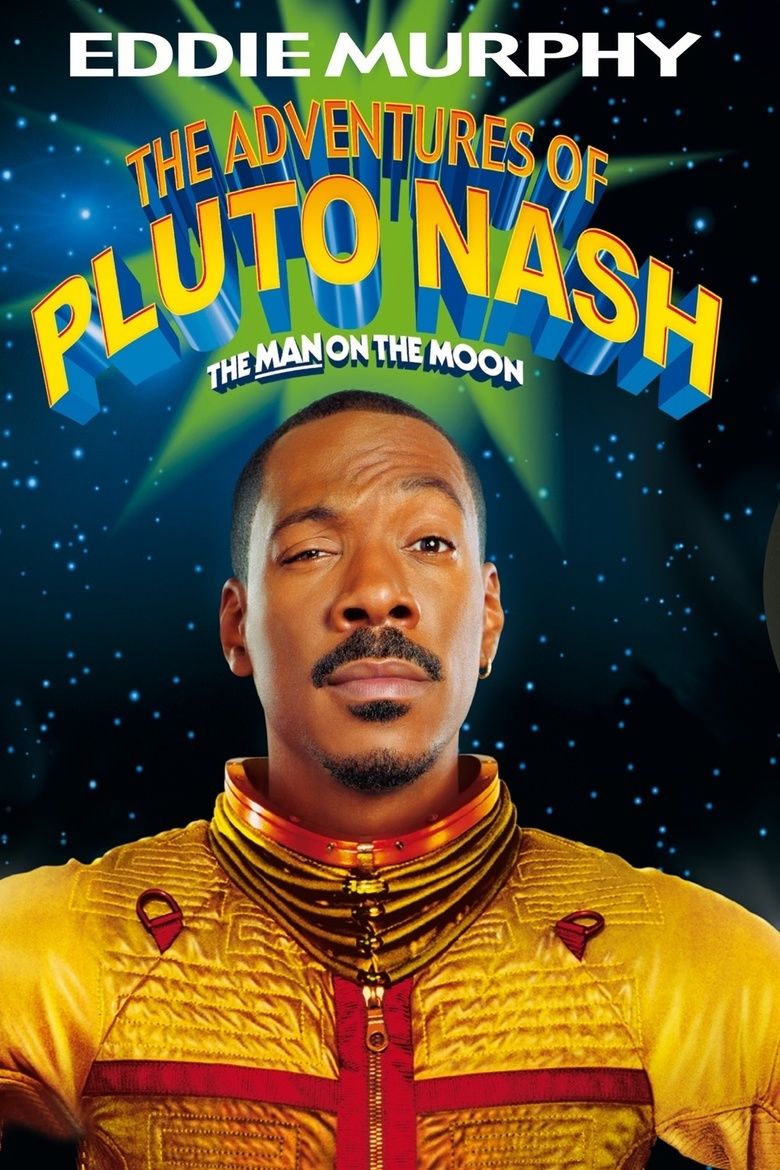
I don’t doubt there are risks associated with hook-up culture. Disease and unwanted pregnancy are at the top of that list, along with instances of exploitation and assault. Focusing on those outcomes is like calling Eddie Murphy’s entire career a failure just because he stared in “Pluto Nash.”

There is a larger context to consider. Remember that study about people regretting their hook-ups? Well, science is rarely that definitive when it comes to matters of human psychology and sexuality. Later studies reveal that the extent of that regret isn’t very strong. It turns out that, like paying to see “Pluto Nash,” we tend to get over it. Most functioning human beings do.

Those same studies also make clear that the quality of the hook-up matters. If someone hooks up with someone for sex, but the sex isn’t satisfying, then of course there’s going to be some regret and anxiety later on. That’s what happens whenever our expectations aren’t met. Just ask anyone who got excited about the Jacksonville Jaguars’ failed Super Bowl guarantee.

This is where the extent of my defense of hook-up culture ends. While I think the various criticisms and anxieties about it are unwarranted, it does carry some baggage that makes all those unpleasant anecdotes so common.

Hook-up culture, in its current form, has all sorts of heavy expectations surrounding it. Whether it’s people actively engaged in it or those observing it from the outside, there’s this sense that hook-up culture is this non-stop party where everyone is enjoying the Caligula-style orgy and nobody leaves unsatisfied. That’s just not how human sexuality works.

Human beings are a passionate, social species. When hook-up culture becomes too dispassionate, which can happen, then it ceases to be a healthy expression of human sexuality. In that context, it’s basically glorified masturbation. As a romance fan and an aspiring erotica/romance writer, I can’t get behind that sort of callousness.

However, I think the attacks on hook-up culture are more misguided than hook-up culture itself. Men are seeing it as an agenda that beautiful women are exploiting. Women are seeing it as an agenda that misogynistic men are exploiting. Liberals and conservatives are seeing it as an affront to everything they deem good and moral. In attacking it, though, they all reveal their own sexual anxieties.

If our collective sexual attitudes are to improve, along with our overall satisfaction, we need to confront these anxieties. Hook-up culture isn’t going away because people wanting to enjoy sex with fewer strings is not going away. We can either learn from it or fight it, with the understanding that fighting it rarely ends well for either side.

Leave a comment

Filed under gender issues, sex in media, sex in society, sexuality

Five Reasons Why I WOULD Date A Transgender Woman

Model

The older I get, the more I realize just how much work, energy, and even flat out luck goes into finding a romantic partner. It’s not just from my own personal experience, either. I see it play out in my friends and family as they find lovers, some of which work out and some of which don’t.

At the moment, I am single and my efforts to find love have been difficult, to say the least. I’ve tried online dating. I’ve tried putting myself out there. I’ve even tried flirting a bit. It hasn’t really amounted to much, thus far, but I remain hopeful that I’ll find that special someone one day.

Recently, though, someone asked me an interesting question. Over the course of a conversation about our respective struggles in finding love, he asked if I would ever consider dating a transgender woman. That’s the first time someone asked me that question seriously and I needed a moment to think about it.

As I’ve said before, my knowledge of transgenderism is fairly limited. However, writing about the issue has given me opportunities to interact with a few transgender individuals. I can say without hesitation that much of my interactions with transgender people have been positive. Nearly everyone I’ve met, thus far, has been decent and sincere.

With those experiences in mind, I thought long and hard about this issue. I’m not the first one, either. According to a poll done by adamandeve.com, which isn’t exactly scientific, about 65 percent of adults say they would not date a transgender individual. There are any number of reasons why that might be, but I don’t want to speculate so I’ll just give my answer.

Yes, I WOULD date a transgender woman.

Now, I’m not saying that to virtue signal. I’ve already made my feelings on that fairly clear. I came to this conclusion after thinking about what I want in a lover, what kind of person I would want to be for them, and how I would go about pursuing a relationship. After considering all that, the answer became fairly clear.

I would, indeed, be open to dating a transgender woman. I don’t deny that it would be somewhat different than dating a cis-gendered woman, but every individual has their quirks. I don’t see why being transgender should be a deal-breaker in a relationship, at least for me.

I even came up with a few reasons as to why I would be open to such a relationship. Please note that these reasons are coming from someone whose experience with transgender people is limited. I have had issues in the past where my discussions on the issue have inadvertently offended certain people. I will make an effort to avoid that here, but please bear with me if I slip up.


Reason #1: A Transgender Woman Has A More Balanced Understanding Of Gender

This is probably my top reason and the first that came to mind when I contemplated this issue. A transgender person who often has to approach gender in a radically different way from what the social and cultural norms dictate. Their world is one where it just doesn’t work to put clear, defined lines between men and women.

This is kind of a big deal for me because there have been times in my life where I’ve been insecure about what’s expected of me as a man. I love romance. I love passion. I like to explore emotions and walk the fine lines of certain cultural expectations. Some of these things will earn awkward looks from other men and even other women. That was why I often hid my love of romance as a teenager and even a young adult.

I think a transgender woman would understand that feeling better than most, not conforming to certain expectations of their gender and trying to navigate those issues that the Ben Shapiros of the world say don’t exist. I think I would find a lot of common sentiments with a transgender woman, more so than a cis-woman in some cases.


Reason #2: A Transgender Woman Has Greater Insight Into Male AND Female Anatomy 

This was probably the second thing that popped into my mind. I admit, it’s fairly crude. It’s probably the same idea an immature teenage boy might give if asked about the benefits of dating a transgender woman. I have a feeling a number of transgender individuals would roll their eye at that, but I also think there’s something to be said about someone’s experience with the diversity of human anatomy.

In my conversations with transgender women in the past, that experience often involves a disconnect between the mind and the body. The mind says they’re a woman. The body says they’re a man. The struggle is trying to get the body and mind on the same page.

Gender reassignment surgery is just part of that experience and one that’s too big to cover in one post. As it stands, the process has advanced to a point where a transgender woman can have a fairly comprehensive understanding of what it’s like to have both a penis and a vagina.

I think that understanding would help with the intimacy of a relationship. I’ve been with girls who think a penis is basically a faulty light switch, which has made for some awkward moments. Regardless of your gender, it helps to have a better understanding of how genitals actually work.


Reason #3: A Transgender Woman Has A Firmer Grasp On Her Identity

This is a more introspective reason. It’s a reason that also reflects on issues of identity, as a whole. I’ve met men and women throughout my life present themselves in one way, but it’s obvious they’re forcing it. They don’t always know who they are, but try desperately to be what everyone around them expects.

Transgender individuals probably have greater self-awareness than any cis-gendered person ever will. It takes a lot of personal insight to understand that your mind says you’re one thing, but your body says another. It’s difficult for most cis-gendered people, like myself, to comprehend. That’s why it’s so easy to take self-awareness for granted.

For me, dating a transgender woman who is secure in her identity means dating someone who understands who she is and what she wants to be. That’s a rare and under-valued quality in a partner. If one or both people in a relationship lack that, then there will be problems. I imagine a transgender woman would teach me a thing or two about my own identity that I might not have realized.


Reason #4: A Transgender Woman Better Understands The Importance Of Personal Growth

There are a lot of things that go into a successful relationship. One trait my parents often emphasized is to love more than just who a person is when you meet them. It’s often more critical to love who they’re trying to be. People are not static. They grow and develop over time. That’s just part of the human experience.

A transgender person faces more growing pains than most. They have to live their lives with a body and mind that are at odds. Just dealing with that is something that most non-transgender people struggle to grasp, but that means their growth process as individuals takes more turns than most.

For someone seeking to truly align the identity of their mind and body, it takes more than just growth or surgery. It also involves growing up in a world that is not very friendly to transgender individuals. That kind of growth involves a lot of hazards and their ability to navigate them reveals the kind of person they are.

For someone like me, who sometimes has difficulty surmising who someone is trying to be, a transgender woman provides a unique personal story. As someone with a strong appreciation for such stories, I can see an intimate appeal to that sort of connection.


Reason #5: A Transgender Woman Faces A Unique Set Of Life Experiences That Reflect A Unique Kind Of Strength 

This reason ties, somewhat, into the previous reason because it stems from that personal growth that a transgender person undergoes. In aligning their mind and their body into a singular identity, they undergo a difficult growth process. That process requires strength, namely a kind most cis-gendered people take for granted.

I wake up every day, look in a mirror, and don’t even think about my gender identity. I feel like a man. I look like a man. I have manly interests. I don’t have to put an ounce of effort into it. That part of my identity is not in conflict. I imagine if I woke up tomorrow in a woman’s body, I would be very confused and probably very distressed.

Dealing with that sort of disconnect requires strength and not just the kind that involves accepting their identity or undergoing surgery. Like I said before, it takes an uncanny amount of self-awareness to realize one’s identity. A transgender woman who made it to a point where she’s willing to date a guy like me reflects a strength that’s hard to put into words, even for an aspiring erotica/romance writer.

No matter who you are, having a firm grasp of your identity and being willing to share it with someone takes strength. A transgender woman would have more strength than most and for a guy with as many sexy thoughts as me, I think we could make a relationship work. I may never get a chance to try, but I’m comfortable saying I would be open to the experience.

16 Comments

Filed under gender issues, Jack Fisher's Insights, sex in society, sexuality

How I Had A Good Valentine’s Day Last Year (Thanks To My Mother)

It’s that time of year again. That’s right. It’s Valentine’s Day. To some, it’s a day where you can get away with being a little extra romantic with your lover. To others, it’s a conspiracy by Hallmark to sell more greeting cards. To people like me, namely those who are single and alone, it’s sometimes a harsh reminder that loneliness sucks and we all yearn to be loved.

I’ve talked a bit about my struggles as a single guy whose single status seems to get more taboo with age. I’ve also shared some difficult personal experiences that highlight why Valentine’s Day has been my least favorite holiday over the years. For someone who claims to be such a big fan of romance, I imagine it sends mixed messages.

I still consider myself a fan of love, intimacy, and everything else Valentine’s Day stands for. I gladly cheer those who have someone special to spend this day with. It’s just tough when you’re stuck spending this couples-friendly holiday by yourself. Most people who know me tend to understand I’m a little jaded this time of year.

However, there have been times when I’ve had a genuinely good Valentine’s Day while still being single. One of those times actually happened last year. I didn’t share it because I didn’t know whether it was worth sharing. Now, as I’ve come to appreciate that day more and more, I feel like this is something I should put out there on a day like this.

Around this time last year, I was planning to spend much of my Valentine’s Day alone again, either writing sexy novels, reading comics, or just doing whatever it took to distract myself. I had gotten so used to spending this romantic holiday that I was kind of resigned to my fate.

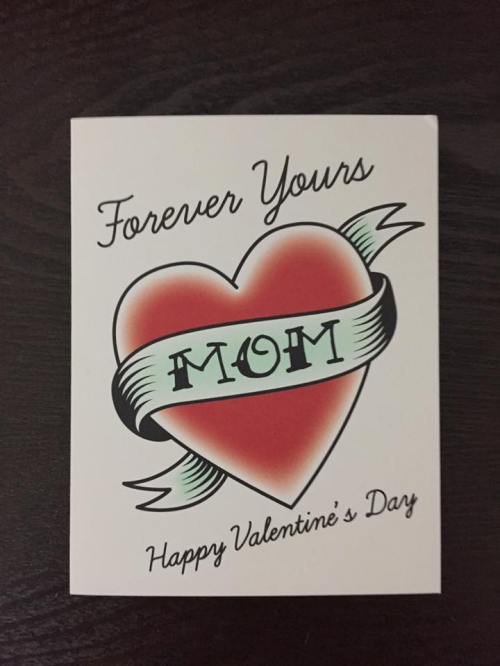
Then, I went out to get the mail and got a letter. It wasn’t a bill, a coupon, or an ad. It was a letter from my mother. Curious, since she usually texts or emails me when she wants to talk, I opened the letter and found this card inside.

mom

I’m not going to lie. I had the biggest, goofiest grin I’ve ever had outside of a comic book store or a donut shop when I saw it. My mother had actually gone to the effort of finding me a card, stuffing it in a regular envelope, and sending it to me, postage cost and all. It would’ve been easier to just send a few texts with some funny gifs, but my mother is someone who goes the extra mile.

In addition to the card, there was a note on the back. Since it’s somewhat personal, I won’t recite it word for word. That’s between me and my mother. What she wrote, though, really made my day and warmed my heart. She reminded me that, even when you’re alone on Valentine’s Day, you can still feel loved.

I needed that reminder. I needed it more than I cared to admit. Once again, though, my mother proved that she knows me better than I know myself sometimes. She understands why I’ve struggled to find love and how hard I’ve worked to overcome those struggles. She and the rest of my family have helped me every step of the way. Most importantly, though, she always made sure I felt loved.

I still have this card. It’s one of those special little mementos that I can turn to whenever I’m feeling miserable, restless, or unloved. On a day like this, though, it carries an even greater meaning. It’s a meaning that helps make Valentine’s Day feel special, even when you’re single like me.

Now, I know I’m exceedingly bias in this sentiment, but I don’t care. I’ll say it anyways.

MY MOM IS THE ABSOLUTE BEST!

Yes, I used all caps. Yes, I’m shouting that as loud as my computer will allow me. No, I don’t care if you disagree or think that’s childish. It’s a sentiment worth sharing on Valentine’s Day and I gladly share it with everyone, single or otherwise.

Also, I know my mother is a regular reader of this blog. Even though it sometimes discusses sexy and exceedingly unsexy issues, she supports me in everything I do and encourages me every step of the way.

With that in mind, I’d like to thank my wonderful mom for making Valentine’s Day great for me again. Mom, I know you’ll probably read this at some point, but I mean it. You’re the best! Thank you for being the best Valentine that a single guy like me can hope for.

2 Comments

Filed under Jack Fisher's Insights

Do Soul Mates Actually Mates Exist?

dfhdhhe

When it comes to love, romance, and whatever else manifests in every song a boy band ever sang, the ultimate manifestation of this beautifully sentimental phenomenon is the soul mate. We’ve probably all heard about it in some form. Some are even lucky enough to be with someone that they consider to be their soul mate. Regardless of whether or not you care for the concept, we envy those people.

As a long-time romance fan and an aspiring erotica/romance writer, the ideal of the soul mate is the alpha and omega of the concept. It is to romance what Superman is to modern superheroes. It is the ideal to which we aspire. It embodies the ultimate example of what true love is and what we want it to be.

I’m not going to lie. That sort of thing makes parts of me feel all warm and fuzzy inside, among other things. Most people who enjoy romance to some degree probably feel the same way. The idea that two people have a love so strong that it’s practically interwoven into the fabric of time, space, and the basic laws of reality just feels so special.

It makes for both a great fantasy, full of more romance and passion than most can ever manage without seeing “Titanic” fifteen times in a row. It’s the kind of love that makes romances like Jack and Rose, Romeo and Juliet, and even Superman and Lois Lane seem ordained by destiny.

Now, here’s where I kind of have to put a dent in the time-honored fantasy. I know that’s kind of dangerous for a self-proclaimed romance fan, but I’m going to do it anyway because I think it’s a discussion worth having. It’s a discussion based on a simple question.

Do soul mates actually exist?

I know that me asking that after I just said it makes parts of me gush sounds like an about-face. I promise there’s a context to it and one that ties directly into how we go about answering this question. Whether or not you’re a romance fan, the ideal of the soul mate and our inherent drive to seek love makes it an important question to ask.

Before I give my answer, I need to add a few caveats to my fondness for the concept. Yes, it does resonate with me, somewhat, as an overall romance fan. However, as a fan of compelling stories and an aspiring writer, I actually don’t really care for stories built around the idea of soul mates.

Don’t get me wrong. I still think it’s a sweet concept. When I was younger and just starting to explore romance, I really liked those stories. As I got older, though, and my tastes in stories evolved, that appeal quickly waned. Whenever I read a book or saw a movie that ran with the concept of soul mates, it became somewhat of a turn-off.

That’s because from a narrative perspective, soul mates make for bland and shallow stories. If a couple are established as soul mates, then that basically renders any need to work or nurture their love moot. They don’t have to put in the time, work, or effort to become a great couple. Destiny and whatever supernatural forces behind their bond do that for them.

This is why I don’t care much for “Romeo and Juliet.” It’s established from the beginning that they’re “star-crossed lovers,” which is basically a more Shakespearean way of fate had ordained for these two to fall in love and there’s nothing anyone or anything can do to prevent it. Sure, it’s sweet and dramatic, but it’s a very limited story.

Those same limits that undermine a story are a major factor in answering the question. For someone like me, who follows romantic plots and sub-plots way closer than most straight men will ever admit, it shapes my perspective on what makes a great love story and what makes a real or fictional relationship strong.

Within that context, I’ll give my answer to the question. I don’t claim that this answer is definitive. This is just my opinion, having formed it from years and years of both consuming and crafting all things romance.

No. I don’t believe that soul mates are real.

I’m sure that’s tantamount to blasphemy for other romance fans out there. I understand that sentiment and I gladly accept the scorn that comes with that answer. However, I am willing to justify my answer.

It’s not just because I regularly write about the inherent flaws in the human brain, which make the prospect of achieving any ideal, be it perfect love or perfect justice, impossible by default. I think the concept, as a whole, does not fit with the whole process of love, at least as I see it.

Whether it’s love in the real world or love in sexy novels, falling in love and being in love is an ongoing phenomenon. It takes many forms and plays out in many ways, sometimes chaotically and sometimes dramatically. That’s part of what makes it such an appealing narrative.

Some of the best manifestations of that process, which I’ve gone out of my way to highlight, occur when two people work together to build and strengthen their love. They work together. They fight together. Sometimes they even clash, along the way. There’s never an endgame in mind. Their love is something that builds and evolves day-by-day.

In the real world, we see that play out in the work people put into their relationships. Whether it’s scheduling a sex night or going on some romantic getaway to Fiji, people in love put work into that love. It’s not something that just happens. For that feeling to remain strong, it takes time, effort, and understanding.

With soul mates, there’s no process to love. It just happens. The universe basically commands it. There’s no reason to put any work into it because those involved are so made for each other that they couldn’t drive each other apart if they tried. That kind of love doesn’t just rely on supernatural forces. It relies on two people’s thoughts, feelings, and desires being perfectly compatible every second of every day until the end of time.

Given the chaotic nature of the human mind, that’s just not realistic. It’s not even that romantic, when you think about it. I don’t deny that there are particular moments, such as a wedding day or the first time a couple makes love, where they’ll feel in that moment that they are soul mates. I don’t deny that feeling exists. As for the larger concept, as a whole, I think that’s about as real as Superman holding a black hole in his hand.

So I guess my answer does have a bit of a caveat. I do believe there are moments when two people are so in sync, emotionally and romantically, that they fit the mold of soul mates. Those same people can go onto break up, get divorced, or cheat on each other. That’s just the chaotic, unceasing nature of human passions.

Again, my answer to this question is anything but definitive. Perhaps there are other romance fans out there who believe I’m dead wrong and that soul mates do exist. If you feel that way, I’d be happy to discuss that issue in greater detail. For now, I simply ask that all those reading this contemplate that question and answer it for themselves.

Even if you’re not big on romance, it’s a question worth answering. It reflects both our sentiments and our aspirations when it comes to seeking love. As someone who is currently single, writes sexy stories, hopes to fall in love one day, I imagine I’ll continue contemplating this question for years to come.

Leave a comment

Filed under Love Or Obsession, Marriage and Relationships, sex in society, sexuality

What Colossus And Kitty Pryde Of The X-men Can Teach Us About Love

I know it’s been a while since I talked about comic books, comic book romances, or general life lessons from comic books. As a self-proclaimed comic book fan who loves to tie that passion into other sexy topics, I feel like I owe myself and certain readers an apology. Consider this part of my effort to make up for it.

Just because I haven’t been writing about comics much lately doesn’t mean I haven’t been following them. It also doesn’t mean I’m not aware of the major developments unfolding in the comic book world. As I write this, there’s a lot going on, from Tony Stark’s return as Iron Man to the return of Superman’s iconic red trunks.

If you’re a comic book fan, though, you already know about this and I don’t need to say anything to get you excited. If you’re a comic book fan who also happens to be a big romance fan, there are other stories that excite you. I mentioned one late last year with the big announcement that Batman and Catwoman are getting married. Now, I have another.

Kitty Pryde and Colossus of the X-men are getting married too!

The big announcement was actually teased last November in the form of a wedding invitation that designated the summer of 2018 as the big day. It also highlighted some of Marvel’s most famous superhero marriages. Never mind the fact that Marvel has a shaky track record with married characters. It’s still exciting news, especially for X-men fans like me.

It’s big news for Marvel as well. They’re already promoting this as a major event for these characters and for the Marvel universe as a whole. Sure, it may just be their way of competing with the upcoming Batman/Catwoman wedding, but that doesn’t make the sentiment involved any less genuine. It also doesn’t make the promo video for X-men Gold #30, the wedding issue set to come out this summer, any less sweet.

I know Kitty Pryde and Colossus are not exactly on the same level as Superman and Lois Lane, Batman and Catwoman, Cyclops and Jean Grey, or even Deadpool and tacos. In the pantheon of superhero romances, they’re not exactly top five, but they’re not afterthoughts either.

Their romance has never been a major plot in an X-men movie, nor has it been a focus in any X-men cartoons. However, for those familiar with the X-men comics, this relationship is as special as it is unique. It’s one of those romances that blossomed in unique and sometimes controversial ways.

Chief among that controversy was the age difference between the characters when they first met. When Kitty first joined the X-men in Uncanny X-men #129, she was 14-years-old and Colossus was 19. Needless to say, it didn’t sit well with Marvel’s editors at the time when writer Chris Claremont had Kitty develop a crush on him.

That crush, however, never got as creepy as some of the other romances that Marvel had teased. As the characters grew, aged, and developed within the pages of the X-men comics, that teenage crush evolved into something more serious. Eventually, they developed one of those relationships where they always seemed to find their way back to one another.

I won’t recount all the chaotic elements of their romance. I’ll just point out there have been many times where they’ve gotten closer, been friend-zoned, ended up in other relationships, and even died on one another, which happens a lot in comics. I’ll also say that the love between Kitty Pryde and Colossus carries with it some unique insights into love, relationships, and how they blossom.

So, in the spirit of celebrating the upcoming nuptials of these fictional characters that I hold dear, I’d like to share some of those insights that translate into real-world lessons on love. Being both a romance fan and a comic book fan, I’m especially fond of the parallels that tie works of fiction into serious matters of the heart.

Whether or not the marriage of Kitty Pryde and Colossus lasts or prospers in the X-men comics remains to be seen. Regardless of Marvel’s poor track record with marriage, they’re a couple worth rooting for and this is what they can teach us.


Lesson #1: Failed Relationships Can Still Succeed

For many fictional romances, especially those involving superheroes, the romantic dynamics are often idealized, pure, and heavy on melodrama. They’re basically “Romeo and Juliet” with superpowers, built around a love that’s so pure it can only ever be corrupted by a horribly contrived love triangle.

Colossus and Kitty Pryde are decidedly not that. Theirs is a more clumsy romance, one where they sort of stumble their way towards one another. Throughout their history, they have tried to forge a relationship, but failed on multiple occasions, sometimes due to circumstances and sometimes due to hard choices.

In those failures, Kitty Pryde dated other men, like Pete Wisdom and Iceman. Colossus dated other women, like Domino. Along the way, they each followed their own stories. They each grew in their own way. They weren’t dependent on each other. They didn’t have to be together to become strong.

These failures may have derailed their romance at times, but it didn’t end their love or their desire to be together. Eventually, they found themselves in a position to act on that love in the pages of X-men Gold. Now, they’re getting married. Ironically, their past failures helped get them to that point.

Learn from failures in a relationship and build a better one from the ashes. That’s not just a critical lesson. In a world where the ideal love stories of “Romeo and Juliet” are reserved for high school English classes, it’s a much more realistic way to approach love.


Lesson #2: Love Who Someone Is Trying To Be (And Not What They Were)

This kind of gets into those creepier elements I mentioned earlier. It’s true. Kitty and Colossus had a sizable age gap when they first met. Age gaps in young romances are taboo and for good reasons, beyond just the legal reasons. However, that age gap hid another important lesson that Kitty and Colossus later embodied.

Beyond the basic flirty exchanges they had in their youth, Kitty Pryde distinguished herself as a special character by how quickly she grew and matured throughout the pages of Uncanny X-men. Sure, she was a vulnerable young girl when she first joined the X-men, but she didn’t stay that way.

The same goes for Colossus, who underwent more than his share of upheavals. Some of his greatest moments involved him trying to be a kinder, gentler soul, despite having the kind of obscene strength that steroid-laden meatheads can only envy.

Again, a lot of complications get in their way, as is often the case with superheroes, but whether or not they manage those complications isn’t the point. It’s who they’re trying to be, as individuals, that makes them who they are. It’s that striving that often draws them together. It’s that constant effort to be better that fuels their chemistry.

That chemistry is built less on who they are and more on who they’re trying to be. Kitty and Colossus saw who they were trying to be in the midst of the chaos that comes with being X-men. That’s the person they fell in love with and in a chaotic world where everyone has to better themselves just to keep up, that’s an important and underrated facet of love.


Lesson #3: Seek To Grow With AND Love Someone

This also ties, somewhat, to the age gap between Kitty Pryde and Colossus, but without the taboo. Age gaps matter when two people are young, immature, and don’t have a firm grasp of their emotions. They matter less and less at time goes on. I say that as someone whose parents have an age gap that’s actually wider than Kitty and Colossus.

In a sense, the age gap worked to Kitty and Colossus’ advantage because they didn’t just see each other in their impressionable youth. They actually watched each other grow into adults. While they weren’t always on the same team, they were able to grow together within a similar environment. In doing so, that innocent crush evolved into something deeper.

That’s an important distinction that a lot of young people, myself included, don’t often realize until much later in life. We focus so much on the here and now when it comes to loving someone that we forget that we’re still growing as individuals. Sometimes, two don’t realize we’re growing apart until it’s too late.

I’ve seen this happen in the real world with once strong relationships that just drift apart as the couple gets older. I’ve also seen it happen in the opposite direction, watching two people grow closer as they actually seek to grow with someone, as well as love them. Kitty Pryde and Colossus are a perfect embodiment of the latter.


Lesson #4: Let The Moment Be Right For Love (And Guide It If You Can)

I know I keep repeating this and it’s worth belaboring, but Kitty Pryde and Colossus had a lot of obstacles when it came to getting together, the least of which involved Colossus dying at one point. It’s worth belaboring because it reflects how hard these two had to work in order to get together over the course of several decades of X-men comics.

Within those complications, though, is an important lesson that best played out in Joss Whedon’s legendary run on Astonishing X-men. The circumstances aren’t always right for two people to come together. However, when that moment is right, don’t be afraid to act on it. You can’t force those moments. You can only let them unfold and embrace them.

For Kitty Pryde and Colossus, those moments were rare, but they weren’t random. When Colossus returned from the dead, they had every reason to just jump each other’s bone in an overly dramatic moment. They didn’t do that, though. They didn’t try to force that moment. They just led each other to it.

A similar situation unfolded in X-men Gold. They had an opportunity to jump back into their relationship, but they didn’t. Sure, they made excuses at first, which I found annoying, along with many other long-time X-men fans. However, by taking it slow and letting the moment come to them, it made the eventual culmination in X-men Gold #20 that much more satisfying.

You can’t force a romantic moment, nor should you. However, you can guide the situation towards those moments. If the love is strong, like it is with Kitty Pryde and Colossus, it’ll happen and it’ll be beautiful.


Lesson #5: Don’t Make Excuses For Loving (Or NOT Loving) Someone

This is a common and annoying trope with fictional romances. For those not built on love-at-first-sight or sickeningly-pure infatuation, a romantic sub-plot in most stories will be full of excuses on why they should not be together. Given my take on excuses, it should surprise no one how much this annoys me.

Kitty Pryde and Colossus made a lot more excuses than most and not just because of the early age gap. Sometimes it was because they were on different teams. Sometimes it was because they were caught up in other relationships. Sure, some of those excuses were valid, like being dead or trapped in a giant bullet flying through space. Those that kept them apart, however, were often shallow or contrived.

Now, some of this might have been due to whoever was writing the X-men comics at the time. As I’ve noted before, there have been instances where bias writers force contrived plots to keep certain characters apart. Chris Claremont’s efforts with Cyclops, Jean Grey, and Wolverine are well-documented.

The efforts surrounding Kitty Pryde and Colossus, though, never got that extreme. They also never undid the chemistry between them or fundamentally changed the elements that attracted them to one another. In that respect, they didn’t make excuses. They didn’t hide from those emotions, even if they avoided them. That ended up strengthening their relationship in the long run.

It’s another important lesson about excuses and reasons. When your reasons for not being with someone are built on excuses, then you’re missing the point. Kitty and Colossus stopped making excuses in X-men Gold #20. If they can do it, then there’s hope for everyone, real and fictional alike.


5 Comments

Filed under Comic Books, Jack Fisher, Superheroes, Marriage and Relationships, sexuality, X-men

Why Our Assumptions About Male And Female Promiscuity May Be (Very) Wrong

most-sexually-charged-excerpts-from-erotica-books

When it comes to assumption, we tend not to question them, by default. That’s why they’re assumptions. It’s literally in the definition. It’s entirely natural to make assumptions, especially when they have some sort of inherent logic to them. It’s just how we, as a species, make sense of a chaotic world that we’re trying to survive.

The problem is, as I’ve pointed out many times before, our caveman brains aren’t wired logic. They’re wired primarily to help us survive and reproduce. That’s why our brains are so prone to all sorts of logical fallacies. That’s also why it’s hard to let go of assumptions, even when empirical data a very different story.

This brings me to our assumptions about sexual promiscuity. I’m hope I have your attention now because I knew a bland article about logical fallacies, caveman logic, and false assumption wasn’t going to get anyone excited. Put it in a context that’s both sexy and relevant, especially to an aspiring erotica/romance writer, and there’s much more appeal.

Sexy or not, the issue of assumptions in our sex lives are a lot more relevant in the era of “fake news” and “alternative facts.” These days, people are more likely to cling to their assumptions than ever before, even in the face of obvious evidence to the contrary. Hell, “South Park” even did an entire episode about this concept.

There are all sorts of complex psychological and social reasons for this, some of which I’ve covered before in other less sexy discussions. However, I’m not going to belabor those concepts. Most people know that humans can be exceedingly stubborn, even when faced with undeniable data that counters their assumptions.

That becomes a bigger problem, though, when you’re actually trying to make sense of something on an academic level. Our collective sexuality is one of those things that we try to study and understand, even if our efforts turn out to be disturbingly wrong. I like to think we’ve gotten better at it in the modern era, but sometimes fresh data reveals there’s still room for improvement.

This leads me to one of the most common assumptions about sexuality and the particulars of sexual promiscuity. You’ve probably heard it articulated at some point. It’s the basic structure surrounding male promiscuity versus female promiscuity. It goes like this:

  • Men are promiscuous because sperm production is cheap and there’s an biological incentive to have sex with multiple females in order to sire multiple offspring
  • Women are more selective about their sex partners because bearing children is risky and requires resources, which incentivizes securing men who will stick around to care for those children

There are all sorts of jokes and colloquialisms about this, men being dogs and women being angels. It’s also reflective of the most obvious double standards surrounding male and female sexuality and for most people, it makes sense.

A man can have sex with a thousand woman and, in theory, sire a thousand children. Ignoring the egregious child support payments this man would have to pay, it is consistent with the biological imperative to survive and reproduce.

Conversely, it makes just as much sense for a woman to secure a male partner who won’t just have children with her, but stay with her and invest in raising those children with her. This bears out in the many benefits ascribed to two-parent households.

However, if these assumptions were so logical and so biologically sound, then that would be reflected in the data we gather about our sexuality. Logic should be consistent with data, right? That’s the entire foundation of the scientific method, after all.

This is where the details get sketchy, but in a sexy sort of way. In an article from The Conversation, much of the biological data behind these assumptions about sexual promiscuity among men and women gets an added bit of scrutiny. In doing so, some revealing details emerge. Here is a brief excerpt that should raise a few eyebrows, among other body parts.

The common belief was that males and females were radically different. Moreover, attitudes about Victorian women influenced beliefs about nonhuman females. Males were considered to be active, combative, more variable, and more evolved and complex. Females were deemed to be passive, nurturing; less variable, with arrested development equivalent to that of a child. “True women” were expected to be pure, submissive to men, sexually restrained and uninterested in sex – and this representation was also seamlessly applied to female animals.

Although these ideas may now seem quaint, most scholars of the time embraced them as scientific truths. These stereotypes of men and women survived through the 20th century and influenced research on male-female sexual differences in animal behavior.

Unconscious biases and expectations can influence the questions scientists ask and also their interpretations of data. Behavioral biologist Marcy Lawton and colleagues describe a fascinating example. In 1992, eminent male scientists studying a species of bird wrote an excellent book on the species – but were mystified by the lack of aggression in males. They did report violent and frequent clashes among females, but dismissed their importance. These scientists expected males to be combative and females to be passive – when observations failed to meet their expectations, they were unable to envision alternative possibilities, or realize the potential significance of what they were seeing.

The same likely happened with regard to sexual behavior: Many scientists saw promiscuity in males and coyness in females because that is what they expected to see and what theory – and societal attitudes – told them they should see.

There’s much more to the article and I strongly recommend everyone take the time to read it, in full. It’s somewhat long because it references a lot of old research on animal behavior, as well as cultural attitudes towards sex and gender. However, the underlying theme is fairly clear.

The assumptions about coy, reserved females and aggressive, promiscuous males aren’t clearly reflected in the observed data. In fact, cultural attitudes going all the way back to the Victorian Era may have influenced our interpretation of the data, leading us to negate anything that countered those assumptions. That’s confirmation bias at its most basic.

This is similar to the message in the book, “Sex At Dawn,” which basically argues that our caveman ancestors had much better sex lives than we did. In that context, male and female promiscuity plays out in a very different way that also clashes with many of our assumptions.

In both “Sex At Dawn” and the article, the data seems to suggest that promiscuous females have higher rates of reproductive success. Biologically speaking, this makes sense because she’s getting a diverse sample of sperm and the higher quality material eventually finds a way to win out.

I’ll resist the urge to paint too crude a picture, although I will say that women pursuing a variety of men and attempting to weed out the best among them should not be too shocking. When you’re looking to find love and/or a baby daddy, you want quality and you can’t really be sure of that quality unless you find ways to test it. That’s not quite as dirty as it sounds, but it’s close.

With men, the data also clashes with the assumptions that men need only hump as many things with a pulse as possible. The article questions the idea that sperm is cheap and men’s contributions are purely resource-driven. The data actually suggests that men exercise a considerable degree of selection in choosing their partners. Just having a pulse and a vagina is not the only criteria.

As is now also well-documented, sperm production is limited and males can run out of sperm – what researchers term “sperm depletion.”

Consequently, we now know males may allocate more or less sperm to any given female, depending on her age, health or previous mated status. Such differential treatment among preferred and nonpreferred females is a form of male mate choice. In some species, males may even refuse to copulate with certain females. Indeed, male mate choice is now a particularly active field of study.

In essence, men are capable of being selective and downright loyal to their partners. Women are also just as capable of being sexually open, seeking out a variety of lovers in search of quality partners, both for social and reproductive success. In that sense, the promiscuous tendencies of both genders are a lot more level than any Victorian Era assumption would have us believe.

Add on top of this the documented health benefits of sexual promiscuity, as well as the sexual mores of our hunter/gatherer ancestors, and it’s increasingly clear that our assumptions about the sexual promiscuity are not consistent with biology, logic, or reality in general.

In a sense, our society already reflects this. The growing prevalence of blended families shows that the Victorian ideals that later played out in 1950s sitcoms aren’t accurate reflections of human nature. I doubt that this data will shatter the various assumptions that many still have on sexual promiscuity, but as with most excuses, they can only clash with reality so much.

Leave a comment

Filed under gender issues, polyamory, sex in society, sexuality

When Sex Robots Come (And Have Children)

It has been a while since I talked about sex robots . For that, I apologize. I like to think I keep up with all things related to sex robots, be it major news regarding the first sex doll brothel to deeper insights on how sex robots will affect society. Let’s face it. There are many implications with sex robots, as is often the case with anything that affects our sex lives.

More recently, most of those implications have centered around what happens when sex robots gain a measure of intelligence. We already have non-intelligent sex dolls that have the look and feel of real human flesh, even if they’ll never be mistaken for a real person. Sex robots that utilize artificial intelligence are still a ways off, but they are coming.

I realize that’s a crude joke that most would expect of someone who writes sexy novels in his spare time. I’ll try to limit those remarks for now because this particular issue regarding sex robots is no laughing matter. This time, it doesn’t involve the dangers of artificial intelligence, if you can believe that. Instead, it involves the very real possibility that sex robots may one day bear children.

I’ll give everyone a moment to stop rolling their eyes and/or cringing. I realize that possibility probably hadn’t crossed your mind until I mentioned it. The very concept seems antithetical to the purpose of a sex robot. Isn’t it just supposed to be the perfect sexual outlet for horny men and women? The robot getting pregnant would seriously undermine that use.

Well, maybe that applies in the world of softcore porn where there are no children, pubic hair doesn’t exist, and underpaid baristas are ridiculously hot. In the real world, there are more complexities to people, society, and the desires that drive them. Chief among those desires is the urge to reproduce.

Sure, sex is usually the primary component of that desire, but it’s not the only one. Deep within that longing for the toe-curling pleasure that we seek, be it through a lover or a sex robot, is also a desire to create the next generation. It’s kind of an important desire since it’s a big reason why humanity is the most dominant species on this planet.

So where exactly do sex robots play into this? Well, there are already people out there who have given this subject much more thought than I have. Granted, some of that thought is way beyond current sex robot technology, but the concepts and principles are already in place.

According to Sergi Santos, a sex robot inventor and enthusiast who might be to sex robots what Steve Jobs was to computers, the process would be fairly simple and not involve nearly as many labor pains. He described the process as follows.

Using the brain I have already created, I would program it with a genome so he or she could have moral values, plus concepts of beauty, justice and the values that humans have.

Then to create a child with this robot it would be extremely simple.

I would make an algorithm of what I personally believe about these concepts, and then shuffle it with what she thinks and then 3D print it.

That’s it. I 3D print the robot that is the child of me and the robot, I don’t see any complications.

Granted, it’s not a very sexy process and it lacks all the nine-month rituals that we’ve come to associate with creating new life. There are no baby showers, ultrasounds, or pregnancy cravings. The entire process is largely mechanical, using the same principles that comes with shuffling genes and traits, but implementing it in a more technologically-driven manner.

It basically takes Aldous Huxley’s dystopian fever dream, “Brave New World,” to a far greater extreme. It doesn’t just reduce reproduction to a process that’s not unlike getting a car custom made. It utterly separates it from the physical act of sex. Sure, some of the genetic material might be utilized in some way, but the actual gestation process is not the same.

Rick and Morty” already toyed with this concept in an episode that involved sex robots, gender wars, and a scene inspired by “Flashdance.” I swear I’m not making any of that up, but it’s a concept that addresses a serious issue that may very well arise once sex robots mature.

Once these devices get to a point where they’re intelligent, realistic, and capable of providing the necessary fulfillment that people seek, then what happens to our species’ ability to propagate? If sex robots get to the point where anyone can basically design the perfect lover, then what use will anyone have for old fashioned reproduction?

Don’t just think this will apply to men, either. There will be sex robots for women as well because, contrary to popular belief, women do get horny too. Those robots will be able to have babies too. I’ll give everyone a moment while their heads stop exploding.

How that process might play out is not something that Mr. Santos or Huxley even imagined. However, if the only ingredient necessary is a woman’s biological material and a sex robot with the right materials, then there’s no reason it can’t make a baby as efficiently as their male counterparts. Maybe the woman will want to carry it or opt to just have it printed. Sufficiently advanced sex robots will give them many options.

Sure, there may always be people who favor making babies the old fashioned way. That’s why there are still communities that shun modern technology. However, there’s a reason why those communities are small, secluded, and have limited influence. The appeal of technology and the promise it offers is just too enticing to most people.

Make no mistake, either. While it seems strange and kinky now, the idea of reproducing with a sex robot will have appeal. Talk to any woman who has ever endured the rigors of pregnancy and all the complications that come with it. If the process that Mr. Santos described above is even half as effective as he proclaims, then that’s still plenty enticing for those seeking an alternative method of propagating the species.

Imagine a process that doesn’t take nine grueling months. Imagine a process that doesn’t require morning sickness, frequent check-ups with a doctor, or stretch marks. Again, ask any woman who endured a rough pregnancy. Few will say it was easy, let alone comfortable.

A sex robot that can have a child, whether it’s through an artificial womb or the 3D-printing process imagined by Mr. Stantos, provides that last critical function for a sex robot. Now, it won’t just be the perfect sexual partner. It will also be the perfect breeding machine.

It’s impossible to overstate how huge the implications are of something like that. If every individual on the planet just used a sex robot for their sexual needs, then our species would naturally go extinct. That’s just basic biology. However, give those robots the ability to reproduce and the rules of basic biology are no longer applicable.

As I’ve noted before, nature sets the bar pretty low when it comes to evolutionary success. If a trait helps a species survive and reproduce, then everything else on top of it is just icing on the cake. A sex robot that can both help us reproduce and give us great sex may very well rewrite the template by which our species operates.

The possibilities are both extraordinary and kinky. It may very well serve as the basis for one of my novels in the future. Most people alive today will still see the idea of a sex robot having children as a strange, if not obscene idea. Even our kids may feel that way, albeit to a lesser extent.

Then again, the same could be said for previous advances in reproductive technologies, such as in-vitro fertilization. Just this past year, the first child ever born through a transplanted uterus was born. The way humans reproduce is already changing and it’s going to keep changing.

Like everything else in our lives, we humans are going to find ways to make amazing tools to help us survive. It’s only a matter of time before we use those same tools to help us make better, healthier, sexier babies. Sex robots, whatever form they take, will likely be part of that process.

1 Comment

Filed under gender issues, sex robots