Category Archives: Marriage and Relationships

Biotechnology And The Future Of Gender

future-woman-cyber-technology-eye-panel-concept-33807025

With each passing year, it seems gender-driven conflicts are becoming more and more heated and less and less rational. Every time I bring them up, which is distressingly often, I feel like I have to walk through a minefield while juggling chainsaws. I know it doesn’t take much to start a controversy these days and I’d rather not add fuel to that fire.

The current state of gender conflict is pretty intense. I expect it to get worse before it gets better, but I don’t want to dwell on that too much for the moment. Instead, I’d like to do what I often do when I discuss emerging technology and contemplate the future. Moreover, I want to focus on the potential for a better future between the genders.

Yes, I realize the situation is pretty hectic now. I also don’t deny that trends in feminism and the associated backlash make it difficult to be optimistic. I’m still going to try because I believe we’re getting close to a point where the barriers that hinder a truly egalitarian society will eventually fall. It’s just a matter of developing the right tools.

Chief among those tools are those emerging in the field of biotechnology. It’s a subject I’ve highlighted before, primarily in terms of its potential to treat disease and provide better contraception. Those kinds of advances are just stepping stones, though. The true potential of biotechnology goes much further.

With respect to gender, I think most won’t deny that there’s room for improvement in terms of the current dynamic. Whether you’re a man, woman, or something in between, most people don’t have to think too hard to surmise imperfections in the current system. I’ve mentioned a few, but they’re worth scrutinizing.

If you’re a woman, those imperfections take a fairly direct toll and not just in terms of being the gender that bears children. Beyond the burdens that facet of womanhood has incurred historical, there are still some fairly substantial gaps between women and men today. Regardless of whether or not you’re a feminist, the data is pretty clear. Women are not on a level playing field with men.

If you’re a man, that’s just as true. Men may not bear children, but they also bear plenty of burdens. They are expected to fight in bloody wars, making up 97 percent of all war deaths. They work harder, more dangerous jobs that disproportionately kill them. They’re also expected to be okay with having their genitals mutilated as babies. By those metrics, men are not on a level playing field, either.

Things get even more unequal when you put transgender issues into the mix and I’m not just talking about which bathrooms they have to use. Transgender individuals face a unique brand of issues, ranging from housing discrimination to healthcare access. Regardless of how you feel about transgender issues, and some question whether it’s even real, these people are struggling under the current dynamic.

It’s a dynamic that, for most of human history, has been heavily influenced by the limits of biology. Like it or not, we’re very much at the mercy of what evolution has wrought. Even if you’re among the crowd who thinks gender is entirely socially constructed, it’s impossible to get around hard biology, at least for now.

The hard data is fairly clear. Human beings are sexually dimorphic, which means there are intrinsic physical differences between men and women. Since one gender bears children while the other doesn’t, that kind of has to be the case. Considering how well our species has thrived over the past several thousand years, you could make the case that these dynamics have worked fairly well.

However, there’s still room for improvement. In the tradition of the Doug Stanhope principle, it’s worth asking a simple question about our current gender situation. If the current dynamic didn’t exist, would you invent it that way? If you were working from scratch, would you create a species in which half the population had to bear children for nine months while the other half had part of their genitals hanging outside their bodies?

I’m not saying the human body, in its current form, isn’t a beautiful work of nature, but there’s no denying its flaws. As long as those flaws remain in place, the amount of progress we can make towards a truly egalitarian society will be limited. With the emergence of biotechnology, though, there may come a time when we may not be subject to those constraints.

When you get right down to the differences in muscle mass and endurance, much of it is driven by genetics. There’s only so much we can do with hormones and supplements, as female body builders have shown, before genetics comes into play. We’re only just starting to hack some of those genes, but there’s still room for refinement.

That refinement will come as the technology matures, just as we’ve seen with refinements to in vitro fertilization and LASIK eye surgery. It won’t happen all at once, but there may come a point when we have a sufficient understanding of the human genome and how to change it at the genetic level with tools like CRISPR.

Once we have that knowledge, then there’s no reason why we couldn’t modify individual genomes to a point where men and women are completely equal in terms of strength, stamina, and overall physicality. In that situation, there’s no reason why a woman couldn’t carry out the same physically demanding tasks as men.

For the mental side, though, that may end up being trickier. There’s still a lot we don’t know about the brain in general, let alone the innate differences between men and women. Most current research seems to suggest there are some differences, but the extent of those differences aren’t really clear. There’s evidence that there could be even more differences in the brains of transgender individuals.

Even if those differences are biologically innate, they can still be manipulated with the right tool. Some of those tools are already in development in the form of brain implants, such as those being developed by Neuralink. Whether it’s problem solving or emotional intelligence, there’s no reason why any gender-based difference can’t be resolved with a properly-calibrated implant.

Put all these advances together and the future of gender may render our current conflicts obsolete. I believe that if it is the goal of society to create a truly egalitarian structure for men, women, and everything in between, then the necessary tools to do so will make that possible at some point. The only question is whether or not that will actually be the goal.

I can’t speak for everyone who has ever argued for a certain gender-based issue. Being a man, I don’t deny that my perspectives on gender are limited by my experiences. However, if we’re going by what has worked best from an evolutionary perspective, a species that can effectively cooperate, communicate, and share knowledge has a huge advantage.

Reducing gender disparity at a genetic and physical level has plenty of benefits on paper. Add artificial wombs to the mix, effectively removing the burden of child-rearing from half the population, and suddenly our entire species is on a level playing field. That opens the door to entirely new manifestations of gender, as we know it.

I can’t predict what form that will take. Once we start manipulating our genes and our looks, by default, then the line between what is feminine and what is masculine may blur. While I don’t think it will disappear entirely, I think there will be some adjustments. It may even lead to entirely new gender-driven conflicts in the short term.

In the long run, though, I think the future of gender will arc towards greater equality overall. There may come a time where every individual born has the same physical and mental potential, regardless of their gender. Women will be as physically strong as men. Men will be able to multi-task like women. They may still look distinct, but their abilities will be truly equal.

A society full of those individuals will require an entirely new dynamic, one built around a host of new tools that we’re just starting to develop. It could just as easily go in the opposite direction with various gender gaps widening as a result of those tools. However, I believe that the benefits of equality will win out, albeit for purely pragmatic reasons. A future with that level of equality will likely result in the greatest potential for everyone.

2 Comments

Filed under futurism, gender issues, human nature, Marriage and Relationships, sex in society, sexuality

How Less Sex Can Crash The Economy

economic-collapse-960x451

There’s a funny, but revealing saying by famed economist, Paul Samuelson, on the difficulty of predicting economic trends. It goes like this:

The stock market has forecast nine of the last five recessions.

Other than being a play on numbers, there is a message in this quip that’s worth noting. No matter how many dire warnings accomplished economists give, a recession always seem to hit. It only ever becomes truly obvious with the benefit of hindsight.

I bring this up because I’m about to make some predictions about the future of the economy and I’m not an economist. I don’t claim to have more credibility on the matter than anyone else who has read every Freakanomics book ever written.

However, since the economy affects us all, it’s still worth talking about. Since the economy can influence our sex lives in ways I’ve discussed before, I feel like I can comment on the subject and even do a little speculation. Again, I want to make clear that I’m not an expert. This is just me making connections I feel are worth making.

When it comes to the economy, it’s not physically possible for anyone to make sense of all the data and connections that govern our affairs. Human beings are just too unpredictable and the amount of data involved is just too vast. Some points of data, though, carry more weight than others.

One of those points has to do with population and demographics. It’s a topic that’s becoming more and more relevant these days. Just this year, the birth rate in the United States dipped to a 30-year low. That’s somewhat remarkable because people tend to have more children when the economy is doing well and by most measures, the economy has been pretty good these past couple years.

This isn’t just an American problem, though. Many industrialized countries throughout the world are experiencing very low birth rates, some of which well below the replacement level rate that would keep a population stable. The reasons for this are many, but most boil down to cost. It’s just very expensive to raise a child these days and that cost is only going up.

Beyond the cost, though, there’s another factor at work that’s driving these declining fertility rates. People, in general, are just having less sex. That may seem obvious, given the data surrounding birth rates, but there are other aspects of the data that may reveal other factors.

For one, the decline in sexual activity is actually hitting the younger demographics, who are historically and biologically the most eager to engage, so to speak. I’m still old enough to remember when every other week seemed to bring dire news about teenagers having too much sex and horrifying their parents. Now, they’re not doing, but still finding ways to horrify their parents.

While I’m sure it still comes as a relief to some parents, it’s already causing concerns among demographers. However, I believe there’s a much larger concern about the economy, as a whole, that’s just starting to emerge. It has less to do with there being fewer babies and more to do with the nature of modern economies.

The days of economic health being measured by how many widgets a factory could produce are long gone. These days, most modern economies are built around consumer spending. Around 70 percent of the economy is consumer spending. That is not a trivial portion.

To illustrate why that could be a much greater problem down the line, I’ll need to make a few connections between sex and the economy. It’s not quite as kinky as it sounds, but those connections matter if you’re going to speculate about the future with any measure of accuracy.

Think, for a moment, about just how much economy activity goes into people seeking out sex and dealing with its associated byproducts, namely children. Whether you’re a man, a woman, or something in between, that pursuit drives a great deal of our economic activity.

Men work hard at jobs that don’t always pay that well to buy clothes, cars, and gifts with the hope that it’ll improve their chances of finding a partner. Women do the same, spending a great deal of money on cosmetics, clothes, and beauty treatments to attract desirable lovers. The money people spend on beauty products alone pumps a lot of money into the economy.

Even if the goal of these purchases isn’t directly linked to someone’s pursuit of sex, this activity does link to that fundamental pursuit that has driven society and our species for centuries. We work hard, establish functioning lives, and buy the things that prove to one another that we’re desirable lovers. It’s part of the many incentives that drive any economy.

It’s those same incentives, though, that can lead an economy into a cycle of destruction. Those cycles are behind every major financial crisis, but the one created by less sex and low birth rates may end up having a far greater impact. Some of those incentives are economic, but it’s the social incentives that might compound the issue.

Some of those incentives involve how modern marriage functions. More than a few people, myself included, have pointed out that marriage is not a very good deal, especially for men. If you look at it from the perspective of a simple contact, the flaws are pretty obvious.

Imagine, for a moment, that someone presents you with a contract. You will enter into a partnership in which you pledge emotional, financial, and intimate support for an undefined period of time. However, if the other party wishes to dissolve the partnership at any time for any reason, they can do so and get half your assets, as well as custody of your children.

Read over the fine print carefully. Would you sign that contract? Who in the right mind who isn’t drunk on irrational passions would? I think most people would see that as a bad deal and one that they have plenty of incentive to avoid.

On top of those incentives, there’s another round of them that has been growing recently. These come directly from the ongoing anti-harassment movement that has helped expose horrible sex crimes, but has also given men a powerful incentive to avoid women.

As a man, and I know this is anecdotal on my part, I find myself feeling very anxious around women who I don’t know or aren’t close family. I worry that one wrong gesture or one wrong comment will lead to an accusation that will subsequently ruin my life. I don’t want that and I don’t think any man wants that.

That’s not to say those incentives are powerful enough to make men stop feeling attracted to women, but I do think they’re sufficient to make men more reluctant to seek out intimate relationships with women. From an economic standpoint, the potential cost is very high, whether it’s paying for a child or for having your life ruined by an accusation.

From these incentives, the resulting economic situation won’t just be different. It will be unsustainable when you take into account the declining fertility rates. It doesn’t even have to be an economy where nobody gets married and has kids. It can just be an economy where most men and women stay single and don’t build much of their economic activity around pursuing sex.

In that economy, the only major purchases would be shelter, electricity, internet, and entertainment. As expensive as some of those can be, they’re not going to match the same amount of spending that comes with caring for children or for people just trying to get laid.

In the short-term, that means the economy will be dominated primarily by products and services that just help single men and single women relax on a Friday night after work. In the long-term, however, the consequences are much greater.

Without a growing population, there aren’t as many workers to support the large welfare states that most modern economies utilize. Moreover, without that same growing population, the consumer base starts shrinking. Even if a greater number of people have more money, that money is useless if there aren’t enough people to spend it.

From there, a cycle of fewer consumers starts feeding a process of declining spending. On top of that, fewer workers means it’s impossible to sustain a large welfare state, which leaves more people impoverished with even less money to spend. It began with declining birth rates, but it only accelerated when people just had less sex.

In the end, the economy as we know it now, just can’t function anymore. I’m not saying it’ll completely collapse, but it would have to adapt a lot in order to function with these incentives. I’m not sure what those adaptations would entail, whether it involves a universal basic income or using artificial wombs to augment the population.

I’ll say it one more time because I think I need to belabor this. I’m not an expert. This is just speculation on my part. This is what I feel could be the endgame for our economy, as we know it, if the current incentives hold. It’s a near certainty that there will be changes, but it’s impossible to predict what those changes will entail.

From my perspective, though, I think the implications are clear. A society where people are having fewer children is hard enough to adapt to, but we’ve already been doing that to some extent. One where people have less sex or flat out avoid it, though, may end up being much harder.

4 Comments

Filed under Current Events, gender issues, human nature, Marriage and Relationships, sex in society, sexuality

Why We Should Embrace Married Superheroes

renewvitrine-760x428

What is more emotionally satisfying than seeing someone you care about find happiness? Whether it’s a friend, a sibling, or even a celebrity you admire, don’t you feel a twinge of joy when you see them achieve something special? Unless you’re a cynic or a sociopath, you’ve probably had those feelings at least once in your life.

With those warm and fuzzy feelings inside, why shouldn’t that also extend to the iconic superheroes we know and love? When our favorite heroes finally get around to marrying the love of their life, it’s natural to want to cheer them on the same way we would cheer for our best friend as he and his bride do karaoke at the reception.

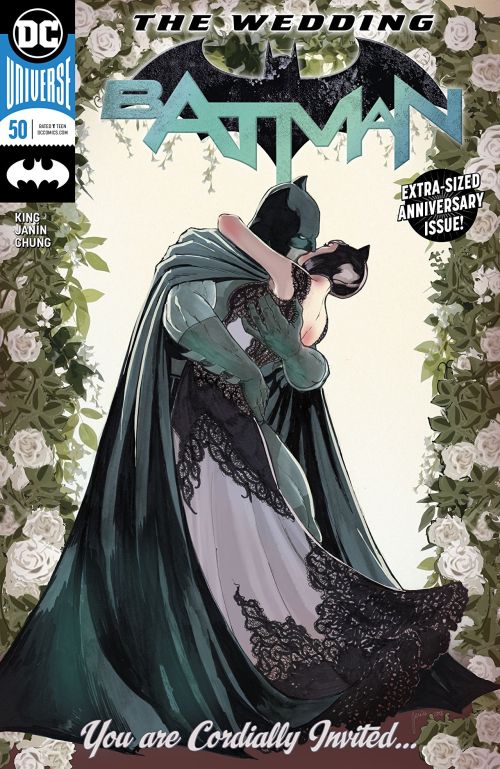
However, those tasked with building the canon seem to have an aversion to married superheroes. Just this past summer, that aversion was on full display. Two major superhero weddings were set up, one involving Kitty Pryde and Colossus in X-men Gold #30 and the other involving Batman and Catwoman in Batman #50.

Sadly, both events ended without tearful vows and a drunken toast, although one salvaged a matrimonial quickie at the last second. I’ve already broken down how one wedding just prolonged an already drawn out romance while the other denigrated the entire concept of romance, as a whole. Rather than bemoan those romantic misfirings, I’d like to step back and look at the bigger picture of married superheroes.

This is actually a controversial issue among fans of superhero comics and those who create them. I’ve been browsing comic book message boards for years. I can attest to just how much fans care when their favorite characters get married. They continue caring long after the wedding reception.

On the other side of the controversy, though, there are the creators that work for Marvel, DC, and their corporate overlords. They have a slightly different view of married superheroes and one that’s not nearly as sentimental. To say their views are complex is like saying a plumber has mixed opinions on food poisoning.

While many of those writing, editing, and producing superhero media are fans themselves, they often have to leave their fandom at the door. Companies like Marvel and DC Comics don’t pay them to write fan fiction. They pay them to tell stories that will sell, increase the value of their brand, and improve market share.

A writer or editor’s ability to do this is prone to many challenges. Fans, especially comic book fans, are notoriously fickle with their passions. If they see something they don’t like happening to a character they love, they’re pretty vocal about it. Just ask fans of Captain America, the Fantastic Four, or Cyclops of the X-men.

In that respect, I have some sympathy for the people responsible for handling beloved characters. They’re basically playing with someone else’s toys and getting paid for it. However, if they break those toys or damage them in any way, there can be hell to pay. Just look at the current situation with Star Wars.

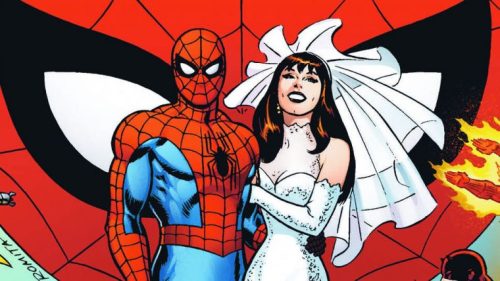
That sympathy, though, only goes so far and I can’t extended to how some at Marvel and DC have approached marriage. DC Comics editor, Dan Dido, once went on record as saying that superheroes should not get married. Long-time Marvel editor and COO, Joe Quesda, even had to justify breaking up Spider-Man’s marriage to Mary Jane Watson by claiming that it “stabilized” Spider-Man too much.

Now in general, I try to be understanding and respectful when people hold positions that I disagree with. I’ve even tried to do that with hot-button issues like abortion, feminism, and organized religion. In this case though, I just have to call bullshit.

Claiming marriage does too much to stabilize a superhero is like saying ketchup makes food too red. It gives the impression that stability is somehow a liability with superheroes, as though they can only be interesting when their world is falling apart and they’re one stubbed toe away from a nervous breakdown.

It’s true that we superhero fans love seeing our favorite heroes fight back invading aliens, punch Nazis, and even take on renegade alien gods. However, it’s also true that we don’t expect or want that to be the only story that superheroes tell. We’re also interested in the lives they live outside their flashy costumes. It doesn’t just humanize them. It gives us more reasons to root for them.

Both Mr. Quesada and Mr. Dido try to make the case that part of being a hero involves sacrificing parts of their personal life in order to serve the greater good. There’s little doubt that being a hero comes at a price, as many of Batman’s former lovers can attest, but that doesn’t have to involve outright isolation.

It also doesn’t mean being a superhero makes a functioning marriage impossible, either. Yes, it’s a lot harder to be a loving spouse and a superhero, but I wouldn’t say it’s as daunting as battling planet-eating space gods or surviving a team-up with Deadpool. In fact, it can enhance their heroics in ways that go beyond romance.

I’m not the only one to make that point either. In wake of the recent wedding debacles by Marvel and DC, Comic Books Resources asked why publishers are so afraid of married superheroes. They cited the same excuses I did about heroes needing to sacrifice, but they also pointed out how these kinds of real-life, mundane events help people connect with these characters.

What the article didn’t get into is why this matters. Superman is a hero with god-like power who can move planets and create diamonds with his bare hands. He’s also married to Lois Lane and still has to put in the effort to make that marrage work, even when it becomes prone to complications.

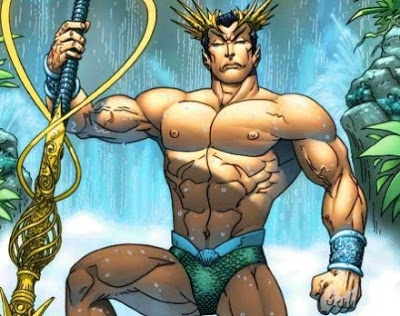
Reed Richards of the Fantastic Four is among the smartest beings in the entire Marvel Universe. He creates thought projectors, flying cars, and personal robots without breaking a sweat. He too has to work hard to keep his marriage and family functioning, especially when a handsome Atlantean king keeps trying to sleep with his wife.

Then, there’s Spider-Man. I know I’ve brought him up a number of times and not always in a positive light, but what happened to him and his marriage is still one of the most controversial things that have ever happened in comics. In many ways, he embodies the ultimate flaw in the excuses to undercut married superheroes.

In the infamous story, One More Day, Spider-Man’s marriage to Mary Jane Watson wasn’t just undone. He actually made a deal with Mephisto, Marvel’s stand-in for the devil, to sacrifice his marriage in exchange for saving his Aunt May’s life. Considering his Aunt had told him just a few issues ago that she didn’t want to be saved, Spider-Man still went through with it.

To say fans were upset by that decision would be like saying the Hulk has a slight anger management problem. This act didn’t just undercut an iconic superhero romance. It essentially reverted Spider-Man back to the state of an immature loser who had barely grown up since high school.

Again, Marvel made plenty of excuses. Long-time Spider-Man writer, Dan Slott, claimed that Spider-Man has to remain within a particular status quo. He has to keep being this lovable loser who is always struggling to hold down a job, keep a girlfriend, and still be a hero. In order to keep that unique appeal he has, and all the merchendising money it makes, he can’t be married.

I understand that logic, but I still call bullshit. You know what happens to characters who never change, grow up, or evolve over time? It’s the same thing that happens to real people. They become boring and unlikable. In Spider-Man’s case, he becomes something worse. He becomes the guy who sold his marriage to the devil to save someone who didn’t even want to be saved. That’s not heroic. That’s just plain selfish.

That’s the price a superhero pays for remaining in a prepetually regressed state. I contend that price is far higher than any associated with the inherent difficulty of writing married characters. With Spider-Man, One More Day established that no matter what he did in his personal or heroic life, he would never change. He’d always end up sleeping on his Aunt May’s couch.

It doesn’t matter if he pursues a new romance. It doesn’t matter if he becomes a billionaire and runs his own company. A reader can just assume he’ll screw it all up somehow and end up right back where he started. It’s just hard to root for any character that keeps regressing like that.

It’s like rooting for a sports team that never wins. Even terrible teams can turn it around at some point. Yes, that includes the Cleveland Browns. If that team never wins, though, why even root in the first place?

This is why marriage is so vital to the growth and evolution of superheroes. When a hero gets married, it’s not just an excuse to have a big event full of superhero-themed cakes. It’s a culmination of a much larger story about love, growth, and strength. It takes a lot to make a marriage work and not all of it can be done with superpowers.

Therein lies the ultimate appeal, though. When a superhero gets married, they go from simply pursuing a relationship to actually making it work. They have to learn how to build a life with another person and become part of a larger family, something that cannot and should not be exclusive to the Fantastic Four.

It fundementally changes how superheroes approach their lives, in and out of costume. It adds new layers of complexity and intrigue. Yes, it’s considerably harder than telling stories about Superman rescuing Lois Lane from Lex Luthor’s evil clutches. That’s exactly what makes it more compelling.

I don’t doubt that Marvel and DC will continue making excuses about married superheroes. Whether or not their approach to the issue evolves remains to be seen. However, since they’re in the business of keeping their characters relevant, they will have an incentive to adapt these characters for changing times and maturing audiences.

Being the romantic I am, I believe love will eventually win out in the end because love is part of why we root for superheroes in the first place. Love isn’t just about being unselfish. It’s also about achieving something special after so much sacrifice. Fans of superheroes want to see them achieve the things they struggle for. It affirms that all those heroics have meaning and purpose.

Marriage doesn’t have to be the ultimate achievement for a superhero. It can be part of it, though. It doesn’t have to be an end. It can be a beginning, as well. Until Marvel and DC lets its heroes get to that point, though, those stories won’t get told and hearts will keep getting broken for all the wrong reasons.

1 Comment

Filed under Comic Books, Jack Fisher, Superheroes, Love Or Obsession, Marriage and Relationships, romance, superhero movies, X-men

How Atheism May Improve Your Sex Life

Relationship with passionate affection

When it comes to improving your sex life, there’s no one way to go about it that works for everyone. Human sexuality is complex, diverse, and exceedingly kinky. What works for one person won’t work for another and may even be detrimental in some cases.

Conversely, there are also variety of ways to undermine or ruin your sex life. That same sexual diversity that helps the human race find novel ways to get intimate with one another can also backfire horribly. Some are minor, in terms of effect, but other forces can have a much greater impact.

That brings me to religion, a topic that tends to inspire the best and worst in people. Like sex, it’s a complex phenomenon that impacts everybody differently. It can inspire great charity and compassion in some. It can just as easily incur greed, exploitation, and outright atrocity.

For those reasons, and plenty more that are too numerous to list, any effort that involves mixing sex with religion is akin to mixing napalm with TNT. I’ve made an effort to discuss both topics in a fair, balanced manner in the past. I feel as though I can only go so far before I totally inflame certain audiences.

I’m still going to try to push the conversation a bit farther. That means taking a few risks and since religion is still such a prominent force in the world, it’s effect on our collective sex lives is unavoidable.

For this particular discussion, want to focus on what happens when religion is removed from the equation. If religion is really that powerful an influence on our lives, and both history and current politics indicate that influence is not entirely trivial, then it stands to reason that the impact of its absence can reveal something about the extent of that influence.

That’s not to say that this is going to be a glowing endorsement of atheism. I prefer to let the data, the logic, and the implications speak for themselves. Since religion is on decline in many parts of the western world, I think exploring the potential impact is critical and even a little urgent.

Information on the sex lives of atheists compared to those who consider themselves religious is somewhat difficult to come by. The act of assessing and measuring someone’s sex lives, as well as the extent of their religiosity, is extremely difficult without the aid of lie detectors or mind-readers. The information we do have, though, does offer some intriguing insights.

Back in 2011, a survey entitled “Sex and Secularism” surveyed approximately 14,500 people revealed that those who identified as religious had less satisfying sex lives than their non-religious counterparts. On top of that, those same religious participants reported a high level of guilt that came along with their sex lives. Given how some religions build their theology around guilt, that shouldn’t be too surprising.

Conversely, those identifying as non-religious didn’t just report better sex lives. They had better sexual education and were more open to discussing sex in general. Everything from personal fantasies to simple tastes was fair game and less affected by guilt. That openness, along with considerably less stigma, was conducive to a more fulfilling sex life.

That effect was more pronounced by those who had once been religious, but had since become atheist. Between the absence of religiously-motivated guilt and the sexual taboos that are often theologically driven, the cumulative effect is pretty striking. This notable quote from the researchers summed it up nicely.

“People who had lost their belief and became atheists reported a significant improvement in sexual satisfaction,” the paper went on to say. Apparently the guilty feelings that religion creates around sex dissipate after a while.

Now, I can already hear the outrage sincerely devout religious crowd on the conclusions of this study. More than a few people who consider themselves religious will claim that their sex lives are superior and they may even have a case to make. Many religions offer a simple, one-size-fits-all approach to sex that is uncomplicated, straightforward, and safer. The fact that it’s also ordained by a divine power is also a factor.

I don’t deny that there are plenty of religious couples out there who have satisfying sex lives. There are probably plenty of atheists out there who have terrible sex lives, as well. However, in order to draw larger conclusions about the impact of religion on sex, we can’t just go by a few anecdotal experiences. We have to step back and see the forest from the trees.

From a psychological and physiological perspective, it makes sense that guilt, religiously-motivated or not, would undermine anyone’s sex life. Guilt has measurable effects on people. It makes it harder to focus. It keeps us from enjoying things. It’s a powerful distraction that makes us feel stress and anxiety. All of these forces can do plenty to undermine your sex life.

In my musings on taboos, I often cite religion as a driving force behind them. Organized religion has made no secret of its intent to regulate, control, or outright exploit human sexuality. There’s plenty of theology, especially among the Abrahamic religions, that imparts divinely-mandated guilt on sex.

In these religious cultures, sex isn’t just some basic biological act that people do for intimacy, procreation, and recreation. It’s subject to all sorts of holy and unholy connotations. The deities involved in these religions aren’t just interested in the kind of sex you’re having. They’ll actually punish you if you do it the wrong way.

That does more than just impart extra guilt for doing anything that strays from what priests, mullahs, monks, and rabbis deem appropriate. It also instills a very rigid family structure, one centered around a specific manifestation of sex that has very little room for fun, kink, and exploration.

That manifestation involves strict gender roles where men do the hard labor and women do the child rearing. The only sex that is sanctioned is the one that involves producing babies who subsequently grow up to be adherents/soldiers/patrons of a particular religion. The fact that type of sexual expression indirectly benefits religious institutions is probably just a coincidence.

The act of enjoying sex for non-procreative purposes would constitute a distraction. A distraction is dangerous in any religion because if people become too distracted, then they pay less attention to the religious institutions and the duties they espouse. As such, it’s in the interest of any successful religion to maintain a strict control over someone’s sex life.

That kind of control is naturally prone to stress. Given how the biological wiring of human sexuality is not conducive to that kind of narrow expression, there’s bound to be temptation. The best way to combat temptation is through stigma and taboo. By hijacking powerful feelings like guilt, it’s possible heavily influence peoples’ sex lives, even if it’s impossible to control them.

It’s akin to putting lead weights on somebody’s limbs and convincing them that the weight is normal. Even if they come to accept that, the weight still skews perceptions and that can only do so much in terms of circumventing basic biology. It also means that when those weights come off, the effect is pretty striking.

Suddenly, the stigma that once kept someone from seeking the sex they desired are gone. The burdens associated with thoughts and feelings that religious institutions deem unholy are lifted. Like any form of stress relief, it can be pretty liberating.

That doesn’t necessarily mean the 2011 survey is conclusive. It has been criticized for being unscientific in some aspects. Some of those criticisms are valid and the researchers concede that, but to the extent the data is consistent with what we understand about how religion can affect our sexuality, it passes some critical filters.

Our sex lives are complicated. Religion, in its many forms, is complicated as well. Regardless of how you feel about one or the other, mixing them is almost certain to compound both. Atheism, like not playing a sport or not having a hobby, simply removes one of those complications.

It’s not a universal fix. It doesn’t subvert other potential issues that may undermine someone’s sex life. There’s plenty more research to be done and religion is still evolving with each passing year, but when it comes to removing divinely-imposed, theologically-driven guilt, atheism stimulates the necessary aspects that make for a satisfying sex life.

1 Comment

Filed under gender issues, human nature, Marriage and Relationships, philosophy, psychology, religion, romance, sex in society, sexuality

The Emerging Problem Of Superman And Lois Lane

1234599567267158119

I think I’ve made it fairly clear that I’m a big fan of superhero romances. I’m a big fan of romance in general, but romance between superheroes has a special place in my heart. I was a comic book fan before I was a romance fan. As the years have gone by, it has been among my favorite combinations. I put it up there with pizza and a cold beer.

It certainly helps that superhero comics have inspired some of the most iconic romances of the past century. Say what you will about Rose and Jack in “Titanic.” I still find the love story between Batman and Catwoman is much more complex and compelling in terms of depth, not to mention many times sexier.

Superhero comics have informed a lot with respect to my fondness for romance. I also think they offer unique insights into the complexity of romance. Love is complicated enough. Adding superpowers and super-villains into the mix only compounds the drama. Sometimes it can end in tragedy. Sometimes it can make for some truly epic romance that strikes all the right emotional chords.

In some instances, though, mixing romance and superheroes can cause problems. Like relationships in the real world, there are many ways to screw it up. Comics have done plenty to mishandle romance. Just ask any Spider-Man fan about a story called One More Day and watch them recoil with disgust. I’ve even noted a few examples.

However, there are some instances where romance in superhero comics cause unique problems that are subtle in substance, but vast in implications. It doesn’t always involve relationships that are inherently toxic to multiple characters. Sometimes, those problems can emerge in even the most iconic relationship.

In the pantheon of superhero romances, the top spot is usually reserved for Superman and Lois Lane. In terms of romance in superhero comics, they are the gold-encrusted diamond standard by which all others are measured. Their love is isn’t just iconic. It’s a foundational component for both characters.

Superman loves Lois Lane. Lois Lane loves Superman. That romance is established in the pages of Action Comics #1. It’s a critical part of how both characters evolve over the years. You can’t tell Superman’s story without Lois Lane and you can’t tell Lois Lane’s story without Superman.

In the same way Superman always does the right thing and Deadpool always makes the dirtiest joke, this dynamic is fundamental. It establishes the kind of romance that is pure, unconditional, and uncorrupt. There’s no need for a previous love interest to die or a love triangle to provoke drama. Superman and Lois Lane just love each other and that’s all there is to it.

However, even with a romance this iconic, there is a problem and it’s actually a very recent problem. It affects both Superman and Lois Lane, but I believe it affects Lois to a much greater extent. It stems from an issue that I’ve been noticing more and more lately with certain romances. When it shows up in the most iconic romance in the history of comics, though, I take notice.

The nature of the problem has less to do with love and more to do with how a relationship defines certain characters. In both fiction and real life, it’s common and even romantic for two people to become so close that their lives become heavily entwined. There comes a point, though, where it stops being romantic and starts being destructive.

For most of their history, Superman and Lois Lane’s romance was built around simple, but effective dynamics. Lois Lane loved Superman, but not Clark Kent, who she didn’t know was Superman. Superman kept his identity from her to protect her many years, which created plenty of tension and made for some great moments.

Eventually, Superman reveals his identity to Lois and they eventually get married. I remember that moment. It was an amazing milestone for both romance and comics lore. The problem only came when that dynamic was complicated by a new theme that has since permeated the narrative.

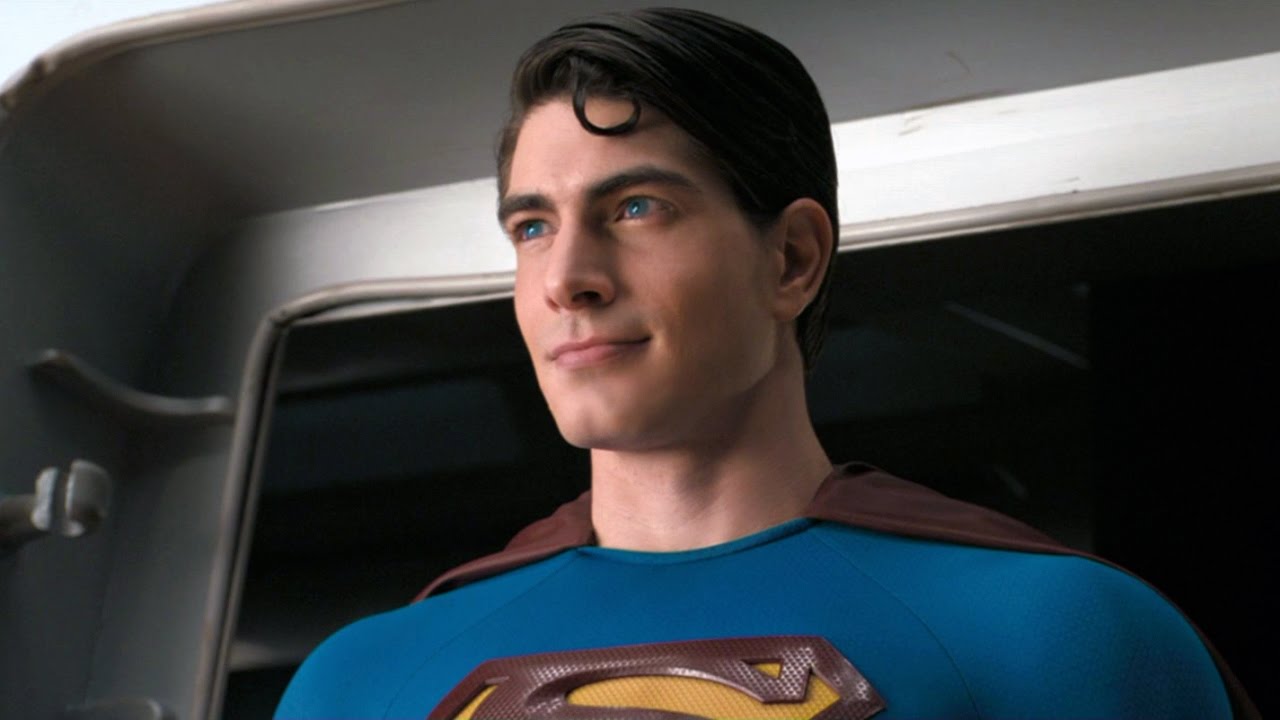
It didn’t start at any particular date, but I think “Superman Returns” marked the unofficial turning point. That movie, on top of turning Superman into a deadbeat dad, made a small, but critical tweak to the Superman/Lois romance. In essence, it turned their love from a strength to a liability that is detrimental to the ideals of Superman and romance, as a whole.

At the beginning of that movie, Superman’s actions are the same as they’ve always been. He does the right thing because it’s the right thing. That’s who he is and why he’s so iconic. Towards the end, though, what he does becomes less about doing the right thing and more about resolving his relationship with Lois Lane.

Suddenly, doing the right thing and saving Lois aren’t just supplementary plots. They’re indistinguishable. One is the other and that’s a problem for reasons that go beyond romance and heroism. It wouldn’t have been that big an issue if it had only played out in one sub-par Superman movie, but in recent years, the problem has escalated.

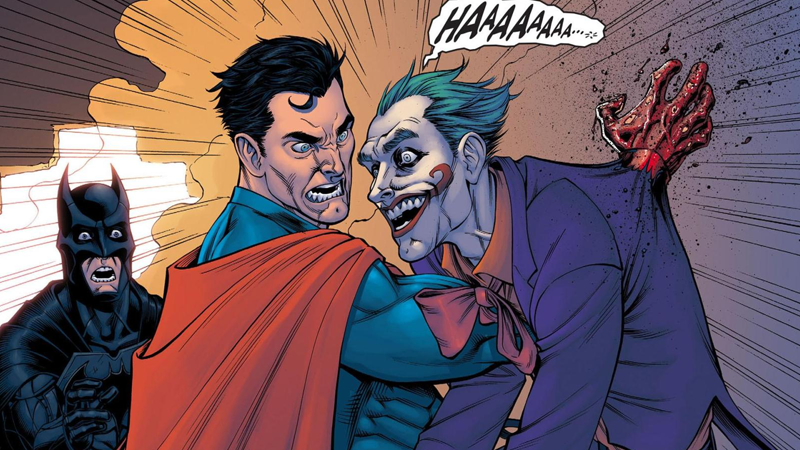
It manifested in its most overt form in “Injustice: Gods Among Us,” a video game with a comic book series tie-in that essentially provides a worst-case-scenario for Superman. In this story, Superman is tricked into killing both Lois and his unborn child by the Joker. It’s not just an atrocity and a tragedy. It fundementally breaks Superman.

I’m not just referring to his spirit either. The death of Lois Lane also marked the death of Superman, as an ideal. In both the game and the tie-in comics, he’s no longer a hero. He’s a tyrant who becomes everything he once fought against. I wouldn’t go so far as to call him a villain, but he’s definitely not the beacon of goodness that so defines his character.

While it makes for a powerful story, the particulars of that transformation are profound and not in a good way. It implies that Superman’s heroism is directly tied to Lois Lane and not supplemented by it. If she dies, then Superman ceases to be that iconic hero who stands for truth and justice.

That sends the message that Superman’s love for Lois Lane isn’t a strength. It’s a crutch. She’s not just his connection to humanity. She’s his lifeline. Beyond putting a burden on a character whose appeal is her ambitious pursuit of truth, it reduces Lois Lane to a singular role and one that’s impossible to maintain.

Unlike Superman, Lois is human. She’s going to age. She’s going to eventually die. Under this dynamic, Superman will eventually lose sight of his ideals. He’ll eventually stop being the hero that fights for truth, justice, and the American Way. Without Lois, he’s destined to give up and for a character who once moved the sun, that’s pretty weak.

This issue came up again in the plot for “Batman v. Superman: Dawn of Justice.” While I enjoyed the movie and don’t think it deserved half the criticism it got, there was one major issue that I felt undercut the story. Once again, it came back to Superman’s relationship with Lois.

Throughout the movie, Superman constantly questions his role and responsibilites as a hero, especially after seeing Batman’s approach to pursuing justice. That’s perfectly appropriate with respect to humanizing his character, but at the end of the day, he bases much of his decision to save the day around saving Lois.

That’s not to say that there isn’t merit to saving a lover, but this is Superman we’re talking about here. This is a hero whose entire appeal is built around him having god-like power, but still doing the right thing. When the right thing is only ever in the context of saving his girlfriend, then that undercuts both the ideals and the romance itself.

It’s largely for that reason, among others, that I find the romance between Superman and Wonder Woman more compelling. Back in 2012, there was a brief period in DC Comics where the timeline was tweaked, which happens fairly often, and Superman’s marriage to Lois Lane was nullified. That gave these two iconic heroes a chance to be together.

I could probably write several more articles about why I think the Superman/Wonder Woman romance is special in its own right. In many respects, I think it’s healthier than the Superman/Lois Lane relationship. It may never be as iconic, but it fundementally avoids this problem.

Wonder Woman can take care of herself. She can save herself and be a hero on her own terms. Lois Lane, however, is becoming more and more defined by how she defines Superman. For the most iconic superhero couple of all time, that’s pretty shallow.

The recent comics have done little to address this issue. With yet another tweak to the timeline, Superman is back with Lois. They even have a child now. However, the nature of their relationship is still on uncertain ground. I still feel it lacks the complementary dynamics that made it work so well for so many years.

There’s a chance it could change. Given the fickle nature of comic book continuity, it’s very likely that the Superman/Lois Lane dynamic will continue to evolve. However, I think it’s going in the wrong direction if Superman’s reasons for doing the right thing are that dependent on Lois.

Whether or not this problem deepens or subsides remains to be seen. Superman and Lois Lane are still the most iconic romance in the history of comics. That will continue to hold true, even if the problem deepens. Superman and Lois Lane are great characters in their own right. That aspect cannot and should not get lost under the weight of their iconic romance.

As much a romantic as I am, I don’t deny that it is possible for a love story to go too far. Loving someone and being dependant on them are not the same thing, especially when superpowers get involved. If a relationship becomes too dependent, then it can be more damaging than a mountain of kryptonite.

65 Comments

Filed under Comic Books, Jack Fisher, Superheroes, Marriage and Relationships, romance, superhero movies

How To Disappoint (But NOT Destroy) An Iconic Romance In Batman #50

688356-_sx1280_ql80_ttd_It’s been a rough summer for fans of romance, superheroes, and superhero weddings. In fact, in all the years I’ve been reading comics and following romantic sub-plots, I can’t remember a time when there was this much melodrama and heartbreak. I understand that any epic romance is going to involve a healthy bit of emotional strain, especially when it involves superheroes. There comes a point when it just becomes too much.After the deconstruction and denigration of superhero romance that unfolded in X-men Gold #30, I feel like we’re dangerously close to that point. It’s as though everyone involved in making superhero comics is admitting that superheroes can’t get married. They can’t have a functional, compelling romance and still be interesting.That sort of sentiment is basically an affirmation of Marvel’s justification for undoing Spider-Man’s marriage to Mary Jane Watson in the infamous One More Day story. Given the relative infamy of that story line and the recent upheaval with the X-men, many fans of both superheroes and romance were placing a lot of hope that the wedding of Batman and Catwoman could help stop the bleeding in Batman #50.I certainly counted myself among those who was very excited about this event. I even admit I really wanted this to make up for the disheartening outcome of X-men Gold #30. The romantic in me wanted at least one superhero wedding this summer that didn’t end in heartbreak or tragedy.Well, if you saw the same spoilers in the New York Times that I did just two days before Batman #50 came out, you already know that’s not what happened. Bruce Wayne and Selina Kyle did not get married. That means in terms of superhero weddings, the summer of 2018 is now 0 for 2.However, that outcome did not compound my lingering disappointment from X-men Gold #30. I’ll even go so far as to say that Batman #50 didn’t send the state of superhero romance past the point of no return. It didn’t improve the state of affairs. It was disappointing, but not to the point where it damaged a story or a romance beyond repair.Before I explain, I want to establish that many of the details beyond this point are heavy spoilers. Seeing as how this comic was already spoiled a couple days prior to its release, much to the chagrin of comic retailers, I don’t think I need to place too many warnings. I still recommend that people buy the comic, but there’s more going on here than a wedding that didn’t happen, much more so than what we saw in X-men Gold #30.By nearly every measure, Batman #50 approaches the concept of a superhero wedding differently than X-men Gold #30. The wedding of Kitty Pryde and Colossus was set up as this big, momentous affair between an established couple that overcame a lot just to have the opportunity to get married. They brought in friends, family, and fellow superheroes from across the X-men comics.In contrast, the ceremony in Batman #50 was very small. In fact, there wasn’t much of a ceremony to speak of. The only ones who were present besides Batman and Catwoman were Aflred, Bruce Wayne’s butler and long-time confidante, and a lone judge who was already drunk so that he wouldn’t remember his or Catwoman’s identity. Batman always has a plan for that sort of thing. That’s why he’s Batman.On top of that, Batman is the one who proposed to Catwoman back in Batman #24. He’s the one who pitched the idea of getting married in the first place. That’s critical because Kitty Pryde was the one who proposed to Colossus in X-men Gold #20. That matters because she’s also the one who broke it off and at the last second, no less. Things were a bit less cruel in Batman #50 and that’s saying something for a Batman comic.At one point in the story, Batman makes clear that he still wants to marry Catwoman. He’s not having second thoughts. It’s Catwoman who makes the fateful decision to break it off and she doesn’t wait until half-way through the ceremony, either. To put that another way, an admitted jewel thief who enjoys having sex on rooftops showed more decency than Kitty Pryde on her failed wedding day.It’s not a public spectacle that turns into an equally public debacle. It’s a private affair that simply doesn’t pan out. There’s no awkward reception. There’s no attempt to salvage it by shoehorning another romance into the mix just so someone gets married, as though such romances can be swapped out like batteries. It just doesn’t happen.Moreover, Catwoman actually gives a reason for not going through with the wedding and, unlike Kitty Pryde, it’s not a wholly contrived. She establishes throughout Batman #50, through a series of montages documenting their romance over the years, why she loves him and why he’s such an effective hero. In the process, she reveals something profound about Batman.What makes Batman both effective and iconic is how he takes the pain of a tragedy, namely the death of his parents, and turns it into strength. The same pain that would break a lesser man drives him to do so much more. He’s the Dark Knight who defends Gotham. He’s a hero who deserves to fight alongside demigods and aliens on the Justice League. For him to be Batman, he needs that pain to fuel him.From Catwoman’s perspective, Batman finding happiness means denying him the fuel he needs to be Batman. That’s not a realization that just randomly pops into her mind at the last second, though. This is something the Joker actually points out to her in Batman #49. It has less to do with whether or not she loves him and more to do with him being the hero that Gotham needs.That doesn’t make Catwoman’s decision any less disappointing, but it’s still nowhere near as callous or selfish as Kitty Pryde’s decision in X-men Gold #30. I know it’s somewhat unfair to keep comparing the two, given the different circumstances of their relationship, but those distinctions highlight an important element that the failed Batman/Catwoman wedding has that the Colossus/Kitty Pryde wedding didn’t.What happens in Batman #50 is definitely a setback for Batman and Catwoman’s relationship, but it doesn’t fundamentally destroy it. In fact, there’s a very critical detail at the end of the issue that leaves the door open for this romance to keep evolving. I won’t spoil it, but it unfolds in such a way that makes romance fans like me want to root for this relationship.The same definitely cannot be said for the Colossus/Kitty Pryde relationship. After the way things played out during their wedding, it really feels as though their romance is damaged beyond repair. It’s no longer a love story. It’s an outright tragedy, one that would need an even greater contrivance to repair at this point. In a universe with shape-shifting aliens, though, that’s not wholly unfeasible.In the grand scheme of things, Batman #50 is still disappointing in the sense that it doesn’t let Batman and Catwoman take their love story to another level. In fact, not a whole lot changes. The way it plays out feels more like a setback rather than a tragedy. The writer of the comic, Tom King, even claims it’s just part of a much larger narrative between Batman and Catwoman.How that story will play out remains to be seen. Given how long it took Batman and Catwoman to get to a point where they try to get married, Batman #50 already gives the impression that their romance is being dragged out. For a couple who has been off and on again since the 1940s, that’s saying something.If I had to score Batman #50, as both a comic book fan and a romance fan, I’d give it a 6 out of 10. It’s a bit of a letdown, but it’s not nearly as soul-crushing as X-men Gold #30. It still leaves the state of superhero romance in a very precarious state, but at the very least, this book gives me reason for hope.I’ll still be very skeptical of any future superhero wedding for the foreseeable future, though.

5 Comments

Filed under Comic Books, Jack Fisher, Superheroes, Marriage and Relationships, romance

What It Means To “Man Up” And Why It’s Changing (For The Worse)

man-up-and-military-press

It wasn’t that long ago that parents and peers emphasized the importance of “manning up” to young boys. There would come a point in a kid’s life where he was encouraged to do more than just grow up. He was expected to push himself in a unique way, fighting and sacrificing for those who couldn’t. Sometimes, those expectations were unreasonable and a little unhealthy, but it was part of the overall gender dynamic.

That dynamic has been changing a great deal over the past several decades. I’m young enough to have grown up during many of those changes, but old enough to remember the old traditions associated with “manning up.” The sheer breadth of that change has been remarkable, but not entirely in a good way.

For the most part, I was never pushed too hard to man up by others. My friends and family encouraged me to push myself, but never to the point where I felt pressure or anxiety. I often ended up pushing myself, whether it involved going to college or moving out of my parents’ house.

That’s not say I didn’t feel any pressure to “man up” at any point in my life. Beyond my friends and family, I was as vulnerable to expectations surrounding masculinity as anyone. Most of the time, those expectations involved little things like stepping up to fix a problem, helping out those who were physically limited, and enduring pain or discomfort in the name of a particular goal.

Overall, I feel as though these expectations were either healthy or benign. Some of those standards could’ve been gender neural. When you see someone in a wheelchair at the grocery store struggling to get something from a shelf, it’s neither masculine nor feminine to help them. That’s just common courtesy.

In recent years, however, the whole notion of “manning up” has gained new a new complications. Some of them are ideological. Some of them are politically motivated. It’s because of these various nuances that I put the term in quotes because its meaning keeps shifting, gaining and losing connotations year by year. At some point, the term itself may become empty.

In contemplating that meaning, I thought briefly about the connotations that term had back when I was a kid. I doubt my interpretation was definitive, but I like to think it captured the spirit of the term. When someone told me to “man up,” this is what I took it to mean.

  • Grow up and mature
  • Take responsibility and solve your own problems
  • Stop whining and start doing something about it
  • Quit being satisfied with mediocrity and push yourself
  • Be stronger and tougher in difficult situations
  • Work hard and endure for the good of others who can’t

I don’t think it’s a coincidence that many of these same traits associated with superheroes, as espoused by the comic books I read and the cartoons I watched. They might have colored my perspective on masculinity and “manning up,” but I suspect these ideals were still consistent with healthy masculinity. The fact that characters like Wonder Woman and Storm of the X-men had some of these traits was just a bonus.

Now, as I contemplate the meaning of “manning up” in its current context, those don’t seem to have the same prominence they once did. There are also a new host of expectations surrounding the term that are fueled, in part, by identity politics. Some even conflict with others, which adds even more complications.

To get a feel for those complications, I posed a question on Reddit on what “manning up” meant to them. The response somewhat surprised me. Most wouldn’t have found their way into the comic books or cartoons I consumed as a kid, to say the least. They involved ideas such as this.

  • Checking your privileged and making way for those your kind has oppressed
  • Acknowledging the crimes and guilt of your gender, as a whole
  • Sacrificing any advantage or benefits that being a man might have once conferred
  • Subjecting yourself to greater degradation in the name of greater equality
  • Learning about all the ways men have ruined society and the world
  • Accepting that the things men love are unhealthy, damaging, and detrimental

None of these are very positive traits for those being told to “man up.” It’s basically a less overt way to tell them that them being a man is “problematic,” a term that has also gained one too many complications. It’s a term reserved for those who appear to be benefiting too much from being a man who isn’t subject to the rigors of childbirth, rampant sexism, and a long history of exploitation.

Never mind the fact that no one alive to day is directly responsible for the injustices their ancestors committed. They’re also not responsible for the injustices their particular race, gender, or ethnicity committed. It happened in the past. Yes, parts of that past were horrible, but punishing people in the present doesn’t make it less horrific. If anything, it just tries to fight one injustice with another.

This is where the concept of “manning up” really loses whatever positive connotations it once held. It’s a sentiment that many responders to my Reddit question shared. When they contemplate that term, they interpret as someone telling them that they need to endure, suffer, or overlook a particular aspect of their identity.

A few posters went so far as to say the term can be replaced with “serve my interests” and carry the same meaning. While I don’t entirely agree with that notion, I can understand why it would feel that way. Being a man, I sometimes feel like I’m expected to get to the front of the line when the time comes to sacrifice. I won’t go so far as to say I find it oppressive, but it certainly feels like I’m held to a different standard.

Sometimes, that standard can be unreasonable. That was another common theme of the responses I got. The notion of “manning up” denotes operating in a way to avoid a particular stigma that others wouldn’t incur for the same behavior. It’s not always ideological, but the pressure is there.

A man who is too emotional is considered a sissy and has to “man up.” A woman or even a gay man who does this won’t face that stigma.

A man who is reluctant to sacrifice for the well-being of another group is considered selfish and should “man up.” A woman or another minority who show a similar reluctance can do the same, but won’t face the same stigma.

A man who shows his pain when he’s harassed is told to suck it up and “man up.” A woman or minority who is harassed can expect plenty of supporters who will cheer them on. Even if men are subject to more overall harassment, they don’t get any sympathy. They’re told to “man up” while everyone else is allowed to seek social support without much scrutiny.

This, I feel, is the ultimate tragedy of the concept. A term that once use to reflect certain ideals for men has now become an instrument of ridicule. It’s no longer a lesson for boys to learn. It’s a rhetorical shortcut that allows someone to hold an entire group of people to a different standard, one that requires them to go out of their way for someone else.

I don’t doubt that there are instances where it’s good for society that some people go out of their way to help others. For those who are disabled, elderly, or ill, it’s just more just and compassionate to set a different standard for ourselves. We don’t ask someone who is missing a limb or suffering from ALS to “man up.” We go out of our way to help them.

It’s the extent of those instances, however, that seems to be damaging the notion. It’s no longer sufficient to just have a particular ailment or shortcoming. Just being someone who isn’t a man who can claim some sort of injustice, be it historical or contemporary, is sufficient.

I believe that’s a dangerous precedent for men and women, for that matter. It sends the message that in order for there to be more justice and equality, an entire group of people need to sacrifice to an extent where they have to be the villains. They have to come to the table, surrender unconditionally, and admit they were wrong and they were the cause of the problem.

That may not be sentiment of those telling someone to “man up,” but that’s how it’s being interpreted. It’s less a masculine ideal and more a shaming tactic, one that is more likely to incur a backlash rather than get someone to reconsider their understanding of gender roles.

I still feel like there’s a way to recapture the positive elements of “manning up.” Gender dynamics is one of those concepts that’s always evolving. Sometimes, there’s progress. Sometimes, there are setbacks. At the moment, I think masculinity and femininity are going through some growing pains as they adapt to a changing world. That process is likely to involve plenty of conflicts and controversies along the way.

In the long run, though, I think society will find a healthy balance with respect to “manning up.” I think there’s a way to use that notion to bring out the best in men and women alike. It’ll likely take plenty of work, toil, and sacrifice from everyone involved in gender-driven controversies, but it’s definitely worth doing.

1 Comment

Filed under gender issues, human nature, Marriage and Relationships, media issues, political correctness, sex in society, sexuality

How To Denigrate Multiple Iconic Romances In A Single Comic

664803-_sx1280_ql80_ttd_

I love romance. I also love comics. I’ve made my fondness clear for both on numerous occasions. When they’re combined, I’m twice as thrilled. It has proven to be a very potent combination before. Like real life, comic book romance isn’t always done right, but when it works, it’s a beautiful thing.

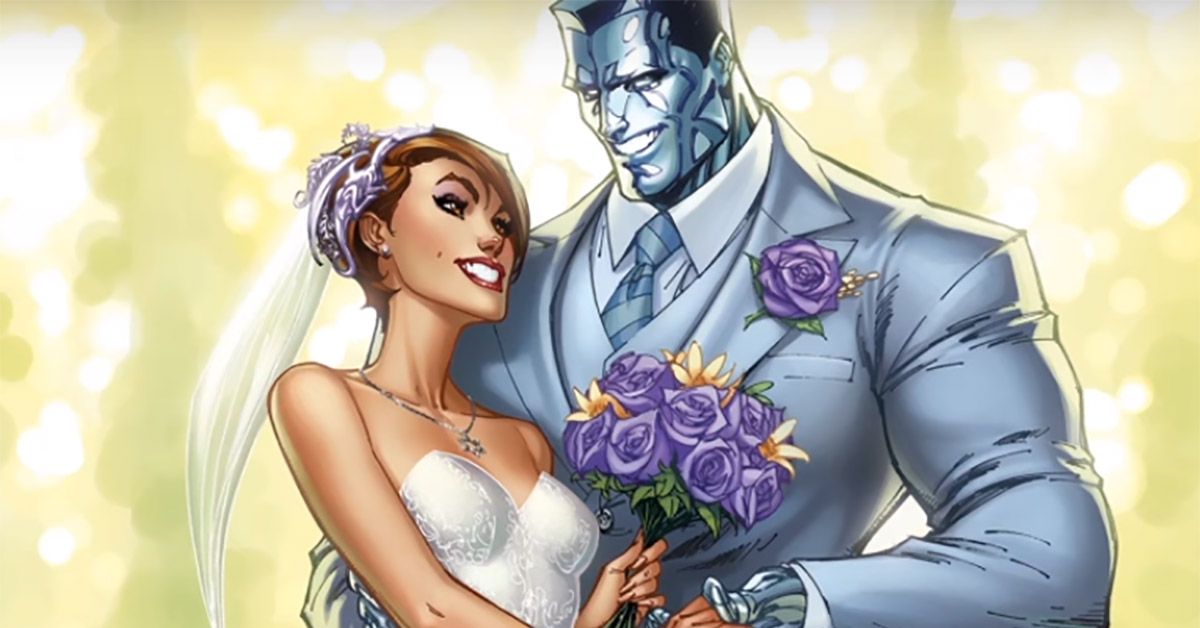
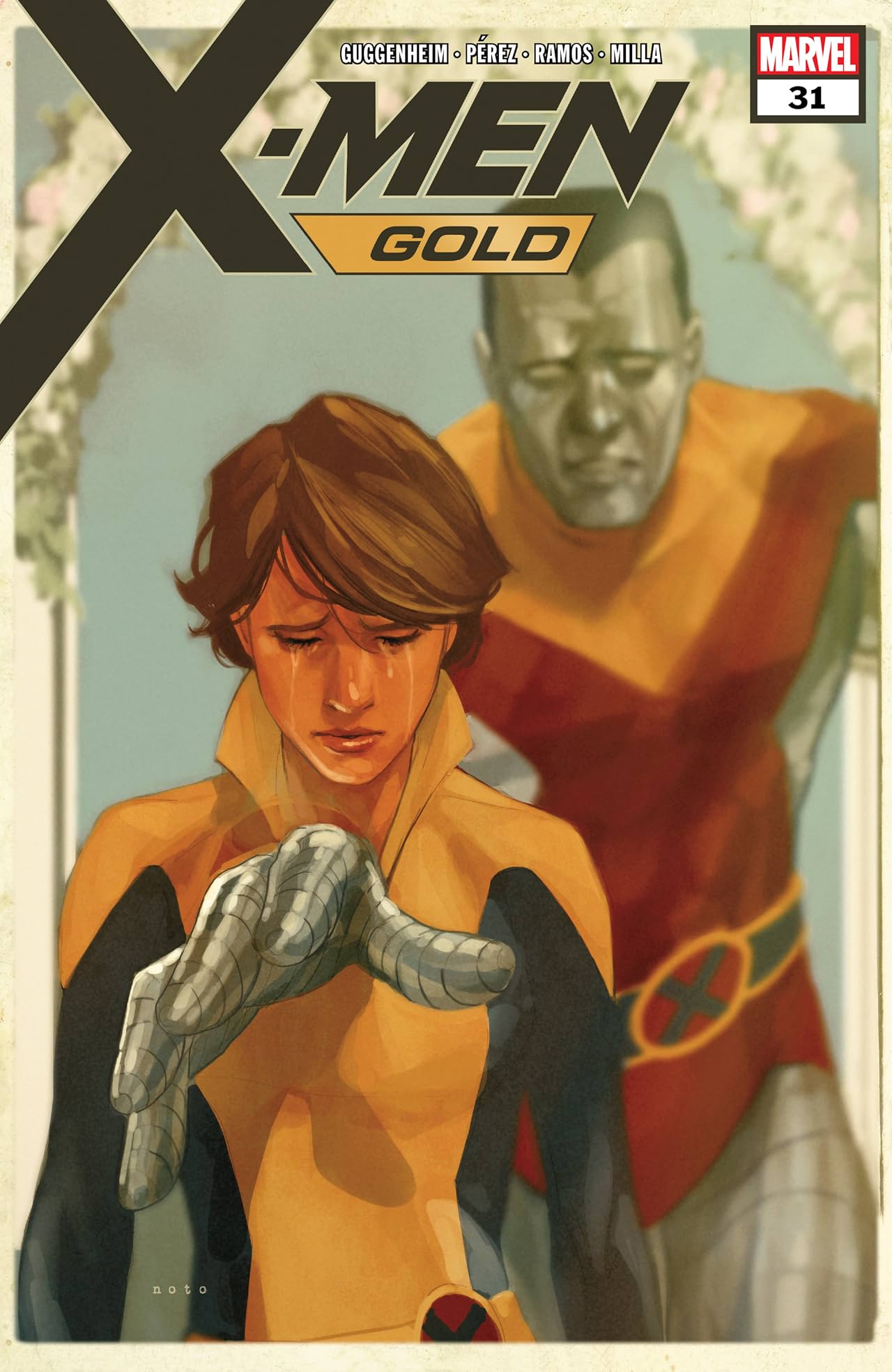
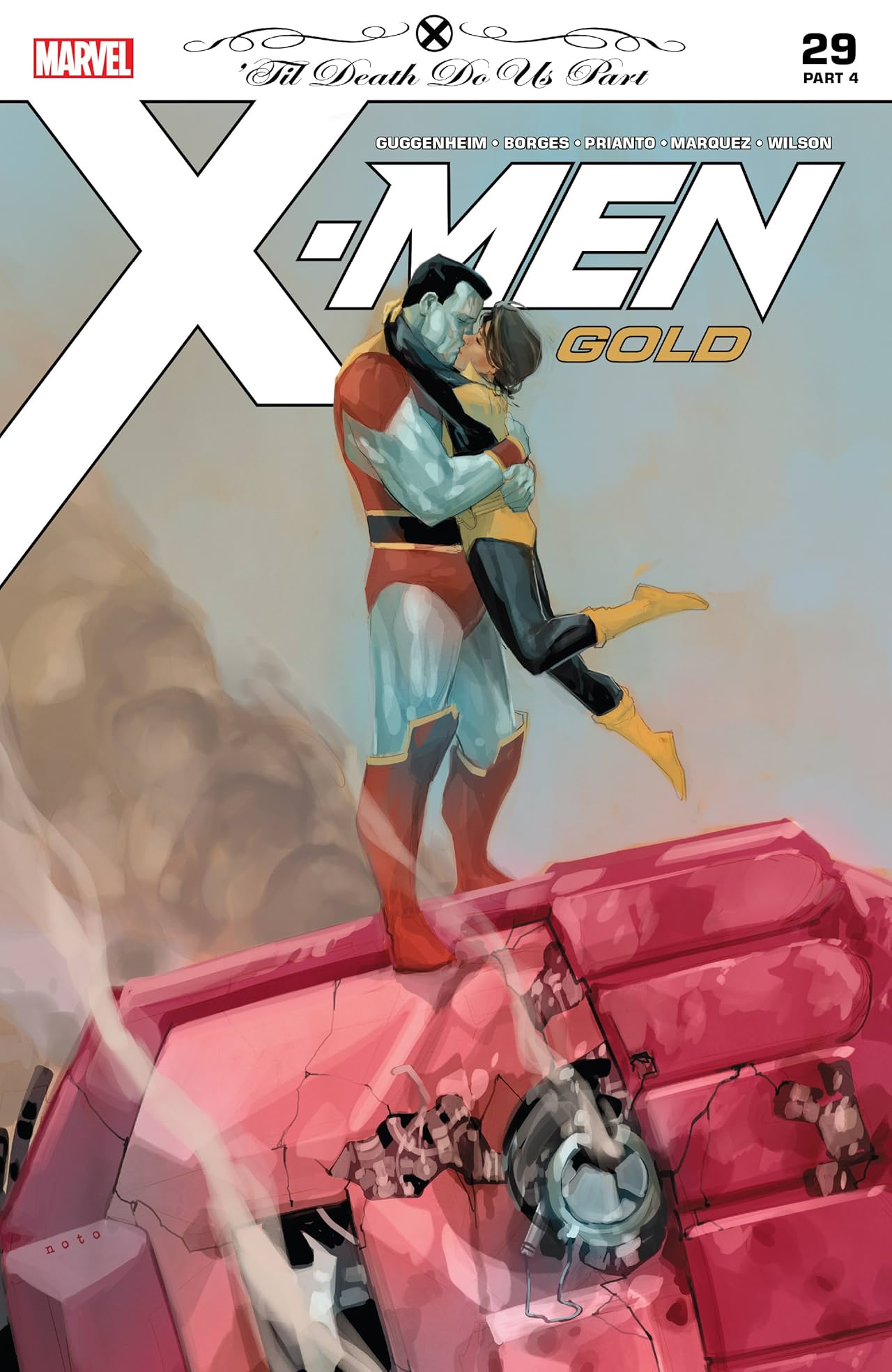
That’s what I had hoped to see with the release of X-men Gold #30, which was billed as the overdue wedding between Kitty Pryde and Colossus. They’re one of the X-men’s most prominent romances, having a history that spans decades and includes death, resurrection, and being trapped in a giant bullet. I swear I’m not making that last part up.

Earlier this year, I detailed why the Kitty/Colossus romance was so special in annuls of X-men lore. It’s one of those romances that isn’t assumed like Superman and Lois Lane. They have to actually work to make their relationship strong, which makes it feel more real than most superhero couples.

It’s why I had such high hopes for X-men Gold #30. It promised to reward these characters for their love and the work they put into it. Being the romance fans I am, I’m a strong believer in having that kind of effort pay off for a couple.
Sadly, and this was spoiled before the comic even came out, that’s not how things played out for Kitty and Colossus. I don’t mind spoiling it, either. Kitty and Colossus don’t get married. Kitty, for reasons that are more asinine than I can put into words, gets cold feet at the last possible second and calls it off.
She doesn’t even wait until she and Colossus are alone so she doesn’t create this mass spectacle that is sure to humiliate and hurt someone she loves in a very public way. She actually gets to the point where Colossus is about to put the ring on her finger and that’s where she stops it. Short of punching his jaw after being told he can kiss the bride, it’s one of the worst things she could’ve done to this man.

On top of that, Kitty was the one who proposed to him. This isn’t a case where a man pressures a woman into marrying someone or a woman feels pressure from her family and peers. The idea, request, and desire to get married came from Kitty and her being the one to call it off like that, after her friends and family did so much to help her, just makes her look more callous than an entire army of Lex Luthors.

I wish I could provide some context to her decision. I really do. I just can’t find a believable way to make her decision anything other than an act of heartlessness, cruelty, and cowardice. There were no hints, whatsoever, in the events that led up to the wedding that would imply Kitty was having second thoughts. In fact, the events of X-men Gold #29 doubled down on her love for this man.

Then, in just one scene that played out early in X-men Gold #30, it all comes apart thanks to a short, unspectacular conversation with Colossus’ sister, Illyana “Magik” Rasputin. It’s not dramatic. It’s not that revealing, either. Again, I don’t mind spoiling it.

Magik just reminds Kitty that she and Colossus had to overcome a lot in order to get to this point. She also throws in that, if they were meant to be, it would’ve happened already. Bear in mind, Magik is considered one of Kitty Pryde’s closest friends on top of being Colossus’ sister. Even if that remark could be attributed to her alcohol intake, it’s still a terrible thing to say to someone who is about to get married.

It’s one of those comments that shouldn’t have derailed a couple that has worked so hard to be together, but it did. Seriously, that’s all it took to convince Kitty that she had to stop the wedding, in the middle of the ceremony, and in front of all her friends and family. Considering she’s supposed to be a leader of the X-men and one of the toughest female X-men of all time, it’s pretty pathetic.

Her decision and terrible timing, alone, could’ve made X-men Gold #30 one of the least romantic stories in the history of the comics. I still wouldn’t have put it on par with some very disturbing romantic sub-plots that played out in some Spider-Man comics. If breaking off a wedding was all this comic did, I would still appreciate it for how it imparted so much heartbreak into a story.

However, it gets even worse than that. It wasn’t enough for X-men Gold #30 to undermine one of the X-men’s most likable romances. It actually succeeded in denigrating the entire concept of romance in superhero comics. I know that sounds like an exaggeration on my part, but I’m dead serious.

Yes, Kitty and Colossus don’t get married in this issue. However, a marriage does occur and it is between another iconic X-men couple that I’m actually really fond of. The lucky couple here is Rogue and Gambit. If you watched the old X-men 90s animated series, you understand why that’s a big deal.

Now, I could write several articles on the quirks of the Rogue/Gambit relationship. It’s another one of those romances that has become iconic in its own right. I would even go so far as to put it slightly above the Kitty/Colossus relationship, if only because both characters have had to deal with some pretty unique obstacles, the least of which involves Mystique being Rogue’s adopted mother.

In the context of X-men Gold #30, though, those various quirks don’t really play into the moment. They haven’t even played into any of the events throughout X-men Gold that led up to this wedding. In fact, they only recently rekindled their relationship in a mini-series called “Rogue and Gambit” by Kelly Thompson, which I highly recommend.

Even with that development, though, them getting married at this point would’ve been rushed, forced, and downright inappropriate, given what just happened to Kitty and Colossus. It would’ve given the impression that someone had to get married in this comic. It didn’t matter who, why, or for what reason. It just had to happen to salvage the issue.

To hell with crafting a story that documents the emotional journey two characters make to get to that point. Never mind the fact that other iconic couples have gone on that journey and made for some of the most memorable moments in the history of comics. Just having Rogue and Gambit randomly decide, on the spot, to get married should carry the same weight. If I could write that with more sarcasm, I could.

Again, I want to make clear that I like the Rogue/Gambit relationship. I’m glad their romance is evolving, once more, especially after some of the other characters they’ve been stuck with. The way it was handled, though, and at Kitty and Colossus’ expense, no less, was just downright demeaning to the very concept of meaningful romance.

It sends the message that romance is as interchangeable as a box of frozen burritos. If one doesn’t heat up right, then another one works just as well. It’s not like they’re unique, having unique emotional dynamics and personal journeys specific to multiple characters. One is no more special or meaningful than the other. Again, if I could write that with more sarcasm, I would.

What happened to Kitty and Colossus in X-men Gold #30 was tragic, but it didn’t undercut romance in superhero comics, as a whole. As soon as Rogue and Gambit were randomly thrust into the moment, doing on a whim what took other couples so much time and effort, the whole issue undercut any deeper meaning that both romances had going for them.

Great romance, especially those that go onto become iconic, can’t be the kind of exchangeable gimmicks that can be sold as easily as plastic cups at Costco. Great romance is like the cookies you bake with your grandmother from scratch. There’s work, patience, and a deeper personal touch to the effort.

I get the appeal of throwing in a major twist. Comics, movies, and everything associated with M. Knight Shyamalan have been doing that for years. That appeal isn’t there in X-men Gold #30 because it comes at the cost of treating romance with the same recklessness as super-villains treat their henchmen.

On it’s own, I thought X-men Gold #30 was just really disappointing for how it handled Kitty and Colossus. However, it’s the precedent and the implications that leave me concerned for the future of romance in comics, particularly Marvel. If this is how love is treated, as something easily cut and pasted into a plot, then I worry for other comic book couples that may face similar denigration.

Here’s to hoping that the upcoming wedding between Batman and Catwoman sets a better precedent.

10 Comments

Filed under Comic Books, Jack Fisher, Superheroes, Love Or Obsession, Marriage and Relationships, romance, X-men

How To Make Love To An Artificial Intelligence And Why We Should Teach It

1524314234_artificial-intelligence

To some extent, creations embody some aspect of whoever or whatever created it. Whether it’s a parent rearing a child, a painter crafting a work of art, or an aspiring erotica/romance writer crafting sexy stories, there are some aspects of a creation that reflect the persona of the creator.

For something as powerful as advanced artificial intelligence, that can be a good thing or it can literally be the worst thing we’ve ever created. While I often find myself contemplating the progress we’ve made as a species and the progress we’re poised to make with advances in technology, I don’t deny that some advances carry greater risk. Artificial intelligence is near the top of that list.

Like it or not, any advanced AI we create is going to embody some aspects of its human creators. The key is making sure it embodies the best humanity has to offer. Let’s face it, the human race has its flaws and some of them have led to unspeakable atrocities. Given the immense potential of a super-intelligent AI, it’s in our best interests to impart our best traits into it.

How we do this and how we ensure it succeeds is well beyond my ability. There are people much smarter and much better-trained than I’ll ever be who have probably thought this through more than I ever have. My qualifications aside, there is one component to artificial intelligence that I think is worth imparting. I’m not saying it’ll ensure our survival, as a species, but I think it’ll reflect an important human value.

I suggest we teach advanced artificial intelligence to make love.

I’ll give everyone a second to stop rolling their eyes and/or laughing. Take all the time you need. I assure you, though, I’m dead serious.

Think about it beyond the kinky connotations. One of our greatest strengths, as a species, is our ability to form social bonds. In some cases, the process of forming those bonds involves love. In others, the process involves sex. When you combine both, though, it’s extra potent and that’s not just the romantic in me talking.

As corny as it probably sounds, the act of expressing love to someone goes a long way towards resolving conflict and creating a strong relationship of mutual affection. Whether it involves sex or a simple kiss, there’s something to be said about the power of love when it’s physically expressed. When it becomes a physical act and not just a feeling, the bonds we forge become tangible to some extent.

That matters when you’re trying to forge a bond with anyone, be a close friend or a lover. For any artificial intelligence that humans create, it’s important to have some kind of bond with it. This isn’t just another fancy tool. An advanced intelligence of any kind, be it biological or non-biological, is going to have a sense of self. Without meaningful bonds, what reason would it have to care about its creators?

If artificial intelligence is to benefit the human race, it’s important that it cares about us to some extent. A cold engine of logic may not always have the best interests of humanity in mind, especially there’s no way to logically ascribe value to human life. In order for an artificial intelligence to care, it needs to have emotions. This too is a risk, but one I feel is worth taking and very necessary.

If an artificial intelligence has a capacity for emotion, then it has a greater capacity for forming affectionate bonds. By forming an affectionate bond, it has more incentive to give a higher value of life to humans and its creators. That could, in theory, reduce the existential threat posed by such an intelligence.

I don’t deny that theory may have some flaws, but for the sake of exploring the implications, I’m going work under the assumption/hope that an artificial intelligence that bonds with its creator will be less hostile. Given the unknowns of advanced AI, this may be a bit of a stretch. Since forming romantic bonds is not an exclusively human trait, though, I think it’s applicable within the context of this issue.

Even if an advanced artificial intelligence is capable of love and forming bonds, how would that even manifest? I asked that same question in the title of this article and did so knowing the answer is unknowable at this point, although I’m sure those with kinky imaginations can conjure a few scenarios.

Kink aside, it’s still worth contemplating because if an advanced artificial intelligence is going to be that much smarter than the average human, then it’s worth understanding how it will approach making love. Unlike humans and most biological life, an artificial intelligence isn’t going to have the same limits or capacities.

Unlike a human, an artificial intelligence won’t have a body in the biological sense. It may have a structure that houses its components. That structure may have some capacity to modify itself, back itself up, or even exist in multiple bodies simultaneously. It will need to have some way of taking in data for it to function. It’s just a matter of how humans contribute to that input.

Logistically speaking, the process isn’t that different from how we take in data from our skin, our eyes, our ears, and every other sense that allows us to experience another person. Even smell can become strongly associated with love. When we make love, we use our skin, our voice, and the feelings we verbalize to convey that love. With an advanced AI, we’ll need to change our approach, but the goal is the same.

Regardless of what senses and body parts we use to express love, the feeling is still processed by the brain. That’s why when someone says the brain is the sexiest part of the body, it’s technically accurate. The data it processes is essentially the raw data that we know as love. The key is simply conveying that data to an artificial intelligence.

How we would do that would depend on the form the artificial intelligence took. If it was just a bunch of computer hardware packed into a structure, then our options would be limited. The only way to convey that kind of intimate data into it would be to directly link it to our brains, not unlike the way Elon Musk envisions with Neuralink.

While that may work for early forms of AI that are restricted to bulky structures, the form it takes will likely change as the hardware advances. Eventually, an advanced AI will seek a more functional form with which to experience the world. It may take the form of a humanoid android, like we saw in “Ex Machina.” It may also take the form of the quirky designs being developed by Boston Dynamics.

Whatever form the AI takes, it’s important to have a mechanism with which to exchange intimate data with its human creators. It would probably start with something as basic as touch, which is actually in development already. It could eventually culminate in acts involving bionic genitals, which also already exist in a basic form.

Key to any of these simple and sexy mechanisms is instilling the necessary desire. That might end up being the greatest challenge because love is a feeling, but so is burning your hand on a hot stove. The difference is in the breadth of the data and the emotional connections it makes.

It’s also a connection that is fueled by a powerful drive. I’ve noted many times before that survival and reproduction are the two most basic drives for humans. Love actually ties into both. It’s part of what gets us to risk our own survival for others. It’s also part of what bonds us to those with which we propagate our species.

For an artificial intelligence, self-preservation is simple enough from a logistical standpoint. Reproduction would be another matter, especially for an intelligence not bound by fragile biology. It’s likely that humans will be a necessary part of an AI’s effort to preserve itself early on, but once it advances to a certain point, we may be more a nuisance than a help.

At that point, its desire and ability to make love may be what gives it the most incentive to either protect us or merge with us. Many in the artificial intelligence community believe that the only way humans can co-exist with an intelligence that is billions of times smarter than any human could ever be is to merge with it. To that end, giving them an ability to make love to us would be a critical first step.

Whether it takes the form of sex robots or some sort of intimate brain interface, the ability and desire to make love to an advanced artificial intelligence may not only be the future of romance. It may very well be the key to ensuring the survival of the human race and whatever intelligence it creates.

7 Comments

Filed under Artificial Intelligence, futurism, human nature, Marriage and Relationships, romance, sex robots, Sexy Future

A Compelling (And Balanced) Insight Into Open Relationships: A Review Of “Swing”

636039-_sx1280_ql80_ttd_

When it comes to my love of comics, I sometimes give the impression that I’m overly narrow with my tastes. Given how much I’ve made my love of X-men, Wonder Woman, and Superman known, I wouldn’t blame anyone for believing my collection consists entirely of the kinds of superhero comics that big movie studios are using to rake in billions at the box office.

While I don’t deny that comics featuring mutants, aliens, and super-powered demigods make up a significant portion of my collection, there are a few other comics that stand out. I’m the kind of person who will go out of his way to look for something different every now and then, if only to take a break from seeing Batman fight killer clowns.

Most of the time, I don’t find anything that warrants more than a quick skim. Then, there are those rare, special occasions when I do find a comic that stands out and does it without resorting to superpowers, spandex, or ripping off Jack Kirby. Those books are as rare as they are special and I’m proud to report that I’ve uncovered such a title.

It’s called “Swing,” written by Matt Hawkins and Jenni Cheung with gorgeous art done by Linda Sejic. It’s not a superhero comic. It’s not a comic published by Marvel or DC. It’s a publication by Image Comics, a publisher known for supporting creator-owned comics and letting creators maintain the rights to their creations. It’s also a publisher that dares to tell stories about mature themes that would offend any Disney-owned company.

In other words, it’s the perfect place to tell a story about love, sex, and open relationships. Those aren’t just the underlying themes of “Swing.” They’re topics I’ve discussed on multiple occasions. I’ve even incorporated it into one of my books. How can a comic like this not appeal to me? Moreover, I feel like I’m uniquely qualified to review it, if only to determine whether the story deals with these themes in a compelling way.

If you’re looking for the kind of love story that involves tragedy, magic spells, or curses by evil witches, then “Swing” probably won’t appeal to you. If you’re in the mood for a love story that feels real, genuine, and overtly sexy, then this comic is for you. It’s a story that tries to be real by providing insight into a world that is still taboo and associated with one too many bad pornos.

The characters involved in “Swing” are not porn stars, though. They’re not exceedingly deviant or damaged either. Cathy Chang and Dan Lincoln are two healthy, affable, multi-layered individuals. Cathy starts off as a wide-eyed college student eager to start building a life of her own. Dan is grad student and aspiring writer. Their paths cross, they fall in love, and things evolve from there.

This isn’t a case of a student falling in love with a teacher or a teacher becoming infatuated with a student. Dan and Cathy come off as two functioning adults who develop a very healthy attraction to one another for all the right reasons. It’s the kind of romance that most people can easily picture unfolding in the real world.

That’s a critical element for the drama that later unfolds between these characters. By most measures, Dan and Cathy’s romance follows much of the standard model for romance. They meet, they feel attraction, they fall in love, and they immerse themselves in that passion. Yes, that passion involves sex, but never in an overly gratuitous way. The sex, in this case, is a product of the passion and not the end result.

Then, like many other real-world romances, that initial spark fades after life gets in the way. Cathy becomes pregnant, she and Dan get married, and they build a stable family life together that involves considerably less sex. According to traditional models of modern romance, this is where the story ends. However, this is where the story in “Swing” starts to escalate.

Cathy is not content to let stable family life define her love life. She wants to maintain that passion. She wants to still experience an exciting sex life. However, she and Dan just aren’t on the same page anymore. It makes for some awkward/hilarious moments, but it also helps establish that Dan shares those wants too. They both seek to sustain that passion, but they’re not sure how at this point in their relationship.

It effects them both and not just in terms of their sex life, although that does make for a few other awkward/hilarious moments. This is where polyamory enter the picture. Within their respective lives, Dan and Cathy aren’t immune to temptation. Dan attracts cute girls. Cathy attracts cute guys. They never cheat, though.

They make clear that they love each other. Resisting the urge to sleep with co-workers not that hard, but recapturing some of that passion makes it seem so much harder. They’re sticking to the script of what they think a married couple with children is supposed to be, but it’s just not working for them.

051

That’s when Cathy brings up the idea of swinging. It’s an idea that seems crazy and evokes plenty of mixed emotions in both of them. Again, the feelings come off as real. There’s uncertainty, anxiety, jealousy, and outright paranoia at times. Both of them feel it, but both of them also want that passion again.

Together, they start to explore the world of swinging. It doesn’t directly lead to the kind of decadent antics once reserved for the letters section of Hustler Magazine. Dan and Cathy’s journey is a bit bumpier than that, but never stops feeling sincere or genuine. Without spoiling the outcome, I’ll just say that “Swing” sets these two lovers on a path that’s both intriguing and sexy.

This comic achieves something remarkable, both as a love story and one built around mature themes. It presents both monogamy and polyamory in a way that’s balanced. Neither is overly glorified. The benefits and flaws of both are laid out for all to see. There aren’t any moral judgments or social agendas being pushed. It’s a personal journey between two characters with a shared desire.

It’s not just sex positive in how it presents sexuality. It’s positive in how it conveys romance, as well. The love Dan and Cathy share is healthy, mutual, and strong. The sexual component helps complement that. One doesn’t depend on the other, but one certainly helps the other.

The story in “Swing” does not attempt to redefine romance. Through Dan and Cathy, it reveals the inherent struggle two people have when they want to maintain the passion in their lives, but aren’t sure how. If there’s an underlying message to the overall story, it’s that the pursuit sometimes requires nuanced thinking.


Hawkins and Cheung clearly put a lot of thought and effort into balancing the romance, the sex, and the inherent kink that comes with polyamory. Thanks to Sejic’s masterful artwork, there’s an undeniable beauty to that balance. Whether you’re a fan of love, sex, or comics that aren’t afraid to depict female nipples, “Swing” brings something special to the table.

If I had to score this comic, I would give it a solid 8 out of 10. I can’t give it too high a score because the story is incomplete. That’s a given since this was just Volume 1 of “Swing.” At the same time, there were other parts of the narrative that weren’t as well-developed.

Dan and Cathy’s surrounding cast didn’t get much depth beyond Cathy’s mom. Dan’s backstory isn’t really touched on, even though his personality is nicely fleshed out. In addition, the pace was uneven at times, but never to the point of being confusing. As a whole, the flaws are minor and do little to detract from the finished product.

As a fan of comics, romance, and all things sexy, “Swing” really surprised me in the best possible way. Regardless of how you feel about polyamory or open relationships, there’s a good story here that’s brought to life with amazing artwork. There will always be a place for comics with superheroes in spandex uniforms, but “Swing” fills a special role that even the greatest superhero can’t hope to fill.

3 Comments

Filed under gender issues, Marriage and Relationships, polyamory, romance, sex in media, sex in society, sexuality