Category Archives: human nature

A Personal Story About Puberty, Thongs, And High School

thong_sam-cheng-10

It has been a while since I shared some personal insights. In my defense, this past year has been rough. Back in the summer, two very close family members of mine passed away. It has not been easy getting personal under those circumstances. I’d like to change that and in a way that isn’t entirely depressing.

With that in mind, I’d like to tell a story about puberty. I’ll give everyone a moment to stop laughing and/or cringing. Take all the time you need. If you’re like John Oliver, you may need more time than most.

I feel like it’s worth bringing up because, for better or for worse, how we go through puberty plays a big part in how we grow into adults. I can’t claim with a straight face that I handled puberty as well as I could’ve. If I were to grade myself, I would probably get a C-minus, at best. This story that I’m about to share should help explain why.

To understand why this moment in my life sticks out, there’s a particular context I need to establish, especially for my female audience. When it comes to changing from a child to an adult, there’s no one moment that marks the transition. One single strand of pubic hair doesn’t make you a man any more than one juice box makes you a kid.

More often than not, at least for men, there are a series of moments that effectively signal that you are not a kid anymore. You’re not an adult, either. You’re a teenager, steadily transforming into an adult body and doing your best to handle all these weird and overwhelming changes.

I can’t speak to the female experience, but I can say that as a male, those moments can be pretty powerful. They’re like way-points on the journey to adulthood. This story marks one of those way-points. It involves one of my least favorite classes in high school and cute girls wearing revealing thongs.

I’m being dead serious, here. Again, take all the time you need to stop laughing and/or cringing.

The setting was innocent enough. It’s my freshman year of high school. I’m an awkward 15-year-old with a terrible acne problem, an underwhelming stature, and low self-confidence. I’m also at an age where I’m really starting to feel my hormones and not just in terms of awkward boners. While I’d always enjoyed the company of girls, my teenage brain was starting to complicate those feelings.

I could manage that, for the most part. Then, I walk in my Introduction to Spanish class. Now, I’m already dreading this class because, at the time, I sucked at memorizing things not associated with comic books or NFL stats. It didn’t help that my teacher was awful so I was rarely in a good mood when I walked in.

That mood changed, somewhat, when my teacher gave us assigned seating in a new classroom. As it just so happened, I ended up sitting right behind a beautiful young woman with brown hair, tan skin, and nails she always painted purple. Why do I remember that while I forgot pretty much everything else in that class? That’s where thongs enter the story.

This girl, in addition to being beautiful and sweet, loved to wear thong underwear. I knew because from where I was sitting, I could see it clearly. It didn’t matter what kind of pants she wore or what the weather was like. Whenever she leaned forward on her desk, I got a perfect view of the top part of her thong.

I don’t know if it was intentional. This girl was not shy about her body, but not in a trashy sort of way. She was very sweet and kind to everyone, regardless of what she wore. She was that way with me, even though I had lousy social skills and bad acne. Whatever her reason, she didn’t seem to care that her thong showed every time she leaned forward. I never pointed it out to her and neither did anyone else.

I freely admit that I was very distracted by this, but not in a way I minded. If it weren’t a beautiful girl wearing a thong, it would’ve been something else. That’s how disinterested I was in this class. It led to more than a few awkward boners, but I’d been getting those for years. I’d never gotten them in a way that felt like a direct response to someone else’s presence.

It wasn’t just a sign that my body was changing. It signaled that my mind was changing too. How I felt and how I thought about girls was different than before. It was never going to be the same again and I feel like it started with that one thong-loving girl.

I acknowledge that there will be some people out there who think less of me for gawking at the sight of a young woman’s underwear, especially while at school. I’m won’t make excuse and I won’t apologize for it, either.

I was a 15-year-old boy going through puberty. I hadn’t yet mastered the art of hiding porn in my bedroom and the concept of sexy underwear on beautiful women was just starting to appeal to me. It’s for that very reason, however perverse some may find it, that this memory is so vivid for me.

It was at this moment, sitting in Spanish class and covertly admiring the cute girl’s thong, that I realized I was not a kid anymore. I was becoming an adult. That was a critical revelation for me because, up until that point, I still thought of myself as a kid. Even at 15, I hadn’t quite shed that part of my identity. This experience changed that.

I couldn’t keep clinging to childhood. Moreover, I didn’t want to anymore. I felt like an adult. I wanted to grow up. I know that sounds like a lot of revelation from just seeing a cute girl’s thong, but make no mistake. The impact was that profound. It remains a defining moment for my adolescence.

In addition to the thong, I also remember the girl’s name. For the sake of her privacy, I won’t share it. However, after I finished that class, I never had a class with her again. I didn’t see much of her for the rest of high school. I doubt I’ll ever see her again. Even if I don’t, her impact on my teenage life is etched in bedrock. For that, I thank her and her tastes in underwear.
4 Comments

Filed under gender issues, human nature, Jack Fisher's Insights, psychology, sex in society, sexuality

Why Extremists (Of All Kinds) Seek To Destroy Sex And Love

198420teaser-850x510

Whenever a tyrannical power gains influence, it’s only a matter of time before it attempts to control sex and subvert love. Whether it’s a theocracy like “The Handmaid’s Tale” or a communist dictatorship like North Korea, those in power will eventually get to it. It’s just a matter of how repressive they dare to be.

When it comes to the extremes of authoritarianism, those envisioned by George Orwell are the standards by which all are measured. Whether they’re fictional tyrannies like those in “Star Wars” or real-life autocracies like Nazi Germany, the extent of their repression is best measured by contrasting it with the one Orwell crafted in “1984.”

This isn’t the first time I’ve cited that book or Orwell’s writing, but I do so for a reason and it’s not just because it’s one of my favorite novels. The narrative Orwell envisioned took our understanding of repression and pushed it to its greatest extremes. On every level, the world of “1984” is a worst-case-scenario for anyone who values freedom.

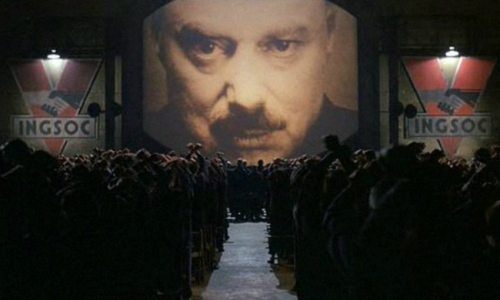
Under the ruling party, Ingsoc, every aspect of human life is controlled, managed, or outright subverted. That includes sex, but it’s certainly not limited to it. Through institutions like the ironically-named Ministry of Love and the Junior Anti-Sex League, people aren’t just shamed or bullied into certain sexual practices. They’re tortured, brainwashed, and forced into it.

It’s a level of control that the Catholic Church, the religious right, and even conservative Muslims would find excessive. It’s also an important part of the story because so much of the events surrounding “1984” emerge from Winston’s relationship with Julia. In fact, the love they share is framed one of the biggest threats to the party.

That, in and of itself, is extremely telling of the power of sex and the love that emerges from it. Even in a world in which the repression is so complete that the party can convince people that two plus two equals five, it still has a problem dealing with sex. If Big Brother can’t manage it, then what hope does the Vatican have?

I ask that question within the context of “1984” because I’m seeing more and more issues inevitably link back to sexuality. It’s not just from religious institutions, though. They’ve made their eagerness to shape sexuality to serve their interests known for centuries. They aren’t always overt about it, but it’s not too hard to understand why they want their adherents having sex only for procreation.

For them, linking sex to making babies means all those sexual thoughts people have will result in more adherents. More adherents means more money. More money means more power and influence. It’s often cloaked in sin and morality, but this is the ultimate byproduct of their sexual morals.

However, it’s at the other end of the spectrum where a different, but powerful kind of sexual subversion is at work. The link isn’t quite as obvious as those espoused by religious institutions, but it is there in that the byproduct is the same and the underlying themes are richly reflected in “1984.”

On that end of the spectrum are those who identify as secular, but still hold extreme ideologies. This includes extreme brands of feminism, social justice ideology, and even old school communism. These are people who don’t just want to reform the current system through political and social discourse. They seek to overthrow the system and replace it with their own Utopian ideal.

Like the religious zealots they often clash with, they see the current order as oppressive. Whether it’s a religious sect facing persecution or the historical oppression against anyone who isn’t part of a historic majority, these individuals see revolution as the only way to right these wrongs. Part of that revolution involves destroying sex, albeit indirectly.

Whereas religious zealots rely on outright censorship, those on the opposite end employ a more subtle approach. They denigrate and bemoan sexual imagery, be it in video game characters or a shirt somebody happens to be wearing. They obsess over inequities and victimization, singling out egregious crimes while ignoring others that don’t fit the narrative.

Some will go so far as to claim sex as inherently oppressive. A few radical feminists have gone so far as to say that the fundamentals of sex can only ever be oppressive. In the same way some religious preachers will shame someone for looking at anyone with lust, this ideology identifies anyone who has or pursues sex as an oppressor.

That might have been absurd several decades ago, but in the current state of outrage culture where the dress Jennifer Lawrence wears to a movie premier becomes a controversy, it’s steadily creeping into the discourse. Concepts like beauty are now oppressive to those not born with beautiful bodies. Anything that may titillate or excite is seen as dangerous or damaging to the oppressed.

It’s at a point where the idea of people seeking any kind of release outside the narrative espoused by extremists is pathologized. For religious zealots, it’s sinful. For the non-religious extremists, it’s oppressive. Both see it as something that needs to be reformed or envisioned.

Chances are these individuals don’t see themselves as the authoritarians depicted in “1984.” They still see themselves as the underdogs in a “Rocky” movie, fighting to win an epic battle against an oppressive bully. Beyond being an absurd conflation of what they’re fighting for, this very approach is envisioned by Orwell and is key to empowering Ingsoc.

In the world of “1984,” the Ministry of Truth builds a similar narrative for the masses. They’re told that prior to Ingsoc taking power, the world was a terrible, oppressive place. It was only by rallying around the party and Big Brother that they were able to triumph. Moreover, it’s through the wisdom and guidance of the party that they escape this oppression.

Part of that process involves reshaping/subverting sex. In “1984,” the party isn’t just looking to control it. They seek to destroy it. The Junior Anti-Sex League even says it outright at one point.

“The sex inherent aptitude will be eradicated. Reproduction will be a one-year formality like the reclamation of a ration card. We shall get rid of the orgasm.”

Even by extreme repression standards, this seems extreme. It might even seem like something that would give zealots of all types pause. However, Orwell’s way of justifying such extremes reveal more than just a twisted ideology. He ends up exposing why sex is such a huge concern for any extreme ideology.

“When you make love you’re using up energy; and afterwards you feel happy and don’t give a damn for anything. They can’t bear you to feel like that. They want you to be bursting with energy all the time. All this marching up and down and cheering and waving flags is simply sex gone sour. If you’re happy inside yourself, why should you get excited about Big Brother?”

Read over that quote again, but replace Big Brother with the name of any religious sect or political ideology. It has the same meaning and the same implications. In order for both the zealots and the radicals to achieve their goal, they have to destroy sex. It’s the only way they can achieve their Utopian ideal.

Religious zealots can’t shame or guilt people entirely out of wanting to enjoy sex for non-procreative purposes. They can certainly make it difficult and painful for many, even to the point of serious abuse, but it never works in the long run. The drive to just want to hump for fun is too strong.

Certain brands of radical feminism have a similar issue. They can’t stop straight men from enjoying the sight of a beautiful woman. They can’t stop anyone from wanting to enjoy something different in their sex lives that they don’t like. No matter how much they’re triggered, it doesn’t turn off that powerful, instinctual drive.

In “1984,” the party actively works towards destroying that drive through technology. This is a lot scarier now because that kind of technology is already in the works. In theory, an extremely repressive religious zealot or a very regressive feminist could turn the implants in development at Neuralink into something that removes all pleasure from sex.

From there, they could redirect that energy into serving their ideology/religion. The procreative function could still be utilized, but only to the extent that it’s necessary. That may not be the ultimate goal. It’s not even the ultimate goal of Ingsoc. It’s just necessary in the grand scheme of pursuing and securing power.

As it stands, those in the religious right and other extremist circles aren’t remotely close to gaining the influence and control exercised by Big Brother in “1984.” Logistically speaking, it’s impossible for them because subverting human nature requires an understanding of it and the scientific process for achieving that understanding rarely adheres to ideology.

It still says something about their goals when the only way to achieve them in the long run requires that they destroy sex. I don’t think it’s a coincidence that Orwell built a major part of “1984” around two characters falling in love and experiencing the joys of the sex act. That proved to be one of most powerful ways for them to oppose the party.

To that extent, Orwell’s understanding of sexuality is nothing short of prophetic in terms of how revolutionaries on both ends of the political spectrum view it. In an Orwellian world, sex and love aren’t just a hindrance to a revolution. They’re an outright threat.

The fact that it took repression on the level of Big Brother to confront that threat is a testament to the power of sex and love. If Big Brother couldn’t contain it, then what hope does any religion or ideology have?

1 Comment

Filed under gender issues, human nature, Marriage and Relationships, men's issues, outrage culture, religion, sex in society, sexuality, women's issues

Why Men Should Also Be Concerned About The Future Of Roe v. Wade

108294094

These are tenuous times for abortion rights. Regardless of your gender, there’s no getting around the news. The overall trend in abortion access is not on the path of greater accessibility. If anything, it’s going in the opposite direction.

Regardless of which side you’re on in this exceedingly divisive issue, there’s no denying the legal reality. For the past 25 years, a woman’s ability to get an abortion has steadily eroded, thanks largely to the spread of TRAP Laws. These laws may not explicitly outlaw abortion, but they make getting one inconvenient at best and impossible at worst.

As I say in every piece I write about abortion, I don’t particularly enjoy talking about abortion. This is an issue that I feel I’m woefully unqualified to talk about because I’m not a woman and will never know what it’s like to be in such a difficult situation.

That said, there is an aspect about this topic that I feel needs to be addressed and it’s a part of the issue that impacts men. It takes two to make a baby, last I checked. Even though it’s objectively true that abortion affects women more directly, men do have a role and I feel that role will expand as abortion rights trend in a less-than-liberal direction.

As I write this, the United States Supreme Court is in the midst of a huge shake-up. After the retirement of Justice Anthony Kennedy, the justice system is poised to shift heavily to the right. That has caused plenty of concerns among those who worry about the status of Roe v. Wade, the Supreme Court case that legalized abortion nationwide in 1973.

At the moment, it still seems like a long-shot for this decision to be overturned. However, Supreme Court decisions have been overturned in the past. It happened with racial segregation. It happened with anti-sodomy laws. Legally speaking, there’s no reason why it couldn’t happen with abortion.

Now, that process is fraught with a long list of political, legal, and ethical complications, the least of which would be the long-term alienation of whatever political party favors it. However, I don’t want to harp too much on the politics here. Instead, I want to focus on the social component because that’s where the effects will be most directly felt.

Women, by far, will be the most directly impacted. There are still women alive today who can recount what life was like before Roe v. Wade. Their stories are becoming more relevant. For men, however, I don’t think those stories are as well-known and for good reason. Women had to endure bearing those unwanted children. At worst, men just found themselves on the wrong end of a shotgun wedding.

If Roe v. Wade were overturned, however, that wouldn’t be the only predicament most men faced. Beyond the abortion issue, 1973 was a very different place. In that world, it was possible for a man to just skip town, run out on a pregnant woman, and never interact with her again. While that man would have to be a callous, irresponsible asshole, it was possible and it did happen.

That sort of thing isn’t as easy to do today. Anyone who has seen a single episode of Maury Povich knows that. Between social media, improvements in paternity tests, and tougher child support laws, most of which came after 1973, it’s a lot harder for a man to escape parental obligations. It’s not impossible, but it’s not as easy as just skipping town.

In a world where women cannot easily end an unwanted pregnancy, there will be greater incentive to find these reckless men and hold them responsible. Where there’s an incentive, especially one that has the potential to become a lucrative legal racket, there will be people and businesses that emerge to fill that need.

How that manifests is hard to determine, but desperate people will find a way and you won’t find many more desperate than a woman dealing with a child she can neither afford nor care for. I know a sizable contingent of people, many of which are probably men, will blame the woman for being promiscuous. That still doesn’t change the basic equation of human reproduction.

Two people are involved. Those people, in a world where decisions about a pregnancy are pre-made by the law, are going to be in a tough situation. Regardless of whether a pregnancy was the result of an accident, a crime, or an extortion plot, there will be serious ramifications and not just in terms of legal fees.

The story of women enduring the rigors and hardship of an unwanted pregnancy are many. However, the story of men living in a world without Roe v. Wade and modern child support laws haven’t been told yet because the circumstances haven’t been in place. On the day Roe v. Wade gets overturned, those stories will begin and those are stories men don’t want told.

They’re not very sexy stories, to say the least. They have sexy moments, but extremely unsexy outcomes. Picture, if you can, the following scenario that may play out in a world without Roe v. Wade.

A young man with plenty of dreams has a one-night stand with a woman in a lone act of recklessness. The woman ends up pregnant. Since they live in a state where abortion is illegal, she has to have the child. The man has no idea for months until the woman tracks him down through the courts, forces him to take a paternity test, and confirms that he’s the father.

With no say in the matter, he’s legally liable for child support for the next 18 years. The woman, without any of his input, decides to keep the child instead of putting it up for adoption. The man resents the woman for making this decision without him, but begrudgingly goes along with it, if only to avoid the stigma.

Years go by and his life becomes more of a struggle. He can barely afford to support himself due to the child support payments. He and the mother of his child are constantly at each other’s throats, going through legal battles over how much support is needed and how much access he should have to his child.

Between the legal and financial struggles, both end up in poverty. Their child ends up in poverty too, growing up in a broken home. In a world where there are few choices for women and fewer choices for men, there are plenty others.

Does that sound like an appealing, functional society? Does it sound like one that benefits men, women, and children in any capacity? You don’t need to be a liberal, conservative, or a Supreme Court Justice to understand why such a society is undesirable.

Some of this isn’t even speculation. There have been societies that have outlawed abortion completely. Those societies didn’t prosper. They didn’t benefit men, women, or children. However, the lessons from those societies will probably not faze the anti-abortion crowd. I doubt they’ll give any judges or legislators pause as they push for more restrictions.

The impact of these laws will be felt first by the women. They still bear the children. They’ll still suffer the most negative effects at first. Those effects will quickly find their way to the men, as well. Unlike the men prior to 1973, they won’t be able to escape it.

As a man, there’s only so much I can bring to the table in the abortion debate. However, given the current laws surrounding child support, child rearing, and parental rights, there are more than a few issues that should give men cause for concern. Even if you’re a man and you consider yourself anti-abortion, there’s one inescapable truth. A world without Roe v. Wade is going to impact everyone.

4 Comments

Filed under gender issues, human nature, Marriage and Relationships, media issues, men's issues, outrage culture, political correctness, sex in media, sex in society, women's issues

Gabby Kinney: A Case-Study In Cuteness

Gabby.jp

What makes a character cute?

That’s a not an empty question. It’s one that movie studios, TV networks, toy makers, and novelists attempt to answer every day. I’m not just talking about the ones affiliated with Disney, either. While the House of Mouse is legendary for crafting a winning formula for the creation of all things cute and lovable, it’s worth breaking down the components.

Understanding them isn’t just important for creating likable characters. It can be pretty damn lucrative too. Just look at the merchandise sales for “Frozen.” Cute, adorable characters sell. They sell a lot. Plenty has been written about the cuteness of characters created by Disney, Fox, and a multitude of Japanese anime. However, I’d like to single out one particularly adorable character.

As it just so happens, this character is from the world of superhero comics. Specifically, she’s from the X-men comics. If you’ve followed this website for any length of time, this shouldn’t surprise you in the slightest. I promise this isn’t just another love letter to the X-men like the many I’ve crafted before. This is an exploration of a character who forged a unique path to cuteness.

Her name is Gabrielle “Gabby” Kinney, also known as Honey Badger. You probably haven’t heard of her because, in the context of Marvel’s vast history, she’s very new. She has only been around for about three years. In that time, though, she’s done plenty to make her mark on the world.

Think of the cutest characters you’ve ever known. Whether it’s a talking animal, a princess, or a boy band, take a moment to contemplate all the traits that make them cute. From their looks, their personality, their story, and everything in between, think about qualities that make them so adorable.

Without hesitation, I can say Gabby has all those qualities, as well as a few you didn’t know could be so adorable in the first place.

That may sound like a bold claim, but it’s true. After reading every issue of All-New Wolverine, I genuinely believe that she has raised the bar for cuteness for any character, both within superhero comics and in the real world. To appreciate why her story is so remarkable, it’s necessary to know some key details about her backstory.

This should give you a few telling hints.

On paper, she doesn’t come off as the kind of character who can be overly cute. She’s a clone of Laura “X-23” Kinney, who herself is a partial clone of Wolverine. Given the number of clone-based character in comics, including a few who are notably infamous, she doesn’t have a lot going for her at first.

That changes quickly after she’s introduced. She’s actually one of three clones from Laura, but she ends up being the one who makes the greatest impression and not just because she doesn’t go evil, which tends to happen a lot with clones in comics.

From the beginning, Gabby sets herself apart as being the more upbeat, bubbly clone of the bunch. She’s not overly angry or vindictive. She isn’t even that bothered by the fact that she’s a clone. It helps that she’s just a kid, but it also helps that this has never been hidden from her. She knows what she is and doesn’t whine about it. That, alone, makes her more mature than the majority of adult heroes, even the non-clone ones.

She even has a sense of humor about it. She doesn’t take herself too seriously. She doesn’t get too uptight in tense situations, either. That even includes dangerous situations that involve dragons, zombie animals, and alien parasitic bugs. Gabby sees the world through a rose-colored lens, regardless of how ugly it is, and this is the key to what makes her so adorable.

Whether she’s helping Laura battle Sentinels or caring for a pet wolverine, Gabby always finds a reason to smile. She’ll always look for the lighter side of a complicated situation and help others see it. That sort of thing is becoming increasingly precious in today’s overly-cynical world, but it’s especially powerful in the world of superhero comics.

The very premise of any world involving superheroes requires that the world contain the kinds of chaos that can’t be contained with extra police and stiffer fines. In Gabby’s case, she inhabits a world full of evil organizations like Hydra, shape-shifting aliens like the Skrulls, and actual devil-like creatures that go out of their way to ruin marriages between iconic characters.

The fact that Gabby can lighten the mood under those circumstances helps amplify her lovability. Make no mistake. She is disturbingly lovable. I say that as someone who was extremely sick of clone character at the time All-New Wolverine debuted in June 2015. However, the writer of All-New Wolverine, Tom Taylor, went the extra mile with Gabby.

It’s not just in the light-hearted jokes that she makes. It’s not just the fact that she’s a cute kid full of youthful innocence, despite having been cloned in a lab by assholes who wanted to make her a living weapon. Any character can just say goofy things and ignore the horrible crap going on around them. Where Gabby really shines is how she affects those around her.

From the moment she meets Laura to her first hilarious team-up with Deadpool, Gabby has a positive influence on pretty much everyone she meets. She doesn’t get scared or overwhelmed by any given situation, even those involving parasitic aliens. She never lets these situations destroy her child-like innocence.

That, in and of itself, sets her apart in a major way. In so many other stories involving cute characters, their innocence is treated like fine china. It’s easy to crack, easy to taint, and irreparable when damaged. More often than not, a big part of a plot surrounding cute characters is how they become corrupted.

Tom Taylor basically turns that narrative upside down. Rather than build the story around how Gabby loses her innocence, he essentially surrounds her innocence in an adamantium shell that’s every bit as unbreakable as Wolverine’s claws.

This is critical to what makes Gabby uniquely cute, but it’s also important to the presence she brings to the X-men comics and the larger Marvel universe. Instead of having everyone try to protect her innocence, she basically has to shove her cuteness in their face and remind them that she doesn’t need protecting. In fact, they need her more than she needs them.

She gives them a reason to laugh and smile after Hydra has taken over the United States. She gives them a reason to feel good after the Red Skull comes back to life yet again to bring old-fashioned fascism to the world. She goes out of her way to be a positive presence on everyone she encounters. However, it’s her impact on Laura where her cuteness becomes genuinely endearing.

To appreciate why that matters, it’s worth recalling just how dark and brutal Laura’s story has been thus far. That story has closely followed that of her predecessor, Logan. She was born in a lab, subject to dehumanizing treatment, and turned into a living weapon. Unlike Gabby, she didn’t escape it until she’d committed soul-scarring atrocities, one of which included the death of her mother.

Since her introduction in the memorable, yet underrated “X-men Evolution” cartoon of the early 2000s, Laura has personified a worst-case-scenario for a cloned character. Her life, her story, and her personality are driven by loss, anger, and sorrow. Then, Gabby comes along and suddenly, there’s a light in her life.

Gabby is like a breath of fresh air to someone who has only been breathing smog for all their life. She’s like a hot shower after spending 4 hours shoveling snow in a blizzard. She provides an overdue balance to long-suffering characters like Laura that it’s more than just refreshing. It’s cathartic.

Gabby helps give Laura and her story something that benefits them both. She creates an outlet from the endless string of tragedies that plague the Marvel universe and the real world. She dares Laura and those following her story to not let all that ugliness destroy all that is good and pure. A cloud of darkness doesn’t have to cover the entire sky. There’s always room for a ray of light.

Gabby is that ray of light. Cute, adorable characters tend to shine brighter than most. That’s what gives them such a powerful presence. Whether it’s in a Disney movie or a superhero comic, they illuminate the darkness and make the characters around them do more than just lament. The fact that Gabby does all of this and cares for a pet Wolverine makes her a special kind of cute.

3 Comments

Filed under Deadpool, human nature, media issues, superhero comics, superhero movies, video games, X-men

The Pathetic Life Of Alan Harper: A Prelude/Warning To Men?

maxresdefault

Sometimes, popular culture is uncanny at predicting the future. “Star Trek” famously predicted cell phones. “2001: A Space Odyssey” predicted tablet computers. Then, there’s “The Simpsons,” which has predicted so many things that it’s creepy. Some predictions, however, fly under the radar. Some aren’t even predictions as much as they are worst case scenarios.

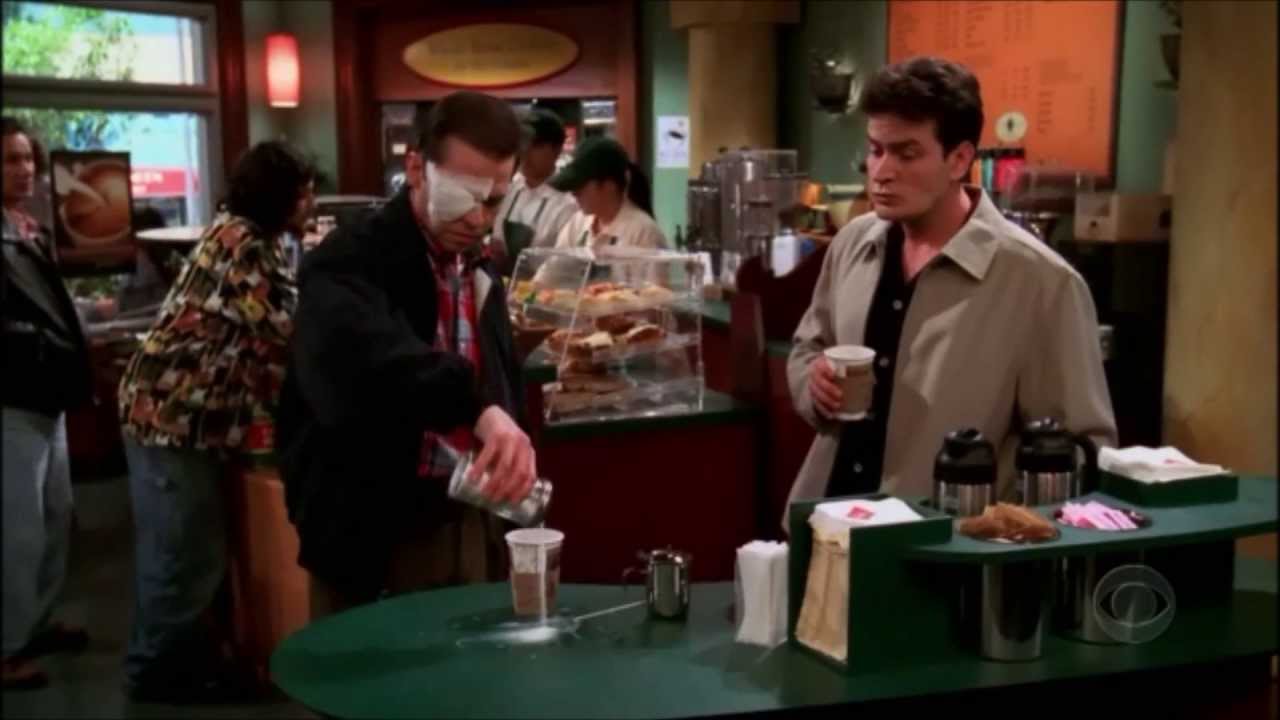
One such scenario played out in “Two and a Half Men,” a show more famous for its off-screen drama than its on-screen antics. Granted, those antics were fairly crude. Most episodes revolved around dirty jokes, sexual innuendo, and glorified hedonism. In today’s social climate, this show would trigger mass protests with every episode.

That didn’t stop it from being funny. I consider myself a fan of the show. However, this is one of those shows that could never be made today, even with an emotionally-stable Charlie Sheen. Its brand of comedy just wouldn’t work in an era where sexy Halloween costumes are considered controversial.

However, the message “Two and a Half Men” conveyed goes beyond its brand of humor and the actors who made it controversial. It’s a message that probably wasn’t intended when the show first aired, but one that manifested with time. That message centers around the only male character to make it through every season alive and unaltered, Alan Harper.

As a character, Alan is the catalyst for the whole show. It begins with him getting kicked out of his house by his wife, forcing him to live with his brother, Charlie. It serves as the foundation for the antics that follow. However, in light of recent trends in feminism, Alan Harper has become more of a concept than a character.

Simply put, Alan Harper is the perfect embodiment of a defeated, emasculated man. He’s a step below the stereotypical beta male. He’s the masculine equivalent of rock bottom. Even the entire cast of “The Big Bang Theory” or Al Bundy from “Married With Children” would feel sorry for him.

You don’t need to watch every episode of every season to see how this plays out. The show rarely goes more than a few minutes without highlighting how pathetic Alan is. The denigration goes beyond his ex-wife kicking him out of his house, divorcing him, and hitting him with egregious alimony payments.

Alan Harper, at his core, is a man dependent on everyone around him for affirmation, but is incapable or unwilling to earn it. His womanizing brother, Charlie Harper, often describes him as a parasitic leech who feeds on the pity of others to survive. In terms if how he conducts himself throughout the show, that’s pretty accurate.

Everything Alan does, from trying to make a living to pursuing romance, is done from a position of dependence. He depends on his brother for a place to live. He depends on his ex-wife to see his son, Jake. He depends on all the women he encounters for love, sex, and affection. He never has any leverage, always working from a position of weakness.

This earns him sympathy, but he’s no lovable loser. In addition to being dependent and weak, he’s also neurotic, selfish, and lazy. He rarely puts much effort into improving his lot in life. He never stands up for himself, rarely accepts responsibility for his mistakes, and endures failure without ever learning from it.

This is especially true in the later seasons of the show after Charlie Sheen was fired. Instead of having to leech off his brother, Alan managed to leech off a total stranger in Walden Schmidt. He makes every possible excuse to keep living in his brother’s house, never pay for anything, and avoid any semblance of personal growth.

Even if you pity Alan Harper, there’s little reason to respect him. Whenever he has a chance to make choices that can change that, he either makes the wrong decision or avoids it entirely. He’s not just a perpetual victim of a vindictive ex-wife, a hedonistic brother, and an idiot son. He actually clings to his victimhood, as though it were part of his identity.

It was fodder for comedy when “Two and a Half Men” was still on the air. Now, it’s a serious issue that affects men and women alike. That’s because leveraging victimhood has become less a comedy trope and more an ideological tactic.

The current discourse, especially when it comes to gender, is often built around who victimizes who. A big part of the anti-harassment movement is driven by the idea that women have been victims for years, suffering in silence under the thumb of misogynistic men. There are more than a few situations like that in “Two and a Half Men.”

Men are just as guilty of using that tactic too, albeit not to the extent of Alan Harper. Men have cited the lack of attention people give Terry Crews or Corey Feldman whenever they talk about issues like sexual abuse. They’ll point out the ways in which women get preferential treatment in our society, some of which actually plays out in “Two and a Half Men.”

There’s no question that harassment and inequality are problems, but just being a victim can’t be the end of the conversation. Alan Harper is, in essence, the personification of what happens when we don’t attempt to further that conversation. It impacts everybody, but it’s especially relevant for men.

Alan reflects a worst-case-scenario. In the overall gender dynamic, he draws every bad card and makes every wrong move. He marries a woman who hates him and exerts immense control over his life. He has a callous, egocentric mother who gives him no affection, guidance, or support. The entire world takes advantage of him and he does nothing to stop it.

To make matters worse, there’s very little Alan can do to stop it. Even if he stands up for himself, he has no support because he’s so dependent on other people. If he gets kicked out of the house, he has nowhere to go. If he makes any money, someone else ends up getting it, often his ex-wife or an ex-girlfriend. He’s not just pathetic in how he handles it. He’s utterly trapped.

This is the kind of nightmare scenario that men genuinely worry about. Many women may laugh it off, but men aren’t blind to the bigger picture. If Alan Harper were gay or transsexual, then he would have organizations that support him. There are many groups that work hard to help disadvantaged members in the LGBT community.

There are also plenty of organizations that help women as well. If Alan were a woman who had been kicked out of his house by a vindictive husband, then there’s no way that the comedy in “Two and a Half Men” would’ve worked. It’s not funny to see a poor woman get thrown out on the streets and denied custody of her child. When it happens to a man like Alan, though, it’s hilarious.

That’s where the humor in “Two and a Half Men” becomes distressingly serious. A character like Alan Harper lends himself to ridicule, but his situation is no laughing matter. He’s the pinnacle of a defeated man. Society does nothing to help him and everything to mock him. If he weren’t a man, it would be a tragedy. Instead, it’s a comedy.

For men, that’s a scary thought. On top of that, his situation can manifest in the real world, minus the laugh track. It is possible for a man to lose his home, his kid, and his money thanks to a vindictive wife. It is possible for a man to be so utterly helpless that he has to depend on everyone’s pity to survive.

The fact that it’s possible, but still funny in the context of a sitcom, gives men more pause today than it did when “Two and a Half Men” was still on the air. Men’s lives are being ruined by a society that does not give them the benefit of the doubt. Any debate that tries to take the side of men tends to get labeled as misogynistic.

We can either take those concerns seriously or create a society where men may end up like Alan Harper, laughably pathetic and utterly destitute. “Two and a Half Men” was still a funny show. However, the core of its comedy has serious implications and that are worth taking seriously, now more than ever.

12 Comments

Filed under gender issues, human nature, Marriage and Relationships, political correctness, psychology, romance, sex in media, sex in society, sexuality, women's issues

Why Do Religious People Wear Seat Belts?

Happy-Family-In-Car-640x426

What happens when you die? This question and how people go about answering it is the basis for nearly every major religion in existence. Whether there’s a promise of Heaven, Hell, or reincarnation, it’s fundamental to many religious doctrines. This is especially true of Christianity, Judaism, and Islam, which make up a sizable portion of the global population.

Given these doctrines and their emphasis on life after death, why do adherents of those faiths wear seat belts? That may sound like an inane question, but it has profound implications.

I ask that question because I grew up in an area where there were a lot of churches, a couple mosques, and even a few synagogues. It wasn’t uncommon to see traffic jams around those places, especially during holidays. From what I could tell, though, the people leaving those places were wearing seat belts. That, in and of itself, sends mixed messages.

While Judaism is somewhat vague about the afterlife, it does frequently reference a soul that exists beyond the body. Christianity and Islam are a lot more overt, having many references to Heaven for the holy and Hell for the wicked. I’ve noted before how this concept falls apart when you apply human perspectives to the mix, but these are still critical tenants in the eyes of adherents.

Why then, under those beliefs, would they fear or avoid death? Why would they even mourn loved ones who die? Under the tenants of their religion, their bodies are just gone. Their souls still live on. They’re either lying in wait for the end-times or on their way to Heaven, Hell, or some other version of the afterlife.

It’s a strange disconnect that doesn’t mesh with the emotions we feel when someone we love dies. I’ve come to know those emotions painfully well this past year. I’ve had to attend two funerals, one of which was for my grandmother and I was very close to her. When she passed, I felt that loss on a deeply personal level.
At the same time, there were others in my own family who experienced that same loss, but still maintained a deep devotion to their faith. There were even times when we were encouraged to celebrate their passing because they had ascended to a better place and were reunited with other loved ones.

This is supposed to provide comfort to those still in pain. I can attest to just how powerful comfort can be to someone who has just lost somebody they loved. Even with that comfort, though, I can vividly recall many family members still mourning. Even if they believed that someone they loved was in a better place, they still felt sad.

On a fundamental level, this seems contradictory. You’re feeling sad because someone you love is gone, but at the same time, you’re being told they’re not gone. On top of that, they’ve moved onto a better place that is free of suffering. For someone like my grandmother, who endured plenty of that at the end of her life, this should be a good thing.

It doesn’t stop the sadness, though. We still feel the pain of loss, even when a deeply-held religious doctrine tells us otherwise. There’s a lot to like about the idea that someone we love is no longer suffering and is now enjoying eternal bliss in a heavenly paradise. Even so, it still hurts and we still mourn.

This brings me back to seat belts and why religious adherents wear them. It’s objectively true that not wearing a seat belt is dangerous. If you don’t wear one and get in an accident, then your chances of suffering a fatal injury are much higher. If you’re a devout believer, though, why is that a bad thing?

I’m not being cynical here. It’s an honest question. Why make a concerted effort to survive in a world that can kill you in so many ways? Why go to a doctor whenever you get sick? Why seek treatment when you’re diagnosed with an illness that has the potential to kill you? Ideally, wouldn’t you just seek to alleviate the discomfort, but not whatever ailment is killing you?

If this life is just a precursor to another life, then efforts to prolong it don’t make sense. In fact, efforts to save innocent people don’t even make sense in that context because saving them means keeping them in a world that will make them suffer at some point. Whether it’s a stubbed toe or crippling poverty, preserving life is just increasing their opportunities for suffering.

The messages get even more mixed when major religious leaders go to such lengths to protect themselves. Why did Osama Bin Laden bother hiding for so long if he was that confident he’d go to paradise when he died? Why does the Pope have such intense security wherever he goes? People with this level of faith should be the most confident that they’re going somewhere better when they die.

To some extent, we can attribute this to our built-in survival instinct. One of the most fundamental drives of any living thing, be it a human or an amoeba, is to survive. Much like our sex drive, which religion also attempts to subvert, this is difficult to turn off. More than a few preachers, rabbis, and mullahs have encouraged people to fight this instinct with every fiber of their being.

However, they rarely encourage those same people to avoid wearing seat belts. You probably won’t find many holy men who urge their adherents to never go to the doctor or go out of their way to eat expired meat. Even if our survival instinct is naturally stronger than our sex drive, the implications are unavoidable. They’re asking people to put off escaping a flawed, pain-filled world.

Some of those people, whose sincerity I don’t doubt for a second, will claim that they have family and loved ones to take care of. This is especially powerful with parents, who will do anything and everything to protect their children. Despite that, their efforts still convey incompatible ideas.

A believer wants to stay alive in this chaotic world for the sake of their loved ones, but also believes that those same loved ones move onto a better place after they die, assuming they’ve lived a virtuous life. That assumption gets harder over time, though, because the longer someone lives, the more opportunities they’ll have to descend into sin and depravity.

Most reasonable people consider the death of innocent children to be a truly awful tragedy. The parents of those children are likely to feel immense pain on a level that few can comprehend. At the same time, the likelihood that a child is innocent is far greater than that of someone who has lived much longer. By default, they would be the most likely to get into Heaven.

Even so, people still mourn. They still cry, lament, and suffer the loss of innocent life. Does this mean that they know on some level that there is no afterlife? I wouldn’t go that far. It’s impossible to know what goes through the mind of a believer, especially after they’ve endured the death of a loved one.

For most adherents of religion, which include many members of my family, I doubt these sorts of implications have much impact. Most peoples’ faith is fairly moderate in terms of how they contextualize it with their existence. They can draw clear lines between the real world and the spiritual world.

It’s the minority of zealots, though, for which the issue of life, death, and seat belts becomes a logistical and theological problem. If a particular religion is going to be built around life after death, then how can it justify encouraging adherents to wear seat belts and avoid mortal danger?

In the grand scheme of things, they’re gambling with their immortal souls. The longer they live, the more likely they’ll be to deviate from the prescribed holy path. In that context, why would suicide be discouraged? Even if suicide is considered a mortal sin, why would avoiding accidents or fatal diseases be immoral? Why would anyone that devout feel any ounce of sorrow when someone they love dies?

I don’t expect these questions and their various implications to undercut anyone’s faith. I suspect most will take the Rick Sanchez approach to this issue, which is to not think about it. Regardless of what people may or may not believe, we still mourn the loved ones we lose. We still live our lives with the intention of surviving another day.

In that effort, it makes perfect sense for us to wear a seat belt. The fact that the doctrines of several major religions fundamentally complicate that inherently logical recourse is both telling and distressing. They can shame us for feeling horny, but they cannot stop us from feeling sorrow or hesitation in the face of death. Even the power of faith has its limits and, in this context, that’s not a bad thing.

1 Comment

Filed under human nature, philosophy, psychology, religion

Why Men Remain Single: The Science, Lies, And Logistics

9a67b9b6-9c66-11e8-8838-278d266b5e3b

There’s an emerging crisis. To most, it’s just another distressing trend among the many we have in this chaotic world. More men are staying single. Some do it by choice. Some just do it because they’ve given up and decided to take themselves out of the dating pool. Whatever their reason, the results are the same.

Men aren’t seeking love, getting married, or having children. According to both Gallup and data from the United Kingdom, the number of single adults is increasing, especially among the younger generations. Even the number of couples cohabitating aren’t increasing. In the United States alone, 64 percent of young adults report being single. That’s nearly two-thirds of the youth population.

Naturally, the abundance of single men is causing more concern than single women. To governments, demographers, religious leaders, conservatives, and women looking for romance, that’s a major issue with enormous ramifications. They see perpetually single men as a danger that threatens to undercut the current social fabric. Some societies are already having to deal with it, albeit for different reasons.

There are plenty of theories as to why these men are opting to remain single. Conservatives claim they’ve lost touch with tradition. Feminists blame lingering misogyny. They’ll often cite the emerging incel phenomenon as proof that these men are toxic burdens who will hold everyone back.

To all those various groups and their theories, I respectfully disagree. Speaking as a man who is currently single, but very open to finding love, I like to think I have more insight than most on single male mentality. I can’t claim to speak for all men, single or otherwise. However, I can offer my personal take while also citing some actual research.

In August 2018, the Journal of Evolutionary Psychological Science published a study that surveyed approximately 13,400 men on this issue. The methods weren’t exactly sophisticated. They used Reddit as a source of data. As a regular user of Reddit, I can attest that there are some meaningful insights from commenters. I can also attest that there’s a lot of trolling and misinformation.

That said, the study still provides some insights into this phenomenon that has so many people worried. I won’t say it’s definitive. No study is. The author of the paper freely admits that. However, there’s still some truth to be gleaned from the data, as well as a few lies.

To appreciate both, here are the top five reasons that men in the study gave for being single.

1: Poor Looks

2: Low Self-Esteem/Confidence

3: Not Putting Much Effort Into Seeking Relationships

4: Not Being Interested In A Relationship

5: Poor Social Skills With Women

There were a total of 43 other categories of reasons/excuses that men gave, but these were the most common. I feel they’re worth highlighting because they identify some of the inherent complications men deal with in today’s relationship scene.

Of those five stated reasons, three of them reflect traits that a person can actually control to some extent. Looks, confidence, and social skills can all be improved through work and effort. I, myself, am a testament to that. It’s not easy, but it is possible. It’s the other two reasons, though, namely the third and fourth most common response, that are the most telling.

In those cases, being single is a choice. The men don’t want to seek out companionship. They want to stay single. That notion seems off-putting to a lot of people, implying that there’s something wrong with them. How could men not be miserable staying single? That concept just feels flawed in the context of our current culture.

It’s a concept that doesn’t apply equally to women. The idea of a single woman isn’t seen as a societal problem. It’s even glorified in the media. There are popular songs about it. The entire “Sex in the City” franchise is built around it. That’s understandable, to some extent. Historically, women have had very few opportunities for independence. I don’t think anyone should be surprised that some are celebrating it.

With men, though, there’s a disconnect between those who have certain assumptions about masculinity and the mentality of those who don’t abide by those assumptions. This is where some of the lies surrounding the study show. It isn’t explicitly stated in the data, but it is implied.

It all comes back to incentives. If you look at the current structure of relationships, as reflected in popular culture and social norms, men don’t necessarily have much incentive to pursue a relationship. To understand why, just consider the expectations men face in those relationships.

Men are expected to set aside their interests, hobbies, and passions for their partner. They need to stop playing video games, hanging out with friends, and watching sports all day so they can tend to their lover’s needs. They’re expected to support their partner emotionally and financially at every turn. In return, they get love, intimacy, sex, and family. To many men, that reward just isn’t sufficient.

What I just described is not an accurate description of how most relationships play out in the real world. It assumes a lot about how much women want to control their partners. Granted, there are some very controlling women out there. I’ve known a few, but they’re not nearly as common as 80s teen movies would indicate.

How common they are doesn’t matter, though. That is the perception men have of relationships. On top of that, many young people are currently swimming in student loan debt, unable to get a high-paying job, and withholding their rage every time older generations blame them for ruining things. From a logistical standpoint, it makes sense for men to protect their independence.

It certainly doesn’t help that young men are one of the easiest demographics to denigrate. They commit most of the crime. They’re the ones spreading hate, misogyny, and outrage throughout our hyper-connected culture. Even if they’re more likely to be victimized in violent crime and less likely to garner sympathy, you’re not going to face much stigma for hating them.

That doesn’t even factor in the serious inequities in marriage laws, which I’ve talked about before. A man entering a relationship is taking a chance, but unlike the woman, he’s risking more than just heartbreak. If ever that relationship gets to that stage and binding contracts become involved, he stands to lose more than just a partner.

Again, and I feel it’s worth belaboring, some of the reasons these men give for wanting to remain single are based on flawed assumptions about relationships. However, when it comes to issues surrounding our emotions and the hyper-connected media that evokes them, perception matters more than any data from a study.

The men who participated in this particular study are probably not an accurate reflection of all men. They do provide some important insight, though, on the current state of relationships, gender, and everything in between.

Regardless of the study’s conclusion, though, the romance-lover in me genuinely believes that there’s room for improvement. Whether or not we pursue that improvement depends largely on the choices men make and the incentives they have to make them.

11 Comments

Filed under gender issues, human nature, Marriage and Relationships, men's issues, psychology, sex in society, sexuality, Wonder Woman

Sex Doll Brothels And The First (Of Many) Legal Battles

(EDITORS NOTE: Image contains graphic content.) General view

Go back 100 years and chances are that the smartest, most capable lawyer or judge wouldn’t know how to craft reasonable legislation on what constitutes “obscenity.” In the United States, there wasn’t even a legal standard for until 1973 with the Miller v. California case.

Go back 25 years and chances are even the greatest legal minds of the time would have trouble creating legislation about issues such as online harassment, net neutrality, and fake news. The very concept wouldn’t make sense to them because it has no contemporary context. As a result, the people of a particular time and place can’t hope to make sense of the legal issues that subsequently emerge decades later.

This is the emerging situation with sex dolls. Specifically, it’s the laws governing the growing commercial uses of sex dolls that go beyond that of personal masturbation aids. I’ve often mentioned sex dolls as a precursor to intelligent sex robots, which are certain to be a game-changer for the overall sexual landscape. However, sex robots are the future. Sex dolls exist now.

Even though sex dolls have existed for decades, the industry is maturing to a point where they’re not just exceedingly expensive sex toys. They’re a growing segment of a multi-billion dollar industry. Beyond just being a toy, though, sex dolls have the potential to establish a whole new segment of the sex industry.

In early 2018, France opened its first brothel that exclusively utilized sex dolls. While this did cause controversy, efforts to close it failed. As of this writing, it is still open for business. Around that same time, I predicted that this would be the beginning of a much larger legal quandary. Thanks to some recent news from Canada, this prediction is ahead of schedule.

In August 2018, the city of Toronto was poised to open its first sex doll brothel. It would’ve been the first establishment of its kind in North America. Like France, it generated plenty of controversy. Unlike France, though, the public protests succeeded. The brothel’s opening was suspended. As of this writing, there are no plans to open the sex doll brothel at another location.

That’s not to say it won’t happen. In fact, if I were to bet money on the issue, I would wager that a sex doll brothel in North America will open at some point between now and the end of 2019. It probably won’t be in Toronto, but there will be some locality that decides to take a chance. It’s just a matter of when and who has the bravado/business sense to try it.

I won’t go so far as to say it’s inevitable, but I believe the events in France and Canada have laid the foundation for a new legal struggle. As the laws surrounding prostitution become more restrictive, the demand for a sexual outlet is not going away. You can implement as many laws and taboos as you want. Horny people will find an outlet.

I see the emergence of sex doll brothels as both a reaction and a byproduct of the current rhetoric surrounding prostitution and sexuality, in general. The sex-negative attitudes of social conservative, radical feminists, and other regressive whiners have done such a thorough job of conflating prostitution with exploitation that it’s becoming exceedingly impractical for flesh-and-blood prostitutes to operate.

The passage of recent laws intended to combat human trafficking, of which prostitution is only a small part, was a tipping point. It was hard enough for sex workers to operate prior to those laws and since politicians are more reluctant than ever to favor legislation associated with exploiting women, sex dolls are likely to emerge as a viable recourse.

From a legal standpoint, sex doll brothels are in an uncertain state. They’re not people. They have no measure of intelligence, artificial or otherwise. They are literal objects. While that’s sure to offend more than a few select people out there, that’s what they are from a legal point of view.

Even though they’re objects with overtly sexual functions, they are legal. Outside absurd laws in places like Alabama, a private citizen can legally purchase and use sex toys in most of the industrialized world. If you had the money and wanted to, you could order a sex doll today and face no legal repercussions.

On top of that, there are no laws that prohibit people from borrowing someone else’s sex toy. Set aside, for a moment, the revulsion of using someone else’s sex toy. There are no laws prohibiting such a practice. Being able to rent someone else’s toys/products is an established commercial activity practiced by arcades, pool halls, and gyms.

Under that framework, a sex doll brothel could conceivably operate in a manner similar to an arcade. In fact, that’s the legal argument that the operators of the sex doll brothel in France used to keep it open. The argument was that there were no people working in the brothel. These were just toys. Technically speaking, the place wasn’t a brothel. It was a “gaming operation.”

In the legal world, technicalities are often a good work-around, but they’re rarely the basis for a long-term solution. Make no mistake. Sex dolls and sex doll brothels will need long-term solutions, especially as the sex robot industry matures. The only question is how to go about it.


Would sex doll brothels be regulated like strip clubs?

It’s possible, but that would establish a legal precedent for declaring anything sexually stimulating, including people, as objects or toys. Even the most sex-negative of individuals probably don’t want to establish that precedent.


Would sex doll brothels be regulated like massage parlors?

This is also possible, but it comes with its own legal shortcomings. There are, indeed, legitimate massage parlors that function primarily as day spas. You probably see them in strip malls next to a Hallmark and a dry cleaner. These are not places where people go for sexual release.

Then, there are other massage parlors that still consider themselves massage parlors, but offer “extras” on the side. Whenever there’s a prostitution bust these days, many of those operations involve massage parlors and more than a few have been known to use trafficked women. That association, alone, would make this classification for sex doll brothels difficult.


Would sex doll brothels be regulated like adult novelty stories?

This is probably the most likely. It wouldn’t be that much of a stretch for an establishment to sell both sex toys and provide space for someone to use a sex doll. In fact, this function may end up making sex shops more lucrative. As long as it’s not employing actual prostitutes, then it avoids the same pitfalls as massage parlors.

That’s not to say there won’t be issues. Sex shops are already subject to plenty of opposition. Go to any municipality and you’ll find that zoning laws will go out of their way to place immense burdens on such establishments. They usually can’t be located near residential areas, churches, or schools. They’re often seen as a public nuisance, even when they’re small. A sex doll brothel would be much more visible.

Even in a scenario where sex doll brothels are regulated like an adult novelty store, I imagine most people won’t live near one. Only extra-libertarian communities would even permit them with reasonable regulations. Even those that don’t prohibit them will probably be protested by religious zealots and sex-negative feminists claiming that these establishments promote obscenity, sin, and rape culture.

As a result, I suspect that the future of sex dolls and sex doll brothels will probably circumvent all of that by using them as an escort service. If it’s no longer possible for actual people to work as escorts, then chances are some enterprising sex workers will simply exchange the person for the sex doll. Instead of going somewhere, people order a sex doll the same way they would order a pizza.

In this scenario, there’s no need for commercial space. Someone could run the whole thing out of a garage, a basement, or a rental storage unit. That operation might require some resources, especially once sex robots mature. As long as there are horny customers willing to pay for a sexual outlet, though, there will be a market for it.

That’s the one inescapable fact that will drive both the industry and the legislation surrounding it. You can stamp out prostitution, sex work, and sex toys all you want. People are still going to get horny. They’re still going to seek an outlet. The emergence of sex doll brothels are just the latest and they’re sure to set many precedents, not all of which will be sexy.

1 Comment

Filed under Artificial Intelligence, gender issues, human nature, men's issues, outrage culture, romance, sex in society, sex robots, sexuality

The (Not So Secret) Sex Appeal Of Ron Swanson

nickoffermanpr

What is it about certain men who seem to attract women without even trying? What’s their secret? What are they doing that other men aren’t? These are questions that many self-proclaimed love gurus and pick-up artists have attempted to answer. Since many of those gurus are frauds and many pick-up artists are assholes, I wouldn’t put much stock into those answers.

As a man, I’ve known men who can attract women so easily that it seems second nature. I’ve also known men who can barely talk to women, let alone attract them. Most men, and I would put myself in this category, fall somewhere in the middle. Whether you’re a hopeless romantic or a Don Draper level womanizer, it’s worth understanding the qualities that attract women.

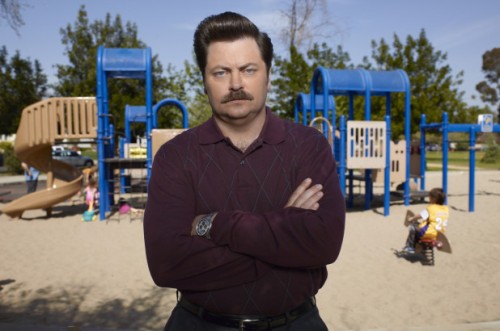
That’s where Ron Swanson comes in. If you’ve watched every episode of “Parks and Recreation” like I have, you know why just saying that name out loud fills the immediate area with greater masculinity. That’s because Ron Swanson is a true man’s man. He has more masculinity in his mustache than most men have in their entire bodies.

I’ve cited Ron Swanson before as someone who embodies a type of masculinity that even self-proclaimed feminists can get behind. He’s strong without being a bully. He’s assertive without being cruel. He’s stern without being heartless. While he doesn’t always exercise good judgment when it comes to ex-wives, Ron reflects a level of manliness that men, women, and everyone in between can respect.

As such, Ron is in a unique position to provide insight into the world of masculine sex appeal. There are multiple instances throughout “Parks and Recreation” in which Ron attracts women. Whether he’s in a serious relationship with Diane Lewis or whipping a crowd of women into a frenzy as Duke Silver, it’s well-established that women find this man attractive.

While that probably isn’t surprising, considering Ron’s character is played by an equally-manly romantic in Nick Offerman, I feel it’s worth scrutinizing the particulars of that sex appeal. I believe there’s insight to be gained from Ron’s masculinity and how it attracts women.

Now, and I wish I didn’t have to disclose this, I don’t mean to imply that this assessment speaks for all women. I am not a woman, nor do I claim to know the various intricacies of the female thought processes. I understand that women have a variety of tastes when it comes to men. Not all of them are going to find Ron Swanson attractive.

When it comes to high standards of male sex appeal, though, Ron checks more boxes than most. That’s why I feel he’s worth singling out in the interest of scrutinizing the most attractive traits associated with masculinity. In doing so, I hope other men can learn from his example.

There are many ways Ron demonstrates these place throughout plays out in “Parks and Recreation,” but one episode in particular encapsulates the essence of his sex appeal. That episode is entitled “Lucky.” It takes place in Season 4 while Leslie Knope is in middle of her campaign for City Council, but Ron’s role in the side-plot to the campaign drama is where there’s more action, including the sexy kind.

That plot involves April Ludgate trying to hook up overly-energetic, exceedingly-dramatic Chris Traeger with Andy’s female professor. It’s not out of the goodness of her heart. Anyone who is familiar with her mannerisms knows that’s not her style. Her intentions are more self-serving because Chris recently suffered a break-up and April believes finding a new love interest will make him less annoying.

Her plan seems good on paper. She invites Andy’s professor, Linda Lonegan, to lunch with her, Andy, and Ron. There, they just happen to run into Chris, who’s eating alone. At first, everything seems to be working. Chris, through the charisma of Rob Lowe, shows a keen and overt interest in her.

While he’s doing this, though, Ron is sitting right next to Linda. He’s showing no romantic interest in her. He’s at a restaurant. His only interest is in how much steak he can eat and how many vegetables he can throw away. Ron does have a romantic side, but he also has priorities, especially when steak is involved.

It’s also worth noting that Linda is a women’s studies professor. In previous episodes, she makes very clear that she identifies as a feminist. I also have to note that she’s not the kind of radical, man-hating feminist that loves to fuel outrage culture. I would categorize her feminism as a healthy, balanced brand of second-wave feminism that dealt with more overt forms of gender inequality.

While Ron doesn’t bring those issues up, they’re a big part of Chris Traeger’s efforts to attract Linda. He effectively filters everything he says to Linda through a feminist lens, going out of his way to use the kind of rhetoric that demonstrates he understands her worldview and embraces it. Initially, Linda does seem interested in him.

Even though he’s very sensitive with his rhetoric, Chris is no beta male. He’s very masculine in his own right with how he takes care of himself and pursues things so energetically. He’s also played by Rob Lowe, who certainly has many traits of an attractive man, even by Hollywood standards.

Despite those traits, Linda ultimately rejects Chris’ invitation to join her for some land kayaking, which isn’t nearly as sexy as it sounds. Then, shortly after Chris leaves, she turns to Ron and invites him back to her place for activities that don’t involve kayaking. Ron, having had three steaks at this point, accepts and it’s overtly implied that they make love, as evidenced by him wearing his red polo shirt the next day.

To understand why Linda chose Ron over Chris, though, it’s important to break down how Ron acts in this scene. Even though Ron wasn’t attempting to attract Linda, she was still drawn to him more than Chris. According to some of the science behind the traits women find attractive in men, that actually makes sense.

From the moment Ron joined Linda in that scene, he was his usual poised self. He didn’t ask for specials from the waiter. He knew what he wanted, which was a porterhouse steak, medium rare. He was confident in his decision, as well as polite and assertive. Those are traits that are both attractive and respectful.

In addition to his demeanor, Ron’s mannerisms reflect confidence and certainty. Even though he eats three steaks, he’s not a slob. He conducts himself in a way that feels approachable and unimposing. Even if he doesn’t try to attract Linda, he does everything necessary to avoid repulsing her.

Beyond what he does, the way Ron speaks is just as powerful. He’s a man of few words whereas Chris will literally go overboard with adjectives and adverbs every chance he gets. His persona is endearing, but he also comes off as intense. For many women, including Linda, that can be a turn-off. Intense men tend to be complicated men and many reasonable women don’t have the energy for that.

On the other end of the spectrum, Ron is much simpler and transparent with his wants and desires. He says it himself in the early episodes of “Parks and Recreation.” He likes pretty, dark-haired women and breakfast food. That kind of simplicity makes him easier to understand and easier to work with. From Linda’s perspective, keeping up with Ron is much less tedious than keeping up with Chris.

Even from a physical standpoint, Ron conveys more raw masculinity than the health-obsessed Chris. While Chris may have six-pack abs and a very healthy resting heart rate, Ron has a manly mustache and studies show that women find facial hair more attractive. While the presence of facial hair probably wasn’t the determining factor for Linda, it likely played a part.

In the end, Linda found herself between two very masculine men. She ultimately went with the man who demonstrates the most attractive masculine traits just by being himself. Her decision doesn’t just highlight the many ways in which Ron Swanson is personifies manliness. It singles out the traits that appeal to women on a basic level.

Ron Swanson is assertive, protective, frugal, stern, loyal, dedicated, and hard-working. He would function just as effectively as a hunter in ancient times as he does as the Director of Parks and Recreation for the city of Pawnee, if not more so. He’s someone who could still care for his lover if civilization collapsed and zombies overran the cities.

It’s here where Ron’s sex appeal goes beyond simply attracting women. Unlike egocentric pick-up artists or hyper-sensitive ladies men, Ron Swanson conducts himself in ways that men and women alike can respect. In turn, he treats men and women with similar respect.

He doesn’t hold women to a different standard. He treats Linda as an equal and not a prize to be won. He leaves it up to the woman to decide if she finds him attractive enough to be with. In the end, he made Linda’s decision both easy and appealing. It’s the kind of masculinity that men, women, feminists, men’s rights activists, egalitarians, and Americans of all stripes can get behind.

Leave a comment

Filed under gender issues, human nature, noble masculinity, psychology, romance, sex in society, sexuality

Religious Dogma, Sexual Repression, And How They Foster (Horrendous) Abuse

649d3df0-a73b-40e1-9b95-bb796268c19c-image_from_ios_6

By now, most people have heard the news surrounding the latest round of scandals involving the Catholic Church. Once again, it involves the systematic abuse of children, the elaborate efforts to cover it up, and the religious dogma that is used to protect such behavior. It’s certainly not the first time the Catholic Church has been embroiled in such a scandal, but that doesn’t make it any less distressing.

There’s a lot I can say about the Catholic Church and how badly they’ve handled this issue. There’s even more I can say about how this famous institution’s policies have caused genuine harm in societies that remain devoted to Catholic traditions. However, I would only be repeating what others have already pointed out and I’d rather not do that.

Some have already done it better than I ever will.

For me, personally, these scandals cut deep because I have family who identify as devout Catholics. They see these same scandals too and I can confirm that it hurts them on a personal level. Whenever someone brings it up, they don’t make excuses. They despise those priests for what they did and those who covered it up. It doesn’t shake their faith, though. To some extent, I admire that.

At the same time, however, I often wonder whether they see the same flaws in that dogmatic theology that I see. I try not to bring it up with family members, out of respect for their faith. I still believe that even they are bothered by those flaws. When children are being sexually abused, how could it not?

There are a lot of factors in play with this latest scandal, from the nature of religious dogma to the corruption of powerful institutions. The one that few want to confront, though, involves the cumulative impact of sexual repression with rigid theology.

There’s no way around it. Religious dogma and sexual repression often go together. The Catholic Church is hardly the only institution that encourages strict repression of sexual behavior. Anyone living in Saudi Arabia or Iran can attest to that. With a billion adherents and nearly 2,000 years of history, though, the Catholic Church is one of the largest and most vocal proponents of this dogma.

The reasons for that are many and I don’t want to get into all the issues surrounding its effects. Instead, I want to focus solely on the celibacy of the priests. That practice represents a true extreme of sexual repression. It’s one thing to champion monogamy to the point of murdering adulterers. It’s quite another to have an entire class of people who have to completely repress their basic urges.

It’s not like trying to quit smoking, which is hard enough. This involves denying a basic, fundamental drive that is hardwired into people at birth. Trying to turn that off is like trying make sugar taste bad. It goes against fundamental biological wiring. The idea that someone can repress those force without incurring psychological damage is flawed, at best.

To get an idea of why, think about a time when you were really hungry. Maybe you were sick for a while, trapped on a long road trip, or went on a crash diet. That feeling of intense hunger is not something you can turn off. It’s uncomfortable for a reason. Your body isn’t getting something it’s been hardwired to seek. It’s going to make you feel uncomfortable until you do something about it.

The human sex drive is not like hunger, but it’s similar in that it’s a biological drive. For every living thing, be it a human or an insect, sustenance and reproduction are the two most basic drives. It is possible to survive without reproducing, but the fundamental forces of nature are going to push you to try.

When you push back too hard, it’s like trying to patch a faulty dam with scotch tape and chewing gum. From a psychological standpoint, your brain and your body are deprived. As a result, it’s going to do whatever it can to alleviate this deprivation.

It doesn’t matter if that act is extreme. It doesn’t matter if it’s illogical, illegal, or outright immoral. Your brain and your body will find a way to justify it if it ends the deprivation. For most, it’s just a never-ending battle that requires an individual to fill that missing need with something, which in this case is religious fervor.

It’s debatable as to how much this fills that fundamental need, but a lot of that assumes that celibate priests don’t do something in their private time to relieve the tension. Historically speaking, many in the Catholic Church and other powerful institutions were pretty blatant about how they circumvented the issues of celibacy.

Some priests had lovers on the side. Some employed prostitutes and concubines, but still claimed to be “celibate” because they weren’t married. More often than not, priests were only celibate in the most technical sense and the church often tolerated this. Even St. Thomas Aquinas, a man not known for liberal attitudes, even acknowledged the futility of suppressing the human sex drive when he said this about prostitution.

“If prostitution were to be suppressed, careless lusts would overthrow society.”

For a select few, though, that effort to maintain celibacy manifests in a truly horrific way. I think it’s safe to conclude that the priests who abused these children were not mentally well. Many might have been unwell before they entered the priesthood, but celibacy certainly didn’t help. Repression, especially the kind that’s taboo to even talk about, tends to make things worse.

That’s how people end up with mentalities that are poorly equipped to handle basic urges. Instead of a healthy expression of sexual desire, someone may react with anger or self-hate. When people are angry and hateful, they tend to take it out on someone. It’s not always sexual, but when someone has all their sexual desires pent up over the years, sometimes it seeps in.

That’s how simple desire becomes disturbing fetishes, including those that harm children. That’s how unthinkable behaviors are rationalized. When religious dogma tells someone they face divine retribution for feeling these intrinsic desires, that’s causes serious distress and efforts to mitigate it can make for some pretty unholy behaviors

While it’s hard to study the sex lives of celibate priests, the occurrence of these scandals along with the historical documentation of other lurid scandals reveal plenty about the effects of celibacy. When there’s no outlet for sexual expression, other emotions get caught up in the efforts to cope with that fundamental drive. Add religiously-motivated guilt to the mix and the impact only compounds over time.

None of this is an excuse for what those priests did to these children. They still committed an atrocity and no amount of divine excuses can mitigate the suffering of the victims. The Vatican will do what it has to do in order to maintain its power and influence. However, the reconsideration of extreme practices celibacy is unlikely.

Some media figures will mention it, but never to the point of encouraging serious reforms. That’s a dirty word in both the Catholic Church and any other religious institution. Historically speaking, the rate at which major religion institutions undergo sweeping reforms is nothing short of glacial.

I sincerely hope this latest scandal gives those in the Vatican serious pause, but I have a feeling that even this won’t do it. Religious dogma is notoriously uncompromising. People, especially within powerful institutions, make any excuse to avoid changing it. While the Vatican has made some strides, the fundamental issue remains. As long as basic human nature is suppressed, more will suffer and not in a holy sort of way.

1 Comment

Filed under Current Events, gender issues, human nature, psychology, religion, sex in society, sexuality