Tag Archives: social justice

Reflecting On The Greatest Advice Rick Sanchez Ever Gave Us

rick-and-morty-season-3-creators-tease-a-return-to-previous-cliffhangers-and-characters-663486

Greetings, and wubba lubba dub dub! By now, you should know that means this will be another article about “Rick and Morty,” one of the greatest animated shows of this century or any other century, for that matter. I know that sometimes means the topics involved are depressing or downright fatalistic. I can’t promise this one will balance that out to any meaningful, but I still hope that this piece is more useful than most.

Love it or hate it, either due to its nihilistic undertones or exceedingly passionate fanbase, there are a lot of interesting insights to explore within “Rick and Morty.” From specific episodes that deal with the not-so-hidden appeal of the apocalypse to those built around Rick turning himself into a pickle, there’s a wide variety of lessons and themes to take in.
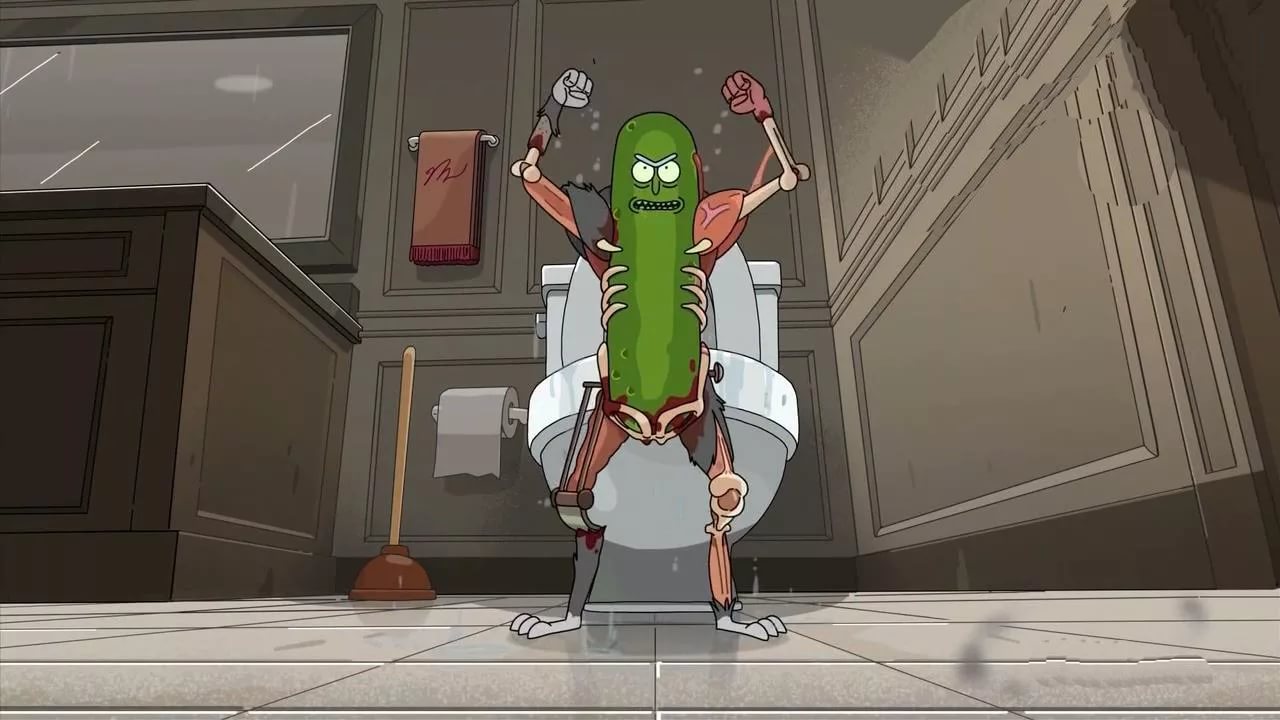
In this case, I want to focus on what I feel is the best advice “Rick and Morty” has given anyone, both within his animated world and in our own world. It’s a lesson that anyone can use in a multitude of situations, be it dealing with never-ending flood of depressing news to finding out a beloved actor was a total asshole.

Rick has given this advice to Morty on more than one occasion throughout the show, including the pilot episode and, most notably, in “Rick Potion #9.” It applies to battles against alien security guards, burying the body of your alternate self, and that time you farted in class a bit too loudly. It can be summed up in four simple words.

Don’t think about it!

On the surface, it doesn’t sound too useful. Not thinking about something seems like an elaborate excuse to avoid a particular problem or issue. It sounds like something adults tell children just to shut them up so they’ll stop bothering them. Whether they’re asking about where babies come from or why we can’t stop fighting wars, it feels like the overly easy way to avoid an unpleasant conversation.

However, I don’t think that’s what Rick means when he says that. He’s already proven in multiple episodes that he doesn’t give a Grunglokian fart about unpleasant conversations, as evidenced by his many unfiltered rants around his family. When he says “don’t think about it,” he’s saying it in a particular context that makes it more than just a method for avoiding awkward moments.

Watch any one episode of “Rick and Morty” and you’ll notice more than a few themes, not all of which are based on Rick’s ego or Morty’s obsession with a particular redhead. One of the major over-arching concepts that binds the show, and gives much of its appeal, is the idea that none of the things that people hold dear actually matter in the grand scheme of things.

Whether it’s religion, the economy, love, family, or the formula for concentrated dark matter, it just doesn’t matter in the long run. Religion doesn’t matter because it’s just some arbitrary set of beliefs built on unrelated correlations. The economy doesn’t matter if the value of money is entirely arbitrary. Love and family don’t matter when there’s an infinite number of them in the multiverse.

While that fits with the shows more nihilistic themes, it also speaks to the helplessness and frustration that a lot of people feel when dealing with a chaotic world/multiverse. There’s so much they can do, but so much of it doesn’t matter. The causes they fight for, the wealth they accrue, and the people they encounter simply lose their meaning when you consider the sheer size of the universe and how old it is.

In that context, not thinking about it might actually be helpful. If you work a job you don’t like, pay taxes you don’t like paying, and deal with people you can’t stand every day, the idea that it’s all for nothing in the long run isn’t just untenable. It maddening. How can anyone possibly cope with that kind of existence?

Not thinking about it, though, solves a lot of issues because it allows you to maintain the necessary perspective to function within that existence. Even if the things we do are meaningless, not thinking about it at least gives us the illusion that they’re meaningful. More often than not, perception beats reality and not just in terms of bias news.

It’s a byproduct of human’s being so limited in their thinking. Human brains did not evolve to prioritize reason, understanding, or making sense of an obscenely large universe. They evolved with the primary function to help us survive and reproduce, as individuals and as a species. Anything else is secondary or an afterthought.
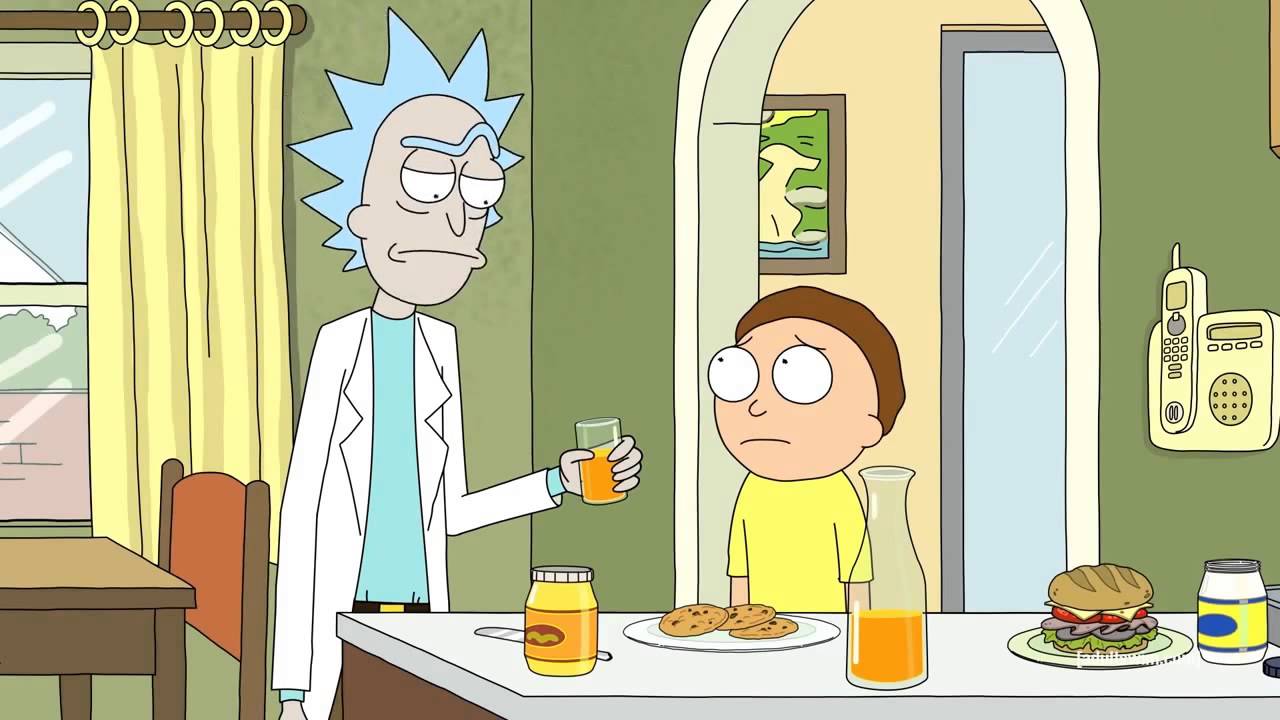
Rick Sanchez seems to understand that and constantly exploits those limits for his own ends, whether it involves outwitting the President or outsmarting the devil. Unlike everyone else in a meaningless world within an infinite multiverse, he’s a super-genius. He has a portal gun that allows him to travel to infinite timelines at will, even if it’s just for a pizza.

Nobody else in this world has those capabilities, although I wouldn’t at all be surprised if Elon Musk weren’t working on it. Nobody in this world is as smart or as resourceful as Rick Sanchez. There’s very little he can’t do. This is a man who defeated a Thanos/Darkseid rip-off while blackout drunk. By every measure, what he does should carry more meaning than most.

Despite Rick’s abilities, he’s the one who often belabors how meaningless everything is. Never-the-less, he still operates as though there’s a reason to continue existing. That may send mixed messages when he says not to think about it, but that’s only if you overthink it, which would entirely defeat the purpose.

Rick knows that nothing he does matters in the long run, but he doesn’t think about that.

Rick knows that everyone he cares about are just random clumps of matter in a meaningless universe within an infinite multiverse, but he doesn’t think about that.

Rick knows that love, connection, and emotions are just manifestations of brain chemistry that help our species survive, but he doesn’t think about it.

Instead, he focuses his genius intellect on the things that matter to him. Whether that’s his family or that sweet, delicious Szechuan Sauce, he concerns himself primarily with what he feels gives his cosmic adventures meaning. It doesn’t matter if that meaning is empty in the grand scheme of things because, again, he doesn’t think about it.

It may sound egotistical or selfish, but it’s remarkably pragmatic in a meaningless universe. It keeps us from stepping back, realizing how insignificant we are, and succumbing to despair. It directs our energy and efforts into issues that are localized. For Rick Sanchez, a man with access to a portal gun and a space ship, localized is a relative term. For everyone else, though, it’s just that much more pragmatic.

There’s only so much we can do to exact meaningful change in the world. Unless you’re willing to go through the long, tedious process that involves reshaping government institutions, influencing cultural trends, or educating people on a mass scale, you can’t expect to achieve much change, especially by yourself.

Rick Sanchez could probably achieve all the change he wants, but chooses not to because he knows it’ll bore him or it’s just easier to go to a universe where that change has already occurred. For the rest of us, though, we’re frustratingly limited. We may never see or inspire the change we want. Even if we do, we can’t do it alone.

That kind of helplessness can be depressing. The idea that so little of what we do matters, even when we believe in a cause, is pretty distressing. That’s why Rick’s advice is so relevant. It’s not deep or inspiring, but it gets the job done.

Upset with past injustices upon a particular group? Don’t think about it.

Upset that you can’t change the minds of your friends and family on politics, religion, or ideology? Don’t think about it.

Upset that we’re not doing enough to address climate change? Don’t think about it.

Upset that the economy isn’t doing well and all the best opportunities are gone? Don’t think about it.

These are all things that you can’t change without a portal gun or galactic-level genius. Since Rick Sanchez has that and we don’t, our best recourse is to not obsess over it because there’s not much we can do. Eventually, the heat death of the universe will render everything we do or have ever done totally meaningless.

That can either be depressing or empowering, depending on how you look at it. Yes, not thinking about it won’t undo a traffic ticket, undo a crime you committed, or turn off your biological urges to eat, sleep, love, and mate. Efforts to do so can be damaging. For everything else though, not thinking about it is probably better for your mind, your body, and your overall sense of being.

In that sense, we should all thank Rick Sanchez for this amazingly useful device. While he’d probably say that gratitude is just a polite way of idiots admitting how incapable they are, it’s probably best not to think about his reaction. So long as the advice he gave works, what does it matter? Wubba lubba dub dub!


5 Comments

Filed under Current Events, human nature, philosophy, Rick and Morty

What It Means To “Man Up” And Why It’s Changing (For The Worse)

man-up-and-military-press

It wasn’t that long ago that parents and peers emphasized the importance of “manning up” to young boys. There would come a point in a kid’s life where he was encouraged to do more than just grow up. He was expected to push himself in a unique way, fighting and sacrificing for those who couldn’t. Sometimes, those expectations were unreasonable and a little unhealthy, but it was part of the overall gender dynamic.

That dynamic has been changing a great deal over the past several decades. I’m young enough to have grown up during many of those changes, but old enough to remember the old traditions associated with “manning up.” The sheer breadth of that change has been remarkable, but not entirely in a good way.

For the most part, I was never pushed too hard to man up by others. My friends and family encouraged me to push myself, but never to the point where I felt pressure or anxiety. I often ended up pushing myself, whether it involved going to college or moving out of my parents’ house.

That’s not say I didn’t feel any pressure to “man up” at any point in my life. Beyond my friends and family, I was as vulnerable to expectations surrounding masculinity as anyone. Most of the time, those expectations involved little things like stepping up to fix a problem, helping out those who were physically limited, and enduring pain or discomfort in the name of a particular goal.

Overall, I feel as though these expectations were either healthy or benign. Some of those standards could’ve been gender neural. When you see someone in a wheelchair at the grocery store struggling to get something from a shelf, it’s neither masculine nor feminine to help them. That’s just common courtesy.

In recent years, however, the whole notion of “manning up” has gained new a new complications. Some of them are ideological. Some of them are politically motivated. It’s because of these various nuances that I put the term in quotes because its meaning keeps shifting, gaining and losing connotations year by year. At some point, the term itself may become empty.

In contemplating that meaning, I thought briefly about the connotations that term had back when I was a kid. I doubt my interpretation was definitive, but I like to think it captured the spirit of the term. When someone told me to “man up,” this is what I took it to mean.

  • Grow up and mature
  • Take responsibility and solve your own problems
  • Stop whining and start doing something about it
  • Quit being satisfied with mediocrity and push yourself
  • Be stronger and tougher in difficult situations
  • Work hard and endure for the good of others who can’t

I don’t think it’s a coincidence that many of these same traits associated with superheroes, as espoused by the comic books I read and the cartoons I watched. They might have colored my perspective on masculinity and “manning up,” but I suspect these ideals were still consistent with healthy masculinity. The fact that characters like Wonder Woman and Storm of the X-men had some of these traits was just a bonus.

Now, as I contemplate the meaning of “manning up” in its current context, those don’t seem to have the same prominence they once did. There are also a new host of expectations surrounding the term that are fueled, in part, by identity politics. Some even conflict with others, which adds even more complications.

To get a feel for those complications, I posed a question on Reddit on what “manning up” meant to them. The response somewhat surprised me. Most wouldn’t have found their way into the comic books or cartoons I consumed as a kid, to say the least. They involved ideas such as this.

  • Checking your privileged and making way for those your kind has oppressed
  • Acknowledging the crimes and guilt of your gender, as a whole
  • Sacrificing any advantage or benefits that being a man might have once conferred
  • Subjecting yourself to greater degradation in the name of greater equality
  • Learning about all the ways men have ruined society and the world
  • Accepting that the things men love are unhealthy, damaging, and detrimental

None of these are very positive traits for those being told to “man up.” It’s basically a less overt way to tell them that them being a man is “problematic,” a term that has also gained one too many complications. It’s a term reserved for those who appear to be benefiting too much from being a man who isn’t subject to the rigors of childbirth, rampant sexism, and a long history of exploitation.

Never mind the fact that no one alive to day is directly responsible for the injustices their ancestors committed. They’re also not responsible for the injustices their particular race, gender, or ethnicity committed. It happened in the past. Yes, parts of that past were horrible, but punishing people in the present doesn’t make it less horrific. If anything, it just tries to fight one injustice with another.

This is where the concept of “manning up” really loses whatever positive connotations it once held. It’s a sentiment that many responders to my Reddit question shared. When they contemplate that term, they interpret as someone telling them that they need to endure, suffer, or overlook a particular aspect of their identity.

A few posters went so far as to say the term can be replaced with “serve my interests” and carry the same meaning. While I don’t entirely agree with that notion, I can understand why it would feel that way. Being a man, I sometimes feel like I’m expected to get to the front of the line when the time comes to sacrifice. I won’t go so far as to say I find it oppressive, but it certainly feels like I’m held to a different standard.

Sometimes, that standard can be unreasonable. That was another common theme of the responses I got. The notion of “manning up” denotes operating in a way to avoid a particular stigma that others wouldn’t incur for the same behavior. It’s not always ideological, but the pressure is there.

A man who is too emotional is considered a sissy and has to “man up.” A woman or even a gay man who does this won’t face that stigma.

A man who is reluctant to sacrifice for the well-being of another group is considered selfish and should “man up.” A woman or another minority who show a similar reluctance can do the same, but won’t face the same stigma.

A man who shows his pain when he’s harassed is told to suck it up and “man up.” A woman or minority who is harassed can expect plenty of supporters who will cheer them on. Even if men are subject to more overall harassment, they don’t get any sympathy. They’re told to “man up” while everyone else is allowed to seek social support without much scrutiny.

This, I feel, is the ultimate tragedy of the concept. A term that once use to reflect certain ideals for men has now become an instrument of ridicule. It’s no longer a lesson for boys to learn. It’s a rhetorical shortcut that allows someone to hold an entire group of people to a different standard, one that requires them to go out of their way for someone else.

I don’t doubt that there are instances where it’s good for society that some people go out of their way to help others. For those who are disabled, elderly, or ill, it’s just more just and compassionate to set a different standard for ourselves. We don’t ask someone who is missing a limb or suffering from ALS to “man up.” We go out of our way to help them.

It’s the extent of those instances, however, that seems to be damaging the notion. It’s no longer sufficient to just have a particular ailment or shortcoming. Just being someone who isn’t a man who can claim some sort of injustice, be it historical or contemporary, is sufficient.

I believe that’s a dangerous precedent for men and women, for that matter. It sends the message that in order for there to be more justice and equality, an entire group of people need to sacrifice to an extent where they have to be the villains. They have to come to the table, surrender unconditionally, and admit they were wrong and they were the cause of the problem.

That may not be sentiment of those telling someone to “man up,” but that’s how it’s being interpreted. It’s less a masculine ideal and more a shaming tactic, one that is more likely to incur a backlash rather than get someone to reconsider their understanding of gender roles.

I still feel like there’s a way to recapture the positive elements of “manning up.” Gender dynamics is one of those concepts that’s always evolving. Sometimes, there’s progress. Sometimes, there are setbacks. At the moment, I think masculinity and femininity are going through some growing pains as they adapt to a changing world. That process is likely to involve plenty of conflicts and controversies along the way.

In the long run, though, I think society will find a healthy balance with respect to “manning up.” I think there’s a way to use that notion to bring out the best in men and women alike. It’ll likely take plenty of work, toil, and sacrifice from everyone involved in gender-driven controversies, but it’s definitely worth doing.

1 Comment

Filed under gender issues, human nature, Marriage and Relationships, media issues, political correctness, sex in society, sexuality

The When, How, And Why Of People Who “Snap”

an-alarming-signs-that-your-boyfriend-is-mentally-unstable-5-min-1024x712

Have you ever been so upset and so distressed that you felt like you were going to just lose it? Your ability to process emotions, as well as your grip on reality, is hanging by a thread and that thread just gives way. You don’t know what’s going to happen, but something inside you just shatters and there’s no going back.

There’s no scientific term for that sort of state, but it’s something many in the scientific and non-scientific fields love to analyze. Chances are many of us feel like we approach that precarious state at some point in our lives. Only a handful of people ever cross that line from just feeling like they’re going to lose it to actually losing it.

We often say those people just “snap.” It’s not a very scientific description, but I’ve yet to find one more fitting. I won’t try to invent some fancy term for it, as I’ve attempted before. It’s just something I want to talk about because it reflects a dangerous extreme of the human condition.

It’s a scary, but fascinating phenomenon, understanding what happens to people who snap and how they got to that point. When I was in college, one of my favorite classes was a course called “Abnormal Psychology.” Only a small part of it dealt with those who snapped, but that part often generated the most discussions in and out of class.

I say it’s worth discussing outside a classroom. I would go so far to say that it’s more pressing now than it has been in recent years, if only because it’s easier for people who snap to make the news. Thanks to the rise of smartphones and social media, it’s possible for someone who snaps to make the news before they’re even done snapping.

The Columbine shooting was a terrible story involving two very disturbed teenagers, but it happened in 1999. Unless you were near a TV, chances are you didn’t hear about it until it was over. Compare that to the shootings of Sandy Hook and Parkland. Within an hour of the shooting, it began trending on social media. We can basically live-tweet the act of someone snapping violently.

While I’m sure that will generate some frustrating discussions about the role social media plays in our lives, I want to focus on the people who experience these mental breakdowns. The act of someone snapping has been going on long before social media. Even when it doesn’t happen all at once, mental illness is well-documented in various historical figures.

Seeing as how there are over 7.6 billion people on this planet and growing, the confluence of numbers and time ensure that someone will snap again at some point. Whether or not it trends on social media depends on a whole host of factors that aren’t relevant to the discussion.

Given that inevitability, it’s worth assessing and even speculating a bit on what leads someone to that point. That’s more difficult than most insights into the human mind. There is some science into what happens to someone when they have a “nervous breakdown.” I consider that similar to snapping, but I think those kinds of breakdowns are the next to last step in a much more damaging process.

You can recover from a nervous breakdown. There are even recovery programs for it. Once someone snaps, something fundamentally shatters within their psyche from which there is no full recovery. For someone to carry out a mass shooting or a horrific crime, someone’s mind crosses a proverbial point of no return. What that point is varies from person to person, but the effects are just as devastating.

With respect to what pushes someone to that point also varies and is almost impossible to study in a scientific context. Until we can actually map and interpret the trillions of signals operating in someone’s brain, which we are working on, we can’t know for sure. Since we are all human, though, we all have some insight.

Now, I’m not a scientist, but I am an avid user of Reddit. In the interest of compiling insight, I asked for input on what other people thought made someone snap. As usual, Reddit provided a wealth of responses thanks to subs like this one, this one, and this one.

Many offered plenty of ideas, theories, and anecdotes. I won’t say there was an underlying consensus, but there were plenty of common themes. They included factors such as mental illness, alienation, isolation, depression, despair, and overwhelming anger. Some posters made especially insightful posts. Here are just a few.

You snap when the weight you carry is heavier than you can bear, and you see no better alternative.

Duty is heavier than a mountain. Death is lighter than a feather.

It is calculated response. Some people look ahead in their lives and see 60+ years of quiet desperation, insignificance, loneliness, banality, and suffering ahead of them. They are willing to give up all of those years for 15 minutes of being the MOST IMPORTANT PERSON in the room. The gun means they can’t be ignored, the attention they have been starved of is showered on them. And they will get talked about for months, maybe years to come. Something they don’t see as possible by any other action.

Disconnection, alienation, circumstance, depression, hatred. We’ve all felt like outsiders at some time, or put upon, deprived, taken from or taken advantage of, hopeless, in emotional pain so bad it hurts physically. We’ve all had those thoughts of, “I wish that person were dead,” or “fuck everyone,” or “I’ll get them back,” or “life isn’t fair.” But 99.9999% of us don’t ever act on that and as we mature through adolescence we learn to deal with these emotions and problems. We learn to work on ourselves, we learn perspective and that these things pass, we learn not to let others affect us to such a degree – or hopefully we do. Now imagine someone is dealing with this as a vulnerable teen, but 10x as bad as what any of us has dealt with, with maybe some greater tendencies towards mental illness, or narcissism, or anger management.

I think there’s a kernel of truth within these responses, as well as a few oversights. Someone who snaps is someone on a very specific path. Sometimes it’s one they choose, not knowing where it will lead. Some choose that path on purpose because they have sadistic tendencies that they seek to push. Eventually, they cross or are pushed beyond a threshold that just breaks them.

To some extent, we can think of the human psyche as one of our bones. Bones can and do break, but nature has made them pretty strong out of necessity. Some peoples’ bones are stronger than others and some get weaker over time. Put them under sufficient stress, though, and they fracture. Put too much stress on them all at once and they snap.

The human brain is more complex than a bone, but the principle is the same. It has a system for regulating stress, emotions, and pain. The system is more robust in certain people than it is for others. Those with mental illness are like those with osteoporosis in that their systems are weaker than others.

Just straining that system can be damaging. While the human brain is uniquely adaptable, too much strain too quickly can overwhelm that system. Once in that broken state, everything that usually keeps someone in check goes out the window. That’s how you get someone who has eruptions of violence, descends into self-destruction, and endures irreparable mental scars.

To complicate matters even more, which is saying a lot for such a sensitive subject, there were a few other factors that my Reddit posts brought up that may compound this process. A few posters brought up the effects of kids being over-prescribed drugs like Ritalin to fix behavioral problems.

Now, I was never on these drugs, but I did know a few kids who took them and I can attest that they have some pretty potent effects. While studies on this issue are inconclusive, it’s not unreasonable to suspect that tweaking a kid’s brain chemistry may incur some pretty lasting impacts.

Another complication that may end up being more powerful than drugs is the way our hyper-connected world just amplifies the stress that leads people to snap. While I won’t go so far as to say social media is causing people to snap, I think it can accelerate the process for those already on that path.

People already in a precarious state go online every day and see a world in which they feel left out or lost. They see others succeeding and feel it’s too late for them. They see others suffering and feel powerless to help them. They find themselves in hate-filled digital environments that only reinforce their sentiments. It makes the notion of snapping seem cathartic.

It’s impossible to know for sure just how big a factor drugs or media may be for those who end up snapping, but I suspect there are more than a few instances where it plays at least some part. Given the breadth and complexity of every individual person, I believe everyone who snaps does so only after a confluence of many factors.

When it does happen, it’s tragic for the person and their loved ones. It can subsequently manifest in some pretty horrific acts. Our current media landscape is sure to document such acts, sometimes to the point of being counterproductive. As bad as those acts can be, I do think there are reasons for hope.

That may seem outrageous after talking about such a sensitive issue, but I genuinely believe the potential for good outweighs the bad. Say what you will about the media, but by documenting those who snap, it brings attention to issues involving mental health care and how we confront hate.

I’m not saying more awareness will stop people from snapping, but it may help improve efforts to get to people before that moment comes. It is something we, as a functioning society, would be wise to work towards. Not everyone who eventually snaps can be saved, but if we can help those who can, I think it’s in their interest and that of their loved ones to help them.

Again, thank you Reddit for helping me write this article. I really appreciate it.

3 Comments

Filed under Current Events, human nature, philosophy, psychology

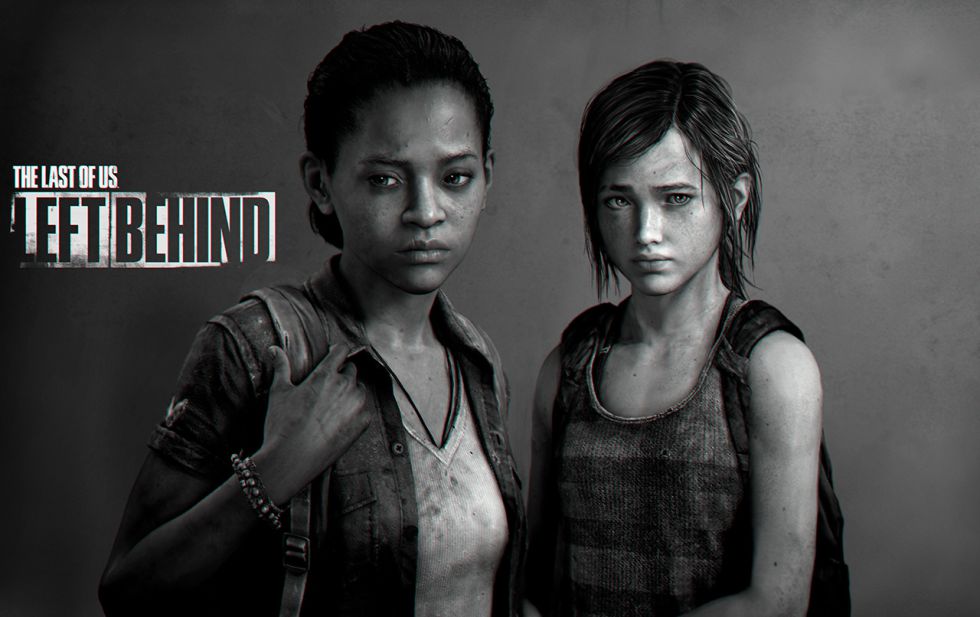
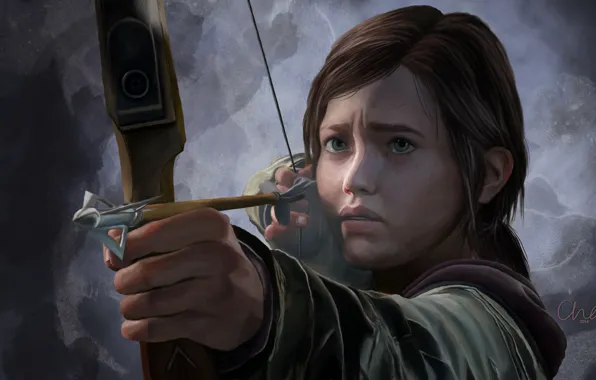
How Ellie From “The Last Of Us” Does LGBT Characters Right

1482574113135812936

In the current state of popular culture, one of the most emotionally-charged words is “diversity.” It gets thrown around like a nuclear hot potato. Anyone who holds it too long gets burned and anyone who doesn’t hold it long enough gets attacked. Whether it’s the handling of female characters or representation of minorities, diversity is one of those buzzwords that creates the wrong kind of buzz.

That’s not to say that it’s always mishandled. From a pure business standpoint, it makes sense for media companies to pursue diversity because the world is becoming an increasingly diverse place. New markets and consumer bases are emerging as people gain greater access to media, thanks largely to global connectivity. Any competent business would want to appeal to the most customers possible.

Economics aside, injecting diversity into a movie, TV, comic book, or video game is fraught with challenges and potential backlash. Movies have felt it. Comic books have felt it. Video games have especially felt it, thanks to scandals that seem to get more frustrating with each passing year.

The number of failed attempts to promote diversity is vast and tends to bring out the worst in many people. The successes, though, often fly under the radar and generate way too little attention. Other than the success ofBlack Panther” and the occasional Supergirl comic, the cases of diversity done right are few and far between.

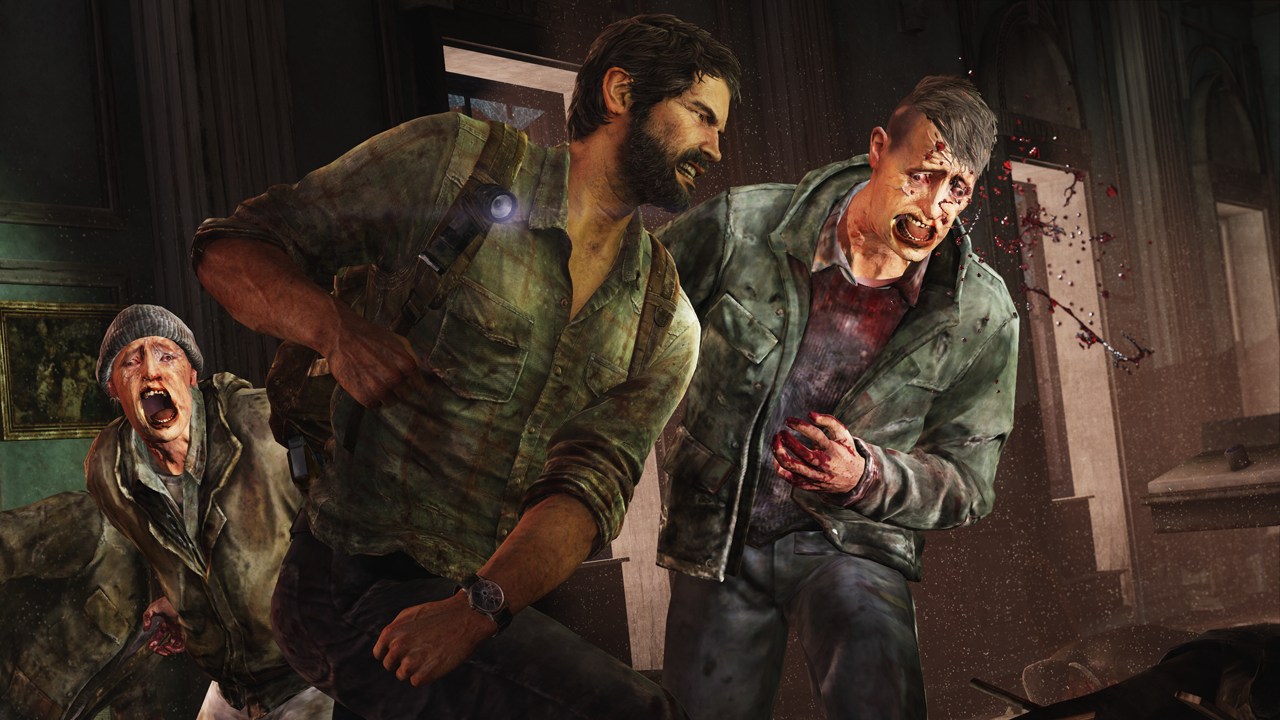
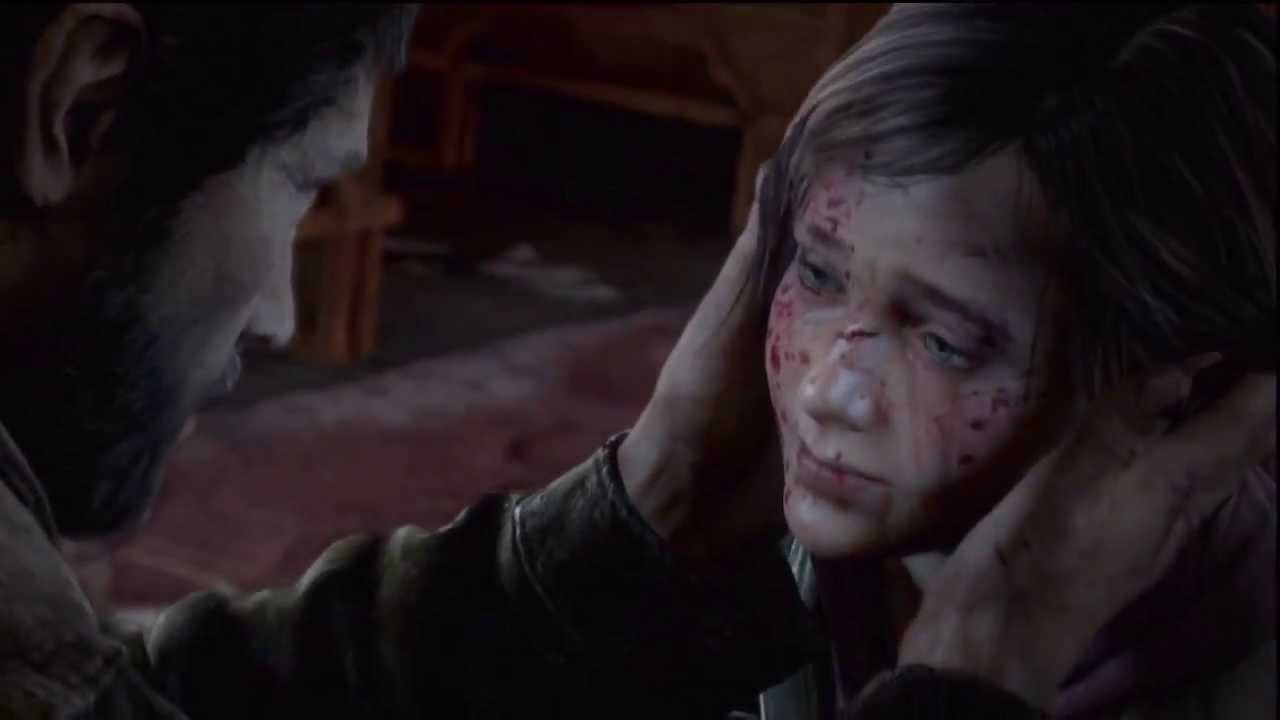
That’s why I think it’s fitting that one of the best cases of diversity comes from the world of video games, an industry that finds itself in a new controversy every other week. It’s even more fitting that it comes courtesy of “The Last of Us,” a franchise I’ve praised before in how it portrays masculinity in a refreshingly positive way.

Beyond just being an excellent game with amazing characters, it also provides a case study in how diversity can be done effectively. It doesn’t have to be forced. It doesn’t have to be preachy. It doesn’t even have to have a larger agenda. It can just be a bonus on top of a well-made product.

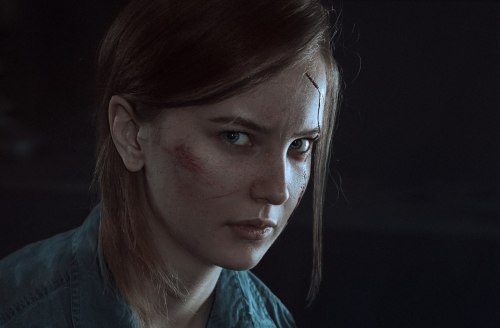
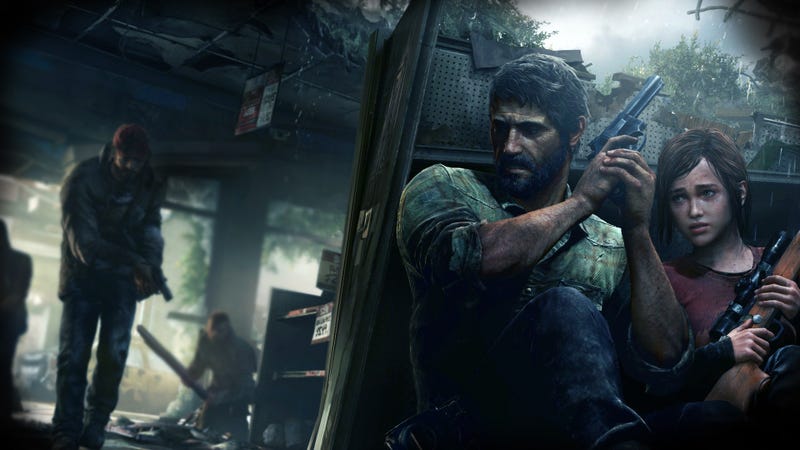
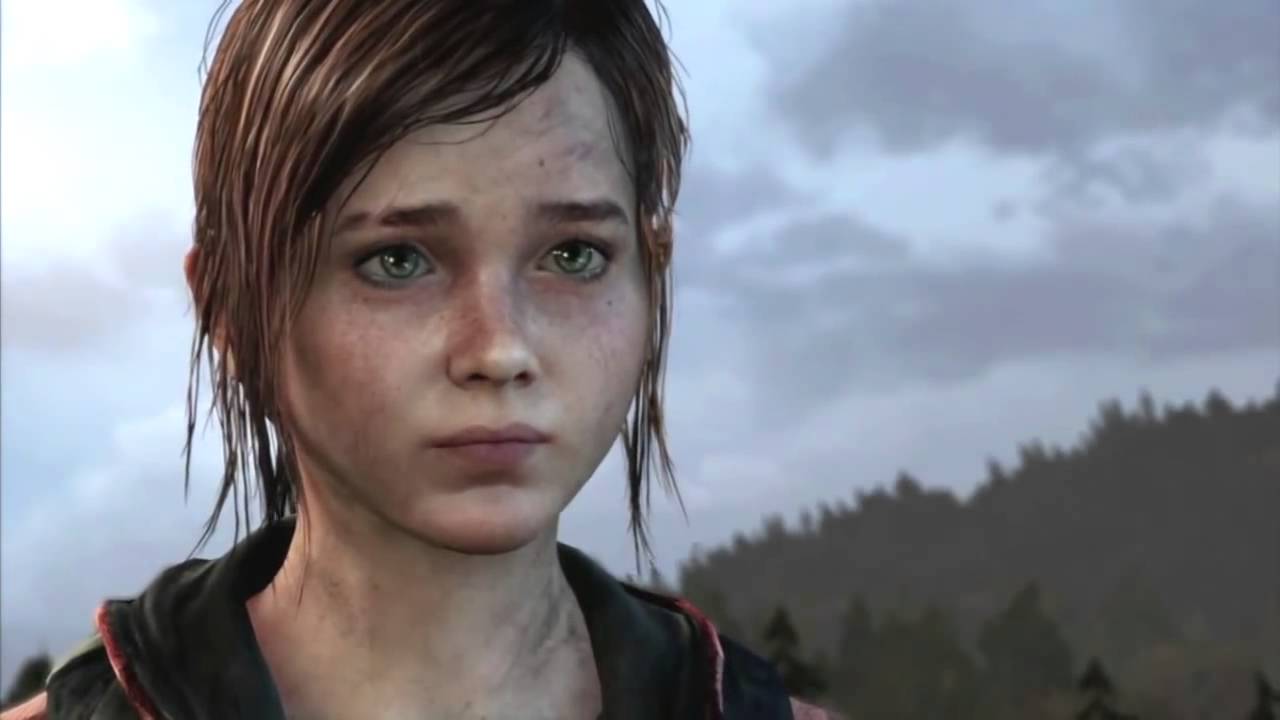
The character in question this time is Ellie, the co-protagonist to Joel in the first game and the main protagonist in the upcoming sequel. Her story is every bit as rich and compelling as Joel’s. Her history, her personality, and even the way she complements the gameplay helps make her distinct. She’s a major reason why this game is so enjoyable and why it sold so well.

She achieved all this as both a female and an LGBT character. It sounds like one of those combinations that has to be forced, but that’s not the case with Ellie. In fact, anyone who plays the entire story of the first game wouldn’t even know about Ellie’s sexuality because it was only revealed through a DLC , or downloadable content.

Even within that content, though, Ellie’s sexual orientation was not a big part of the story it told. It effectively filled in a time gap within the main game while also exploring more of Ellie’s backstory, but at no point did it make her sexuality a bigger issue than it needed to be. You could’ve removed that detail entirely and the story would still work, but it wouldn’t be quite as memorable.

More recently, during a preview of “The Last of Us Part II” at E3 2018, Ellie’s status as a homosexual woman was reaffirmed. Again, it wasn’t critical to making the moment work. The fact she’s attracted to other women doesn’t take anything away from the emotional weight of the scene. It does help enhance it, though.

Therein lies the key. What makes Ellie a great character has nothing to do with her sexuality. It’s not a defining aspect of her persona, nor should it be. It defines her no more than Joel’s heterosexuality defines him. It doesn’t have to be thrown in someone’s face as this huge, all-encompassing feature. It’s just a small part of a much greater whole that is Ellie.

There’s no effort to make her this LGBT icon, which has a tendency obscure a character when forced. Her status as LGBT isn’t belabored, either. She’s not important to the overall narrative in “The Last of Us” because she’s female and gay. She’s important because of factors independent of those traits.

That importance grows throughout the story, but not because of her gender or her sexuality. It’s what she does that helps establish her as an important character and a compelling one, at that. Her story complements Joel’s and the various other characters she encounters.

In the process, she also demonstrates a unique personality. She’s tough and stubborn, but she’s also impulsive and temperamental. Many of those qualities are entirely gender-neutral. Some stand out more because she’s a woman and that’s okay because a girl acting girly isn’t a big deal, which tends to get lost with other female characters.

It may seem so obvious, but the fact that diversity in media is such an issue shows just how difficult it is to pursue. Ellie succeeds because the diversity she represents is never primary to her character. It’s not even secondary, either. That’s not to say her gender and her sexuality are ignored, but it’s never elevated beyond a certain point.

Before any of those diversity-related issues come up, “The Last of Us” works to establish who Ellie is and why she’s important. That process of establishing a good, compelling character without her gender or sexuality being the focal point does a lot to get you to care about her story. It’s a process that can’t be rushed and the game does a masterful job in that respect.

The person Ellie is when you first encounter her early in the game is not the same person by the end. She’s someone who undergoes a lot of growth, encountering more than a few setbacks along the way. There are times she’s easy to root for. There are times when she comes off as an arrogant brat. Before you ever find out about her sexuality, you learn about her as a person.

By the time her sexuality finally comes up, Ellie is already so much more than the gender she’s attracted to. She’s a survivor, a fighter, and someone who has seen everyone she’s ever cared about die or leave her until Joel comes along. She also has a vital part to play in the ongoing apocalypse the world around her faces. All of this, once again, is not dependent on her gender or her sexuality.

I know I keep belaboring that, but it’s worth belaboring because that aspect of character development keeps getting glossed over. Other efforts at diverse characters often rush to the diversity without establishing why anyone should care about them. It’s why all-female remakes rarely resonate. It also leads to characters whose diversity is so blatant that it’s hard to take them seriously.

That’s not to say Ellie is a perfect example of diversity done right. She has her flaws, as does Joel. There are times when she’s too tough for her own good. She has a tendency to push peoples’ buttons for the wrong reasons. She also has questionable tastes in jokes. Even proponents of diversity can find flaws in her.

Despite those flaws, there are many lessons that characters like Ellie and games like “The Last of Us” can teach when it comes to doing diversity and LGBT representation right. The most important can be boiled down to four basic components:

  • Don’t try and force diversity just to fill a quota
  • Develop the character before developing the diversity
  • Don’t make their status as a woman or LGBT their most defining trait
  • Have the character complement their supporting cast, regardless of their diversity status

There are probably many more lessons that I’m not qualified to teach, but I think characters like Ellie do plenty by just being memorable and endearing. She’s a great character within a great story. That wouldn’t change if she were straight, but her being a lesbian does help her stand out, albeit for all the right reasons.

It’s also worth noting that Ellie’s story is still ongoing. “The Last of Us Part II” is set to come out in 2019 and the next part of her story promises to get pretty dark. Whether she maintains the complexity and appeal of her current character remains to be seen, but she has a strong foundation to build on, which is key for any character, regardless of their sexual preferences.

Whether we like it or not, there’s a lot of animosity between both sides, there more diversity in future media because the world is a diverse place. It’s just a matter of going about it in a meaningful, compelling way. Ellie is an example of how an LGBT character can work and when done right, it works pretty damn well.

3 Comments

Filed under gender issues, political correctness, sex in media, sex in society, sexuality, video games

Why Social Media Is NOT The New Tobacco

social-media-addict-needles-e1515160737606

It’s a full-blown crisis. Kids are spending hours upon hours using it. They’re becoming mindless, unmotivated zombies. Every day, it’s getting worse. It’s all around them. There’s no escaping it and if something drastic isn’t done, it’ll corrupt an entire generation beyond repair.

No, that’s not some hysterical rant from Jessica Lovejoy on “The Simpsons.” It’s not referring to smartphones or social media, either. That urgent message was referring to television. This isn’t another one of my thought experiments. This is one of my memories. It’s true. Televisions was a real concern when I was a kid. Some called it a full blown health hazard.

If that sounds strange, then chances are you aren’t old enough to remember a time before the internet was the ultimate addiction. It really existed. It makes me and many others in my cohort feel old, but it happened. When I was a kid still in grade school, especially between first and sixth grade, the internet wasn’t the thing destroying kids. It was television.

That memory I mentioned wasn’t unique. It came courtesy of an assembly my school held. I don’t entirely remember the purpose of the assembly. I was just a kid and it was an excuse to get out of class. What I do remember, though, was the common refrain about the dangers of television.

Adults of all kinds would find creative ways to tell us to stop watching television and do something “productive,” which I took to mean more homework, more chores, and anything else my teachers made me do. It didn’t really appeal to me and I don’t think it changed the TV habits of my peers, either.

That panic, while nowhere nearly as extreme as the Satanic Panic of the 80s, came and went like many moral crusades tend to do. Some are just forgotten, but others just evolve into a whole new panic. That seems to be happening with the internet and social media now. Watching TV is actually in decline among younger cohorts while their usage of the internet and social media is increasing.

I imagine those same teachers who bemoaned the impact of TV when I was a kid would be giving similar lectures on social media now. They would have competition too because parents today worry about their kids’ internet usage more than their drug usage. Some go so far as to call it the new tobacco to belabor its damaging and addictive nature.

While that kind of comparison strikes all the right emotional chords with concerned parents, I think it’s an unfit comparison to say the least. At most, I would call it absurd. The memories of all those warnings about the dangers of TV leave me inherently skeptical of anything that’s allegedly poisoning children. Unless it’s actual poison, I think the tobacco comparisons are premature.

Now, there’s no question that the internet and social media are having an impact on young people, old people, and everyone in between. There are documented cases where people have exhibited addictive behaviors surrounding their internet usage. Before you make any nicotine comparisons, though, keep in mind that people can be addicted to all sorts of weird things. The human mind is just that strange, powerful, and flawed.

Tobacco, and the nicotine it delivers, is an outside chemical that enters the brain and has real, measurable effects. Using the internet, whether you’re checking FaceBook or browsing Instagram, is not like that. That’s why internet addiction is not in the Diagnostic and Statistical Manual of Mental Disorders that legitimate doctors use to diagnose addiction, but substance abuse is.

It’s also why porn addiction is not considered a true addiction, which I’ve talked about before. However, porn is more specific in its purpose and its effects. There’s also still a stigma, albeit a damaging one, surrounding it that sets it apart from the rest of the internet. A kid browsing the internet, for the most part, is no less damaging than watching cartoons on TV all day.

That doesn’t stop a growing number of people from expressing sincere concern about the effects it’s having on their minds and their health. Some may even prefer that their kids watch old Hanna Barbara cartoons rather than tweet, text, and live-stream all day. There’s a growing sentiment that the internet, social media in particular, hacks our brain’s rewards system.

On paper, it makes sense. You pick up your smart phone, you turn it on not knowing what to expect, and if you find something you like, you get a quick release of pleasure chemicals like dopamine and endorphins. It’s basically a form of gambling. A slot machine works the same way, but you don’t need to be a high roller to enjoy the gambling-like thrill.

Like so many other ideas on paper that go onto fail, though, it’s nowhere near that simple. The human brain can’t be that crude with its chemistry. As a good rule of thumb, if you ever hear someone other than a legitimate neurologist talks about the effects of dopamine on pleasure or addiction, chances are they have a very limited understanding of it at best.

While dopamine does play a role in how we experience pleasure, that’s just one part of a wide range of functions it has within our brains. Trying to understand addiction through dopamine alone is like trying to bake a cake with only a teaspoon of flour. There are many more chemicals, processes, and interactions at play.

Using social media may offer its users a rush whenever they get exciting news on their feed or see something that intrigues and/or offends them, but our brain processes that in a way fairly similar to anything else that catches our attention. The primary difference with the internet and social media is that it happens solely through a digital screen and that does somewhat limit those reactions.

I know that undercuts the concerns of parents who think the internet permanently damaging the collective psyche of their children, but I think they’re overestimating the influence of things that are experienced solely through a screen. Much like TV, the internet and social media can only effect so many senses and that is a major mitigating factor in its impact.

To understand that, go find a picture or video of an exotic location. If you’re a heavy user of Instagram, chances are that won’t be too hard. Look at those pictures. Watch that video. Take in the sights and sounds of that location. To your brain, it’s an appealing bit of visual and auditory sensations. However, those are the only two senses it stimulates.

What about the smell of the air, the feeling of the wind, and the sense of place that being in those locations evokes in our brains? Even if you experience it through hyper-realistic virtual reality, it’s still just sights and sounds at most. Thinking that alone is enough to damage a kid’s brain is like thinking someone can win a sword fight with a sewing needle.

That’s not to say the internet and social media can’t have a powerful psychological impact on certain people. That’s the key, though. It impacts certain people the same way TV impacts certain people. Sure, there are documented cases where social media played a role in a major tragedy, but those are the exceptions and not the norms.

In the same way not everyone gets addicted to a drug after they try it, not everyone is going to be irreparably damaged by the internet, social media, or TV. There’s a reason why extreme cases of people being heavily influenced by these things makes the news in the first place. It’s exceedingly rare.

I would still make the case that the internet and social media are more influential on people, society, and our culture than TV ever was. By being so hyper-connected to such a wide audience, the professional trolls of the world have a way to effect others in a way that just wasn’t possible, even with TV.

As bad as some of those trolls are and as tragic as it is when some suffer because of them, blaming the internet for those ills is like blaming umbrellas for hurricanes. Lumping it in with cancer-causing drugs only further obscures the real issues associated with the ever-evolving internet.

There are, indeed, serious issues with how people use the internet and how it manifests. However, treating it like a dangerous drug did nothing to address the issues surrounding TV. It’ll do just as little in addressing the various controversies of the internet. Until the next “new tobacco” comes along, those same people who lectured me on too much TV will bemoan the dangers of the internet while ignoring all the good it does.

Leave a comment

Filed under Current Events, human nature, media issues, psychology

Free Speech And The Long-Term Fallout Of The “Rosanne” Cancellation

rosanne

When it comes to free speech and freedom of expression, I consider myself somewhat of an extremist. If I were in charge of setting the standards, I would permit un-bleeped profanity, unfiltered hate speech, unblurred nudity, and anything else that One Million Moms finds offensive. That’s how much I believe in free speech.

It’s probably for that reason that I would be woefully unqualified to establish a legal framework for what constitutes free speech and how it would be enforced. I’m not a lawyer, a legal expert, or some colorful TV personality who pretends to be one. Despite my qualifications, though, I do feel like I have something worth contributing to an ongoing debate surrounding free speech.

If you’ve been anywhere near the internet or a TV over the past few weeks, you’ve probably heard about the scandal surrounding Roseanne Barr. Simply put, Rosanne Barr made some offensive tweets that she blamed on sleeping pills. The tweets triggered a major outrage across social media. As a result, ABC canceled her hit show, which had been generating strong ratings since its return.

On some levels, I can understand this reaction. ABC is owned by Disney, a company that has one of the strongest brands in the world. They are not the government. They are a publicly traded company and as such, public perceptions affect their profits and their image. If you think that doesn’t matter, just ask the NFL what happens when a brand gets undermined.

On every other level, though, I see this reaction as one of those short-term solutions that could create many other problems in the long run. Whether you agree with Roseanne Barr’s politics or hate her guts, she was still just voicing her opinion. Yes, it was in bad taste and had some racial overtones, but she did apologize for it. The sincerity of that apology is hard to gauge, but the effort still counts for something in my opinion.

Even without that apology, the potential precedent and backlash are already in place. We, as a society, have established a process for punishing speech that we don’t like or find offensive. The process has nothing to do with an authoritarian government cracking down on its people. It doesn’t even involve the kind of mass censorship that other countries routinely practice. We’re doing this all on our own.

Essentially, we’re doing Big Brother’s job for him. We’re just not calling it censorship or a crackdown. Instead, we’re creating our own category of speech that a significant number of people believe ought not to be expressed or shared. There are no lawyers or police enforcing those standards. We’re doing that through a type of speech-based vigilante justice.

Me being a die-hard fan of superhero comics, many of which are built around vigilante justice, I’m somewhat sympathetic to those who want to right the wrongs that our imperfect justice system leaves unfinished. In this case, however, I don’t see the kind of justice that Batman would pursue, nor do I see the kind of villainy that the Joker would carry out.

I see an emerging system where a huge population of well-connected, well-informed, and generally well-meaning people want to confront people and ideas that they feel our damaging to others, themselves, and society as a whole. I don’t doubt their sincerity or their idealism. However, I seriously doubt they understand the implications of what they’re doing.

I don’t agree with Roseanne Barr’s comments. I didn’t find them funny, but I didn’t find them that offensive either. I see far more offensive comments on message boards and Reddit at least twice a day. That sentiment is out there. It exists. Even if the internet disappeared tomorrow, people would still have these thoughts and opinions.

That’s exactly why the outrage, protests, and subsequent consequences don’t necessarily achieve much beyond removing a few offensive comments from an immense network that’s full of so much worse. It does nothing to actually change the sentiments of those expressing the speech. If anything, it just makes them regret getting punished.

It’s akin to the inherent conflict we feel in accepting a criminal’s apology. We can’t know for sure whether they’re genuinely sorry for doing what they did or whether they’re just sorry they got caught. One is very different from the other. Without reading Roseanne Barr’s mind directly, we don’t know if her show getting cancelled has changed her political persuasions or just made them worse.

Moreover, her losing her show, her job, and her credibility reveals to a hyper-connected world that this is how you combat speech you find offensive. You don’t try to change someone’s mind. You don’t grow thicker skin and deal with it. You just get enough people to voice enough outrage and eventually, you can both remove the speech and punish the person who spoke it.

For those who didn’t like Roseanne’s comments or were genuinely offended by them, I doubt that seems like a bad thing. They are, after all, simply voicing their own free speech and using that to effect change from a non-government, publicly-traded company. They probably see themselves as the heroes in this story.

What happens, though, when the script is flipped? It’s not unlike the distressing thought experiment I pitched a while back that involved swapping the genders of famous movie or TV scenes. Reverse the roles and suddenly, the situation takes on a very different context.

You don’t even need any imagination to contemplate this because it already happened with Colin Kaepernick. Like Roseanne, he expressed himself in a very public way that triggered a very public backlash. He ended up losing his job and any prospects of getting another.

The same people celebrating Roseanne Barr’s cancellation likely protested how Kaepernick was treated. Some of them even protested on his behalf in a very public way to apply pressure not unlike the kind ABC faced. While the two situations are not exactly the same, the general premise is clear.

If someone expresses a political opinion that you don’t agree with, you and those like you can protest as well to silence that opinion and publish the one who expressed it. Conservatives can do it to liberal figures. Liberals can do it to conservative figures. The end result is the same. The speech is silenced and the speaker is punished, but the underlying attitudes remain untouched.

It’s those untouched attitudes that may end up having the biggest long-term impact of both the Roseanne Barr situation and that of Colin Kaepernick. Being public figures, these two made themselves targets with their controversial expressions. However, the way others confronted it is potentially damaging to the very concept of free speech.

Thanks to the internet, social media, and outrage culture, both situations make clear to those of any political persuasion that you don’t have to confront the actual substance of someone else’s speech. You don’t have to thicken your skin, evolve your thinking, or learn how to process offense. You can just protest the speech and punish the speaker, all without getting the government involved.

That’s the kind of approach that does not foster a free, open exchange of ideas. If anything, it ensures that people internalize their feelings and sentiments that others may find offensive. In doing so, that makes it even harder to confront them and potentially change their minds. Roseanne losing her show isn’t going to convince her that her critics are right. If anything, it’s going to make her hate her critics even more.

The end result of this kind of self-censorship is downright dystopian. Imagine a world where everything online, on TV, and in movies is so filtered, so watered down, and so overly polished that nobody even has an opportunity to voice anything offensive. The government doesn’t enforce it. We do.

In that world, hate and bigotry still exists. It’s just hidden and we have no way of knowing about it. History and human nature makes clear that internalizing these feelings can be very damaging. Now, we’ve just given Roseanne Barr and everyone who shares her views to be angrier and more hateful. We’ve also given them a tool with which to fight back against those they disagree with.

It’s a dangerous situation with damaging implications for the future of free speech. We could argue whether or not ABC was right to cancel Roseanne’s show or whether a company like Disney has the right to fire people who damage their brand. At the end of the day, though, the source of the outrage and conflict still comes from us. If offense is all it takes to censor speech, then speech is no longer free.

4 Comments

Filed under Current Events, gender issues, human nature, media issues, political correctness

The Boredom Filter: How To Know If Your Agenda/Politics/Ideology Is Doomed

image1

Whenever I talk about boredom, I make it a point to emphasize that it’s a powerful force that’s easy to overlook. In a society that’s full of distractions and ongoing outrage, it’s easy to shrug at the effects of boredom because it’s so easy to find something that keeps you from remembering just how agonizing it can be. I would argue that only makes us more vulnerable to boredom and it’s corrosive effects.

That said, I don’t intend to belabor the power of boredom more than I already have. I feel like I’ve made my case in calling it a potential plague of the future and a force with the ability to subvert the entire concept of Hell. Instead, I’d like to use the power of boredom as a critical tool of sorts, one that might prove useful for those seeking to avoid or exploit its influence.

I call it the Boredom Filter. It’s not unlike the Simpsons Filter that I’ve referenced before in that it’s a method of assessing a message or ideology in terms of how it’ll appeal to the masses. In that context, the Boredom Filter is kind of what it sounds like, but runs so much deeper.

It doesn’t matter if you’re a liberal, a conservative, a communist, a reactionary, a theocrat, or an anarchist. It doesn’t even have to be a political ideology either. It can be a philosophical underpinning like Marxism or a social movement like feminism. The Boredom Filter applies to it and, if used properly, can reveal just how viable that ideology is in the long term.

That is, after all, one of the most important measures of an ideology. Any idea, be it a social movement or a new philosophy, can enjoy a brief wave of success. It’s a matter of how well it endures over time that shows just how valuable or useful it is. From fad diets to one-hit wonders in music, the Boredom Filter help reveal whether an idea has what it needs to really last.

Applying the filter is actually fairly simple. It does require some speculation, a few quick thought experiments, and even a touch of brutal honesty. That might be difficult to contemplate for those immersed in extreme ideology. As I’ve noted before, people clinging to those ideologies will make any excuse to justify them.

With that in mind, here’s the process for the Boredom Filter. To ensure the best results, I urge those using it to be extra thorough.

Step 1: Assess the ultimate goals of the ideology and identify which elements may be prone to boredom.

Step 2: Imagine, for a moment, that all the goals of an ideology were achieved and integrated into a society.

Step 3: Within that ideologically pure society, assess how much conformity is required for it to work and contemplate the mentality of the common people residing within it who have no political power.

Step 4: Ask and honestly answer the question as to whether the lives those people are allowed to live, under the ideology, will get boring over an extended period of time.

Step 5: If the answer to the question in Step 4 is no, then the ideology passes the filter. If, however, the answer to the question in Step 4 is yes or even a probably, ask and honestly answer the question as to whether the ideology is flexible enough to adapt over time.

Step 6: If the answer to Step 5 is yes, then ideology passes the filter, but only to a point. If the answer to Step 4 is still yes and the answer to Step 5 is no or even probably not, then the ideology is doomed.

I understand that part of that process involves contemplating the boredom threshold for other people. That can be somewhat subjective. Everybody is wired differently. Some people can crunch numbers on spreadsheets all day and never feel bored. Others will get bored if it involves spending more than five minutes of reading. For some, it can get so bad that it requires medication.

That said, you don’t have to know or assume everyone’s threshold for boredom. When it comes to speculating on applying an ideology on a large scale, though, it helps to assume a fairly low threshold. That’s because, if history is any guide, people tend to get frustrated with any system that requires a significant level of conformity.

It may not seem like conformity to those who champion the ideology. It definitely won’t seem that way to those the ideology empowers to enforce it, be it a dictator, a religious zealot, or revolutionary. That makes applying the Boredom Filter for those contemplating the ideology all the more critical.

As an example, let’s use the Boredom Filter to examine the two most common political ideologies, liberalism and conservatism. Now, I know these ideologies mean different things to different people in different regions of the world. For the sake of this exercise, I’m going to try and keep things general.

For conservatism, I’m referring to the kind of conservatism espoused by right-wing, religiously-driven ideology that emphasizes traditional morality, gender roles, and free market economics. For liberalism, I’m referring to a brand of ideology that emphasizes secularism, evolving social norms, and economic systems that emphasize regulated management over free enterprise.

I know there are a lot of other intricacies to both ideologies, but it’s not necessary to account for every one of them. The most important aspect, with respect to the Boredom Filter, is knowing enough to speculate how it would function if implemented on a large scale. By that, I don’t just mean a small community or tribe. I mean on a scale of at least 100,000 people that is not totally isolated and has contact with the outside world.

With that in mind, let’s picture a society that’s a perfect model of conservatism. It’s basically the utopian world envisioned by Ben Shapiro, Rush Limbaugh, and Sean Hannity. Everyone goes to the same church, loves the same historical icons, favors the same social policies, condemns the same media messages, and lives in the same family structure. It’s basically “Pleasantville” for Republicans.

Does that world pass the boredom filter? If we’re applying it honestly, the answer is no. It doesn’t. Remember, that world involves a society in which monogamy is the only acceptable relationship, non-procreative sex is condemned, and scandalous media content is censored in the name of protecting children. It’s a world that does not lend itself to a diverse range of activities that alleviate boredom.

Eventually, a world where you have only a certain kind of sex, consume only a certain kind of media, and live a certain kind of lifestyle will get boring at some point. Some people might be able to cope, but others won’t. Even if they still manage, their kids and their grand-kids won’t stand for it. At some point, they’ll be so bored that they demand change, if only to offer a different kind of stimulation.

I’ll give a few conservatives a moment to fume on that assessment, but bear with me because I’m going to do the same to liberalism. You might think that liberalism would be more adept at passing the boredom filter. It’s ideology, at least the classic version, is built on freedom and individual rights. How can boredom possibly infect that?

Well, and I’m sure self-identified liberals will be just as upset, but this ideology doesn’t pass the Boredom Filter either. It’s more flexible in some areas, namely those involving social norms. Liberalism accommodates different family structures, artistic expressions, and social expressions. That certainly provides some of the flexibility necessary to alleviate boredom.

Where liberalism fails, at least in the context of modern liberalism, is how it tends to promote micromanaging of life, economics, and feelings. It may not favor censorship, but like conservatism, it does play favorites. The rise and growth of political correctness has really strained liberalism’s ability to pass the Boredom Filter and it may be getting worse.

In that liberal utopia that Bernie Sanders, Nancy Pelosi, and Rachel Maddow envision, there’s not just equality. There’s enforced equality. That equality is done in the name of fairness, but in trying to be so fair, it’s much harder for any person or idea to stand out. If nothing stands out, then everything becomes more monotone and monotone becomes boring.

Liberalism’s association with belaboring oppression and victimhood don’t help either. It’s not that fighting against oppression and protecting victims is a bad thing. Conservatives are against that too, albeit from a different angle. With liberalism, though, that effort has become clouded with endless virtue signaling that comes off as a never-ending struggle.

Even if it’s a struggle worth fighting, it’s going to get boring if there’s no nuance to it. Taken to an extreme, everything becomes too fair and too bland. Media isn’t offensive anymore. History, debates, and discourse are watered down. Add micromanaging the economy to some extent, even if it’s in the name of preventing exploitation, and you end up with the same economy in fifty years that you have today.

In the long run, the Boredom Filter undercuts pure liberalism just as hard as undercuts pure conservatism. I say pure because, contrary to what Fox News and the Huffington Post may claim, few societies in America or any other country not run by Dr. Doom are ideologically pure. Even in the most repressive regimes, there are some moderating forces.

Technically speaking, every political party in every country is moderate to some degree. The key is understanding the extent of that degree and using that as the basis for the Boredom Filter. From that, you can make a fairly accurate assessment of their goals. Some will even state them outright.

Use that as a guide when both applying the filter and contemplating the world this ideology is trying to create. A conservative world that has no porn, only one acceptable family structure, and one moral code that never changes is going to get boring. A liberal world where nothing offensive is allowed, the economy rarely changes, and life is micromanaged by government gets boring too.

It’s rare, if not impossible, for an ideology to ever get to the point where it can implement every policy it seeks and achieve every goal it pursues. That’s why boredom hasn’t destroyed conservatism or liberalism yet. However, the failure of extreme systems like communism and repressive right-wing dictatorships shows that such ideologically pure societies tend to be unstable, at best.

That instability may not always be related to boredom. However, the documented effects of boredom combined with extreme efforts to engineer that utopian society every ideology seeks make for some significant obstacles. For most, if not all, boredom presents an insurmountable obstacle that no ideology can overcome. By applying the Boredom Filter, it helps to uncover which ideology is more vulnerable to it.

5 Comments

Filed under human nature, philosophy, political correctness, religion, War on Boredom

Are Cheerleaders An Endangered Profession?

cheerlader

There are certain professions that go extinct and for perfectly valid reasons. Occupations like elevator operator, switchboard operators, and milkmen are all jobs that just don’t have a place in the economy or society anymore. Technology and trends have rendered them unnecessary or obsolete.

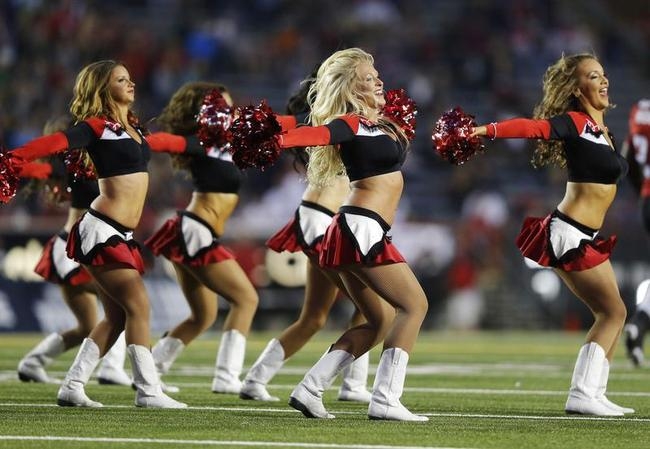
For a small, but vocal contingent of regressive individuals with a low threshold for outrage, there’s a particular occupation that they’d like to add to that list. That is the profession/hobby of cheerleading, specifically the kind that involves parading beautiful women in sexy attire so they can dance, shake pom-poms, and get a crowd excited. Hell, it’s not like there’s anything inherently appealing about that.

That last sentence was sarcasm, by the way. I want to make clear that, as both a man and an avid sports fan, I love cheerleaders. They embody so many wonderful concepts about the world. They combine sports, sex appeal, dancing, and excitement. They bring happiness, excitement, and spirit to an event. There is literally no downside.

Unfortunately, that regressive crowd who insist on seeing sexism, misogyny, and oppression at every corner sees none of that. They only see beautiful women being paraded around in sexy attire for horny men to gawk at. It doesn’t matter if those women choose to do so or are paid to do. Beautiful women attracting the attention of horny men is seen as inherently oppressive to all women everywhere.


That was sarcasm too. I’m sorry if I’m using more than usual, but I find it’s the best way to highlight the sheer absurdity of this attitude. However, it’s an absurdity with serious implications because it reflects a growing trend. Now, in an era where it’s suddenly scandalous to depict the female body in any sexual context, cheerleading is a growing target.

It’s a target that has already taken a few hits. Earlier this year, Formula One Racing announced that it would no longer utilize grid girls, who are basically cheerleaders for racing. This act was cheered by the radical anti-sex feminist crowd. It was probably secretly cheered by priests, mullahs, and monks, as well. While it did inspire somewhat of a backlash, it hasn’t stopped that same crowd from aiming at other targets.

More recently, NFL cheerleaders are in the spotlight. In terms of cheerleading, as a profession, this is basically going for the very top of the hierarchy. The NFL is for cheerleaders what the Pro Bowl is for NFL players. It’s seen as the very pinnacle of the profession and it may be in danger.

It hasn’t helped that there have been some distressing scandals involving how some NFL cheerleaders are treated. The recent scandal involving the Washington Redskins cheerleading squad has only added more fuel to the outrage. Never mind that the facts of these scandals are limited and anecdotal, in some cases. It gives the regressive crowd everything they need to cry sexism and misogyny.

Now, none of this is to downplay some of the real issues surrounding cheerleading, as a profession. There are certainly issues with respect to how much cheerleaders are paid and how their lives are micromanaged. Those issues should be addressed and reformed. However, that’s not the conversation anyone wants to have.

Instead, cheerleading is getting lumped into other outdated traditions like arranged marriages, virginity tests, and being forced to cover their ankles in public. It’s not a profession or a passion that needs to be reformed and improved. It’s something that needs to be outright purged from society.

That’s not just an extreme reaction to a job that isn’t even the most dangerous or the most prone to sex scandals. It’s an attack on the very idea that beautiful, sexy women can and should be used to promote anything, be it a sports team or a fast food meal. The problem isn’t how the job is unfairly managed. It’s the job itself.

From the perspective of cheerleading’s opponents, it objectifies the female body and commodifies female sexuality for the consumption of men. In an era where sexually harassing a woman is seen as the ultimate evil, whereas sexually abusing a man isn’t nearly as outrageous, that’s just unacceptable.

The attitudes of the women who seek this profession don’t matter. The attitudes of the men who enjoy the sexiness and excitement that cheerleaders inspire especially don’t matter. All that matters is that cheerleaders are too sexually stimulating to the masses and that’s feeding a culture of misogyny and sexism. I wish that were sarcasm, but that’s what these regressive people genuinely believe.

For them, undermining the freedom and agency of those who want to pursue cheerleading and those who want to admire cheerleaders is a price they’re willing to pay. While some, like the Grid Girls, try to fight back, they’re facing an uphill battle and it’s one that cheerleaders might end up losing.

That’s because these are exceedingly sensitive times. Just trying to inject reason and criticism into the movement against sexism is subject to irrational outrage. Matt Damon found that out the hard way. More and more, people are just avoiding the conversation altogether because it just keeps fueling more outrage.

The current dynamic is as simple as it is unfair. If you stand up for cheerleaders, then the regressive crowd can just claim you’re a sexiest who wants to gawk at beautiful women. Even if you’re a woman speaking on behalf of cheerleaders, your criticism can be cast aside because you’re just brainwashed by the patriarchy and you’re for the objectification of women.

Never mind the fact that the very concept of objectification is fundamentally flawed. Never mind the fact that that flawed concept is also prone to some pretty disturbing double standards. The protests against cheerleading is framed as a protest against sexism, misogyny, and patriarchal oppression. It doesn’t matter how wrong or misguided that notion is. That’s the perception and there’s just no way to win that argument.

These days, being called a sexist is bad for business and for your profession. I believe the regressive crowd knows that, to some extent. They understand that the NFL is a business and one that has already been ravaged by negative press. Their success and their profits are dependent on their brand. If they see something as potentially damaging to their brand, then they’re going to either get rid of it or downplay it.

I’m not good at predicting the future, but depending on how these recent cheerleading scandals play out, I suspect that the NFL might just slowly phase out cheerleaders, altogether. It’s the path of least resistance. Keeping them around means keeping the outrage around. That’s just more risk and frustration than it’s worth.

It would be another major loss, one far bigger than the loss of the Grid Girls. However, as much as I love cheerleaders and the sex appeal they bring, I can totally understand why a major organization like the NFL would resort to such an extreme. By just removing cheerleaders, altogether, the crowd of regressive outrage will move onto their next crusade and, hopefully, leave them alone.

It’s a scenario that nobody wins. If the NFL ends up eliminating cheerleaders, it won’t be because they’ve seen the error of their ways and are now champions of women’s empowerment. They’re just protecting their brand. They’re trying to stop the whining, an approach that only offers the illusion of progress and not actual progress.

Personally, I hope the NFL resists the outrage. The more ground we give to regressive attitudes, the more regressive our society becomes. This is a crowd that won’t stop until everything that might potentially evoke sexual feelings or portray women in a sexy way is either eliminated or stigmatized.

As both a fan of all things sexy and an aspiring erotica/romance writer, that’s not a world I want to live in. That’s not a world that even other women want to live in, as the Grid Girls have shown. It’s a boring, unsexy, downright dystopian world that’s worth resisting and I hope there are plenty of cheerleaders, male and female alike, who will cheer on that effort.

Leave a comment

Filed under Current Events, gender issues, media issues, political correctness, sex in society, sexuality, sports

How And Why It Became Trendy To Hate “The Big Bang Theory”

1488462637_058409_1488464865_noticia_normal

There was once a time in the mid-90s when Hootie and the Blowfish was the hottest band in the world. They’re music was everywhere. You couldn’t listen to the radio for more than five minutes without hearing one of their songs. I didn’t consider myself a huge fan, but I found plenty of their songs catchy and fun. I still have “Hold My Hand” on my phone.

Then, for reasons I still don’t quite understand, it became cool to hate them. Suddenly, admitting that you enjoyed your music was akin to admitting that you did shots of paint thinner to win a five-dollar bet. It got to the point when even “The Simpsonsmade a joke about them in an episode.

The same thing happened to Nickelback in the 2000s. They went through an early period of intense success. Their fourth album, “The Long Road,” sold over five million copies. That’s success that most artists only ever dream of. I even admit I have that album and I love it. Their song, “Feelin’ Way Too Damn Good,” is on my workout playlist.

Then, for reasons that I’d rather not speculate on, it became cool to hate them too. While that hasn’t stopped them from selling over 50 million albums and becoming one of the most successful acts of a decade, it’s still trendy to despise them as everything wrong with music. It doesn’t seem to matter how successful they are. For some strange, esoteric reason, they embody everything wrong with the world.

If I would write that with more sarcasm, I would. However, this piece isn’t about Hootie and the Blowfish or Nickelback. I reference them because they’ve already gone through what’s happening to “The Big Bang Theory” seems to be enduring right now. They’ve risen to the top, defying the odds to achieve a level of success that most can only dream of. Then, it becomes cool to hate them for any number of reasons.

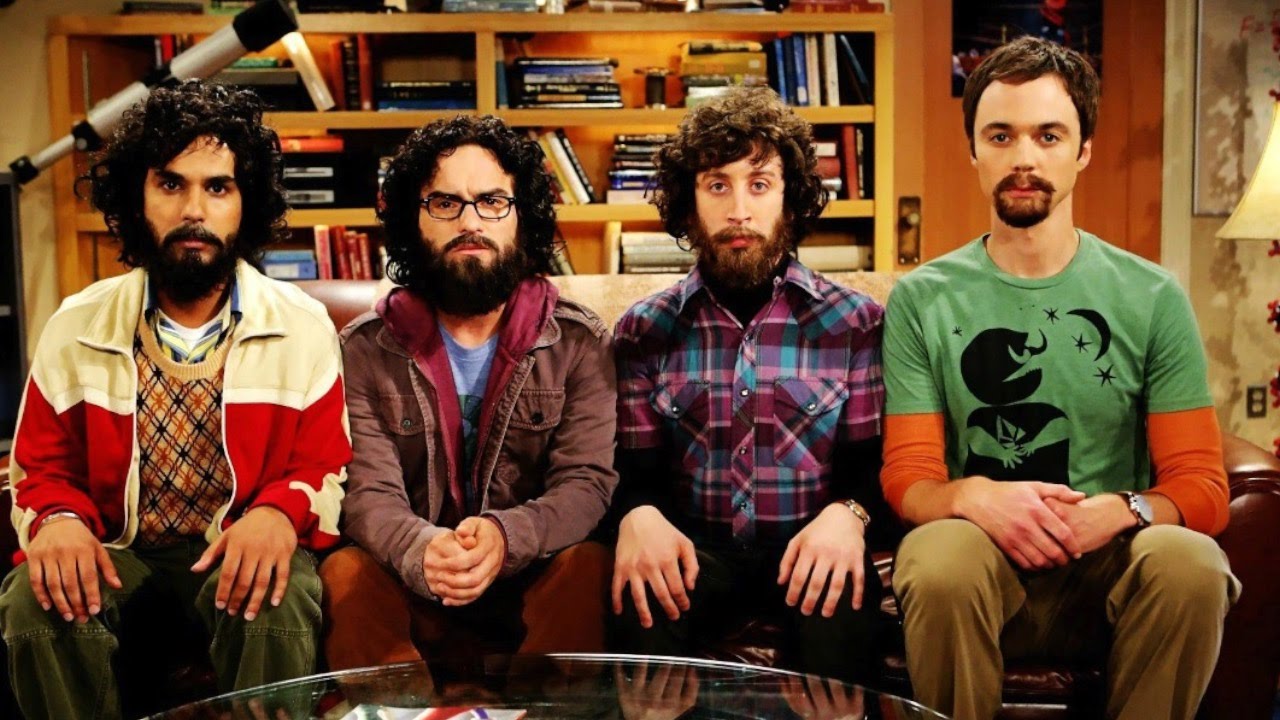
Now, I know I’ve criticized “The Big Bang Theory” before. I’ve cited it as the show that contains one of the worst romances in all of fiction. I don’t deny that it’s brand of humor and reliance on nerdy, socially inept men can be dry at times. That said, I do consider myself a fan of the show.

I watch it regularly. I even laugh at it. It has flaws, but I think the things it does well do plenty to overshadow those flaws. Sheldon is eccentric, but funny. Amy is quirky, but endearing. Howard, while creepy in the early seasons, has really grown up in all the right ways over the years. I would even go so far as to say that the show is worth watching just for Raj Koothrappali.

It’s not the best show on television, but like Nickelback and Hootie and the Blowfish, there’s no denying its success. It’s been syndicated and regularly ranks as one of the highest rated prime-time shows. Then, somewhere along the way, it became cool to hate the show as much as Nickelback.

You don’t have to look far to find articles of people whining about the show. Even Cracked, a site I often reference, once wrote a scathing article that flat out insulted anyone who dared enjoy the show. This is a direct quote.

Who are you people? The people watching The Big Bang Theory, I mean. Show yourselves. The world demands explanation. I mean that, too. In every way, shape, and form, this is the Justin Bieber of television shows.

I know the internet is full of this kind of trolling, but we’re not talking about snuff films and public crucifixion here. It’s a goddamn TV sitcom. It tries to be funny and entertaining. It doesn’t always work for everyone, but it still works for some. Are those people, which I guess includes me, somehow damaged just for liking this show?

I could probably ask the same of those who enjoy music from Nickelback and Hootie and the Blowfish. I could even offer a partial answer if I only use the basis of personal taste. That is, after all, what the consumption of all media is, be it music, movies, or TV. You tend to consume what you like. It’s that simple.

However, for an issue like this, there are added complications when something becomes cool to hate. Suddenly, it’s no longer a matter of just liking something different. It’s a matter of having some inherent personal flaw for liking something that has a vocal contingent of critics.

Call those critics whatever you want. Call them hipsters, trolls, or any number of other names that would warrant fines from the FCC. They’re still driven by the same focused outrage that dominates politics, religious disputes, and Overwatch tournaments. The only real question is why a show like “The Big Bang Theory” gets singled out.

It’s a hard question to answer and I’m not qualified to answer it completely. However, I do think something strange happens to movie, TV show, or band when they get so successful and so acclaimed that those who don’t like the show just can’t stop at not watching it.

It’s rare for any show to achieve the kind of success “The Big Bang Theory” has garnered. Success makes a show a bigger target. If shows like “South Park” or “The Simpsons” weren’t so successful, nobody would care how bad some of their jokes were or how controversial a certain character might be.

Some of that might be out of envy. There’s only so much success to go around. The fact “The Big Bang Theory” is so successful means, in the eyes of those who hate it, that it’s robbing success from shows that might be funnier or more worthy of it. Never mind the fact that the humor and worthiness of a show is completely subjective. Fans of that show will see “The Big Bang Theory” as a thief and a fraud.

Like it or not, envy can be a pretty powerful source of emotion. It’s underrated compared to outrage and hate, but still potent in its own right. However, I don’t think that’s the sole reason why “The Big Bang Theory” gets more hate than most prime-time shows that don’t involve CSI spin-offs.

I suspect there’s a deeper reason driving the hatred towards “The Big Bang Theory” that even Nickelback doesn’t have to deal with. I think part of that reason has to do with the archetypes the show uses. I don’t think it’s a coincidence that the combination of nerdy, socially awkward young men and a cute ditzy blonde conjures some heated emotional reactions, to say the least.

There’s no doubt that combination is contrived and relies heavily on old stereotypes. Then again, you could say that about a lot of other shows. The fact this one uses nerds and cute blondes, though, just makes it seem more overt. It makes every joke, every plot, and every gag seem cheap or forced.

It makes some of the resentment to the show understandable, but I think that resentment is even more compounded by trends in political correctness. Chief among those trends is a growing aversion to stereotypes. Characters and archetypes once considered inoffensive are now controversial. Jokes that were once just in poor taste are now the source of intense outrage.

Since its inception, “The Big Bang Theory” has relied a lot on stereotypes for its characters and its humor. Like all shows, it exaggerates certain personas. Sheldon Cooper, alone, is a testament to a character whose quirks are taken to a ridiculous extreme.

By relying on these stereotypes, though, it makes itself an even bigger target. Laughing at the show, in the eyes of some, means accepting some of these stereotypes and having the audacity to find them funny. That appears to be the undertone of the Cracked article I cited earlier. It seems to be the undertone of a lot of the hatred the show gets.

Now, I don’t deny that “The Big Bang Theory” can go overboard with cliches and stereotypes. There are a number of episodes in “The Big Bang Theory” that even I find bland. However, for the most part, I still laugh. I still find myself enjoying the story. Even when I can apply some of those stereotypes to myself, I still laugh.

At the end of the day, “The Big Bang Theory” is still just a TV show in the same way Nickelback is just a band. Nobody forces anyone to watch it. It’s easy to just change the channel and watch something else. However, when a show becomes so successful while relying on a premise that is getting more politically incorrect with each passing year, it’s bound to attract criticism and not just from the hipster crowd.

I still enjoy the show and I intend to keep watching it. I also intend to keep all the songs by Nickelback and Hootie and the Blowfish on my phone for the foreseeable future. If that makes me uncool in the eyes of some, then so be it. To me, it doesn’t matter if something is cool to hate. Petty hate is still petty hate.

I also expect to see plenty more hatred directed at the show for how it treats nerds, women, minorities, and humor. It’s just too successful and too big a target to avoid that kind of scrutiny. In that situation though, as with Nickelback and Hootie and the Blowfish, sometimes the best you can do is just laugh and enjoy it on your own terms. Bazinga!

2 Comments

Filed under human nature, media issues

Profiles In Noble Masculinity: Joel From “The Last Of Us”

cc579d19ebf45fbc7dc3d7a8e58527e5-e1508672973350

For the past few years, it has become a popular pasttime to label certain elements of popular culture as toxic or “problematic.” Take any character, song, plot, role, or trope from any brand of media. Apply an excessive amount of scrutiny, distorting it as much as necessary along the way. In the end, some people will find a way to make it offensive.

It’s through that process that shows like “Seinfeld” can be called racist. Movies like “Crocodile Dundee” can be called culturally insensitive. Movies like “Big” can be called creepy. Even classic video games like “Mario” and “Zelda” can be considered sexist. Scrutinize it enough and everything becomes racist, sexist, homophobic, transphobic, and culturally insensitive.

I find that whole process to be an exercise in trolling that does more to spark outrage than it does meaningful discussion. It’s the same process that created the idea of “toxic masculinity,” a concept I’ve gone out of my way to deconstruct on more than one occasion.

I don’t want to bemoan all the flaws and frustrations that occur when regressive attitudes mix with regressive agendas. There’s enough debate, discussion, and outright shouting going on in that field as it stands. Instead, I want to shift the tone of the conversation by going to the opposite end of the spectrum.

By that, I mean I’m going to do the opposite of highlighting something that some may find “problematic.” Instead, I’m going to cite something that I think is inherently positive from which we can learn. In fact, I’m going to try and coin a new phrase that’s more uplifting than some of the other buzzwords used by the regressive crowd.

I call it “noble masculinity.” It’s the idea that there are noble, admirable traits in male characters that are worth celebrating in the context of a larger story. Having talked so much about toxic masculinity and why I think it’s such a flawed concept, I feel it’s only fitting that I attempt to counter it with something more positive.

I know it’s popular to criticize and complain about male behaviors these days and, as a man, I don’t deny that we can do some foolish things. However, men are also capable of incredible acts of virtue. Those traits deserve more attention, if only to remind everyone that men can be more than outrage fodder.

There are a lot fictional male characters from movies, TV shows, video games, and comics that I could cite who embody positive masculine traits. Characters like Superman, John McClane, and even James Bond come to mind, although I’m sure there are some who would disagree with the last one.

However, in this initial exercise of exploring noble masculinity, I want to cite a lesser-known male character from popular, critically acclaimed video game that some have called the most riveting, emotionally resonant story-driven epic of the console generation. That game is called “The Last of Us” and the source of the noble masculinity comes from Joel, the grizzled, yet vulnerable male protagonist of the story.

For those who haven’t played “The Last of Us” or just don’t play video games in general, Joel may initially come off as a mix of old cowboy tropes and John McClane rip-offs. However, by following his story, he reveals a level of depth that includes instances of noble masculinity that men and women alike can appreciate.

Joel’s story is not built on prophecies, superhuman abilities, or dumb luck. As a character and a person, Joel is largely defined by a grit that’s uniquely masculine in many ways. At the beginning of the game, he’s not looking to become part of some larger struggle. He’s just a single dad, trying to make a living and provide for his daughter, Sarah. In world full of dim-witted father figures, it’s pretty refreshing.

Then, within the first 10 minutes of the game, Joel suffers the greatest loss any parent can endure. He tries to protect his daughter from first stages of a full-blown apocalypse, but ultimately fails. He ends up watching his daughter die in his arms. It’s a very emotional moment, one in which Joel’s pain is palpable.

That defining moment establishes Joel as a man who fights to protect those he loves, but is all too human and very much at the mercy of forces beyond his control. There’s only so much that he do when the world around him is falling apart. No amount of anger, lament, or sorrow can change that. He, as a man and a survivor of this apocalypse, has to find a way to cope.

While his coping skills aren’t perfect, as evidenced in many powerful scenes throughout the game, Joel’s grief helps drive him. It also lays the foundation for the emotional development he undergoes after he meets Ellie, his young female co-protagonist who becomes a critical part of the gameplay and the story.

I could probably write another article about Ellie and why she’s one of the most compelling female characters in modern video games, but in the context of noble masculinity, she’s very much a catalyst for Joel’s emotional journey. Her own story is remarkable, but her influence on Joel is where she really shines.

It’s not a case of a knight rescuing a princess or a female character trying too hard to be an equal to her male compatriots. In fact, Joel’s first impression of Ellie isn’t a good one. She comes off as an irritable brat with a bad attitude. Essentially, she’s the kind of immature teenager that guys like Joel go out of their way to avoid.

However, their stories soon become intertwined. They end up having to work together, rely on each other, and fight for one another in order to survive a post-apocalyptic world that has been destroyed by zombies, toxic fungus, and military-enforced curfews. Before long, they establish a bond that brings out the best and worst of both characters.

For Joel, the best is reflected in those same paternal instincts that caused him so much pain and sorrow at the beginning. He comes to see Ellie as a surrogate daughter, of sorts. At times, he resists that and even gets upset when the idea is thrown in his face. In the end, though, he doesn’t avoid it.

As a result, Joel’s story embodies more than the love a father has for his child. It also reveals how willing a man is to form a bond with a total stranger, who is not even that nice to him in the beginning, and tries to protect them with that same paternal dedication. It doesn’t happen all at once. He even resists it at times. He still embraces it and all the tribulations that come with it.

That, more than anything, is the most important element of noble masculinity that Joel embodies. He’s not Superman, nor does he pretend to be. He’s also very aware of his own shortcomings, saying at one point that he trusts others more than he trusts himself. Most men are reluctant to acknowledge such insecurity, let alone reveal it. Joel doesn’t hide from it. If anything, he channels it.

It’s something that resonates with Ellie too. Throughout the game, she has opportunities to cut ties with him and go along with someone who might be better-equipped to help her. However, she choses to stay with Joel. Just as he comes to see her as a daughter, she comes to see him as a father.

The fact that he and Ellie go through this journey in the midst of an ongoing apocalypse makes their bond that much more powerful. It also requires that Joel push himself harder and confront the limitations that kept him from saving his daughter. Being a father made for great sorrow in the past, but it also made him stronger and more determined in the future.

That’s not to say that Joel doesn’t have his low points. There are moments where Joel does not come off as noble. Some even argue that his decisions towards the end of the game undermines his nobility. I would argue that it actually reinforces it.

When the world is already in the middle of an apocalypse and people are willing to sacrifice innocence for what they think is the greater good, then that’s when traits of noble masculinity become most critical. That’s when a father’s willingness to protect his child should be at its strongest.

That dedication still comes at a price. With a sequel in “The Last Of Us Part II” already in the works, it’s likely that Joel will continue to pay a price for his choices, however noble they might be. The fact that he still makes those choices and is willing to accept the risks reflects the challenges and strength that come with masculine drive.

Joel is probably not the greatest example of noble masculinity in all of fiction, but I would argue that his is the most relatable. He’s not perfect, nor does he pretend to be. He doesn’t have any capabilities that are impossible for other men to achieve. He’s a man who was utterly destroyed when he lost his daughter, but didn’t run from the chance to be a father again and to a total stranger, no less.

Flaws and shortcomings aside, I still contend that the noble masculinity that Joel shows throughout “The Last of Us” are far greater than any of the “toxic” traits that others may cite. In playing the game, it’s hard not to empathize with him or his journey, especially if you’re a parent. In appreciating his strengths, though, it shows that there is room for a brand of masculinity that anyone of any gender can admire.

9 Comments

Filed under gender issues, human nature, sex in media, video games