Tag Archives: sexism

Why We Should Accept James Gunn’s Apology And Support His Re-Hiring

screen-shot-2018-07-05-at-1-31-06-pm

In the spirit of honesty and transparency, I’m going to admit something that should surprise no one.

I, Jack Fisher, have said horrible, offensive things in the past. For that, I sincerely apologize.

I’ll give everyone a moment to recoil in shock. Now, I’ll turn off the sarcasm and get serious because this is an issue I’ve already done plenty to belabor. People say offensive things. People write offensive things. I know I have, given some of the sensitive topics I’ve covered.

I’m certainly not alone. These days, it’s hard to go more than a day without reading something horribly offensive on social media. Not all of the offense warrants the same outrage, though. Some comments are just trolling. Some trigger reactions that lead to actual crimes. Not all offensive speech warrants immense outrage is what I’m saying.

That brings me to James Gunn, the man who made movies about a talking raccoon, a talking tree, and the goofy guy from “Parks and Recreation” that went onto make over $1.6 billion at the box office. His star really rose fast after the unexpected success of “Guardians of the Galaxy.” He’s credited with taking the Marvel Cinematic Universe to cosmic heights. He has accomplished a lot in the past four years.

Now, he’s been fired. He’ll have no part in “Guardians of the Galaxy 3.” The circumstances, context, and fallout from this huge turn of events is astonishing, but for all the wrong reasons.

The particulars here are striking. Mr. Gunn was not fired because he committed a serious crime or got embroiled in a disturbing scandal. He got fired because someone who didn’t agree with his political views dug up some old social media posts from 10 years ago that were lewd, offensive, and downright disgusting.

Not surprisingly, Mr. Gunn apologized for it immediately. He didn’t make excuses. He didn’t whine about fake news. He didn’t claim his account was hacked. He took ownership of the things he said and apologized.

Many people who have followed my career know when I started, I viewed myself as a provocateur, making movies and telling jokes that were outrageous and taboo. As I have discussed publicly many times, as I’ve developed as a person, so has my work and my humor.

It’s not to say I’m better, but I am very, very different than I was a few years ago; today I try to root my work in love and connection and less in anger. My days saying something just because it’s shocking and trying to get a reaction are over.

In the past, I have apologized for humor of mine that hurt people. I truly felt sorry and meant every word of my apologies.

For the record, when I made these shocking jokes, I wasn’t living them out. I know this is a weird statement to make, and seems obvious, but, still, here I am, saying it.

Anyway, that’s the completely honest truth: I used to make a lot of offensive jokes. I don’t anymore. I don’t blame my past self for this, but I like myself more and feel like a more full human being and creator today. Love you to you all.

It still wasn’t enough, though. He still got fired and there’s a very good chance that the career he worked so hard for has been damaged beyond repair. It’s all because of horrible things he said 10 years ago. That’s worth emphasizing because the person someone is now and the person they were 10 years ago can be very different.

People grow, develop, and change over the course of their lives. I certainly have. In that time, people will say and do things that they don’t realize will have major consequences 10 years down the line. We can’t even know what kind of person we’ll be a week from now, let alone 10 years.

We’re going to do and say dumb things. That’s just a part of being human. However, now that the internet and social media document these things, our worst moments and most ill-advised decisions are there for all to see. We can no longer trust people to just forget. In Mr. Gunn’s case, someone went out of their way to dig up these horrible comments and that continues a dangerous precedent.

That precedent was already set with Rosanne Barr and this effectively raises the stakes. Now, even when you don’t blame sleep medications and give a sincere apology, you can still lose everything you’ve worked for. All it takes is someone with enough free time, resources, and hatred to do it. For celebrities, these are dangerous and unforgiving times, indeed.

Now, I know it’s hard to feel sympathy for celebrities, who live in big mansions, get preferential treatment wherever they go, and never have to worry about their next mortgage payment. Mr. Gunn is probably going to be okay thanks to the millions he’s already made. At the same time, though, what does undermining his career accomplish?

It doesn’t undo the things he said. It doesn’t undo any of the offense people felt. If anything, it sends a message to aspiring celebrities that anything they say and do will be used against them in the future. Even if that makes some people more careful about what they say online, it doesn’t change the fact that people will say and do dumb things every now and then.

It’s a no-win situation. If you can’t make excuses or offer a sincere apology, then what is the recourse? What was Mr. Gunn’s alternative? Short of going back in time and punching himself in the throat, there was nothing he could’ve done. How is that fair? How is that even logical?

On some levels, I don’t blame Marvel Studios and Disney for cutting ties with Mr. Gunn. They’re a multi-billion dollar media conglomerate that is very sensitive to the value of their brand. They’re also a private entity and not a government so the first amendment does not necessarily apply to them. They can fire whoever they want for whatever reason they want.

Even so, there doesn’t appear to be much effort to accept Mr. Gunn’s apology. While some have expressed understanding, there isn’t much effort in terms of undoing the damage. It’s as though this is the new normal. This is what happens to anyone who dares to let their stupidity end up on the internet. There’s no forgiveness. There are no second chances, either. If you mess up once, you’re finished and your career is over.

Think about the larger implications of that situation. If that’s how we’re going to deal with people who say offensive things, then where’s the real incentive for people to learn from their mistakes? Why would anyone even try to apologize or show regret if the end result is the same?

That’s not to say the situation is hopeless. There is already a Change.org petition to urge Marvel and Disney to rehire Mr. Gunn. As of this writing, it has over 150,000 signatures. Whether that’s enough remains to be seen and the fact that something like that is necessary to accept someone’s apology is still saying a lot.
I already worry that the next time a well-known celebrity says or does something offensive, they won’t even bother with apologizing. Why would they if it’s just going to sink their career or require a petition to keep it going? What kind of excuses will they resort to and how much more damaging will they be?

Accepting apologies aren’t just good values to live by. They’re critical to helping people grow as human beings. I believe Mr. Gunn meant it when he apologized, but I worry that he and other celebrities like him will come to see it as an empty gesture that won’t save their careers.

There are plenty of cases where accepting someone’s apology just isn’t warranted, especially if they have a history of saying and doing terrible things. Mr. Gunn is not such a case. If ever there was a time to set a precedent for accepting someone’s sincere apology, this is it. Even if it’s too late for Mr. Gunn, it’s still a precedent worth setting.
Leave a comment

Filed under Celebrities and Celebrity Culture, censorship, Current Events, human nature, media issues, psychology, superhero movies

Why Henry Cavill Shouldn’t Apologize For His Comments On The Anti-Harassment Movement (But Still Had To)

gettyimages-873854634-1200x800

What does it say about the state of a society when people have to apologize for voicing honest, legitimate concerns? Pragmatically speaking, it implies that the value of truth and just has been subsumed by other influences. Whether it’s politics or ideology, it’s not hard for society to get to a point where unreasonable forces subvert reasonable issues.

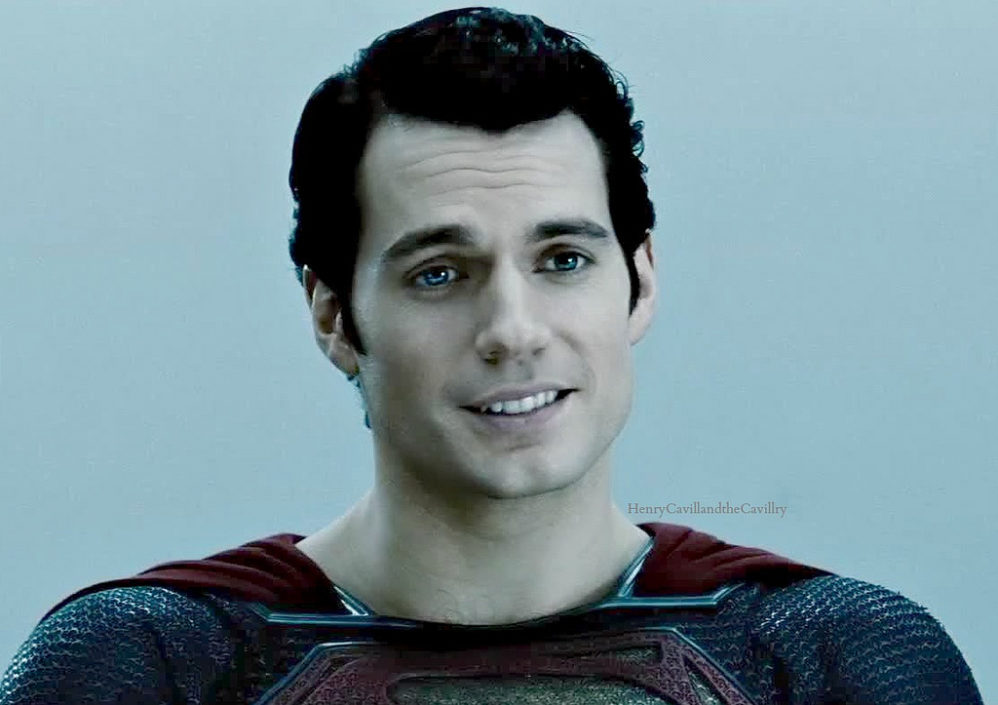
In that sense, it’s ironic that the latest person to experience those influences once played Superman, the personification of truth, justice, and the American way. Henry Cavill, whose star has risen significantly since he broke out in “Man of Steel,” got into some hot water recently after an interview with GQ.

In that interview, he essentially made the same mistake Matt Damon made when he tried to comment on the anti-harassment movement. He said something that was reasonable, honest, and understandable from a purely logistical standpoint. He’s worried that something as simile as flirting with a woman could somehow be construed as harassment, which could lead to a full-blown scandal.

For reference, these were his exact words from the interview and the ones that subsequently led him down the same path as Matt Damon.

It’s very difficult to do that if there are certain rules in place. Because then it’s like: ‘Well, I don’t want to go up and talk to her, because I’m going to be called a rapist or something’. So you’re like, ‘Forget it, I’m going to call an ex-girlfriend instead, and then just go back to a relationship, which never really worked’. But it’s way safer than casting myself into the fires of hell, because I’m someone in the public eye, and if I go and flirt with someone, then who knows what’s going to happen?

Now? Now you really can’t pursue someone further than, ‘No’. It’s like, ‘OK, cool’. But then there’s the, ‘Oh why’d you give up?’ And it’s like, ‘Well, because I didn’t want to go to jail?’

Think about what he’s saying here and take a step back to see how he got to that point. He’s talking about being called a rapist just for going up to a woman and talking to her. How is that reasonable? It’s not. It sounds paranoid, but it’s perfectly understandable in the current social climate.

It’s easy to picture a scenario where someone like Cavill walks up to a woman, starts flirting, and ends up saying something inappropriate. That’s not just something men do. Women do that too. Being vulgar knows no gender. However, if the woman in this scenario takes particular offense, it could be construed as harassment or even assault.

If a woman was especially vindictive or just prone to exaggeration, she could accuse him of assaulting her. Even if those accusations aren’t even close to warranting an actual crime, it would still be devastating. The accusation alone would be enough to derail a promising career.

You don’t have to look far for evidence of this. Aziz Ansari was not charged with any crimes for the infamous incident that came out earlier this year and even if he had been, there’s no way he would’ve been convicted. An incident built entirely around a he said/she-said situation doesn’t come close to meeting the burden of proof for a criminal conviction.

That doesn’t matter, though. Ansari’s career has already taken a major down turn. His hit show, “Masters of None,” has not been renewed by Netflix since the allegations came out. Men like Henry Cavill, whose careers are ascending, certainly take notice of that. They don’t even have to commit a crime and suddenly, everything they worked for is in ashes.

For powerful men in Hollywood, it’s a reasonable concern, but one they probably won’t get much sympathy for expressing. Men like Henry Cavill are rich, successful, and handsome enough to comfortably wear Superman’s skin-tight costume. He’s a man who can attract women just by breathing. However, that may end up making him even more vulnerable.

Most people aren’t going to be inclined to make a big deal about someone who flirts inappropriately. When that person is a celebrity, though, the incentives are much stronger. You need only have an overreaction or a burning desire for attention to twist it into something much worse.

It’s for that reason that Cavill shouldn’t have apologized for his comments. His concerns are legitimate and after all the work he’s put in, he’s right to worry about the forces that might destroy it. That still didn’t matter. His comments still triggered a major backlash on social media. He also had to apologize for it. These were his exact words.

“Having seen the reaction to an article in particular about my feelings on dating and the #metoo movement, I just wanted to apologize for any confusion and misunderstanding that this may have created. Insensitivity was absolutely not my intention. In light of this I would just like to clarify and confirm to all that I have always and will continue to hold women in the highest of regard, no matter the type of relationship whether it be friendship, professional, or a significant other. Never would I intend to disrespect in any way, shape or form. This experience has taught me a valuable lesson as to the context and the nuance of editorial liberties. I look forward to clarifying my position in the future towards a subject that it so vitally important and in which I wholeheartedly support.”

Notice that there’s nothing in that apology that expands on his concerns. Cavill doesn’t attempt to re-frame his point or address some of the complaints levied against him. He just throws his hands up and apologizes about everything, as though every word he said was factually wrong.

Now, to be fair to Cavill, it’s very likely that the statement he gave was written by a publicist or agent. Chances are he was pressured to read that as quickly as possible in order to prevent him from getting labeled a misogynist or someone who did not wholly support the anti-harassment movement. Even if he didn’t feel inclined to apologize, he still had to do it in order to preserve his career and reputation.

Regardless of his reasons for doing so, he still apologized for telling the honest truth. The backlash he received didn’t even argue that truth. Most of it amounted to scoffing at the concerns of a rich, handsome celebrity who is undeserving of any sympathy. One commenter even went so far as to call him a wannabe victim.

Such criticism is every bit as absurd as the kind Matt Damon got when he dared to point out that there’s a difference between patting a woman on the butt and full-blown rape. They also fail to acknowledge that it’s entirely possible for a woman to be vindictive enough to falsely accuse someone of a heinous crime for the sole purpose of ruining their career, despite documented cases that this has happened.

It’s one thing to expose the serious crimes of predators like Bill Cosby and Harvey Weinstein. Those cases did have evidence and are being processed through appropriate legal means. The behaviors Henry Cavill described don’t even come close to that kind of conduct.

The fact that Cavill had to apologize sets a dangerous precedent for the anti-harassment movement. History has shown that any movement that throws off honest truth and basic justice is built on a poor foundation. In time, that foundation eventually crumbles and the merits of the movement get lost.

There are plenty of behaviors among celebrities and non-celebrities that warrant outrage. What Henry Cavill said wasn’t one of them. The fact he still had to apologize for his words does not bode well for anyone concerned with the values that heroes like Superman embody.

10 Comments

Filed under Celebrities and Celebrity Culture, Current Events, gender issues, media issues, political correctness, sex in media, sex in society, sexuality

How Atheism May Improve Your Sex Life

Relationship with passionate affection

When it comes to improving your sex life, there’s no one way to go about it that works for everyone. Human sexuality is complex, diverse, and exceedingly kinky. What works for one person won’t work for another and may even be detrimental in some cases.

Conversely, there are also variety of ways to undermine or ruin your sex life. That same sexual diversity that helps the human race find novel ways to get intimate with one another can also backfire horribly. Some are minor, in terms of effect, but other forces can have a much greater impact.

That brings me to religion, a topic that tends to inspire the best and worst in people. Like sex, it’s a complex phenomenon that impacts everybody differently. It can inspire great charity and compassion in some. It can just as easily incur greed, exploitation, and outright atrocity.

For those reasons, and plenty more that are too numerous to list, any effort that involves mixing sex with religion is akin to mixing napalm with TNT. I’ve made an effort to discuss both topics in a fair, balanced manner in the past. I feel as though I can only go so far before I totally inflame certain audiences.

I’m still going to try to push the conversation a bit farther. That means taking a few risks and since religion is still such a prominent force in the world, it’s effect on our collective sex lives is unavoidable.

For this particular discussion, want to focus on what happens when religion is removed from the equation. If religion is really that powerful an influence on our lives, and both history and current politics indicate that influence is not entirely trivial, then it stands to reason that the impact of its absence can reveal something about the extent of that influence.

That’s not to say that this is going to be a glowing endorsement of atheism. I prefer to let the data, the logic, and the implications speak for themselves. Since religion is on decline in many parts of the western world, I think exploring the potential impact is critical and even a little urgent.

Information on the sex lives of atheists compared to those who consider themselves religious is somewhat difficult to come by. The act of assessing and measuring someone’s sex lives, as well as the extent of their religiosity, is extremely difficult without the aid of lie detectors or mind-readers. The information we do have, though, does offer some intriguing insights.

Back in 2011, a survey entitled “Sex and Secularism” surveyed approximately 14,500 people revealed that those who identified as religious had less satisfying sex lives than their non-religious counterparts. On top of that, those same religious participants reported a high level of guilt that came along with their sex lives. Given how some religions build their theology around guilt, that shouldn’t be too surprising.

Conversely, those identifying as non-religious didn’t just report better sex lives. They had better sexual education and were more open to discussing sex in general. Everything from personal fantasies to simple tastes was fair game and less affected by guilt. That openness, along with considerably less stigma, was conducive to a more fulfilling sex life.

That effect was more pronounced by those who had once been religious, but had since become atheist. Between the absence of religiously-motivated guilt and the sexual taboos that are often theologically driven, the cumulative effect is pretty striking. This notable quote from the researchers summed it up nicely.

“People who had lost their belief and became atheists reported a significant improvement in sexual satisfaction,” the paper went on to say. Apparently the guilty feelings that religion creates around sex dissipate after a while.

Now, I can already hear the outrage sincerely devout religious crowd on the conclusions of this study. More than a few people who consider themselves religious will claim that their sex lives are superior and they may even have a case to make. Many religions offer a simple, one-size-fits-all approach to sex that is uncomplicated, straightforward, and safer. The fact that it’s also ordained by a divine power is also a factor.

I don’t deny that there are plenty of religious couples out there who have satisfying sex lives. There are probably plenty of atheists out there who have terrible sex lives, as well. However, in order to draw larger conclusions about the impact of religion on sex, we can’t just go by a few anecdotal experiences. We have to step back and see the forest from the trees.

From a psychological and physiological perspective, it makes sense that guilt, religiously-motivated or not, would undermine anyone’s sex life. Guilt has measurable effects on people. It makes it harder to focus. It keeps us from enjoying things. It’s a powerful distraction that makes us feel stress and anxiety. All of these forces can do plenty to undermine your sex life.

In my musings on taboos, I often cite religion as a driving force behind them. Organized religion has made no secret of its intent to regulate, control, or outright exploit human sexuality. There’s plenty of theology, especially among the Abrahamic religions, that imparts divinely-mandated guilt on sex.

In these religious cultures, sex isn’t just some basic biological act that people do for intimacy, procreation, and recreation. It’s subject to all sorts of holy and unholy connotations. The deities involved in these religions aren’t just interested in the kind of sex you’re having. They’ll actually punish you if you do it the wrong way.

That does more than just impart extra guilt for doing anything that strays from what priests, mullahs, monks, and rabbis deem appropriate. It also instills a very rigid family structure, one centered around a specific manifestation of sex that has very little room for fun, kink, and exploration.

That manifestation involves strict gender roles where men do the hard labor and women do the child rearing. The only sex that is sanctioned is the one that involves producing babies who subsequently grow up to be adherents/soldiers/patrons of a particular religion. The fact that type of sexual expression indirectly benefits religious institutions is probably just a coincidence.

The act of enjoying sex for non-procreative purposes would constitute a distraction. A distraction is dangerous in any religion because if people become too distracted, then they pay less attention to the religious institutions and the duties they espouse. As such, it’s in the interest of any successful religion to maintain a strict control over someone’s sex life.

That kind of control is naturally prone to stress. Given how the biological wiring of human sexuality is not conducive to that kind of narrow expression, there’s bound to be temptation. The best way to combat temptation is through stigma and taboo. By hijacking powerful feelings like guilt, it’s possible heavily influence peoples’ sex lives, even if it’s impossible to control them.

It’s akin to putting lead weights on somebody’s limbs and convincing them that the weight is normal. Even if they come to accept that, the weight still skews perceptions and that can only do so much in terms of circumventing basic biology. It also means that when those weights come off, the effect is pretty striking.

Suddenly, the stigma that once kept someone from seeking the sex they desired are gone. The burdens associated with thoughts and feelings that religious institutions deem unholy are lifted. Like any form of stress relief, it can be pretty liberating.

That doesn’t necessarily mean the 2011 survey is conclusive. It has been criticized for being unscientific in some aspects. Some of those criticisms are valid and the researchers concede that, but to the extent the data is consistent with what we understand about how religion can affect our sexuality, it passes some critical filters.

Our sex lives are complicated. Religion, in its many forms, is complicated as well. Regardless of how you feel about one or the other, mixing them is almost certain to compound both. Atheism, like not playing a sport or not having a hobby, simply removes one of those complications.

It’s not a universal fix. It doesn’t subvert other potential issues that may undermine someone’s sex life. There’s plenty more research to be done and religion is still evolving with each passing year, but when it comes to removing divinely-imposed, theologically-driven guilt, atheism stimulates the necessary aspects that make for a satisfying sex life.

1 Comment

Filed under gender issues, human nature, Marriage and Relationships, philosophy, psychology, religion, romance, sex in society, sexuality

Why Linking Human Trafficking And Prostitution Hurts Efforts To Deal With Both

5812c0292f23a-image

As a quick thought experiment, take a moment to picture the appearance and circumstances of a typical plumber. Chances are you’re imagining a big-bellied, greasy-haired, middle-aged man who prides himself on wearing old jeans that expose his butt crack. As stereotypes come, it’s fairly crude, but harmless for the most part.

Now, take a moment to picture a typical victim of human trafficking. Chances are the images you conjure are a lot more distressing. Depending on how much you’ve read into the issue, you can picture a scared young woman from a foreign country huddled in a corner, traumatized and broken after being exploited by her ruthless captors.

Chances are, those ruthless captors conjure some nasty images as well. You imagine they’re sadistic, deviant men who smile at the sight of a scared young woman, having to sell herself sexually in order to pay off a debt that she didn’t even ask for. Such men are the closest thing we have to real-world super-villains.

In terms of terrible crimes, human trafficking ranks near the top in terms of things that offend every sense of decency, humanity, and justice. It’s one of those crimes that’s so horrific that it’s almost impossible to scrutinize without a sense of outrage clouding our judgment. Any effort to do so is usually overshadowed by the horrors of the crime itself.

Despite those obstacles, it’s still an issue worth discussing. If anything, the fact that human trafficking is such an egregious crime makes it that much more relevant. When there’s something that’s so objectively evil, people tend to line up in droves to play the role of a hero. It’s not quite like virtue signaling because this is an actual crime with actual victims.

However, and this is where I’m sure I’ll lose some people, the assumptions surrounding human trafficking and the efforts to combat it aren’t as clear cut. That image of a typical human trafficking victim that I described earlier is, like the plumber, a popular perception that doesn’t quite reflect reality.

Now, none of that is to say that human trafficking isn’t a terrible crime and a serious problem. I want to make that abundantly clear before moving forward. The point I want to make here has more to do with our attitudes towards this crime, its association with prostitution, and how it reflects certain gender dynamics.

For better or for worse, human trafficking is linked to prostitution. It’s major component of the popular perceptions surrounding the crime. As such, a great deal of opposition to the legalization of prostitution comes from the idea that it will increase human trafficking. The veracity of that claim does have some data behind it, but even the most comprehensive studies concede that the link is inconclusive at best.

It’s that link though, however true it might be, that gives human trafficking its insidious reputation. It’s why it is often cited by feminists, human rights advocates, and moral crusaders as an issue worthy of outrage. Battling human trafficking means battling exploitation, sexual promiscuity, and exploited women all at once. That appeals to a lot of people, but it also obscures the true nature of the crime.

That nature is not entirely dependent on sex or prostitution. According to the International Labor Organization (ILO), approximately 22 percent of estimated 20.9 million human trafficking victims are exploited for forced sexual labor. That’s still way too many people being exploited, but what about that other 78 percent?

That portion of human trafficking victims are primarily forced into labor of a non-sexual nature. That labor includes work in sectors such as agriculture, construction, domestic work, and manufacturing. That kind of exploitation affects victims of any gender, as well. While women make up about 55 percent of the victims, that still leaves 45 men and young boys, who can also be sexually exploited as well.

The hard data alone undermines the popular perceptions surrounding human trafficking, but it gets even more complicated than that. Since human trafficking is a criminal enterprise that’s exceedingly difficult to prosecute, it’s hard to get accurate data on the scope and scale of the issue.

Back in 2001, a terrifying report from the University of Pennsylvania made headlines by claiming that approximately 300,000 children, mostly young girls, were being sexually exploited. Understandably, this caused a lot of outrage and horror among politicians and activists.

That claim was not accurate, by the way. The report, which was based on outdated data from the 1990s, only covered children “at risk” of being sexually exploited. It didn’t refer to actual victims. That data is harder to come by, but most figures are nowhere near that egregious number. In addition, the methodology for gathering such data is both incomplete in some areas and flawed in others.

Even with those flaws, though, the perceptions surrounding human trafficking and the mental images it conjures are more than sufficient for people with agendas to garner support. Unfortunately, it’s not the forced labor or the 45 percent of victims who are male that get the attention. It’s the women and the sex that gets the emphasis.

As a result, policies and legislation intended to combat this issue tend to focus primarily on that component. Earlier this year, a couple of major laws were passed with the stated intent of combating human trafficking. However, the primary impact is being felt by sex workers, as a whole.

These laws explicitly mentioned sex trafficking. It said nothing about forced labor, which makes up the bulk of human trafficking victims if the data from the ILO is accurate. That’s akin to passing a bill that punishes the maker of ski masks rather than focusing on those who actually use them to commit crimes.

That’s not to say efforts to combat the sexual exploitation of young women aren’t justified. However, why does that particular variation of a crime warrant more laws and resources than another? Why is sexual exploitation the main focus and not the forced labor that is more likely to impact men and boys?

It says something about both our priorities and our attitudes when the exploited sexuality of women is given a greater priority than the enslavement of men. It sends the message that the pain of a sexually exploited woman is somehow greater than that of an exploited man. Pain is still pain, last I checked. When you prioritize one, you undermine the other, by default.

Moreover, those noble efforts to combat human trafficking may end up making the situation worse by coupling it with anti-prostitution efforts. Like the war on drugs, making prostitution illegal does nothing to mitigate the demand for prostitution, nor does it make things easier for those who are prostitutes. It just puts the industry in the hands of criminals.

In recent years, it has become popular in some countries to pass laws that prohibit the buying of sex, but not the selling of sex. It’s an approach that still criminalizes part of an act and, according to a 2012 report by the Center for Human Rights and Humanitarian Law, it has not achieved the desired effect of reducing prostitution or human trafficking.

It’s because of these shortcomings in combating both prostitution and human trafficking that organizations like Amnesty International now favor the full decriminalization of prostitution and stricter laws against forced labor. To date, no country has attempted to enact such a policy.

That’s not to say that Amnesty International’s measure will eliminate all instances of human trafficking or forced prostitution. Like any imperfect society, there will be cases of injustice and exploitation. However, that’s exactly why it’s so important to have reasonable policies that emphasize the full spectrum of an issue.

Human trafficking is a terrible crime. Forced labor, be it sexual or otherwise, is just as terrible. There’s no denying that, regardless of how uncertain we may be of its prevalence. By focusing only on its links to prostitution, though, we don’t just undermine the full scope of the crime. We do a disservice to all victims, regardless of gender.

6 Comments

Filed under gender issues, political correctness, prostitution, sex in society, sexuality

What Radical Feminists and Incel Men Have In Common

bandw-man-and-woman-arguing

Since I’ve been browsing the internet, I’ve tried to keep up with its assorted jargon, slang, and euphemisms. Given the rapid pace of technology and the uneven pace at which society adapts, it can be pretty daunting. There are times I feel like I have fallen behind. I still remember feeling foolish when I asked someone what a hashtag was.

While I make an effort to keep up, there are certain parts of net-based sub-culture that I prefer to avoid. I’m not just talking about Twilight message boards. I’m talking about the kind of domains on the internet where people who have genuine, in-need-of-help problems congregate to whine, complain, and otherwise compound their problems.

One such sub-culture that I’ve avoided talking about on this site or in general is that of the so-called incel community. For those of you who haven’t heard of it, and I envy those who had avoided it thus far, incel stands for “involuntary celibate.” In essence, they identify themselves as men who would like to have sex, but cannot because women and society at large has prevented this. It’s as crass as it sounds, but it gets much worse.

I would’ve been content to never even mention the incel community on this site. Then, a self-identified incel carried out a deadly attack in Toronto that killed 10 people and suddenly incels weren’t just in the news. They were a genuine danger. Since I try to discuss relevant topics on this site, be they sex robots or superhero movies, I’m going to grit my teeth and talk about this frustrating phenomenon.

It’s not just frustrating because it gives men, masculinity, and people with poor social skills a bad name. It’s frustrating because it’s so inherently pathetic and juvenile. Moreover, it’s something that has an ironic, but fitting parallel with radical feminism.

Yes, I know that sounds counter-intuitive. I also imagine there are some self-identified feminists out there who want to punch me through their computer screen. To those individuals, I ask that you restrain yourself for just a moment so I can explain.

Before I go any further, I want to make one thing clear. I do not associate radical feminism with more mainstream brands of feminism that, for the most part, are fairly reasonable in their rhetoric and sincere in their efforts. I also want to make clear that I do not associate the incel community with men’s rights activists, who are every bit as reasonable and sincere.

The incel community and radical feminists are extremists, plain and simple. They don’t even try to be reasonable. Like the extremists of a religion or political ideology, they cannot and will not be dissuaded. Their attitudes and conduct are built on a foundation of unceasing, uncompromising outrage.

This is where, ironically and fittingly, both incels and radical feminists intersect. They are, to a large extent, defined by their outrage. They despise a world that they feel has deprived them of something they deserve. They carry themselves as perpetual victims, trapped in a society that actively plots against them to keep them miserable.

You don’t have to look too far to see the similarities here. The incel community doesn’t even try to hide its blatant misogyny, just as radical feminists don’t even try to hide their overt man-hating. The targets of their hate are different, but the intent behind it is the same.

The hatred is a catalyst and a rallying point for those inclined to embrace more extreme forms of ideology. That hatred simplifies complex issues, allows them generalize large swaths of people, and believe without question that there’s a cabal of evil bullies actively plotting against them. They are basically the Alex Jones of gender conflicts.

It’s for that reason that few take them seriously, even within feminist and men’s rights communities. Even when a radical feminist claims all heterosexual sex is rape or an incel man claims that all women are sluts, they’re either ignored or written off as trolls. However, in wake of recent events, that’s getting somewhat harder.

Between the attacks in Toronto and the growing spread of outrage culture, both radical feminism and the incel community have many ways of making their voices louder and spreading their hatred. Like any extreme within an ideology, they will complicate or outright corrupt reasonable debate on reasonable issues involving gender.

I believe those issues should be discussed and I’ve tried to approach them on this site in as balanced a way I can, at least to the extent I can as a man and an aspiring erotica/romance writer. However, in the same way creationism obscures science, radical gender ideology obscures real gender issues.

It even goes beyond derailing otherwise important debates about relevant issues. In the one area where both incel men and radical feminists are most alike goes back to their attitudes. Beyond the hate and trolling, there’s one other trait that binds them. They embrace and cling to the idea of perpetual victim-hood.

Incel men believe they are victims of greedy, selfish women who refuse to give them the sex and intimacy they want. Radical Feminsts believe they are victims of a greedy, oppressive patriarchy that only exists to bully them and hold them back. In that context, they are always victims. They never have to claim a shred of responsibility. They can just blame their perceived oppressors.

That’s not just insulting to real victims. It’s flat out lazy. Incel men and radical feminists carry themselves as though other people must go out of their way to give them something, be it sex, justice, or reparations of some sort. They, themselves, don’t have to do anything. They just whine, complain, and shame others to get what they want.

I would call that approach childish, but that would be insulting to children. The absurdity of that mentality is impossible to overstate. However, and I think reasonable feminists and men’s right activists would agree, there are a few basic truths that we all must accept, regardless of our gender.

The universe is not fair.

Some people are born with more advantages than others.

Nobody owes you anything, be it sex or preferential treatment.

Respect, achievement, and merit must be earned and not given.

These are the simple, inescapable facts of life. We learn them at some point in our lives. Some take longer than others, though. What makes incels and radical feminists so similar, and so unworthy of respect, is how they utterly refuse to learn those lessons. As a result, they’re just setting themselves up for more frustration.

6 Comments

Filed under gender issues, human nature, political correctness, sex in society, sexuality

The Mixed (And Misguided) Messages Of All-Female Movie Remakes

1436573990_ghostbusters-zoom

There are some topics that I really want to comment on, but the rhetoric surrounding it are so hostile and so controversial that I feel like any comment I make will put way too big a target on my back. Keep in mind, this is coming from someone who has talked about issues like abortionreligious extremism, and Wonder Woman’s BDSM origins.

In general, if I want to contribute to the conversation, I try to wait until the heat dies down and the Twitter bans subside. Sometimes, that takes a long time, so much so that I’m tempted to just drop the issue altogether. For this one, though, I think there’s no use waiting because it’s a trend now and the controversies associated with it are here to stay.

It seems so long ago now, but when I first heard that there would be a new “Ghostbusters” movie with an all-female cast, I was genuinely intrigued. I was not among those who thought this was the worst idea ever and that this was somehow ruining my childhood, as some upset fans had claimed.

Maybe it’s because I’m not as big a Ghostbusters fan as I am an X-men fan, but I didn’t mind the novel/gimmicky approach that director Paul Feig attempted. The long-rumored Ghostbusters 3 wasn’t happening. The original cast couldn’t get it off the ground and Bill “Peter Venkman” Murray had made clear that he had no interest in reprising his role. Why not try something different to reinvigorate the franchise?

It could’ve been a bold new approach to Ghostbusters. A fresh take, a new cast, and an infusion of female-centered star power could’ve really kick-started a whole new trend, one that both elevated long-dormant franchises and expanded the role of female characters, a trend that had already begun.

Then, the trailer came out and those possibilities became much more remote. While I, personally, didn’t despise it, I was considerably less intrigued. The fact that the trailer went onto become the most disliked trailer in the history of YouTube speaks volumes for how poorly this otherwise-novel concept came off.

I had originally intended to see the movie when it came out. Then, as new clips came out and I got a sense of how the story would unfold, I decided not to. When it finally came out on cable, I tried watching it. I ended up changing the channel. It’s not that I hated the movie. It just had none of the appeal I’d hoped.

I know that’s somewhat petty considering the many controversies the movie generated, complete with sexism, racism, and everything else that sets the internet ablaze these days. As soon as professional trolls like Milo Yiannopoulos got involved, I saw that as a sign that this was one of those controversies that would transcend movies for all the wrong reasons.

I don’t know if enough time has passed for the animosity to settle, but in reflecting on the controversies of “Ghostbusters,” I feel the time is right to confront it. Regardless of whether it succeeded or failed, it effectively kick-started the idea of all-female remakes. That’s an idea that I think still has merit, but the approach and overall message of “Ghostbusters” make clear that the Hollywood still hasn’t figured it out.

In a sense, the problem with “Ghostbusters” is similar to the ongoing problems with strong female characters in general. From the parts I saw, the approach to that movie was shallow and crass in that it painted nearly every male supporting character a bumbling idiot in need of female guidance. This was especially true of Kevin, the dim-witted secretary played by Chris Hemsworth.

I get that some of that approach was an effort to inject the kind of humor that made the original Ghostbusters so funny and memorable, but it really fell flat, almost to an insulting degree. It reinforced the notion men somehow need to be denigrated or taken down a peg for female characters to be strong.

While it didn’t offend me, personally, it certainly undermined the story. A world full of idiot men isn’t that bad. That’s a huge part of the appeal for shows like “The Simpsons” and “Family Guy.” However, that kind of appeal doesn’t fit with that of Ghostbusters.

Beyond just making all the men seem like idiots, the way in which the all-female cast brought little nuance to their roles. They were just four women pasted into four roles previously played by men. That’s it. They brought nothing new to the table. I say that as someone who really likes Melissa McCarthy and Leslie Jones, but I know they’re capable of far more than they gave in this movie.

If the intent was to show that women could work these roles just as well as men, then that’s the wrong goal, especially for a franchise as beloved as Ghostbusters. That effort denigrates both men and women because it doesn’t send the message that they’re equals. It sends the message that they’re interchangeable, disposable, and not the least bit unique.

The original cast of Ghostbusters had unique, quirky personalities that were memorable and iconic. The all-female cast had some of that, especially Leslie Jones’ character, but not nearly enough. Too much of it was built around the persona these actresses had already established in other roles. They really didn’t do anything to set themselves apart other than fill a role once held by a man.

That can’t be the only thing an all-female cast brings to the table. Just being women cannot and should not be enough to carry a story or revitalize a franchise. It’s true that men and women have various character archetypes, some of which are more distinct than others, but there has to be room for innovation.

Great female characters like Buffy the Vampire Slayer, Rey from “Star Wars,” or Sarah Conner from “The Terminator,” do a lot more than just do things men usually do while being women. They’re allowed to exercise their feminine traits every now and then. The all-female cast of Ghostbusters never got that chance. They tried too hard to be like the originals and it just didn’t work.

I won’t say that “Ghostbusters” utterly ruined the concept of remaking movies with an all-female casts. The movie wasn’t that bad. It just didn’t do nearly enough to make it really good. It didn’t kill a genre like “Batman and Robin” almost did with superhero movies. It does count as a setback, though.

It’s one I hope Hollywood learns from because, at the moment, there are similar movies in development. The latest, which I admit I’m also intrigued by, is “Ocean’s 8.” Unlike “Ghostbusters,” it’s not a complete remake and it doesn’t try to replace the entire cast of “Ocean’s Eleven.” It’s following a similar narrative, but using an all-female cast to tell the story.

While this franchise isn’t as iconic as “Ghostbusters,” it’s still bound to cause plenty of controversy and heated debates on sexism. However, based on the trailer, I’m intrigued once more. I know that burned me last time, but I’m still willing to give it a chance.

I still believe that all-female casts, even for non-remakes of major movie franchises, have great potential. Women do make up half the population, last I checked. They have plenty of stories to tell. If “Ocean’s 8” can succeed where “Ghostbusters” failed, then that can revitalize the concept. As Hollywood has shown before, it only needs to work once to start a trend.

I believe the concept will succeed once these movies stop trying to troll certain audiences and focus on building new perspectives within a story. The perspective of women is supposed to complement that of men, not subvert it. If a movie can succeed in that, then it can truly appeal to everyone.

4 Comments

Filed under gender issues, Movie Reviews, sex in media, sexuality

Remembering Martin Luther King Jr. And The TRUE Meaning Of Equality

Usually on a holiday, be it a major one that kids celebrate because it means no school or a more contrived one meant to sell greeting cards, I go out of my way to acknowledge it on this blog. I even try to channel the spirit of the holiday, if only to make the day feel like more than just something people mark on a calendar.

With today being Martin Luther King Jr. Day, though, I feel compelled to do more than just acknowledge it or the spirit behind it. In fact, I feel as though the spirit of this holiday is more critical now in 2018 than it has been in year’s past. When I look at the world today and all the ongoing conflicts unfolding before my eyes, I believe that the message and spirit of Dr. King is more relevant than ever.

Most people know who Martin Luther King Jr. is and why he’s such a prominent figure in modern history. He has a holiday named after him for a very good reason. He was both a leader and an icon of a very volatile time in American history. He was also a strong man of faith, one who actually took the non-violent teachings of Jesus Christ to heart. That’s an increasingly radical concept these days.

What Dr. King accomplished was remarkable, especially in the face of so much heated opposition. However, it’s how he accomplished it that really sets him apart and makes him worthy of celebrating. Like I said before, he believed in non-violence and he took them very seriously.

According to the King Center, Martin Luther King Jr. had a very specific way of utilizing non-violence to achieve the goals he sought. In his book, “Stride Towards Freedom,” he organized them into six principles.

  • Principle #1: Nonviolence is a way of life for courageous people.
  • Principle #2: Nonviolence seeks to win friendship and understanding.
  • Principle #3: Nonviolence seeks to defeat injustice not people.
  • Principle #4: Nonviolence holds that suffering can educate and transform.
  • Principle #5: Nonviolence chooses love instead of hate.
  • Principle #6: Nonviolence believes that the universe is on the side of justice.

Take a moment, if you can, to appreciate the sheer heart and idealism espoused in these principles. Remember, Dr. King fought against some of the most extreme racism anyone can imagine. Take the most offensive, vile messages you’ve seen on social media or 4chan. Then, create a society around them and give it political power. That’s what Dr. King was up against.

However, he didn’t seek to defeat that racism through the kind of outrage, protests, and meme wars that seem to dominate the overall rhetoric today. He took these principles of non-violence and employed them. He did this, despite often being threatened with violence.

He still stuck to those principles, though. He believed that his message would transcend the violence. The fact that he now has a holiday named after him and is one of the most celebrated figures in modern history proves that his beliefs were vindicated.

What stood out with these principles and how Dr. King practiced them literally showed the power of these beliefs. Rather than pick fights with racists, he sought understanding. Rather than voice outrage, he chose to voice love. This is readily apparent in his famous “I have a dream” speech that still resonates to this day. Even in 2018, it still gives people chills for all the right reasons.

Read or listen to that speech and then contrast that with how people today are trying to fight racism, sexism, and bigotry. Think about the misguided movements from both sides of the political spectrum that operated under very different principles. Then, look at the results or lack thereof.

This is where the power of Dr. King’s principles really shows. It also reveals just how much we’ve forgotten or negated what it means to seek equality or combat bigotry. It’s articulated in the second and the fifth principle of non-violence. He sought understanding and love over retribution and hate.

This matters today because society today is more and more driven by a toxic mix of outrage culture and attention-driven economics. We’re seeing this in increasingly petty arguments within feminism, racial politics, and political groups. These days, it’s become less about actual progress and more about winning debates.

As a result, our entire understanding of justice and equality has become twisted. It’s no longer a matter of pursuing the equal treatment under the law that Martin Luther King Jr. fought and eventually died for. It’s about fighting and hating the real and perceived source of that inequality.

We see it among both feminists and men’s rights activists who seek to demonize one another rather than promote gender equality.

We see it among racial and ethnic groups who seek to elevate themselves at the direct cost of another.

We see it among religious groups, sometimes within the same religion, who seek to dominate rather than cooperate.

These are antithetical to the message that Dr. King espoused. In his preaching and protests, he didn’t demand that one group be elevated over the other. He didn’t demand that oppressors suffer the same indignity as the oppressed to balance the scales of justice. He understood, probably better than anyone alive today, that fighting injustice with injustice still leaves us with the same amount of injustice.

“Injustice anywhere is a threat to justice everywhere.”

It’s not always the kind of obvious legal injustice that was so prevalent in Dr. King’s time. Today, injustice takes many forms. There are those who seek to actively punish those for daring to express thoughts that counter a popular movement that claims to seek justice. There are those who seek to shame others for not being affiliated with a movement or not going far enough.

We’re getting into dangerous levels of tribalism in that it’s becoming less about pursuing justice and more about being part of a shared agenda. Thanks to the internet, that’s becoming distressingly easy and the broader ideals of Dr. King’s principles seem to get lost under the weight of all the outrage.

In his tireless efforts, Martin Luther King Jr. fought for equality of treatment. He didn’t seek to elevate one group over the other, exchanging one form of oppression for another. He didn’t seek to destroy his opponents. He sought to make them friends and allies. He fought their hatred with love and their ignorance with wisdom. It wasn’t about winning a debate. It was about actually pursuing the spirit of equality.

That, more than anything, is the message we should heed in 2018. Pursuing equality doesn’t mean subduing opponents. It means standing with them on the same level, embracing what us similar and unique. We can never share the same outcomes in life, but we can share in the struggles.

In the end, pursuing equality requires a great deal of humility, as well as a genuine faith that people will embrace justice if you give them a chance. We’re giving ourselves fewer and fewer chances these days. In the spirit of Martin Luther King Jr. and everything he stood for, we would all be wise to give ourselves those changes moving forward.

Leave a comment

Filed under Current Events, gender issues, sex in society

The Lessons (And Misguided Agendas) Of The Harvey Weinstein Scandals

I promise I’m going to stop talking about the Harvey Weinstein scandal at some point. I know everyone is probably sick of it. Make no mistake, I’m sick of writing about it. Unfortunately, it’s one of those issues that grows way beyond its original context.

It’s not enough to highlight the sheer breadth of the transgressions committed by such a powerful man. It just has to be part of a larger issue that brings out the best and worst of all those eager to comment on it, myself included. Never mind the fact that Weinstein is being punished severely for his many transgressions. People just have to make it part of a much larger agenda, and not necessarily for the right reasons.

It’s that component of this tragedy/crime/outrage that compels me to keep talking about it. Make no mistake, I’d much rather be talking about resolving love triangles in superhero comics and products made specifically for female breasts. However, I see the massive uproar over the Harvey Weinstein affair as entering dangerous territory.

Now, I don’t deny the good that this scandal has inspired. Sexual assault is a serious crime and powerful men like Weinstein have too long a history of getting away with it. In a just and peaceful society, these kinds of crimes shouldn’t be overlooked. That said, there’s a big difference between pursuing justice and a misguided moral panic.

To provide some context, there’s plenty of recent history that should provide some perspective to the ongoing outrage. Back in the 1990s, before hashtags and dick pics, there was a huge outrage over the impact of violent video games and the role they played in mass shootings like Columbine.

Never mind the fact that there’s no established causal link between violent video games and actual violence. Never mind the fact that all available data has shown an overall decrease in violence over the past several decades. The moral panic allowed people with agendas to pursue those agendas to the utmost, even when the truth isn’t on their side.

This brings me back to sexual crimes committed by men like Harvey Weinstein. What he did was egregious. What he did to his victims, if even half-true, warrants full prosecution to the utmost. Unlike the panic over violent video games, this issue involves real people who were subjected to real harassment. That’s beyond dispute.

Unfortunately, the media, the public, and everyone with a Twitter handle aren’t content to just ensure that Weinstein faces justice for his crimes. They just have to turn it into a kind of rallying cry that exposes the depths of misogyny, corruption, and abuse. It happened with video games in 2014. Now, it’s happening again.

It’s getting dangerous because people who express concern about the implications of taking every accusation of sexual assault seriously are being labeled sexist, misogynist monsters. Like many moral panics before it, there comes a point where anyone who doesn’t subscribe to the panic is guilty of thought crimes that deserve the kind of scorn that even George Orwell would find excessive.

We’re already seeing this happen as everyone gets in line to voice their outrage and virtue signal, accordingly. In wake of the Harvey Weinstein scandal, everyone seems eager to become the hero in the battle against powerful men abusing vulnerable women. I’ve mentioned before how that kind of mentality is dangerous and misguided. We’re seeing a similar mentality emerge as everyone seeks to push their agenda.

Among those pushing that agenda include our friends at Cracked.com, a website I usually enjoy and often cite on this blog. They’ve already jumped at the chance to push an agenda, conflating the Harvey Weinstein scandal as an indictment of all men who ever dared to lust after a pretty woman.

It’s not just websites like Cracked either. There’s already a hashtag on Twitter called #MeeToo that has people recounting their experiences with sexual harassment and sexual assault. I don’t doubt that there are plenty of these stories that are both disturbing and true. However, there is a context to consider.

Sexual assault is a crime. It’s prosecuted like a crime. Like all crime, there are standards by which to process it. Chief among those standards is evidence. Those voicing outrage over the fact that neither Weinstein, nor Bill Cosby, are being charged with a crime is seen as a failure of justice. However, there’s another point to consider.

Sexual assault is hard to prove. So much of the evidence relies on testimony and in a court of law, that often gets conflated with anecdotal evidence. Science has revealed, time and again, that eyewitness testimony is among the least reliable forms of evidence you can have. Without better evidence, the high burden of proof that comes with a justice system that presumes innocence takes over.

In a sense, I can understand why those lamenting over men like Weinstein are so furious. It is frustrating to think that a man can commit such crimes against women and get away with it. In that frustration, things like facts and context tend to lose meaning.

I still don’t doubt that men like Weinstein and Bill O’Reilly are guilty of making life miserable for women. However, the extent and veracity of that misery is hard to quantify. The fact that they haven’t been charged with sexual assault tells me that the evidence just isn’t strong enough, even if it occurred. Where the justice system fails, though, mobs of hate and disdain will fill the gaps.

While that can help the voices of victims, it can also be dangerous. It can, in some respects, drown itself by claiming everything is harassment, everything is sexist, and everything is some sort of agenda to silence women. People want to believe that they’re Superman and men like Harvey Weinstein are the Lex Luthors of the world.

At some point, though, outrage burns itself out. Our collective capacity for emotional catharsis has its limits. Once it reaches that limit, we start rolling our eyes and become numb to it. For something as serious as sexual assault, we cannot and should not let that happen.

That’s a challenge, though, when everybody is so eager to virtue signal and ally themselves with the so-called right side of history. By over-blowing the outrage, victims of true sexual assault get lumped in with those who just didn’t like the person flirting with them.

Since harassment is so subjective and some people are more sensitive to it than others, the context will often get skewed. However, a scandal like Harvey Weinstein provides a sense of clarity on an issue that is so frustratingly subjective.

Therein lies the issue, though. Harassment, unlike assault, is subjective. Sexual assault is not. One is an emotional reaction. The other involves real, physical harm. Conflating one with the other is a dangerous precedent that will make people more reluctant to interact. As a fan of love, intimacy, and sexy novels, that’s not a world I want to live in.

9 Comments

Filed under Celebrities and Celebrity Culture, gender issues

Comics, Milkshakes, And (Failing To Fight) Internet Trolls

Before I say anything, I need to make one thing clear. I am extremely reluctant to talk about an issue that’s still fresh, so to speak. In general, I prefer to wait until he uproar has died down and/or the angry masses of the internet have tired themselves out over an issue. I usually find it easier to sift through the rubble after the storm has passed.

This may very well be the most hesitant I’ve ever been to talk about a particular issue. Think about that for a moment. I’m someone who has talked about sex robots, awkward boners, and his own circumcision. If I’m reluctant to talk about a topic, then it must be pretty nasty.

Well, don’t adjust your gag reflex just yet because it’s not that kind of topic. This isn’t something that just sparks revulsion or passionate disagreement. This is the kind of stuff that just brings out the worst in everybody. It’s like licking the shit stains on a toilet before they’ve dried. It just makes a bad topic that much worse.

However, I’m willing to suck in my gut, brace myself, and ignore my reluctance because I feel like this is something that needs to be said while certain people are still listening. Plus, it involves comics and the comic book industry. Other than the erotica/romance industry, few are quite so near and dear to me.

Even those who don’t follow the industry probably noticed an unusual hashtag trending in the news recently. It involved an incident with some of Marvel’s editorial staff. When I first saw it, I had no idea it was a controversy. I thought it was some new promotional effort. Marvel, and most comic companies, do that all the time.

For once, I’m sad to say that this had nothing to do with an ad gimmick. The hashtag in question was #MakeMineMilkshake and it was inspired by this innocent-looking tweet from Heather Antos, who happens to be an editor at Marvel.

I actually saw this on my Twitter feed. I thought it was a nice moment. It put a smile on my face. It involved milkshakes, comics, and cute girls in the comic book industry. I honestly can’t think of something more appealing to me without adding pizza, the beach, or free tickets to a football game.

Then, some asshole internet trolls, of which there are many, had to look at this happy little moment and mess it up for everyone. They did this by replying to the Tweet with a bunch of crude, vulgar comments. I won’t get into the substance of those comments because they’re not worth spreading. I won’t even make an assessment over how bad they were. I’ve been to the many toilets of the internet. I know how bad it can get.

However bad it was, it created a hashtag that has spread like a wildfire and burned away any faith you might have had in humanity, comics, or peoples’ ability to discuss an issue rationally. Like other hashtags before it, #MakeMineMarvel has become a catalyst for two sides of a pointless debate to whine and moan endlessly about how right they are. It’s a debate that nobody can ever win.

The hashtag, which I doubt Ms. Antos intended to start, has created this rage-filled rant on toxic sub-cultures like comics. On one side, you have those claiming that it’s full of angry young men who don’t want to see women screwing up their favorite toys. On the other, you have those who feel like they’re being demonized for comments that just a few idiot trolls made. Again, nobody wins that debate.

It was frustrating to me because, being a man, it made me feel like I’m being lumped in with the same group of assholes and I want no part of that. I didn’t respond to Ms. Antos’ tweet. I didn’t respond to anyone who asked me to respond. This was just a hornet’s nest that I didn’t want to poke.

An abandoned hornet's nest my dad found in his shed that he hadn't been in for a couple years. The head is apart of a wooden statue it fused with.

Then, the hashtag kept trending and people at Marvel and DC, two rival companies mind you, began responding to it. They even made milkshakes into counter-protest, of sorts, using it to fight against internet trolls and toxic subcultures. Considering some of the other protests we’ve seen this past year, I think that’s a fairly innocuous method.

However, the mere fact that this is even a thing speaks to a much larger issue. It’s one of those things where neither side, be it Ms. Antos or those who now despise her, can see the forest from the trees. After it started trending, Ms. Antos posted this tweet and understandably so. There are just certain parts of the internet and certain people who use it that completely warrant that sentiment.

Now, here’s where I start saying things that I know will rub certain people the wrong way. I’m going to try and be very careful with my words here.

I don’t want to start a new hashtag or anything. I also don’t want to get blocked because I follow people like Heather Antos on social media. I’ve said enough dumb things in the past and I’m trying to limit that, especially in these sensitive times we live in. I’ll do my best to be polite about it, but I’m not going to shy away from the truth. I’m just going to add what I hope is meaningful context.

With that in mind, I’d like to send Ms. Antos an important message that I doubt she’ll never read. That same message should apply to others who supported her since #MakeMineMilkshake started trending. Here it is and excuse me while I brace myself with an adamantium shield.

“The trolls have already won. You’re letting them win with every word you say about this issue. PLEASE change the way you fight them.”

I’m going to keep that adamantium shield up just in case, but I know this will probably take some uncomfortable explanations. I’ve talked about dealing with internet trolls before. I’ve also talked about professional trolls who go out of their way to start digital shit storms like this for their own benefit. What I’ve seen with #MakeMineMilkshake is basically a case-study in how not to respond to trolls.

Now, that’s not to say that Ms. Antos’ intentions are misguided. I don’t doubt for a second that she responded to the comments she got in the best way she thought possible. Maybe she didn’t intend for it to start trending. Nobody can really know whether or not something will become a thing, especially if it doesn’t involve cute animals.

Even if #MakeMineMilkshake didn’t start trending, though, Ms. Antos’ response would’ve already ceded some form of victory to the trolls. Like punting on third down in a football game, she didn’t adapt her game plan. Given how quickly this unfolded, I doubt she thought she even needed one.

The problem with turning her response into a hashtag, albeit indirectly, is that doing so gave the trolls exactly what they wanted. With every retweet, response, and cute quip, they get even more. That’s because trolls don’t deal in the traditional currencies of shame, sorrow, and basic human decency. They only understand one form of coin and that’s attention.

It may very well be the most important currency of the digital age. It may even be more than just a currency. It could very well be the life force with which trolls need to sustain themselves. Like Galactus, devourer of worlds, the hunger is never sated. Lacking heralds or The Power Cosmic, these trolls must resort to the lowest lows of the internet to feed their hunger.

With #MakeMineMilkshake, they basically got a free buffet and a complementary desert. I guarantee that once this hashtag started trending, they didn’t cower with fear, dread, or remorse. They’re probably still grinning and twirling their fake mustache. If they could make a collective statement towards Ms. Antos and everyone who came to her defense, this is what they would probably say.

“Ha! I did it! I got under her skin. I made this person who is more successful than I’ll ever be cry out for help, play the victim, and seek validation. They can call me a racist, bigoted, sexist pig all they want. It doesn’t matter. They just proved they’re a bunch of thin-skinned, hyper-sensitive snowflakes. Now, thanks to the hashtag, the world knows it! They know it and it’s all because of me! Mwhahahahahahaha!”

I concede that the evil laughter might be an exaggeration, but since this involves comics, I think it’s appropriate. Internet trolls are the closest thing most of us have to villains. Other than former child stars and the IRS, it’s hard to think of anyone more devious.

It pains me to say it, but the trolls won this round. Ms. Antos, whatever her intentions might have been, gave them what they wanted. She gave them attention and they’re using it. They’re already turning this misguided hashtag into Round 1,283,285,206,809 of the angry alt-right versus the bossy progressive left. It’s a fight that never has any winners.

Again, I know Ms. Antos is never going to read this post. I’m not successful enough or smart enough to have that kind of audience just yet. I’m working on it, but Ms. Antos is so far ahead of me that I can totally understand her not responding to every aspiring writer who tries to add his thoughts to an overly-complex issue. She’s an editor at Marvel. She has far more awesome things to do with her time.

If I could send her a message, though, I would offer her a simple bit of advice. When dealing with trolls, you have countless ways to lose and only a few with which to win. Anything that gives them the slightest bit of attention, no matter how negative, counts as a victory for them and a defeat for you.

To defeat the trolls, the best thing you can do is ignore them. Don’t just instinctively block them, though. Let them whine, yell, and complain with the worst digital drivel they can come up with. Either they’ll get bored or they’ll make an ass of themselves. In either case, you’ll save yourself the frustration and not embolden those who would frustrate you.

If ignoring them isn’t possible, then the second best thing you can do is fight them with kindness. I know that sounds cheesy. I know that sounds like something Superman, Captain America, or Spider-Man would say in an after school special. It still has merit, though. Your capacity for kindness, even to those who insult you, shines a brighter light on the kind of person you are while also exposing the kind of person the troll is.

The worst thing you could do is take what these trolls say and turn them into a rallying cry, of sorts. That doesn’t just give the trolls even more attention. It gives them a larger target to hit. It’s the digital equivalent of Newton’s Third Law. For every action, there is an equal an opposite reaction. With respect to trolls, poking them just makes them poke back harder.

If Ms. Antos is still with me at this point, I thank her. I know there are some who have already decided to block me at this point. I’m hoping I can still reach those willing to listen so here’s my final thought.

Trolls, in whatever form they take, should never be used as a basis to judge larger swaths of a population. Using these trolls to condemn all men, comic book fans, and Twitter users is a huge mistake. It’s basically a bonus to the trolls on top of the attention because it means more will identify with the trolls than their victims. That’s the last thing you want and the last thing the internet needs.

I don’t doubt for a second that there will be other misguided hashtags like #MakeMineMilkshake. I suspect there will be far worse trolling down the line. That’s because people are always going to say stupid shit, both online and in real life. It’s just part of the package that is the human condition. It’s how you react to it that determines whether you’ve saved the day or aided a Skrull agent.


Update: Well, I wrote this post under the assumption that Ms. Antos, or anyone else who is many times more successful than me, would ever read it. I was wrong and I’m more than relieved to say that. Ms. Antos did actually read this post. As a result, there’s something I need to clear up. Several hours after I posted this, Ms. Antos issued the following tweet.

I sincerely thank her for her response and I apologize for the impression that my post had given. In reading it over again, I realize I had implied that she was the one who started the #MakeMineMilkshake hashtag. She did not. I never thought she did, but I implied otherwise. For that, I sincerely apologize. Apparently, I was not careful enough with my words. I’ll try to be mindful of that in the future.

5 Comments

Filed under Comic Books, Jack Fisher, Superheroes

Hard Truths: Justice, Injustice, And O.J. Simpson

I understand that not everything I say on this blog is going to be popular, sexy, or funny. I don’t doubt that there are opinions I’ve shared and jokes I’ve told that haven’t gone over well. There may be even a few people out there who have read them and felt the urge to punch me in the face through their computer screen.

I understand that. It’s just part of the internet. You’re going to say things people hate and meet people who hate your guts. I’m sure there are people who still haven’t forgiven me for my post on the mind of misogynistic men. I won’t apologize for saying what I say, but please understand that I don’t say it with the intention of hurting or upsetting people.

I say all this as a preface, of sorts, because I know some of the things I’ll say in this post are going to upset some people. If not on this post, I’m sure there will be other posts that draw anger, disgust, and disagreement. Some of these issues are not as innocent as sex robots, Wonder Woman’s BDSM origins, or the sexiness of chest hair. They’re real, serious issues.

The issue, in this case, has to do with something that’s fairly timely in the sense that it often comes up this time of year. Just this past week was the 23rd anniversary of the infamous O.J. Simpson Bronco chase. It happened on June 17th, 1994. It was one of those days where everyone remembers where they were. It’s also one of those days where everyone formed an ardent opinion that still divides people to this day.

At the time, I was fairly young and didn’t really understand the gravity of what was going on. I kept hearing the name O.J. Simpson in the news. I kept seeing people watch the trial on TV, talk about it, and obsess over it. Being so young, I thought it was annoying. All that talk about O.J. Simpson cut into time I’d rather be using to read comics, watch cartoons, and play video games.

I guess you can say I’m part of a generation that only ever knew O.J. Simpson as the alleged murderer who got away with it. Pretty much anyone born before 1982 only knows this side of O.J. Simpson. When they hear his name, they usually think of the Bronco chase, the trial, and the bloody glove. They don’t think of the larger context.

There are members of my own family, as well as major news figures like Keith Olbermann, who’ve tried to explain to me just how big a deal this was. It’s hard for them to convey to people of my generation just how beloved O.J. Simpson once was. Between his Hall of Fame football career, his acting career, and his iconic Hertz commercials, it’s impossible to overstate just how popular this man was.

There was actually a time when the name O.J. Simpson had many positive connotations. He was a celebrity sports icon whose popularity transcended race, class, and everything in between. For someone like him to be accused of a ghastly double-murder was akin to Captain America becoming a Nazi. Actually, that’s a bad example.

It’s because of that other side of O.J. Simpson, namely the one that people of my generation never saw, that his trial became the “Trial of the Century.” That trial, and the controversial verdict that followed, still divides America to this day, often among racial lines.

If you want to have an uncomfortable conversation about race, justice, injustice, and the legal system, pretty much every distressing element you can think of is highlighted by the O.J. Simpson case. It involves spousal abuse, police corruption, racism, media spectacles, and the Kardashian family. Even today, this kind of spectacle would check all the right boxes to become a total media shit storm.

There are so many aspects of the murder trial, the aftermath, the media circus, and the tenuous relationship O.J. Simpson had with his ex-wife, Nichole, that I could highlight. In every case, there are elements to that story that are both unsexy and controversial, dividing and enraging people of every opinion.

However, there’s only one part I want to single out for this particular post. It’s probably going to upset more people than most. I might even get some hate for it. That said, it’s one of those hard truths that needs to be said, even if it’s uncomfortable. Brace yourself because here it is.

The jury in the O.J. Simpson trial got it RIGHT.

Now, it’s my turn to brace myself. I know that opinion isn’t very popular. I also know most of the people in my own family disagree with it. I’ve talked to close relatives about it. They’re all convinced that O.J. Simpson is guilty. They all believe beyond a shadow of a doubt that O.J. brutally murdered his ex-wife and Ronald Goldman. There’s nothing anyone can say or do that can convince them otherwise.

Therein lies the problem, though. It’s one that I’ve pointed out before when I’ve talked about reasons, excuses, and the idea of excuse banking. We all like to think of ourselves as rational, logical human beings that Spock from Star Trek would get along with. In reality, we’re nothing of the sort.

Our brains don’t work through logic. Our brains can use it, but it’s only every a secondary function. Our default caveman setting is to form an irrational opinion first and then look for ways to justify it. It doesn’t matter if it’s racist, sexist, or wholly irrational. That’s how our brains work. That’s how most people look at the O.J. Simpson case.

The problem is, from a legal point of view, that our justice system does everything it can to circumvent those flaws and it’s not always good at it. There’s a reason why criminal justice reform is a major topic these days. The justice system is woefully inefficient at dealing with all crime fairly, especially those committed by minorities.

That’s part of what makes the O.J. Simpson case such an important case, but not for the reason you might think. The reason why it matters so much and why it’s such a harsh truth to digest is because the O.J. Simpson trial highlighted how the justice system is supposed to work. In a perfect world, every criminal would get the kind of legal defense that O.J. Simpson got. The fact that O.J. is black only makes the truth that much harder.

Like it or not, the O.J. Simpson trial got right one of the most important elements of our criminal justice system, at least with respect on how it’s supposed to work. It is built around the idea that a defendant is presumed innocent and must be proven guilty beyond a reasonable doubt.

It can’t just be probable that someone is guilty. It can’t just be likely either. To convict someone of a serious felony, like a double murder, it has to be beyond any reasonable doubt. That’s a very lofty standard and for good reason.

Legal systems in modern western societies emphasize ensuring guilt and not punishing the innocent. There’s a callous practical reason for that too. In a society built around a modern economy, we can’t have the state throwing innocent people in prisons who could otherwise be working and contributing. That’s why if someone is accused of a crime, the system has to make damn sure that they’re guilty.

In O.J. Simpson’s case, and I know this is going to make a lot of people gnash their teeth on a cinder-block, there was reasonable doubt. Pretty much all the evidence against O.J. was either circumstantial or hearsay. On top of that, the LAPD had a sordid history of corruption and racial bias. Police do frame suspects and innocent people do get charged with crimes they didn’t commit.

Unlike most of those innocent people, though, O.J. Simpson had access to the best legal help that money could buy. Those men might be despised now for defending O.J. However, there’s no getting around it. They did their jobs. They did exactly what a lawyer is supposed to do.

They revealed the reasonable doubt surrounding the case and, as upsetting as it might have been, there was reasonable doubt. The blood evidence was immense, but so was the evidence of improper handling and corruption from the officers involved. There are a great many theories as to what actually happened, but that doesn’t matter in the end.

The mere presence of that doubt meant that the jury did the right thing in acquitting O.J. Simpson. It’s a painful truth, especially to the families of Nichole Brown Simpson and Ronald Goldman. Their story will always be the biggest tragedy of the O.J. Simpson case. However, as hard as it is to accept, the justice system was right in this case.

There’s so much more to the O.J. Simpson story that I could talk about. I’m going to avoid it because any discussion about this case is bound to trigger all sorts of anger and outrage. If you want to hear more about this topic, including O.J. Simpson, check out the Unpopular Opinion podcast. They’re usually pretty balanced and pretty funny as well.

Short of a confession, complete with photographs and a bloody knife, we’ll never know what happened in the O.J. Simpson case. It’s that inability to truly know that’s the hardest to accept. Our caveman brains just can’t deal with that kind of uncertainty so we cling to our opinions and excuses.

Personally, I think it’s likely that O.J. did murder his ex-wife and Ron Goldman. At the very least, I think he had something to do with it. However, I don’t know all the facts. Nobody knows all the facts. That’s why, in the context of justice, his acquittal was the right thing to do.

It’s for that very reason, though, that we need a justice system that works around that. We, as a people, are at the mercy of our caveman brains and its inability to use logic properly. That’s the biggest challenge of our justice system, having to deal with all these shortcomings. It’s not perfect. For the O.J. Simpson case, at least, we see first-hand how it’s supposed to work, even if we don’t like the outcome.

4 Comments

Filed under Jack Fisher's Insights