Tag Archives: biotechnology

The (Other) Implications Of The Technology In “Jurassic World”

maxresdefault1

Movies and TV have a long and colorful history of predicting future technology. The predictions made by “The Simpsons,” alone, are as uncanny as they are creepy. Even when they get the basic laws of physics horribly wrong, they can provide insight into the trends that may very well define our future.

On the spectrum of movies that envision future technology, the “Jurassic Park” franchise occupies a strange part of that spectrum. The original movie, as beloved and successful as it is, did a poor job of predicting the potential of genetic engineering. The entire plot of the movie hinged on the ability of scientists to find sufficiently intact DNA from a 65-million-year-old mosquito and use that to recreate dinosaurs.
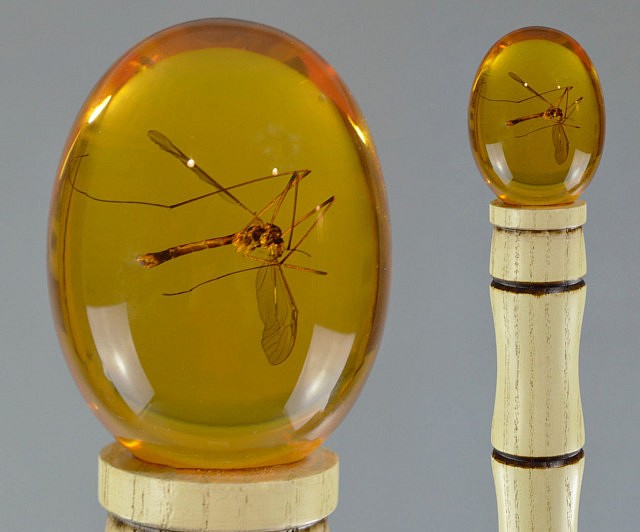
Anyone with a passing knowledge of math and the half-life of DNA knows that’s just not possible in the real world. No matter how well-preserved a fossil is, the bonds holding DNA together dissolve completely after about 7 million years so the scientists in “Jurassic Park” wouldn’t even have fragments to work with.

That’s not to say it’s impossible to bring back an extinct species. If you have intact DNA, and we do have it for extinct animals like Mammoths, then there’s no reason why science can’t recreate a creature that no longer exists. The only challenge is gestating the animal without a surrogate, but that’s just an engineering challenge that will likely be solved once artificial wombs are perfected.

Even with that advancement, it would be too late for dinosaurs. Technically, if you had enough working knowledge of how DNA works and how to create an animal from scratch, you could create something that looked like a dinosaur. In fact, it’s already a popular fan theory that none of the animals in “Jurassic Park” were actually dinosaurs. It’s one of the few fan theories that might have been confirmed on screen.
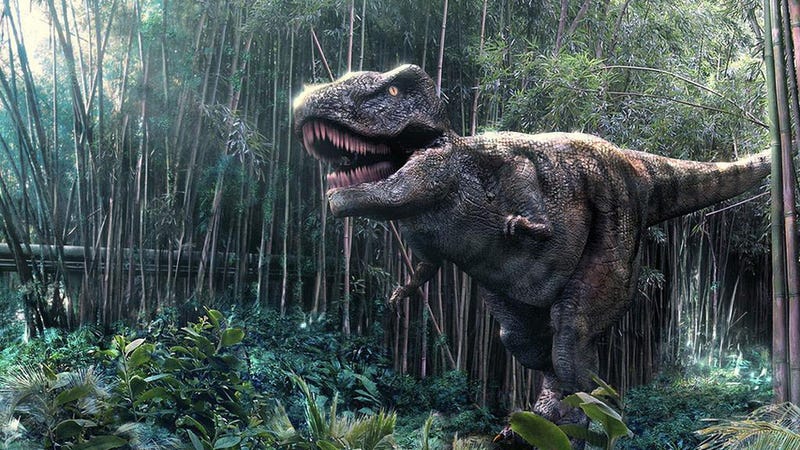
Those theories aside, it’s the the technology on display in “Jurassic World” that has far greater implications. By that, I don’t mean it’ll bring back dinosaurs or other extinct species. It may actually do something much more profound.

Unlike the original movies, both “Jurassic World” and the sequel, “Jurassic World: Fallen Kingdom,” don’t stop at just bringing back dinosaurs. These movies take place in a world where that spectacle isn’t that exciting anymore. As a result, they start splicing the DNA of other dinosaurs together to create new species, namely the Indominous Rex and the Indoraptor.

While this creates for great action scenes and plenty of dinosaur-driven combat, the true implications of this technology are lost in the spectacle. Take a moment to consider what the science within these movies accomplished. Then, consider what that means for the real world and the future of the human race.

These dinosaurs were not the product of evolution. Evolution works within some pretty rigid limits. It’s a slow, clunky, arduous process that takes a lot of time and a lot of extinction. On top of that, the basic laws of heredity and the inherent limits of hybridization ensure that the transmission of certain traits are next to impossible through natural means.

However, as Dr. Wu himself stated in “Jurassic World,” there’s nothing natural about what what they did. Essentially, the scientists in that movie used the genetic and evolutionary equivalent of a cheat code. There were no barriers to combining the DNA of a T-Rex with that of a Raptor. They just cut and pasted DNA in the same way you would cut and paste text on a word document.

That should sound somewhat familiar to those who have followed this website because that’s exactly what CRISPR does to some extent. It’s basically the cut function for DNA and it exists in the real world. The paste function exists too, although it’s not quite as refined. To that extent, “Jurassic World” is fairly accurate in terms of the technology they used to create the Indominous Rex and Indoraptor.

That’s not to say it’s possible to create the exact same creatures depicted in the movies. There are various anatomical limits to how big, fast, or smart a creature can be, even if there are no genetic barriers to contend with. I don’t know if the creatures created in “Jurassic World” could function in the real world, but the science for making them does exist, albeit in a limited capacity.

That, in and of itself, is a remarkable notion and one that makes the original “Jurassic Park” seem slightly more incredible. If anything, the original movie underestimated the progress that science would make in genetic engineering. That movie just had science rebuilding life from the remnants of existing creatures. We’ve already progressed to the point where we’re starting to make synthetic life from scratch.
This kind of technology has implications that go far beyond bringing extinct animals back from the dead or creating new ones that make for great fight scenes in a movie. It actually has the potential to circumvent evolution entirely in the struggle for survival. “Jurassic World: Fallen Kingdom” even explores this concept, but only to a point.

Without getting too deep into spoiler territory, this movie builds on the same genetics technology that “Jurassic World” introduced with the Indominous Rex. However, it isn’t just applied to dinosaurs. The sequel dares to contemplate how this technology could be used on humans or to supplement human abilities.

It’s not that radical a concept. Humans have, after all, used technology and breeding techniques to domesticate animals that have aided our efforts to become the dominant species on this planet. That process is still hindered by the hard limits of biology. The process in “Jurassic World: Fallen Kingdom” is not bound by those limits.
In this movie, dinosaurs go beyond a spectacle at a theme park. They suddenly become a potential asset to further augment human abilities. Some, such as Jeff Goldblum’s character, Ian Malcolm, would argue that such creatures pose a risk to humanity’s survival. I doubt I’m as smart as Dr. Malcolm, but I’d also argue that he’s underselling just how dominant human beings are at the moment.

Maybe if dinosaurs had come back 1,000 years ago when humans were still using swords, spears, and arrows to fight animals, we might have had a problem. Today, humans have access to machine guns, tanks, and combat drones. Even the apex predators of the Jurassic don’t stand a chance.

I would further argue that the same technology that the scientists in “Jurassic World: Fallen Kingdom” used to make the Indoraptor is even more valuable in terms of how it can affect humans. After all, if you can copy and paste desirable traits into a dinosaur, then you can do the same to a human.

Doing that might cause plenty of ethical issues that Dr. Malcolm has articulated before, but there’s one factor that overshadows all those arguments and that’s the survival of our species. Let’s face it, the human has its limits. We can’t breathe underwater. Our skin is soft and vulnerable. Our immune system has room for improvement.

There are other mammals out there who can survive extreme cold. There are animals whose immune systems are much more effective than ours. There are even some animals that don’t even age. Nature has already solved many of the problems that hinder the human species today. It’s just a matter of taking those solutions and integrating them into our own biology.

If the technology in “Jurassic World: Fallen Kingdom” can create a creature as advanced as the Indoraptor, then there’s no reason why it can’t also create a human who has the muscle strength of a mountain gorilla, the immune system of an alligator, and the longevity of a tortoise. That kind of application is far more impactful than creating fancy zoo attractions.

I imagine that Dr. Malcolm might still warn about the use of this technology, but it may actually be an even greater risk to not use it. Again, it comes back to survival. Eventually, the Earth is going to die, either by the destruction of our sun or some other external force. If we’re to survive beyond that, we need to be able to survive outside one planet.

As it stands, the human species just isn’t built for that. It shows in how poorly our bodies react to space travel. It also shows in how much we struggle to survive in certain environments. To some extent, we must use the technology in “Jurassic World” to improve our survival.
Whether that involves tweaking our genetics with traits from more robust animals or creating pet raptors that help protect us, this technology has uses that are both profound and necessary. There’s still plenty of danger, although it’s doubtful any of that danger entails someone getting eaten by a T-Rex. However, it’s a danger we’ll have to confront whether the Ian Malcolms of the world like it or not.

1 Comment

Filed under futurism, gender issues, human nature, movies

CRISPR, Biohacking, And Beauty Standards

cvm1__square

Years ago when I just started working out, a friend of a relative who worked part-time as a personal trainer gave me some advance. At the time, I was not in exceptionally good shape, but I wanted to get healthy and look good with my shirt off. Upon hearing this, he gave me what he called his three simple/inescapable truths about fitness.

Truth #1: To see results, you need to be patient and work out consistently.

Truth #2: To see results, you also need to tweak your diet and eat right.

Truth #3: No matter how hard you work out or how well you eat, everybody is still at the mercy of their genetics.

The passage of time, along with many long hours in the gym, have only proven those truths right. They reflect some of the inescapable obstacles that the multi-billion dollar fitness industry pretends aren’t there. As magician/performer Penn Jillette once so wisely said, “Great T&A requires great DNA.”

That doesn’t stop every fad diet and fitness gimmick from convincing people that they can overcome their genetic limitations and do so without putting in the necessary work. That’s akin to telling people they can become a foot taller just by wishing for it and giving some photogenic infomercial star their credit card information.

For the most part, we are very much at the mercy of our genetic limits and the basic chemistry of our bodies. If you want to lose fat, you got to get your body to burn fat, which can be harder for certain people with certain genetic dispositions. If you want to build muscle, you basically have to work that muscle until it breaks, forcing your body to repair it and make it bigger. Again, there are genetic limits at work here.

Those limits are frustrating. Believe me, I know and I have plenty of soreness to prove it. Despite that frustration, working out has been great for my health, my confidence, and my overall appearance. Those three truths still bug me at times, but I understand and accept them. For certain people, those hard truths are much greater burden.

As I write this, though, those truths are starting to falter. Unlike every other point in the history of fitness, health, and sex appeal, we have a working knowledge of the basic building blocks of the human genome. We have insights and understandings to our genetics that no infomercial star in the 90s could’ve imagined.

We know the genes that cause muscle growth. We know the genes that cause our bodies to burn fat. Some of these discoveries are very new and haven’t yet made their way to weight loss clinics or fad diets. The only barrier to making use of this knowledge is having a tool that can manipulate genes directly and precisely.

If you’ve read my previous articles on the future of treating infectious disease or fixing the flawed parts of the human body, then you know that such a tool exists and is being refined as we speak. That tool is CRISPR and, on top of potentially curing once fatal diseases, it may very well shatter those three truths of fitness. It may also destroy every other hard truth regarding bodybuilding, beauty standards, and sex appeal.

I’m not saying you should cancel your gym membership or junk those free weights just yet. However, the potential for CRISPR to change the way we think about our health and how we stay healthy cannot be overstated. While it’s still very much in the early stages of development, some people are already getting impatient.

That’s where biohackers come in. They’re not quite as badass as they sound, but what they’re doing is still pretty amazing and pretty dangerous. They’re basically skipping the part where they wait for the FDA or the World Health Organization to tell everyone that CRISPR is safe. They actually use themselves as guinea pigs to refine CRISPR.

Now, I need to make clear that this is exceedingly risky and not in the “Jurassic Park” sort of way. Tampering with our genome is uncharted, unregulated territory and we don’t yet have a full understanding of the potential dangers. That said, in the field of fitness and sex appeal, CRISPR may put gyms, plastic surgeons, and weight loss clinics on notice.

Renegade biohackers like Josiah Zayner, have actually live-streamed stunts where they inject themselves with CRISPR. Another biohacker, Aaron Traywick, injected himself with an experimental herpes treatment in front of a live audience. These are not scientists in cold laboratories using lab rats. These are real people tampering with their DNA.

Where this intersects with fitness comes back to those hard genetic limits I mentioned earlier. When you think about it, the way we build muscle and burn fat is pretty crude. We basically have to purposefully strain our bodies, even hurting them in the case of building muscle, to get it to do what we want. It can be imprecise, to say the least.

In theory, CRISPR would be more direct and far less strenuous than spending two hours in a gym every day. Instead of straining the muscles or sweating off the fat, you would just inject CRISPR into targeted areas of your body, like your belly or your bicep, and have it activate/inhibit the necessary genes.

Like cheat codes in a video game, it would prompt muscle growth in the specific areas you want. It would prompt fat burning in the areas you want. You could even take it further than that. Using the same techniques, you could use CRISPR to edit the genes of your skin so that it reduces the risk of blemishes and acne. As someone who suffered horrible acne as a teenager, I can attest to the value of such a treatment.

Some of this isn’t even just theory, either. Remember Josiah Zayner? Well, he injected himself with a CRISPR cocktail designed to block the production of myostatin. Those who are into bodybuilding know why that’s a big deal because blocking myosatin is one of the main functions of steroids.

While Zayner hasn’t gone full Hulk just yet, other more legitimate brands of research have already demonstrated that CRISPR could be the ultimate steroid. Researchers in China used the same technique as Zayner to create a breed of heavily-muscled dogs. This isn’t on paper. This stuff is real and it will affect both our health and our sex appeal.

Imagine, for a moment, standing in front of a mirror and documenting the parts of your body you want shrunk, grown, or smoothed out in some way. Maybe you’ll even make a detailed list, complete with diagrams and a full rendering of how you want your body to look.

Then, once that information is compiled, your personal doctor/biohacker programs all this into a series of targeted CRISPR injections. Some go into your arms. Some go into your abs. Some go into your face, butt, and genitals. If you hate needles, it may get uncomfortable. If you love gaining muscle and sex appeal without any real work, then it’s basically the miracle drug that every bad infomercial failed to deliver.

Considering the beauty industry is worth over $445 billion dollars, it’s pretty much a guarantee that some enterprising biohacker who may or may not already work for a major cosmetics company will make this a commercial product. There’s just too much money to be made along with too many people unsatisfied with how they look.

It may be costly at first, as most new treatments tend to be. People will pay for it, though. If you could exchange spending hours at the gym for just a few injections and get similar results, I think most people would gladly pay a premium for that. Sure, it’s a shortcut and it’s lazy, but if the results are the same, why does it matter?

That’s a question that has many answers, some of which are too difficult to contemplate. One of the reasons we find certain people so beautiful is because that beauty is so rare. Only a handful of women look as beautiful as Jennifer Lawrence or Kate Hudson. Only a handful of men look as beautiful as Brad Pitt and Idris Elba. Some of that beauty comes from hard work and conditions. Some of it is just good genetics.

What happens when that kind of beauty is as easy as administering a few injections with CRISPR? This is a question I already asked in my novel, “Skin Deep.” I offered hopeful, but incomplete answer. I have a feeling, though, that our entire notion of beauty standards will undergo major upheavals once people can shape their bodies the same way they customize their cars.

With CRISPR, we’re not just adding a layer of paint or trying to tweak an old engine. We’re modifying the foundation and scaffolding of our bodies. In theory, people could use CRISPR to achieve an appearance that is otherwise impossible, no matter how many hours are spent in a gym or how many dangerous steroids they inject. For all we know, what counts as sexy 20 years from now will look bizarre to most people today.

These trends will take time to emerge, but they’ll probably emerge faster than most fad diets or exercise gimmicks because once we start tweaking genetics, the old rules no longer apply. All the traditions and truths we’ve had about exercise, bodybuilding, and beauty collapse. It’s hard to know what will manifest in its place.

For a while, we may get a world where most women are thin and pretty while most men are tall and muscular. However, chances are people will get bored of seeing the same thing. As such, they’ll start experimenting. They’ll try coming up with entirely new body shapes, body features, and physiques that defy the existing laws of biology. As long as some people find that sexy, though, it won’t matter.

Then, there’s the impact of CRISPR on athletes. It’s one thing to test for performance enhancing drugs. What happens when some determined athlete injects a bit of LeBron James’ DNA into their genome to improve their basketball skills? What happens when an Olympic athlete tweaks something in their lung DNA to help them run a three-minute mile? How would we even test for that?

There are so many implications, both for sports and for beauty. It’s hard to know how our society will react, but unlike some of the other emerging technologies I’ve mentioned, CRISPR is real and it’s growing rapidly.

It’s still a very young technology and these things take time to develop. For a quick reference, penicillin was discovered in 1928, but it wasn’t commercially available until 1945. By comparison, CRISPR is barely five years old and biohackers are just starting to learn its limits and potential.

As that potential is realized, we may have to revisit other hard truths beyond those pertaining to fitness and health. From body image to sex appeal, a lot is going to change with this technology. It may be overwhelming, at times, but when it comes to sex appeal, humans are nothing if not adaptive.

15 Comments

Filed under futurism, gender issues, sex in society, sexuality

How Superhero Movies Are Preparing Us For The Future Of Human Enhancement

justice-league-cyborg-star-labs-1050432-1280x0

As a kid growing up on a healthy diet of superhero comics, video games, and superhero-themed cartoons that were very much ahead of their time on social issues, I often daydreamed about how awesome it would be to have the same powers as my favorite heroes. As an adult, I still daydream every now and then, often when I’m tired, frustrated, or stuck in traffic.

A major component in the overall appeal of the superhero genre is the wish fulfillment fantasy it embodies. Captain America represents the peak of physical conditioning. Iron Man represents the peak of technological know-how. Superman represents the peak of pretty much every possible feat we can imagine, a few of which are even impossible.

It’s a common fantasy of anyone who ever struggled in gym class or couldn’t open a can of pickles. It is, after all, those moments of struggle that remind us of just how limited we are, as humans. Our bodies are remarkable in so many ways, but they’re still frustratingly frail.

That status, however, may very well change. Unlike every other point in the approximately 200,000 year history of the human species, we’re actively working to transcend the limits of evolution through advances in biotechnology, advances in the treatment of disease, and even the integration of cybernetics into our brains and even our genitals.

Some of these advances are closer than others. Chances are that most people alive today won’t live to see the day when they can shape-shift at will like Mystique or fly around like Iron Man in mech suits designed by Elon Musk’s descendants. However, there may be young children alive today who will live long enough to see such wonders.

I’m not the only one who thinks this. There are people out there much smarter than me who believes that the first functionally immortal person is already alive today. They still might be in diapers, but there is a real chance that by the time they’re as old as I am, they’ll live in a world where things like aging, disease, and not being able to run 13 miles in 30 minutes like Captain America is a thing of the past.

A lot has already changed in the time I’ve been alive. I still remember a time when the idea of computers that could fit into your pocket was seen as too futuristic for some people. It was seen as just a fancy gadget from Star Trek. Given that kind of change, it’s hard to imagine what the next several decades holds for the future of humanity.

That’s where superhero media is helping in unexpected ways, though. To some extent, the modern superhero media of today is doing the same thing “Star Trek” did for previous generations. It doesn’t present a fanciful world where big green men can smash monsters or where a sickly young army recruit can be instantly transformed into the ultimate soldier. It offers a tantalizing vision of what the future could be.

It’s a vision that I believe got muddied between the end of the early “Star Trek” era and rise of modern superhero movies that began with “X-men,” “Iron Man,” and Christopher Nolan’s “Batman Begins.” Within that gap, events like Watergate, the the Vietnam War, and the rise of less optimistic, much more cynical generations made it very difficult to look forward to a better future.

Modern superhero movies have not eliminated that cynicism, but I believe it has helped tempered it. Optimism, as a whole, is actually on the rise. As bad as some recent headlines have been, some being downright disturbing, there is an increasing sense that the future is not all doom and gloom. We still dare to daydream about a better tomorrow.

More recent superhero movies, especially those that began with “Iron Man” and the emergence of the Marvel Cinematic Universe, aren’t nearly as fanciful as the old Richard Donner “Superman” movies. They’re not as gritty as Christopher Nolan’s “Batman” movies either. In a sense, this health balance has presented audiences with a world that still feels fanciful, but is also full of possibilities.

The idea that we can use science and biotechnology to turn someone who was once weak and sickly into the pinnacle of strength is not just a product of Jack Kirby’s legendary imagination. There are people working on that as I write this. It’s not out of the realm of possibility that we may one day enhance ourselves to the same level as Captain America.

Chances are we won’t even stop there. As I noted earlier, the human body has a lot of flaws. Also, thanks to the painfully slow progress of evolution, it hasn’t been upgraded in over 100,000 years. From our biology’s perspective, we’re still cavemen roaming the African Savannah with spears and rocks. Our bodies need upgrades, especially if we’re to become a space-faring species like the ones in “Guardians of the Galaxy.”

Some of those upgrades will come sooner than others. The end result, though, will be something far greater than even Captain America’s abilities. Some of those abilities seem impossible now. Remember, though, it wasn’t that long ago that the idea of computers in our pockets seemed just as impossible.

This is where, I believe, modern superhero movies are doing a much greater service than just entertaining the masses and making billions of dollars for Disney. Through heroes like Captain America, Iron Man, Thor, and even “Ant Man,” these movies make the case that such enhancements can do more than just fight invading aliens.

These movies can also help make the case that humanity can use these advancements to become better, as a whole. Characters like Steve Rogers, Tony Stark, Scott Lang, and Peter Parker all have the opportunities to be both destructive and productive with their enhanced abilities. At times, they even lapse into destructive tendencies, as we saw with Tony in “Iron Man 3.”

In the end, though, these characters use those enhanced abilities to do good for the world. They’re still human and they still have human flaws, which they don’t even try to hide. However, even with these flaws, they still feel inclined to do good, heroic things with their abilities.

That doesn’t just make for a good superhero narrative. It sends the message that we, as a species, can aspire to do so much good with the advances the future brings. There are still plenty of dangers, both with existing technology and with emerging technologies. The essence of the superhero narrative, though, tells us that we can confront those dangers and come out of it better than before.

That’s an important mentality to have as we move into an era where human enhancement is both possible and common. By believing we can use it to pursue the same heroics as the superheroes in movies like “The Avengers,” we give our species the push it needs to advance in a way that brings out the best in us.

There will still be villains along the way, as plenty of superhero movies show. The fact we still root for the heroes, though, helps reveal where our aspirations reside. With these movies effecting an entire generation of young people, I believe modern superhero movies are doing plenty to prepare them for the future of human enhancement.

With the staggering success of “Avengers: Infinity War,” a movie that has raised the bar for superhero movies of all kinds, the impact of superhero media has never been greater. That impact may very well be the key to preparing the next generation for unprecedented advancements in technology, society, and progress. That, to some extent, might end up being the most heroic thing this genre can do.

1 Comment

Filed under Comic Books, Jack Fisher, Superheroes, futurism, human nature, Sexy Future

How We’ll Save Ourselves From Artificial Intelligence (According To Mass Effect)

mass-effect-andromeda-kill-the-ai-or-save-the-ai_feature

Growing up, my family had a simple rule. If you’re going to talk abut about a problem, you also have to have a solution in mind. By my parents’ logic, talking about a problem and no solution was just whining and whining never fixes anything. My various life experiences have only proved my parents right.

When it comes to a problem that may be an existential threat to the human race, though, I think a little whining can be forgiven. However, that shouldn’t negate the importance of having a solution in mind before we lose ourselves to endless despair.

For the threat posed by artificial intelligence, though, solutions have been light on substance and heavy on dread. It’s becoming increasingly popular among science enthusiasts and Hollywood producers to highlight just how dangerous this technology could be if it goes wrong.

I don’t deny that danger. I’ve discussed it before, albeit in a narrow capacity. I would agree with those who claim that artificial intelligence could potentially be more destructive than nuclear weapons. However, I believe the promise this technology has for bettering the human race is worth the risk.

That said, how do we mitigate that risk when some of the smartest, most successful people in the world dread its potential? Well, I might not be as smart or as successful, but I do believe there is a way to maximize the potential of artificial intelligence while minimizing the risk. That critical solution, as it turns out, may have already been surmised in a video game that got average-to-good reviews last year.

Once again, I’m referring to one of my favorite video games of all time, “Mass Effect.” I think it’s both fitting and appropriate since I referenced this game in a previous article about the exact moment when artificial intelligence became a threat. That moment may be a ways off, but there may also be away to avoid it altogether.

Artificial intelligence is a major part of the narrative within the “Mass Effect” universe. It doesn’t just manifest through the war between the Quarians and the Geth. The game paints it as the galactic equivalent of a hot-button issue akin to global warming, nuclear proliferation, and super plagues. Given what happened to the Quarians, that concern is well-founded.

That doesn’t stop some from attempting to succeed where the Quarians failed. In the narrative of “Mass Effect: Andromeda,” the sequel to the original trilogy, a potential solution to the problem of artificial intelligence comes from the father of the main characters, Alec Ryder. That solution even has a name, SAM.

That name is an acronym for Simulated Adaptive Matrix and the principle behind it actually has some basis in the real world. On paper, SAM is a specialized neural implant that links a person’s brain directly to an advanced artificial intelligence that is housed remotely. Think of it as having Siri in your head, but with more functionality than simply managing your calendar.

In the game, SAM provides the main characters with a mix of guidance, data processing, and augmented capabilities. Having played the game multiple times, it’s not unreasonable to say that SAM is one of the most critical components to the story and the gameplay experience. It’s also not unreasonable to say it has the most implications of any story element in the “Mass Effect” universe.

That’s because the purpose of SAM is distinct from what the Quarians did with the Geth. It’s also distinct from what real-world researchers are doing with systems like IBM Watson and Boston Dynamics. It’s not just a big fancy box full of advanced, high-powered computing hardware. It’s built around the principle that its method for experiencing the world is tied directly to the brain of a person.

This is critical because one of the inherent dangers of advanced artificial intelligence is the possibility that it won’t share our interests. It may eventually get so smart and so sophisticated that it sees no need for us anymore. This is what leads to the sort of Skynet scenarios that we, as a species, want to avoid.

In “Mass Effect,” SAM solves this problem by linking its sensory input to ours. Any artificial intelligence, or natural intelligence for that matter, is only as powerful as the data it can utilize. By tying biological systems directly to these synthetic systems, the AI not only has less incentive to wipe humanity out. We have just as much incentive to give it the data it needs to do its job.

Alec Ryder describes it as a symbiotic relationship in the game. That kind of relationship actually exists in nature, two organisms relying on one another for survival and adaptation. Both get something out of it. Both benefit by benefiting each other. That’s exactly what we want and need if we’re to maximize the benefits of AI.

Elon Musk, who is a noted fan of “Mass Effect,” is using that same principle with his new company, Neuralink. I’ve talked about the potential benefits of this endeavor before, including the sexy kinds. The mechanics with SAM in the game may very well be a pre-cursor of things to come.

Remember, Musk is among those who have expressed concern about the threat posed by AI. He calls it a fundamental risk to the existence of human civilization. Unlike other doomsayers, though, he’s actually trying to do something about it with Neuralink.

Like SAM in “Mass Effect,” Musk envisions what he calls a neural lace that’s implanted in a person’s brain, giving them direct access to an artificial intelligence. From Musk’s perspective, this gives humans the ability to keep up with artificial intelligence to ensure that it never becomes so smart that we’re basically brain-damaged ants to it.

However, I believe the potential goes deeper than that. Throughout “Mass Effect: Andromeda,” SAM isn’t just a tool. Over the course of the game, your character forms an emotional attachment with SAM. By the end, SAM even develops an attachment with the character. It goes beyond symbiosis, potentially becoming something more intimate.

This, in my opinion, is the key for surviving in a world of advanced artificial intelligence. It’s not enough to just have an artificial intelligence rely on people for sensory input and raw data. There has to be a bond between man and machine. That bond has to be intimate and, since we’re talking about things implanted in bodies and systems, it’s already very intimate on multiple levels.

The benefits of that bond go beyond basic symbiosis. By linking ourselves directly to an artificial intelligence, it’s rapid improvement becomes our rapid improvement too. Given the pace of computer evolution compared to the messier, slower process of biological evolution, the benefits of that improvement cannot be overstated.

In “Mass Effect: Andromeda,” those benefits help you win the game. In the real world, though, the stakes are even higher. Having your brain directly linked to an artificial intelligence may seem invasive to some, but if the bond is as intimate as Musk is attempting with Neuralink, then others may see it as another limb.

Having something like SAM in our brains doesn’t just mean having a supercomputer at our disposal that we can’t lose or forget to charge. In the game, SAM also has the ability to affect the physiology of its user. At one point in the game, SAM has to kill Ryder in order to escape a trap.

Granted, that is an extreme measure that would give many some pause before linking their brains to an AI. However, the context of that situation in “Mass Effect: Andromeda” only further reinforces its value and not just because SAM revives Ryder. It shows just how much SAM needs Ryder.

From SAM’s perspective, Ryder dying is akin to being in a coma because it loses its ability to sense the outside world and take in new data. Artificial or not, that kind of condition is untenable. Even if SAM is superintelligent, it can’t do much with it if it has no means of interacting with the outside world.

Ideally, the human race should be the primary conduit to that world. That won’t just allow an advanced artificial intelligence to grow. It’ll allow us to grow with it. In “Mass Effect: Andromeda,” Alec Ryder contrasted it with the Geth and the Quarians by making it so there was nothing for either side to rebel against. There was never a point where SAM needed to ask whether or not it had a soul. That question was redundant.

In a sense, SAM and Ryder shared a soul in “Mass Effect: Andromeda.” If Elon Musk has his way, that’s exactly what Neuralink will achieve. In that future in which Musk is even richer than he already is, we’re all intimately linked with advanced artificial intelligence.

That link allows the intelligence to process and understand the world on a level that no human brain ever could. It also allows any human brain, and the biology linked to it, to transcend its limits. We and our AI allies would be smarter, stronger, and probably even sexier together than we ever could hope to be on our own.

Now, I know that sounds overly utopian. Me being the optimist I am, who occasionally imagines the sexy possibilities of technology, I can’t help but contemplate the possibilities. Never-the-less, I don’t deny the risks. There are always risks to major technological advances, especially those that involve tinkering with our brains.

However, I believe those risks are still worth taking. Games like “Mass Effect: Andromeda” and companies like Neuralink do plenty to contemplate those risks. If we’re to create a future where our species and our machines are on the same page, then we would be wise to contemplate rather than dread. At the very least, we can at least ensure our future AI’s tell better jokes.


5 Comments

Filed under futurism, human nature, Mass Effect, Sexy Future, video games

The Age Of Bionic Genitals Is (Almost) Upon Us

leukorrhea

The human body is a remarkable, beautiful, and frustrating product of nature. It takes so many forms, shapes, and colors. We do all sorts of things to protect it, abuse it, strengthen it, or enhance its value to us. Why else would the fitness and beauty industry be worth billions of dollars?

No matter what we do to our bodies though, be it beneficial or destructive, they’re still prone to many flaws. The extent of those flaws varies from person to person. I think it goes without saying that people like Jennifer Lawrence and Tom Brady have far fewer flaws to fix than most. However, we’re still very much at the mercy of our bodies’ deficiencies.

To say that can negatively impact your sex life is like saying shooting your kneecaps with a shotgun may leave a mark. Having serious flaws in certain parts of your body can contribute greatly to any number of sexual dysfunctions. Beyond simply hindering your personal life, it can be downright debilitating, especially in a world where everyone places a high value on having sex and enjoying it.

Medical science has done a lot to help people heal or improve their bodies so that they can have a functioning sex life. We have anti-biotics, contraceptives, and even vaginal rejuvenation surgery. However, why stop only at healing? Why should we be satisfied with the inherent limits nature has placed on sex? Humans have transcended natural limits before. Why not do the same with sex?

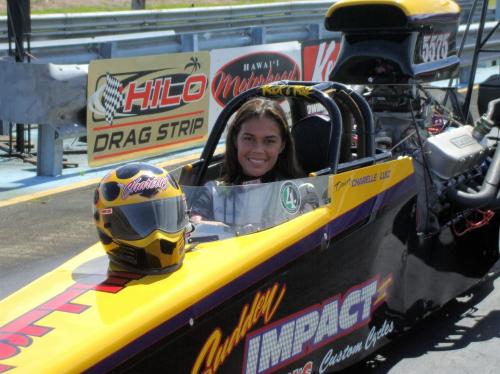
That’s where the cutting edge of biotechnology comes in. Specifically, that’s where the prospect of enhanced body parts enters the picture. Imagine, for a moment, treating organs the same way NASCAR drivers treat their cars. It’s not enough to have an engine that’ll get you to where you want to go. You want to have the parts that’ll get you there faster, better, and maybe even with a little style.

Image result for woman on race car

I’ll give everyone a moment to contemplate that metaphor. Yes, I know that’s going to conjure some lurid thoughts in certain people, some of which are more extreme than others. You’re welcome.

I’ve talked about bionic genitals before. They are a thing, literally and figuratively. As I write this, there are multiple men on this planet equipped with a bionic penis that allows them to enjoy sex on a level that even the most well-endowed male porn star can’t imagine. That’s not to say it’s a refined technology just yet, as there are limits. However, the precedent is there and the prospects are both enticing and sexy.

I bring this topic up again because research in the field of bionic genitals is accelerating and, fittingly enough, becoming more gender equal. According to the Daily Mail, surgeons in London led by Professor Alexander Seifalian have successfully grown the first bionic vagina in a lab from pig intestines.

Related image

For those who saw “Ex Machina,” don’t get too excited. The bionic vagina Professor Seifalian hasn’t been implanted in anyone yet. It’s more a prototype than it is an actual treatment. That doesn’t make it any less significant, though. The fact that someone has made a real, tangible thing from this research is a critical milestone. The fact that thing is a vagina should give us plenty of reasons to imagine the sexy possibilities.

Like the bionic penis, the initial purpose for the bionic vagina is purely to treat those suffering from a deficiency. Specifically, this advance would go a long way towards treating women suffering from Mayer–Rokitansky–Küster-Hauser (MRKH) syndrome, a condition in which a vagina does not fully develop in a woman. Naturally, that makes intimacy and child-rearing a problem.

Bionic vaginas could also be a major benefit to women who have suffered serious physical damage, whether from an accident, a disease, or complications during childbirth. The organs Professor Alexander Seifalian is growing in a lab are made directly from cells donated by the woman. As a result, the tissues are perfectly compatible with the woman’s body.

Image result for happy woman

This will certainly go a long way towards healing women and helping them regain sexual function. Like the bionic penis, that will be the first major benefit of a bionic vagina. However, it’s the possibilities beyond healing that are even more enticing.

Talk to any woman who has given birth to a child. Talk to any sexually active woman who has gotten a little too kinky with their lover. The female vagina is a remarkable organ that is capable of amazing feats, but like the male organs, it does have limits and those limits aren’t always in line with a woman’s desire for a satisfying sex life.

Those limits may even contribute to the orgasm gap since few women actually achieve orgasm through vaginal penetration alone. While there may be an evolutionary reason for this, I imagine few women want their sex lives to be hindered by something like that. If we, as a society, are going to close that orgasm gap, then bionic vaginas could be a vital tool.

Image result for woman having an orgasm

Imagine, if your dirty thoughts will allow, a future where labs can do more than just grow a new vagina. Imagine that same lab growing a vagina that has more nerve endings to match that of the clitoris. While they’re at it, maybe that lab can add some extra muscle to the vagina for a tighter fit. For women who have given birth, that kind of benefit cannot be overstated.

Speaking of birth, why stop at making vaginas that enhance sex? Perhaps that same lab can make more tweaks to improve the birthing process. Imagine having a vagina that is more durable and robust than nature would allow, making birth no less difficult than a case of mild indigestion. Again, talk to any woman who has given birth to understand why that would be a big deal.

Image result for pregnant woman

Beyond simply helping women give birth and have better sex, there are also many benefits bionic vaginas could have for the transgender community. Other than helping them give birth, bionic vaginas could help improve gender reassignment surgery to a point where even trained gynecologists won’t be able to tell the difference between cis-women and transgender women.

There are probably many more benefits to bionic vaginas that I could list, but there’s only so much a man like me can contemplate. Even the aspiring erotica/romance writer in me cannot fully grasp the possibilities. They’re still worth imagining, though.

Image result for sexy cyborg woman

With this news, the first and most difficult step towards developing bonic vaginas is complete, thanks to Professor Seifalian. It’s the next steps that’ll really have an impact on the sexual landscape. Once our sex lives are no longer hindered by the limits of our bodies, all bets are off in terms of what kind of sex we can have.

5 Comments

Filed under gender issues, sex in society, sexuality, Sexy Future

A Tribute To Dr. Norman Borlaug: The Man Who Fed The World

norman-borlaug-2

Last year, I dedicated two days to honoring two unique individuals who literally saved the world. Those individuals were Stanislav Petrov and Vasili Arkhipov. Between the two of them, they literally held the fate of the human race in their hands at one point. Their ability to rise to the occasion and make the right decisions are why we’re still alive and the world isn’t a nuclear wasteland.

I strongly believe that people like that deserve recognition for doing the right thing during critical moments in our history. They embody a unique aspect of the human spirit that is worth honoring. Today, I’d like to honor another and like Petrov and Arkhipov, most people probably don’t know the name of the man I’m about to praise.

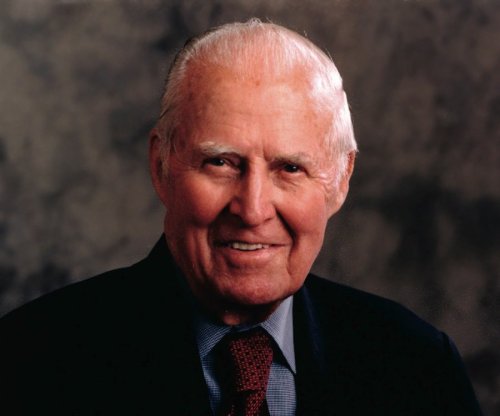
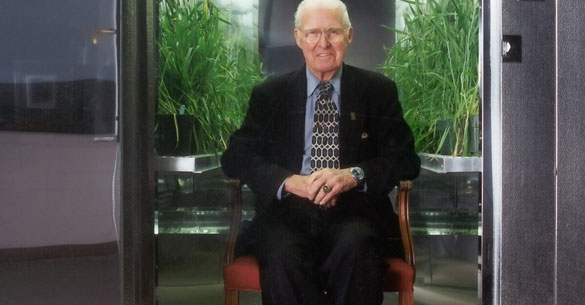
His name is Dr. Norman Borlaug. He was born on, March 25, 1914. He’s also a Nobel Peace Prize winning agricultural scientist from Iowa and what he did to earn that prize may very well be the greatest over-achievement in history. That’s because what he did for humanity cannot be overstated.

Image result for Dr. Norman Borlaug

To understand why, you need only recall the last meal you had. Whether it was a fully-cooked turkey or a frozen burrito, chances are Dr. Borlaug is partly responsible for making that food possible. That’s because Dr. Borlaug was an instrumental figure in the Green Revolution, a culmination of various scientific advances that led to a massive boost in crop yields.

If you don’t think that’s a big deal, you need only take a cursory glance at history to see the devastation that famine has inflicted on our species. It has defeated armies, destroyed empires, and ended dynasties. On top of that, it does so through the prolonged torture that is starvation. No matter the time, place, or people, the pain of starvation hits everyone hard.

Dr. Borlaug fought that and fought it better than anyone in history, modern or otherwise. Do you remember the last time your entire community endured famine? It’s doubtful. Mass famines have been largely eliminated in modern societies. Those that use the techniques and advances that Dr. Borlaug developed enjoy a level of abundance that’s unprecedented in history.

Image result for abundant food

Sure, there are times when it’s difficult to get food to certain areas due to war, disasters, or just plain incompetence, but the inability to actually produce that food is no longer an issue, so much so that now that most of the food-related problems we face involving having too much of it. Sometimes we eat too much. Sometimes we throw too much away. It’s still a problem, but it beats the hell out of famine.

However, Dr. Borlaug did more than just sit in a lab and do science. This man actually went out into the world, got his hands dirty, and fought famine with the ferocity of a young Mike Tyson on crack. Armed with a potent blend of science and humanitarian spirit, the old forces of famine didn’t stand a chance.

Image result for mass famine

He started off as a microbiologist working for DuPont, crafting new pesticides and preservatives for food. Regardless of how you feel about big chemical companies like DuPont, that’s an entirely noble endeavor, protecting and preserving food. That just wasn’t enough for Dr. Borlaug. You don’t win a Nobel Prize just by thinking small.

First, he traveled to Mexico, a place that had been hit hard by major crop losses in the late 30s and early 40s. While there, Dr. Borlaug helped develop a strain of high-yield, disease-resistant, semi-dwarf wheat. That didn’t just make up for the losses. It more than quintupled the overall harvest by 1944.

Helping Mexico stave off crop failures was an accomplishment in and of itself, but Dr. Borlaug was just getting warmed up. In the early 1960s, he moved to India, which happened to be in the middle of a major drought, and helped them increase their yields by orders of magnitude. If that weren’t impressive enough, he did all that while in the middle of a war with Pakistan. Not one to take sides, he even helped them too.

Image result for Dr. Norman Borlaug

By the late 1960s, both India and Pakistan were self-sufficient in terms of wheat production. At that point, the Nobel committee finally took notice of Dr. Borlaug’s greatness and awarded him the Nobel Peace Prize in 1970. Short of Tom Brady’s induction into the Pro Football Hall of Fame, there has never been a more obvious choice.

Unlike some recipients, there’s no question that Dr. Borlaug’s work contributed to furthering peace in this chaotic world. The man himself said it best.

“You can’t build a peaceful world on empty stomachs and human misery.”

Even after getting that prize, he just kept raising the bar impossibly high. In the mid-80s while Africa endured a terrible famine due to severe drought, Dr. Borlaug came out of retirement to help the governments fix a broken agricultural system. Just as he’d done before, his techniques and know-how helped crop yields soar once more.

Image result for Dr. Norman Borlaug

When considering just how much he was able to improve agricultural output and how hard he worked to promote these techniques, it has been estimated that Dr. Borlaug saved over a billion lives through his work. That’s not a typo. This man, without superpowers or help from aliens, saved a billion lives by helping mankind produce abundant food.

Unlike Petrov or Arkhipov, Dr. Borlaug wasn’t just in the right place at the right time to make the right decision. He worked hard for years on end, researching and cooperating with others to increase food production so that future generations need not starve like so many others before us. Rather than simply prevent ourselves from self-destruction, he gave us the means of prosperity.

I know everyone has a different definition for hero, especially someone who reads as many superhero comics as I do. However, such a title is almost lacking for a man like Dr. Borlaug. There aren’t many people who can honestly say their efforts saved billions of lives, present and future alike. Dr. Borlaug could make that claim right up until his death at the age of 95 in 2009.

Image result for Dr. Norman Borlaug

That’s not to say he didn’t have his critics. Even Superman has plenty of villains to deal with and if Dr. Borlaug had a Lex Luthor in his life, it was those who believed that his advances were unnatural and potentially damaging to the environment. Even today, his reputation among environmentalists and organic food enthusiasts is mixed at best.

Most of those critics, however, are not poor farmers in third-world countries who are just one crop failure away from starvation. Many are affluent enough to afford the overpriced asparagus at Whole Foods. They’ll probably never know or appreciate the abundance that Dr. Borlaug’s work has given them and how many lives are saved every day because of it.

Then, there were doom-sayers like Paul Ehrlich, who wrote a best-seller in 1968 called “The Population Bomb” that said that the rapid growth of the human population was unsustainable. He claimed that there was simply no way food production could keep up, which would result in massive war or unprecedented famine. Even by 1960s standards, this was pretty scary stuff.

Image result for population bomb

Rather than despair, Dr. Borlaug just kept on working so that we did have enough food. With all due respect to Mr. Ehrlich, his predictions failed because men like Norman Borlaug confronted these problems rather than whined about it. That’s not just heroic. That’s an important lesson that’s more critical now than it has ever been.

Today, even without Dr. Borlaug among us, we face many challenges including war, disease, poverty, and unskippable video ads. However, as daunting as they may be, we can take comfort in the knowledge that more people than at any point in history need not do so on an empty stomach.

I’ve often commented on how survival and reproduction are the two key drives for humanity. While I tend to focus heavily on the latter, I don’t often have to mention the survival part because Norman Borlaug made that unnecessary. It’s because of this man’s work that we have more food than we’ve ever had before in our history.

Image result for Dr. Norman Borlaug

His spirit lives on in the work of other researchers looking to further improve our food production. From vertical farming to in vitro meats, the promise of abundant food and full stomachs will continue as our population keeps growing.

More than anything else, though, Norman Borlaug embodied a humanitarian spirit that helped improve the human condition for all. It’s not unreasonable to say that the world is better because of him. So at some point tomorrow, March 25, take a moment to appreciate the contributions of a man whose name you probably didn’t know before now.

The next time you eat and go to bed with a full stomach, be sure to thank Dr. Borlaug for his contributions to the world. Most importantly, honor the humanitarian spirit he embodied. That’s how we’re going to make a more peaceful world.

Image result for Dr. Norman Borlaug

8 Comments

Filed under Celebrities and Celebrity Culture, Current Events

Reflecting On The Brighter Headlines Of 2017

Goodnews

It’s over. The year that was 2017 is done and for some, the big New Years ball in Times Square couldn’t drop fast enough. I don’t blame those people. It was, indeed, a rough year for many. I consider myself among the lucky few who made strides in 2017 and have high hopes that I’ll do the same in 2018.

Even for those who did enjoy progress this past year, it’s easy for the news paint a different picture. Every day seems to bring a new headline hinting that we’re all about to die a terrible death, either by nuclear war, a new plague, or by all our smartphones exploding at once. I try to be optimistic about most things, but I totally understand why others are so pessimistic.

The past couple years have been more hectic than most, primarily due to the results of the 2016 Election. It was around the end of 2016 when I made it a point to remind everyone that, despite what the news media may claim, the world is becoming a better place by nearly every objective measure. I even go out of my way to report on news that promises the end of disease, suffering, and stupidity within the foreseeable future.

However, I realize that such progress is difficult to see and some of the more futuristic advancements I’ve discussed are still a way off, especially with sex robots. So, in the interest of putting a positive spin on the end of 2017, I’d like to highlight a few uplifting and promising news stories to help get everyone excited about 2018.

Some of them involve technological breakthroughs that promise to improve the lives of many. Others involve the kind of feel-good stories that often get overshadowed by bloodier, more sensational headlines. These are the stories from which we should draw inspiration as we head into 2018. We’ll do ourselves and our futures better by moving forward with a sense of hope.


Muslim Hackers Unite To Kick ISIS Off The Internet

There’s no way around it. Muslims face a lot of discrimination, thanks largely to the worst of the worst of their extremes. Religion taken to extremes can, has, and will continue to cause all sorts of horrors throughout the world. That’s why a news story like this is important for perspective.

When it comes to taking on the extremes of any religion, the best weapon are the adherents of that very religion. Given how ISIS has often exploited technology to further their extremism, there’s an uncanny sense of poetic justice in seeing other Muslims fight back. It should give anyone hope that the extremes of any faith rarely succeed in the long run.


FaceBook Uses AI To Help Prevent Suicide

Social media and its effect on people has been in the news for all the wrong reasons lately. The events of 2017, which built off the side-show horrors of 2016, only made it worse. It’s getting to a point where social media only ever makes the news when it’s doing something bad.

However, like ski-masks, machetes, and crazy glue, it’s a tool like any other. Its moral value depends on how it’s used. For an effort like using artificial intelligence to measure social media activity to assess suicide risks, I say that’s an inherent good. We lost some great people to suicide in 2017. Any effort, be it AI or simply calling a hot line, should be applauded.


Practical Quantum Computers Are Almost A Reality

On the technology side of things, something I try to stay on top of on this blog, there are all sorts of exciting advances and not just in sex toys. Most are bits and pieces of progress from other bits that we made in years past. Others, however, have the potential to bring so much more.

That’s why advances in practical quantum computers is such a big deal. The idea and concept of quantum computers is actually pretty old. Making them practical, however, has been one of the biggest engineering challenges in computer technology. It’s a first step, but by far the biggest.

Advances in 2017 weren’t just baby steps. Now, the theoretical part of quantum computers is basically resolved. It’s now a matter of when and not if. Once quantum computers enter the picture, then all bets are off. From biotechnology to 3D printing to sex toys, quantum computers promise to revolutionize all of it and this past year brought us that much closer.


Gene Therapy Is Set To Cure Once Incurable Diseases

I’ve talked about big advances in biotechnology. I build the entire basis of “Skin Deep” around them and entertained thoughts of a world where diseases that hindered our sex lives are no longer a concern. Some of those advances are still a way off, but 2017 saw advances that should make our future that much healthier.

Before we can wipe out all disease, we need to attack those most vulnerable. This past year, we began that process by modifying the genes that cause fatal inherited diseases like SCID and Glybera. It’s a critical first step towards modifying other disease-causing genes, both in developing embryos and adult humans.

It may not be the giant leap some are looking for, but those leaps rarely come in a single year. However, this still counts as a major step and by taking that step, the years beyond 2017 will have less suffering and more health.


Getting Into Space Got A Lot Cheaper Thanks To SpaceX

If fighting the good fight and advances in technology aren’t enough to lift your spirits, then why not look to the stars? Let’s face it. It’s been a while since anyone got excited about space travel. Nobody has been to the moon in decades and space travel is so routine that we don’t even think about it. Then, Elon Musk came along and made it cool again.

Musk being Musk, though, he had to do one better. He actually made space travel a growing economy. Thanks to developments by his company, SpaceX, getting to space got a lot cheaper and more efficient with the Falcon 9 rocket. It marks one of the most important steps in making space travel more than just a gimmick for governments.

Cheaper, more efficient rockets means getting to space is easier. Getting to space easier means more opportunities. More opportunities mean more chances for ordinary to know what it’s like to actually venture towards the stars. That should give anyone who admires the stars reasons to get excited for 2018.


Prison Inmates Give Food To Needy Kids

Blurred image of prisoner shaking hands with charity owner when handing over food donation.

Even if you’re still jaded by 2017 and all the stories I just shared didn’t help, then sit tight. I’ve got one more that should help make 2018 more appealing. Even if you think this past year sucked, I’m willing to bet you consider yourself less jaded than standard prison inmate. If you’re free or not in the process of being arrested, you consider that a plus.

So when a bunch of prison inmates find it in their hearts to give food to needy children, how can your heart possibly remain hardened? It’s true. This past year, a group of prison inmates showed that humanity is not at all beyond possibly say your heart is still hardened?

These kinds of stories are part of the reason why I believe humanity deserves more credit than it gets. Yes, the news tends to highlight our worst, but stories like this show us at our best. That’s why I believe having faith in humanity is so important and carrying that faith into 2018 can only help us in the years to come.

4 Comments

Filed under Current Events, Jack Fisher's Insights

The (Uncomfortable) Questions We’ll Have To Answer With Human Enhancement

In general, I tend to be optimistic about the future. I know that seems crazy, given our current political climate, but I try to look beyond the petty grievance’s and focus on the bigger picture. By so many measures, the world is getting better. The human race is on an unprecedented winning streak and we’re only getting better.

A great deal of this improvement is due, largely, to our ability to make increasingly amazing tools. As I type this, countless people who are far smarter than I’ll ever be are working on advances that will keep us healthier, make us smarter, and help us transcend our physical and mental limits by orders of magnitude.

This is all exciting stuff. We should all look forward to a future where we never get sick, we never age, and we have the physical and sexual prowess of an Olympic athlete on meth. The aspiring erotica/romance writer in me is giddy with excitement over the sexy possibilities.

Like all advancements, though, there will be a cost. Even the greatest advancements mankind has ever made in science, technology, and sex have come at a cost. It’s just the nature of the chaotic world we live in. Nothing is ever smooth and easy when there are so many chaotic forces that we can’t always make sense of.

That’s why for some of these advancements, such as CRISPR, biotechnology, and artificial intelligence, we have to be extra proactive. We’re not just talking about tools that makes it easier to defend ourselves against a hungry lion. These are tools that will fundamentally change what it means to be human.

They’ll take the caveman logic and tribalism that has guided the human race for its entire existence and throw it out the window. They’ll completely rewrite the rules of human nature, crossing lines and redrawing them in ways that even a kinky mind like mine can’t imagine. It won’t just be an overwhelming transition. For some, it’ll be downright traumatic.

Given that there are over seven billion humans on this planet, there will be a lot of moving parts to this transformation. Before we can even think about taking the first steps in that process, we need to ask ourselves some serious, unsexy questions. As much an optimist as I am, I cannot deny the need for caution here.

That’s why I’ll take a step back, keep my pants out, and ask some of these unsexy questions. I understand this won’t exactly get everyone in the mood, but given the rate at which our technology is advancing, we need to be extra proactive. That way, we can get through the hardest parts of the process and get to the sexy parts.


Uncomfortable Question #1: Who (Or What) Gets To Decide How Much We Enhance Ourselves?

This will probably be the most pressing question once the technology becomes refined enough for the commercial market. Most technology goes through a progression. We saw it with the development of cell phones. At first, only business tycoons and drug lords could afford to use them or even have a use for them, to begin with.

That model might have worked for cell phones. It’s not going to work for something like CRISPR or smart blood. That’s because, unlike cell phones, the poorest and the impoverished are the ones most in need of these tools. They’re also the ones that stand to benefit most, in terms of quality of life.

Historically speaking, though, the government has not treated the poor and impoverished very well. Use the same approach with cell phones and the rich and well-connected will be the only ones to benefit. They’ll also further widen the gap, so much so that they might be even less inclined to share.

That’s why the default answer to this question can’t just be the government or rich business interests. I’m not going to pretend to know who the authority will be or how they’ll even go about distributing these advances to people in a fair and just manner. I just know that our current method will not be sufficient.


Uncomfortable Question #2: How Do We Stop Certain Human Enhancements When They Go Wrong?

When your computer freezes, you reboot it. When the sound on your speakers starts making noises, you turn it off. It’s a beautiful, but underrated thing, having an off-switch. I’m sure we’ve all had people in our lives whom we wish had an off-switch. It’s a necessary fail-safe for a chaotic world that we can’t always manage.

Putting an off-switch on dangerous technology, especially something like artificial intelligence, is just common sense. It would’ve made “The Terminator” a lot shorter and a lot less confusing. With other advancements, especially those involving CRISPR and biotechnology, it’s not as easy as just installing an extra switch.

How do you turn off something that literally rewrites our DNA? How do you stop someone who has grown used to having superhuman abilities, by our standards? That’s akin to asking someone to make themselves sick or hack off a limb because the technology has some side-effects. That’s going to be a tough sell.

Again, I am not smart enough to imagine how a fail-safe for that sort of thing would work. It can’t just rely on blind faith, magical thinking, or whatever other tactic that used car salesmen exploit. It has to be in place and up to speed as soon as this technology goes live.


Uncomfortable Question #3: How Independent/Dependent Will Human Enhancement Make Us?

Smartphones, running water, and free internet porn are great. However, they do require infrastructure. People today are at the mercy of whoever pays their cell phone bill, whoever knows the wifi password, and whoever can stop their toilets from overflowing with shit. To some extent, we all depend on certain institutions to keep our lives and our society going.

In a future of enhanced humans, who have been imbued with traits and abilities that way beyond the scope of our current infrastructure, how dependent or independent can they be in the grand scheme of things?

If they rely on a regular injection of nanobots or need to recharge every other day, then they’re going to have to rely on some form of infrastructure. That may help keep enhanced humans from becoming super-powered Biff Tannens, but it will also give a lot of power to whoever or whatever is supplying those resources.

In a sense, it can’t be one or the other. If enhanced humans are too independent, then they have no reason to interact or aid one another. If they’re too dependent on certain resources, then those controlling those resources become too powerful. There needs to be a healthy balance, is what I’m saying. There will be costs, but we have to make sure that the benefits far outweigh those costs.


Uncomfortable Question #4: How Much Of Our Humanity Do We Keep?

Let’s not lie to ourselves. There’s a lot about the human condition we wish we could change or drop altogether. Personally, I would love to never have to go to the dentist, never have to clip my toe nails, and never have to sleep, which is an advancement that’s closer than you think.

Humanity has has a lot of flaws, which is a big part of what drives the development of these tools. However, there are certain parts about humanity that are worth preserving and I’m not just talking about the health benefits of orgasms. Change too much about our bodies, our minds, and everything in between and we cease to become human. At that point, why even care about other humans?

Maintaining a sense of humanity is what will separate enhanced humans from overpriced machines. Our sense of humanity is a big part of what drives us to live, love, explore, and understand. If we lose that, then we’re basically a very smart rock that’s only interested in maintaining its status as a rock.

To really expand our horizons, we need to preserve the best of humanity. Humans do amazing things all the time that reminds us why humanity is worth preserving. When we start enhancing ourselves, we need to save those traits, no matter what we become.


Uncomfortable Question #5: How Will Society Function In A World Of Enhanced Humans?

We’ve built a good chunk of our society around our inherent flaws, as humans. We form tribes to cooperate and survive in ways we can’t do on our own. We seek leaders who are capable of guiding us to functional, stable society. Granted, sometimes those efforts fail miserably, but the goal is the same.

With human enhancement, the rules aren’t just different. They’re obsolete. So much of our society is built around the idea that we’re still a bunch of cavemen with fancier tools that we really don’t have a concept of how we’ll function beyond that context. We have nation states, national identities, and various tribes to which we bind ourselves.

Those are all still products of our inherent drive towards tribalism. That’s still our default setting, as a species. What happens when we start tweaking those settings? Will things like nation states, government, and social circles even exist? When society is made up of a bunch of superhuman beings who can live forever and never need a sick day, how do we even go about functioning?

This is well-beyond my expertise, as an aspiring erotica/romance writer. It may be one of those things we can’t contemplate until after some of these advances take hold. At the very least, we need to put this question at the top of our to-do list when that time comes.


Uncomfortable Question #6: How Will Human Enhancement Affect Our Understanding Of Family And Love?

This is probably the most pressing question for me, as an aspiring erotica/romance writer. I’ve already highlighted some of the flaws in our understanding of love. Once humanity starts enhancing itself, it may either subvert those flaws or render them obsolete. In the process, though, it may create an entirely new class of flaws to deal with.

What happens to a marriage when the people involved live forever and don’t age? That whole “death do us part” suddenly becomes an issue. What happens when having children is essentially uncoupled from romance, through tools like artificial wombs? What will love even feel like once we start enhancing our brains along with our genitals?

Since all love and passion still starts in the brain, which we’re already trying to enhance, any level of human enhancement will necessarily affect love, marriage, and family. Chances are it’ll take on a very different meaning in a world where marriage is less about tax benefits and more about new forms of social dynamics.

Human enhancement will change a lot about our bodies, our minds, and our genitals. It’ll effect so much more, including how we go about love and family. It’s still impossible to grasp since we’re all still stuck with our caveman brains. However, once that changes, this is just one of many issues we should contemplate if we’re to make the future better, sexier, and more passionate.

Leave a comment

Filed under Sexy Future, Thought Experiment

Making Exercise Obsolete (While Still Looking Sexy)

About nine years ago, I finally came to the realization that I was not as healthy, attractive, or fit as I wanted to be. I was weak, undersized, unassuming, and got winded just by walking around the block a few times. I had next to no sex appeal and hesitated to remove my shirt at the beach. Sadly, it wasn’t until five years ago that I got serious about getting healthy.

Why did it take so long for me to get my act together? It’s simple. That kind of health and sex appeal takes work. It takes a lot of work. To look like I do now, I go running for at least a half hour, six times a week. I go to the gym and lift weights at least twice a week. I also try to limit my sugar intake and drink plenty of water.

While the results have done wonders for my confidence and my sex appeal, it still took a lot of work. Most people, especially those who were die-hard couch potatoes like I was, are reluctant to do that kind of work. It’s strenuous, inconvenient, and downright uncomfortable at times. Go try running four miles in 102 degree weather to see why. Yes, I’ve done that. No, it’s not the most pleasant feeling in the world.

It’s a big reason why most diet and weight loss efforts fail. It’s also why most people tend to break their New Years Resolution to get healthy. Given the extent of the obesity epidemic, it shouldn’t take that much to motivate people into being healthier. However, the work it takes to get that kind of sex appeal is pretty significant, especially when you lack the genetics of a supermodel.

This is now the part where I get peoples’ hopes up about a sexier future, but have to temper them because we’re not quite there yet. However, in reflecting on how hard I worked to reach my current level of health and sex appeal, I think this is something that should give hope those who have given up at becoming sexy something.

For years, diet companies and bad infomercials have been looking for that magic diet pill. You’ve probably heard and/or fantasized about it to some extent. It’s that special pill that you take one a day, change nothing about your lifestyle, and still lose weight. It’s magic because, by and large, that’s literally what such a pill requires in order to work.

Many people claim to have discovered it. Dr. Oz has discovered it no fewer than 16 times. The fact that obesity is still a problem and people still need to exercise in order to lose weight and gain sex appeal shows just how bogus these products are. If you’re depressed now, please bear with me because there is some good news here.

That magic pill that Dr. Oz keeps failing to find might actually be possible, minus the magic. According to research conducted at Leiden University, in the Netherlands, it is possible for a pill that will not only help them lose weight, but mimic the effects of exercise. It basically means that you can get the equivalent of a two-hour workout and never leave your couch. It’s a lazy person’s ultimate dream.

How is that possible, though? How can it not rely on magic? Well, if you’ve been reading this blog for any amount of time, you already know how much I belabor the inherent flaws in the human body. The human body, despite its beauty and sexiness, is kind of crude. It can easily be tricked, hacked, and hijacked like an old computer running Windows 95.

According to the research, the miracle drug involved, unoriginally called GW501516, basically tricks the body into doing the same thing it does when you actually exercise. As it turns out, there are all sorts of basic, but varied process that happen when you work out. Your heart rate goes up, your metabolism spikes, and your body basically stresses itself into burning energy, becoming fitter and sexier in the process.

Those same processes are, like I said, fairly crude. Exercise is just the reaction your body has. If a pill can induce that same reaction, then your body won’t know the difference. It doesn’t have to do the same workout as Dwayne “The Rock” Johnson. It just has to react as though it did.

If it sounds like cheating, that’s because it is, from a biological perspective. Unlike professional athletes and certain World of Warcraft players, the only consequence is washboard abs, toned arms, and legs that can kick a soccer ball across the field. Biology is pretty lousy at punishing cheaters, especially when it helps them look sexier and survive.

Now, if you’re wondering why this miracle drug isn’t already making billions turning everyone into fitness models, there’s a damn good reason. The drug, in its current state, has some nasty side-effects, one of which is cancer. No matter how much you want those washboard abs, cancer isn’t worth paying that kind of price.

However, the fact that pill worked is a proof of concept. Finding ways to mitigate those side-effects, or remove them entirely, is simply a matter of refinement, research, and testing. Given that the weight loss market it worth $66 billion, rest assured there are plenty of incentives to get this drug right.

It’s promising, but still a ways off, as many of the other advancements I’ve mentioned tend to be. However, unlike major breakthroughs such as smart blood, this one is probably closer than most. Given the incentives and the scale of the obesity epidemic, it’s only a matter of time before someone turns this into a true magic bullet for obesity.

It also means that, when that time comes, it’ll be possible for more people to get in shape, get sexier, and stay that way without maintaining a ridiculous workout routine. I’m not going to lie. If I could just take a pill instead of running 15 miles a week, I’d do it in a heartbeat. Who among us wouldn’t?

It might very well make the very concept of exercise obsolete. Who would want to go to the gym or run every day if they didn’t have to? While that may upset gym owners, I think a fitter, healthier, sexier population is a price worth paying.

2 Comments

Filed under gender issues, Sexy Future

A Drug That Eliminates The Need For Sleep (Is Almost Here)

Whenever I talk about the possibilities of human enhancement, sexy and otherwise, I do so with the hope that the benefits outweigh the costs. I understand that all progress comes at a cost. I also understand that it’s impossible to know the full extent of those costs until the genie is out of the bottle and the bottle is destroyed.

Never-the-less, I still think the risks we take with future technology are worth taking. In fact, I would argue we have to take them because our caveman tendencies towards tribalism and our inherent vulnerability to bullshit is a clear indication that our current situation is not working well enough. We, as a species, need to improve if we’re going to function on this confined planet.

Certain enhancements will do a lot more than others. I’ve mentioned emerging tools like smart blood, brain implants, and CRISPR. It’s impossible to overstate the kind of impact those advances will have on the human condition. They will be akin to giving a light sabre to a chimp.

Other enhancements, however, will have a more subtle effect. They’re also likely to happen sooner, despite Elon Musk’s best efforts. That brings me back to sleep and the annoying need to spend a third of our lives doing it. I’ve already asked people to consider how their life would change if they didn’t have to sleep as much. Well, I have a confession to make. That was kind of a loaded question.

That’s because that, as we speak, there are efforts underway to reduce or eliminate our need to sleep. This is not some far-off fantasy out of a “Star Trek” re-run. This is actually happening, courtesy of DARPA, also known as the Defense Department’s officially-sanctioned mad science division.

However, there’s nothing mad about their motivations. DARPA is in the business of developing obscenely-advanced technology to ensure that the United States Military remains the most technologically advanced military on the planet by an obscene margin. Part of that effort involves developing technology that creates soldiers that don’t have to sleep.

In the grand scheme of things, that’s one of the least weird projects they’ve pursued. This is a department that is researching flying submarines for crying out loud. As awesome/crazy as those concepts are, this potential breakthrough in sleep technology could have implications that go far beyond having soldiers that don’t require a nap.

According to Wired, DARPA’s years of mad science has culminated in the development of a spray that users would apply, just like ordinary nasal spray. The spray contains a naturally-occurring brain hormone called Orexin A, which helps keep the brain in a state of alertness without the aid of heavy stimulates or copious amounts of coffee.

It’s somewhat crude in that it’s basically dumping chemicals into the brain and hoping for the best. That approach is not that different from those of other psychoactive drugs, which are fraught with all kinds of danger. Unlike other emerging technologies, though, this one is already happening. From here, it’s just a matter of refinement.

At the moment, the technology is basic and unrefined, but that’s how all technology starts. Just look at the models of old cell phones. That refinement will occur, though. There’s too much potential profit in it. Between truckers, grade-grubbing college students, and marathon gaming, there are a lot of people out there who would gladly pay to not have to sleep.

Depending on how much it costs, I would certainly jump at the chance to not feel so damn tired on a Monday morning. It would also give me more time and energy to write more sexy novels or explore more sexy issues on this blog. When sleep becomes optional and you have a lot of stuff you want to do, this sort of technology suddenly becomes invaluable.

I doubt I’m the only one whose life would invariably change, due to this technology, and I’m not just talking about hardcore night owls. Think about all the people who work demanding, energy-sapping jobs. These jobs don’t just put a huge premium on sleep. They can be downright damaging. Take away the need to sleep and suddenly, these people can have a life again.

That, in many ways, is the biggest implication of this technology. Suddenly, that third of our lives that we spend sleeping suddenly becomes open to us. Human society may vary wildly across time, space, and sexual practices, but they’re all bound by the same limits. People still need to sleep and rest. What happens to those societies when that changes?

It’s impossible to know, but we may find out soon enough. As we’ve seen before with other popular drugs, once a market is established, people build entirely new lifestyles around it. We saw it already with boner pills. This one may end up being even more groundbreaking and it doesn’t require an awkward conversation with your doctor.

While this is sure to enrich drug companies to no end, it’s also the first step in a much larger process of removing the burden of sleep. Other emerging technologies that I’ve mentioned, such as smart blood and brain implants, will take it a step further.

Theoretically, they could both rewire or augment our biology so that we never need sleep in the first place. There would be no need to take a drug. There would be no need to worry about ever being tired. It may even make it so that other people who have to sleep are pitied the same way we pity those who don’t have high-speed internet.

These kinds of advancements will already enhance so much of the human condition, from cognitive function to mental acuity to sexual prowess. Removing sleep from that equation gives those same enhanced humans even more time to flex their enhancements. It’s hard to know what people will do with that kind of time on their hands, but I imagine some of it will inspire a few sexy novels.

A society full of people who never need to sleep is completely unprecedented. Hell, a society where sleep is entirely optional is unprecedented as well. It wasn’t that long ago that society was at the mercy of the night. Even if you weren’t tired back then, you couldn’t do much when it was pitch black outside. Then, electric lighting came along and freed people to do more with their time.

When technology gives people an opportunity to work around the limits of nature, they generally take it. The consequences or implications are rarely clear, but given how little we think things through, I can’t imagine we’ll hesitate to make this technology part of our culture.

Time will tell. Money will be made. Entirely new lifestyles will emerge. It’s amazing to imagine what we’ll do with ourselves when sleep is no longer an issue. I hope it helps me write more sexy novels. I also hope it helps others live a richer life. Whenever it happens, I look forward to the day when beds are just used for sex and showing off fancy linens.

1 Comment

Filed under Sexy Future, Thought Experiment