Purging Bad Memories And The (Hidden) Price That Comes With It

Think about the most traumatic experience you’ve ever had. No, this isn’t another thought experiment, nor is it something I’ll put a sexy spin on. It’s an honest, but difficult question to contemplate. Some people don’t even need to contemplate it. Some trauma is so severe that simply asking the question is redundant.

Even if you accept, as I have argued, that the world is getting better and people are generally good, there is still a lot of suffering in this world. There are horrific wars throughout the world, extreme poverty, and gruesome crimes unfolding every day. The crimes themselves are awful, but it’s often the scars they leave on people, mentally and emotionally, that further amplifies the suffering.

Those scars can be pretty debilitating, even after the physical wounds heal. It often manifests in post-traumatic stress disorder, a terrible mental state that effectively locks someone into their scars. Wars, violence, abuse, and criminal victimization can create varying degrees of trauma and coping with that trauma can be a never-ending struggle.

Now, here’s the part where I try to make this discussion less depressing. This is a blog that talks about sexy thoughts, sexy novels, and personal stories involving awkward boners. In general, I want my posts to inspire and, if possible, arouse in the sexiest way possible.

I don’t think it’s possible to make something like dealing with terrible trauma sexy, but it does present an opportunity to discuss something that might not just be a thought experiment within our lifetime. It boils down to one simple question.

“If you could purge traumatic memories from your mind, would you do it?”

If that question sounds familiar, then congratulations. You’ve probably seen one of Jim Carrey’s most underrated movies, “Eternal Sunshine of the Spotless Mind.” Granted, it wasn’t exactly as funny or memorable as “Ace Ventura: Pet Detective,” but it dealt with this question in ways nobody had dared by making the concept of purging memories a simple service to facilitate the process of getting over a loss.

All three “Men In Black” movies streamlined that process even more with their trademark neuralizer, a device that erases peoples’ memories of an incident in a simple flash. When you’re a super-secret government agency trying to hide aliens from the public, it’s kind of a necessity. However, its implications are much greater than simply making life easier for government agents.

Think back to that traumatic experience I mentioned earlier. In addition, think of the many traumatic experiences behind those who suffer from PTSD. All that suffering is built around the memories of those horrible moments. Whether it’s an atrocity in a war, severe child abuse, or a sexual assault, it’s the memory that locks that moment into the mind.

Now, imagine being able to purge that memory from your brain. In an instant, be it a flash by a neuralizer or the service offered in “Eternal Sunshine of the Spotless Mind,” that experience is gone. You didn’t just forget it. As far as your brain is concerned, it never happened.

It’s a concept that “Eternal Sunshine of the Spotless Mind” avoids and is never expanded upon in “Men In Black.” The ability to purge our memories of traumatic experiences has huge implications, even if they’re not as entertaining as watching Will Smith fight aliens. It’s one thing to improve our memories. Actually manipulating them opens up a new world of complications, some of which we might not be ready to confront.

At the moment, we don’t have to because the technology isn’t there yet. While we have a fairly comprehensive understanding of how our brain forms memories, we currently lack the necessary tools to manipulate them. However, those tools are in development.

Once again, I’ll mention Neuralink and the advanced brain implants its hoping to use to augment human cognition. Given how often our brains frustrate us with our inability to keep up with the world or program a goddamn coffee maker, it’s a given that there will be a market for that. Part of that enhancement, though, will likely extent to memories.

It may even be among the early uses for the implants developed by companies like Neuralink. As I write this, PTSD plagues millions of people, many of them military veterans who experienced unspeakable horrors in a war zone. Given the inherent difficulties in treating PTSD, who wouldn’t opt for a better way?

Sure, it involves manipulating our brains, but talk to anyone who can’t sleep, work, or form functional relationships because of their trauma. Some of them would do brain surgery on themselves and accept all the risks that came with it. Some experiences are just that traumatic and I’m not just talking about the ones that involve wars and clowns.

It’s a tragic situation, but one that makes the idea of actually purging those memories from our minds more pressing. Before brain implants like Neuralink start enhancing our minds for the hell of it, they’ll focus on treating those who are sick. It happened with artificial limbs. It will likely happen with brain manipulation.

Due to the wars in Afghanistan and Iraq, we’re already dealing with a significant population suffering from PTDS. Since those wars show no signs of ending, that population will likely grow. Medical science has gotten better at helping soldiers recover from major injuries, but treatments for the brain are still lagging, so much so that governments are considering using MDMA, also known as Ecstasy, to treat PTSD.

Unlike a bullet wound or a broken bone, though, traumatic experiences don’t always heal. Our brain is wired to tie powerful emotions to powerful memories. That’s great for giving us fond memories of the food we eat, the sex we have, and the social bonds we create, but terrible when it comes to dealing with trauma.

In a sense, removing the memories completely may be the only way to actually cure PTSD and allow people to live fully functional lives. Given the incentives, the prevalence, and mankind’s innate ability to make awesome tools, this ability will likely emerge at some point, possibly in my lifetime.

That may be great for those who endure traumatic experiences, but it may come at a price, as all great advancements do. If we live in a world where trauma is so easy to treat and so easy to get rid of, then does that undermine the power of those experiences? Would we, as a species, become numb to those who experience trauma and those who inflict it?

Picture a scenario where someone commits a brutal rape, one that leaves another person so traumatized and scarred that it may haunt them until their dying daze. Right now, we would all want that rapist punished to the fullest extent of the law. However, what if a simple brain implant removes that experience completely while simple medicine treats the wounds?

If the victims has no memory of the experience, no lingering pain, and suffers no ill-effects for the rest of their lives, then do we still treat the rapist with the same disdain? Right now, that’s an unconscionable question to answer. I’m sure there are those who want to strangle me through their computer screens, just by asking it.

First, I apologize if that question causes someone significant distress, but it’s a question worth asking. Once we have the ability to undo all suffering caused by a crime, then will that affect our ability and desire to punish such crimes? No amount of Will Smith fighting aliens can detract from those implications.

At the moment, the technology doesn’t exist, but the trauma doesn’t stop. As decent, empathic human beings, we want to do everything in our power to stop such trauma and heal those wounds. Our efforts may get to a point where we can literally attack the source of that trauma. The questions still remain. What will the hidden cost be and can we stomach that cost?

1 Comment

Filed under Marriage and Relationships, Second Sexual Revolution, Sexy Future

Sexy Sunday Thoughts: Date Night Edition

In general, having great sex and maintaining a strong romance are similar in that there’s no one right way to do it. What works for one person or might not work for another. What’s quirky for one couple might be mundane for another. Love is a diverse, erratic, and beautiful thing. Like flowers in a garden, it blooms in many ways.

That said, there are some methods that have been scientifically proven, to some extent, to keep those sexy passions burning. Sure, lovers may get used to each other after a while, so much so that they know their favorite brand of toilet paper and what color dildo they prefer, but there are plenty of ways to keep things interesting. You just have to use your kinky imagination and a little basic brain hacking.

That’s where regular date nights come in. According to actual research, having regular date nights where a couple sets aside all distractions and focuses on getting frisky improves their chances at forging a lasting romance. It makes sense. By regularly putting some passionate effort into one another, you’re bound to keep things heated.

That’s why I highly recommend date nights for aspiring lovers, such as those I write about in my novels. While you and your lover are making those sexy plans, here are some Sexy Sunday Thoughts to set the mood.


“Begging for oral sex versus begging to give oral sex creates create wildly different situations for each gender.” 


“Relationship advice is like the stock market in that nobody can predict how it will pan out, only a few strike it rich, and major crashes cause major panic.” 


“At strip clubs or brothels, there’s really no such thing as an awkward boner.”


“If a relationship expert is single, does that inherently make them an hypocrite?”


“What does it say about us when so many people find a woman’s feet sexy, but nobody finds a man’s balls sexy?”


“Makeup sex is like soggy pizza. It’s not great, it’s not entirely satisfying, and we may think less of ourselves for enjoying it, but it’s still palatable and it gets the job done.”


“Pity sex is like the Pumpkin Latte of sex in that it’s okay to have every once in a while, but not on a regular basis.”


For all you spouses, lovers, or friends-with-benefits out there, I hope this helps get you in the mood for date night, whenever it might be. Being in love doesn’t mean you stop trying. You still have to put in the effort to make that love fruitful. Given how that effort can result in some quality sexy time, I honestly can’t think of anything more worthwhile.

Leave a comment

Filed under Sexy Sunday Thoughts

In Memory Of Hugh Hefner And The Sex Positivity He Inspired

On September 28, 2017 the world lost a true champion of all things sexy. Hugh Hefner, the founder of Playboy and a sexual pioneer who helped loosened the panties of an uptight world, is dead at 91. Everyone from strippers to gigolos to sluts to studs to aspiring erotica/romance writers are all in a state of mourning.

Playboy may not be as prominent or taboo as it used to be, especially in the era of internet porn, but it’s impossible to overstate its influence on the sexual landscape we see today. Compared to where it was and the world Hefner grew up in, what he accomplished is almost as impressive as the number of hot blondes he slept with.

My generation, the latte-loving, overly-sensitive, debt ridden millennials, will likely never appreciate Hefner. As I write this, there are probably a few young people out there just shrugging their shoulders, surprised that Hefner hadn’t died years ago. I hope they’ll take a moment to appreciate how Hefner changed the culture around them. Without him, they might think being horny is a symptom of a brain tumor.

There’s a lot I can say about Henfer, but the outpouring of celebrities and former Playboy Playmates has already said it much better than I ever could. I’ll even admit that I probably still have some old back-issues of Playboy magazine gathering dust in my closet. I might just open them up again, if only to pay tribute to the man who dared to think that sex could be a positive thing.

That, more than anything, including hot blondes and working in pajamas, should be part of Hefner’s greatest legacies. It’s a legacy that allows aspiring erotica/romance writers like me to believe that it is possible to craft hot, sexy stories that will titillate others for all the right reasons. Sex, be it an erotica novel or a nude centerfold, can be a good thing.

Considering that Hugh Hefner grew up in a conservative, Methodist family, it’s pretty remarkable/ironic that he became the visionary for a sexual revolution that went beyond the free-loving hippie movement that burned out. He lived long enough to see the rise of hippies, the decline of pubic hair and the porno mustache, and the mainstreaming of internet porn. The man saw a lot, but lived a lot too.

Between the sexy parties he threw at the famous Playboy Mansion to the careers he launched, including sexy icons like Marilyn Monroe and Pamela Anderson, Hef lived a life that embodied an ideal. Like a superhero for the horny, he dared to make a man’s sexual fantasy a reality. Whether you’re disgusted or envious of that life, there’s no denying that Hef liked to enjoy himself.

He lived that life knowing that there would always be a certain contingent of angry, uptight prudes who see anything sexy or fun as a ghastly affront to all things good and decent. These people, be they religious conservatives or humorless politically correct asshats, will never be able to say they lived as interesting a life as Hefner. They’ll also never be able to undo the sex-positive movement that he helped inspire.

When I talk about sex-positivity, I’m not just referring to the counterpoints to those who favor the sexual morality espoused by celibate priests or certain female superheroes who embody that spirit. I’m referring to a mindset and a cultural attitude that sees sexuality as something healthy, positive, and good.

That’s something society needed back in Hef’s day where anything that didn’t match the sitcoms of the day was considered deviant. That’s something we need today when certain segments of society seem to be getting more sexually uptight. That’s something our species needs, as a whole, if only our evolutionary inclinations to survive and reproduce.

Sex and how society treats sexuality had a long, sordid history of taboos, trends, and panics that can lead to some pretty disturbing attitudes, as John Harvey Kellogg demonstrated.  It will likely continue to be controversial, whether it’s overly sexy ads or advances in sex toys. What Hugh Hefner did was focus on the positives of sex, showing just how beautiful and fun they could be.

I don’t doubt that, over the course of the next few weeks, there will be people claiming that Hefner deserves no praise. They’ll blame him for advocating a hedonistic lifestyle, denigrating women, promoting toxic masculinity, and making baby Jesus cry. These people are entitled to their opinions, but not to any credibility. If they prefer to live in an unsexy world enforced by Vatican decrees, that’s their business.

That doesn’t change the fact that Hugh Hefner made the world a sexier place. He made it okay to admire the beauty of the female body. People forget that it wasn’t that long ago that the female form was looked upon with disgust. Some parts of the world still do. Some are even trying to regress us back to a periods where the sight of a sexy woman provokes outrage.

Those efforts are destined to fail in the long run because Hugh Hefner, as outrageous a lifestyle he lived, understood the power of sexuality and the inherent desire to celebrate its beauty. Our desires, lusts, and passions aren’t going away anytime soon, no matter how much the religious or politically correct asshats whine about it.

Moreover, Hefner understood how to convey those sex-positive attitudes in a way that shattered taboos and overpowered the shame that those same asshats had used for centuries. It’s telling when famous models like Kendra Wilkinson will come out and praise Hefner for giving women a chance to celebrate their beauty and become stars in their own right.

“A lot of women, so many women, thousands of women are so appreciative of Hef,” the Playboy model, 32, exclusively told Us Weekly in May 2016. “They are so happy that Hef gave them their chance and became who they are because of him.”

There will still be radical feminists and celibate religious officials who cry immorality or oppression. It doesn’t make the sentiments of those who knew and loved Hef less sincere. The man lived life to an extent that exceeds the wildest fantasies of the horniest men. For that, he deserves respect and praise. He will be missed dearly.

1 Comment

Filed under Current Events

Why The NFL Protests Matter Less Than You Think (And How To MAKE Them Matter)

Whenever I talk about football, the NFL, and how much I love it, I usually do it to lighten the mood. Sure, sometimes football inspires talk of some less pleasant issues, but in general I try to avoid them and focus on the parts that make my Sundays so enjoyable.

Then, the real world has to come around and shit all over it, compelling me to talk about it when I’d rather be talking about my sexy novels or movies involving Sophie Turner and Jennifer Lawrence. I wish I could resist that temptation, but as many of the characters in my sexy novels can attest, that’s not always possible.

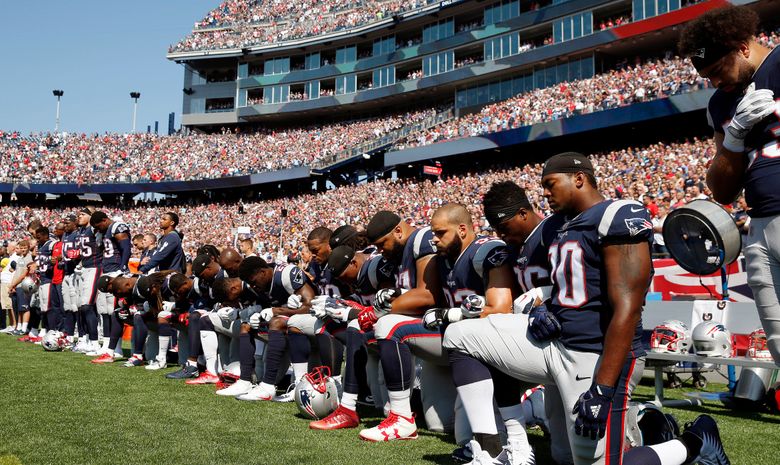
Unless you were in a coma under a rock inside a cave on Mars, you probably heard about the mass protests conducted across the NFL last Sunday. What exactly were they protesting, you ask? Well, that’s a hard question to answer and the fact that it’s hard to answer is pretty telling, in and of itself.

Officially, the protests were a stand against social injustice and a response to some trash talk by some high-ranking government official whose name I refuse to say, primarily because I don’t want to give him more attention than he deserves. Unofficially, it was the rhetorical equivalent of two colliding shit storms that only succeeded in creating a bigger storm.

There are many ways to protest injustice, corruption, and everything Gordon Gekko stands for. One of the perks of living in a relatively free society is that you get to attempt and experiment with a variety of ways. Sometimes petitioning works. Sometimes viral videos work. Sometimes just being Mr. Rogers and talking to people with unwavering kindness works.

Unfortunately, there are far more ways that fail instead of work. That’s just the nature of the world we live in. What Colin Kapernick did last year and what multiple NFL teams did last week succeeded to the extent that it raised awareness. While awareness is an important part of the process, especially in the era of the attention economy, that doesn’t mean that it achieved its goals.

More than anything else, it divided people within two tribes. In one, Colin Kapernick and the NFL are patriots in that they’re protesting in the name of the justice that the flag and the national anthem stands for. In the other, Colin Kapernick and the NFL are self-absorbed, virtue signaling drama queens who are disrespecting a symbol that many brave Americans fought and died for.

These are two irreconcilable ideas that kill any substantive conversation. They’re seeing the same picture, but interpreting it in wildly different ways. Instead of highlighting the egregious disparities in how the justice system treats certain minorities, it’s now a discussion about who has the a more patriotic hard-on for all things American.

That begs and important question. Which interpretation is right and which side is wrong? Who can truly say they’re being more patriotic than their counterparts? Well, here’s where it gets tricky and where I’m probably going to upset both sides. Bear with me, though. I promise I’ll try to inject some substance that both sides can use to further their cause.

First, I’ll answer those two questions definitively. I don’t expect everyone to agree with my answer, but I suspect I’ve already upset both sides already so I won’t bother making excuses.

“Both sides BELIEVE they’re true patriots. Both sides BELIEVE their opponents are anti-America. Neither side is inherently RIGHT, but BOTH are valid in their beliefs.”

I know. It sounds like I’m talking out of both sides of my mouth and a little out of my ass. Ignoring the influence of my ass, here’s where I’m certain I’ll upset both sides of the debate.

Regardless of how patriotic you feel, the American flag and the national anthem are symbols. No matter how universal you think they are, symbols are always subject to interpretation and those interpretations are rarely, if ever, agreed upon by every person in a society. Just look at all the symbols whose meaning has wildly changed over the centuries.

It’s because of this subjectivity that it’s possible for two people to look at it and interpret extremely different messages. That’s how one side can look at a flag and see the beauty of America. That’s how another can look at a flag and see the ideals America stands for and realizing that the people haven’t lived up to those ideals.

It seems impossible, but when you remember that irrational, tribal nature of the human species, it makes sense. In that context, the NFL and its players are patriots for telling Americans that they have not lived up to the ideals their flag stands for. The people booing them are patriots too for pointing out how they’re disrespecting the symbols and traditions that bind society together.

In either case, both sides can’t claim to be entirely objective. Those claiming that the NFL players are spoiled and using their positions of power to divide people probably wouldn’t feel that way if they were protesting something they agreed with. Change the message and the context and suddenly, they’re on the same side.

22008167_2038396299504671_1575711025395615984_n

Again, it’s an irreconcilable disagreement, as is often the case with such extreme tribalism. There’s nothing either side can do to convince the other that they’re the true patriots. It’s a downright tragedy because racial injustice is an important issue if we want to improve as a society. Once it becomes a discussion about who is more patriotic, then the protests and outrage behind them no longer matters.

That finally leads me to the practical part of this article. If you’re bummed out or frustrated at this point, then I thank you for sticking with me this long. I imagine some of you already hate my guts and think I’m trying to solicit money from George Soros and the Koch brothers.

I promise you I’m not doing this to win any favors with one particular political agenda. The suggestion I’m about to offer is being offered free of charge. Sure, I’ll kindly request that you buy one of my books or make a donation, but I won’t expect it. I’m still offering free insight into fixing a major problem.

With that said, and knowing that nobody in the NFL or their critics are listening, here’s how you protest social injustice effectively. It can be accomplished in one easy step.

“Make the protest easy, fun, and rewarding to join.”

I know that sounds easy on paper and for once, it kind of is. Granted, it’s not the same kind of spectacle as Colin Kapernick’s protest, but that’s kind of the point. It shouldn’t be that kind spectacle. It should be something else. Moreover, it should be fun.

The best example I’ve seen in recent years is the ice bucket challenge that briefly swept the nation a few years ago. For a brief time, celebrities and ordinary people alike participated in a fun show of solidarity that helped raise money for a worthy cause, namely the treatment of ALS.

It worked too. The ALS Association reported a record $3 million in donations because of this goofy ploy that was fun, easy, and entertaining to join. If it worked with ALS, why not racial injustice?

I’m not saying people should usurp the ice bucket part. I think the ALS folks have already branded that. Instead, protesting racial injustice should involve something different. Maybe it involves hugging someone, popping a balloon, or hitting yourself with a pie. It doesn’t have to be big. It doesn’t have to make sense. It just has to be fun, easy to join, and make people feel better about themselves.

Think of it as a way to weaponize the power of virtue signaling, making people feel better about themselves by doing something inane. In this case, there would be some substance behind it. In addition to the inanity, there would be a donation to organizations like the ACLU, Big Brothers and Big Sisters, or The Sentencing Project. It doesn’t have to be much, but if it’s more than zero, it helps.

If Colin Kapernick had taken this route instead of protesting the national anthem, would he be the poster child for all that is wrong with professional athletes not named O.J. Simpson? I don’t know, but it would attract more attention for the right reasons.

It would make his stand against racial injustice matter. It would get people to participate rather than remain numb or indifferent. Now that kneeling for the anthem has just become this never-ending argument about who’s the real patriot, the protest no longer matters. However, I don’t think it’s too late to change that.

2 Comments

Filed under Celebrities and Celebrity Culture, Current Events, Jack Fisher's Insights

Just How Close Have We Come (And How Close ARE We) To Nuclear War?

For most of human history, we could take comfort in one simple fact. No matter how brutish, crude, or stupid we were, from burning witches to fighting wars over a stray dog, we could never screw up so badly that we would destroy our entire world. Sure, we could leave some pretty noticeable scars, but we could never outright destroy it.

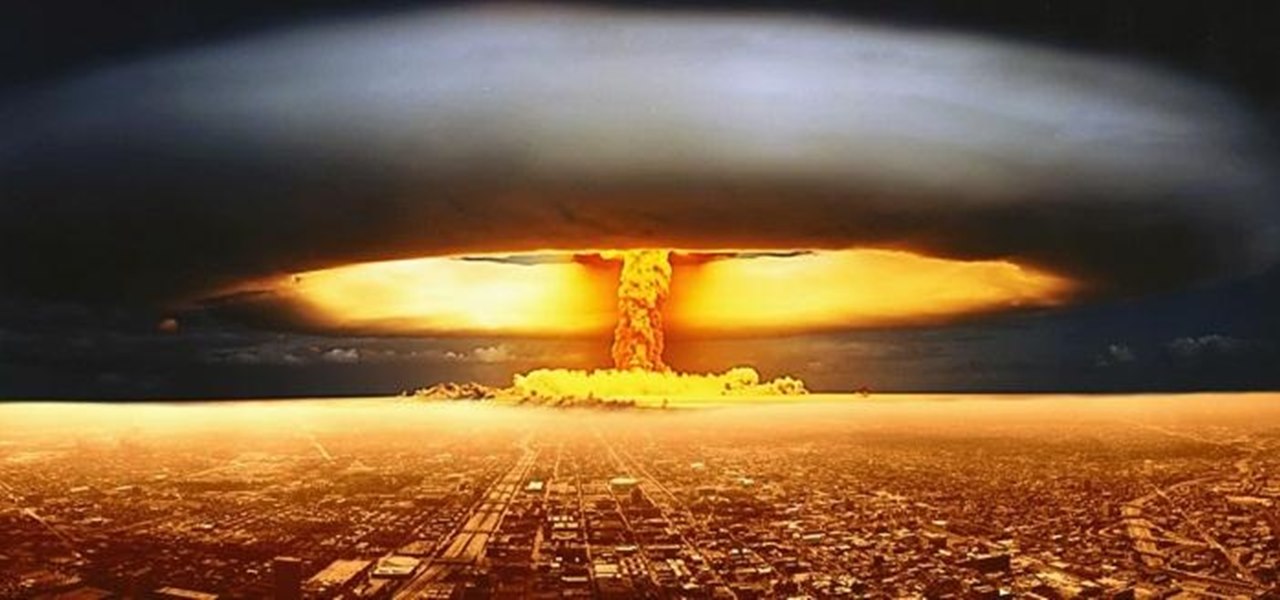
That all changed on July 16, 1945 in Los Alamos, New Mexico when the first atomic bomb was detonated. It’s impossible to overstate how significant that moment was in the history of the human race and not just because it helped end World War II, thereby inspiring countless war movies for decades to come.

For the first time in the history of planet Earth, a species that had evolved to hunt, gather, and pick nuts out of elephant shit had the means to wipe itself out, along with most other life. At the height of the Cold War, there were approximately 64,500 active nuclear warheads. That’s enough destructive power to kill every person in the world, and their pets, many times over.

While the number of live nuclear warheads at the global level has decreased, they still have plenty of destructive power to both wipe out our species and render large chunks of the world uninhabitable to any species less hardy than a cockroach. These are, by and large, the most dangerous items mankind has ever created and that includes machine guns, nerve gas, and fidget spinners.

The very existence of these weapons says a lot about the state of our species and where it came from, more so than I can cover in a single blog post. However, in wake of the 35th anniversary of the day when the world, as we know it, almost ended, I think it’s worth emphasizing just how skilled/lucky/crazy we are to still live in an intact world.

Despite the undeniable danger of nuclear weapons, we don’t always treat them with the same care that we would treat the latest iPhone. Several years ago, John Oliver dedicated an entire show to highlighting the sorry state of America’s nuclear arsenal. Even if you only believe half of what a comedy news show tells you, it’s hard to take much comfort when weapons of mass destruction are involved.

What happened on September 26th, 1983 was terrifying in just how close we came to nuclear war. Many would make the argument that this incident was the closest we, as a species, came to destroying ourselves. I would tend to agree with that argument. Unfortunately, it’s one of those arguments that has an uncomfortable breadth of details.

It’s true. There have been more incidents that could’ve easily escalated to terrifying levels. Some were simple accidents that could’ve warranted far more than a demotion. Some where intense, geopolitical ordeals that went onto inspire major Hollywood movies starring Kevin Costner.

In any case, the stakes were painfully high. You literally can’t get much higher than a nuclear war that wipes out billions. We’ve managed to avoid it, but we’ve come so uncomfortably close that it’s a miracle the world is still spinning. A video from the YouTube channel AllTimeTop10s nicely documents some of these incidents. If you feel like you’re having a bad day, this should help provide some context.

I’ll give everyone a moment to catch their breath, vomit, or a combination of the two. I promise nobody would blame you. Knowing how close we came to nuclear war and how bad it could’ve been, we should all share in a collective sigh of relief every day.

However, as bad as these past cases have been, there’s no guarantee that we won’t face something similar in the future. There’s also no guarantee that there will be someone like Santislav Petrov to make the right decision when those situations come around.

That said, the situation today is very different than what it was during the Cold War. Say what you will about ongoing talking points about Russia. It’s not even in the same hemisphere at it was in the 50s and 60s when the United States and Russia seemed eager for an opportunity to go to war.

The world of geopolitics has evolved, in many ways, beyond the concept of two competing superpowers engaging in a nuclear dick-measuring contest. These days, increased globalism and a more interconnected economy makes that kind of geopolitical strategy untenable and counterproductive.

In a sense, globalization and the economic bounty that came with it made war of any kind, nuclear or otherwise, a losing endeavor. As I’ve noted before, even the most evil billionaires in the world prefer that the world remain intact so they can keep enjoying their billions. That’s just common sense and shameless self-interest.

That might offer some comfort, but there are those much smarter than I’ll ever be who still have concerns. According to the Bulletin of Atomic Scientists, who have been gauging the likelihood of nuclear war for decades, we’re two-and-a-half minutes to midnight. This is their statement on the matter.

For the last two years, the minute hand of the Doomsday Clock stayed set at three minutes before the hour, the closest it had been to midnight since the early 1980s. In its two most recent annual announcements on the Clock, the Science and Security Board warned: “The probability of global catastrophe is very high, and the actions needed to reduce the risks of disaster must be taken very soon.” In 2017, we find the danger to be even greater, the need for action more urgent. It is two and a half minutes to midnight, the Clock is ticking, global danger looms. Wise public officials should act immediately, guiding humanity away from the brink. If they do not, wise citizens must step forward and lead the way.

Since I’m an aspiring erotica/romance writer and not an atomic scientist, I am woefully unqualified to contest the conclusions of these individuals, let alone argue them. They cite a new wave of tensions between Russia and the United States, as well as the nuclear ambitions of North Korea. These are not the same conflicts that fueled the Cold War and that uncertainty has many understandably spooked.

Me being the optimist I am, I tend to believe that world leaders, however deranged or misguided they may be, prefer that the world remain intact. Nobody wants to be the leader of a smoldering pile of ash. There’s no way to build a palace, a harem, or a giant golden statue of themselves on a foundation of ash. That’s as good an incentive as anyone can hope for in avoiding nuclear war.

Unfortunately, human beings don’t always act rationally and are prone to making stupid decisions that change the course of history. One mistake in a situation involving nuclear weapons might be all it takes. Only time will tell, but the extent to which we’ve survived thus far should give us all reasons to be hopeful and thankful.

7 Comments

Filed under Current Events, Jack Fisher's Insights

New Manuscript Submitted To Publisher!

I just wanted to make a quick, but exciting announcement. Earlier today, I submitted another manuscript for review to my current publisher, Totally Entwined Group. While they are still going through some transitions that I’m not at liberty to disclose, resulting in the delay of my upcoming novel, “Rescued Hearts,” they are still accepting manuscripts from published writers. That includes me.

I have high hopes for this novel. It’s quite different from “Rescued Hearts” and “Passion Relapse.” It involves love, romance, and intimacy, but not in the way you might expect. It actually plays off a thought experiment I’ve pitched on this blog before. I won’t say which, but trust me. You’ll know it when you see it.

Given the changes at Totally Entwined Group, it may take a while to get a response from my editor on this. If I hear back, I’ll be sure to make an announcement. I feel like this novel has the potential to turn into something bigger, if I can create an audience. I look forward to sharing more details about it once I hear back from my publisher.

1 Comment

Filed under Book Announcement

How Nuclear Weapons Have (Kind Of) Had A Positive Impact On Society

There are just some ideas in society that cannot and will never be justified. Concepts like sexual assault, spousal abuse, and the premature cancellation of “Firefly” usually come to mind. Some things are just so awful that the world would be objectively better if they didn’t exist.

Well, I’m going to put on some extra layers and change the locks on my doors this morning because I’m about to justify the existence of something that many rightfully dread and for entirely understandable reasons. I imagine my position will upset a certain crowd of people, especially the peace-loving hippie types that are fond of the sexier, more decadent stories I’ve written.

That’s because I’m going to spend this article justifying the existence of nuclear weapons. Given how I’ve covered just how close we came to nuclear annihilation about 35 years ago that may seem like a complete reversal. I promise there’s a logic to it, albeit a distressing kind.

First off, let me make clear that I find nuclear weapons abhorrent. The fact we have weapons that powerful and no killer aliens/superintelligent apes to justify them reflects the sad, chaotic state of affairs of our civilization. The idea that just one of the handful of nuclear armed countries can slaughter millions on the whim of an itchy trigger finger is nothing short of terrifying.

However, and this is where I’m sure I’ll lose the hippie crowd, they may also be responsible for our growing ability to avoid war and cooperate with one another. Please set the pitchforks down for a moment. Let me explain myself, at least as much as any aspiring erotica/romance writer can on such a sensitive topic.

Most of people alive today don’t remember a world without nuclear weapons. Sure, they’re terrifying in their destructive potential, but we’re kind of used to their presence. Most people today don’t give them a second, a third, or a tenth thought. The fact they’ve only ever been used twice in a conflict limits the impact of that terror.

Even if entire generations are numb to it, that doesn’t change the inherent horror or the destructive capabilities of these weapon. These weapons don’t just kill a few hundred or a few thousand people. They kill millions, and even billions, of people. At a time when any event that kills more than tens of thousand people is considered a global crisis, most people can’t even wrap their heads around such horror.

It’s because of that horror, though, that nuclear weapons incurred such a significant impact on the world. It’s not the kind of impact that we feel every day, but it’s one that has shaped the mindset of our society in the late 20th and 21st century. How it did that requires a little perspective that’s not easy for anyone under the age of 75 to understand.

Despite what cable news and conspiracy theories/performance artists may claim, the last 50 years have seen an unprecedented decline in war. That may evoke some heavy scoffs from those who hear terrible news out of Iraq and Afghanistan at least twice a day, but the data doesn’t lie.

Since 1945, there hasn’t been a major world war involving major world powers. Sure, there have been smaller proxy wars like Vietnam, Iraq, and Korea. However, those wars never even came close to the staggering death toll of World War II. Fittingly enough, that was a war ended by nuclear weapons, but it’s really the events that played out in the decades after that war that showed the impact of those weapons.

Now, thanks to weapons that could wipe out entire continents, nations couldn’t wage war on the same level they had for centuries past. Before the 20th century, a nation going to war with another was seen as standard business practices. You couldn’t call yourself a powerful nation without going to war and sending thousands of young men off to die on a battlefield. Some even tried to paint that kind of thing as glorious.

With nuclear weapons, there’s nothing glorious about incinerating entire cities in the blink of an eye. There’s no room for heroism, gallantry, or warrior spirit. One second you’re a live, flesh-and-blood human. The next, you and everything around you is a pile of radioactive ash. That fundamentally changes the image of war.

Suddenly, nations have a very good reason to not go to war, especially with a country that has nuclear weapons. It’s not just their soldiers that will die. It’s every city, town, and village within their borders. Even the most brutal, sociopath-like ruler can’t overlook the high cost of such a war. Most rulers enjoy the perks that come with ruling. Going to war is the quickest way to lose it all.

That’s the biggest impact that nuclear weapons have had, as a whole. They’ve made large wars on the level of World War II impossible, if not downright suicidal for all those involved. Say what you will about the ineptitude of modern nation states, but in general, they want to survive.

Making war that untenable is an objective good, on some level. Granted, that good is only achieved through the sheer terror and destructive potential that nuclear weapons possess, but the result is still the same. Going to war is no longer a viable means for a nation to grow. Instead, nations grow through economics and instead of war stories, that gives us smartphones, cars, and exotic music like K-pop.

Regardless of how you feel about K-pop, it’s much less destructive than any war. It could be argued, and I would tend to agree, that the lack of a major war is a big reason why the 20th and 21st century has seen the hugest economic growth, as well as the greatest reduction in global poverty, in recorded history.

Beyond just making nations too reluctant/terrified of going to war, nuclear weapons have had another impact on how global powers function. In the past, major nations went to war for stupid, petty reasons all the time. Why be diplomatic about anything when war is so much sexier? That’s how the British Empire got to be one of the largest empires of all time.

Then, nuclear weapons come along and suddenly, nobody can afford to be that petty anymore. Now, fighting a stupid war that could escalate for stupid reasons runs the risk of seeing your glorious empire reduced to ash in the span of a day. Nuclear weapons are just that powerful.

Fear, being such a powerful motivator, makes nations more inclined to talk a problem out rather than sending in the army. It requires them to make more of an effort to talk to rival nations, make mutual deals with them, and not rely so much on bully tactics because one might have a larger army. When nuclear weapons are involved, the size of an army means less than the size of their shoes.

That’s why, despite a fair amount of bravado on the geopolitical stage, modern nations generally prefer diplomatic solutions over war. When the alternative is nuclear annihilation, even the most petty rulers will opt to negotiate. As chaotic as the world might be, the presence of nuclear weapons makes war untenable and diplomacy indispensable.

Whether out of sheer terror or begrudging pragmatics, the advent of nuclear weapons has changed the way that modern nations conduct themselves on the global stage. By nearly every measure, that method is an improvement over the bloody wars of the past.

Most people who aren’t kings, despots, or related to one can’t appreciate the benefits of a world where war is so untenable, due to the presence of real doomsday-level weapons. Perhaps that’s for the best. So much of our time as a civilization has been spent dreading when we’ll be conscripted to fight a bloody war for some ambitious king/tyrant/emperor. Not having to live our lives with that fear counts as an improvement.

Now, as beneficial as this on some levels, it doesn’t discount the true danger of nuclear weapons. Make no mistake. These things can and will destroy us all if we use them, even on accident. The stakes literally cannot be higher when such weapons are involved, but if they help us function better as a species and a society, then I think that gives at least some merit to their presence.

2 Comments

Filed under Current Events, Jack Fisher's Insights

In Memory Of Stanislav Petrov: The Man Who (Literally) Saved The World

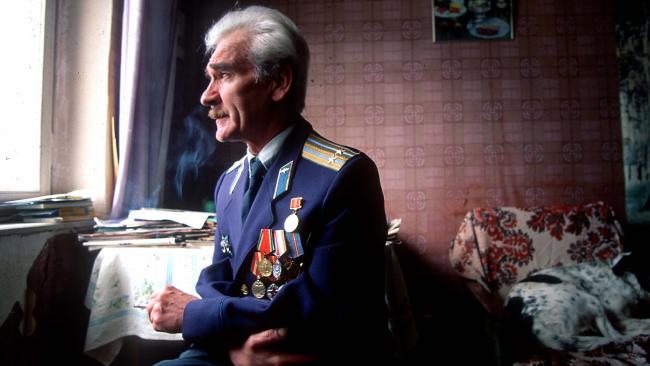
Stanislav Petrov

Today is an important day, one that became even more important this past year. You probably didn’t realize it and for good reason. Until recently, the significance of this day had been lost to history, but it’s a day that deserves recognition, albeit for a very sobering reason.

This day became one of the most significant days not affiliated with a holiday sale at the mall on September 26, 1983. On that day, the world as we know it almost ended. That’s not a hyperbole. That’s not a conspiracy theory out of a an Alex Jones fever dream either. It’s painfully true. The world almost died in a nuclear fire on that day, but it didn’t because of a decision made by one man.

That man’s name is Stanislav Yevgrafovich Petrov and if you were alive on that day, or were born after it, then you owe your existence to this man. For a brief moment on that day, 35 years ago, he literally held the fate of the world in his hand and he made the decision that saved it. As someone who regularly lauds superheroes and the values espoused in comics, even I can’t overstate the significance of what that man did.

The incident that almost ended the world and made Stanislav Petrov a man for the ages widely known about until the mid-2000s. It involved an incident in the former Soviet Union that brought the world to the brink of nuclear annihilation. In terms of worst case scenarios, this ranked right up there with an invasion by aliens armed with atomic anal probes.

At the time, Petrov was a lieutenant colonel in the Soviet Air Defense Forces and had been on duty at the Serpukhov-15 bunker near Moscow. In terms of Soviet defense strategy, his role in that bunker was pretty damn important. It was tasked with monitoring Soviet air space to detect an incoming nuclear attack.

It’s worth mentioning that this was a time of heightened tension. President Reagan, at the time, was going long and hard on anti-communist rhetoric. Being a former Hollywood actor who’d just been elected President, the Soviets had no idea if this guy was just going to shoot nuclear missiles at them because he thought it would make a great movie.

In a sense, this was the worst possible time for the systems at the Serpukhov-15 bunker to give a false alarm, but that’s exactly what happened. In the middle of Petrov’s shift, the systems began blaring every alarm it was possible to blare, telling them that America’s new Hollywood President had done just what they’d feared. He launched a full-scale nuclear attack to wipe out the Soviet Union.

I’d say it’s a nightmare scenario, but no amount of killer clowns armed with chainsaws can do justice to this kind of horror. As far as the men in that bunker knew, their country and everyone they loved was about to die in a nuclear inferno. It was the policy of the USSR and the Red Army to respond to any nuclear attack with a devastating retaliation, as specified in the doctrine of mutual assured destruction.

It was Stanislav Petrov’s job/duty to inform the Soviet high command of the detection. Every bit of his military training demanded that he inform his superiors to retaliate, thereby destroying the United States and Western Europe in reign of nuclear fire. In a state of such heightened tensions, he might have been justified in doing so.

All it took was one call to his superiors. That would’ve been it. That would’ve ended the world, as we knew it. Try and think about that for a second. In that moment, the fate of the world and billions of lives lay on the shoulders of Stanislav Petrov. If he makes that call, then the world as we know it is over.

However, in that moment when he literally had the world on his shoulders, he didn’t make that call. In that moment, he made a decision that saved the world and its future. He did it by not following the protocol that he’d been trained to follow and by the Soviet Union, no less, who were not known for being understanding to disobedience.

Petrov, with his duty and the weight of the situation bearing down on him, believed it to be a false alarm. He had good reason for believing this. The systems were detecting only several missiles, which was pretty small, given the sheer size of America’s nuclear arsenal. If America’s Hollywood President really wanted to wipe out the Soviet Union, he definitely would’ve used more.

Even so, his training and his duty told him to inform his superiors. He only had 15 minutes to do so because that’s how long it took for a detectable missile to reach its target. That’s right. In the time it takes to watch an episode of “Robot Chicken,” Stanislav Petrov had to make a decision that would’ve determined the fate of this entire planet.

The fact that no nuclear bombs went off and billions of people didn’t die is proof that he made the right decision. It was later determined that the false alarms were caused by a rare alignment of sunlight on high-altitude clouds and the erratic orbits of the Soviet’s satellites.

It seems so trivial now, but keep in mind that these were tense times during the Cold War. It really didn’t take much to spook either America or the USSR. It could’ve easily become a perfect storm, of sorts, for accidental nuclear annihilation and nobody would’ve been left on this planet to admit they screwed up.

It’s because of Petrov’s decision that day, to not follow protocol and trust his instinct, that we avoided Armageddon. For that decision, Petrov received no metal, commendation, or recognition for his decision. He just got a pat on the back, which was the most anyone could hope for in the Soviet Union at that time.

This man literally saved the world in the most painfully literal sense, but was quickly forgotten. There were no parades, movies, or free tickets to a Madonna concert. Petrov just went back to living his life until he retired from the military.

It really wasn’t until 2004 that Petrov began getting recognized for his actions, that day. By then, though, the weight of that moment had lost its place in the public consciousness. The fact I have to write about it on this blog shows just how little awareness this man and that fateful day have in the annuls of history.

Well, in this year, that day became a lot more important because back in May, Stanislav Petrov passed away at age 77. It wasn’t widely reported. It didn’t even get mentioned on any of the major news outlets in America or Russia. This man who saved billions of lives isn’t even alive anymore to appreciate.

He lived a quiet, unremarkable life towards the end. He never considered himself a hero. He never even tried to put that label on himself. He was just the right man in the right place to make the right decision. In doing so, he saved billions of lives and preserved the future of this planet.

It’s impossible to overstate the importance of the decision that this man made on that fateful day 35 years ago. Some may brag that they saved the world or are arrogant enough to think that they can. Stanislav Petrov didn’t need to brag because he did it. He saved this world and most people will never know what he did.

Now that he’s passed, let’s all take a moment to appreciate what this man did. By trusting his instinct and his humanity, not wanting to make the decision that would destroy this world, he proved just how heroic a person could be in the worst of circumstances.

From the bottom of my heart, and on behalf of all those who are alive because of the decision made that day, thank you Mr. Petrov. Thank you for doing the right thing in the worst of circumstances. This world is still spinning because of you. Rest in peace knowing you saved it.

7 Comments

Filed under Celebrities and Celebrity Culture, Jack Fisher's Insights

The (Real) Crisis Of Faith In Society

Every now and then, I hear some pundit, politician, and/or professional troll lament about the ongoing “crisis of faith” in society. They’re not entirely wrong in their whining. The numbers don’t lie. Religion, especially the organized variety, has been declining significantly over the past decade throughout the western world.

I won’t get into the particulars of that decline. I’ve already given religion a hard time on this blog, especially when it gets taken to extremes. While I stand by my criticisms, I don’t want to give the wrong impression. I respect religious people and the various religious institutions that do wonderful work.

I should also note that I have some devoutly religious people in my family, whom I love and respect dearly. I don’t want to disparage their beliefs or the fulfillment they get from them. While there was a time when I used to seek out heated debates with religious people, I’ve since realized how pointless and counterproductive they are. As I’ve said before, winning arguments rarely changes the harsh truths of reality.

With that in mind, I do agree with part of their lamentations. I honestly do think that there’s an ongoing crisis of faith in society, especially in Western society. However, it’s not the kind of crisis that the televangelists, the militant atheists, and the card-carrying Satanists of the world have in mind.

To illustrate that crisis, I’ll need to depict a couple scenarios that should make a significant number of people uncomfortable. For this, I apologize, but I think it gets my point across better than any burning bush, fiery sermon, or tax-exempt initiative.

The first scenario shouldn’t be too hard to picture for anyone familiar with the Playboy Mansion. For this, I want you to imagine an ordinary man standing in a large room, surrounded by a 100 women. The man doesn’t have to be Hugh Hefner and all the women don’t have to be Playboy Playmates. It just has to be one man and 100 women in the same room. How do you think that man feels in that situation?

Anyone who has seen a few overtly sexy music videos shouldn’t have too hard a time surmising that sentiment. If he’s a straight man, then he’s probably feeling like a kid in a candy story within a toy store within a water park. He’s probably looking around with a goofy grin, crunching the numbers in his head and wondering which of the 100 women will want to touch his penis.

It’s a goofy, juvenile scenario that most just shrug off as harmless male fantasy. Even if the man is gay, chances are he doesn’t feel threatened or unsafe in any capacity. Being surrounded by women doesn’t garner those kinds of feelings. There’s a deeper message there, but one that only becomes clear when you picture the second scenario.

For that scenario, I want you to something similar. This time though, just flip the genders. Make it so there’s a woman in a room surrounded by 100 men. It’s similar to an exceedingly distressing thought experiment that I pitched before. This isn’t quite like that, but it gets an important message across.

This is a scenario that I’ve actually heard some women use when talking about rape and sexual violence. That’s because in that scenario, if we’re all being honest with ourselves, that woman probably doesn’t feel lucky or safe. One women in a room with 100 men is a situation that evokes discomfort on a level that’s hard to articulate, but easy to understand.


The woman in that scenario isn’t imagining which of those 100 men might be her future husband or, at least, a good one night stand. That woman is dreading every worst case scenario ever inspired by reruns of “Law and Order: SVU.” Her survival instincts go into overdrive because she doesn’t just see a room of men. She sees a room of men who might be inclined to rape her.

As a man, I can’t help but take offense to that notion that women assess men solely on how likely they are to assault her. However, I can completely understand the sentiment. The numbers aren’t on my side. In pretty much every major category of violent crime, men are far more likely to be perpetrators than women. There’s nothing sexist about it. That’s just what the numbers say and they don’t inspire a lot of faith.

In recent years, there has been growing awareness of rape culture and increasing efforts to decrease sexual violence against women. While that is an innately noble effort, seeking to reduce the unsexist forms of violence in our culture, it hasn’t always been entirely honest. In some cases, it inspires moral panics that claim video games cause sexism or just criticizing a woman constitutes a form of assault.

I won’t get into the absurdities of those concepts, as I’ve only so much energy and this blog only has so much bandwidth. I’ll just say that some of the hysteria that such efforts inspire, as noble their intentions might be, are what fuels the escalating crisis of faith and I fear that crisis is escalating to disturbing levels.

In this case, it’s not about faith in a higher power, a collection of deities, or some divine force that determines who wins football games every week. The faith I’m talking about here is more personal. It’s the faith we have in each other, as human beings.

On some levels, we’ve always had it. When you order a pizza, you have faith that the people making the pizza and the one delivering it will make it right and not spit in the dough. When you call a doctor, you have faith that this person knows what they’re doing and will do the right thing in treating you when you’re injured, sick, or vulnerable.

Beyond institutions, we also have faith that our neighbors won’t murder us the first time we meet. We have faith that the people we love really love us back. We can’t read other peoples’ thoughts or know with absolute certainty that their feelings towards us are genuine. However, the simple fact that we, as a society, are able to function and get along to some degree is a testament to the faith we have in one another.

Now, I fear that faith is being undermined by the various hysterias that plague our collective consciousness. Some of it is a byproduct of news media, the internet, and social media where terrifying news is easier to spread and garners more attention. That’s understandable, given how fear is such a powerful motivator.

However, and this is a concept that’s not easy to accept, that fear often clouds our judgment and skews our perspective. It’s an unfortunate byproduct of our caveman brains, which almost always gives the edge to perception over reality. Things that scare us get our attention. Our survival instincts, by necessity, over blow any possible threat in order to ensure our survival.

That fear is the universal counter to faith and since it’s so easy to spread scary things in the age of the internet, it’s easy for our faith to be undermined. It might be for that same reason that organized religion is taking a hit. The internet is making it too easy to look up the many absurdities of a religion and its associated frauds.

Again, I don’t wish to denigrate those with sincere religious beliefs, nor do I want to make light of those who use their beliefs to justify atrocities. However, the faith that many have in a higher power, even within a less religious society, only seems to go so far when it comes to other people.

In a sense, it reflects the sentiment that many parents express to their kids when they have a bad attitude. I heard it from my own parents on more than one occasion. If you expect the worst of a person or situation, then that’s what you’ll experience. Assume the worst and it will usually find you, if only because you invite it.

Thanks to our declining faith in other people, we’ve become far more prone to assuming the worst in others. I know that’s hard to avoid for some people, especially when they’ve been the victim of harassment or violent crime. However, in this case, the numbers are actually on our side.

I’ve shared the story of how I came to believe that people are generally good. For those looking for less anecdotal evidence, the data is pretty clear. There are approximately 7.5 billion people on this planet. The amount of violent crime is only a fraction of a fraction of a fraction of that. We would not even have that many people on this planet if we, as a species, were so inclined to harm each other.

It’s one of those rare cases where faith and facts are actually in alignment. Most of the data we have paints a fairly clear picture. In general, people are good if you give them the chance. Think of it in terms of a game of chance. If you want to win, you want the odds in your favor. As such, if you’re a smart gambler, betting on people to be good is the best bet you can make.

However, just being naturally good isn’t enough. What good are those instincts if people don’t have faith in them? If people are inclined to assume the worst, then they’ll be just as inclined to expect it and when you expect the worst, you tend to attract it. It’s the worst kind of self-fulfilling prophecy.

I get that it’s hard to have faith in people when social media is lined with volumes of stupidity and hate. That’s part of what makes faith such a powerful force in our lives, even when it’s absent of religious connotations. That’s also part of what makes it so vital in our efforts to create a better society.

With that in mind, think back to the second scenario I mentioned with the woman in a room of 100 men. This time, though, I want to add some extra bit of context. I concede that there’s a chance that at least one of those men will be an asshole who tries to assault the woman. However, I have faith that those men would be grossly outnumbered and outmatched by those who will feel inclined to protect that woman.

That’s the kind of faith that I believe we need, these days. Yes, there will always be bad people in this world, but I believe those people will always be outnumbered, overpowered, and outgunned by those who are good. Hopefully, more people come to share in that belief.

9 Comments

Filed under Current Events, gender issues, Jack Fisher's Insights

Sexy Sunday Thoughts: Foliage Edition

Well, according to the calendar, fall is officially here. That’s right. It’s time to put the bikinis away, break out the heavy coats, and envy all the lucky assholes who live in a tropical climate for the next eight months. It’s going to be a long winter is what I’m saying.

As much as I’ve expressed my fondness for all things summer, I don’t deny that fall has its appeals. In addition to football being back, it’s also cooler without being too cold. You can get away with wearing shorts and not sweating so much that you smell like a wet dog. For a guy who loves to sweat for all the right reasons, that’s important to me.

Then, there’s the foliage. I don’t care what those lucky assholes in tropical climates say. Fall foliage is a sight to behold. I happen to live in an area where the changing leaves is pretty damn beautiful. I’d even go so far as to say it’s sexy. All that extra color, combined with a greater need to stay warm, creates all sorts of sexy situations.

It’s not the same as bikinis and speedos, but it’s still a unique brand of sexy. That’s why I’m going to get the ball rolling on fall by dedicating this week’s edition of Sexy Sunday Thoughts to the changing leaves. Sure, we have to rake them later, but let’s enjoy the spectacle while we can. It’s a special kind of sexy so let’s make the most of it.


“Given men’s natural love of breasts, aren’t push-up bras redundant?”


“Is it possible that babies conceived in winter were also part of an effort by couples to save money on their heating bill?”


“Sex is the only activity in which women don’t mind procrastination.”


“Is it possible that the first nipple piercing was a product of someone not wanting to admit how clumsy they are when drunk?”


“Are crazy people really better in bed? Or are sane people just too unwilling to make the extra effort?”


“When you think about it, the afterglow after sex is like a reverse hangover.”


“The amount of a woman’s body that a man’s lips have touched is one of the best measurements of his commitment.”


I hope that got everyone’s blood flowing, if only to give them the strength they’ll need to rake up the leaves. Summer may be officially over, but there’s a way to be sexy in every season. Granted, some seasons are more challenging than others, especially those not conducive to thong underwear, but I’m up for that challenge and I intend to deliver.

1 Comment

Filed under Sexy Sunday Thoughts