Five Reasons Why “X-men: The Animated Series” Was More Progressive Than You Think

DNcLvqLVQAAI1iI

This past Halloween was extra sweet for a certain group of comic book fans, one that I just happen to be part of. Even if you’re not a comic book fan and were just a kid of the 90s, growing up on a steady diet of Saturday morning cartoons, this year marked a special milestone for one of the best shows of that era.

Yes, it involves superheroes. Yes, it involves X-men, which I often go out of my way to discuss. Yes, it involves this iconic theme music that has since become my ring tone.

That insanely catchy guitar rift that got stuck in the heads of millions of fans is from “X-men: The Animated Series.” On October 31st, 1992, this series debuted on Fox Kids and countless childhoods were forged from that day forward, including my own.

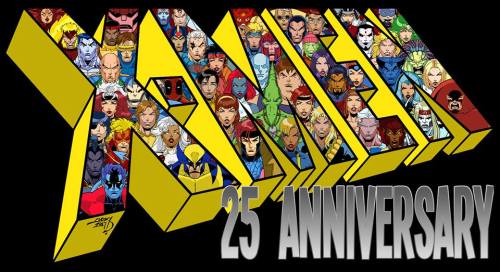
That was 25 years ago and while that thought makes me feel way older than I care to feel, it still brings back fond memories. One of my favorite parts of the day, as a kid, was rushing home from school, turning on the TV, and watching my favorite shows. “X-men: The Animated Series,” along with shows like “Spider-Man” and “Power Rangers,” were a big part of my carton diet.

I largely credit this show and “Spider-Man” for getting me into comic books, superheroes, and everything that came with it. I also credit those shows with giving me an early understanding of character development, romance, and storytelling, which would go onto help me write my sexy novels.

For that reason, and many others, “X-men: The Animated Series” has a special place in my heart. I imagine many X-men fans feel the same way because it was this show that helped the X-men really peak in the 90s. What the Avengers are today, the X-men were in the 90s. They were very much the alpha and omega of all things involving superheroes.

While this 25th anniversary gives me time to reflect fondly over how much this show enriched my childhood, my life as an adult has only further expanded my perspective. When I look back on “X-men: The Animated Series,” I’m somewhat amazed by how relevant it still is in terms of theme, drama, and story.

It’s easy to forget that this series came out at a time when most cartoons followed a simple, predictable formula, regardless of whether or not superheroes were involved. There was evil. The heroes found out about said evil. They fought it. Then, the credits roll. “X-men: The Animated Seriesdared to think bigger.

While the animation and voice acting might be somewhat dated, this show dared to speak up about social issues. It dared to explore ideas of hate, bigotry, and discrimination. At a time when parents were still fighting mortal crusades over rock music, this show tried to be relevant in a new way.

Now, as I look back on this series that lasted for five years and 76 glorious episodes, I realize just how progressive and insightful this show truly was for its time. As more and more forms of media, including comics, push for greater diversity, “X-men: The Animated Series” found a way to pull that off 25 years ahead of schedule.

In a sense, the X-men have always been about progressive themes like inclusion, diversity, and justice. Even though some of those words have become toxic today, they embodied the best of it, going back to its earliest days of drawing parallels with the Civil Rights movement. This show just captured it at a time when it a new form of progressive concepts were taking hold.

So, in honor of the 25th anniversary of this show,  I’d like to highlight five reasons why “X-men: The Animated Series” was even more progressive than you remember. Even if you’re not a fan of X-men or comics, it’s amazing to think that a show from 25 years ago achieved so much of what others are trying to accomplish today.


“Genuine bigotry and hatred was depicted in ordinary people.”

To X-men fans, it seems obvious. Bigotry and hatred are very much a part of the X-men’s DNA, going all the way back to their early days in the 60s. However, for a kids cartoon, this was akin to Miley Cyrus flashing her tits on an episode of “Hannah Montana.”

X-men: The Animated Series” did not water down the themes of blind hatred and bigotry espoused in the comics. If anything, they took it a step further by giving a voice, putting that blind hatred on display through characters like Graydon Creed.

This especially played out in the second season where hate groups like the Friends of Humanity formed. They’re the anti-mutant equivalent of the KKK. Their hate was so blind and deep that when one character, Jubilee, asked them why they hated her so much, Creed said simply, “You were born!”

That kind of hatred is harsh in real life, let alone a kids show. The fact that this show gave the X-men more than just monsters, tyrants, and aliens to fight showed an uncanny, if that’s not too fitting a term, willingness to scrutinize these painfully real issues.

As a kid, I barely understood it. As an adult, I’ve come to appreciate it even more. I like to think that exposing that kind of hate in a cartoon showed an entire generation of kids what true assholes look and sound like. Given the amount of assholes in this world, those lessons were invaluable. Plus, it was way more entertaining than “Sesame Street.”


“The characters were diverse and had vastly different personalities.”

Here’s a quick question that should trigger some unpleasant conversations on message boards, as if there are any others. Look at the cast of the Avengers movie. Aside from talking raccoons and androids, what do you notice? They’re mostly men, they’re mostly white, and they mostly have the same avenging personality.

Now, look at the X-men. You’ve got an uptight white guy, a burly Canadian, a sexy southern woman, an African goddess, a smooth-talking Cajun, a giddy teenage girl, and a guy in a wheelchair. Even by today’s absurd diversity standards, the X-men check a lot of boxes. They’ve been checking those boxes since long before diversity was even an annoying buzzword.

It’s not just that the cast of “X-men: The Animated Series” was diverse on the surface. It’s not just that they disagreed with each other, as the Avengers frequently do. They had such wildly different personalities that didn’t always mesh. Cyclops and Wolverine alone had all sorts of clashes and not just over wanting to sleep with the same redhead.

That kind of diversity of thought and personality is something modern cartoons, TV shows, and movies still struggle to achieve. “X-men: The Animated Series” managed to achieve that at a time when Hillary Clinton was still likable. It was a big accomplishment at the time and one that only gets more impressive as the years go by and people still fight about diversity in media.


“The show did feminism and strong female characters RIGHT.”

x-ladies

I’ve said it before and I’ll keep saying it in future posts. Talking about feminism is dangerous, divisive, and frustrating, especially in wake of recent scandals. Nobody seems to know how to even handle feminism or strong female characters who aren’t Wonder Woman. Long before the “Wonder Woman” movie raised the bar, though, “X-men: The Animated Series” made sure it set that bar pretty damn high.

Even by modern standards, “X-men: The Animated Series” found a way to do feminism right. Unlike other cartoons, the female characters weren’t part of the supporting cast or relegated to roles of a love interest. They actually participated on the same level as the male characters.

They didn’t have to create new female characters or force a female character into a male role. “X-men: The Animated Series” simply took characters like Storm, Rogue, Jubilee, and Jean Grey and maximized their strengths. They gave them personalities, power, and individual stories. They didn’t have to show up their male teammates. They could stand on their own and thrive as women.

In terms of feminism, “X-men: The Animated Series” was at omega-level standards long before it became a priority. At a time when we’re still struggling to make solid female characters, it’s remarkable and refreshing to see how well it was done.


“The show didn’t shy away from harsh, dramatic moments.”

People used to make a big deal about cartoon violence. The big worry was that kids would see a cartoon duck fighting with a cartoon rabbit and think that playing with double-barreled shotguns were toys. It was a very different, very strange time, to say the least.

X-men: The Animated Series” basically gave a big, adamantium finger to this debate, at least to the extent that they could get around the network censors. This show did not shy away from the harsh, dramatic moments that had played out in the comics. In fact, in the second episode of the series, one of the characters dies.

Keep in mind, this is a kids show where characters are not allowed to curse or show blood. The fact that this show killed a character in an early episode, and referenced death on more than one occasions, showed a remarkable willingness to portray real struggles with real stakes. Sure, it probably upset a few parents, but it sent a powerful message about the real world.

X-men: The Animated Series” dealt with real issues of bigotry, hatred, and intolerance. As such, it couldn’t water down the harshness and the pain it incurred. These are issues that people are still reluctant to talk about today and this show brought it up during the Clinton Administration. That shows both guts and foresight.


“The villains, heroes, and themes had layers of complexity.”

Watch any cartoon made before 1992 and chances are the characters you see will be pretty basic. You have your evil, mustache-twirling villains. You have your generic good guy/hero types. You have exaggerated violence and shameless toy promotions. There’s not a whole lot of depth there.

X-men: The Animated Series” once again dared to do more. It dared to let its characters grow and evolve over the course of five seasons. It’s an approach that worked so well that others, like the “Spider-Man” cartoon that debuted two years later, went onto adopt it. These characters had all sorts of layers and depth in the comics. The show chose not to simplify it for a young audience and embrace that complexity.

Sure, characters like Magneto, Sinister, and Apocalypse came off as generic bad guys at first, but they developed more and more depth as the series went on. There were even times when Magneto came off as genuinely sympathetic. For a kids show, these moments were pretty heavy and something you just wouldn’t get with the Ninja Turtles.

Today, everyone is trying to give their characters that Walter White style of complexity. Everyone is trying to create a series with a sense of progression. Well, “X-men: The Animated Series” were already doing that in the days of dial-up internet.


The fact this show succeeded to the extent that it did, while being as progressive as it was, even by modern standards, is nothing short of uncanny. After 25 years, the show still has a special place in the hearts of X-men fans. Sure, the animation and dialogue may be dated, but those progressive themes have never been more relevant.
10 Comments

Filed under Comic Books, Jack Fisher, Superheroes, X-men

How “Happy Death Day” (Surprisingly) Enriches Horror/Slasher Movies

When it comes to horror/slasher movies, it’s hard to break new ground these days. That’s because most still cling to the tried and true formula established by the likes of “Friday The 13th” and “Halloween.” That means there is usually going to be some crazed killer, some horny teenagers, and some sweet, yet sexy virgin who survives it all. You can practically set your watch to it, along with the standard jump scares.

It’s for that reason that slasher movies aren’t really as big a draw as they used to be. On top of that, they tend to be annoyingly sex negative and not in a subtle way either. If you’re a horny teenager in a slasher movie, then there’s a 99 percent chance you’ll be dead by the time the credits roll.

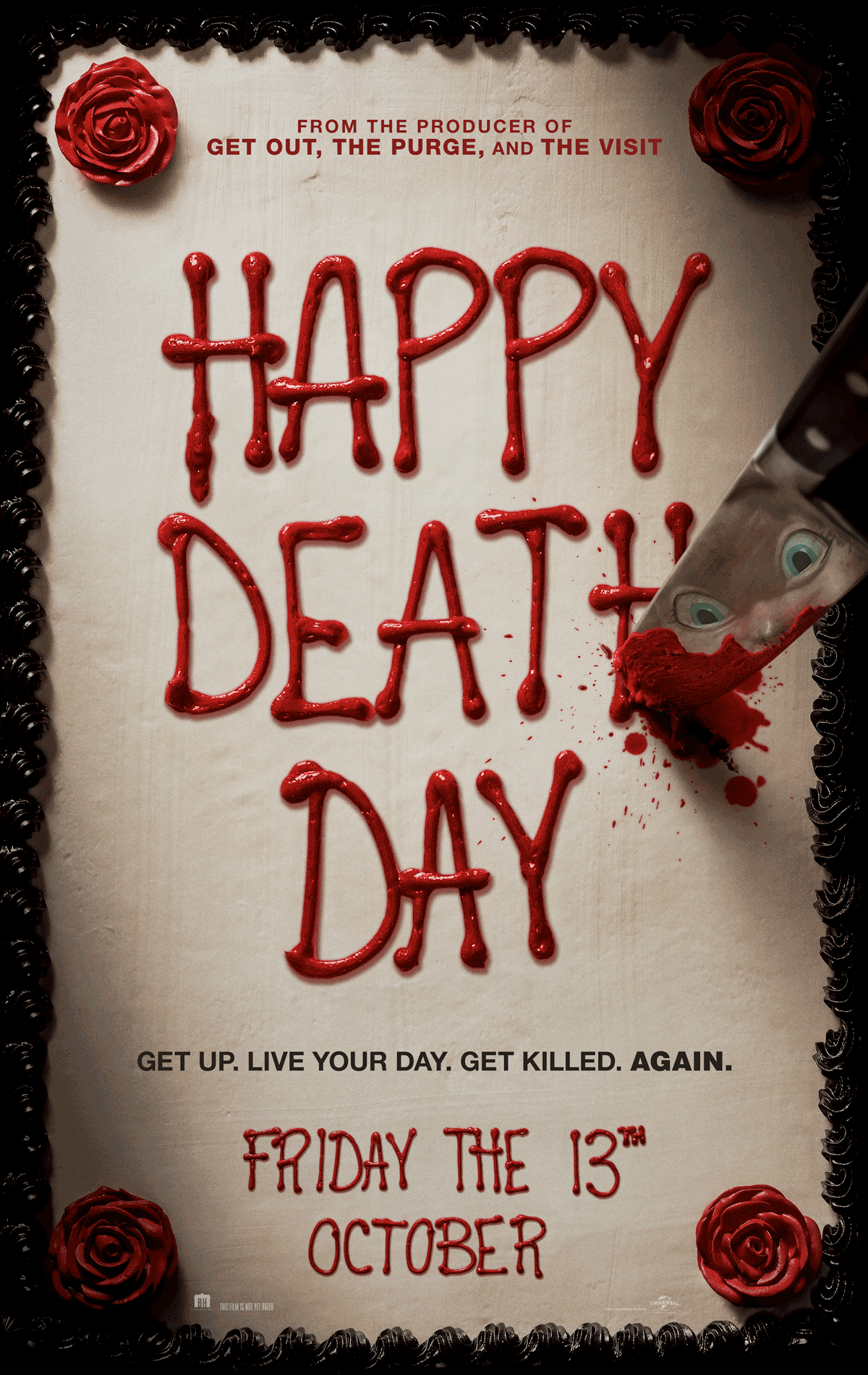
That’s why when a movie comes along to shake up that narrative, it’s worth noticing. That brings me to a recent horror movie that caught my intrigue and defied my expectations. It’s called “Happy Death Day” and, apart from the goofy title, it accomplishes something remarkable.

The first major accomplishment, for me personally, is that the trailer actually made me want to see the movie. In this era where every movie trailer follows a similar formula, we’ve all become fairly numb to their effects. We know what they’re trying to do and how they’re trying to do it. Unless you were already planning to see the movie, as is often the case with superhero movies, then a trailer probably won’t do much.

With “Happy Death Day,” the trailer struck a chord for me because it presented a different kind of slasher/horror movie. Moreover, it did so in a way where the concept was more appealing than the actual slashing/horror. Whereas most horror movies will try to build every promotional effort around that horror, “Happy Death Day” threw something else into the mix that proved enticing.

That concept may not seem radically new, on paper. “Happy Death Day” doesn’t radically reinvent the genre as much as it innovates with established concepts. It’s basically a combination of “Friday The 13th,” “Final Destination,” and “Groundhog Day.” It uses familiar themes like masked killers, time loops, and  exceedingly elaborate scenes. However, it’s the way in which they’re presented that makes the movie work.

It also helps that the presentation is done through a beautiful female protagonist named Teresa “Tree” Gelbman, who is played by a very emotive Jessica Rothe. Beyond being a pretty face, though, Tree embodies everything audiences love to hate about beautiful, sexually active women in horror movies.

She’s shallow, callous, self-centered, dismissive, and just plain mean. I won’t say she’s on the same level as Regina George from “Mean Girls,” but she’s in the same time zone. Essentially, she’s basically a female version of Phil Connors in “Groundhog Day” in the sense that she’s a fairly reprehensible person that we’re not supposed to like from the get-go.

When someone is nice to her, she just blows them off. When someone tries to wish her a happy birthday, she just rolls her eyes. On top of that, she’s openly promiscuous, hooking up with her friends’ boyfriends and having an affair with her married teacher. By every measure, this is a girl who should be at the top of Jason Voorhees’ kill list.

However, “Happy Death Day” actually digs a bit deeper than “Groundhog Day” in that, over the course of the movie, we learn why Tree is the way she is. She isn’t just bitchy for the sake of being bitchy. There’s a reason for it and as the movie goes on, it’s hard not to root for her as she struggles against her killer.

Speaking of her killer, that’s another part about “Happy Death Day” that stands out. Unlike Freddy Krueger or Jason Voorhees, there’s never a sense that this killer is someone to root for. In typical slasher movies, it’s easy to root for the killer because they have a certain personality or charisma to them. That’s not the case here. In a sense, the killer in this movie is less a person and more deadly obstacle for Tree to overcome.

I don’t want to reveal too much about the killer because that would be getting into spoiler territory. I enjoyed this movie enough to actually want people to go and see it or rent it. This movie definitely is worth seeing because it doesn’t play out entirely like a traditional slasher/horror movie. There are twists and turns that help it stand out.

That leads me to one of the most unique and intriguing elements of “Happy Death Day.” Unlike so many other slasher movies, this movie doesn’t implicitly penalize characters for being overly sexual. I won’t go so far as to say it’s sex positive, like the “Deadpool” movie. Essentially, it’s entirely sex neutral and for a horror movie, that’s still pretty remarkable.

What happens to Tree in “Happy Death Day” has nothing to do with the fact that she’s a beautiful young woman who enjoys having sex for the fun of it. If you take away the sex, but keep the rest of her personality traits intact, she’s still the same person. She would still be subject to the same horrors that unfold throughout the movie.

Her being trapped in an endless cycle of being killed and re-killed has little to do with her promiscuity and everything to do with what a rotten person she is. That’s the part of her that puts her in the crosshairs of a killer. Overcoming that rotten persona is every bit the struggle as the one that involves running from a psycho-killer.

Needless to say, it gets pretty chaotic and messy. Being a horror/slasher movie,  “Happy Death Day” has more than its share of gratuitous violence and bloodshed. That’s one horror element that this movie doesn’t try to subvert, but it doesn’t have to. It just makes it work in a whole new way.

Now, I enjoyed this movie thoroughly. I highly recommend others see it as well, either in theaters or on TV when it comes out. That’s not to say it’s flawless, though. There are some elements in “Happy Death Day” that left much to be desired.

For one, the movie is rated PG-13. While I understand the studio wanting to appeal to a wider audiences, I think that was a mistake for a horror/slasher movie. At times, the violence and nudity seem incredibly watered-down. Compared to a standard “Friday The 13th” sequel, it felt unbelievably tame.

On top of that, some of the supporting characters, namely the nice/generic love interest, Carter Davis, played by Israel Broussard, left a lot to be desired. Carter is likable and all, but he comes off as too flat. There’s never a sense that he and Tree should be together for any other reason beside the fact he’s nice. While it never feels outright forced, it lacks depth.

There’s also the somewhat tongue-in-cheek humor that the movie tries to squeeze in. It tries to be meta in that it acknowledges that elements of the story are similar to “Groundhog Day.” This effort falls somewhat flat and kind of takes away from the drama. I get why it’s there since the parallels are so obvious, but saying it out loud really undermines the mood.

Even with those shortcomings, “Happy Death Day” was still an incredibly enjoyable experience. I honestly can’t remember the last time I enjoyed seeing a horror/slasher movie in the theater. The concept, the story, and the characters involved all offered a unique appeal, one that dared to defy traditional horror formulas. For that, I give this movie two thumbs up and a special place on my list of horror movies.


1 Comment

Filed under Movie Reviews, sex in media

Another Month, Another Traffic Bump

I just wanted to make a quick post about the recent traffic with this site. Once again, I’m proud to report that October 2017 marked another increase. It wasn’t much, but it still counts, in my book. In total, www.JackFisherBooks.com logged 1,799 views for the month.

I know that’s not going to set the internet on fire or make me a best-selling author, but I still consider it progress. I’m still working hard to make this website an enjoyable part of everyone’s internet diet. Rest assured, I will continue in that effort. I have many sexy topics and announcements to share. I look forward to more sexy discussions that will hopefully further my efforts to be an erotica/romance writer.

To all those who support this website, I sincerely thank you and I hope it continues. My goal is to leave the world a sexier place. I like to think that with these increases in traffic, I’m making progress.

Leave a comment

Filed under Uncategorized

Scare Tactics, Sex Education, And The (Post-AIDS) Future

Let’s face it. We all have embarrassing memories about how we learned about sex. It might as well be a law of physics among youth. At some point, you’re going to learn about sex. Shortly after that, you’ll probably learn something you didn’t want to learn from a parent, teacher, or priest.

For me, one particular memory stands out and it’s one I suspect most people my age share, as well. It happened in health class during middle school, just as puberty kicked in. It had nothing to do with male or female anatomy. I already knew about that, thanks to my parents. This particular lesson was more basic in that it had a simple message.

“If you get AIDS, you will die.”

It wasn’t as much a lesson as it was a warning. Everyone in that class had been learning about sex, at least as much as any public school was allowed to teach us. We were all at that age when we started thinking, wanting, and obsessing over it. Then, this distressing caveat gets thrown into the mix and suddenly, these overwhelming desires we can’t turn off take on a whole new context.

I’m not going to lie. That was pretty terrifying. The idea that doing something you were hardwired to do, and needed to do for the propagation of the species, could kill you was akin to being forced into a cage match with a chainsaw-wielding John Cena.

It’s one thing to avoid angry predators, sharp cliffs, and confined spaces with O.J. Simpson. It’s quite another to avoid the natural horniness that comes with being human. It gives the impression that sex is so dangerous and so risky that we might as wear hazmat suits while doing it.

Thankfully, I was mistrustful enough of my health teachers to learn more on my own. Even with lousy, dial-up internet, I was able to find out that a some of the dangerous claims my teachers had given me about sex, disease, and all those other lurid topics was not entirely accurate.

Granted, I understood why they used those kinds of tactics on young, hormonal pre-teens like me. Back then, AIDS was a death sentence. A diagnosis with AIDS was like a diagnosis of terminal cancer. When it started claiming the lives of celebrities like Rock Hudson and Eazy-E, even hormonal kids took note of the danger.

It was still a dick move, though, using those kinds of scare tactics on hormonal teenagers. I remember entire classes dedicated to teaching kids the horrors of AIDS and other nasty diseases that we could get if we didn’t have sex in the way the Catholic Church or the Saudi Arabian government approved. In case you’re wondering, yes, some schools still use these tactics.

Ignoring, for a moment, the outright cruelty of scaring kids like that, it’s worth noting that the situation with AIDS and other diseases is very different. Medical science has advanced. Innovations in antibioticsanti-viral drugs and vaccines have improved treatment or even cured some of those terrible diseases that my teachers used to scare me with.

While AIDS still has no cure, it’s not a death sentence anymore. Just ask Magic Johnson. There’s even a pill called Truvada that, when taken daily, can prevent the spread if the HIV virus. While it’s still a huge problem in places like Sub-Saharan Africa, we’re at the point in modern medicine where it can be managed.

However, it’s not going to stop there. At some point, medical science will cure diseases like AIDS. We’re already closer than you think and I’m not just referring to recent advances in technology like CRISPR.

Just this past month, a research team at the Scripps Research Institute developed a method that effectively blocks the HIV virus from infecting new cells. They’re calling it a “functional cure” in that, while it doesn’t remove the virus from the body, it effectively stops it from spreading.

This news comes shortly after the National Institutes of Health announced that they had produced an anti-body that blocks 99 percent of all HIV strains. If the results are replicated, that means a functional vaccine is not that far off. Add tools like CRISPR to the mix and it’s entirely possible that there are children alive today that will never have to worry about diseases like AIDS.

Given the amount of suffering this disease has caused, that’s an undeniable good. However, it removes a major tactic from the arsenals of sex educators who don’t want teenagers experimenting with their genitals. Now, I can understand that worry to some extent. Teenagers do have a history of doing stupid things and not just with their genitals.

Even without that stupidity, how are teachers going to convince horny teenagers to keep their pants on when they can’t scare them with diseases like AIDS? How many parents are going to gasp in horror at the notion that their precious little angels might be able to have sex with minimal consequences?

I ask these questions only half-jokingly. I also ask them with the full understanding that I may have kids of my own at some point and I too might vomit uncontrollably at the thought of them having sex. Given our collective capacity for excuse banking, I don’t doubt that anxious parents and teachers will come up with some sort of scare tactic to discourage teenagers from having sex.

It’s just going to get a lot more challenging in a world where diseases like AIDS are no longer a factor. History is certainly not on the side of those clinging to such puritanical attitudes. As I’ve mentioned before, the advent of modern antibiotics played a major part in the sexual revolution of the 1960s. A cure for AIDS might incur the same.

If that weren’t challenging enough, advances in contraception are sure to compound that effort. Advances like Vasalgel for men and IUDs for women will make it so that even the fear of pregnancy won’t be much of a scare tactic. Unlike every other generation of teenager, those in the near future may never have to worry about the kinds of consequences that have plagued horny teenagers for centuries.

That naturally doesn’t sit well with the uptight regressive crowd that belabors personal responsibility and bemoans any level of sexual freedom that goes beyond what the Catholic Church sanctions. In years past, they could refer to diseases and unwanted pregnancy to justify those attitudes. Once those factors are removed, what will they have left?

Never mind the fact that teenagers are already having less sex now than previous generations. In the minds of parents, priests, and health teachers, it’s still too much. I could bemoan how much of that reflects our poor, unhealthy attitudes towards sex, but that’s not going to change minds or sell sexy novels.

A part of me genuinely worries that there will be some people who actively oppose treating diseases like AIDS. There’s already a precedent. There are people out there who oppose the widespread use of Gardasil, a vaccine meant to treat HPV, a common virus that is often transmitted during sex and known to cause cancer.

Think about that for a moment. There are people in this world who are willing to risk young people, including their own children, getting cancer rather than risk them having care-free sex. That shows the lengths certain people will go to in order to ensure sex still has serious consequences. It says something about these attitudes when they feel they need those consequences to get their message across.

In time, some of these regressive attitudes may fade. These days, most people aren’t going to be publicly scorned for not being a virgin on their wedding night. Some parts of the world still cling to those attitudes, but most people in the developed world don’t have to worry about the Spanish Inquisition bursting into their bedroom and arresting them for having sex just for fun.

Better education will help improve attitudes and addressing the orgasm gap will go a long way, as well. It’s hard to know for sure what a future health class will look like in a world without AIDS or major disease. That world isn’t here yet, but it’s fast approaching. Parents, priests, and puritans of all stripes need to prepare. However, we should worry about how far they’ll take those preparations.

1 Comment

Filed under gender issues, Marriage and Relationships, Second Sexual Revolution, Sexy Future

Have A Happy (And Sexy) Halloween!

It’s that time of year again. If you’re a lover of candy, horror movies, or dressing in sexy costumes outside of comic book conventions, this is your time. That’s right. It’s Halloween! Some holidays don’t need any type of sexy twist. Some just find a way to be sexy without the aid of an aspiring erotica/romance writer, although I still try to contribute to the sexiness as best I can.

This is one of those rare holidays where kids and adults, alike, can find a way to have fun. For kids, it’s the promise of free candy and staying up way past their bedtime. For adults, it’s the prospect of dressing in a sexy costume or seeing other people wear sexy costumes. Everybody finds a way to win.

So on behalf of aspiring erotica/romance writers everywhere and those who just love free candy, I wish you a happy and sexy Halloween! Get out there, wear something sexy, watch some old horror movies, and gorge on every kind of candy you can find.

There are any number of ways to have a great Halloween. Take advantage of the opportunities however you can. What other time of the year gives you an opportunity to see sexy Yoda costumes?

2 Comments

Filed under Uncategorized

A Scary (Yet Sexy) Story Before Halloween

It’s the day before Halloween. I’m already working up an appetite for candy, I’ve binge-watched an unhealthy amount of slasher movies, and I’m eagerly awaiting the sexy costumes I’m sure to see. Halloween is an underrated holiday, is what I’m saying. I’ve said it before, but it’s worth belaboring.

In the spirit of this sweet, sexy holiday that adults and kids alike can embrace, I’d like to contribute in a way that goes beyond handing out candy, drinking pumpkin ale, or wearing my sexy male nurse costume. Yes, I have a sexy male nurse costume. Men can be sexy nurses too, you know?

While I’m sure some are burned out watching overly-censored version of “Friday The 13th” and “Halloween” on cable, I think there’s still room for a scary, yet sexy Halloween story. As it just so happens, I happen to have one that I would like to share. Hopefully, it gets everyone in the Halloween spirit. If it makes you horny too, then that’s just a bonus.

This particular story takes place during my first year of college. I’ve shared sexy college stories before, but this one is unique in that it was more a legend around campus. I wasn’t there when it happened, but it had already become part of the culture there and, being a curious freshman, it really resonated with me.

Apparently, this story had been circulating around the school for a couple years now. Nobody knew that it was true, but it sounded like it could be true and that’s kind of what made it scary. Sure, it has a sexy twist, but there’s still that creepy undertone that you only ever feel around clown, black cats, or guys wearing hockey masks.

It didn’t have an official name, but I called it “The Tale Of The Cursed Cupcakes.” I promise it’s not as corny as it sounds. I also apologize if I get some of the details wrong because it has been a while since I told this story, but I think it’s worth sharing on the night before Halloween.


The sun had just set. Halloween had officially begun. A young couple, Eric and Karen, were set to go to the biggest Halloween party on campus. This was one of those parties that only a select few got invited to. Eric happened to be a former roommate with someone who helped organize it so they managed to get in. For him and his girlfriend, it was a big deal.

They go to the party wearing their best costumes. He’s dressed as a pirate. She’s dressed as sexy school girl. They arrive at an upscale apartment just off campus. It’s a place usually reserved for students at the school who have rich parents, scholarships, or both. The food is better, the alcohol isn’t cheap, and the toilets actually work. By college standards, it might as well be a luxury penthouse.

Eric and Karen arrive at the party just after eight. They meet up with the host, a somewhat colorful character named Michael Bowers. He has a reputation throughout campus as being somewhat eccentric. His family contribute heavily to the school and works as a trainer with the football team, which gives him all sorts of access. The guy has connections and he’s not afraid to use them.

As soon as they enter the party, they find out he’s used them well. He reserves the party room at his apartment building and he goes all out. He orders multiple kegs, sets up tables full of snacks, and even hires a professional DJ. At the center of it all is this big plate of cupcakes, each designed to look like eyeballs with big blue irises. Karen finds them kind of creepy, but she figures that’s just part of the Halloween theme.

“Welcome!” Michael greets them, dressed as a vampire. “Here, have a cupcake or several. I promise they’ll get you in the spirit!”

“Whatever,” Eric says, shrugging his shoulders. “I’m just here to have a good time with my girl.”

“You’re sweet, babe,” Karen replies, giving him a nice kiss.

They both eat their cupcakes. They’re warm and sweet, definitely better than anything bought in a store. Eric ends up having another. Then, he and Karen grab some beer, some snacks, and start dancing to all sorts of Halloween-themed music.

More people arrive. Michael greets every one of them, offering everyone cupcakes. Most accept them, thinking little of it. They then join in the fun. They eat, they dance, and they laugh. Like Karen and Eric, they want to have a good time.

Then, after a couple hours or so, everyone has had their share of drinks and snacks. Intoxication takes over and inhibitions disappear. It’s fun, decadent, and everything Karen and Eric expect of a party. Then, Karen starts to notice something odd.

Eric, who isn’t that drunk, gets a little friskier than she expects. As he dances with her, he starts kissing her neck, feeling up her thighs, and even squeezing her butt. This surprises her because he’s usually doesn’t get that overt in public. He usually saves that kind of intimate touching for the bedroom. He’s kind like that.

Before she knows it, though, his touching becomes more overt. He kisses her in the middle of the dance floor and not in a romantic sort of way. He does so in a way that makes it clear he wants to fuck her.

“God, I want you, Karen,” he tells her with an almost-predatory tone. “I’m so fucking horny right now!”

At first, she thinks he’s just drunk. Then, she feels it. When he pulls her deeper into his arms, it literally pokes her right in the thigh. Eric has a raging hard-on. He doesn’t even try to hide it. When she looks down, she sees he has pitched a full tent in his pants. It’s so big and hard it looks like the seams are ready to burst.

“Eric, what has gotten into you?” Karen wonders.

That’s when she notices something else. Looking around her, she sees similar behaviors between other couples. Some are already making out. Some rushing into darkened rooms. Some are engaged in full-fledged foreplay right on the spot. It’s not coy or playful either. It’s like something has gotten into them.

“Fuck, I’m so hard right now!” she hears one man say.

“Hey! Someone get in my pants right now! I’ve got a hungry snake and he’s ready to bite!” says another.

It’s getting intense. The men around her, and even some of the women, seem possessed. Something has gotten into them and it’s not just the alcohol. They’re like animals in heat. Someone or something has provoked them and Eric is one of them.

He’s now looking at her with the eyes of a hungry animal. She’s never seen him like this before. He’s usually so polite and sweet. On this night, though, he’s a raging ball of masculine prowess and he wants to take it out on her. At first, Karen is worried that something might be wrong with him.

Then, he does it. Eric leans in, nibbles on her ear, and slips a hand between her legs. He does this because he knows it turns her on. He knows it gets her in the mood. He doesn’t usually do it unless the time is right. This might not be that time, but it’s too late. The damage has been done. Now, she’s horny too. Whatever monster has consumed her boyfriend has consumed her as well.

“Please, Karen,” he whispers into her ear with that tone he knows she can’t resist. “I want to fuck.”

“Okay,” she tells him. “Let’s go find some privacy.”

“I know just the place!”

Without hesitation, he grabs her hand and leads her away from the party. He’s been to this apartment complex before. He knows it better than most. He practically sprints across the building, eventually finding the locker room area near the pool, which has been closed for the night.

They enter. It was odd that it had been unlocked, but Karen didn’t bother making sense of it. She just followed her boyfriend inside. He then led her towards one of the changing areas, pinned her against the wall, and slid her panties down her skirt.

There was little foreplay or sexy talk, which was unlike Eric, who was such a caring lover. When he dropped his pants, though, she saw the sheer size of his erection and was convinced.

“Fuck! What has gotten into you, Eric?” Karen gasped in amazement.

“I don’t know, but I want it in you too!” he tells her.

He makes good on his desires. With that massive boner, he goes onto give Karen the hardest, rawest fuck of her life. It’s so raw and primal, as though a demon has possessed her boyfriend and the only way to exorcise it was to fuck her senseless. It was intense, but powerful. She could even feel it herself, this demonic lust filling her as he fucked her.

It’s not quick either. He ends up fucking her multiple times, blowing multiple loads. Karen finds herself climaxing more than once too. She swears she hasn’t come this many times since her prom night. For a moment, it seems as though this demonic lust was going to consume them completely.

Eventually, though, they vent their powerful lusts. They’re tired, sore, and dazed. Karen is still a little scared. What just came over them? What just happened?

“We should go,” she finally says after all is said and done.

“Yeah, we should,” Eric says, sounding just as overwhelmed.

They leave the party without saying goodbye. They make it back to the dorm where they shower, sober up, and fall asleep.

The next day is awkward and confusing. They’re still not sure what to make of it. Eric is unusually silent. Karen worries that the monstrous lust is still in him and he’s trying to fight it. She starts to worry whether that party brought out something in them they didn’t know. Did that party reveal a monstrous side to them that they weren’t ready to handle?

Then, later that day, they’re in their dorm together. Eric gets a phone call. It’s his own roommate who’d gotten him an invite to the party. At first, Karen doesn’t make much of it. Then, she hears Eric burst out laughing. Curious, she approaches her boyfriend.

“What’s going on, Eric? What’s so funny?” she asks.

“Viagra,” he tells her, still laughing hysterically. “The cupcakes had Viagra in them!”


That, my friends, is “The Tale Of The Cursed Cupcakes.” I hope it helps inspire your Halloween spirit, among other things. Again, this is a story I only heard from my fellow schoolmates. I don’t know if it’s true. I don’t think it matters. It doesn’t make the story any less sexy.

Leave a comment

Filed under Jack Fisher's Insights

Sexy Sunday Thoughts: Halloween 2017 Edition

There are certain holidays that will always be underrated. Say what you will about Halloween, offensive costumes, or the unhealthy consequences of eating too much candy. It’s still a damn good holiday that children and adults, alike, can enjoy in their own unique way.

Honestly, my appreciation of Halloween didn’t really take hold until college when I learned that young, horny women don’t need many excuses to dress up in a slutty costume. That’s when I realized that Halloween isn’t just a kids holiday or a reason to watch slasher movies. There’s a fun, sexy spirit to it all and I say it’s worth celebrating.

I’ve praised the sex appeal of Halloween in the past. I intend to keep praising it every year, for as long as beautiful women take advantage of the opportunity to dress sexy and enjoy the fun. Society gives us precious few opportunities to enjoy our sexy side in a way that won’t get us arrested or shamed. Let’s use them while we can.

Halloween is just a few days away so work up an appetite for both candy and sex appeal. Hopefully, this week’s edition of my Sexy Sunday Thoughts can get you in the Halloween spirit.


“Nobody can truly call themselves a genius until they’ve convinced their lover that giving oral sex has health benefits.”


“Those who oppose contraception for subverting the natural breeding process must REALLY hate World of Warcraft for doing the same thing.”


“Are men who lie about the size of their dicks any more dishonest than women who wear push-up bras?”


“Learning about sex from a celibate priest is like learning about computers from the Amish.”


“Talk is cheap, but the value of dirty talk during sex is exceedingly under-valued.”


“A gigolo who doesn’t have sex with clients is basically a butler.”


“Most people hate micromanaging, but tend to make exceptions when it comes to orgasms.”


I hope this inspires everyone to get out there, put on the sexiest costume you can legally wear, and celebrate Halloween in your own special way. Dine on buckets of candy. Drink bottles of pumpkin-flavored alcohol. Take advantage of the fact that for one night, we can get away with dressing in ridiculously sexy outfits and ask strangers for candy. In terms of holidays, you really can’t lose.

1 Comment

Filed under Sexy Sunday Thoughts

The Unspoken Gender Disparity (Of Sex Toys)

I talk a lot about our current attitudes towards sex and the various problems it causes in our society. There are a lot of ways those attitudes manifest and my sexy novels can only do so much to expose them. Many of those attitudes have a clear and frustrating gender bias, which always inspires heated debates.

To reveal the breadth of this disparity, here’s a quick little test you can take. It doesn’t matter if you’re a man, woman, or something in between. It’ll reveal a little something about yourself and the way this disparity affects us. It goes like this.

A young woman walks up to you. She seems healthy, happy, and sane. She then tells you, “I own a vibrating dildo that has the look, feel, and texture of a real penis and I use it regularly to pleasure myself.” How do you react?

Shortly after, a young man walks up to you. He seems just as healthy, happy, and sane. He then tells you, “I own a sex doll that has the look, feel, and texture of a real vagina and I use it regularly to pleasure myself.” How do you react?

If we’re being honest with ourselves, and I know that’s not always easy or possible, we’ll react very differently to the man than we do the woman. Fundamentally, they’re both saying the same thing. They use a sex toy as a means of satisfying their basic desires when they don’t have a partner.

However, we don’t see either person the same way. The idea of a woman using a sex toy conjures all sorts of lurid mental images about a woman alone, surrounded by candles, touching herself in all sorts of wonderfully erotic ways. That imagery is the basis of a good chunk of the porn out there.

The idea of a man doing something similar conjures a very different kind of imagery. We don’t see that scene as erotic. Most likely, we’ll picture an ugly, lonely man in his basement, humping an imitation of a vagina because he’s too pathetic to experience the real thing.

Unlike the woman, there’s nothing sexy about it. At most, it just reminds us of that iconic scene in “American Pie” that had Jason Biggs going to down on a pie. On top of making everyone inherently suspicious of warm pies, it acts as a testament to how hilarious/pathetic men can be in their pursuit of sex.

It’s a double standard in the highest order, a concept I’ve explored before. It’s just one of those double standards that gets lost in arguments about a woman’s body image or the basics of sexual harassment. You could even argue that it’s an extension of the war on horny men. It’s hard enough being that horny. Any effort to satiate it is going to be met with added scrutiny.

In the middle of this huge double standard is a fundamental engineering challenge that mankind has yet to solve. Specifically, it involves sex toys. While these wondrous tools of pleasure have made incredible advances in recent years, there are still certain deficiencies that further the disparity for men and women.

Go into any place that sells sex toys and chances are you’ll be bombarded by every phallic-shaped accessory that it’s possible to imagine. If you want something that looks like an erect penis, you have an abundance of riches.

You can choose a penis made of glass, plastics, or a hyper-realistic synthetic. You can get one that vibrates. You can get one that has a clitoral stimulator. They even come in every imaginable size, shape, and color. Given the simple, basic structure of an erect penis, it’s fairly easy to replicate with our amazing tool-making skills. That’s a major reason why dildos are among the oldest, most successful sex toys of all time.

Contrast this with the options for toys resembling female genitalia. Sure, you’ll see the occasional blow-up doll, hand-held pussy, or molding based on a famous porn star, but chances are it won’t look or feel very real. These things are basically rubber and plastic. They’re incapable of mimicking the intricacies of actual vaginas.

While this is a testament to wonder that is a real vagina, it leaves the straight men who seek them at a frustrating disadvantage. It’s bad enough their natural, fully-functioning penises can never compete with a dildo that is always hard and vibrates to stimulate the deepest recesses of female anatomy. They don’t have something similar that delivers an equally intense experience.

At the moment, the closest approximation men can enjoying a real, artificial vagina comes from extremely advanced sex dolls like those made by Real Dolls. However, those super-real synthetics are extremely expensive, especially when compared to the average dildo.

It’s possible to get a quality vibrator these days for around fifty bucks and no shame. Even the cheapest accessory offered by Real Dolls will run you over four hundred dollars. On top of that, a man who admits he owns one is going to be subject to a fair amount of scrutiny and ridicule. Bud Bundy from “Married With Children” is proof enough of that.

That kind of disparity is bound to cause problems and not just through egregious double standards. As technology advances and sex dolls become more advanced, as well as full-fledged sex robots, the realism gap will narrow. It may have taken way too long, but there will come a day where a sex toy will give a man a sexual experience that’s indistinguishable from that of a woman.

However, this has already inspired controversy. There are some out there who would decry the use of such realistic sex toys because it literally objectifies the female body into something men can purchase. That’s something the radical, sex-negative crowd has been bemoaning for decades.

Ironically, these same individuals are relatively silent when it comes to the continued sale of realistic dildos. I imagine if someone came along and argued that if sex toys that mimic the female body should be banned, then all those penis-shaped accessories should be banned too in the name of gender equality. I imagine that would not go over well, even among radical feminists.

For now, though, the disparity remains. A woman has access to every kind of penis-shaped satisfaction she could hope for at a price most anyone can afford. An average man with an average income is out of luck and any effort he makes to satisfy his desires will be subject to added scrutiny. If he tries too hard, he’ll be labored a creep.

It’s not fair. It’s a complete affront to anyone who claims to be in favor of gender equality. If we’re going to endure the current disparity between male and female sex toys, we should at least offer a measure of understanding and sympathy.

Both genders have desires. Both genders want to share those desires. Let’s work together in that effort. I intend to do my part with my sexy novels. Those busy/horny scientists in sex toy labs like Real Dolls will surely do theirs. Collectively, in the name of all things sexy, we must be willing to do ours.

5 Comments

Filed under gender issues, sex robots, Sexy Future

Vasili Arkhipov: Another Man Who Saved The World

It’s amazing and sobering to think that there was a point in human history where one person held the fate of the entire world in their hands. We’re a species that can barely be trusted with fireworks. How can we possibly be trusted with weapons so deadly they can end all life on this planet?

Whether we can be trusted or not, these weapons cannot be uninvented. They’re here and they’re a part of the human condition. I’ve made the argument that in some ways, they have benefited the human race. That doesn’t make all the times we’ve come distressingly close to nuclear annihilation any less distressing.

Last month, I highlighted a man who, at one point, held the lives of every person on this planet in his hand. His name was Stanislav Petrov and this year, he passed away shortly before the 34th anniversary of the 1983 nuclear false alarm that almost triggered nuclear war.

That incident was horrifying in that it came so distressingly close to unleashing a nuclear war and due to a computer malfunction, no less. However, there was another incident two decades before that, one that was also disturbingly close in terms of unleashing a nuclear holocaust. Today, October 27th, happens to mark the anniversary of that terrifying, yet sobering event.

Unlike the 1983 incident, though, this is not one of those lesser-known incidents that got swept under the rug for several decades. This involved something called the Cuban Missile Crisis, a terrifying event that most kids learn about in school.

The official story is fairly well-documented. Cuba becomes a communist state, the Soviet Union tries to base mid-ranged ballistic missiles there, the United States is not okay with that, tensions escalate, and eventually, the situation diffuses when both sides realize that negotiating is a lot easier than nuclear war.

Most kids probably know names like Kennedy, Khrushchev, and Castro. They’re the main players who get the credit/blame for bringing the world to the brink of nuclear war. However, there’s one name that few in America or Russia know about. Like Stanislav Petrov, his name is largely an afterthought in history, but at one point, he literally held the fate of humanity in his hand.

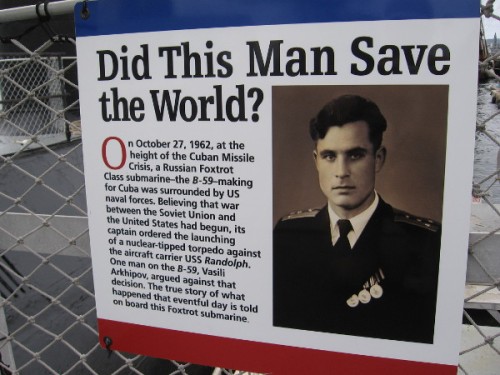
His name is Vasili Arkhipov. He was a high-ranking officer in the Soviet navy. What he did on October 27th, 1962, may very well have saved the world, as we know it. The fact that he did this at a time during one of the most tense standoffs in history makes his accomplishment all the more remarkable.

To appreciate what he did, it’s important to understand just how close the Cuban Missile Crisis came to going nuclear. At one point, a Soviet nuclear-armed submarine was stationed in international waters near Cuba. It was then detected by US destroyers and, in a message that seems pretty mixed in hindsight, began dropping depth charges to force it to surface.

Keep in mind, this sub is armed with nuclear weapons. They also had the authority from Moscow to launch those nuclear weapons if they suspected that war had already started. Once those depth charges started dropping, it’s easy to understand why the officers on board thought that the bombs were already dropping.

That’s where Vasili Arkhipov enters the picture. On that sub, every ranking officer believed that they had to launch. Their sub was running out of air and as far as they knew, if they surfaced, they would only be inhaling radioactive fallout. Everyone on that sub voted to launch. The only one who didn’t was Vasili Arkhipov and because of that, the launch never happened.

Why did Arkhipov’s vote carry so much weight? Well, before he had the fate of the world in his hands, he’d already distinguished himself in an incident involving an ill-fated Soviet submariner called K-19. Like the Cuban Missile Crisis, it resulted in a sub-par movie.

However, the movie did get one thing right. Vasili Arkhipov was a badass who knew how to make hard decisions. Why else would he have been played by Harrison Ford? That incident established Arkhipov as someone whose voice carried more weight than most in the Soviet navy. Even when he was outvoted and outranked, he could make decisions and other people would follow them.

That’s a big part of what sets someone like Vasili Arkhipov apart from Stanislav Petrov. You could argue that Petrov was just in the right place at the right time to make the right decision. That alone makes him a hero.

With Arkhipov, the decision wasn’t as clear-cut. He was an officer in the navy. He had a rank, a responsibility, and a role in one of the most tense geopolitical situations in the history of mankind. He was in a floating coffin surrounded by enemy ships with every other officer wanting to launch a nuclear strike.

He could’ve easily chosen to go along with his fellow officers. Given how badly humans respond to peer pressure, that would’ve been the easiest thing for Arkhipov to do. The fact he chose otherwise is a testament to his ability to do the right thing in a moment where the right thing is hard to grasp.

To appreciate just how hard that decision was, Arkhipov wasn’t even praised for his decision. In fact, he and his crew were disgraced for surfacing in the first place. Sure, he averted a nuclear holocaust, but he didn’t follow the proper protocol that he should’ve after being discovered by the Americans.

Granted, that protocol didn’t involve starting a nuclear war, but it showed weakness during a geopolitical shit storm. This wasn’t like the the 1983 incident in that it could be swept under the rug. This was the Cuban Missile Crisis. You don’t call something a crisis unless it’s that big a deal.

That’s what makes Vasili Arkhipov’s actions on that day all the more remarkable. He was not praised, commended, or even celebrated for his decision that day. He might not have even realized that he had the fate of the human race in his hands at that moment. Remember, he made that decision at a time when, for all he new, nuclear war had already started. Despite that, he did the right thing.

Unlike Stanislav PetrovVasili Arkhipov didn’t live long enough to see his accomplishments acknowledged. He died in 1988 in relative obscurity. He may not have a holiday or a monument named after him, but like Stanislav Petrov, he made a decision that saved the world.

Image result for vasili arkhipov grave

It’s still scary to think that any one person was in a position to make such a decision to begin with. However, the fact that both he and Petrov were able to do it says more about humanity than any weapon ever will.

4 Comments

Filed under Current Events

Al Bundy Syndrome: The Face Of Learned Helplessness

Some concepts are so vague that it’s hard to put a human face on it. I suspect that’s part of why many people suck at math. You can’t personalize it, humanize it, or imagine it on a pair of breasts. Even things that directly affect people, like learned helplessness, are hard to grasp.

That’s why if you find a way to put a human face on a serious issue, you jump at the chance. It doesn’t just make it easier. It makes them memorable in an unexpected way. I consider the concept of learned helplessness a serious issue that affects our personal lives, our professional lives, and our sex lives. It goes beyond the world of an aspiring erotica/romance writer. It’s way bigger than we’re comfortable admitting.

That’s why, in the interest of putting a human face on a serious issue, I’d like to present the greatest personification of learned helplessness in the history of media. Some of us grew up with him. Some of us were appalled by him. He’s a myth, a legend, and an icon in his own tragic right.

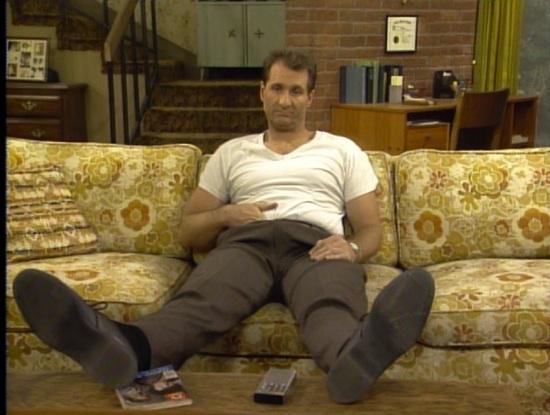
His name is Al Bundy, the hapless husband and father of the Bundy family from the Fox classic, “Married With Children.” To those who have watched every episode and love the show as much as I do, you already understand why Al is the perfect embodiment of learned helplessness.

For those who aren’t familiar with “Married With Children” or why it was such a groundbreaking show, I feel sorry for you. For most people under the age of 20, they have no idea how much this show shook our collective understanding of modern television.

Say what you will about the trash currently on TV now, but before “Married With Children,” it was much worse. By worse, I mean they were boring. Most sitcoms were bland, generic, feel-good stories that tried to paint the world in an overly-rosy picture. Every one of them basically tried to capture the spirit of “Father Knows Best” or “Leave It To Beaver.”

Married With Children” saw that and decided to do the exact opposite, so much so that when it was in development, the title of the show was called “Not The Cosbys.” It was a show where all the conflicts weren’t solved at the end. It was a show where the world wasn’t idealized, perfect, or fair. In other words, it was more in line with the real world.

In that world, Al Bundy gets dealt a worse hand than most. At one point, he was a high school football star with a promising future. Then, he got hit with a streak of bad luck that effectively crushed his spirits.

He got injured and lost his football scholarship. He got involved with Peggy Bundy, a woman I’ve cited before as a character that men should rightly dread. He eventually has two kids that don’t respect him and works a dead-end, low-paying job as a shoe salesman.

While other sitcoms glorify the innate dignity of working class men like Ralph Cramden, Archie Bunker, and even Homer Simpson, there’s nothing glorious about Al Bundy’s life. There’s nothing noble about his poverty. He doesn’t even try to come off as sympathetic. His life doesn’t raise the bar or embody an ideal. If anything, it reminds ordinary people just how bad things can get.

Whereas other TV sitcoms try to uplift an audience by showing how loving, functional families solve their problems in a simple, 30-minute show, “Married With Children” sent a different message. It presented the audience with a level of dysfunction so extreme, so exaggerated that even if you’re home life was a mess, you could take comfort in the fact that you were not the Bundy family.

What makes that message so powerful is also what makes Al Bundy such a perfect example of learned helplessness. Fittingly enough, the actor who played him, Ed O’Neill, actually drew inspiration from someone in his own family.

In a sense, Al Bundy was built around the idea that he was just resigned to his fate. He realized how much his life sucked, that his family didn’t respect him, and that his best days were behind him. Dealing with all that in addition to working a dead-end job effectively destroyed his spirit, so much so that he stopped trying to better his situation.

That perfectly reflects some of the early experiments done about learned helplessness, namely those involving a poor dog that just stopped trying to avoid painful shocks. Al Bundy is basically that dog after it has been shocked so many times that it just doesn’t bother anymore. It accepts that it will suffer and doesn’t try to avoid it.

In a sense, it becomes a mentality akin to a psychological illness. In the spirit of caveman logic and excuse banking, I’ll give it a name. From here on out, let’s call it “Al Bundy Syndrome.” That’s a much more memorable name than the overly-technical term, learned helplessness. With Al Bundy Syndrome, the condition has a name and a face that Ed O’Neill made iconic.

Given that we already have weird diseases like restless leg syndrome and walking corpse syndrome, which I swear is a thing, I don’t see why we can’t create a syndrome out a fictional character. In fact, it wouldn’t even be the first time.

I’m not a doctor, nor do I claim to be an expert in anything that doesn’t involve telling sexy stories, but it’s for that reason that I feel it’s so important to put an actual face on an issue that’s hard to understand. Psychology is tricky, complicated, and messy. Al Bundy is simple, crude, and crass. One is innately funnier than the other.

In that sense, it’s easier to see the signs and symptoms of learned helplessness, so long as you frame it in Al Bundy syndrome. Watch any old episode of “Married With Children” and the symptoms reveal themselves. They include feelings like:

  • Being hopelessly numb to the misery around you, like Al Bundy
  • Making little to no effort to improve your situation, like Al Bundy
  • Assuming the worst in every situation, like Al Bundy
  • Having an extremely cynical outlook, like Al Bundy
  • Not caring about whether the world likes or respects you, like Al Bundy
  • Having no shame or filter about what you say, like Al Bundy

The list goes on, but there are too many to list and watching old episodes of “Married With Children” is probably far more informative than any list, not to mention funnier. It’s a show that probably couldn’t get made today, due to how politically incorrect it was, even for its time. That makes its impact all the more vital.

I doubt that Ed O’Neill or the producers of “Married With Children” intended Al Bundy to be the poster boy for learned helplessness, but sometimes the connections are there and all we have to do is make them. So, moving forward, if you want to know what learned helplessness is and how to avoid it, just remember this face. It may save your life, your marriage, and your soul.

For that, I thank you Ed O’Neill.

5 Comments

Filed under gender issues, Marriage and Relationships