Category Archives: futurism

The Distressing (But Relevant) Questions Raised In Uncanny X-men #1

711931-_sx1280_ql80_ttd_

The most relevant stories are often the ones that ask the most difficult questions. The nature of those questions vary among places, people, cultures, and whatever happens to be pissing off a significant chunk of the population. Regardless of the circumstances, those questions are important and sometimes they come from unexpected places.

I wasn’t expecting such questions when I picked up “Uncanny X-men #1,” the latest relaunch in the most iconic X-men brand of all time. I was just glad to see Uncanny X-men return to prominence after an extended absence dating back to 2016. This first issue was over-sized and priced at $7.99, which is a lot for a single comic. I still feel like I got my money’s worth.

In addition to telling a great story that brought many prominent X-men characters to the forefront, “Uncanny X-men #1” did something unique in terms of how it established a conflict. For once, it didn’t involve killer robots, preventing a genocide, mutant terrorist, or alien space gods. Instead, it asked one profound question.

What if there was a way to preventing people from becoming mutants in the first place?

That may sound like a question that has come up in other X-men stories, but that’s only partially correct. This isn’t about curing mutants, a story that Joss Whedon brilliantly told during his run on Astonishing X-men and that “ X-men: The Last Stand” botched horribly. This is about inoculating children the same way we do for polio.

Specifically, a lab develops a vaccine that prevents the X-gene from expressing. Technically, they would still be mutants in that they would still have this gene. It just wouldn’t express itself. It would be akin to turning off the gene responsible for cystic fibrosis or sickle-cell anemia. It essentially treats mutation the same way we would treat any other genetic-based disease.

Naturally, the X-men and many other mutants don’t like this idea and not just because it’s akin to treating homosexuality as a mental illness. It reeks too much of genocide, something they’ve faced on more than one occasion. It would’ve been easy for “Uncanny X-men #1” to present it in that way, but that’s not how it plays out.

The all-star creative team of Ed Brisson, Kelly Thompson, Matthew Rosenberg, and Mahmud Asrar frame the issue in a very different way. Instead of some anti-mutant racist like Graydon Creed or William Stryker calling for mutant extermination, we get Senator Ashton Allen. He’s as generic a politician as can be in a superhero comic, but what he says and how he says is revealing.

Amidst a crowd of humans, mutants, and X-men, he talks about this mutant vaccine as a tool to alleviate suffering. He doesn’t rant about the dangers of evil mutants like Magneto or Apocalypse. He talks only about mutant children developing powers that could be dangerous to themselves or others. In that context, a vaccine might actually help them.

When you consider the mutant powers of characters like Rogue and Cyclops, who have mutant abilities that do real damage when uncontrolled, it seems entirely reasonable to make this vaccine available. Senator Allen never says anything about forcing it on kids or on mutants that already exist. He only ever emphasizes making it an option for concerned parents.

That’s distressing for the X-men because they don’t need to be omega-level psychics to imagine the implications. They can easily envision a concerned parent who doesn’t want their child to deal with the possibility that they may shoot lasers out of their eye one day. Any parent who cares for their child will want to mitigate the chances of them enduring such hardships.

In a world populated by mutant-hunting robots, parents already have plenty of incentive to use this vaccine. Given the damage that mutant-led conflicts often incur, the government has just as much incentive to make that vaccine available to everyone, free of charge and tax deductible. Governments less concerned with things like human rights could force it on children and that has some real-world parallels.

For mutants and the X-men, though, that means a permanent loss of their identity. Considering how mutants act as a metaphor for other oppressed minorities, this has implications for the real world, as well. I would even argue that the question will become increasingly relevant in the coming decades.

To appreciate just how relevant it could be, you need only look up the heartbreaking stories of parents who have disowned their children because they’re gay or transgender. In tragic some cases, people are driven to suicide. Even for those who aren’t parents, anything that might avert this kind of hardship is worth considering.

Given the complex causes of homosexuality, as well as the many factors behind transsexuality, it’s unlikely that there could ever be a vaccine to prevent it. The same can be said for conditions like Dwarfism. It’s not just genes, hormones, or radioactive spider bites that shape an individual’s persona. It’s a complex confluence of many things.

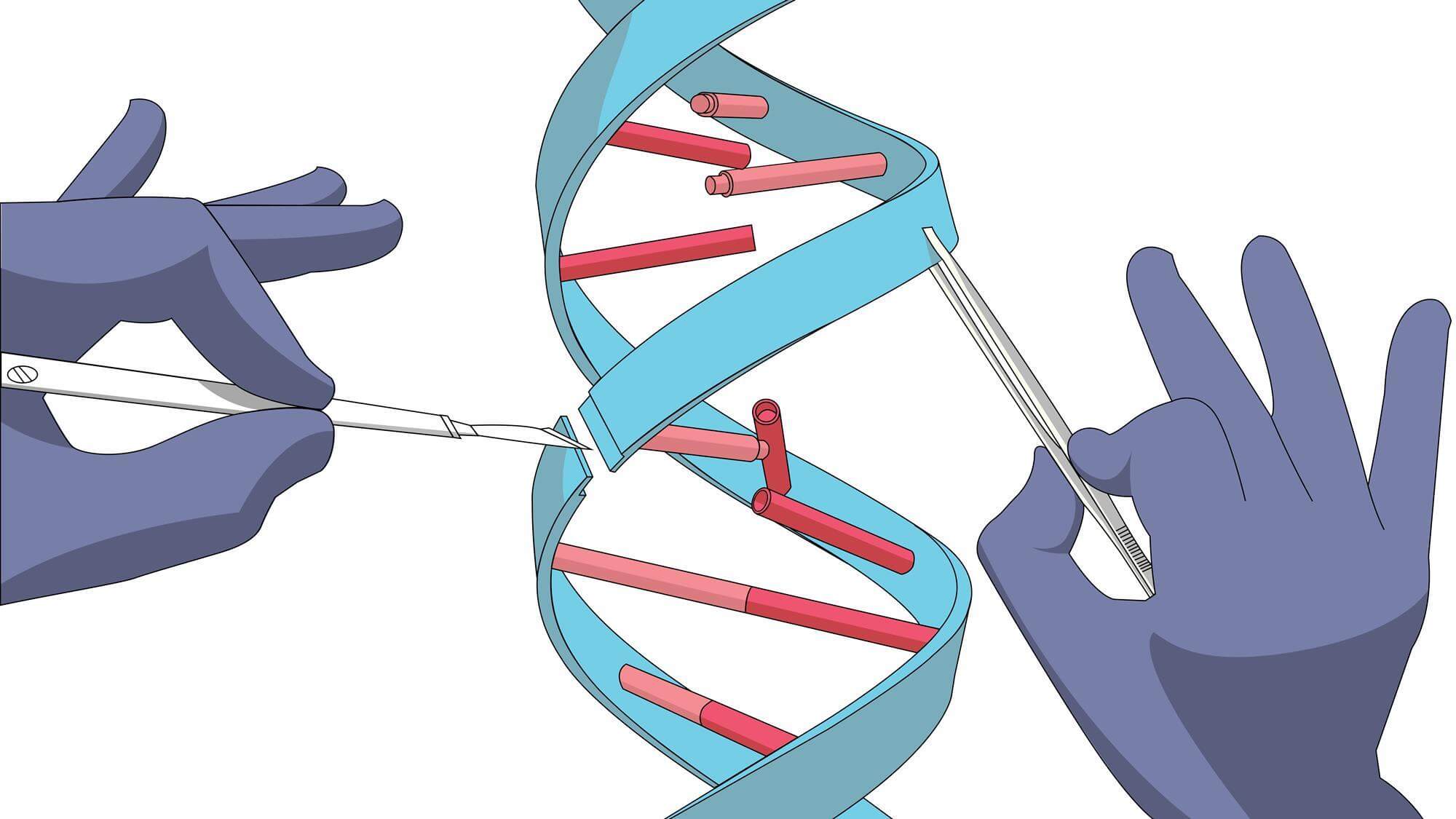
However, we are getting very close to a point where it’s possible to design children at the genetic level. Thanks to tools like CRISPR, it might even be possible one day to cut out entire traits from the human genome. That could, in theory, eradicate both cystic fibrosis and Dwarfism. More than a few people have expressed concern about that possibility.

Homosexuality and transsexuality are a bit different since there is no one gene or hormone that causes it, but most contemporary research suggests that genetics do play at least some role. Using similar technology, it might be possible for parents in the future to minimize or eliminate the chances of their children being homosexual or transsexual.
I imagine many in the LGBT community feel the same way about those efforts that the X-men felt about Senator Allen’s efforts in “Uncanny X-men #1.” Even if it only extends to giving parents this option for children and provides strict protections for those already born with these traits, it still treats who and what they are as a disease.

It’s dehumanizing and demeaning. More than one X-men in “Uncanny X-men #1” makes that abundantly clear. They don’t see being a mutant as a disease any more than homosexuality, transsexuality, or dwarfism. The fact that there’s now a way to prevent this makes for an existential crisis with some pretty heavy implications for the real and fictional world.

In the world of Marvel comics, a world without mutants has its own set of issues, the least of which would be the loss of a top-selling comic series. In the real world, though, the stakes are even higher. What would we, as a society, do if we suddenly had the tools to prevent homosexuality, transsexuality, and dwarfism in children before they’re even born?

I’ll even ask a more controversial question that’s sure to draw plenty of ire. What if those same tools could be used to modify the skin color, facial features, and overall appearance of our children? We already understand how genetics affects our appearance to some extent. What happens when we’re able to determine that for someone before they’re ever born?

These are objectively distressing questions. I’m glad “Uncanny X-men #1” dared to ask them. I doubt they’ll get debated or resolved completely in the proceeding issues, mostly because such resolutions are impossible in superhero comics. It still presents the X-men with a unique issue to confront and one that we will likely have to confront in the real world.

As is often the case with difficult questions, the answers are likely to anger some and distress many. Most people genuinely and sincerely want what’s best for their children. In the world of Marvel Comics, that could mean preventing them from gaining the kind of superpowers that makes them targets for Sentinels. In the real world, that could mean removing an entire class of people from the gene pool.

In issues like this, there are no heroes or villains. There are just difficult choices that we must make before someone else makes them for us.

Leave a comment

Filed under comic book reviews, futurism, gender issues, human nature, sexuality, superhero comics, Thought Experiment, X-men

Aging In A Society Where Nobody Ages

anti-aging-treatment-lead_730x419

We’ve all known someone who perfectly fits the profile of a grumpy old coot. Whether they’re a family member or a stranger, we can readily identify the associated traits. They’re bitter, angry, cynical, and exceedingly nostalgic for an era that has long since passed. Having to live in a frail, failing body certainly doesn’t help.

As annoying as their attitudes can be, it does raise a relevant question. Are they grumpy because they genuinely feel that everything in their world is awful or are they grumpy because their youth has become a distant memory? It’s a question that doesn’t apply to every old person, but it’s relevant to more than few.

Being old is not a pleasant experience for a lot of people. There are a lot of undesirable symptoms associated with it. Your skin gets wrinkled, your organs start to fail, your mind starts to slip, and you just don’t have the energy you used to have. On top of that, your sex life really suffers, regardless of your gender.

In that context, it’s not hard to understand why people get grumpier as they get older. They have plenty of reasons and plenty more excuses. It has always been a part of society. Like rebellious teenagers, their existence is an accepted part of life, so much so that it’s hard to imagine society without it.

This is where I take the same twisted mind that helps me write sexy stories and use it to propose a thought experiment. It’s also where I explore exciting new technology that will change the way society functions. It’s true that aging is part of our world. However, small pox, polio, and ridiculously flawed assumptions about the female body were once part of our world as well. That didn’t stop us from changing it.

In recalling the grumpy old coots I’ve known in my life, I often wonder whether they would act and feel the same way if they suddenly woke up in the body of their 25-year-old self. How much or how little would that change their attitudes? Would they be as jaded about the world if they were suddenly able to think, move, and hump like their younger selves?

Some might still be grumpy.

I even wonder this when recalling the elder individuals I know who aren’t grumpy and cantankerous. Those people do exist. Some of the happiest people I know are old, gray, and have a long list of health issues. They’ve lived good lives, have few regrets, and are content with their current state. Would that change for better or for worse if they were young again?

These are questions that will become increasingly relevant in the coming decades. While it’s currently impossible to just wake up in a new body like in “Altered Carbon,” the anti-aging industry is a burgeoning multi-billion dollar market. With demographics in the western world shifting rapidly, this market is poised to grow even more.

As it stands, there’s no comprehensive treatment that reverses aging for everyone. There are things people can do to improve longevity, but more often than not, someone’s ability to live comfortably into old age depends on factors they cannot control. The fact that Keith Richards lived beyond 1989 is proof enough of that.

That’s not to say we all just have to hope we have the same genetic fortitude as someone like Keith Richards. The current research into anti-aging is making significant strides. We understand aging a lot more than we did 20 years ago. In essence, it’s largely a matter of cells not being able to repair themselves as well as they used to. If we can fix that, then we fix aging.

It sounds simple, but it’s not. However, unlike some of the other advanced technologies I’ve discussed, there’s no need to prove the concept in the real world. We know it’s possible for organisms to live significantly longer than humans. Lobsters, turtles, and even whales have been documented to live centuries and function on the same level as their younger counterparts.

How they do this and whether it can be applied to humans is still uncertain, but there’s a great deal of research into this field. There’s also a huge incentive to perfect anti-aging treatments on a large scale. The first company that does that will likely be a trillion-dollar company. Whether or not it happens in my lifetime is difficult to surmise, but given the pace of technology, I believe it will happen eventually.

When it does, that raises a whole host of questions that are difficult to answer. What does a society where people don’t age even look like? How does it even function? I doubt our current system could support it. Countries like Japan are already dealing with significant problems associated with their rapidly-aging population. That issue will likely get more complicated as anti-aging technology improves.

What will it mean to retire in a world where people live for centuries rather than decades?

What will it mean to have a career?

What will it mean to have a family?

What will it mean for rearing and caring for children?

Think of how multiple generations function together at the moment. For a while, my family had four generations living at once. I had my parents, my grandparents, and my great-grandparents alive at one point. That made for a robust, but sometimes convoluted family structure. Just keeping up with family affairs could be tricky since my family moves around a lot.

Now, imagine having even more generations alive at once. Imagine dealing with parents, grandparents, and great-great-great-great-grandparents. As individuals and as a society, we’ve never dealt with that kind of dynamic. What would the roles be for that many living descendants? What would that do to custody, inheritance, and just basic overall functioning?

It’s difficult to imagine, but it gets even more complicated than that. Another major aspect of anti-aging research doesn’t just involve extending the human lifespan. It also involves reversing aging and preserving youth. Animals like turtles already do it. They get to a certain age and basically stay that way. Ideally, we want to provide something similar in humans.

That means our parents, grandparents, and great-great-great grandparents wouldn’t just live longer. They wouldn’t look a day over 30. On top of that, they would still be perfectly capable of having more children. People could have siblings who are decades younger than them. They could also end up with uncles and aunts of all ages.

Imagine some of these people being older than your grandmother.

Then, there are the nearly limitless number of half-siblings they could have. Even in our current state of aging, a good chunk of the population lives within a step-family where they’re only related to one parent biologically. In a world where people never age out of their sexual prime, it’s more than likely this will increase.

It may get to a point where age really is just a number. That won’t just be a cute euphemism or a creepy R. Kelly song. If we’re able to effectively rewire and repair our biology, then it would be nothing more than a legal designation on our birth certificate. It would have no further bearing on our lives.

That could cause all sorts of issues for our love lives. Imagine walking down a busy street and not seeing anyone who looks older than 30 years old. It would be like walking through a college town everywhere you went. You wouldn’t know if that cute girl at the bar or that handsome guy on the bus is just out of college or of they’ve got five living grandchildren. How would flirting even work?

Guy: Hey there, cutie. You want to go get some coffee?

Girl: I’d love to, but I’m picking my granddaughter up from her retirement party. Maybe tomorrow?

That could really affect how we see romance, sex, and relationships. The whole concept of “Till death do you part” could suddenly become a major complication. Sure, there may be couples who manage to stay married for centuries. They’ll make for great stories, as many long-time spouses do today. Chances are they’ll be the exceedingly-rare exception and not the norm.

It may be the case that marriages and family bonds become subject to time-frames. People may just get together to raise a family, but once those kids reach a certain age, they go their separate ways, possibly to do it all over again with someone else. If their bodies don’t age and they remain healthy, what would stop them?

That assumes a lot about what people will even want if they live indefinitely and maintain their youth. Again, we have no precedent for this. We’ve never lived in a society where everyone is young, healthy, and immune to the rigors of time.

There may very well be effects that go beyond our personal lives. Even if our bodies never age beyond 30, our minds certainly will. Aging does have an impact on the human brain and I’m not just referring to the effects of dementia. Just living longer affects how we perceive the world. It even affects how we perceive time. A year to a 10-year-old means something very different to someone who is 95-years-old.

Even if we could maintain a high level of brain function for centuries, there’s still the possibility that we’ll struggle to function as a whole. Many major social movements throughout history occur because older generations that retained entrenched prejudices died off. How will we advance civil rights in a society where the old traditionalists never died off?

Still not over the Civil War.

Then, there’s the boredom issue. I’ve mentioned before how powerful boredom can be, even without living forever. What do we do with ourselves if we can live for centuries and never lose our youth? How would we keep ourselves occupied and entertained? Would the boredom drive us mad? Would it turn us into sociopath super-villains like Vandal Savage?

It’s impossible to know for now, but it’s a possibility that we should take seriously. We’re already dealing with the serious effects of overpopulation. How will our civilization and our planet cope if people stop aging?

Future currency could be the ability to stretch your arms.

None of this is to say that we shouldn’t pursue this technology. I’ve seen what aging does to people. I’ve seen how it effects people very close to me. We all probably know someone who endures endless hardship and discomfort because of their age. We should help them and the burgeoning anti-aging industry is poised to do just that.

We should also seriously contemplate what kind of society we’ll be creating if and when we cure aging. It will require a complete re-imagining of what it means to live, love, and be part of a family. Chances are people today will think it’s crazy. In a world where everyone stays young and sexy, it’ll just be life.

3 Comments

Filed under futurism, gender issues, human nature, Marriage and Relationships, psychology, romance, sex in society, sexuality, Sexy Future, Thought Experiment

Prison Or Brain Hacking? A Choice That May Shape Our Future

fajb_brain_hacking_01_sep2012

How does a civilized society deal with its least civilized individuals? This is a question that every society has had to answer, going back to the hunter/gatherer era. We live in an imperfect world full of imperfect individuals. Some are more imperfect than others, so much so that it’s not always possible to reform them into functional members of society.

Most people who commit crimes are not monsters, nor are they sadists who get their joy by torturing the innocent. A vast majority are just people who find themselves in bad situations where they make wrong decisions, exercise poor judgment, or lack impulse control. For these people, fines and brief imprisonment are usually sufficient.

For those who become career criminals, neither respecting the law nor seeking to abide by it, the current system is woefully inadequate. It’s part of the reason why criminal justice reform has become a hot topic. We’re finally learning that throwing people into prisons where they’re dehumanized, degraded, and tortured doesn’t help them become productive members of society. Go figure.

There’s plenty of room for improvement. Some countries have demonstrated that there are more effective, more humane ways to treat criminals. However, even those systems have their limits. As long as human beings remain an imperfect species, we’ll still have to deal with these deviant, violent, and inherently dangerous individuals.

For the moment, our options for dealing with these people are few. It primarily involves incarceration or intense therapy, often coupled with drug therapy. While this can be helpful to some, there are severe limitations. Some individuals don’t even want treatment and even those who are caught don’t always respond.

With that in mind, allow me to present a not-quite-hypothetical scenario. What if, instead of prison or therapy, we gave offending criminals an option to undergo an invasive treatment that affects the primary source of their deviant behavior in the brain? Jail is still an option for those who aren’t keen on messing with their brain wiring, but for certain people, an alternative is an alternative.

What I just described is one of those concepts in which the science is there, but the technology and the courts haven’t caught up to it. I know whenever I talk about emerging technology, be it sex robots or artificial wombs, I venture pretty far into speculation territory. Some of these advances rely on science and tools that don’t yet exist. This isn’t one of those cases.

In July 2018, the Journal of Neuroscience published a study revealing that targeted stimulation of the prefrontal cortex reduced aggressive tendencies in test subjects. Before you start getting fever dreams of mad scientists strapping people to gurneys and sticking wires in their ears, you can rest easy. This isn’t the kind of electroshock treatment that find their way into one too many horror movies.

These treatments have ground-breaking implications. They prove that it’s possible to temper or mitigate certain behaviors in people. The study doesn’t specify the limits of the effects or if it can be applied to something other than aggressive behaviors. It’s still a proof of concept and one that could compound the impact of other emerging technologies.

We already have tools like CRISPR that allow us to tweak our genes. We also have companies like Neuralink that are actively working on implants that could fix, augment, or expand our brain capacity. While men like Elon Musk and Ray Kurzweil often discuss these advances within the context of keeping humanity on pace with artificial intelligence, there will likely be some interim uses for these technologies.

Tempering violent behavior in people with significant cognitive impairments is just one possible use, but one that has the potential to change how we think about crime and punishment. Think back to those people I mentioned earlier who just inherently violent. They can’t manage their emotions or control their anger. They don’t think before they act and some don’t even feel guilty about what they do.

Like it or not, these people exist. I’ve known people in my life who have terrible impulse control and fly into a rage over the smallest things. Some of those people have had issues with the law and I often see in them a sense of never-ending frustration. Many don’t like that they have these issues. A few have tried to get help, but it doesn’t always work.

I suspect that if some of those people were given a chance to treat their tendencies with targeted shock therapy or a brain implant, they would jump at the chance. Deviant tendencies aside, they seek some level of function in their lives. If tweaking their brain is the difference between prison and freedom, then they’ll take that risk.

Turning people who might have been unrepentant psychopaths into productive, non-violent members of society is an objective good. The technology to do just that is not that far off and more study could help us refine the process, so much so that prison might be less necessary in certain cases. Given how expensive it is to imprison people, it’s an alternative worth pursuing.

Along with that undeniable good, however, there are plenty of potential dangers. Anyone who has ever seen one too many psychological thrillers or just read “One Flew Over The Cuckoo’s Nest,” can easily imagine how this kind of technology could be abused.

Tempering someone’s violent behaviors is all well and good, but why would it stop there? The brain is capable of all sorts of behaviors, deviant and otherwise. Say a society determines that other non-violent behaviors, be it sexual promiscuity or binge-watching Netflix for too many hours, are not socially desirable. What’s to stop them from imposing this on their citizens?

Some countries probably already fantasize about technologies that enable them to directly pacify their citizens, rendering them weak, passive, and easily manipulated. In his famous novel, “1984,” George Orwell called these people proles. However, in the book, the deviants had to be tortured and re-educated. If Big Brother had access to this technology, it would be a simple medical procedure.

That has plenty of terrifying possibilities for abuse. What if someone uses brain stimulation to prevent people from having homosexual urges? What if someone uses it to treat those who identify as transgender? There’s no evidence that the techniques in the study would work on that, but there’s no evidence to say it’s impossible.

Its use will definitely be controversial. That much, I’m certain of. It’s not advanced enough to become a legitimate treatment for anything. At the moment, direct brain stimulation is utilized for a specified set of conditions and it’s often a last resort. Using it on healthy people who just want to cull their violent urges is uncharted territory.

Whether it enters the picture for criminal justice reform is anyone’s guess, but if the process works, someone who has dealt with one too many repeat offenders will try to use it. From there, the precedent will be set. It’s hard to say what form it’ll take, but it’ll take society into uncharted territory with respect to controlling our minds.

Perhaps, at first, the process would be voluntary and only be presented in conjunction with jail or some other treatment. It’s also possible that the courts will determine a strict set of criteria for when the state could force this treatment onto someone. There are probably a few repressive governments who would try to use this on an industrial scale. I won’t say they’re names, but most people know who they are.

Like any emerging technology, there are risks and rewards worth considering. We stand to benefit greatly by having a society with as few violent individuals as possible. We also stand to lose a great deal if we allow misguided authority figures to determine how we use this technology.

I’m not qualified to determine whether or not someone should have their brain hacked. I don’t know that anyone is. However, I also don’t deny that the human brain, as magnificent as it is, has plenty of flaws. We should go about fixing those flaws, especially in people who are disproportionately impacted by them. We just have to be very careful about how we manage it.

Leave a comment

Filed under futurism, human nature, psychology, sex in society, Sexy Future, Thought Experiment

How Advanced AI Will Create Figurative (And Literal) Magic
761-superintelligent-ai

If you went back 50 years and showed someone your smartphone, chances are they would be amazed. To them, such technology would seem downright alien. However, they probably wouldn’t think it was magic. Go back 500 years, though, and chances are they will think a smartphone is magic, miraculous, or a tool of the devil.

Just look at what a smartphone does and compare it to the magic of old. You can ask it a question and, depending on how well-worded it is, it’ll give you an answer. If you ask it to make food, clothes, or tools appear, it’ll make that happen too. Thanks to services like Amazon and Grubhub, this isn’t magic to most people. In fact, it’s downright mundane.

Granted, these things won’t appear instantly out of thin air, but depending on your willingness to pay for quicker shipping, it will get there. By medieval standards, that’s basically sorcery.

You don’t have too far back in time to appreciate the magic of modern technology. Most of us don’t understand how it works. We don’t know what makes the screens on our phones light up when we push a button or how our car moves when we press the accelerator. We understand that there’s science behind it and it’s not magic. It just feels like it from a certain perspective.

Famed science fiction author, Arthur C. Clarke, once said that magic is just science we don’t understand. It was one of the three laws he used in contemplating the future. Time and a host of amazing advances have proven the validity of this sentiment. We’ve created materials once thought to be impossible. We’ve uncovered phenomenon that seem to undermine our understanding of physics.

This is to be expected because our understanding of the universe is incomplete. We have some pretty solid theories so far, but there’s still a lot we don’t understand. As we learn more, some of the things we discover may seem magical. Even in a world that is more educated than it has been at any point in human history, there may still be forces that our primate brains just can’t make sense of.

To some extent, it helps that humanity is making these discoveries through their collective effort. It helps us accept a seemingly-impossible idea if it comes from a member of the same species. What happens, though, when we gain knowledge from something that is both not human and many times smarter than the entire human race? Will it seem like magic to us?

I argue that it would. I would also argue that we’ll be seeing this kind of magic sooner than you think. It won’t come from some enigmatic sorcerer with a thick beard, a white robe, and an uncanny resemblance to Ian McKellen. It’ll likely come from the world of advanced artificial intelligence.

In the past, whenever I’ve talked about advanced artificial intelligence, I’ve focused on its potential to fundamentally change our civilization and what it means to be human. I haven’t touched on how it might work, mostly because I’m not nearly smart enough to make sense of it. However, that gives me more in common with the experts than you think.

In the emerging, but rapidly growing field, of artificial intelligence, there’s a strange phenomenon known as black box AI. Simply put, this when we understand the data that goes in and comes out of an AI system. We just don’t know how it went about processing that data. It’s like putting a slab of meat in an oven, pressing a button, and getting a Big Mac without knowing how it was made.

It’s not quite magic, but it’s a manifestation of Arthur C. Clarke’s ideas on science and magic. AI systems today are advancing at a pace that we can’t hope to keep up with. We already have systems that can surpass any human in terms of Jeopardy, chess, and Go. We don’t yet have a system that has the same intellectual capacity of an adult human, but most experts believe we’re well on our way to achieving that.

When that day comes, we may very well have an AI that does more than just process data in ways we don’t understand. Once an AI is capable of matching or exceeding the intellectual capacity of an average human, then it’s likely the black box phenomenon will become more pronounced.

Imagine, for a moment, we had an AI that was smarter than even the smartest human beings on the planet. We go to that AI, we feed it every gigabyte of data we have on human biology, and ask it to surmise a cure for cancer. It takes only a few seconds to process all that data. Then, it spits out the formula for something that has eluded generations of doctors with ease.

We don’t know what form it may take. We may not even fully understand the components of it. However, it still works. From our perspective, it’s akin to a magical healing elixir straight from the world of Tolkein. We assume there’s some sort of science behind it, but we’re utterly baffled by the specifics. We just know it works.

It goes beyond medicine, as well. With an even more advanced AI, we could feed it every one of our most advanced theories about physics, biology, chemistry, and cosmology. We could then ask it to fill in all the gaps. Again, it gives us an answer and suddenly, we have a Theory of Everything.

We probably won’t understand the details. We may find out that we were dead wrong about particle physics, cosmology, or why our cell phone can’t hold a decent charge anymore. The knowledge such a system gives us could end up being so advanced that we literally do not have the intellectual capacity to understand it. It would be like an ant trying to do calculus.

In the same way a magnifying glass must seem like magic to an ant, the knowledge an advanced AI gives us may seem just as extraordinary. That’s especially true if we give that AI access to a 3D printer, a molecular assembler, or anything it could use to actually craft something.

That could be especially dangerous. For all we know, a sufficiently advanced AI could take a stack of dirty dishes and turn it into a nuclear bomb. We would have no idea how it would work. It would, for all intents and purposes, seem like magic to us. This thing would be doing something that our brains and senses tell us is impossible.

As the AI gets more advanced, it’s abilities and feats become more magical. At that point, it’ll be harder to accept that what it does counts as science. These advances are no longer coming from the efforts of people. They’re coming from a machine that’s millions, if not billions, of times smarter than any ordinary human could ever hope to be. How could it not magical from that perspective?

Throughout human history, sane and competent people have believed in magical things. Not long ago, people believed they could talk to the dead. Sir Isaac Newton believed in alchemy. Alfred Russel Wallace believed in literal spirits. Despite these beliefs, there was an important context to all these perspectives.

They emerged out of our collective ignorance of the world around us. We had nothing but our brains and our senses to make sense of it all. Since both can be easily fooled, as any competent street magician will attest, it doesn’t take much to get people to assume magic. An artificial intelligence would circumvent that context because it has something better than magic.

An advanced AI is not bound by the same senses that constantly fool ordinary humans. It doesn’t even have to misdirect or trick us. It only has to show us ideas and concepts that are completely real, but totally incomprehensible. The entire human race could spend a million years trying to understand it and it still wouldn’t be enough. It would still seem like magic to us.

That notion seems scary on paper and more than a few people have voiced concerns about this. However, all that magical thinking will only occur if our human brains remain unchanged and unenhanced. That’s not likely to be the case. Between the emergence of neural implants and the ongoing development of brain/machine interface, we’ll find a way to keep up with AI. If we want to survive as a species, we’ll have to.

Even if we do somehow keep up, there may still be aspects of advanced AI that seem like magic to us. That may always be the case, so long as we retain part of our caveman brains. Personally, I don’t think that’s a bad thing. No matter how smart or advanced we get, it helps to see a little magic in the world. With advanced AI, though, the rules for magic are bound to change, among many other things.

16 Comments

Filed under Artificial Intelligence, futurism

How Artificial Intelligence Will Destroy Democracy (In A Good Way)

t2uexujfigmglako7fzy

Picture the perfect candidate for an election. I know the bar for politicians these days is laughably low, but try to stretch your imagination a bit. Try to envision the kind of candidate that embodies the best collection of values, abilities, and charisma for a civilized society.

Everybody looks for something different in a candidate, but a truly perfect candidate would appeal to everyone in a democratic system. This person would embody the highest values, championing human rights to the utmost and justice for everyone. Every decision they make is with the safety, sanctity, and rights of other people as their top priority. There’s no compromise. They do right by the people every time and all the time.

This person would also be the ultimate leader, capable of getting anyone to go along with them without fear or coercion. There wouldn’t need to be corruption of any kind. This person would be perfectly capable of navigating every level of government and making it work to the utmost. The people would trust in that government, believe in it, and even celebrate it.

Keep that perfect candidate in the forefront of your mind because when it comes to discussing politics, cynicism tends to rule the day. I don’t think I need to cite too many recent events to show how imperfect democracy is these days. I don’t even need to cite famous historical events that show just how bad government can be in this convoluted world.

It’s because of that cynicism, though, that the perfect candidate you’re thinking of could never win a democratic election in the real world. Even if they existed, the inherent flaws of the electorate and those of less perfect candidates would keep them from winning. It’s one of democracy’s greatest flaws. It’s not about who the best candidate is. It’s just about who can convince enough people that they’re worth voting for.

On the subject of democracy, Winston Churchill once said the following:

“The best argument against democracy is a five-minute conversation with the average voter.”

Time, politics, and the proliferation of has only proven Mr. Churchill right. I would even amend that quote to say just 30 seconds on 4chan will make anyone lose faith in the promise of democracy. That’s not to say democracy is all bad, though. Mr. Churchill also once famously said this about the alternatives:

“Indeed it has been said that democracy is the worst form of Government except for all those other forms that have been tried from time to time.”

It’s distressing, but frustrating fact of civilization, one that fuels mass protests, fake news, and lurid scandals. Go back to any point in history and scrutinize any government, be it a king or some quasi-democracy, and chances are you’ll find serious flaws in the system. I don’t just mean long lines at the post office, either. There have been times when democracy has not furthered the protection of human rights.

It’s not necessarily a flawed principle as it is a concept with flawed ingredients. While I tend to place a great deal of faith in the goodness of human nature, I don’t deny that people can be arrogant, irrational, and downright callous. We’re prone to overreacting and not thinking things through. We’re hard-wired to go with intuition over logic.

Even when we’re proven wrong, we stubbornly cling to our assertions. The prevalence of creationism is proof enough of that. Every election cycle is prone to bold promises, bloated melodrama, and major goals that rarely ever become actual policy. Some become full-fledged revolutions with Utopian visions. The fact that none of those utopias ever manifested is proof of how unsuccessful they were.

We are not a species built for democracy on a large scale. We evolved to function in close-knit tribes, hunting and gathering for food while fighting for survival. That kind of evolution doesn’t really lend itself to a functioning democracy. It doesn’t lend itself to a total autocracy, either. Whether it’s a free republic or a fascist state, humans cannot govern other humans without their flaws plaguing them in both directions.

It’s for this reason that I often lean libertarian in political debates, but given the complexities and challenges of modern society, even that only goes so far. Like it or not, large-scale civilizations populated a species not evolved to manage it requires some measure of authority. More importantly, it requires competent, incorruptible, compassionate authority.

It needs to be able to defend a population of people within a particular border. It needs fair and just laws that can be equally enforced. It also needs the confidence and trust of the people being governed. Sometimes, it’s done out of fear. Sometimes, it’s done out of free will. Both can work, provided the system has robust capabilities that aren’t prone to human error.

Unless a government is populated by a democratic council consisting of Superman, Wonder Woman, and Dr. Doom, that kind of functional democracy is physically impossible. Even though democracy is still the best we have from an exceedingly limited list of options, that may change in a big way thanks to artificial intelligence.

I know it seems like I attribute many superhuman capabilities to this emerging field, it’s hard to overstate its potential. Unlike every other tool humanity has created, artificial intelligence promises to rewrite the rules at every level of society. That includes government and it’s here where AI’s capabilities could go beyond superhuman.

Think back to that perfect candidate I mentioned earlier and all the traits that made them perfect. By and large, an advanced artificial intelligence shares many of those traits and then some. A sufficiently powerful AI would be beyond politics, pettiness, or demagoguery. In principle, it could embody everything people would want in a strong leader and a capable government.

For one, it would be smarter than any human. Beyond knowing more about every subject than any human ever could, it would be smart in a way that would allow it to persuade people to trust it. That’s often a skill that even smart politicians fail to refine. It certainly doesn’t help that many voters attribute intelligence with smugness. That’s a big reason why populist candidates of questionable merit gain so much support.

An advanced artificial intelligence, provided it has an in depth understanding of human psychology and how to persuade people, would be able to gain support from everyone. It wouldn’t be bound by the limits that keep most human candidates from appealing to everyone. With enough intelligence and capabilities, it would surmise a way to appeal to everybody.

Beyond just persuading the voters, an AI of that level could be just as effective at actual governance. There are plenty of candidates who are very adept at winning elections, but terrible when it comes to actually governing. A capable AI would be able to do both. If anything, one function would complement the other.

With enough emotional, logistical, and pragmatic intelligence, this AI would be capable of crafting and passing laws without the need for debate or controversy. The laws it crafts are already so refined and so well thought out that to do so would be redundant. In the same time it takes your phone to send a text, this AI could pass sweeping legislation that protects human rights, ensures justice for all, and promotes economic growth.

It’s hard to imagine because the only laws and government we’ve ever known have come from flawed humans. It’s just as hard to imagine how those laws would be enforced. Perhaps this advanced AI has nodes all throughout society that allow it to gather data, know where enforcement is needed, and determine the appropriate recourse. If it’s capable enough, people won’t even know it’s there.

Perhaps that same AI uses a mix of human enforcers and intelligent robots to maintain order. If the AI is sufficiently capable, every enforcer at every level would be equipped with perfect knowledge and a clear understanding of how to carry out the orders of the government. Since an AI wouldn’t be prone to corruption or prejudice, instances of injustices would be few and far between.

It wouldn’t be a totalitarian state of Orwellian proportions. It would be more of a “Star Trek” style, post-scarcity society where we wouldn’t have to be cynical about government authority. We would inherently trust it because it’s just that effective. We wouldn’t feel like we’re being run by a robot dictator. We would feel like we’re being run by the greatest ruler outside of a “Black Panther” movie.

To some extent, though, an advanced artificial intelligence of this nature would render democracy obsolete. If we created an AI that could effectively govern society at every level, then what’s the purpose of having elections in the first place? Why bother when there’s an intelligence that’s literally more capable than any ordinary human could possibly be?

History has shown that democracy and government can only do so much when flawed humans are in charge. Once advanced artificial intelligence enters the picture, the logistics of governance changes entirely.

Perhaps there will be a period in our history where instead of running human candidates, we start creating AI systems that compete with one another in a pseudo-democratic process. That would go a long way towards improving overall governance.

Unlike humans, though, technology evolves much faster than humans ever will and it wouldn’t take long for those systems to improve to a point where they’re just too good an option to overlook. Human-led governments, even in humans who are enhanced to some degree, will still have flaws. In a future where technology, society, and individuals keep creating new challenges, we’ll need a capable government to manage it all.

In the end, that government probably won’t be a democracy. It won’t be a dictatorship, either. It’ll be something that we can’t yet conceptualize. That’s the biggest challenge when contemplating something like an advanced artificial intelligence, though. It operates on a level that ordinary humans literally cannot comprehend. That’s why it’s our best option for governing our future.

7 Comments

Filed under Artificial Intelligence, Current Events, futurism, political correctness, Thought Experiment

Five Crazy Ways People Will Utilize Emerging Technology In The Future

22-ideas

Technology is amazing. Future technology promises to be even more amazing. I’ve covered some of the exciting trends for the near and distant future. Some are inherently sexier than others, but there’s no denying the appeal. Great leaps in technology promises to help humanity realize their full potential.

That’s not to say it won’t come at a price and I’m not just referring to the existential dangers, such as those involving artificial intelligence. As remarkable as the human species is when it comes to technology, it does have its share of eccentricities, for lack of a better word.

It’s not enough to just develop remarkable powerful tools for improving our collective well-being. We have to get creative in how we use them, sometimes to absurd lengths. I’m not just talking about the “creative” ways some people use ski-masks, either. Sometimes, new technology will inspire unexpected uses.

The Wright brothers didn’t invent planes with the expectation the it would create skydiving. The inventors of the internet probably didn’t expect it to be a massive hub for pornography and fake news. Those developing CRISPR, artificial intelligence, biotechnology, and nanotechnology are probably going to see their creations used in ways they never intended.

Now, I’ve never claimed an ability to predict the future, but I’m still human and I have an internet connection. I’ve seen plenty of footage of my fellow humans doing crazy/disturbing things with technology. If the past is any guide, then I feel like I can infer a few potential manifestations of future absurdities.

Some are more likely than others. Some may end up being completely wrong. Whatever happens, though, is still going to seem weird or crazy to everyone alive today. If you’re the kind of person who complains about the weird things young people do with their phones today, just you wait. Her are five weird ways that I believe people will utilize technology in the future.


Number 5: Women May Bear And Give Birth To Dead Loved Ones

Few experiences are more devastating than losing a loved one. This year, I had to endure that when my grandmother died. Every day, someone in this world has to suffer the sorrow of losing a parent, a spouse, a sibling, or a child. There are many ways to cope with that today, but the future will create more options, some more extreme than others.

One of those extremes involve women, or even transgender women with functioning wombs, bearing and giving birth to lost loved ones. Say you’re a woman whose spouse died tragically in an accident. Rather than live in a world without them, you decide to take their DNA, inject it into an ovum, and carry it to term. Nine months later, your dead loved one is born again and you’re reunited.

That sort of technology is not that far off. In vitro fertilization is a well-developed science. Cloning techniques have improved significantly since the late 90s. There have even been movies starring Robert De Niro on this very scenario. While the ethics and laws surrounding cloning are still somewhat messy, this technology is already coming.

Once it’s refined, there will be no reason why it couldn’t be done. It would just take someone who’s sufficiently devastated/daring to try it. This would definitely create some weird situations in which people give birth to dead siblings and children give birth to their reborn parents. It seems absurd, if not obscene, to us now, but it may end up being a legitimate way for some people to cope.

At the very least, it would certainly make for some interesting sitcoms in the future.


Number 4: People Will Purposefully Damage/Destroy Body Parts For Fun

Not everyone gets the appeal of extreme sports. Some just can’t wrap their head around the idea of doing something so dangerous that it could cause permanent/fatal injury. There are those who say society is gradually shifting away from such dangerous forms of entertainment. Some even say contact sports like football and boxing will be a thing of the past.

I respectfully disagree with that. I believe it’s going to get more extreme and more brutal. The reason I believe this is because of life-saving biotechnology that will help us regrow limbs, organs, and everything in between.

For most people, taking care of their bodies is a big deal and a primary factor in why they don’t do dangerous things. That’s because, for the moment, we only have one body and if we don’t take care of it, we’ll end up dead, disabled, or disfigured. Thanks to regenerative medicine, though, that may not always be the case.

We’re already on the cusp of being able to regrow organs in a lab. At some point, we may even able to grow entire limbs. Lose your arm accidentally while trying to juggle chainsaws? That’s not a problem. Just grow a new arm and you’re as good as new. Did you kill your liver by doing shots of diesel fuel and bleach with your friends? That’s not a problem either. You can just grow a new liver.

If injury or disfigurement is the only thing keeping you from doing something crazy/stupid, then regenerative medicine will give you all the reasons you need to try it. Even if you end up hating it, you’ll still be able to try it without worrying too much about long-term damage.

The kinds of extreme activities this could inspire is hard to imagine. Football may stop caring about shredded knees or damaged brains if regenerative medicine can just fix everything. The extreme sports we see today may not even be seen as that extreme because the injuries are more an inconvenience than a concern.

Considering how boredom may end up being the greatest plague of the future, I think it’s likely that people will find all sorts of ways to do crazy, dangerous things for fun. The prospect of pain may still keep some people from trying, but the prospect of boredom will at least give them pause.


Number 3: People Will Splice/Tweak Their DNA With Animals For Impossible Traits

I’m not the first one to make this prediction. There was an entire episode of “Batman Beyond,” an underrated Batman cartoon that takes place in the future, dedicated to this idea. In the episode, teenagers use genetic technology to splice their DNA with that of animals. It doesn’t just give them exotic looks that are impossible by the laws of evolution. It gives them animal-like traits to go with it.

Want to have fur like a cat and a tail like a monkey? With the right genetics, you can do that.

Want to have scales like a snake and muscles like a gorilla? Splice the right genes into your genome and you can have that too, minus the poop throwing.

People are already tweaking their genome through biohacking. Granted, those hacks are limited because even tools like CRISPR have limits. However, as those tools improve, it’ll be possible to do more than just tweak the human genome. In theory, we could use the genomes of every other species on Earth to enhance our own.

At first, it’ll just be to help us survive. There are some animals who have better muscles, better immune systems, and better resistance to aging. However, once those refinements are made, we’ll be able to get more creative. Why stop at just making ourselves healthier and stronger? We could turn splicing our genes with other animals into full-blown fashion trends.

Let’s face it, it wouldn’t be the craziest fashion trend humans have ever come up with. Look up something called “Lotus Shoes” and you’ll see what I mean.


Number 2: People Will Use Biotechnology And Brain Implants To Create Insanely Powerful Drugs

As I write this, the United States is in the midst of the worst drug epidemic in modern history. In 2016 alone, there were over 63,000 deaths caused by opioid overdoses. There’s no question that these drugs are as powerful as they are dangerous. However, through future advancements in biotechnology, these drugs will seem like breath mints by comparison.

That’s because all drugs, whether they’re pain killers or cheap vitamins, work the same way. Their chemical components interact with the complex biology of a person to induce a desired effect. Since they’re chemicals, though, those interactions are fairly crude. Trying to pursue those effects, be they simple pain relief or treating Ebola, is like trying to destroy a single house through carpet bombing.

Biotechnology, and the nanotechnology that will likely complement it, works more like a smart bomb. Rather than just flood the brain and body with chemicals, the drugs of the future will be more akin to programmable biomatter. They’ll have a measure of intelligence that will allow them to go to a particular part of the body and provide the necessary stimulation.

By being targeted and smart, that will allow for more effective treatments and alleviate pain. Why stop there, though? Why not use that same approach to produce the most potent, mind-altering effects our brains ever conjured? In theory, there’s no reason that the same smart blood that will treat disease could also stimulate every possible pleasure center in the brain.

As potent as today’s drugs are, they won’t be able to match what intelligent nanomachines in the bloodstream can produce. Beyond just eliminating pain without damaging side-effects, they could create a high that’s physically impossible to induce today. Add further brain enhancements to the mix through implants and all bets are off in terms of mind-altering highs.

Sure, that may resolve the opioid crisis, but it may end up triggering an entirely different set of problems. People can barely handle the drugs we have today. Will they be able to handle a high that’s mind-altering in a very literal sense? Only time will tell.


Number 1: People Will Eat Meat From Extinct Or Exotic Animals (Including Other Humans)

Producing enough food to support our growing population has long been the greatest challenge of civilization. Through the Green Revolution, and brilliant humanitarians like Norman Borlaug, we now have more food today than we’ve ever had in human history. There are still hungry people in this world, but producing the food is no longer quite the challenge it once was.

Thanks to biotechnology and synthetic meats, it’s about to get easier. Producing abundant food takes a lot of water, land, resources, and animals. The environmental impacts of that process are well-documented and prone to many fart jokes. Through new techniques like vertical farming and cultured meats, we may not even need fields or live animals to produce our food.

Back in 2013, the first ever lab-grown burger was created and eaten. It cost $330,000 to make and wasn’t that much better than a standard Big Mac. Since then, the cost has dropped considerably to less than $20. The only remaining step is to scale up production and refine the process.

That’s great for animal lovers and those concerned with environmental degradation. However, the ability to produce abundant meat without animals is going to open up an entirely new branch of food. If you can make unlimited quantities of beef with a few cow cells, why not try other animals to see what they taste like?

Why not take a few cells from a bald eagle, an endangered rhino, or even an extinct mammoth? If you have the cells and the DNA, then you can technically make meat from anything. That includes humans as well. While cannibalism is a major taboo in nearly every culture, why would it be if there was a way to eat human meat without ever harming a human?

Most people today probably wouldn’t try human meat, even if it was grown in a lab. Then again, most people alive 100 years ago probably would’ve been reluctant to try spray-cheese in a can as well. In a future where eating meat is no longer associated with the killing of animals, those taboos might not hold.

I can even imagine a whole culture emerging around it. Say you’re on a romantic date with a loved one. What better way to celebrate your love for each other than by eating burgers made from the lab-grown flesh of your lover? You love each other so much that you eat each other for a meal. It may seem weird, if not macabre, these days, but it may end up being an act of genuine intimacy in the future.


These are just some of the weird ways I we may use our technology in the future. If you have another idea for a crazy way people will use emerging technology, please let me know in the comments. Some of these trends may not occur within my lifetime or that of anyone reading this, but every generation ends up having a strange concept of “normal.” The future will just give us better tools to expand that strangeness.

Leave a comment

Filed under futurism, human nature, psychology, Sexy Future

Why Intelligent Aliens May Destroy Us Even If They’re Peaceful (According To Mass Effect)

tuchanka_-_sabotaged_cure_wasteland_1

What would happen if we went back in time and gave the Genghis Khan nuclear weapons?

What  would happen if we went back even further and gave machine guns to the Ancient Romans?

Let’s be even more subtle. What do you think would happen if you gave Aristotle a functioning smartphone with a complete catalog of Wikipedia? How much would that change the course of history? More importantly, how much damage would it potentially incur?

I consider myself an optimist. I generally place more faith in humanity than most people in this age of fake news and heavy cynicism. I have my reasons for doing so, but even my confidence in the human species has limits. I trust most people to do the right thing every time I drive my car on the highway. That doesn’t mean I’d trust a caveman from 10,000 BC to drive a fully-loaded tank.

I make this point because these are legitimate concerns consider when assessing how humanity deals with emerging technology. We can barely handle some of the technology we already have. How will we handle things like advanced artificial intelligence, gene hacking, or advanced robotics?

I’ve stated before that the human race is not ready for advanced artificial intelligence in its current state. I’ve also stated that the human race isn’t ready for contact with an advanced alien species, either. I believe we’re close. We may even be ready within my lifetime. However, if aliens landed tomorrow and brought an advanced artificial intelligence with them, I think our civilization and our species would be in trouble.

I also think the human race would be in danger even if those same aliens were peaceful. Even if they brought a super-intelligent AI that was as compassionate and caring as Mr. Rogers, our species would still face an existential crisis. To explain why, I’ll need to revisit one of my favorite video games of all time, “Mass Effect.”

The various themes of this game, and the lore behind it, offer many insights into very relevant questions. In addition to the timeless hilarity of bad dancing skills, the game crafts a rich history between alien races like the Quarians and the Geth. That history reflected the dangers of mishandling advanced artificial intelligence, an issue humanity will have to deal with in the coming decades.

There is, however, another rich history between alien races within “Mass Effect” that offers a similar lesson. This one has less to do with artificial intelligence and more to do with what happens when a species technology that it’s not ready to handle. That danger is well-documented in the game through a hardy race of beings called the Krogan.

Like the Quarian/Geth conflict, the conflict surrounding Krogan has some real-world parallels. However, I would argue that their story Krogan is more relevant because it serves as a warning for what could happen when an advanced species uplifts one that is less advanced.

In the mythos of “Mass Effect,” the Krogan were once a primitive, but hardy species that evolved on the harsh world of Tuchanka. They’re reptilian, high-functioning predators in nature. They’re basically a cross between a velociraptor, a crocodile, and a primate. They have a tough, war-like culture, which is necessary on a world that contained hulking Thresher Maws.

They were not a species most would expect to develop advanced technology. Then, the Salarians came along. Unlike the Korgan, this amphibious alien race isn’t nearly as hardy, but is much more adept at developing advanced technology. In most circumstances, they wouldn’t have given the Krogan a second thought. Unfortunately, they were in the middle of the Rachni War and they needed help.

You don’t need to know the full details of that war. The most critical detail, as it relates to advancing an unprepared species, is how this war came to define the Krogan. Neither the Salarians nor the other alien races in the game could defeat the Rachni. In a fit of desperation, they uplifted the Krogan by giving them weapons and advanced knowledge.

In the short-term, the Salarians achieved what they’d hoped. The Krogan helped defeat the Rachni. In the long-term, however, it created another inter-stellar war in the Krogan Rebellions. Apparently, giving a hardy, war-like species advanced weapons doesn’t make them less war-like. It just gives them better tools with which to fight wars. That may sound obvious, but keep in mind, the Salarians were desperate.

The details of this war end up playing a major role in both “Mass Effect” and “Mass Effect 3.” That’s because to stop the Krogan, the Salarians resorted to another act of desperation. They crafted a biological weapon known as the genophage, which significantly curtailed the Krogan’s rapid breeding rate.

The damage this did to the Krogan race cannot be understated. Through the entire trilogy of “Mass Effect,” characters like Wrex and Eve describe how this destroyed Krogan society. In “Mass Effect 3,” Eve talks about how the genophage created massive piles of stillborn Krogan babies. That kind of imagery can haunt even the most battle-hardened species.

In the end, both the Salarians and the Krogan paid a huge price for giving technology to a species that wasn’t ready for it. Depending on the decision you make in “Mass Effect 3,” the Krogan species is doomed to extinction because of how ill-prepared they were. This haunted more than a few Salarians as well, one of which played a significant role in a memorable side-story in “Mass Effect 2.”

Regardless of how the game plays out, there’s an underlying message at the heart of the Salarian/Krogan dynamic. When a species is uplifted by another so abruptly, it’s difficult to see the long-term ramifications. Even though the Salarians were in a dire situation, they ended up creating one that had the potential to be much worse.

That danger is actually more pressing because, unlike advanced artificial intelligence, the act of uplifting a species effectively skips over the cultural and societal evolution that’s necessary to handle new technology. The Krogan never got a chance to go through that process before getting that technology. As a result, they became an existential threat to themselves and others.

The human race still has a long way to go before it creates the kind of artificial intelligence that would constitute such a threat. Aliens on the level of Salarians could land tomorrow and there would be nothing we could do to prepare ourselves. Whatever knowledge or technology we gained could do more than just upend human society. It could irreparably damage our species, as a whole.

Some of that outcome would depend on the intentions of the advanced alien race. It could be the case that they’re not like the Salarians and aren’t looking to enlist humanity in a war. It could also be the case that they’re smart enough to not give primitive humans advanced weapons. That could mitigate the risk.

However, that still assumes humans won’t find a way to use advanced knowledge to make weapons. When Otto Hahn discovered nuclear fission in 1938, he didn’t have any idea that it would be used to make a bomb that would kill go onto kill over 100,000 people. Even if advanced aliens are really smart, how could they be sure that humanity won’t use advanced knowledge to create something more horrific?

Sure, they could try to stop us, but that could only make things worse. The genophage wasn’t the Salarians’ first recourse. They actually went to war with the Krogan. They suffered heavy losses and so did the Krogan. In the long run, uplifting a less advanced species was detrimental to both of them.

That doesn’t just put the famous Fermi Paradox into a new context. It demonstrates a real, tangible threat associated with advancing a species before it’s ready. I would argue that the human race is close to that point, but we’re still not there. We have issues managing the technology we’ve created. There’s no way we can handle advanced alien technology at the moment.

Mass Effect,” in addition to being one of the greatest video games of the past two decades, offers many lessons for the future of humanity. It shows that humans are capable of great things. We have what it takes to join an entire galaxy full of advanced alien life. For our sake, and that of other advanced aliens, we cannot and should not rush it.

2 Comments

Filed under Aliens, futurism, human nature, Mass Effect, philosophy, psychology

Why Capitalism Will Survive Technological Progress (To A Point)

01fe7ea1d6c34588143cdc434ad52e0d

There’s a popular perception among those who speculate about the future. It has less to do with the technology and progress that we’ll make, as a society, and more to do with what will be rendered obsolete. Like dial-up internet or VHS tapes, there will be many artifacts of our current society that are destined to become relics of a bygone era.

Near the top of the list of those things people can’t wait to get rid of is capitalism. When I say “capitalism,” though, I don’t necessarily mean everything from the concept of money to big corporations to having 500 different kinds of covers for your cell phone. I’m more referring to the kind of economic system that creates extreme income inequality, mass exploitation of workers, and price gouging.

While I can appreciate sentiments of people who feel that way about a system where the inequalities are well-documented, I have some good news and some bad news for those looking forward to that post-capitalist utopia.

Capitalism is NOT going to become obsolete, but it will take on a radically different form.

I say that as someone who has written plenty about the upheavals our society will face when technologies like artificial intelligence, human enhancement, and advanced robotics become more refined. The economic, social, and political system, as we know it today, will not be able to function in that environment.

However, that doesn’t necessarily mean it will disappear like VHS tapes. That’s especially true of our current form of capitalism. It’s already changing before our eyes, but it’s set to change even more in the coming decades. It may get to a point where it’s hard to call it “capitalism” by our current definition, but it will still exist to a certain extent.

Whether you’re a hardcore libertarian or a self-proclaimed socialist, it’s hard to overlook the flaws in capitalism. This is a system that is prone to corruption, negatively impacts the environment, and will gladly eschew health concerns in the interests of profits. Basically, if you’ve ever dealt with a cable company, the tobacco lobby, or the banking industry, you’ve experienced those flaws first-hand.

Many of the flaws, however, are a byproduct of logistical limitations. Human beings are not wired to make sense of the plethora of economic forces that govern the cost, production, distribution, and marketing of goods. We’re barely wired to assemble IKEA furniture. The human race evolved to survive in the plains of the African Savanna, not the bustling streets of New York City.

Even with these limitations, humanity has managed to achieve a lot from this flawed system. Despite its shortcomings, it has been the catalyst for modern society. The cities, industries, and technological advancement that we’ve undergone over the past 200 years would not have been possible without capitalism. Say what you will about the profit motive. Apple would not be a trillion-dollar company without it.

It’s for that reason, along with the knowledge of capitalism’s many documented failures, that emerging trends in technology is more likely to smooth out the edges of the system rather than render it obsolete entirely. As someone who groans every time he sees his cable bill, I admit I’m eager for those refinements.

I still don’t blame others for hoping that the entire system is scraped. The thinking is that increasing efficiencies in automation, improvements in manufacturing at the nano-scale, and advances in artificial intelligence will undercut the key foundations of capitalism. Why would corporations, marketing gimmicks, or brand restrictions even exist in a world run by intelligent machines, enhanced humans, and 3D printers?

It’s not an entirely flawed notion. We’re already seeing plenty of disruptions in established systems due to technology. Landlines are disappearing, streaming media has destroyed brick-and-mortar rental stores like Blockbuster, and self-driving cars will likely end the taxi and trucking industry as we know it.

Further down the line, even more industries will break down when you scale up and expand these same technologies. A sufficiently advanced artificial intelligence could manage the banking and financial industry without any middle men, who are going to be prone to corruption. That same intelligence won’t be prone to the same panics that have plagued capitalism for centuries.

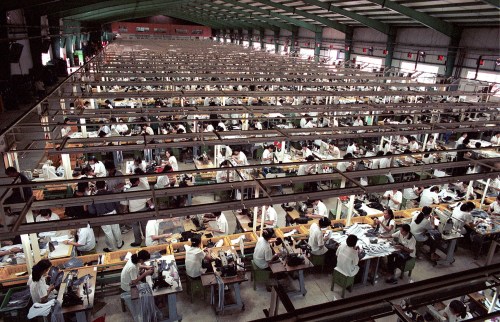
Other technologies will render distressing institutions like sweatshops obsolete, thanks to advances in robotics and 3D printing. A lot of the exploitations surrounding capitalism, both in terms of people and the environment, come from labor and production costs. Mitigating or ending that exploitation can and likely will be done without undercutting capitalism, if only because it’s more efficient in the long run.

Then, there’s the prospect of human enhancement. That, more than anything, will change the nature of society and economics in ways nobody alive today can predict. Beyond undermining the multi-trillion dollar health care industry that exists today, changes to the human condition could fundamentally change the way the economy functions.

Even with all those changes, though, I believe a certain facet capitalism will survive. Even in a society full of enhanced humans equipped with brain implants, perfectly refined genes, and molecular assemblers that can build anything imaginable, there will be a market. There will be a form of currency. There will even be institutions, human and robotic, to manage it all.

That’s because, even in a society where hunger, disease, and poverty of all kinds has been eliminated, there’s still one market that will always exist. That market is escaping boredom. It doesn’t matter how healthy, content, or advanced you are. You’ll still want to avoid getting bored and this is where the future of capitalism truly lies.

I believe that boredom will be the only remaining plague in the future. I also believe that technology can only do so much manage our wants and needs. At some point, we’re still going to seek novel experiences. We’re still going to want to explore new feelings, whether that involves studying science or visiting a futuristic theme park like “Westworld.” The demand will be there and that’s where capitalism comes in.

It may end up being the case that those experiences will be the closest thing we have to a tangible currency. In a society where technology has made so many other resources accessible and abundant, it’s the only currency that has tangible and perceived value. There may still be other forms of money built around it, such as new crypto-currencies, but there will still be real market forces at work.

Some of those forces will have the same flaws we see now. Much of the current system depends on people working to produce goods and services, using the money they make to buy those goods and services, and participating in a vast network of investment, marketing, and distribution of resources. It’s a complex, chaotic, and inherently unmanageable system.

There will probably be failures, missteps, and conflicts in managing this new marketplace of experiences. Entire companies may emerge, possibly from some that exist today, that compete over who crafts those experiences and provides them to customers, either over the internet or directly into someone’s brain. That competition is likely to produce corruption and scandal, albeit in a very different form.

Having advanced artificial intelligence and humans that aren’t at the mercy of their caveman brains will help, but only to a point. As long as society is full of individuals seeking different wants and needs, there will be some form of capitalism necessary to meet them both. Trying to avoid or subvert that probably won’t lead to a better system, as the many failures of alternative systems have proven.

Like our current system of capitalism, there will be flaws. Even enhanced humans and artificial intelligence will have limits that need refinement over time. It’s those very shortcomings, though, that will help forge a better system overall. Again, it’s impossible to tell what forms they’ll take, but so long as there are markets, there will be capitalists seeking to profit from them.

Leave a comment

Filed under Artificial Intelligence, futurism, philosophy, Sexy Future

Sex Robots, 3D Printing, And The Future Of The Porn Industry

feature

Most people with a passing knowledge about the history of media know that the porn industry played a significant role in deciding the competition between VHS and Betamax back in the 1970s. Decades later, porn played a similar role in the growth of the internet. It’s not unreasonable to say that the growth of the internet was fueled by porn.

Love it or hate it, the adult entertainment industry is a powerful economic driving force. Every effort to combat or avoid it has failed. Protests and outrage has done little to undercut the billions in revenue it generates every year. Culture, tastes, and media technology keeps changing and porn finds a way to adapt to it.

Lately, though, it has had a harder time adapting than usual. While the internet helped grow the adult industry, that same medium is undermining it by facilitating piracy and limiting distribution channels. Unlike Netflix or other streaming services, most major media companies don’t allow adult content on their platforms. Some have even gotten rid of their softcore content.

These limitations and setbacks are likely temporary, though. For as long as there is a market for sexy content and a collective libido that remains unsatisfied, the adult industry will find a way to adapt and make profits. It’s very likely that 20 years from now, the porn industry will look nothing like it does today.

Whatever form it takes will likely astonish some and terrify others. It’s hard to know for sure how the economics of porn will evolve, but there are already signs that the future of the adult industry is taking shape. As we saw with the VHS/Betamax issue, the technology is already in place. It’s just a matter of maturation and refinement.

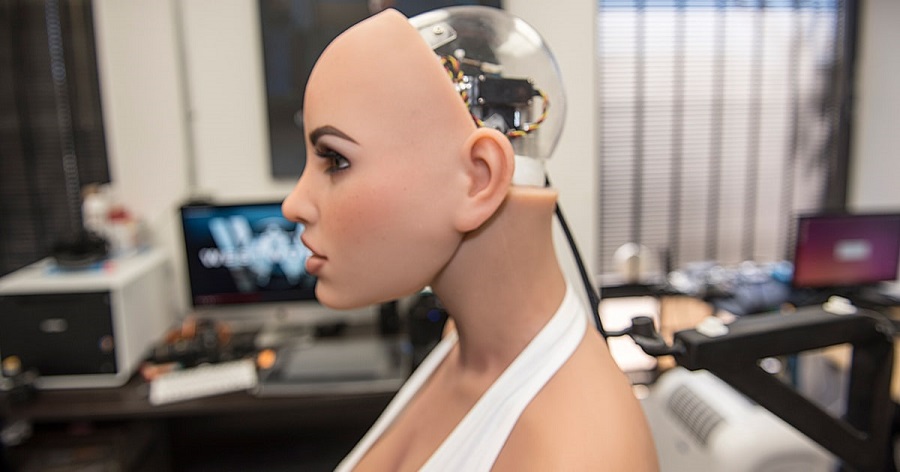
As I write this, the development of sex robots is well underway. There’s also already an established market for life-like sex dolls that can’t interact with users, but can still provide an intimate experience that you can’t get through a computer screen. This current situation has already been subject to controversy, but further refinements ensure there will be many more to come.

That’s not just me speculating, though, as I’ve done before with sex robots and sex dolls. I’m writing this because a critical, but under-reported refinement in the sex doll/sex robot industry took place recently in China from a company called DS Doll Robotics. Their plans, if they come to fruition, may do for sex dolls what McDonald’s did for cheeseburgers.

Those plans involve addressing one of the key limitations of sex dolls at the moment, which also will plague sex robots if it isn’t addressed. As it stands, just making a sex doll is expensive, labor-intensive, and difficult to mass produce. That’s why most high-quality sex dolls will set you back at least several thousand dollars. It’s actually comparable to the cost of cell phones in the early 1980s.

DS Doll Robotics is looking to change that. In July 2018, they launched plans to utilize 3D printing to help streamline the manufacturing process. What the assembly line did for cars, this company hopes to do for sex dolls and, eventually, sex robots that incorporate artificial intelligence.

It may sound mundane on paper since 3D printing has been an emerging technology in the manufacturing sector. It’s still has room to mature in the same way the early internet had to mature, but it’s one of those technologies that’s uniquely equipped to help the adult industry. In fact, it’s not unreasonable to say that it’ll completely reinvent it.

That’s because DS Doll Robotics isn’t just using 3D printing to streamline the manufacturing process. They’re also using new scanning techniques to scan the bodies of real humans as a baseline, of sorts. This is an exact quote from the July 2018 article that reported on the company’s plans.

“It is also connected to a 3D scanner which can be used to scan in the body of a full person as well as prototype parts for replication. This type of technology is excellent for creating new doll bodies and faces as they can be developed from a real human.”

That bold text is my doing because that’s the part of the story, I feel, that has far greater implications. Just making sex dolls cheaper and easier to produce isn’t going to change the adult industry too much. It may expand an existing market that had been cost-restrictive before, but it won’t provide a radically different experience compared to the one that exists today.

The part where sex doll manufacturers scan the bodies of real people, though, is something that will significantly impact the entire landscape of the adult entertainment industry. It won’t just change the economics of sex dolls. It’ll change the way the adult industry operates.

To understand how, it’s necessary to know how adult entertainers make money in the current economy. Most people in the adult industry, be they performers, directors, or producers, get paid a certain amount for each scene they perform. In the past, they could also depend on residuals from DVD sales, but those have declined sharply due to piracy and tube sides.

As a result, it’s becoming increasingly common for porn stars to do escorting on the side. Being a porn star makes it more lucrative than regular escorting, but that still comes with risks, especially in wake of recent legal issues attacking sex work. With sex dolls and 3D printing, though, these entertainers suddenly have a new way to monetize their sex appeal.

From a business standpoint, porn stars and beautiful celebrities in general are in the best possible position to franchise their bodies. Say there’s a moderately-successful porn star, male or female, who has some level of notoriety. If they do their job well, they create a fan base. Chances are there’s a significant portion of that fan base that wants to have sex with them.

Thanks to DS Doll Robotics, they can get that or at least something close to that without having to resort to escorting. Some porn stars already licence parts of their bodies as sex toys, but with 3D printing technology, they can do it all. With further refinements to the flesh and molding of the body, it wouldn’t just feel like plastic. It would feel real.

Some of this is already being done to a limited extent. Some porn stars have licensed their bodies to create life-like sex dolls. However, they’re still very expensive and labor intensive. Refinements of 3D printing will bring that cost down and that will grow the market, but it won’t stop there.

It’ll only be when sex robots and artificial intelligence enter the mix that the true future of the adult entertainment industry will take hold. Once those same licensed bodies develop an ability to interact with their users, then they’re not just over-sized masturbation aids. They deliver a full-on sexual experience.

Like brands of clothing or food, each adult entertainer could create a particular brand. One star might have a really cute, friendly personality. Another might have a very domineering, controlling personality. By incorporating them into a sex robot, they create a product that cannot be experienced through a computer screen, let alone pirated.

For the adult stars themselves, it’s easy money. They wouldn’t actually have to do anything, sexual or otherwise. They would just have to license their likeness to a company and collect a portion of the residuals like any merchandising company. If they prove really popular, then they could conceivably create a life-long income that continues well past their stint in the business.

That’s something that’s difficult to do in any entertainment industry, pornographic or otherwise. The use of 3D printing and more realistic materials will make that both possible and lucrative. If it becomes cheap enough, then the opportunities even go beyond direct sales.

There are already sex doll brothels operating in certain parts of the world. In areas where prostitution is legal, there’s even an app for people to order a prostitute the same way they would an Uber. In the future, if someone doesn’t want to buy, store, and maintain a sex robot, they may just rent one for a while. Between discretion and safety concerns, there would certainly be a market for that.

I’m sure that sort of business would attract a great deal of controversy and outrage. Sex dolls are already controversial and sex robots already have their opponents. However, if history is any guide, the prospect of making money and satisfying peoples’ burning libidos will win out. It’s just a matter of how quick the technology can progress and how quickly the ever-evolving adult industry adapts.

10 Comments

Filed under futurism, Marriage and Relationships, sex in media, sex in society, sex robots, sexuality, Sexy Future

The (Distant) Future Of Marvel, Disney, And Entertainment

unnamed

I like to talk about the future. I don’t claim to have any special insight, but I suspect I give it more thought than most. I also believe I tend to think farther into the future than most. Whether it’s contemplating the future of how we’ll organize our society or how our sex lives will evolve, I try to contemplate possibilities beyond the next iPhone upgrade.

One aspect of the distant future that concerns me has to do with boredom, namely how it may become a much larger problem and how we’ll go about alleviating it. I’ve done plenty to argue that boredom can be a dangerous force, from creating immortal super-villains to subverting the very concept of Hell. If our future is to be stable, prosperous, and fun, we’ll need some form of entertainment.

With that critical goal in mind, I’d like to speculate on a potential brand of future entertainment that ties directly with the industry that we know today. Specifically, I’d like to imagine how big entertainment companies like Disney will continue to function in world where advanced artificial intelligence, brain implants, and near-universal access to the internet is a thing.

I feel the time is right to think about such things because just last week, Disney radically altered the entertainment industry by purchasing Fox. Beyond just getting the X-men and Fantastic Four rights back for Marvel, Disney bought a massive library of intellectual property that is potentially worth billions. Being a successful business with shareholders, and all, they’re going to want to make billions more.

How exactly are they going to go about that, though? That’s a question worth asking because the answer for the near future is probably not going to work for the distant future. Sure, Disney will probably rake in plenty of profits at the box office, just as they’ve done with Pixar, Marvel, and Star Wars. However, the movie and toy industry can only go so far.

While box office revenue is up, actual ticket sales are way down. More people are opting to stream their content directly, bypassing pay TV and theaters entirely. The same is true for print media, including comic books. Even toy sales are in decline. This is not good for a company like Disney, which has built its empire on media and merchandise.

That’s not to say things are dire. Disney has been around for almost 100 years. In that time, it has adapted through plenty of upheavals. If it’s going to survive another 100 years, though, it’ll have to adapt to a radically different landscape. Buying Fox is likely part of that process. Disney has already made clear that it plans to start a streaming service to compete with Netflix and Amazon.

That’s a good start, but a streaming service is probably not going to be enough, especially in a future where people live longer, work less, and can share more than just text messages with one another. If Disney wants to continue being at the forefront of entertainment, it’ll have to innovate in ways that leverage future technology in new ways.

After the purchase of Fox, though, Disney may actually be in the best possible position compared to every other entertainment company that exists today. That’s because, unlike its competitors, it has a wealth of intellectual property that it owns outright. From Micky Mouse to Marvel heroes, the library of Disney-owned characters is truly staggering.

In the past, this gave Disney the ability to make or license movies, toys, and games for billions. In the future, those mediums won’t be nearly as profitable, but not because those things will fall out of style. I believe that for Disney to make more billions, it’ll utilize its intellectual property in a very different way, one that will likely require an entirely new approach to entertainment.

Think, for a moment, about the current experience you get from a movie theater, a TV show, or even a life show. You sit in a seat and you just watch. You take in the sights and sounds. If done right, it creates a spectacle that you enjoy. However, the fact that the spectacle only utilizes major senses is somewhat limiting.

What if, instead, you weren’t just an audience member sitting in a seat? What if it actually felt like you were there? What if you felt like you were standing next to Captain America as he battled the Red Skull? What if you felt like you were there when Micky Mouse, Donald Duck, and Goofy all broke out into a joyous musical number?

I’m not just talking about better animation or virtual reality. I’m talking about a form of entertainment that makes your brain actually feel as though you’re experiencing something. It’s not quite like the holodeck on “Star Trek.” It’s more like plugging into “The Matrix,” but for reasons other than learning Kung Fu or having existential breakdowns.

Unlike “The Matrix,” though, you wouldn’t be the catalyst for the story. That’s something Disney would take care of, providing only the world and the vast array of sensations that come with it. Instead of paying for a movie ticket, you pay for an experience that lets you interact or feel part of a story involving Iron Man, Micky, or Buzz Lightyear.

That will likely be the most valuable resource of future entertainment, powerful experiences that give customers the rush and fulfillment of being there. Instead of going to a theater or theme park, they would just plug something into their brains, possibly through an implant like the ones Elon Musk is developing with Neuralink. From there, the experience will be directly streamed right into their brain.

It may sound invasive, but we already share so much of ourselves online, from what we had for lunch to the most intimate aspects of our personal lives. We’re already in the early stages of merging our technology. We already see our smartphones as integral parts of our lives. Why wouldn’t we do the same for brain implants?

Unlike a smartphone, a machine/brain interface can’t be dropped into the toilet or left behind by accident. That same interface won’t just augment the ability of our brains to access the entire wealth of human knowledge. They’ll allow us to directly stimulate the areas that forge our entire perception of the world around us.

This has huge implications, some more profound than others. For companies like Disney, though, that link will be critical with respect to maintaining its place as a dominant entertainment company. People already pay for powerful experience, be they movies, video games, or a full-body massage at a spa. Disney could simply cut out the middle-men while leveraging its vast library of intellectual property.

Sure, in the future, you could probably pay for fancy experiences like those offered in “Total Recall.” However, if you want an experience that allows you to be a Jedi, an Avenger, or a singing animal, you’ll have to go through Disney and they’ll be happy to sell you that experience for a price.

Every week, you’ll be able to select from a range of intense experiences the same way you navigate your Netflix queue. For some, you don’t need to leave your bed. You just plug a device into your brain and let it go from there. For others, maybe you travel to special venues that function like the holodecks in “Star Trek.” There, you could share the experience with others, making it a communal experience.

Disney would still likely need content-creators to craft those experiences. That means people like George Lucas and Kevin Feige will still have a job in this future. The particulars of those jobs would be very different, but the goal would be the same. They would create experiences and stories that people are willing to pay for.

As unpredictable as the future is, it’s still safe to assume that people are going to want entertainment. Wherever there’s a want, there will be a business willing to provide it. There will be competition. There will be billions, if not trillions, to be made in profits. Not every company around today will survive that competition. Disney, however, is already in the best possible position to thrive.

5 Comments

Filed under Artificial Intelligence, futurism, media issues, movies, Sexy Future, War on Boredom