Tag Archives: feminism

Five New Years Resolutions We Should All Make For 2018

Christmas is over. The last major holiday of 2017 has come and gone. Now that we’re done opening presents, roasting chest nuts, and getting drunk on eggnog, we turn our attention to 2018.

2017 was a long, eventful year to say the least. It started with plenty of controversy and plenty more followed it over the course of the year. Along the way, this blog underwent some enormous growth in terms of traffic. I also got finalized the release schedule for my next novel, “Rescued Hearts.”

While there were plenty of positives in 2017, especially if you’re a New England Patriots fan, I think this year will go down as one most people would rather forget. There are many reasons for that, but I don’t want to focus too much on those. I’d like to look to the future rather than lament on the past and not just because the future may have sex robots.

With every new year comes renewed hope. With renewed hope comes an opportunity to make things better than the year that came before it. However bad 2017 might have been, 2018 offers an opportunity to make it better. It’s an opportunity we should all collectively seize.

As such, I’d like to propose a brief list of New Years Resolutions for 2018. These aren’t resolutions for just one specific person or group. These are resolutions that, I hope, will apply to everyone and benefit everyone. The events of 2017 gave us all too many reasons to be jaded and cynical. With these resolutions, I believe we can make 2018 much better.


Resolution #1: React, But DON’T Overreact

This should be at the top of everyone’s list of New Years Resolutions in 2018. To hell with trying to lose weight. Make this the cornerstone of your effort to do better in the new year.

A good chunk of 2017 was built on a foundation of continue, unceasing overreactions to everything from the fan response to “Star Wars: The Last Jedi” to a typo on a tweet by the President to how Kellyanne Conway sits. I get it. People are passionate about what they’re passionate about.

However, there’s a fine line between passion and outrage and nobody even tries to walk it anymore. Passion is good in that it can be channeled. Outrage is not because it’s just glorified yelling and whining, which rarely adds anything meaningful to a conversation. Sure, it’ll get attention to an issue, but it won’t do much to solve it.

Now, that’s not to say we should stop reacting to things that outrage or offend us, but we should make a concerted effort to not overreact. That way, our overall response is more meaningful and substantive. We need more of that in 2018 because we sure as hell didn’t get it in 2017


Resolution #2: Acknowledge The Positives And Don’t Belabor The Negatives

This may sound like something an idealistic guidance counselor may say. I admit it’s cheesy, but I think it has merit. One thing I noticed in 2017 that I found very distressing was how eager and quick everyone was to focus on the negatives of any issue.

It’s not enough that some person, group, or organization did something controversial. Everything about that action has to be terrible, evil, and an affront to all that is decent in the world. Whether it’s the President, a Hollywood celebrity, or a controversial policy made by a video game company, it’s only the worst parts that seem to get the energy and attention.

I don’t doubt there are negatives in a lot of these issues, but they don’t encompass the entirety of an issue. People and the world around them is more complicated than that. The truth is there are silver linings. It’s rare that an issue is so lopsided that there’s no possible benefit to consider.

I’ve tried to do my part, pointing out the silver lining to the surge of sex scandals that came out in 2017 involving powerful men. It wasn’t much, but I like to think it serves as an extra bit of perspective for 2018. There will always be plenty of bad news to go around, which makes highlighting the positives all the more important.


Resolution #3: Acknowledge Another Point Of View (Even If You Don’t Agree With It)

This feels like one of those resolutions we should’ve had at the beginning of 2017, but just let it slip aside because we were too busy processing how the Falcons collapsed in the Super Bowl. In addition to the constant outrage that dominated 2017, there was also a growing inability by anyone with an opinion to acknowledge the other side of an argument.

It’s not just on message boards, YouTube videos, and protests. The entire year of 2017 seemed like a testament to increasing polarization of everything from politics to the Season 3 finale of “Rick and Morty.” If there was a middle ground, it was either ignored or blown up with a fury of collective outrage.

More than ever, people are convinced that their ideas are correct and anyone who disagrees with them might as well be a card-carrying Nazi. It’s like Godwin’s law became a goddamn commandment and as a result, nobody is listing to anyone else make their point. It’s worse than a political echo-chamber. It’s a brutal cycle of self-glorification and never-ending frustration.

There is an easy remedy to that, but it involves taking a deep breath and actually listening to someone make their arguments. I know that’s hard when it’s so much easier and more cathartic to remain outraged, but inherently more productive and gives people fewer excuses to hate each other. Seeing as how we have enough of those, this resolution should be a high priority.


Resolution #4: Be Willing To Trust, But Eager To Verify

Another common theme of 2017 that we should avoid carrying into 2018 had to do with accusations. At first, it was just everyone accusing everyone else of being a Nazi, a racist, a bigot, and whatever other insult you see in the YouTube comments section of the “Ghostbusters” trailer. However, it got much worse and for good reason.

Like it or not, 2017 will go down as the year that sexual misconduct by men of significant power became a huge issue. I’ve covered it in multiple ways, acknowledging the extent of the misdeeds and expressing concerns about the implications. However, as the year went on, it became less about the conduct and more about the accusations.

We’re at a point where there seems to be new accusations of sexual misdeeds every other week. We’re almost used to it and that’s a dangerous thing because accusations aren’t the same as actual facts. While it’s not inherently wrong to believe someone when they say they’ve been a victim of sexual misconduct, that belief shouldn’t be blind.

Blind belief isn’t just unhealthy. It’s the primary ingredient in creating dangerous cults. We should continue taking sexual misconduct seriously in 2018 and beyond, but we can’t just keep focusing on the accusations. We need to be more eager to verify the validity of those accusations, making sure they have some basis in reality before someone’s life is irreparably ruined.

I know this resolution will be controversial. There’s a growing sentiment that not believing an accuser somehow counts as victim blaming. It’s not easy resisting that sentiment because most people inherently sympathize with victims, but sympathy is only meaningful when there’s some measure of validity to the accusations.


Resolution #5: Try To Love And Not Just Tolerate

This is more an approach, rather than a resolution. I won’t say it should be at the top of anyone’s list, but it should be in the back of everyone’s mind in 2018. Again, I know it seems like more hippie talk, but there is some greater purpose behind it.

For years now, tolerance has been a major goal. For the most part, we’ve succeeded in that goal. People today are far more tolerant of other races, religions, ethnicity, and sexual minorities than they’ve ever been before. That’s an objectively good thing. We should continue that effort as much as possible in 2018.

However, tolerance has become kind of a low bar in recent years. It’s one thing to tolerate a minority, but it’s quite another to actually embrace and love them. That’s something we haven’t put a lot of energy into in our efforts to create a more peaceful society.

Given all the outrage and polarization that emerged in 2017, I think 2018 is a good time to start making that extra effort. We can’t just be satisfied with tolerance. It’s like the humanitarian equivalent of a C-minus. We need to start shooting for B’s and A’s in 2018.

That means making an effort to love someone, even when there are things about them we find distressing. It goes back to my comments about having faith in people. Sometimes, we have to put some extra effort into believing people are better than we think they are. Making that effort in 2018 will go a long way towards helping people be better for the new year and beyond.

Leave a comment

Filed under Current Events, Reasons and Excuses

Social Context Versus “Toxic” Behaviors: Why The Difference Matters (A Lot)

There’s a fairly well-known set of experiments involving rats and cocaine. It’s a strange, yet revealing combination. In the initial experiment, a rat in a cage was given the choice between cocaine and food. Not surprisingly, especially for someone who has ever tried cocaine, the rat chose cocaine to the point of killing itself.

That experiment, which took place in the 1960s and 1970s, helped establish the idea that those who use cocaine would be so damaged, so addicted, and so utterly gone that they would rather take the drug than survive. It was pretty scary stuff and it helped inspire harsher anti-drug policies in the 1980s.

However, that experiment came into question in 1981 when a professor named Bruce Alexander re-did the experiment, but with one critical change. He didn’t isolate the rats in a cage. He put them in a colorful, positive environment with other rats that came to be known as “rat park.” The results weren’t nearly as scary.

As it turns out, when placed in a better environment with more social support, the rats didn’t become irreversibly damaged cocaine addicts. In fact, even when offered much more addictive drugs like morphine, the rats didn’t imbibe in illicit, drug-fueled bliss nearly as much as their caged counterparts.

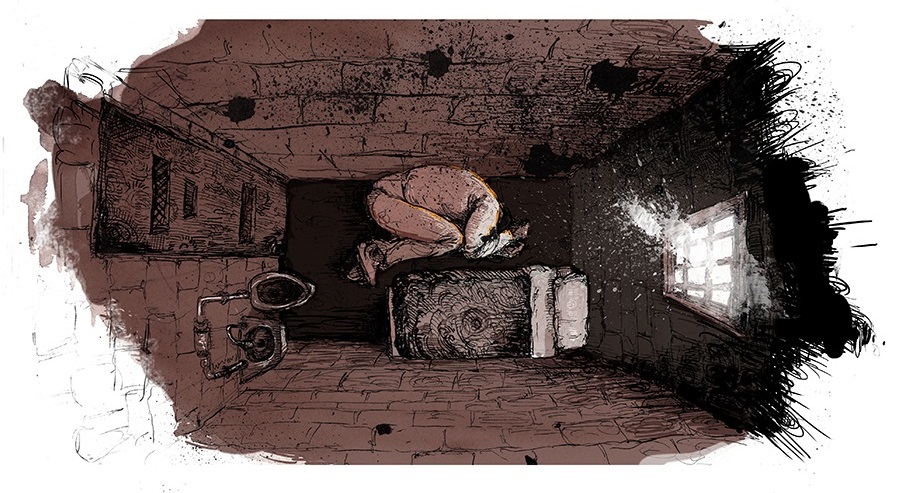
I bring up this experiment because it illustrates an important point about behavior and social creatures. Context and social setting matters. It matters a lot. Put someone in a cage, strip them of any social support, and isolate them from the world and they’re bound to endure some pretty toxic effects. That’s a big reason why solitary confinement is considered torture.

That brings me back to the inherently flawed idea of “toxic masculinity,” a term I’ve gone on record as saying should be buried in the deepest, darkest pit of our collective lexicon. I don’t want to re-hash or belabor any of the points I’ve already made about toxic masculinity. I’ll just note that some of the rhetoric surrounding it is distressingly similar to what anti-drug zealots used when demonizing cocaine.

Think, for a moment, about some of the negative traits associated with toxic masculinity. They include, but aren’t restricted to, stuff like:

  • Suppression of emotions
  • Being prone to violence
  • Increases in aggression
  • Associations with abhorrent sexual behavior

Then, look at the traits associated with cocaine addiction and note some of the parallels. In each case, there’s a direct association between these traits and a tangible, unambiguous cause. In one case, it’s a drug. In the other, it’s just being a man and associating with masculinity. Like the rats in that first experiment, though, there’s no context or social circumstances to consider.

That begs an intriguing, but important question, especially to those who still want to use “toxic masculinity” as a catch-all for certain behaviors. Is it really the nature of masculinity itself that’s behind these toxic behaviors or is it the social circumstances within the society?

That’s not a question anyone, especially not aspiring erotica/romance writers, can definitively answer. I don’t doubt it has been asked in other ways. It might even have been studied to some extent, but since it involves the complex machinations of the human psyche, definitive answers are hard to come by.

Even without the results of those studies, is it really that hard to contemplate the possibility that circumstances may effect how masculinity and femininity manifest? The rat park experiments alone hint at a fairly significant impact. Given the orders of magnitude in difference between rat and human brains, it’s not unreasonable to suspect that impact is substantial.

While we can’t run the kinds of experiments that Bruce Alexander did in 1981, we can assess the current status of masculinity within our culture. It may vary from region to region, but in terms of modern western culture, there are a number of traits that we’ve come to associate with masculinity.

It tends to manifest most distinctly in our standard models of romance, which puts men in situations where they have to be competitive, aggressive, cunning, and determined to get the kind of emotional and sexual satisfaction they want. Even when they do, those same situations make them just as inclined to seek other outlets of satisfaction.

Furthermore, men have to navigate these situations with the added baggage of being biologically wired to seek social, romantic, and sexual connections. Women have this wiring too, but the circumstances for them are different in that the culture has different expectations. Moreover, there’s no concept of “toxic femininity” to color their feminine traits as inherently negative.

What this means is the men are entering these circumstances pre-programmed to be very horny, very lonely, and in need of various forms of fulfillment. Being men, they’re expected to go out and get it while women are expected to just let it come to them. Now, I get that this is a gross oversimplification that obscures the overall gender dynamics, but in terms of the overall culture, these are the circumstances.

To illustrate the inherent issues with those circumstance, here’s a scenario that should help paint a picture of the male predicament. Again, it’s a gross oversimplification that I’m sure will offend more than a few people, but still reflects an important point.

Man: Hello, ma’am. I’m lonely and horny. How do I go about getting sex, love, and social support?

Woman: First of all, the fact that you just admitted you’re horny is disgusting. Women being horny, that’s beautiful and erotic. Men being horny is not, so you’re already a pig in my mind.

Man: What? Why? That’s not fair.

Woman: Don’t interrupt me! Talking down to a woman is rude and sexist. It’s basically the first step towards harassment and abuse. Raising your voice to a woman, showing any kind of dominance, is just perpetuating an oppressive gender stereotype that has no place in the current year.

Man: Okay. I’m sorry about that. So how do I go about it then?

Woman: You’re still talking over me. You’re getting dangerously close to harassing me and since you’re a man, everyone will believe me if I accuse you. So choose your words very carefully because if any woman feels upset by what you say or do, even if it’s unintentional, we can accuse you of being an abuser and ruin your life.

Man: Well, I’d like to avoid that at all costs.

Woman: Then, you’ll have to play by our rules. You’ll have to respect every choice a woman makes and take her side in every argument. Disagree with us or go against us and we’ll label you a sexist, misogynist pig. Then, you’ll never find love, sex, or any kind of social support.

Man: Wow. That almost sounds risky. I might just be better off watching porn and masturbating by myself.

Woman: Now, you’re just making it worse. For one, watching porn or admiring female bodies in any capacity is insulting, demeaning, and objectifying.

Man: But I’m attracted to beautiful women. Is that bad?

Woman: It’s awful! You’re contributing to unhealthy beauty standards that not every woman can hope to achieve. You’re part of a much larger problem in society that forces women to meet obligations that are difficult, inconvenient, or outright impossible. That makes you an accomplice to all the crimes ever committed against women.

Man: But I’ve never attacked, hurt, or insulted a woman in my entire life.

Woman: That doesn’t matter. Since men have gotten away with too many crimes in the past, you have to be the one to pay the price in the present. That means you have to carry the guilt of men you’ve never met for crimes and attitudes you had no part in creating. If you go against this in any way, then you’re an even bigger sexist misogynist.

Man: I don’t want that. I don’t want that at all. I guess I’ll have to find some other way to masturbate.

Woman: You’re still making it worse. You see, women can masturbate because it’s sexy and erotic. Men can’t. It’s just disgusting for reasons that neither of us can change. If any women finds out you’ve ever masturbated or paid for sex in any capacity, then they’ll think you’re a creep and a loser. They won’t even look at you, let alone want to be with you.

Man: But that’s not fair! I can’t turn off my desires.

Woman: That’s too bad. You’ll just have to suppress them while you jump through all the elaborate hoops a woman demands in the meantime. Just remember that even if you jump through all those hoops and do everything they ask, they still reserve the right to not have sex with you or love you in the way you want. That’s their choice and you can’t do anything about it.

Man: So what am I supposed to do? This is making me kind of frustrated and angry.

Woman: That’s not my problem. You either play by these arbitrary rules or we cut you off socially, sexually, and romantically. Try to change any of these rules and that just makes you the biggest misogynist of them all.

I’ll stop there and give everyone a moment to fume. Take all the time you need. It’s not the first time I’ve crafted a scenario with some pretty distressing monologues.

If you can get past the outrage, then try and take a moment to reflect on the circumstances in the scenario. Men are in a situation where the path to the kind of sexual, emotional, and social fulfillment that all social species seek is full of potential pitfalls.

Since those obstacles have gotten a lot more treacherous lately, it’s even harder for men to actively seek the very things that make them healthy and fulfilled. It’s akin to forcing the rats from the cocaine experiment back in the cage and demanding that they not succumb to the detrimental effects.

Now, it’s worth pointing out that women didn’t create these circumstances. There’s no feminist conspiracy any more than there’s a nefarious patriarchal conspiracy. In fact, some of these circumstances stem from traditions men have promoted, like the whole obsession with female purity and the concept of slut-shaming. Men have done more than their part to create and exacerbate these circumstances.

As it stands, though, the circumstances for men are such that frustration, anger, and isolation are almost inescapable. Unless you’re very rich and very well-connected, you’ve got a lot of hazards to navigate. Slip up and you’ll be labeled a creep, a misogynist, or worse. Even if that doesn’t put you in a literal cage, it’ll make you feel like you’re in one. At that point, is it really that surprising when a person’s behavior comes off as toxic?

With these circumstances in mind, the concept of “toxic masculinity” becomes even more asinine because it utterly ignores this context. Absent that context, it can only ever damage whatever harmony men and women have. Given how sensitive we’ve become to scandals and sexism, we can’t afford to do much more damage and expect either gender to come out better.

3 Comments

Filed under gender issues, sex in media, sex in society, sexuality

Why The Term “Toxic Masculinity” Should Be Retired

There aren’t a lot of terms in the English language that I wish could be uninvented. As someone with a strong appreciation for language, as well as someone who aced every essay question in school, the concept of throwing away words is akin to throwing away a box of fresh donuts. It’s an abhorrent thought.

That said, I do find myself making exceptions every now and then. Sometimes, you have to because a set of words comes along that’s so loaded, so skewed, and so esoteric that its only real use is to embolden assholes and inspire disdain. Given how there are enough assholes in this world, male and female alike, such words can be powerful weapons.

That leads me to one of the few terms I wish we could expunge from the English language, as well as every other language, including those invented by Tolken and Star Trek.

Toxic Masculinity

You’ve probably heard it before and never in a positive context so get ready to cringe. You may find yourself cringing again, just by reading over it. For that, I apologize. However, this term and what it entails is worth discussing because it affects men, women, and everything in between.

In terms of contemporary meaning, it’s worth noting that the idea of toxic masculinity is fairly new in terms of context. It only recently emerged as a major buzzword of third wave feminism, which I’ve mentioned before and is still evolving. It’s definition is somewhat vague, which is one of its many problems, but according to Wikipedia, it embodies all sorts of problematic concepts.

The concept of toxic masculinity is used in the social sciences to describe traditional norms of behavior among men in contemporary American and European society that are associated with detrimental social and psychological effects. Such “toxic” masculine norms include dominance, devaluation of women, extreme self-reliance, and the suppression of emotions.

Conformity with certain traits viewed as traditionally male, such as misogyny, homophobia, and violence, can be considered “toxic” due to harmful effects on others in society, while related traits, including self-reliance and the stifling of emotions, are correlated with harm to men themselves through psychological problems such as depression, increased stress, and substance abuse. Other traditionally masculine traits such as devotion to work, pride in excelling at sports, and providing for one’s family, are not considered to be toxic.

In simplest terms, toxic masculinity is the idea that the very traits and social norms associated with manhood are both destructive to modern society and detrimental to women. It is basically the invisible hand that guides people towards regressive, patriarchal attitudes that prefer that everyone live in a 50s sitcom.

Granted, that’s an extremely oversimplified understanding of the concept, but it would take way too many blog posts to get into all the nuances that have been ascribed to toxic masculinity. For this piece, I want to focus on the bigger picture and not the fine print.

Now, to be fair, the idea of men being beasts is not new. It pre-dates feminism and modern society by centuries, going all the way back to pagan folklore. However, that concept always came with a particular context, one that the very idea of toxic masculinity seems to ignore.

Dig deep into any mythos about snarling, beast-like men and you’ll usually encounter the same themes. Put a man in a situation where he’s stripped of humanity, love, community, and family and he becomes a pretty dangerous person. That’s basically the entire concept behind the appeal of characters like Wolverine from the X-men.

With toxic masculinity, though, that important caveat gets overlooked or cast aside. In applying toxic masculinity in its current context, there’s no circumstance behind all these negative traits associated with men. Just being a man and having any concept of masculinity is inherently toxic.

This is the most nefarious, not to mention insulting, aspect of the concept. It eschews any idea of context and calls the entire experience of being masculine toxic. It creates a situation where the only way to not be toxic is to be feminine, which is overly convenient for those arguing certain brands of feminism.

In essence, it readily embraces one of the most common and well-known fallacies of all time. You’ve probably heard it before, but it can’t be belabored enough.

Correlation does NOT imply causation.

It’s behind every major superstition and many failed scientific observations. It’s also the only way in which toxic masculinity works, with respect to criticizing an entire gender.

With toxic masculinity, there is no circumstance or context. There’s no need to subject anyone to a dehumanizing process, be it complex social pressures or an adamantium bonding process. Just being a man who exercises his masculinity in any capacity is inherently toxic.

That’s a wonderfully simplistic understanding that encapsulates an entire gender for all the wrong reasons, but as is often the case with wonderfully simplistic ideas, it’s not accurate. With toxic masculinity, though, it’s far more dangerous.

Being such a new word that hasn’t had time to develop traditions and complexity, toxic masculinity is a lot like other concepts, such as “fake news” and “alternative facts.” They’re so new and so vague that you can basically use it as linguistic cheat code to discount anything that you either don’t agree with or don’t care to scrutinize.

A man commits more crime than a woman? That’s toxic masculinity.

A man blames a rape victims for putting herself in a dangerous situation? That’s toxic masculinity.

A man makes an inappropriate joke that offends women? That’s toxic masculinity.

A man denies sexually harassing a woman? That’s toxic masculinity.

A man uses vulgar, profane insults while playing video games? That’s toxic masculinity.

There’s a clear pattern here in that there doesn’t need to be a pattern. Just take any undesirable trait ever ascribed to a man and call it toxic masculinity. Then, like magic, there’s no need to scrutinize context or circumstance. There’s no need to run any tests or dig deeper. You know the diagnosis and the treatment is obvious. If masculinity is so toxic, then that means we just have to discourage masculinity altogether.

Again, it’s an overly simple interpretation of an exceedingly complex phenomenon. It’s one that lumps all men, as well as the many dynamics behind masculinity, into a singular collection of traits that just happen to have all sorts of negative connotations. It provides a clear antagonist for those seeking gender equality or women’s rights. It also provides a potent mechanism for shaming men.

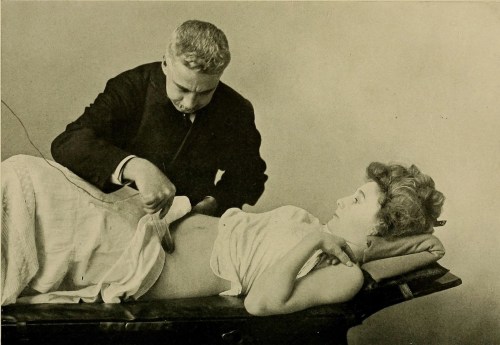
Ironically, this concept of treating certain gender traits as outright diseases is not unprecedented. In fact, there was a time when the roles were reversed and it was feminine traits that were considered “toxic.” However, people didn’t call it that. They actually had a medical term for it, which was “female hysteria.” Look at the definition and notice some of the parallels to toxic masculinity.

Women considered to have had it exhibited a wide array of symptoms, including faintness, nervousness, sexual desire, insomnia, fluid retention, heaviness in the abdomen, shortness of breath, irritability, loss of appetite for food or sex, and a “tendency to cause trouble”.

It seems funny and disturbing now, but back then, it was a serious issue. Society really did get to a point where being too feminine was considered a disease. Just being a woman carried with it an inherent shame that people couldn’t escape.

However, at least with female hysteria, the treatment wasn’t that bad in that it involved regularly being masturbated to orgasm. In terms of medical treatments, that beats the hell out of headaches and constipation. For toxic masculinity, though, there is no such treatment.

Since the term is so vague and its concepts so loaded, it creates a situation where the only way to avoid it is for a man to constantly denounce, deny, and disparage a core part of his identity. That usually involves a lot of virtue signaling and adopting the role of a beta male. The fact that approach has one too many similarities to gay conversion therapy should give anyone pause.

As it stands, the newness and ambiguity of toxic masculinity makes it a useful term for those who need an easy way to disparage men or extrapolate specific male behaviors to suit an agenda. That’s what makes it such a dangerous term for men and women alike, but that’s also what makes it an easy term to drop.

Now, I’m not denying that men have their share of undesirable traits. I also don’t deny that there are some aspects of masculinity that are worth scrutinizing. However, little good has ever come from creating terms that treat basic human traits as a disease. It creates a dangerous precedent that skews what it means to be sick and healthy.

Since it’s in the best interest for society and aspiring erotica/romance writers for genders to get along, ditching such a flawed concept like toxic masculinity will definitely help. It won’t solve all the issues associated with masculinity and feminism, but if we can do it for female hysteria, we can do it for toxic masculinity.

22 Comments

Filed under gender issues, sex in media, sex in society

Five TV Shows That Could NEVER Be Made Today (Thanks To Political Correctness)

It’s amazing how much our culture can change in such a short period of time, relatively speaking. It wasn’t that long ago that mixed-race couples were considered scandalous, depicting a toilet on a TV show was taboo, and Bill Cosby was a respectable public figure. Whether it’s decades, years, or just a few weeks, things can change quickly.

That change, however, isn’t always logical or in the right direction. Hell, I’m still trying to figure out the appeal of fidget spinners. While I like to think that most change in society is progress, I don’t deny there are instances where we all take a step backwards and sometimes fall on our asses.

This brings me TV, an undeniable catalyst for cultural change. For more than a half-century now, TV shaped, re-shaped, and upended our culture in all sorts of ways. From Elvis’ scandalous hips to the rise of music videos to shows like “Breaking Bad,” TV has been a force for better, for worse, and for just pure entertainment value.

There have been any number of shows, specials, and moments from TV that have come to define our culture. However, there are some shows that, if they happened today, would generate a very different response than they did when they first aired.

I’m not just talking about shock value or controversy either. I mean that if some these shows debuted in the current year, they would generate the kind of outrage, whining, and protests that flood social media and spur the kinds of debates that can only ever end with someone comparing someone lese to Nazis.

These are sensitive times for reasons I don’t think I have to articulate. We’ve made progress in some ways, but may be regressing in others. Some blame feminism. Some blame toxic masculinity. Some blame greed, bigotry, or political correctness. Some even blame the illuminati, but that may be pushing it.

Everyone seems to see something wrong in the culture of the past and the present. Everyone likes to blame someone or something different. More often than not, it’s a confluence of forces that make certain TV shows of the past ill-fit for the present.

Some of that is due to seriously outdated views and stereotypes. It’s entirely understandable why those shows would never work today. Most sensible people wouldn’t argue that. There are some shows, however, that would generate enormous outrage for petty, asinine reasons.

What follows is a list of classic TV shows that, whether due to content, style, or theme, would never air today. It would just be too controversial and not necessarily for the right reasons. It may reflect a lot about the sensitive nature of our culture today, but in many respects, it also shows just how erratic our collective tastes can be.


“All In The Family”

This one should be pretty obvious. “All In The Family” was already controversial in its day. It subverted the whole idea that a father figure in a sitcom should be respectable, upstanding, and just. Archie Bunker is none of those things and the show was memorable because of it.

Much of the show was built around Archie being a bigot, but a lovable bigot. In this day and age, that sounds like an oxymoron. At the time though, the early to mid 1970s to be precise, it worked for the same reason Sheldon Cooper works in “The Big Bang Theory.” You can be an asshole in a sitcom, but you can still be lovable.

Unlike Sheldon Cooper, though, making Archie’s bigotry lovable today is next to impossible without making him a B-list villain in a Tyler Perry movie. In nearly every episode, he says a line that would’ve caused legions of anti-racist, anti-sexist, anti-bigot crowds everywhere to erupt on social media. Anyone who even pretended to laugh at that show would be crucified as a Nazi sympathizer.

Beyond Archie Bunker’s bigotry, though, the overall themes of the show would be enough to make it too controversial for TV. The show routinely mentions “the good old days.” Today, though, that idea has been taken to mean the days when people could be assholes to minorities and get away with it. However anyone may feel about the show or its message, it just would just cause too many shit storms to air today.


“South Park”

I know this seems odd because “South Park” is still on the air, having just completed its 21st season. However, even long-time fans of the show can probably appreciate why it should be on this list, especially when you consider how different the show was in its early days.

Even back in the late 90s, this show generated more than its share of controversy for its vulgarity, profanity, and tendency to kill Kenny every episode. It’s the finer details of those controversies, though, that ensure the “South Park” we saw in those earlier seasons could never air today.

Eric Cartman alone would’ve made the show too controversial. Like Archie Bunker, his overt racism, anti-Semitism, and attitudes towards the poor would’ve triggered plenty of outrage. Add depictions of sacred religious icons and characters like Big Gay Al to the mix and the show wouldn’t have made it past the first episode.

The fact that “South Park” is still on the air is less a testament to its staying power and more a testament to its ability to adapt. It is not the same show it was when it debuted in that it doesn’t confront controversy the same way it used to. Even with that adaptation, it still couldn’t debut today, not with someone like Eric Cartman on the cast.


“Two And A Half Men”

This is another show that ended in 2012, which isn’t that long ago in the grand scheme of things. Even so, a lot has changed since “Two and a Half Men” debuted in 2003 and not just with respect to Charlie Sheen’s public persona. In terms of the premise and structure of the show, it could never air today without generating way too much backlash.

This is one of those shows that would enrage both feminists and men’s rights activists, alike. Beyond Charlie Harper’s blatant womanizing, treating nearly every female character a disposable sex toy, there’s also his overly emasculated brother, Alan. In addition to having an ex-wife who routinely screws him over, Alan is needy, submissive, and constantly mooching off of everyone around him.

Even by beta-male standards, Alan Harper is an affront to any man with any measure of self-respect, just as Charlie is an affront to any woman with a shred of feminist inclinations. Granted, that didn’t stop the show from being funny. I admit I loved this show while it was on, even after Charlie Sheen got replaced by Ashton Kutcher. However, its brand of humor would just never work if it aired today.

That says nothing about the depiction of the dim-witted kid, Jake Harper. His depiction would come off as more tragic than lovable than it did in 2003. In terms of the sheer volume of people this show would offend in the current year, “Two and a Half Men” is in a league of its own.


“Baywatch”

First off, I need to make clear that I’m not referring to the sub-par movie that never should’ve been made in the first place. I’m referring to the original “Baywatch” TV show that debuted in 1989, much to the joy of straight heterosexual males everywhere. The show, with its premise built around beautiful women in bikinis and David Hasselhoff’s chest hair, had plenty of appeal.

That appeal is still there today. There’s always appeal for beautiful women and manly men. However, these days it’s become distressingly taboo to admire beautiful women in any capacity that isn’t associated with Wonder Woman movies. We’re at a point where just looking at a beautiful woman is considered harassment by some people.

It’s for that reason that “Baywatch” would never work today. I can already imagine the various angry protests it would incur. People will claim the show contributes to female objectification, rape culture, toxic masculinity, and all sorts of buzzwords meant to make anyone feel guilty for committing the terrible sin of admiring a beautiful woman.

I’ve made clear how absurd this trend is. However, I don’t see it changing anytime soon. As a result, “Baywatch” would just be way too controversial and would probably draw the ire of every feminist or uptight religious zealot with internet access. It’s sad that this world would deny us a show that so nicely depicts Pamela Anderson’s bouncing breasts, but that’s the world we live in.


“Married With Children”

Once again, this show finds a way to be relevant on this site. I’ve mentioned it before in breaking down other topics. I’ll probably mention it again because it touches on so many important aspects of men, women, and family life. Despite that relevance, there’s no denying that “Married With Children” could never be made today.

The list of people this show offended, beyond the angry woman that tried to get it canceled, is as vast as it is comprehensive. This show cracked jokes about women, teenagers, marriage, genitals, animals, fat people, minorities, transsexuals, homosexuals, and pretty much every other minority group you can imagine.

It cracked these jokes in the backdrop of a sitcom that went out of its way to subvert every feel-good family drama that ever existed, so much so that it was originally called “Not The Cosbys.” In many respects, “Married With Children” went even further than “South Park” and “Two and a Half Men” in crafting a sitcom around every offensive trope in the book. It did this with a bravado and glee that you can’t help but respect.

That kind of antipathy to everything that’s supposed to make a sitcom endearing is a big part of what made “Married With Children” so successful. It came along at just the right time to subvert existing trends in TV, creating characters and icons that were raw, unfiltered, and offensive. That timing is also why it could never be made today.

Between the fat jokes, Al joking about shooting his wife, and Kelly Bundy being a stereotypical dumb blond, “Married With Children” would find a way to upset everyone. However, I still think those same upset people would laugh at the show. It was just that funny. It’s a big part of why the show still ranks as one of my personal favorites.

Even if “Married With Children” could never be made today, it still reflects an attitude that I think many people feel whenever anyone gets upset over a TV show. In a sense, it serves as the model for how a show can be so offensive, yet so funny. The fact we’ll probably never see anything like it again makes it all the more special.


4 Comments

Filed under Current Events, gender issues, sex in media, sex in society

An Important Question That Feminists And MRAs Must Answer (Honestly)

There are certain debates that I try to avoid. Sure, I’ll contribute to a debate between Marvel and DC fans. That often inspires some trolling, but it won’t inspire outright threats. When those debates revolve around unpleasant issues like race, religion, gender, or anything having to do with politics since last year’s election, I avoid it like the plague.

Every now and then, though, I feel compelled to at least comment on an ongoing debate. While I doubt that comment will resolve anything, I try to make sure it’s something worth adding to the conversation, if only to provide perspective. In my experience, perspective is the first thing lost when people start insulting each other’s mothers.

Before I started writing erotica/romance novels, I actually enjoyed debates. I thought they represented meaningful dialog. Then, I learned the hard way that the desire to win an argument often gets in the way of having productive discussions. There are few topics that don’t involve religion where this plays out more in gender issues.

Sometimes it’s between sex positive feminists and sex negative feminists. Sometimes it’s between feminists and men’s rights activists. Sometimes it’s between alpha males and beta males. In any case, the drama and the vitriol is the same. The sides of the argument are passionate and committed. Neither is likely to ever sway the other.

I can understand that, to some extent. There are undeniable gender disparities in this world, as well as a few subtle disparities that rarely come up in debates. I can also understand why certain people take the sides they do. Feminists, no matter what type they may be, are going to argue for women’s issues. MRAs, no matter how adversarial they may be to feminists, will take the side of men.

There are important issues that are worth debating, regardless of how much or how little you care about gender disparities. Even if neither side can completely win the argument, the debates do inspire all sorts of ideas that enrich everybody involved.

That being said, I still feel compelled to inject a little perspective into the debate. I think emotions on both sides are in overdrive after some pretty major sex scandals, which is fueling more outrage than discussion. As such, I’d like to reorient that perspective by asking one basic question to feminists, MRAs, and gender-driven ideologues of all types.

Do the goals of your ideology directly benefit you to the direct detriment of another?

It’s a yes-or-no question, but I imagine it’s one of those questions that few can answer honestly on a whim. That’s the key part that I want to emphasize. Anyone who answers this question, regardless of which side on gender issues they take, should answer this question with the kind of brutal honesty usually reserved for British TV personalities.

That’s because the question is twofold. The first part is somewhat a given. If you’re in the business of discussing gender issues, you usually have a goal. A part of that goal usually involves benefiting you and others like you. That’s the point of any effort that requires you to endure arguments, insults, and trolling.

The goals of feminism, men’s rights advocates, and everything in between involve benefitting individuals within their tribe. That’s not the issue here. It’s the second part where the honesty is harder to discern because it requires a self-assessment and a greater understanding of the bigger picture.

If you’re looking to achieve a goal that hurts or inconveniences no one, then chances are it’s not going to inspire many debates. Those efforts rarely face any political or social overtones. They’re as simple as being low on marshmallows and wanting to get more. The only one you’re inconveniencing is yourself.

When that goal involves something detrimental or inconvenient to someone else, regardless of whether it’s real or perceived, that’s when you run into problems. If that benefit you seek requires someone else to pay a price, then you’ve got a problem. It’s not always a bad problem. There are times when that the absence of that benefit is an injustice. Issues like voting or protection from violence are good examples.

Those kinds of goals tend to be simple with tangible, documented harm that is directly linked to a gender disparity. It’s the more complicated goals, such as those involving body image, mass media, or cultural trends, that tend evoke the kind of cyclical vitriol on both sides that never seems to abate.

These issues can’t be easily solved by passing a law or flipping a switch. They often require large groups to change their attitudes, beliefs, and assumptions about the world. In the same way people struggle to break bad habits, this sort of thing is not easy to do. It plays out in all sorts of ways.

“Stop admiring sexy women! That’s sexist!”

“Stop asking for free stuff because you’re a woman! That’s fascist!”

“Stop demanding that I find you attractive! That’s body shaming!”

“Stop enjoying what you love because it’s perpetuating misogyny/racism/misandry/homophobia/transphobia!”

However it plays out, the end result has a similar dynamic. In achieving the goal for one side, it negatively impacts the other. Sometimes their power and influence isn’t as great. Sometimes they’re shamed for liking something or supporting a certain position. Sometimes they have to pay a price, sometimes with money and sometimes with other forms of social currency.

In that situation, it creates a predicament to whoever is arguing on the other side. It undermines they’re objectivity. That person, be they a feminist or an MRA, has something to gain by their side prevailing. Like an investor who has a vested interest in a product failing, they’ll argue louder than most that the product is crap.

This is difficult to acknowledge because it undermines someone’s inherent sense that they’re the hero in this story. If Superman only did what he did because he acknowledged he got free ice cream for every criminal he stopped, then that would affect how people saw his motivations.

I don’t doubt that feminists and MRAs are motivated to pursue what they feel is an objective good. However, if they have something to gain from their side prevailing, then there’s a non-zero amount of subjectivity involved. Absent that perspective, the effort becomes less about confronting those gender disparities and more about maximizing your own personal advantage.

Let’s not lie to ourselves. If life were a video game, we would want to use cheat codes every now and then. It’s not wrong to admit that or even to seek advantages that others can’t have. However, to not acknowledge those self-serving facets of an issue is to claim your character is somehow greater and your opponents might as well be Nazis.

Very little good can some from any debate when both sides think their opponents are just monsters to be slain and not people with their own interests at heart. I don’t doubt that debates over gender disparities and gender-related issues will continue. I also don’t doubt that some of those debates will be as rational as the “Deadpool 2” synopsis.

It’s for those reasons that this question needs to be asked and answered honestly. I get it. Honesty is tough in a world of fake news, internet trolls, and all-around assholes. That’s why, if we’re serious about achieving our goals, we need to value it in any discussion about gender. The future of the human race literally depends on it.

2 Comments

Filed under gender issues, Marriage and Relationships

Making Sense Of Sexual Misconduct, Valid Arguments, And Matt Damon

We like to think that when there’s a serious problem, our first instinct is to approach it with a logical, reasoned understanding of what it is and how to go about solving it. Ideally, that’s how competent, civil societies go about these things. By those same ideals, though, nobody ever cheats on their taxes, lies on their resume, or downloads free movies from torrent sites.

In the real world, there are some problems where our emotions surrounding an issue are so powerful, so intense that they undercut our ability to approach it logically. It’s part of the flawed wiring in our caveman brains that seems to crop up in every major issue I discuss on this blog.

That brings me back to one of the most emotionally charged issues of the day in sexual assault. It’s an issue that has touched everything from movies to video games to the comic book industry that I’m so fond of. Between the scandals and the movements they inspire, it’s one of the most heated issues that doesn’t involve Star Wars fan theories.

It’s because the emotions surrounding sexual assault and sexual harassment are so heated right now that trying to force any level of logic or context into the discussion is next to impossible. If done poorly, it can come off as victim blaming, which is tends to intensify emotions even more.

This brings me to Matt Damon, an actor who has built much of his career about having to be rescued. Unfortunately, he didn’t get that memo about the current emotional state of this issue. It’s still very raw and very charged. There’s a reason for that, but that reason is secondary right now and he just found that out the hard way.

It happened during a recent interview for ABC’s “Popcorn with Peter Travers.” During the interview, Mr. Damon decided to give his opinion on the issue, as many other celebrities have on the issue. This is what he had to say.

“I think it’s wonderful that women are feeling empowered to tell their stories and it’s totally necessary,” he said. “I do believe there’s a spectrum of behavior. … You know, there’s a difference between, you know, patting someone on the butt and rape or child molestation, right? Both of those behaviors need to be confronted and eradicated without question, but they shouldn’t be conflated.”

The bold parts are my doing. That’s because these are the parts stirring even more emotion within an already heated discussion that shows no signs of settling. Harvey Weinstein triggered it and subsequent celebrity scandals escalated it. Matt Damon may have escalated it even more by trying to put a kind of logic into a discussion that isn’t ready for it.

On paper, what Mr. Damon said isn’t unreasonable. In fact, it’s fairly logical by most standards. There is, indeed, a spectrum of behavior for sexual misconduct, just as there’s a spectrum for behavior of any kind of deviance.

In the same way that stealing a bag of candy from a grocery store isn’t the same as stealing the Mona Lisa, an unwanted hug at an office Christmas party is not the same as a brutal rape in a dark alley. There is a spectrum for that kind of behavior. One warrants serious punishment and prosecution. The other warrants disapproval and scorn, but not much else.

However, that kind of approach is just too logical for something that’s so emotionally charged. I know I keep saying that, but it’s worth belaboring and it really does matter. Sexual assault is an extremely emotional topic, one that incurs an immense amount of trauma and suffering to the victims. To them, logic and spectrums mean as much as the weather on Neptune.

As a result, the reactions to Mr. Damon’s words have been more than a little charged. The most vocal reaction came from Alyssa Milano and Minnie Driver. This is what they had to say on the matter.

Now, I don’t doubt their sincerity. These are two women who have been in the entertainment industry long enough to know more than a few dirty secrets. There’s plenty of emotion and disdain in their words. They go out of their way to focus on the bigger picture that’s fueling the outrage, emphasizing past injustices and systemic problems that pre-dated them, Matt Damon, and most people alive today.

In terms of the emotions surrounding the ongoing discussion, their words struck all the right chords. They focused on the pain and suffering that sexual assault has done to women like them and many other before them. They also emphasize how these injustices went overlooked and unpunished.

That’s where they have Mr. Damon beat because, like I’ve noted before, we have this inherent sense of justice hardwired into us from birth. Injustice rightly makes us upset, uncomfortable, and outraged. However, it’s that same reaction that can also blind us to the logic behind the injustice.

There’s nothing that Ms. Driver and Ms. Milano said that disproves or undercuts Mr. Damon’s points. They don’t even try to argue that everything, from a hug to a rape, is equally egregious when judging sexual misconduct. They just point out that Mr. Damon is a terrible person and part of the problem they’re trying to fight. As such, there’s no reason for them to take his words seriously.

That may help them win the current argument, but it doesn’t necessarily make them right in the long run. I’ve said before that there’s a huge difference between winning an argument and being right. One matters in the long run. The other doesn’t. For an issue as serious as sexual misconduct, that’s a dangerous precedent.

Again, I get the reason why women like Ms. Driver and Ms. Milano react so strongly. It’s very personal for them. I doubt Mr. Damon has ever been a victim of the kind of misconduct they’ve endured. Therein lies the problem, though, if either side is serious about confronting the issue.

It’s so personal for some people. It’s a problem to be solved with logic and understanding for others. At the moment, those sides just can’t coexist. It doesn’t matter whether Matt Damon, a well-known celebrity, makes a valid point. It doesn’t even matter if that’s an important point to make in order to prevent this movement from enduring a backlash, which some have already expressed concerns about.

However, it has to matter. In order for us, men and women alike, to create a more just society that confronts sexual misconduct appropriately, both the high emotions and the logic has to matter. It’s the only way anyone can be motivated and informed enough to do something about it.

I’m not going to say that Mat Damon was wrong for saying what he said. I’m also not going to say that Alyssa Milano and Minnie Driver were wrong for reacting the way they did, either. I’ll only say that overlooking logic and ignoring context never work out in the long run. At some point, reality catches up to us all. In the long run, reality wins every argument, regardless of our emotions.

11 Comments

Filed under Celebrities and Celebrity Culture, Current Events, gender issues, sex in society

Why People Blame The Victim (And How To Avoid It)

In wake of recent social trends and lurid scandals that took way too long to expose, we’ve entered a precarious moment in our history. I’m not just talking about ongoing issues surrounding gender inequality or trends in our sexual behavior, either. We, the same people who can’t even agree on the color of a dress, have come to a rare consensus on an issue.

Blaming the victims a sexual assault is BAD.

I’ll give everyone a moment to stop cringing and rolling their eyes. I know. This feels like one of those issues that shouldn’t even be an issue to begin with. Unfortunately, it evokes all sorts of heated emotions between men, women, feminists, men’s right’s activists, the transgender community, and certain species of baboons for all I know. It’s that a very loaded, very unsexy a topic.

Now, before I go any further, I want to make one thing abundantly clear. In talking about the particulars victim blaming, I’m not getting behind a particular movement or agenda. I’m choosing to confront this issue for the same reason I’ve used for confronting many unsexy issues.

Issues like sexual assault, and the victim blaming that comes with it, tie directly with our sexuality and our ability to love one another, albeit on the more sinister end of the spectrum. Given my efforts to become a successful erotica/romance writer, I can’t ignore these issues, nor do I want to.

I apologize if the way I go about discussing this issue offends or upsets some people. It wouldn’t be the first time I’ve been clumsy or misinformed with my words. However, this is one issue that nobody, be they a Hollywood producer or erotica/romance writer, should avoid. Sexual assault and sexual harassment are bad enough. Blaming the victim is just the napalm that gets dumped on that fire.

Overall, I think it’s a good thing that there’s rising awareness about sexual misconduct, especially among those in positions of power. Sure, it has been prone to a few misguided controversies, but the overall intent is good. Sexual misconduct is a serious crime. Who could possibly be against it?

That is a rhetorical question, by the way. I’ll skip the part where I recount how various internet trolls would answer that and get to victim blaming, which is where this inherently noble endeavor hits a brick wall and tries to pick a fight with it. Given that brick walls are undefeated against people armed only with profanity and alcohol, it’s a fight that tends to leave everyone bloodied.

It happened with the Harvey Weinstein scandal. It happened with Corey Feldman. It will likely happen again with the next major scandal to break. At some point in the narrative, someone will imply or state outright that the victims bear some or all of the responsibility for what happened to them.

Some will say they put themselves in a bad situation. Some will say they secretly wanted it and just played the victim to score sympathy. Some will say they dressed in a way that made them deserving of it, which is especially common among those who decry beautiful women in sexy attire. There’s another term for this kind rhetoric. It’s called being an asshole.

There’s really not much context here because by every measure, blaming the victim of a crime is a pretty rotten thing to do. Whether you’re a man, a woman, or something in between, scolding someone who just endured a traumatic injustice is right up there with strangling a puppy, drop-kicking a kitten, and slitting a unicorn’s throat.

As nasty a reaction it is, there is also an underlying mechanism behind it. Some of it is tied to the flawed wiring of our caveman brains, but I would argue most of it stems from the inherent difficulty of thinking rationally when we’re in such an emotionally charged state. Given the seriousness of crimes like sexual assault, emotions are often in overdrive.

The moment we hear about sexual assault, it triggers something in our collective minds that makes us want to lash out. It’s such an egregious injustice and most decent human beings seek to right an injustice. It’s actually one of humanity’s best qualities and one of the reasons I believe people are generally good.

However, sexual assault is not like a stolen phone, a damaged house, or a black eye. You can buy someone a new phone. You can help them fix their house. You can give someone with a black eye and ice pack to help sooth their suffering. You can’t easily do that with someone who endured a sexual assault.

Many times, as was often the case with perpetrators like Bill Cosby, the injustices aren’t tangible, nor are they easy to remedy. However, we’re still appalled that such an injustice even occurred. That innate sense of justice that we have hardwired into our brains at birth urges us to right this egregious wrong.

Unfortunately, our brains are still crude instruments that can’t always tell the difference between perpetrator and victim, especially when we’re in an emotional state. As a result, we have a hard time separating the crime from the actual people involved. It’s not some shady, patriarchal agenda. It’s just a byproduct of our inherent need to maintain a just and fair world around us.

Then, there’s the extreme tribalism that comes into play. Yes, that lingering flaw from our caveman past plays a part in this too. Think back to any case involving a sex scandal, be it one involving a celebrity or someone in a position of power. Then, look at those who did the bulk of the victim blaming. Chances are they’ll have some sort of allegiance or admiration to the accused.

That makes sense because we instinctively defend members of our tribe. Whether we share a political affiliation, an ideology, or a fondness for Bill Cosby’s brand of comedy, our first reflex is to defend our tribe, even if it means turning a blind out to cold, hard facts. This is why some people will still defend men like O.J. Simpson against all evidence to the contrary.

On some levels, it’s understandable, even if victim blaming is such an egregious act. Nobody wants to believe that they’re a bad person. Some want to believe they’re the hero of their own story and the world around them is full of villains. That’s where victim blaming becomes a dick move disguised as a defense mechanism.

If anything associated with their tribe becomes affiliated with something as horrible as sexual assault, then it becomes personal for them. When it becomes that personal, then other people can only be targets. As a result, the people those victim-blamers target will, in turn, fire back with the same tactics. Again, the people become disconnected from the injustice and it just becomes a glorified shouting match.

It basically adds another injustice on top of another, turning a crime into a personal struggle to protect your tribe, identity, and certainty that you’re a decent person and those who don’t agree with you are assholes. It’s a great way to rally a tribe in the struggle for survival. In an era where false accusations and poorly-worded tweets ruin lives, it’s downright dangerous.

Within this danger, though, lies the key to confront the fuel that feeds the fires of victim blaming. It’s impossible, at least for now, to know the pain a victim feels or the veracity of an accusation. Absent that certainty, the best we can do is focus on the underlying injustices surrounding sexual assault.

Whether it’s a man exploiting his power to abuse women or a woman going out of her way to ruin a man’s life, the connective tissue to the entire issue revolves around justice. Our desire to live in a just world is one of the few things that transcends tribalism.

To illustrate how that plays out, here’s a quick scenario.

Person One: Help me! That asshole has been sexually harassing me for years!

Person Two: What? What the hell happened? What did you do?

Do you see the disconnect there? The foundation for victim blaming is right there in the initial reaction. If the accused is someone the second person likes or respects, their first instinct will be to defend them. That’s hard to avoid and both sides can turn on each other quickly.

Now, here’s the same scenario with a key change.

Person One: Help me! That asshole has been sexually harassing me for years!

Person Two: What? That’s terrible! Nobody should have to endure something like that.

See the difference? This time, the second person doesn’t immediately personalize the issue. He and the victim are on the same page. They both understand that this is a crime. This is an injustice. That serves as a foundation for fixing it.

I don’t deny that it’s only a minor change and one that’s difficult to utilize in every instance. That’s unavoidable for emotionally charged issues like sexual assault. However, that’s exactly why the effort is so important. Anything we can do to stay on the side of the victims and confront the larger injustices of sexual assault will be far more productive than just attacking one another.

Until we can finally upgrade our caveman brains, egregious acts like sexual assault and victim blaming will likely remain. There are many mechanisms behind it, but there are far more that transcend it. Whatever the long-term outcome of the ongoing efforts to confront sexual misconduct, we have many more reasons to come together than we do to keep casting blame.

4 Comments

Filed under Current Events, gender issues, sex in society, sexuality

Bryan Singer, Harvey Weinstein, And The Double Standards Of Sexual Abuse

What does it say about the state of our culture, our society, and our sexuality when every week seems to bring a new sex scandal to light? That’s not a rhetorical question, by the way. That’s a question that many are trying to answer. I’ve certainly tried to answer parts of it, but with every new scandal, that effort gains a new complication.

By now, most people know the famous names, the ruined careers, and the sordid extent of the allegations. Names like Harvey Weinstein, Louis C.K., and Bill Cosby are now etched into the public consciousness for all the wrong reasons. The outrage and anguish surrounding their egregious actions evokes all sorts of passions.

It eventually culminated with Time Magazine recognizing the women who brought these scandals to light as the collective person of the year. For the most part, these women have been hailed as brave and strong for coming forward and exposing these crimes. It’s because of them that these powerful men can no longer hide their misdeeds, which is a good thing.

I don’t deny the importance of what these women have done. They’ve helped kick-start a movement that has made people more aware of these egregious crimes. It’s because of those efforts that even powerful people who are inclined to use that power to exploit women can’t hide from the consequences of their actions. In the name of furthering a just society, I think that’s a good thing.

However, and this is where I know I may upset some people, there’s a part of that effort that’s still incomplete. There’s a missing piece of this ongoing battle against sexual misconduct, one that has the feel of a very subtle, but deeply distressing double standard. Having talked about the less obvious double standards in our society, I feel like the extent of this one is only growing.

Recently, a fresh sex scandal came to light involving another powerful name in Hollywood. Bryan Singer, the accomplished director behind “The Usual Suspects” and the architect of the X-men movie franchise, has been accused of raping a 17-year-old boy. We’re not talking about loose bath robes, groping, and shady casting couches. This story involves full-blown rape.

It’s not the first time Singer has been accused of sexual misconduct. To date, he hasn’t been proven guilty in a court of law, which is an important detail to note. False accusations do happen and people in positions of power, like Hollywood, are easy targets.

I’m not going to speculate how true or exaggerated the accusations against Singer are. The details are still not clear and information is still coming out. However, there’s an important element to the news of this scandal that’s worth pointing out.

Unlike the scandals with Weinstein and Cosby, the victims in this case weren’t women. They were men. If you don’t think that matters, then take a second to recall the reactions to other scandals.

When the sordid stories about Weinstein came out, they generated all sorts of outrage. It was a hot topic on the news, social media, and even “Family Guy” jokes. The fact that these men did such disgusting things to women got a lot of people talking. However, when the victims are men, the narrative is different.

Before Bryan Singer, the only notable scandal involving men was that of Kevin Spacey. However, the outrage he generated had less to do with the gender of his victim and more to do with how he used the scandal to come out as homosexual. That upset people, but the alleged crime he committed against his male victim became an afterthought.

This is where the double standard gets uncomfortably apparent. We, as a society, agree that assaulting and harassing women is a terrible crime. We rightly condemn it. However, when it happens to a male victim, and it happens more often than we think, we’re not quite as vocal with our outrage. It’s still a crime. It still involves exploration and pain. When the victim is a man, though, we don’t see it the same way.

I’ve highlighted this to some degree with a thought experiment. However, it plays out in other ways throughout our culture. Stories about women being victims are often harrowing and brutal. Stories built around male victims of sexual assault, though, can be comedies starring Will Ferrall and Kevin Hart.

There are any number of reasons as to why that is. Male victimization, especially in matters of sexual misconduct, carries with it some unique taboos. There’s this idea that men, being the ones with more power and influence in this world, can’t be victims in the same way as women. Never mind the fact that the pain any victim feels is real, regardless of gender. We still treat one victim differently than another.

It plays into this notion that men are just supposed to shake off that kind of victimization and women need some sort of special treatment. In a sense, it’s insulting to both genders and obscures the actual substance of the crimes involved. Whereas there’s an entire movement behind the effort to combat sex crimes against women, the crimes against men just fall to the wayside.

That’s not to say it’s being completely ignored. Some are making an admirable effort. Corey Feldman, a former child star, has been among the few celebrities who have been outspoken about the abuse young men have suffered in the entertainment industry. Terry Crews, a successful actor and former Old Spice Man, has spoken out against it as well.

However, to date their efforts haven’t generated the kind of notoriety and outrage as the movement to protect women from these same crimes. Their voices are often drowned out by other scandals that fit into this overall narrative of creepy, sinister men in power exploiting women.

For reasons that are too voluminous for one blog post, the narrative surrounding scandals like that of Bryan Singer aren’t quite as enticing. The notion of a powerful man victimizing another man just doesn’t come off as the kind of struggle that makes everyone feel more virtuous by joining.

It certainly doesn’t help that the taboos surrounding these scandals also mix with other taboos involving homosexuality. Those attempting to take a stand against male victimization have to be careful with their outrage because if they don’t, they can get labeled as a homophobic bigot and that’s not the crowd most people want to be part of.

In a sense, voicing outrage against the female victimization is easier and safer. There’s little ambiguity. A powerful man victimizing a vulnerable woman has clear, defined lines of injustice. The only emotions we deal with are those involved with our aversion to injustice.

With male victims, those emotions are still there, but they’re complicated by these uncomfortable ideas that don’t fit that narrative. It goes beyond double standards in that it requires us to contemplate the kind of crime that we don’t want to believe happens as often as it does.

That mentality is downright dangerous because it creates the sense that some victims are more important than others. Whereas a female victim will get all the love and support that hashtags and talk shows can offer, male victims have to fend for themselves. That’s a problem because fighting the same injustice with different standards is an injustice in and of itself.

The allegations against Singer remain to be proven and may end up being false, but the fact that this scandal doesn’t carry the same weight as others involving women reveals that ongoing efforts to combat sexual misconduct are incomplete. Until some of these double standards are confronted, then the injustice will continue.

11 Comments

Filed under Celebrities and Celebrity Culture, gender issues, sex in society, sexuality

Gal Gadot’s Message To Misogynists (And Why It’s Incomplete)

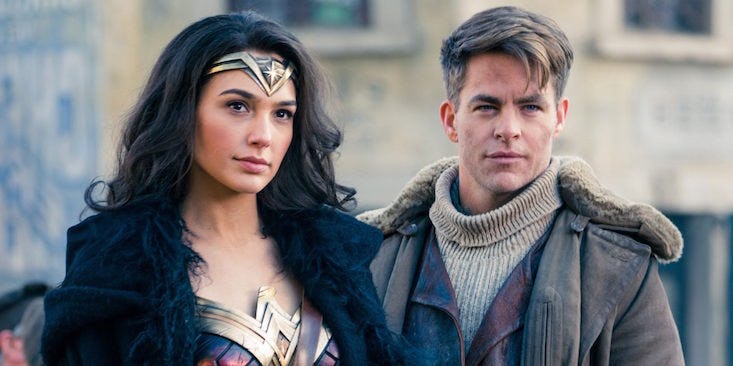
It has been a good year for Gal Gadot. When you’re the woman who brought Wonder Woman to life in one of the most successful movies of 2017, as well as the highest grossing superhero origins movie of all time, you can objectively say you’re doing pretty damn well for yourself.

Ms. Gadot has every reason to be confident and not just because she’s the second woman since Lynda Carter who can call herself Wonder Woman with a straight face. She didn’t just make the “Wonder Woman” movie an unmitigated success while also getting Chris Pine naked in the process. She did it in a way that was truly empowering to women, female superheroes, and guys who just appreciate women who can kick ass.

As such, Ms. Gadot’s words carry a lot more weight than most people, regardless of their gender. She could say tomorrow that pineapples and beaver testicles are the greatest pizza topping of all time and we, as a society, would still take her seriously. That’s how much power you get from making an awesome “Wonder Woman” and doing part of it while pregnant, no less.

That’s why when, during a promotional interview with IGN with her “Justice League” co-star, Ezra Miller, Ms. Gadot made a bold proclamation. Granted, it wasn’t entirely serious and Miller had goaded her, but since she’s Gal “Wonder Woman” Gadot, these words still carry weight.

“Misogynist sexists, your wrath upon this world is over!”

If you want to see the full interview in order to get the full context of the statement, which is important here, you can watch the video here.

Again, the statement wasn’t on the same level as a full-blown protest, complete with bra burning. This is her and a co-star goofing around, but some of that sentiment stems directly from some distressing recent events involving powerful men being dicks to women. These issues are serious, bringing out the best and worst in people.

That’s why Ms. Gadot’s message matters. As I write these words, there are probably people out there taking them far more seriously than she intended. Some may even use it as a rallying cry to wage war against everyone with a penis who dared to have a dirty thought about a beautiful woman. While those people may be a fringe minority, the message still resonates, due to the unique time we find ourselves in, as a culture.

There’s no question that 2017 is a turning point and not just for female superhero movies like “Wonder Woman.” USA Today is already calling it “The Harvey Weinstein Effect” and has been maintaining a list of powerful men who have lost their jobs and/or reputations, due to sexual misconduct.

At this point, even if you’re a card-carrying member of the patriarchy, you can’t deny the growing trend. It’s gotten to a point where anytime you see a male public figure’s name trending on social media, there’s a good chance that they’re somehow involved in some sordid sexual misconduct. Say what you will about the merits of this trend, but it’s happening.

Going back to Ms. Gadot’s bold proclamation, I think it’s partially accurate in that it’s already being fulfilled. Powerful men who have harassed women are losing power, reputation, and influence. Influential organizations are cutting ties with those who are embroiled in sex scandals.

If you’re a powerful man who loves using his power to coerce sexual favors, this is not a good time for you and Ms. Gadot’s words should strike fear in you. While that part of her statement is valid, and most people would probably agree with it, there is one issue with it. It’s incomplete.

By that, I don’t mean Ms. Gadot misspoke. I am not foolish enough to tell Wonder Woman herself how she should talk when she could probably kill me with her pinkie toe. In terms of the overall substance of her message, though, it’s one of those instances where the rhetoric is more ambitious than the words.

The problem is that the message gives the impression that there’s an actual war going on. Coming from Gal Gadot, who served in the Israeli army before becoming Wonder Woman, it makes sense for her to frame it in such a way.

However, when it comes to powerful men exploiting vulnerable women, that’s not a war. That’s an societal problem on top of a leverage problem on top of a biological problem within the ongoing problem that is our caveman brains. Granted, that’s a lot of problems, but framing it as a war only compounds them.

That’s because wars, and wraths by default, are chaotic and bloody. Wars have casualties and most of the time, they’re not just enemy soldiers. Declaring a war on something, even if it’s an objectively bad thing, is bound to stir chaos that will affect others than the intended targets. Just look at the casualties in the ongoing war on drugs for distressing proof of that.

Ms. Gadot’s comment also implies there’s some shadowy army of evil Harvey Weinstein clones, each plotting and planning to create a world where they can harass and assault women with impunity. That may very well be a plot for another Wonder Woman movie, but it’s not reflective of the real world.

The kind of misogyny that creates men like Harvey Weinstein is not the result of some shadowy conspiracy that only Alex Jones would buy into. They’re largely a result of unequal power structures, outdated ideas about gender roles, and people generally taking advantage of opportunities that other horny men can only dream of.

It’s not an agenda or a wrath that’s in play here. It’s injustice and exploitation, coupled with greed and corruption. That, in and of itself, is a pretty toxic combination that affects people of any gender. It can get pretty bad at every levels of power, but it’s not just restricted to misogyny or general sexism.

Now, there’s no question that there’s still a lot of injustice and sexism in the world. If Ms. Gadot wants to fight that, both as an advocate and as Wonder Woman, I would gladly fight beside her, along with anyone else who would heed her call. That call, however, can’t be the same as a war cry against a secret cabal of misogynist sexists. It has to have more substance than that.

For the most part, people already despise misogynist sexists. Neither Ms. Gadot nor Wonder Woman need to convince anyone of that. Men with sordid pasts are already seeing their reputations and authority being undermined by recent efforts. Ms. Gadot herself even played a part in one of them involving Brett Ratner.

However, it can’t be like Wonder Woman’s final battle against Ares in the “Wonder Woman” movie. That’s not how sexism manifests in the real world. It’s not one of those things that can be fought with fists and godly powers. It’s one of those things that can only be fought with understanding, knowledge, and compassion, all of which are among Wonder Woman’s core tenants.

I don’t know what a better rallying cry would be for Ms. Gadot. Even if I did, it wouldn’t mean much coming from a male erotica/romance writer. Sexual harassment, sexual assault, and sexism are all serious issues. As such, any effort to confront them needs to start with the right message and I hope Gal Gadot is among those who delivers that message.

1 Comment

Filed under Celebrities and Celebrity Culture, Comic Books, Jack Fisher, Superheroes, gender issues

Why Wonder Woman Is The Most Important Member Of The Justice League

There’s a lot that can be said about the “Justice League” movie. Granted, not a lot of it has been good lately. The horrendous critical reception, despite the solid audience reception, has effectively muted the sheer accomplishment of creating this movie in the first place.

It is a hell of an accomplishment, creating a live-action “Justice League” movie just two decades after “Batman and Robin” nearly ruined the genre completely. While the success of movies like “The Avengers” has undermined the novelty of the concept, it still means something to those like me who grew up loving these characters in comics and cartoons.

I could spend multiple blog posts discussing and dissecting the issues with the “Justice League” movie, but I’ll save them for another time. For now, I want to take a moment to highlight an important point that the “Justice League” made, despite all the controversies and shortcomings that hounded it. That point is this.

Wonder Woman is THE most important member of the Justice League.

I know that sounds like something a hopeless fanboy would say, particularly those who enjoy talking about the kinkier elements of Wonder Woman’s history. It’s probably something most Wonder Woman fans would agree with and not give much thought to. However, I’d like to take a moment to make my point, even to those die-hard fans of Superman, Batman, and even Plastic Man. You know who you are.

Even among those die-hard fans, there’s no denying that Wonder Woman is part of DC’s superhero trinity. For decades, Superman, Wonder Woman, and Batman have been the anchor of DC’s entire superhero universe, both in terms of popularity and importance. That superhero foundation is unlikely to change anytime soon.

Most of the time, though, Superman or Batman wield the most influence. Between Batman’s cast of iconic villains and Superman’s iconic status, they have a lot going for them, in terms of influence and depth. I don’t deny the strength of their status, nor do I think Wonder Woman trumps them on every level.

However, I still contend that Wonder Woman is the most important member of DC’s superhero pantheon in terms of impact, theme, and narrative. She may never get as many movies as Batman. Considering she has the same number of movies as Catwoman, though, I don’t think that’s a fair measure of Wonder Woman’s importance.

The reason I believe she is that important has less to do with her role within the world of DC and more to do with how she goes about being a hero and an icon. Her situation is very different from that of Batman, Superman, or any other hero in the DC universe, male or female.

Wonder Woman didn’t enter a flawed world that needs heroes by accident or tragedy. In fact, she had every possible reason to not join that world. Her situation before becoming a hero was as ideal as it gets without ripping off a Disney movie.

She was a princess on Themyscira, a literal island paradise. As the daughter of Hippolyta, she wanted for nothing. She was surrounded by love, support, and luxury of every kind. Who would ever be inclined to leave such a place to begin with? Those who saw the “Wonder Woman” movie remember that her mother did not want Diana to leave and did what she could to dissuade her.

Despite this, Diana still left her paradise home. She chose to enter a world full of gender inequality, oppression, and bad reality TV. She chose to confront all those flaws and fight them, both with her fists and her heart. She didn’t need to lose someone or be forced by tragedy. That alone makes her a greater hero than most can hope to be.

Contrast that with Batman or Superman. Batman became who he is because of tragedy. Crime took his parents so he built his entire heroic persona out of a response to that tragedy. It helped drive him to become the hero he is. It also led to some pretty insane feats, even by comic book standards.

Superman’s heroic persona wasn’t built on quite as much tragedy, but like Batman, he was somewhat guided into the heroic role. From the time he was an infant, these ideals were in stilled in him. Those who saw the classic 1978 “Superman” movie remember the message his father gave him, through the famous voice of Marlon Brando.

Live as one of them, Kal-El, to discover where your strength and your power are needed. Always hold in your heart the pride of your special heritage. They can be a great people, Kal-El; they wish to be. They only lack the light to show the way. For this reason above all, their capacity for good, I have sent them you…my only son.

Whether by accident or luck, Superman ended up with perfect loving parents who helped nourish those ideals in him. Between those ideals and his immense powers, him not being a hero was never really an option.

With Wonder Woman, she didn’t need circumstances or guidance. She chose the path that led her to becoming a hero. She even chose that path when there were obstacles in her way, namely her mother. Beyond that choice, though, Wonder Woman’s heroism takes on an even greater context when you look at how she goes about it.

Superman may be the ideal when it comes to heroic values. Batman may be the ideal when it comes to seeking justice. However, Wonder Woman’s ideals are even greater in the sense that they’re concepts that ordinary people can relate to. Despite all her power, her approach is something that is wonderfully unifying, if that’s not too fitting a term.

She doesn’t just provide a standard with which to measure heroism. She goes out of her way to confront the good, the bad, and the frustrating of the modern world and not always with her firsts.

In the “Wonder Woman” movie, she doesn’t just criticize the attitudes of early 20th century England, which weren’t very progressive to say the least. She smiled and cheered when she saw a woman with her baby. She also went from fighting alongside men on a bloody battlefield to celebrating with them afterwards.

Along the way, she always wore her heart and her emotions on her sleeve. However, they weren’t a weakness, as they’ve been with Superman. They weren’t her primary motivation either, as is often the case with Batman. She channels her emotions and her passions to win over the hearts of men, women, children, and everyone in between. That’s a power that far exceeds anything form Superman’s strength or Batman’s gadgets.

That ability to embrace a flawed world, confronting its ugliness and its beauty, is something that everyone can do and not just Wonder Woman. She just does it better than most and inspires others to join her. She certainly inspired Steve Trevor in the “Wonder Woman” movie. The fact it got Chris Pine naked was just a nice bonus.

It’s an approach she utilizes in every other medium, from comics to cartoons. For those who enjoyed seeing Wonder Woman’s capacity for heart and strength, I urge you to check out the “Justice League Unlimited” cartoon from the early 2000s. There’s no naked Chris Pine, but Wonder Woman still shines in so many meaningful ways.

Every one of those ways comes back to her heart and her willingness to embrace a flawed world with love and compassion. It’s not just about what is right and wrong, just and unjust, or masculine or feminine. It’s about tempering hate and oppression with love and compassion. Those are powerful principles that work just as well in the real world as they do the fictional one.

While those principles might not help the critical reception of “Justice League,” those who’ve seen the movie have likely seen all the ways Wonder Woman uses her heart and her skills to the utmost. It may not convince everyone that she’s the most important member of the Justice League, but I hope it makes a powerful case.

It’s a concept that will likely carry over into future movies in the DC Extended Universe, but has already shown itself to be true throughout the comics, especially in recent years. Superman and Batman have their place and their status among the world of superheroes. However, Wonder Woman’s impact extends far beyond any comic book or movie. It’s an impact that we would all be wise to learn from.

2 Comments

Filed under Celebrities and Celebrity Culture, Comic Books, Jack Fisher, Superheroes, gender issues