Category Archives: sex in society

CRISPR, Biohacking, And Beauty Standards

cvm1__square

Years ago when I just started working out, a friend of a relative who worked part-time as a personal trainer gave me some advance. At the time, I was not in exceptionally good shape, but I wanted to get healthy and look good with my shirt off. Upon hearing this, he gave me what he called his three simple/inescapable truths about fitness.

Truth #1: To see results, you need to be patient and work out consistently.

Truth #2: To see results, you also need to tweak your diet and eat right.

Truth #3: No matter how hard you work out or how well you eat, everybody is still at the mercy of their genetics.

The passage of time, along with many long hours in the gym, have only proven those truths right. They reflect some of the inescapable obstacles that the multi-billion dollar fitness industry pretends aren’t there. As magician/performer Penn Jillette once so wisely said, “Great T&A requires great DNA.”

That doesn’t stop every fad diet and fitness gimmick from convincing people that they can overcome their genetic limitations and do so without putting in the necessary work. That’s akin to telling people they can become a foot taller just by wishing for it and giving some photogenic infomercial star their credit card information.

For the most part, we are very much at the mercy of our genetic limits and the basic chemistry of our bodies. If you want to lose fat, you got to get your body to burn fat, which can be harder for certain people with certain genetic dispositions. If you want to build muscle, you basically have to work that muscle until it breaks, forcing your body to repair it and make it bigger. Again, there are genetic limits at work here.

Those limits are frustrating. Believe me, I know and I have plenty of soreness to prove it. Despite that frustration, working out has been great for my health, my confidence, and my overall appearance. Those three truths still bug me at times, but I understand and accept them. For certain people, those hard truths are much greater burden.

As I write this, though, those truths are starting to falter. Unlike every other point in the history of fitness, health, and sex appeal, we have a working knowledge of the basic building blocks of the human genome. We have insights and understandings to our genetics that no infomercial star in the 90s could’ve imagined.

We know the genes that cause muscle growth. We know the genes that cause our bodies to burn fat. Some of these discoveries are very new and haven’t yet made their way to weight loss clinics or fad diets. The only barrier to making use of this knowledge is having a tool that can manipulate genes directly and precisely.

If you’ve read my previous articles on the future of treating infectious disease or fixing the flawed parts of the human body, then you know that such a tool exists and is being refined as we speak. That tool is CRISPR and, on top of potentially curing once fatal diseases, it may very well shatter those three truths of fitness. It may also destroy every other hard truth regarding bodybuilding, beauty standards, and sex appeal.

I’m not saying you should cancel your gym membership or junk those free weights just yet. However, the potential for CRISPR to change the way we think about our health and how we stay healthy cannot be overstated. While it’s still very much in the early stages of development, some people are already getting impatient.

That’s where biohackers come in. They’re not quite as badass as they sound, but what they’re doing is still pretty amazing and pretty dangerous. They’re basically skipping the part where they wait for the FDA or the World Health Organization to tell everyone that CRISPR is safe. They actually use themselves as guinea pigs to refine CRISPR.

Now, I need to make clear that this is exceedingly risky and not in the “Jurassic Park” sort of way. Tampering with our genome is uncharted, unregulated territory and we don’t yet have a full understanding of the potential dangers. That said, in the field of fitness and sex appeal, CRISPR may put gyms, plastic surgeons, and weight loss clinics on notice.

Renegade biohackers like Josiah Zayner, have actually live-streamed stunts where they inject themselves with CRISPR. Another biohacker, Aaron Traywick, injected himself with an experimental herpes treatment in front of a live audience. These are not scientists in cold laboratories using lab rats. These are real people tampering with their DNA.

Where this intersects with fitness comes back to those hard genetic limits I mentioned earlier. When you think about it, the way we build muscle and burn fat is pretty crude. We basically have to purposefully strain our bodies, even hurting them in the case of building muscle, to get it to do what we want. It can be imprecise, to say the least.

In theory, CRISPR would be more direct and far less strenuous than spending two hours in a gym every day. Instead of straining the muscles or sweating off the fat, you would just inject CRISPR into targeted areas of your body, like your belly or your bicep, and have it activate/inhibit the necessary genes.

Like cheat codes in a video game, it would prompt muscle growth in the specific areas you want. It would prompt fat burning in the areas you want. You could even take it further than that. Using the same techniques, you could use CRISPR to edit the genes of your skin so that it reduces the risk of blemishes and acne. As someone who suffered horrible acne as a teenager, I can attest to the value of such a treatment.

Some of this isn’t even just theory, either. Remember Josiah Zayner? Well, he injected himself with a CRISPR cocktail designed to block the production of myostatin. Those who are into bodybuilding know why that’s a big deal because blocking myosatin is one of the main functions of steroids.

While Zayner hasn’t gone full Hulk just yet, other more legitimate brands of research have already demonstrated that CRISPR could be the ultimate steroid. Researchers in China used the same technique as Zayner to create a breed of heavily-muscled dogs. This isn’t on paper. This stuff is real and it will affect both our health and our sex appeal.

Imagine, for a moment, standing in front of a mirror and documenting the parts of your body you want shrunk, grown, or smoothed out in some way. Maybe you’ll even make a detailed list, complete with diagrams and a full rendering of how you want your body to look.

Then, once that information is compiled, your personal doctor/biohacker programs all this into a series of targeted CRISPR injections. Some go into your arms. Some go into your abs. Some go into your face, butt, and genitals. If you hate needles, it may get uncomfortable. If you love gaining muscle and sex appeal without any real work, then it’s basically the miracle drug that every bad infomercial failed to deliver.

Considering the beauty industry is worth over $445 billion dollars, it’s pretty much a guarantee that some enterprising biohacker who may or may not already work for a major cosmetics company will make this a commercial product. There’s just too much money to be made along with too many people unsatisfied with how they look.

It may be costly at first, as most new treatments tend to be. People will pay for it, though. If you could exchange spending hours at the gym for just a few injections and get similar results, I think most people would gladly pay a premium for that. Sure, it’s a shortcut and it’s lazy, but if the results are the same, why does it matter?

That’s a question that has many answers, some of which are too difficult to contemplate. One of the reasons we find certain people so beautiful is because that beauty is so rare. Only a handful of women look as beautiful as Jennifer Lawrence or Kate Hudson. Only a handful of men look as beautiful as Brad Pitt and Idris Elba. Some of that beauty comes from hard work and conditions. Some of it is just good genetics.

What happens when that kind of beauty is as easy as administering a few injections with CRISPR? This is a question I already asked in my novel, “Skin Deep.” I offered hopeful, but incomplete answer. I have a feeling, though, that our entire notion of beauty standards will undergo major upheavals once people can shape their bodies the same way they customize their cars.

With CRISPR, we’re not just adding a layer of paint or trying to tweak an old engine. We’re modifying the foundation and scaffolding of our bodies. In theory, people could use CRISPR to achieve an appearance that is otherwise impossible, no matter how many hours are spent in a gym or how many dangerous steroids they inject. For all we know, what counts as sexy 20 years from now will look bizarre to most people today.

These trends will take time to emerge, but they’ll probably emerge faster than most fad diets or exercise gimmicks because once we start tweaking genetics, the old rules no longer apply. All the traditions and truths we’ve had about exercise, bodybuilding, and beauty collapse. It’s hard to know what will manifest in its place.

For a while, we may get a world where most women are thin and pretty while most men are tall and muscular. However, chances are people will get bored of seeing the same thing. As such, they’ll start experimenting. They’ll try coming up with entirely new body shapes, body features, and physiques that defy the existing laws of biology. As long as some people find that sexy, though, it won’t matter.

Then, there’s the impact of CRISPR on athletes. It’s one thing to test for performance enhancing drugs. What happens when some determined athlete injects a bit of LeBron James’ DNA into their genome to improve their basketball skills? What happens when an Olympic athlete tweaks something in their lung DNA to help them run a three-minute mile? How would we even test for that?
There are so many implications, both for sports and for beauty. It’s hard to know how our society will react, but unlike some of the other emerging technologies I’ve mentioned, CRISPR is real and it’s growing rapidly.

It’s still a very young technology and these things take time to develop. For a quick reference, penicillin was discovered in 1928, but it wasn’t commercially available until 1945. By comparison, CRISPR is barely five years old and biohackers are just starting to learn its limits and potential.

As that potential is realized, we may have to revisit other hard truths beyond those pertaining to fitness and health. From body image to sex appeal, a lot is going to change with this technology. It may be overwhelming, at times, but when it comes to sex appeal, humans are nothing if not adaptive.

15 Comments

Filed under futurism, gender issues, sex in society, sexuality

When Your Lover Uncovers Your Porn Collection (And What Their Reaction Reveals)

porn-addictive-1000x500

I talk a lot about taboos, double standards, and various gender quirks. I don’t just do that because it highlights significant disparities among people trying desperately to get along and/or make love to each other. I do it because it offers some fascinating insight into the conflicting mentalities that drive such conflicts.

A lot of those conflicts, however, are on a larger, more impersonal scale. A typical couple, be they heterosexual, homosexual, or something else entirely, can only do so much to impact larger cultural forces that they had no role in choosing, propagating, or subverting.

These forces, from our approach to marriage to the assumptions that guide our understanding of romance, usually only effect individuals and couples indirectly. We’re all somewhat at the mercy of what our culture has built for us and we can only do so much to guide it forward.

However, there are a few lesser-known aspects of that culture that we can influence on a day-to-day basis. One such aspects involves porn and whatever porn collection that you or your significant other might have, be it hidden or not. I’m sure just mentioning it has made certain individual’s tense for various reasons that I won’t state outright.

Regardless of how you or your lover feels about porn, it exists and it exists in a big way. It’s also a huge multi-billion dollar industry. The fact it’s so huge is a telling sign that both you and your lover have probably consumed it at some point. It’s also very likely that anyone claiming that porn is immoral has probably consumed it as well.

Despite this prevalence, porn is still immersed in taboos and quirks. I don’t want to focus too much on those, since I’ve already touched on a few. The ones I want to focus on have to do with how those in a romantic relationship react to it. That reaction, in many ways, goes beyond double standards and reflects something deeper about our concept of relationships as a whole.

Most people probably don’t need much imagination to surmise how their lover would react to their porn collection. Whether or not it’s a secret, there’s this underlying sentiment about someone in a relationship who consumes porn. That sentiment usually manifests in two scenarios. This is the first and probably most basic.

A woman casually walks by her lover’s desk. Their computer screen is open and so are a wide number of files. Curious, she takes a closer look, only to find out that there’s a sizable collection of pornographic videos on the computer. She’s utterly shocked at just how much content there is.

There are videos featuring extreme, hardcore scenes. There are videos featuring bondage, S&M, and various fetishes. When her lover returns, she is outraged. She sees this level of porn consumption as an affront to their relationship and demand that the files be deleted.

This isn’t just a basic thought experiment. This sort of thing does happen in real life. A part of what inspired this article were stories like this one where a woman kicked her husband out of the house after finding some porn on his phone. Granted, her reaction was extreme, but it reflects a similar sentiment.

There are those who, when they find their lover’s porn stash or just part of it, see it as an insult and an affront to their relationship. They see their lover’s desire to seek another sexual outlet as proof that they aren’t enough and their lover isn’t attracted to them anymore. For some, it can be fairly traumatic and for understandable reasons.

Now, I didn’t specify the gender of the person who voiced that outrage like I did in the scenario. I did so because I don’t want to generalize too much. From a purely anecdotal perspective, which is admittedly flawed, women are more angered by their lover’s porn consumption than men.

Again, that’s a generalization. It also says nothing about how homosexual or transgender relationships couples react to porn. I honestly had a hard time finding research to that effect. However, I found plenty that indicated how common porn consumption is among couples and how reserved many are to admit it.

That leads me to the next scenario, which isn’t as common, but is a bit more colorful. It involves a different kind of reaction for a couple that probably has a very different dynamic from the first, but that dynamic is key in understanding the implications.

A man casually walks by his lover’s desk. Their computer screen is open and so are a wide number of files. Curious, he takes a close look and discovers a sizable collection of pornographic videos. For a moment he’s shocked, but then he’s impressed at the sheer breadth of the collection.

There are videos featuring lesbian couples. There are videos featuring bondage, S&M, and various fetishes. When he confronts his lover, it’s awkward and a little funny. However, he’s also genuinely intrigued by this side to his lover and says they should talk about it so as to re-evaluate their outlook on their sex life.

It’s not nearly as dramatic, which is probably why it doesn’t make the news as often. Again, I was vague with the gender dynamics here and I’ll probably get in trouble for saying the person in the scenario was a man. I get it. That’s a general assumption fueled largely by existing cultural expectations.

Men are okay with porn. Women are a bit more sensitive about it. Not everyone is like that. Some women don’t have a problem with porn and even enjoy watching porn themselves. Some men don’t care for porn and are genuinely averse to it. Everybody has their own attitudes towards it.

That said, there is this prevailing sentiment that men are anxious about revealing their porn habits to their significant others and women don’t like the idea that their lover has a sexual outlet other than them. In both cases, there’s an anxiety over what this means for them and the relationship.

To some extent, porn consumption and learning that your lover consumes it undercuts the romantic script that we think we have to follow. Within that script, two people are in love. They only desire one another. They’re only attracted to one another. Anything that might diver that attraction must be a bad thing. Porn does all of that and then some.

In that context, it’s understandable why some would react harshly to their lover’s porn collection. It shatters the romantic ideal they once assumed. Suddenly, their love is not on part with Romeo and Juliet. Their relationship is not some epic romance. The idea that they’re still sexually aroused by other people makes it seem less special and less meaningful.

At the same time, such a reaction has more distressing implications. If someone is  disgusted by the notion that their lover is sexually aroused by something other than them, then that implies they somehow own their lover’s desires. They own their ability to have sex and be intimate. The idea of owning another person to that extent goes beyond love and into the realm of obsession.

In that circumstance, even a stray thought anyone has towards someone other than their lover is an affront. Given the many indications that humans aren’t entirely built for monogamy and the high divorce rate, this is wholly unrealistic and a little scary and it sets unreasonable expectations among couples that are bound to disappoint.

There are, indeed, certain cases where someone’s porn consumption is detrimental to a relationship. However, from a pure numbers perspective, those instances are the exception and not the norm. From a pure betting perspective, there’s a good chance that your current lover or future over consumes porn. How you deal with it will likely reveal the strength and/or weakness of your relationship.

Leave a comment

Filed under gender issues, human nature, Marriage and Relationships, romance, sex in media, sex in society, sexuality, Uncategorized

What Radical Feminists and Incel Men Have In Common

bandw-man-and-woman-arguing

Since I’ve been browsing the internet, I’ve tried to keep up with its assorted jargon, slang, and euphemisms. Given the rapid pace of technology and the uneven pace at which society adapts, it can be pretty daunting. There are times I feel like I have fallen behind. I still remember feeling foolish when I asked someone what a hashtag was.

While I make an effort to keep up, there are certain parts of net-based sub-culture that I prefer to avoid. I’m not just talking about Twilight message boards. I’m talking about the kind of domains on the internet where people who have genuine, in-need-of-help problems congregate to whine, complain, and otherwise compound their problems.

One such sub-culture that I’ve avoided talking about on this site or in general is that of the so-called incel community. For those of you who haven’t heard of it, and I envy those who had avoided it thus far, incel stands for “involuntary celibate.” In essence, they identify themselves as men who would like to have sex, but cannot because women and society at large has prevented this. It’s as crass as it sounds, but it gets much worse.

I would’ve been content to never even mention the incel community on this site. Then, a self-identified incel carried out a deadly attack in Toronto that killed 10 people and suddenly incels weren’t just in the news. They were a genuine danger. Since I try to discuss relevant topics on this site, be they sex robots or superhero movies, I’m going to grit my teeth and talk about this frustrating phenomenon.

It’s not just frustrating because it gives men, masculinity, and people with poor social skills a bad name. It’s frustrating because it’s so inherently pathetic and juvenile. Moreover, it’s something that has an ironic, but fitting parallel with radical feminism.

Yes, I know that sounds counter-intuitive. I also imagine there are some self-identified feminists out there who want to punch me through their computer screen. To those individuals, I ask that you restrain yourself for just a moment so I can explain.

Before I go any further, I want to make one thing clear. I do not associate radical feminism with more mainstream brands of feminism that, for the most part, are fairly reasonable in their rhetoric and sincere in their efforts. I also want to make clear that I do not associate the incel community with men’s rights activists, who are every bit as reasonable and sincere.

The incel community and radical feminists are extremists, plain and simple. They don’t even try to be reasonable. Like the extremists of a religion or political ideology, they cannot and will not be dissuaded. Their attitudes and conduct are built on a foundation of unceasing, uncompromising outrage.

This is where, ironically and fittingly, both incels and radical feminists intersect. They are, to a large extent, defined by their outrage. They despise a world that they feel has deprived them of something they deserve. They carry themselves as perpetual victims, trapped in a society that actively plots against them to keep them miserable.

You don’t have to look too far to see the similarities here. The incel community doesn’t even try to hide its blatant misogyny, just as radical feminists don’t even try to hide their overt man-hating. The targets of their hate are different, but the intent behind it is the same.

The hatred is a catalyst and a rallying point for those inclined to embrace more extreme forms of ideology. That hatred simplifies complex issues, allows them generalize large swaths of people, and believe without question that there’s a cabal of evil bullies actively plotting against them. They are basically the Alex Jones of gender conflicts.

It’s for that reason that few take them seriously, even within feminist and men’s rights communities. Even when a radical feminist claims all heterosexual sex is rape or an incel man claims that all women are sluts, they’re either ignored or written off as trolls. However, in wake of recent events, that’s getting somewhat harder.

Between the attacks in Toronto and the growing spread of outrage culture, both radical feminism and the incel community have many ways of making their voices louder and spreading their hatred. Like any extreme within an ideology, they will complicate or outright corrupt reasonable debate on reasonable issues involving gender.

I believe those issues should be discussed and I’ve tried to approach them on this site in as balanced a way I can, at least to the extent I can as a man and an aspiring erotica/romance writer. However, in the same way creationism obscures science, radical gender ideology obscures real gender issues.

It even goes beyond derailing otherwise important debates about relevant issues. In the one area where both incel men and radical feminists are most alike goes back to their attitudes. Beyond the hate and trolling, there’s one other trait that binds them. They embrace and cling to the idea of perpetual victim-hood.

Incel men believe they are victims of greedy, selfish women who refuse to give them the sex and intimacy they want. Radical Feminsts believe they are victims of a greedy, oppressive patriarchy that only exists to bully them and hold them back. In that context, they are always victims. They never have to claim a shred of responsibility. They can just blame their perceived oppressors.

That’s not just insulting to real victims. It’s flat out lazy. Incel men and radical feminists carry themselves as though other people must go out of their way to give them something, be it sex, justice, or reparations of some sort. They, themselves, don’t have to do anything. They just whine, complain, and shame others to get what they want.

I would call that approach childish, but that would be insulting to children. The absurdity of that mentality is impossible to overstate. However, and I think reasonable feminists and men’s right activists would agree, there are a few basic truths that we all must accept, regardless of our gender.

The universe is not fair.

Some people are born with more advantages than others.

Nobody owes you anything, be it sex or preferential treatment.

Respect, achievement, and merit must be earned and not given.

These are the simple, inescapable facts of life. We learn them at some point in our lives. Some take longer than others, though. What makes incels and radical feminists so similar, and so unworthy of respect, is how they utterly refuse to learn those lessons. As a result, they’re just setting themselves up for more frustration.

6 Comments

Filed under gender issues, human nature, political correctness, sex in society, sexuality

When Is It Okay To Exchange Sex For Favors?

get-a-job-film-role-play-1505903081

In case you missed the title of the article, I’ll ask the question again. When is it okay to exchange sex for favors? It’s not a rhetorical question. It’s a serious question about a serious issue in our culture that just so happens to be the premise of one too many porno scenes. I ask the question because I think it’s a lot more relevant now than it has been in recent years.

Concerns about exploitation, harassment, and corruption have never been greater. Some of that is a result of recent scandals. Some of it is a result of ongoing social movements that are a lot more sensitive to gender roles and expectations. Some of it is just a byproduct of living in an era of social media where it’s very hard to keep secrets.

I would argue that the relevance of this question has become even greater in recent years as attitudes towards sex have become more regressive in some areas. Depictions of beautiful women in the media and even beautiful women in video games have become controversial. It has created an atmosphere where everyone is more sensitive to how sexuality is depicted and pursued.

It doesn’t matter that those controversies rely heavily on egregious double standards that make extreme generalizations that can be both hypocritical and damaging. This is the world we live in. If you attempt to use your sexuality and sex appeal to gain favors, then that’s an issue. People have already lost jobs and had their lives destroyed because of it.

It’s understandable on some levels. Most reasonable people will agree that there’s a point where someone seeking a sexual favor from someone else is outright exploitation. There’s a reason why there are laws in place that say an employer can’t demand sex from an employee or risk losing their job.

Most who aren’t in positions of power probably agree that those laws should remain. However, they’re only part of a much more complicated dynamic. Within the context of the innate justice that most people have, there is a line between seeking a sexual favor and outright exploiting someone. It’s just not always clear where that line is.

Take, for instance, the classic casting couch scenario that plays out in so many pornos and Hollywood horror stories.

A beautiful, ambitious actress walks into a room. She badly wants a particular role. She’s willing to do anything to get it, even if it means sleeping with a producer. Being a legal adult, she offers this to the male producer. He accepts. They have sex and she gets the part. The actress furthers her career. The producer gets to have sex with a beautiful woman. Both are satisfied with the outcome.

Now, this particular manifestation of the scenario is probably the least distressing. The woman enters with a willingness to have sex in the name of furthering her career. The man is just as willing to accept her offer. You could even flip the genders and it would still work. Two consenting adults are each seeking something from one another. Sex is just the currency they use and in the end, they both get what they want.

There may still be some who think that scenario is a problem. Some may slut shame the woman for essentially whoring herself to get favorable treatment. Never mind the fact that a willingness to use your body to get favorable treatment is not an issue when it doesn’t involve sex, as every professional athlete can attest. They still see this use of sex to get favors as unfair.

Others may scorn the man for going along with it, using his influence to help the woman’s career in exchange for sex. Again, never mind the fact that being in positions of influence or just having a lot of resources in general will attract those seeking favors. Somehow, using sex as currency is still seen as unfair. Even so, it’s a stretch to say that anyone was exploited in this scenario.

The line may be obscure in that instance, but still clear enough. It’s fairly likely that sort of thing plays out in the real world, both in Hollywood and the business world. Joss Whedon even alluded to it during his own sordid scandal last year. However, it still represents a best case scenario, of sorts.

It doesn’t take too much tweaking to make that same scenario more distressing. Here’s another one that probably occurs fairly often in the world of Hollywood and business. For some, it may be a bit more difficult to discern the line.

A beautiful, ambitious actress walks into a room. She badly wants a particular role that would really help her career, but she wants to earn it on the merits of her skills. She auditions. The producer says she’s good, but so are several other actresses, a few whom have more experience than her. Her chances aren’t great.

Then, after the audition, the producer sits down with her and offers a deal. If she has sex with him, he’ll get her the part. The woman is reluctant, but the man doesn’t push it. He gives her a few hours to decide with the understanding that the offer expires in two hours. The woman agonizes over the decision, but eventually decides to go along with it.

She meets up with the producer. She willingly has sex with him. She doesn’t feel that good about it, but the man does what he promised. He gets her the part. The role really helps her career, just as she hoped. She still didn’t like that she had to sleep with the producer, but she doesn’t regret it. Both she and the man got what they wanted.

I imagine this scenario will generate more uncertainty, arguments, and even a little outrage. To some, the producer in that scenario sexually assaulted that woman, using his power to get her to sleep with him. To others, it may just be a simple case of having to jump through some unpleasant hoops to further your career.

The line in this case is a bit harder to identify. It is very much a quid pro quo exchange, the kind that would definitely result in a sexual harassment case if it occurred between an employer and an employee. However, the woman in this case is not an employee and an audition is not the same as a job. The man just has resources the woman wants for her own benefit. He gives them to her in exchange for something.

The fact the exchange involves sex is where the uncertainty comes in. You could also make the argument that there would be similar concerns if money is involved because that would constitute bribery, but that involves considerably different circumstances. It’s one thing to just pay for an opportunity, which isn’t as taboo, even if it’s unethical in many cases. It’s quite another for someone to offer their body.

On top of that, it’s fairly reasonable to assume there aren’t as many people who have those kinds of resources to bribe someone as there are people willing to have sex. It’s less a matter of legal constraints and more a matter of tangible assets. Most people only have so much money or skill to offer. Sex is one of the few inherently valuable acts that’s essentially built into us as a species.

Even if with those caveats in mind, it’s not entirely clear if there was outright exploitation in that scenario. Yes, the woman was reluctant and didn’t really like that she had to do it. However, she had a chance to refuse and even considered it. In addition, after she made the choice, she got what the producer promised. He delivered on his part. She delivered on hers.

That would change considerably if the man just slept with the woman and didn’t get her the part. In that case, it probably would count as exploitation because he was the only one who got what he wanted and the woman got nothing. Unless the woman got the man to promise on tape that he would get her the part in exchange for sex, she probably would have little recourse.

There are plenty of other distressing scenarios I could list, but I won’t go over the entire spectrum of sexual favors. I present them and the potential complications they incur to add substance to the initial question. Most people agree that exploiting someone for sex is wrong. People are a bit less certain when it involves consenting adults using sex to exchange favors.

It’s a question that covers so many issues, from concerns about prostitution to how we craft marriage laws. No matter how we answer that question, there will be people in this world who have resources and opportunities. There will also be people willing to perform sexual favors in exchange for one or both. It’s going to happen. It’s just a matter of understanding where the line is now and where it should be in a just and fair world.

Leave a comment

Filed under gender issues, human nature, sex in society, sexuality

My Frustrations And Fondness With Bumbling Dad Tropes

ventilador-griffin-750x500-750x500

We know them, love them, laugh at them, and cringe at them every now and then. They entertain us. They educate us. They amuse us in any number of ways, both with real-life antics and those only possible through animation. They are the clumsy, bumbling, oafish father figures of popular culture. Compared to many other tropes, they make up a sizable chunk of the overall comedy footprint in our media landscape.

Don’t get the wrong idea. I don’t write that with disdain or dismay. In fact, I’m quite fond of the bumbling father figures that make up a sizable chunk of sitcoms, animated shows, and movies. I grew up on a steady diet of “The Simpson,” “Family Guy,” and “Married With Children.” Characters like Homer Simpson, Peter Griffin, and Al Bundy have had a profound impact on my world and not just in terms of laughter.

As I get older, though, I find myself scrutinizing the dynamics of these faltering father figures more and more. I also find myself paying more attention to the context and circumstances surrounding them, especially as our media and culture evolves in accord with changing trends, some less positive than others.

Maybe it’s because I’m an adult now. Maybe it’s because, as both an adult and a man, I have too much experience with the larger complexities of the world. I can still laugh every time Homer does something foolish or Peter does something stupid. However, a part of me can’t help but contemplate the larger implications of bumbling dads.

Some of it has to do with double standards, which I’ve talked about many times before. Some of it deals with the struggles/inexperience in developing complex fatherly characters who aren’t blatant rip-offs of Superman, John McClane, Jack Baur, or Ward Cleaver. Most of it simply reflects a sentiment that I find frustrating at times.

Think, for a moment, about the dumbest, most hilariously idiotic antics in a show featuring bumbling dads. “The Simpson,” alone, should give plenty of content to draw from. With those antics in mind, contemplate what those antics say about the bumbling dad as a character and what it says about male characters, as a whole.

Whether he’s Homer Simpson, Peter Griffin, or a guy you know in real life who once threw up in a kiddie pool after doing shots of habenero sauce on a dare, the themes are fairly consistent. At the heart of every conflict in the story is a selfish, moronic, thick-headed guy who, if he didn’t have his wife and kids, would’ve been dead by now.

The bumbling dad isn’t just the catalyst for most of the conflicts in the show. He basically embodies the inherent ineptitude of men, as a whole. Whereas strong, independent women are celebrated as a trope of their own, the bumbling dad acts as a case study as to why men can’t function on their own. Unless they have a woman and a family to restrain them, they’ll collapse under the weight of their own stupidity.

It doesn’t just reflect poorly on male characters. It sends a pretty frustrating message to female characters as well, saying that women basically have to act as referees on top of being spouses and mothers. Their role, in the context of the bumbling dad trope, is to either clean up the mess or reign the man in before he does some serious damage.

In a sense, the bumbling dad is the catalyst for the nagging woman, a character not nearly as hilarious that can be every bit as frustrating. One causes all the chaos and problems in a story. The other whines about it and tries to limit the damage, often while failing to teach the bumbling dad any meaningful lessons that’ll help him be less bumbling.

Granted, there are some exceptions to that dynamic. Compared to Marge Simpson and Lois Griffin, Peggy Bundy from “Married With Childrencompletely subverts this trope. Then again, that whole show went out of its way to undermine every standard sitcom trope that ever existed. As I noted before, it’s the kind of show that could never be made today.

Those exceptions aside, the bumbling dad represents another point of frustration that has more to do with the implications of character development, as a whole. It’s a frustration that even plays out in other forms of media that don’t involve idiot married men who only still have their limbs because their wives won’t let them near fireworks.

When you take a step back and look at the kinds of roles bumbling dads have in so many narratives, you notice a number of recurring themes that don’t just reflect poorly on them as men and fathers. They also help enable a lot of the themes that reflect poorly on certain female characters as well.

Essentially, the bumbling dad is allowed to be an idiot with flaws, ineptitude, and shortcomings of all kinds. It’s okay that he make a fool of himself, getting hurt and causing all sorts of damage with his antics. When Al Bundy and his idiot male friends keep falling off a roof, it’s funny and entertaining. If a female character did that, though, that just wouldn’t have the same impact.

Even in shows like “Married With Children,” the female characters were never allowed to fall off a roof, get hurt, or get into fights of any kind. Even when they’re not nagging or trying to be the voice of reason, the female characters are treated as more fragile, needing to fill a more specific role rather than explore the vast array of buffoonery that their male counterparts get to experience.

A female character can’t be bumbling, idiotic, or self-destructive. That would imply she has too many flaws. Even in the days before the recent push for more female representation, that was considered taboo.

A female character can’t be the catalyst for a problem either, unless it involves the moral crusades of Lisa Simpson. The idea of a female character causing anywhere near the problems as a man would just trigger too much outrage for daring to hint that women can be as flawed as men. That last sentence was sarcasm, by the way.

This, essentially, is the driving force behind the frustration. The bumbling dad trope basically gives the impression that men are the only ones who can be foolish, self-destructive, unreasonable, and unlikable. Women can occasionally do those things, but never to the point of the bumbling dad.

In terms of character development, that’s limiting to characters of any gender. It means all the conflict, plot twists, and memorable story elements have to come from the male characters. All the female characters ever do is react, recover, or rebuild from the male character’s antics.

The bumbling dad basically sets up the expectations alongside the comedy. We expect them to do something stupid. We expect them to make a fool of themselves, get hurt, and not think things through. We also expect the women to basically bring them back in line again because without them, they just couldn’t function.

Beyond the expectations, the bumbling dad is basically the crash test dummy for all the chaos within a plot. They’re the ones that get hurt. They bear the brunt end of the physical comedy, be it a slap in the face or constantly falling down a cliff. The idea of women getting hurt just as much, even in an era where the push for tough female characters has never been greater, still doesn’t sit right with audiences.

That says as much about lingering gender norms as it does about bumbling dads, as a whole. Beyond just relegating the comedy and the personal journey to a particular male character, it gives the impression that women aren’t capable of doing foolish things. Anyone with a stable internet connection knows that’s just not true.

Again, this is not to say the bumbling dad trope is inherently “toxic.” I’ve already made clear how much I despise that terminology. There will always be a place for bumbling dads and the comedy they inspire. There’s also plenty of room for non-male, non-dad characters to be foolish as well. When it comes to gender, age, race, and sexual orientation, stupidity is the ultimate egalitarian.

1 Comment

Filed under gender issues, human nature, media issues, sex in society, sexuality

The (Possible) Timeline For Human/Robot Marriage

3b8ab30300000578-0-image-m-2_1482240679723

It wasn’t that long ago when the idea that same-sex marriage would be legal in all 50 states and over two dozen countries around the world seemed outrageous. In fact, you’d only have to go back 25 years to be in a world where no state or country recognized same-sex marriage as a legitimate marriage.

That kind of societal shift is pretty remarkable. Considering how long it took for women to get the right to vote and for racial segregation to dissolve, the legalization of same-sex marriage felt downright sudden. It didn’t just reflect changing attitudes towards homosexuality and sexual minorities, in general. It showed that society was capable of expanding its idea of love, romance, sex, and family.

Granted, that did plenty to upset the regressive, ultra-conservative crowd. Some are making a concerted effort to re-institute bans same-sex marriage and there are still plenty of anti-LGBT organizations out there who work to undermine marriage equality, even at this late stage.

As it stands, though, their fighting a losing battle, both in terms of ideology and in terms of shifting demographics. At this point, it’s fair to say that they’ve lost and same-sex marriage is here to say. However, there may be another marriage-related issue brewing and it might be even more of a game-changer than same-sex marriage. That’s because this issue involves sex robots.

I’ve already done plenty of speculation about how robots may affect our sex lives, our emotional health, and even our concept of family. However, I’ve yet to take a step back and assess the implications of sex robots on a larger societal level. That impact is difficult to predict, if only because human society is so unpredictable.

Few could’ve predicted the rapid adoption of same-sex marriage. I imagine it’ll be even harder to predict the impact of sex robots, if only because there’s no precedent. Humans have never lived in a world where functional, intelligent sex robots are part of society. Sure, some eccentric person will try to marry a sex doll every now and then, but that’s a novelty and not a legal, recognized trend.

Difficult or not, I am willing to make one prediction that I’m fairly confident will happen. Save this page, mark this date, and carve it in bedrock because I strongly believe that this will be a real controversy that plays out at some point in my lifetime.

Marriage between humans and robots WILL happen and it WILL be legalized at some point in the future.

To be fair, I am not the first person to make this prediction. People much smarter and more informed than I am have made similar predictions. The general consensus is that by the year 2050, human/robot marriage will be a legally recognized union. It won’t just be some eccentric oddity reserved for the socially awkward. It’ll carry the same legal, social, and emotional weight as any marriage today.

I’m willing to be a bit bolder with my prediction, though. I’ll go so far as to say that human/robot marriage will occur far sooner than 2050. I’m not ready to put a date on it, but I do see it happening sooner than most expect. I also expect there to be plenty of controversy. It’ll likely be more heated than the one surrounding same-sex marriage.

Like same-sex marriage, though, it’ll happen. Humans will marry robots. Men will marry female sex robots. Women will marry male sex robots. Some men will marry male sex robots and some women will marry female sex robots. I’m sure there will even be plenty who marry sex robots who blur the gender line in ways that’s hard to imagine without getting too kinky. It’ll still happen and it will be legally recognized as marriage.

I’ll give a moment for social conservatives and extreme reactionaries to stop shuddering in horror. Take all the time you need. To that crowd and anyone else concerned/scared of this possibility, I can offer at least some solace in the sense that this isn’t going to happen overnight. However, the factors for it to eventually happen are already manifesting.

For human/robot marriage to happen, a number of things need to occur first. There will need to be progression of events, some of them social and some of them technological. As those events occur, though, the path to human/robot marriage will become clearer. In simplest terms, this is the timeline for how we’ll navigate that path.

Step 1: Robot intelligence must advance to a point where they have a sense of self and identity.

Step 2: Robots must gain some level of citizenship status within a society, which must also happen in conjunction with a change in what constitutes identity in a non-human context.

Step 3: Robots and humans must start forming intimate personal relationships, romantic and platonic, that closely mirror those between other humans.

Step 4: The relationships between humans and robots must gain some level of acceptance as a legitimate, non-taboo kind of relationship.

There are probably more detailed steps in between, but I would identify these steps as the most critical. So far, none of them have been achieved. While I’m aware that Saudi Arabia recognized its first robot citizen in 2017, I see that as more of a symbolic gesture cloaked as a PR stunt.

The robot they recognized, Sophia, is not the kind of robot people will marry in the future. This robot, which is pretty advanced by most standards, doesn’t quite meet the criteria necessary for sentience. It’s unlikely that she would be able to pass the Turing Test consistently or carry out the personal, physical, and emotional attributes of a spouse.

At the moment, human-level intelligence in a robot has not been achieved, let alone the kind of intelligence necessary to have a sense of self and will. We’re still quite a way from a robot that will one day ask whether or not it has a soul, which may end up being the moment we find out whether artificial intelligence becomes an existential crisis.

In the human/robot marriage timeline, though, we work under the assumption that the robots we create for uses beyond sex or labor will share a desire to form intimate connections. Granted, that’s a pretty lofty assumption, but one I think is already manifesting with the rise of the sex robot industry.

The fact sex robots are a growing industry and a growing controversy already reveals a desire, at least from the human part, to form an intimate connection with machines. If that desire finds its way into robots and artificial intelligent systems, then it’s likely those machines will seek connections too.

I believe that, as soon as there’s a robot or an intelligence that has such desires, the first and most critical step in the human/robot marriage timeline will be fulfilled. After that, it may only be a decade before humans start marrying robots. It may happen even sooner than that simply because digital evolution is so much faster than biological evolution.

It’s hard to say how close we are to creating that kind of intelligence. Even the most advanced sex robots today and the most advanced AIs aren’t quite at a level where they gain a sense of identity, but I believe we’re closer to that point than most realize. There are some who say robots will never advance beyond a certain point, but there are others who say it might reach that point by 2029 at the earliest.

If history is any guide, those who tend to claim a technological feat is impossible are usually proven wrong and look downright stupid through the lens of history. Those who are insanely optimistic about also get proven wrong too. For the most part, the achievement happens somewhere in the middle.

I won’t predict when robots are capable of human-level intelligence, but I believe it will happen before 2050 and it probably won’t happen all at once. Technology never does. At some point, though, we will find ourselves living in a world where non-human intelligence is part of our lives and it won’t seem like a novelty. It’ll be our new normal.

As happened with other minority struggles, it’ll take a while for robots to gain the kind of legal status necessary for a legitimate marriage. It’ll be controversial and probably end up being a major political issue. However, given the economics of robotics along with the intimate connections we’ve already forged, I believe robot citizenship will eventually happen and must faster than we expect.

Once that intelligence finds its way into a body or form with which humans can share intimate relationships, then human/robot marriage doesn’t just become possible. It becomes inevitable. We’ve already had people marry their phones. Is it really such a stretch to imagine that they’ll marry an intelligent robot capable of forming intimate, loving connections? I think it’s not just possible. It’s inevitable.

2 Comments

Filed under futurism, Marriage and Relationships, sex in society, sexuality

Are Cheerleaders An Endangered Profession?

cheerlader

There are certain professions that go extinct and for perfectly valid reasons. Occupations like elevator operator, switchboard operators, and milkmen are all jobs that just don’t have a place in the economy or society anymore. Technology and trends have rendered them unnecessary or obsolete.

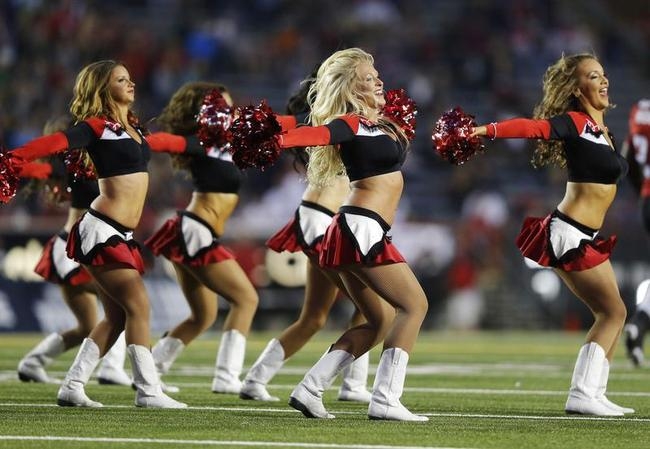
For a small, but vocal contingent of regressive individuals with a low threshold for outrage, there’s a particular occupation that they’d like to add to that list. That is the profession/hobby of cheerleading, specifically the kind that involves parading beautiful women in sexy attire so they can dance, shake pom-poms, and get a crowd excited. Hell, it’s not like there’s anything inherently appealing about that.

That last sentence was sarcasm, by the way. I want to make clear that, as both a man and an avid sports fan, I love cheerleaders. They embody so many wonderful concepts about the world. They combine sports, sex appeal, dancing, and excitement. They bring happiness, excitement, and spirit to an event. There is literally no downside.

Unfortunately, that regressive crowd who insist on seeing sexism, misogyny, and oppression at every corner sees none of that. They only see beautiful women being paraded around in sexy attire for horny men to gawk at. It doesn’t matter if those women choose to do so or are paid to do. Beautiful women attracting the attention of horny men is seen as inherently oppressive to all women everywhere.


That was sarcasm too. I’m sorry if I’m using more than usual, but I find it’s the best way to highlight the sheer absurdity of this attitude. However, it’s an absurdity with serious implications because it reflects a growing trend. Now, in an era where it’s suddenly scandalous to depict the female body in any sexual context, cheerleading is a growing target.

It’s a target that has already taken a few hits. Earlier this year, Formula One Racing announced that it would no longer utilize grid girls, who are basically cheerleaders for racing. This act was cheered by the radical anti-sex feminist crowd. It was probably secretly cheered by priests, mullahs, and monks, as well. While it did inspire somewhat of a backlash, it hasn’t stopped that same crowd from aiming at other targets.

More recently, NFL cheerleaders are in the spotlight. In terms of cheerleading, as a profession, this is basically going for the very top of the hierarchy. The NFL is for cheerleaders what the Pro Bowl is for NFL players. It’s seen as the very pinnacle of the profession and it may be in danger.

It hasn’t helped that there have been some distressing scandals involving how some NFL cheerleaders are treated. The recent scandal involving the Washington Redskins cheerleading squad has only added more fuel to the outrage. Never mind that the facts of these scandals are limited and anecdotal, in some cases. It gives the regressive crowd everything they need to cry sexism and misogyny.

Now, none of this is to downplay some of the real issues surrounding cheerleading, as a profession. There are certainly issues with respect to how much cheerleaders are paid and how their lives are micromanaged. Those issues should be addressed and reformed. However, that’s not the conversation anyone wants to have.

Instead, cheerleading is getting lumped into other outdated traditions like arranged marriages, virginity tests, and being forced to cover their ankles in public. It’s not a profession or a passion that needs to be reformed and improved. It’s something that needs to be outright purged from society.

That’s not just an extreme reaction to a job that isn’t even the most dangerous or the most prone to sex scandals. It’s an attack on the very idea that beautiful, sexy women can and should be used to promote anything, be it a sports team or a fast food meal. The problem isn’t how the job is unfairly managed. It’s the job itself.

From the perspective of cheerleading’s opponents, it objectifies the female body and commodifies female sexuality for the consumption of men. In an era where sexually harassing a woman is seen as the ultimate evil, whereas sexually abusing a man isn’t nearly as outrageous, that’s just unacceptable.

The attitudes of the women who seek this profession don’t matter. The attitudes of the men who enjoy the sexiness and excitement that cheerleaders inspire especially don’t matter. All that matters is that cheerleaders are too sexually stimulating to the masses and that’s feeding a culture of misogyny and sexism. I wish that were sarcasm, but that’s what these regressive people genuinely believe.

For them, undermining the freedom and agency of those who want to pursue cheerleading and those who want to admire cheerleaders is a price they’re willing to pay. While some, like the Grid Girls, try to fight back, they’re facing an uphill battle and it’s one that cheerleaders might end up losing.

That’s because these are exceedingly sensitive times. Just trying to inject reason and criticism into the movement against sexism is subject to irrational outrage. Matt Damon found that out the hard way. More and more, people are just avoiding the conversation altogether because it just keeps fueling more outrage.

The current dynamic is as simple as it is unfair. If you stand up for cheerleaders, then the regressive crowd can just claim you’re a sexiest who wants to gawk at beautiful women. Even if you’re a woman speaking on behalf of cheerleaders, your criticism can be cast aside because you’re just brainwashed by the patriarchy and you’re for the objectification of women.

Never mind the fact that the very concept of objectification is fundamentally flawed. Never mind the fact that that flawed concept is also prone to some pretty disturbing double standards. The protests against cheerleading is framed as a protest against sexism, misogyny, and patriarchal oppression. It doesn’t matter how wrong or misguided that notion is. That’s the perception and there’s just no way to win that argument.

These days, being called a sexist is bad for business and for your profession. I believe the regressive crowd knows that, to some extent. They understand that the NFL is a business and one that has already been ravaged by negative press. Their success and their profits are dependent on their brand. If they see something as potentially damaging to their brand, then they’re going to either get rid of it or downplay it.

I’m not good at predicting the future, but depending on how these recent cheerleading scandals play out, I suspect that the NFL might just slowly phase out cheerleaders, altogether. It’s the path of least resistance. Keeping them around means keeping the outrage around. That’s just more risk and frustration than it’s worth.

It would be another major loss, one far bigger than the loss of the Grid Girls. However, as much as I love cheerleaders and the sex appeal they bring, I can totally understand why a major organization like the NFL would resort to such an extreme. By just removing cheerleaders, altogether, the crowd of regressive outrage will move onto their next crusade and, hopefully, leave them alone.

It’s a scenario that nobody wins. If the NFL ends up eliminating cheerleaders, it won’t be because they’ve seen the error of their ways and are now champions of women’s empowerment. They’re just protecting their brand. They’re trying to stop the whining, an approach that only offers the illusion of progress and not actual progress.

Personally, I hope the NFL resists the outrage. The more ground we give to regressive attitudes, the more regressive our society becomes. This is a crowd that won’t stop until everything that might potentially evoke sexual feelings or portray women in a sexy way is either eliminated or stigmatized.

As both a fan of all things sexy and an aspiring erotica/romance writer, that’s not a world I want to live in. That’s not a world that even other women want to live in, as the Grid Girls have shown. It’s a boring, unsexy, downright dystopian world that’s worth resisting and I hope there are plenty of cheerleaders, male and female alike, who will cheer on that effort.

Leave a comment

Filed under Current Events, gender issues, media issues, political correctness, sex in society, sexuality, sports

Why Abstinence Only Sex Education Is Only Getting More Harmful

screen_shot_2017-06-06_at_10-20-47_am

There was once a time when it was possible, albeit cumbersome, for a parent to control the information and education their child received from the cradle up to and even a little bit beyond their high school graduation. Some even went further than that, attempting to control their children well into adulthood. I’m not saying that’s right or wrong. I’m not a parent yet so I’m not in a position to judge. I’m just saying it was possible.

A parent could, for the most part, prevent their children from watching certain TV shows, seeing certain movies, or reading certain books that contained information and messages that they didn’t want them consuming. Sure, every now and then one of their kids’ friends might sneak some “illicit” information past their guard, but they could still exert a fair amount of control over what and how their kids learned.

Without getting too deep into the logistics, it’s safe to say that those days are either over or numbered. In today’s world of ever-increased connectivity, along with cheap smartphones and easy internet access, kids are capable of accessing an unlimited wealth of information that no parent can hope to filter.

In many ways, that’s a good thing. Both the millennial generation and the emerging youth in Generation Z are the most educated cohort of people to have ever lived on this planet. Given that level of education, combined with access to so much information, why do some parents still believe they can keep their kids ignorant about sex?

I don’t deny that talking to children about sex is uncomfortable for parents, to say the least. It’s just as uncomfortable for the kids too. I still remember how awkward it was when my parents told me about sex. I still love and commend them for enduring that awkwardness because it made me more informed later in life. Other parents, however, insist on taking the opposite approach.

On April 23rd, 2018, there was a nationwide effort conducted by concerned parents who didn’t approve of how their children were being educated about sex. They called it “Sex Ed Sit Out” and it’s exactly what it sounds like. Rather than directly deal with the information their children are being taught, they seek to prevent their children from ever learning about it.

The fact they’re doing this in an era where any kid with a smartphone can look up detailed information about anatomy, sexuality, sexual orientation, and transgender issues is pretty telling. The fact this is being done with support of socially conservative, sex-negative organizations like the Family Research Council and the Liberty Counsel should also be a major red flag.

The effort, itself, was instigated by a North Carolina mother who called herself “The Activist Mommy.” She’s an extremely religious woman who espouses extremely regressive views on any form of sexuality that doesn’t fall in line with what popes, monks, mullahs, and rabbis deem moral. What set her off, though, was what she found out her kids had been learning in sex ed at their school.

It wasn’t just that they were teaching kids about contraception, safe sex practices, and the radical notion that sexual desires aren’t some disease that need to be cured or managed. It was also the idea that these programs had the audacity to inform children about LGBTQ issues relating to sexuality. It even had the gall to ask kids to think about and question how those issues effect them.

Assume that last paragraph was written with the utmost sarcasm, but that was a serious issue for these parents. This isn’t just about information that may or may not conflict with their preferred holy books. Some go so far as to call it “graphic, gender-bending, promiscuity-promoting sex education.”

They frequently throw around phrases like “the sexualization of our children” to get parents really uncomfortable. They treat such education as though they’re a how-to guide, complete with drills and a maintenance schedule. In reality, that’s not how the program works and anyone with an internet connection can verify that.

It’s still not enough for these parents, though. I don’t doubt they love their kids with all their hearts, but I think they’re seriously underestimating their ability to control both the inherent biology of children and the dangers of trying to preserve ignorance in an era where information is so easy to access.

It’s because of that same access that anyone can learn that abstinence only sex education programs don’t work. It doesn’t just bear out through data in peer-reviewed studies. Those programs even fail the basic tenets of common sense and logic. To prove this, just think of all the instances when not knowing about something made it not exist. Outside Freddy Kruger movies, that just doesn’t work in the real world.

Beyond simply being ineffective and a waste of taxpayer money, taking that same abstinence approach to LGBTQ issues is potentially more damaging. It’s one thing to tell children that having a strong desire to be intimate with someone is immoral, dangerous, and may doom their soul to damnation. It’s quite another to instill the notion that they’re somehow damaged for not having gender-based attitudes consistent with 50s sitcoms.

Like it or not, human beings are complicated, diverse creatures with a wide range of desires, attitudes, and identities. The idea that something as inherently powerful as sex can fit into the narrow scope of a 50s sitcom requires a gross misunderstanding of the chaotic, unpredictable nature of sexuality and biology in general.

Granted, this sort of repressive ideology is nothing new. Religious organizations have been protesting sex education in public school for years, favoring abstinence instead of any information that might hint that sex could involve something other than just two married heterosexuals making babies that grow into devout church-going tax-payers.

However, the rhetoric from people like the Activist Mommy is getting louder as gender-driven conflicts enter the conversation on top of the sexual components. It’s more than enough to get parents worried, outraged, and even a little anxious about what their kids are learning.

Whatever their sentiments, sincere and well-meaning as they might be, the abstinence approach still doesn‘t work. It was already ineffective in the era before the internet, as evidenced by the rates of teen pregnancy over the past several decades. However, that same inefficacy may be more damaging now than it was two decades ago.

To understand how, think back to what I mentioned earlier about parents being able to control what their kids learned in the past. Outside extremely restrictive religious communities, that’s just not feasible anymore. Today, just as during any other time period in human history, kids are going to get curious and/or horny. Unlike past eras, though, it’s easier than ever find the information they’re looking for.

That’s not just dangerous to the extent those kids learn things their parents don’t want them to know. It’s dangerous in the sense that there’s a lot of misinformation on the internet, especially about sex. That doesn’t just extend to the unrealistic depictions and expectations in the average porno either. It’s disturbingly easy to find bias sources of information.

Even if that information is accurate, there’s still more damage to be done by abstinence. Once a kid learns that information, much to the dismay of their parent, it’s hard to unlearn it. At the same time, it may also reveal to the kid just how much their parents have been lying to them on issues of sex, gender, and their own bodies.

Now, I get that parents have to lie to their kids every now and then, but some lies are more destructive than others. If the lie is too big or egregious, then suddenly that kid has a valid reason not to trust their parents. First, they say sex you can get pregnant by hugging someone. Then, they expect you to believe them when they say driving after doing tequila shots at a party is dangerous?

As a general rule, if keeping a secret from your kid involves something that can’t easily be uncovered with a couple internet searches, then they’re going to find out eventually. It doesn’t matter how hard you try to protect your kid from this information. If it’s out there and they’re curious, they’ll find it. That’s just the nature of the age we live in.

A child may or may not be capable of understanding sexuality or gender issues at a particular age, but most agree that it’s healthy for a child to trust their parents. Most people, kids and adults alike, can forgive small lies. For bigger lies that can claim natural, healthy desires are a disease, though, those are much harder to overlook.

For the parents to participated in this sit out, I hope they come to understand that at some point. Their children, which I’m certain they love with all their heart, are going to learn about sex, gender, and everything in between at some point. When that point comes and it’s too late, then the damage might already be irreparable.

1 Comment

Filed under gender issues, sex in media, sex in society, sexuality

Five Life Lessons I Learned During My First Visit To A Strip Club

strip-club-bachelor-vegas-1200x800

What can you learn at a strip club that can help you with life in general? That’s not a rhetorical question or something Glenn Quagmire said on an episode of “Family Guy.” That’s a legitimate question with real answers. I know that because I’ve been to strip clubs. I’ve contemplated those questions. I’ve also surmised my share of answers.

I won’t claim those answers are definitive. Everyone’s experience at strip clubs are different, be they of the male or female variety. However, during that fateful first visit to a strip club, I found myself learning a whole lot more than I expected. I went in just hoping to see beautiful women getting naked. It ended up being much more than that.

I’ve shared my love of Las Vegas before. I’ve shared experiences I had and even based one of my novels on both Las Vegas and strippers. The city is near and dear to my heart, is what I’m saying. It’s one big spectacle, one that goes out of its way to overtly sexy. There are sexy shows to see, sexy sites to visit, and plenty of sexy people in general just walking the strip.

Related image

For a lover of romance and all things sexy, Las Vegas is a fantasy paradise. I learned that quickly during my first visit, which occurred shortly after I turned 21. It was a truly magical experience at a time in my life when I was just starting to come out of the shell I’d built around myself during high school.

One of those experiences, naturally, involved my first trip to a strip club. Needless to say, I was excited and anxious. This would be the first time I would be in an adult establishment where I could admire abundant nudity on something other than a computer screen. Like everything else in Las Vegas, it blurred the lines between fantasy and reality in the best possible way.

I won’t share all the details of that first strip club experience, but I will gladly share some of the critical life lessons I learned that night. Out of respect for the women I saw and any legal ramifications, I won’t say which strip club I went to. I’ll just say it was a fairly prominent one that most Las Vegas veterans have heard of.

Again, I won’t claim that these lessons are the definitive insights a man can glean from his first trip to a strip club. Everyone is going to learn different lessons from different experiences. These are just the five lessons I learned during that fateful first adventure into this sexy world.


Lesson #1: Admire, Don’t Stare (And Know The Difference)

Image result for man at strip club

The first thing I noticed when I walked into that strip club for the first time was there was a lot to see. This was Las Vegas, after all. Las Vegas is to strippers what the Pro Bowl is to the NFL. You go into a Las Vegas strip club and you won’t see any rookies. You’ll only see seasoned pros who have the stats, talent, and game.

That said, just looking at all the beautiful women isn’t enough. Staring won’t cut it either. Most women, strippers or otherwise, don’t want to be looked at the same way most look at a golden toilet seat. They want to be admired. Give them that admiration and they’ll show their appreciation, sometimes very directly.

That involves doing more than just staring blankly at a topless woman. It involves smiling, moving a little to the music, and clapping when she does something amazing like hang upside down from one leg. Throw in a few tips and she’ll appreciate it. If she’s generous, she’ll even reward that admiration with some of her own.

During my first visit, I made it a point to single out certain women who was uniquely endowed for her job. By that, I mean she had breasts that were about as natural as the Hoover Dam. As I admired her every move, she responded by mashing my fast between her breasts after I tipped her. That, in many ways, showed me how much more valuable it was to admire a woman rather than just stare at her.

There is a difference. To know the difference, spend some time in front of a mirror. Take a moment to just stare blankly at yourself. Then, put a little effort into admiring yourself. The difference should be obvious. It’s just much more obvious for strippers.


Lesson #2: Personality Helps, But Energy Helps More

Image result for man at strip club

I admit when I first entered the strip club, I was shy and overwhelmed. My social skills were way behind to curve, thanks to all the issues I had in high school. However, I was at a phase in my life when I was just starting to catch up. I wasn’t some moody, self-loathing teenager anymore. I was an adult man with an emerging persona.

That persona helped me stand out in a crowded strip club. I was young, eager, and full of excitement at all the sight of naked women. I admit it was a little immature because of my youth, but I made up for it by having a respectable, endearing personality. The women at the club really responded to it.

However, personality only went so far. That only informed them that I was a decent guy who wasn’t going to drool over them like a slob. To show I was worth getting to know, I had to put a little effort into the experience. I had to take some of that youthful energy I had and make it stand out.

That meant clapping more, cheering more, and smiling more. I showed genuine excitement for the women as they danced, giving compliments and even dancing a little in my seat. I definitely showed more energy than the older guys around me and the fact that the women gave me more attention showed there’s something to be said about channeling your energy.

Excitement is infectious. When someone near you is excited, you tend to get excited to. Human beings are a social species. Strippers are human too and they’re just as prone to getting excited. Sure, it’s part of their job, but a little excitement in your work helps make that work all the more rewarding.


Lesson #3: Half-Truths Are Better Than Outright Lies

Related image

This is one of the tougher lessons I learned in my first visit to a strip club. Las Vegas is a fantasy town and people love fantasy, in general. There’s a time to be blunt and brutally honest about who you are or why you’re doing something. A strip club in Las Veags isn’t one of them.

That doesn’t mean lying, though. I came into that strip club with a roll of $20s. I even made sure that roll was thicker than it really was, which the Bouncer seemed to notice. That, in turn, got me a front-row seat and some extra attention from the bartender. I didn’t tell them that I wasn’t the son of a wealthy hedge fund manager. I did’t tell them I wasn’t, either. Sometimes, it doesn’t hurt to let others assume.

When talking to the strippers, though, you can’t rely too much on assumptions. You also can’t blurt out every detail of your life story. I got a little overly chatty with a couple women early. At some point, I realized that throwing too much hard truth in a fantasy setting was really a turn-off. To the credit of the women working there, they didn’t make it more awkward than it needed to be.

I quickly learned that it works better to use half-truths or vague hints about why you’re there. If someone asks how much money you have, don’t give an exact dollar figure. When one woman asked me, I just responded with, “That depends.” That wasn’t entirely wrong or wholly true, but it sent the right message.

More than anything else, I learned that it helps to be a mystery to people to some extent. That’s not just a tactic to pretend you’re a high roller with a stripper. It’s a way of getting someone interested in you and actually wanting to learn more about you. Whether they’re just looking for a tip or seeking true love, leave them with something to find. They may end up finding more than they expect and you’ll be better for it.


Lesson #4: Know How To Negotiate Your Intentions And Desires

Image result for man at strip club

There are a lot of official and unofficial rules in a strip club. Officially, these beautiful women are there to entertain you, entice you, and extract tips. That’s it. That’s the end of the arrangement. If you’re looking for them to be your girlfriend, your therapist, or your servant for a day, you’re undermining the rules.

In strip clubs, the dynamic is much more overt. In exchange for money and attention, the strippers give you a fantasy and some intimate affection. You want something from them. They want something from you. The key is negotiating the best way to get it. Neither of you will always get what you want, but understanding the rules and being able to negotiate will go a long way.

In many respects, my first trip to a strip club gave me a crash course in what it meant to convey my attentions and negotiate with someone on getting what I wanted out of the experience. It wasn’t just about saying, “Here’s some money. Let me touch your boobs.” It was more akin to, “I want an experience. How can I convince you to help me make it?”

Outside a strip club, we negotiate our desires all the time. Sometimes it’s with a lover, a co-worker, or a relative. Sometimes it’s with a total stranger. In any case, there’s are rules and expectations. If you try to subvert those rules or make unreasonable expectations, you’re bound to run into trouble. In a strip club, that can get you thrown out. In real life, that can have even worse consequences.

Like it or not, people in the real world usually want something from you. Whether it’s money or love, the key is navigating it responsibly. Going to a strip club gave me a chance to be more direct about it and it was a great experience. Being able to see beautiful women naked was a nice bonus as well.


Lesson #5: How You Present Yourself Matters As Much As What You Say

Image result for man at strip club

This is where I kind of have to give credit to my mother. Yes, I know that’s an odd thing to say about experiences involving strip clubs, but I think this warrants an exception. Before I even left for Vegas, my mom insisted I get some fancy new clothes that were nicer, albeit less comfortable than I was used to. Even though I complained at first, I’m really glad she convinced me to spruce up my wardrobe.

When I ventured into the strip club, I wore a nice button-up shirt, a new set of jeans, and dress shoes that most guys wouldn’t wear outside a wedding. I definitely didn’t look like some college student just experiencing Vegas for the first time. I looked like a refined, well-dressed, well-groomed gentleman. That sends a powerful message to men and women alike.

It showed in the way the bouncer was extra nice to me. It also showed in the way the bartenders and strippers treated me. Compared to some of the other men in that club, who were primarily wearing T-shirts and flip-flops, I stood out for all the right reasons. I sent the message that I care enough about myself to look good. I also sent the message that I care about presenting a good image of myself to others.

That sort of approach doesn’t just attract a man to strippers. It attracts a man to everyone. I know it sounds obvious, but I don’t think some people appreciate the true impact that presentation has on others. I treated going into a strip club kind of like a job interview. I wanted to look my best and present myself as someone worthy of attention.

In addition to good clothes, presenting yourself with confidence and energy helps supplement your efforts. It says even more about the kind of person you are. It gives the impression that you’re excited about life and you want to share it. The inherent social nature of people in general will draw them to you. It’s simple biology.


That, my friends, concludes my list of critical lessons that I learned from a strip club. To the women working at that club and the fine folks who managed it, I sincerely thank you. You taught me more about life than just the inherent beauty of topless women. I hope others can draw from those lessons as well. When applied properly, they can help you in ways that go beyond having a great time at a strip club.

4 Comments

Filed under gender issues, Jack Fisher's Insights, sex in society, sexuality

Why The First Male Birth Control Pill Won’t Be Successful (And Why That’s Still Progress)

male-pill-900x450

When it comes to our health, certain treatments or trends occur faster than others. Fad diets and health crazes can gain favor, fall out of favor, and be forgotten all within the same year. For more serious aspects of our health, the wide acceptance of certain treatments and trends can take longer, even if they work as advertised. When it comes to our sex lives, though, it can be even more challenging.

It’s one thing to be worried about your waistline and your ability to fit into an old pair of pants. It’s quite another to worry about whether certain intimate parts of your body are functioning properly. Naturally, we tend to worry a lot more about the sexy parts. Why else would boob jobs be so popular?

This gets even more touchy when issues surrounding contraception come up. Even when there’s a major breakthrough that has the potential to revolutionize our sex lives and our fertility, it takes time for it to permeate throughout society. It’s also a lot more prone to taboo and political protests than boob jobs.

Just look at the documented history of the female birth control pill. The actual pill itself was invented in 1951. Human testing didn’t begin until 1954 and the FDA didn’t approve it until 1957, but it was only approved to use for severe menstrual disorders. It’s only in 1960 when it’s approved for use as a contraceptive, but it still takes years before it becomes both widely used and socially accepted.

Overall, it took at least a decade before the female birth control pill really established itself as part of modern medicine and as part of our sexual culture. I cite that history because men are close to forging a similar history with contraception. It wouldn’t be unreasonable to say that men are on the brink of the biggest upheaval in their sex lives since the invention of condoms.

I’ve written about the promise and potential social impact of male contraceptives, referencing developments in products like Vasalgel. However, that method is still in the testing phases and probably won’t get regulatory approval within the next few years. Given that it is also requires a targeted injection, that testing will be subject to a lot more scrutiny, as would be expected of things that involve needles near genitals.

It’s far more likely that a pill will get approval before something like Vasalgel, if only because people are more comfortable taking pills than getting a shot. In fact, as I write this, the University of Washington is conducting a large-scale human test on an oral contraceptive for men called dimethandrolone undecanoate, or DMAU for those who would rather not learn that level of science jargon.

While DMAU doesn’t offer quite as much promise as Vasalgel, it does offer a similar product to the one women have been using for half-a-century now. It’s a one-a-day pill that men can take with their morning coffee. Also like its female counterpart, it uses hormones that effectively block the production of sperm. For men already used to taking pills every day for other issues, it wouldn’t be that hard of an adjustment.

That said, though, this first step towards equalizing male contraceptive methods will face a lot more obstacles than the female birth control pill did when it first came out. In fact, I’d go so far as to predict that if DMAU were approved by the FDA tomorrow, it probably wouldn’t be that successful.

I say that as someone who freely admits he’s not good with predictions, as my Super Bowl picks last year prove. However, being a man who follows these kinds of sex-related issues, I feel like I have more insight than most when it comes to gauging the potential of a major advancement for our collective sex lives.

Like it or not, and I’m sure those versed in identity politics will cringe at this, men are wired differently than women, especially when it comes to their sexual health. There was a very different set of motivating factors behind the female birth control pill, so much so that getting women to adopt it wasn’t too challenging, even if it took years. With men, though, it’s a different story.

Men are already far less likely to go to the doctor than women. They’re also far less likely to ingest something that might impact their hormones and, by default, their sex lives. Since DMAU utilizes hormones in inhibiting sperm production, it’s going to have the potential for side-effects. Even the doctors in the study admit that.

Of the test subjects who completed the study and were taking 400 milligrams (mg) of DMAU – the highest dose tested – few reported symptoms consistent with testosterone deficiency.

The subjects who were given the pill did have weight gains of between 1 and 3 pounds on average, according to Page.

“The weight gain and a small decrease in good cholesterol levels, HDL, are things we’re going to look at more closely in future studies,” Page says.

This is where I have to denigrate my own gender, but when it comes to tolerating side-effects, I think women have men beat in that arena. The many side-effects women endure with contraception is proof enough of that. Men, as tough as we can be, are somewhat dense when it comes to accepting certain side-effects.

It’s for that reason why I think DMAU is going to have limited success at most and will likely fall out of favor quickly once more promising alternatives like Vasalgel enter the market. Even without those alternatives, though, I suspect DMAU will not gain widespread acceptance among men, even for those who have been clamoring for more contraceptive options.

Now, and this is where I’m going to make another prediction, I think that limited success or outright failure will actually mark a huge turning point in the history of male contraception and a positive one at that. To some extent, failure is part of the process when it comes to making progress in our health. Again, anyone who knows anything about fad diets can attest to that, some being worse failures than others.

To some extent, the first male contraceptive pill will be like the first cell phone. It’ll be clunky, crude, and not nearly as efficient as consumers wish it were. It’ll also likely be pretty pricy as well, as only the Gordon Gekko’s of the world could afford those early cell phones. However, that doesn’t mean the product itself was a waste or a loss.

Keep in mind, the first cell phone was probably considered strange and unnecessary in a market that was used to making calls from LAN lines. Why would anyone even want a cell phone that was bulky, expensive, and offered only spotty coverage when you could accomplish the same thing with a phone booth and a quarter?

Over time, though, and as the technology improved, cell phones made their way into the market. I suspect that the first male birth control pill will do the same. At first, it’s going to be seen as strange. It may even seem unnecessary to men who can get the same effect from a box of condoms at a gas station for less than five bucks.

The value, however, isn’t in how men initially react to the first male birth control pill. The true value is just putting the idea out there that men now have this option. Even if only a handful of men take advantage of it, that’s still enough to establish a consumer base.

That small consumer base will eventually grow as the idea of a male birth control pill stops being a novelty like the first cell phone and becomes a legitimate consumer product. There will be plenty of room for improvement. There may even be some unpleasant stories about men struggling with the side-effects.

In the long run, that’s a good thing because once a consumer base is in place, they’re going to demand improvements to the product. More improvements will create a better product. It has helped create a wealth of options for women. Eventually, like the cell phone, male birth control will undergo a similar process until it ends up with the contraceptive equivalent of the iPhone.

That process will take time and there will be missteps along the way, just as there were with female contraceptives. The most important part of that process is just establishing the idea this is an option for men who want more choice and control of their fertility. It’s a level of choice and control they haven’t had before, one that women have enjoyed for decades.

Beyond just giving men more options and choices with respect to their fertility, products like DMAU could start the process of narrowing a lingering gender disparity that has been fodder for plenty of gender-driven conflict. The more we can do to alleviate that disparity, the better.

It’s going to take a while for that idea to sink in. In many ways, the first male birth control pill is going to start behind the curve, but that’s okay. The day will eventually come when both men and women can finally say they have equal control over their fertility. It’s still a first step and given how far the technology has to go to catch up to women, it’s a step that needs to happen in the name of true gender equality.


2 Comments

Filed under gender issues, Second Sexual Revolution, sex in society, sexuality